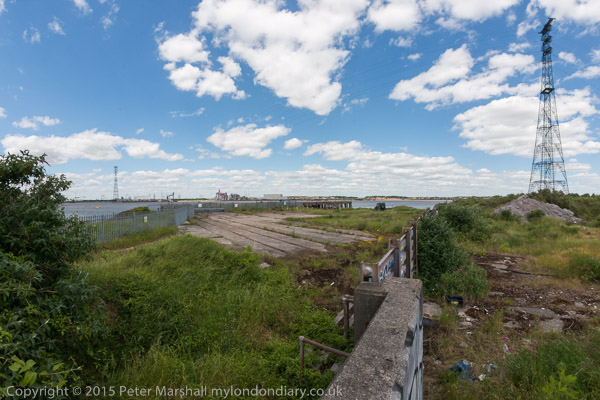
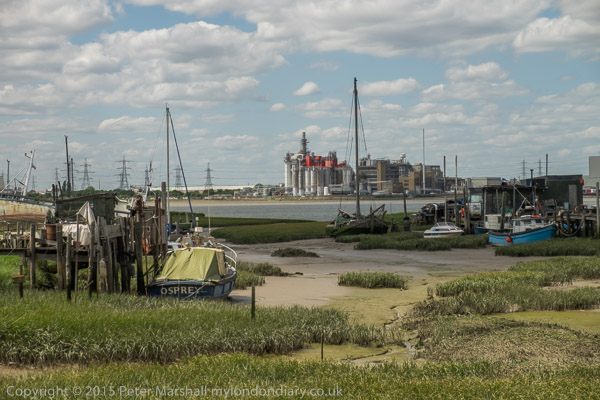
Reparations, North Woolwich & LouLou’s

Reparations, North Woolwich & LouLou’s: Thursday 1st August 2019 was a long and busy day for me with an Afrikan Emancipation Day protest, finishing a walk in North Woolwich I’d begun six months earlier and photographing an evening protest outside the exclusive Mayfair club LouLou’s.


Afrikans demand reparations – Brixton, London.
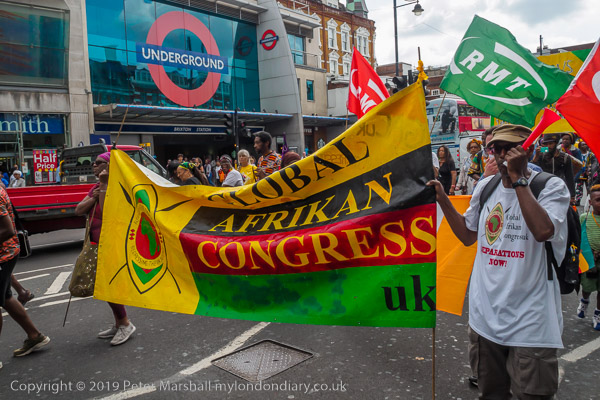
Afrikans demand Reparations, North Woolwich & LouLou's

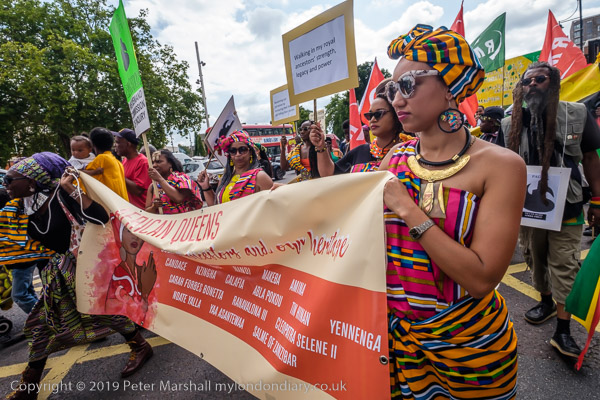
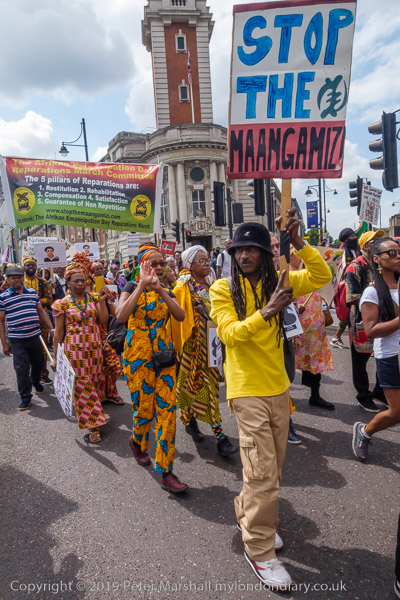
People of African origin met in Windrush Square in the morning to demand an end of the Maangamizi, the continuing genocide and ecocide of African peoples and Africa on Afrikan Emancipation Day.
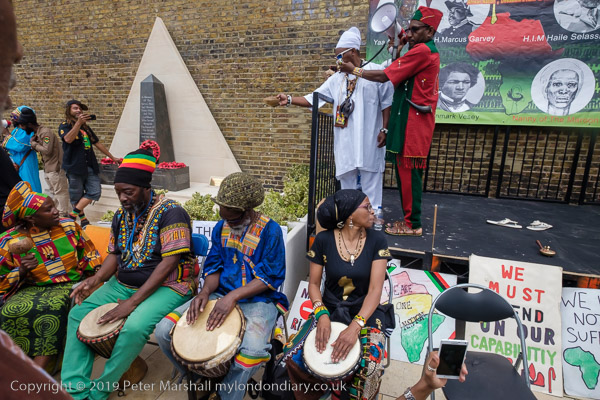
Afrikans demand Reparations, North Woolwich & LouLou's

After speeches & libations they marched from Brixton to Westminster with a petition calling for an end to acts of violence by Britain, the misuse of taxes and the stolen legacy plundered from Afrika under the British Empire and European Imperialism and demanding reparations.
Afrikans demand Reparations, North Woolwich & LouLou's

The protest was supported by Extinction Rebellion XR Connecting Communities who marched in an Ubuntu Non-Afrikan Allies bloc.
Afrikans demand Reparations, North Woolwich & LouLou's

I left the march as it went past Brixton Police Station on its way to protest outside the Houses of Parliament so I could have some lunch before going to take pictures elsewhere.

Many more pictures on My London Diary at Afrikans demand reparations.


DLR – Bank to North Woolwich
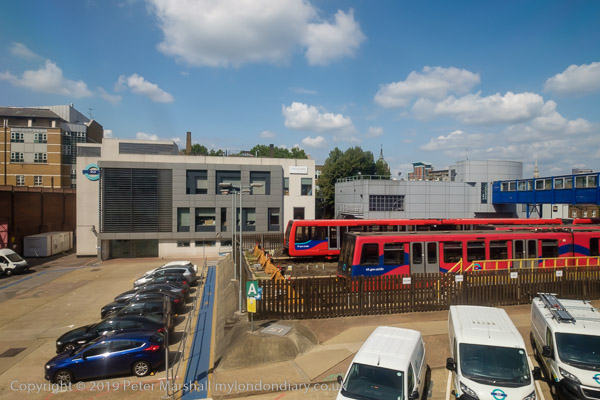
DLR HQ at Poplar

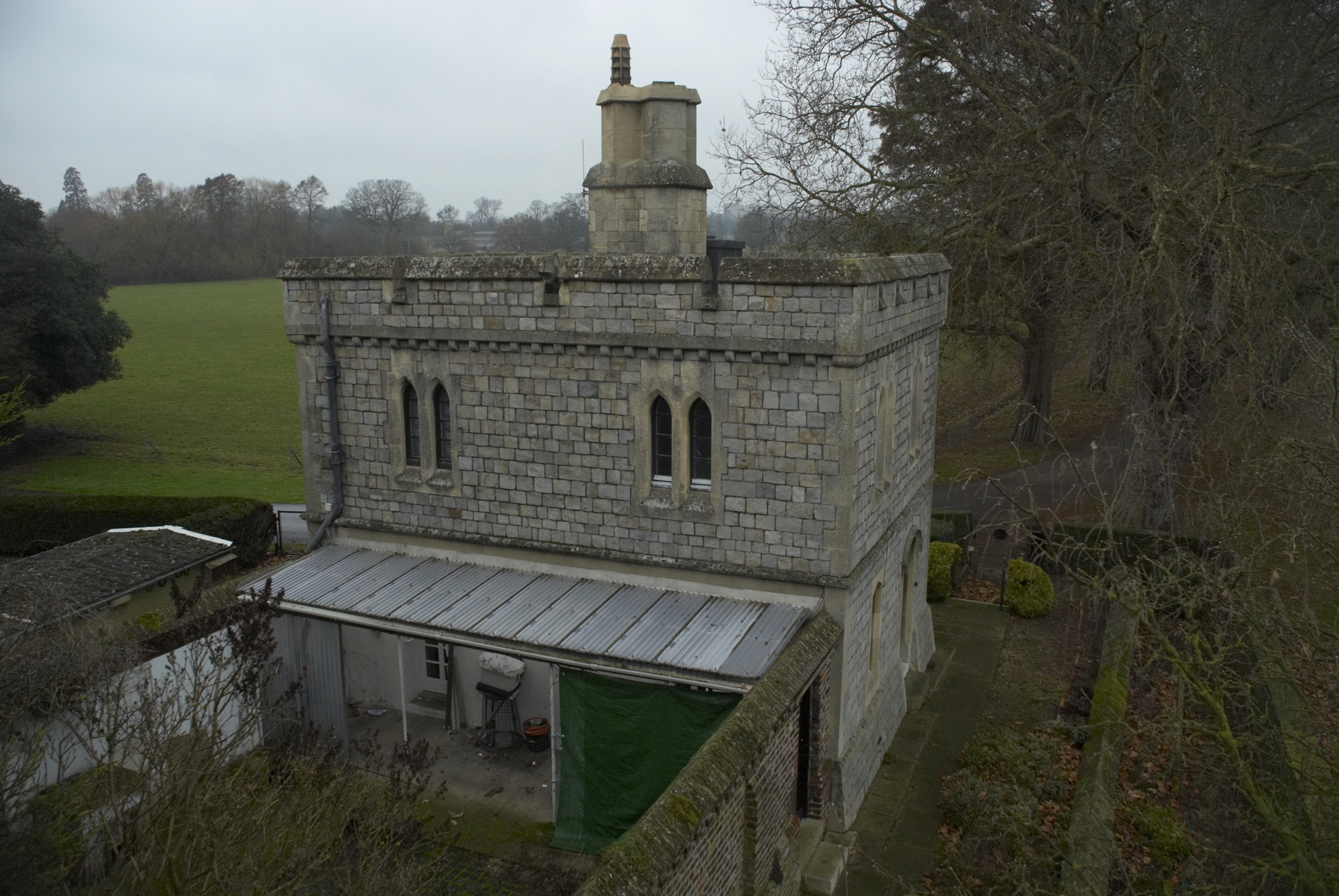
I’d taken the tube back into central London to have a quick lunch before taking the DLR from Bank to London City to King George V Dock station for the final section of the walk I had begun in February but had run out of time to finish because I’d had to take a roundabout route to get there as the direct DLR services were suspended following an accident.
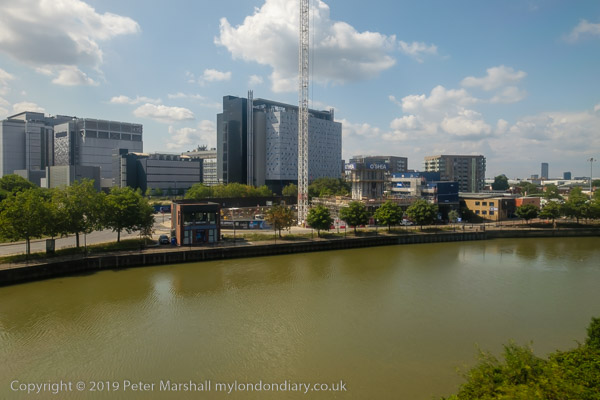
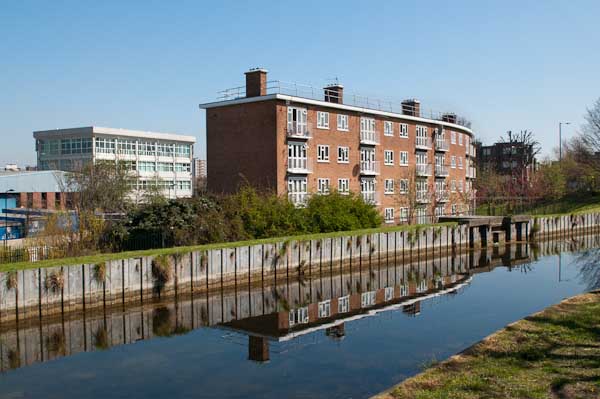
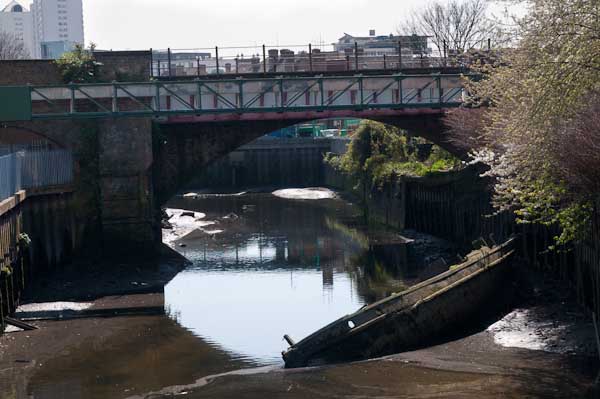
Bow Creek

This time the trains were running properly. They start from Bank and so come into the station empty and I was able to chose my seat and for once I found myself sitting next to a clean window on my way to North Woolwich and took a number of pictures.
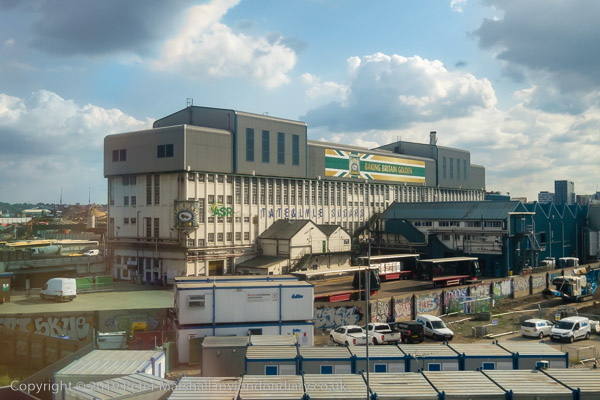
Tate & Lyle

Later on my way back to Canary Wharf from King George V I was less lucky and the windows were rather grimy, but I still made a few images.

More at DLR – Bank to London City Airport.


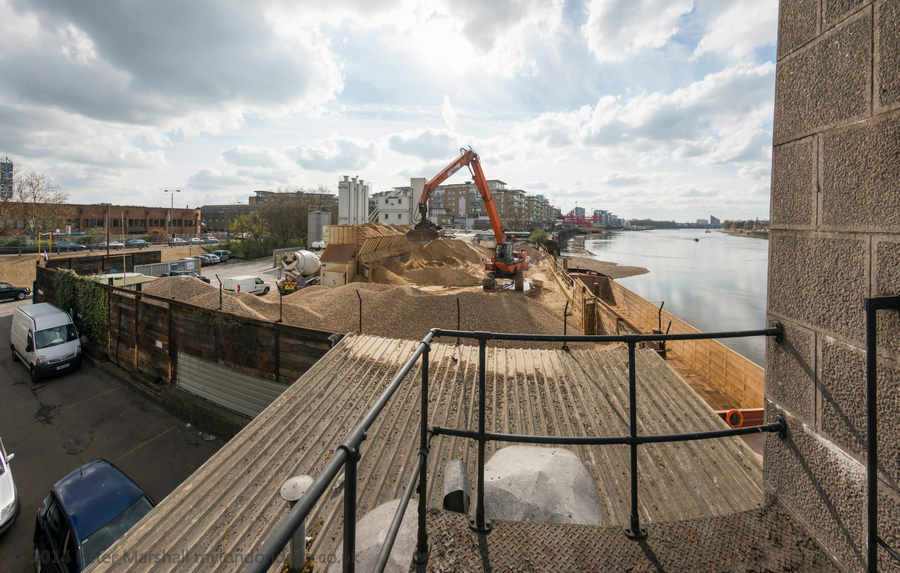
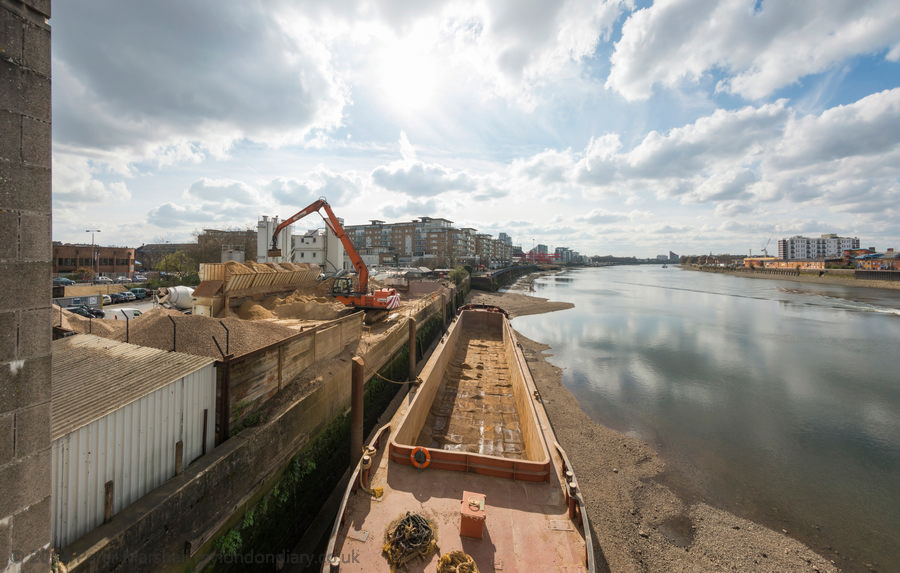
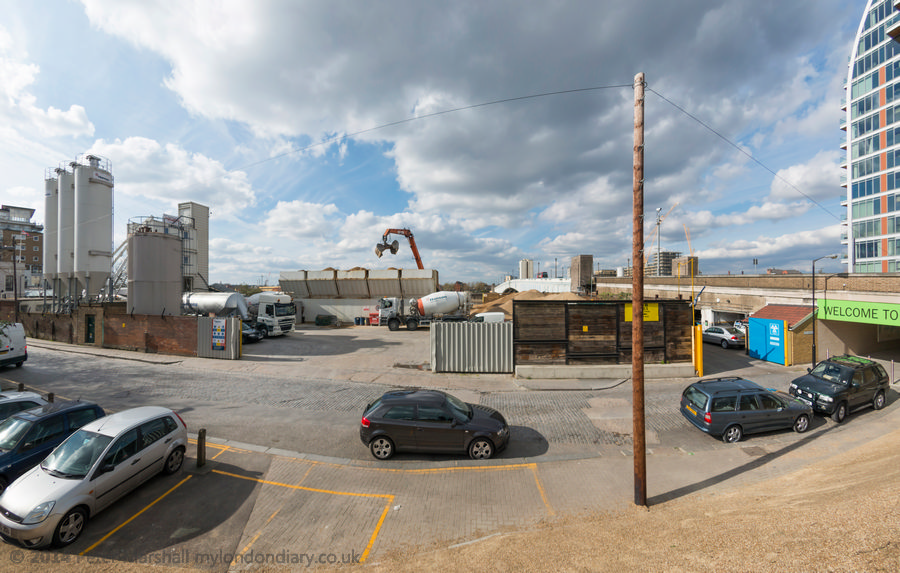
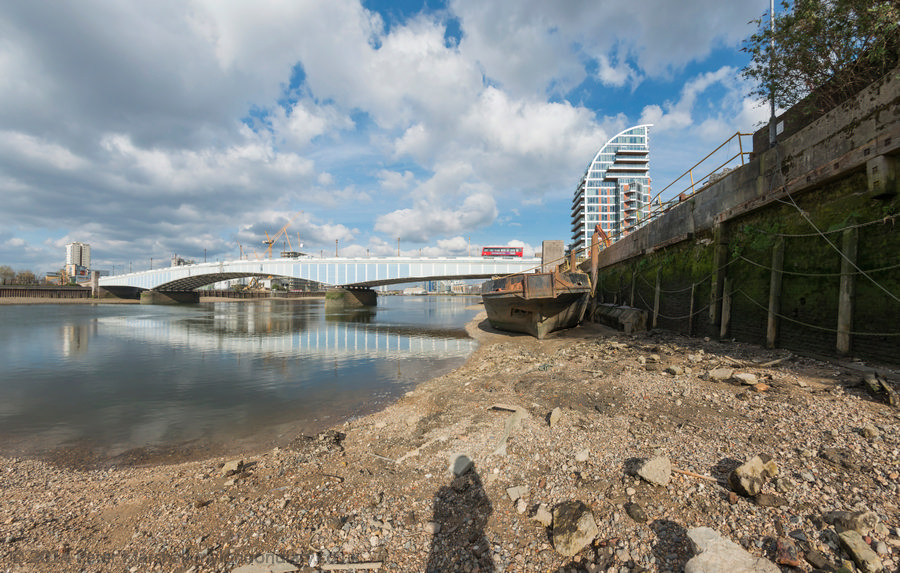
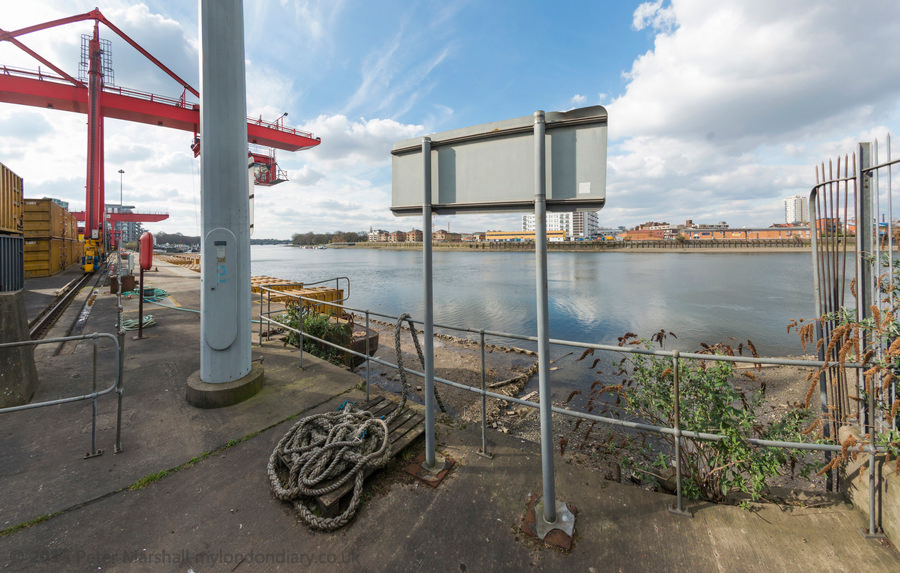
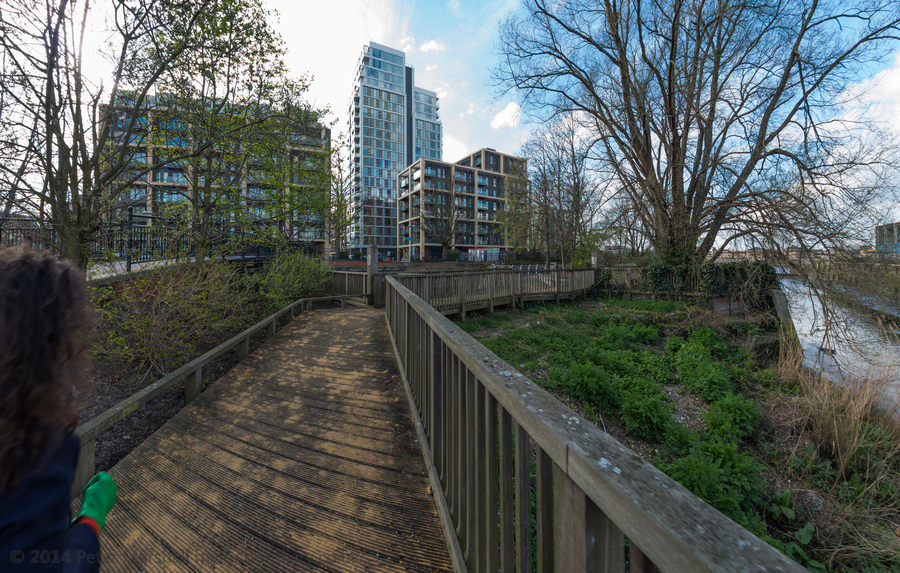
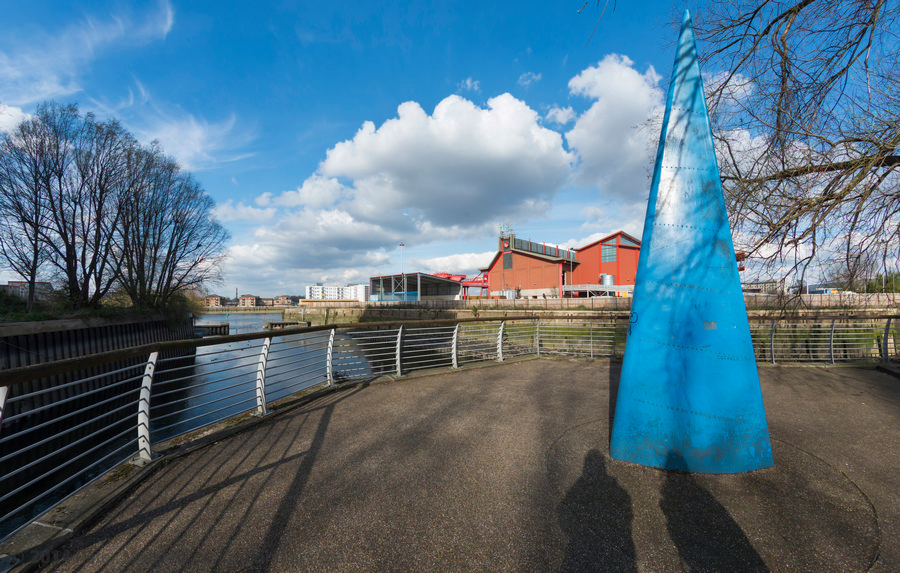
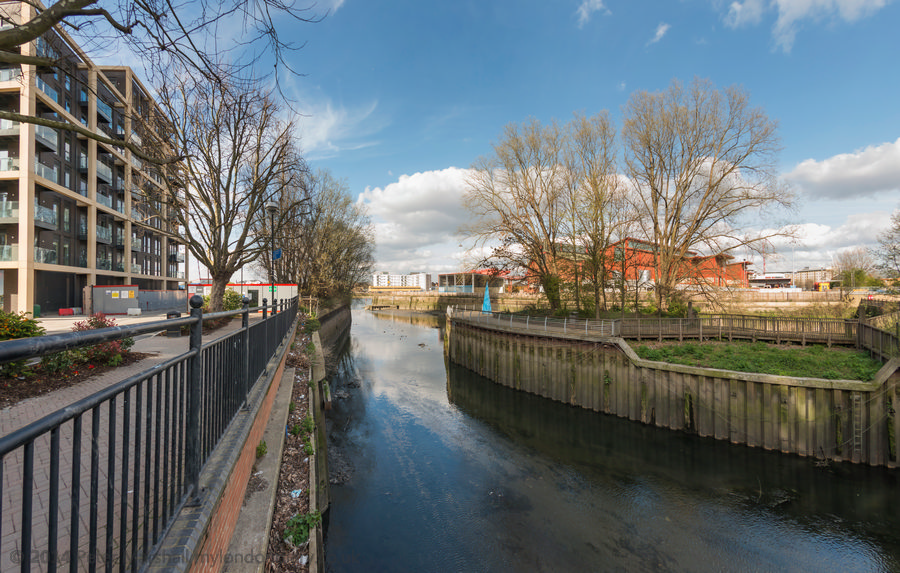
North Woolwich, Royal Docks & the Thames
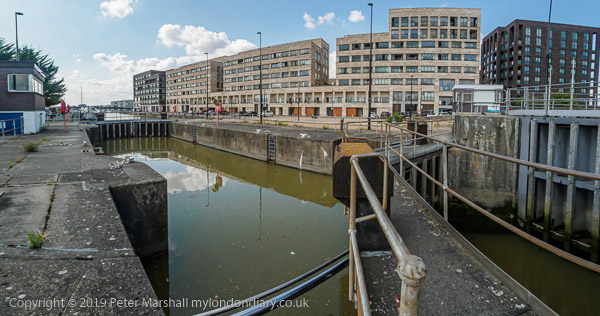
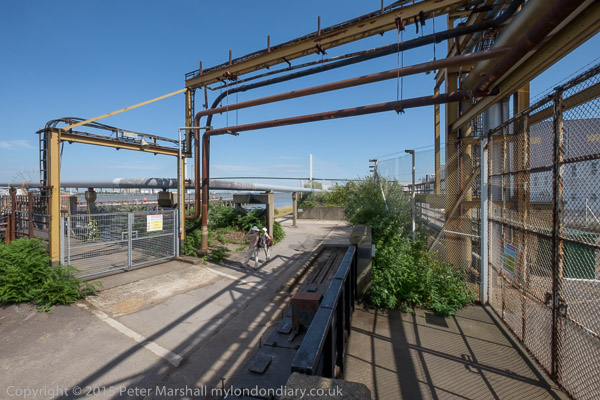
The footpath goes across these gates of the entrance lock to Albert Dock Basin

I took a few pictures as I walked from the elevated King George V station at North Woolwich to the King George V Dock entrance and joined the path by the river.
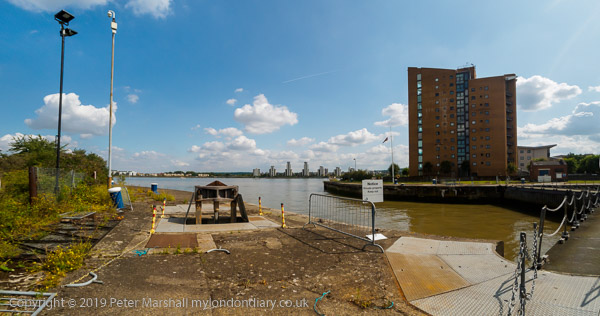
The lock here is huge, 243.8m long and 30.48m wide. I’d first photographed the area back in the 1980s as a part of a wider project on the Docklands following their closure, both in colour but mainly in black and white – in the album 1984 London Photographs. Although the docks themselves remain, much around them has changed, although there are still some derelict areas.
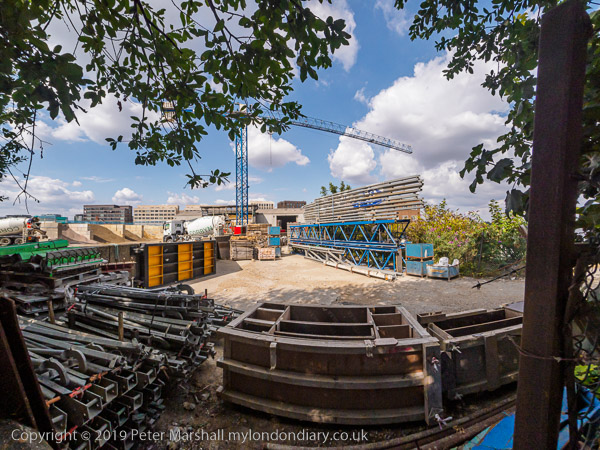
The riverside path here is part of the Capital Ring, and continues north and over lock at the Albert Dock entrance to the curiously desolate Armada Green Recreation Area.
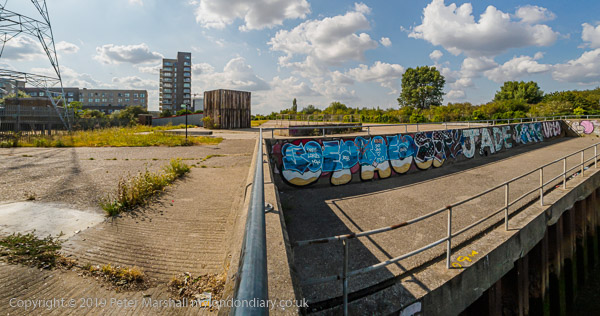
Here the path ends, with beyond it the former site of the Beckton Gas Works, used as a location for at least 17 films and TV series since its closure, though best known as a stand-in for Vietnam in the 1987 Full Metal Jacket. Past that is the Beckton Sewage Treatment Works, set up in 1864 as part of Joseph Bazalgette’s scheme to treat London’s sewage and still receiving it from all of London north of the Thames.
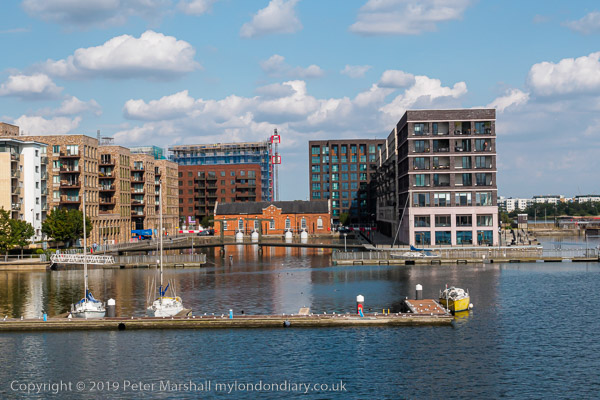
I had to turn inland, through more recent development and the refurbished Gallions Hotel around Alber Dock Basin. I went briefly under the new bridge to see again the East London University student residences, then went back and across it, taking more pictures from the bridge and the road on my way back to King George V station.

Many more pictures at North Woolwich Royal Docks & Thames.


LouLou’s stop exploiting your workers – Mayfair
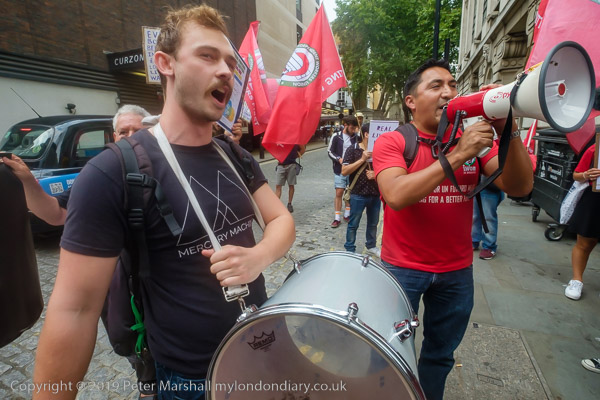
Finally I joined the IWGB Cleaners and Facilities Branch outside the exclusive Mayfair private club LouLou’s where they were picketing and protesting for kitchen porters to be paid a living wage, be treated with dignity, respect and given decent terms and conditions including proper sick pay, holidays and pension contributions. Recently outsourced to ACT, porters want to be returned to direct employment.
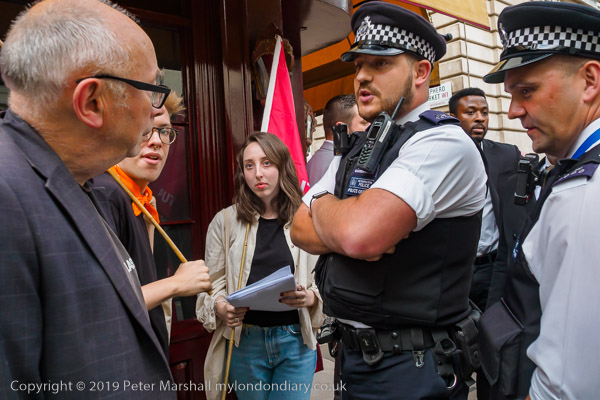
Among those supporting them were Class War, and in the picture above Ian Bone confronts a police office asking why they protect and support the rich. Needless to say the officer had no answer to the question. In general the protesters were reasonably behaved and acting within the law, but police and security hired by the club worked together to try and prevent their protest being effective.
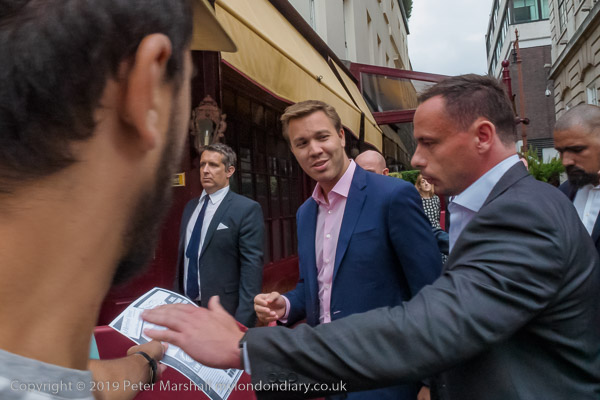
There were angry scenes as staff escorted wealthy clients of the £1800 a year club past the picket, particularly when some roughly pushed the protesters. Police repeatedly warned the protesters but not the security men or customers who had assaulted them. The security also tried to prevent the picket from handing their flier to the customers.
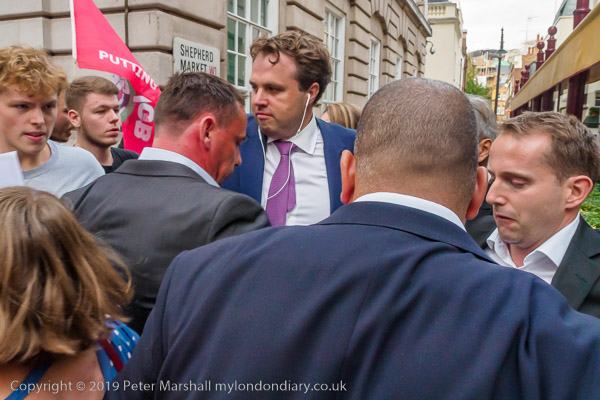
As at previous protests outside of the club, none of the security staff were wearing the visible SIA door supervisor licences required under the Private Security Industry Act 2001, but the police refused to take any action over this.

More pictures at LouLou’s stop exploiting your workers.

Loddon & Thames

Loddon & Thames: Eight years ago I published an account of a walk I made with Linda and Sam from Winnersh Triangle to Reading, not by the rather boring direct route of around 4.5 miles but along two of Berskhire’s rivers, the Loddon and the Thames. Here I republish te text in full, though the original is still on My London Diary, which also has many, many more pictures for those who are interested.


Loddon & Thames

Winnersh Triangle to Reading. Mon 27 Jul 2015

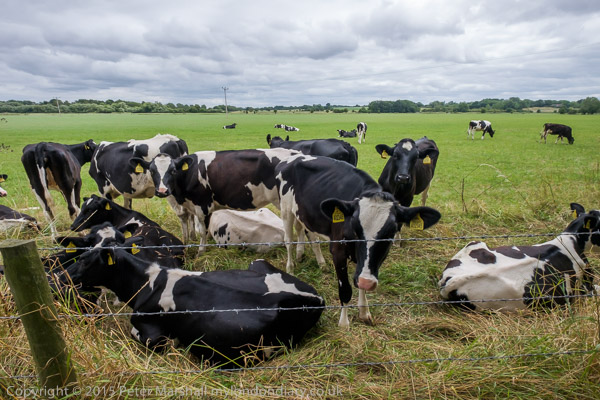
Cows next to a footpath by the River Thames

Winnersh Triangle sounds like a dangerous place to go, a new halt (hardly a station with a platform only a foot or two wide) on the Waterloo to Reading line that opened in 1986. It’s lightweight wood structure was designed not to put too great a load on the Loddon Viaduct on which it hangs, though there is a ticket office at ground level, closed when we arrived.

Loddon & Thames

Mostly Winnersh Triangle is home to company men and the companies they work for in what the web site describes as “an 85-acre, mature business environment” between the A329M motorway, the rail line and the River Loddon. The web site says it’s a place where “everyday things become exceptional and exceptional things happen every day“, but very little seemed to be happening on the day we went there. It didn’t look like a place where anything of interest ever happened, and its big selling point is that you can be at Heathrow in 30 minutes.

Loddon & Thames

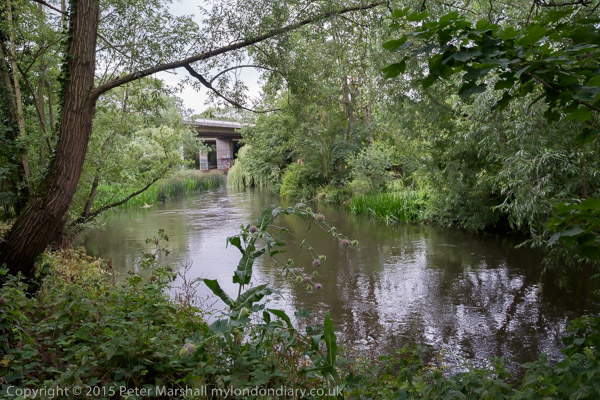
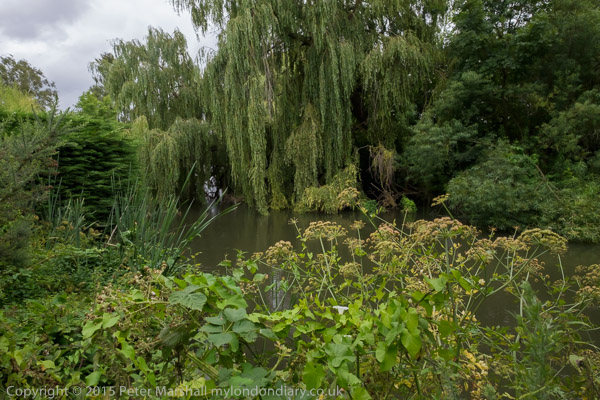
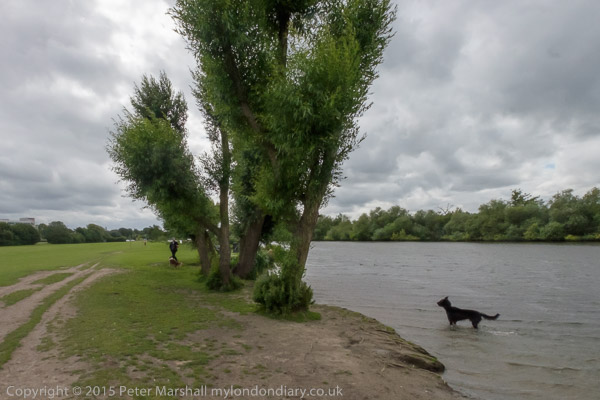
We took a quick look, didn’t like it and headed south under the railway to walk along the Reading Road to Loddon Bridge, joining a footpath that led north beside the River Loddon under the railway and motorway. You’ve probably never heard of the Loddon, but its a sizeable tributary of the Thames, that often gets too sizeable for its banks, flooding nastily. A man in council hi-viz who was checking the river gave us a 20 minute dissertation on this and related matters before we all escaped, though I’d wandered away taking pictures after the first five.

Loddon & Thames

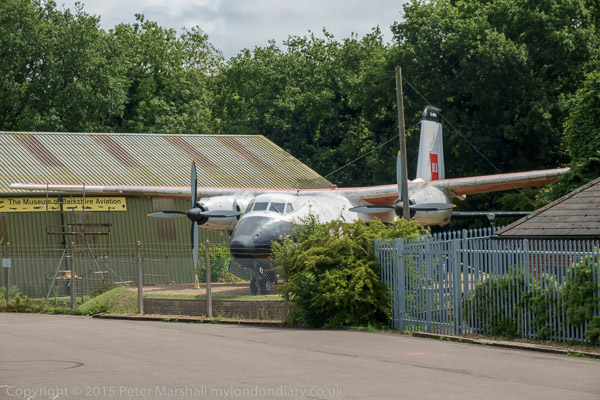
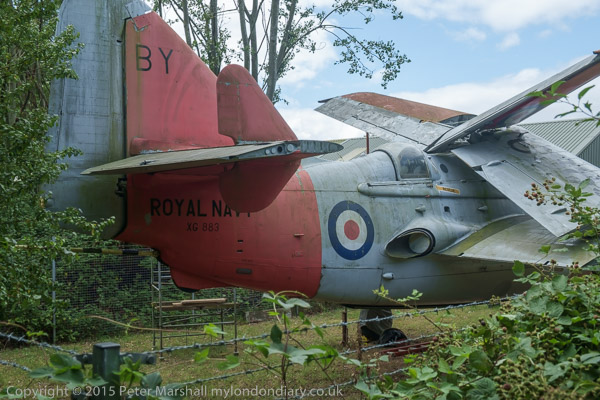
Fortunately the river was fairly low or we might have been paddling or swimming for the next mile or so, before the path veered away and climbed to a road and we found ourselves briefly in suburbia. Then we came across a large BEA twin prop plane, its presence soon explained by a sign ‘The Museum of Berkshire Aviation’. It was closed which saved us from having to decide if we wanted to be enthralled by “Berkshire’s dynamic contribution to aviation history.”

You can find out more on the museum web site, which includes a picture of a rather dinky little ‘Miles Pusher’, which was “built by F. G. Miles under protest and therefore never flew.” Miles went bust in 1947, and Handley Page took over the designs, accounting for the Handley Page Herald turboprop standing outside. Miles from 1942 had been designing an experimental supersonic jet aircraft to fly at 1000mph, but the Air Ministry in 1946 cancelled this, deciding only to build it as an unmanned rocket-powered scale model which achieved controlled flight at Mach 1.34 – 1020mph. The design of the Miles M52 informed the later English Electric Lightning which I saw at the Farnborough Air Show in the early 1950s and could out-perform anything from that era.

We didn’t hang around, though Sam looked up a few things on his mobile and we photographed the Fairey Gannet out the back before going along the footpath and down to the river to continue our path through rural Berkshire alongside the river to Whistley Mill Lane.

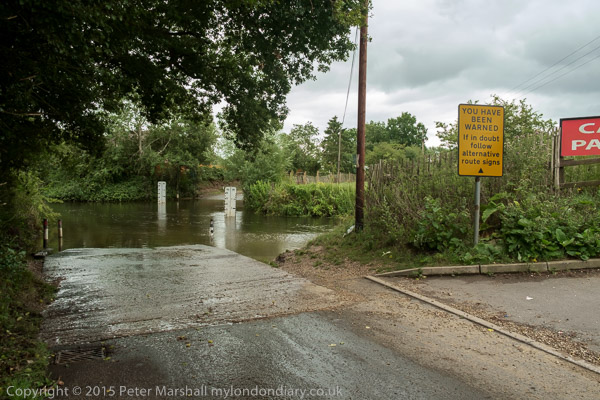
This leads to a ford over the Old River, still a stream of the River Loddon, and unless you are driving a Land Rover or something larger, its probably best to turn around and go back. The level markers were at 2 feet, but fortunately there is a footpath to a footbridge around 60 yards to the south which we crossed, taking us to the Lands End pub, which might have been a good place to lunch, but we had brought sandwiches.

The next mile or so took us through the Charvil, a suburban fringe of Twyford, and with some difficulty across the A4 to Milestone Ave, a narrow lane with some 1930s development on the east side for the first half mile or so. Just before a bridge over one of the minor arms of the Loddon, a footpath leads off to the River Thames. We’ve previously walked along the Thames path on the opposite bank, which we came on to a mile or two later as it crosses the bridge at Sonning.

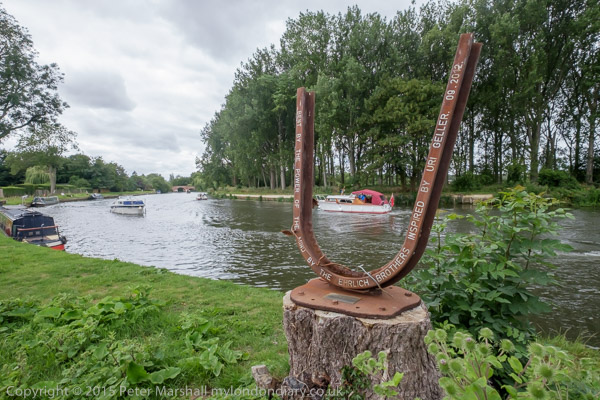
Sonning is home to Uri Geller

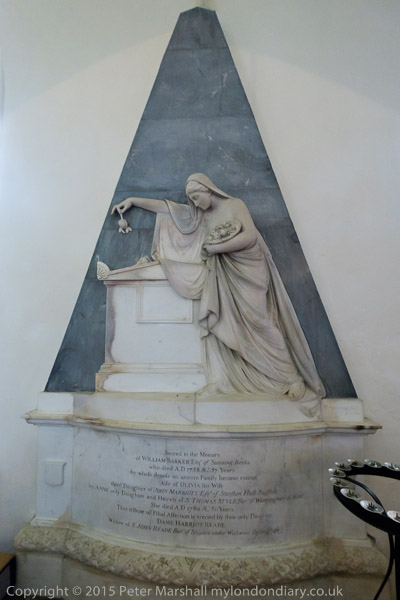
We took a look inside St Andrew’s Church there (and were given a copy of what must be one of the most lavishly produced church magazines in the country) and briefly explored the grounds before taking the path from the churchyard to rejoin the Thames path, walking along this into Reading for the train home.


Many more pictures from the walk on My London Diary.

Darent Valley Path & Thames

Darent Valley Path & Thames, Dartford, Kent. On Saturday 4th July 2015 I went by train with my wife and elder son to Dartford for a day’s walking mainly beside the River Darent and River Thames.

Darent Valley Path & Thames

It was a hot summer day and the sky was blue with just a few small patches of white cloud. It probably wasn’t the best day to have chosen, as this was a walk with relatively little shade, but as usual there was a little breeze by the rivers to cool us slightly.

Darent Valley Path & Thames

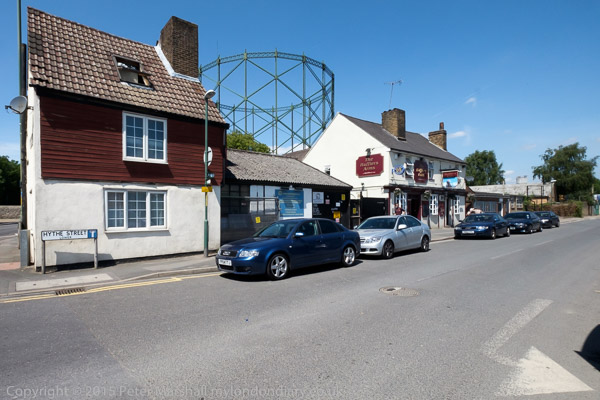
I’d walked (and cycled) along the paths we took several times before, first in the 1980s, but they were new to my companions. After taking a short look at the Darent in Dartford we made our way to Hythe Street. Its name means a landing place or small port, and the Darent was once an important navigation at least as far as the mills in the centre of Dartford. The has been a pub here since 1764 and the Hufflers Arms gets its name from the men who guided and pulled the barges up the river to here.

Darent Valley Path & Thames

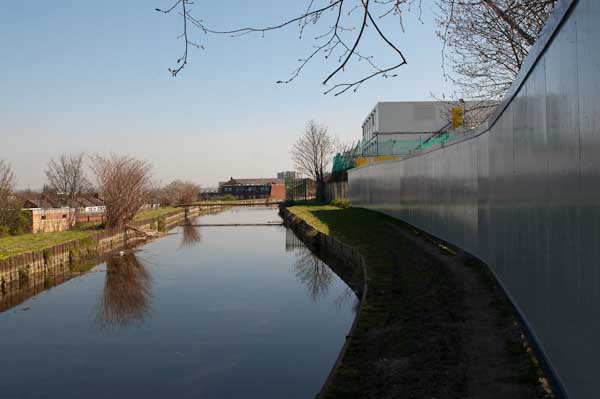
A footbridge takes the path across the Darent here, and past the backs of some industrial sites on towards the half-lock which stopped the river above it drying out at low tide, long derelict. It was something of a surprise to see a narrow boat moored close to it.

Darent Valley Path & Thames

There has been a huge change here since 2015, with volunteers working on and around the lock and the river. You can read more about the work of the Dartford and Crayford Creek Restoration Trust on the Facebook page of the Friends of Dartford and Crayford Creek, and see some of the changes in the pictures there.

Darent Valley Path & Thames

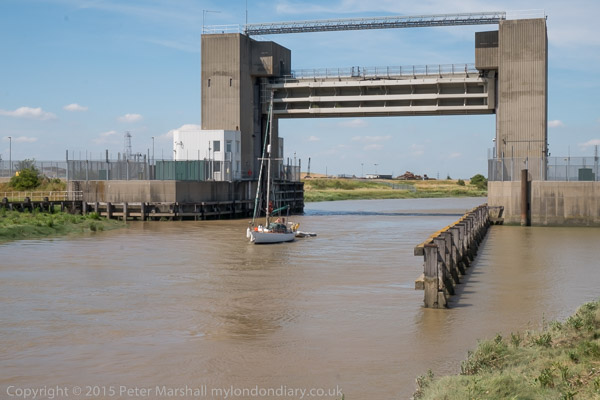
Later in the day I photographed a yacht making its way through the flood barrier from the Thames and going upriver. I heard afterwards that it had reached the recent bridge under the Bob Dunn Way bypass when the tide was just a fraction too high for it to creep underneath with its mast lowered.

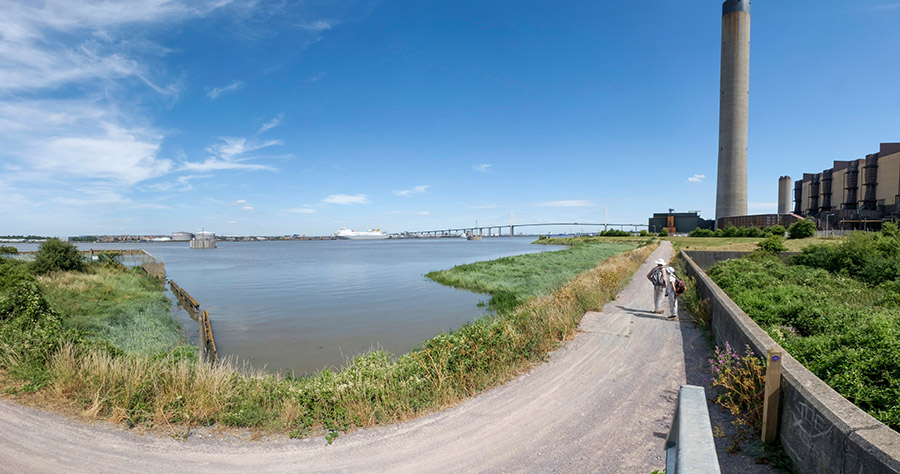
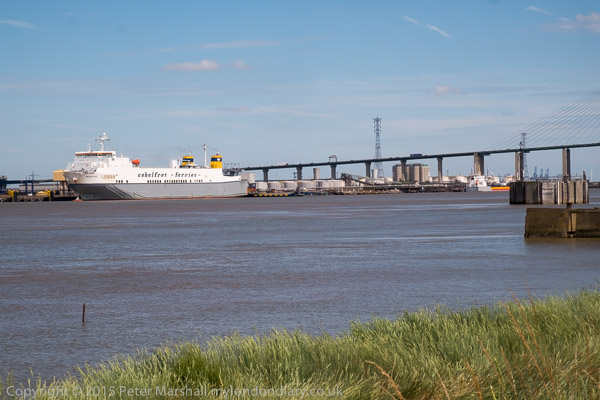
The Thames is pretty wide here and the channel deep enough to take fairly large ships, with the ferries including the ship in the picture operating regular contianer services to Rotterdam and Zeebrugge.

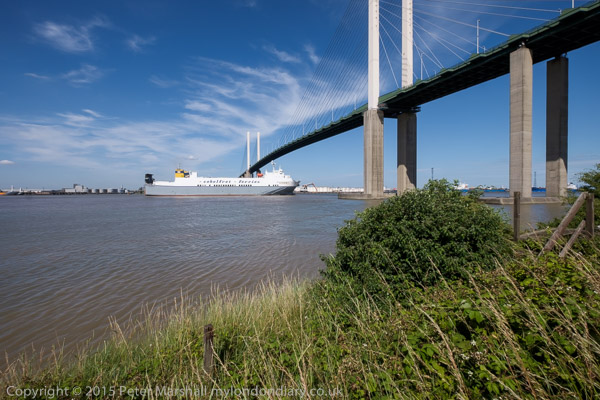
I made a few panoramic images, but the sky was a little empty and blue for it really to be a good day for that. This one which shows my two companions walking on ahead is interesting to me as I have managed to make use of the curvature inherent in these very wide angle views. The path on which I was standing to make the image was more or less straight, though in the picture it seems to bend at roughly a right angle.

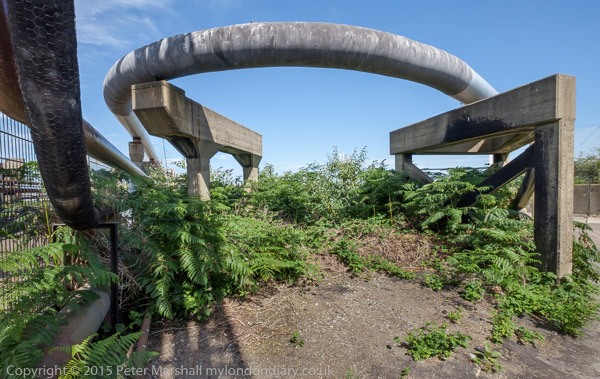
The Littlebrook Power Station had only recently ceased operation, and we walked past some interesting structures there before making our way under the Dartford Bridge.

I was pleased that the ferry was leaving and I was able to take a series of photographs of it going under the bridge and sailing on downriver. Some of the pictures give a better impression of the relative heights of ship and bridge with an enormous amount of headroom for the passage.

By now I was getting tired, mainly from the heat and the lack of any shade, and I took few pictures on the rest of the walk to the station at Greenhithe. We didn’t see any sign of the path marked on the map which would have taken us up to the church at Stone as I had planned, but I think I was releived not to have had to climb up the hill, and perhaps didn’t look too hard. After all I’d been there and taken pictures on various occasions before. And if you are walking this way it’s worth the detour.

More about the walk and more pictures at Darent Valley Path & Thames.


New River, Nuclear Waste, Wandle, Orange Order & Syria

Saturday April 17th 2010 was a long and varied day for me, travelling to various parts of London and making a couple of short walks as well as photographing three events.


New River & Harringay – Finsbury Park

New River, Nuclear Waste, Wandle, Orange Order & Syria

My journey across London had been rather faster than expected, probably because TfL’s Journey Planner had estimated rather longer times than I needed for connections, and I arrived at Harringay Green Lanes with rather a lot of time to spare.

New River, Nuclear Waste, Wandle, Orange Order & Syria

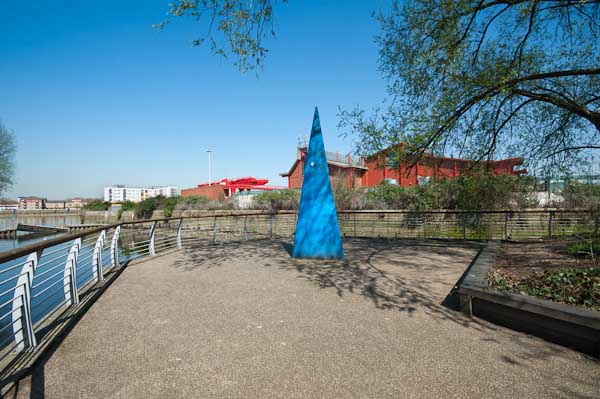
So I decided to walk around part of the area, walking partly along the New River, a water supply aqueduct opened in 1613 to bring water from Hertfordshire to London. It’s no longer New and was never a river.

New River, Nuclear Waste, Wandle, Orange Order & Syria

The light and sky was rather unusual. Like most of the Europe London was under a cloud of volcanic ash from the impossible to spell Eyjafjallajökull in Iceland, and no planes were flying. Thee sky had a slightly different blue to usual and lacked the con-trails and wispy clouds that these decay to and was a little dull from horizon to horizon. It wasn’t ideal for the panoramic views I made.

New River, Nuclear Waste, Wandle, Orange Order & Syria

More at New River & Harringay.


Olympics and Nuclear Trains – Harringey

New River, Nuclear Waste, Wandle, Orange Order & Syria

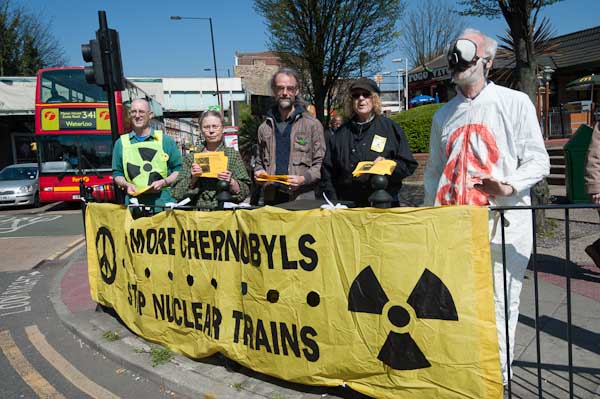
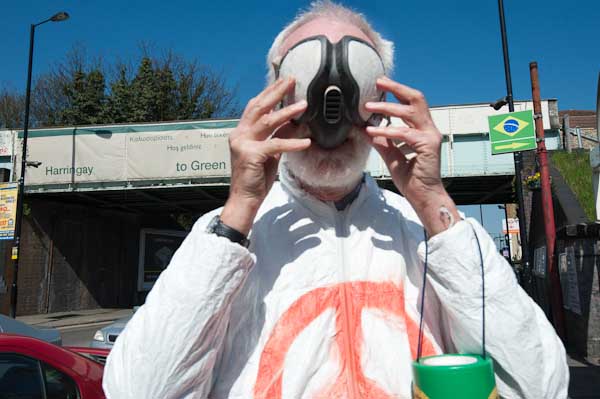
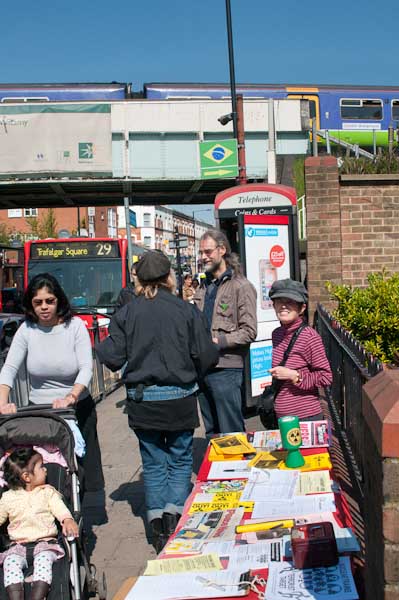
A few members of the Nuclear Trains Action Group and London CND were handing out leaflets close to the rail bridge on Green Lanes warning of the dangers of trains carrying highly toxic radioactive waste through densely populated North London. The event was given added moment by President Obama’s recent warning that nuclear terrorism is the gravest threat to global security.

Protesters had come to Haringey because nuclear waste from the power station at Sizewell is regularly shipped by rail on the line through here on its way to be reprocessed at Sellafield. Waste from Dungeness also travels through London, but on a route through the south and west of the city.

A terrorist attack on the trains carrying spent fuel rods could contaminate considerable areas of London with highly toxic materials and deaths could result. The protesters also pointed out that the route also goes past the Olympic site and an incident there would give the terrorists a huge amount of publicity.

Journalists had planted a fake bomb on one of these trains in London in 2006 to show the lack of real security and there has been no attempt to provide adequate security along the whole length of the route.

Transport by sea would be safer but would add significantly to the costs, and nuclear power is already hugely uneconomic when the full costs of decommissioning of power stations and safe long-term storage of wastes are included.

Olympics and Nuclear Trains


Wandsworth and the Wandle – Wandsworth

It hadn’t taken long to take a few pictures of the protesters in Haringey, and I still had rather a long time before my next event.

I’d heard that a new section of path had been opened by the Wandle close to where it enters the River Thames and planning my day I’d thought I would have time to take a look at it. It’s a longish journey from Haringey to Wandsworth, south of the river, but I had plenty of time to eat my sandwich lunch on the journey.

I was disappointed to find that although I could walk along the new section of ‘riverside’ path, it was still a short distance from both Wandle and Thames and these were still largely hidden from view by fences.

More at Wandsworth and the Wandle.


Loyal Orange Lodge London Parade – Westminster

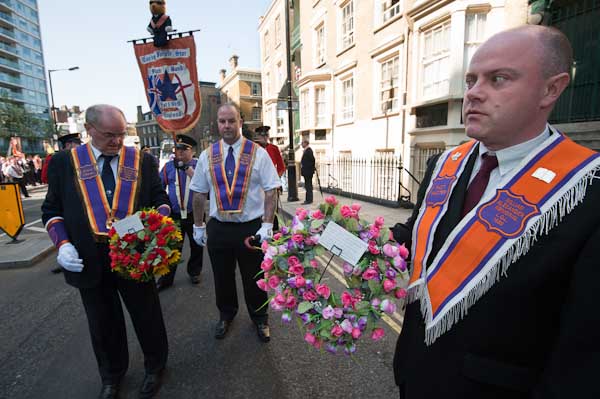
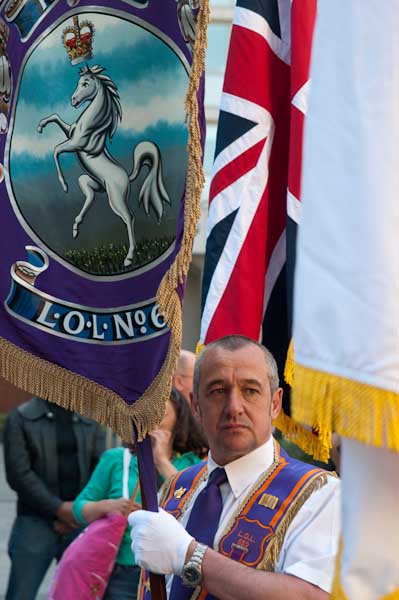
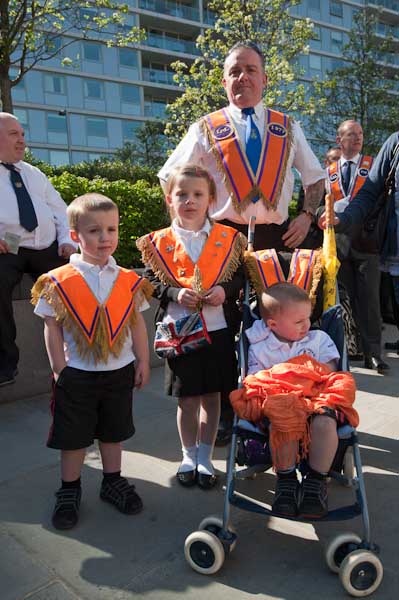
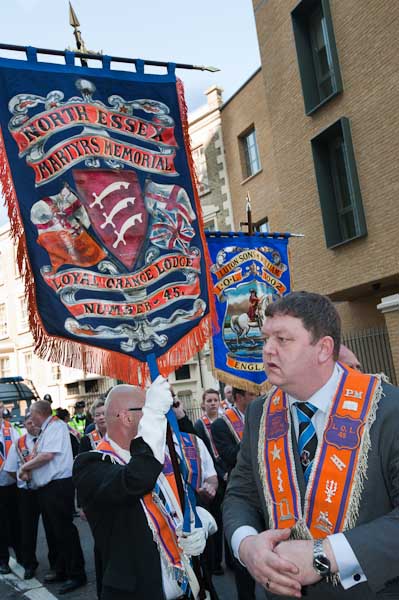
My next journey, to Clapham Junction and then Victoria was rather easier, and I arrived in time to photograph the members of the City of London District Orange Lodge and their guests as the prepared to march though central London on their St Georges Day Orange Parade.

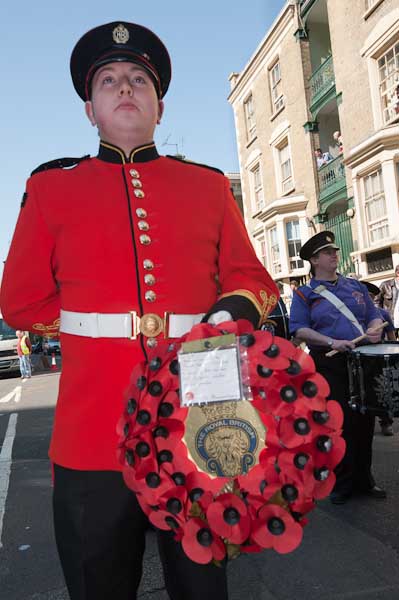
They were going to march to lay wreaths in memory of Crown Forces at the Cenotaph and then on to St James’s Square to lay another at the memorial to WPC Yvonne Fletcher, fatally wounded by a shot from the Libyan Embassy on 17 April 1984.

Among other groups taking part were the Corby Purple Star Flute Band and the Churchill Flute Band of Londonderry.

Even with progress towards peace continuing in Northern Ireland and now 25 years since the Good Friday Agreement, parades such as this are still contentious there. But in London they arouse little or no antipathy and are seen simply as a celebration of a particular Protestant culture.

More pictures at Loyal Orange Lodge London Parade.


Release Syrian Political Prisoners – Syrian Embassy, Belgrave Square

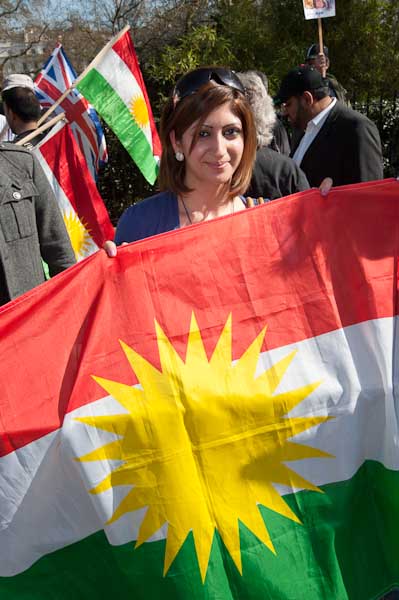
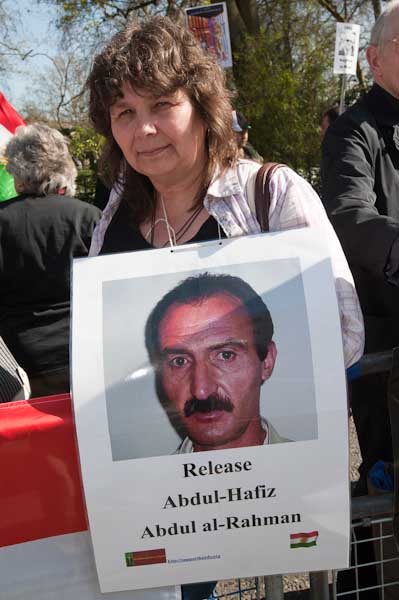
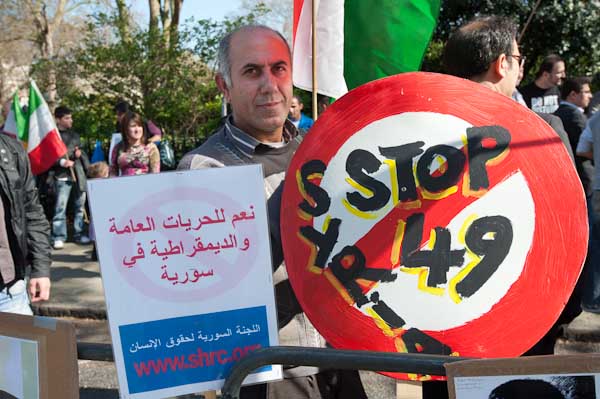
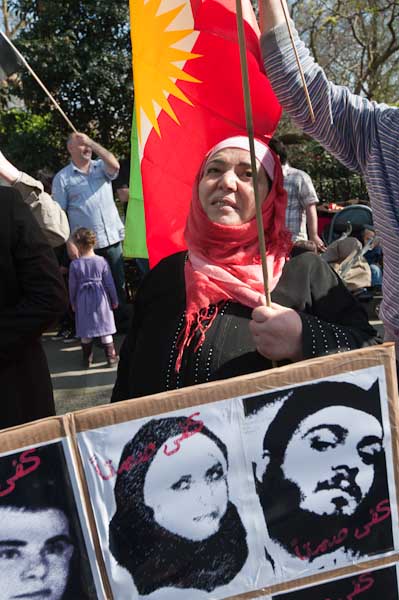
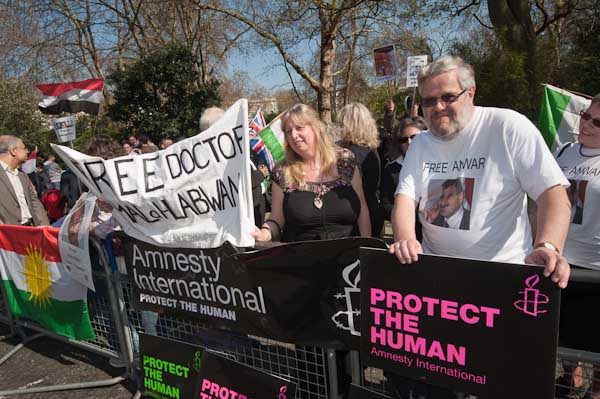
I left the Orange parade to make my way to the Syrian Embassy, where Kurds and others were protesting on the 64th anniversary of Syrian independence calling for the release of Kurdish prisoners of conscience held in Syrian jails.

Similar demonstrations, organised by the International Support Kurds in Syria Association (SKS, based in the UK and founded in 2009) were taking place in Brussels, Canada, Switzerland, France and the USA.

The protesters waved both Syrian and Kurdish flags – which are illegal in Syria – and called for the prisoners to be released and for the repeal of Decree 49. Introduced in September 2008, this controls the movement of people in the border area between Syria and Turkey where most Kurds live, and under it people there have to get a licence to build, rent or buy property.

Around 1.7 million Kurds live in Syria and have been systematically denied their basic human rights for many years. In 1973, around 300 villages were confiscated and the land taken from around 100,000 Kurds and handed over to Arab farmers, with the names of Kurdish villages being changed into Arabic names.

Emergency rule had been in force in Syria since 1963 and a 1962 law led to around 120,000 Kurds being stripped of Syrian nationality and becoming stateless. They are not allowed to move house, own land or businesses, are banned from many jobs, have no passports or other travel documents and their access to medical treatment is restricted.

Since the Syrian revolution of 2011, the largely Kurdish northeast of Syria has become the de-facto autonomous region of Rojava, adopting universal democratic, sustainable, autonomous pluralist, equal, and feminist policies.

More at Release Syrian Political Prisoners.

Wandsworth Panoramas – March 2014

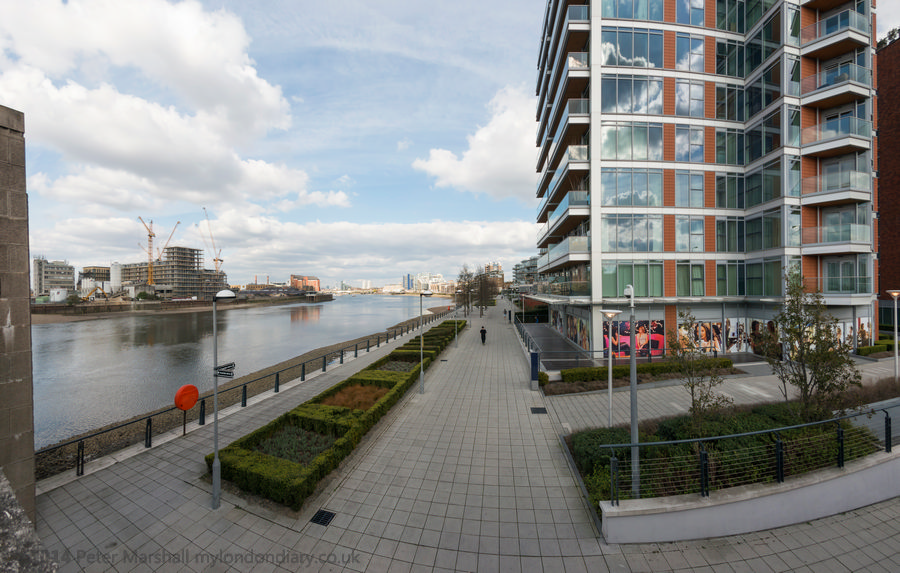
As a photographer I’ve long been interested in the difference between how we experience the world around us and how the camera records it. Some of those differences are obvious but others less so, and some we are seldom aware of.

Wandsworth Panoramas - March 2014

The camera records an image produced by its lens which follows strict optical rules which I learnt about long ago in my physics lessons, though real lenses deviate slightly from those ideal and perfect specimens in those science texts.

Wandsworth Panoramas - March 2014

The camera holds a film or sensor to record that image – and again does so following strict physical (and chemical for film) processes which may fail to record significant features and distort others to produce an essentially flat two-dimensional image. It may not even record colours but if it does they always to some extent arbitrary, as too are the tones.

Wandsworth Panoramas - March 2014

Those of us who grew up on film are perhaps more aware of this than the digital generations. We had to be aware of the differences in recording of, for example Ilford’s Pan F and Kodak’s Tri-X, and how these were affected by processing and printing, and of the rather unreal but different colour renditions of Kodachrome, Kodacolor, Ektachrome, Agfa, Ferraniacolor and the other colour film films, each with its own qualities. Though perhaps if we ever used Orwo film quality was not the right word for its purplish nature.

Wandsworth Panoramas - March 2014

Of course there are differences in the way digital cameras record colour, but these are rather smaller, and we can make use of software to make them match more closely or exaggerate the difference. Lightroom and Photoshop can make my Fuji files look very similar in terms of colour rendition to those from Nikon.

But our experience of a scene is very different, combining inputs from all of our senses, and it would be impossible to over-emphasise the subjective aspects. But even just visually it is still very different. While the lens cuts out all but a small rectangle in front of us, our eyes send information to the brain from a much wider field, much of it except from a small central section lacking in sharpness. Most of us have binocular vision, gathering this data from two eyes a short but significant distance apart, enabling us to see in depth. And our view is always dynamic, our eyes moving around, and as we swing our head around or up and down we have the sensation of moving through a static universe. Doing the same with a camera has a very different effect.

A standard lens – around 40 to 50mm on a full frame digital or 35mm film camera gives a similar idea of depth in its flat images to that we normally experience. With longer lens the effect of depth is reduced and by the time we get to really long lenses the images become flat patterns rather than appearing to represent a three dimensional scene. But what interested me more was what happened when the camera tried to represent a much wider angle of view than the standard, when the rectilinear rendering of normal lenses becomes impossible.

On Monday 14th of March I went for a walk with a painter friend who had brought her sketch book to introduce her to an area I thought she might find interesting. And I wanted to further explore some of the different ways of rendering very wide angles of view with digital cameras. I’d brought two Nikons with me, one fitted with a conventional wide-angle zoom which I used mainly at 16mm, close to the limit for such lenses (and I do have a wider lens which demonstrates this) and the other with a 16mm full-frame fisheye which fills the frame with an image which is 180 degrees across the diagonal.

While my friend stopped to make sketches I had time to make a series of images from similar locations. I kept warmer as I was moving around, but she fairly soon got cold, which was a good excuse to visit the pub which appears in some of these pictures, after which I took her back to the station where we had met and went back to take some more pictures on my own.

Back home I uploaded the images. Those from the conventional wide-angle zoom I’ve use as they were taken, with just the normal adjustments in Lightroom. But the fish-eye images I worked on with my panorama stitching software, PtGui, not to join images but to take the raw image data and process it it various different ways to produce cylindrical projections. If the camera was upright when the picture was taken, this will produce straight vertical lines for all upright elements. There are many different approaches to this which produce visually different results, some of which are common in mapping, such as Mercator.

Those I’ve found most useful are the equirectangular, Vedutismo and Transverse Vedutismo projections used in these examples.

More panoramic images from my walk on My London Diary at Wandsworth Panoramas.


Boxing Day Walks (and Rides)

Boxing Day Walks (and Rides)
Waterworks, Wraysbury

Our Boxing Days here have followed a similar pattern for a few years now, at least in those years where we’ve stayed at home rather than visiting family elsewhere. We get up, have breakfast and then get ready to go out for a walk. We walk from our home to a mid-day meal with my sister and other family members, in recent years at a pub close to where she lives. Then a leisurely wander to her house for tea. And rather later going home, though so far we’ve not had to walk back.

Boxing Day Walks (and Rides)
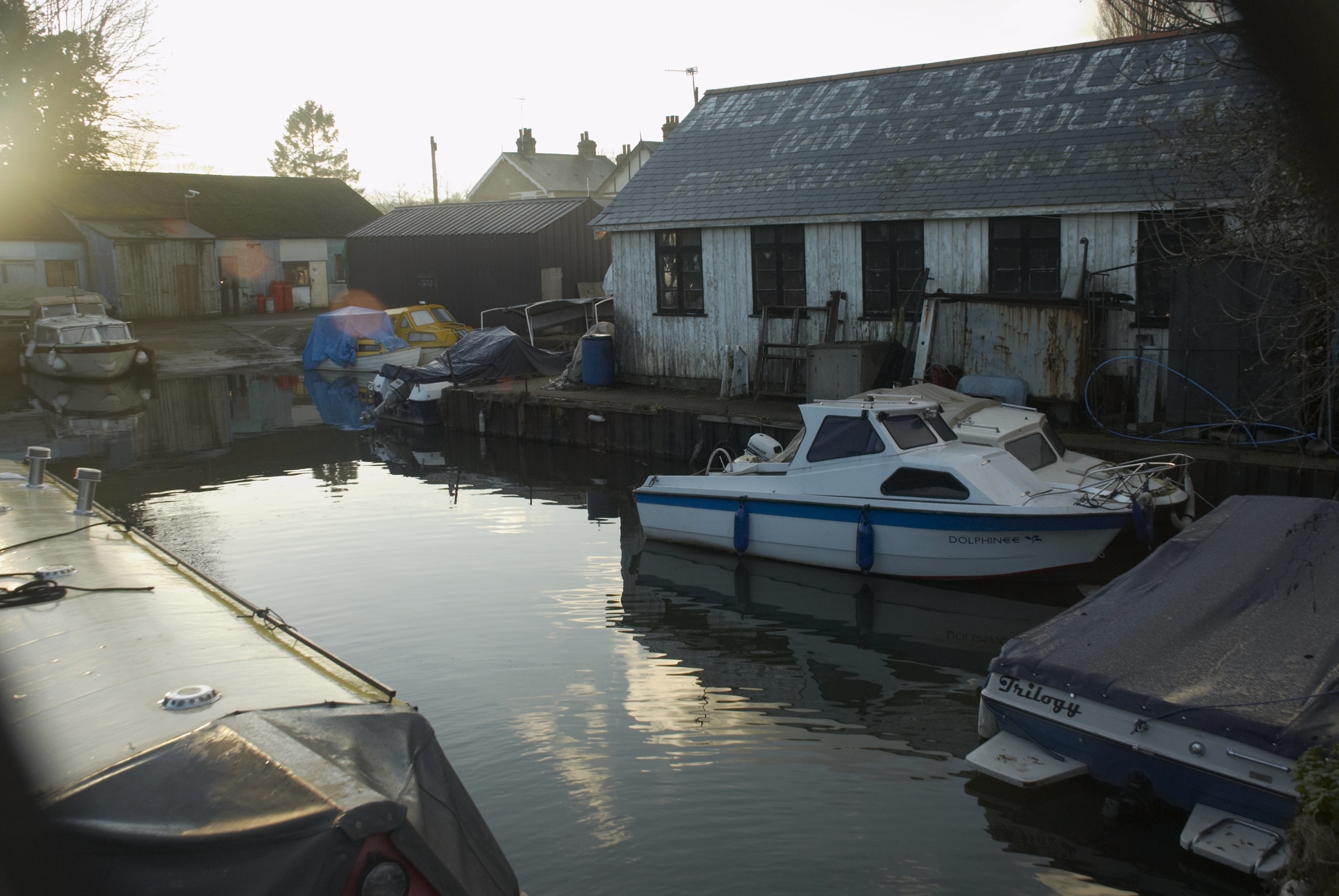
Boatyard at Runnemede

Partly we walk because there is little if any public transport on Boxing Day. We could cycle, but the roads are more rather more dangerous than usual thanks to motorists with a higher than usual alcohol level, and also because I like to have a glass or two myself with my boxing day lunch, though it would be easy to do the journey almost entirely off-road. Perhaps this year we will cycle, the weather forecast isn’t too bad.

Boxing Day Walks (and Rides)

The walk is at least five miles. In the past we used to often take longer and sometimes hillier routes to give us a little more exercise. Now we sometimes stop on the way for coffee at one of the few cafés that are open. The walk helps to get up an appetite for another large meal after our minor over-indulgences the previous day. Years ago we often went out for another walk before our late afternoon tea, but others in the family are now too old for this.

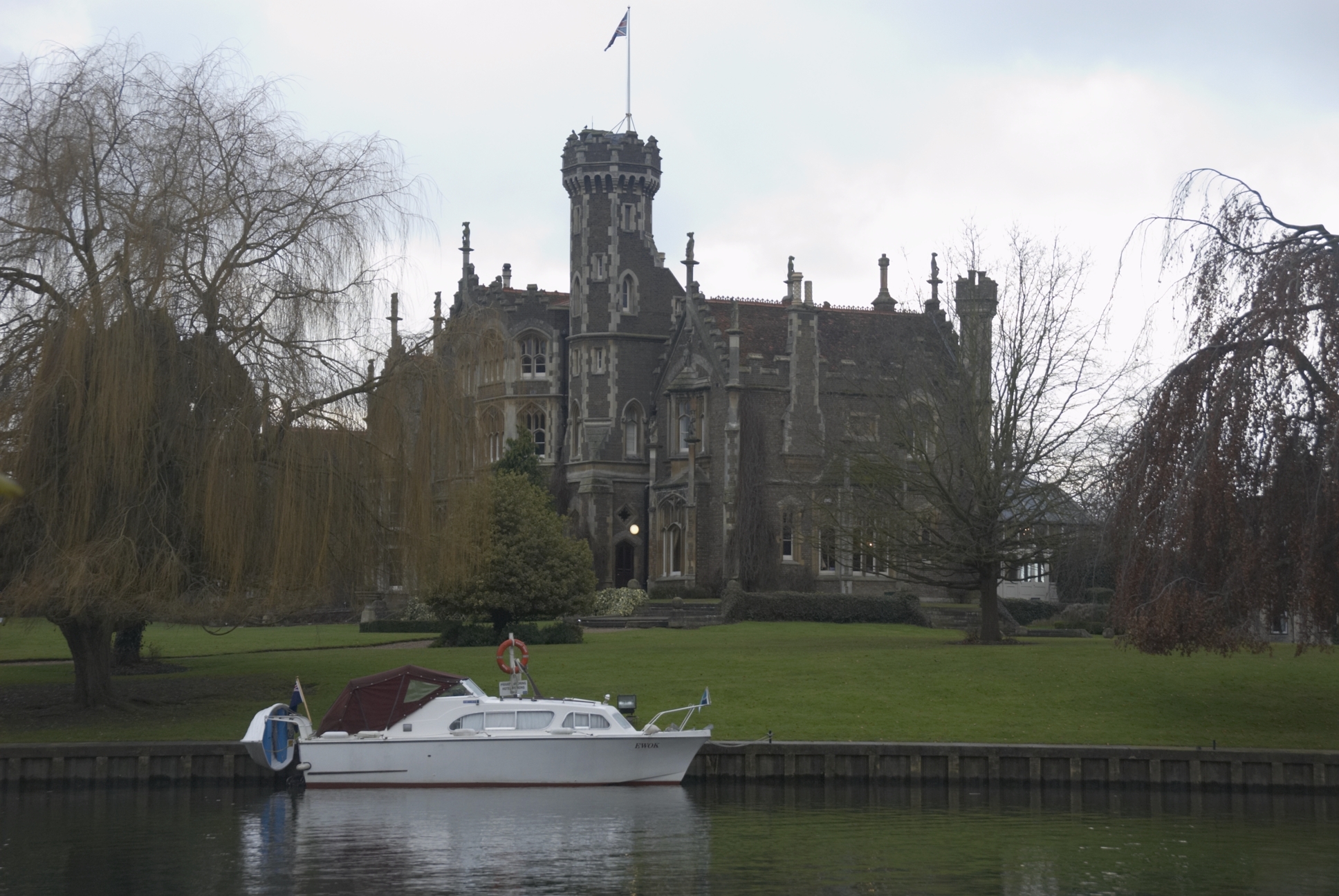
Oakley Court

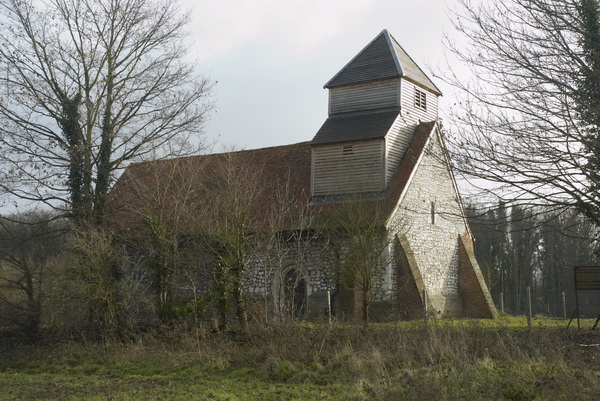
St Mary Magdalene, Boveney,

Of course I take a camera with me, and take pictures on the way, as well as sometimes some family pictures during the meal and after, though these I seldom share outside the family as they have very little interest for others.
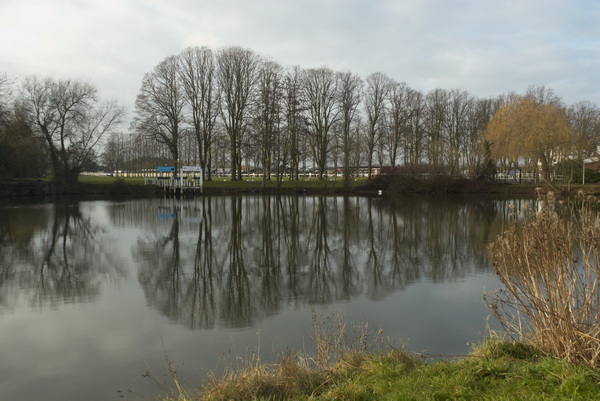
Windsor Racecourse

So earlier I spent some time looking for my pictures from boxing day walks in earlier years to post today. These pictures come from a rather longer journey on 26th December 2005, when we cycled a few miles further along the River Thames than necessary before turning back for our lunch.

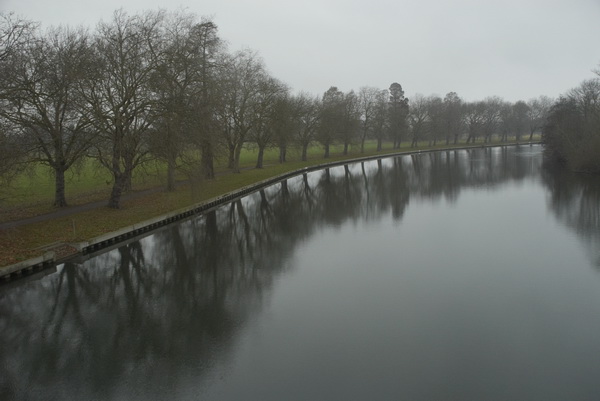
Home Park from Albert Bridge

I first posted some pictures from this walk on My London Diary in 2005. Although that post describes it as a walk, from the distances involved and the EXIF times we must have been on our bikes. And had a very late lunch.
This is a slightly different collection; all pictures were made with a Nikon D200 DX format DSLR.


Stanford-le-Hope and Mucking

Stanford-le-Hope and Mucking

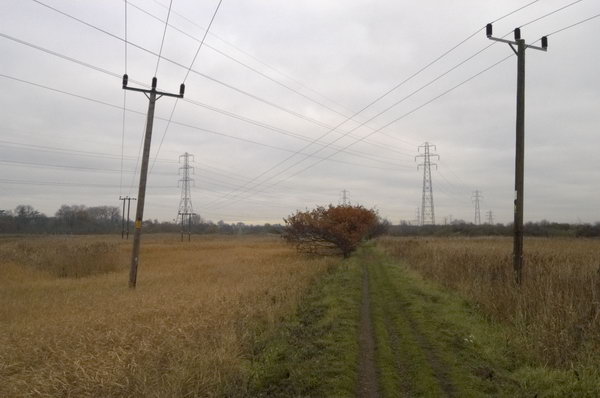
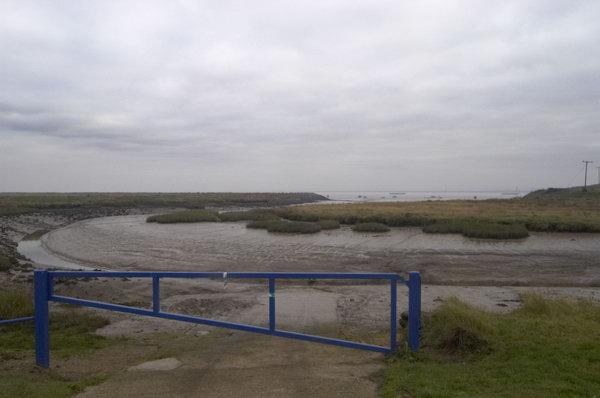
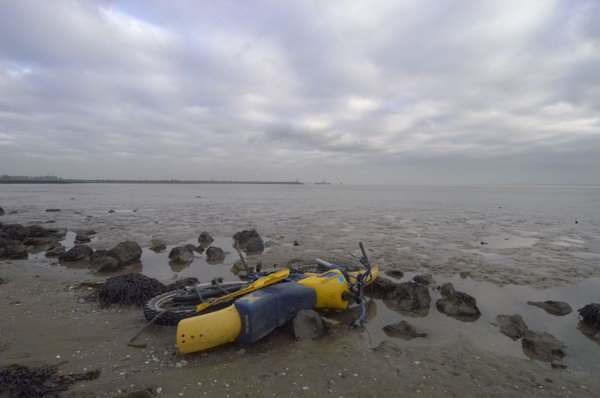
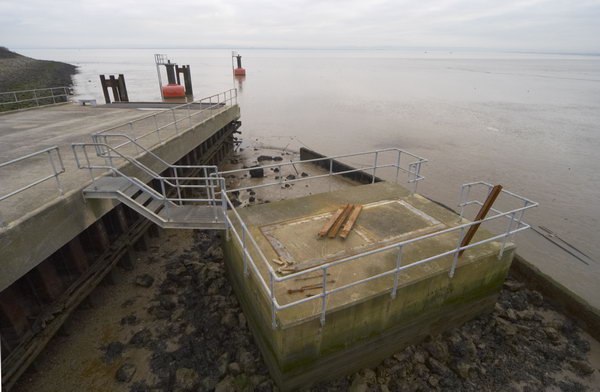
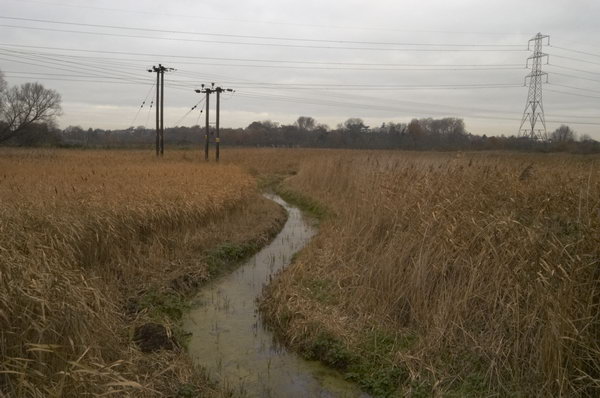
December 2004 was not a great month for weather and it shows in the pictures than I took along the Thames estuary in Essex on Saturday 4th December. But perhaps they are appropriate for the landscape although were I to go back to the RAW files I took – using the Nikon D100 and mainly the then groundbreaking Sigma 12-24mm wideangle zoom – and reprocess them with more recent conversion software they might be a little less drab.

Stanford-le-Hope and Mucking

I took my folding Brompton with me on the train, although much of the route I took was on footpaths. Bromptons are not great off-road bikes and I was probably wheeling it quite a lot of the time, but it carried the weight of my gear in its front bag and let me go quickly along some of the less interesting parts of my route.

I’m not sure if it was on this ride or on another in this part of Essex where the chain came off thanks to an excessive amount of mud and became somehow locked out of place between the frame and some other part, locking the rear wheel completely. I struggled for perhaps 10 minutes to free it without success and had almost become resigned to having to carry it some miles to the nearest station, a rather daunting prospect as together with cameras etc it was a rather unwieldy 40lbs or so.

Stanford-le-Hope and Mucking

Fortunately I was saved by a stranger who came along the path and rather stronger than me managed to pull the trapped link free – though getting his hands covered in oil and mud to do so. I was extremely grateful, thankful and rather embarrassed at the mess he was in, though handing him my oily bike rag to wipe the worst off. It’s great that some people at least will go out of they way to come to the aid of others.
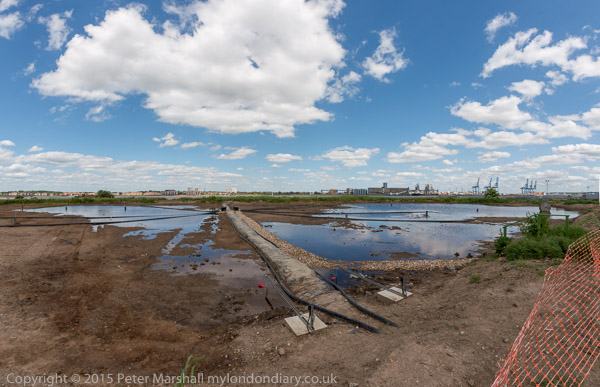
As well as some of the pictures as I posted them at the time, I’ll also put on the text I wrote then on My London Diary, where you can see more pictures. I’ve edited the text slightly, mainly to restore normal capitalisation which makes it rather easier to read.

December started a drab month, with little light, but the forecast for Saturday 4th suggested the mist and cloud would clear, so I set off for Stanford-le-Hope. Single or return asked the ticket seller, I wouldn’t want to stay there I told him.

From the station I turned left and then south towards Mucking and the river. Disappointingly the church in Mucking is now a private house, and the churchyard only open by arrangement. The footpath led through a nature reserve, the largest bog of its type in England, and then turned past a large complex of unfilled gravel pits towards Mucking Creek.

Names on maps can have a fascination, and Mucking Marshes, Mucking Flats, Mucking and Mucking Creek were places I needed to see. In good light they would have been great, but on a dull grey day they lacked sparkle.

The footpath led along the riverside towards Corringham and Shell, but disappointingly the bridge across a small creek had disappeared. There was an unmarked detour along the goods line, but not the same. I returned to Stanford-le-Hope splashing through huge puddles in the rutted lane. One of its few claims to fame is as the home of writer Joseph Conrad, but the cottage in which he lived is surrounded by a high fence and there is little to see.


My London Diary – December 2004

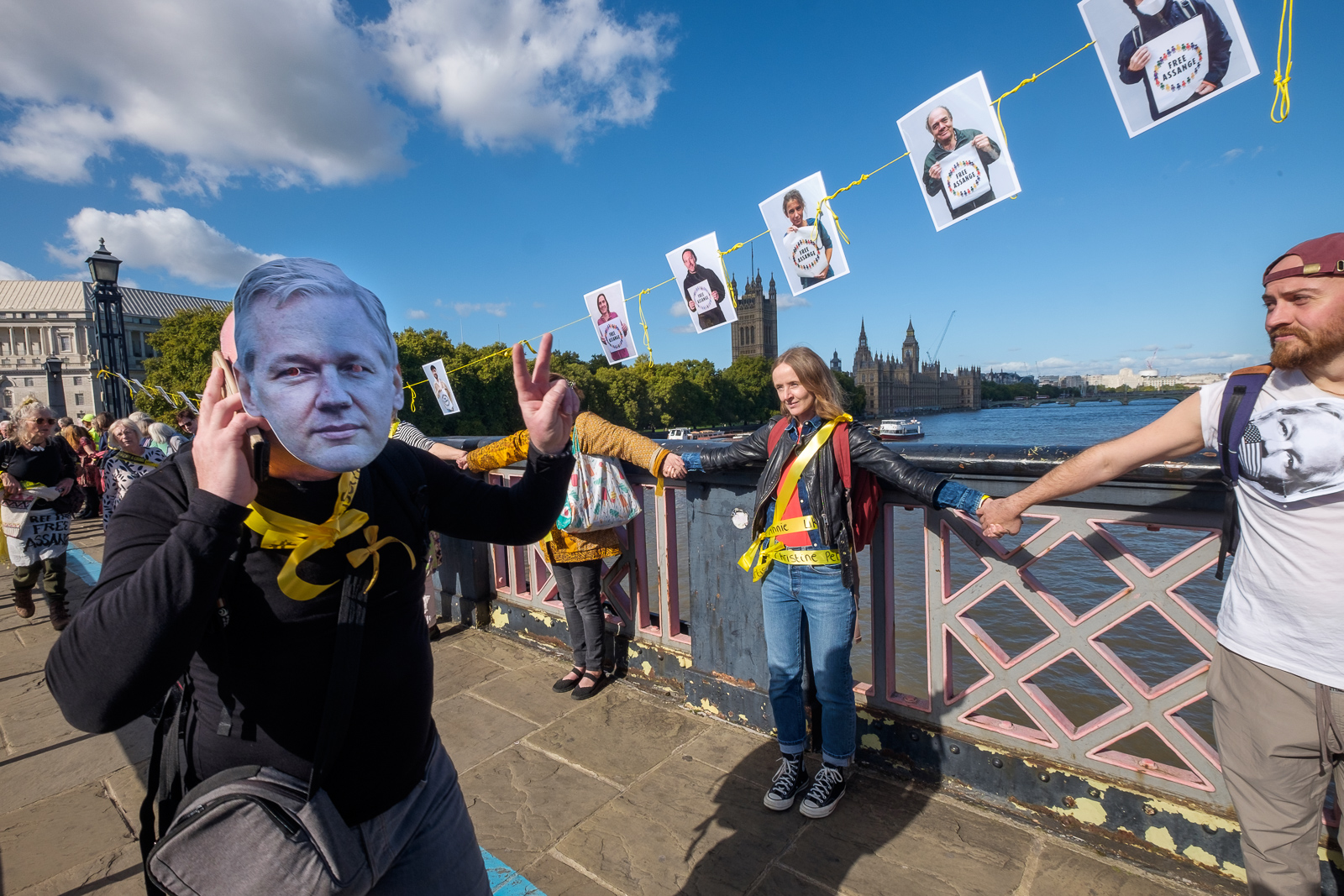
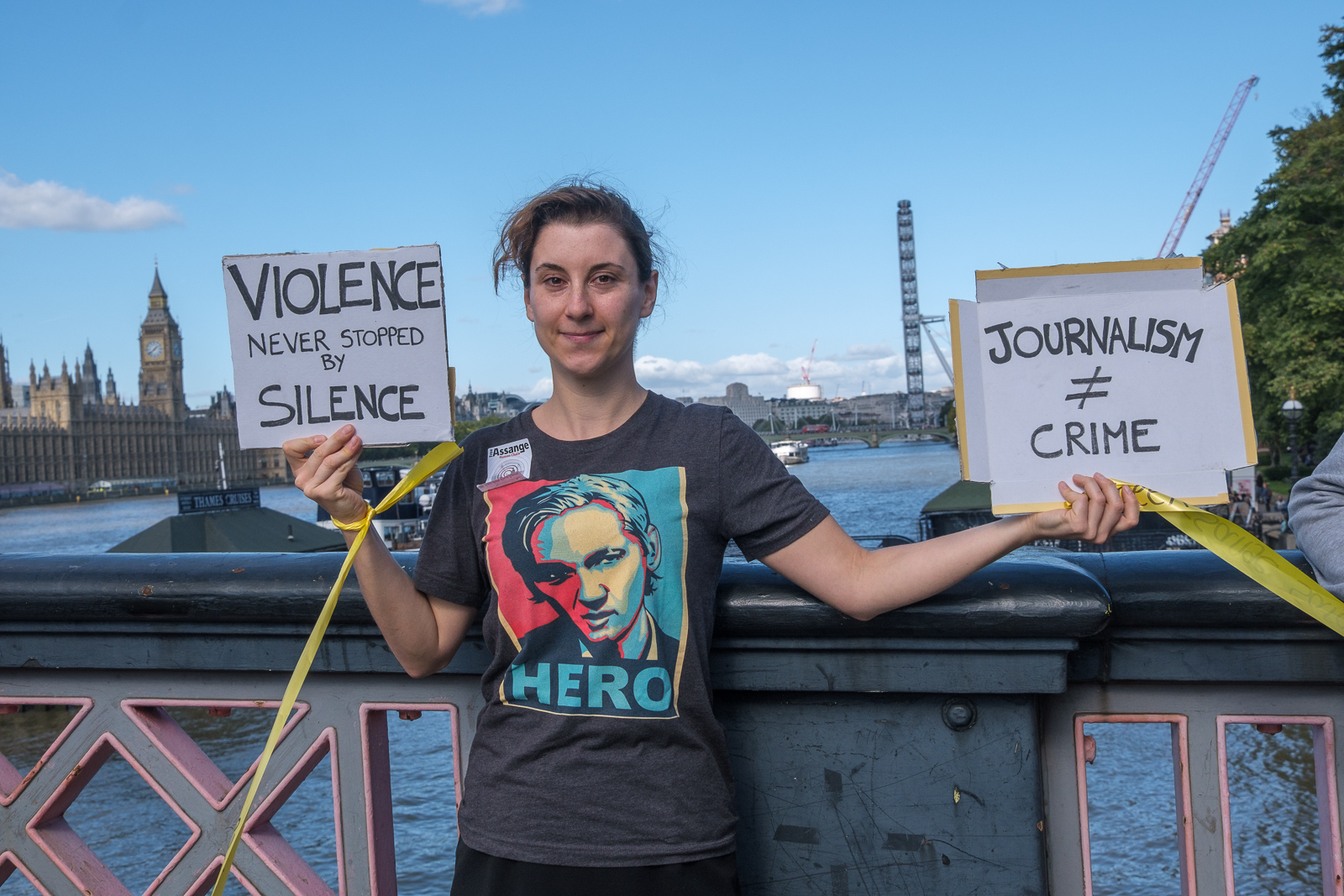
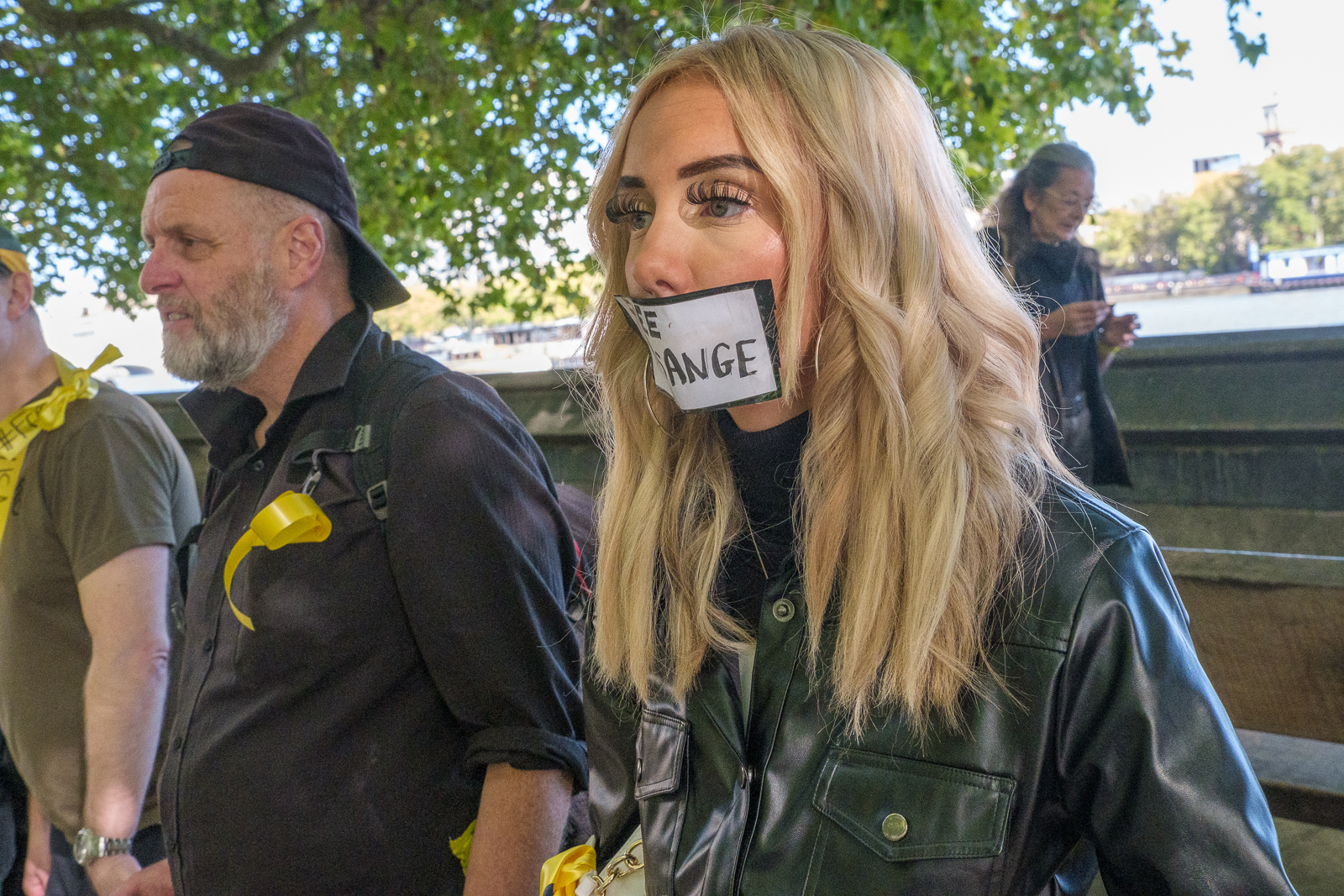
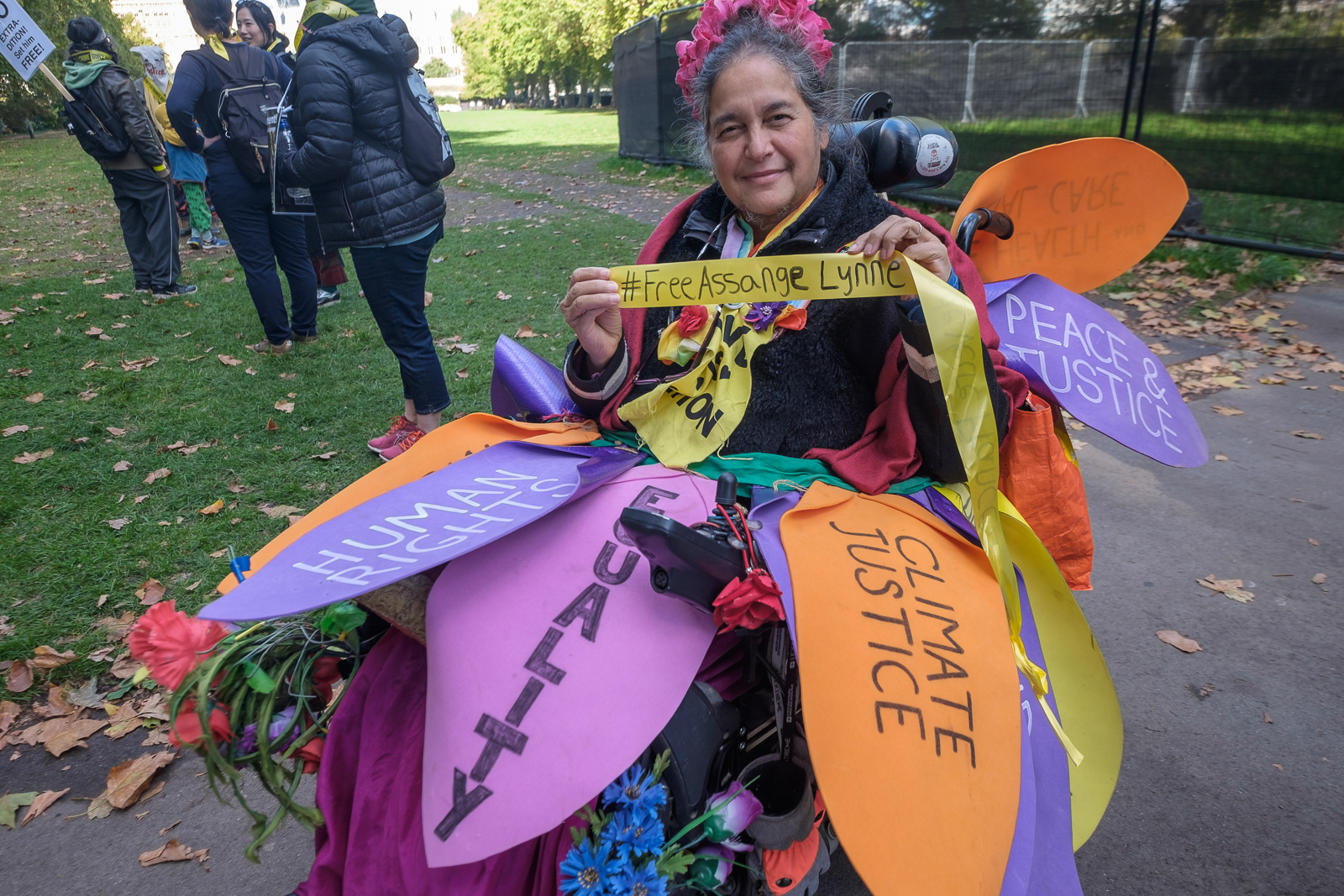
Human Chain Around Parliament – Free Assange!

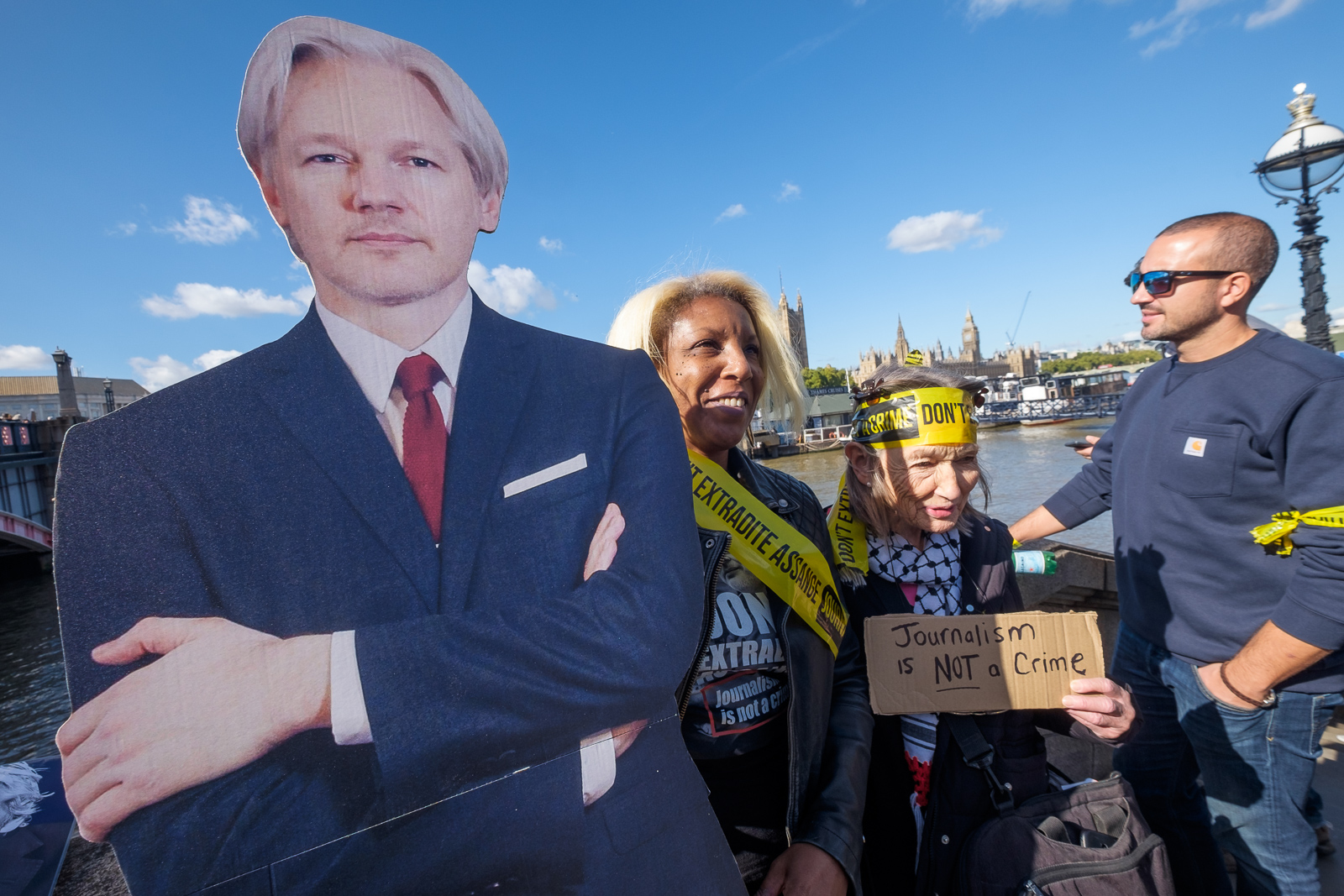
Last Saturday, 8th October 2022, I photographed a protest in London against the imprisonment and possible extradition of Julian Assange, currrently held in the UK’s maximum security jail at Belmarsh.

Human Chain Around Parliament - Free Assange!

Assange’s “crime” was to publish documents about US war crimes in Afghanistan, Iraq and elswhere, making documents downloaded by Chelsea Manning, making them available after suitable redaction to protect the individuals concerned to the world’s press and to the public on WikiLeaks. Wikipedia has a good and fairly detailed entry on him which most of the details here come from.

Human Chain Around Parliament - Free Assange!

If extradited to the US he would be put on trial in a area where the jury would be composed of people from an area with strong connections to the US security services who will already have pre-judged him as guilty. His sentence is likely to amount to 175 years in a US maximum security jail, probably in isolation and never to be freed.

Human Chain Around Parliament - Free Assange!

In 2010 Sweden issued an extradition warrant for him on allegations of sexual misconduct, which were widely seen as a pretext to enable him to be extradited from Sweden to face criminal charges in the USA. When in 2012 he lost his fight against extradition to Sweden he jumped bail to take refuge in the Ecuadorian Embassy in London, where he lived in highly restricted accomodation until 2019.

A new government in Ecuador decided to end his asylum in the embassy and invited police in to arrest him in April 2019; he was then sentenced to 50 weeks in jail for breaching his bail. The Swedish sexual charges against him were dropped later in the year, but the USA immediately began proceedings to extradite him to face trial under the US 1917 Espionage Act.

The decision to use this Act has been widely criticised in the press and elsewhere as being an attack on the First Amendment to the United States Constitution, which guarantees press freedom. And if Assange is guilty then it seems clear that the editors of the newspapers that published the revelations he made in publising the Baghdad airstrike Collateral Murder video, the Afghanistan war logs, the Iraq war logs and other material could also be prosecuted. Even my publishing the link to the video could be a crime.

Assange’s sentence was completed in September 2019, but he was kept in jail because of the US extradition claim. He had been visited earlier by Nils Melzer, the United Nations special rapporteur on Torture and Other Cruel, Inhuman or Degrading Treatment or Punishment, who, as quoted on Wikipedia found “in addition to physical ailments, Mr Assange showed all symptoms typical for prolonged exposure to psychological torture, including extreme stress, chronic anxiety and intense psychological trauma.”

After a protracted hearing including much medical evidence, a judge on 4 January 2021 ruled that Assange could not be extradited to the USA on grounds of mental health and the suicide risk in a US prison cell. The USA appealed the decision, and Assange remained in jail. The High Court rejected much of the medical evidence, believed the US lies of fair treatment made and found in favour of the USA on 10 December 2021.

In April his extradition was formally approved in court and referred to Home Secretary Priti Patel, who approved it in June. But the legal battle continues with a new appeal. Essentially Assange has now been locked up for 10 years. Wikileaks has continued his work in releasing information in his absence. The continuing persecution by both the UK and USA for revealing their war crimes seems spiteful and malicious.
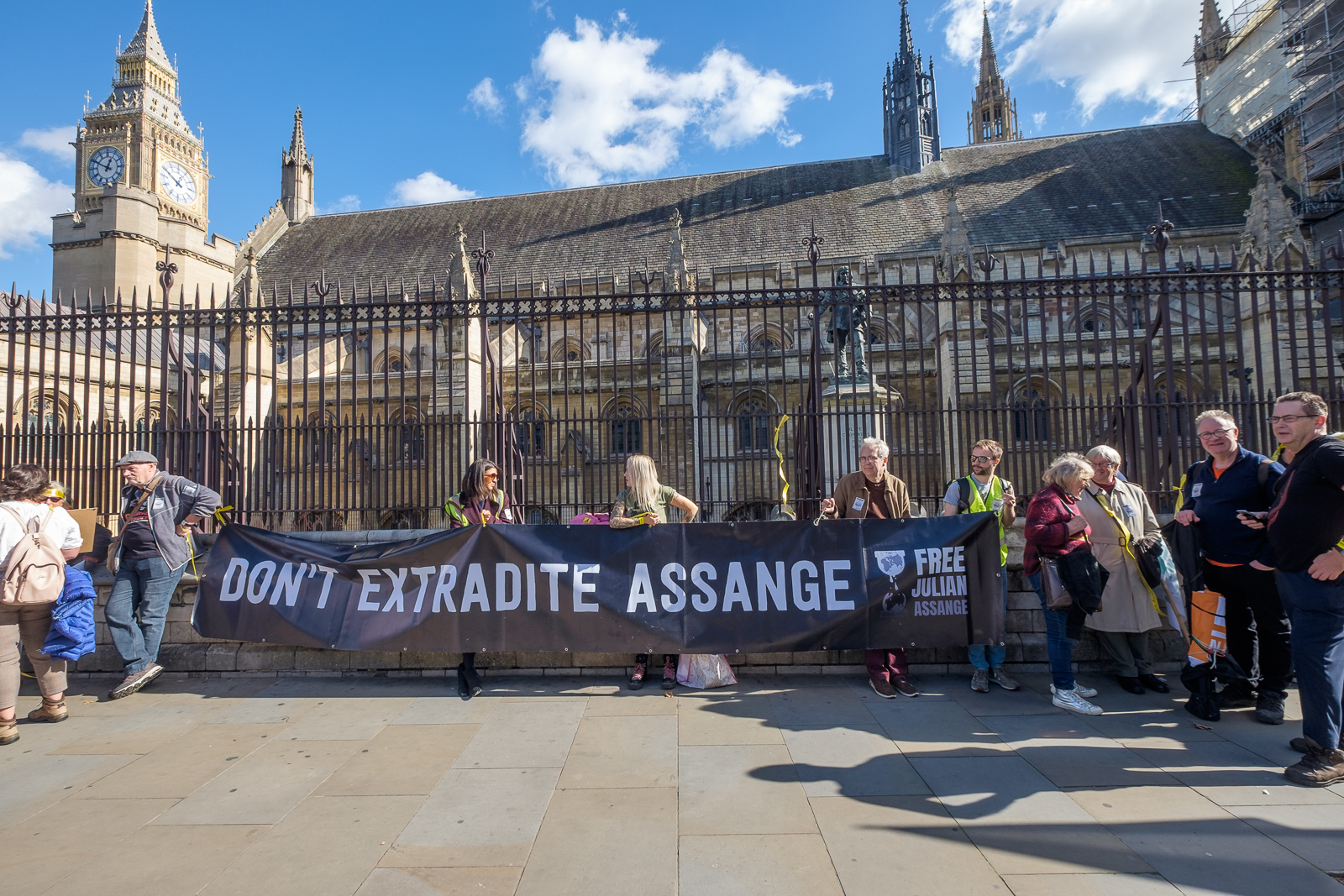
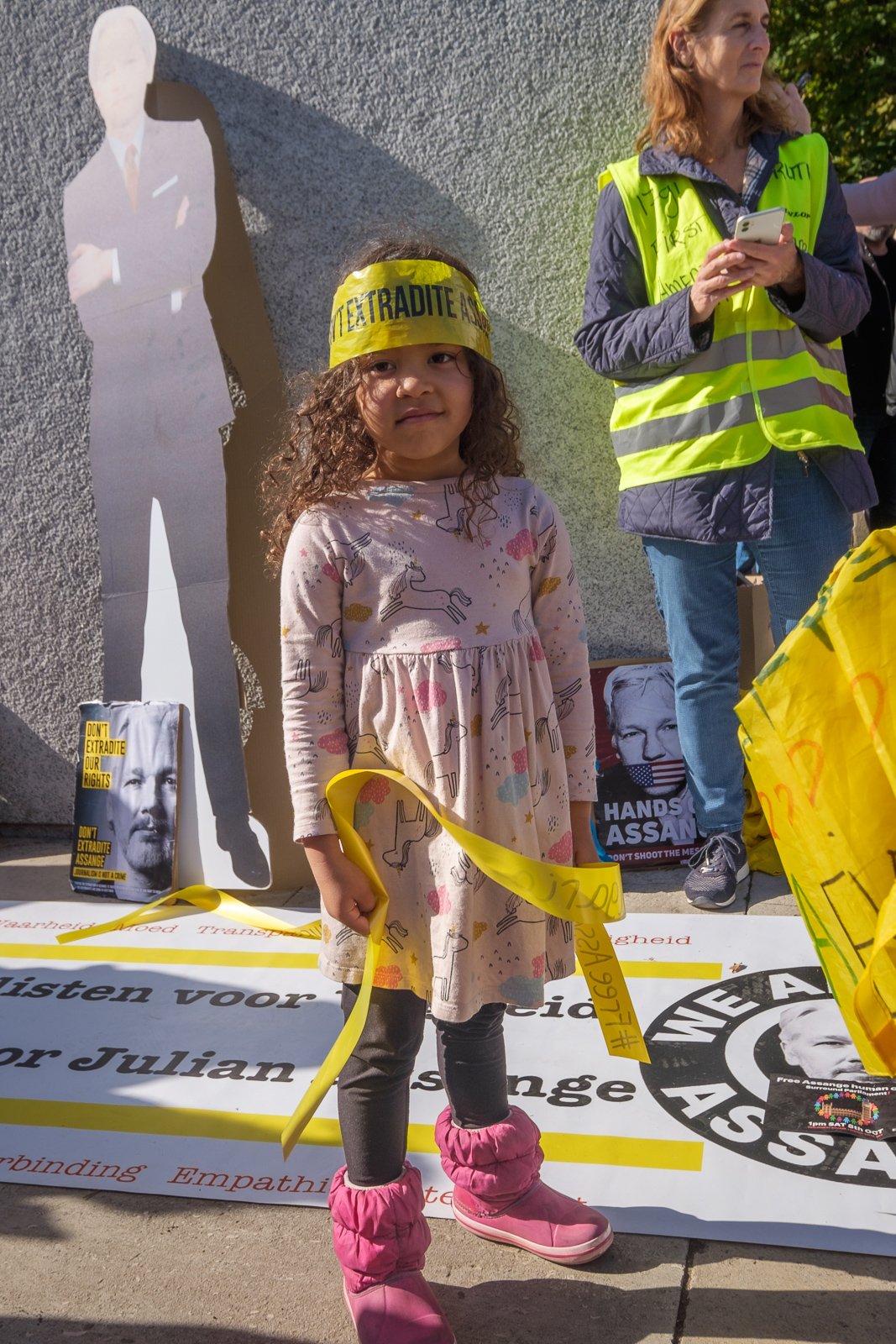
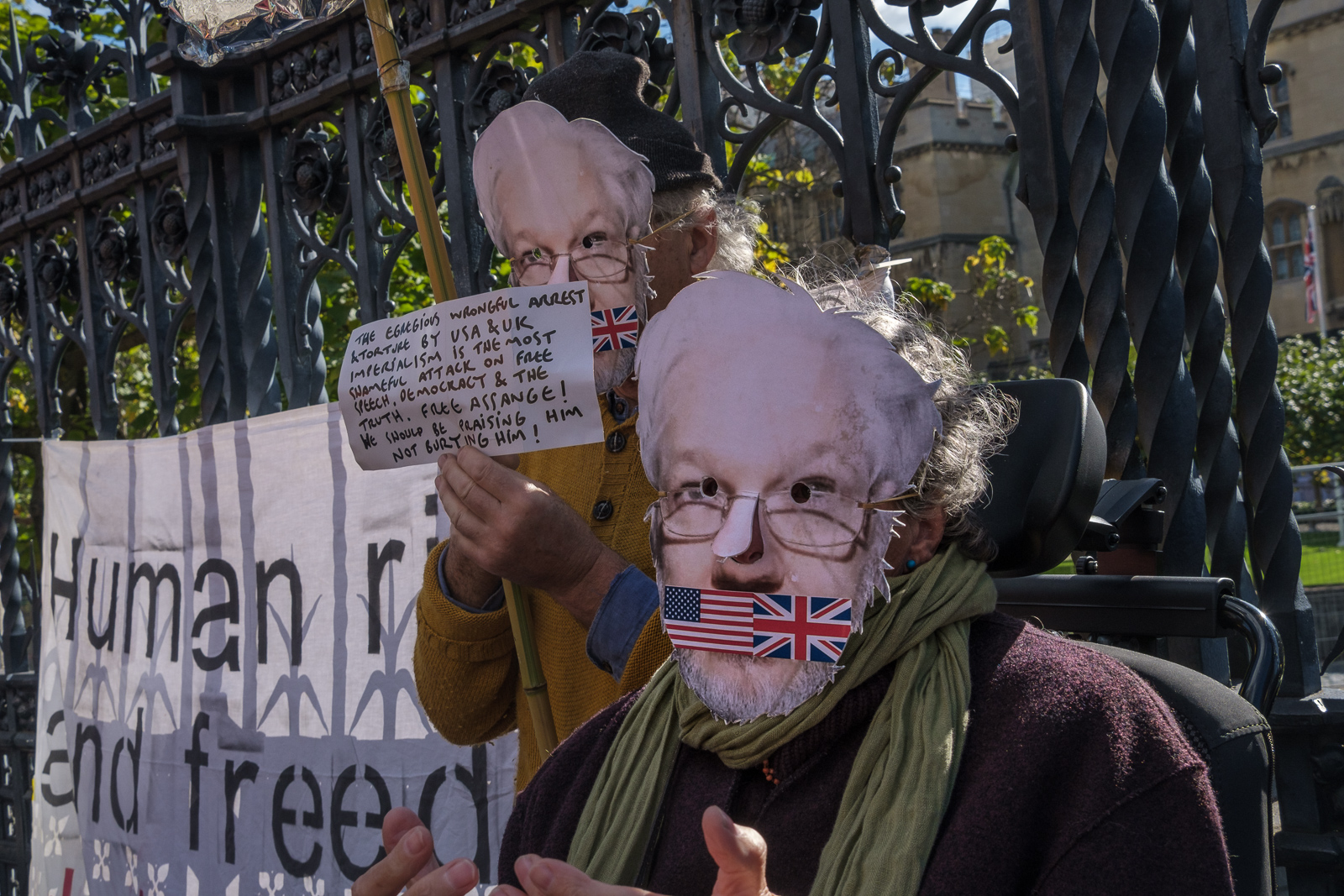
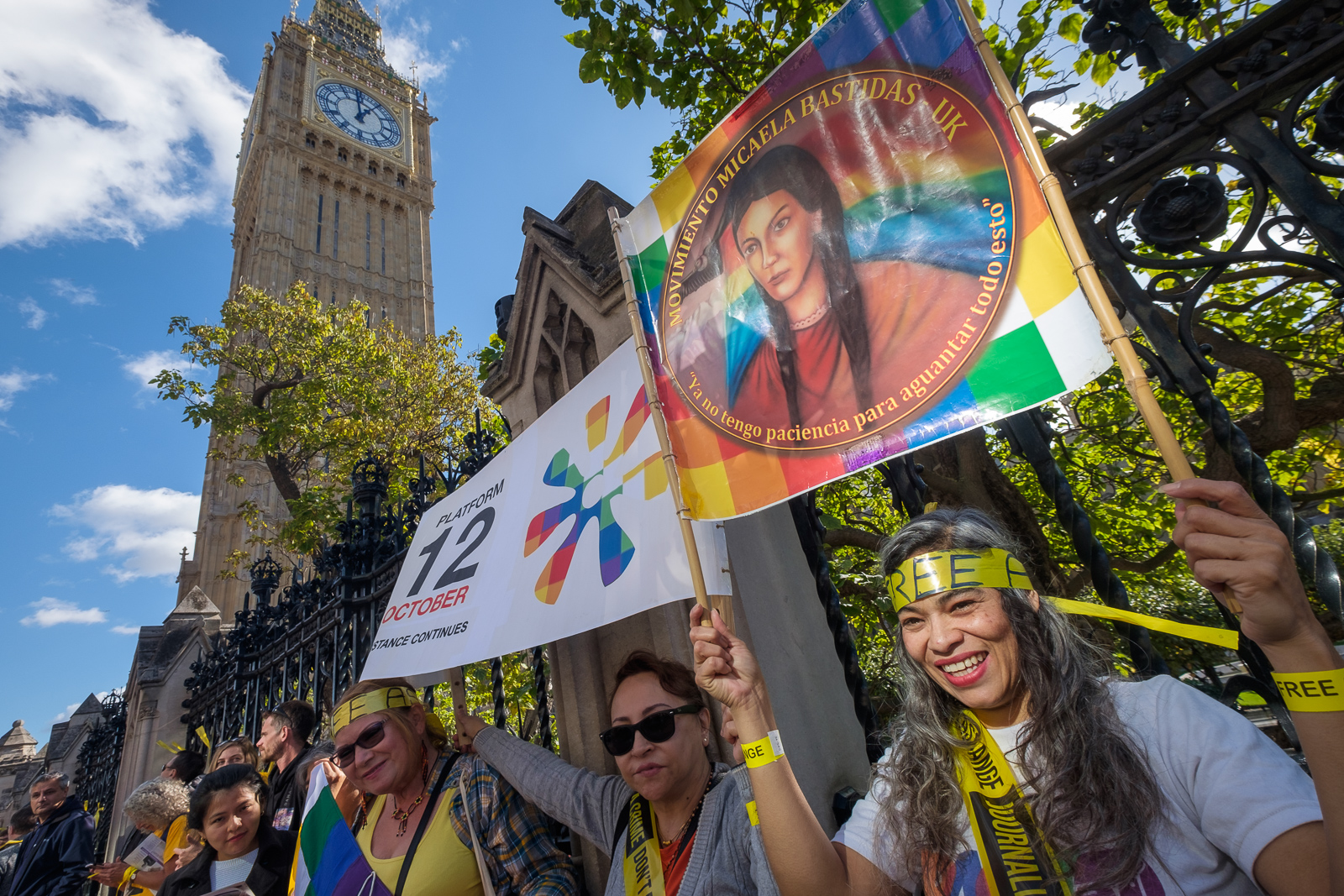
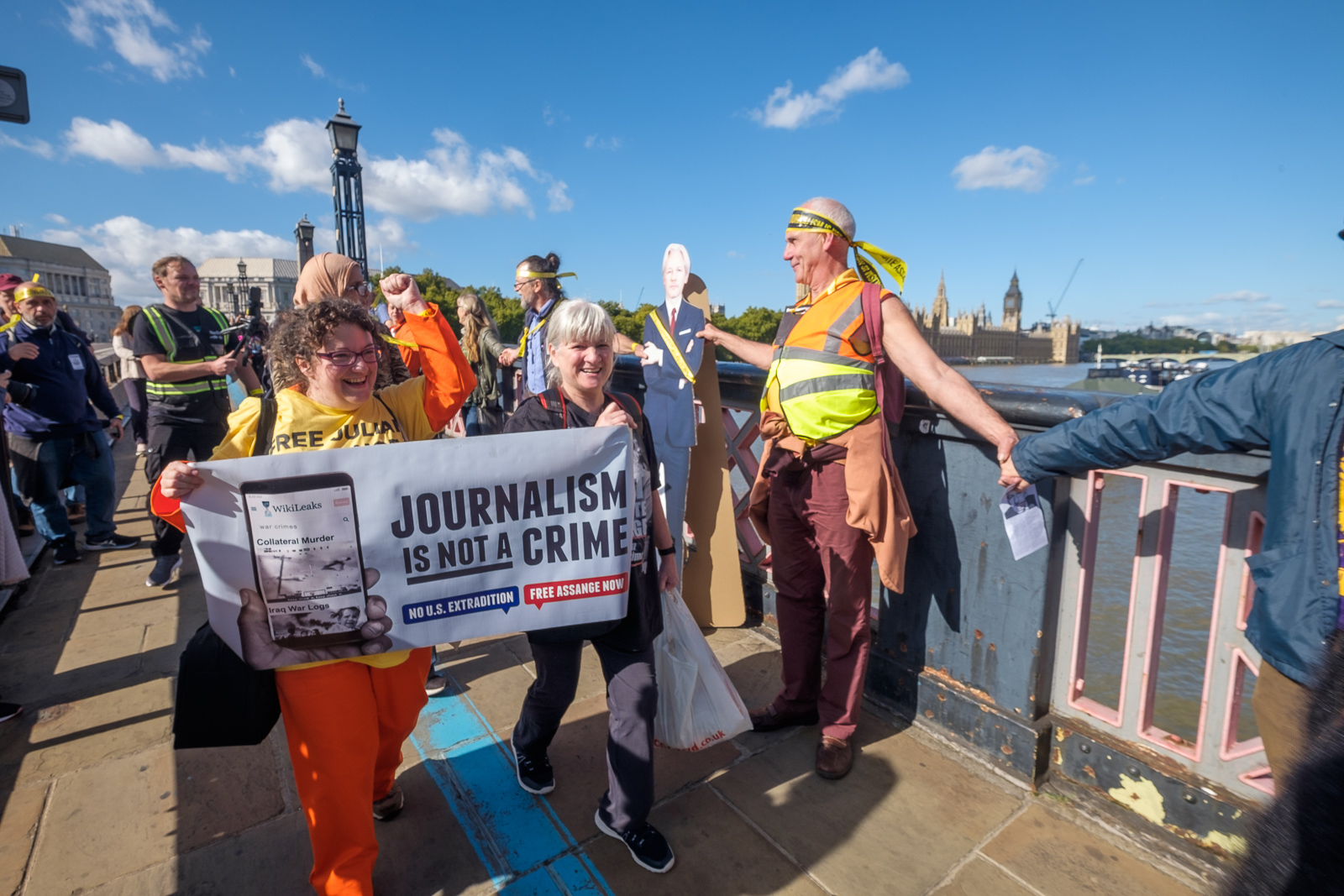
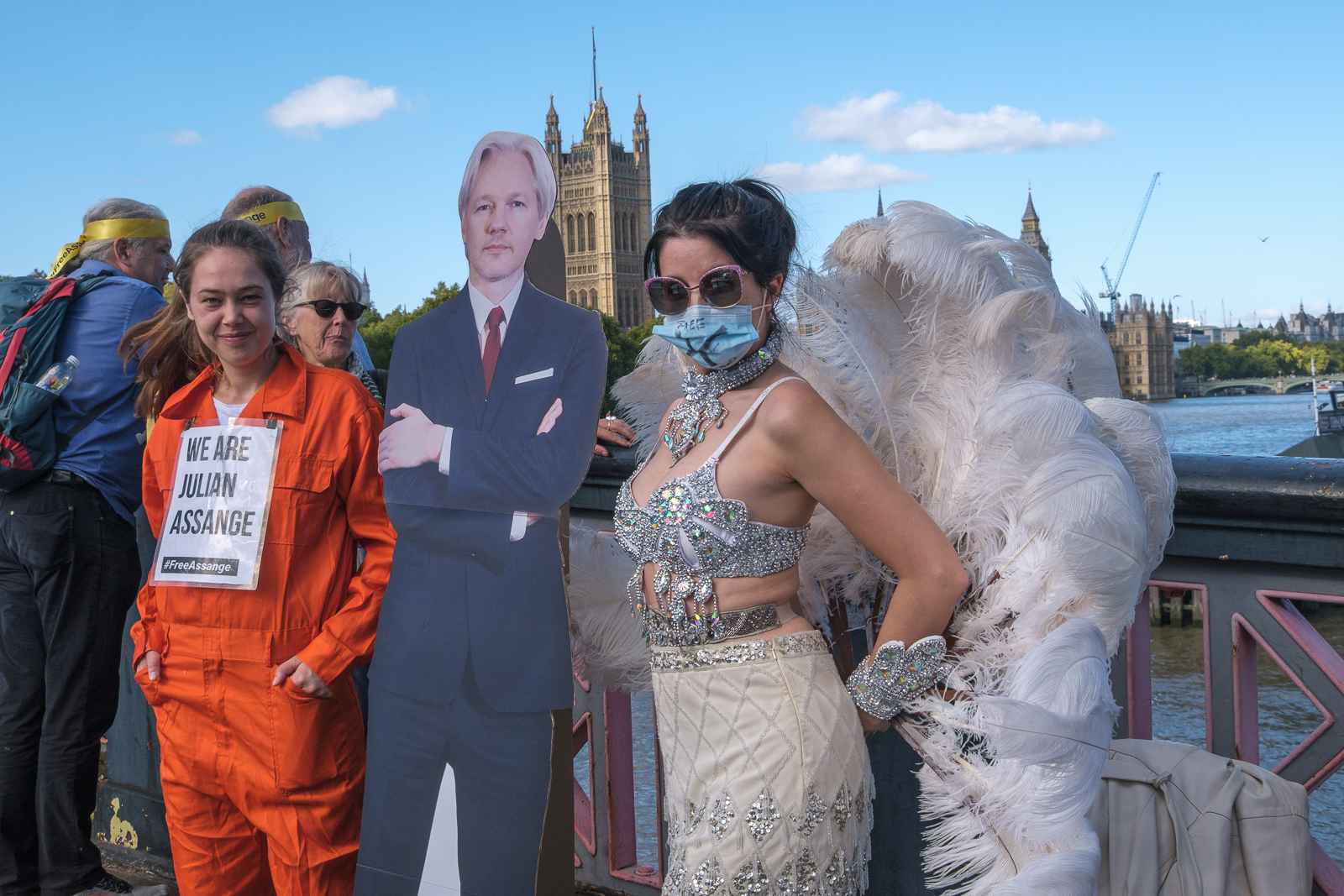
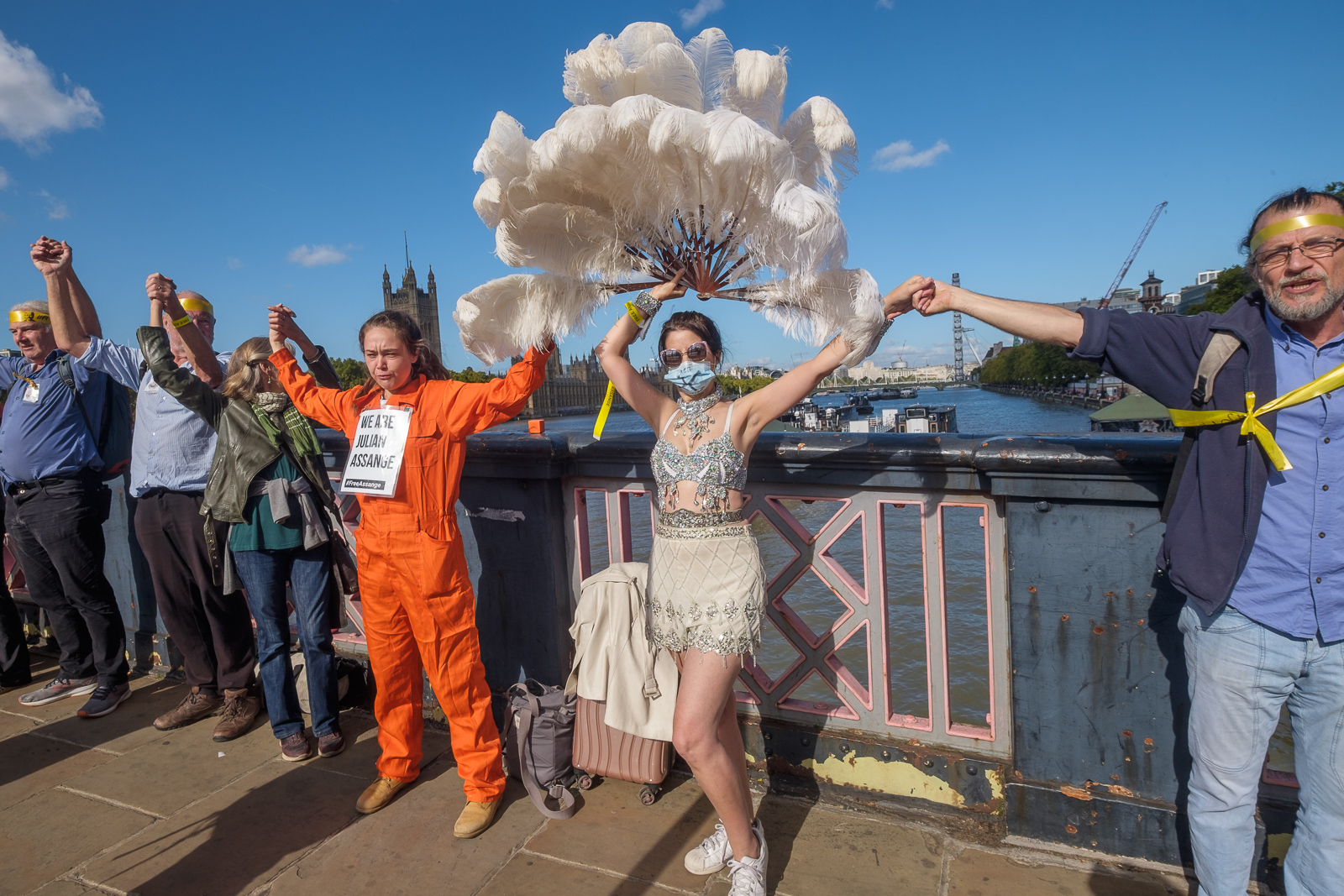
On Saturday 8th October I photographed a protest in London by around 10,000 people who formed a human chain calling for Assange to be freed and not to be extradited around the Houses of Parliament, crossing the river on Westminster Bridge and returning across Lambeth Bridge, a distance of a little over two kilometres.

It’s difficult to know how many took part, but there seemed to be enough people to join hands, with quite a few to spare in some parts where people were shoulder to shoulder and some to spare. The organisers had thought they would need around 5,000 so I think it was probably rather more than that; estimates I’ve seen range from 3,000 to 12,000. But as well as those present in person, many unable to get to Londonwere represented by yellow sashes with their names on them.

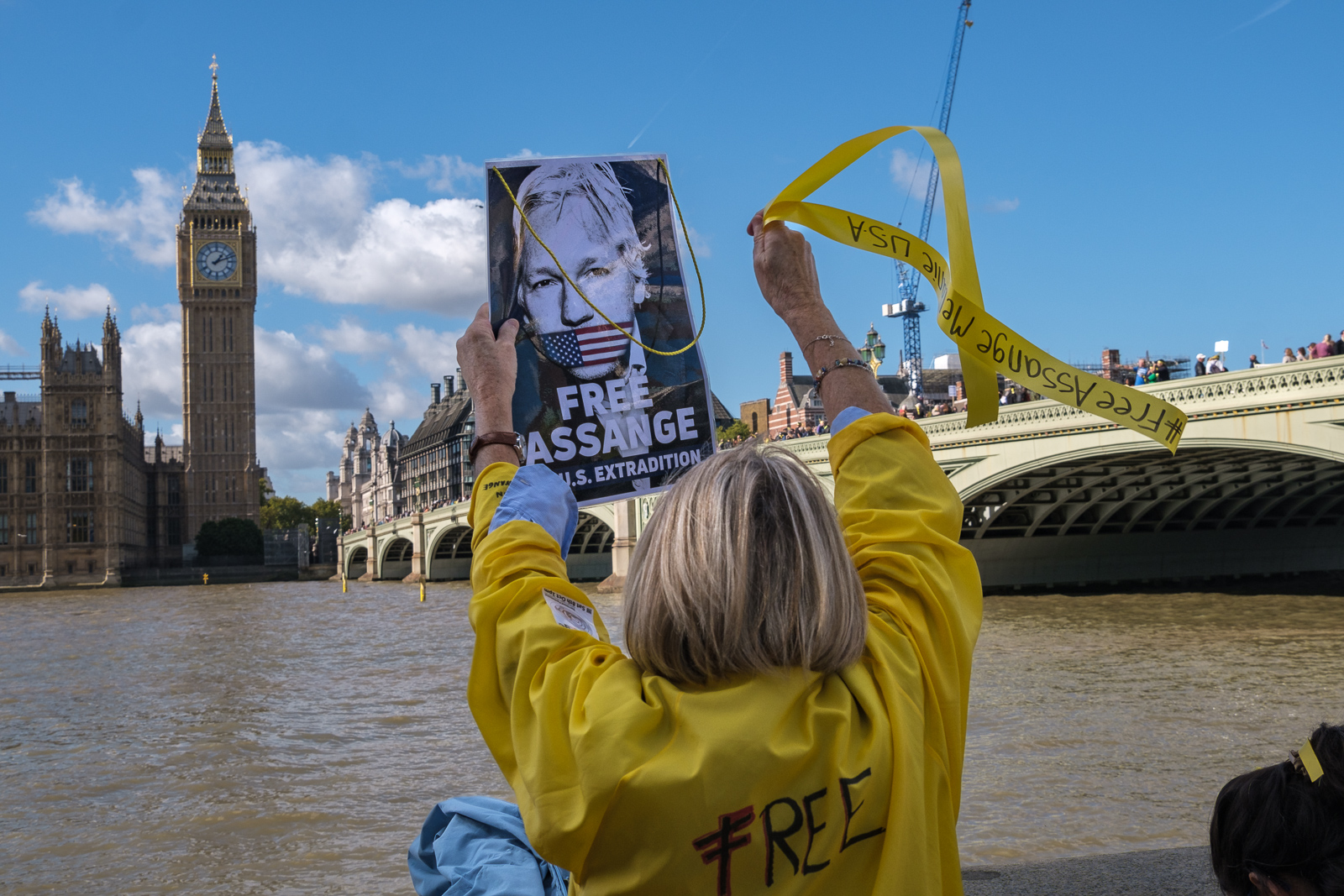
When I arrived people were tying these to the railings around the Houses of Parliament, but police came to remove them, handing them back to the protesters. They said nothing was allowed to be fixed to the railings. Many of the protesters held or wore the sashes for the protest, and although I don’t often take part in the protests I’m photographing, most of these pictures were taken by me with a sash reading ‘#Free Assange Monique Dits Belgium‘ around my neck.

At around 1.30, rather later than planned people were told to link hands and they chanted ‘Free Assange’ and other slogans for a few minutes. I’d chosen to be on Lambeth Bridge for this as I could then take photographs with the Houses of Parliament seen across the Thames in the backgound.

After taking some there I made my way along the rest of the chain back to Parliament, on my way passing John McDonnell being interviewed by a videographer. Normally I would have stopped to talk to him, but by now I was rather tired, still suffering a little from my booster jab the previous day and I carried on, past a small crowd of people with video and still cameras three or four deep around Jeremy Corbyn. But I’d decided he wasn’t really the story and carried on. I’ve photographed him enough times over the many years I’ve known him.

You can see more of the pictures I made in the album Human Chain Around Parliament Says Free Assange.


Thames, Rotherhithe & Wapping 1988

From Southwark Park Schools which ended the previous post on this walk, Rotherhithe New Road & Southwark Park Schools, I walked a few yards up Southwark Park Road to the corner with Banyard Road, where I photographed the taxi office (still there but changed from A-Z Star Cars to 5 Star Cars) with the pub on the opposite corner, the Southwark Park Tavern, now closed and converted to residential around 2003.

There was a pub around here, the Green Man, possibly on this site before Southwark Park opened in 1869 but I think this building probably came shortly after the park was opened, and is opposite the Carriage Drive leading into the park.

Unfortunately I haven’t yet digitised this picture, nor one of rather plain two-storey terrace on Banyard Rd or an image showing a play area in the park. I hurried through the park to the Jamaica Road gate at its north, crossing to make my way to Kings Stairs Gardens and the River Thames.

River Thames, Downstream, Rotherhithe, Southwark, 1988 88-10l-63-Edit_2400
River Thames, Downstream, Rotherhithe, Southwark, 1988 88-10l-63

The two jetties visible here I think have now gone and there is certainly no line of lighters as in this picture, and there is one striking new building on the riverfront.

River Thames, Downstream, Rotherhithe, Southwark, 1988 88-10l-65-Edit_2400
River Thames, Downstream, Rotherhithe, Southwark, 1988 88-10l-65

A second picture taken with a short telephoto lens from almost exactly the same place shows the central area more clearly, with new flats being built on Rotherhithe St.

Wapping, River Thames, Rotherhithe, Southwark, 198888-10l-51-Edit_2400
Wapping, River Thames, Rotherhithe, Southwark, 198888-10l-51

Looking across the Thames downstream, with Free Trade Wharf at the extreme right and just to the left the cylinder ventilation shaft of the Rotherhithe tunnel in the King Edward Memorial Park. Both Metropolitan Wharf and New Crane Wharf are covered iwth scaffolding.

Wapping, River Thames, Rotherhithe, Southwark, 1988 88-10l-52-Edit_2400
Wapping, River Thames, Rotherhithe, Southwark, 1988 88-10l-52

Part of St John’s Wharf and King Henry’s Wharves seen across the River Thames.

Wapping, River Thames, Rotherhithe, Southwark, 198888-10l-53-Edit_2400
Wapping, River Thames, Rotherhithe, Southwark, 1988 88-10l-53

More of St John’s Wharf, including one of the earlier warehouse conversions and the Grade II listed Wapping Police Station, built 1907-10, Metropolitan Police architect John Dixon Butler. At extreme left is a part of Aberdeen Wharf built in 1843–4 by the Aberdeen Steam Navigation Company.

Wapping, River Thames, Rotherhithe, Southwark, 1988 88-10l-54-Edit_2400
Wapping, River Thames, Rotherhithe, Southwark, 1988 88-10l-54

The end of Aberdeen Wharf is at the right edge of this picture, and at its left the Wapping Police Boatyard, an unnecessarily ugly building opened in 1973. The new building in the centre of the picture also seems something of an eyesore, at least at its ends.

Wapping, River Thames, Rotherhithe, Southwark, 1988 88-10l-55-Edit_2400
Wapping, River Thames, Rotherhithe, Southwark, 1988 88-10l-55

Continuing up-river from the Police Boatyard are St Thomas Wharf, Pierhead Wharf, Oliver’s Wharf – the first warehouse in Wapping to be converted into luxury flats in 1972 – and Wapping Pierhead, with houses designed by Daniel Alexander in 1811 and the main entrance to London Docks.

Bermondsey, River Thames, Rotherhithe, Southwark, 1988 88-10l-41-Edit_2400
Bermondsey, River Thames, Rotherhithe, Southwark, 1988 88-10l-41

Looking upriver on the south bank with Tower Bridge at the extreme right and Guy’s Hospital tower just left of centre. Cherry Garden Pier is at left.

Silver Jubilee, marker, EIIR, River Thames, Rotherhithe, Southwark, 1988 88-10l-43-Edit_2400
Silver Jubilee, marker, EIIR, River Thames, Rotherhithe, Southwark, 1988 88-10l-43

There is still a marker for the Queen’s Silver Jubilee here but it looks far less impressive than this rugged stonework I photographed in 1988. London has also gained quite a few tall buildings, but the view along the river remains clear and you can still see the dome of St Paul’s Cathedral.

Braithwaite & Dean, Rotherhithe St, Rotherhithe, Southwark, 1988 88-10l-44-Edit_2400
Braithwaite & Dean, Rotherhithe St, Rotherhithe, Southwark, 1988 88-10l-44

41 Rotherhithe St, now apparently 1 Fulford St at least according to Google Maps, was the offices of lighterage company Braitwaite & Dean, where their lightermen would come to collect their weekly wage. Apparently it was known locally as the Leaning Tower of Rotherhithe, though the building’s lean is more apparent from across the river than in my picture.

It was left more or less alone on this stretch of the river with just the Angel pub equally isolated a few yards upriver after Bermondsey council bought many of the buildings in 1939 to create a park, with wartime bombing continuing the demolition job. There was some temporary housing by the river when I first walked along here in the early 1980s, but that soon disappeared.

My walk in Bermondsey continued – more about it in a later post.


Brompton around Swanscombe 2015

Brompton around Swanscombe 2015 – Late in 2002 I bought a Brompton folding bicycle, something I’d been considering for years, but the cost had put me off. I can’t remember exactly what it cost me then, but with a few essential bits and pieces it was around £700 – allowing for inflation now equivalent to around £1200. Bromptons (hereafter just B’s) now start at £850, even better value. In an interview a year or two later with a photographic magazine I was asked “What is your favourite photographic accessory?” and my answer, “My B” wasn’t what was expected.

I wasn’t new to cycling – I’d got my first two-wheeler back in 1951 and had owned and used bikes since then, but this was my first folding bike and was bought as a photographic accessory to enable me to explore areas in outer London and the outskirts where public transport was often in scarce supply.

I’d hoped also it would be a convenient way to get around when photographing various events in the centre of London, but soon gave up on that idea as finding safe places to leave it appeared impossible. Bs are idea for bike thieves. Relatively high value and much in demand, they can be stowed away in a car boot in seconds. And even the sturdiest bike lock can only hold up the well-equipped criminal for less than a minute.

Locking and leaving isn’t really an option unless you can keep it in sight or in a secure place. Office workers can keep them in cloakrooms or under their desks, but when your place of work is the street you have a problem.

For cycling close to home I still had the full-size Cinelli that my eldest brother had given me as a birthday present back in 1958, and despite being dirty, dilapidated and having suffered much downgraded with more robust and heavier wheels and tyres still rolling well. But the huge advantage of the B was that it could be folded and taken on trains, underground and even buses at any time, enabling me to make rides from places which were too far away for me to cycle to.

I made my first such journey back in January 2003, taking the train to Erith, a little over 30 miles away, and then spent a few hours cycling “around the town and along the Thames, Darent and Cray before braving the Dartford bypass and striking off along Joyce Green Lane before returning to catch the train home from Slade Green.” Much of that cycling was along footpaths and other poor surfaces and tiring enough – and at one point I almost collapsed trying to lift the B over a stile. I couldn’t understand why, as even with my photographic gear in the front bag it was probably less than 15kg. A week or two later I found out the reason, having a relatively mild heart attack at home which required some minor surgery to put a stent into a blocked artery.

As soon as I could walk, my doctor told me I had to exercise, and soon I was taking a series of rides from home on the B over much of the nearby country. It was much easier to mount and dismount than a normal men’s bike, having no crossbar. Scattered through My London Diary are pictures from a number of bike rides, mainly made on the B. On a bike you can stop almost anywhere and don’t need a place to park, and the ease of getting on and off makes a B ideal. At times I’ve also used it, parked against a wall to stand on, one foot on the saddle and the other on the handlebars, but it can roll away and leave you unsupported.

My trip around Swanscombe on Saturday 6th June was one such ride, taken while the area was under threat from development as the Paramount London theme park (and it still is though this now seems less likely.) It was an area I’d photographed on a number of occasions since the 1980s and knew reasonably well. In the 1970s, together with neighbouring Stone, Greenhithe, Swanscombe and Northfleet was the largest cement producing area in Europe, mainly run by Blue Circle. But by the time I first visited that production was centred at Northfleet, and the works at the other sites had largely disappeared or were very run down, and the Swanscombe works had ceased production although the site only finally closed in 1990. Northfleet continued for some years into this century, but nothing now remains – except of course the huge quarry areas with their chalk cliffs.

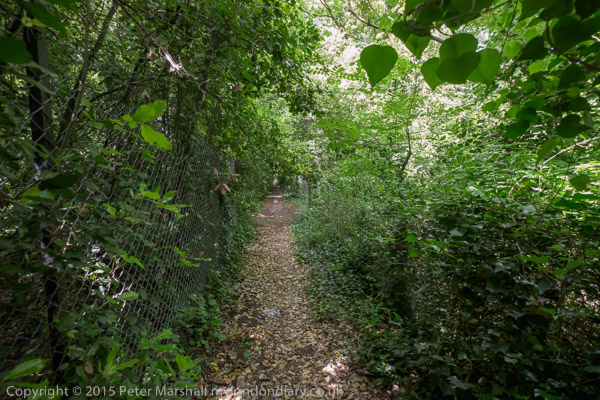
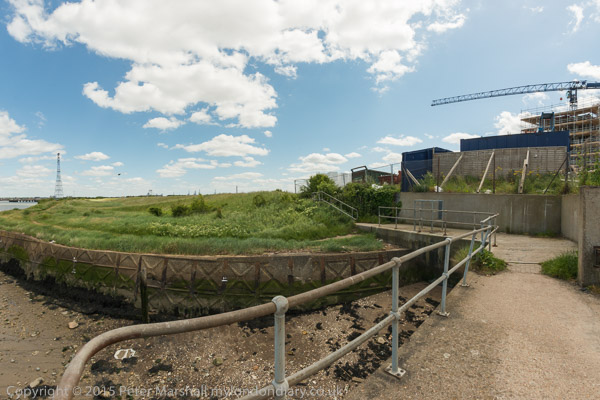
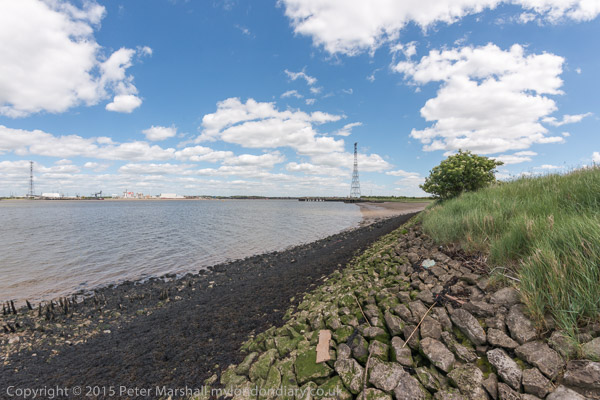
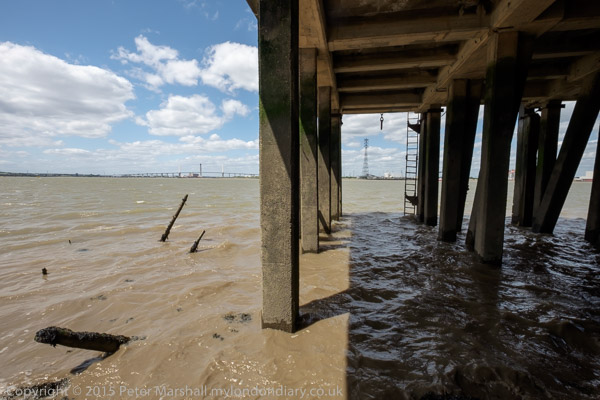
The post Swanscombe on My London Diary gives more of the history of the area, and also includes a fairly complete description of the route I took on Saturday 6th June 2015, so I won’t repeat that information here. The B isn’t a great off-road bike – and impossible in muddy conditions – but is fine on reasonable footpaths but I might had had to get off an push in some places. One of the paths I mention, Lovers Lane, is now a wide road beside a new housing estate but otherwise the area is much the same as it was in 2015 except there are now notices that some of the areas are private property.

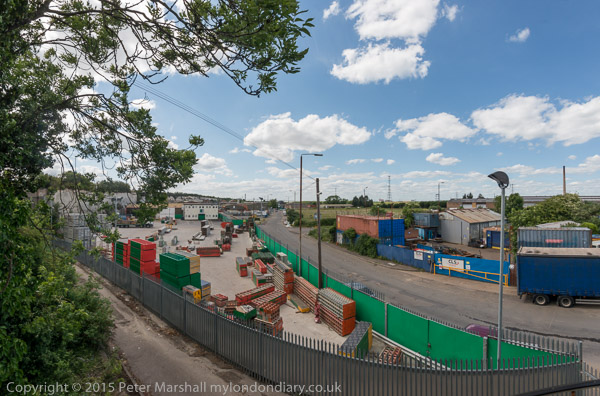
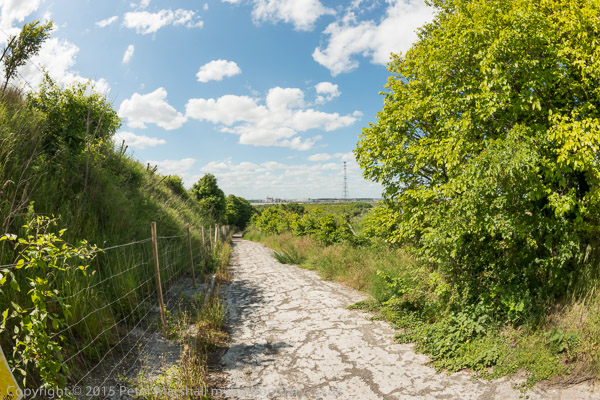
The area is also well described in the many pictures, many of which were made with a very wide horizontal and vertical angle of view. Although not panoramic in format they are panoramic in their scope.

Swanscombe