Reservoir, Castle & Lordship Lane – 1990

Reservoir, Castle & Lordship Lane: My walk on April 1st 1990 began at Finsbury Park Station and the first post, Brownswood Park Finsbury Park – 1990, ended on Green Lanes where this post begins.

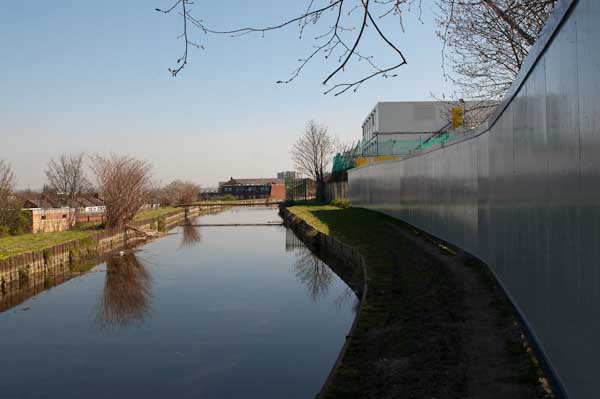
Reservoir, Green Lanes, Stoke Newington, Hackney, 1990, 90-4a-45

The New River Path leads from Green Lanes immediately north of the ‘Castle’ and I think I walked from this path to the bank of the West reservoir to make this picture. There have been considerable changes in the area and I can no longer identify the trees or buildings in my view.

The West Reservoir next to the New River dates from 1833, and I think this section of fencing probably dates from when it was enlarged in the 1850s or a little later. The associated filter beds have been built on, but a vigorous local ‘Save the Reservoirs’ campaign in the 1980s saved the reservoirs, with the West used for water sports and the East as a nature reserve.

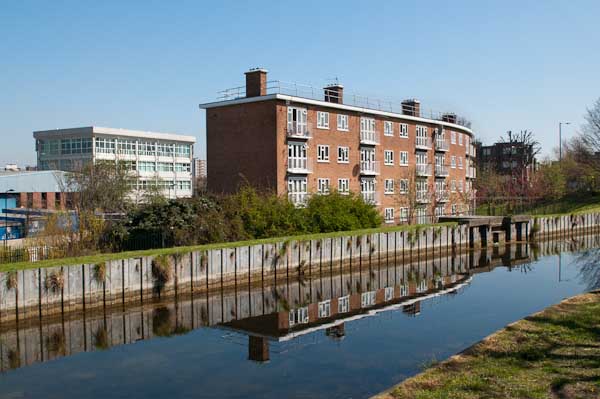
Reservoir, Green Lanes, Stoke Newington, Hackney, 1990, 90-4a-46

I think this was a part of the filter beds which have now gone. I liked the shadow of the fence and the wheel which presumably operated a valve to control the flow of water, perhaps to the pumping station.

Sand in the filter beds was first used to effectively removed most particles from the water but it was later realised that the slime which grew on top of the sand was very effective in killing bacteria to increase the safety of the water and sand filtration still plays an important role in producing our clean drinking water.

Reservoir, Green Lanes, Stoke Newington, Hackney, 1990, 90-4a-32

I think the man in the picture is a bird-watcher rather than a photographer and is holding up binoculars to his eyes. Many migrating species take a rest at our reservoirs and birders flock to watch them.

The Castle, Waterworks,  Green Lanes, Stoke Newington, Hackney, 1990, 90-4a-21
The Castle, Waterworks, Green Lanes, Stoke Newington, Hackney, 1990, 90-4a-21

The gothic fantasy waterworks, built to house massive steam-powered beam engines in 1854–1856 seen from close by – I needed a very wide lens to include the whole height of the tower. According to Industrial History OnlineThe original six beam engines, two by Watt & Co and 4 by Simpson were removed in 1953.” I think these were then scrapped. You can see similar beam engines in the highly recommended London Museum of Water & Steam in Brentford.

House, Waterworks, Lordship Park, Stoke Newington, Hackney, 1990, 90-4a-24

On Green Lanes I walked south and turned down Lordship Park. Here I got a view of the Castle. I think the tower at right is a disguised chimney and the square section on top of that at the left may have held the tank that water was pumped into to give the pressure for supply to customers.

Man Reading, House, Lordship Park, Stoke Newington, Hackney, 1990, 90-4a-13

Another picture in Lordship Park shows the very solid looking houses built there dating from around 1865. These are three storeys with a basement, the steps rising to an elevated ground floor, built in a Victorian Gothic style with the entrances recessed with a side window giving a somewhat clerical look; they have is some nice ornamental brickwork but in a fairly restrained fashion.

There are quite a few of these houses on both sides of thee street and I picked this view because of the man sitting reading the Sunday Mirror on the steps.

Lion, Brothers of Islam, Lordship Park, Stoke Newington, Hackney, 1990, 90-4a-16

A final picture on this street shows the passageway between two houses with a small flowerbed looked over by a lion, and on the post at right in the freely written message ‘Brothers of ISLAM’.

My walk, now in Stoke Newington, continued – more later.


FlickrFacebookMy London DiaryHull PhotosLea ValleyParis
London’s Industrial HeritageLondon Photos

All photographs on this page are copyright © Peter Marshall.
Contact me to buy prints or licence to reproduce.


Brownswood Park Finsbury Park – 1990

Brownswood Park Finsbury Park: My walk on April 1st 1990 began at Finsbury Park Station. I walked a short distance past the gates to the park and then turned right down Queens Drive.

Queen's Drive, Finsbury Park, Hackney, 1990, 90-3m-13
Queen’s Drive, Finsbury Park, Hackney, 1990, 90-3m-13

Queen’s Drive was laid out and developed from 1869, the same year that the park, misleadingly named Finsbury Park despite being a couple of miles from Finsbury, was opened, just a few years after the opening of Seven Sister Road station in 1861. In 1870 the station was renamed Finsbury Park. Most of the street was built up by the 1871 census, largely with substantial and well decorated four-storey terraces.

Queen’s Road – later renamed Queen’s Drive – was built as the ‘best road’ in a new select suburb then known as Brownswood Park, developed at first by John Brookes Porter in 1862. You can read more of its history in the Brownswood Conservation Area Appraisal.

Like many such areas it went downhill over the years. Wartime bombing including a V2 rocket damaged and destroyed a number of houses in it and nearby streets. By the 1950s most of the houses were in multiple occupation by “students, migrants, and the working class.”

This picture is of the rear of the Pembury Hotel which is on the corner of Queen’s Drive and Seven Sisters Road, just a few yards down the road and is a post war addition.

Houses, Princess Crescent,  Finsbury Park, Hackney, 1990, 90-3m-15
Houses, Princess Crescent, Finsbury Park, Hackney, 1990, 90-3m-15

Princess Crescent, also in Browsnwood Park, is not a crescent but two straight lengths of road at an angle joining Queen’s Drive and Gloucester Drive. The houses here were rather smaller than those in Queen’s Road. The other section of road has a two large blocks of council flats, St John’s Court on one side and a primary school on the other. From 1934 until 1960 the Finsbury Park Synagogue was there.

I walked back onto Queen’s Drive and continued to Brownswood Road, turning east and crossing Green Lanes into Lordship Park – not a park but a street.

Lordship Park, Stoke Newington, Hackney, 90-4a-01

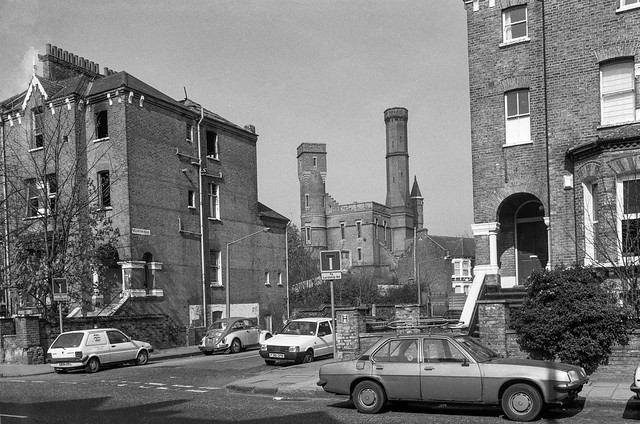
Taken on Lordship Park and looking up Allerton Road towards the ‘castle’ designed by architect William Chadwell Mylne for the New River Company on Green Lanes, to house steam engines to pump water which had been cleaned in the adjoining reservoirs and filter beds to consumers.

The water was pumped to a large tank at the top of the main structure and then gravity fed to consumers. The towers and turrets disguise the huge industrial engines inside, initially giant single cylinder steam engines linked to pumps. These were later replaced in the 1930s by diesel and electric pumps. The gothic fantasy was felt to be more acceptable in this then select suburb than an industrial-looking building.

When the water board closed down this facility in 1971 it was saved from demolition by Grade II* listing and three years later converted into a climbing centre.

House, Tree, Lordship Park, Stoke Newington, Hackney, 1990, 90-4a-03

A pollarded tree in front of semi-detached houses on Lordship Park. The two story houses have some fine decoration on their doorways and windows. There are larger houses close to Green Lanes.

House, Cars, Green Lanes, Brownswood Park, Hackney, 1990, 90-4a-61

Notices on the house say ‘NO BALL GAMES; and NO PARKING’ but there seems to be some kind of car scrap business running here in front of once fine derelict houses.

House, Cars, Green Lanes, Brownswood Park, Hackney, 1990,, 1990, 90-4a-64

I think these houses were just to the north of Portland Rise on the west side of Green Lanes and have since been demolished and replaced by to modern blocks of flats at 291 and 293 Green Lanes. The building at extreme left is still there.

House, Cars, Green Lanes, Brownswood Park, Hackney, 1990,, 1990, 90-4a-54

Unusually I took 11 frames here and there are six of them on Flickr – but I’ll only post three here.

These houses were a short walk from the West Reservoir where my my next post from this walk will begin.


FlickrFacebookMy London DiaryHull PhotosLea ValleyParis
London’s Industrial HeritageLondon Photos

All photographs on this page are copyright © Peter Marshall.
Contact me to buy prints or licence to reproduce.


Salvation, Statuettes, a Sexy Model, Spendel & More – 1989

Salvation, Statuettes, a Sexy Model, Spendel & More: Continuing my walk on Sunday 5th November 1989 from Green Lanes where the previous post, Stroud Green to Grand Parade had ended I walked some way down West Green Road before taking my next picture.

Salvation Army, 2, Terront Rd, West Green, Haringey, 1989 89-11d-16

The Salvation Army building is still there on Terront Road though I think no longer in use by them. I was clearly attracted both by this building and by the car on a trailer to its left, rather dramatically marked with large Xs.

I wondered if this car might be connected with the clearance of the Harringay stadium site, about a kilometre away. Stock car racing and Banger racing were among the events held at Harringay Stadium from the 1950s on. The stadium had opened as Britain’s third greyhound racing stadium in 1927, adding speedway the following year. The stadium finally closed in 1987 and was acquired by Haringey council and some years later demolished for housing and a Sainsbury’s superstore.

It was only the 5th November so the Salvation Army were perhaps getting in rather early with advertising a Christmas Bazaar to be held on 18th Novemeber.

Shop window, West Green Rd, West Green, Haringey, 1989 89-11c-62

And perhaps this pair of Greek statuettes were the ideal Christmas Gift for someone, though I think it would have to be someone you didn’t like. But as you can tell from the price label they were quite small, and at £2.49 definitely a gift.

I decided not to make a great effort to correct the overall flare which renders their upper regions rather diffuse when making this digital copy from the original negative.

Shop window, Green Lanes, Haringey, 1989 89-11c-64

My walk was coming to an end and I walked back towards Turnpike Lane station finding another shop window which caught my interest on Green Lanes. There was something unusually real about this heavily made-up mannequin, wig, pose, and clothing, a sexual energy whose spell was only really broken by the clearly visible joint on her lower left arm and a rather porcelain quality to the highlights. I think this was probably in the window of a shop selling wedding dresses.

Spendel, Hairdresser, Langham Rd, Turnpike Lane, Haringey 1989 89-11c-66

I took a number of pictures of this shopfront, which was I think part of the extensive station and bus station development. Most were in colour apart from this and a slightly tighter cropped black and white image. At least one of the colour images – also on Flickr – shows the the entire shopfront dominated at the top by the large word ‘HAIRDRESSER‘. In very small type at the top of the window it states ‘GENTS SALOON’ and scattered on the surface at the base of the windows in front of the shutters are boxes containing tubes of related products including Ingram shaving cream.

The window at left of the entrance contains two rather unhealthy looking pot plans and behind them is a poster for the pantomime Aladdin starring Michael Barrymore and Frank Bruno.

My walk on 5th November ended at Turnpike Lane, where I caught the Piccadilly Line to make my way towards home. But a week later I was back in the same area, returning first to Walthamstow – an easy journey on the Victoria Line before returning to Turnpike Road. I think I had gone back to Walthamstow to retake some colour images, hoping to find better light.

Cemetery, Queen's Rd, Walthamstow, Waltham Forest, 1989 89-11c-52
Cemetery, Queen’s Rd, Walthamstow, Waltham Forest, 1989 89-11c-52

I’d photographed a large angel on my previous walk in the cemetery and this time I took a picture of a rather smaller one, but my main interest was in the shadows cast on a couple of the stones, one of my head and shoulders as I made the picture along with the fence and to the right a clear cross on a rather less clear fence shadow. I think I was probably standing outside the cemetery fence looking in.

Queen's Rd, Lansdowne Rd, Walthamstow, Waltham Forest, 1989 89-11c-53
Shandar, Queen’s Rd, Lansdowne Rd, Walthamstow, Waltham Forest, 1989 89-11c-53

The Shandar Take Away Restaurant at 65 on the corner of Queen’s Road and Lansdowne Road had a colourful mural along its Lansdowne Road side, and most of the pictures I took of it were in colour, but I stood a little further away on Queen’s Road to make this picture including a van with an open rear door parked on the pavement in front of a shop on the opposite corner.

Shandar is a name used by a number of Indian restaurants, a Hindi word implying excellence or high quality, which could be translated as ‘Splendid’ or ‘Grand’.

More from my walk on 12th November in a later post.


FlickrFacebookMy London DiaryHull PhotosLea ValleyParis
London’s Industrial HeritageLondon Photos

All photographs on this page are copyright © Peter Marshall.
Contact me to buy prints or licence to reproduce.


Stroud Green to Grand Parade, November 1989

Stroud Green to Grand Parade: Continuing my walk on Sunday 5th November 1989 from where the previous post left me on Stroud Green Road close to Finsbury Park Station.

Boys Entrance, Stroud Green Primary School, Ennis Rd, Stroud Green, Haringey, 1989 89-11d-46

The Girls Entrance to Stroud Green Primary is still there on the corner of Perth Road and Woodstock Road, but the BOYS was recently removed from above the gate at the other end of the school site in Ennis Road, where extensive building work was taking place – so perhaps it will return. The two entrances were over a 100 metres apart, an unusually safe distance. There is also a similar gate for INFANTS on Woodstock Road.

I think most of the school dates from 1897, although Google’s AI unhelpfully told me “Stroud Green Primary School was established in 1997” when I asked when it was built. The Grade II listing text for Woodcock Road School begins “Late C19 building of shallow U-shape with projecting gabled wings and slightly projecting 5 bay centrepiece under higher hipped roof crowned by cupola.” The area had fairly recently been developed with housing, some of which had to be demolished to build the school.

Oxford House, Oxford Rd, Stroud Green, Haringey, 1989 89-11d-33

I turned left into Woodstock Road and then right into Oxford Road, heading for the Oxford Road Gate to Finsbury Park.

On the right just before the gate is Oxford House. In the 1960s this was the cinematographic film processor Kay Laboratories, later absorbed into MGM (possibly via Rank Xerox). For some years it was a studio and office space and housed a private college. For some years this 1930s Art Deco building was in a poor state but has recently been refurbished as offices and co-working space.

Pipe Bridge, New River, Houses, Endymion Rd, Haringay, Haringey, 1989 89-11d-23
Pipe Bridge, New River, Houses, Endymion Road, Harringay, Haringey, 1989 89-11d-23

I walked through Finsbury Park on what is now part of Section 12 of the Capital Ring a circular walking route around London, first put forward as an idea the following year but only completed in 2005, but turning north onto the New River Path to exit onto Endymion Road where the houses on this picture are.

Houses, Endymion Rd, Stroud Green, Haringey, 1989 89-11d-24

These south-facing houses on Endymion Road were lit by early afternoon winter sun. The road was the first constructed in the area after Finsbury Park was established and the development was begun by the Metropolitan Board of Works around 1875. The road goes around the northwest and north sides of the park, giving the houses attractive views over it. Development of the area to the north, West Harringay, began shortly after.

Endymion was in one of several Greek myths a handsome shepherd prince who moon goddess Selene fell in love with and persuaded Zeus to make immortal and to put in eternal sleep so she could visit him every night. John Keats wrote a famous extremely long poem in four sections, each around a thousand lines base on the myth and first published in 1818.

But the name more likely came to Harringay from HMS Endymion, “the fastest sailing-ship in the Royal Navy during the Age of Sail“, built in 1797 and in active service during the Napoleonic Wars and until the First Opium War around 1850 and only finally broken up in 1868.

Building, Green Lanes area, Haringey, 1989 89-11d-25

I think this building was probably on Warham Road, just a few yards down from Green Lanes, but if so there is no trace of it now. I wonder what it was built for, but there are few clues in the picture – perhaps someone local to the area can tell us in the comments.

Shop Window, Grand Parade, Green Lanes, Haringey, 1989 89-11d-11

The Grand Parade on the east side of Green Lanes of shops with middle class flats above them was developed by J C Hill and completed in 1899, with its relatively consistent facades interrupted only by an earlier bank, built five years earlier.

I can’t think who the peculiar bedroom suite in the window of this shop might appeal to, but it seemed like something out a a peculiar nightmare to me, but I guess it was someones’ dream.

Tory Scum, Grand Parade, Green Lanes, Haringey, 1989 89-11d-13

Also and rather more prosaically on Grand Parade on an empty shop front, fly-posting and the carefully stencilled graffiti:

TORY SCUM
OFF OUR BACKS
WE CAN’T PAY
WE WON’T PAY
NO POLL TAX

My walk continued, and I’ll post more soon.


FlickrFacebookMy London DiaryHull PhotosLea ValleyParis
London’s Industrial HeritageLondon Photos

All photographs on this page are copyright © Peter Marshall.
Contact me to buy prints or licence to reproduce.


New River, Nuclear Waste, Wandle, Orange Order & Syria

Saturday April 17th 2010 was a long and varied day for me, travelling to various parts of London and making a couple of short walks as well as photographing three events.


New River & Harringay – Finsbury Park

New River, Nuclear Waste, Wandle, Orange Order & Syria

My journey across London had been rather faster than expected, probably because TfL’s Journey Planner had estimated rather longer times than I needed for connections, and I arrived at Harringay Green Lanes with rather a lot of time to spare.
New River, Nuclear Waste, Wandle, Orange Order & Syria

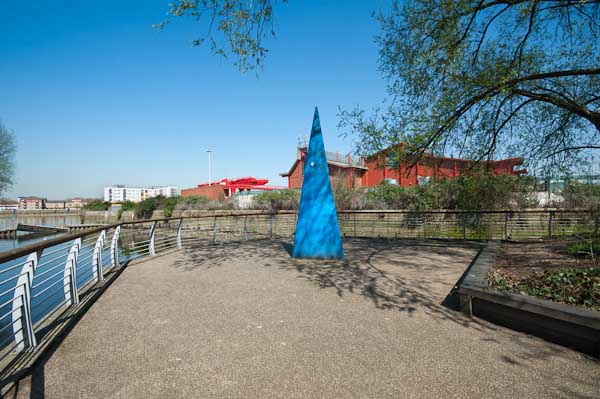
So I decided to walk around part of the area, walking partly along the New River, a water supply aqueduct opened in 1613 to bring water from Hertfordshire to London. It’s no longer New and was never a river.

New River, Nuclear Waste, Wandle, Orange Order & Syria

The light and sky was rather unusual. Like most of the Europe London was under a cloud of volcanic ash from the impossible to spell Eyjafjallajökull in Iceland, and no planes were flying. Thee sky had a slightly different blue to usual and lacked the con-trails and wispy clouds that these decay to and was a little dull from horizon to horizon. It wasn’t ideal for the panoramic views I made.

New River, Nuclear Waste, Wandle, Orange Order & Syria

More at New River & Harringay.


Olympics and Nuclear Trains – Harringey

New River, Nuclear Waste, Wandle, Orange Order & Syria

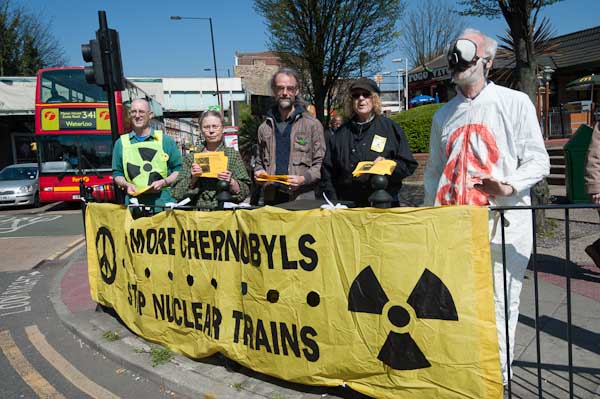
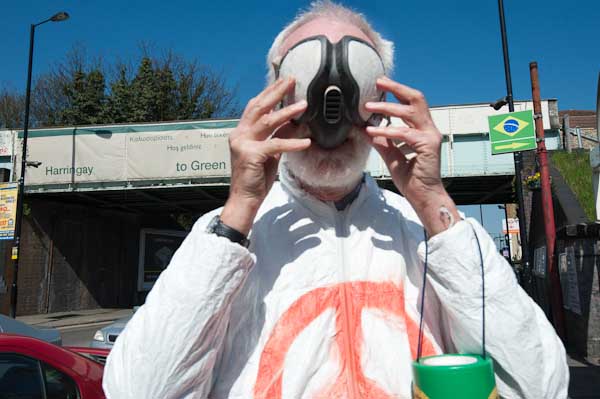
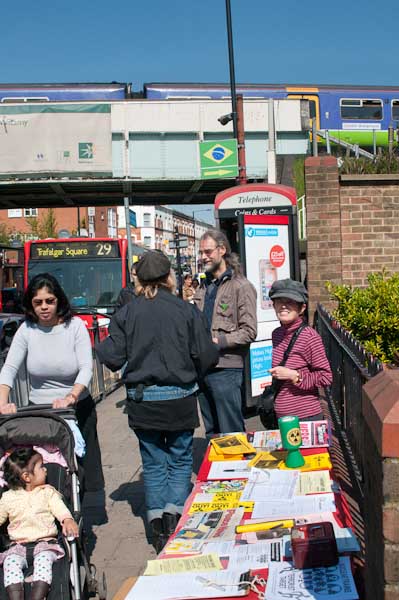
A few members of the Nuclear Trains Action Group and London CND were handing out leaflets close to the rail bridge on Green Lanes warning of the dangers of trains carrying highly toxic radioactive waste through densely populated North London. The event was given added moment by President Obama’s recent warning that nuclear terrorism is the gravest threat to global security.

Protesters had come to Haringey because nuclear waste from the power station at Sizewell is regularly shipped by rail on the line through here on its way to be reprocessed at Sellafield. Waste from Dungeness also travels through London, but on a route through the south and west of the city.

A terrorist attack on the trains carrying spent fuel rods could contaminate considerable areas of London with highly toxic materials and deaths could result. The protesters also pointed out that the route also goes past the Olympic site and an incident there would give the terrorists a huge amount of publicity.

Journalists had planted a fake bomb on one of these trains in London in 2006 to show the lack of real security and there has been no attempt to provide adequate security along the whole length of the route.

Transport by sea would be safer but would add significantly to the costs, and nuclear power is already hugely uneconomic when the full costs of decommissioning of power stations and safe long-term storage of wastes are included.

Olympics and Nuclear Trains


Wandsworth and the Wandle – Wandsworth

It hadn’t taken long to take a few pictures of the protesters in Haringey, and I still had rather a long time before my next event.

I’d heard that a new section of path had been opened by the Wandle close to where it enters the River Thames and planning my day I’d thought I would have time to take a look at it. It’s a longish journey from Haringey to Wandsworth, south of the river, but I had plenty of time to eat my sandwich lunch on the journey.

I was disappointed to find that although I could walk along the new section of ‘riverside’ path, it was still a short distance from both Wandle and Thames and these were still largely hidden from view by fences.

More at Wandsworth and the Wandle.


Loyal Orange Lodge London Parade – Westminster

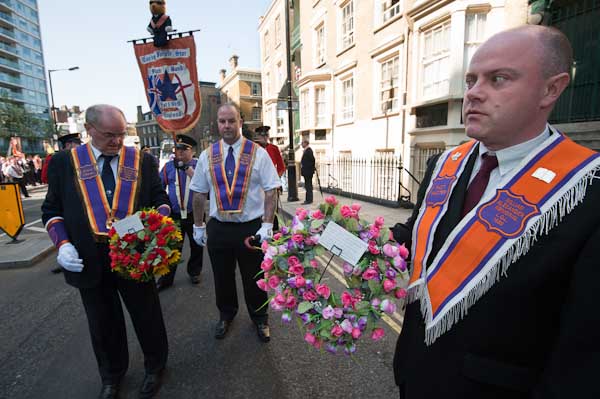
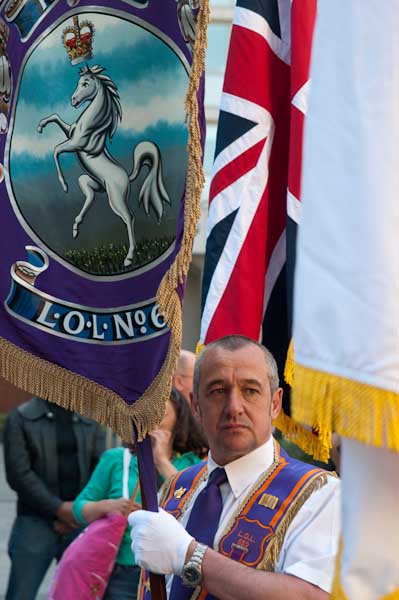
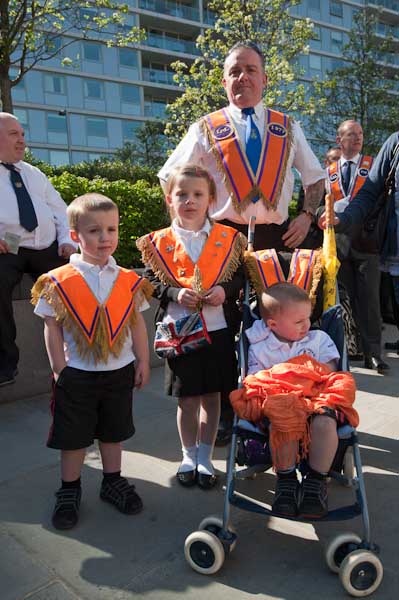
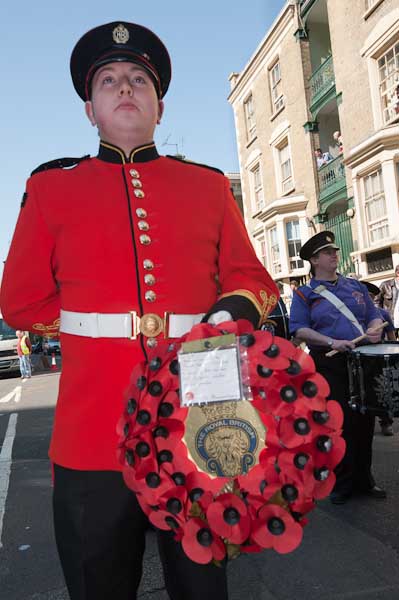
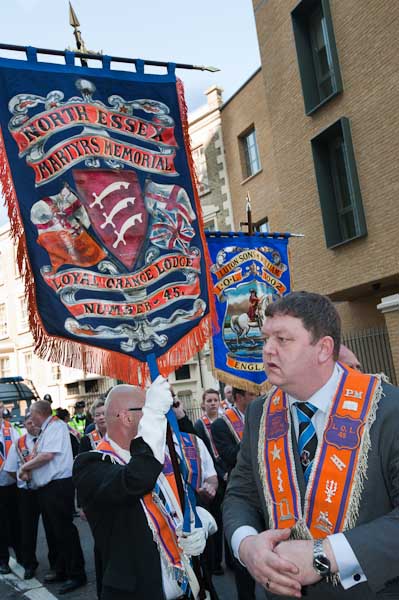
My next journey, to Clapham Junction and then Victoria was rather easier, and I arrived in time to photograph the members of the City of London District Orange Lodge and their guests as the prepared to march though central London on their St Georges Day Orange Parade.

They were going to march to lay wreaths in memory of Crown Forces at the Cenotaph and then on to St James’s Square to lay another at the memorial to WPC Yvonne Fletcher, fatally wounded by a shot from the Libyan Embassy on 17 April 1984.

Among other groups taking part were the Corby Purple Star Flute Band and the Churchill Flute Band of Londonderry.

Even with progress towards peace continuing in Northern Ireland and now 25 years since the Good Friday Agreement, parades such as this are still contentious there. But in London they arouse little or no antipathy and are seen simply as a celebration of a particular Protestant culture.

More pictures at Loyal Orange Lodge London Parade.


Release Syrian Political Prisoners – Syrian Embassy, Belgrave Square

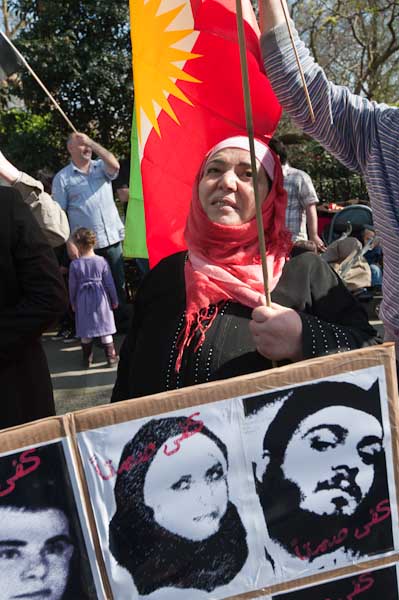
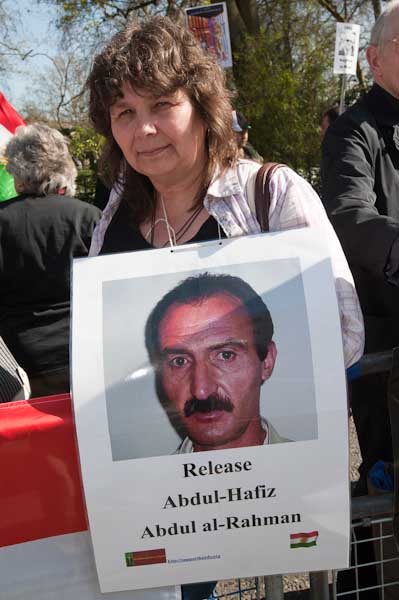
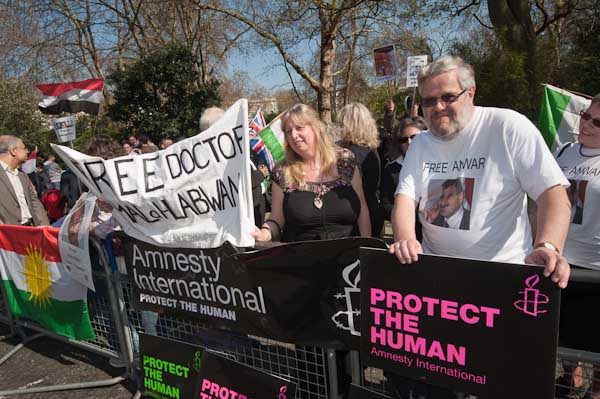
I left the Orange parade to make my way to the Syrian Embassy, where Kurds and others were protesting on the 64th anniversary of Syrian independence calling for the release of Kurdish prisoners of conscience held in Syrian jails.

Similar demonstrations, organised by the International Support Kurds in Syria Association (SKS, based in the UK and founded in 2009) were taking place in Brussels, Canada, Switzerland, France and the USA.

The protesters waved both Syrian and Kurdish flags – which are illegal in Syria – and called for the prisoners to be released and for the repeal of Decree 49. Introduced in September 2008, this controls the movement of people in the border area between Syria and Turkey where most Kurds live, and under it people there have to get a licence to build, rent or buy property.

Around 1.7 million Kurds live in Syria and have been systematically denied their basic human rights for many years. In 1973, around 300 villages were confiscated and the land taken from around 100,000 Kurds and handed over to Arab farmers, with the names of Kurdish villages being changed into Arabic names.

Emergency rule had been in force in Syria since 1963 and a 1962 law led to around 120,000 Kurds being stripped of Syrian nationality and becoming stateless. They are not allowed to move house, own land or businesses, are banned from many jobs, have no passports or other travel documents and their access to medical treatment is restricted.

Since the Syrian revolution of 2011, the largely Kurdish northeast of Syria has become the de-facto autonomous region of Rojava, adopting universal democratic, sustainable, autonomous pluralist, equal, and feminist policies.

More at Release Syrian Political Prisoners.


Canonbury, Green Lanes and Balls Pond Road

My next walk on Wednesday 3rd August 1988 began on a train going over the River Thames at Strand on the Green, the North London Line, taking me to Highbury & Islington from where I walked through Canonbury to Green Lanes, where I photographed an interesting pair of houses and found some rather poetic graffiti on my way to Newington Green and went on the the Balls Pond Road.

Grosvenor Ave, Canonbury, Islington, 1988 88-8c-14-Edit_2400
141 Grosvenor Ave, Canonbury, Islington, 1988 88-8c-14

In my dreams last night I was sitting in front of my computer and just turning it off after searching for the location of this house, which on my contact sheet is simply given as ‘?Highbury Grove’, and it flashed onto Google Streetview as the application closed. I was just coming round and wasn’t sure whether this was dream or memory, so as soon as I got back in front of the screen today I looked up where I thought it had been – and found no such street existed. However a few more minutes searching – and looking at the next image on the contact sheet helped – I recognised it as 141 Grosvenor Ave in Canonbury.

The house next door in the semi-detached also had those distinctive vertical brick panels in the colums of the porch and at the side of the windows, but they have been disguised I think by white masonary paint, and possibly others have suffered a similar fate.

But the dream got me thinking more about taking these pictures and about my photography generally as I lay half awake in bed. I think I had walked around half a mile before making my first picture on this walk, past many other houses and shops I might have stopped to photograph but had not done so and I reflected on this. I’ve always been a rather timid photographer and often find it difficult to start taking pictures until something jolts me out of this, and once I’ve got going my reluctance fades. Making a photograph exposes not just the film (or these days the sensor) but also the photographer.

Green Lanes, Highbury, Islington, Hackney, 1988 88-8d-65-Edit_2400
Green Lanes, Highbury, Islington, Hackney, 1988 88-8d-65

I can’t remember the exact route I took to Green Lanes, perhaps up Petherton Road, as the few pictures I made (not on-line) are typical of the area but not easy to locate, but I then walked south towards Newington Green, but a grid reference written on this frame of the contact sheet together with the street name Green Lanes suggests this shop window was near Aden Grove.

The curling notices suggest that Enright & Co Ltd m(established 1875) had left the building some time earlier, and although they say Houses Wanted, the upper left ‘Sorry Nothing’ was probably more appropriate. I rather liked the rather ghosty reflections in the glass, including my legs in the centre of the frame.

Roughly one in four of the pictures I made on this walk are on-line, and four of the ten from this particular film are these consecutive images from this section of Green Lanes.

Green Lanes, Highbury, , Islington, Hackney, 1988 1988 88-8d-66-Edit_2400
Green Lanes, Highbury, Islington, Hackney, 1988 1988 88-8d-66-Edit_2400

There are still several of these ‘Mid-Late 19c’ houses on Green Lanes, roughly oposite Aden Grove and they are locally listed at 57-63 for their ‘truncated Dutch gables’. The bars on the windows at right have gone but they still otherwise look much the same.

Graffiti, Green Lanes, Highbury, , Islington, Hackney, 1988 88-8d-51-Edit_2400
Graffiti, Green Lanes, Highbury, , Islington, Hackney, 1988 88-8d-51

Two writers appear to have taken advantage of this long stretch of white wall, probably empty industrial premises of some kind. Possible the “BIRD Turning in the sky air below the clouds’ there is no corner…” got in first complete with its extra apostrophe and the later writer (perhaps F. Ratttttl)tadded a line above and below, with some other additions including from an Arsenal fan.

Green Lanes here is on the border of the two London Boroughs of Hackney and Islington and I’ve included both boroughs in the captions even when I’m sure which side of the border I took the pictures on.

Graffiti, Green Lanes, Highbury, , Islington, Hackney, 1988 88-8d-52-Edit_2400
Graffiti, Green Lanes, Highbury, Islington, Hackney, 1988 88-8d-52

On the side of a boarded up shop, just off Green Lanes on the corner of Springdale Road was a more organised piece of writing, possibly advice to Fred to build a cradle for his baby. The reflecttion at left clearly shows the two buildings still on either side of Pegasus Close.

Annette Works, Halliford St, Ecclesbourne Rd, Islington, 1988 88-8d-31-Edit_2400
Annette Works, Halliford St, Ecclesbourne Rd, Islington, 1988 88-8d-31

For once a picture which includes precise information on its location, the Annette Works on the corner of Halliford St and Ecclesbourne Rd in Islington. The house at 61 Halliford Street was or had been home to Multi-Print Co, and this side of it has now been extensively rebuilt. I wondered briefly if there might be some connection to Annette Crescent, a listed crescent not far away on the Essex Road, but failed to find any further information. It seems unlikely as Annette Crescent was named for its developer, Thomas James Annett, only picking up the ‘e’ in later years.

Southgate Rd, Kingsland, Islington, Hackney, 1988 88-8d-36-Edit_2400
Southgate Rd, Kingsland, Islington, Hackney, 1988 88-8d-36

Southgate Road is another street on the Hackney/Islington border. There were no Vacancies at No 81, which is now together with No 83 ‘The Sydney Building’ a ‘warehouse conversion’ into flats with a rather prettier garden, roses replacing the buddleia.

Mildmay Rd, Canonbury, Islington, Hackney, 1988 88-8d-26-Edit_2400
Mildmay Rd, Canonbury, Islington, 1988 88-8d-26

This picture appears to show a woman looking out of a upper floor window but this is actually a painting on the wall. But there was a real woman coming along the street towards me. There is still a mural visible on the wall which can be seen rather better from Wolsey Road, but is largely obscured by an overgrown tree. I’m not sure if this upper part above and behind the main painted wall is still there.

The mural was painted in 1981 by Carolyne Beale for Mildmay Housing Action Area and is now in very poor condition, cracking badly. You can see a good colour picture of it all before the tree grew online, with a second picture of this lady at the window. I don’t think I photographed the mural properly, though I may have done.

More from the Balls Pond Road and Dalston in another post.


Click on any of the images in the post to see a larger version in my album 1988 London Photos, from where you can browse other images.


Further North in TQ32

Swimming Pool, Golden Lane Estate, City, 1992 TQ3282-017
Swimming Pool, Golden Lane Estate, City, 1992

I don’t know why TQ32 didn’t take me very much into north London during the years 1986-92 as certainly in later years I spent more time in Canonbury, Stoke Newington and Enfield etc, but this particular 1km wide strip perhaps just avoids the areas of them that interested me most.

Dummies,  Old St, 1988, Islington TQ3282-005
Dummies, Old St, 1988, Islington

It’s just an accident of geography that while Green Lanes begins just on its west edge, as it goes north it moves just a little to the west, taking it out of the area. Another accident that much of what I photographed in Tottenham lies just a short way to its east. Of course the pictures I took of these areas still exist and are either already on line in other albums or will I hope soon be there as I get around to uploading other strips of the project.

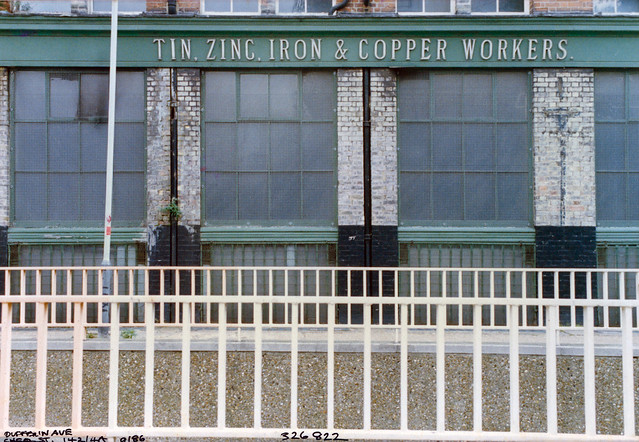
Tin, Zinc, Iron & Copper Workers, Dufferin Ave, Old St, 1986  TQ3282-003
Tin, Zinc, Iron & Copper Workers, Dufferin Ave, Old St, 1986

TQ3282 begins on the edge of the city where both Islington and Hackney and meet it around Old St in Finsbury, Shoreditch and Hoxton. I don’t think there are now any Tin, Zinc, Iron & Copper Workers in Dufferin Ave, which seems largely now to be home to various financial organisations and I think this building close to Bunhill Fields may have been replaced by something more modern, or at least refronted.

SEFCO Ltd, Honduras St, Old St  1986 TQ3282-004
SEFCO Ltd, Honduras St, Old St 1986, Islington

Honduras Street is one of several short streets between Old St and Baltic St, just west of Golden Lane, and at one time was where Olympus Cameras had their service centre, which is probably why I walked down it and took this picture of SEFCO Ltd which will probably have been taken on an Olympus OM camera.

There was a company called SEFCO Ltd offering to supply specially shaped rubber pieces from an address in Rosebery Avenue in a small ad in the magazine Electrical Engineering in September 1955 who may possibly be the same company moved to a different but nearby address, but otherwise I can find no other information on the internet.

In later years I visited Honduras Street to go to exhibitions and events when it became the home of Foto8 magazine and the Host gallery from 2002 to 2012.

Mural, Caribbean House, Bridport Place, Hoxton, 1986 TQ3283-001
Mural, Caribbean House, Bridport Place, Hoxton, 1986, Hackney

Among the other pictures that I made in TQ32 were a few from Hoxton and Stoke Newington and the start of Green Lanes, including a fine travel agent’s window and several of a photographer’s shop.

Photographer, shop window, Newington Green, Green Lanes, 1988 TQ3285-008
Photographer’s window, Newington Green, Green Lanes, 1988

And further north there are some of interest you can find for yourself, including one with some particular resonance at the moment which I probably photographed at the time in part for its street name, Black Boy Lane.

You will find the pictures on Pages 3 and 4 of TQ32 London Cross-section.