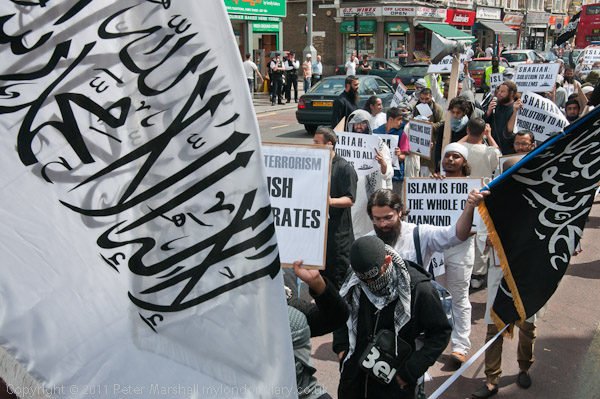
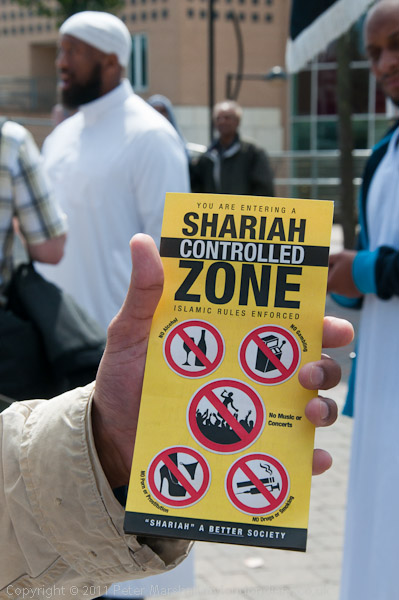
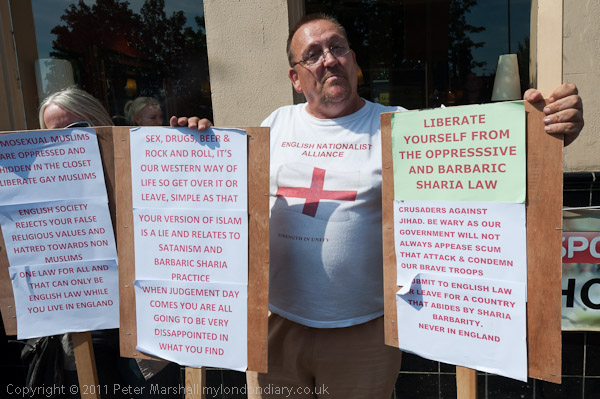
Pakistani Christians & a ‘Patriot’ March: On Saturday 21 July 2010 I photographed a protest against the persecution of Christians in Pakistan and then a march by right wing extremists against Sharia Law and calling for a referendum on leaving the EU and an English Parliament.
Christians Protest Pakistan Persecution
Pakistan High Commission & Whitehall
Only just over 1% of the population of Pakistan are Christians, a total of around two million, mainly members of lower castes, many working in sanitation and garbage collection. They were discriminated against at partition, when over 300,000 were made homeless and have been severely discriminated against ever since, including in the Pakistan Constitution.
Strict blasphemy laws have been used to persecute Christians (and other minorities) and many have been attacked by Muslim religious extremists, with some horrific cases of murders about many of which the authorities have refused to take action, even at times encouraging the mobs.
Christian schools and houses have been burnt and suicide bombers have attacked Christian gatherings.
The Wikipedia article Persecution of Christians in Pakistan details a few of these events. It also includes information about forced conversions and the abduction of “upwards of 1,000 Christian, Hindu, and Sikh girls” each year into forced marriages and forced conversions.
The situation of Christians in Pakistan has worsened since 2010 and regular reports of atrocities continue.
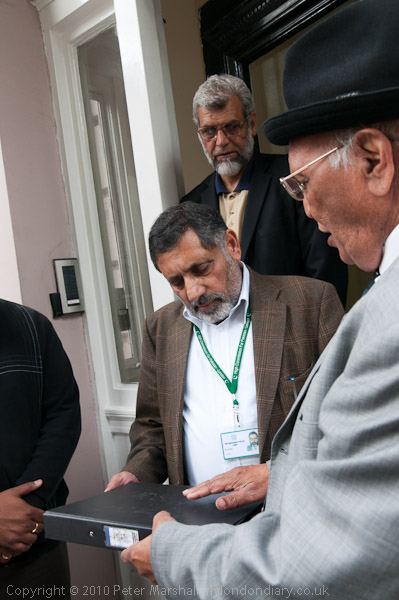
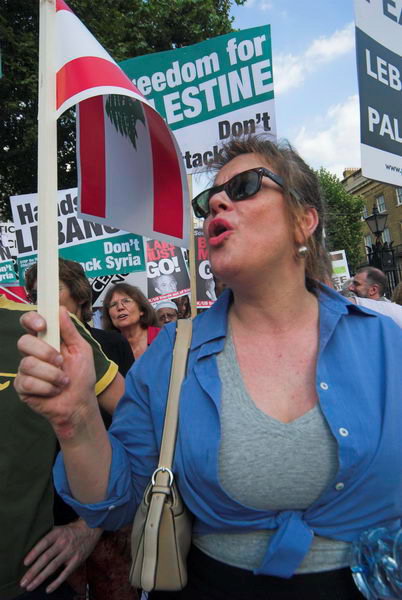
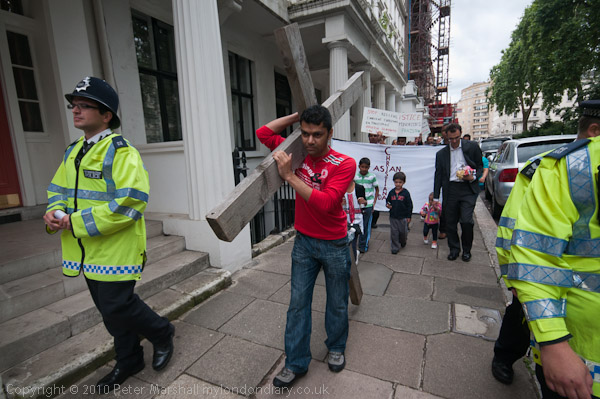
The protest in 2010 began outside the Pakistan High Commission in Kensington with a rally. A petition was handed in calling for the end of persecution. Officials received it politely and told them that that the Pakistani government supports the rights of minorities. But as the continuing persecution shows, it does little if anything in practice to protect these rights.
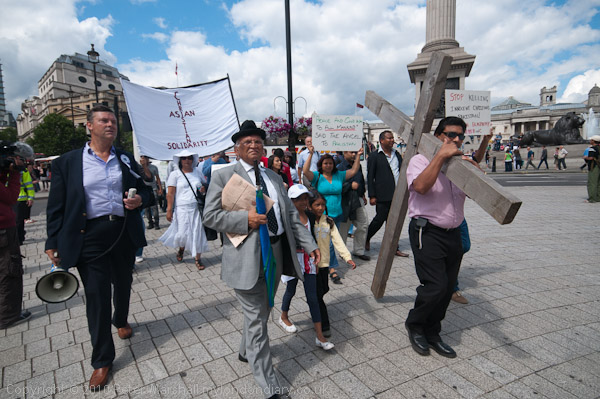
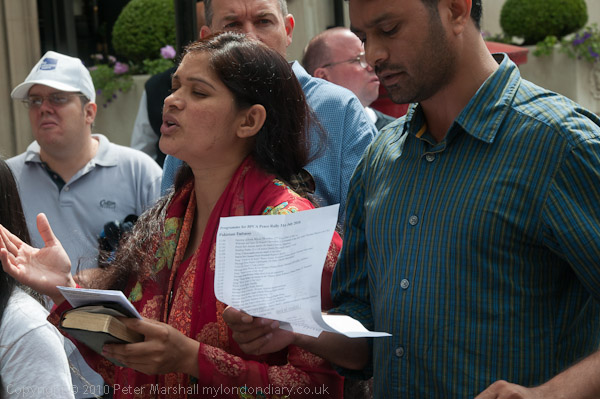
The protesters, led by a man carrying a heavy wooden cross then made their way along the pavements to Whitehall, stopping at three points on the way for prayers. Opposite Downing Strreet they joined others waiting for them in a further rally.
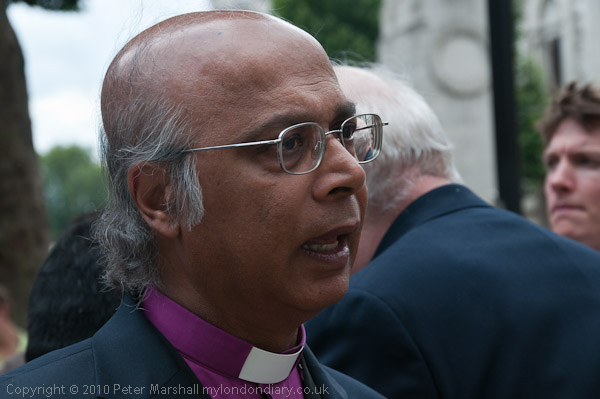
There were more prayers and some singing, and an address from Pakistani-born former Bishop of Rochester, Michael Nazir Ali. London Green MEP Jean Lambert also spoke and a delegation delivered a letter to 10 Downing St.
More on My London Diary: Christians Protest Pakistan Persecution.
ENA/EDL March in London Again
Tothill St – Duke of York Steps
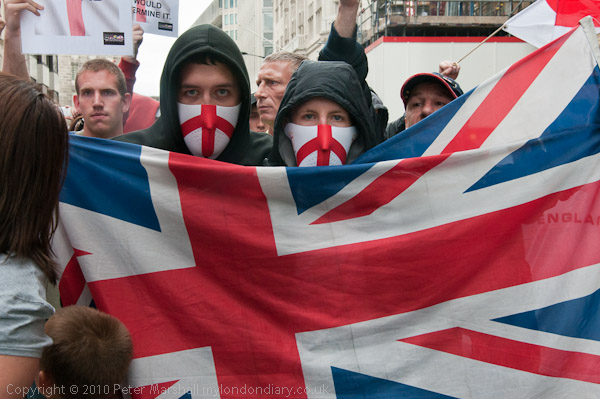
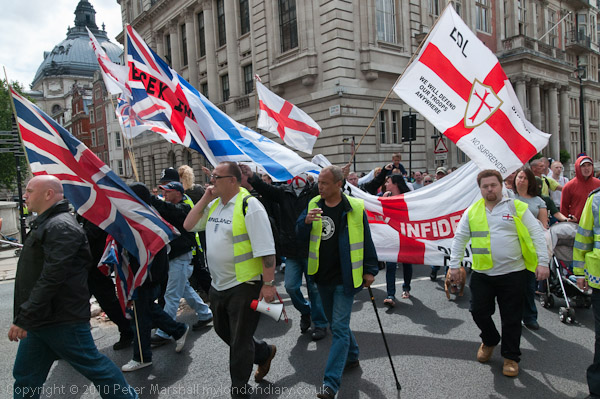
In May 2010 a couple of hundred people from the English Defence League and others marched through London on what they described as a ‘Patriot March to Challenge Parliament’ organised by ‘British Citizens Against Muslim Extremists‘. Most were from the EDL and they delivered a letter to Downing Street.
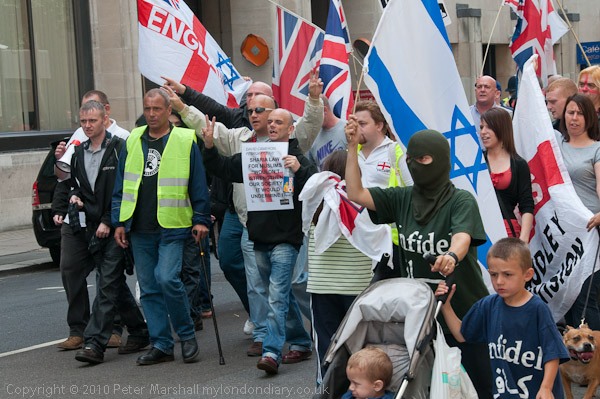
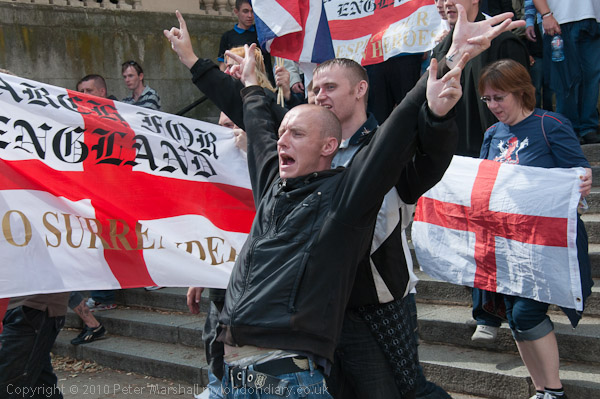
They were dissatisfied with the reply they got to that letter and so the English Nationalist Alliance organised this further march. Like the earlier march in May it was largely peaceful and relatively restrained – except in some of the responses to a group of counter-protesters who accused them of being “racist scum”.
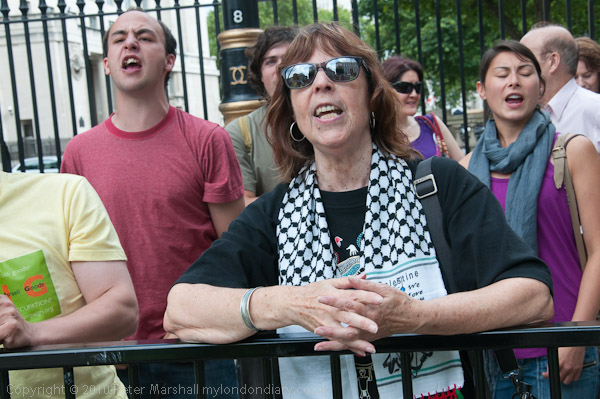

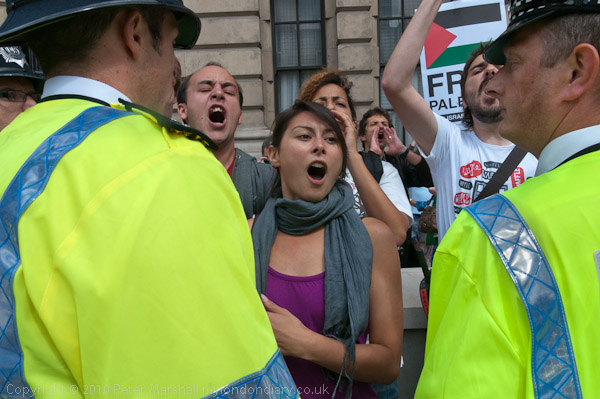
At Downing Street they handed in a letter signed by the ENA and ten other groups, the EDL, Shieldwall, The British Society for Freedom of Speech, Christians for Democracy, England United (Weiran Ce Angelcynn), England St George, Acacia Freedom Fighters, Sikhs against Shariah, English Jewish League and Parents Against Shariah.
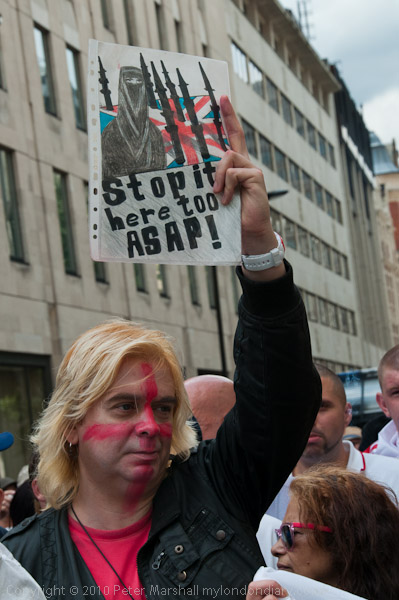
Another group on the march was March for England, and along with the St George’s flags and Union Jacks there were also a couple of Israeli flags and a placard from ‘One Law for All.’
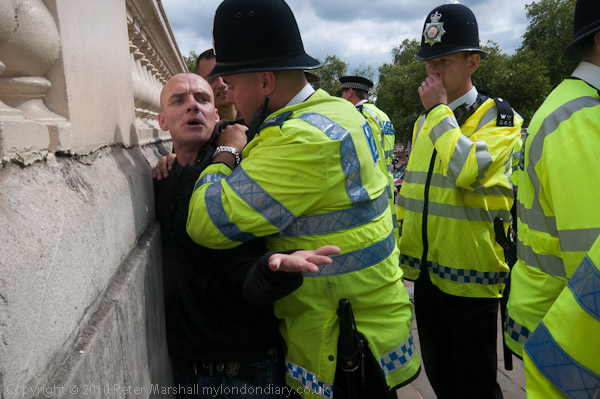
At the rally at the Duke of York Steps I had a rather concerning moment when one of the speakers, Blackburn with Darwen English Democrats Party councillor Michael Johnson, pointed me out as an unwelcome guest and police stepped in as a number of people moved rather menacingly towards me.
As I posted:
“A couple of days earlier the ENA web site had published a feature which – among other things – wrongly accused me of publishing lies about the previous march, along with my picture and the statement “he must be confronted and chased away in all future events as a socialist collaborator who cannot tell the truth.”
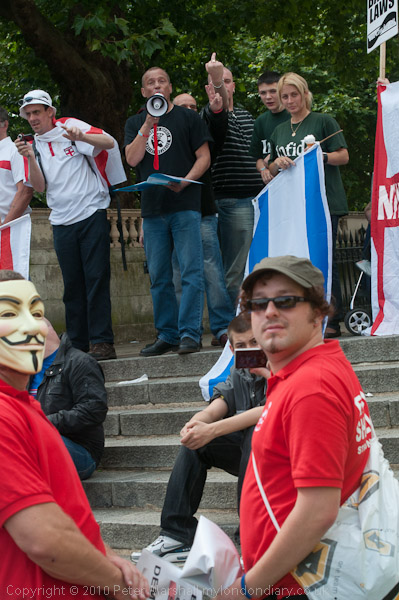
Police stepped in front of me and requested me I move back a little to quieten the situation, and I complied.
The ENA feature had confused me with another photographer and earlier on the march I had received both a couple of apologies by the mistake and also several compliments from those on the previous march who had read my report.
Though I certainly don’t support the EDL I had tried to report the event and their demands objectively. The article on the ENA web site was an attack on press freedom,”suggesting that the ENA should attempt to impose censorship and limit reporting to those who support it.“
Like other photographers I have no control over how my work is used in the mainstream press, largely owned by billionaires with editors imposing right-wing views. It makes no sense to blame – as did the ENA – “socialist journalists” for the sins of a capitalist press.
And as I point out, the march was largely if not entirely ignored by the mainstream press and broadcasters. My account, published both on my own My London Diary and in shorter form on Demotix was one of only a few to appear.
Many more pictures and a longer text from 2010 on ENA/EDL March in London Again.
Flickr – Facebook – My London Diary – Hull Photos – Lea Valley – Paris
London’s Industrial Heritage – London Photos
All photographs on this page are copyright © Peter Marshall.
Contact me to buy prints or licence to reproduce.