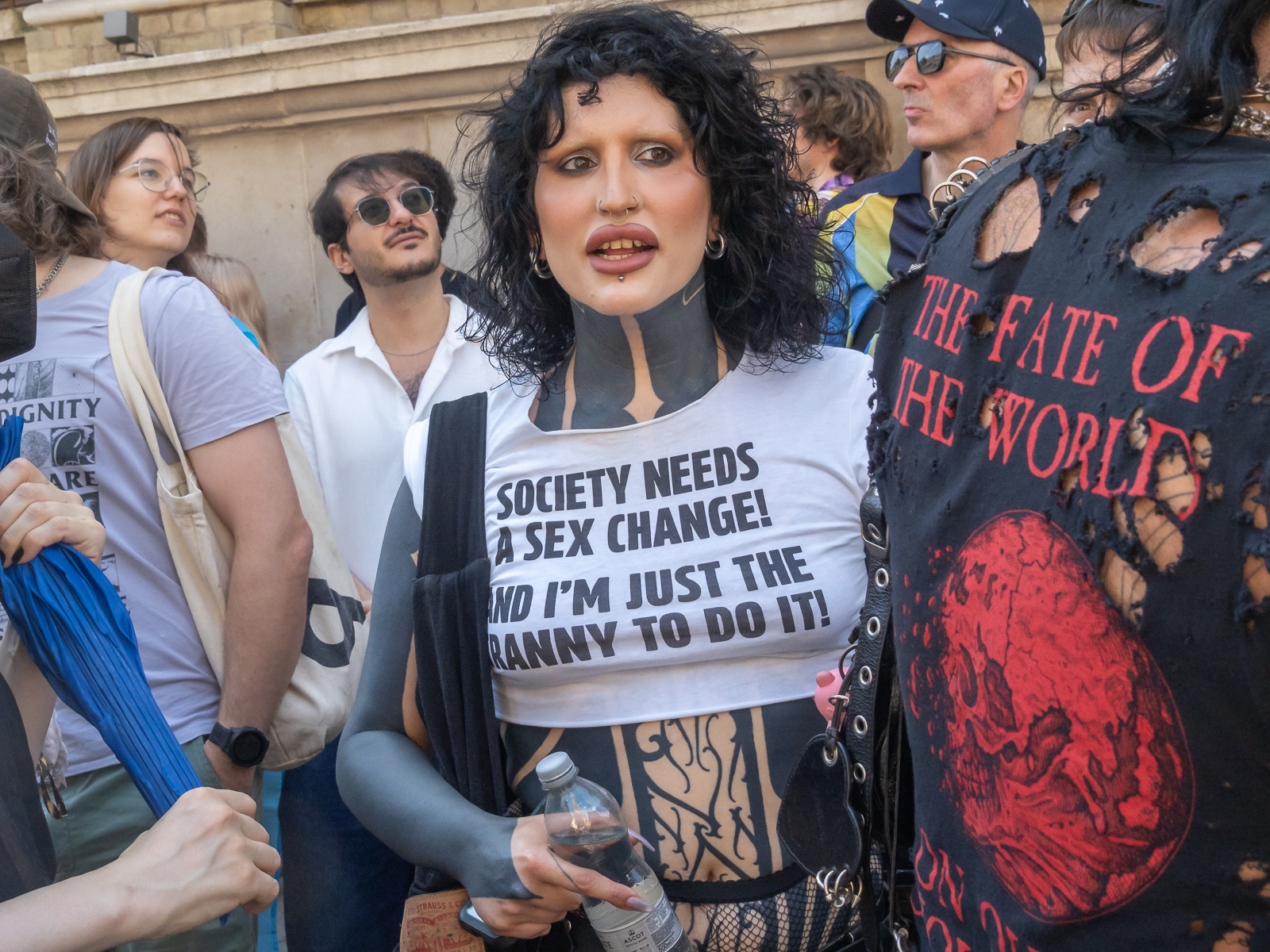
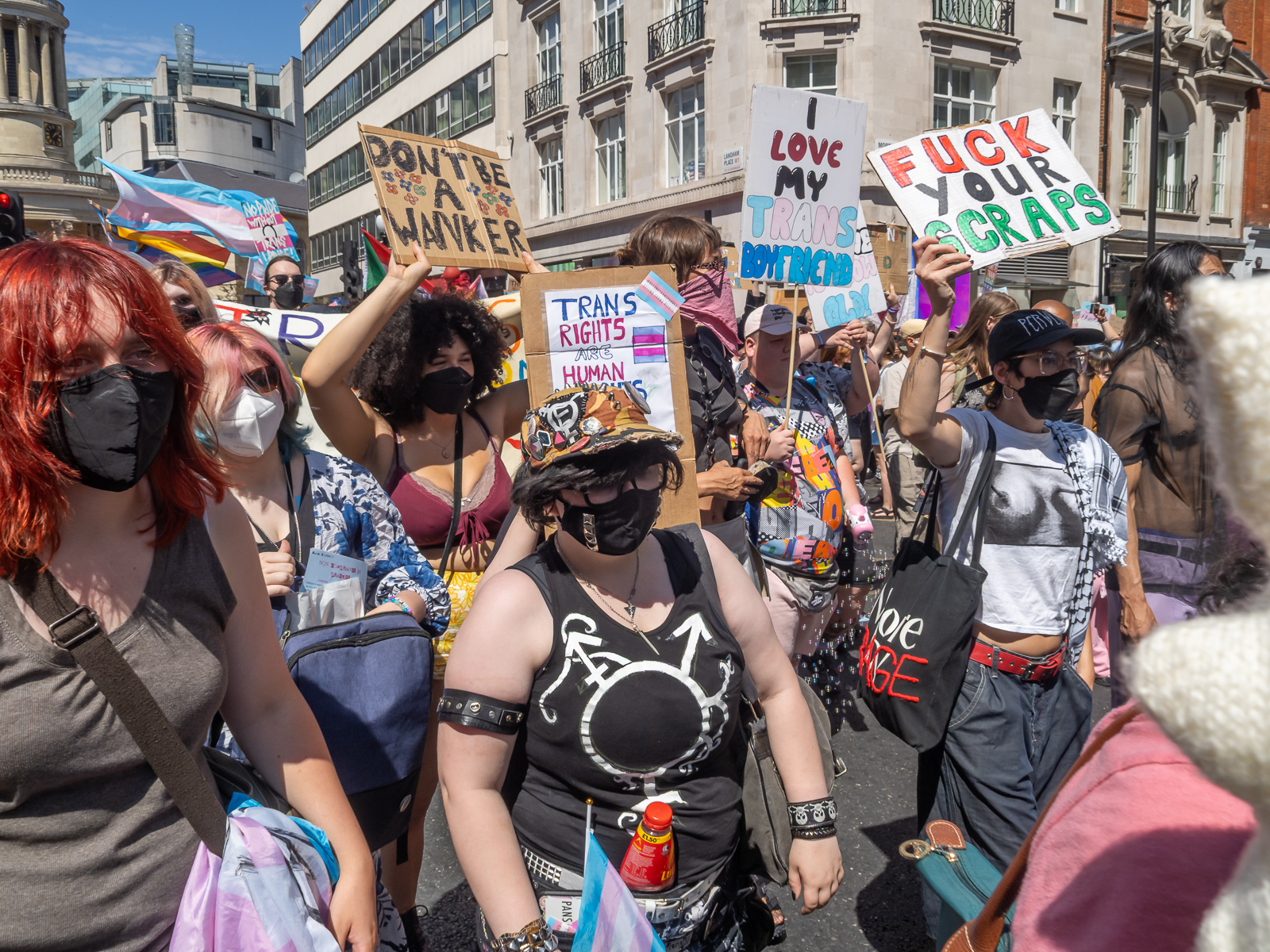
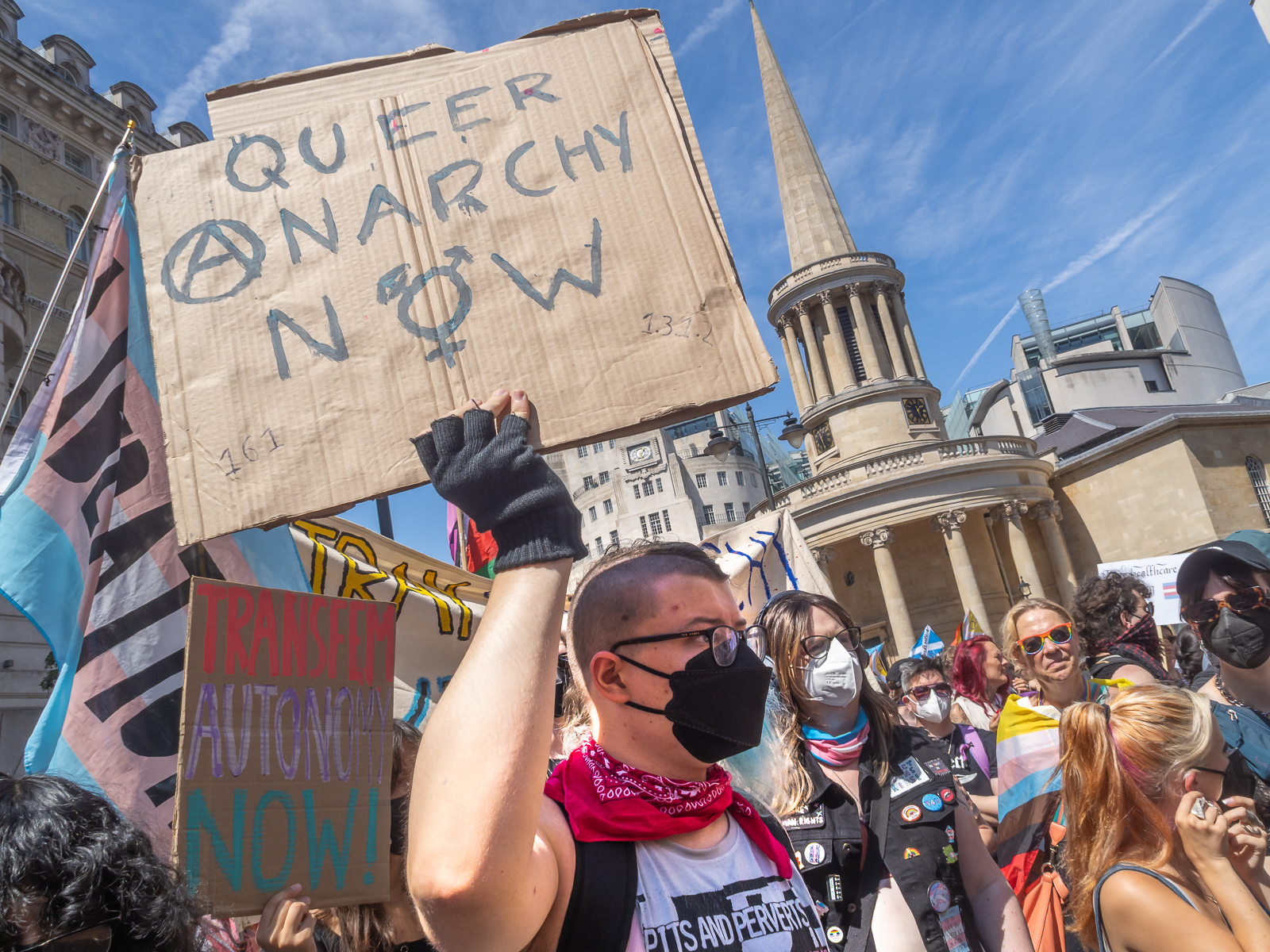
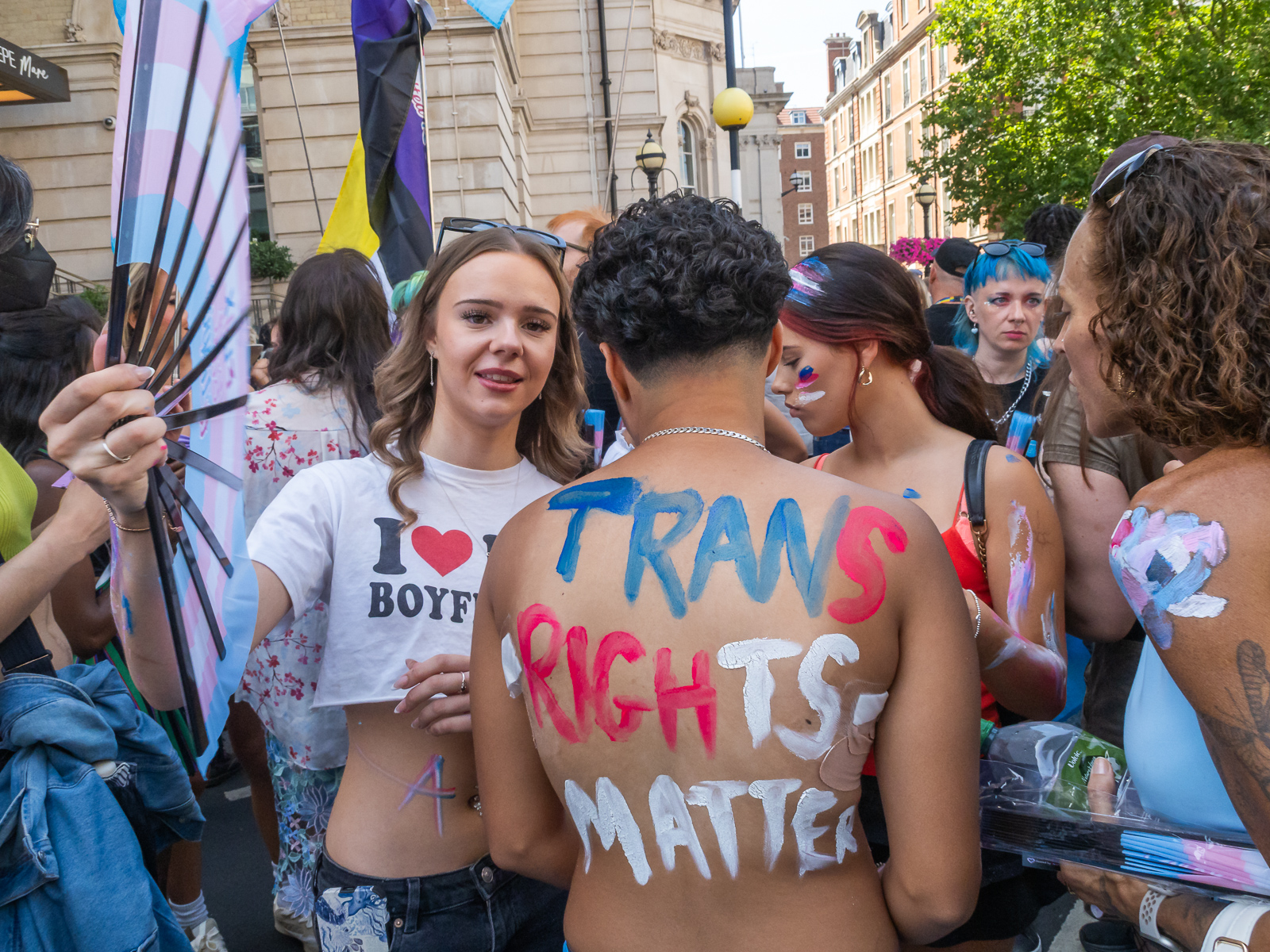
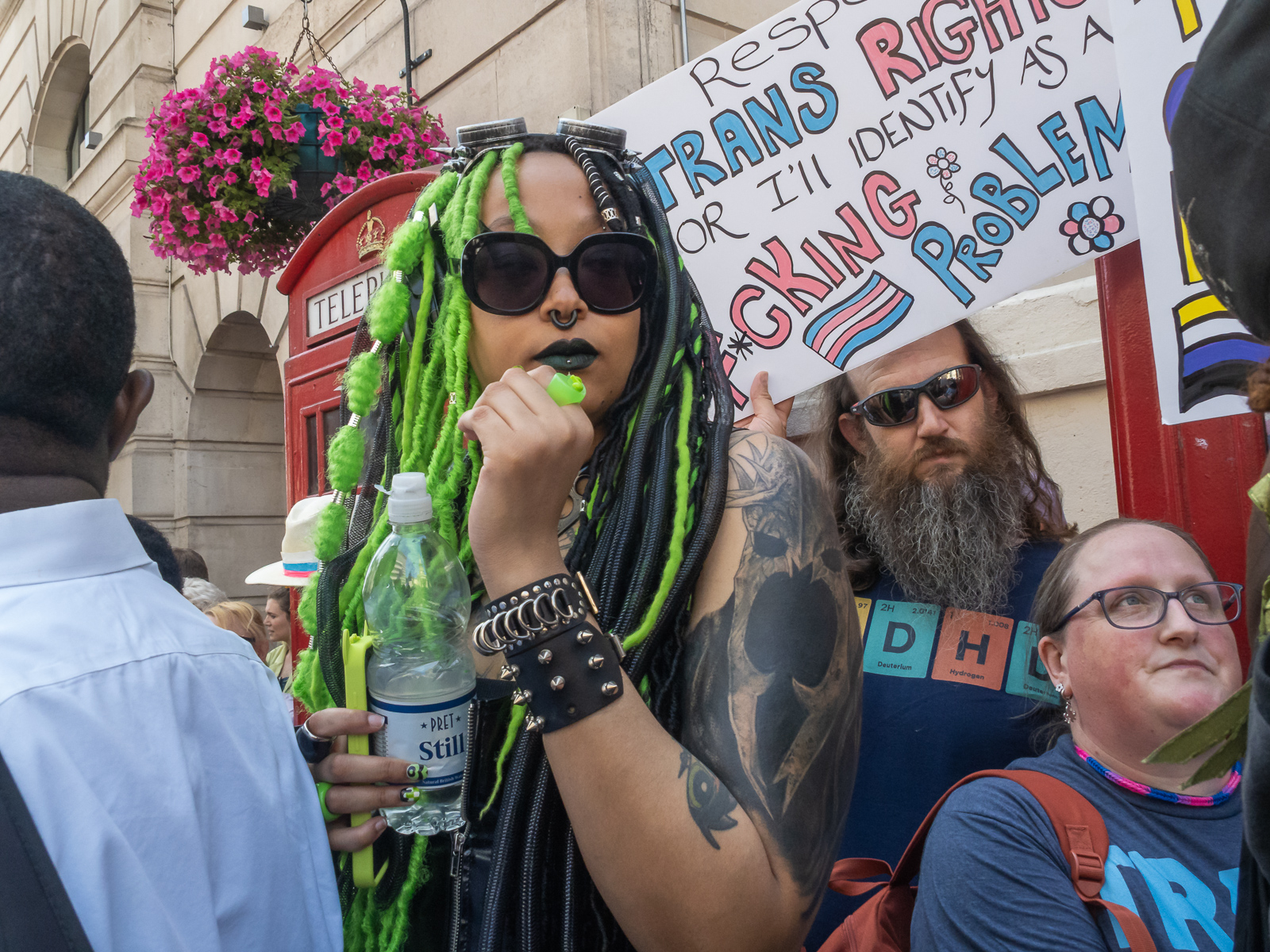
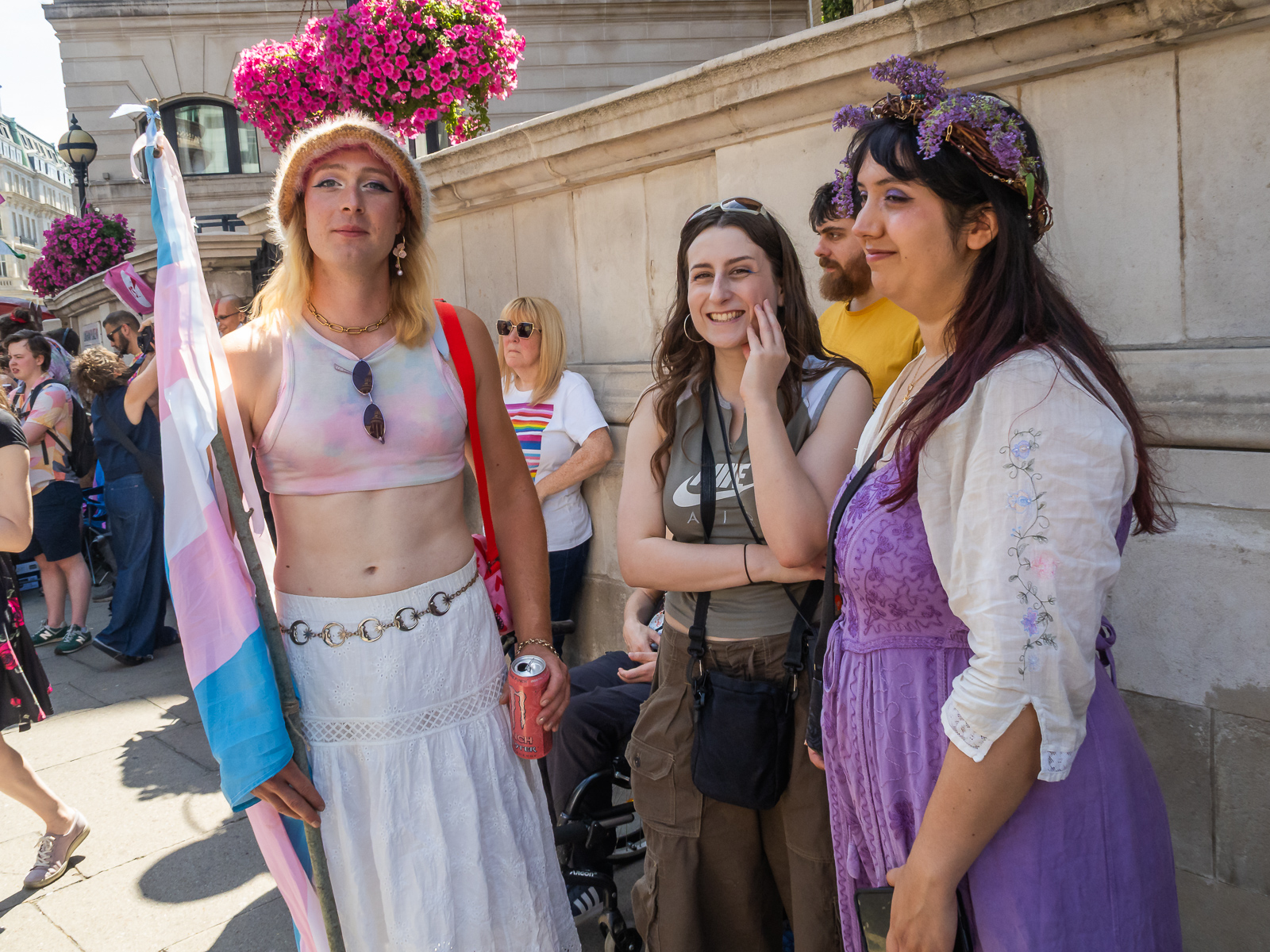
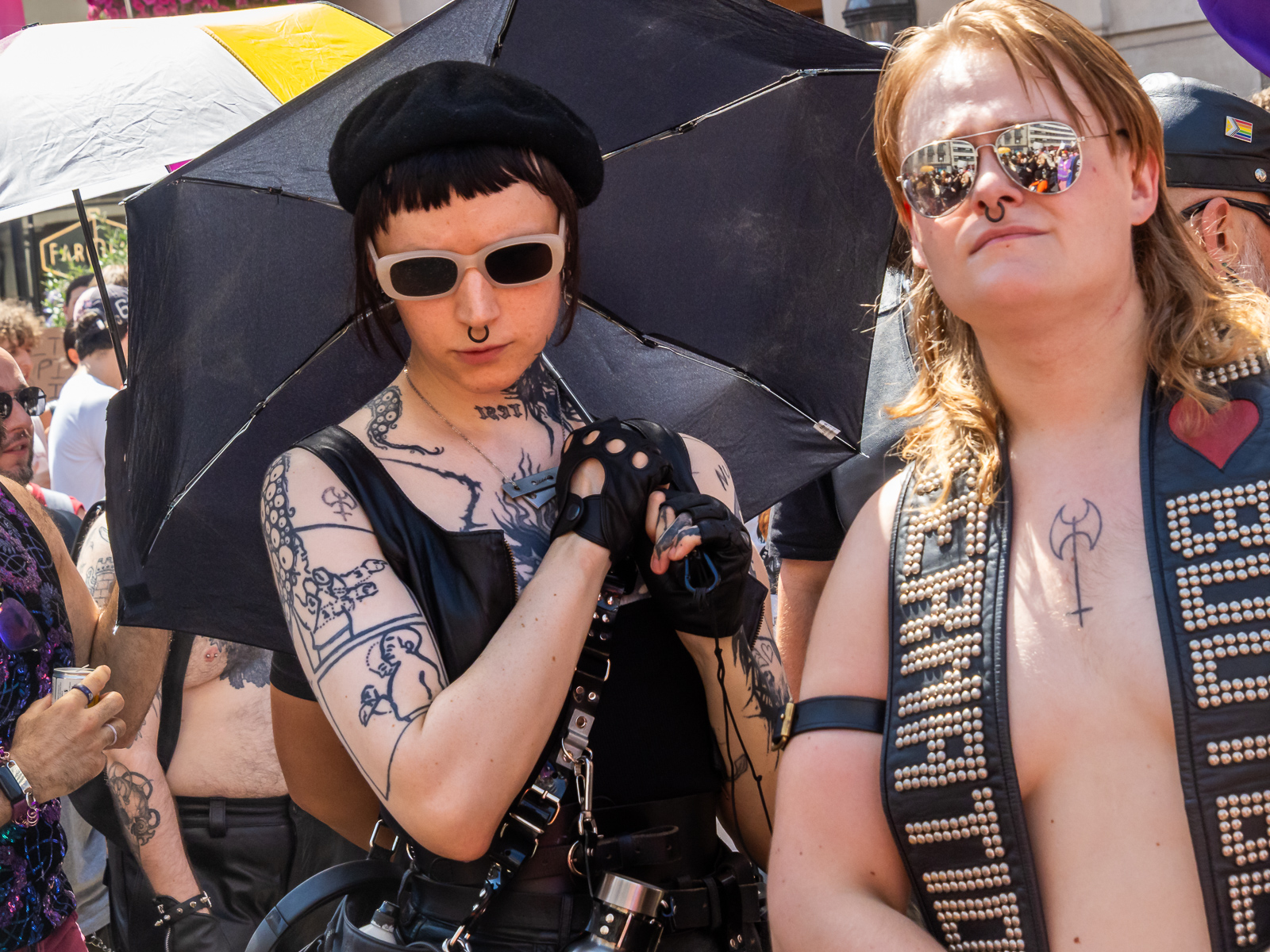
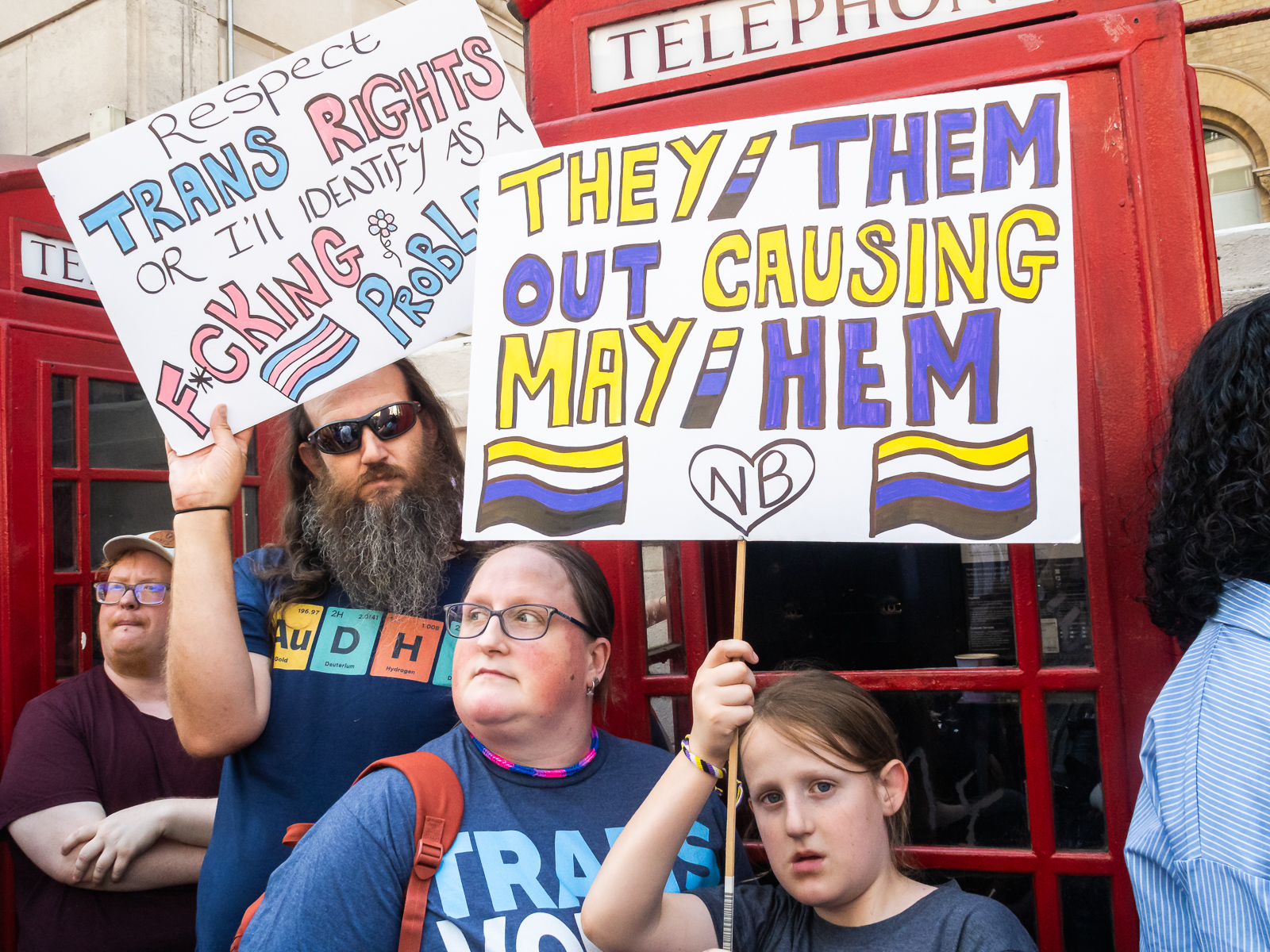
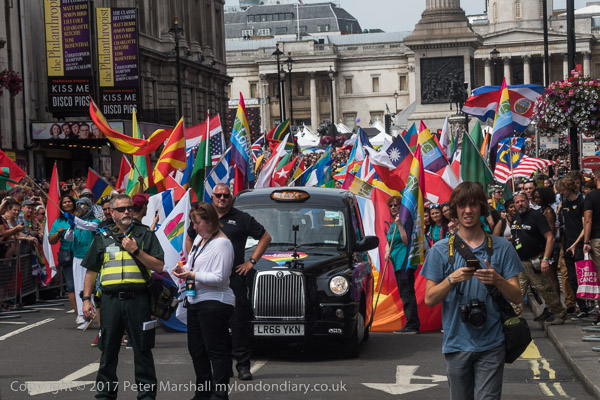
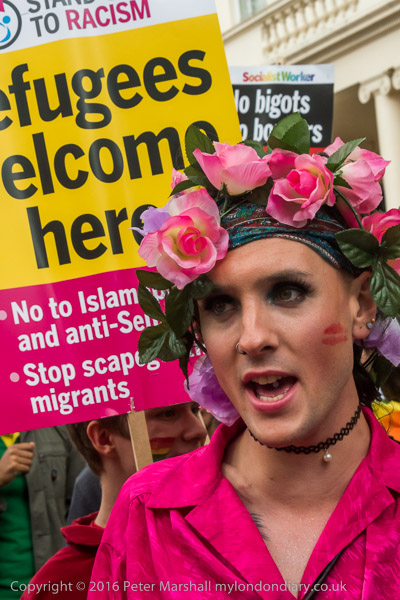
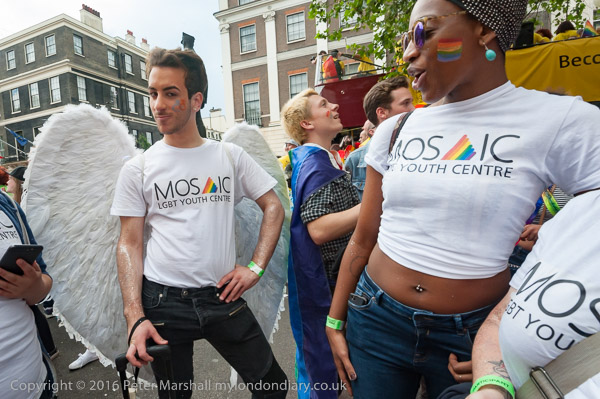
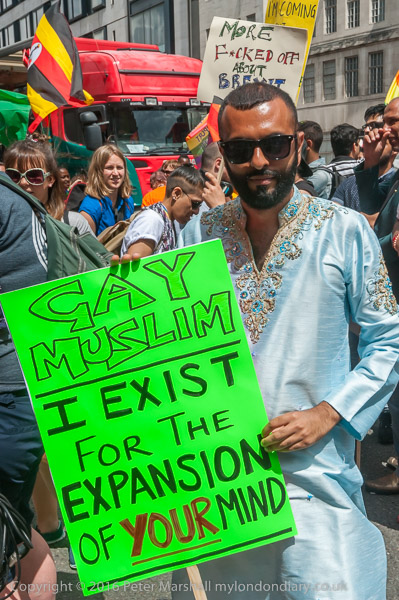
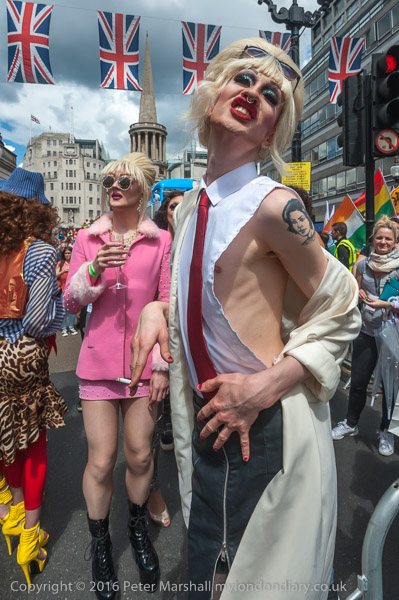
Trans+ Pride: Some of my photographs from the huge Trans+ Pride march last Saturday – 25th July 2026.
It was a hot day and after the march had been going past me for two hours on upper Regent Street I was exhausted and went home. Standing on a bench before I left I could see there were still people with trans flags coming round past the BBC to start the march.
I’d thought that it might be smaller than last year’s event when an estimated 100,000 took part, but it was larger – perhaps the 150,000 figure could even be an underestimate. Certainly it was huge.
It seemed as if the whole gay community had come out to support trans people, as well as many others who respect the dignity and differences of human beings.
Trans people have come under increasing attack in the past year since the Supreme Court decision that the definition of a “woman” or “man” in the Equality Act refers strictly to biological sex.
It was a decision that surprised many of the MPs who had voted for the Act, and the subsequent Equality and Human Rights Commission (EHRC) guidance has created huge problems for trans people – and for organisations open to the public.
These problems have been amplified by some of our politicians and by the media who have often given a great deal of attention to small and highly vociferous groups opposed to trans people and their human rights.
I went to London’s First Trans+ Pride March in September 2019 (the idea had come from Brighton) attended by only a few hundreds and commented:
“The event aimed to increase visibility for the trans+ community and to protest against the discrimination that continues around the world against trans people, with increasing transphobia in the British media, attacks on trans people on the streets, hate speech by trans-exclusionary feminists, and by right-wing national and state governments.“
The situation has worsened since then, but the marches have certainly made trans people more visible. They have always been a integral part of the gay community – and were important in the 1979 ‘Stonewall Riots’ which marked a new beginning for the gay rights movement in the United States and around the world.
Dolce & Gabbana, Sanctions & Poor Doors Thursday 19th March 2015 -protests at a Mayfair fashion store, the Department of Work and Pensions and another of Class War’s long series of protests at One Commercial St, Aldgate.
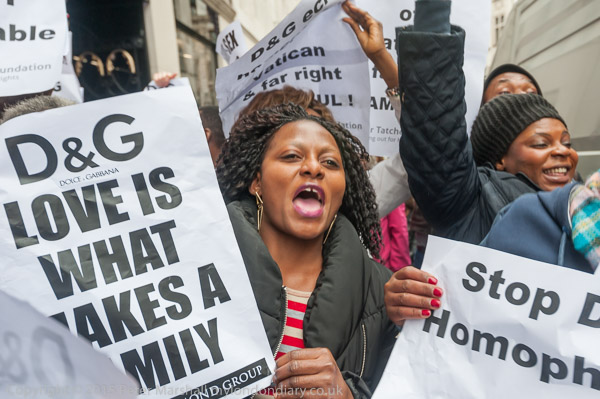
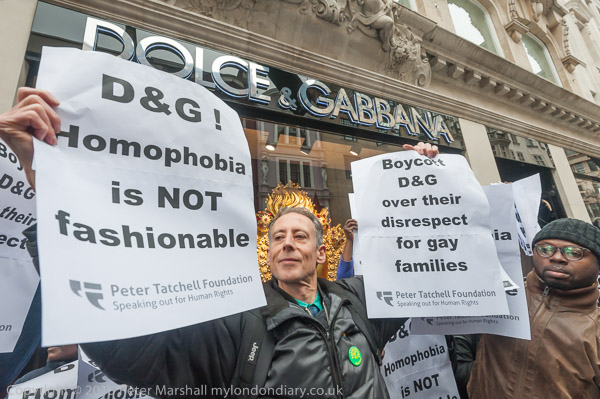
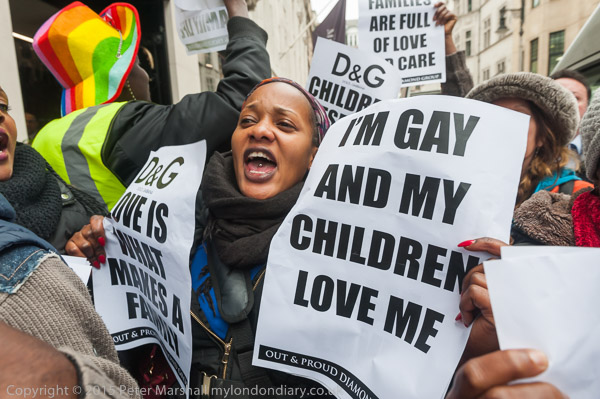
Dolce & Gabbana Boycott – Old Bond St
Domenico Dolce and his business partner Stefano Gabbana are apparently well known fashion designers and have a range of over 200 shops in plush areas of cities in 41 countries dedicated exclusively to selling their overpriced clothing. In London I think they have one in Sloane Square as well as the Mayfair store this protest took place outside.
For some reason our media treats anything to do with fashion as important news, and there were more photographers and TV crews packing the narrow pavement than protesters when I arrived making covering the protest difficult, particularly for those of us who prefer to work at close range.
The Peter Tatchell Foundation and the Out and Proud Diamond Group had called the protest in support of the international boycott over homophobic statements by the two designers. Almost certainly a much higher proportion of the shop’s customers are gay than in the general population and Dolce & Gabbana have profited massively from sales to the gay community over the years.
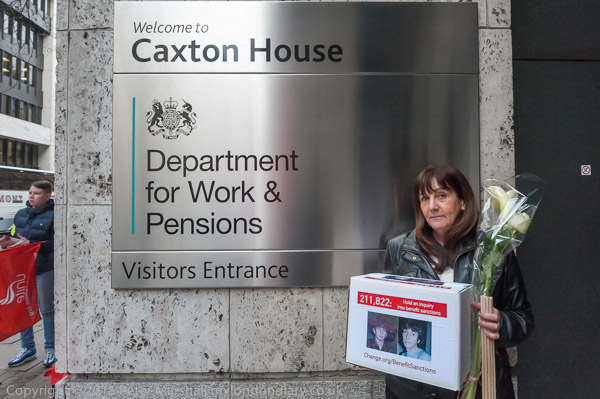
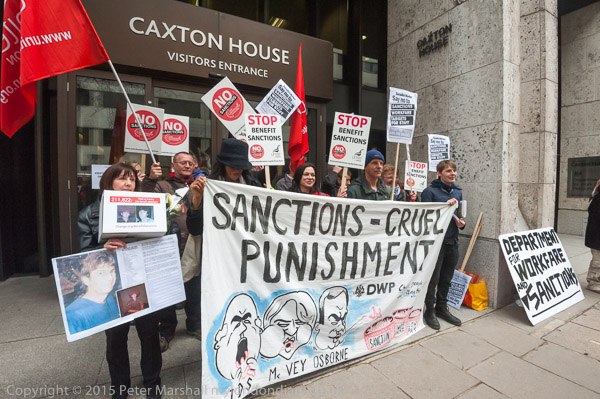
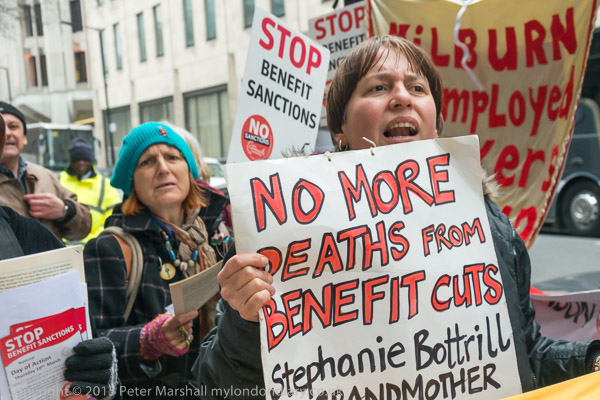
Unite protest against Benefit Sanctions – Caxton House, Westminster
Gill Thompson, whose brother died after being sanctioned holds her 211,822 signature petition
Unite here and at Job Centres around the country were having a day of action against punitive benefit sanctions on over 2m people which had led to increased poverty, misery and even death. They say the are a ‘grotesque cruelty’ and are often imposed for trivial reasons.
People have been sanctioned because postal delays meant they never got notification of an appointment they missed, or because they were 5 minutes late as a bus was cancelled. Often job centre staff are under pressure to issue sanctions and may be penalised if they do not sanction enough of their clients.
At the protest was Gill Thompson, whose brother, David Clapson, a diabetic ex-soldier, died after being sanctioned. She had brought her 211,822 signature petition calling for an inquiry into benefit sanctions to the protest to present to the DWP.
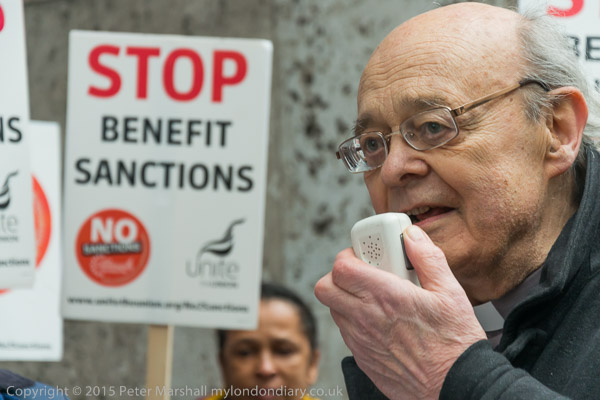
Among others who spoke was Rev Paul Nicholson of Taxpayers Against Poverty.
Poor Doors Protest Blocks Rich Door – One Commercial St, Aldgate
When Class War read a newspaper article about the separate entrances for rich residents and those in social housing in a new block at One Commercial Street in July 2014 they were disgusted and decided to launch a series of weekly protests outside the block every Thursday evening.
I missed the first of these but you can find reports of almost all of the rest of them, at least 29 in all, on My London Diary. For an overview you can read John Bigger’s article on Freedom in which he gives an insider’s view and assesses the impact of these protests, and the ‘zine’ I published Class War: Rich Door, Poor Door with over 200 photographs from 29 protests is still available. But though this is reasonably priced, postage costs roughly double this – so you really need to buy half a dozen copies or more and give or sell some to your friends. Be warned the print quality in what Blurb calls a MAGAZINE is pretty low.
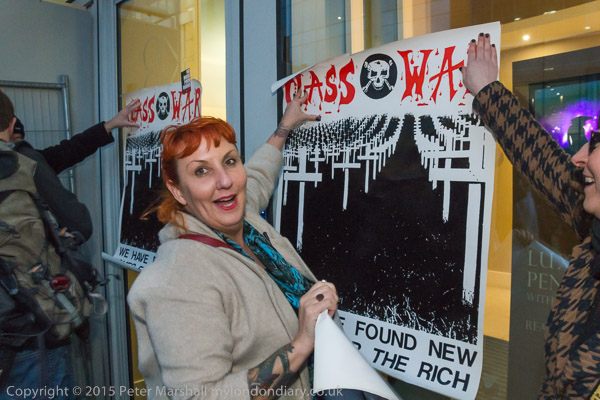
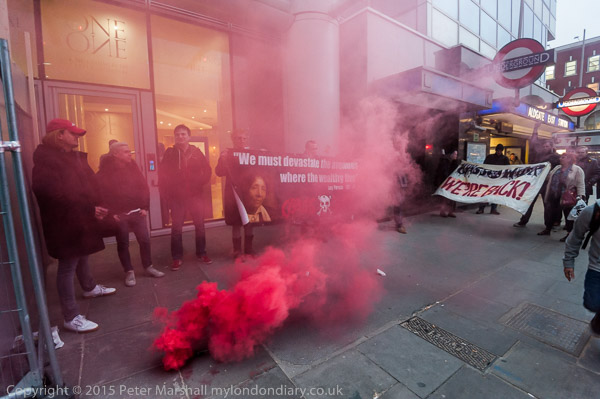
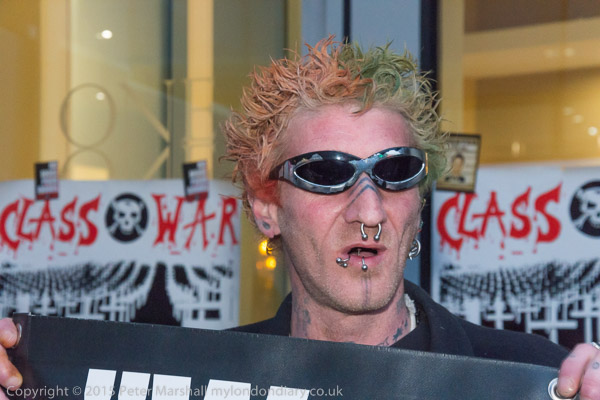
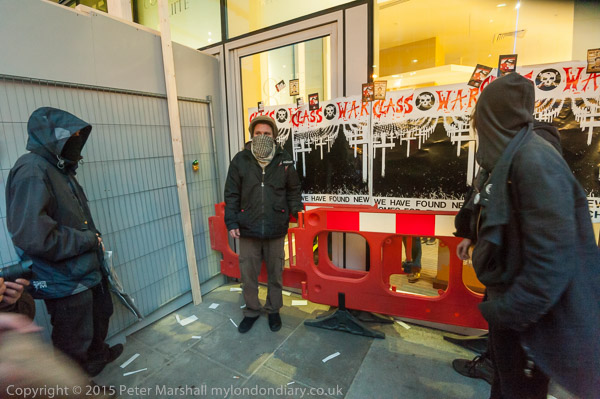
The protest on 19th March was a lively one and the management at One Commercial Street had locked the rich door and were I think telling the rich residents of that section to enter and leave instead through the hotel at the Commercial Street side of the building. Class War held up banners and posters and some stuck stickers onto the glass of door and large windows. Someone lit a red smoke flare and threw it onto the pavement. There was a lot of loud chanting and some short speeches.
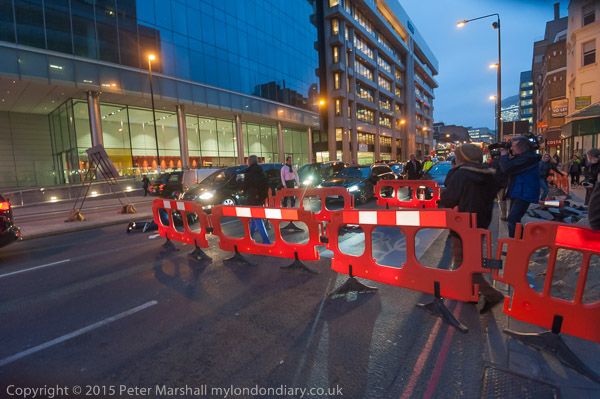
Some younger anarchists present took plastic barriers from the works taking place on the pavement and piled them in front of the locked door. Others took them onto the busy Whitechapel High Street and blocked the traffic.
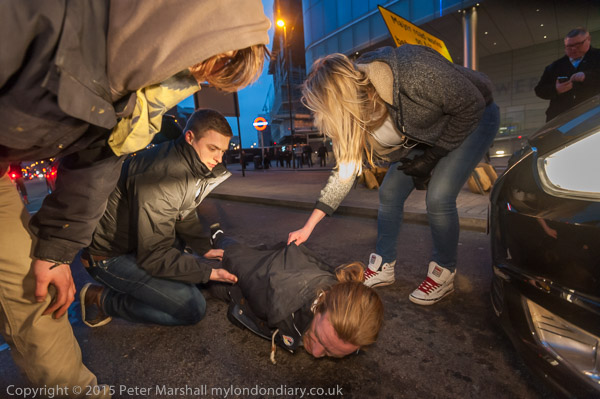
A man and a woman who had been watching suddenly grabbed one of those present, threw him to the floor and handcuffed him, holding up their warrant cards to show they were plain clothes police. I didn’t recognise the man they arrested who was not one of the regular Class War protesters, and as usual they refused to answer questions about why he was being arrested. But their arrest effectively blocked the only lane of the road which the protesters had not already blocked.
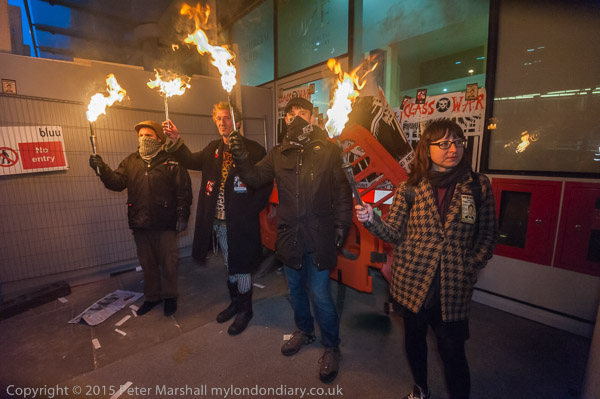
More uniformed police arrived and dragged the arrested man away to a police van, removed the barriers and protesters from the road and the protest continued with Class War holding up flaming torches in front of the rich door.
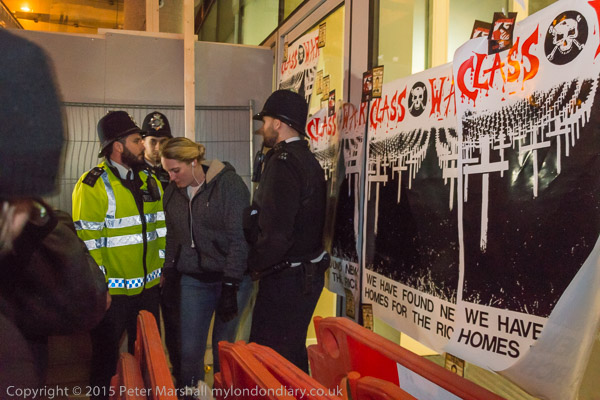
There were a few more short speeches and then the protesters left as usual after about an hour, leaving their posters attached to the glass on the front of the building by Class War stickers.
Anti-Racist & Migrant Rights reclaim Pride – 8 July 2017
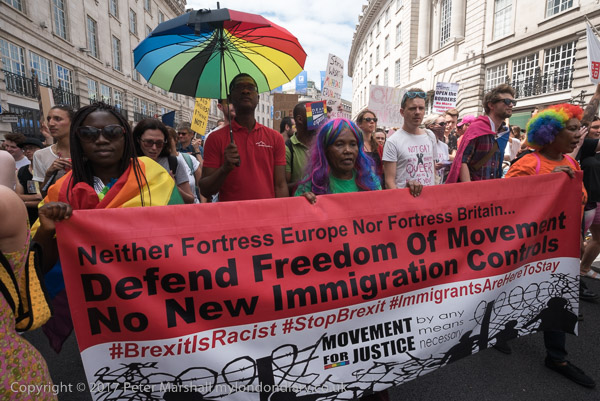
Anti-Racist & Migrant Rights group unofficially leads Pride 2017
In 2017 the organisers of the official London Pride decided to strictly limit those taking part to groups that had made an official application with those who were approved being issued with armbands for their members to go on the route. In previous years the parade had been open to all, with smaller and more radical groups joining on the end of the march behind the main participants.
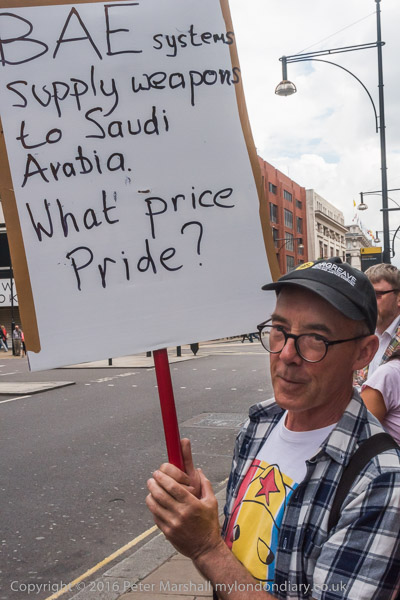
For years many in the gay community had protested that, as I reported “Pride over the years has degenerated from the original protest into a corporate glitterfest led by major corporations which use it as ‘pinkwashing’ to enhance their reputation and it includes groups such as the Home Office, arms companies and police whose activities harm gay people in the UK and across the world.”
They set off to join Pride
The new policing of participation seemed to them a further step in the direction of corporate control, making it no longer a community event, but one dominated by commercial interests.
Walking into Oxford Circus
I don’t think those who organised the Migrants Rights and Anti-Racist Bloc had deliberately set out to challenge the policy, more they had simply not anticipated that it would be applied strictly to prevent them joining in at the end of the parade as usual.
Stewards stopped them moving to the back of Pride, so they stayed in front
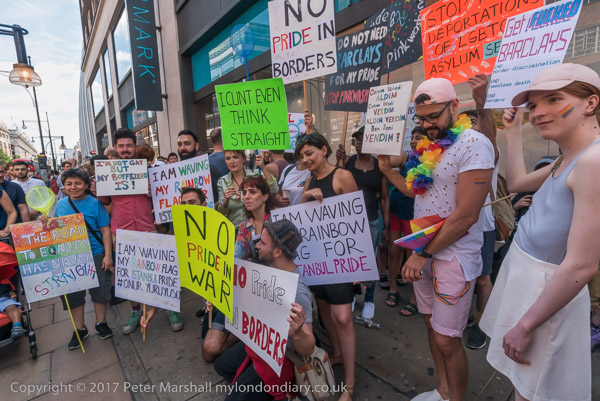
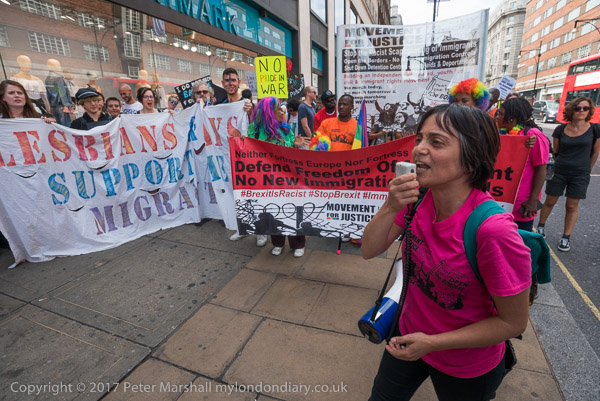
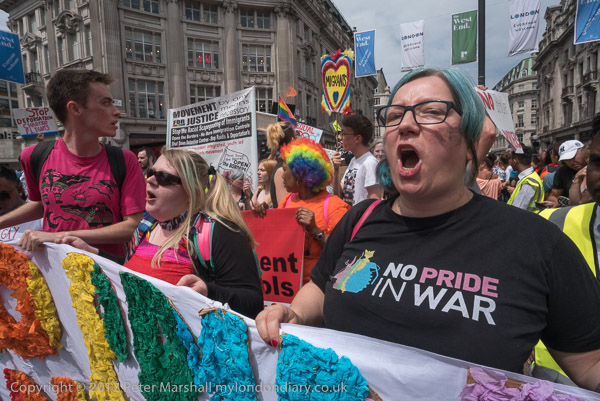
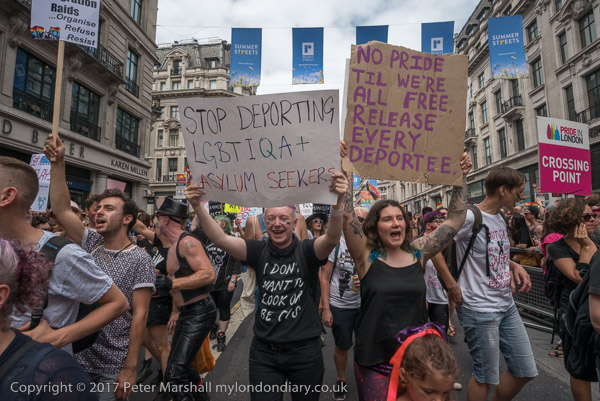
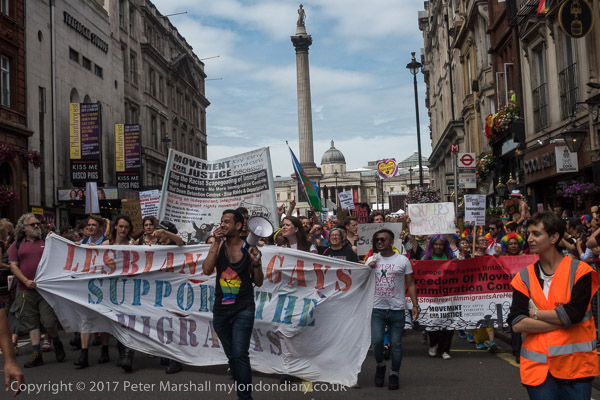
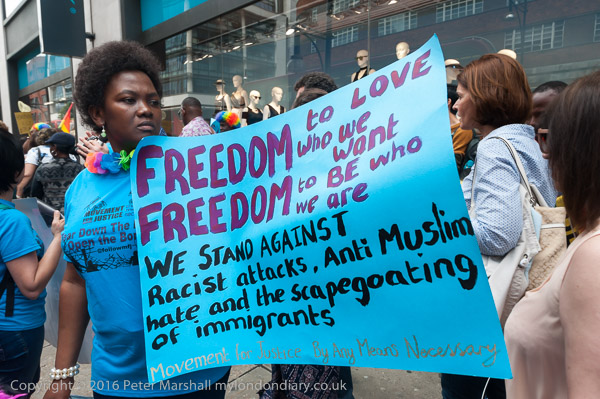
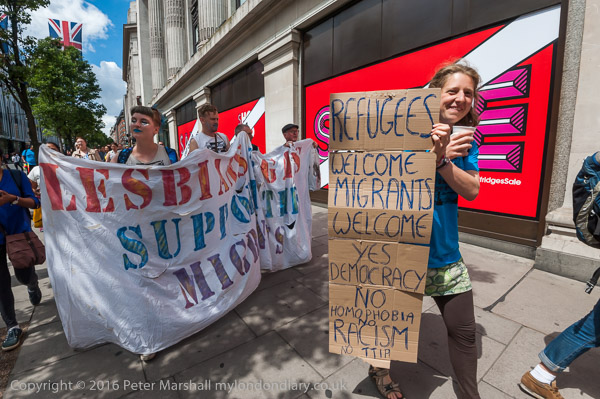
They met up at the west end of Oxford Street. As well as Movement For Justice, Queers Against Borders, Lesbians & Gays Support The Migrants and No Pride in War there was a strong contingent from London Supports Istanbul Pride. They made the point that being gay is still illegal in many countries, and that the persecution of gays is a major reason for many people coming to the UK to seek asylum.
Police let them march along the main route in front of the rest of Pride
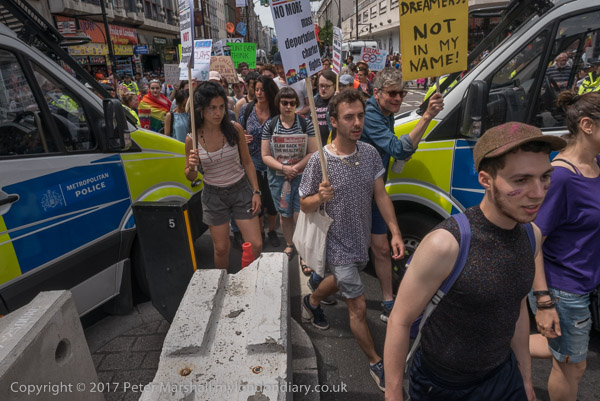
Eventually the group of a few hundred marched off down Oxford Street towards Oxford Circus, where they intended to go up Regent St to join the end of the main parade. Their way onto Oxford Circus was blocked by barriers and police vans, but they simply split up to walk around these, lifting up some of them and grouping up again on Oxford Circus. And of course I went with them.
Here they were directly in front of the head of the main parade, stopping it from starting, and surrounded by large crowds of people who had come to see the procession. They tried to march up past the Pride stewards to the back of the parade but were stopped. There followed some minutes of argument, with the group staying in place in the middle of Oxford Circus and stewards refusing to let them go to join the main event.
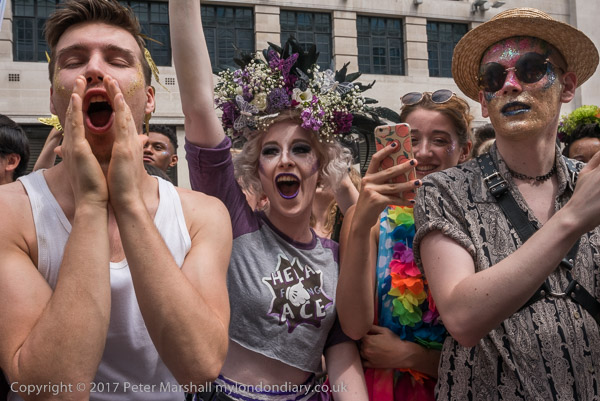
And the crowds cheered
Police made some effort to get both sides to come to a compromise or get the Anti-racist and Migrants group to leave the area, but failed. Too many people were watching for them to use force to disperse the group – and there were probably many among the spectators who would have joined in to support them. Eventually police decided the group could march along the route and held up the rest of the parade for around ten minutes before they followed.
The march ends on Whitehall
So rather than being as in previous years at the back of the parade, going along the route hardly being noticed, with many of the spectators having by then drifted away to nearby bars or on their way home, the Migrants Rights and Anti-Racist Bloc lead the procession, marching past cheering crowds (though a few did look rather confused) all the way to Whitehall.
But No Pride in War decide to block the road
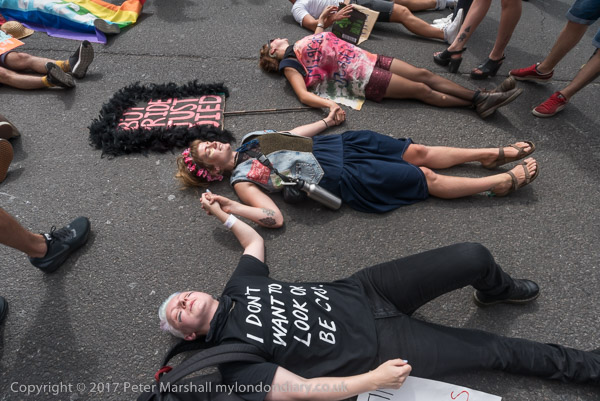
While most of the group ended their protest here, No Pride in War protesters proceeded to lie down across the road with their placards, blocking the route of the official procession which had to wait at Trafalgar Square until police finally managed to clear them, threatening them with arrest.
And the official parade has to wait again.
Later that day and on the day afterwards I watched and read the news reports on Pride, some giving it lengthy coverage. But although they had been there with their reporters and cameras, all of the mainstream media had for some reason decided that the very successful – if unintended – gatecrashing of the event by people protesting over Migrant Rights and other issues to wide acclaim by spectators along the route was not news.
I first photographed London’s annual Pride in 1993, when it was a much smaller and more political event than it has become. Back then it was still a protest an since then it has become a parade, dominated by large corporate floats, from various large companies, armed forces and police.
Of course there is still some of the old spirit, with many groups from the gay community and even some protesters still taking part, but largely hidden at the back of the very long line-up.
The Migrant Rights & Anti-Racist Pride march to the official Pride London procession organised by Movement for Justice and joined by others, including London in Solidarity with Istanbul LGBTI Pride and Lesbians and Gays Support the Migrants brought back some of the original spirit.
It gathered on Oxford St and then went on to join the main march, along with others behind the corporate floats.
The following year Pride organisers reacted by closing the march to only those who had officially applied to march and had official armbands – and refused entry to the Migrants Rights and Anti-Racist Bloc who then sat down in front of the march before police decided they could march along the route before the main procession.
This year Pride in London has been postponed until 11 September, but Peter Tatchell this May called for an alternative LGBT+ rights march to take place in June, He stated:
“For too long we have been conned by vested interests into believing that it is hugely expensive to hold a Pride march. It is not costly at all if we run the no-frills march that I am proposing.
“It would mirror the informality and spontaneity of the first Pride march in 1972, which I and 40 others helped organise. All we need to do is publicise it and people will turn up.
“Pride in London has become depoliticised. This Pride can change that. As well as being a joyful celebration, it should also profile LGBT+ human rights issues, such as the government stalling on a conversion therapy ban, blocking reform of the Gender Recognition Act and failing to end the detention of LGBT+ asylum seekers.
“It’s time to get back to the original roots of Pride, with everyone encouraged to bring a placard highlighting the LGBT+ issues that concern them. Let’s make this an event where our on-going demands for LGBT+ rights can be seen and heard.
So far as I’m aware it has not been possible to organise an event like this for June 2010, although the London Trans Pride is still billed to take place on June 26, beginning at 2pm at Hyde Park. Perhaps next year it will be possible to organise such a “no frills” march with “no floats, no stage and no speakers at the end. Totally open, egalitarian and grassroots.” which “would reclaim Pride for the community.”