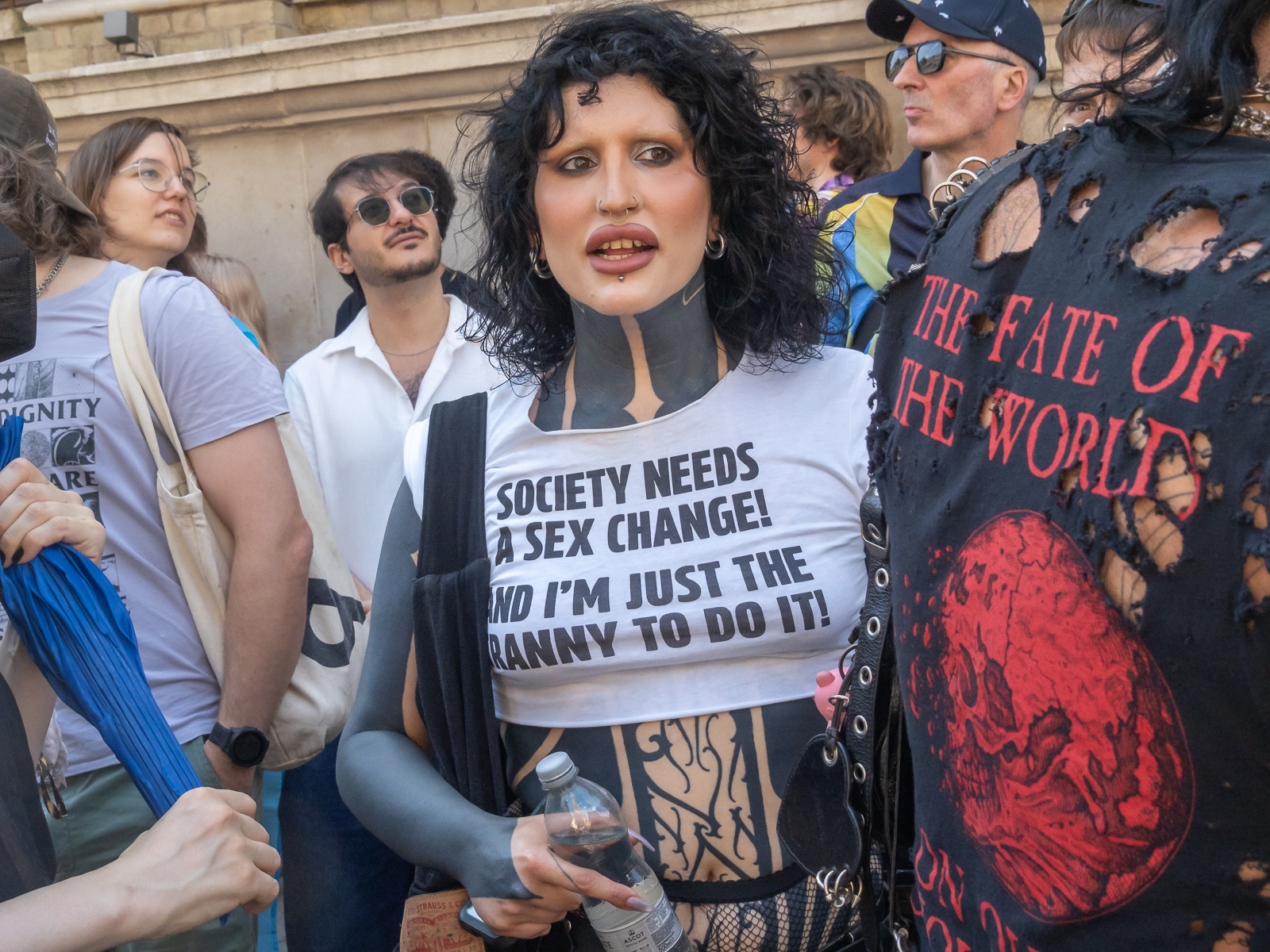
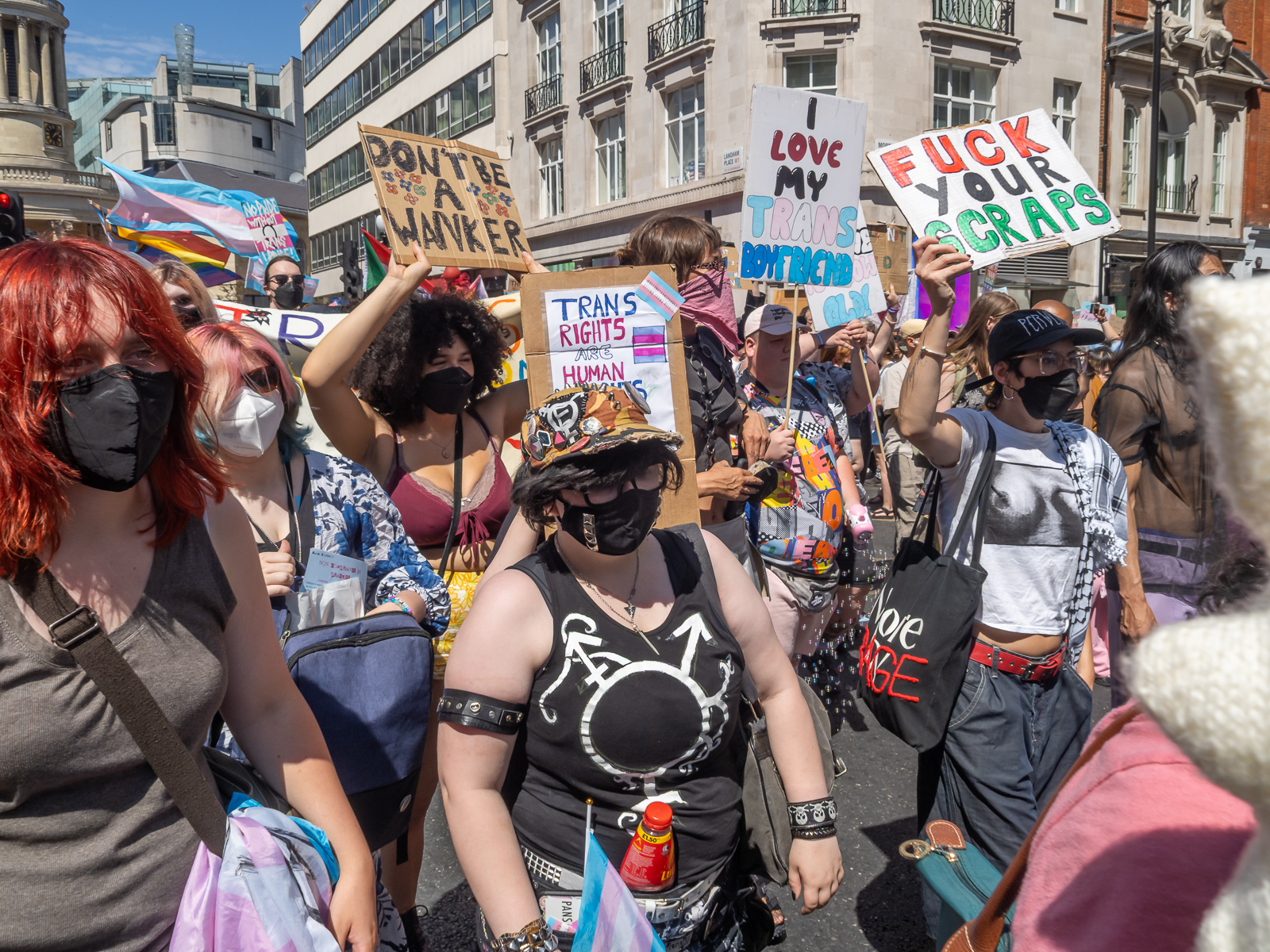
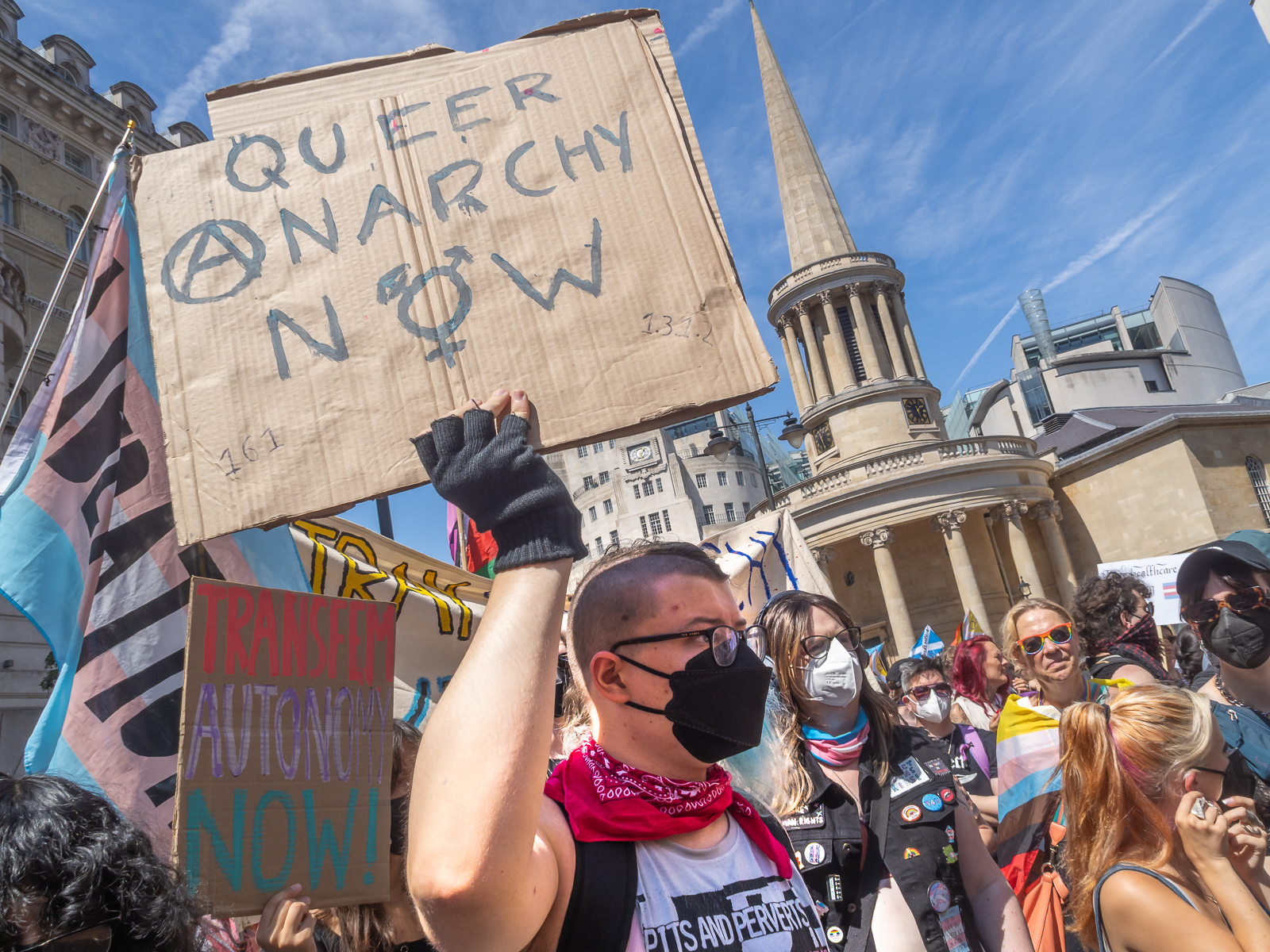
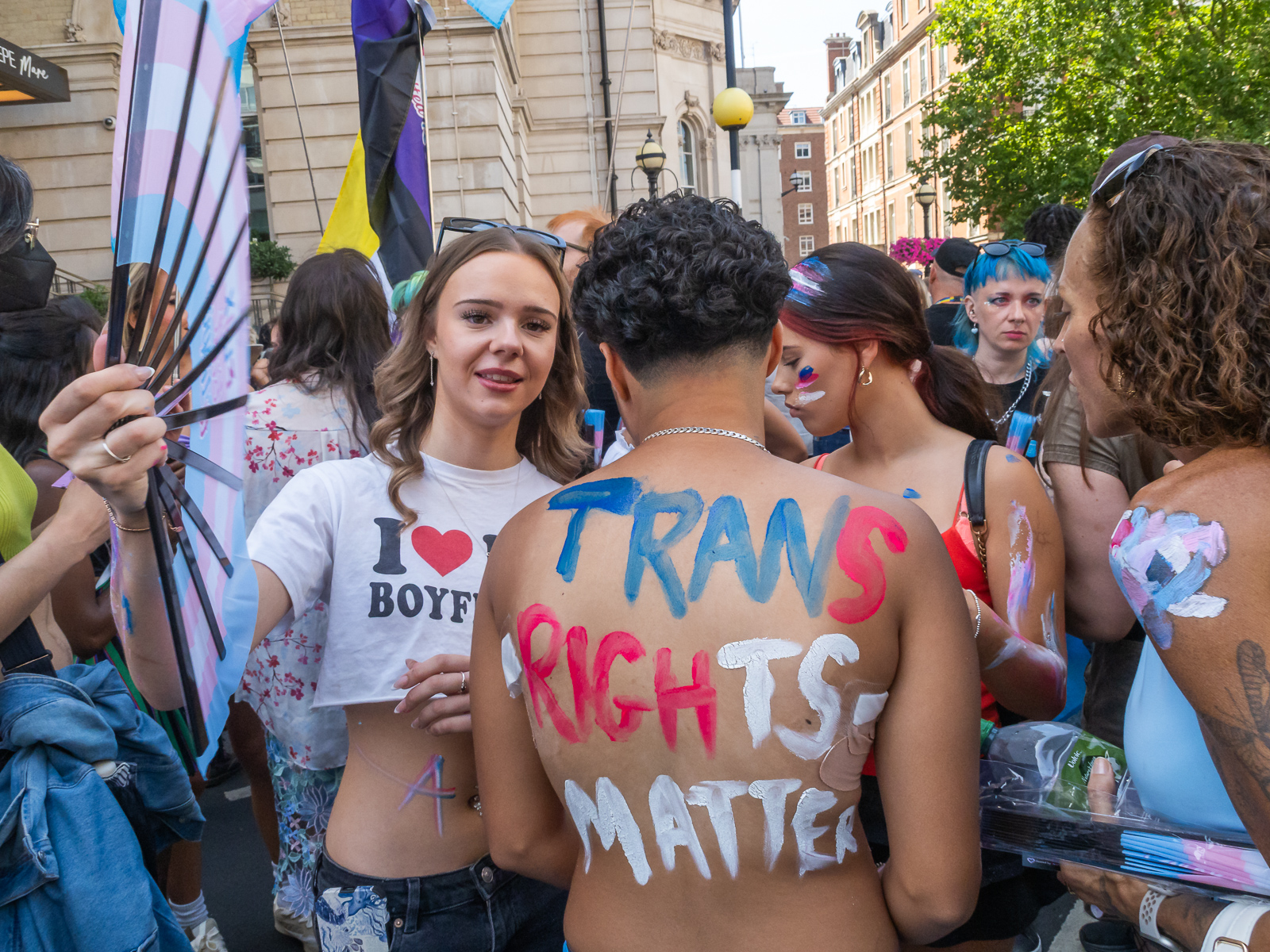
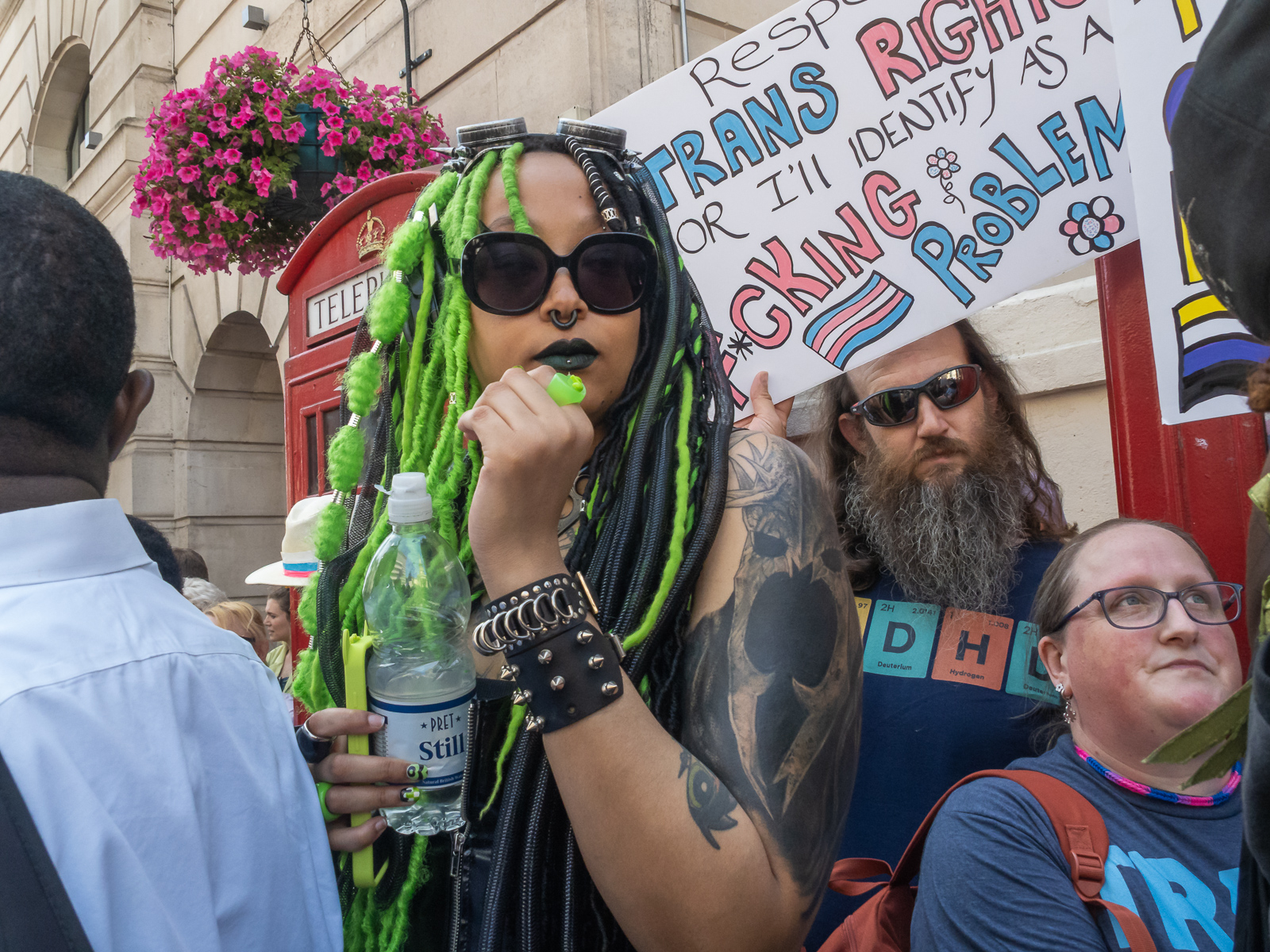
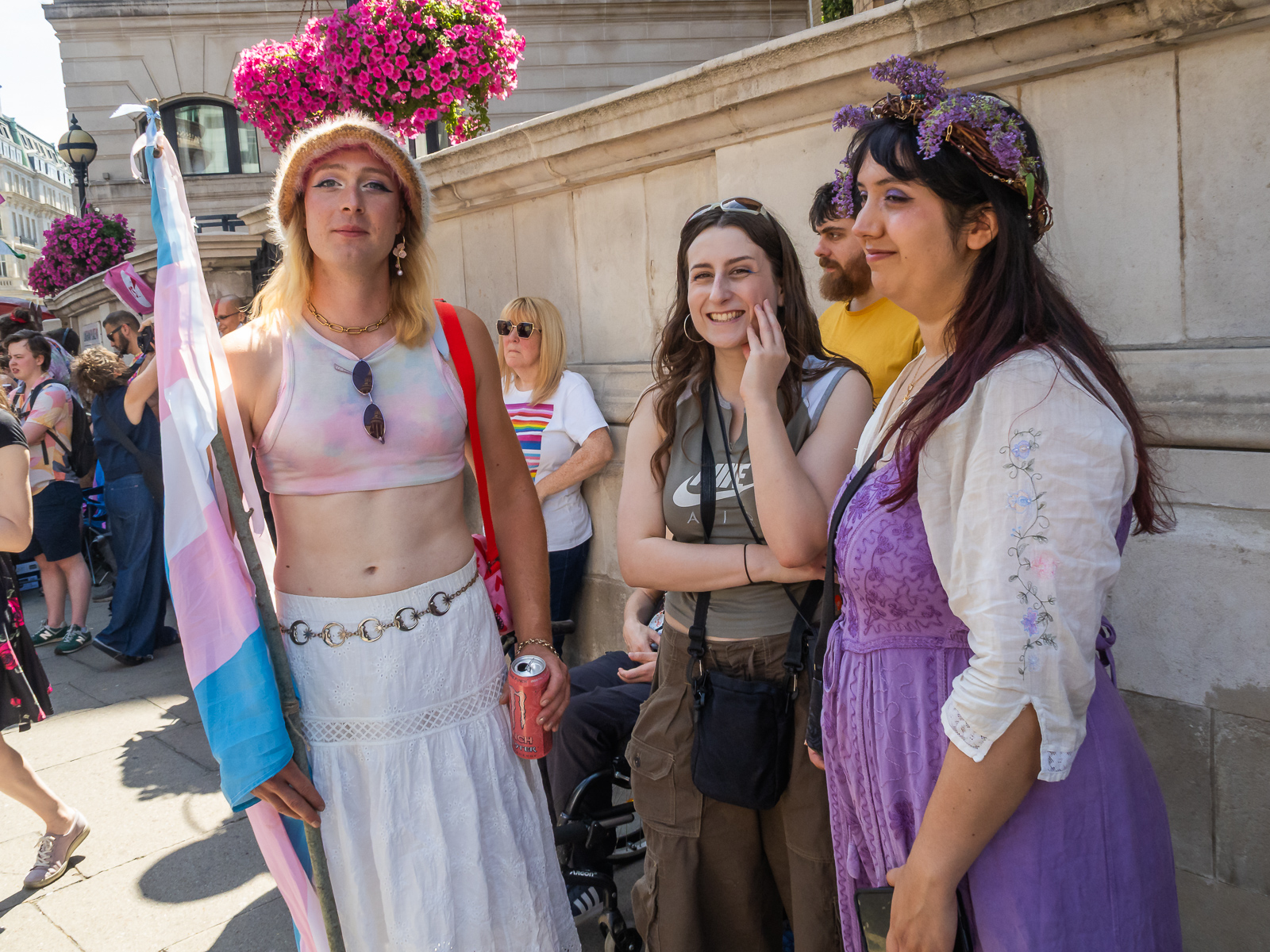
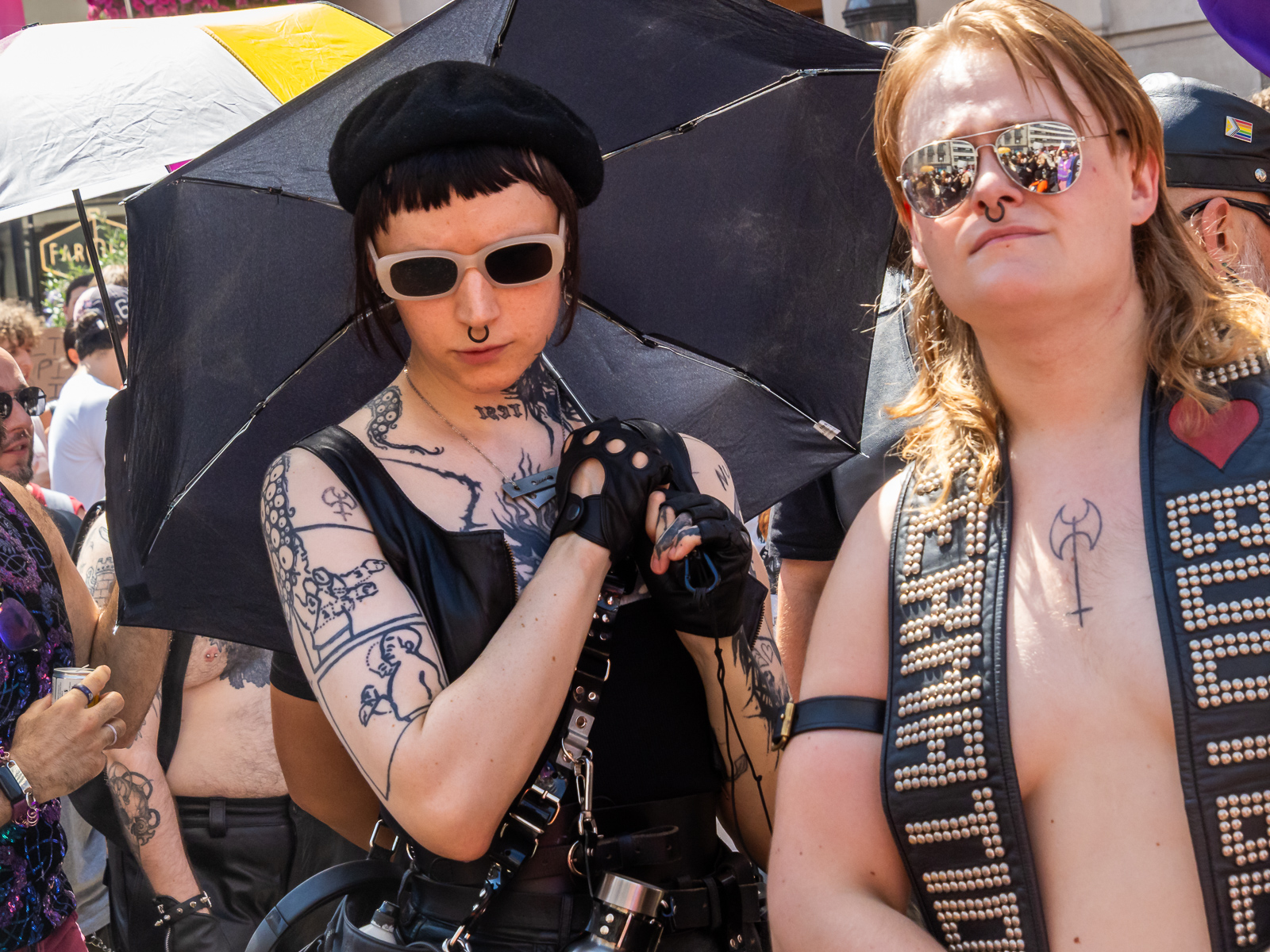
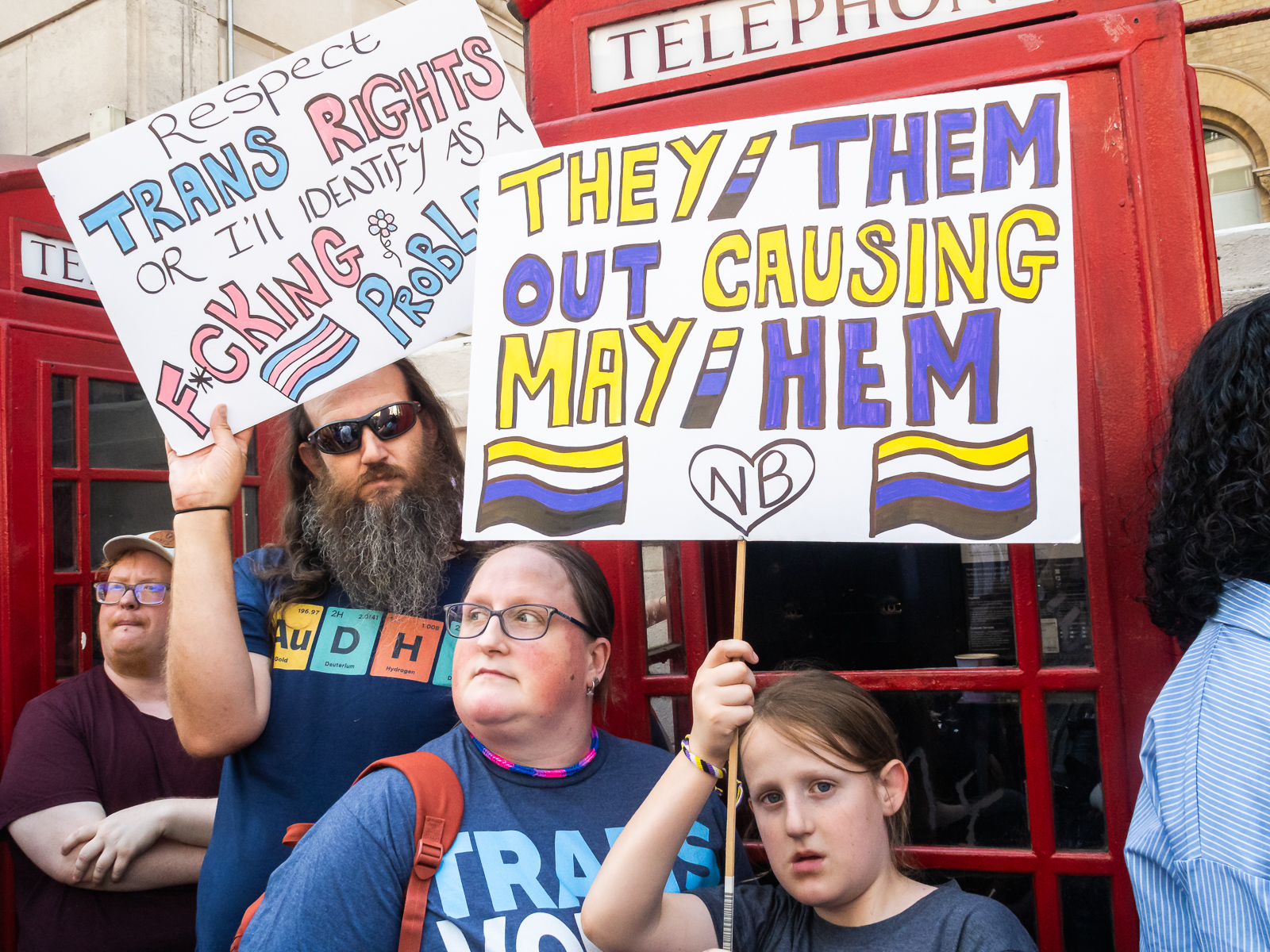
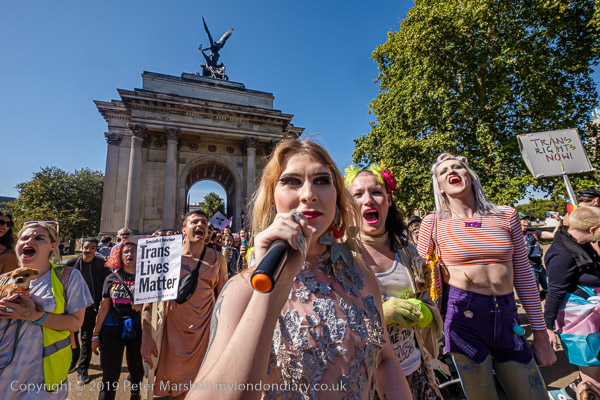
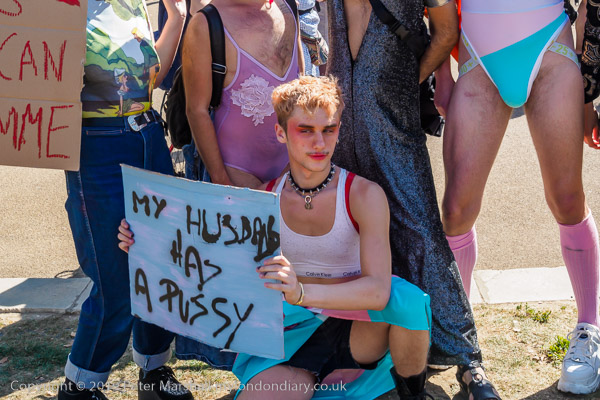
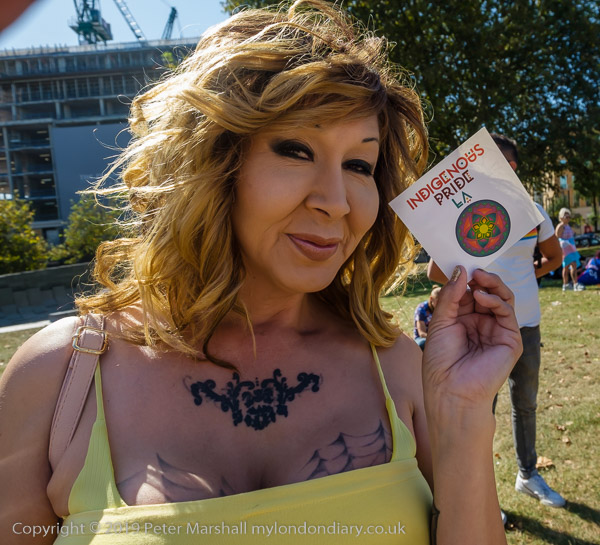
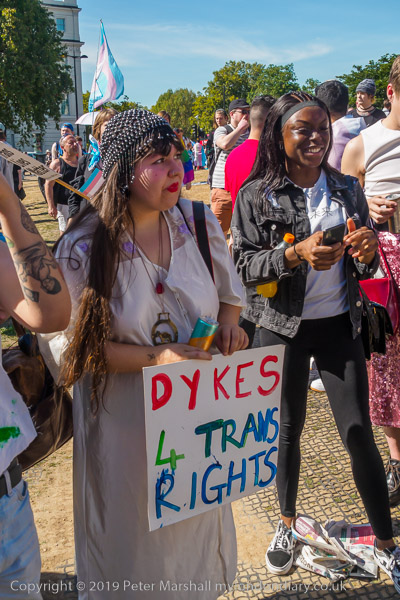
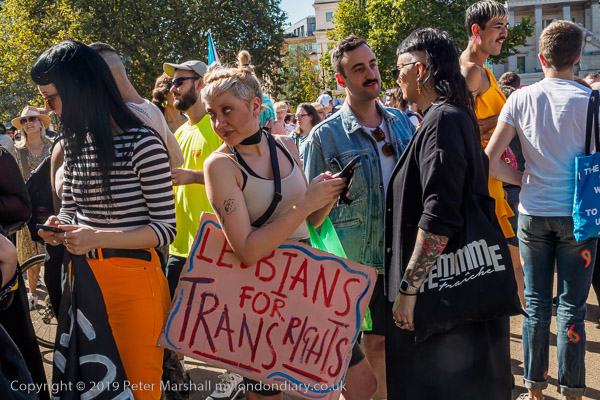
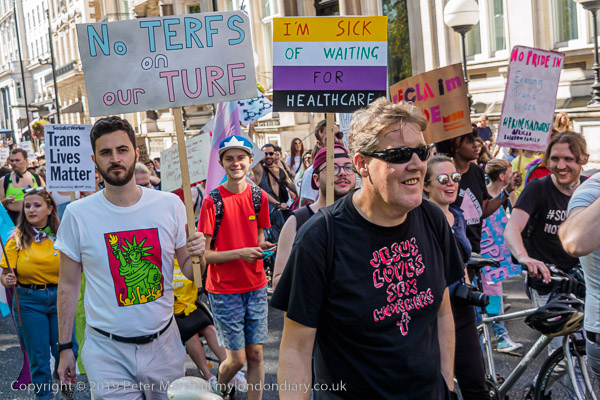
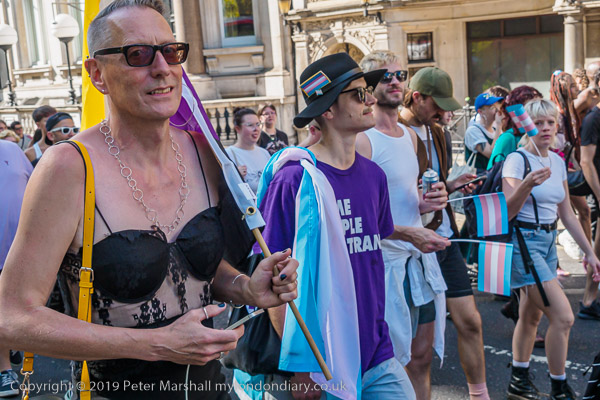
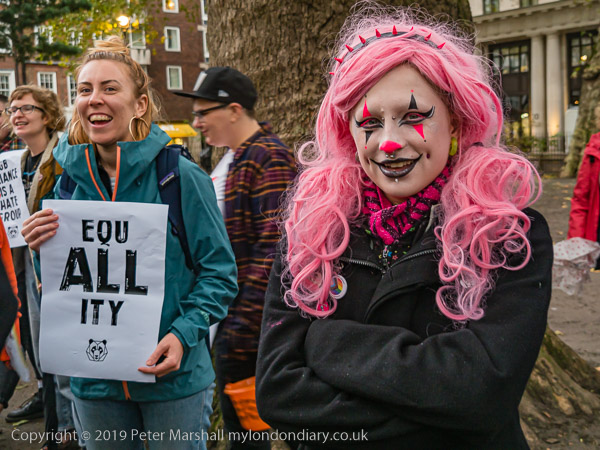
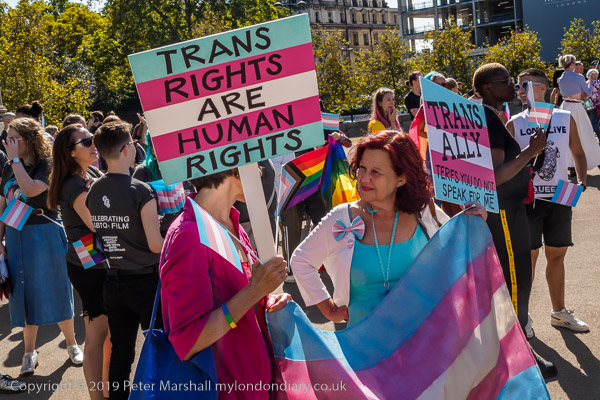
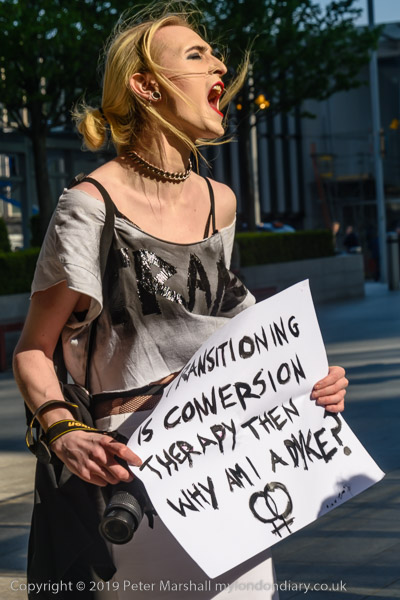
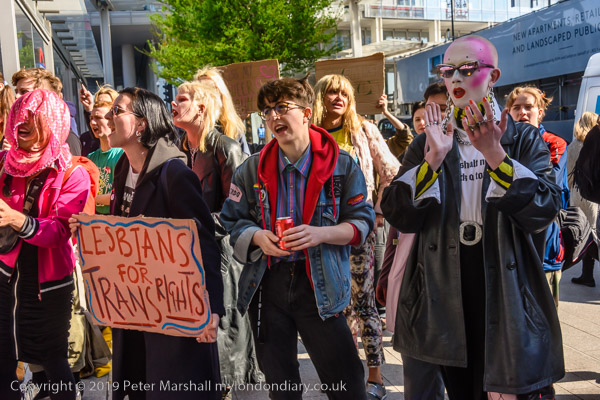
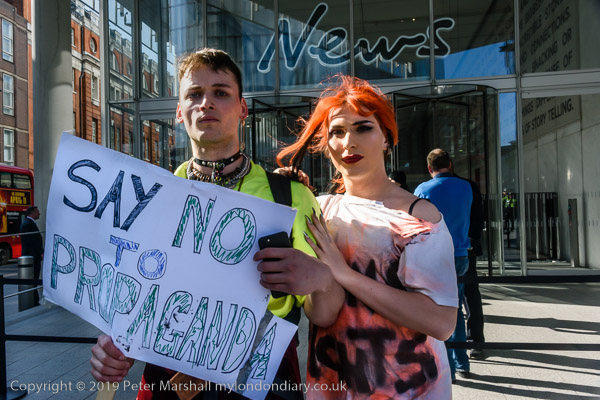
Trans+ Pride: Some of my photographs from the huge Trans+ Pride march last Saturday – 25th July 2026.
It was a hot day and after the march had been going past me for two hours on upper Regent Street I was exhausted and went home. Standing on a bench before I left I could see there were still people with trans flags coming round past the BBC to start the march.
I’d thought that it might be smaller than last year’s event when an estimated 100,000 took part, but it was larger – perhaps the 150,000 figure could even be an underestimate. Certainly it was huge.
It seemed as if the whole gay community had come out to support trans people, as well as many others who respect the dignity and differences of human beings.
Trans people have come under increasing attack in the past year since the Supreme Court decision that the definition of a “woman” or “man” in the Equality Act refers strictly to biological sex.
It was a decision that surprised many of the MPs who had voted for the Act, and the subsequent Equality and Human Rights Commission (EHRC) guidance has created huge problems for trans people – and for organisations open to the public.
These problems have been amplified by some of our politicians and by the media who have often given a great deal of attention to small and highly vociferous groups opposed to trans people and their human rights.
I went to London’s First Trans+ Pride March in September 2019 (the idea had come from Brighton) attended by only a few hundreds and commented:
“The event aimed to increase visibility for the trans+ community and to protest against the discrimination that continues around the world against trans people, with increasing transphobia in the British media, attacks on trans people on the streets, hate speech by trans-exclusionary feminists, and by right-wing national and state governments.“
The situation has worsened since then, but the marches have certainly made trans people more visible. They have always been a integral part of the gay community – and were important in the 1979 ‘Stonewall Riots’ which marked a new beginning for the gay rights movement in the United States and around the world.
Trans Pride & Anti-Racist March in Brixton: Five years ago today on Saturday 14th September I photographed the start of London’s first Trans+ Pride march before taking the tube to Brixton for an anti-racist march and rally.
London’s First Trans+ Pride March
Hundreds met at Hyde Park Corner to march along Oxford Street to Soho Square in London’s first Trans+ Pride March, was both a celebration and protest for trans, non-binary, intersex, and gender non-conforming individuals and their family, friends and allies.
They marched to increase the visibility of the trans+ community and to protest against the continuing discrimination in the UK and around the world against trans people.
Many carried placards and posters with messages such as ‘Trans Rights Matter‘ and ‘Trans Rights Are Human Rights’.
There has been increasing transphobia in British media, with trans people being attacked on the streets, and this has continued to grow since 2019.
The charity Stop Hate UK reports that in “2020/2021, 2,630 Hate Crimes against transgender people were recorded by the Police, an increase of 16% from the previous year” though they say the actual number of incidents is much greater as 88% of transgender victims of serious incidents did not report them.
Incidents reported to Stop Hate UK were of “verbal abuse, threatening behaviour, harassment and anti-social behaviour, such as having derogatory terms shouted at them, having invasive or inappropriate questions asked of them or facing harassment from neighbours, co-workers or strangers. “
In 2018 Trans Exclusionary Radical Feminists had disrupted the Pride March in London with an anti-Trans protest and there were fears they might try to disrupt this march. There were many feminists supporting trans rights on this march.
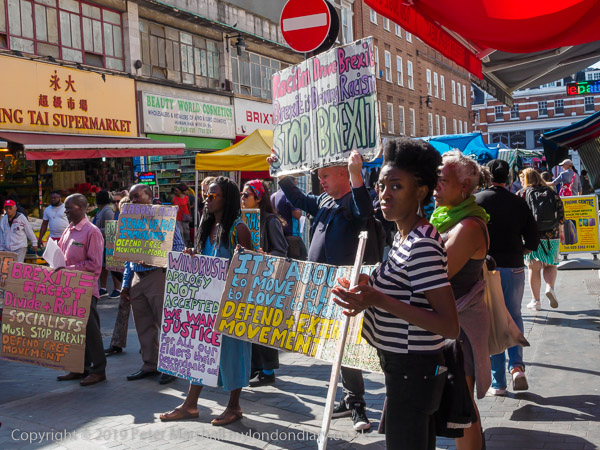
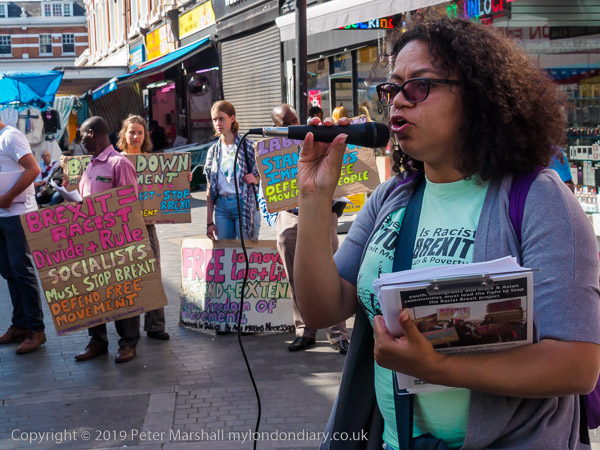
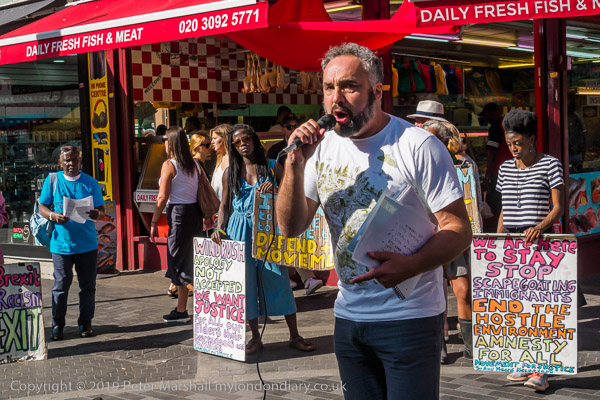
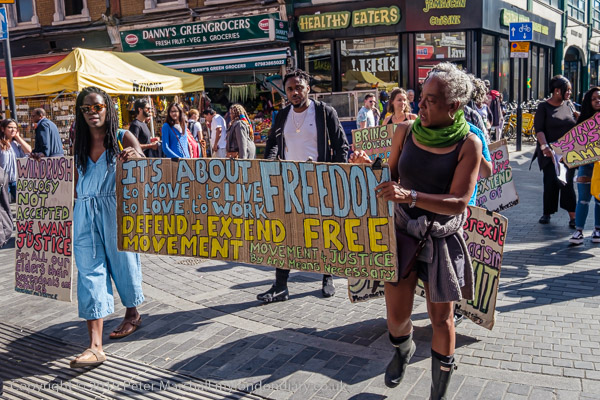
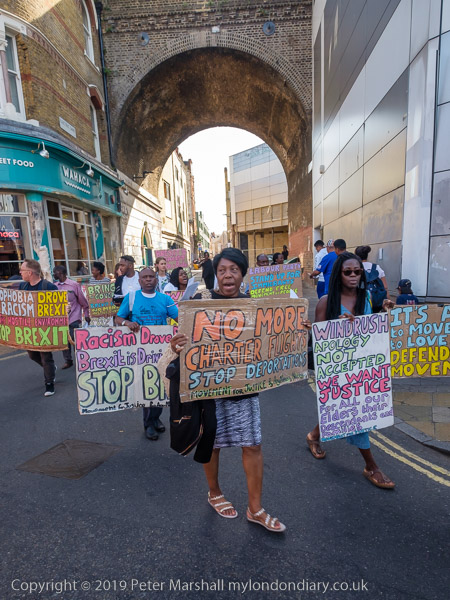
I took the tube from Green Park to Brixton where Movement for Justice and Lambeth Unison Black Workers’ Group were protesting against the continuing persecution of Windrush family members and other migrants.
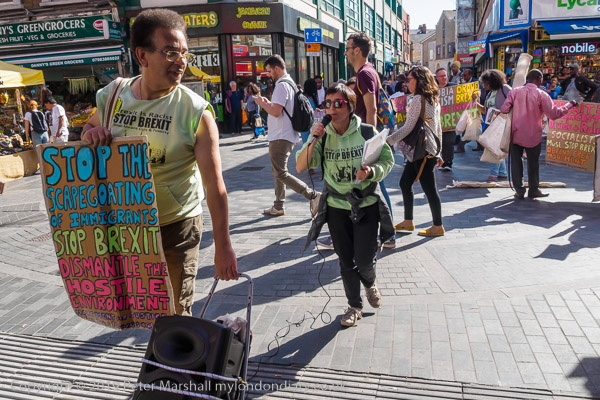
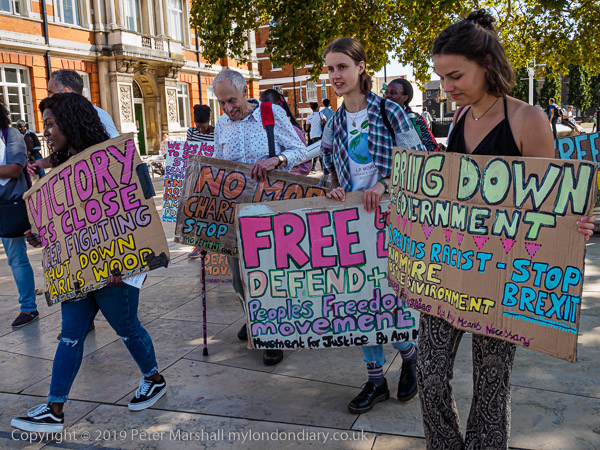
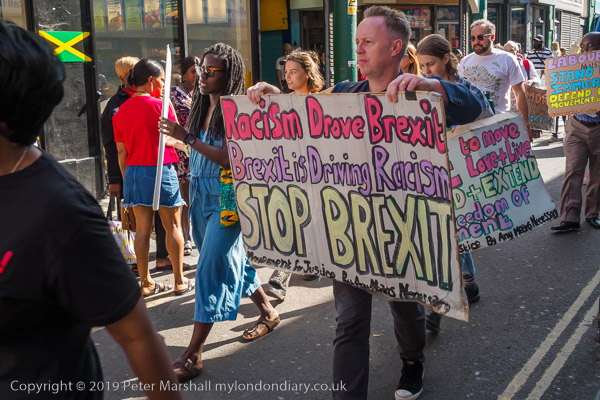
They called for freedom of movement, the closure of immigration detention prisons, and an end to Brexit which is being used to whip up immigrant-bashing and nationalism to establish a Trump-style regime in Britain under Boris Johnson.
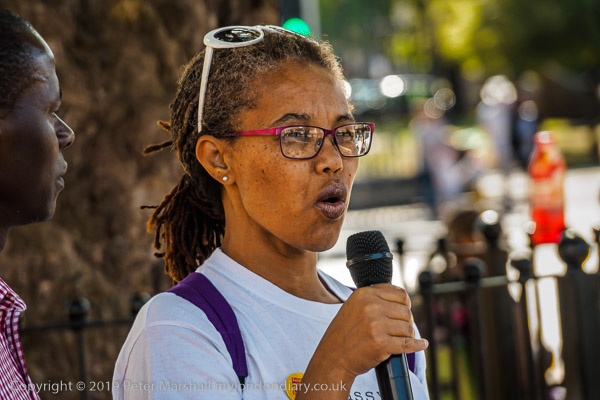
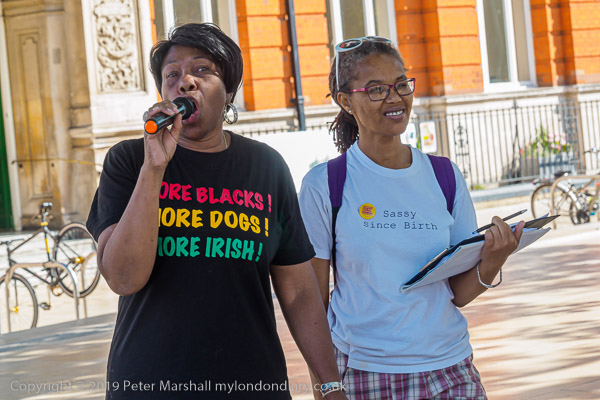
I missed the start of the rally in Windrush Square, but heard several of the speakers including Eulalee who has been fighting the Home Office for 16 years to remain in the UK with her family and was wearing a ‘More Blacks! More Dogs! More Irish‘ t-shirt.
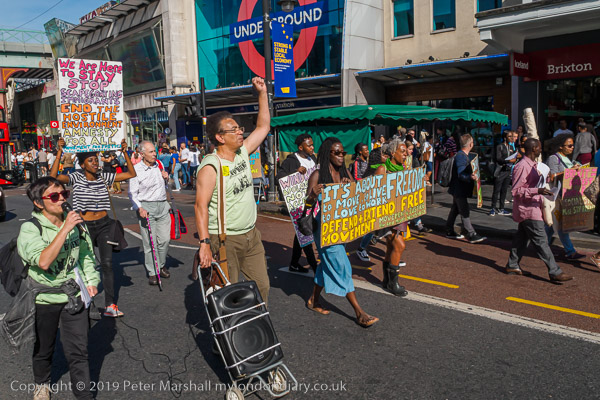
People picked up their posters and marched the short distance to busy Brixton Market.
Here they stopped for more speeches, with many shoppers stopping briefly to listen and taking the fliers that were being handed out.
The protest seems to get a very positive reception in the market.
Green MEP for London Scott Ainslie joined the protest to speak about his ‘LDNlovesEU‘ campaign calling for an end to Brexit.
After his speech the protesters picked up their posters and moved on along Electric Avenue,
and turned into Atlantic Road,
They then marched down Brixton Road back to Windrush Square where the protest ended with some brief speeches and photographs.
Hate Crime, Turkish Invasion, Hong Kong & More – Saturday 2nd November 2019 was a busy day for me and I made six posts from different events on My London Diary – and here is a little about each in the order of my day.
Day of the Dead – Columbia Market, Bethnal Green
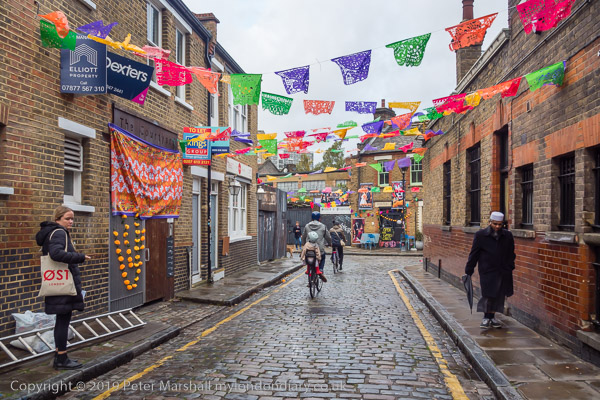
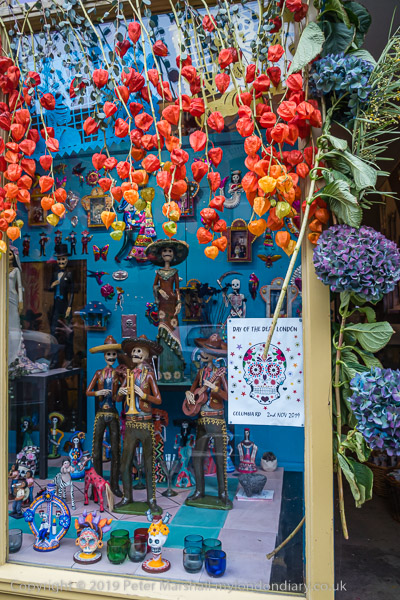
I walked from Hoxton Overground station to Columbia Market which was holding a festival for the Mexican Day of the Dead, arriving at the time this was supposed to start. But it had been raining heavily and had only just stopped which had put off others from coming early and the streets were pretty deserted. So all I was able to photograph were the decorations on the street and on some of the shops.
Things would almost certainly have become more interesting had I stayed, but I had other things to attend and had to leave after around half an hour. I’d intended to return later but was too busy. I did take a few pictures as I walked to and from the station as well.
Against constitutional change in Guinea – Downing St
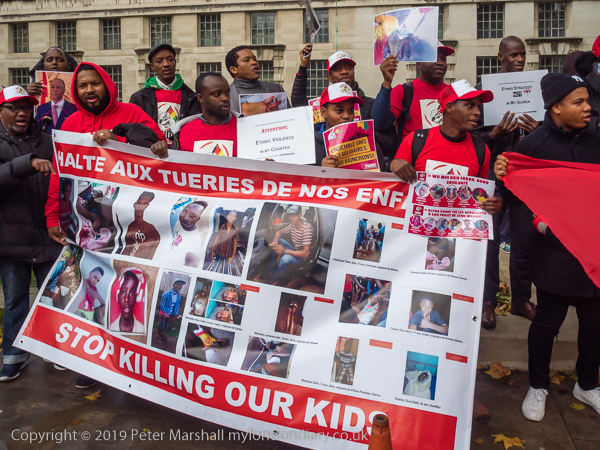
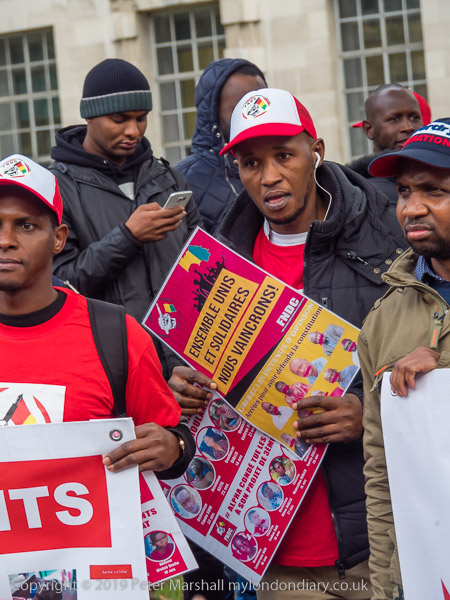
Back in central Westminster I photographed protesters from the UK branch of the National Front for the Defence of the Constitution (FNDC) who were demanding that President Alpha Conde abandoned the constitutional chages that would enable him to seek a third term in power.
The London protest came after massive protests in Guinea in October during which 11 people had been killed in government violence against the opposition and peaceful protesters. They called for an end to and end to the killing and the release of all political prisoners, with posters showing the victims and calling for peace and justice in their country.
Stop Hate Crime, Educate for Diversity – Downing Street
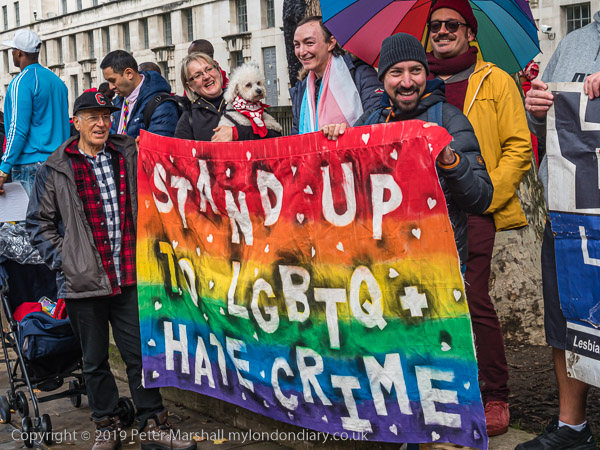
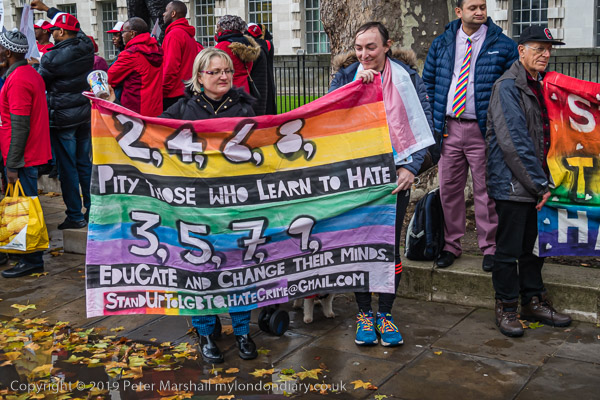
Also at Downing Street, campaigners from Stand Up to Lgbtq+ Hate Crime condemned the increasing incidence of hate crime and bigotry against LGBTQ+ people and defended the teaching of lessons which feature LGBTQ+ families and relationships.
Their message was one of celebrating love, inclusion and diversity and say No to Homophobia, Islamophobia and Transphobia. I took some pictures and left as some began to speak about their own experience of discrimination at school before before the group marched to Eros in Piccadilly Circus for a further rally.
Defend Rojava against Turkish Invasion – Marble Arch & Oxford St
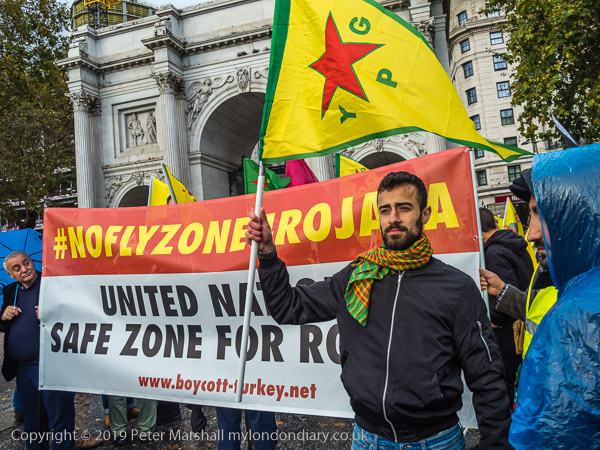
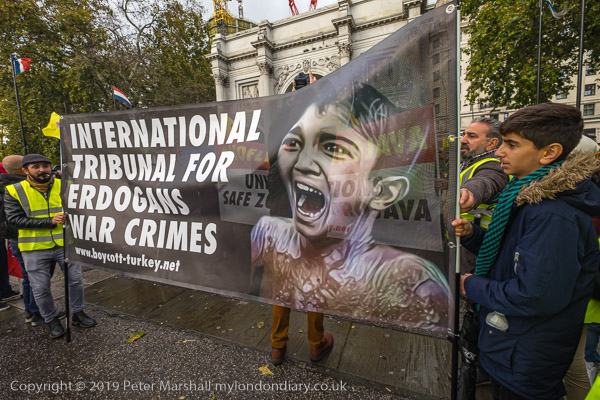
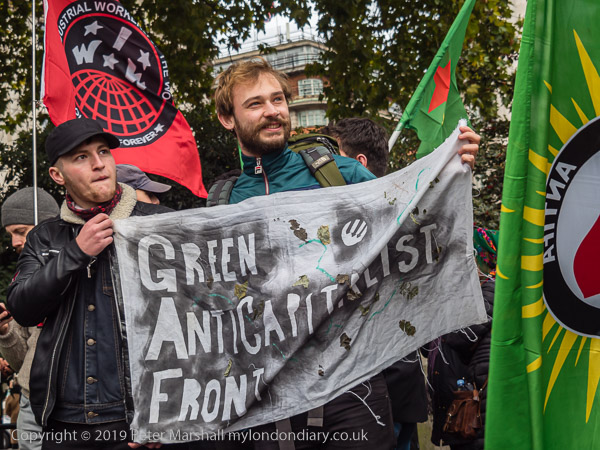
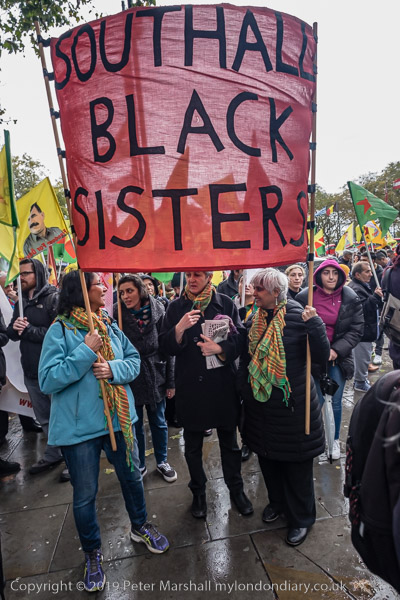
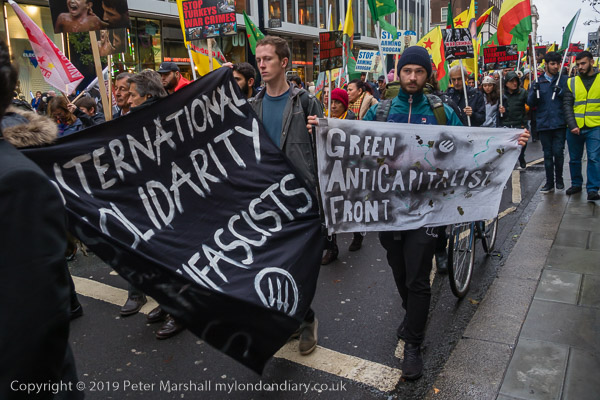
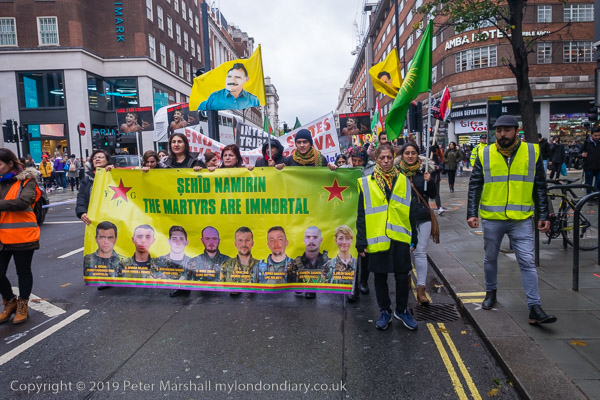
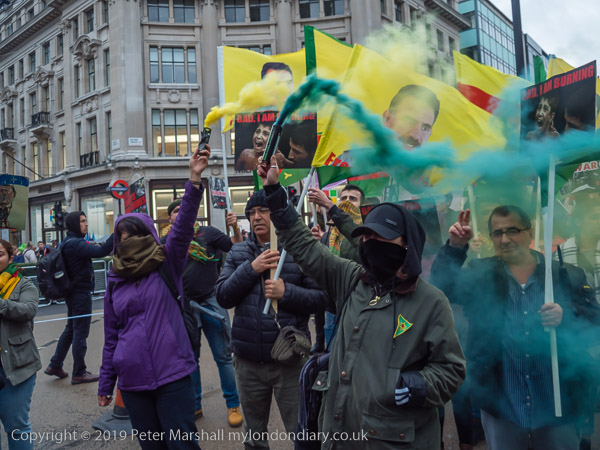
The largest protest of the day was a a rally and march in support of Rojava in North-East Syria against Turkish invasion which gathered at Marble Arch.
Since soon after the start of the revolution in Syria a large area of the country had been under the de-facto control of a Kurdish-led democratic administration which has put ecological justice, a cooperative economy and women’s liberation at the heart of society, enshrined in a constitution which recognises the rights of the many ethnic communities in the area.
Many have seen this area, Rojava, as an important model for more democratic government, particularly in multi-ethnic areas, but Turkey sees it as a threat on its borders. For generations it has been discriminating and fighting against its own Kurdish population which makes up almost a fifth of the country’s population, and the Kurdish leader Abdullah Ocalan, held in prison in Turkey since he was abducted from Kenya in 1999.
In prison Ocalan continued to campaign for the Kurdish people but had moved away from militancy towards political solutions. In jail he wrote about the rights of women and developed the philosophy of democratic confederalism which forms the basis of the constitution of Rojava.
Rojava has received wide support for its principles from environmental groups, green movements, feminists, human rights supports and those generally on the left, but not from western governments who see it as a threat to capitalist hegemony.
Despite this, the Kurdish people’s defence forces in Syria with the aid of US air power led the successful fight against ISIS. Turkey had backed ISIS although denying to do so, aiding them in getting the massive funds they needed by smuggling out oil from the ISIS held regions. Again they saw ISIS as an ally in their fight against the Kurds.
When Trump withdrew US troops from Syria, Turkey took advantage of this to invade areas of Syria controlled by the Kurds, and to encourage and aid Islamic groups to join them in their attacks. Turkey as a member of NATO has been encouraged and helped to develop its armed forces and is second only to the USA within Nation and is said to be the 13th largest military power in the world.
The Turkish invasion threatened the existence of Rojava, who had been forced to go to both Russia and President Asad of Syria for support. Obviously this threatens the future of the area and its constitution and its long-term hopes of autonomy in the area.
I left the protest on Oxford St on its way to the BBC who they accuse of having failed to report accurately on what is happening in the area. There had certainly been very little coverage of the recent events and a long-term failure to address issues of discrimination against the Kurds in Turkey.
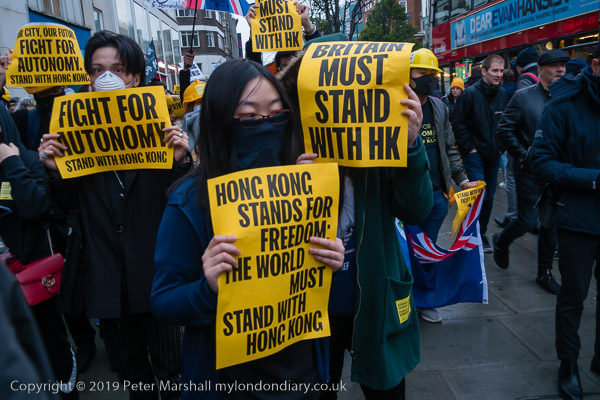
March for Autonomy for Hong Kong – Marble Arch & Oxford St
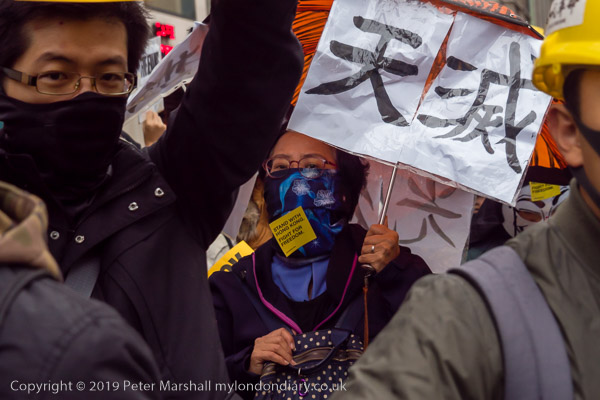
Also meeting at Marble Arch were protesters, mainly Chinese from Hong Kong living in the UK, and in solidarity and supporting the five demands of those then protesting in Hong Kong. Many wore masks to protect their identity, either because they may return home or fear their families there may be persecuted.
They demanded complete withdrawal of the Extradition Bill, a retraction of characterising the protests as riots, withdrawal of prosecutions against protesters, an independent investigation into police brutality and the implementation of Dual Universal Suffrage.
Queer Solidarity for trans and non-binary – Soho Square
Bi Survivors Network, London Bi Pandas, Sister Not Cister UK, BwiththeT and LwiththeT held a rally in Soho Square pointing out that the newly announced ‘LGB Alliance’, which claims to be protecting LGB people is actually a hate group promoting transphobia.
They pointed out that trans and non-binary people have always been a part of the gay community and played an important part in the fight for gay rights and in particular Stonewall, and there is no place for such bi-phobic and gay-separatist views in the gay community.
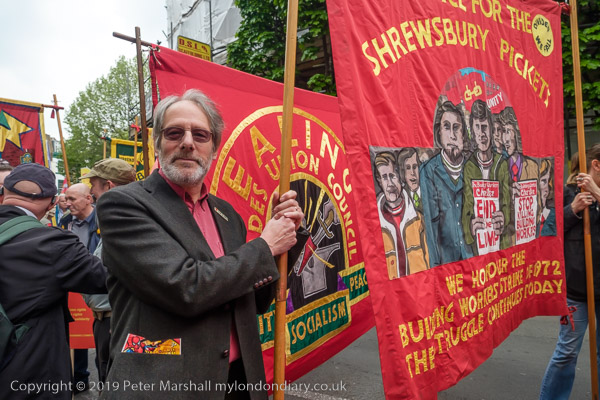
2019 was a rather disappointing May Day for me in terms of the number of events I photographed, and I only covered the annual May Day March from Clerkenwell Green.
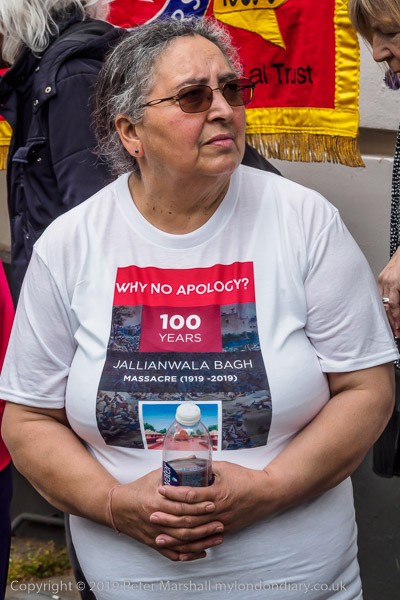
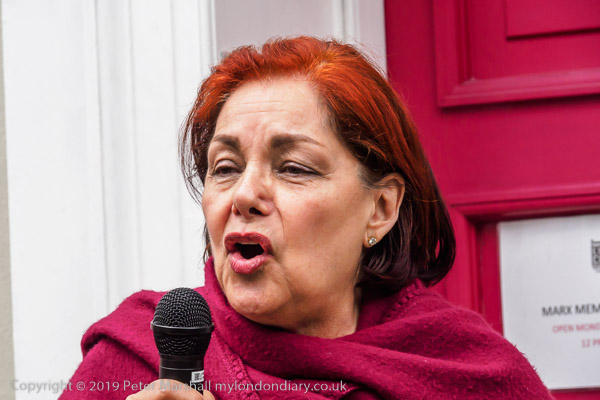
Before the march began there were several speeches outside the Marx Memorial Library. This year was the 100th anniversary of the 1919 Jallianwala Bagh massacre in Amritsar when British troops opened fire on a peaceful protest, killing at least 379 people and injuring many others. A speaker from the Indian Workers Association talked about the massacre and called for the UK to fully apologise. It seems to me surprising that Labour governments have never made an apology for this appalling incident, but it seemed rather unlikely that our current Conservative government would have any thought of doing so.
Our government too was heavily involved in the seizure of power in Venezuela by Juan Guaidó, actively supporting his coup attempt and siding with the USA in forcing companies to impose sanctions and preventing the Bank of England releasing Venezuelan gold to the legitimate government, while urging it to grant Guaidó access to the £1.2bn of Venezuelan gold reserves. He came to London for talks in January this year and it has now emerged that the Foreign & Commonwealth office has a specialist unit dedicated to the ‘reconstruction’ of Venezuela, and that the Department for International Development has also pledged some £40m of ‘humanitarian assistance’ for undisclosed activities – perhaps including the recent failed US-backed landing by mercenaries on May 3rd intending to kidnap President Maduro. May Day 2019 saw a defiant speech by the Venezuelan ambassador to the UK defending Maduro and calling on the UK government to defend the legitimate government of Venezuela rather than attempt to undermine it.
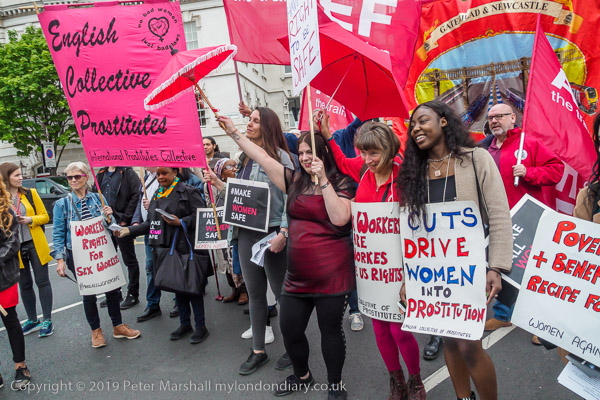
As usual I photographed the marchers on their way to Traflagar Square, including a lively group representing the English Collective of Prostitutes calling for changes in the law to keep all women safe and for workers rights for sex workers.
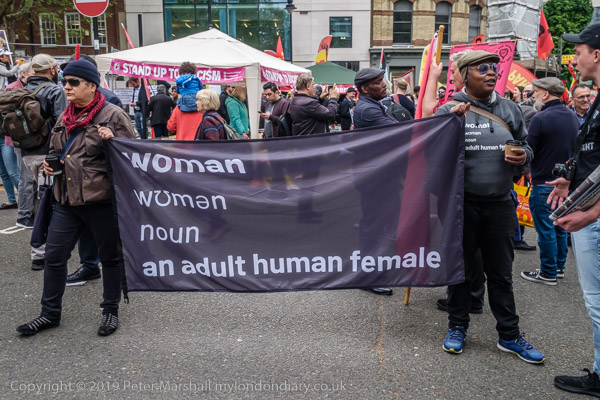
Unwelcome on the march were a pair of women holding a banner against trans women, and I understand they were later forced to leave.
I decided I couldn’t face another Trafalgar Square May Day rally and left. The weather was fine and I went for a walk and to eat my sandwiches by the river in Wapping, where I was to meet with some friends for a May Day celebratory drink later.
All photographs on this and my other sites, unless otherwise stated, are taken by and copyright of Peter Marshall, and are available for reproduction or can be bought as prints.
One in five LGBT people have experienced a hate crime because of their sexual orientation or gender identity in the last year.
The number of lesbian, gay and bi people who have experienced a hate crime has risen by 78 per cent since 2013.
https://www.stonewall.org.uk/cy/node/57287
But they go on to state that things are even worse for the trans community:
Two in five trans people have experienced a hate crime or incident because of their gender identity in the last year, compared to one in six lesbian, gay or bi people who are not trans.
Two in five who identify as non-binary have experienced a hate crime in the last year.
14 per cent of trans people do not feel safe where they live. 44 per cent of trans people avoid certain streets because they do not feel safe, compared to 26 per cent of lesbian, gay or bi people who are not trans.
https://www.stonewall.org.uk/cy/node/57287
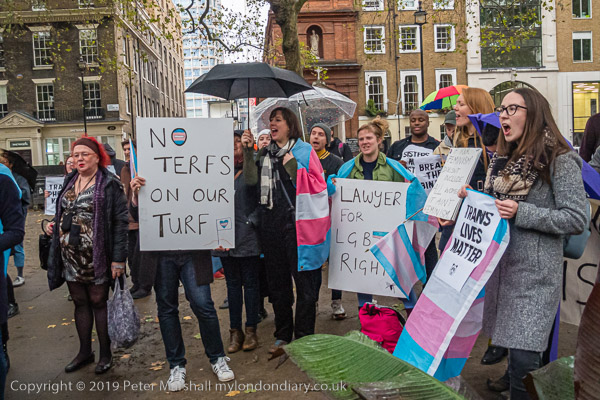
Trans people have particularly come under attack in print and on the media by a small group of largely ageing feminists, who have been labelled ‘trans exclusionary radical feminists‘ or ‘TERFs’ though these people object to the label, calling it a slur. Some of them use the rather non-specific term ‘gender critical’. Wikipedia says TERF is “used to describe feminists who express ideas that other feminists consider transphobic, such as the claim that trans women are not women, opposition to transgender rights and exclusion of trans women from women’s spaces and organizations.”
TERFs have disrupted various events including the 2018 Pride Procession and the London Anarchist Bookfair 2017. As well as TERFs, trans people are under attack form some Conservative religious groups and people on the far right including so-called MRAs, men’s rights activists. Odd bedfellows for feminists.
Stonewall was an appropriate source for my information for various reasons. It was the 1969 Stonewall riots that kick-started the whole gay rights movement, a time when gays first stood up against the police raids on gay clubs, and the main figures who led that defiance were three ‘women of color’, two of whom were trans women the third a butch lesbian. The ‘T’ has always been an integral part of the LGBT community, and transgender people have become much more visible in recent years.
There were fears that there might be some disruption of London’s First Trans+ Pride March by TERFs or other transphobic groups, but if there were any protesters against the march I didn’t see them.
All photographs on this and my other sites, unless otherwise stated, are taken by and copyright of Peter Marshall, and are available for reproduction or can be bought as prints.
There are no adverts on this site and it receives no sponsorship, and I like to keep it that way. But it does take a considerable amount of my time and thought, and if you enjoy reading it, please share on social media. And small donations via Paypal – perhaps the cost of a beer – would be appreciated.
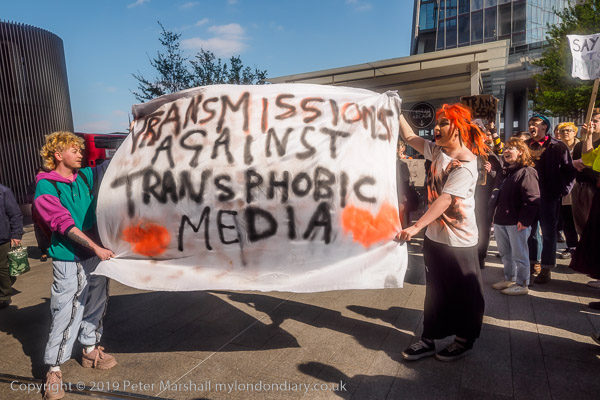
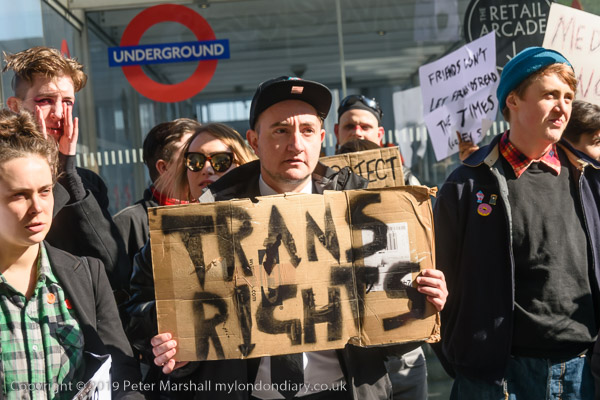
Campaigners from Transmission, a group supporting the rights of trans people, came to protest outside the offices of The Times newspaper against their publication of transphobic articles.
The protest came after articles were published written by Lucy Bannerman criticised the work of the Tavistock centre, which runs the country’s only NHS gender identity service.
In a statement published the same day as the article, the centre strongly rejected the claims made in the article and stated:
The Service always place a young person’s wellbeing at the centre of our work and have a clear position of independence from outside lobby groups on all sides of the debate.
and
A recent Review into the Service found no immediate issues relating to patient safety and no overall failing in approach. It did make recommendations to further improve the Service, these will be implemented over the next 12 months building on the work of the Service to date.
This is not an isolated article and the same journalist has previously written unfavourably and inaccurately about trans charity Mermaids and has suggested ostracising trans athletes for competing in sports.
In a court case in which a transgender activist was convicted of assault, Bannerman tweeted unfavourably on the judge correcting witnesses who deliberately referred to the defendant, a trans woman as ‘he’. As was pointed out in a comment on her post, you would expect a judge to challenge racist or homophobic language and it should be no different for transphobic language.
Bannerman appears to have aligned herself with what are commonly known as ‘trans-exclusionary radical feminists’ or ‘TERFs’ for short. Its a description they don’t like, though it appears descriptive rather than derogatory. I’m unaware of any other satisfactory description which clearly distinguishes them from the wider feminist movement which is supportive of transgender women.
Terfs have a record of disruption which although it does not endorse the use of violence against them certainly makes it more likely as it enrages others. Last year they gained the opprobrium of virtually the entire gay community by hi-jacking the start of Gay Pride – a very diffferent reaction to a similar take-over the previous year by migrant gay communities which was applauded by all except a few of the establishment. They also caused chaos at the Anarchist Book Fair, leading to its cancellation this year.
Propaganda like Bannerman’s articles can only appear in The Times because it reflects the views of the editor and more importantly the proprietor of the paper, Ruper Murdoch.
There are no adverts on this site and it receives no sponsorship, and I like to keep it that way. But it does take a considerable amount of my time and thought, and if you enjoy reading it, please share on social media. And small donations via Paypal – perhaps the cost of a beer – would be appreciated.
All photographs on this and my other sites, unless otherwise stated, are taken by and copyright of Peter Marshall, and are available for reproduction or can be bought as prints.