Battersea Riverside 2012

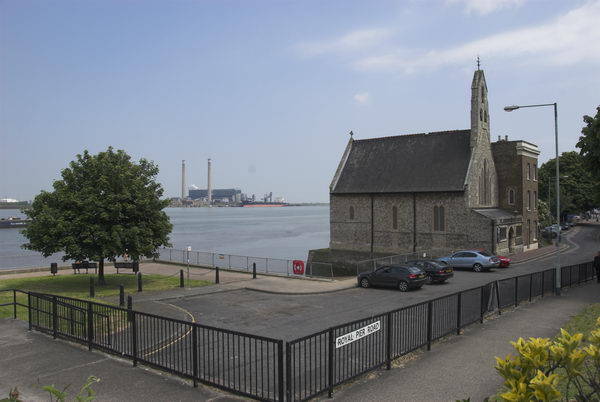
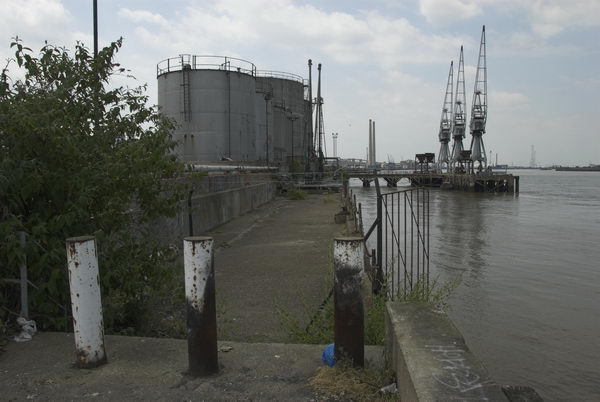
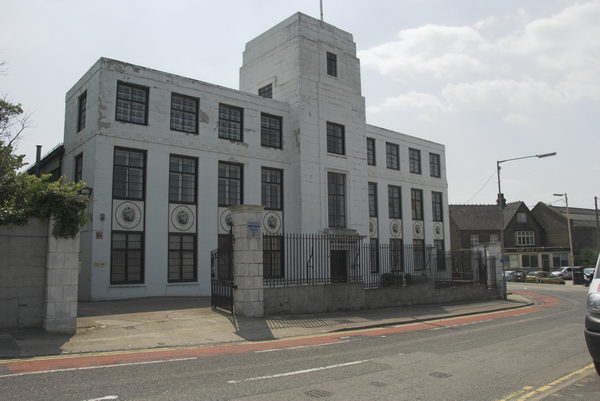
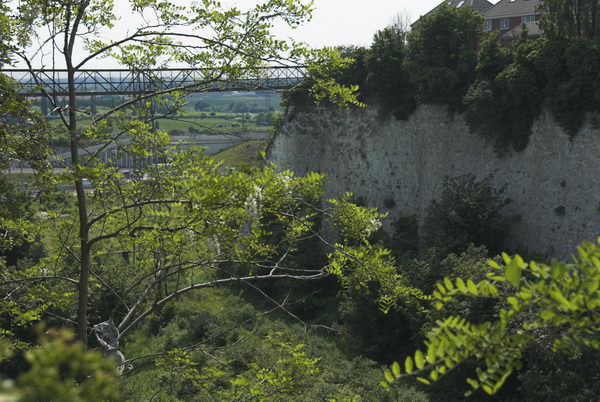
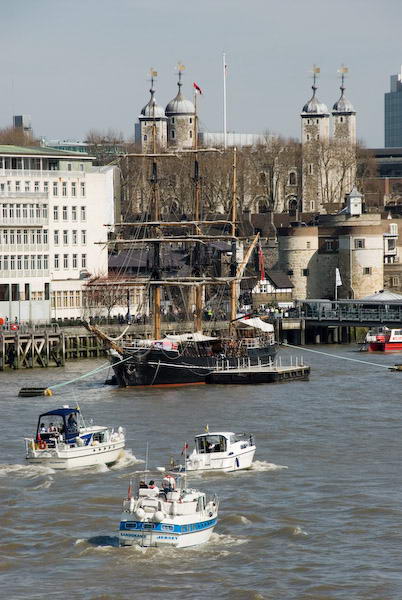
Battersea Riverside. The short walk from Battersea Bridge to Wandsworth is one I’ve done quite a few times over the years. For most of the walk you can now keep to the riverside, with views across the Thames, though a few short detours are needed. It’s on of my favourite walks in London and only a couple of miles, though if you want a longer walk it is now part of the Thames Path so you can continue for many miles either upstream or down.

Battersea Riverside 2012
Lots Rd

When I first made this walk in the 1970s the riverside was lined with industry and I could only access the river at a few locations. By 2012 the industry had almost all gone and there were blocks of private flats along most of this length. But ‘planning gain’ meant a riverside path even if it was lined behind by planning loss.

Battersea Riverside 2012
Thames at Battersea
Battersea Riverside 2012
St Mary’s Battersea
Battersea Riverside 2012
Old Swan Wharf

People have to live somewhere and London needed extra housing, though almost all of these new developments were the wrong kind of housing and not the social housing desperately needed by Londoners. Back in the early post-war years we saw social housing being built to provide mixed communities and promote social cohesion, but Thatcher changed all that, and social housing became something only for the poor and that stigmatised residents as failures.

Overground train on its way to Clapham Junction
Demolition at Fulham Wharf
New Flats and Wandsworth Bridge

The loss of industry also meant the loss of jobs in the area, and took place at a time of increasing gentrification in Battersea, with people moving in who worked in wealthier parts of the city.

Looking upstream from Wandsworth Bridge

As I wrote in 2012, “Every time I walk it a little more has gone with a new block of flats or hotel or other luxury development. But a few things remain.”

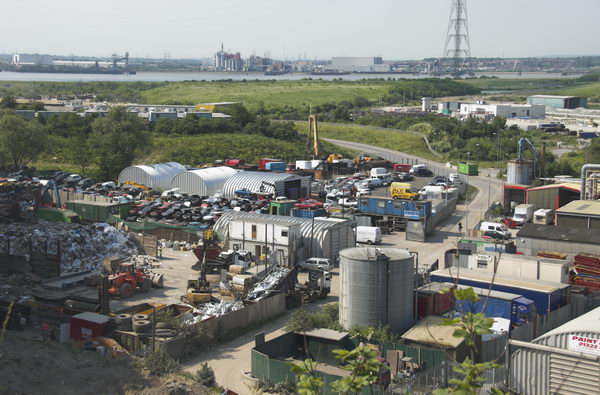
Waste transfer station, Wandsworth

You can see the panoramic images larger by right clicking on them and choosing Open Image in New Tab’ More pictures on My London Diary at Battersea Riverside.


FlickrFacebookMy London DiaryHull PhotosLea ValleyParis
London’s Industrial HeritageLondon Photos

All photographs on this page are copyright © Peter Marshall.
Contact me to buy prints or licence to reproduce.


Carnaval, Right To Protest & Tobin – 2005

Carnaval, Right To Protest & Tobin: On Sunday 7th August 2005 I began by photographing London’s Latin Americans getting ready for the Carnaval Del Pueblo procession, then went to Parliament Square for an illegal protest against the Serious Organised Crime and Police Act 2005 which had come into force on August 1st and among other things restricted the right to demonstrate within a large area around parliament without prior written notice to the police. Finally another illegal protest on Westminster Bridge expressed support for the Tobin Tax, a low rate of tax on currency conversions with the aim of discouraging short-term currency speculation and so stabilising currency markets. Here is what I wrote about the day in 2005 with some pictures and links to more on My London Diary


Carnaval del Pueblo – Southwark

Carnaval, Right To Protest & Tobin - 2005

Sunday I started off photographing London’s Latin American communities getting ready for the start of their annual Carnaval Del Pueblo procession. This year it was starting from Potters Fields near the GLA headquarters, on an empty site awaiting development, rather than from a street, and this made photography a little more difficult.

Carnaval, Right To Protest & Tobin - 2005

It was good to see so many groups taking part, although I found it very difficult to sort out the different nations, and found myself unable to recognise most of their national flags.

Carnaval, Right To Protest & Tobin - 2005

This procession, making it’s way to Burgess Park where there is a Latin-American Festival, is one of London’s most colourful events, with some costumes to rival those seen at the much larger annual Notting Hill event at the end of the month.

Carnaval, Right To Protest & Tobin - 2005

I was sorry not to be anle to go on to the festival, especially since there was to be a short period of silence to mark the tragic shooting by police of the innocent Brazilian electrician, Jean Charles de Menezes, on a tube train at Stockwell Station the day following the second round of bombings in London.

I followed the procession up to London Bridge Station where I needed to get on a train to get to Westminster.

More pictures


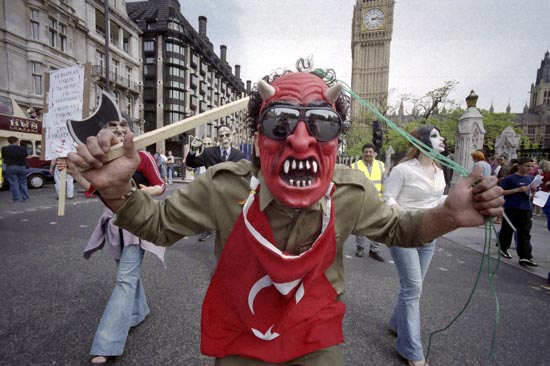
The Right to Protest – Parliament Square

Police arrest a demonstrator in Parliament Square, London. The crime? Holding a protest banner. Welcome to Britain, the police state (not that I think the police particularly welcome it.).

Britain once had a deserved reputation as a haven for free speech and the rights of the citizen. A number of acts by our New Labour government have seriously curtailed these freedoms – including introducing a number of measures that they had opposed before they came to power.

Some of these measures have just been a part of the general trend to central control begun under Thatcher, but others have been brought on by the threat of terrorism and even more by the growth of opposition to government policies, and in particular to the war on Iran.

Formerly a life-long supporter of the party it saddens me, and angers me. One of the signs that Brian Haw holds in a picture is a quotation from a speech by Condoleeza Rice in January 2005, when she said “if a person cannot walk into the middle of the town square and express his or her views without fear of arrest, imprisonment, or physical harm, then that person is living in a fear society, not a free society. We cannot rest until every person living in a ”fear society” has finally won their freedom.”

New restrictions have been brought in that move Britain into that realm of a “fear society”.

This afternoon I saw five people arrested for simply peacefully holding banners supporting the right to protest. It happened on the square opposite our Houses of Parliament, and it made me feel ashamed to be British.

Although the law was passed largely to get rid of Brian Haw, it turns out not to alter his right to be there, as his protest started before the act became law and is thus not covered by it. Rather a lot of egg on government faces there.

[The High Court decision that agreed Haw was not covered by the Act was overturned by the Court of Appeal in an alarming decision in May 2006.]

More pictures


The Westminster Tea Party – Time for Tobin Tax

Holding up tea bags on Westminster Bridge

In 1978, Nobel Prize-winning economist James Tobin proposed a uniform world-wide tax at a very low level – perhaps only 0.2% – on all foreign currency exchange transactions. The aim was to deter speculation on currency movements, thus giving the elected governments greater control over their fiscal and monetary policies, and reducing the power of unelected speculators (who include some of the larger multinational companies) to affect the markets.

Exporters, importers and long-term investors would all benefit from less volatile exchange rates, and the revenue raised by the tax could make a significant contribution both to the revenue of national economies and also for international development projects.

As a small gesture of support for the Tobin Tax, another illegal demonstration took place in Westminster this afternoon, unnoticed by police. A small group of demonstrators, again following an example from Boston – although this time from 1773 – chose tea as a way to symbolise their protest. Each threw a teabag, produced by one of the giant corporations, from the middle of Westminster Bridge into the River Thames below.

A couple more pictures at the bottom of this page on My London Diary.


FlickrFacebookMy London DiaryHull PhotosLea ValleyParis
London’s Industrial HeritageLondon Photos

All photographs on this page are copyright © Peter Marshall.
Contact me to buy prints or licence to reproduce.


Swan Upping on the Thames – 2006

Swan Upping on the Thames: On Monday July 17 2006 I again photographed the annual Swan Upping which takes place on the River Thames over five days, in the third week of July starting on Monday at Sunbury Dock and ending on the Friday of that week at Abingdon Bridge. Like many who live close to the river – a five minute walk for me – I’d heard about this for many years but is was only in 2001 that I first saw and photographed the event – before then I had always been teaching during that week.

Swan Upping on the Thames - 2006

It is a ceremony that began in the twelfth century where a part of their huge grab of the country the Norman invaders claimed ownership of mute swans on open water as well as all the land. Later they granted some rights over the swans to others including London Livery Companies the Worshipful Company of Vintners and the Worshipful Company of Dyers, who now share the rights to swans on the Thames equally with King Charles III.

Swan Upping on the Thames - 2006

You can find pictures and text from a number of years on My London Diary, up to 2013, when I had photographed it ten times and I then decided I was simply repeating myself. I might go again, perhaps just to watch the spectacle but not to try and cover it in any depth.

Swan Upping on the Thames - 2006
The Queen’s Swan Warden Christopher Perrins, Professor of Ornithology at the University of Oxford’s Department of Zoology and the Queen’s Swan Marker, David Barber

Some years I wrote at some length about the history and what actually takes place, but here I’ll post my first post about the event in 2001 and the post I made in 2006, the year in which all pictures here were taken.

2001

Swan upping is an annual event, counting swans along the Thames from Sunbury to Abingdon takes a week. The Crown decided it was a good thing to claim the swans around the 12th century, so they could gorge themselves on them at banquets, [later] they let some of their rich mates in the city have a share, but protected them from the people by severe penalties.

Swan Upping on the Thames - 2006

Swans are seldom eaten now, but upping continues to divide the Thames birds between the Crown, the Dyers and the Vintners.

2006

I’ve said rather a lot about swan upping in some previous years. It’s a fascinating and colourful event, which keeps a record of swans on the River Thames, as well as giving them a useful health check. The swans are handled very carefully and care is taken to avoid undue distress (though some of the press present this year could have been rather more careful.)

Swan Upping on the Thames - 2006

Swans are no longer normally eaten, but are admired for their decorative effect and looked after. Although anglers are now rather more responsible than in the past, the birds examined still often have signs of damage from discarded hooks and line. Many cygnets die in the first few months before the uppers come around, either from predators or other hazards.

I still feel an excitement watching the skill of the uppers as they surround a family of swans, gradually closing in on them, avoiding gaps and then grabbing them out of the water.

Great care is also taken when releasing the family back into the river, and usually only a few seconds later they are swimming serenely as ever.

Eric who cycled along the towpath to try to lure the swans into suitable places for upping using crushed digestive biscuits

One of the smaller mysteries to me is how there are so many swans on the river, but so few mating pairs – and many of these with very small broods. Of course there are many other lakes and rivers around, and swans can and do move around, although many of the adults in these pictures were ringed as cygnets in more or less the same locations.

The swans get recorded – here the leg ring is being checked while the Swan Master looks at the bird’s beak.

In 2006 I left the uppers at Runnemede, but in some years I went with them to Windsor where they stand to drink a Royal Toast in Romney Lock and then, on the way to the Eton Boathouses at Windsor, the Dyers and Vintners salute the Royal Uppers by standing in their boats with oars upraised.

More pictures from 2006 on My London Diary.


FlickrFacebookMy London DiaryHull PhotosLea ValleyParis
London’s Industrial HeritageLondon Photos

All photographs on this page are copyright © Peter Marshall.
Contact me to buy prints or licence to reproduce.


Rainham, Purfleet, Thurrock & Ponders End – 1993

Rainham, Purfleet, Thurrock & Ponders End: On Saturday 11th December 1993 I took a train from Fenchurch Street to Rainham and then walked along by the river to Coldharbour Point. There the path stopped and I returned to Rainham and took the train to Purfleet where I could pick up the riverside path again and walk on to Grays. Probably I walked about 9 miles in all and by the time I finished it I think the light would have been fading, with sunset at around 4pm.

Tilda Rice, Purfleet, Thurrock, 1993, 94-01-1-64
Tilda Rice, Rainham, Thurrock, 1993, 94-01-1-64

On this walk I made a little over 200 black and white images, a selection of which you can find on Flickr in my 1993 London album beginning here.

Purfleet, Thurrock, 1993, 94-01-1-65
Waste Paper, Purfleet, Thurrock, 1993, 94-01-1-51

There are more colour images from this walk, including a number of panoramas, mixed with pictures from other occasions starting here on the final two pages of my Flickr album of colour pictures from 1993.

Notices on Fence, Purfleet, Thurrock, 1993, 94-01-1-53

But today I found some more pictures from that walk at the start of my album 1994 London Colour and I’ll share these in this post. They will have come from a cassette of film which I took in 1993 but only developed a month or so later in 1994.

Waste Paper, Purfleet, Thurrock, 1993, 94-01-1-56
Works, Purfleet, Thurrock, 1993, 94-01-1-46
QEII Bridge, Dartford Bridge, Pipeline, River Thames, West Thurrock, Thurrock, 1993, 94-01-1-11

The final image in today’s post is something completely different on the same film, a shop window in Ponders End which I found it strangely weird. As it is on the same film as the others I think it was probably also taken in December 1993 although my caption stated 1994.

Shop Window, Ponders End, Enfield, 1994, 94-01-1-14

FlickrFacebookMy London DiaryHull PhotosLea ValleyParis
London’s Industrial HeritageLondon Photos

All photographs on this page are copyright © Peter Marshall.
Contact me to buy prints or licence to reproduce.


Darent Valley Path & Thames – 2015

Darent Valley Path & Thames: The route we took on Saturday 4th July 2015 was new to my wife and son, but one I’d taken quite a few times before, both on foot and on my Brompton, but this time I left the bike behind and walked with them.

Darent Valley Path & Thames - 2015
From Mill Pond Road, Dartford

Or rather more or less with them, as I often stopped or walked a few yards to one side or other to take pictures, and then had to scurry after them to catch up. Walking with a camera is very different from walking. My son does have a camera (one of the Fuji fixed lens X100 series) but takes far fewer pictures than me – and did much less running about.) But his captions are often rather more droll than mine, and seldom constrained by the 5W’s – Who What Where When Why.

Darent Valley Path & Thames - 2015
Footbridge across the Darent

It was a bad day for this walk, hot and sunny with virtually no shelter between Dartford and Greenhithe along the banks of the Darent and Thames. But I’d heard that there would be a boat sailing up Dartford Creek, a rare occasion at the time and decided it would be good to photograph it.

Darent Valley Path & Thames - 2015

This route is now one end of the Darent Valley Path, a 19 mile path which ends at Sevenoaks, most of which I’ve walked or cycled on other occasions, and the part beside the Thames is on the England Coast Path.

Darent Valley Path & Thames - 2015
Dartford Half-Lock

The Darent used to be navigable at least up as far as Dartford, where barges brought in and took out cargoes. Close to Dartford is a half-lock which holds back water above it when the tide goes out, long out of use but now slowly being restored to bring the waterway back into regular use.

A fixed low bridge impedes navigation. This bypass was built as University Way, but the University never came so they renamed it Bob Dunn Way

There used to be a lock which craft could go through when then the tide was high enough downstream, but that was replaced by a fixed barrier. Boats can still go through in either direction close to high tide when their is enough water for them to clear the sill.

The yacht arrived later than expected and I had to run back to photograph
it coming under the flood barrier. It was too late to get under the bridge on the same tide.

As well as the Darent, barges also went up the River Cray which joins the Darent downstream from the half-lock. This too is being brought back into leisure use.

Where the Darent meets the Thames

By the river in the centre of Dartford was the industrial estate dominated by the pharmaceutical manufacturing plant of Burroughs Wellcome who took over a former paper works here in 1889. In 1995 this became Glaxo Wellcome, the largest pharmaceutical company in the world. The works was wound down from 2008 by the then owners GlaxoSmithKline with manufacturing ending in 2013. Much of the site was empty by 2015 and now has large blocks of flats.

On the west side of Dartford Creek had been paper mills, but the last of these, owned by Wiggins Teape closed in 2009 and there was by 2015 housing on the site.

QEII bridge and Littlebrook Power station, River Thames, Dartford

When the third Dartford Bypass was built around 1988 barges were no longer bringing esparto grass and other raw materials for the paper works up the river and no thought was given to navigation. Boats that can lower masts or without them can creep under the road for a short time on a rising or falling tide when there is enough water to allow them to float but not high enough for the bridge to block their transit.

Riverside path at Littlebrook

Much of the land to the east of the creek was marshes, which made it a suitable location for the Wells fireworks factory, long closed. But I think it or an adjoining site was now in use for clay-pigeon shooting, and for much of this section of the walk we sounded under gunfire.

At the Littlebrook jetty

There had once been a pub, Longreach Terrace, and a ferry to Purfleet on the Thames close to the the mouth of Dartford creek, but both were long gone. It was here too that smallpox victims were brough ashore to the islolation wards of Orchard Hospital, demolished around 1975, part of the Joyce Green Hospital which was demolished around 2000.

The Purfleet to Zeebruge ferry goes under the QEII bridge

Further downstream on the banks of the Thames we passed Littlebrook power station – the final plant there, Littlebrook D, had ceased operation only four months earlier – before going under the Dartford QEII bridge and past Crossways Business Park. I had meant to climb up the hill to Stone Church, but missed the footpath and ended our walk in Greenhithe. But I was too tired anyway – and had stopped taking pictures on this last part of our walk.

More at Darent Valley Path & Thames.


FlickrFacebookMy London DiaryHull PhotosLea ValleyParis
London’s Industrial HeritageLondon Photos

All photographs on this page are copyright © Peter Marshall.
Contact me to buy prints or licence to reproduce.


Rainham and Hornchurch – 2006

Rainham and Hornchurch: On Thursday 11th May 2006 I put my Brompton folding bike on the train for the journey across London to Rainham Station. The journey, around 31 miles in a straight line, though rather longer on the ground, took me almost two hours on three trains, one Underground. As usual I took a book to read and relaxed on the journey.

Rainham and Hornchurch - 2006
Containers on Rainham Marshes

Rainham is in Havering, part of Greater London and is the last station out to the east on the C2C rail service where the Travelcard I used covered. I did several rides and walks from here into Essex over the years, but I on this one stayed inside Greater London.

Rainham and Hornchurch - 2006
Mural of previous industry in the area and Tilda Rice works

The first part of this bike ride followed the route of the London Loop path around the outskirts of London, which at that date came to a dead and desolate end at Coldharbour Point. The path now continues to end in Purfleet, and if you have the stamina you can continue walking on a riverside path which ends at Tilbury Docks before having to retrace your steps to Grays.

Rainham and Hornchurch - 2006
Derelict concrete barges in the Thames built for the Mulberry Harbour used for the D-Day landings

I didn’t write much about the ride back in 2006, and I didn’t ride very far. After returning from the end of the path I had a short ride west along the A13, which I don’t recommended as it is certainly not cycle friendly with much fast-moving traffic. The Mardyke Estate, where I went after that is now called ‘Orchard Village’ which at least avoids confusion with the Mardyke, a small river a few miles to the east. I continued roughly north through South Hornchurch, finally ending my ride at the District Line station of Elm Park.

Rainham and Hornchurch - 2006

The sculpture in the river facing the barges and the Tilda Rice plant is Diver: Regeneration by local sculptor John Kaufman, who died in 2002, not long after it was placed here in the mud in 2000. Some of the funding for it came from the landfill company which carried waste here to raise parts of the marshes above sea level.

Waste Transfer Jetty – Landfill is raising much of the below sea-level marshes

My pictures don’t reflect the nature of the area which has large areas of open with marshes and country parks and two rivers flowing through it, the Beam River and the Ingrebourne which flows into the Thames at Rainham Creek. I think it is also an area which has seen considerable regeneration since 2006 in the London Riverside area of Thames Gateway redevelopment.

Coldharbour Point and the barbed wire where the London Loop then ended

Here’s my account with the usual minor corrections from 2006:

Rainham is at the eastern edge of London, an area of marsh, industry, warehouses, container stacks, dereliction and landfill on the Essex (north) bank of the Thames, cut across by the elevated A13 trunk road which sweeps across the creek and on over the marshes to Purfleet, alongside the new Channel Tunnel Rail Link.

Rainham Creek from the A13

One day the Thames Path will continue past Coldharbour Point, but for the moment it’s a dead end. I eat my sandwiches and then turn back, making my way up onto the elevated roadway, but the views are disappointing.

Mardyke Estate, South Hornchurch

At the next roundabout west I take a look around, leave the main road and then head north, past disused areas of the Ford Dagenham site and up through the Mardyke Estate and South Hornchurch.

At Elm Park the heat of our first hot day if the year – 25 Celsius in the shade, but I’ve been constantly in sun – gets to me and I give up and take the Underground towards home.

One of many houses decorated for the Cup Final. Unfortunately West Ham lost to Liverpool

The heat has buckled some of the rails and the District Line train has to crawl along, more or less at my cycling speed, but at least I can just sit and rest.

There are more pictures from the ride here.


FlickrFacebookMy London DiaryHull PhotosLea ValleyParis
London’s Industrial HeritageLondon Photos

All photographs on this page are copyright © Peter Marshall.
Contact me to buy prints or licence to reproduce.


Just Shares, Riverside & No to the Crook, the Toff, The Fascist or Cop 2008

Just Shares, Riverside & No to the Crook, the Toff, The Fascist or Cop: Friday 2nd May 2008 was the day the results came out for the election for London Mayor and it turned out to be a sad day for London. Earlier I’d covered a protest calling on the City of London to move away from its unjust economic prcarices and then gone to an exhibition and walked along the riverside while I waited for the mayoral declaration, though it came after I had given up and left for home


Just Shares Take On The Bank – Royal Exchange, Bank

Just Shares, Riverside & No to the Crook, the Toff, The Fascist or Cop
Other speakers listen as Ann Pettifor speaksat Royal Exchange. Larry Elliott at right.

‘Just Share’, “a coalition of churches and development agencies seeking to engage with the City of London on issues of global economic injustice” and to “address the widening gap between rich and poor in the global economy” based at St Mary-le-Bow church in Cheapside had organised a protest in the heart of the City, in front of the Royal Exchange and at the side of the Bank of England.

Just Shares, Riverside & No to the Crook, the Toff, The Fascist or Cop

I don’t think anyone at the Bank was listening to Ann Pettifor, Guardian economist Larry Elliott or the others as they spoke on the steps of the Royal Exchange, or took seriously the seminar later by Pettifor in one of Hawksmoor’s finest churches, St Mary Woolnoth, where former slave captain John Newton, writer of ‘Amazing Grace‘, preached his last 28 years.

Just Shares, Riverside & No to the Crook, the Toff, The Fascist or Cop

She argued that current global debt-based financial systems are unsustainable and that structural change is necessary which gives proper regard to actual production, and the rediscovery of the insights of earlier Christian (and of course Muslim) traditions.

more pictures


London Riverside – South Bank and Southwark

Just Shares, Riverside & No to the Crook, the Toff, The Fascist or Cop

After visiting an exhibition at the Hayward Gallery on the South Bank next to Waterloo Bridge I walked slowly along the riverside and took a few pictures.

Just Shares, Riverside & No to the Crook, the Toff, The Fascist or Cop

I was on my way to London’s City Hall, then close to Tower Bridge, owned by the government of Kuwait. In 2021 City Hall moved to a GLA-owned property in Newham, some miles to the east. The results of the London Mayoral Election were expected to be announced there in the early evening.

A few more pictures.


No to the Crook, the Toff, The Fascist or Cop -City Hall, Southwark

Just Shares, Riverside & No to the Crook, the Toff, The Fascist or Cop

I sat on a wall close to City Hall reading John Updike’s novel ‘Terrorist’ which is perhaps why I attracted quite so much attention from a Metropolitan police FIT team (Forward Intelligence Team) photographer who took a number of photographs of me sitting there. I don’t object to being photographed, but was a little surprised when later I put in a Freedom of Information request to find the Met claimed they had no pictures of me, despite having photographed me working at many protests.

Protesters from various anarchist groups including Class War had come to City Hall to wait for the new London Mayor to be announced, though they were clear that they were against all the candidates – who they described as the Crook, the Toff, The Fascist and the Cop (there were six others also standing including Green Party candidate Sian Berry who got more votes than “the fascist” BNP candidate.

The protesters were allowed to protest in front of City Hall for around 35 minutes until Fitwatch went into action to frustrate the FIT teams (who could really use a little more intelligence) enclosing one of them in their banner.

Police called up their waiting reinforcements and the TSG arrived four minutles later and began to push the demonstrators, along with some bystanders, mainly tourists, towards the waiting pen which had been set up a short distance away.

One French woman was bemused. “But why are they just letting themselves be pushed” she asked me as I took photographs. “Because this is England and not France” I replied.

I watched as police told a man leaning peacefully on the river wall watching that he had to move as he was “obstructing the highway“. Clearly he wasn’t (though the police were) and he refused to move. They dragged him from the wall, claimed he was struggling (visibly he wasn’t), handcuffed him and led him away to one of the over 40 police vans parked nearby.

I showed my press card and for once was allowed through the police line obstructing the riverside path and made my way to a public balcony overlooking the area. “Cannier protesters had moved away faster, and were able to display their banner” for a couple of minutes but as I arrived they saw the police coming after them and made a run for a nearby pub.

The police obviously couldn’t be bothered to chase them, and contented themselves with moving the innocent public away from the balcony, and after a short time, also moving the press.” I joined the protesters in the pub for a drink before leaving for home.

By the time I arrived home Boris Johnson (the Toff) had been announced as the winner and London suffered from a dysfunctional mayor for the next 8 years as he was again elected in 2012. Later those the police had penned were allowed to go home.

Many more pictures.


FlickrFacebookMy London DiaryHull PhotosLea ValleyParis
London’s Industrial HeritageLondon Photos

All photographs on this page are copyright © Peter Marshall.
Contact me to buy prints or licence to reproduce.


Purfleet & West Thurrock – 2003

Purfleet & West Thurrock: Pictures taken on a ride along the Essex bank of the Thames on Tuesday 22 April 2003, the day following the Easter Bank Holiday.

Purfleet & West Thurrock - 2003
Silver Jubilee Beacon at Purfleet and upstream view of the River Thames

I only put these pictures onto My London Diary around a year after I made them and wrote nothing about them when I did so.

Purfleet & West Thurrock - 2003

But these are more pictures that I took on a ride mainly along a footpath beside the River Thames where I rode on my Brompton folding bike.

Purfleet & West Thurrock - 2003

My ride started not at Purfleet which is just on the outside edge of Greater London, but at Rainham, which was the last station coming out from London where a Travelcard was still valid.

Purfleet & West Thurrock - 2003

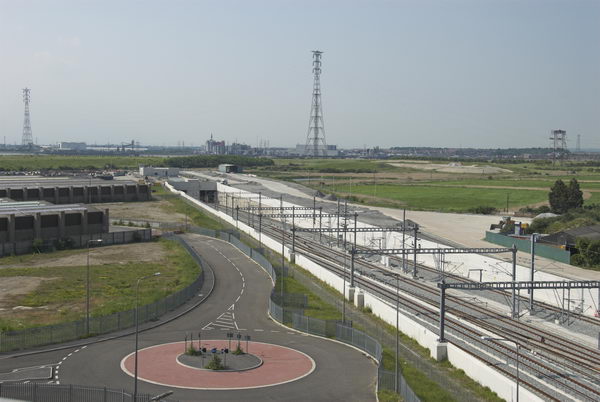
Part of my reason for coming to this area was the building that was taking place of the Channel Tunnel rail link, which tunnelled under the river at Swanscombe in Kent to West Thurrock in Essex. I had previously photographed on the Kent side, You can see some of the work on this high speed rail line in these pictures of this, particularly some from my return journey to Rainham where I followed its route as closely as I could.

The pictures were made with my first digital SLR, the Nikon D100 and a 24-85mm Nikon lens.

As well as riverside industry, including a detergent works at West Thurrock which overshadow an ancient church, there are also images of the QEII Dartford Bridge, container parks, oil storage depots and the CTRL viaducts as well as fairly desolate riverside and a giant pylon.

St Clement’s Church, West Thurrock was one of the four churches featured in the 1994 film ‘Four Weddings and a Funeral’
Channel Tunnel Rail Link, QEII bridge and a giant pylon

You can see more pictures from the ride on My London Diary at Purfleet & West Thurrock.


FlickrFacebookMy London DiaryHull PhotosLea ValleyParis
London’s Industrial HeritageLondon Photos

All photographs on this page are copyright © Peter Marshall.
Contact me to buy prints or licence to reproduce.


Deptford & Greenwich – 2005

Deptford & Greenwich: Some pictures from two bike rides in April 2005, the second cut rather short by a puncture, around one of my favourite areas of London, mainly along the southern bank of the River Thames. The area has changed fairly dramatically in recent years with new blocks of riverside flats replacing riverside industry, much of which had already ceased work by 2005. I first photographed here around 1980 and it still now makes an interesting walk (or ride) and I’ve done most or all of it a few times since 2005.

Deptford & Greenwich - 2005
River Thames and Drydock, North Greenwich.

As usual I’ll post a slightly amended version of what I wrote at the time on My London Diary together with links to that site which has some more pictures. But I didn’t write anything about the actual pictures except the captions.

Deptford & Greenwich - 2005
Reflection of the Laban building in Deptford Creek, London.

It was a fine sunny day on Thursday 21 April 2005 and I put my Brompton folding bike on the train to Waterloo, then cycled east from there to Deptford and Geenwich, taking another trip along one of my favourite riverside paths around the Greenwich Peninsula.

Deptford & Greenwich - 2005
Trinity Square, Southwark, London SE1. Church is now a rehearsal studio

North Greenwich is still interesting, although the area by the Dome is now rather bleak. Time went surprisingly quickly, and I had only got just past the Dome when it was time to make my way back.

Deptford & Greenwich - 2005
Dry Dock, North Greenwich, London.

Just over a week later I tried to take up the ride from where I left off, but only made it as far as the footbridge over Deptford Creek, when I heard a loud bang as my rear tyre punctured. I should have stopped, mended the puncture and gone on, but I couldn’t face it.

Deptford & Greenwich - 2005
Deptford Creek close to its junction with RIver Thames, Deptford, London.

I wheeled the bike to Greenwich station, got on the train and came home. One of my few gripes about the Brompton is that mending punctures is a bit of a pain; the small tyres are hard to take off and even harder to replace, and if you want to take the rear wheel off, it is a rather tricky business that I’ve yet to master. I have tyres with kevlar inserts that are supposed to be puncture-resistant, but they don’t seem very effective.

Canary Wharf and River Thames from North Greenwich, London

After I’d arrived home and had a cup of coffee, the puncture turned out to be a straightforward job.

Ship breaker’s yard, North Greenwich, London, April 2005
Doorway, Albury St, Deptford,
St Pauls, Deptford, London built by Thomas Archer in 1713
Laban dance centre
Deptford Creek

More pictures on My London Diary
From April 21st 2005
From April 29th 2005


FlickrFacebookMy London DiaryHull PhotosLea ValleyParis
London’s Industrial HeritageLondon Photos

All photographs on this page are copyright © Peter Marshall.
Contact me to buy prints or licence to reproduce.


Woolwich to New Charlton Panoramas – 1995

Woolwich to New Charlton Panoramas: Continuing my occasional series of colour images from 1995 – I think this is the eleventh post – with some colour panoramas made in May 1995 on a walk from Woolwich to New Charlton.

River Thames, Church Hill, Woolwich, Greenwich, 1995, 95p5-342

My walk had begun when I got off the train at Woolwich Arsenal on my way back from Dartford on May 7th and I think these pictures were made that afternoon as I walked from there to another station keeping close to the River Thames. But I did but return to Woolwich the following Sunday, May 14th and some of these pictures could have been made then.

A path leads up from the roundabout at the start of Woolwich Church Street to Church Hill and St Mary Magdalene Church, built on a spur of high ground leading out towards the river. Originally this ground went rather closer to the Thames, but much of it was quarried for sand though the digging had to stop at the church. Although the present church dates only from 1727-39 there had been a church on this site since the 9th century if not earlier and it was probably a much earlier site of settlement.

The road in front of the church, Church Hill, gives a splendid panoramic view of the Thames. In 1995 you could still see the remains of Woolwich’s riverside industry, but by the time I photographed here again in 2000 all had gone and the area was empty and derilect. Now it is filled with four tall blocks of flats and some other housing.

Former Woolwich Dockyard Dry Docks, Europe Rd, Woolwich, Greenwich, 1995, 95p5-343

Woolwich Dockyard was the Navy’s most important dockyard for many years and ships were built here from 1512 to the Victorian era. By then it had become too small for the new ships and the Royal Dockyard closed in 1869. Parts remained in industrial use and a large area was bought by Greenwich Council in the 1960s where they built the Woolwich Dockyard Estate in the 1970s – part at the left of this picture. I think this is the Grade II listed Graving Dock.

Ernest Bevin, Ferry Boat, River Thames, Woolwich, Greenwich, 1995, 95p5-332

Taken on the Woolwich Dockyard Estate this shows one of the old dry docks and at a mooring in the Thames the Woolwich Ferry Ernest Bevin. You can just see part of the south ferry terminal in the centre of the image.

The ferry across the Thames became a free ferry run by the LCC in 1889 – two days after they had replaced the Metropolitan Board of Works who had organised and funded it. A number of public bridges had been built to make crossing the river in West London easy and free and it had been decided that there must also be a free crossing in East London. The Ernest Bevin was one of three ferries in the third generation of ships which came into operation in 1963 and it was replaced in 2019. All have been named after local figues and Bevin was elected as MP for Woolwich East in 1950.

Flats, Frances St, Woolwich, Greenwich, 1995, 95p5-462

These point blocks, close to Woolwich Dockyard Station were built for Greenwich Council are St Mary’s Towers, one of the more successful housing schemes of the late 50s and early 60s, opened by Princess Margaret in 1961. They remain now still in good condition and popular.

River Thames, Woolwich, Greenwich, 1995, 95p5-472

Back to the River Thames and another cleared area of the former Dockyard with a view across the river to Tate & Lyle’s Silvertown works.

River Thames, Warspite Rd, Woolwich, Greenwich, 1995, 95p5-433

Another former dockyard area still in industrial use. I think this is Thameside Wharf on Harrington Way. Some of the buildings here were once part of the Siemens Brothers Telegraph Works factory established in 1863 and became Thameside studios for artists around 1990.

Bugsby's Way, New Charlton, Greenwich, 1995, 95p5-521
Bugsby’s Way, New Charlton, Greenwich, 1995, 95p5-521

Bugsby’s Way took its name from this part of the River Thames known from around 1830 as Bugsby’s Hole or Bugsby’s Reach which probably got its name from this once “marshy area to the south of Blackwall Point where executed criminals were formerly hung in chains.” As E.W.Green suggested in 1948, ‘bug‘ was the old British (ancient Welsh) word for ‘spook’ or ghost, and what could be a better place to meet with ghouls. Bugsby’s Way was built across this marshy area by the London Borough of Greenwich in 1984.

Beatle Line Ltd, Bugsby's Way, New Charlton, Greenwich, 1995, 95p5-511
Beatle Line Ltd, Bugsby’s Way, New Charlton, Greenwich, 1995, 95p5-511

Another picture from Bugsby’s Way. The Beatle Line perhaps got its name from the later meaning of ‘bug’, perhaps from a different Anglo-Saxon root, at first simply meaning beatle, though later coming into popular use for a wider range of species – including the famous moth found by Grace Hopper and colleagues in the Mark II computer at Harvard University in 1947.

More pictures from Charlton in a later post.


FlickrFacebookMy London DiaryHull PhotosLea ValleyParis
London’s Industrial HeritageLondon Photos

All photographs on this page are copyright © Peter Marshall.
Contact me to buy prints or licence to reproduce.