More Thames Path – 2011

Charlton to Belvedere
More Thames Path - 2011

Charlton to Belvedere
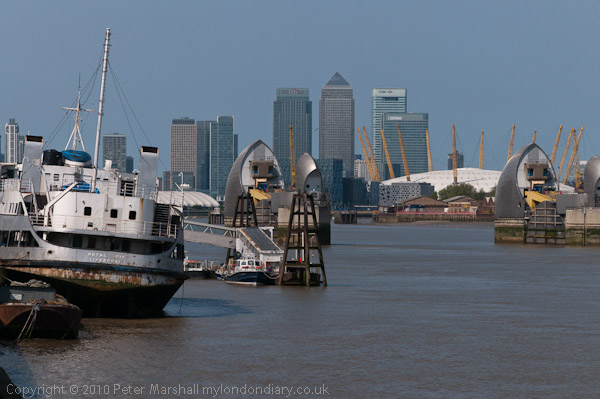
The view upriver from Charlton with the Thames barrier, Dome and Canary Wharf

Charlton to Belvedere: On Monday 25 April 2011 I went with my wife and elder son on a walk from Charlton Station to Belvedere. They walked but I rode on my folding Brompton bike as I was still suffering from plantar fasciitis and walking any distance became too painful.
More Thames Path - 2011

Charlton to Belvedere
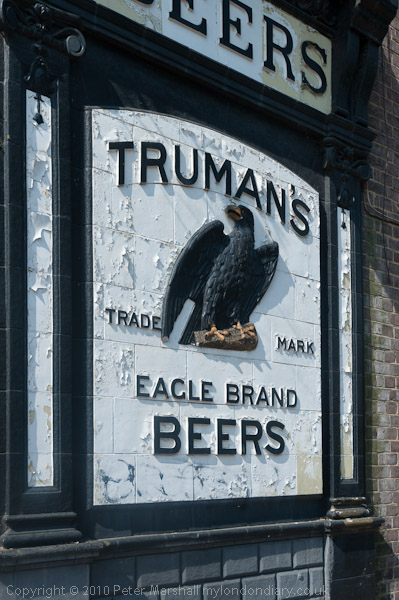
A derelict pub in Charlton

As a cyclist any pressure is on the ball of the foot, with no weight at all on the heel and arch where the pain can be intense. Gel insoles help a little for walking and I was still managing to photograph events, but longer – and faster – walks were still completely out of the question for me.
More Thames Path - 2011

Charlton to Belvedere
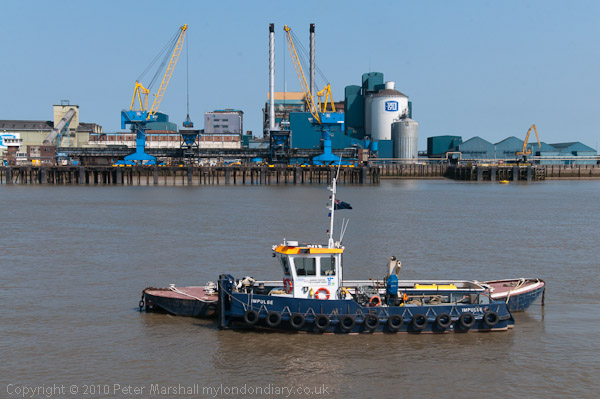
Tate & Lyle in Silvertown

I’d been to see my doctor who was sympathetic and told me that physiotherapy might help, but given the waiting list for appointments the pain would probably have gone away before I got one. But there were exercises that could help – and after I had spent a few months rolling a baked bean tin back and forth under my heal while having breakfast the pain did eventually go away.
More Thames Path - 2011

Charlton to Belvedere
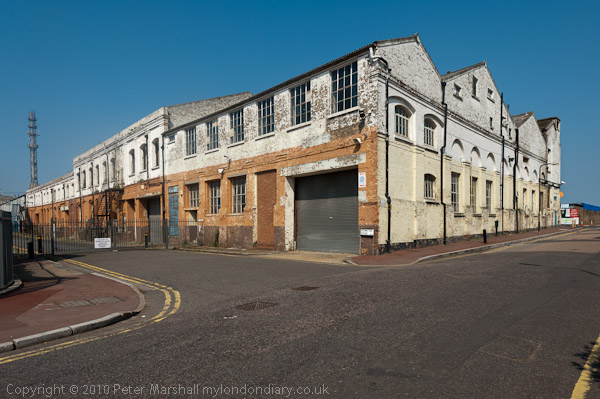
Warspite Rd/Bowater Rd SE18

The bike was a great idea. Linda and Sam were fast walkers and intent on getting to our destination, while as a photographer I kept stopping and sometimes wandering a little to one side to get into the right position to take pictures. Then I would see them a couple of hundred yards ahead and would need to run to catch up. So much easier on the bike.
More Thames Path - 2011

Charlton to Belvedere

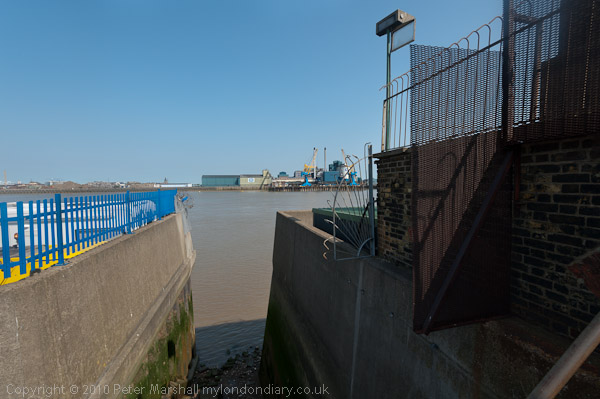
I took advantage of my bike to make some longer than normal diversions, at one stage cycling down a road to reach the river where there was no riverside path but riverside steps. I had a scary moment here, walking out on a ledge to get a better view I lost my balance and began to shake uncontrollably in front of a 10 foot drop onto the concrete steps and rubble of the foreshore. Fortunately I managed instead to grab hold of a rail behind me and after holding it for a few seconds steady myself enough to edge back to safety. I was only too aware of a history of photographers falling to their deaths while ‘getting a better view’.
More Thames Path - 2011

Charlton to Belvedere
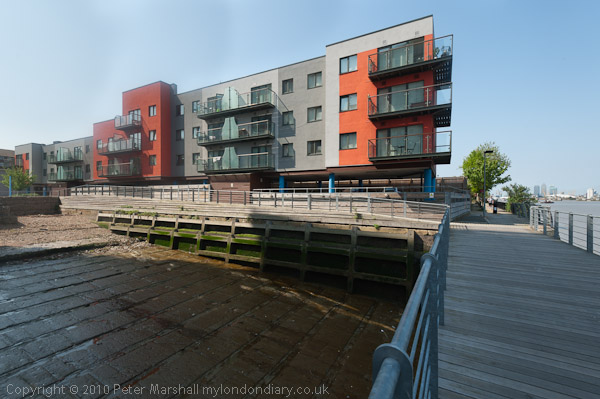
Recent flats on the former Royal Dockyard at Woolwich

Eventually I stopped shaking and was able to get back on my bike and hurry after the others. And no, I didn’t tell them what had happened and they still won’t know about it unless they read this.
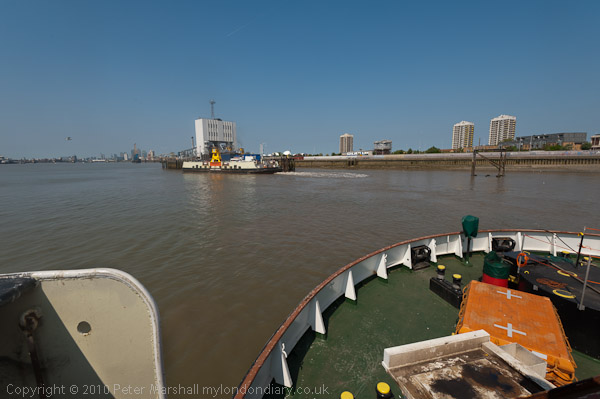
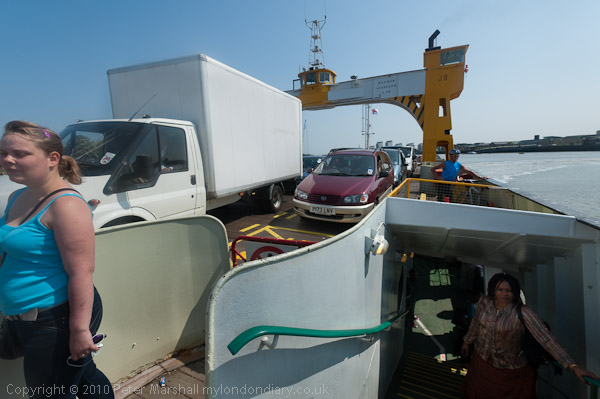
We were on the John Burns, named after the great trade unionist and Labour politician who called the Thames ‘liquid history’.

At Woolwich we took a ride across on the Free Ferry. Folding the Brompton I could walk past the ‘No Bicycles’ sign and go below deck with the others. I’d hoped we could return by the tunnel, but it was closed so we had a short walk in North Woolwich and a second ferry ride.
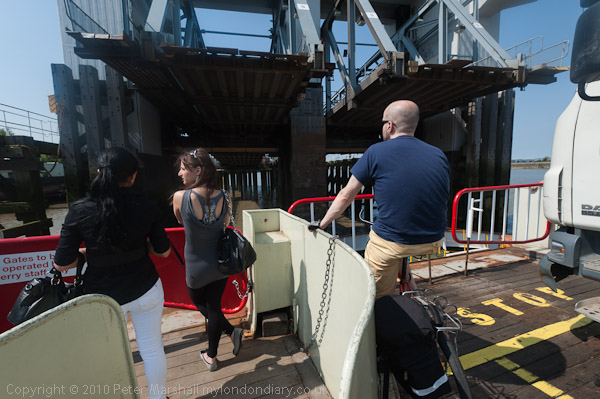
Coming back to Woolwich I kept on the vehicle deck. Bikes get to ride off before the cars.

When the Thames Path was declared a National Trail and then opened in 1996 it ended at the Thames Barrier. Our walk in 2011 began at Charlton station so only the first short section was on that and beyond we were walking the Thames Path Extension. I had previously walked all of this route, and further on as far as Cliffe. If you have the stamina you can now continue all the way to the Isle of Grain though a bike would really be a good idea. Perhaps one day I’ll do it.

The Royal Arsenal site, once an official secret is now a tourist destination, complete with various sculptures, including Peter Burke‘s Assembly
There are glimpses of the river and these waste transfer barges though trees and over bushe and Beckton on the opposite bank
One of the larger tributaries of the Thames is the treated outfall from Beckton sewage works at left. close to Barking Creek
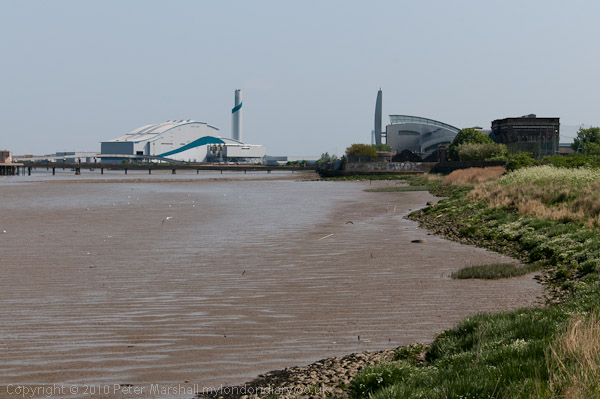
Waste incinerators and the Bazalgette pumping station
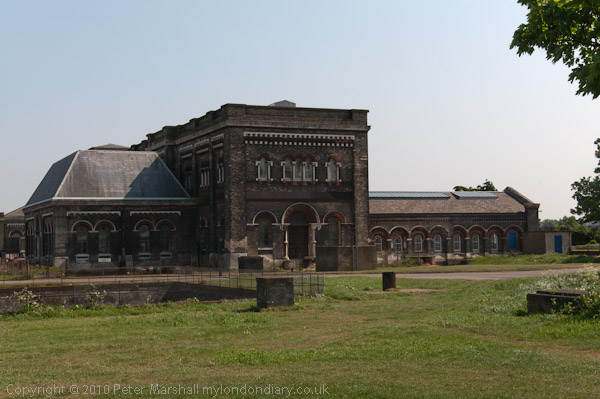
The Romanesque Crossness Southern Outfall Works opened in 1865, pumping sewage out when the tide would take it seawards
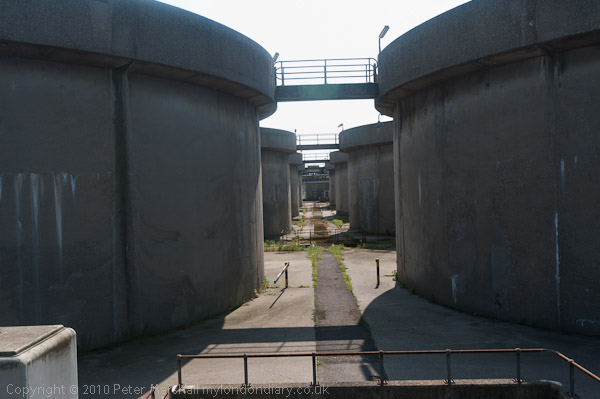
Part of the more utilitarian 1950s sewage treatment plant at Crossness
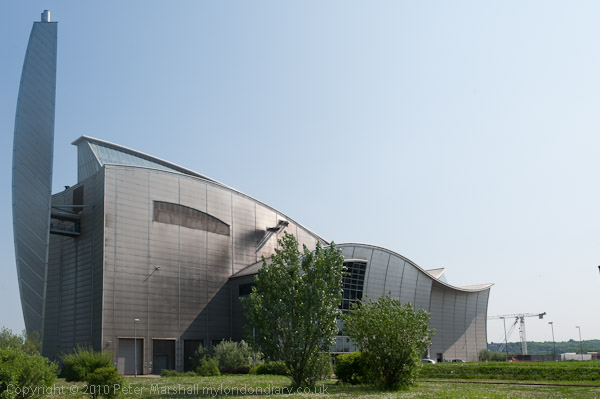
The 1998 sludge incinerator, an elegant swan-like metal structure
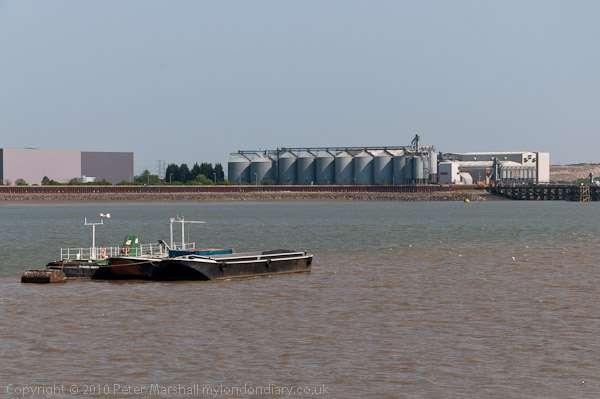
Looking downstream to silos at Rainham

On this ‘walk’ I gave up here and cycled to Belvedere station to get home for a meeting in the evening, while the two walkers continued to the Darent and then walked back to Slade Green station.

Many more pictures on My London Diary from the walk and the ferry at More Thames Path.


FlickrFacebookMy London DiaryHull PhotosLea ValleyParis
London’s Industrial HeritageLondon Photos

All photographs on this page are copyright © Peter Marshall.
Contact me to buy prints or licence to reproduce.
Thames Gateway – Essex 2007

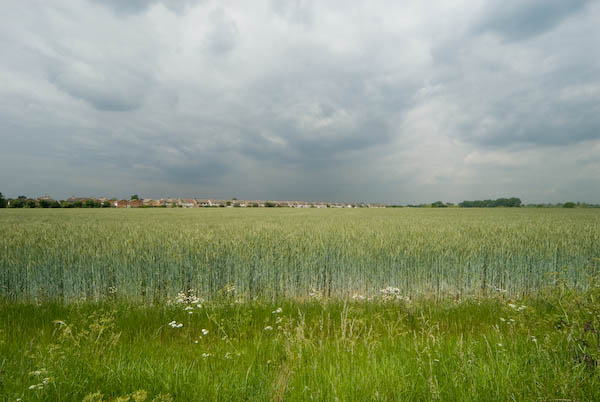
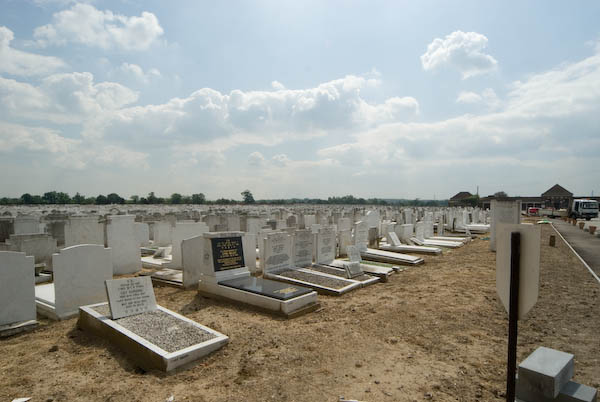
Thames Gateway – Essex: I didn’t write much about my bike ride in south Essex on 24th May 2007, though the pictures on My London Diary tell the story of my route. I began at Rainham on the edge of Greater London in the London Borough of Havering.

It wasn’t a linear ride but one where I went back and forth rather extensively exploring some of the areas.

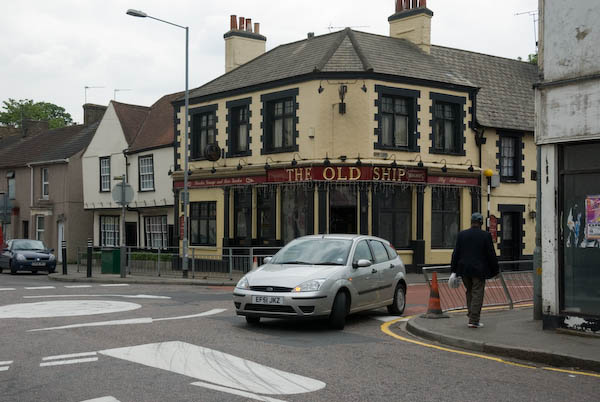
Next came the village of Aveley, where the Old Ship has a pub interior “of Outstanding National Importance” but I didn’t go inside.

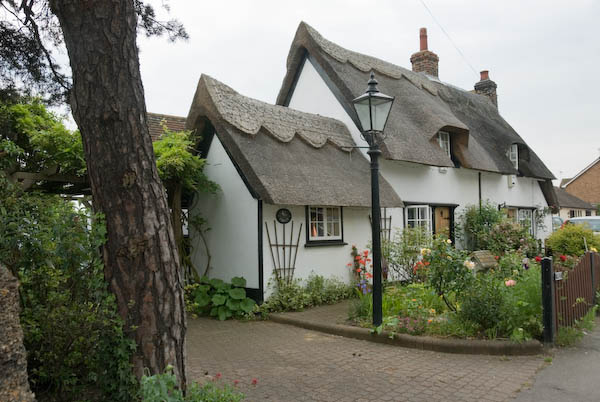
I photographed the Mar Dyke at North Stifford along with a number of houses, some thatched and cycled around the Stifford Green estate on site of Stepney Boys Home built around ‘The Tower’. This had been an approved school and then a community home until it closed in 1994.

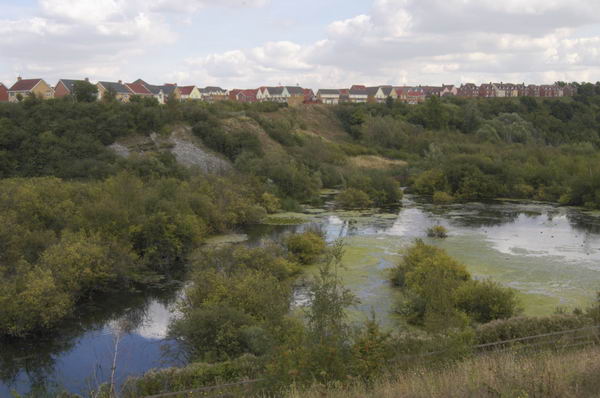
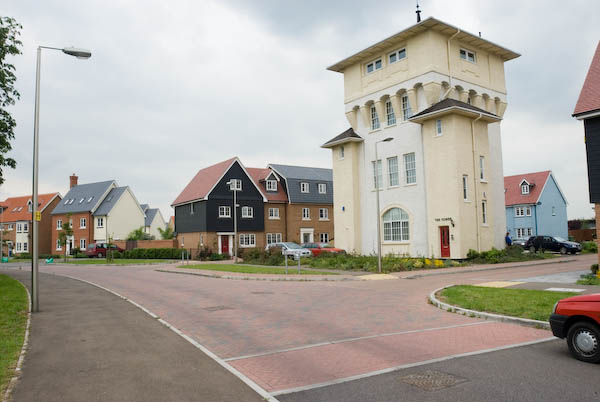
Next came Chafford Hundred, an area where chalk was extensively quarried from 1874 until the last quarry closeed in 1976. In 1986 a proposal by Blue Circle Industries, West Thurrock Estates and Tunnel Holdings to build 5,000 homes on derelict land was approved and the first were completed in 1989.

Parts of the area were still in industrial use in 2007 and there is a nature park with extensive lakes and ditches.

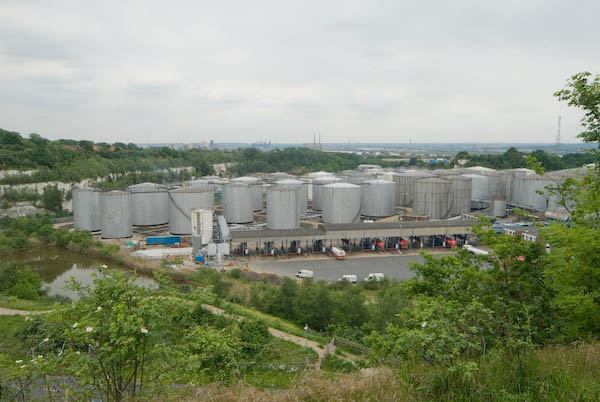
Lion Gorge, Chafford Hundred

From there I cycled a little deeper into Grays before going to Orsett Fen and Orsett and Horndon on the Hill which has a rather fine old pub I also didn’t go inside. Cycling and beer really don’t mix well with modern traffic.

There are more impressive ancient buildings, a reminder of the wealth that once came from the wool trade.

I made my way via Bulphan towards Upminster where I could use my railcard to start my journey home.


Here is the short text I wrote back in 2007 – with the usual corrections. The cost of the ticket I bought then is now £15.30 – an increase of around 9% above inflation – another of the costs of privatisation.

Thursday I bought an expensive ticket – just up from £6.60 to £7.90 – for a one-day railcard for Greater London from Staines, and put my folding bike aboard the train, changing to reach Rainham, Essex, (L B Havering) on the furthest edge of London from where I live.

Don’t let anyone tell you Essex is flat. O boring. Over a few hundred yards you can move from idyllic thatched cottages to post-industrial dereliction; from dramatic man-made scenery with lakes and chalk gorges to densely packed modern housing estates. From farms owned by city millionaires to council tower blocks.

Most of my winding route took me through Thurrock, one of the major growth sites of the Thames Gateway area.

There are many more images from this ride on My London Diary, beginning here.


FlickrFacebookMy London DiaryHull PhotosLea ValleyParis
London’s Industrial HeritageLondon Photos

All photographs on this page are copyright © Peter Marshall.
Contact me to buy prints or licence to reproduce.

Rainham and Hornchurch – 2006

Rainham and Hornchurch: On Thursday 11th May 2006 I put my Brompton folding bike on the train for the journey across London to Rainham Station. The journey, around 31 miles in a straight line, though rather longer on the ground, took me almost two hours on three trains, one Underground. As usual I took a book to read and relaxed on the journey.

Rainham and Hornchurch - 2006
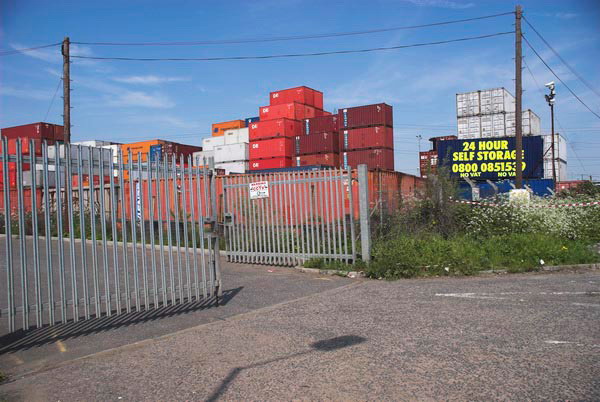
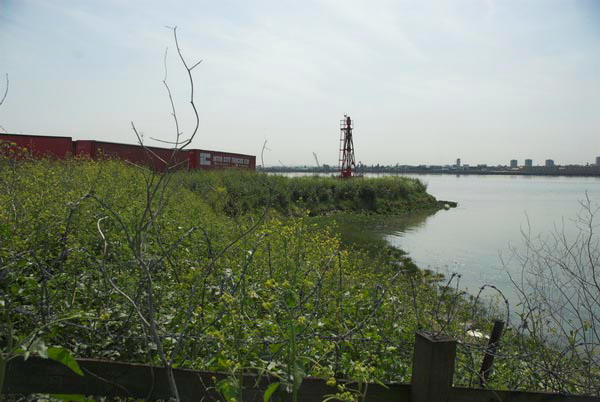
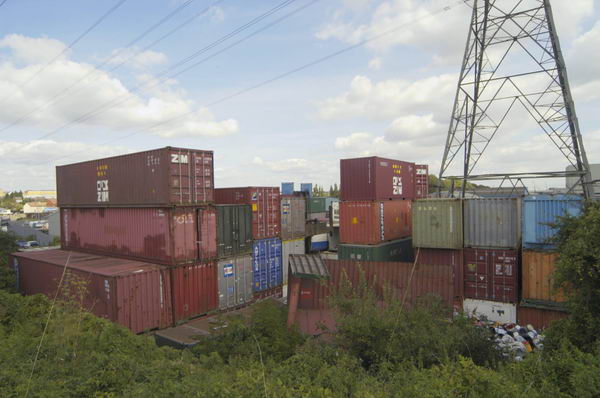
Containers on Rainham Marshes

Rainham is in Havering, part of Greater London and is the last station out to the east on the C2C rail service where the Travelcard I used covered. I did several rides and walks from here into Essex over the years, but I on this one stayed inside Greater London.

Rainham and Hornchurch - 2006
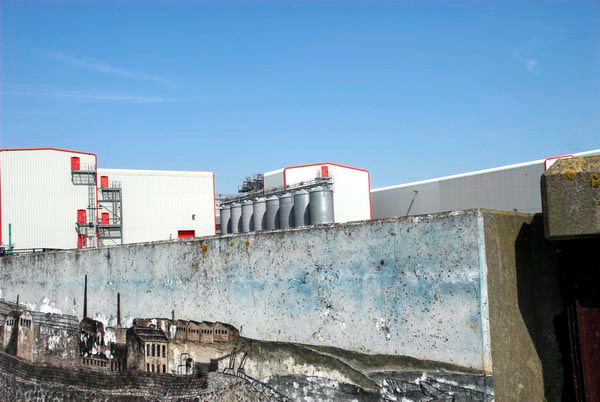
Mural of previous industry in the area and Tilda Rice works

The first part of this bike ride followed the route of the London Loop path around the outskirts of London, which at that date came to a dead and desolate end at Coldharbour Point. The path now continues to end in Purfleet, and if you have the stamina you can continue walking on a riverside path which ends at Tilbury Docks before having to retrace your steps to Grays.

Rainham and Hornchurch - 2006
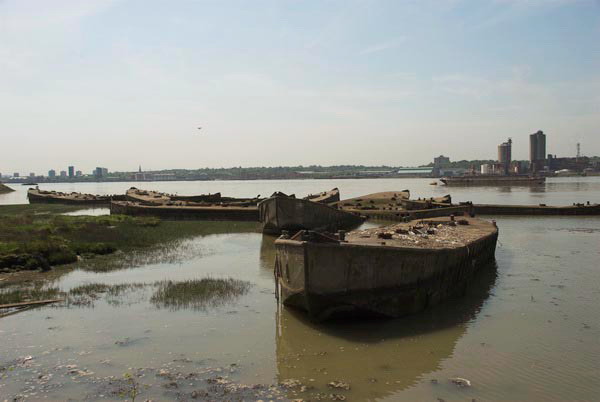
Derelict concrete barges in the Thames built for the Mulberry Harbour used for the D-Day landings

I didn’t write much about the ride back in 2006, and I didn’t ride very far. After returning from the end of the path I had a short ride west along the A13, which I don’t recommended as it is certainly not cycle friendly with much fast-moving traffic. The Mardyke Estate, where I went after that is now called ‘Orchard Village’ which at least avoids confusion with the Mardyke, a small river a few miles to the east. I continued roughly north through South Hornchurch, finally ending my ride at the District Line station of Elm Park.

Rainham and Hornchurch - 2006

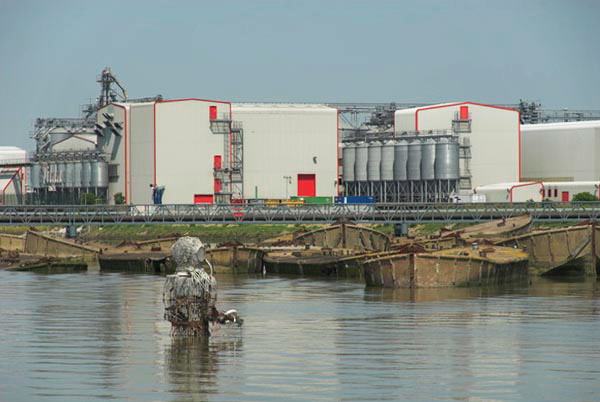
The sculpture in the river facing the barges and the Tilda Rice plant is Diver: Regeneration by local sculptor John Kaufman, who died in 2002, not long after it was placed here in the mud in 2000. Some of the funding for it came from the landfill company which carried waste here to raise parts of the marshes above sea level.

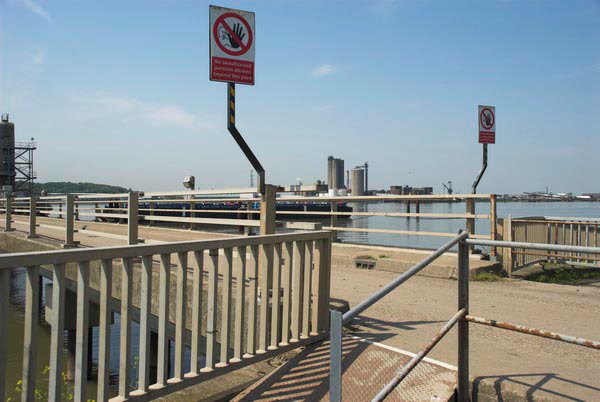
Waste Transfer Jetty – Landfill is raising much of the below sea-level marshes

My pictures don’t reflect the nature of the area which has large areas of open with marshes and country parks and two rivers flowing through it, the Beam River and the Ingrebourne which flows into the Thames at Rainham Creek. I think it is also an area which has seen considerable regeneration since 2006 in the London Riverside area of Thames Gateway redevelopment.

Coldharbour Point and the barbed wire where the London Loop then ended

Here’s my account with the usual minor corrections from 2006:

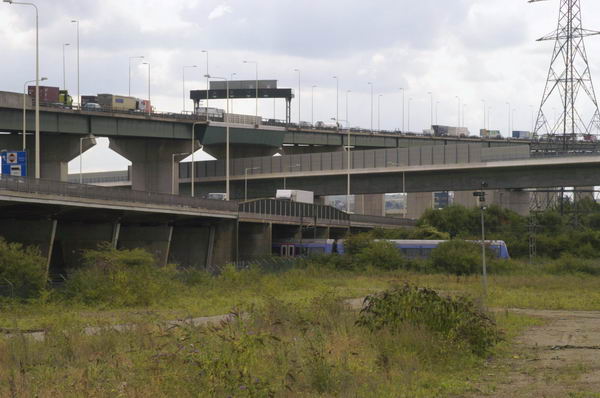
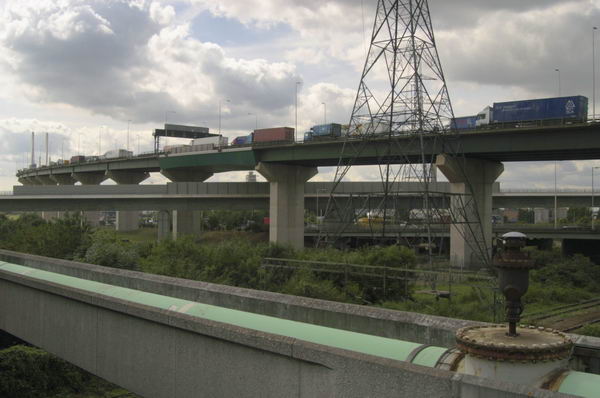
Rainham is at the eastern edge of London, an area of marsh, industry, warehouses, container stacks, dereliction and landfill on the Essex (north) bank of the Thames, cut across by the elevated A13 trunk road which sweeps across the creek and on over the marshes to Purfleet, alongside the new Channel Tunnel Rail Link.

Rainham Creek from the A13

One day the Thames Path will continue past Coldharbour Point, but for the moment it’s a dead end. I eat my sandwiches and then turn back, making my way up onto the elevated roadway, but the views are disappointing.

Mardyke Estate, South Hornchurch

At the next roundabout west I take a look around, leave the main road and then head north, past disused areas of the Ford Dagenham site and up through the Mardyke Estate and South Hornchurch.

At Elm Park the heat of our first hot day if the year – 25 Celsius in the shade, but I’ve been constantly in sun – gets to me and I give up and take the Underground towards home.

One of many houses decorated for the Cup Final. Unfortunately West Ham lost to Liverpool

The heat has buckled some of the rails and the District Line train has to crawl along, more or less at my cycling speed, but at least I can just sit and rest.

There are more pictures from the ride here.


FlickrFacebookMy London DiaryHull PhotosLea ValleyParis
London’s Industrial HeritageLondon Photos

All photographs on this page are copyright © Peter Marshall.
Contact me to buy prints or licence to reproduce.


On My Brompton in Essex – 2004

On My Brompton in Essex: On Thursday 26th August 2004 I went for a ride on my Brompton in Essex on the north bank of the Thames, in an area sometimes known as the Thames Gateway. If anyone doesn’t know, the Brompton is one of the best folding bikes around, with 16 inch wheels, folding quickly to a fairly small package which can be carried onto trains and buses. I don’t ride it so much now, as I find it rather heavy to carry, particularly when loaded with my camera gear.

On My Brompton in Essex
Chafford Hundred, Grays, Essex

I bought the Brompton at the end of 2002, and spent a lot of time riding it for exercise on doctor’s orders during recovery from a minor heart problem at the start of 2003. It coincided with the purchase of my first digital camera capable of professional results, the 6.1Mp Nikon D100 DSLR.

On My Brompton in Essex
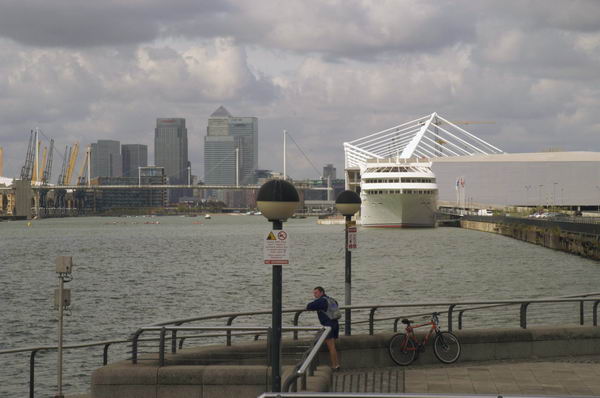
Royal Victoria Dock

For a year or two I worked with both digital and film, particularly because at the start I had only one Nikon lens, a 24-85mm zoom, giving an equivalent on the DX format camera to 36-128mm on full-frame, but I used a range of wider lenses on film. By 2004 I had added the remarkable Sigma 12-24mm (18-36mm equiv) to my bag, and many of the pictures I made that day were taken with that lens. I think it was the first affordable ultra-wide zoom, and certainly the results on DX format were very usable.

On My Brompton in Essex
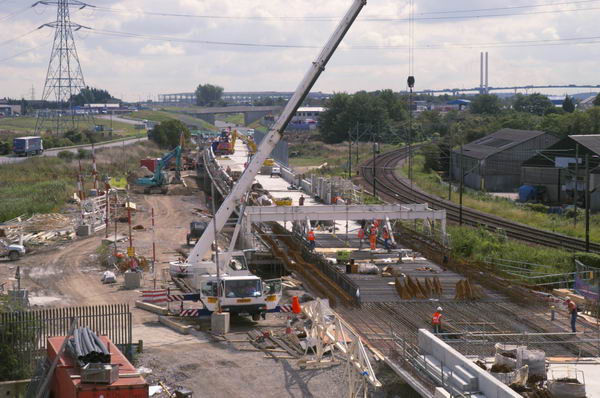
Channel Tunnel Rail link under construction at Purfleet

As well as the Nikon I also had a film camera, a Russian Horizon 202 swing lens panoramic camera. You can see some of the pictures I made with this among those on the Thames Gateway (Essex) section on the Urban Landscapes site.

On My Brompton in Essex
Dartford Bridge and Channel Tunnel rail link, Thurrock

I began taking pictures that day at Victoria Dock in Canning Town, having taken the Brompton on the train to Waterloo and then the Jubilee Line there, before cycling to West Ham station to catch the C2C rail service to Rainham, all on a Travelcard. It’s something of a blow that TfL now intends to discontinue the Travelcard, which provided relatively cheap and simple travel for most of my photography.

Here is what I wrote about the day back in August 2004 – with minor corrections, particularly changing to normal capitalisation.

I like to make good use of my Travelcards, so Rainham, the last station out of Fenchurch St in zone 6 is a good destination. I pointed the Brompton first to Purfleet, to take a look at the state of play on the high-speed rail link, and also a new development in the old chalkpits, then on towards the Dartford bridge.

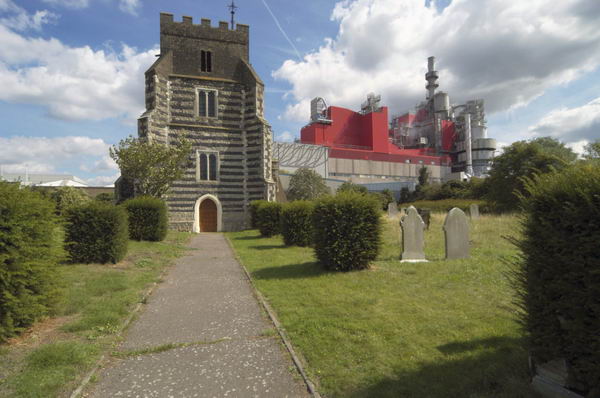
The Bridge Act obliges the operators to transport cycles and pedestrians across free of charge, and I cycled up the path towards it to claim this right, before changing my mind and deciding i didn’t want to go to the other side. Instead I took the new road through the West Thurrock Marshes industrial area and on to St Clements church, now a nature sanctuary, in the middle of a detergent factory.

It’s a quiet and pleasant place to eat sandwiches, though the smell of the perfuming agent is pervasive. There I planned a route largely along side roads, cycle paths and footpaths to Upminster, taking in Chafford Hundred, South Ockenden and Belhus Park and woods. It made a pleasant ride, though I had to make a few detours, and the B isn’t too stable on slimy mud, so some paths made for interesting riding, with the added pleasures of bramble thorns and nettles.

My London Diary

All of the pictures on this post were taken on the Nikon D100. There are a quite a lot more on My London Diary.