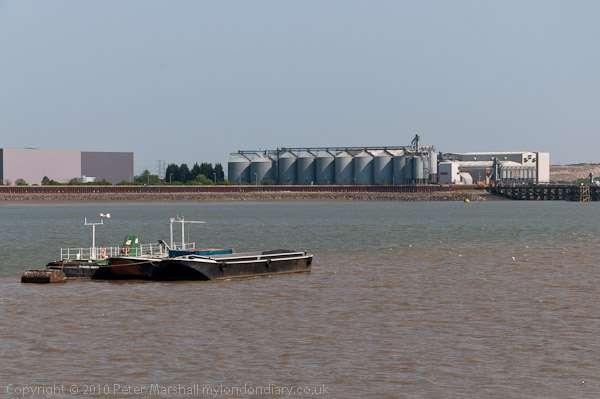
More Thames Path – 2011

Charlton to Belvedere
More Thames Path - 2011

Charlton to Belvedere
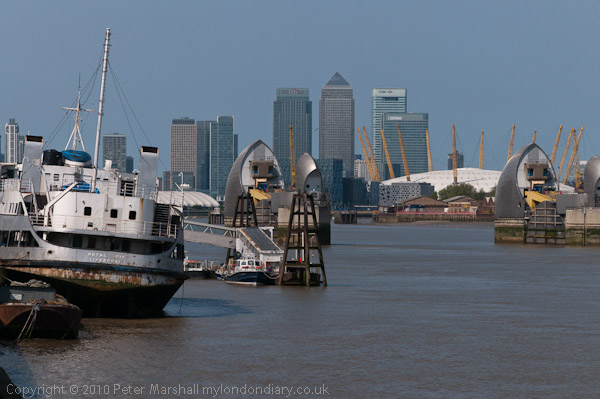
The view upriver from Charlton with the Thames barrier, Dome and Canary Wharf

Charlton to Belvedere: On Monday 25 April 2011 I went with my wife and elder son on a walk from Charlton Station to Belvedere. They walked but I rode on my folding Brompton bike as I was still suffering from plantar fasciitis and walking any distance became too painful.
More Thames Path - 2011

Charlton to Belvedere
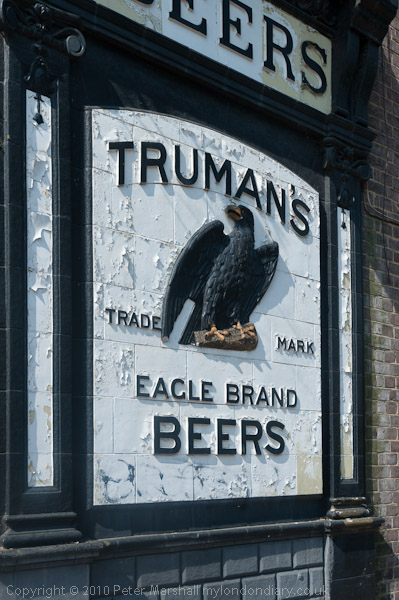
A derelict pub in Charlton

As a cyclist any pressure is on the ball of the foot, with no weight at all on the heel and arch where the pain can be intense. Gel insoles help a little for walking and I was still managing to photograph events, but longer – and faster – walks were still completely out of the question for me.
More Thames Path - 2011

Charlton to Belvedere
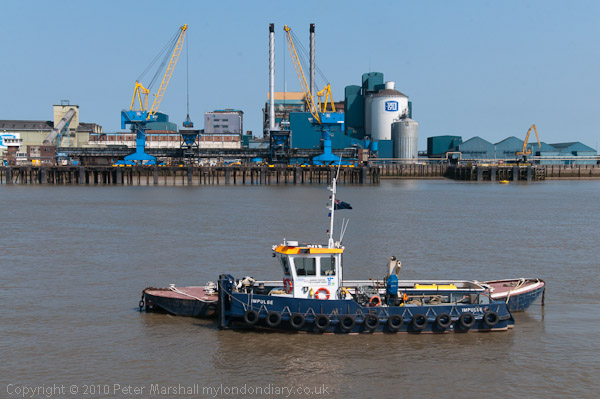
Tate & Lyle in Silvertown

I’d been to see my doctor who was sympathetic and told me that physiotherapy might help, but given the waiting list for appointments the pain would probably have gone away before I got one. But there were exercises that could help – and after I had spent a few months rolling a baked bean tin back and forth under my heal while having breakfast the pain did eventually go away.
More Thames Path - 2011

Charlton to Belvedere
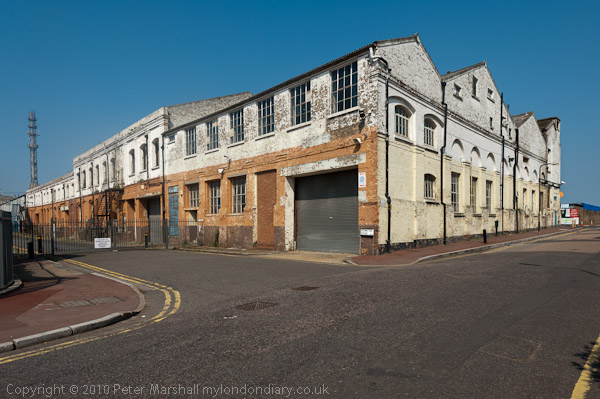
Warspite Rd/Bowater Rd SE18

The bike was a great idea. Linda and Sam were fast walkers and intent on getting to our destination, while as a photographer I kept stopping and sometimes wandering a little to one side to get into the right position to take pictures. Then I would see them a couple of hundred yards ahead and would need to run to catch up. So much easier on the bike.
More Thames Path - 2011

Charlton to Belvedere

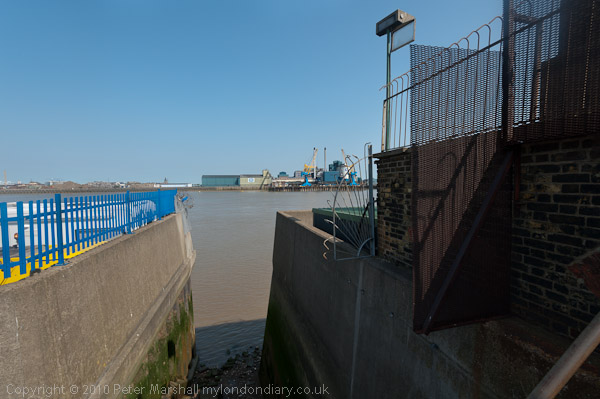
I took advantage of my bike to make some longer than normal diversions, at one stage cycling down a road to reach the river where there was no riverside path but riverside steps. I had a scary moment here, walking out on a ledge to get a better view I lost my balance and began to shake uncontrollably in front of a 10 foot drop onto the concrete steps and rubble of the foreshore. Fortunately I managed instead to grab hold of a rail behind me and after holding it for a few seconds steady myself enough to edge back to safety. I was only too aware of a history of photographers falling to their deaths while ‘getting a better view’.
More Thames Path - 2011

Charlton to Belvedere
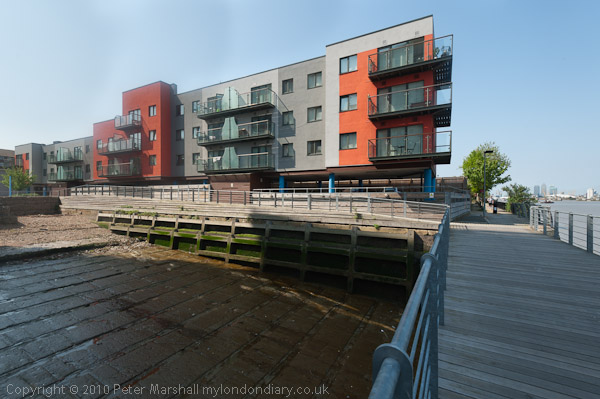
Recent flats on the former Royal Dockyard at Woolwich

Eventually I stopped shaking and was able to get back on my bike and hurry after the others. And no, I didn’t tell them what had happened and they still won’t know about it unless they read this.
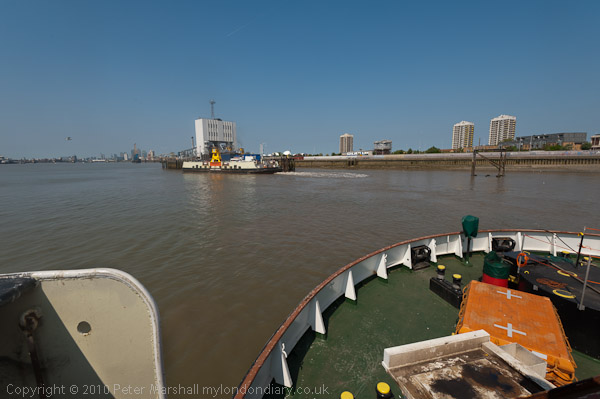
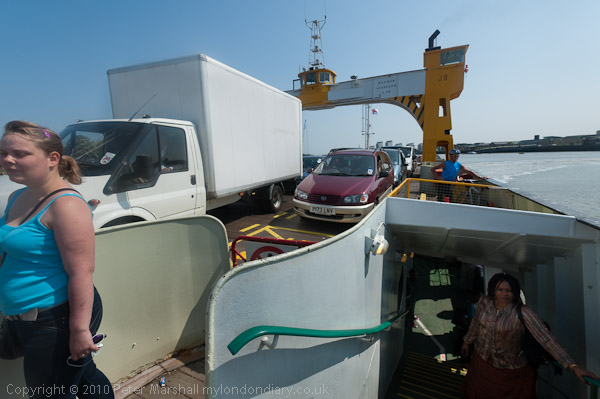
We were on the John Burns, named after the great trade unionist and Labour politician who called the Thames ‘liquid history’.

At Woolwich we took a ride across on the Free Ferry. Folding the Brompton I could walk past the ‘No Bicycles’ sign and go below deck with the others. I’d hoped we could return by the tunnel, but it was closed so we had a short walk in North Woolwich and a second ferry ride.
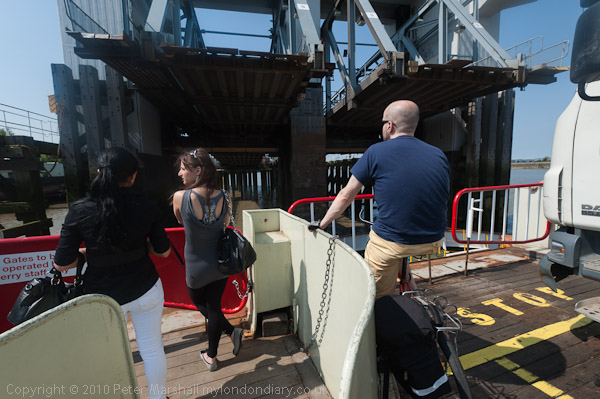
Coming back to Woolwich I kept on the vehicle deck. Bikes get to ride off before the cars.

When the Thames Path was declared a National Trail and then opened in 1996 it ended at the Thames Barrier. Our walk in 2011 began at Charlton station so only the first short section was on that and beyond we were walking the Thames Path Extension. I had previously walked all of this route, and further on as far as Cliffe. If you have the stamina you can now continue all the way to the Isle of Grain though a bike would really be a good idea. Perhaps one day I’ll do it.

The Royal Arsenal site, once an official secret is now a tourist destination, complete with various sculptures, including Peter Burke‘s Assembly
There are glimpses of the river and these waste transfer barges though trees and over bushe and Beckton on the opposite bank
One of the larger tributaries of the Thames is the treated outfall from Beckton sewage works at left. close to Barking Creek
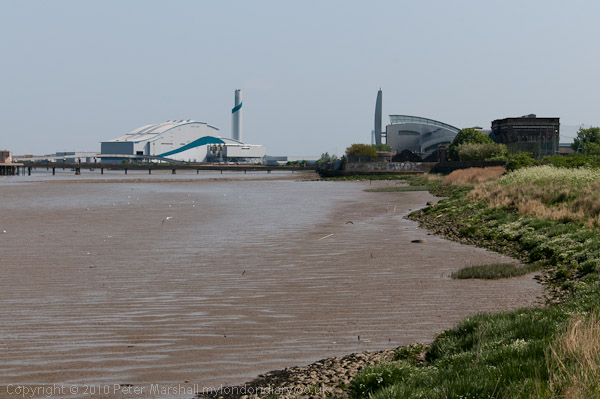
Waste incinerators and the Bazalgette pumping station
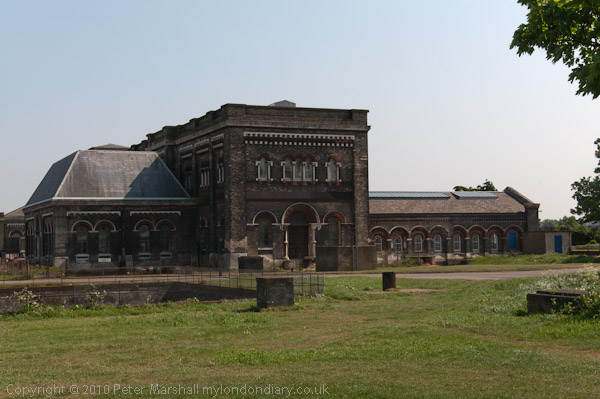
The Romanesque Crossness Southern Outfall Works opened in 1865, pumping sewage out when the tide would take it seawards
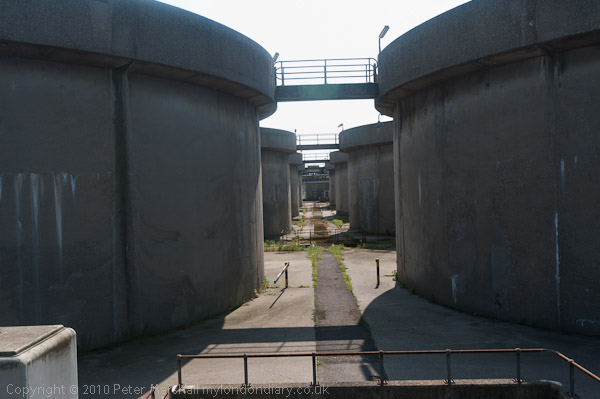
Part of the more utilitarian 1950s sewage treatment plant at Crossness
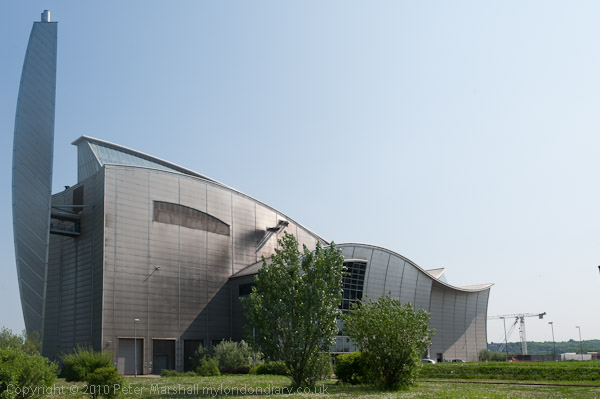
The 1998 sludge incinerator, an elegant swan-like metal structure
Looking downstream to silos at Rainham

On this ‘walk’ I gave up here and cycled to Belvedere station to get home for a meeting in the evening, while the two walkers continued to the Darent and then walked back to Slade Green station.

Many more pictures on My London Diary from the walk and the ferry at More Thames Path.


FlickrFacebookMy London DiaryHull PhotosLea ValleyParis
London’s Industrial HeritageLondon Photos

All photographs on this page are copyright © Peter Marshall.
Contact me to buy prints or licence to reproduce.


More From the Woolwich Free Ferry – 1994

More From the Woolwich Free Ferry: I went on the ferry across to North Woolwich, taking pictures while I was on the ferry, I think mainly in black and white.

Woolwich Ferry, River Thames, Woolwich, Greenwich, 1994, 94-810-51

Taken while I was waiting at Woolwich for vehicles and passengers could come off the ferry.

Woolwich Ferry, River Thames, Woolwich, Greenwich, 1994, 94-811-42

At North Woolwich while vehicles were still driving off and foot passengers were boarding for the journey to Woolwich.

Riverside Path, River Thames, North Woolwich, Greenwich, 1994, 94-810-12

I got off the ferry at North Woolwich and took a short walk along the riverside path, making this picture and then returning to catch the ferry back. This screw was in the path. The ferry terminal is at right.

Woolwich Ferry, River Thames, Woolwich, Greenwich, 1994, 94-810-32

I don’t know whether the pictures below on the ferry were made on the outward or return journey.

Woolwich Ferry, River Thames, Woolwich, Greenwich, 1994, 94-810-33
Woolwich Ferry, River Thames, Woolwich, Greenwich, 1994, 94-810-41

Soon I was back in Woolwich and taking more pictures there – to be in a later post.

The Woolwich Ferry

The Woolwich Ferry: Continuing my walk in Plumstead and Woolwich in August 1994 I came to the Woolwich Ferry and couldn’t resist taking a ride across the river on it. And since I wanted to continue my walk in Woolwich, rather than in North Woolwich, I stayed on the ferry to come back.

Woolwich Ferry, River Thames, Woolwich, Greenwich, 1994, 94-808-41

There had almost certainly been a ferry across the Thames at Woolwich at least since the Norman Conquest, though the first written reference by name only came when it was sold together with a house by William de Wicton to William atte Halle for £10. In the early years of the 19th century there were three Woolwich Ferry Acts (1811, 1815 and 1816) establishing a commercial ferry.

These were passed in particular for the movement of troops and supplies from Woolwich Arsenal across the river. From 1846 there was also a rail connection from North Woolwich to Stratford and eventually there were three steam ferries on the route

Woolwich Ferry, Ambulance Station, River Thames, Woolwich, Greenwich, 1994, 94-807-11

After the Metropolitan Board of Works (MBW) was created in 1855 it had taken over toll bridges in West London and made them free to use. People to the east of London in Greenwich and Woolwich argued that they should also be able to cross the river without paying. Eventually in 1884 the MWB agreed and tasked Sir Joseph Bazalgette to oversee the provision of approaches, bridges and pontoons for the ferry. These were built by the still familiar name of Messrs Mowlem in 1887-9. (The company is no longer; having got into financial difficulties it was acquired by its rival Carillion in 2005.)

Woolwich Ferry, River Thames, Woolwich, Greenwich, 1994, 94-807-12

The London County Council was established on 21st March 1889, two days before the Free Ferry was due to open and so it was Lord Roseberry, the LCC’s first chairman who led the huge procession and festivities to the new ferry terminal in Woolwich and announced to a crowd of thousands “The free ferry is open to the public.

There was only one paddle steamer working the ferry that weekend and it must have got very crowded. As well as those in Woolwich , “the Great Eastern Railway Company carried 25,000 people to its North Woolwich terminus, most of whom were intent on riding the ferry.”

Woolwich Ferry, River Thames, Woolwich, Greenwich, 1994, 94-807-13

The initial fleet of two paddle steamers soon became three and were replaced by newer paddle steamers in the 1920s. It was these that inspired the story and wonderful illustrations by Charles Keeping in his 1968 children’s classic ‘Alfie and the Ferryboat (1968), very much enjoyed a few years later by myself and my two boys. So of course we had to come to Woolwich and I took my first crossing with them in the early 1980s.

Woolwich Ferry, Ambulance Station, River Thames, Woolwich, Greenwich, 1994, 94-807-11

But by the time that book was published the paddle steamers had gone, replaced from 1963 by the diesel-powered double ended James Newman, John Burns and Ernest Bevin which enabled vehicles to drive up newly built causeways with hinged bridges and drive directly onto the ferries, greatly speeding up the loading. As they were double-ended vehicles could also drive off forwards on the other side and the ships did not need to reverse. They were steered from a central bridge over their roadways.

Woolwich Ferry, River Thames, Woolwich, Greenwich, 1994, 94-807-12

The ferries in my pictures continued in service until 2018, when the ferry closed down for four months waiting the arrive of replacements. These have had various problems with London May Sadiq Khan apologising and saying the new vessels “aren’t good enough.”

Woolwich Ferry, River Thames, Woolwich, Greenwich, 1994, 94-807-13
Woolwich Ferry, Ambulance Station, River Thames, Woolwich, Greenwich, 1994, 94-807-22

I had just missed the ferry and spent it walking around the area and taking pictures.

Woolwich Ferry, Ambulance Station, River Thames, Woolwich, Greenwich, 1994, 94-807-33

All of the pictures before this one have been of a vessel not in use, moored at Woolwich but in this picture you can see one ferry at the North Woolwich terminal and another approaching Woolwich, and I hurried up the approach to catch it. In my next post from 1994 I will include some pictures I made on the ferry.


FlickrFacebookMy London DiaryHull PhotosLea ValleyParis
London’s Industrial HeritageLondon Photos

All photographs on this page are copyright © Peter Marshall.
Contact me to buy prints or licence to reproduce.


Woolwich to New Charlton Panoramas – 1995

Woolwich to New Charlton Panoramas: Continuing my occasional series of colour images from 1995 – I think this is the eleventh post – with some colour panoramas made in May 1995 on a walk from Woolwich to New Charlton.

River Thames, Church Hill, Woolwich, Greenwich, 1995, 95p5-342

My walk had begun when I got off the train at Woolwich Arsenal on my way back from Dartford on May 7th and I think these pictures were made that afternoon as I walked from there to another station keeping close to the River Thames. But I did but return to Woolwich the following Sunday, May 14th and some of these pictures could have been made then.

A path leads up from the roundabout at the start of Woolwich Church Street to Church Hill and St Mary Magdalene Church, built on a spur of high ground leading out towards the river. Originally this ground went rather closer to the Thames, but much of it was quarried for sand though the digging had to stop at the church. Although the present church dates only from 1727-39 there had been a church on this site since the 9th century if not earlier and it was probably a much earlier site of settlement.

The road in front of the church, Church Hill, gives a splendid panoramic view of the Thames. In 1995 you could still see the remains of Woolwich’s riverside industry, but by the time I photographed here again in 2000 all had gone and the area was empty and derilect. Now it is filled with four tall blocks of flats and some other housing.

Former Woolwich Dockyard Dry Docks, Europe Rd, Woolwich, Greenwich, 1995, 95p5-343

Woolwich Dockyard was the Navy’s most important dockyard for many years and ships were built here from 1512 to the Victorian era. By then it had become too small for the new ships and the Royal Dockyard closed in 1869. Parts remained in industrial use and a large area was bought by Greenwich Council in the 1960s where they built the Woolwich Dockyard Estate in the 1970s – part at the left of this picture. I think this is the Grade II listed Graving Dock.

Ernest Bevin, Ferry Boat, River Thames, Woolwich, Greenwich, 1995, 95p5-332

Taken on the Woolwich Dockyard Estate this shows one of the old dry docks and at a mooring in the Thames the Woolwich Ferry Ernest Bevin. You can just see part of the south ferry terminal in the centre of the image.

The ferry across the Thames became a free ferry run by the LCC in 1889 – two days after they had replaced the Metropolitan Board of Works who had organised and funded it. A number of public bridges had been built to make crossing the river in West London easy and free and it had been decided that there must also be a free crossing in East London. The Ernest Bevin was one of three ferries in the third generation of ships which came into operation in 1963 and it was replaced in 2019. All have been named after local figues and Bevin was elected as MP for Woolwich East in 1950.

Flats, Frances St, Woolwich, Greenwich, 1995, 95p5-462

These point blocks, close to Woolwich Dockyard Station were built for Greenwich Council are St Mary’s Towers, one of the more successful housing schemes of the late 50s and early 60s, opened by Princess Margaret in 1961. They remain now still in good condition and popular.

River Thames, Woolwich, Greenwich, 1995, 95p5-472

Back to the River Thames and another cleared area of the former Dockyard with a view across the river to Tate & Lyle’s Silvertown works.

River Thames, Warspite Rd, Woolwich, Greenwich, 1995, 95p5-433

Another former dockyard area still in industrial use. I think this is Thameside Wharf on Harrington Way. Some of the buildings here were once part of the Siemens Brothers Telegraph Works factory established in 1863 and became Thameside studios for artists around 1990.

Bugsby's Way, New Charlton, Greenwich, 1995, 95p5-521
Bugsby’s Way, New Charlton, Greenwich, 1995, 95p5-521

Bugsby’s Way took its name from this part of the River Thames known from around 1830 as Bugsby’s Hole or Bugsby’s Reach which probably got its name from this once “marshy area to the south of Blackwall Point where executed criminals were formerly hung in chains.” As E.W.Green suggested in 1948, ‘bug‘ was the old British (ancient Welsh) word for ‘spook’ or ghost, and what could be a better place to meet with ghouls. Bugsby’s Way was built across this marshy area by the London Borough of Greenwich in 1984.

Beatle Line Ltd, Bugsby's Way, New Charlton, Greenwich, 1995, 95p5-511
Beatle Line Ltd, Bugsby’s Way, New Charlton, Greenwich, 1995, 95p5-511

Another picture from Bugsby’s Way. The Beatle Line perhaps got its name from the later meaning of ‘bug’, perhaps from a different Anglo-Saxon root, at first simply meaning beatle, though later coming into popular use for a wider range of species – including the famous moth found by Grace Hopper and colleagues in the Mark II computer at Harvard University in 1947.

More pictures from Charlton in a later post.


FlickrFacebookMy London DiaryHull PhotosLea ValleyParis
London’s Industrial HeritageLondon Photos

All photographs on this page are copyright © Peter Marshall.
Contact me to buy prints or licence to reproduce.