More Thames Path – 2011

Charlton to Belvedere

More Thames Path - 2011

Charlton to Belvedere
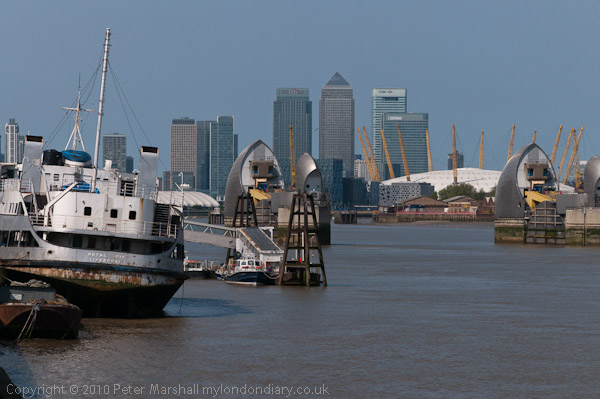
The view upriver from Charlton with the Thames barrier, Dome and Canary Wharf

Charlton to Belvedere: On Monday 25 April 2011 I went with my wife and elder son on a walk from Charlton Station to Belvedere. They walked but I rode on my folding Brompton bike as I was still suffering from plantar fasciitis and walking any distance became too painful.

More Thames Path - 2011

Charlton to Belvedere
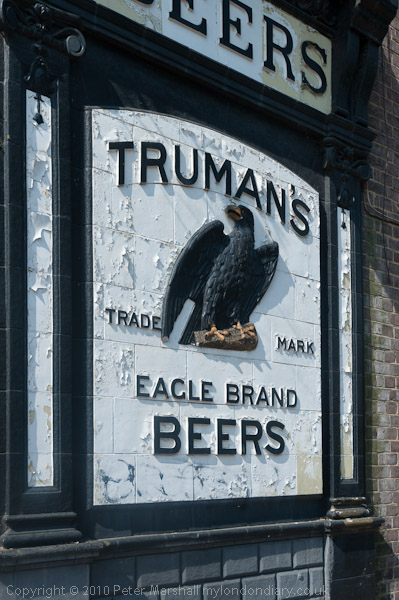
A derelict pub in Charlton

As a cyclist any pressure is on the ball of the foot, with no weight at all on the heel and arch where the pain can be intense. Gel insoles help a little for walking and I was still managing to photograph events, but longer – and faster – walks were still completely out of the question for me.

More Thames Path - 2011

Charlton to Belvedere
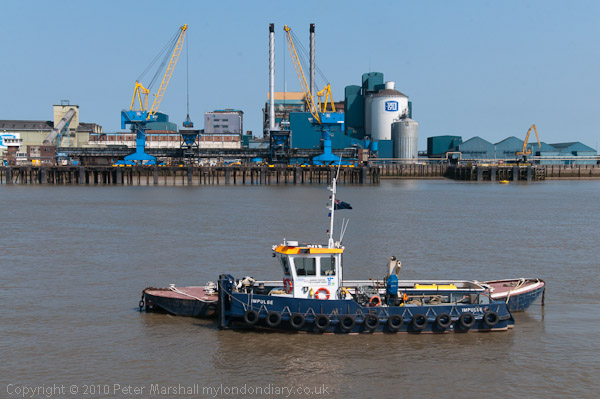
Tate & Lyle in Silvertown

I’d been to see my doctor who was sympathetic and told me that physiotherapy might help, but given the waiting list for appointments the pain would probably have gone away before I got one. But there were exercises that could help – and after I had spent a few months rolling a baked bean tin back and forth under my heal while having breakfast the pain did eventually go away.

More Thames Path - 2011

Charlton to Belvedere
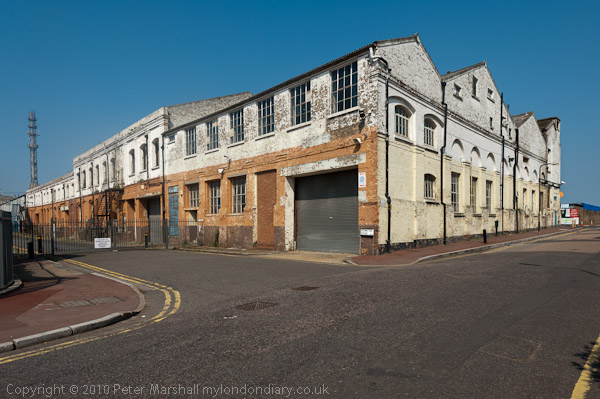
Warspite Rd/Bowater Rd SE18

The bike was a great idea. Linda and Sam were fast walkers and intent on getting to our destination, while as a photographer I kept stopping and sometimes wandering a little to one side to get into the right position to take pictures. Then I would see them a couple of hundred yards ahead and would need to run to catch up. So much easier on the bike.

More Thames Path - 2011

Charlton to Belvedere

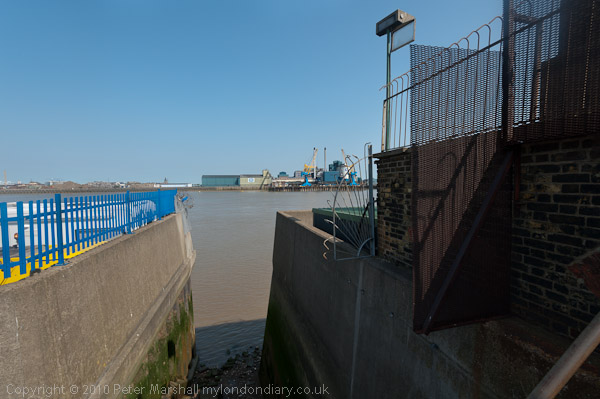
I took advantage of my bike to make some longer than normal diversions, at one stage cycling down a road to reach the river where there was no riverside path but riverside steps. I had a scary moment here, walking out on a ledge to get a better view I lost my balance and began to shake uncontrollably in front of a 10 foot drop onto the concrete steps and rubble of the foreshore. Fortunately I managed instead to grab hold of a rail behind me and after holding it for a few seconds steady myself enough to edge back to safety. I was only too aware of a history of photographers falling to their deaths while ‘getting a better view’.

More Thames Path - 2011

Charlton to Belvedere
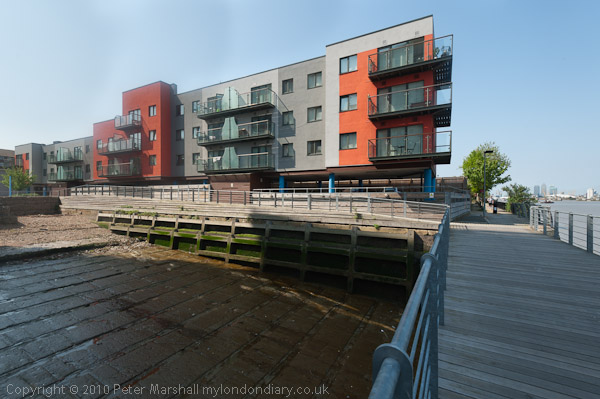
Recent flats on the former Royal Dockyard at Woolwich

Eventually I stopped shaking and was able to get back on my bike and hurry after the others. And no, I didn’t tell them what had happened and they still won’t know about it unless they read this.

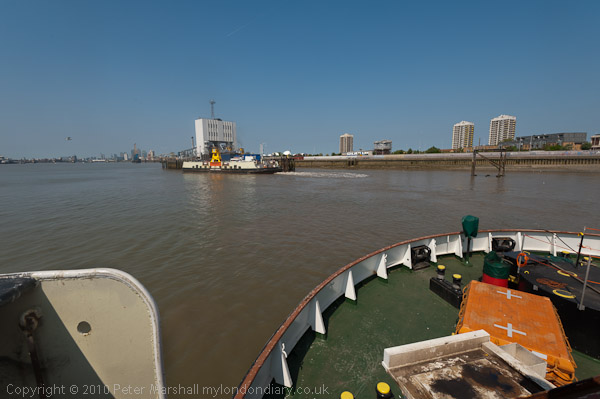
We were on the John Burns, named after the great trade unionist and Labour politician who called the Thames ‘liquid history’.

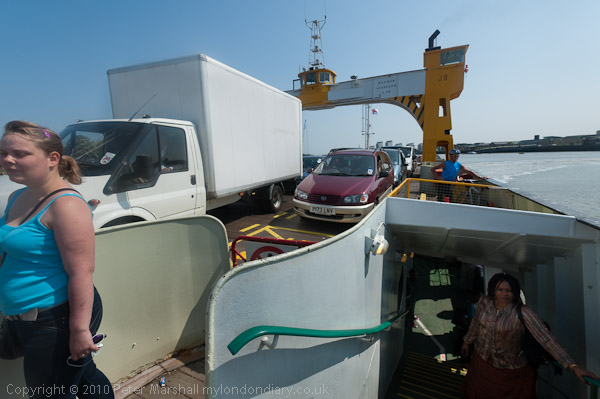
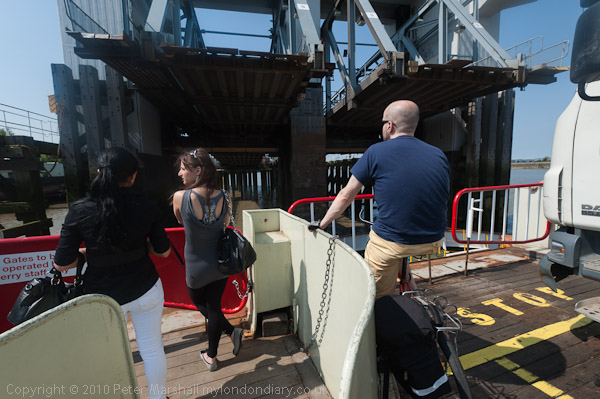
At Woolwich we took a ride across on the Free Ferry. Folding the Brompton I could walk past the ‘No Bicycles’ sign and go below deck with the others. I’d hoped we could return by the tunnel, but it was closed so we had a short walk in North Woolwich and a second ferry ride.

Coming back to Woolwich I kept on the vehicle deck. Bikes get to ride off before the cars.

When the Thames Path was declared a National Trail and then opened in 1996 it ended at the Thames Barrier. Our walk in 2011 began at Charlton station so only the first short section was on that and beyond we were walking the Thames Path Extension. I had previously walked all of this route, and further on as far as Cliffe. If you have the stamina you can now continue all the way to the Isle of Grain though a bike would really be a good idea. Perhaps one day I’ll do it.

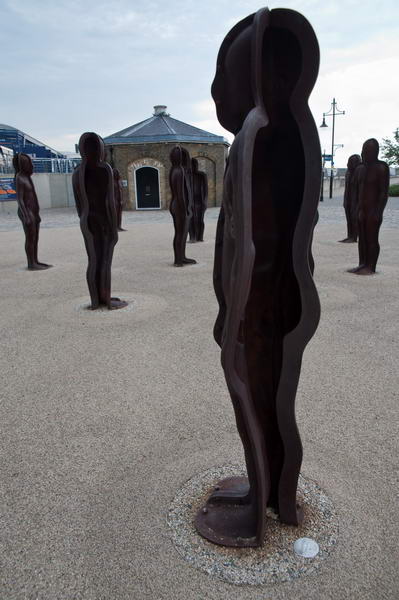
The Royal Arsenal site, once an official secret is now a tourist destination, complete with various sculptures, including Peter Burke‘s Assembly
There are glimpses of the river and these waste transfer barges though trees and over bushe and Beckton on the opposite bank
One of the larger tributaries of the Thames is the treated outfall from Beckton sewage works at left. close to Barking Creek
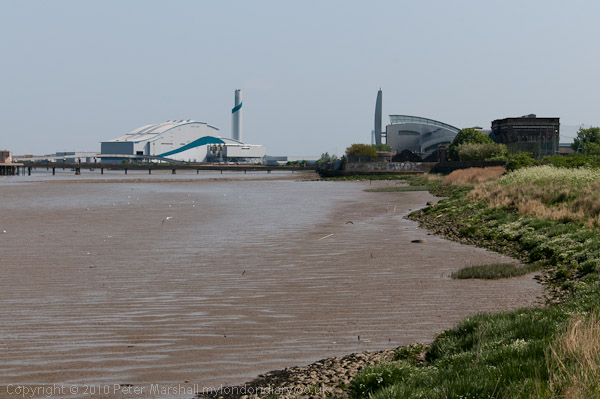
Waste incinerators and the Bazalgette pumping station
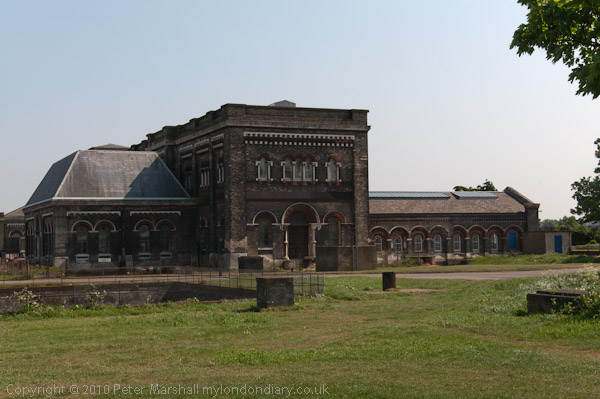
The Romanesque Crossness Southern Outfall Works opened in 1865, pumping sewage out when the tide would take it seawards
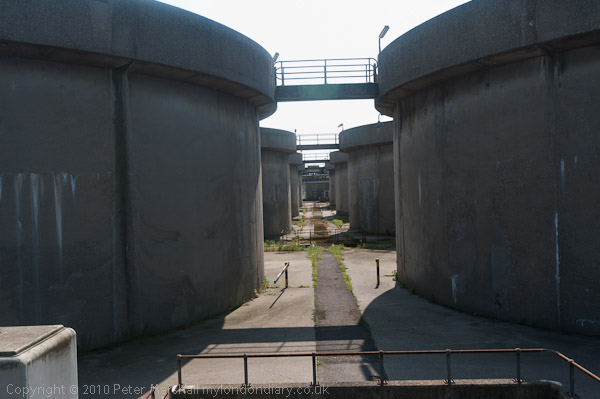
Part of the more utilitarian 1950s sewage treatment plant at Crossness
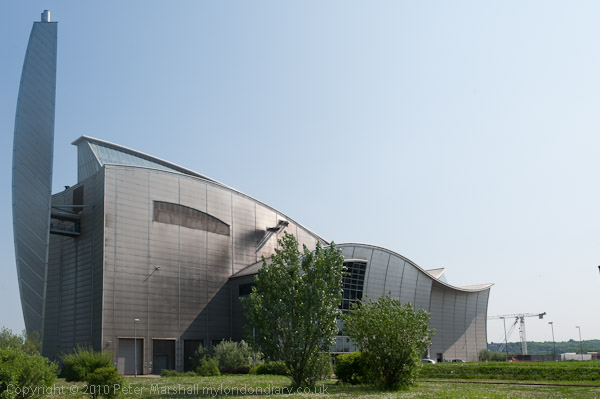
The 1998 sludge incinerator, an elegant swan-like metal structure
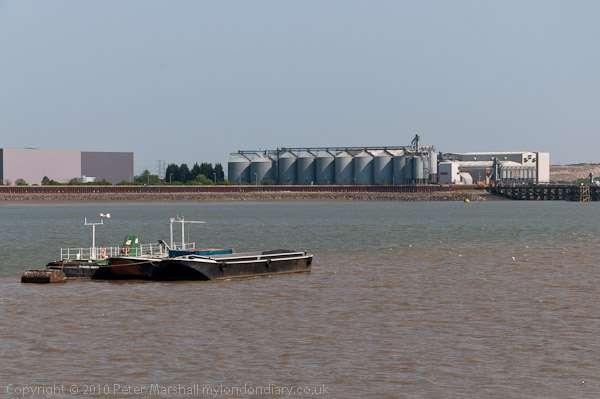
Looking downstream to silos at Rainham

On this ‘walk’ I gave up here and cycled to Belvedere station to get home for a meeting in the evening, while the two walkers continued to the Darent and then walked back to Slade Green station.

Many more pictures on My London Diary from the walk and the ferry at More Thames Path.


FlickrFacebookMy London DiaryHull PhotosLea ValleyParis
London’s Industrial HeritageLondon Photos

All photographs on this page are copyright © Peter Marshall.
Contact me to buy prints or licence to reproduce.


Woolwich Riverside and Royal Artillery

Woolwich Riverside and Royal Artillery: More pictures from my walk around Woolwich in August 1994

Waste Land, Woolwich Church St, Woolwich Ferry, River Thames, Woolwich, Greenwich, 1994, 94-807-42

This area, previously occupied by engineering works, has now been redeveloped with a luxury development of tall housing blocks on Mast Quay, “A magnificent crafted living space with panoramic views of the River Thames.”

Entrance, Woolwich Foot Tunnel, Woolwich, Greenwich, 1994, 94-809-13

As well as getting a free ferry, Woolwich also got a foot tunnel under the River Thames, opened by the London County Council in 1912. The tunnel is just over 500 meters long and remains delightfully cool on hot summer days.

Many cyclists also use the tunnel despite bylwws prohibiting cyclists. Electronic signs were installed in 2016 which used a computerised system to measure traffic and messaged ‘No cycling allowed‘ in red at busy times but ‘Please consider pedestrians‘ in green when the tunnel was fairly empty. Greenwich council was in favour of changing the bylaws to legalise this, but Tower Hamlets refused and the system was discontinued. Many cyclists still ride.

The tunnel provides a useful route across the river, particularly when the ferry is out of action, but most times I’ve used it one of both of the lifts at each end have not been working. I’ve never counted the steps but there are rather a lot of them, particularly when going up.

River Thames, Woolwich, Greenwich, 1994, 94-809-21

Downstream from the ferry in what in 1994 was I think an open area, once the site of Woolwich Power Station, demolished in 1978-9 though the coaling jetty in this picture is still there. There is still a riverside walk but most of the site is now occupied by tall blocks of flats.

River Thames, Woolwich, Greenwich, 1994, 94-809-22

A bridge here links the former coaling jetty with the riverside path.

From Riverside Path, Woolwich, Greenwich, 1994, 94-809-33
Steps from Riverside Path, Woolwich, Greenwich, 1994, 94-809-33

This area is now covered by tall flats, though there is a small segment of parkland with fountains.

Mural, Thames Barrier, Woolwich, Greenwich, 1994, 94-812-65

I cannot remember exactly where I found this mural of the Thames Barrier in Woolwich and I think it was soon demolished.

Royal Artillery Memorial, St George's Garrison Church, Grand Depot Road, Woolwich, Greenwich, 1994, 94-812-52
Royal Artillery Memorial, St George’s Garrison Church, Grand Depot Road, Woolwich, Greenwich, 1994, 94-812-52

Built for the garrison in 1862-3 it was hit by a V1 flying bomb in 1944 and the church was largely destroyed by fire. In 1970 more of the building was demolished but a canopy roof added to protect the apse and its polychromatic Victorian brick and decorations, with a memorial garden added in the former nave. It was listed in 1973. In 2011 it was transferred out of military ownership and since then there has been some restoration work, partly lottery funded.

Cannon, Royal Artillery Barracks, Woolwich, Greenwich, 1994, 94-808-32

The barracks was the home of the Royal Artillery from 1776 until 2007. Its 1,000 foot long Georgian frontage is said to be the longest in Europe if not the world. Since 2007 most of it has been rebuilt behind this, and in 2016 the Ministry of Defence announced plans for all army units to move out by 2028.

The cannon is the “17.75-ton Bhurtpore gun, captured by Field Marshall the Viscount Combermere after the 1826 siege of Bhurtpore” and brought here in 1828. When the Royal Artillery moved out they took this and four other cannons with them, doubtless a vital part of our country’s defence.

More from 1994 to come.


FlickrFacebookMy London DiaryHull PhotosLea ValleyParis
London’s Industrial HeritageLondon Photos

All photographs on this page are copyright © Peter Marshall.
Contact me to buy prints or licence to reproduce.


More From the Woolwich Free Ferry – 1994

More From the Woolwich Free Ferry: I went on the ferry across to North Woolwich, taking pictures while I was on the ferry, I think mainly in black and white.

Woolwich Ferry, River Thames, Woolwich, Greenwich, 1994, 94-810-51

Taken while I was waiting at Woolwich for vehicles and passengers could come off the ferry.

Woolwich Ferry, River Thames, Woolwich, Greenwich, 1994, 94-811-42

At North Woolwich while vehicles were still driving off and foot passengers were boarding for the journey to Woolwich.

Riverside Path, River Thames, North Woolwich, Greenwich, 1994, 94-810-12

I got off the ferry at North Woolwich and took a short walk along the riverside path, making this picture and then returning to catch the ferry back. This screw was in the path. The ferry terminal is at right.

Woolwich Ferry, River Thames, Woolwich, Greenwich, 1994, 94-810-32

I don’t know whether the pictures below on the ferry were made on the outward or return journey.

Woolwich Ferry, River Thames, Woolwich, Greenwich, 1994, 94-810-33
Woolwich Ferry, River Thames, Woolwich, Greenwich, 1994, 94-810-41

Soon I was back in Woolwich and taking more pictures there – to be in a later post.

The Woolwich Ferry

The Woolwich Ferry: Continuing my walk in Plumstead and Woolwich in August 1994 I came to the Woolwich Ferry and couldn’t resist taking a ride across the river on it. And since I wanted to continue my walk in Woolwich, rather than in North Woolwich, I stayed on the ferry to come back.

Woolwich Ferry, River Thames, Woolwich, Greenwich, 1994, 94-808-41

There had almost certainly been a ferry across the Thames at Woolwich at least since the Norman Conquest, though the first written reference by name only came when it was sold together with a house by William de Wicton to William atte Halle for £10. In the early years of the 19th century there were three Woolwich Ferry Acts (1811, 1815 and 1816) establishing a commercial ferry.

These were passed in particular for the movement of troops and supplies from Woolwich Arsenal across the river. From 1846 there was also a rail connection from North Woolwich to Stratford and eventually there were three steam ferries on the route

Woolwich Ferry, Ambulance Station, River Thames, Woolwich, Greenwich, 1994, 94-807-11

After the Metropolitan Board of Works (MBW) was created in 1855 it had taken over toll bridges in West London and made them free to use. People to the east of London in Greenwich and Woolwich argued that they should also be able to cross the river without paying. Eventually in 1884 the MWB agreed and tasked Sir Joseph Bazalgette to oversee the provision of approaches, bridges and pontoons for the ferry. These were built by the still familiar name of Messrs Mowlem in 1887-9. (The company is no longer; having got into financial difficulties it was acquired by its rival Carillion in 2005.)

Woolwich Ferry, River Thames, Woolwich, Greenwich, 1994, 94-807-12

The London County Council was established on 21st March 1889, two days before the Free Ferry was due to open and so it was Lord Roseberry, the LCC’s first chairman who led the huge procession and festivities to the new ferry terminal in Woolwich and announced to a crowd of thousands “The free ferry is open to the public.

There was only one paddle steamer working the ferry that weekend and it must have got very crowded. As well as those in Woolwich , “the Great Eastern Railway Company carried 25,000 people to its North Woolwich terminus, most of whom were intent on riding the ferry.”

Woolwich Ferry, River Thames, Woolwich, Greenwich, 1994, 94-807-13

The initial fleet of two paddle steamers soon became three and were replaced by newer paddle steamers in the 1920s. It was these that inspired the story and wonderful illustrations by Charles Keeping in his 1968 children’s classic ‘Alfie and the Ferryboat (1968), very much enjoyed a few years later by myself and my two boys. So of course we had to come to Woolwich and I took my first crossing with them in the early 1980s.

Woolwich Ferry, Ambulance Station, River Thames, Woolwich, Greenwich, 1994, 94-807-11

But by the time that book was published the paddle steamers had gone, replaced from 1963 by the diesel-powered double ended James Newman, John Burns and Ernest Bevin which enabled vehicles to drive up newly built causeways with hinged bridges and drive directly onto the ferries, greatly speeding up the loading. As they were double-ended vehicles could also drive off forwards on the other side and the ships did not need to reverse. They were steered from a central bridge over their roadways.

Woolwich Ferry, River Thames, Woolwich, Greenwich, 1994, 94-807-12

The ferries in my pictures continued in service until 2018, when the ferry closed down for four months waiting the arrive of replacements. These have had various problems with London May Sadiq Khan apologising and saying the new vessels “aren’t good enough.”

Woolwich Ferry, River Thames, Woolwich, Greenwich, 1994, 94-807-13
Woolwich Ferry, Ambulance Station, River Thames, Woolwich, Greenwich, 1994, 94-807-22

I had just missed the ferry and spent it walking around the area and taking pictures.

Woolwich Ferry, Ambulance Station, River Thames, Woolwich, Greenwich, 1994, 94-807-33

All of the pictures before this one have been of a vessel not in use, moored at Woolwich but in this picture you can see one ferry at the North Woolwich terminal and another approaching Woolwich, and I hurried up the approach to catch it. In my next post from 1994 I will include some pictures I made on the ferry.


FlickrFacebookMy London DiaryHull PhotosLea ValleyParis
London’s Industrial HeritageLondon Photos

All photographs on this page are copyright © Peter Marshall.
Contact me to buy prints or licence to reproduce.


Plumstead Panoramas – 1994

Plumstead Panoramas: More colour panoramas from my walk in Plumstead in August 1994.

Lakedale Rd, Tewson Rd, Plumstead, Greenwich, 1994, 94-806-62

Plumstead is a hilly place, rising quite steeply from the River Thames as I remember from my first visit to the area when still in short trousers, trudging up a long hill holding my mother’s hand to visit some distant relatives, whose names I no longer remember, nor exactly where they lived. Their back garden went up steeply behind the terrace house.

I don’t think it was this road was the one I walked up back then, but it was still hilly and you can see the houses going down on both sides and I think in the distance to trees and buildings on the other side of the river.

Park, Plumstead Common, Plumstead, Woolwich, Greenwich, 1994, 94-809-61

The previous picture was taken just a few yards from Winn’s Common, one of several areas also including Bleak Hill and The Slade which make up Plumstead Common. I think this is close to Lakedale Road and shows the foundations of a building with beyond it the rose garden in the next picture.

Park, Plumstead Common, Plumstead, Woolwich, Greenwich, 1994, 94-808-13

I made several other pictures on Plumstead Common, though I can’t remember exactly where on the common this was and can find no traces now of this sunken garden with walkways which must once have been covered by plants and flowers but seem to have left in a semi-derelict state, though there are still some rose bushes.

Plumstead Common, Plumstead, Woolwich, Greenwich, 1994, 94-808-23

Here I deliberately tilted the panoramic camera to give a curved horizon rather than try to level it with a spirit level as I usually did, partly to include the lower edge of the bushes and small trees, but also to create a kind of enclosed space.

Across the common is a pub, the Woodman, one of the 5 Plumstead Common Idlers, ‘the Woodman who never felled a tree’ at 35 The Slade.

“The Star which doesn’t shine in the sky,
the Woodman who doesn’t cut down trees,
the Ship that cannot sail the seas,
the Mill which doesn’t grind corn,
and Who’d a Thought it!”

Radnor Crescent, Plumstead, Woolwich, Greenwich, 1994, 94-809-62

Radnor Crescent is some distance to the east on the edge of Winn’s Common and I’m not sure exactly which direction I was looking to make this picture, perhaps looking towreds Shooters Hill.

Waste Land, Woolwich Church St, Woolwich Ferry, River Thames, Woolwich, Greenwich, 1994, 94-807-42

From here I walked to Woolwich and the Woolwich Ferry. More pictures from Woolwich in a later post.


FlickrFacebookMy London DiaryHull PhotosLea ValleyParis
London’s Industrial HeritageLondon Photos

All photographs on this page are copyright © Peter Marshall.
Contact me to buy prints or licence to reproduce.


Chariot Festival, Plumstead & Woolwich – 2009

Chariot Festival, Plumstead & Woolwich: Sunday 28th June 2009 I photographed the Hare Krishna Chariot Festival from Hyde Park to Trafalgar Square then travelled to Plumstead Common for short visit to the annual Mela there. But I didn’t find much to interest me and instead took a walk down to the Thames at Thamesmead West and then back alongside the river to Woolwich. On My London Diary I wrote at some length about the walk, which turned out to be surprisingly interesting and about how I thought the area could be improved.


Sri Jagannatha Rathayatra Festival – Hyde Park to Trafalgar Square

Chariot Festival, Plumstead & Woolwich - 2009
Musicians in the procession as it leaves Hyde Park

I didn’t write much about the chariot festival on My London Diary in 2009 as I had written at some length about it the previous year – and I won’t say much here either as I posted about the 2012 Rathayatra festival a few days ago.

Chariot Festival, Plumstead & Woolwich - 2009
The three giant chariots are pulled by people on large ropes

In 2009 I concentrated mainly on the people rather than the chariots.

More pictures at Sri Jagannatha Rathayatra.


Plumstead & Woolwich – Plumstead, Thamesmead West, River Thames

Chariot Festival, Plumstead & Woolwich - 2009

It was a long walk up the hill from Plumstead station to the common where the Mela is held and I arrived rather tired and was disappointed to find the the event seemed to be only just starting. But I’d stopped to take a few pictures on the way, and found several things of interest on the walk.

Chariot Festival, Plumstead & Woolwich - 2009

So after a short time at the Mela I decided it was too hot to wait around longer and to take a walk instead.

Chariot Festival, Plumstead & Woolwich - 2009

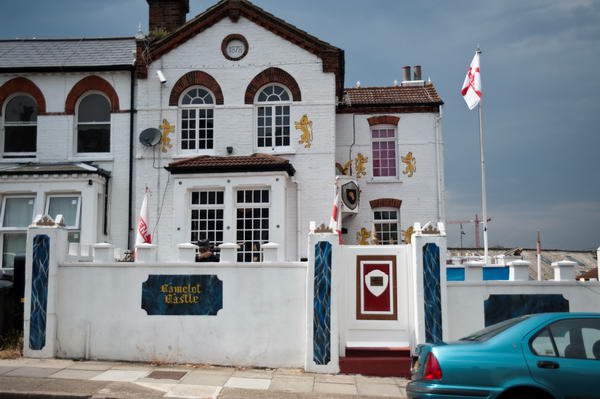
I walked down to Camelot Castle, home of self-proclaimed “celebrity gangster Dave Courtney“, who was made bankrupt in May 2009, owing £400,000 including an estimated £250,000 to HM Revenue & Customs.

Shouldn’t, I mused looking at the St Georges flags, patriots be pleased to pay taxes? I photographed the house and then onto the gates with a giant knuckleduster at their centre. Courtney also awarded himself a blue plaque with the text ‘Dave Courtney OBE lived here’ where the OBE stands for “One Big Ego”.

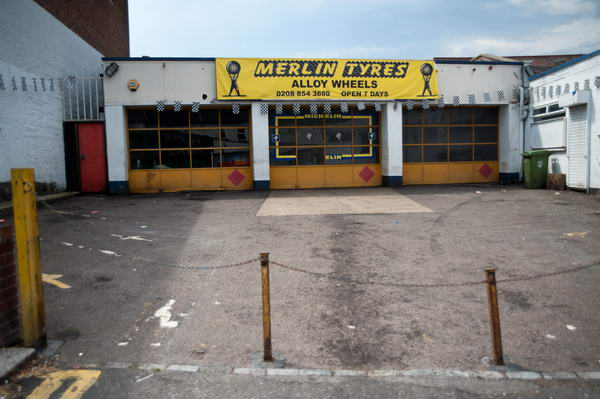
Soon after I came across Merlin Tyres. Is it coincidence that Merlin was one of the six main characters of Camelot?

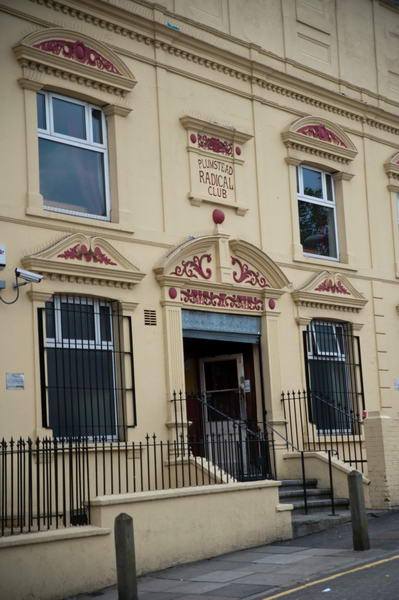
The Plumstead Radical Club is a working mens club formed by local Liberals who later became members of the Labour party, but most working mens clubs lost any real political connection, though they still sell cheap beer to members. From Plumstead I walked into Thamesmead.

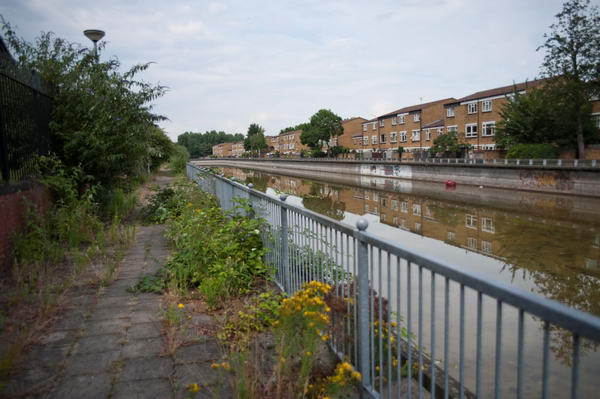
This part of Thamesmead West had failed to make good use of its location and what should have become a vibrant area at Broadwater was derelict and depressing.

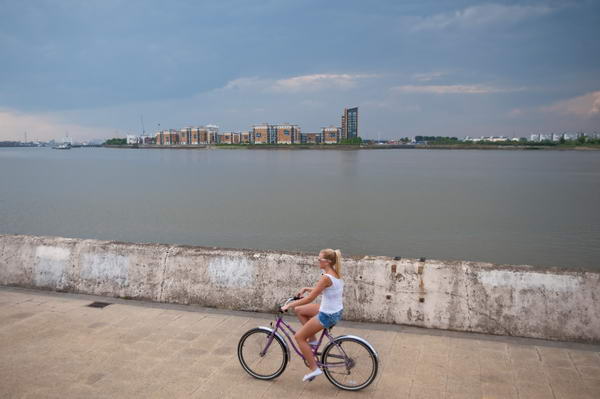
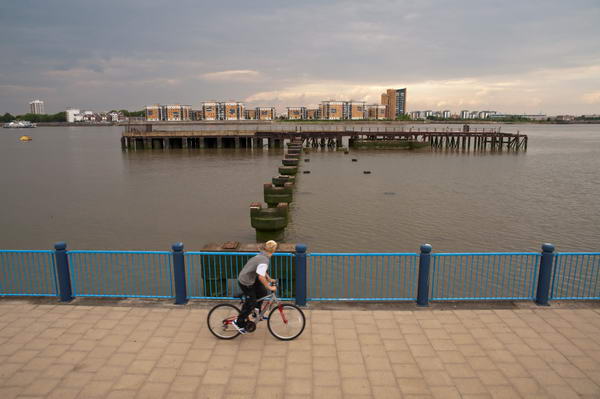
But soon I reached the Thames path and photographed this woman cycling along it with the recent flats of North Woolwich around a third of a mile away on the opposite bank of the wide river.

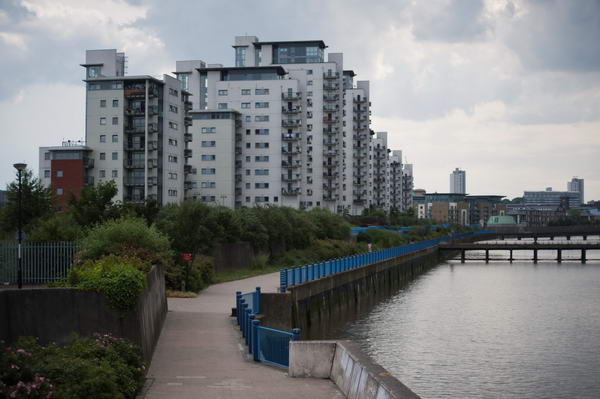
And there are plenty of new riverside flats on the south bank too, with residents enjoying riverside views. These flats are perhaps less of an eyesore than some.

Woolwich Arsenal had three piers – this was the one in the middle, known as the Iron Pier, and you can see why from my picture. To the east was the Coal Pier, the lower parts of which still remain – built in 1917-20 it was used to bring in around 1500 tons of coal a week and is fenced off as a dangerous structure, The largest of the three piers, the T Pier has I think gone completely though there is now a Uber Boat pier.

In the Woolwich Arsenal site I came across a group of aliens, ‘Assembly’ by Peter Burke (b1944) placed here in 2004. I stopped to photograph them before heading to Woolwich Arsenal station for a train.

More on My London Diary at Plumstead & Woolwich.


FlickrFacebookMy London DiaryHull PhotosLea ValleyParis
London’s Industrial HeritageLondon Photos

All photographs on this page are copyright © Peter Marshall.
Contact me to buy prints or licence to reproduce.


Woolwich to New Charlton Panoramas – 1995

Woolwich to New Charlton Panoramas: Continuing my occasional series of colour images from 1995 – I think this is the eleventh post – with some colour panoramas made in May 1995 on a walk from Woolwich to New Charlton.

River Thames, Church Hill, Woolwich, Greenwich, 1995, 95p5-342

My walk had begun when I got off the train at Woolwich Arsenal on my way back from Dartford on May 7th and I think these pictures were made that afternoon as I walked from there to another station keeping close to the River Thames. But I did but return to Woolwich the following Sunday, May 14th and some of these pictures could have been made then.

A path leads up from the roundabout at the start of Woolwich Church Street to Church Hill and St Mary Magdalene Church, built on a spur of high ground leading out towards the river. Originally this ground went rather closer to the Thames, but much of it was quarried for sand though the digging had to stop at the church. Although the present church dates only from 1727-39 there had been a church on this site since the 9th century if not earlier and it was probably a much earlier site of settlement.

The road in front of the church, Church Hill, gives a splendid panoramic view of the Thames. In 1995 you could still see the remains of Woolwich’s riverside industry, but by the time I photographed here again in 2000 all had gone and the area was empty and derilect. Now it is filled with four tall blocks of flats and some other housing.

Former Woolwich Dockyard Dry Docks, Europe Rd, Woolwich, Greenwich, 1995, 95p5-343

Woolwich Dockyard was the Navy’s most important dockyard for many years and ships were built here from 1512 to the Victorian era. By then it had become too small for the new ships and the Royal Dockyard closed in 1869. Parts remained in industrial use and a large area was bought by Greenwich Council in the 1960s where they built the Woolwich Dockyard Estate in the 1970s – part at the left of this picture. I think this is the Grade II listed Graving Dock.

Ernest Bevin, Ferry Boat, River Thames, Woolwich, Greenwich, 1995, 95p5-332

Taken on the Woolwich Dockyard Estate this shows one of the old dry docks and at a mooring in the Thames the Woolwich Ferry Ernest Bevin. You can just see part of the south ferry terminal in the centre of the image.

The ferry across the Thames became a free ferry run by the LCC in 1889 – two days after they had replaced the Metropolitan Board of Works who had organised and funded it. A number of public bridges had been built to make crossing the river in West London easy and free and it had been decided that there must also be a free crossing in East London. The Ernest Bevin was one of three ferries in the third generation of ships which came into operation in 1963 and it was replaced in 2019. All have been named after local figues and Bevin was elected as MP for Woolwich East in 1950.

Flats, Frances St, Woolwich, Greenwich, 1995, 95p5-462

These point blocks, close to Woolwich Dockyard Station were built for Greenwich Council are St Mary’s Towers, one of the more successful housing schemes of the late 50s and early 60s, opened by Princess Margaret in 1961. They remain now still in good condition and popular.

River Thames, Woolwich, Greenwich, 1995, 95p5-472

Back to the River Thames and another cleared area of the former Dockyard with a view across the river to Tate & Lyle’s Silvertown works.

River Thames, Warspite Rd, Woolwich, Greenwich, 1995, 95p5-433

Another former dockyard area still in industrial use. I think this is Thameside Wharf on Harrington Way. Some of the buildings here were once part of the Siemens Brothers Telegraph Works factory established in 1863 and became Thameside studios for artists around 1990.

Bugsby's Way, New Charlton, Greenwich, 1995, 95p5-521
Bugsby’s Way, New Charlton, Greenwich, 1995, 95p5-521

Bugsby’s Way took its name from this part of the River Thames known from around 1830 as Bugsby’s Hole or Bugsby’s Reach which probably got its name from this once “marshy area to the south of Blackwall Point where executed criminals were formerly hung in chains.” As E.W.Green suggested in 1948, ‘bug‘ was the old British (ancient Welsh) word for ‘spook’ or ghost, and what could be a better place to meet with ghouls. Bugsby’s Way was built across this marshy area by the London Borough of Greenwich in 1984.

Beatle Line Ltd, Bugsby's Way, New Charlton, Greenwich, 1995, 95p5-511
Beatle Line Ltd, Bugsby’s Way, New Charlton, Greenwich, 1995, 95p5-511

Another picture from Bugsby’s Way. The Beatle Line perhaps got its name from the later meaning of ‘bug’, perhaps from a different Anglo-Saxon root, at first simply meaning beatle, though later coming into popular use for a wider range of species – including the famous moth found by Grace Hopper and colleagues in the Mark II computer at Harvard University in 1947.

More pictures from Charlton in a later post.


FlickrFacebookMy London DiaryHull PhotosLea ValleyParis
London’s Industrial HeritageLondon Photos

All photographs on this page are copyright © Peter Marshall.
Contact me to buy prints or licence to reproduce.

My 2024 in Photographs – Part 3

This the third page of a selection of my work in 2024. Not my “best pictures” but some of my better images, all I think pictures that worked well and told the story I was trying to tell. Captions are those I wrote in haste on the day they were taken.

My 2024 in Photographs
London, UK. 25 May.A large crowd marched slowly from the Greenwich Islamic Centre to a rally in central Woolwich in one of many local protests across the country calling for an end to the genocide in Gaza and UK arms sales to Israel and for Boycott, Divestment & Sanctions – BDS against Israeli apartheid. They demanded a huge increase in humanitarian aid to be allowed into Gaza to avoid famine, and called for an end to Israeli apartheid, and freedom and justice for Palestine.
My 2024 in Photographs
London, UK. 1 June 2024. Hundreds meet outside Redbridge Town Hall for a rally before marching to Barking Town Hall, demanding an immediate end to the genocide in Gaza and arms sales to Israel and for international sanctions against Israel and freedom for Palestine. Among speakers were Leanne Mohamad, standing against Wes Streeting in Ilford North and Fiona Lally who ‘destroyed’ Suella Braverman in a TV interview.
My 2024 in Photographs
London, UK. 8 June 2024. Jewish Bloc anti-Zionist Jews. 150,000 march through London to a rally in Parliament Square demanding an end to the genocide in Gaza and for UK political parties to pledge to end to arms sales to Israel. They call for the opening of crossings for urgent humanitarian aid to Gaza, and for the release of hostages and Palestinian prisoners in Israel and for negotiations to bring freedom to Palestine and peace to the area.
My 2024 in Photographs
London, UK. 15 June 2024. People met in Gillett Square, Dalston in heavy rain for speeches before marching to the Divest Camp outside Hackney Town Hall. They called for an immediate ceasefire in Gaza and international action to overcome problems in getting urgently needed humanitarian aid to the people and for divestment by corporations and financial institutions around the world. They demand Hackney end its twinning with Haifa which they say Israel uses for propaganda reasons.
London, UK. 6 July 2024. A health worker holds a white smoke flare. Many thousands marched through London to call on the Labour Government to end its support for Israel’s continuing genocide in Gaza and the UK arms sales which support it and to call for an immediate ceasefire and a huge increase in humanitarian aid. They called for a political solution based on international law to with freedom for Palestine. A few counter protesters on Waterloo Bridge were met with angry shouts and derisive gestures.
London, UK. 18 July 2024. John McDonnell was among those at the rally Disability rights campaigners came to Parliament Square for ‘Disabled People Demand’, presenting the new Labour government solutions to the many crises faced by disabled people across the UK caused by cuts in resources and services under previous administrations and celebrating the the music, art and poetry of disabled people.
London, UK. 20 July 2024. Local protests around the country including this march from Edmonton Green to Silver Street call for the UK to halt arms supplies to Israel which are being used in the genocidal assault on Palestinians which have so far killed over 39,000 people. Yesterday the International Court of Justice ruled that Israel’s presence in the Palestinian occupied territories is “unlawful” and called on it to end as rapidly as possible.
London, UK. 27 July 2024. People met at the Cuban Embassy before marching to Oxford Street to protest against collaboration by British banks with the attacks on the Palestinian and Cuban peoples. UK banks such as the HSBC have implemented the US blockade of Cuba for 62 years since the revolution and back the occupation of Palestine by investing in the arms trade and Israeli business deals with the UK.
London, UK. 27 July 2024. Thousands met outside the BBC at Langham Place to march to Hyde Park Corner in the sixth Trans Pride March, taking place after a year of increasing anti-trans media campaigns, hate attacks and the Cass report which raised questions about the future of trans healthcare. They called for trans rights and proper healthcare including ending the ban on puberty blockers.
London, UK, 3 Aug 2024. A Trans Strike Back rally and march in Parliament Square called for an end to the ban on prescribing puberty blockers to trans kids. Proven safe for kids over many years the ban only applies to trans kids and appears to be the result of an ill-informed transphobic campaign and it will endanger the lives of trans kids. They also call for the rejection of the Cass Report and demand a trans led structure of their healthcare.
London, UK, 3 Aug 2024. A rally in Parliament Square by Extinction Rebellion, Defend Our Juries, Just Stop Oil and Fossil Free London called for an end to the jailing of non-violent protesters and an end to the gagging by judges of those who try to argue that the climate crisis is a “lawful excuse” in our courts. Jurors should hear the whole truth of the cases. Around 200 people have been jailed for peaceful protests since 2019 and widely criticised draconian sentences were given to the ‘Whole Truth Five’.
London, UK. 3 Aug 2024. Thousands march through London to Downing St calling on Starmer to end arms sales to Israel and for a ceasefire to end the ongoing genocide in Gaza. Schools, hospitals and homes are continually being bombed and people are dying from starvation and a lack of clean water. A Lancet study suggests that by now 180,000 Palestinians may have died in Gaza, far more than the official figures.
London, UK. 10 Aug 2024. Several thousand crowded the area opposite the Reform Party address in Westminster for a lively rally against the extreme right following the thuggery encouraged and promoted by Nigel Farage and Tommy Robinson. Speakers included Weyman Bennett and Louise Raw. They called on everyone to take a stand against racism in workplaces and elsewhere and for politicians to end scapegoating immigrants and their racist anti-migrant speeches and policies which have emboldened the extreme right.

Part 4 follows tomorrow. You can see many more pictures from these and other events in my albums on Facebook.


FlickrFacebookMy London DiaryHull PhotosLea ValleyParis
London’s Industrial HeritageLondon Photos

All photographs on this page are copyright © Peter Marshall.
Contact me to buy prints or licence to reproduce.

Die-in against Greenwich cycle deaths – 2018

Die-in against Greenwich cycle deaths: On Thursday 7th Jun 2018 Cyclists staged a die-in outside Greenwich Council offices in Woolwich Town Hall after three cyclist were killed by vehicles in the area in recent weeks, two by HGV(Heavy Goods Vehicles) trucks on the notoriously unsafe Woolwich Rd.

Die-in against Greenwich cycle deaths

Cyclists are vulnerable road users – as also are pedestrians. But while almost everywhere at least in urban areas we have separate pavements for pedestrians, most of the time cyclists have to share roads with cars and lorries. While all road deaths are tragic its important to keep things in proportion.

Die-in against Greenwich cycle deaths

Official statistics shows 462 pedestrians were injured by cyclists in 2022, compared to 437 in 2021 when one person is recorded as dying, and 308 in 2020, when four people were killed. The figures relate to deaths on roads and there are some other deaths and injuries on footpaths, cycle paths and elsewhere which are not included but the numbers are relatively small.

Die-in against Greenwich cycle deaths

Similar figures for pedestrians killed by cars have in recent years been between 346 and 470 with between 4 and 7,000 serious injuries. While around a hundred cyclists are killed by cars and over 4,000 seriously injured.

Die-in against Greenwich cycle deaths

The differences in numbers are huge and depend on various factors. But simple physics plays a part with the extra mass of cars and higher speeds of travel making them on average around 60 times more lethal than bicycles in collisions, and much more where traffic is fast moving and vehicles heavier.

Where pedestrians and cyclists share paths or other spaces there are still differences, but on a lesser scale, with cyclists typically only having around 15 times the energy of pedestrians due to their greater speed.

The government fact sheet states “Pedal cyclists are one of the vulnerable user groups. They are not protected by a vehicle body in the same way car users are, and tend to be harder for drivers to see on the road. They are, therefore, particularly susceptible to injuries.”

And it also notes that the figures for non-fatal casualties involving “pedal cyclists are amongst the most likely to be under-reported in road casualty data since cyclists have no obligation to inform the police of collisions.” Certainly the two incidents I can remember where I was knocked flying by cars whose drivers had failed to see me and where I clearly had right of way were not reported.

The greatest risk of cyclists being killed comes in collisions with HGVs. Reported collisions involving one car cause around four times as many deaths but there are roughly there are roughly 50 times as many as with HGVs and those with HGVs are roughly 15 times as likely to kill cyclists.

One of the speakers at this event in Woolwich spoke about the research he was involved in 37 years earlier on designing safer lorries. Few of the suggestions from this have been implemented, although things are slowly changing. But most HGVs are still unsafe with limited visibility and huge blind spots.

Other speakers talked about the failure of Greenwich Council to support the plans for Cycle Superhighway 4, allegedly because of the personal antipathy of the former council leader to Boris Johnson’s former cycling commissioner Andrew Gilligan. Since 2018 some progress has been made on what is now called Cycleway 4, though it still ends short of Woolwich. And others pointed out that air pollution, much due to road transport was a huge killer in London, causing an estimated over 9,000 deaths a year. We don’t just need safer roads but need to find ways to reduce vehicle usage.

More pictures at Die-in against Greenwich cycle deaths.


FlickrFacebookMy London DiaryHull PhotosLea ValleyParis
London’s Industrial HeritageLondon Photos

All photographs on this page are copyright © Peter Marshall.
Contact me to buy prints or licence to reproduce.

Canary Wharf, East India, Silvertown, Beckton & Woolwich

Canary Wharf, East India, Silvertown, Beckton & Woolwich: I was back in London’s docklands on 16th May 2004, a week after I had led a small workshop there, this time on my own, and rather than walking I had gone with my Brompton folding bike.

Canary Wharf, East India, Silvertown, Beckton & Woolwich

The Brompton is an ideal way to cover larger distances when taking photographs. It can be folded to go on public transport and is very easy to get on and off and park in little or no space. It folds and unfolds in seconds. It’s a lively ride with a short wheelbase and good for riding in traffic, though for longer rides I prefer my road bike.

Canary Wharf, East India, Silvertown, Beckton & Woolwich

The Brompton has some minor problems. They are not cheap – which delayed me buying one for years. It’s not built for off-road use and mine has mudguards that can clog and stop the wheel turning on muddy ground. And now I’m a bit older it is just a little heavy to carry for any distance in stations. But my main problem is that it is a thief magnet, dangerous to leave anywhere for any length of time even if you have a good lock. No bike lock can defy the well-equipped thief for more than around half a minute and it slips easily into a car boot and fetches a good price.

Canary Wharf, East India, Silvertown, Beckton & Woolwich


I’d hoped to get the Jubilee Line to Canning Town, but trains were only running as far as North Greenwich, so instead I got off at Canary Wharf before the train went under the Thames again. It was no problem as I had the bike.

Canary Wharf, East India, Silvertown, Beckton & Woolwich

I took a few pictures around Canary Wharf, then rode off to the east past Blackwall Basin and on to the East India Docks probably the most boring of all the redeveloped docks.

From there I went up on the Lower Lea Crossing, taking pictures of Pura Foods to the north and the view south across Trinity Buoy Wharf and the Thames towards the Millenium Dome.

I photographed the Dome again from Silvertown Way, as well as the works taking place for the DLR extension to London City Airport.

A big advantage of being on a bike is that you can wander around, and I went down to the Royal Victoria Dock, then back to Silvertown Way and Lyle Park, then back to Victoria Dock again.

I couldn’t resist going onto the high level bridge across the dock, though the lift wasn’t working and I was cursing the weight of the bike and cameras by the time I reached the top of the stairs.

Eventually after making rather a large number of pictures I forced myself to come down and continued my ride along the North Woolwich Road to the futuristic Barrier Point, its west front like some space city.

In Thames Barrier Park I went down to the riverside to photograph the barrier before continuing on to Silvertown, stopping a few times for more pictures. Near North Woolwich I sloweed to photograph two boys on a scooter being towed by a woman on a bicycle. I stopped take more pictures but later I met them in North Woolwich and they told me she had soon given up.

I took some more pictures in North Woolwich and then rode on to Beckton Retail Park, then turned around and went down Woolwich Manor Way across the Royal Albert and King George Docks.

Back in 2004 flights from London City Airport were fairly infrequent and I had quite a long rest waiting to photograph a plane going overhead.

I rode on to North Woolwich ferry pier where I had a wait for the ferry and took some more pictures. In 2004 I wrote that the Woolwich Ferry is “London’s best-value river trip. I wonder how much longer this free ferry will operate?” It was upgraded in 2018 with new, modern, low-emission boats which proved rather a disaster. Services had been severely reduced, working with only one of the two new boats.

But Transport for London a week ago in May 2024 restored the two-boat service and expanded operating hours. They say the service will continue as long as there is demand. A short ride took me to Woolwich Arsenal Station where I folded the Brompton for the journey home.


FlickrFacebookMy London DiaryHull PhotosLea ValleyParis
London’s Industrial HeritageLondon Photos

All photographs on this page are copyright © Peter Marshall.
Contact me to buy prints or licence to reproduce.