More Thames Path – 2011

Charlton to Belvedere

More Thames Path - 2011

Charlton to Belvedere
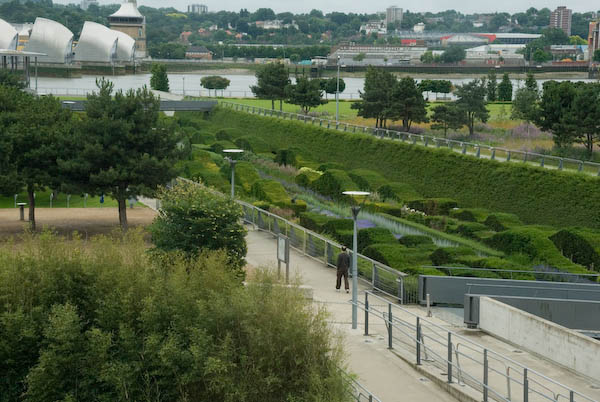
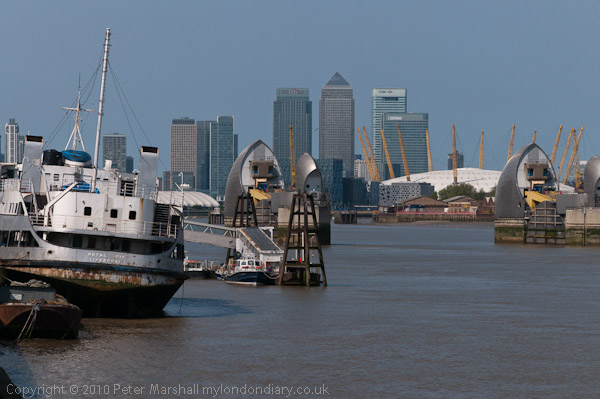
The view upriver from Charlton with the Thames barrier, Dome and Canary Wharf

Charlton to Belvedere: On Monday 25 April 2011 I went with my wife and elder son on a walk from Charlton Station to Belvedere. They walked but I rode on my folding Brompton bike as I was still suffering from plantar fasciitis and walking any distance became too painful.

More Thames Path - 2011

Charlton to Belvedere
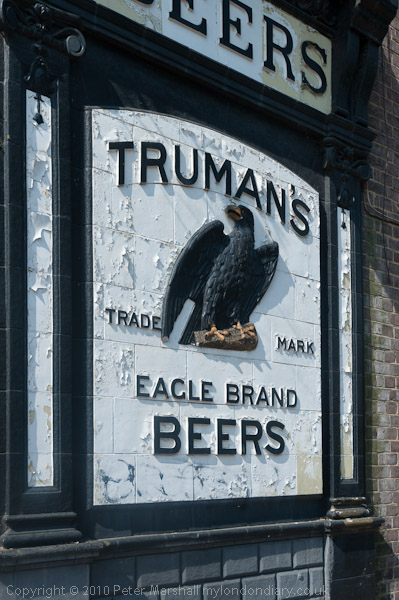
A derelict pub in Charlton

As a cyclist any pressure is on the ball of the foot, with no weight at all on the heel and arch where the pain can be intense. Gel insoles help a little for walking and I was still managing to photograph events, but longer – and faster – walks were still completely out of the question for me.

More Thames Path - 2011

Charlton to Belvedere
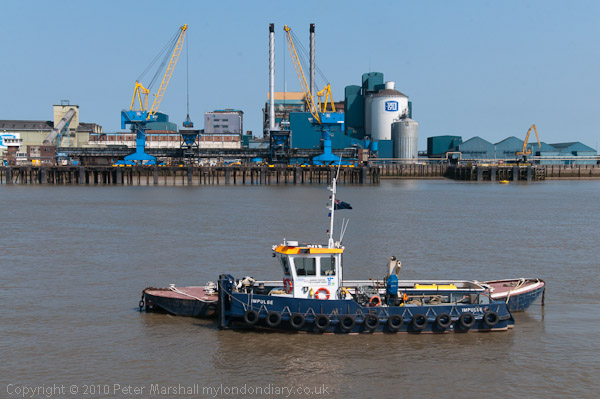
Tate & Lyle in Silvertown

I’d been to see my doctor who was sympathetic and told me that physiotherapy might help, but given the waiting list for appointments the pain would probably have gone away before I got one. But there were exercises that could help – and after I had spent a few months rolling a baked bean tin back and forth under my heal while having breakfast the pain did eventually go away.

More Thames Path - 2011

Charlton to Belvedere
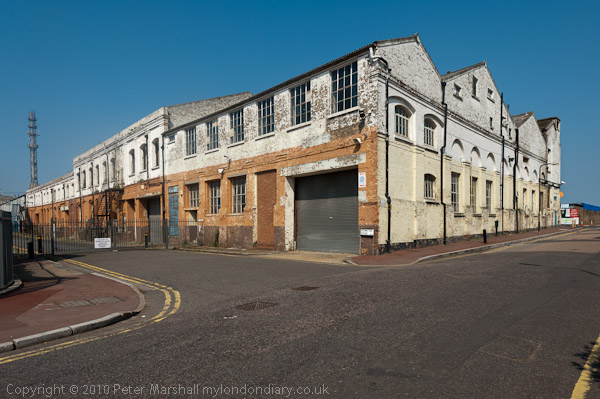
Warspite Rd/Bowater Rd SE18

The bike was a great idea. Linda and Sam were fast walkers and intent on getting to our destination, while as a photographer I kept stopping and sometimes wandering a little to one side to get into the right position to take pictures. Then I would see them a couple of hundred yards ahead and would need to run to catch up. So much easier on the bike.

More Thames Path - 2011

Charlton to Belvedere

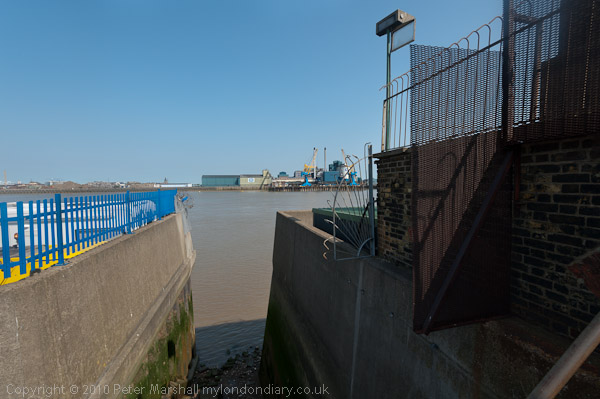
I took advantage of my bike to make some longer than normal diversions, at one stage cycling down a road to reach the river where there was no riverside path but riverside steps. I had a scary moment here, walking out on a ledge to get a better view I lost my balance and began to shake uncontrollably in front of a 10 foot drop onto the concrete steps and rubble of the foreshore. Fortunately I managed instead to grab hold of a rail behind me and after holding it for a few seconds steady myself enough to edge back to safety. I was only too aware of a history of photographers falling to their deaths while ‘getting a better view’.

More Thames Path - 2011

Charlton to Belvedere
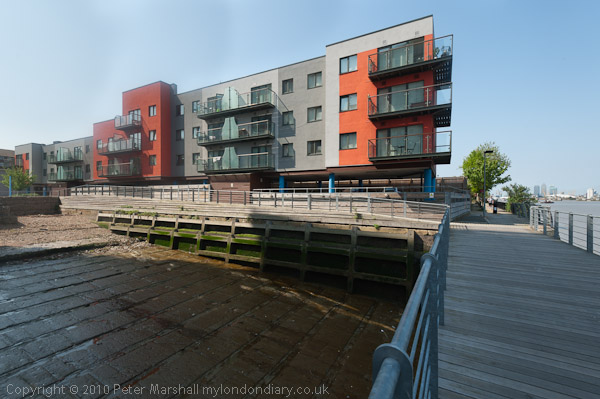
Recent flats on the former Royal Dockyard at Woolwich

Eventually I stopped shaking and was able to get back on my bike and hurry after the others. And no, I didn’t tell them what had happened and they still won’t know about it unless they read this.

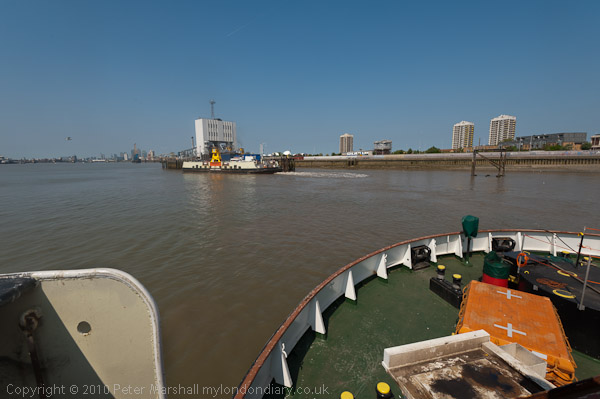
We were on the John Burns, named after the great trade unionist and Labour politician who called the Thames ‘liquid history’.

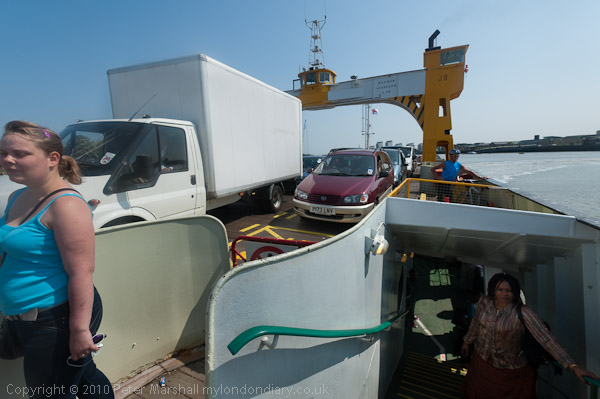
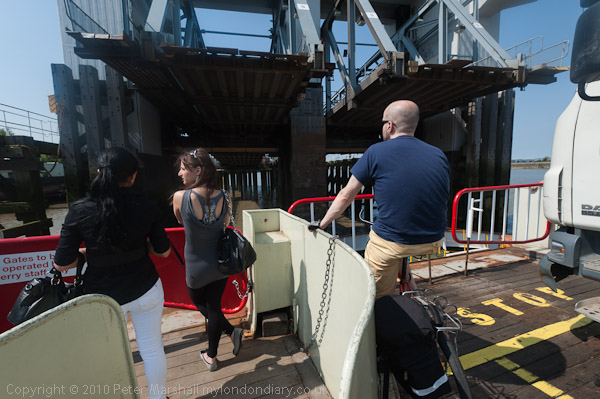
At Woolwich we took a ride across on the Free Ferry. Folding the Brompton I could walk past the ‘No Bicycles’ sign and go below deck with the others. I’d hoped we could return by the tunnel, but it was closed so we had a short walk in North Woolwich and a second ferry ride.

Coming back to Woolwich I kept on the vehicle deck. Bikes get to ride off before the cars.

When the Thames Path was declared a National Trail and then opened in 1996 it ended at the Thames Barrier. Our walk in 2011 began at Charlton station so only the first short section was on that and beyond we were walking the Thames Path Extension. I had previously walked all of this route, and further on as far as Cliffe. If you have the stamina you can now continue all the way to the Isle of Grain though a bike would really be a good idea. Perhaps one day I’ll do it.

The Royal Arsenal site, once an official secret is now a tourist destination, complete with various sculptures, including Peter Burke‘s Assembly
There are glimpses of the river and these waste transfer barges though trees and over bushe and Beckton on the opposite bank
One of the larger tributaries of the Thames is the treated outfall from Beckton sewage works at left. close to Barking Creek
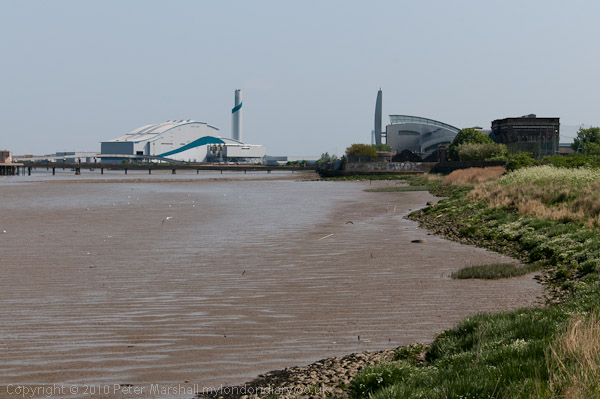
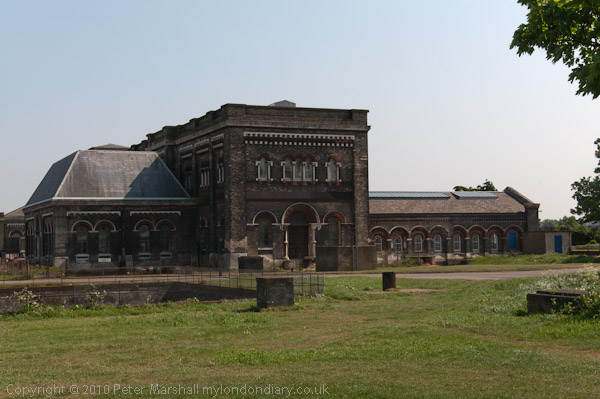
Waste incinerators and the Bazalgette pumping station
The Romanesque Crossness Southern Outfall Works opened in 1865, pumping sewage out when the tide would take it seawards
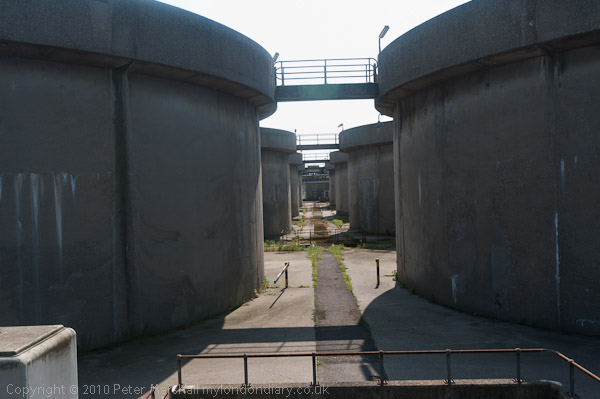
Part of the more utilitarian 1950s sewage treatment plant at Crossness
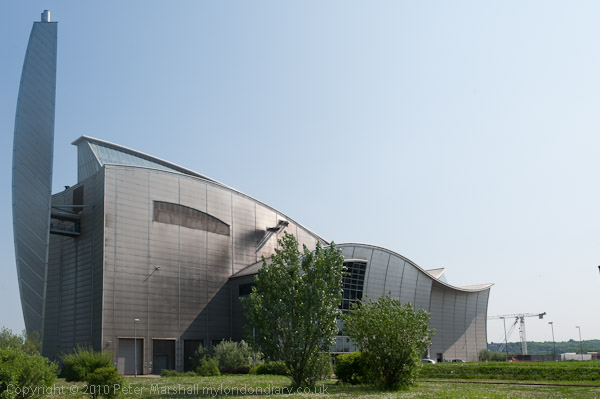
The 1998 sludge incinerator, an elegant swan-like metal structure
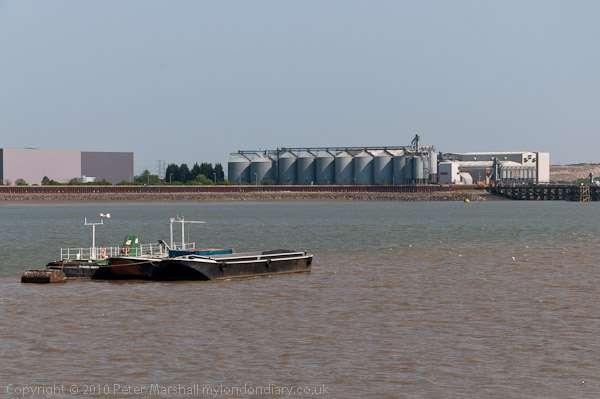
Looking downstream to silos at Rainham

On this ‘walk’ I gave up here and cycled to Belvedere station to get home for a meeting in the evening, while the two walkers continued to the Darent and then walked back to Slade Green station.

Many more pictures on My London Diary from the walk and the ferry at More Thames Path.


FlickrFacebookMy London DiaryHull PhotosLea ValleyParis
London’s Industrial HeritageLondon Photos

All photographs on this page are copyright © Peter Marshall.
Contact me to buy prints or licence to reproduce.
Woolwich Riverside and Royal Artillery

Woolwich Riverside and Royal Artillery: More pictures from my walk around Woolwich in August 1994

Waste Land, Woolwich Church St, Woolwich Ferry, River Thames, Woolwich, Greenwich, 1994, 94-807-42

This area, previously occupied by engineering works, has now been redeveloped with a luxury development of tall housing blocks on Mast Quay, “A magnificent crafted living space with panoramic views of the River Thames.”

Entrance, Woolwich Foot Tunnel, Woolwich, Greenwich, 1994, 94-809-13

As well as getting a free ferry, Woolwich also got a foot tunnel under the River Thames, opened by the London County Council in 1912. The tunnel is just over 500 meters long and remains delightfully cool on hot summer days.

Many cyclists also use the tunnel despite bylwws prohibiting cyclists. Electronic signs were installed in 2016 which used a computerised system to measure traffic and messaged ‘No cycling allowed‘ in red at busy times but ‘Please consider pedestrians‘ in green when the tunnel was fairly empty. Greenwich council was in favour of changing the bylaws to legalise this, but Tower Hamlets refused and the system was discontinued. Many cyclists still ride.

The tunnel provides a useful route across the river, particularly when the ferry is out of action, but most times I’ve used it one of both of the lifts at each end have not been working. I’ve never counted the steps but there are rather a lot of them, particularly when going up.

River Thames, Woolwich, Greenwich, 1994, 94-809-21

Downstream from the ferry in what in 1994 was I think an open area, once the site of Woolwich Power Station, demolished in 1978-9 though the coaling jetty in this picture is still there. There is still a riverside walk but most of the site is now occupied by tall blocks of flats.

River Thames, Woolwich, Greenwich, 1994, 94-809-22

A bridge here links the former coaling jetty with the riverside path.

From Riverside Path, Woolwich, Greenwich, 1994, 94-809-33
Steps from Riverside Path, Woolwich, Greenwich, 1994, 94-809-33

This area is now covered by tall flats, though there is a small segment of parkland with fountains.

Mural, Thames Barrier, Woolwich, Greenwich, 1994, 94-812-65

I cannot remember exactly where I found this mural of the Thames Barrier in Woolwich and I think it was soon demolished.

Royal Artillery Memorial, St George's Garrison Church, Grand Depot Road, Woolwich, Greenwich, 1994, 94-812-52
Royal Artillery Memorial, St George’s Garrison Church, Grand Depot Road, Woolwich, Greenwich, 1994, 94-812-52

Built for the garrison in 1862-3 it was hit by a V1 flying bomb in 1944 and the church was largely destroyed by fire. In 1970 more of the building was demolished but a canopy roof added to protect the apse and its polychromatic Victorian brick and decorations, with a memorial garden added in the former nave. It was listed in 1973. In 2011 it was transferred out of military ownership and since then there has been some restoration work, partly lottery funded.

Cannon, Royal Artillery Barracks, Woolwich, Greenwich, 1994, 94-808-32

The barracks was the home of the Royal Artillery from 1776 until 2007. Its 1,000 foot long Georgian frontage is said to be the longest in Europe if not the world. Since 2007 most of it has been rebuilt behind this, and in 2016 the Ministry of Defence announced plans for all army units to move out by 2028.

The cannon is the “17.75-ton Bhurtpore gun, captured by Field Marshall the Viscount Combermere after the 1826 siege of Bhurtpore” and brought here in 1828. When the Royal Artillery moved out they took this and four other cannons with them, doubtless a vital part of our country’s defence.

More from 1994 to come.


FlickrFacebookMy London DiaryHull PhotosLea ValleyParis
London’s Industrial HeritageLondon Photos

All photographs on this page are copyright © Peter Marshall.
Contact me to buy prints or licence to reproduce.