Great River Race & Malta Victory – 2007

Great River Race & Malta Victory: On Saturday 8th September 2007 I went to Ham, a mile or so upstream from Richmond, for the start of the Great River Race, a charity event on the River Thames first held in 1988. It is open only to fixed-seat traditional craft – including skiffs, cutters, Celtic longboats, currachs, and dragon boats (certainly not all traditional craft of the Thames.)

Each boat must all carry at least one passenger and a cox as well as those rowing or paddling. Later I photographed some of the boats as they passed through Central London but they were too spread out to make interesting pictures.

I was on my way to photograph the Maltese Victory Day procession from Westminster Cathedral, and left them some way down Victoria Street to photograph the statue of Nelson Mandela in Parliament Square which had been unveiled a few days earlier.

Here are some pictures from the day, along with what I wrote about them back in 2007. You can see many more pictures on My London Diary.


The Great River Race

Ham & Vauxhall

Great River Race & Malta Victory - 2007
Crews paddling up to Ham for the start of the race
Great River Race & Malta Victory - 2007
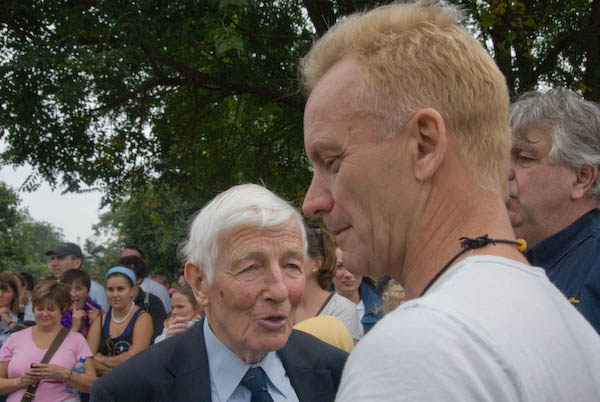
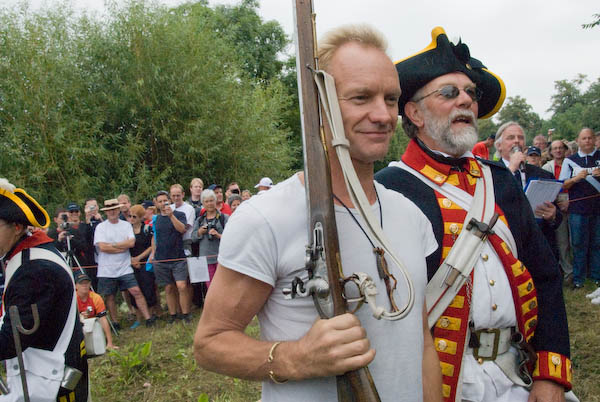
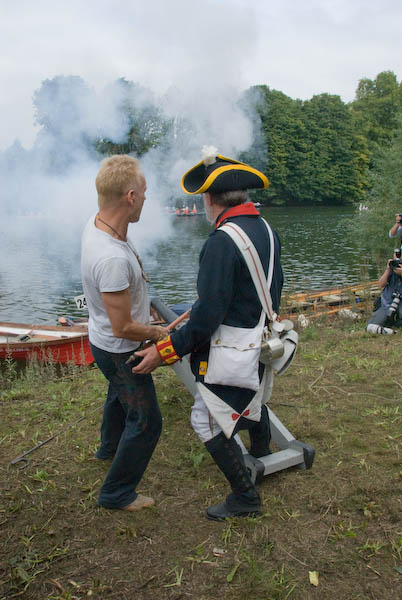
Sting came to start the race by firing a cannon – earplugs were handed out to the press and others

The Great River Race isn’t really a particularly great race, but there were well over 200 boats involved, and considerable competition. The event is a handicap, and also has multiple classes and boats start at different times – some over an hour before the fastest – but should all arrive at Island Gardens [21.6 mile away at the tip of the Isle of Dogs] at around the same time. The boats include some of historical interest as well as those built entirely for speed.
Great River Race & Malta Victory - 2007
Sting had a musket to fire a 5 minute warning
Great River Race & Malta Victory - 2007
then a cannon for the nominal start

It’s a long course, and can get a little rough further down in poor weather, but today was a fine day and everyone started from Ham in good spirits – and a few already well-fortified. Sting came along and fired a cannon as a starting signal and then the boats made their way in number order down to the real start a few hundred yards down river, a few at a time according to their handicaps.

Great River Race & Malta Victory - 2007

Media interest mainly centred on Sting and a high-powered crew of young ladies, The Sisterhood, who attracted a great deal of sponsorship. They have already made an enormous amount for charity with a fast paddle across the English Channel, but today turned out to be the second fastest ladies crew, their dragonboat being beaten by an outrigger canoe.

Great River Race & Malta Victory - 2007

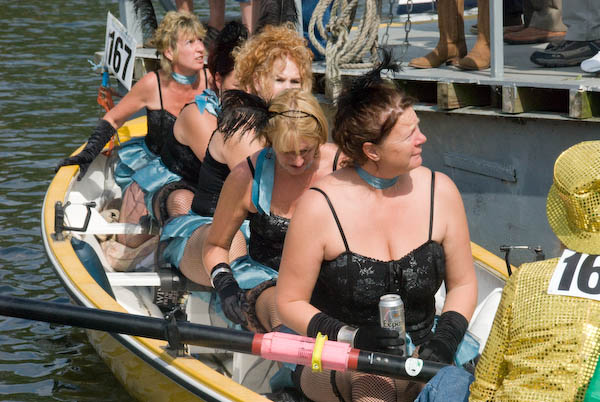
My personal favourites were a crew of Welsh ladies who seemed to have a more relaxed approach to the occasion. There did seem to be a great many participants from the Celtic fringes, as well as visitors from the continent.

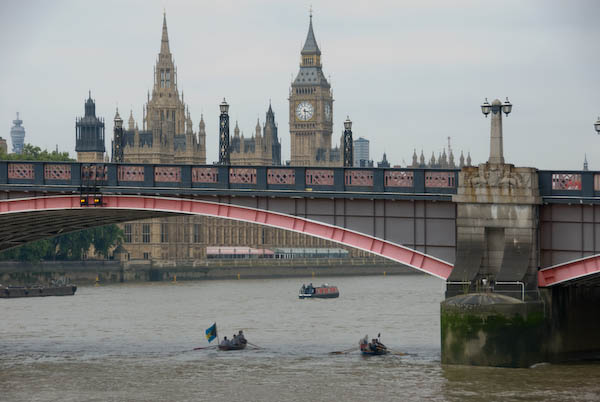
After all the boats had left I [walked back to Richmond and] took the train to Vauxhall and saw the first few crews pass there, all still rowing well (the paddlers hadn’t yet caught up.)

Far too many more pictures on My London Diary


Malta Day Procession

Westminster Cathedral
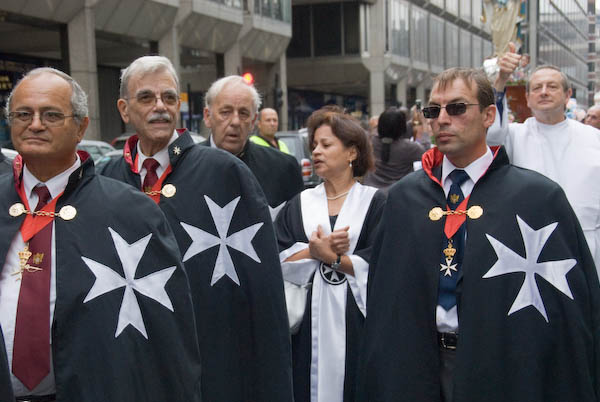
The procession on Victoria Street

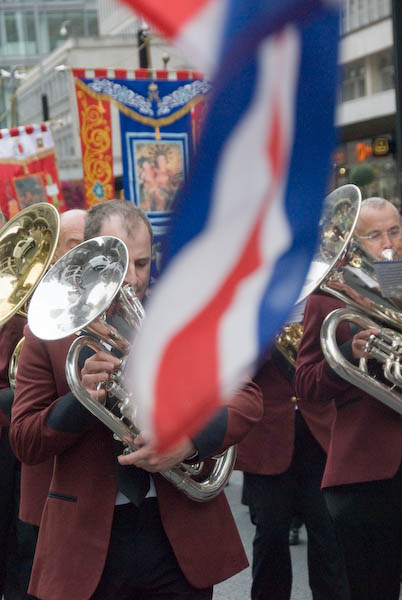
September 8th is a holiday in Malta, celebrated as the Feast Of Our Lady Of Victories (it is also the Feast Of The Nativity Of The Blessed Virgin Mary), and was the day in 1565 when the Knights Of St John Of Malta defeated the Turks. By coincidence it is also the day in 1943 that the Italian occupiers of the island surrendered to the allies.

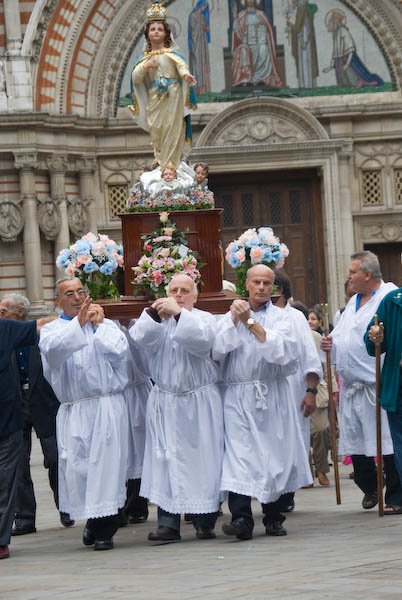
Traditional dress on the steps of the Cathedral
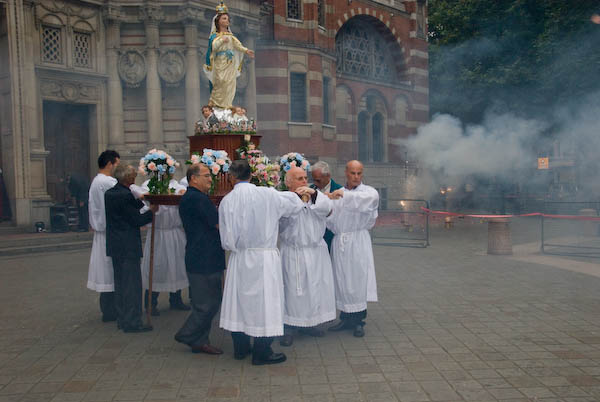
The procession leaves Westminster Cathedral
after fireworks
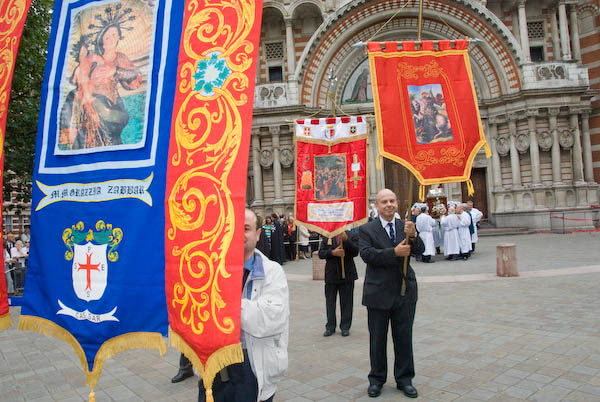
with banners, and
with music.

The Maltese in London celebrate with a Mass at Westminster Cathedral followed by fireworks and a procession carrying a statue of the Baby Mary (Bambina) from there to the Sacred Heart Chapel Of Ease in Horseferry Road.

More pictures


Nelson Mandela statue

Parliament Square
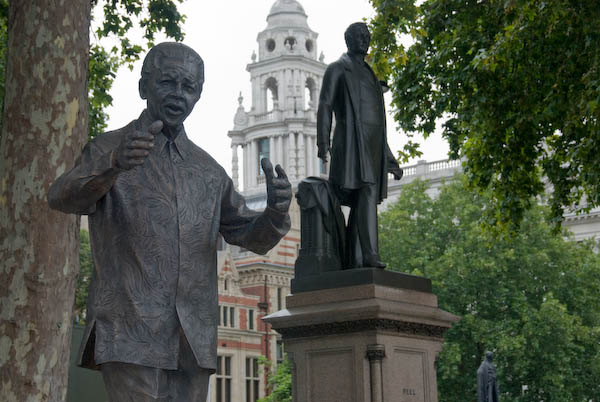
The statue had been unveiled by Prime Minister Gordon Brown on 29 August 2007, with Mandela, his wife Graça Machel and London Mayor Ken Livingstone among those present.


FlickrFacebookMy London DiaryHull PhotosLea ValleyParis
London’s Industrial HeritageLondon Photos

All photographs on this page are copyright © Peter Marshall.
Contact me to buy prints or licence to reproduce.


Woolwich Riverside and Royal Artillery

Woolwich Riverside and Royal Artillery: More pictures from my walk around Woolwich in August 1994

Waste Land, Woolwich Church St, Woolwich Ferry, River Thames, Woolwich, Greenwich, 1994, 94-807-42

This area, previously occupied by engineering works, has now been redeveloped with a luxury development of tall housing blocks on Mast Quay, “A magnificent crafted living space with panoramic views of the River Thames.”

Entrance, Woolwich Foot Tunnel, Woolwich, Greenwich, 1994, 94-809-13

As well as getting a free ferry, Woolwich also got a foot tunnel under the River Thames, opened by the London County Council in 1912. The tunnel is just over 500 meters long and remains delightfully cool on hot summer days.

Many cyclists also use the tunnel despite bylwws prohibiting cyclists. Electronic signs were installed in 2016 which used a computerised system to measure traffic and messaged ‘No cycling allowed‘ in red at busy times but ‘Please consider pedestrians‘ in green when the tunnel was fairly empty. Greenwich council was in favour of changing the bylaws to legalise this, but Tower Hamlets refused and the system was discontinued. Many cyclists still ride.

The tunnel provides a useful route across the river, particularly when the ferry is out of action, but most times I’ve used it one of both of the lifts at each end have not been working. I’ve never counted the steps but there are rather a lot of them, particularly when going up.

River Thames, Woolwich, Greenwich, 1994, 94-809-21

Downstream from the ferry in what in 1994 was I think an open area, once the site of Woolwich Power Station, demolished in 1978-9 though the coaling jetty in this picture is still there. There is still a riverside walk but most of the site is now occupied by tall blocks of flats.

River Thames, Woolwich, Greenwich, 1994, 94-809-22

A bridge here links the former coaling jetty with the riverside path.

From Riverside Path, Woolwich, Greenwich, 1994, 94-809-33
Steps from Riverside Path, Woolwich, Greenwich, 1994, 94-809-33

This area is now covered by tall flats, though there is a small segment of parkland with fountains.

Mural, Thames Barrier, Woolwich, Greenwich, 1994, 94-812-65

I cannot remember exactly where I found this mural of the Thames Barrier in Woolwich and I think it was soon demolished.

Royal Artillery Memorial, St George's Garrison Church, Grand Depot Road, Woolwich, Greenwich, 1994, 94-812-52
Royal Artillery Memorial, St George’s Garrison Church, Grand Depot Road, Woolwich, Greenwich, 1994, 94-812-52

Built for the garrison in 1862-3 it was hit by a V1 flying bomb in 1944 and the church was largely destroyed by fire. In 1970 more of the building was demolished but a canopy roof added to protect the apse and its polychromatic Victorian brick and decorations, with a memorial garden added in the former nave. It was listed in 1973. In 2011 it was transferred out of military ownership and since then there has been some restoration work, partly lottery funded.

Cannon, Royal Artillery Barracks, Woolwich, Greenwich, 1994, 94-808-32

The barracks was the home of the Royal Artillery from 1776 until 2007. Its 1,000 foot long Georgian frontage is said to be the longest in Europe if not the world. Since 2007 most of it has been rebuilt behind this, and in 2016 the Ministry of Defence announced plans for all army units to move out by 2028.

The cannon is the “17.75-ton Bhurtpore gun, captured by Field Marshall the Viscount Combermere after the 1826 siege of Bhurtpore” and brought here in 1828. When the Royal Artillery moved out they took this and four other cannons with them, doubtless a vital part of our country’s defence.

More from 1994 to come.


FlickrFacebookMy London DiaryHull PhotosLea ValleyParis
London’s Industrial HeritageLondon Photos

All photographs on this page are copyright © Peter Marshall.
Contact me to buy prints or licence to reproduce.