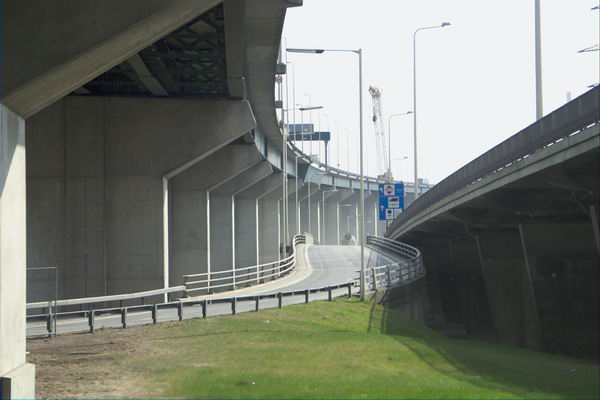
Rainham and Hornchurch – 2006

Rainham and Hornchurch: On Thursday 11th May 2006 I put my Brompton folding bike on the train for the journey across London to Rainham Station. The journey, around 31 miles in a straight line, though rather longer on the ground, took me almost two hours on three trains, one Underground. As usual I took a book to read and relaxed on the journey.
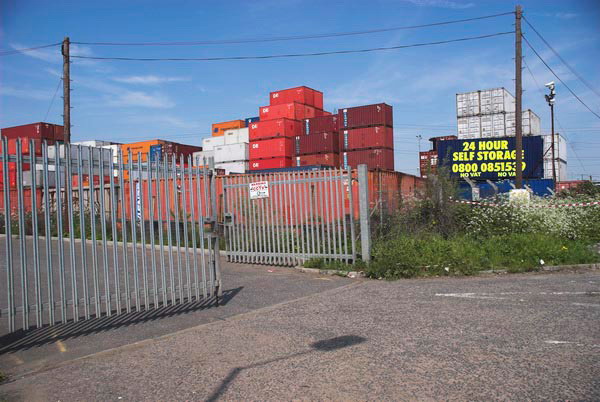
Rainham and Hornchurch - 2006
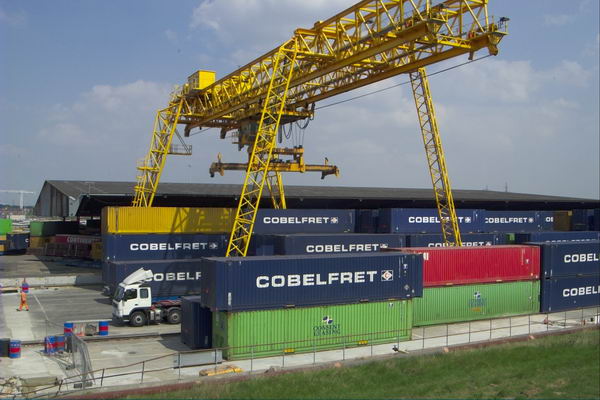
Containers on Rainham Marshes

Rainham is in Havering, part of Greater London and is the last station out to the east on the C2C rail service where the Travelcard I used covered. I did several rides and walks from here into Essex over the years, but I on this one stayed inside Greater London.
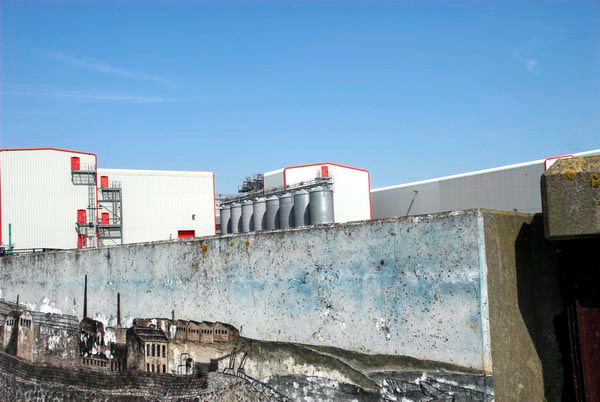
Rainham and Hornchurch - 2006
Mural of previous industry in the area and Tilda Rice works

The first part of this bike ride followed the route of the London Loop path around the outskirts of London, which at that date came to a dead and desolate end at Coldharbour Point. The path now continues to end in Purfleet, and if you have the stamina you can continue walking on a riverside path which ends at Tilbury Docks before having to retrace your steps to Grays.
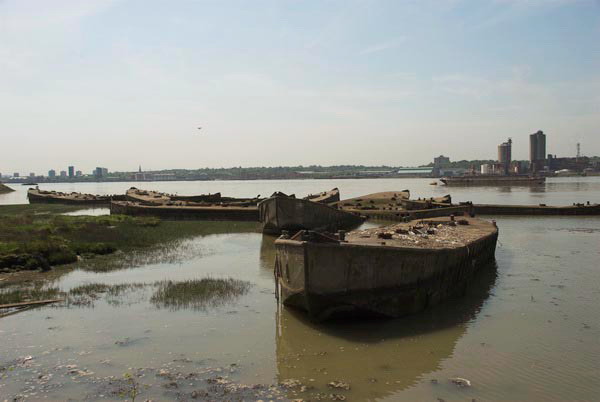
Rainham and Hornchurch - 2006
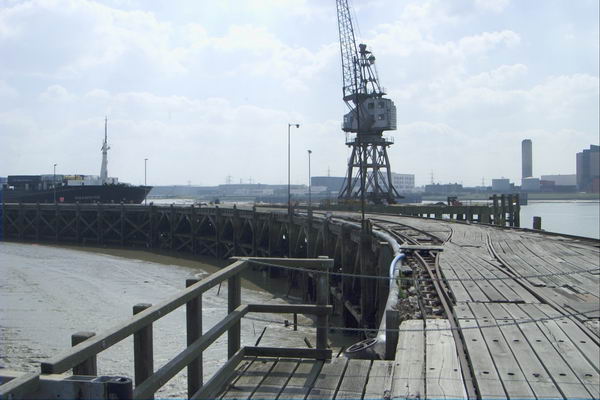
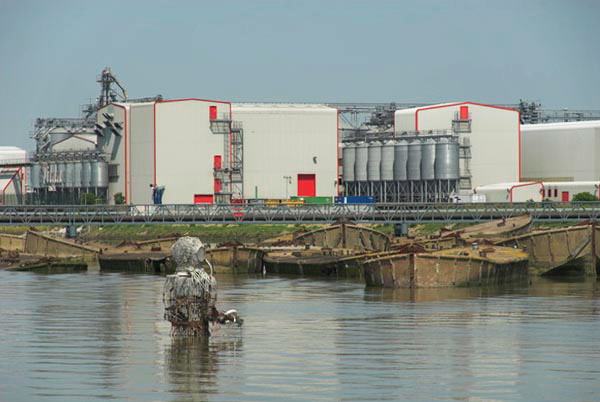
Derelict concrete barges in the Thames built for the Mulberry Harbour used for the D-Day landings

I didn’t write much about the ride back in 2006, and I didn’t ride very far. After returning from the end of the path I had a short ride west along the A13, which I don’t recommended as it is certainly not cycle friendly with much fast-moving traffic. The Mardyke Estate, where I went after that is now called ‘Orchard Village’ which at least avoids confusion with the Mardyke, a small river a few miles to the east. I continued roughly north through South Hornchurch, finally ending my ride at the District Line station of Elm Park.
Rainham and Hornchurch - 2006

The sculpture in the river facing the barges and the Tilda Rice plant is Diver: Regeneration by local sculptor John Kaufman, who died in 2002, not long after it was placed here in the mud in 2000. Some of the funding for it came from the landfill company which carried waste here to raise parts of the marshes above sea level.
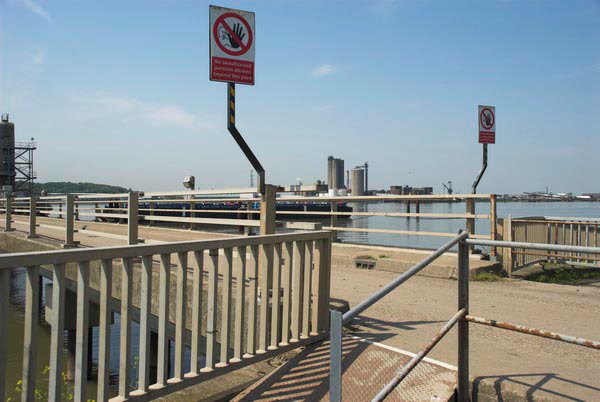
Waste Transfer Jetty – Landfill is raising much of the below sea-level marshes

My pictures don’t reflect the nature of the area which has large areas of open with marshes and country parks and two rivers flowing through it, the Beam River and the Ingrebourne which flows into the Thames at Rainham Creek. I think it is also an area which has seen considerable regeneration since 2006 in the London Riverside area of Thames Gateway redevelopment.
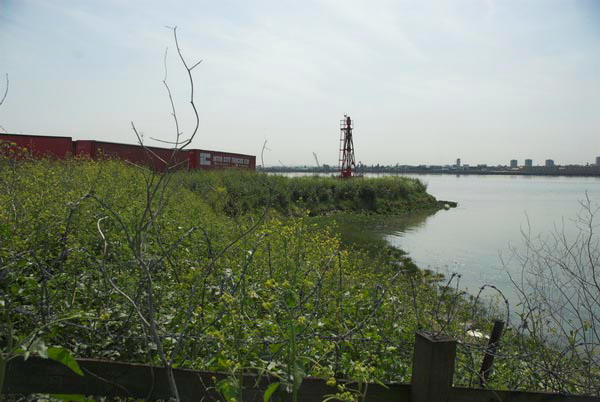
Coldharbour Point and the barbed wire where the London Loop then ended

Here’s my account with the usual minor corrections from 2006:

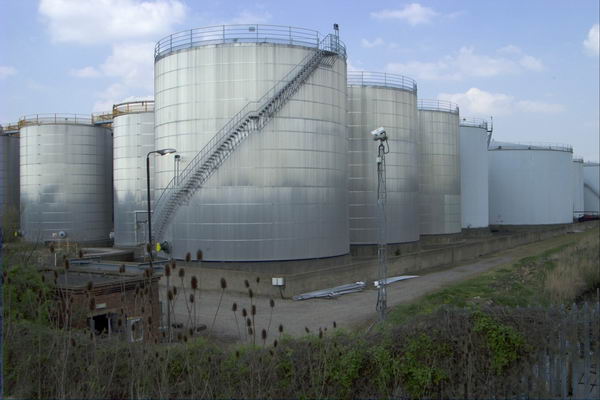
Rainham is at the eastern edge of London, an area of marsh, industry, warehouses, container stacks, dereliction and landfill on the Essex (north) bank of the Thames, cut across by the elevated A13 trunk road which sweeps across the creek and on over the marshes to Purfleet, alongside the new Channel Tunnel Rail Link.

Rainham Creek from the A13

One day the Thames Path will continue past Coldharbour Point, but for the moment it’s a dead end. I eat my sandwiches and then turn back, making my way up onto the elevated roadway, but the views are disappointing.

Mardyke Estate, South Hornchurch

At the next roundabout west I take a look around, leave the main road and then head north, past disused areas of the Ford Dagenham site and up through the Mardyke Estate and South Hornchurch.

At Elm Park the heat of our first hot day if the year – 25 Celsius in the shade, but I’ve been constantly in sun – gets to me and I give up and take the Underground towards home.

One of many houses decorated for the Cup Final. Unfortunately West Ham lost to Liverpool

The heat has buckled some of the rails and the District Line train has to crawl along, more or less at my cycling speed, but at least I can just sit and rest.

There are more pictures from the ride here.


FlickrFacebookMy London DiaryHull PhotosLea ValleyParis
London’s Industrial HeritageLondon Photos

All photographs on this page are copyright © Peter Marshall.
Contact me to buy prints or licence to reproduce.
Purfleet & West Thurrock – 2003

Purfleet & West Thurrock: 20 years ago, on 22nd April 2003 I was still recovering from a heart attack and a little minor surgery. Delays and cancellations in the NHS are not new, and I’d spent several weeks in hospital waiting for the op, with three or four cancellations as emergencies bumped me off the list at short notice – one time I was even on a trolley on may way to theatre. Back then the major shortage, and one that seldom made the news, was of doctors and it still is, with the government still committed to doing little or nothing about it, even refusing to discuss the junior doctors claims.

Purfleet & West Thurrock

My actual operation, when finally it happened, went well, but 24 hours later I was an emergency too, collapsing the the ward toilet as my blood pressure dropped spectacularly thanks to a large dose of a exotic drug through a cannula incorrectly inserted by a junior doctor (the nurses were extremely scornful) and I was still far too weak when they released me home to join the million or more (including my son and wife) the protesting against the Iraq war the following day. I think I was more upset about that than my heart attack.

Purfleet & West Thurrock

My GP signed me off work for a few weeks (though most of my work was freelance and from home, and I was able to continue this) and prescribed aspirin and exercise along with a few other drugs to deal with my blood pressure, which I’ve been taking daily ever since, along with insulin for my diabetes, also diagnosed when I went into hospital. And thanks to the NHS, all this has cost me absolutely nothing. And after I was signed off as fit for work in March, though I was still very weak, I managed to go and photograph a couple of protests.

Purfleet & West Thurrock

Walking was still for the first month or two just a little taxing, but after a couple of weeks I was fine on my Brompton, where I could take it easy later I went on some longish rides. And as it was a folding bike I could put it on trains and the underground to take me away for more distant starting points. And in April 2003 I went on rides from Dartford, Rainham and, on 22nd April 2003, to Purfleet, where I cycled along beside the Thames to West Thurrock and back.

Purfleet & West Thurrock

When I posted pictures of this and other rides on My London Diary, I noted “I didn’t get around to adding these other pictures from April 2003 until very much later, and haven’t got around to giving them captions.” And I wrote nothing about the ride at the time. All were taken on a Nikon D100 with a Nikon 24-85mm lens.

I travelled up to London on a Travelcard which covered a journey to any station in Zones 1-6, which meant the closest I could get to Purfleet was actually the station before, Rainham. Then it wasn’t possible to follow the riverside path from Rainham to Purfleet, which then ended at Coldharbour, so I had to cycle along the road to Purfleet through Wennington. The map now shows a riverside cycle path.

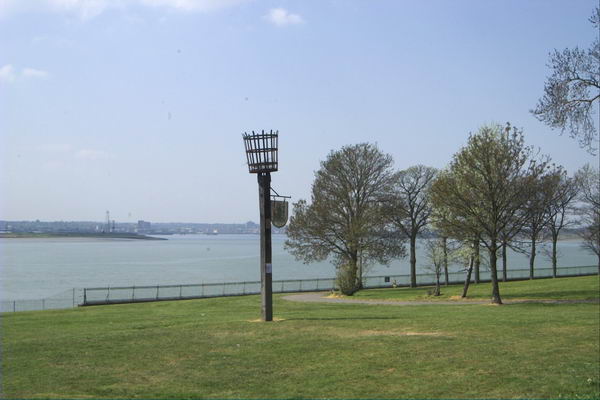
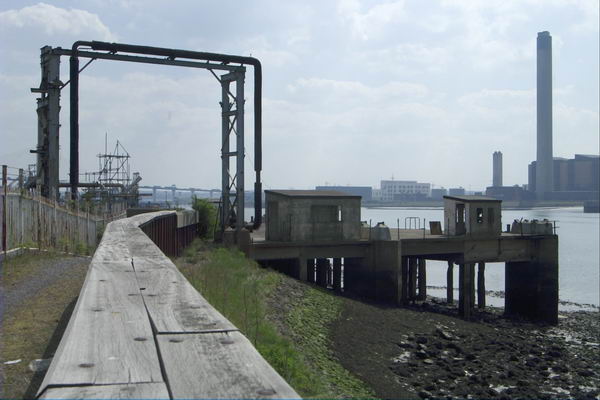
This part of the ride had little interest, other than passing some of the works for the Channel Tunnel Rail Link, where I took a few pictures before going down Tank Hill Rd to reach the riverside close to the Purfleet Armada Beacon.

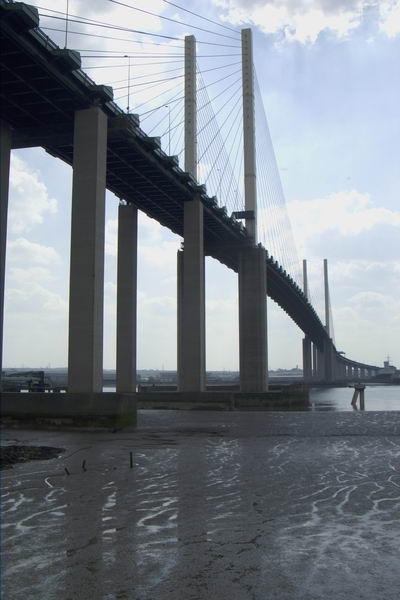
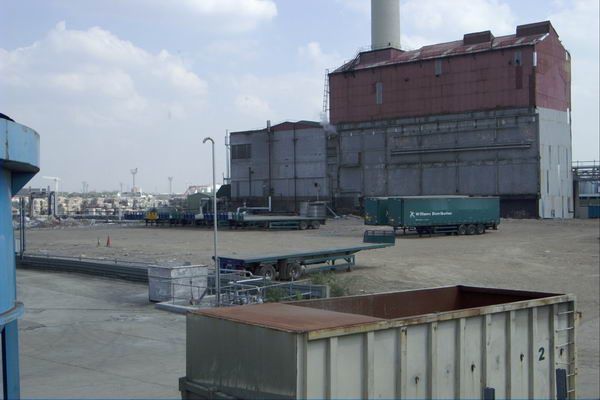
Navigation from there to West Thurrock (and on to Grays and the edge of Tilbury Docks on other occasions) was simply a matter of following the riverside path. But it was then an extremely interesting path, past various industrial sites and under the Dartford Bridge (and less noticeably over the Dartford Tunnel.

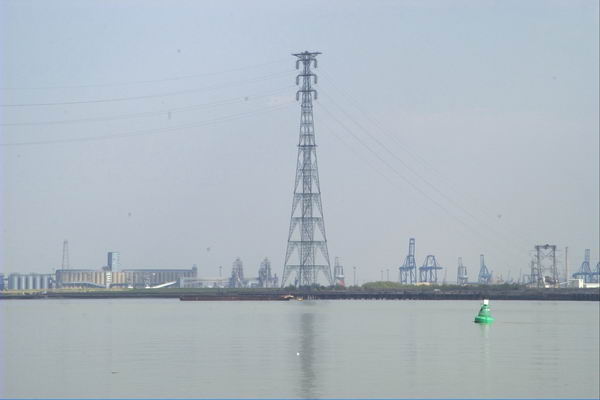
This is a wide and interesting stretch of the river, also crossed by a 400kV high voltage power line from Swanscombe, with the two 623ft pylons on each side being the tallest in Britain. The distance between the two towers is apparently 4,501 feet, around 0.85 miles or 1.37 km.

Pilgrims en route to Canterbury crossed the river from close by St Clement’s Church, taking to boat across to Swanscombe where the path up from the river is still the Pilgrims Road. But there was no boat available to me, so I turned inland into West Thurrock.

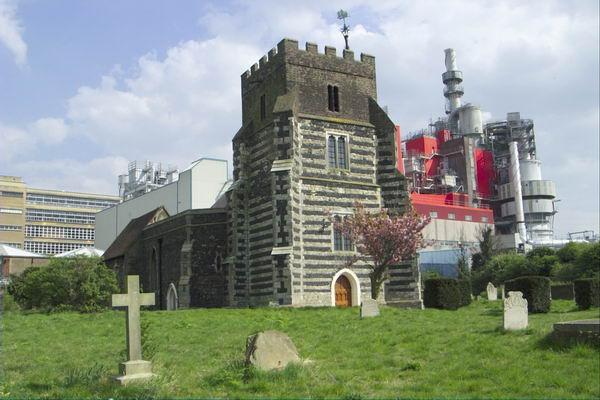
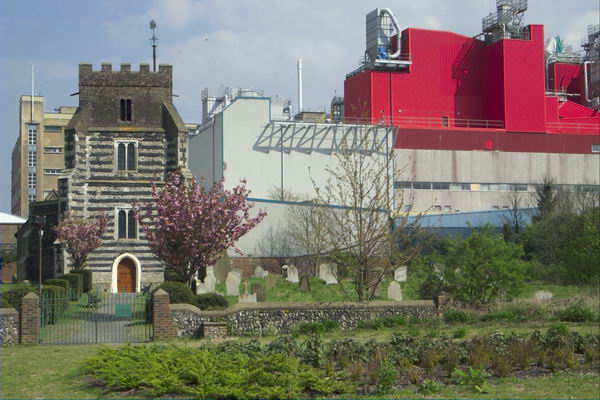
St Clement’s Church was Grade I listed in 1960 and parts at least are 13th century. It was used by a a youth unemployment scheme after regular services closed in 1977 and the interior was gutted, and after the project closed it was badly vandalised.

Dominating the church is the Procter & Gamble detergent factory begun here in 1940 and in 1987 when they were celebrating the company’s 150 years in business they took over the upkeep of the church which took 3 years to restore. The church, which was the location of the funeral in ‘Four Weddings and a Funeral’ is now open to the public once a month from April to September.

I can’t recall my route back along various roads to Rainham station, but there are a few pictures I took, mainly of the A13 and the Channel Tunnel Rail Link on My London Diary.