Canning Town, Cody Dock and Stratford – 2017

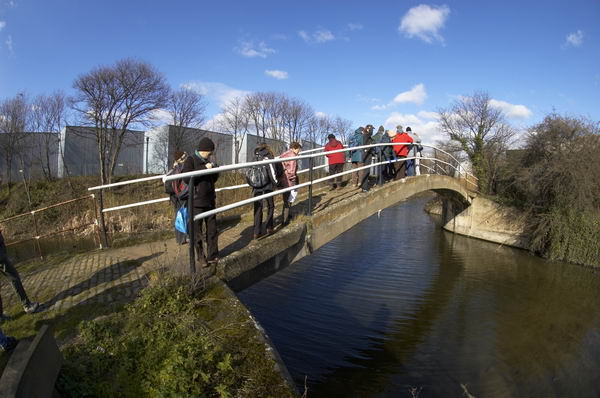
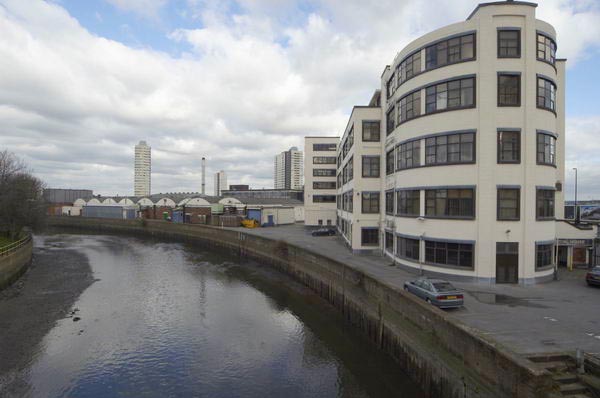
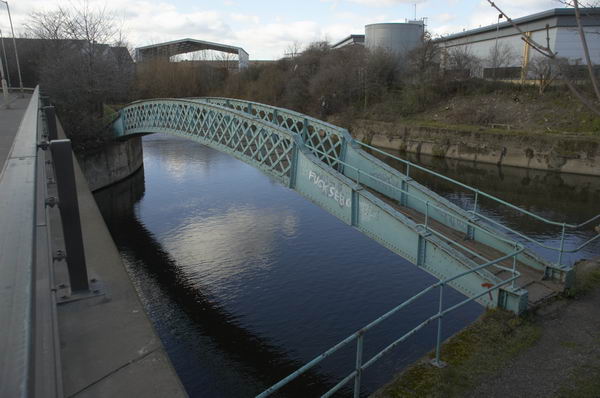
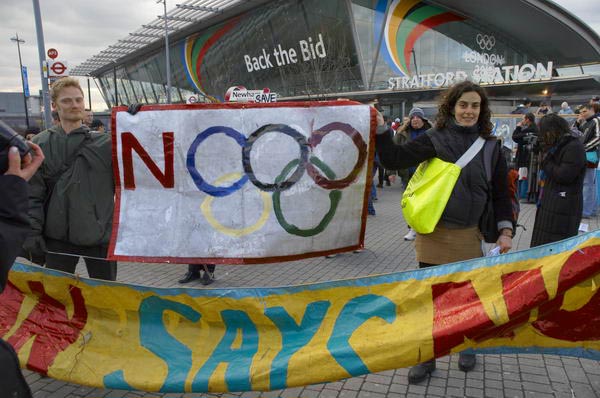
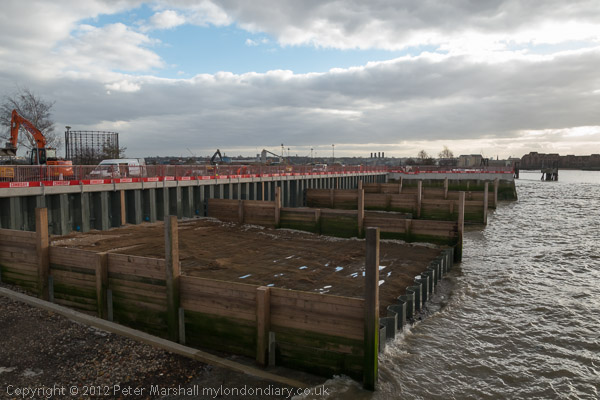
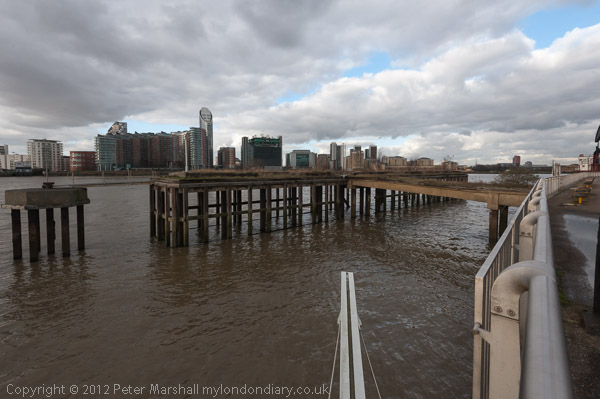
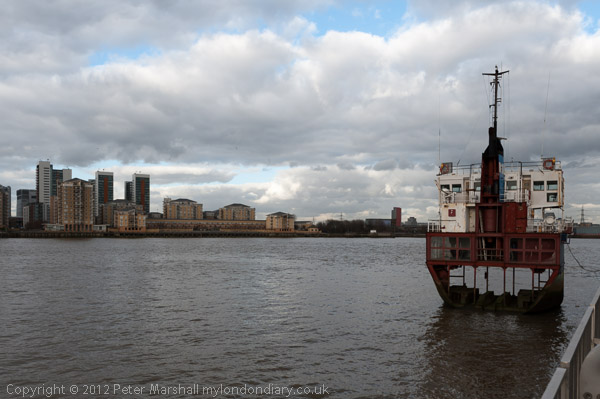
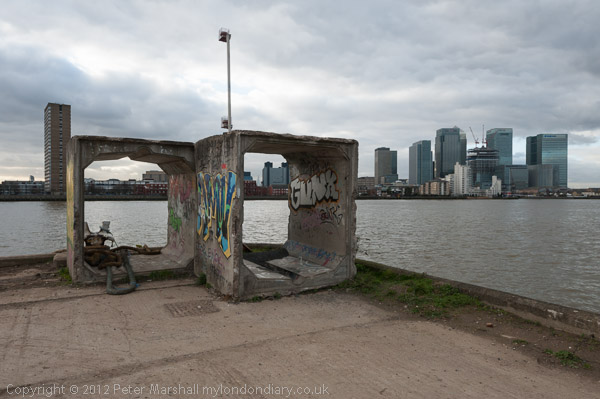
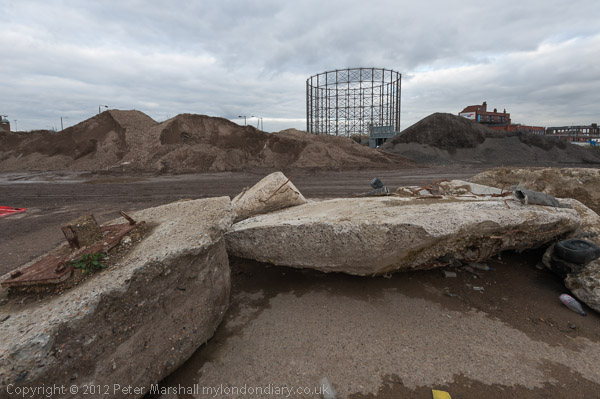
Canning Town, Cody Dock and Stratford: On Thursday 2nd March 2017 I made a rather convoluted walk along Bow Creek and the Lea Navigation, arranged around a meeting I had at Cody Dock. You couldn’t then – and can’t quite yet walk beside the river the whole way, but to get to the meeting I had to abandon a small part of the first stretch and catch the DLR, walking on from the meeting to Stratford High Street where I caught the DLR again to go back and complete the short part I’d had to miss out earlier.

Bow Creek & Canning Town
Canning Town, Cody Dock and Stratford - 2017

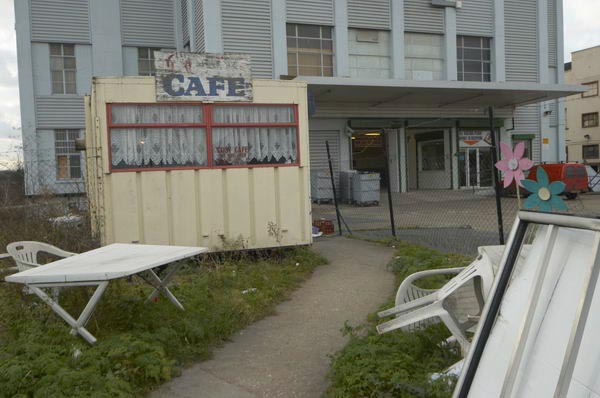
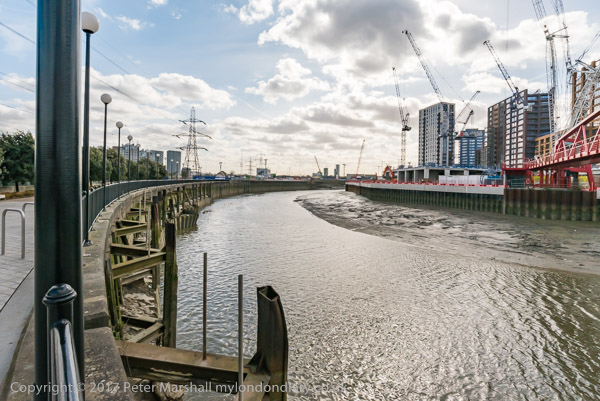
In this section of My London Diary I included pictures taken both at the start and at the end of my walk, which began at Canning Town Station.

Canning Town, Cody Dock and Stratford - 2017

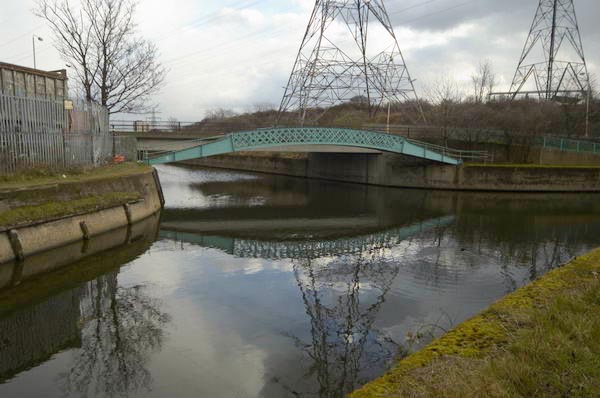
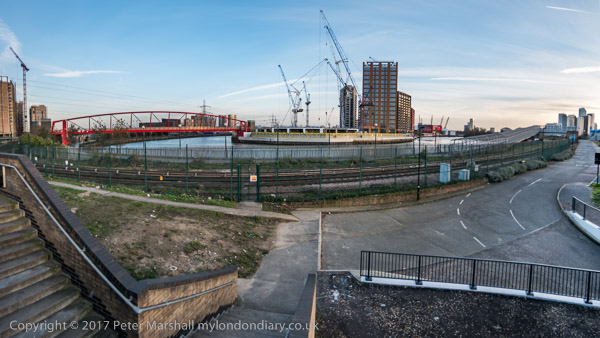
The riverside walkway at Canning Town is open after many years and can take you to the bridge to London City Island.
Canning Town, Cody Dock and Stratford - 2017

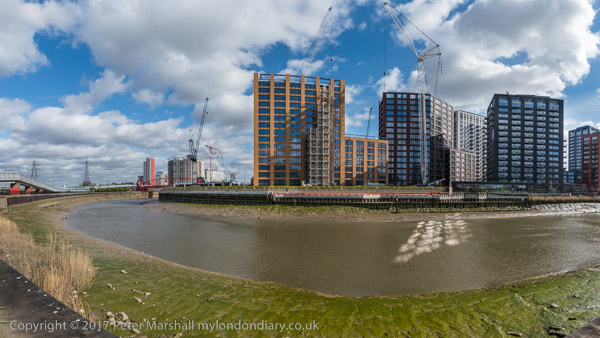
People were living in some of the blocks on the “Island” but there was still a lot of work continuing in this area which Bow Creek loops around on three sides. Another bridge was built across the DLR tracks to allow people from South Bromley in Tower Hamlets a pedestrian route to the riverside path and Canning Town station. Open for a short time it closed well before the station entrance became open, and a gate on it was firmly locked when I tried to cross it.
Canning Town, Cody Dock and Stratford - 2017

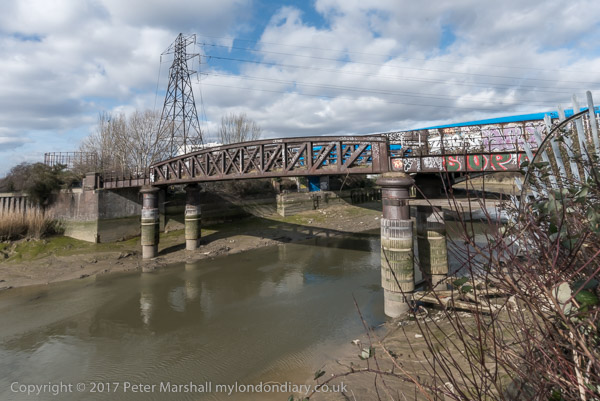
This meant I had to make a lengthy detour walking around the Ecology park to get to the Blue Bridge which took me to the East India Dock Road.
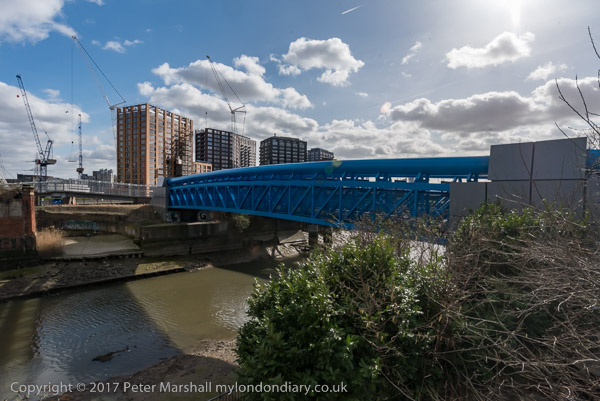
Canning Town, Cody Dock and Stratford - 2017

This meant I had to hurry back to Canning Town Station to get the DLR to Star Lane for my meeting at Cody Dock and couldn’t then walk along the north side of the road to take more pictures.

Cody Dock
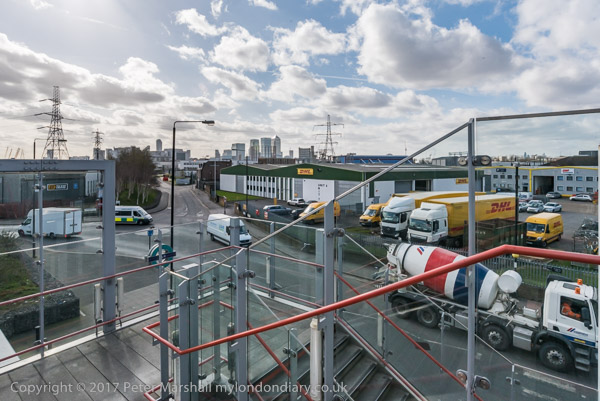
I made a few pictures on my walk from Star Lane to Cody Dock, and then rather more after my meeting, at first in the dock itself,
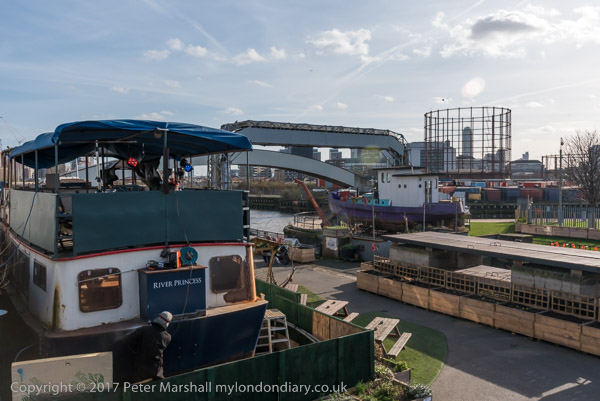
and then on the riverside path, thankfully renamed from ‘Fatwalk’ to ‘Leawalk’ and a part of ‘The Line’ sculpture trail.

Leawalk to Bow Locks
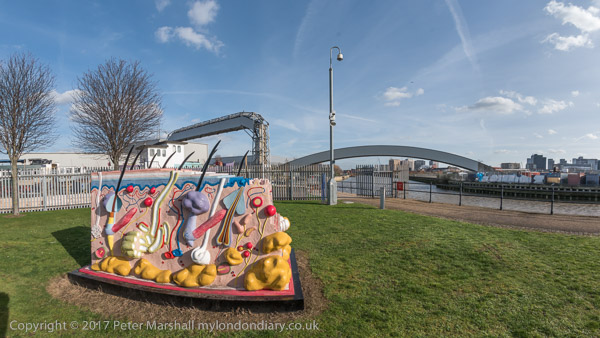
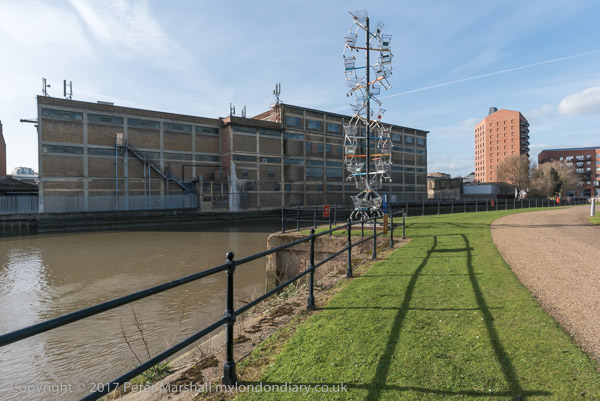
I paused briefly to photograph a sculpture made from shopping trolleys in a mock DNA double helix.
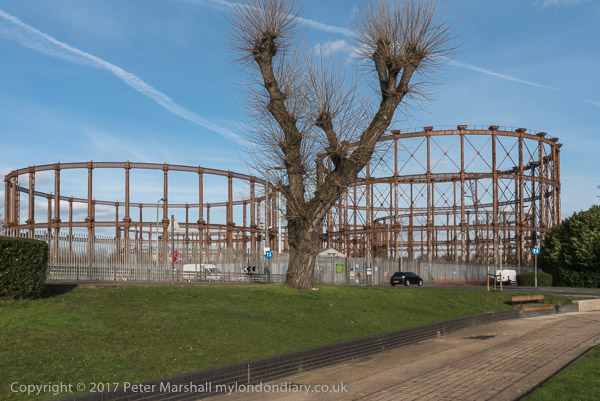
My next stop was to photograph the The Imperial Gas Light and Coke Co’s 1872-8 Bromley-by-Bow gasholders and the war memorials – originally at Beckton – with an eternal flame next to a monument to company workers killed in both World Wars.
Steps leading down from Twelvetrees Bridge at Bow Locks took me down to the towpath beside the Lea Navigation.
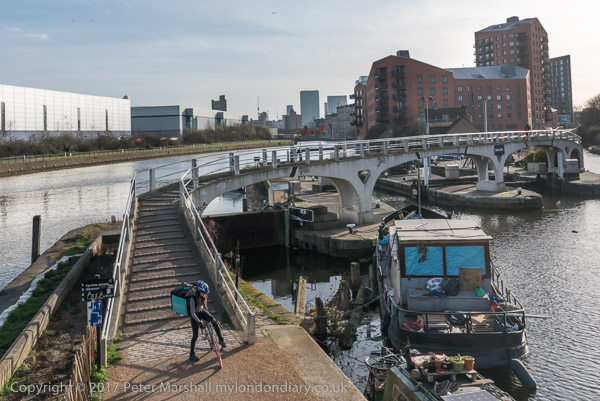
Bow Locks

Three Mills & Stratford

Three Mills is a tide mill dating from 1776 (though on the site of earlier tide mills mentioned in the Domesday Book) on the Three Mills Wall River. It is the largest tide mill in the UK and the largest surviving in Europe.

Another sculpture on The Line, unveiled on the centenary on Three Mills Green and moved to this position on Short Wall is by Alec Peever and commemorates three men who died in 1901 They died going to the aid of a fourth who had been overcome by the lack of oxygen at the bottom of a well they were investigating.
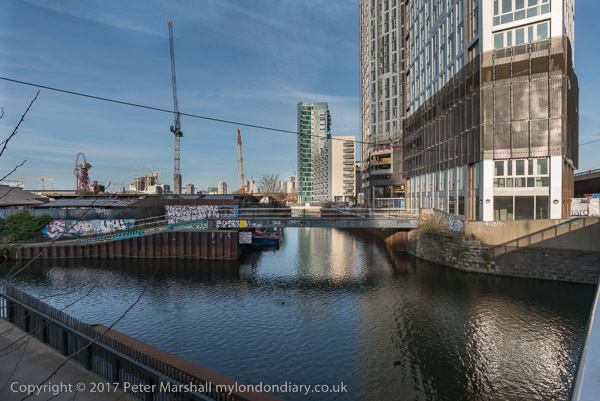
I walked on to Stratford High Street, turning west to go to Bow Bridge and the Lea Navigation before going back beside St Thomas’s Creek and along Stratford High Street to the DLR Stratford High Street Station for the train to Canning Town.

More from Bow Creek

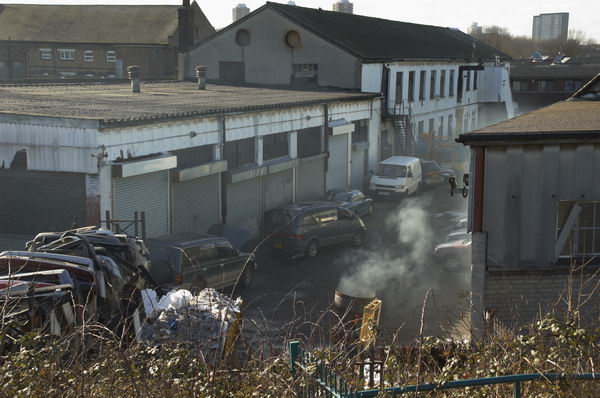
It was beginning to get a little dark as I came out from the station to photograph from the north side of East India Dock Rd.
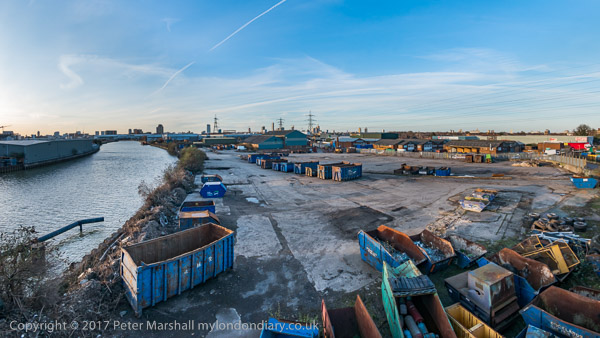
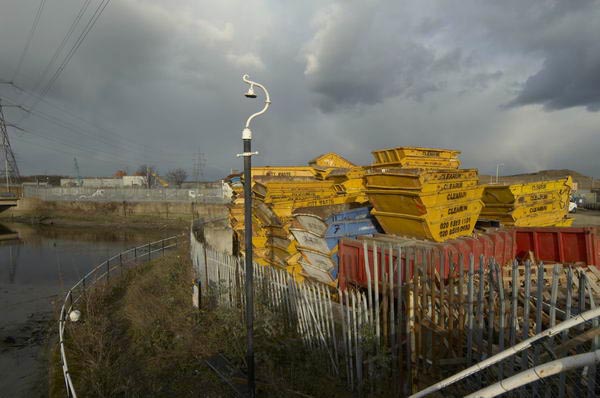
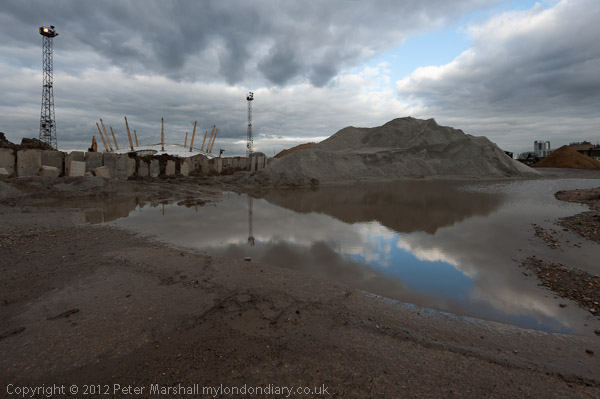
This was still an industrial area although a large area seemed now to be unused. I thought it would probably not be long before this area too was covered in flats as I walked back to the station.
You can see many more pictures and read more about the walk in my four posts on My London Diary:
Three Mills & Stratford
Leawalk to Bow Locks
Cody Dock
Bow Creek Canning Town


FlickrFacebookMy London DiaryHull PhotosLea ValleyParis
London’s Industrial HeritageLondon Photos

All photographs on this page are copyright © Peter Marshall.
Contact me to buy prints or licence to reproduce.


St Peter’s to the Thames

St Peter’s to the Thames: The fifth post on my walk which began at Kew Bridge Station on 10th of December 1989. The previous post was Chiswick Waste, Stamford Brook, British Grove & St Peter’s Square.

St Peter's Church, Black Lion Lane, Hammersmith, Hammersmith & Fulham, 1989, 89-12c-35
St Peter’s Church, Black Lion Lane, Hammersmith, Hammersmith & Fulham, 1989, 89-12c-35

St Peter’s Church is at the south-east corner of St Peter’s Square on Black Lion Lane and is now uncomfortably close to the Great West Road, this section built well over a hundred years later in the late 1950s. In 1829 the church would have been surrounded by trees, meadows and market gardens with a pleasant walk to the nearby Thames. Now you need to seach for the subway to get across one of the busiest roads out of London.

The architect was locally born Edward Lapidge, whose father was an assistant to Capability Brown as a landscape gardener at Hampton Court. As well as a wider practice he also built other local churches at Hampton Wick and Putney. The Classical church building is Grade II* listed and William Morris who lived nearby had a hand in redecorating its interior in 1887.

Leaning Woman, Karel Vogel, North Verbena Gardens, Hammersmith, Hammersmith & Fulham, 1989, 89-12c-36

This 1959 concrete sculpture by Karel Vogel, (1897-1961) a Jewish Czech-born artist who fled here from the Nazis in 1938, was Grade II listed in 2016. It was commissioned by the London County Council’s Patronage of the Arts scheme when the Great West Road was being built through St Peter’s churchyard in 1959 “provide visual amenity in compensation for” this major road scheme. The sculpture, cast concrete over a metal framework, took Vogel over a year to complete and was extremely controversial in the local area.

By 2016 the sculpture had seriously deteriorated and Radio Prague reported in 2023 on its planned renovation at a cost of over £50,000. The restored statue now looking in grand shape was unveiled in July 2024.

Metropolitan Water Board, Hammersmith old pumping station, Great West Rd, Hammersmith, Hammersmith & Fulham, 1989, 89-12c-21

This 1909 building (described by some estate agents as Victorian) has now been converted into ‘exclusive’ flats.

Upper Mall, The Dove, Hammersmith, Hammersmith & Fulham, 1989, 89-12c-11

You can see the sign for The Dove pub which has its entrance on the footpath here at 19 Upper Mall. This Grade II listed public house is well worth a visit. It has probably been serving beer since the 1730s and was bought by Chiswick Brewery in 1796. Although a charming enough place its listing probably more reflects its stories and associations rather than any particular architectural merit. Of course as the very detailed The Dove, Hammersmith – a tiny mystery on Zythophile states its popularity has resulted in “most of the “facts” printed about it being demonstrably wrong.”

Also worth a visit is the William Morris Society Museum, just behind me as I made this picture in the lower floor of the house he lived in for the last 18 years of his life, renaming it as Kelmscott House. Doubtless he enjoyed the facilities of The Dove (then called The Doves, apparently by an error of the sign-maker) including the marbles game of bumblepuppy.

Hammersmith Pier, River Thames, Furnivall Gardens, Lower Mall, Hammersmith, Hammersmith & Fulham, 1989, 89-12d-61

This pier is on the corner of Furnivall Gardens. Previously this had been mouth of Hammersmith Creek which ran north as far as King Street. The fishermen here were replaced by noxious industries in the nineteenth century, with brewery malthouses to its west and a lead mill on the east. The creek was filled in by Hammersmith council in 1936 and they built a new town hall across it which opened in 1939 – still there facing the Great West Road.

Wartime bombing removed the Phoenix Lead Mills and the Friends Meeting House with its burial ground and the area was opened as a public park, Furnivall Gardens, named for Frederick James Furnivall, one of the founders of the Oxford English Dictionary as well as Working Men’s College and the Hammersmith Rowing Club (now renamed after him) as well as the probable inspiration for ‘Ratty’ in the Wind in the Willows.

The pier here was opened at the same time as Furnival Gardens in 1951 for the Festival of Britain to enable people from the area to board steamers to take them to the Festival. After the end of the Festival there was little use for it. Eventually the PLA sold it to the owner of the Dove pub, and it was extended to provide more moorings.

River Thames, Furnivall Gardens, Lower Mall, Hammersmith, Hammersmith & Fulham, 1989, 89-12d-62

Beyond the moorings at Hammersmith Pier – Dove Pier you can see the southern end of Hammersmith Bridge and mansion blocks along Castelnau Road.

More from my walk in a later post.


FlickrFacebookMy London DiaryHull PhotosLea ValleyParis
London’s Industrial HeritageLondon Photos

All photographs on this page are copyright © Peter Marshall.
Contact me to buy prints or licence to reproduce.


Grow Heathrow’s 5th Birthday – 2015

Grow Heathrow’s 5th Birthday: Saturday 28th February 2015 was the fifth anniversary of the occupation by local people and campaigners opposed to the building of a third runway at Heathrow of a derelict Berkeley Nursery site in the village of Sipson, one of the local vill,ages that would be lost to airport expansion.

Grow Heathrow's 5th Birthday - 2015

The site, which was only finally evicted in 2021, though half of it was lost two years earlier, had four main aims. It was a symbolic resistance to economic, ecological and democratic crises, developed community and resource autonomy, developed a model for future non-hierarchical, consensus-based communities and aimed to root the grassroots radical values of the Third Runway resistance in the Heathrow villages.

Grow Heathrow's 5th Birthday - 2015
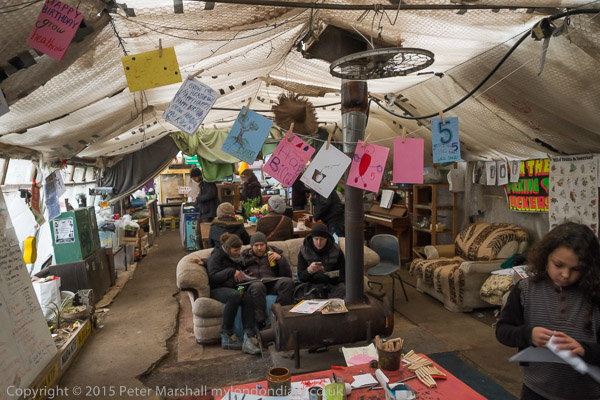
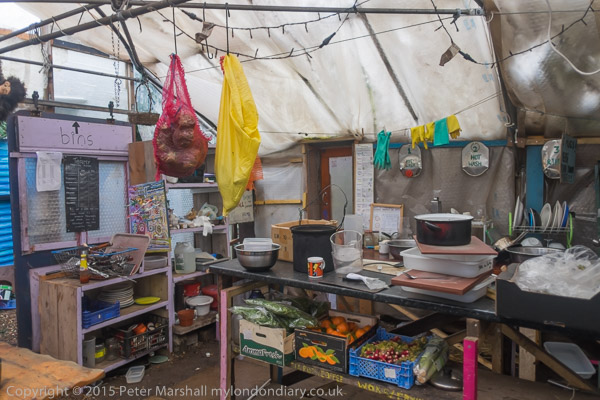
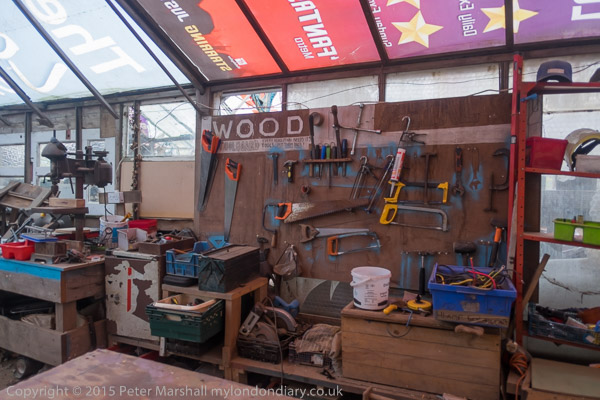
A kitchen in a former greenhouse
Grow Heathrow's 5th Birthday - 2015
and a workshop area.

It played an important role in the continuing fight against building a third runway and was an important community resource in the area, as well as inspiring others around the world to see that it was possible to live in different ways. As a National Geographic article stated in 2018 “Grow Heathrow has taken great efforts to open its doors to local villagers, politicians, students, and anyone interested in learning about alternative ways of living.”

Grow Heathrow's 5th Birthday - 2015
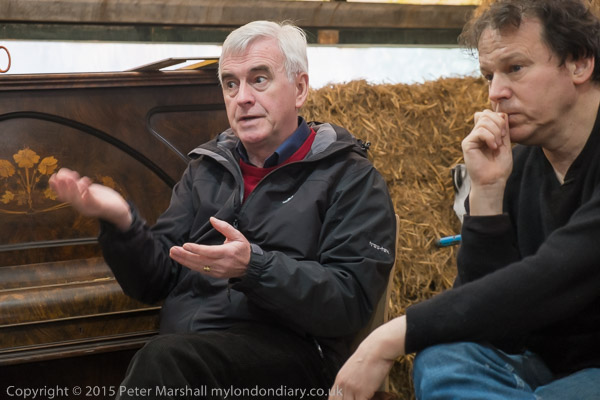
John McDonnell and David Graeber
Grow Heathrow's 5th Birthday - 2015
Ewa Jasiewicz speaking, Tristram Stuart listening and eating

I still miss Grow Heathrow and the people and ideas I met there, still occasionally think about getting on my bike and cycling there. I’ll probably take a ride some time through Sipson and on to Harmondsworth in a month or two when the weather is warmer, but of course the community garden is no longer there.

To celebrate its fifth birthday Grow Heathrow held a special day with workshops, guided tours of the site, music, workshops and a party. I’d visited the site a few times previously and it was interesting to see how it had developed, but I was particularly interested in some of the workshops.

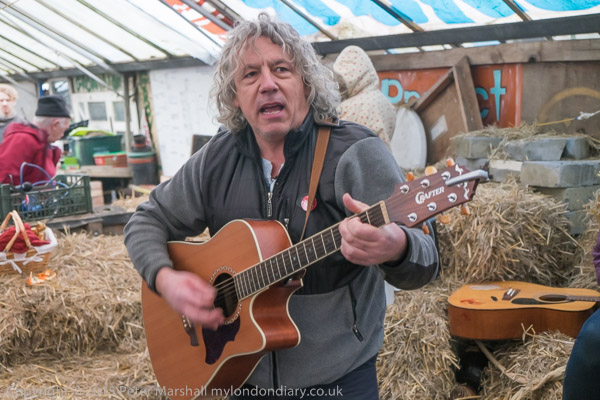
Some songs
A song about the Battle for Heathrow – Locals fought against Terminal 4, were promised it would the last,
then against T5, were promised there would be no more expansion, then defeated the third runway.

In 2015 I wrote about local MP John McDonnell praising them their activities and contribution to the fight by locals against the third runway, and noted that this is “a battle which it looks as if it may need to be taken up by direct action again.” And now we are back at it again eleven years later.

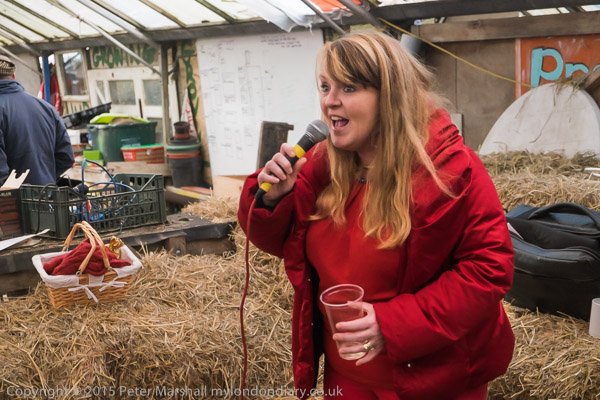
A speech from local resident and supporter of Grow Heathrow, Tracy
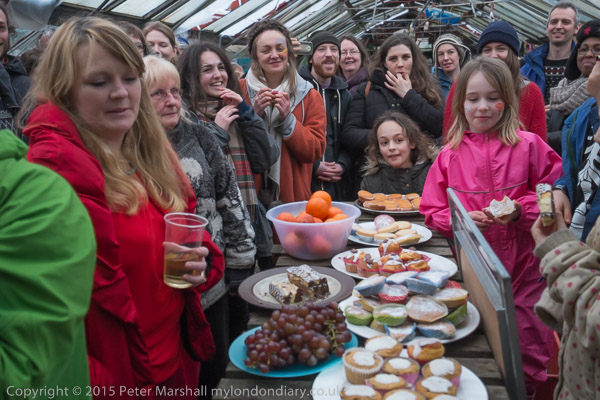
Judges at work on the cake competition
and then we all tuck in.

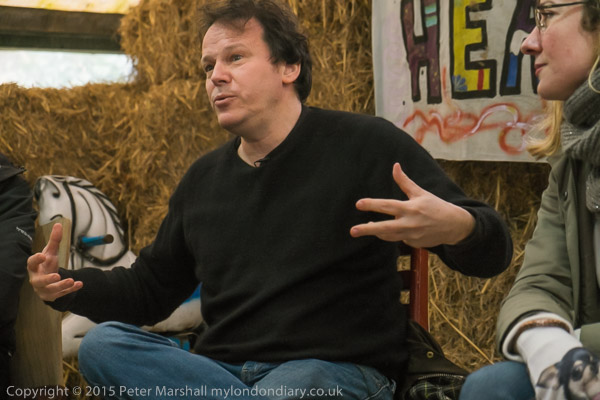
It was inspiring to listen to Tristram Stuart, one of the pioneers of the radical food movement, and to activist Ewa Jasiewicz who I had photographed on many previous occasions, but it was a presentation by the much missed David Graeber that made the greatest impression on me. He “took us through some ideas about democracy and how we need to find new ways to eliminate unnecessary control, with examples from the Spanish civil war and the current revolution in Rojava (Syrian Kurdistan), where the constitution is based on the ideas of the late Murray Bookchin.

David Graeber (1961-2020)

And then it was time for the party. I’ve written much more on My London Diary and of course there are many more pictures from my afternoon at the site.

Grow Heathrow’s 5th Birthday


FlickrFacebookMy London DiaryHull PhotosLea ValleyParis
London’s Industrial HeritageLondon Photos

All photographs on this page are copyright © Peter Marshall.
Contact me to buy prints or licence to reproduce.


Outsourcing, North Woolwich & Rees-Mogg Freakshow – 2019

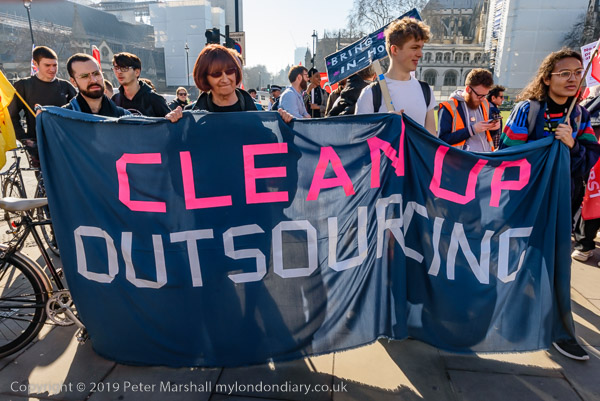
Outsourcing, North Woolwich & Rees-Mogg Freakshow: Tuesday 26th February 2019 was a long day for me, beginning with a day of action over the outsourcing of workers on the day of a High Court challenge to extend the legal rights of the 3.3 million outsourced workers. In the afternoon I went to complete a walk I’d begun several months earlier in North Woolwich, returning to cover a protest by Class War outside a performance by Jacob Rees-Mogg at the London Palladium.


Rally for an end to Outsourcing – Parliament Square

Outsourcing, North Woolwich & Rees-Mogg Freakshow - 2019

The day of action by outsourced workers had actually begun several hours earlier at 8.00am at the University of London from where they had marched to protest outside the High Court before I met them for a rally against outsourcing in Parliament Square.

Outsourcing, North Woolwich & Rees-Mogg Freakshow - 2019

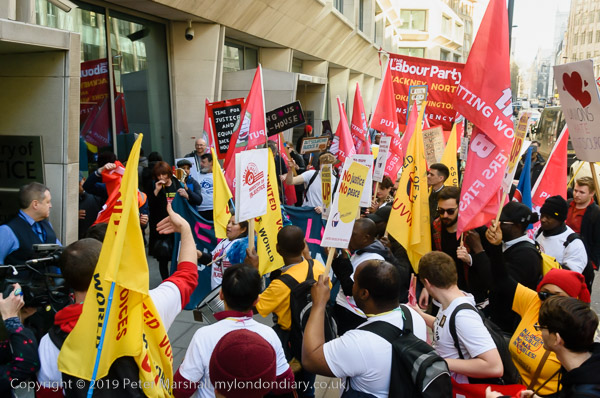
The day was a part of a coordinated strike action by outsourced workers, mainly migrants, working at the Ministry of Justice, Dept for Business, Energy & Industrial Strategy and the University of London, organised by the grass roots unions United Voices of the World (UVW), the Independent Workers’ union of Great Britain (IWGB) with the BEIS PCS branch .

Outsourcing, North Woolwich & Rees-Mogg Freakshow - 2019

The unions argued that outsourced workers should be able to collectively bargain with the management of their actual workplace as well as the outsourced employer and that not being allowed to do so was in breach of article 11 of the European Convention on Human Rights. You can read more about the case which the High Court dismissed in an insightful article by Tom Long for Personnel Today.

Outsourcing, North Woolwich & Rees-Mogg Freakshow - 2019

Had the legal challenge been successful it would have greatly extended the legal rights of the UK’s 3.3 million outsourced workers and have led to a great improvement in their working lives.

Outsourcing, North Woolwich & Rees-Mogg Freakshow - 2019
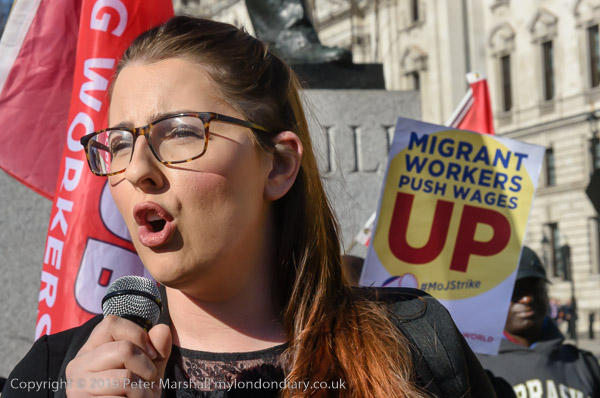
Labour Shadow Business minister Laura Pidcock – she lost her seat in 2019

Several Labour MPs came to speak at the rally and support the demand to end outsourcing which creates insecurity, discrimination and low pay.

Rally for an end to Outsourcing


Outsourced Workers protest at BEIS

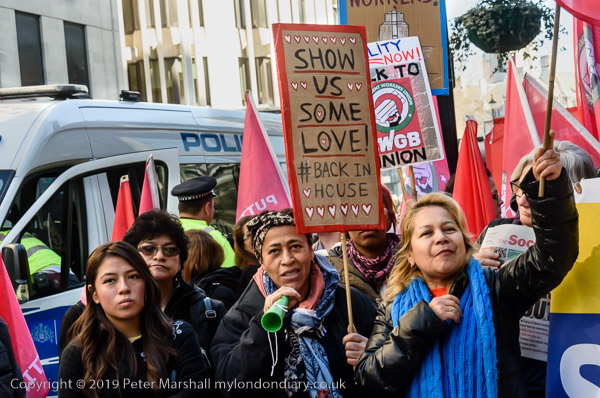
After the rally the the protesters marched around Parliament Square and then along Victoria Street to protest outside the Dept for Business, Energy & Industrial Strategy.

Strikers at BEIS included catering and security staff who are members of the PCS and are demanding the London Living Wage as well as end to outsourcing.

Chris Williamson MP

Among the speakers at the rally here was then Labour MP for Derby North Chris Williamson who was under investigation for his comments about the party’s response to allegations of antisemitism in the party – and was eventually barred from standing for Labour in the 2019 election.

Outsourced Workers protest at BEIS


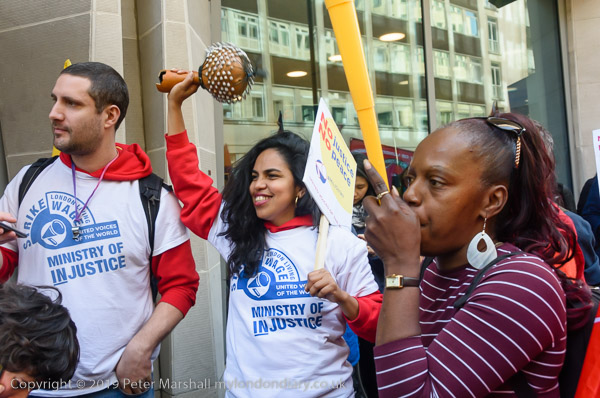
Outsourced Workers at Justice ministry

The protesters marched on to the Justice Ministry in Petty France.

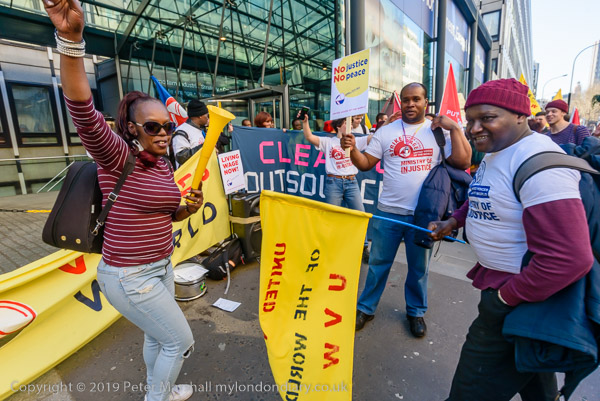
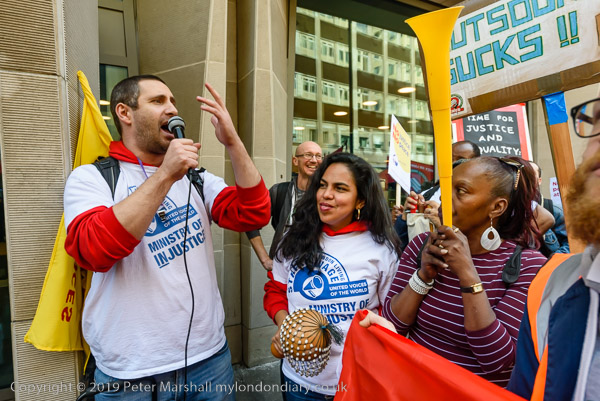
Low paid workers belonging to the United Voices of the World union at the Ministry of Justice have been campaigning for some time to get the London Living wage, but the Justice Minister has been unwilling to talk with them. They call it the Ministry of Injustice.

They are also calling for an end to outsourcing and the insecurity, discrimination and low pay it causes. A number of trade unionists came to speak in support of outlawing outsourcing and to support the strikers in their claims.

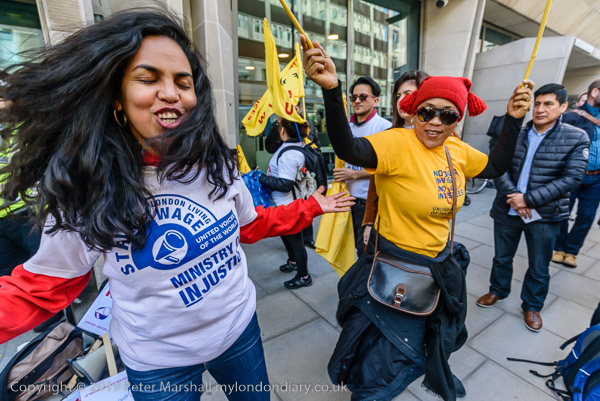
This was a loud and boisterous protest with drumming, music and dancing on the pavement and street outside the ministry.

During the protest some of those who had already been on strike for 24 hours went back into the ministry to resume work, to cheers and hugs from those outside.

Outsourced Workers at Justice ministry


North Woolwich Walk

My attempt to go for a walk along the Capital Ring in North Woolwich was made difficult by the DLR having a temporary shut-down and I arrived an hour later than intended and was unable to finish the walk – I came back several months later to do so.

It wasn’t ideal weather particularly for the panoramas I was trying to make with a clear blue sky. And finally I failed to put all the pictures I had intended onto the web page – including these two

North Woolwich


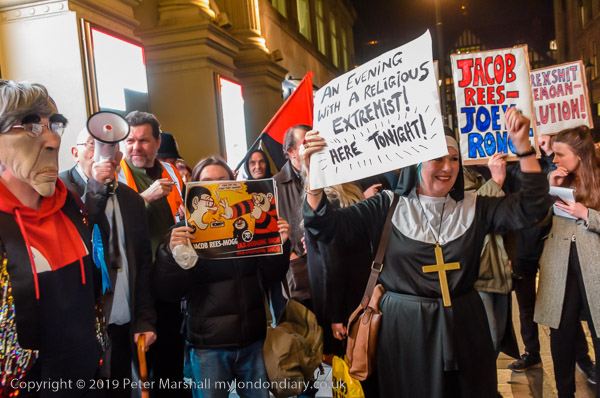
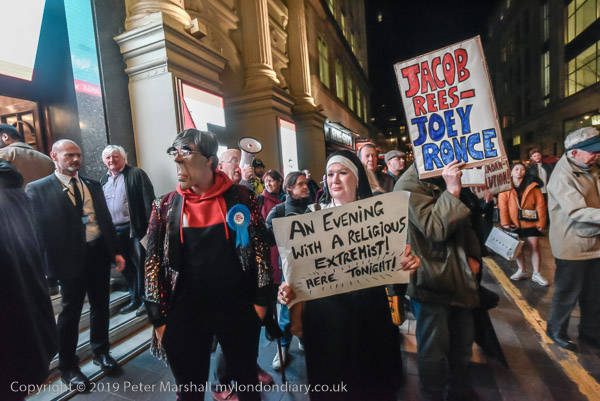
Class War protest Rees-Mogg freak show – London Palladium

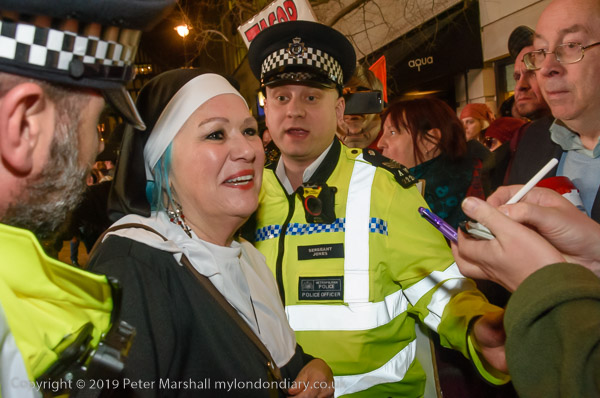
Class War protest outside the London Palladium as fans who had paid £38 for a ticket entered to listen to Jacob Rees-Mogg.

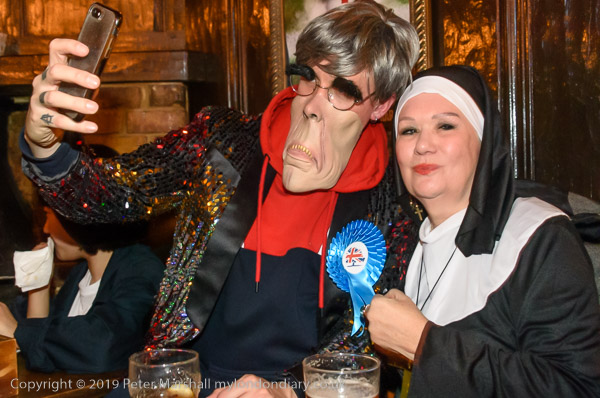
With Jane Nicholl dressed as a nun, Mother Hysteria, and Adam Clifford as Jacob Rees Mogg they loudly asked why people had come to listen to him “spout homophobic, transphobic, racist, pro-hunting, misogynist, classist, privileged” nonsense.

It was certainly a better show than anything that would take place later inside the venue, and all for free. You can read an excellent account of it on Inside Croydon.

Later Police searched Jane Nicholl and threatened to arrest her for carrying offensive weapons after it emerged she had brought some novelty stink bombs to the protest.
Class War protest Rees-Mogg freak show


FlickrFacebookMy London DiaryHull PhotosLea ValleyParis
London’s Industrial HeritageLondon Photos

All photographs on this page are copyright © Peter Marshall.
Contact me to buy prints or licence to reproduce.


Pancakes in the City – 2012

Pancakes in the City: Tuesday 21st February 2012 was Shrove Tuesday – Pancake Day – and there were a number of pancake races taking place around London. I photographed two of these with very different ethos.

Pancakes in the City

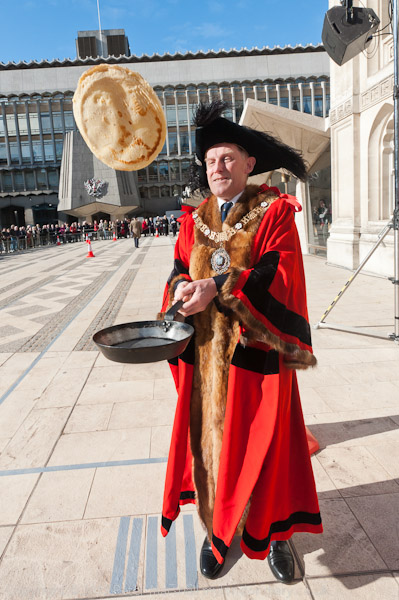
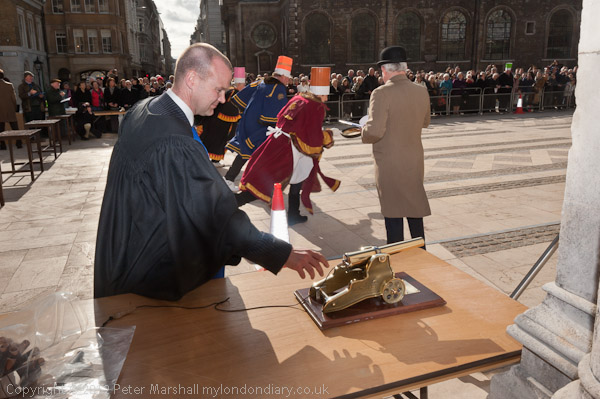
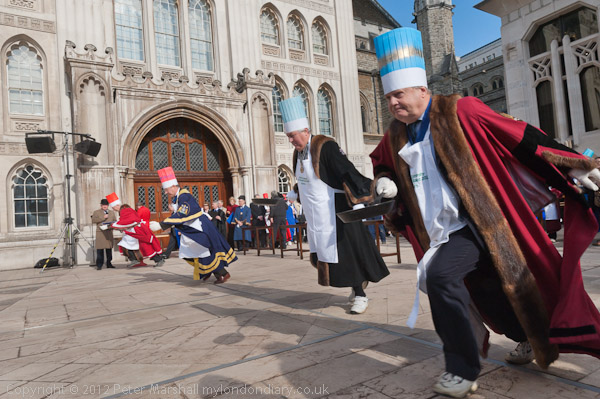
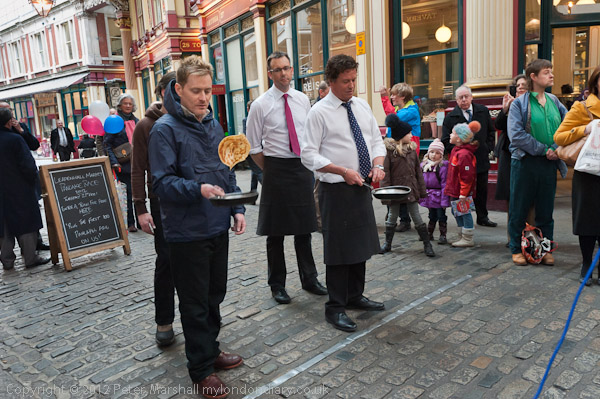
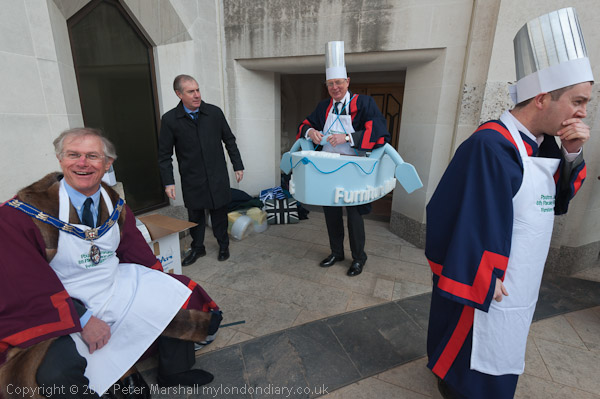
At the heart of the City in Guildhall Yard the various City of London Livery companies showed the City at its most competitive in what has now became a tradition of inter-livery pancake races on Shrove Tuesday, organised by the Worshipful Company of Poulters since 2004.

Pancakes in the City

Here there were carefully drawn up rules and practices.

“The Gunmakers start each heat using a miniature cannon (which can make a very loud bang), the Clockmakers hold stopwatches to time the races , the Fruiterers provide lemons, the Cutlers plastic forks, the Glovers white gloves required to be worn by each runner, while the Poulters provide the eggs essential to make the pancakes.”

Pancakes in the City

This is a highly organised event raising funds for the annual Lord Mayor’s charity – in 2012 the Barts and The London Charity, on behalf of the Trauma Unit at The Royal London Hospital.

Pancakes in the City

This was the first year in which women taking part in the Ladies events were allowed to wear trousers – previously they had been required to have skirts reaching below the knee. And there are many other rules including the wearing of special hats for the occasion.

Pancakes in the City

This is the City having fun in their own rather circumscribed and very serious way.

I photographed this event for a number of years, but haven’t done so for a while, partly because it became difficult to work at it without prior accreditation which I couldn’t be bothered with, but mainly because I thought I had got everything I could out of it and I was just repeating myself.

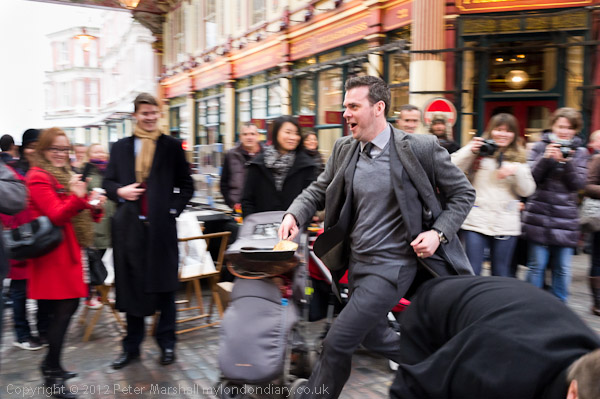
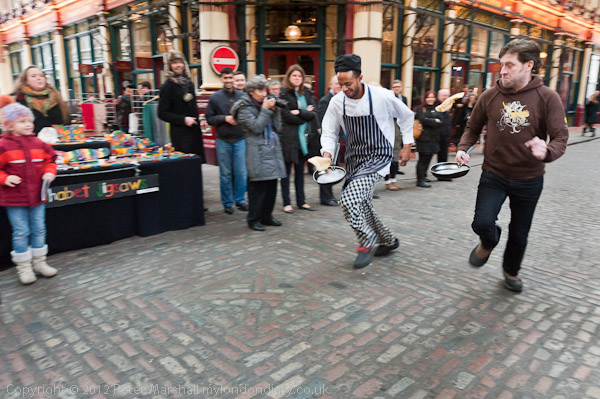
I left before the final races to photograph a very different event taking place in Leadenhall Market, along a much more restricted course and between ad-hoc teams from various businesses in and around the market.

There were far fewer rules, just those needed to outline the races, with teams carrying and tossing the pancakes in this relay event. The narrow space available limited the heats to two teams at a time.

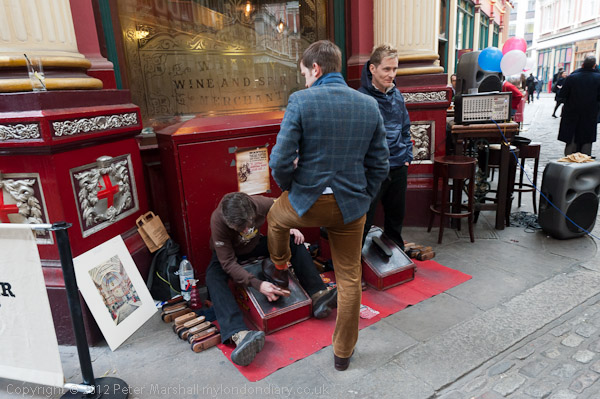
The shoe polishers kept working between races

There were prizes provided by The Lamb Tavern in the market, who also fielded a team along with outers including the cheese shop and the shoe shiners who fought it out in the final.

Or at least they did when after an initial run when the cheese shop team simply walked the course as they preferred the second prize – a bottle of champagne and a £50 bar tab at the Lamb – to the first of a restaurant voucher.

“Some haggling followed and a re-run was demanded – and after the Lamb had agreed both teams would get the bar money there was a close-fought battle for the honour of winning, won narrowly for the second year in the short history of the race by the team from the shoe stall.”

Pancakes in the City – Leadenhall Market
Pancakes in the City – Guildhall


FlickrFacebookMy London DiaryHull PhotosLea ValleyParis
London’s Industrial HeritageLondon Photos

All photographs on this page are copyright © Peter Marshall.
Contact me to buy prints or licence to reproduce.

Ellen MacArthur, Brian Haw & Ashura – 2005

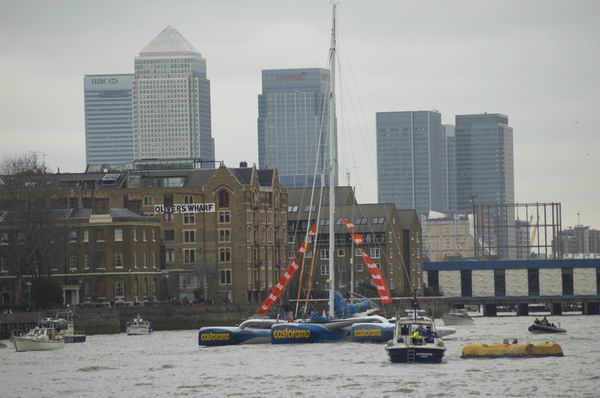
Ellen MacArthur, Brian Haw & Ashura. On 20th February 2005 I froze on the riverside in Bermondsey waiting for Ellen MacArthur’s catamaran to come up-river to Tower Bridge after her 71 day voyage had made her the fastest solo sailor to sail around the world. Five years later “she set up the Foundation in her name to accelerate the transition to a circular economy“. I didn’t get any very good pictures as I was far to far away as she raised here arm to acknowledge the crowd that had gathered to welcome her – I needed a much longer telephoto than I’ve ever had.

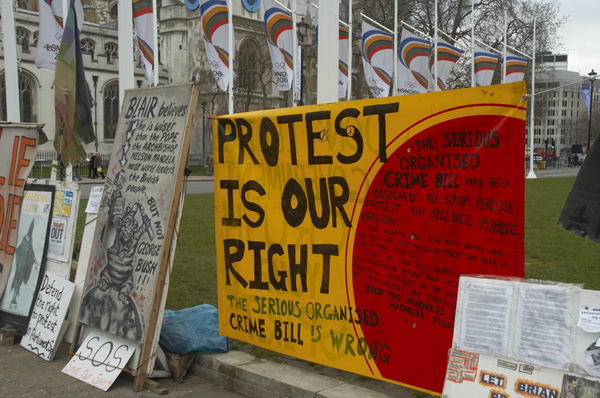
Afterwards I took a little walk around the Bermondsey riverside before making my way back to Parliament Square where I took a pictures of the display there by Brian Haw’s Peace Campaign, now joined by promotional flags for the 2012 Olympic bid. There was more of this in Trafalgar Square too, where I dropped in briefly to see some of our pictures and warm up.

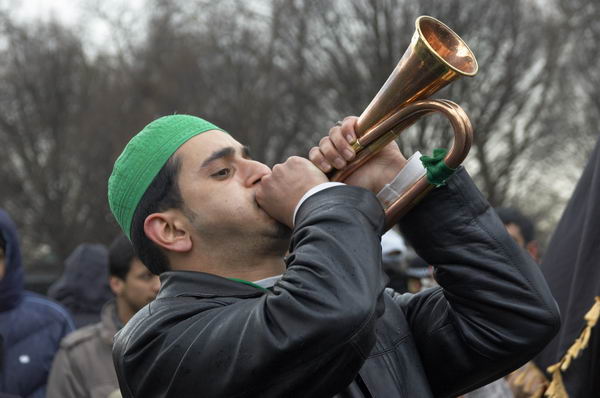
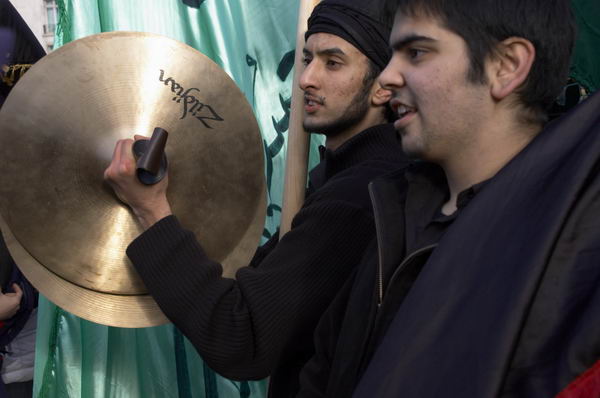
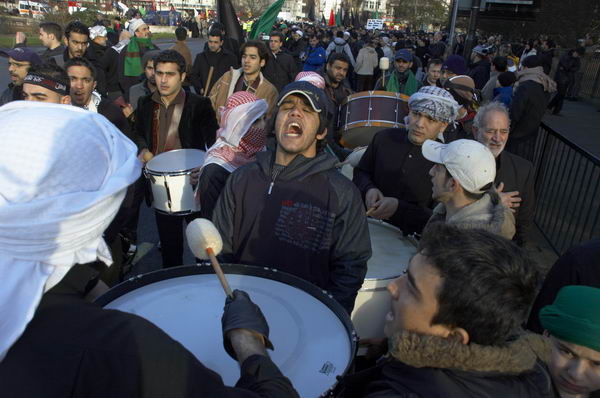
Finally at Marble Arch I photographed the start of the Ashura procession by Shi’ite Muslims. I didn’t stay too long as I was still cold and I was keen to get home and warm.

Here – with the usual minor corrections – is the piece I wrote in 2005 to go with the pictures on My London Diary:

Sunday was another bitter day, and I froze on Butlers Wharf waiting to see Ellen MacArthur aboard her catamaran as it was driven up to Tower Bridge and back from Greenwich, disappointingly not a sail in sight.

Ellen MacArthur is just visible, arm upraised in the centre of the picture

The crowds were not huge, but respectable, but like me, few could be bothered to go to Greenwich. The various press boats buzzing round the catamaran added a little interest, but made me glad I wasn’t on one.

I was more interested in taking some pictures along the riverside, then took the tube to Westminster to call in on Brian Haw, still in Parliament Square since 1st June 2001, with the government now cooking up a personal law against him.

The signs on the square are no augmented by a line of mute London 2012 flags, and along in Trafalgar Square (on my route to the National Gallery) was a giant tent and Olympian figure. Nobody can accuse London 2012 of not spending money on promoting their cause.
more pictures

Shi’ite Muslims in London were celebrating the stand of the grandson of the Prophet, Imam Hussain, who died a glorious martyr along with his small band of supporters at Karbala in Iraq, choosing death rather than dishonour, in the year 680. Ashura represents a key point of difference between Sunni and Shi’a traditions and Saddam Hussein rigidly prevented its observance in Iraq during his years in power.

more pictures


FlickrFacebookMy London DiaryHull PhotosLea ValleyParis
London’s Industrial HeritageLondon Photos

All photographs on this page are copyright © Peter Marshall.
Contact me to buy prints or licence to reproduce.


Protesting the London Olympics Bid – 2005

Protesting the London Olympics Bid: On Saturday 19th February 2005 I sent for a guided walk around the proposed Olympic site on Stratford Marsh and then joined others in a protest march through the area to Hackney Marshes which would also be affected.

Protesting the London Olympics Bid - 2005
Small industries giving local employment which will disappear

The favourites for the games were Paris, and although public opinion in Britain largely backed the bid, there was rather less support by locals both because of the effects it would have on the area and the high coast which would mean an extra £20 per year on council tax.

Protesting the London Olympics Bid - 2005
One of the larger industrial sites, and a building in use as artists studios

Paris accused London of violating the rules but the decision was was made by a small majority in London’s favour.

Protesting the London Olympics Bid - 2005
Pudding Mill River and Old River Lee

After the success of the bid in July 2005 there were fears around the rest of the country that the extra spending on the games would mean diverting funds for more necessary work away from the rest of the country – which it did.

Protesting the London Olympics Bid - 2005
City Mill River and Warton House, formerly the Yardley perfume company’s Box Factory – preserved

And locally many suffered from the disruption of the works over an extensive area – with local businesses and some residents being forced out of the area.

This bridge had a local message for Seb Coe who heads London’s bid for the 2012 Olympic Games

Here I’ll reproduce – with appropriate minor corrections – the article I wrote along with some of the pictures I took on the day.

Site Walk, Bow Back Rivers

Saturday 19th February saw me in the Bow Back Rivers again, on another guided walk looking at the areas threatened by the London 2012 Olympic Bid. We walked along The Northern Outfall Sewer from Stratford High Road to Old Ford, then along the Old River Lea and back down the City Mill River.

Traditionally an area for dirty industries on the east of the city, a health and safety hell-hole, now with plenty of derelict land, but still providing local jobs that will all disappear if the bid goes through.

Much of the area will disappear under concrete, almost all redundant after the big event, with plans for its after use unpublished and unfunded.

At the moment it’s a rich wildlife environment, but all that will go, and the tidal Bow Back Rivers are likely to be lost or severely altered.

If the bid goes ahead it will severely distort a regeneration that needs to be based on local needs and priorities, and the trumpeted increased investment will largely create unwanted facilities that will be future millstones.

Hackney marshes. Football pitches will be concreted car parks for the Olympics

Not to mention the disruption over perhaps 15 years as the site is developed and then (if finances materialise) restored for use.

No London 2012 Olympics March

More local businesses that will close on Waterden Rd.

After the walk, we went to join the demonstration and protest march that was forming in Meridian Square outside Stratford Station. It wasn’t a huge event, with just over a hundred marchers, but I was surprised at the positive response from those hurrying by to catch trains or go shopping, many expressing support.

The march, on a bitter, dull afternoon, ended on Hackney Marshes, where considerable local sports facilities are due to be covered by car parks if the bid succeeds, with people playing games and a very spirited sack race.

View from the walkway over Carpenters Lock

I walked back to Stratford, again through the Olympic site, crossing over the Lea at one of the locks and along the side of the Waterworks River, with often dramatic lighting and the occasional light flurry of snow.

You can see the 2005 post on My London Diary and also many more pictures from the day


FlickrFacebookMy London DiaryHull PhotosLea ValleyParis
London’s Industrial HeritageLondon Photos

All photographs on this page are copyright © Peter Marshall.
Contact me to buy prints or licence to reproduce.

1995 Colour Part 6 – Waltham Forest

1995 Colour Part 6 – Waltham Forest: Continuing my series of colour pictures I made in 1995. The previous post, Part 5 – Waltham Forest looked at panoramic images I made in that London Borough, but I also made images in colour using one of my Olympus OM4 cameras with a normal aspect ratio.

Shop, LCC Flats, 32, Hatch Lane, Chingford Hatch, Waltham Forest, 1995, 95c03-345

Most of these images were made with wide-angle lenses , 21mm, 28mm and 35mm shift, but I also had a 50mm standard lens and a short telephoto. They were taken on various Fuji colour negative films but in the days before digital there was no EXIF data to record focal lengths or exposure details. Occasionally the 21mm revealed itself by recording one of my fingers in the right hand lower corner of the frame, a mistake rather too easy to make!

Walthamstow Stadium, Chingford Road, Walthamstow, Waltham Forest, 1995, 95c03-342

You can see larger versions of all these pictures and others from the same year in my Flickr album 1995 London Colour – from which the images in this post are embedded.

Walthamstow Stadium, Chingford Road, Walthamstow, Waltham Forest, 1995, 95c03-341

Some years later I covered a protest at Walthamstow Stadium against its demolition. The final race had been held in 2008 and planning permission was given in 2012 for its replacement by almost 300 homes, but the Grade II listed facade in my pictures here was retained.

Lea Valley Motor Company, Waltham Forest, 1995, 95c03-352
Keith Little, Turf Accountants, 81, Station Road, Chingford, Waltham Forest, 1995, 95c03-362

I imagine this shop window in Chingford may have been inspired by the races at Walthamstow Stadium.

Cuddles Creche, The Drive, Walthamstow,  Waltham Forest, 1995, 95c03-231
Cuddles Creche, The Drive, Walthamstow, Waltham Forest, 1995, 95c03-231

The illustration very much reflects the multicultural nature of London and I liked the name ‘Cuddles’. It was probably at times rather noisy inside and perhaps needed as the notice by the door stated you knock on the door rather than ring the bells between 12.30 and 2 pm.

Shops, Chingford Rd, Chingford Mount, Waltham Forest, 1995, 95c02-224
Artist, Shop Window, Walthamstow, Waltham Forest, 1995, 95c02-223

There was quite a lot of fine work in shop windows in London, particularly in areas in the north east with large Greek, Turkish, Kurdish or Cypriot heritage communities.

Southend Rd, North Circular Rd, Walthamstow Ave, South Chingford, Waltham Forest, 1995, 95c02-335

The North Circular Road runs across the borough and is a significant barrier to movement with relatively few bridges crossing it. Getting to places just over the road can mean a significant detour for people on foot. This fine 1930s building was a dairy company which delivered milk over a wide area. It has now lost its green tiles and is a Holiday Inn.

More in a later post. You can also find black and white pictures I took in the same area in 1995, starting on page 5 of my album 1995 London Photos.

1995 London Colour


FlickrFacebookMy London DiaryHull PhotosLea ValleyParis
London’s Industrial HeritageLondon Photos

All photographs on this page are copyright © Peter Marshall.
Contact me to buy prints or licence to reproduce.

Chiswick Waste, Stamford Brook, British Grove & St Peter’s Square

Chiswick Waste, Stamford Brook, British Grove & St Peter’s Square: The fourth post on my walk which began at Kew Bridge Station on 10th of December 1989. The previous post was Bedford Park – 1989.

Chiswick Waste, Scrap Metal, Chiswick High Rd, 1989, 89-12b-31
Chiswick Waste, Scrap Metal, Chiswick High Rd, Chiswick, Hounslow, 1989, 89-12b-31

Bedford Park had played an important role in the development of suburban housing for the affluent with the Garden City movement, but after wandering around surrounded by red brick for more than an hour I was glad to get away from it and back to something rather different.

We sometimes think of recycling as being new and green, but it has long been important in our economy. Back in my young days there were ‘pig bins’ for waste food on our street, my father spent half an hour or so neatly smoothing out and rolling our waste newspapers into a neatly tied package to put out on the bin for salvage, and as kids we would eagerly search the neighbourhood for bottles to return to shops and scrap copper, brass, aluminium, lead and zinc to take to our local scrap dealer for pennies. When you only got 6d a week from your parents for pocket money every little helped.

Of course dealers like this one largely worked on an industrial scale – the prices here are in pounds per hundredweight – and a hundredweight was 8 stone – 112 lbs or 50.8 kilograms.

House, Stamford Brook Road, Hounslow, Hammersmith & Fulham, 89-12b-23

Stamford Brook is now be called one of London’s “Lost Rivers”. Wikipedia has a lengthy description of its complex courses with at least three sources, its six strands and four mouths into the Thames. When the county of London was carved from Middlesex in 1889 its most western course formed the boundary between the London Borough of Hammersmith and the Middlesex urban districts of Brentford and Chiswick – and since 1965 between the London Boroughs of Hounslow and Hammersmith & Fulham.

One northern part of the river is the Bollo Brook, and some of its water was diverted to the lakes at Chiswick House which still have and outflow to the Thames. But most of the rest of the river had been culverted by 1900, largely becoming a part of London’s sewage system. Hopefully the opening a few days ago of London’s supersewer will end the use of two of the mouths at Chiswick and Hammersmith being storm overlows and discharging untreated sewage into the Thames.

Grove House, 66, British Grove, Chiswick, Hounslow, Hammersmith & Fulham, 1989, 89-12b-14

British Grove also has a culvert running under it through some of Stamford Brook was diverted. There was a track here from at least the 18th century. The houses on Chiswick High Road immediately west of British Grove, some listed and dating from 1830-40, are named as British Terrace on the 1873 OS Map and British Grove appears as a narrow track along the boundary between Hounslow and Hammersmith & Fulham with houses only on its west side and the name British Grove across the long back gardens of the houses on the west side of St Peter’s Square. It had previously been a southern part of Chiswick Field Lane and

Later parts of those back gardens were built on and Grove House at No 66 appears to date from around 1930. It is now four flats.

Island Records, Royal Chiswick Laundry, British Grove, Hounslow, Hammersmith & Fulham, 1989, 89-12b-16
Island Records, Royal Chiswick Laundry, British Grove, Hammersmith, Hounslow, Hammersmith & Fulham, 1989, 89-12b-16

British Grove has a several small claims to fame. It was here around 1863 that Frederick Walton first made linoleum having taken over the British Grove Works in 1860 from rubber manufacture Richard Beard. Unfortunately Walton’s works burnt down in 1862. They were insured and were rebuilt but were too small and Walton moved to Staines which became the centre for the development and manufacture of lino – though later much was made at Kirkaldy. The Staines works closed in 1974.

The Royal Chiswick Laundry was built in the rear garden of 22 St Peter’s Square in the 1890s, facing onto British Grove. The laundry closed in 1968 and the works were used briefly by “a company that added soundtrack to film before the property in 1973 became the offices, recording studios and premises of Island Records, who moved in with a staff of 65.” Their recording studio included “the base of the chimney, which was occasionally used in recordings to add reverberation” to vocals.

Many locals were relived when Island Records moved out and were in 2005 replaced by architects who retained and restored much of the buildings which were renamed Island Studios.

House, St Peter's Square, Hammersmith, Hammersmith & Fulham, 1989, 89-12c-65
House, St Peter’s Square, Hammersmith, Hammersmith & Fulham, 1989, 89-12c-65

This is No 22, the house in whose back garden the Royal Chiswick Laundry was built, at the south-west corner of St Peter’ Square. The houses in the square were built in 1825-30 and 32 are Grade II listed.

Houses, St Peter's Square, Hammersmith, Hammersmith & Fulham, 1989, 89-12c-52
Houses, St Peter’s Square, Hammersmith, Hammersmith & Fulham, 1989, 89-12c-52

The square was developed piecemeal by builders working to a master plan by the landowner George Scott on part of his Ravenscourt Park Esate, “mostly built in groups of three, with stucco fronts, pediments and Ionic porches.” Between these houses you can see the square chimney of the Royal Chiswick Laundry. And you can admire the architectural detail.

House, St Peter's Square, Hammersmith, Hammersmith & Fulham, 1989, 89-12c-41
House, St Peter’s Square, Hammersmith, Hammersmith & Fulham, 1989, 89-12c-41

Number 27 seems to be disappearing under foliage.

House, St Peter's Square, Hammersmith, Hammersmith & Fulham, 1989, 89-12c-42
House, 27, St Peter’s Square, Hammersmith, Hammersmith & Fulham, 1989, 89-12c-42

Two lions look rather angry at each other beside the stairs to the door of Number 30, with an eagle above the doorway.

Houses, St Peter's Square, Hammersmith, Hammersmith & Fulham, 1989, 89-12c-43
Houses, St Peter’s Square, Hammersmith, Hammersmith & Fulham, 1989, 89-12c-43

Some of the houses have gateposts with large pineapples – and perhaps others once did. And here again that impressive work above the side gates, as well as an eagle above the front door.

I took a few more pictures around the square, which really is worth a visit, before dragging myself away from one of London’s finest squares towards St Peter’s Church where the next account will begin.


FlickrFacebookMy London DiaryHull PhotosLea ValleyParis
London’s Industrial HeritageLondon Photos

All photographs on this page are copyright © Peter Marshall.
Contact me to buy prints or licence to reproduce.


Lewisham Hospital, Greenwich Peninsula, Syria & Mali – 2013

Lewisham Hospital, Greenwich Peninsula, Syria & Mali: As often when I had a long break between two events I took the opportunity to take an extensive walk in one of my favourite areas of London and on Friday 15th February I went to the Thames Path at Greenwich after a lunchtime protest at Lewisham Hospital. Then I went to Whitehall for a small protest against Western military intervention in Mali and Syria and a possible attack on Iran.

Lewisham Hospital, Greenwich Peninsula, Syria & Mali

Fight to Save Lewisham Hospital Continues

Lewisham Hospital, Greenwich Peninsula, Syria & Mali

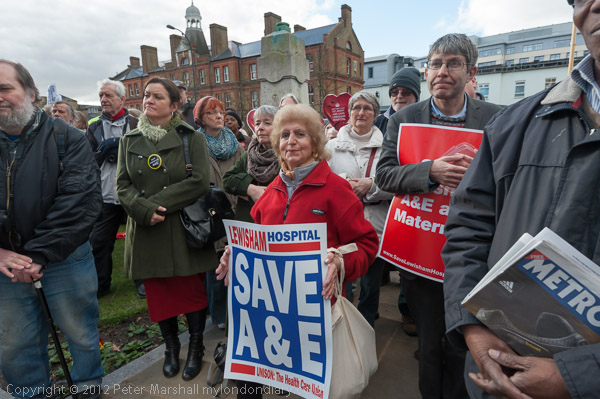
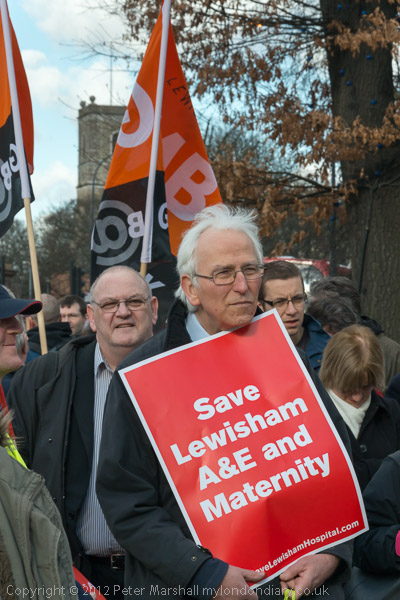
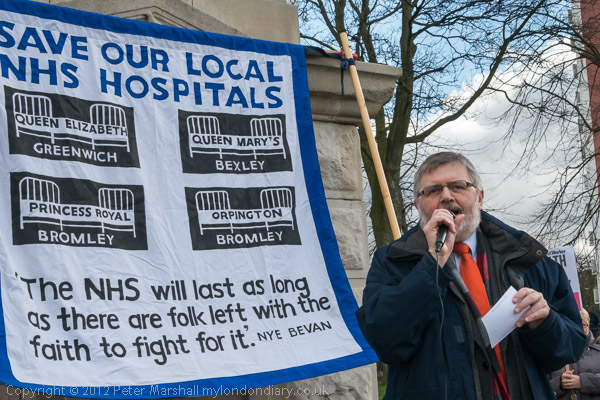
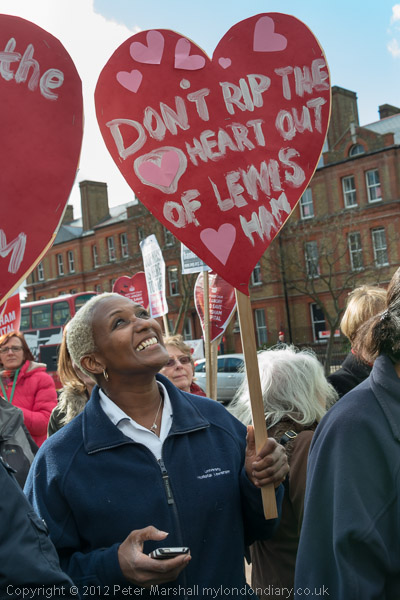
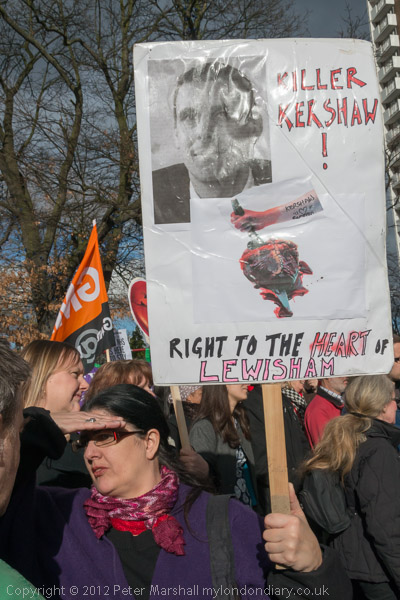
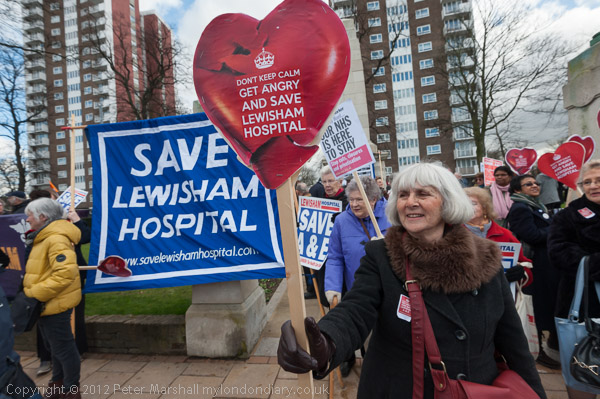
A lunchtime rally at the war memorial opposite the Hospital made clear that the fight by the entire local community to save services at their hospital was continuing.

Lewisham Hospital, Greenwich Peninsula, Syria & Mali

As well as a legal challenge there were to be further mass demonstrations including a ‘Born in Lewisham Hospital’ protest the following month.

Lewisham Hospital, Greenwich Peninsula, Syria & Mali
Lewisham Mayor Sir Steve Bullock

People in the area and all concerned with the future of the NHS were appalled by Jeremy Hunt’s decision to accept to the proposals for closure, which are medically unsound and would lead to more patients dying, but they would result in a huge waste of public funds.

The financial problem that led to the proposal was caused not by Lewisham but by a disastrous PFI (private finance initiative) agreement to build a hospital a few miles away.

As I wroteL “Lewisham is a successful and financially sound hospital which has received sensible public investment to provide up to date services, and the services that will be cut there will have to be set up again and provided elsewhere by other hospitals. Closing Lewisham will not only incur high costs, but will result in the waste of the previous investment in its facilities.”

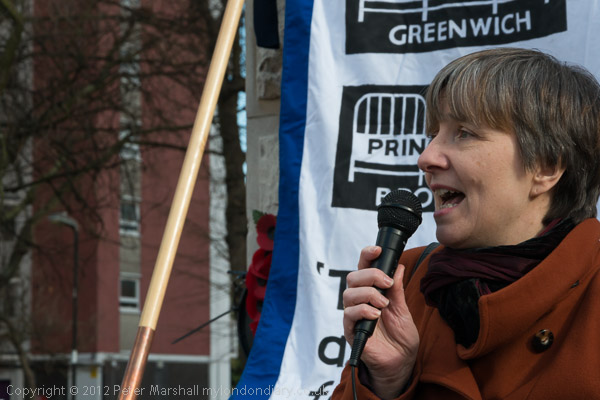
Louise Irvine, the Chair of Save Lewisham Hospital Campaign

In making his decision Hunt deliberately set out to mislead the public by describing the replacement of A&E as only a small reduction in A&E services. The proposed urgent care centre could only deal with around 30% of the cases currently being covered. Similar the replacement of the current maternity service by a midwife only unit could only deal with around 10% of current births – and life-threatening transfers would be necessary if complications rose in these.
You can read a fuller account of the protest and more pictures at Fight to Save Lewisham Hospital Continues.

Thames Path – North Greenwich – Greenwich

I took a bus to North Greenwich and tried to walk along the Thames Path, parts of which had reopened after a long closure. It was a warm day for February and started off sunny, though later the weather changed giving some dramatic skies.
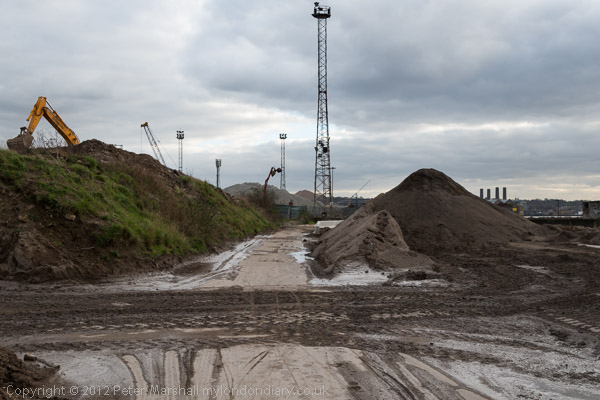
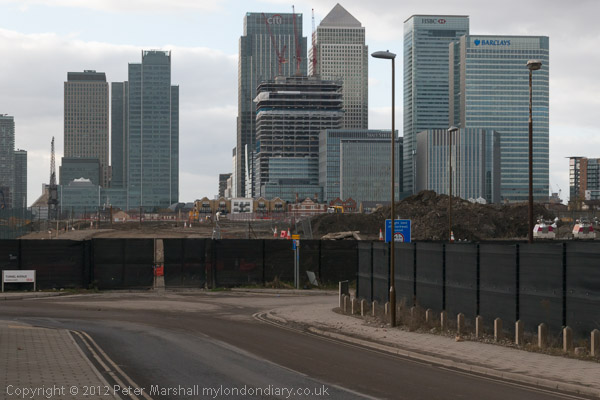
The path from Delta Wharf and north to Drawdock Road was still vlosed but beyond that in both directions the path was open. I’m not sure what all the work taking place was about, but in part it was to provide a new section of the path, and to put in new breakwaters. Some time later of course there will be new riverside flats here, but for the moment these were being built closer to Greenwich.

One fairly recent addition to the path was the Greenwich meridian marker at the bottom centre of this picture, the line going along in the gap between two metal beams and pointing north across the river.

And a little further to the east is the sculpture A Slice of Reality by Richard Wilson. In the following year this was to become part of London’s first public art walk, The Line. It is a 30ft slice of the former sand dredger Arco Trent – Google’s AI gets it badly wrong by describing it as “an eighth-scale replica“. As the name suggests it is a slice of the actual ship.

As I turned back and walked towards Greenwich there were some dramatic skies and lighting, but also some slightly boring road walking where the path was diverted away from the river.

Soon I was able to return to the riverside path and walk through the surreal landscape of an aggregate wharf.

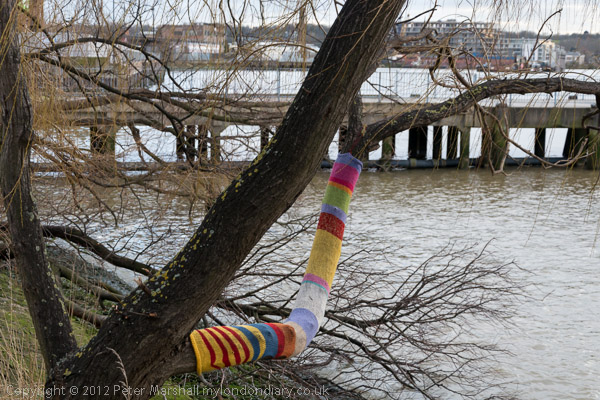
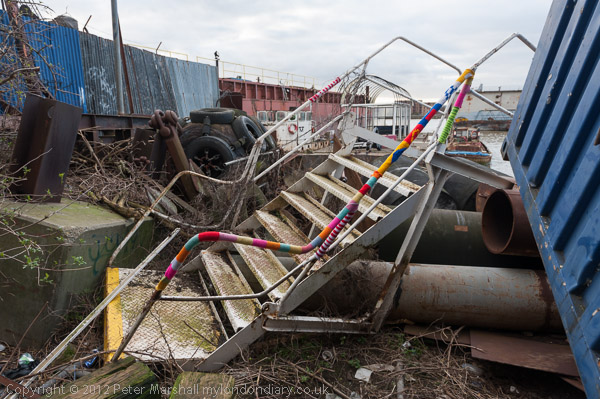
The final section of the walk on my way into Greenwich had been targeted by guerilla knitters.

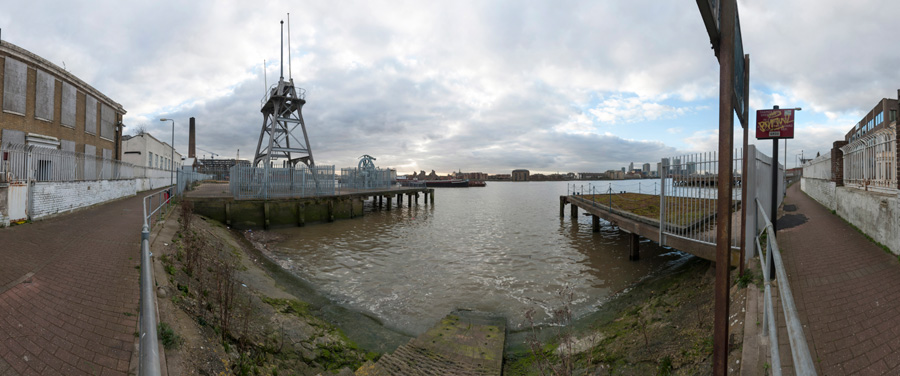
I was getting short of time, and could only stop to make one panorama although the weather was perfect for it.

This view shows the riverside path at left going south at the left and north at the right – a view of over 180 degrees. The shoreline here highly curved was in reality straight. I think the image digitally combines half a dozen overlapping frames.

By then I was having to hurry to catch the train back into central London – and the light was falling.

Many more pictures from this walk at Thames Path Greenwich Partly Open.


Stop Western Intervention in Syria & Mali – Downing St

This protest had been called by Stop the War on the 10th anniversary of the march by 2 million against the Iraq war in 2003, the largest protest march ever seen in the UK (and with many others around the world also marching.)

On this occasion they were calling for a stop to Western intervention in Mali and Syria and against the possible attack on Iran but the numbers taking part were very much smaller, with only around a hundred turning up.

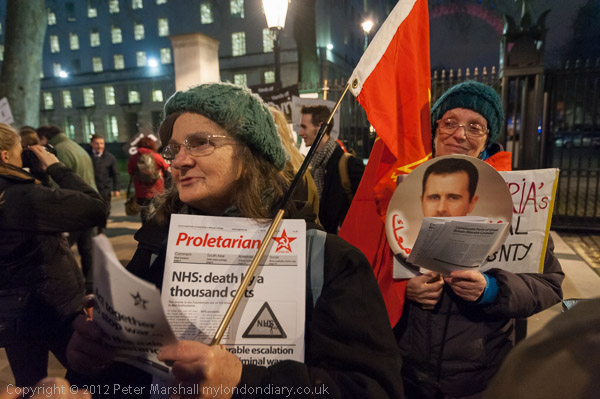
Among them were supporters of Syria’s President Assad and Stop the War had lost a great deal of support by opposing the help being given to groups against his regime, with many on the left calling for an end to his regime.

Stop Western Intervention in Syria & Mali


FlickrFacebookMy London DiaryHull PhotosLea ValleyParis
London’s Industrial HeritageLondon Photos

All photographs on this page are copyright © Peter Marshall.
Contact me to buy prints or licence to reproduce.