Just Shares, Riverside & No to the Crook, the Toff, The Fascist or Cop 2008

Just Shares, Riverside & No to the Crook, the Toff, The Fascist or Cop: Friday 2nd May 2008 was the day the results came out for the election for London Mayor and it turned out to be a sad day for London. Earlier I’d covered a protest calling on the City of London to move away from its unjust economic prcarices and then gone to an exhibition and walked along the riverside while I waited for the mayoral declaration, though it came after I had given up and left for home


Just Shares Take On The Bank – Royal Exchange, Bank
Just Shares, Riverside & No to the Crook, the Toff, The Fascist or Cop
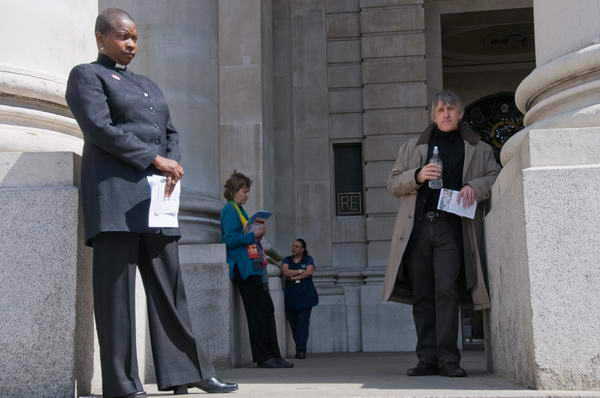
Other speakers listen as Ann Pettifor speaksat Royal Exchange. Larry Elliott at right.

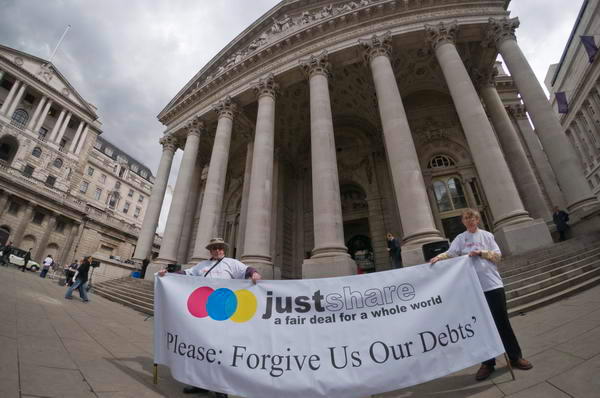
‘Just Share’, “a coalition of churches and development agencies seeking to engage with the City of London on issues of global economic injustice” and to “address the widening gap between rich and poor in the global economy” based at St Mary-le-Bow church in Cheapside had organised a protest in the heart of the City, in front of the Royal Exchange and at the side of the Bank of England.
Just Shares, Riverside & No to the Crook, the Toff, The Fascist or Cop

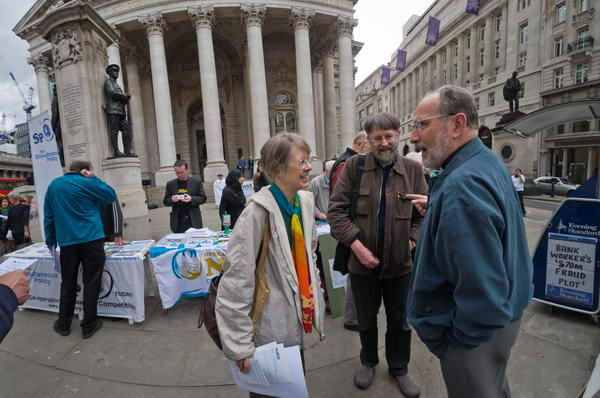
I don’t think anyone at the Bank was listening to Ann Pettifor, Guardian economist Larry Elliott or the others as they spoke on the steps of the Royal Exchange, or took seriously the seminar later by Pettifor in one of Hawksmoor’s finest churches, St Mary Woolnoth, where former slave captain John Newton, writer of ‘Amazing Grace‘, preached his last 28 years.
Just Shares, Riverside & No to the Crook, the Toff, The Fascist or Cop

She argued that current global debt-based financial systems are unsustainable and that structural change is necessary which gives proper regard to actual production, and the rediscovery of the insights of earlier Christian (and of course Muslim) traditions.

more pictures


London Riverside – South Bank and Southwark
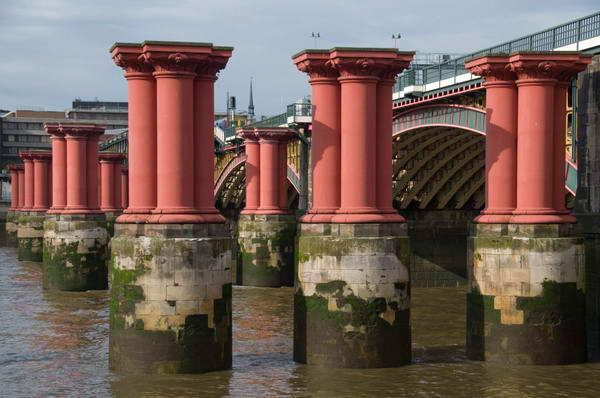
Just Shares, Riverside & No to the Crook, the Toff, The Fascist or Cop

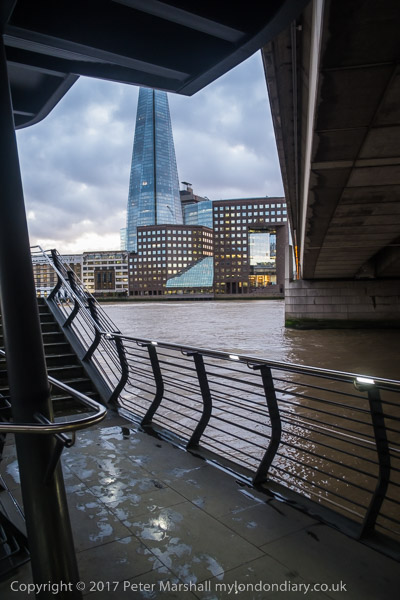
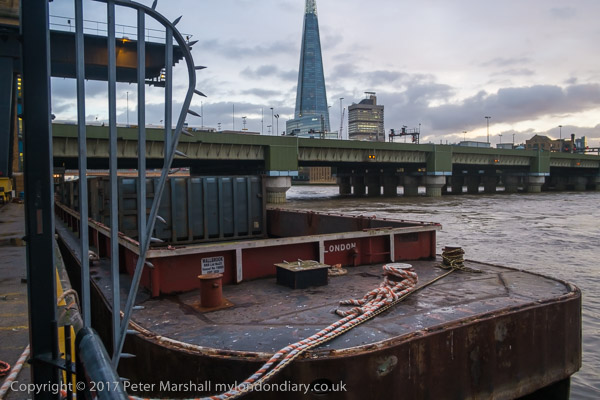
After visiting an exhibition at the Hayward Gallery on the South Bank next to Waterloo Bridge I walked slowly along the riverside and took a few pictures.
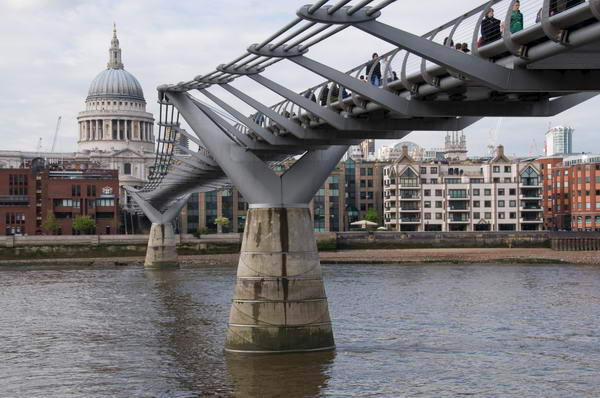
Just Shares, Riverside & No to the Crook, the Toff, The Fascist or Cop

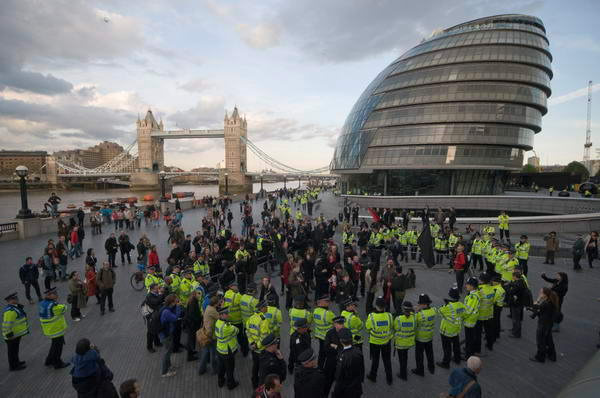
I was on my way to London’s City Hall, then close to Tower Bridge, owned by the government of Kuwait. In 2021 City Hall moved to a GLA-owned property in Newham, some miles to the east. The results of the London Mayoral Election were expected to be announced there in the early evening.

A few more pictures.


No to the Crook, the Toff, The Fascist or Cop -City Hall, Southwark
Just Shares, Riverside & No to the Crook, the Toff, The Fascist or Cop

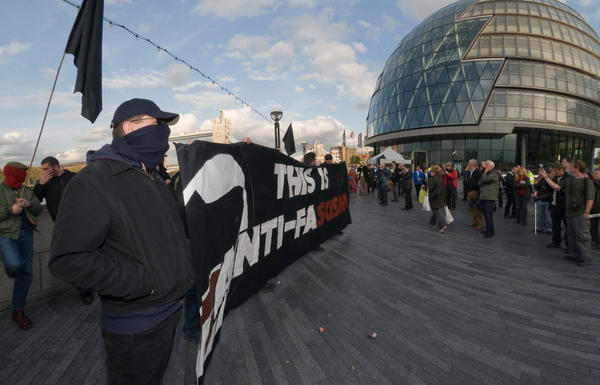
I sat on a wall close to City Hall reading John Updike’s novel ‘Terrorist’ which is perhaps why I attracted quite so much attention from a Metropolitan police FIT team (Forward Intelligence Team) photographer who took a number of photographs of me sitting there. I don’t object to being photographed, but was a little surprised when later I put in a Freedom of Information request to find the Met claimed they had no pictures of me, despite having photographed me working at many protests.
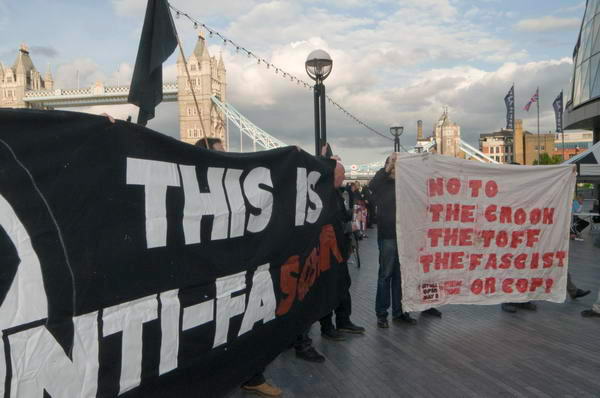
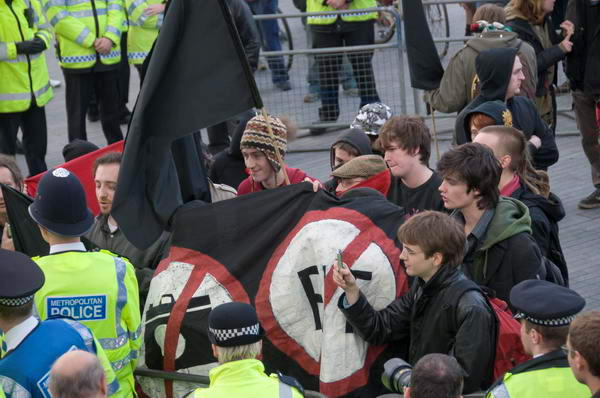
Protesters from various anarchist groups including Class War had come to City Hall to wait for the new London Mayor to be announced, though they were clear that they were against all the candidates – who they described as the Crook, the Toff, The Fascist and the Cop (there were six others also standing including Green Party candidate Sian Berry who got more votes than “the fascist” BNP candidate.
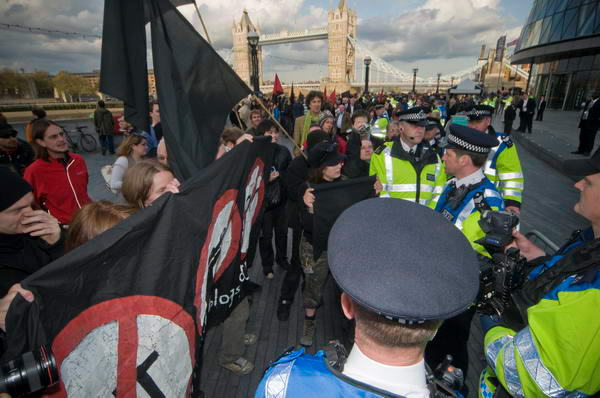
The protesters were allowed to protest in front of City Hall for around 35 minutes until Fitwatch went into action to frustrate the FIT teams (who could really use a little more intelligence) enclosing one of them in their banner.
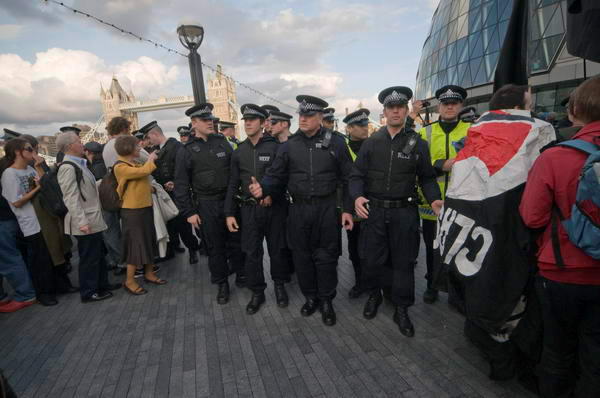
Police called up their waiting reinforcements and the TSG arrived four minutles later and began to push the demonstrators, along with some bystanders, mainly tourists, towards the waiting pen which had been set up a short distance away.
One French woman was bemused. “But why are they just letting themselves be pushed” she asked me as I took photographs. “Because this is England and not France” I replied.
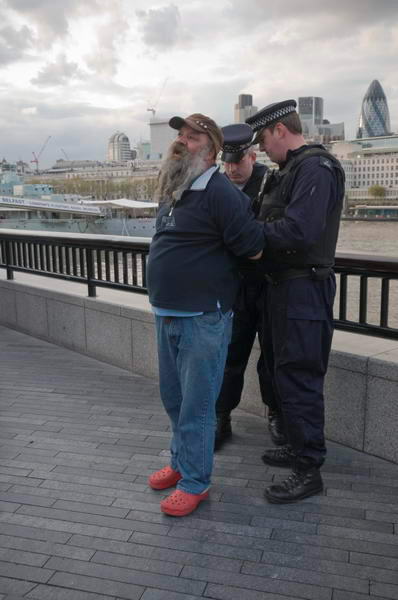
I watched as police told a man leaning peacefully on the river wall watching that he had to move as he was “obstructing the highway“. Clearly he wasn’t (though the police were) and he refused to move. They dragged him from the wall, claimed he was struggling (visibly he wasn’t), handcuffed him and led him away to one of the over 40 police vans parked nearby.

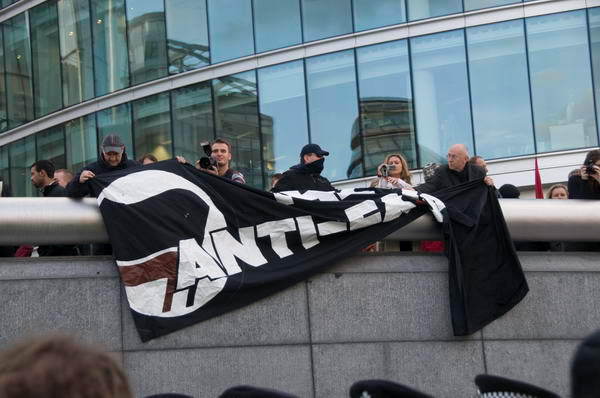
I showed my press card and for once was allowed through the police line obstructing the riverside path and made my way to a public balcony overlooking the area. “Cannier protesters had moved away faster, and were able to display their banner” for a couple of minutes but as I arrived they saw the police coming after them and made a run for a nearby pub.
The police obviously couldn’t be bothered to chase them, and contented themselves with moving the innocent public away from the balcony, and after a short time, also moving the press.” I joined the protesters in the pub for a drink before leaving for home.
By the time I arrived home Boris Johnson (the Toff) had been announced as the winner and London suffered from a dysfunctional mayor for the next 8 years as he was again elected in 2012. Later those the police had penned were allowed to go home.

Many more pictures.


FlickrFacebookMy London DiaryHull PhotosLea ValleyParis
London’s Industrial HeritageLondon Photos

All photographs on this page are copyright © Peter Marshall.
Contact me to buy prints or licence to reproduce.
Deptford & Greenwich – 2005

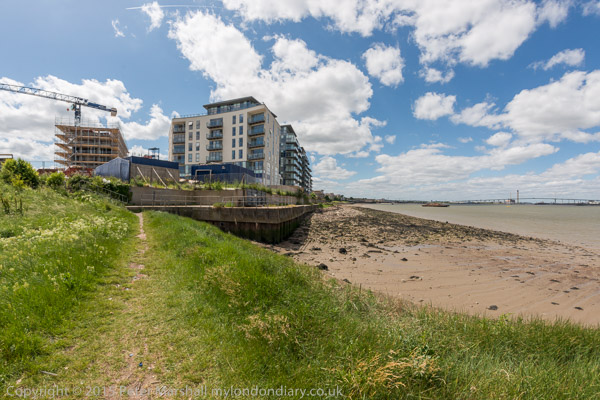
Deptford & Greenwich: Some pictures from two bike rides in April 2005, the second cut rather short by a puncture, around one of my favourite areas of London, mainly along the southern bank of the River Thames. The area has changed fairly dramatically in recent years with new blocks of riverside flats replacing riverside industry, much of which had already ceased work by 2005. I first photographed here around 1980 and it still now makes an interesting walk (or ride) and I’ve done most or all of it a few times since 2005.

Deptford & Greenwich - 2005
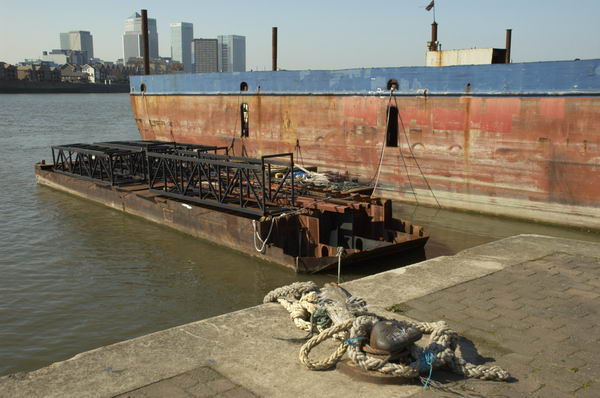
River Thames and Drydock, North Greenwich.

As usual I’ll post a slightly amended version of what I wrote at the time on My London Diary together with links to that site which has some more pictures. But I didn’t write anything about the actual pictures except the captions.

Deptford & Greenwich - 2005
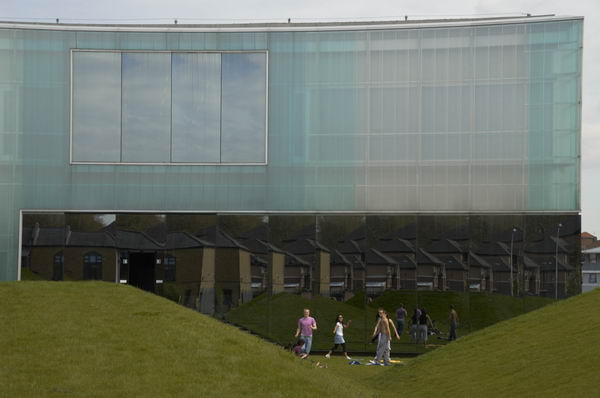
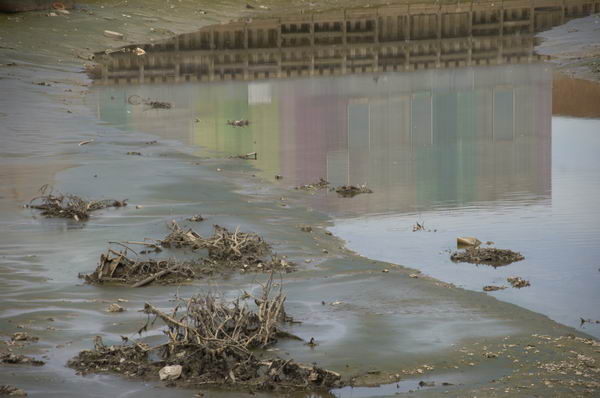
Reflection of the Laban building in Deptford Creek, London.

It was a fine sunny day on Thursday 21 April 2005 and I put my Brompton folding bike on the train to Waterloo, then cycled east from there to Deptford and Geenwich, taking another trip along one of my favourite riverside paths around the Greenwich Peninsula.

Deptford & Greenwich - 2005
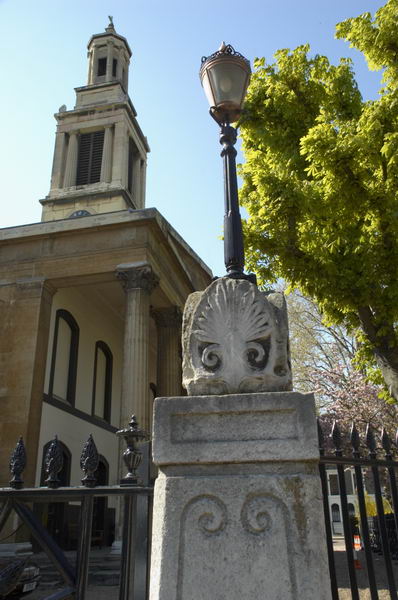
Trinity Square, Southwark, London SE1. Church is now a rehearsal studio

North Greenwich is still interesting, although the area by the Dome is now rather bleak. Time went surprisingly quickly, and I had only got just past the Dome when it was time to make my way back.

Deptford & Greenwich - 2005
Dry Dock, North Greenwich, London.

Just over a week later I tried to take up the ride from where I left off, but only made it as far as the footbridge over Deptford Creek, when I heard a loud bang as my rear tyre punctured. I should have stopped, mended the puncture and gone on, but I couldn’t face it.

Deptford & Greenwich - 2005
Deptford Creek close to its junction with RIver Thames, Deptford, London.

I wheeled the bike to Greenwich station, got on the train and came home. One of my few gripes about the Brompton is that mending punctures is a bit of a pain; the small tyres are hard to take off and even harder to replace, and if you want to take the rear wheel off, it is a rather tricky business that I’ve yet to master. I have tyres with kevlar inserts that are supposed to be puncture-resistant, but they don’t seem very effective.

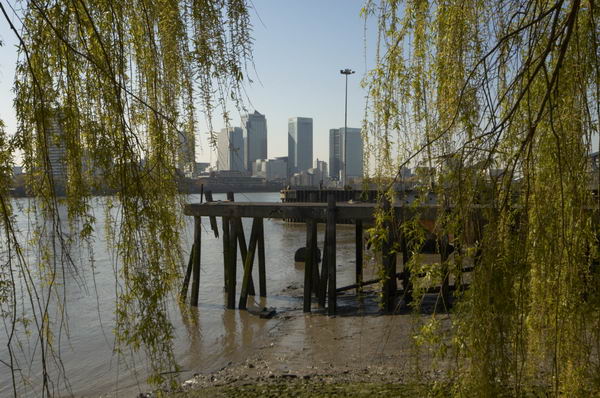
Canary Wharf and River Thames from North Greenwich, London

After I’d arrived home and had a cup of coffee, the puncture turned out to be a straightforward job.

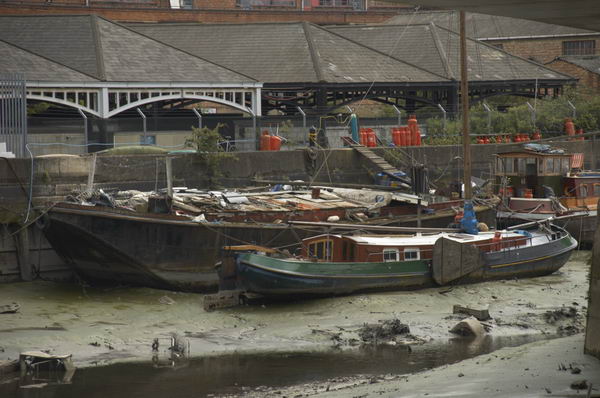
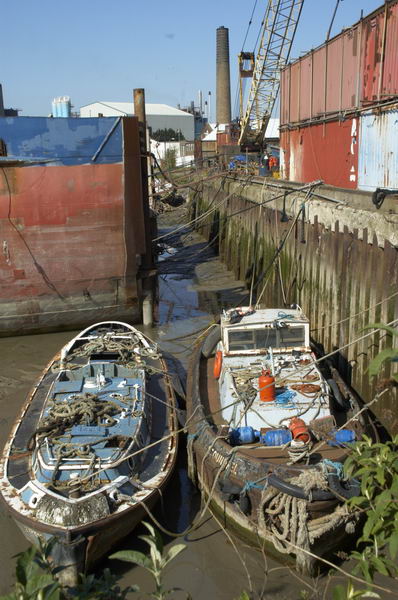
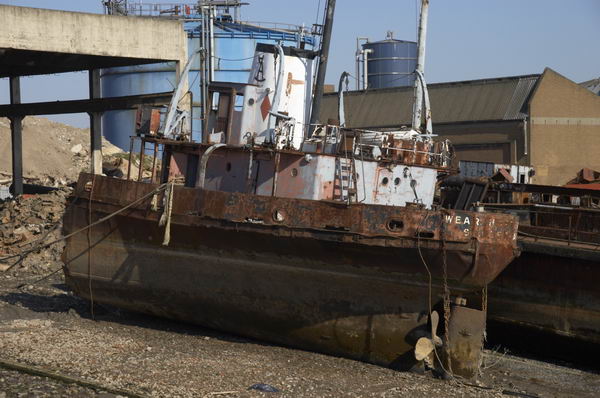
Ship breaker’s yard, North Greenwich, London, April 2005
Doorway, Albury St, Deptford,
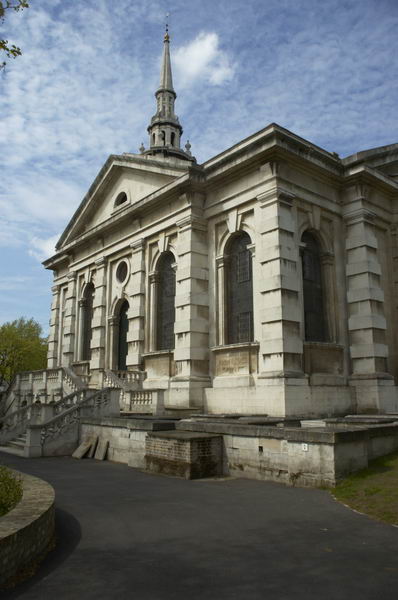
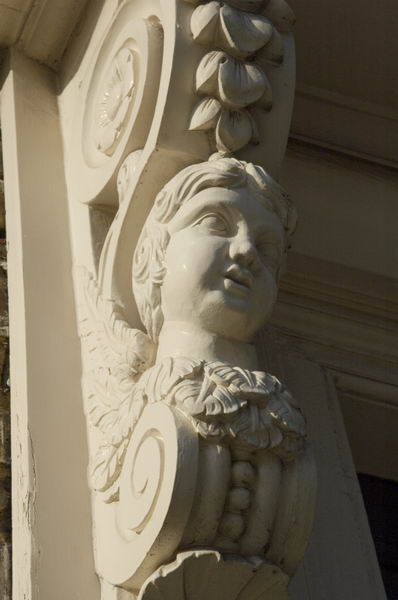
St Pauls, Deptford, London built by Thomas Archer in 1713
Laban dance centre
Deptford Creek

More pictures on My London Diary
From April 21st 2005
From April 29th 2005


FlickrFacebookMy London DiaryHull PhotosLea ValleyParis
London’s Industrial HeritageLondon Photos

All photographs on this page are copyright © Peter Marshall.
Contact me to buy prints or licence to reproduce.


Ellen MacArthur, Brian Haw & Ashura – 2005

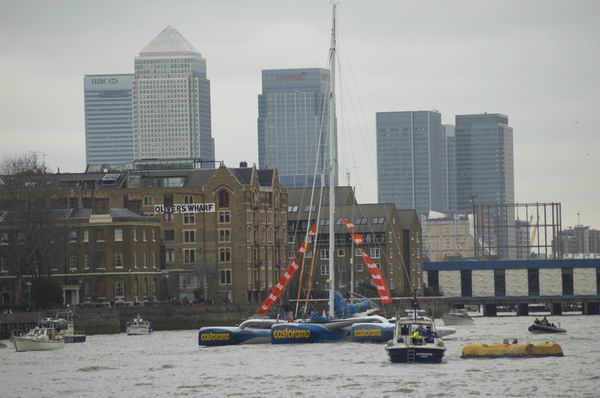
Ellen MacArthur, Brian Haw & Ashura. On 20th February 2005 I froze on the riverside in Bermondsey waiting for Ellen MacArthur’s catamaran to come up-river to Tower Bridge after her 71 day voyage had made her the fastest solo sailor to sail around the world. Five years later “she set up the Foundation in her name to accelerate the transition to a circular economy“. I didn’t get any very good pictures as I was far to far away as she raised here arm to acknowledge the crowd that had gathered to welcome her – I needed a much longer telephoto than I’ve ever had.

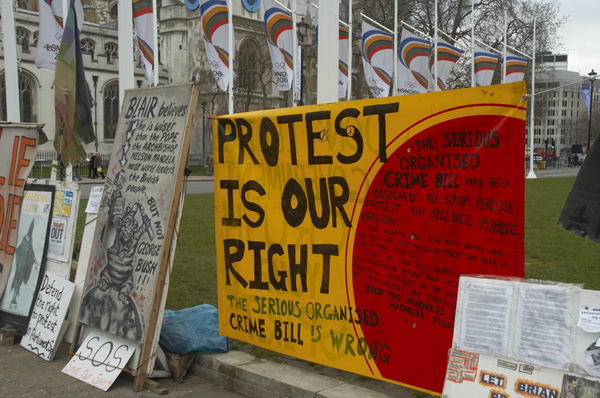
Afterwards I took a little walk around the Bermondsey riverside before making my way back to Parliament Square where I took a pictures of the display there by Brian Haw’s Peace Campaign, now joined by promotional flags for the 2012 Olympic bid. There was more of this in Trafalgar Square too, where I dropped in briefly to see some of our pictures and warm up.

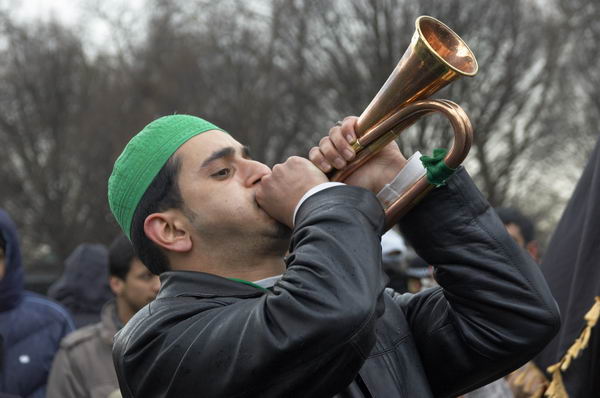
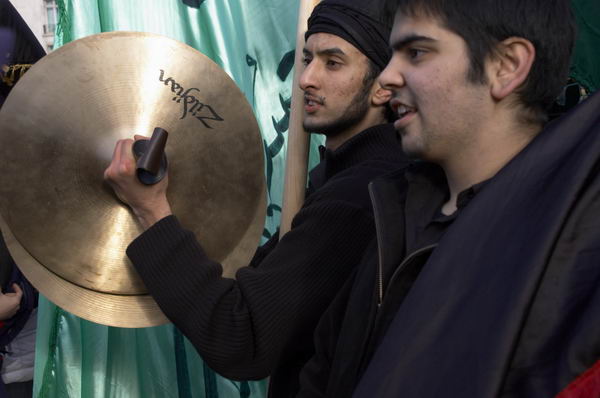
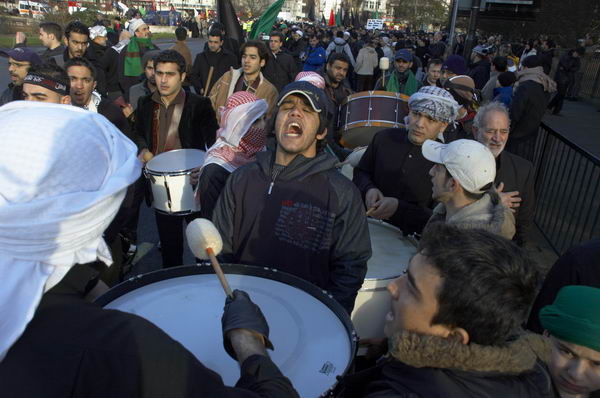
Finally at Marble Arch I photographed the start of the Ashura procession by Shi’ite Muslims. I didn’t stay too long as I was still cold and I was keen to get home and warm.

Here – with the usual minor corrections – is the piece I wrote in 2005 to go with the pictures on My London Diary:

Sunday was another bitter day, and I froze on Butlers Wharf waiting to see Ellen MacArthur aboard her catamaran as it was driven up to Tower Bridge and back from Greenwich, disappointingly not a sail in sight.

Ellen MacArthur is just visible, arm upraised in the centre of the picture

The crowds were not huge, but respectable, but like me, few could be bothered to go to Greenwich. The various press boats buzzing round the catamaran added a little interest, but made me glad I wasn’t on one.

I was more interested in taking some pictures along the riverside, then took the tube to Westminster to call in on Brian Haw, still in Parliament Square since 1st June 2001, with the government now cooking up a personal law against him.

The signs on the square are no augmented by a line of mute London 2012 flags, and along in Trafalgar Square (on my route to the National Gallery) was a giant tent and Olympian figure. Nobody can accuse London 2012 of not spending money on promoting their cause.
more pictures

Shi’ite Muslims in London were celebrating the stand of the grandson of the Prophet, Imam Hussain, who died a glorious martyr along with his small band of supporters at Karbala in Iraq, choosing death rather than dishonour, in the year 680. Ashura represents a key point of difference between Sunni and Shi’a traditions and Saddam Hussein rigidly prevented its observance in Iraq during his years in power.

more pictures


FlickrFacebookMy London DiaryHull PhotosLea ValleyParis
London’s Industrial HeritageLondon Photos

All photographs on this page are copyright © Peter Marshall.
Contact me to buy prints or licence to reproduce.


XR at the BBC, Noahs Ark & Nine Elms – 2018

XR at the BBC, Noahs Ark & Nine Elms: On Thursday 21st December 2018 after photographing a protest at the BBC by the Climate Media Coalition over the BBC failures in presenting the climate emergency and their programmes which encourage climate wrecking activities I took a few pictures of the nearby Noah’s Ark Earth Rescue display before going to the US Embassy to cover a protest there. Unfortunately although I and the police made it on time the protesters failed to turn up. I took a walk around the area – London’s largest development taking a few pictures and when after an hour only a single protester and another photographer had arrived I went home.


Extinction Rebellion at the BBC – Broadcasting House

XR at the BBC, Noahs Ark & Nine Elms - 2018

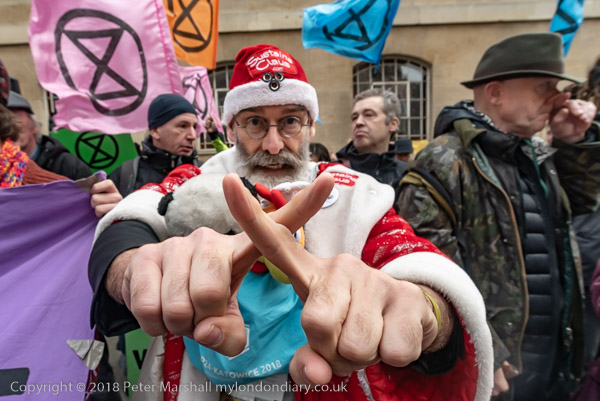
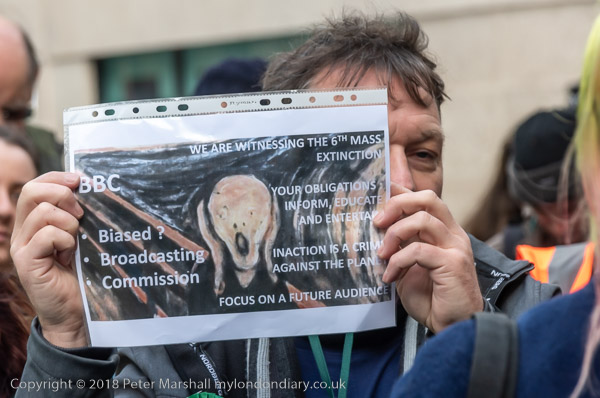
Climate campaigners from Extinction Rebellion came to the BBC to tell it to stop ignoring the climate emergency and mass extinction taking place and promoting destructive high-carbon living through programmes such as Top Gear and those on fashion, travel, makeovers etc.

XR at the BBC, Noahs Ark & Nine Elms - 2018

The BBC had long misused its policy of impartiality to give huge prominence to a small group of climate deniers, largely fossil fuel lobbyists, to give them equal airtime to the warnings supported by the huge body of scientific evidence on global warming caused by our increasing consumption of coal, oil and gas with the associated rise in greenhouse gases in the earth’s atmosphere.

XR at the BBC, Noahs Ark & Nine Elms - 2018

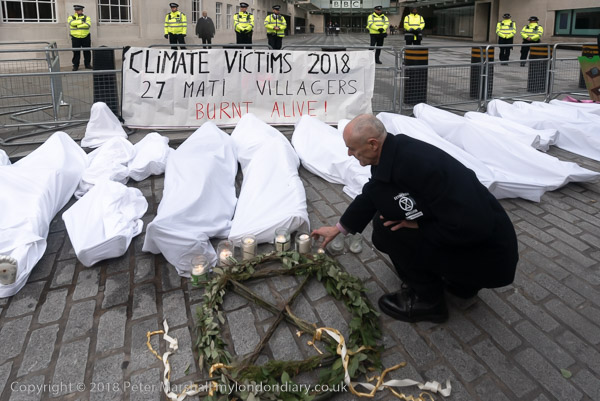
The protest had been organised by environmental campaigner Donnachadh McCarthy and the Climate Media Coalition and they had brought with them mannequins wrapped in white sheets to represent the 27 climate victims from the Greek Village of Mati, burned alive by a wildfire. They were among a hundred people are known to have died in Greece in the fires caused by global warming. They set these out in front of the BBC for a vigil at the start of the protest

XR at the BBC, Noahs Ark & Nine Elms - 2018

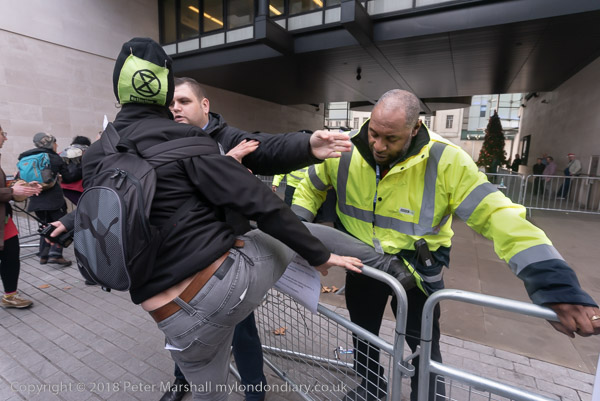
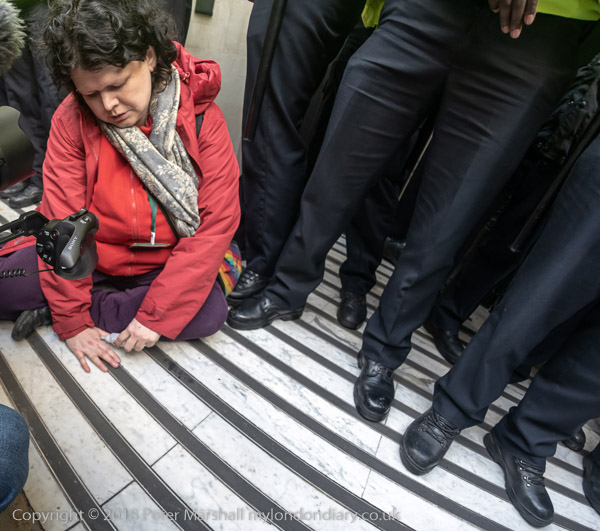
Later there were angry protests at both entrances to the BBC site which which was closed off by barriers and security staff. It took a couple of minutes through the local streets to get between the two and I was at the other one where two protesters had superglued their hands, one to the steps and another to the door, when Donnachadh McCarthy attempted to climb over the security banners and was arrested.

XR at the BBC, Noahs Ark & Nine Elms - 2018
A woman spreads superglue on her hand on the steps in front of the police guarding an entrance to the BBC’s Wogan House.

You can read more about the protest along with many pictures and captions on My London Diary at Extinction Rebellion at the BBC.


Humanity Face Extinction – Great Portland St

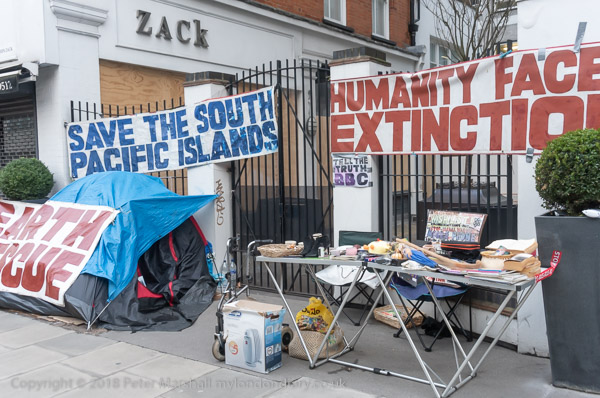
The protest at the BBC was continuing when I walked towards the tube to travel to a protest sceduled at the US Embassy in Nine Elms and stopped to take a few pictures of the Noah’s Ark Earth Rescue display.

This was deserted probably as those usually here were all at the BBC protest. The display was a part of the “eco-warriors’ worldwide publicity campaign to save the South Pacific island nations from vanishing beneath the rising sea levels and offering genuine solutions to save humanity from being driven to extinction by global warming as a result of the burning of fossil fuels.”

More pictures at Humanity Face Extinction


Nine Elms Wander

I arrived at the US Embassy at the time given on the press release and the Facebook event page for a protest against Trump’s announcement of the withdrawal of US troops from Syria to find two police vehicles but no protesters.

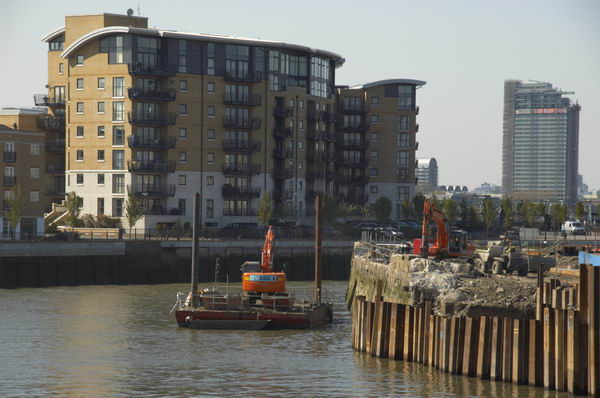
After waiting around ten minutes I took a walk around the area, part of a huge redevelopment between the former Battersea Power Station and Vauxhall which I’d been watching for some years from the train as I came into London and had often photographed through the train windows.

Under the River Thames construction was also taking place for London’s new super-sewer, the 16 mile long Thames Tideway Tunnel expected to be fully operational in 2025 and the first major upgrade to London’s sewage systems since Bazalgette in 1875.

I went back to the embassy an hour after the protest was due to start. By now one man had arrived also looking for the protest, and a second photographer. I walked back up to Vauxhall Station to see if I could find any protesters on their way, but met none and so I caught the train home.

More pictures at Nine Elms Wander.


FlickrFacebookMy London DiaryHull PhotosLea ValleyParis
London’s Industrial HeritageLondon Photos

All photographs on this page are copyright © Peter Marshall.
Contact me to buy prints or licence to reproduce.

Swan Upping – 2008

Swan Upping: On Monday 14 July 2008 I caught a train back from Hull so as to be back in Staines in time to meet the Swan Uppers as the last boats in the flotilla were leaving the Swan in Staines (or Egham Hythe) after stopping for lunch.

Swan Upping

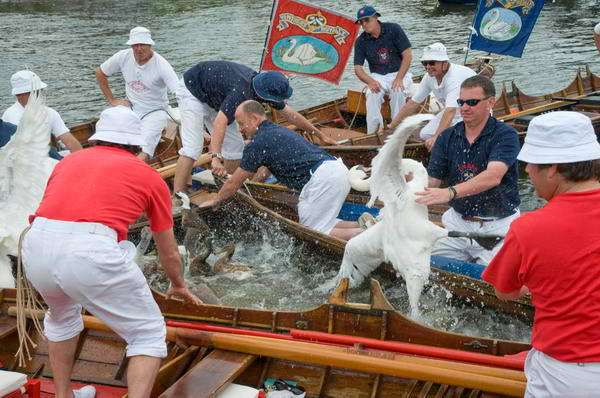
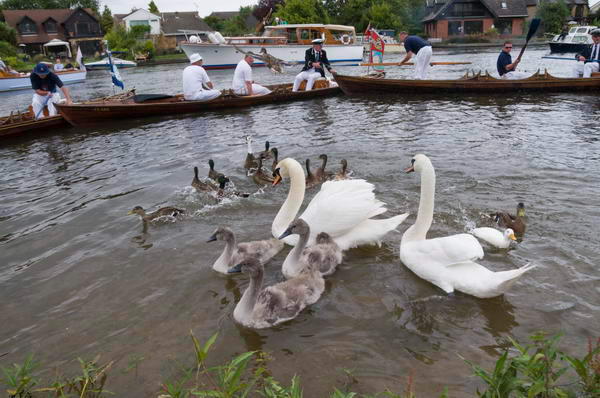
Every July two groups of Thames Watermen make their way upstream from Sunbury to Abingdon following a tradition established not long after the Norman conquest, though the earliest clear written records only date back to 1186.

Swan Upping
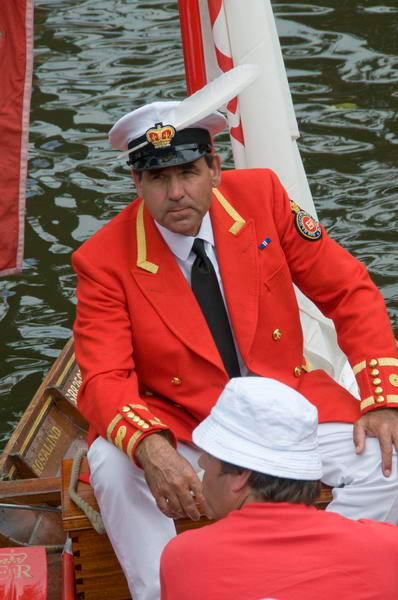
The Queen’s (now King’s) Swan Master David Barber

Ownership of swans is still controlled by ancient laws, with the Crown claiming ownership of all unmarked swans on open water.

Swan Upping

In medieval times, swans, or rather cygnets, were an important source of food and many had the right to own swans. Upping in those times was a way of establishing ownership and taking some cygnets to be fattened for the tables, but leaving enough birds to maintain the swan population at a healthy level. The upping was done in July when the cygnets were still too young to be able to fly away and escape.

Swan Upping

Today only three bodies apart from the Crown have maintained the right to own swans, a family with a Swannery on a lake in Abbotsbury and two London Livery companies who exercise their rights on those on the Thames.

The Vintners were officially granted their rights in 1472 and the Dyers at around the same date, though their right was then granted ‘by prescription’, a legal term meaning they had had the right as long as the law could remember – officially since the accession of Richard I in 1189.

Over the years chickens and ducks which could be easily farmed replaced swans as a source of food, and swans are now a protected species and it is illegal to kill them. The Royal Family may still retain the right to eat them, along with the fellows of St John’s College, Cambridge but neither body now does so.

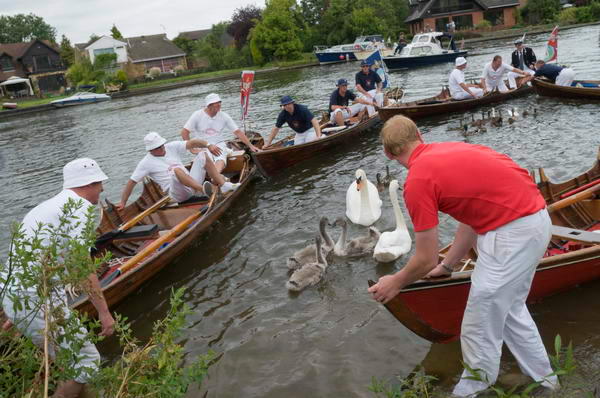
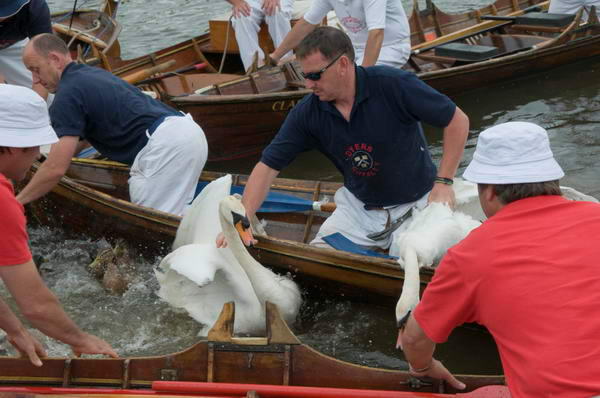
In more recent times, Swan Upping has come to play “an important role in the conservation of the mute swan and involves the King’s Swan Warden collecting data, assessing the health of young cygnets and examining them for any injuries.” The cygnets claimed by the Dyers and the Vintners used to have their beaks nicked with distinctive marks, but now the birds are simply ringed and their weight and length recorded before being returned carefully to the river, where they swim away apparently unaffected by their experience.

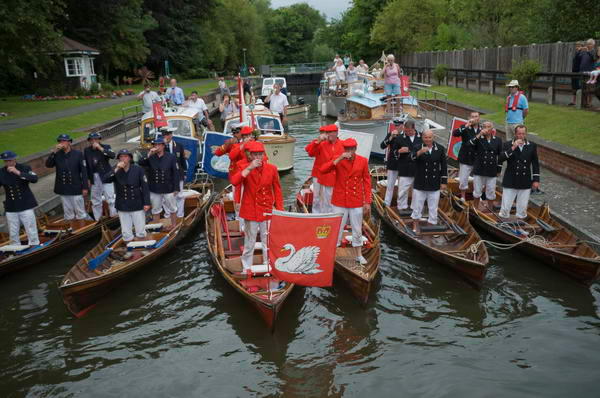
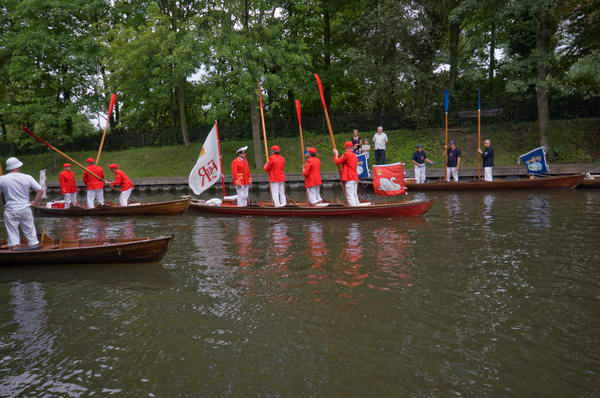
Six Thames skiffs rowed by watermen, two boats each for the Royal Swan Uppers, the Dyers and the Vintners make their way upstream, keeping a lookout for swans with cygnets. They wear red shirts for the Royals, blue for the Dyers and white for the Vintners.

Back when I first photographed the Uppers, most of the scouting for cygnets was actually carried out by an elderly man on a bicycle who I got to know slightly, and I rode along behind him. When Eric saw the birds he would try to entice them to a suitable spot on the bank with the help of crushed digestive biscuits.

In more recent years, a small dinghy with an outboard motor carrying the Warden of the Swans, on Oxford professor, has often driven a little ahead of the fleet to locate the swans. The ancient post of Keeper of the Kings Swans had been split into two new posts in 1993, the other part being the Marker of the Swans, who is rowed in one of the Royal skiffs.

Following behind the skiffs is a small flotilla of river cruisers, which includes a launch for the press. I did once book a place on this, but my place was cancelled shortly before the event when the major agencies and newspapers took an unusual interest, I think because the royals were taking an unusual interest.

But for most purposes, cycling along the towpath is the best way to cover the Swan Upping, and I was often there on the bank minutes before those on the press launch were able to land and join me. And the bank was usually the best place to be, closer to the action than the press launch could get.

At the end of the day the skiffs line up together in Romney Lock where the men put on their jackets and stand up in their boats to toast the Sovereign’s health.

From Romney lock I ran around a quarter of a mile along the riverside path where the Dyers and Vintners stand in their boats with oars vertical to salute the Royal uppers who go past between them with their oars raised, before all six boats row off to the boathouse at Eton, with another 4 days of upping ahead of them.

More pictures from the 2008 Swan Upping on My London Dairy where you can also see many more pictures from previous years:

Details of this year’s Swan Upping which begins on Monday 15th July 2024 are on the website of the Swan Marker to His Majesty the King. If the weather is good I might stroll down and take a few pictures.


FlickrFacebookMy London DiaryHull PhotosLea ValleyParis
London’s Industrial HeritageLondon Photos

All photographs on this page are copyright © Peter Marshall.
Contact me to buy prints or licence to reproduce.

Swanscombe Peninsula Kent 2015

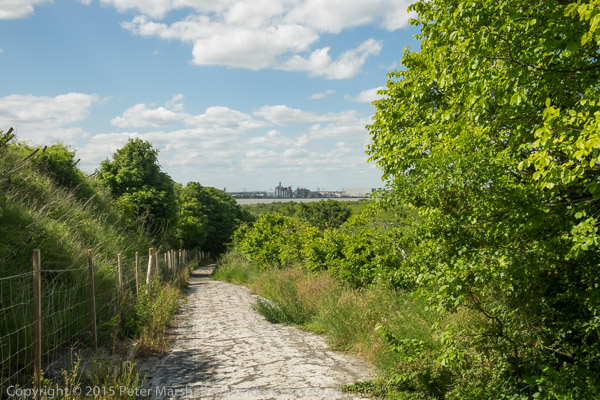
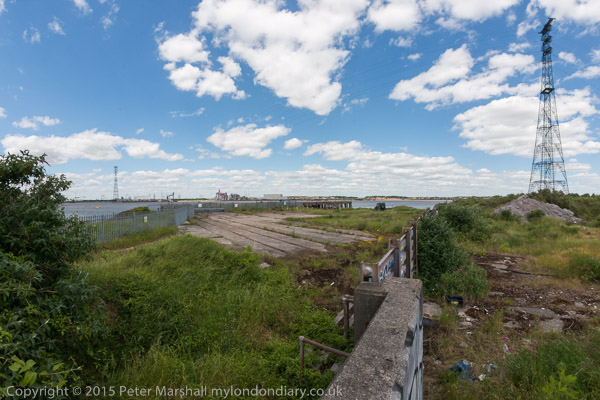
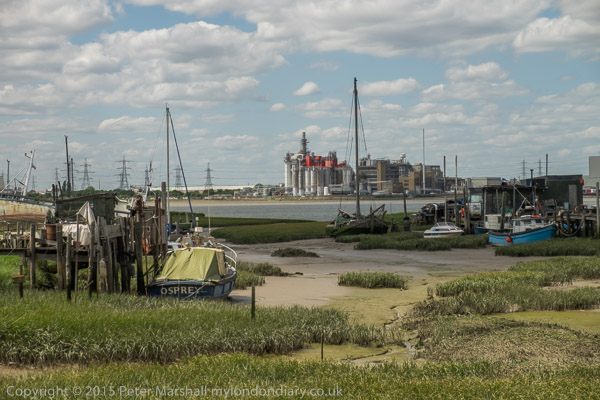
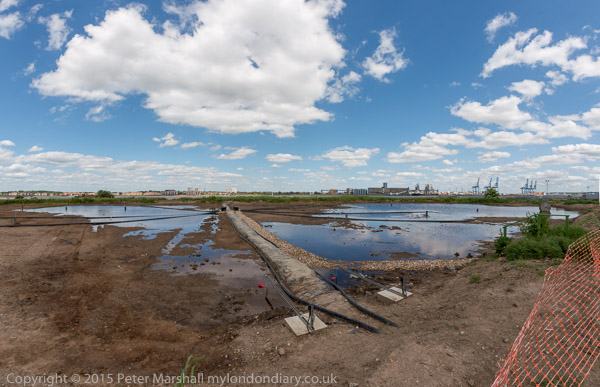
Swanscombe Peninsula Kent: I visited and photographed the Swanscombe peninsula in the 1980s as a part of an extensive project along the south bank of the River Thames east of London, returning occasionally over the years, particularly in the 2000s when I documented the building of the Channel Tunnel Rail Link which crosses under the river here.

Swanscombe Peninsula Kent

Back in the 1980s there was still a large cement industry here. But it was here that Portland Cement became the centre of the UK cement industry, with huge quarries digging out the chalk, often 100ft thick here, leaving huge gaps in the landscape. But most of these quarries were now worked out and the industry was fast declining and has now all gone.

Swanscombe Peninsula Kent

On my 2015 post Swanscombe on My London Diary you can read more about the industry. The Swanscombe cement plant was the l argest in the UK from 1840 until 1930, but was largely derelict when I took pictures in the ’80s though it only finally closed in 1990. That at neighbouring Northfleet, was only fully developed in 1970, although cement production had begun there in 1796. That site, the last working cement plant in the area, closed in 2008 was cleared and its landmark chimneys demolished in 2009-10.

Swanscombe Peninsula Kent

Chalk had been quarried to within a few feet of the main A226 London Road and in some places on both sides of the road, leaving it running on a narrow spine of chalk.

Swanscombe Peninsula Kent

From the road the Pilgrims Road leads down steeply to Swanscombe marshes, with some industrial developments in the former chalk pits on both sides.

Swanscombe Peninsula Kent

Kent Wildlife Trust describe the marshes as “Home to a remarkable mosaic of grasslands, coastal habitats, brownfield features, scrub and wetland” and I certainly found it a remarkable area both in the 1980s and in later visits – the last a year or so ago. My pictures more reflect an interest in industrial archaeology rathe than nature.

In 2012 plans were announced to turn 216 hectares of this site into a theme park, at first with the support of Paramount Pictures who withdrew their support for Paramount Park in 2017 with the proposed park being renamed London Resort. Paramount are also taking London Resort to the High Court over a financial deal after the London Resort was in danger of going bust, although they still apparently have an interest in providing content based on their block-buster films.

In 2015 it looked likely that Paramount Park would go ahead in the relatively near future, prompting me to get on my bike and revisit the area. In the post on My London Diary I give some details about my route. I think all of the site is privately owned but back then much was still open to the public to wander around. Since then there have been more fences and notices restricting public access but there is also a new section of the England Coast Path opened at the start of 2022 through here.

The English Resort plans are still in limbo and the planning permission has lapsed, although the company still believe they will go ahead at some time, others feel the project is dead. Development of the site became more complicated when it was declared as an SSSI on account of its jumping spiders in 2021, and its financial prospects are threatened by Universal Studios consideration to build a rival resort in the former brickworks near Bedford. And its unclear if there would be the money to go ahead.

Dartford Council has withdrawn its support for the project, as has the local MP, but it remains to be seen what attitude a new government will take towards the plans. Campiagners against it, including the council have called for it to lose its Nationally Significant Infrastructure Project status which would almost certainly be its death knell.

Of course this doesn’t mean that this remarkable piece of nature is safe from development, and if London Resort is ended parts of the area are likely to be developed for housing as prime riverside sites, though hopefully much will remain.

More at Swanscombe.


FlickrFacebookMy London DiaryHull PhotosLea ValleyParis
London’s Industrial HeritageLondon Photos

All photographs on this page are copyright © Peter Marshall.
Contact me to buy prints or licence to reproduce.

Nine Elms Riverside – July 1989

Nine Elms Riverside – July 1989: One of the benefits of working as a teacher as I still was in 1989 was certainly the long Summer holiday and I spent quite a lot of these taking photographs as well as going away for several weeks with my family – though some years this was also a photographic opportunity. And most years we also spent a week or so in Hull where I was able to add a few pictures to the work that had resulted in my exhibition Still Occupied in the Ferens Art Gallery there in 1983.

But our travels around the country in the Summer of 1989 – which as well as Hull included a week with a group of friends in a large holiday cottage in Scotland – only began in August, and the day after my visit to Hackney on Friday 28th July 1989 I returned to take up my work where I had left off earlier in Nine Elms.

Brunswick House, Market Towers, Wandsworth Rd, Vauxhall, Lambeth, 1989 89-7k-13

Tuuning west out of Vauxhall Station took me to the junction of Wandsworth Road and Nine Elms Lane. Brunswick House at right appeared in an earlier post on my walks in 1989. This mid 17th century house, extended in 1758, bought by in 1869 by “the London and South West Railway Company who used it as offices and a Scientific and Literary Institute. In 1994 it was sold to the railway staff association who again sold it in 2002. It is now a restaurant and the yard around it is used by an architectural salvage and supply company.

Market Towers was clearly a very much later building, or rather pair of buildings, the taller 290ft high with 23 floors, completed in 1975, with offices a pub, the Market Tavern, on the first floor. The pub was built to serve workers at the adjoining New Covent Garden Market completed in 1974 and its licence allowed it to open in the early hours. By the 1980s this had made it into “South London’s first gay pub with a 2am licence“.

According to Wikipedia, the buildings were bought by the misleadingly named property developer Green Property in 2008 and four years later they were given planning permission to redevelop. Instead they sold it to Chinese developer Dalian Wanda. It was demolished in 2014-5 who gained revised planning permission for two buildings containing 436 flats and a hotel, City Tower with 58 floors and 654ft tall and River Tower 42 floors and 525ft. The project was sold on to another Chinese company, and there were various problems over building contracts which delayed completion. The Park Hyatt London River Thames hotel is now predicted to open in mid-2024.

Nine Elms Cold Store, Nine Elms Lane, Nine Elms, Lambeth, 1989  89-7k-14
Nine Elms Cold Store, Nine Elms Lane, Nine Elms, Lambeth, 1989 89-7k-14

This tall, windowless monolith states across its top ‘NINE ELMS COLD STORE‘ and was built in 1964 on a former gas works site to store meat and other frozen goods brought by ship into the London Docks and transferred here by lighters. At its side was a large railway goods yard, from which these goods could be taken by rail as well as lorries from the site. But only a few years after its completion, London’s docks began to close and by 1979 it was redundant.

This gas works had closed in 1956 and the site was in use as a coach park when the cold store was built, and also included a small creek, Vauxhall Creek, which once had been the mouth of the River Effra, long culverted and diverted which was then filled in. After it ceased to be used as a cold store it stood for 20 years with various schemes for redevelopment coming to nothing. Part of the delay was caused by the huge cost of demolition, part by Lambeth Council not then wanting the kind of luxury riverside flats than now occupy the site, the 50 storey 594 ft St George Wharf Tower completed in 2014, as well as by some dodgy business dealings.

The cold store was used for various films as a dystopian urban location, was a dangerous gay cruising handily placed for the Market Tavern, as well as allegedly for “black magic, devil worship, sacrifices, and orgies” but was finally demolished in 1999.

River Thames, Riverside Walk, Nine Elms, Wandsworth, 1989 89-7k-15

I had crossed the border from Lambeth to Wandsworth and beyond the cold store the Riverside Walk had been opened up by the council as far as the Thames Water pumping station at Heathwall and after a short diversion past that to Kirtling Street, some years later in 1996 becoming a part of the new Thames Path.

This view from the path across the river past a moored lighter is from its start and there are now new buildings on the riverbank at the left, but the rest remain. These buildings are on Grosvenor Road, Pimlico. You can see the tower of Westminster Cathedral in the distance and I think to its left is the rather ugly block which contains Pimlico station.

A large brick arch on the riverbank is the ancient mouth of the River Tyburn, long since culverted. Plans for the resurfacing of the river by the Tyburn Angling Society seem limited to Mayfair and not to extend to the Thames, though the chances of it happening are as close to zero as can be imagined.

Battersea Power Station, River Thames, Riverside Walk, Nine Elms, Wandsworth, 1989 89-7l-02

The bend of the river here makes it look as if I was walking on water to take this picture, but my feet were firmly on dry land. Battersea Power Station has since then been given something of a facelift, with the removal of some of the more interesting features of the riverfront, as well as now being surrounded on several sides by large blocks of flats and being turned into a wasteful luxury shopping centre.

The pair of distant chimneys just to its right are Lots Road Power Station. The nearer bridge is Grosvenor Railway Bridge taking trains into Victoria Station, but Chelsea Bridge just upriver can also be seen clearly.

Battersea Power Station, River Thames, Riverside Walk, Nine Elms, Wandsworth, 1989  89-7l-64
Battersea Power Station, River Thames, Riverside Walk, Nine Elms, Wandsworth, 1989 89-7l-64

Another view upstream from the riverside path, which shows all four chimneys of Battersea Power Station as well as the riverside path and some of the earlier flats built beside the river here, Elm Quay Court. This luxury flat development built in 1976-8 includes secure underground parking and a 47ft swimming pool, gym and sauna.

Elm Quay Court, 30 Nine Elms Lane, Wandsworth, 1989 89-7l-54

A view of the Elm Quay Court flats from the road. The new US Embassy was built opposite them. Neither building seems attractive to me. The best feature of the US Embassy is the moat which runs along only its north side, and the best feature of Elm Quay Court is the riverside walk, which enables the public to walk past it almost without seeing the building.

My account of my walk will continue in a later post.


FlickrFacebookMy London DiaryHull PhotosLea ValleyParis
London’s Industrial HeritageLondon Photos

All photographs on this page are copyright © Peter Marshall. Contact me to buy prints or licence to reproduce.

Our Pre-Chistmas City Walk – 2017

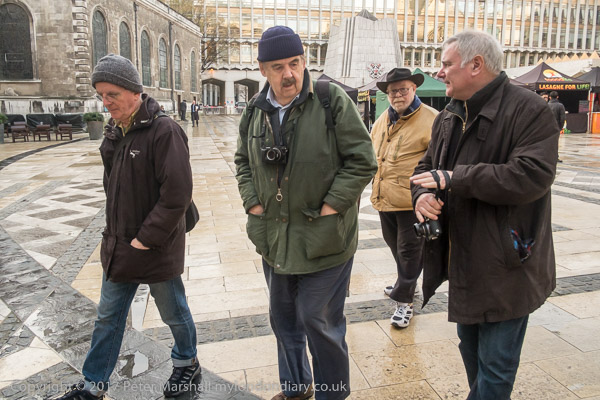
Our Pre-Chistmas City Walk – On Thursday 7th November 2017 I met up old friends, all photographers, for the early Christmas social event we’ve organised most years. It had proved difficult to find a date everyone could make and several of the group were missing and we were down to five of us.

Our Pre-Chistmas City Walk
Four – and I was holding the camera

It’s a sobering thought that six years on only three of the five are still in the land of the living, with first Alex and more recently John having died. I’ve several times written about John Benton-Harris on this site over the years and he also years ago contributed two guest posts, as well as featuring his surprise 70th birthday party in 2009.

Our Pre-Chistmas City Walk

I’d worked with John in recent years on producing a number of books, including a few for the Café Royal Books series, including his Saint Patrick’s People, though his major work, ‘Mad Hatters’ on the English sadly remains unpublished. And I’d gone with him taking pictures to St Patrick’s Day events in London and elsewhere. Although he had some health problems and was in his 80s, his death still came as a great shock to us all.

Our Pre-Chistmas City Walk

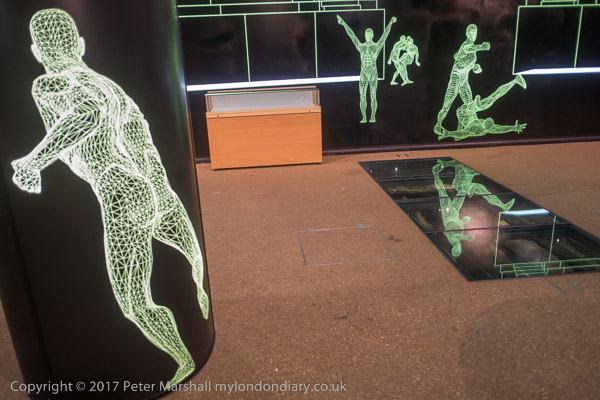
We met at St Paul’s Underground Station and our first visit was to the Guildhall Art Gallery, where we went “down into its depths where a few years ago the remains of the Roman Coliseum were discovered and are now rather well displayed, before looking at the City of London’s art collection on display. It’s a rather mixed bunch with some fine works ancient and modern along with some rather tedious municipal records of great occasions that would have looked fine in the Illustrated London News but don’t really cut it as vast canvasses on the gallery wall.” (Quotes her are from my article written here in December 2017)

Our Pre-Chistmas City Walk

Some years earlier in 2005 I had been to the opening of a show at the gallery featuring works by some of London’s best-known living painters curated by Mireille Gailinou for a now defunct organisation I was then the treasurer of, London Arts Café, ‘London Now – CITY OF HEAVEN CITY OF HELL’ and had given my opinion on the gallery’s collection to the then curator who was very shocked when I’d said I would quite happily burn one of the largest canvases. Fortunately that had not resulted in me being banned from the gallery!

That show is now long gone, as too is the London Arts Café, but its web site with more about this and other shows and events we organised remains currently on-line. And despite my opinions the Guildhall Art Gallery is still worth visiting both for the artworks and certainly for its Roman remains and entry is free.

From there we walked “on past the Bank of England we walked into Adams Court and walked around in a circle before driven by thirst to the Crosse Keys, where I failed to resist the temptation of a pint of Smokestack Lightnin’, a beer from the Dorking Brewery, named after my favourite Howling Wolf track – I still somewhere have the 45rpm record. It was the first time I’ve come across the idea of a ‘smoked’ beer, and while interesting I think it would be best drunk around a bonfire.”

John had left us when we went into the pub, saying there was still light to take photographs and he wanted to make the most of it, but he seemed seldom to enjoy coming with us into pubs. The Crosse Keys is one of many interesting buildings – old pubs, theatres, cinemas, banks etc – around the country that Wetherspoons have taken over and preserved and though their owner has terrible politics and the chain poor conditions of service they offer cheap and generally well-kept beer and plain good-value food. Obviously their staff should unionise and fight for better terms.

We didn’t stay long in the pub, just a quick pint on the balcony and a short visit to the toilets in the depths, before leaving. Alex said goodbye here, seeing a bus that would take him back home to Hackney rather than go west with us, and I led the remaining two “down to the river, where we turned upstream along the Thames path. The light was fading a little, but perhaps becoming more interesting, but when we left the river at Queenhithe it was time to make our way back to St Paul’s to catch a bus and get a table for our meal together before the city workers crowded in.”

All the pictures accompanying this post were made with a Fuji X-E1 and 18mm Fuji lens, an almost pocketable combination. The 18mm f2 is probably my favourite Fuji lens, though often I prefer the added flexibility of the slightly slower but still fairly compact 18-55mm zoom. Later I moved up to the X-E3, which has better auto-focus and a significantly larger sensor and is slightly smaller, but both are still very usable cameras, and the X-E1 is now available secondhand pretty cheaply. It’s still a great camera for street photography and as an introduction to the Fuji range.

A few more pictures at Photographers Walk.


Greenwich Walk – 2018

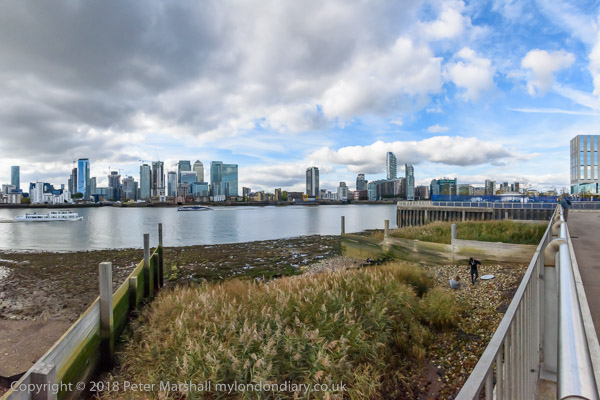
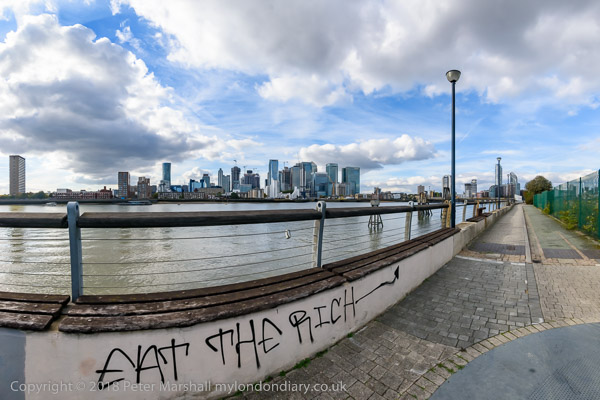
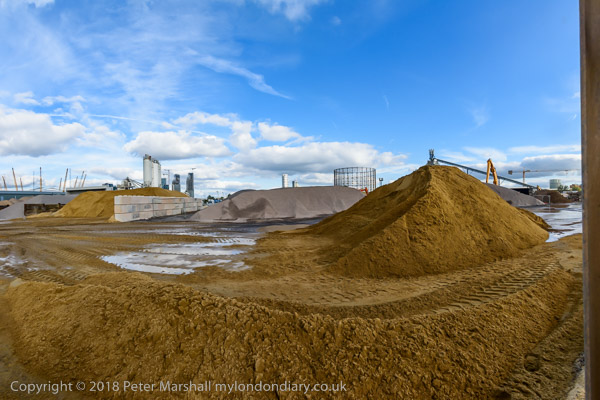
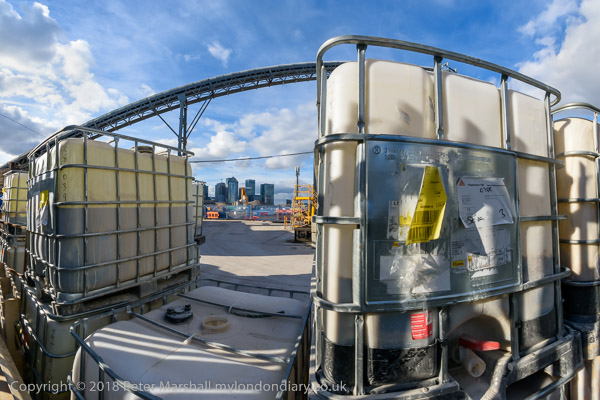
Greenwich Walk: On Thursday 18th October 2018 I walked with two or three other photographers from North Greenwich Station to the centre of Greenwich and made the pictures in this post. You can see many more of them in a post on My London Diary, Greenwich Walk.

Greenwich Walk

Recently on >Re:PHOTO I’ve published a series of posts about my walks in London back in the 1980s, along with some of the pictures I took then which are now in my albums on Flickr. The most recent walk I’ve featured has been in Brixton and Stockwell and began with Stockwell Park, Bus Garage, Tower and Mason, and I’ve still to finish the posts on this, and will do so shortly.

Greenwich Walk

But I’ve continued to walk around London, if less frequently than before in recent years. My walks now are rather shorter in length and duration and are mostly together with a few friends, other photographers who sometimes lure me into pubs on the way (I’m easily tempted.) And we almost always end up with a meal together in one.

Greenwich Walk

Photographically things are rather different too. I don’t even always take any photographs and am no longer working on the kind of extended projects which I had back in those earlier days, recording the fabric of the city and in particular those areas undergoing substantial change – such as the whole of London’s docklands.

Greenwich Walk

Back in the 80s and 90s I always worked with at least two cameras, one with black and white film and the other with colour. So far I’ve included very little of the colour work in those posts here, in part because I was working on a different project with the colour. You can see more of the colour work in the online project initially put together as a dummy for an as yet unpublished book in the early 1990s, ‘Café Ideal, Cool Blondes & Paradise‘.

More recently several web sites have published features using mainly these colour pictures from my Flickr albums sometimes along with some of the black and white. The most recent of these is on Flashbak, ‘34 Photos From A Walk Around Tooting, South London In 1990‘. It puts together images from several visits to the area and includes a few black and white images of people on the streets, In the introduction Paul Sorene comments “What we love about Peter’s pictures is that he shows us the everyday things we saw but didn’t much notice. Now that we get to look again, things looks strangely familiar.” I think this is about the 12th set of my pictures on that site.

But now I only take one camera on my walks, and always work in colour as the camera is digital. I could easily switch the images to black and white, but have only done so extremely rarely.

The other large change for me is the ease with which I can now make panoramic views, no longer needing to carry a separate camera for these, just the right lens. Many of the images from my walk on Thursday 18th October 2018 are panoramic with a horizontal angle of view of around 145 degrees even though they have a ‘normal’ aspect ratio of 3:2 as they also have a large vertical angle of view. Just a few are cropped to a more panoramic format.

Finally, here is the paragraph I wrote about the area in 2018:

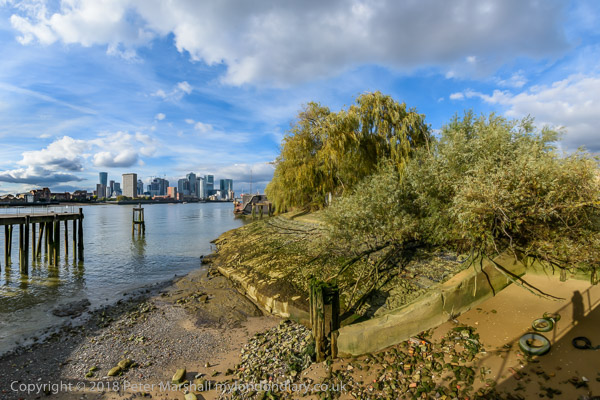
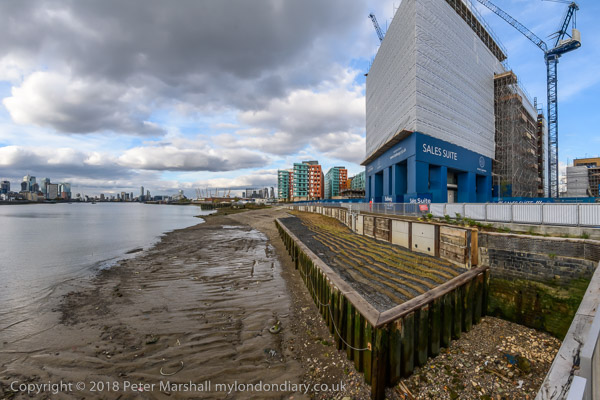
I first walked along here back in 1980, and have done so a number of times since, though in recent years much of the riverside path has been closed as the old wharves are being replaced by luxury flats. It is still an interesting walk, though it has lost virtually all of the industrial interest it once had. A River Thames that is rapidly becoming lined by new and largely characterless buildings is at times a sad state, but there still remain some liminal landscapes and surprising vistas.

Greenwich Walk on My London Diary

Thames Estuary – Benfleet, Leigh and Canvey – 2005

Thames Estuary – Benfleet, Leigh and Canvey. I’ve photographed the Thames east of London on many occasions and found much of interest, but I’ve relatively seldom ventured right out to the real Thames Estaury, though there is no real consensus where that begins as the Wikipedia entry discuses. For some purposes it includes virtually all of the river in London, the tidal Thames which begins at Teddington, and extends all the way east, at least to the Isle of Grain.

Thames Estuary - Benfleet, Leigh and Canvey

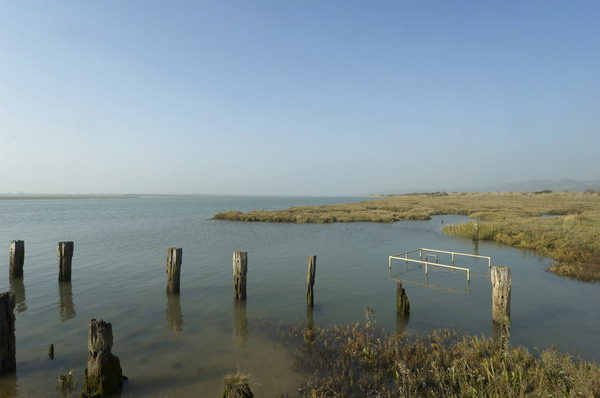
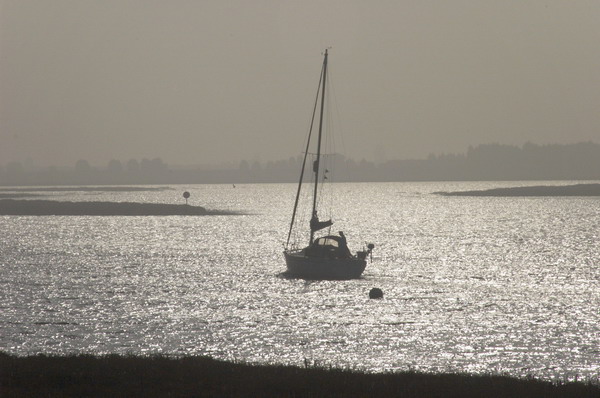
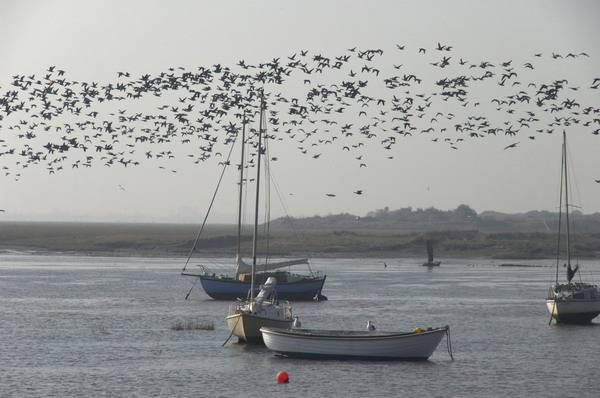
In my own own working definition I think of the estuary as meaning the river to the east of Greater London, the shores of Essex and Kent, perhaps as far as Southend to the north and Grain on the south. But by any definition this day of cycling out from Benfleet in Essex was definitely around the estuary.

Thames Estuary - Benfleet, Leigh and Canvey

Back in May 2023 I published here a piece here on the exhibition Estuary held ten years earlier to celebrate the 10th anniversary of the Museum of London Docklands in 2013 when I was delighted the show included ten of my panoramas along with work by eleven artists, some of them rather well-known. But none of the pictures in the Museum collection were taken on this ride, where I made only a few panoramas, none of which are yet on-line.

Thames Estuary - Benfleet, Leigh and Canvey

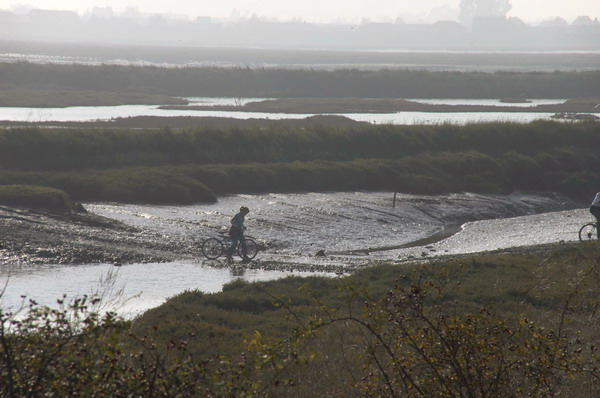
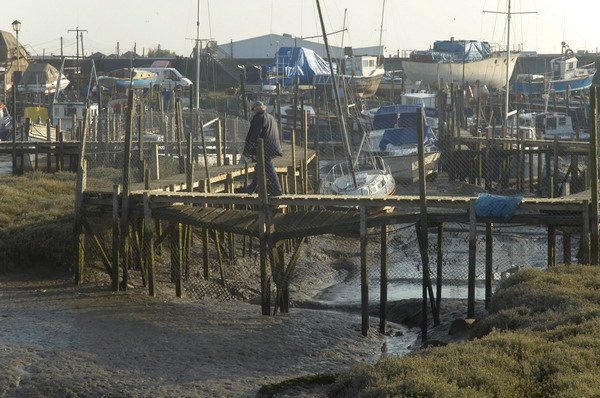
On Saturday 15 October 2005 I took my Brompton on the train to London, then on the tube to West Ham where I changed to a train to Benfleet station in South Benfleet. The road leads down from here towards Canvey Island, but a track leads off to the east just before the bridge running alongside Benfleet Creek. The public footpath I could cycle along leads all the way beside the Creek and then between Hadleigh Marshes and Two Tree Island and on to a bridge over the railway close to Leigh-on-Sea Station.

Thames Estuary - Benfleet, Leigh and Canvey

From there I had to cycle along the road, rather less pleasant as there was quite a lot of traffic and even in October quite a few people who had come to enjoy the seaside. Leigh has pubs, tea rooms, fishing boats and more, but I’d soon had enough and turned around to ride back.

This time I took the road and bridge across to Two Tree Island. There is a crossing to the island you can take at low water but I didn’t take my bike across although I saw others doing so. There are rather more than two trees, but only one road, though with several car parks and it ends at a jetty where I could look across Hadleigh Ray to Canvey Island but go no further.

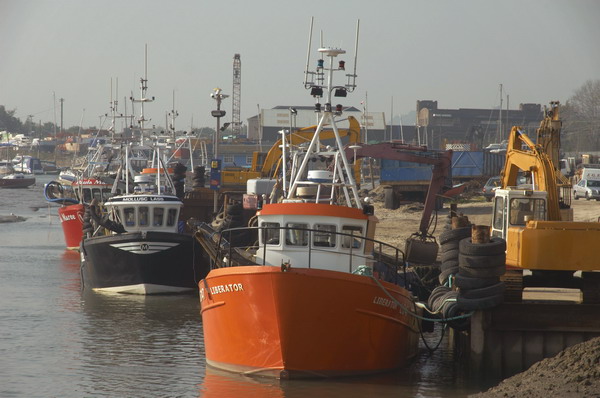
I turned around, cycled back over the bridge and along the footpath back to the bridge to Canvey Island which I then spent some time exploring and photographing. I think I had last been here in 1982 did recognise some of the places I’d photographed back then, but also found quite a lot more to photograph. I don’t think any of those earlier images are on-line as by the time I scanned them the images had deteriorated badly.

Too soon it was time to get back on my Brompton again and ride back to Benfleet for the train back to London.

See many more pictures from my ride on My London Diary.