Guns & Knives, Pineapple, Orange & Thames 2008

Guns & Knives, Pineapple, Orange & Thames: On Saturday 20th September 2008 after photographing a protest over gun and knife crime, a festival in Stockwell and being assaulted at an Orange March I went to Open House Day at Trinity Buoy Wharf and then crossed the river to walk along the riverside path from North Greenwich to Greenwich.


The Peoples March – Kennington Park
Guns & Knives, Pineapple, Orange & Thames

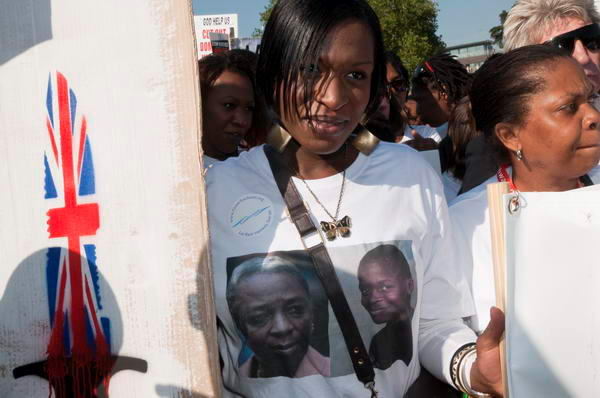
The Peoples March’ against gun and knife crime from Kennington Park was organised by the Damilola Taylor Trust and other organisations and supported by the Daily Mirror and Choice FM and came at the end of London Peace Week.

Guns & Knives, Pineapple, Orange & Thames

In 2007 there were 26 teenagers killed on the streets of London, and many of those on the march “were the families and friends of young people whose lives were ended prematurely by violent death, and the grief felt by many of those I photographed was impossible to miss. They were stricken and angry and demanding that something was done to stop the killing.”

These deaths continue. They peaked in 2021 when 30 were killed, but most years there have been around 20 such tragic deaths. Despite many marches such as this and projects such as the Violence Reduction Unit set up in 2019 by London Mayor Sadiq Khan these deaths continue.

Prime Minister Keir Starmer met with victims’ families just a few days after the election and earlier this month held a knife crime summit at Downing Street aimed at halving it over the next decade. Earlier in the year King Charles and actor Idris Elba hosted a mini-summit on knife crime at St James’s Palace in July. A ban on the sale and possession of zombie-style knives and machetes will come into force in 4 days time.

Guns & Knives, Pineapple, Orange & Thames

It remains to be seen if these initiatives will have any effect. Back in 2008 I commented that “Effective action would involve huge cultural shifts and a direction of change that would reverse much of what we have seen over the past 50 or so years” and unfortunately there still seems little chance of this happening.

The Peoples March


Stockwell Festival – Pineapple Parade

Guns & Knives, Pineapple, Orange & Thames

My spirits were lifted by seeing so many people taking part in the Pineapple Parade, part of the Stockwell Festival, clearly enjoying themselves taking part with others in the event. As I commented, “Community festivals such as this have an important role in building the kind of relationships that lead to healthy communities.”
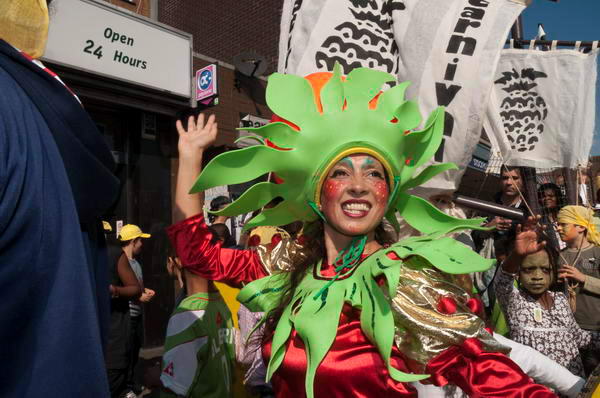
John Tradescant the Elder (1577-1638) and his son John Tradescant the Younger (1608-1662) had their extensive nurseries a little up the road from where I was taking pictures and brought many exotic species to this country in the seventeenth century, and possibly pineapples were among them, although sources differ on this. Some pineapples were imported here in that era but apparently they were only cultivated here in heated greenhouses in the nineteenth century.
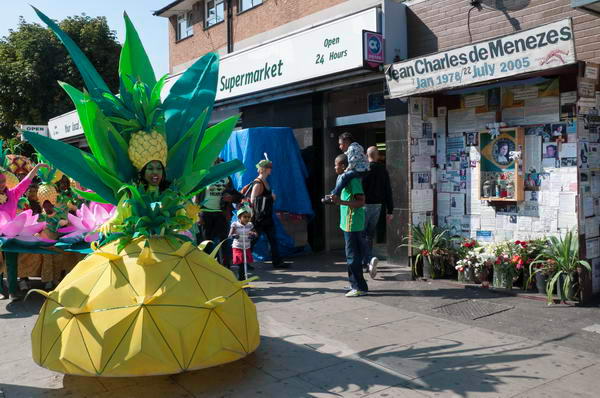
But as I wrote in 2008 “among the dancing and fancy dress I also found a reminder of violent death, Stockwell is probably best known for the brutal shooting by police of an innocent unarmed Brazilian man who had just boarded an underground train at Stockwell Station in 2005.”

More pictures Stockwell Festival – Pineapple Parade.


Apprentice Boys of Derry March – Temple
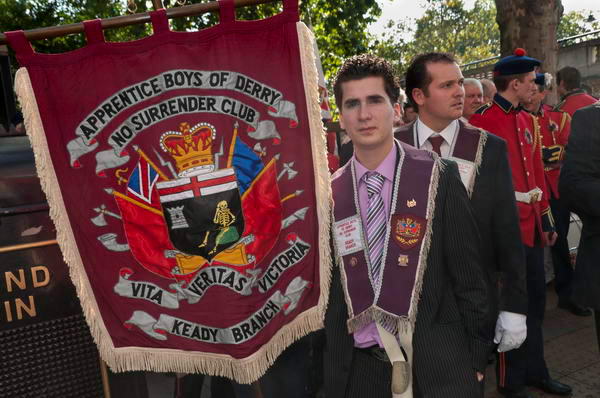
I shivered a little as I went down the escalator and boarded the tube on my way to Temple to photograph the Apprentice Boys of Derry March in which various Orange Order associations were taking part.
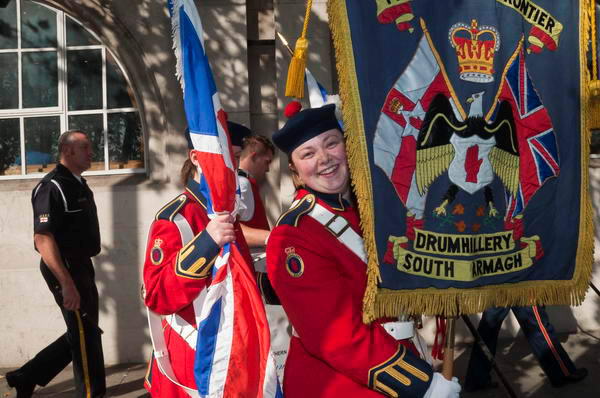
As you can see from my pictures, most of those taking part were proud to be there and happy to be photographed.
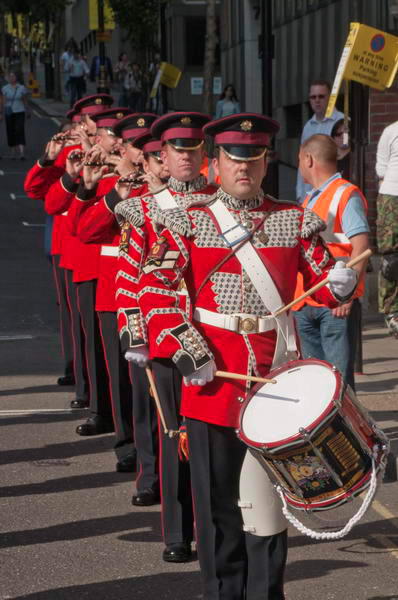
“But at one point I found myself being pushed backwards by a large man in dark glasses and instructed very fimly to leave. This kind of intimidation certainly isn’t acceptable and of course I continued to take pictures of the event. But it was a reminder of the darker side of Loyalist Ulster, which I hadn’t expected to see on the streets of London.”

More pictures on My London Diary at Apprentice Boys of Derry March.


Open House at Container City – Trinity Buoy Wharf, Leamouth
I took the tube to Canning Town and then walked down the long way to Trinity Buoy Wharf, cursing that the path beside Bow Creek and long-promised bridge had not been built. Part of the walkway is now open and an new bridge to the redeveloped Pura Foods site now provides more convenient access.
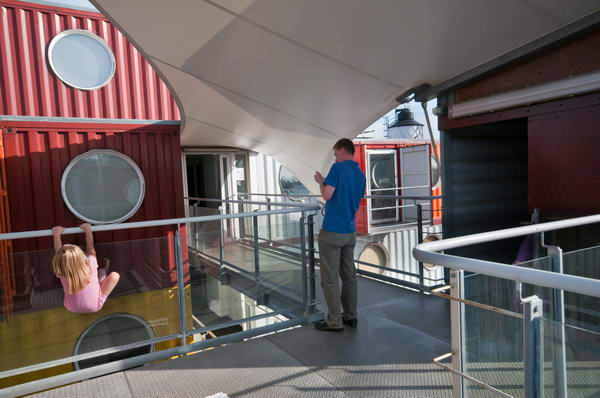
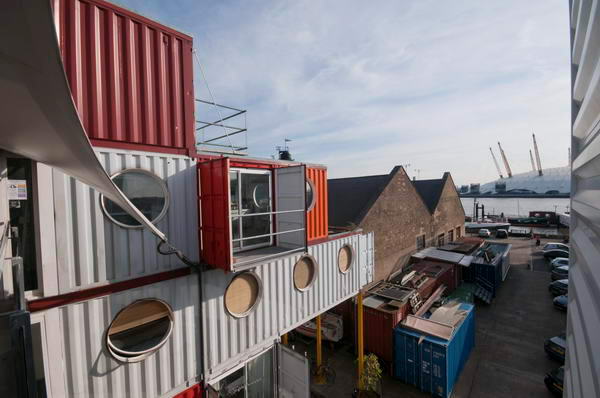
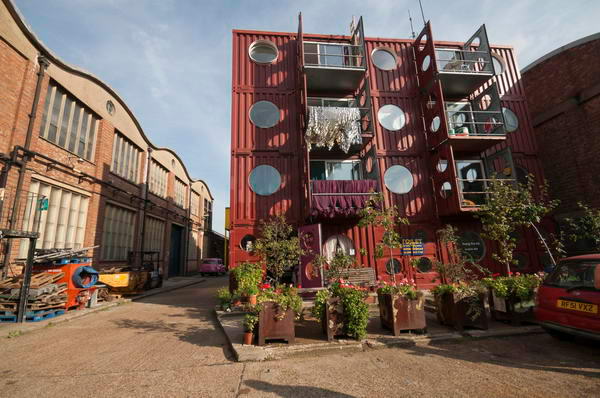
It was Open House Day in London and I took advantage of this to visit Trinity Buoy Wharf and the Container City there, a set of artists studios built using containers. Begun on the site in 2001, this had by then expanded considerably.
Trinity Buoy Wharf is open every day of the year except Christmas Day, but in 2008 as this year there were many extra activities for Open House. And at the end of 2023 the only complete Victorian steam ship in existence, the SS Robin has joined the collection of Heritage Vessels there, though tours for Open House on Sat 21st & Sun 22nd September 2024 are fully booked.
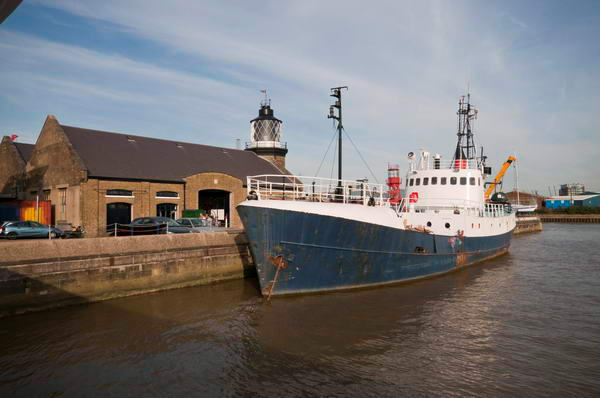
The containers were interesting but I think it was other aspects of the site and the view from it that interested me most, as well as the chance to take the specially laid-on ferry across the Thames to North Greenwich.

Open House at Container City


North Greenwich to Greenwich – Thames Path, Greenwich
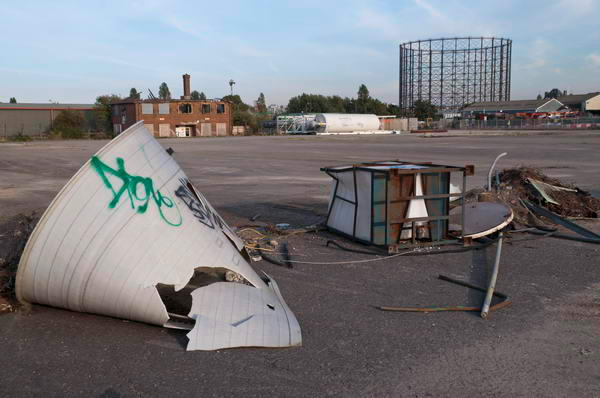
The riverside walk is one I’ve done many times and its always of interest although the section at North Greenwich was only opened up in the 1990s and in more recent times parts of the walk have been blocked during the construction of some of the new blocks of riverside flats.
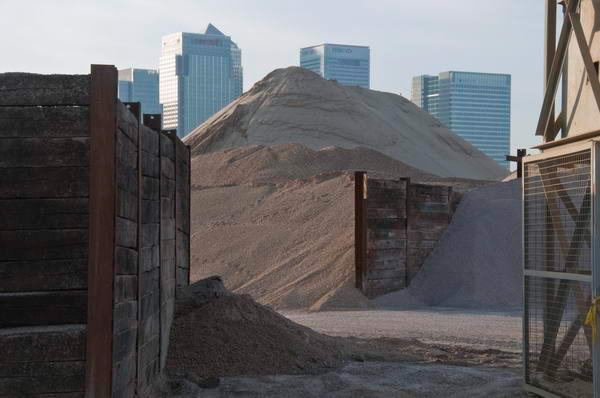
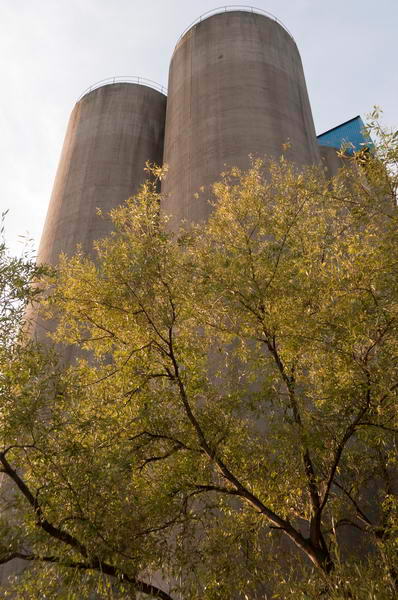
A large aggregate wharf remains although most of the riverside industry has gone, including the silos and the rest of the works at Morden Wharf. And only Enderby House remains of the site from which ships left to lay undersea cables across the world.
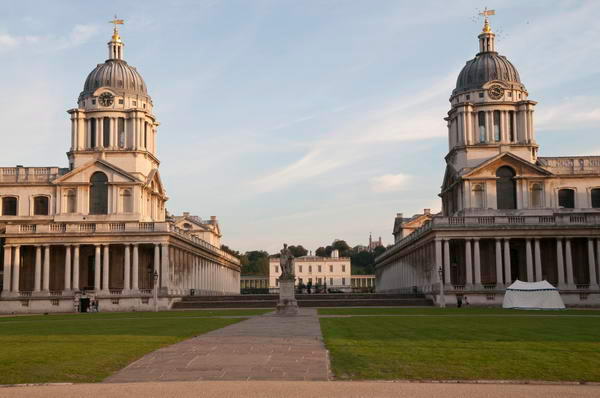
Greenwich of course retains its grand buildings, now a part of Greenwich University.
On My London Diary there are also some views across the river, both to buildings Canning Town, Leamouth, Canary Wharf and the Isle of Dogs. It’s a walk I’ve done several times since and might well do again, probably starting from North Greenwich Station. You can see pictures from a walk in 2018 on My London Diary. And there are still some good pubs when you reach Greenwich on your way to the buses or stations there.

More pictures from September 20th 2008 at North Greenwich to Greenwich.


Flickr – Facebook – My London Diary – Hull Photos – Lea Valley – Paris
London’s Industrial Heritage – London Photos

All photographs on this page are copyright © Peter Marshall.
Contact me to buy prints or licence to reproduce.


Working Lives – Lower Marsh

Working Lives – Lower Marsh: Last Saturday, 14th August 2024, was an unusual day for me, which I’ll perhaps write more about in a later post. But I’d finished photographing a protest a little after 1pm, rather earlier than I’d expected and sat down on the riverside path by the Thames at Nine Elms to eat my sandwiches and wondered what to do next.

Working Lives - Lower Marsh

One of several things that came to mind was the Working Lives Retrospective Photography Exhibition, organised by International Arts and Pedalling Arts, “highlighting points of connection in the working lives of people in Britain and Ukraine from the 1960s to the 1980s” with a set of photographs “from London and Kyiv and Odesa providing fresh insights into street and theatre culture in both cities.”

Man with Carpet, Lower Marsh, Waterloo, Lambeth, 1990, 90-712-33

The show continues until until next Sunday, September 22nd and the Street Photography section of this is located in a series of pictures in shop windows along Lower Marsh, a street close to Waterloo Station. It and features images taken in Lower Marsh in the 1970s and 1980s as well as some from Ukraine. The London pictures include three by me, and others by Paul Carter, Jini Rawlings and from unnamed photographers in the Lambeth Archives.

Market, Lower Marsh, Waterloo, Lambeth, 1990, 90-713-25

There is a map on the web site you can download (or pick up at the Walrus) with a list of the names of the 27 shops and offices taking part, mostly with one photograph, but a few with two. And the picture at the bottom of the web page is one of mine.

Frazier St, Lower Marsh, Waterloo, Lambeth 86-9r-11_2400

A few months ago an old friend who lives a few streets away from Lower Marsh had emailed me asking if I had taken any pictures on Lower Marsh, a busy market street back then. I did a search of my albums on Flickr and found a few pictures, mainly from 1992 and sent links to the exhibition organiser. Three were selected for the show and I supplied files for A1 prints to be made.

Working Lives - Lower Marsh

I’ve been out of London for some time and then busy with other things so I hadn’t found time to see the show. And until I walked onto Lower Marsh I hadn’t realised that one of my pictures was being used as the poster image.

Working Lives - Lower Marsh

Another part of the show was that the theatre photographs were to be screened on giant screens on a van parked in the street outside Cubana at the east end of the street where most people enter it from 2.30pm – 10.30pm on selected days. Walking towards it from the west in Saturday’s bright sunlight the images were almost invisible, but suddenly I found my poster picture appearing. I walked to the shaded side and everything became clear.

Working Lives - Lower Marsh

The same picture of a man carrying a rolled up carpet (and a walking stick) on the street also appears on a nicely printed postcards produced for the show which you can buy at the Walrus.

Working Lives - Lower Marsh

I found the show an interesting way to look at photographs. It’s now a vibrant street with cafés etc, rather different from the old market, but interesting to walk along and search for the pictures. And being spaced out as they are draws your attention to every picture and gives you more time to think about it than in a run on a gallery wall. At one or two places I felt a little uncomfortable when I had to peer at them over people sitting at cafe tables, but I don’t think they minded.

You can also see all square cropped versions of all of the street images on the web site accompanied by short audio clips of memories from English or Ukranian locals. You can also play these on your phone on the street from QR codes on the picture captions.


Flickr – Facebook – My London Diary – Hull Photos – Lea Valley – Paris
London’s Industrial Heritage – London Photos

All photographs on this page are copyright © Peter Marshall.
Contact me to buy prints or licence to reproduce.


Housing Act, Student rents & Open Gardens – 2016

Housing Act, Student rents & Open Gardens: On Saturday 18th June 2016 I went to three events all with a connection with housing. First was a protest against the 2016 Housing and Planning Act passed the previous month, after which I briefly visited students celebrating a victory at UCL before going to South London for an Open Gardens event at an estate which Lambeth Council want to demolish.


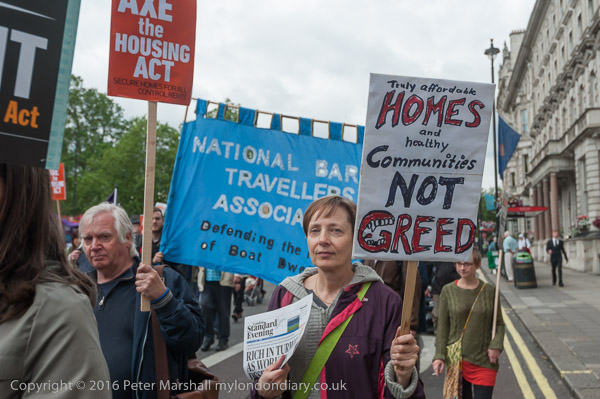
Axe the Housing Act March – Hyde Park Corner

Housing Act, Student rents & Open Gardens

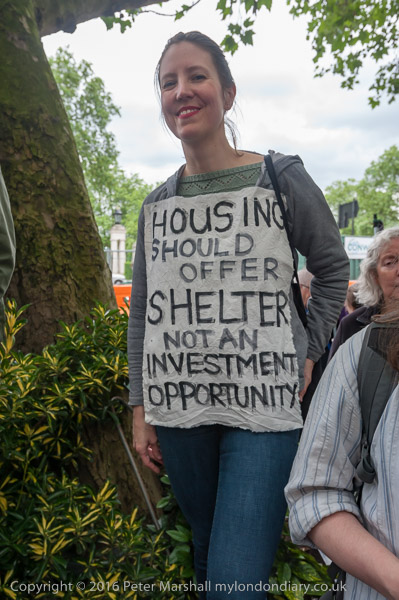
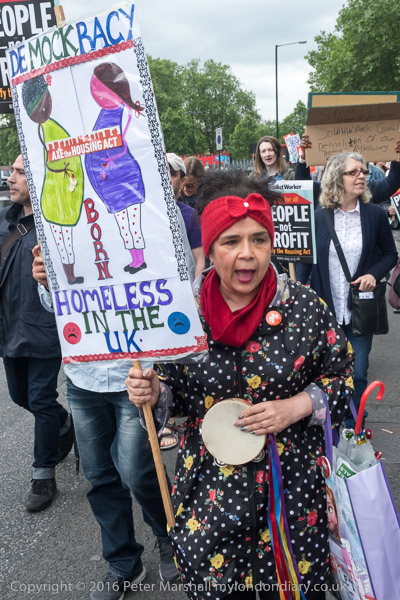
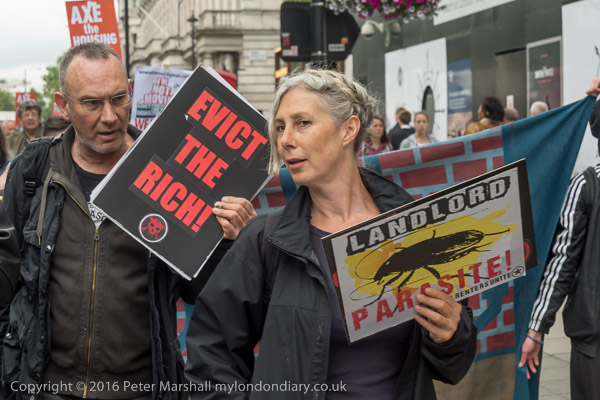
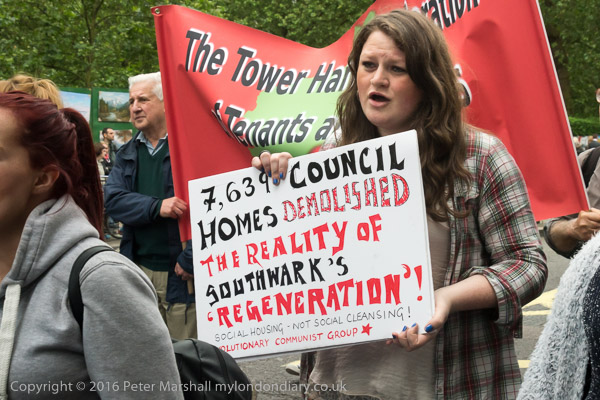
Protesters marched from Hyde Park Corner to Parliament against the Housing and Planning Act which tenant and housing groups, councils, academics, trade unions and communities say will deepen the current housing crisis, removing security from many tenants and will result in the demolition and selling off of almost all social housing.

Housing Act, Student rents & Open Gardens

The Act extends the ‘Right to Buy’ to housing association tenants and allows councils to sell vacant ‘higher value’ vacant council homes to fund this.

Housing Act, Student rents & Open Gardens

It brings in mandatory rent increases for households in social housing with a combined family income of ore than £40,000 in London and £31,000 elsewhere with their rents increasing over time to market rents. Amendments made this slightly fairer by limiting the income considered to the taxable income of two main household earners and excluding most of those receiving benefits from the calculations.

Housing Act, Student rents & Open Gardens

The Act removes security of tenure for most council tenants. New tenants will only get fixed term tenancies generally from 2-5 years, with some longer tenancies agreed for those with a disability or children living at home until they reach the age of 19 following pressure from the House of Lords.

The Act reflects and emphasises the Tory view that social housing should be a very limited resource only supporting the the very poorest in society, second-class citizens, with the landlords and house builders being able to make profits from the rest of us. But housing campaigners generally see it as by far the most cost-effective way to provide for one of our basic human needs and also argue that it can provide an income for local councils to support other vital services.

The protesters urged councils to refuse to implement the Act and call on people to stand together to boycott the pay-to-stay tax, resist evictions and block regeneration and estate demolitions.

Among the speakers before the march began was Richard Livingstone, a councillor from the London Borough of Southwark, Cabinet Member for Adult Care and Financial Inclusion and formerly responsible for housing in the borough.

Southwark is a borough with an appalling record on housing and estate demolition and many at the protest were appalled at his presence calling Southwark’s demolition of the Heygate and Aylesbury a shameful example of exactly the kind of social cleansing this protest was against.

Many feel that many Labour councillors and officers are now careerists, driven by political or financial advancement rather than caring for the people in their borough. A number have earned themselves highly paid jobs with developers and other companies in the housing sector.

I left as the march moved off towards Parliament and made my way to UCL.

More at Axe the Housing Act March.


UCL Rent Strike Victory

It was good for once to be able to celebrate a victory, after after the Complaints Panel at UCL decided that the residents of Campbell House West will be compensated in full for the final term last year – up to £1,368 per student.

They determined that UCL Management “Not only demonstrated a lack of empathy towards students’ circumstances and an understanding or appreciation of what would be an acceptable student experience, but was disingenuous to the students concerned.”

So the mass protest that had been planned, an Open Day Manifestation, turned into a celebration of their victory, and also to show their determination to continue their campaign to cut student rents.

I left after a brief visit, missing the lively victory march around the West End with flares and the helium-filled balloons I had watched them preparing.

UCL Rent Strike Victory


Central Hill Open Gardens Estates – Upper Norwood

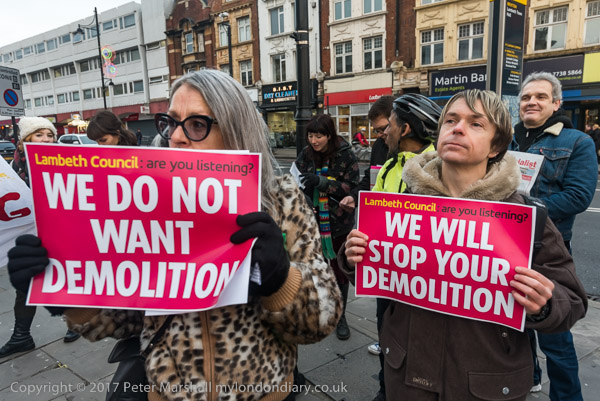
Lambeth’s Central Hill Estate is a popular and well-planned estate of considerable architectural interest in good condition under threat of demolition by Lambeth Council. Like some other estates it has been refused listing probably on political grounds. The properties, completed in 1974, were well built and are generally in good condition though suffering like most council estates from a lack of proper maintenance and in need of relatively minor refurbishment.

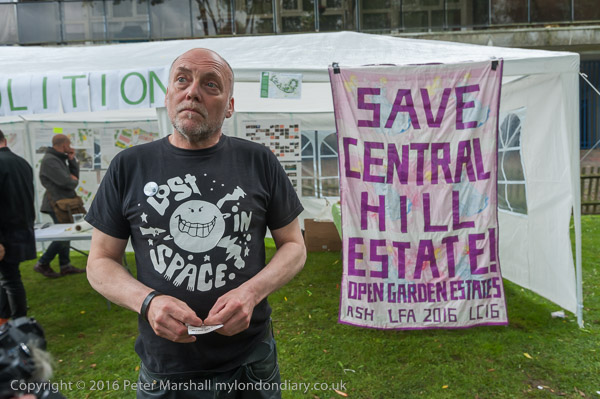
This was one of the estates under threat of demolition by Government Housing policies, council regeneration programmes and property developers which were welcoming visitors to open day events as a part of the Open Garden Estates initiative by Architects for Social Housing, ASH.

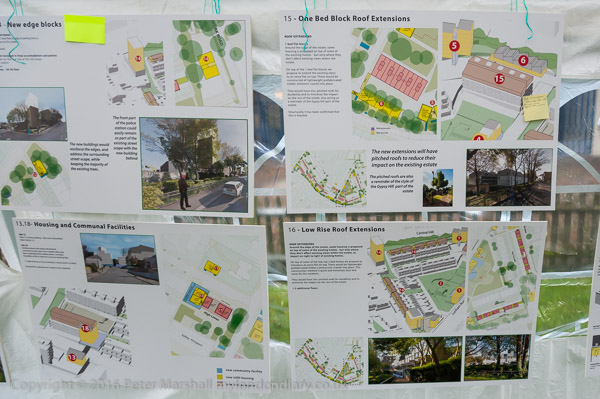
There was a display of the alternative plans for the estate by ASH showing how the council’s aims of increasing the capacity of the estate could be achieved without any demolition and at a much lower financial and environmental cost.

Lambeth Council had refused to make any serious consideration of these plans, almost certainly because although the cost would be much less, they would not provide the profits to the developers from the high market value sales of new properties and market rents, and the costs of the ASH scheme to the council would be greater.

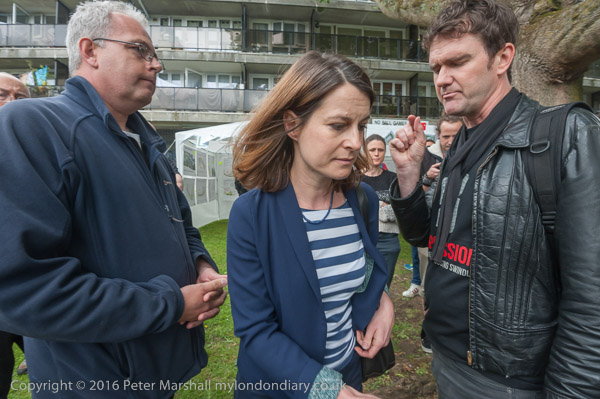
One of the visitors to the open day was Labour MP for Dulwich and West Norwood Helen Hayes, who stormed out after being questioned why she was attending when she had given her backing to Labour councillors behind the plans to demolish the estate.

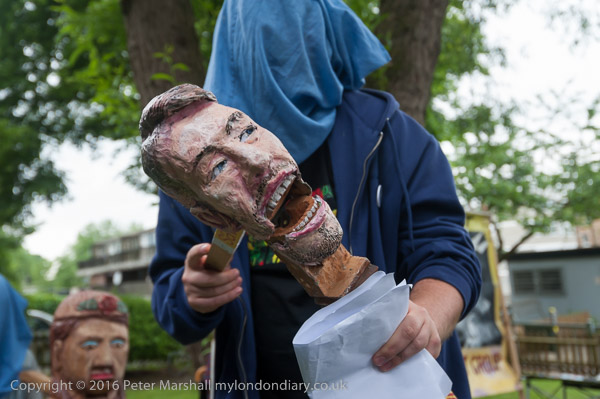
Also at the open day were various food, book and other stalls, a music performance, film show (I watched a film about how Southwark Counci had mistreated the residents of Myatts Fields) and a Marxist puppet show as well as estate tours. I’d visited the estate several times in the past and had photographed parts of it in the 1990s as well as more recently in February 2016 when I wrote more about it and Lambeth’s plans to demolish.

Although New Labour’s ‘Regeneration’ policy possibly had good intentions, its results have often been disastrous, and Labour really needs to rethink its whole approach to council-owned housing.

As I wrote in 2016: “‘Regeneration’ has resulted in huge transfers of public assets into private hands, in a wholesale loss of social housing, and in social cleansing, with people being forced outwards from London, unable to afford either the laughably named ‘affordable’ properties or those at market rates. It has meant the dispersal of functioning communities, in widespread and arguably fraudulent under-compensation of leaseholders, and in a great deal of sub-standard buildings, often to lower specifications of space and worse design than those they replace.“

More people were arriving at the event when I left to go home and I was sorry to have to miss some of the activities planned for later in the day.

The estate is still standing and the fight to save it continues. In March 2024 Lambeth Council set up a contract with consultants to reappraise the plans for estate ‘regeneration’ at Cressingham Gardens, Central Hill and Fenwick. Perhaps it will come up with some more sensible proposals …

More at Central Hill Open Gardens Estates.


Flickr – Facebook – My London Diary – Hull Photos – Lea Valley – Paris
London’s Industrial Heritage – London Photos

All photographs on this page are copyright © Peter Marshall.
Contact me to buy prints or licence to reproduce.


Shaker, Job Centres, Firefighters, Tube, Lambeth

Shaker, Job Centres, Firefighters, Tube, Lambeth – On Wednesday 25th February I photographed a number of protests in London, starting in Westminster with the Free Shaker Aamer campaign, striking firefighters and welfare rights activists, then with tube workers at Edgware Road and finally outside Lambeth Town Hall in Brixton.


Free Shaker Aamer – Parliament Square

Shaker, Job Centres, Firefighters, Tube, Lambeth

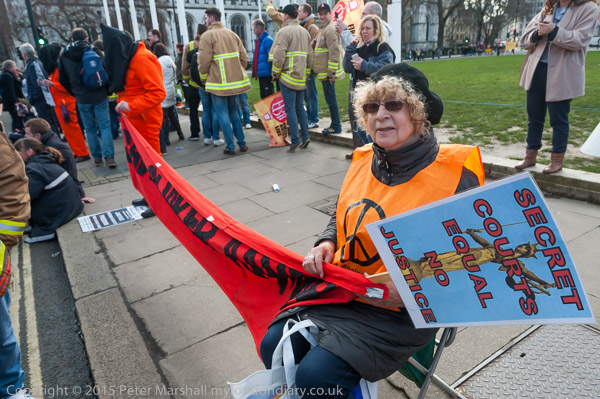
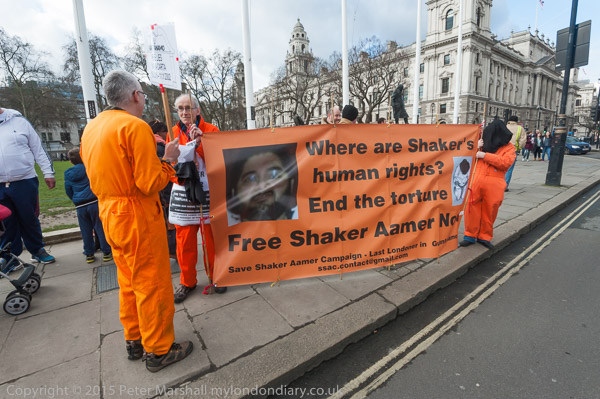
A protest opposite Parliament called for the urgent release of London resident Shaker Aamer from Guantanamo, where he has been held and regularly abused for 13 years without charge or trial.

Shaker, Job Centres, Firefighters, Tube, Lambeth

The Free Shaker Aamer Campaign had been holding weekly protests opposite Parliament whenever it was in session to remind government of the need for act over his release. He had long been cleared for release but was still held in the illegal prison camp with both US and UK governments dragging their feet as his testimony would be embarrassing to their security agencies, making clear their involvement in torture.

Shaker, Job Centres, Firefighters, Tube, Lambeth

The protest was longer than usual as an international event was taking place at the nearby QEII centre and they wanted to remind delegates there of Shaker’s torture and imprisonment. Eventually the long campaign of protests by this and other groups led the UK government they needed to back his release in practice and he was finally released on 30th October 2015.

More pictures: Free Shaker Aamer at Parliament


Striking Firefighters block traffic – Westminster

Shaker, Job Centres, Firefighters, Tube, Lambeth

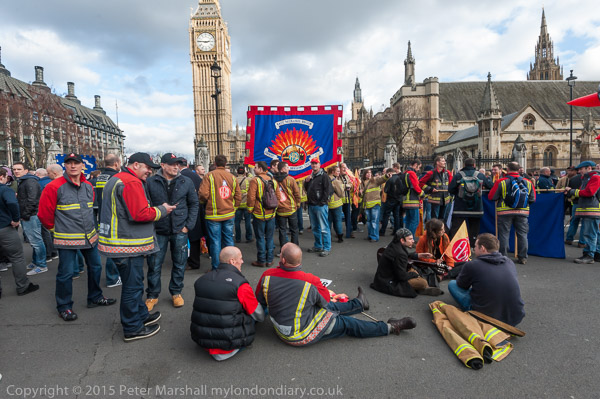
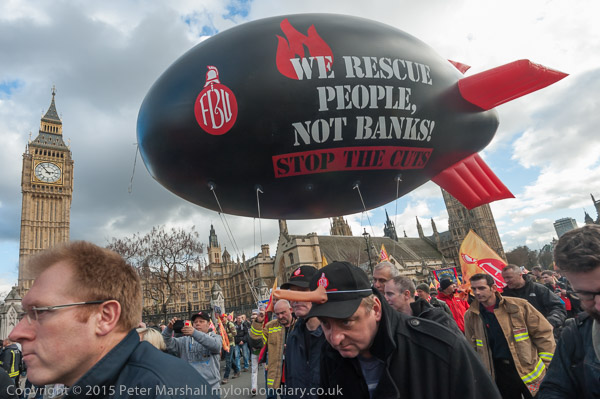
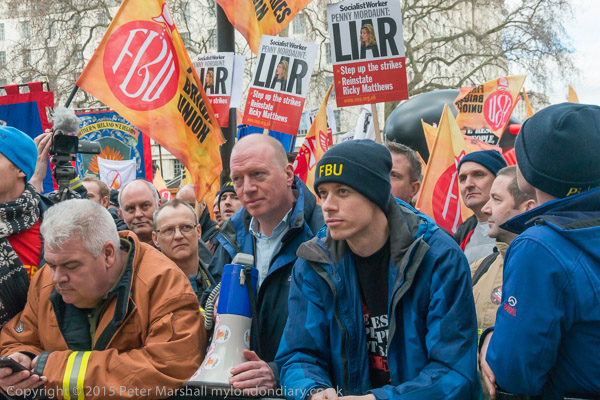
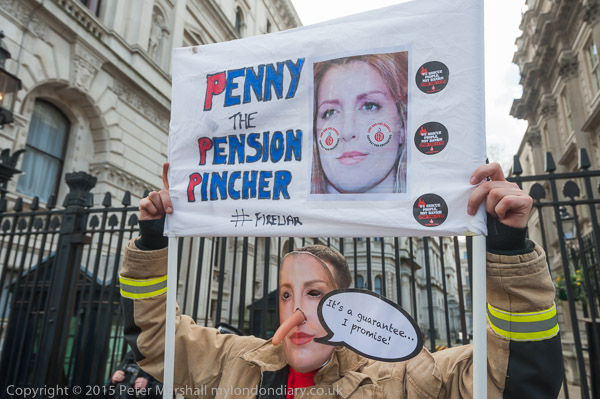
Firefighters in England held a 24 hour strike on 25th Feb 2015 against the unworkable pension scheme the government intended to implement. They say that the devolved governments had recognised the problems in the scheme and made improvements but in England government ministers were refusing to talk with the union, simply ignoring requests for meetings. They accused the government of lies about the union, saying they were being labelled as militants despite them being ready and willing to enter into negotiations at any time.

After a rally in Westminster Central Hall, several thousand striking firefighters protested on the street outside Parliament before marching to Downing St. Their protest brought all traffic in the area to a standstill until they marched away.

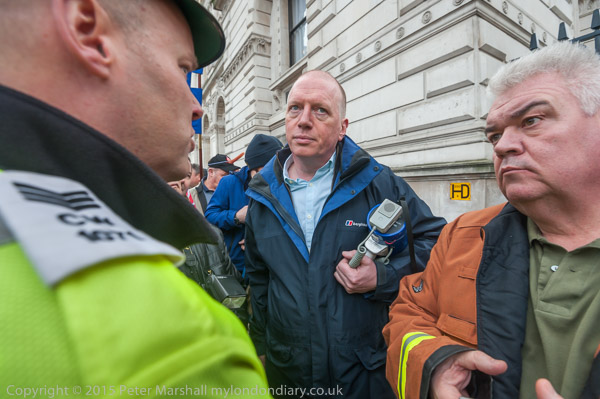
They stopped outside Downing Street and refused to move, saying they would wait there until someone came out to talk to them. A senior police officer come to talk with Matt Wrack and the other FBU leaders there and was extrememly politie, taking Wrack’s mobile number before going away to see if anyone could be persuaded to come out from Downing St to meet the protesters.

I left them leaning on the barriers and looking into Downing Street waiting for someone to come and see them, though I doubted if anyone would ever emerge.

The Fire Service has also suffered like other public services from government cuts; in London these led to Mayor Boris Johnson making dangerous reductions, closing some fire stations and reducing equipment and staffing, which left the London Fire Brigade ill-equipped to deal with major disasters such as the Grenfell fire.

The FBU union later won a number of legal cases against the government over the changes that were made to the pensions scheme, leading to significant compensation for some members.

More at Striking Firefighters block traffic.


Welfare Advocacy not a Crime – DWP, Westminster

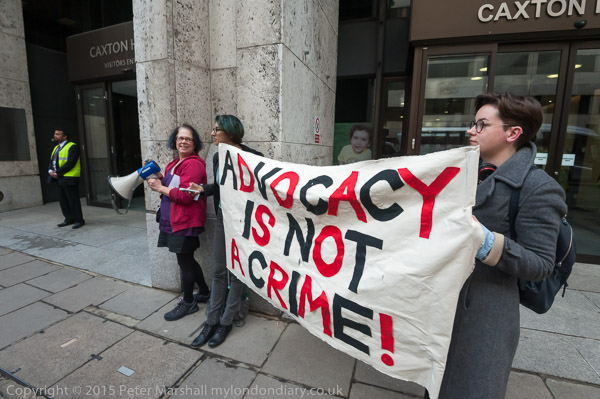
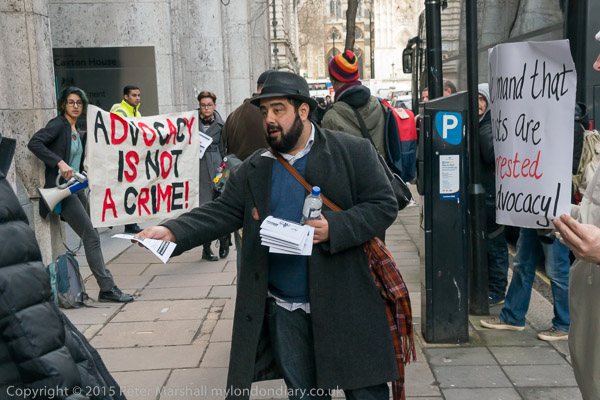
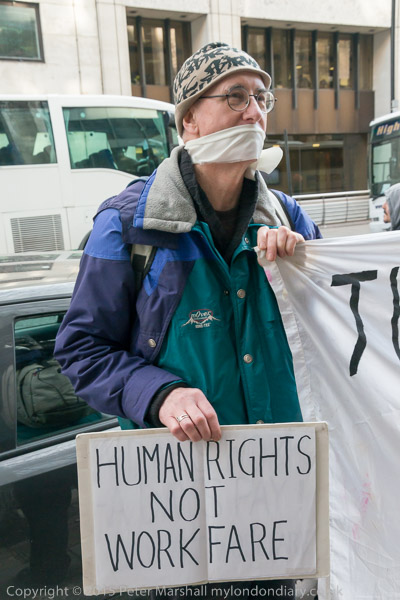
Welfare activists protested outside the Dept of Work & Pensions in Caxton Street as a part of the national day of action over the arrest of welfare rights activist Tony Cox. He had been arrested when he tried to accompany a vulnerable claimant to her job centre interview to argue for a fairer claimant agreement.

As well as several banners, one man was gagged in protest. By law claimants are allowed to have and adviser present with them at the interview, but when a claimant turned up with Cox, his interview was cancelled.

Cox and the claimant then left the job centre, but later in the day police arrived at his him and arrested him, charging him with threatening behaviour.

Welfare Advocacy not a Crime.


RMT protest Underground Job Cuts – Edgware Road Station (Bakerloo)

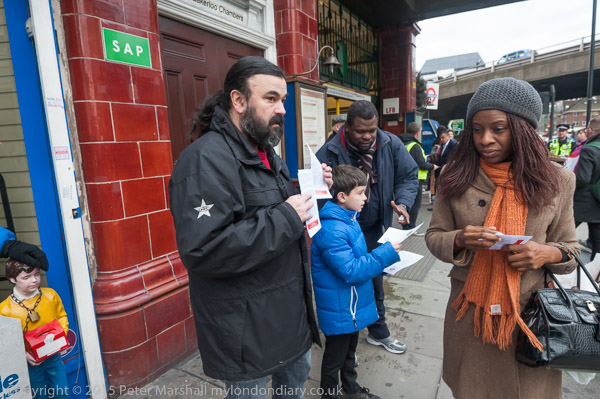
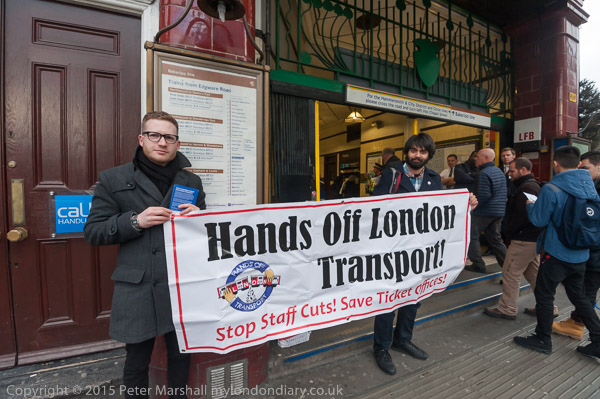
Around 20 RMT members handed out fliers at the busy Edgware Road Bakerloo Line station against the proposed 50% cut in station staffing and the closure of the ticket offices which they say will endanger the safety of both passengers and staff.

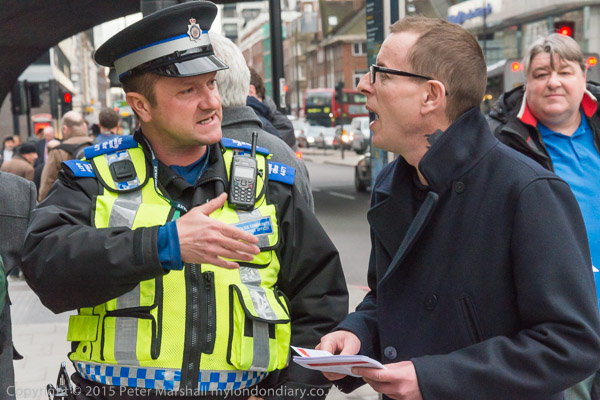
They got a very positive reception from many of the public going in and out of the station or walking past, although a PCSO came to harass and try to stop their picketing. Most of the public seemed to realise that staff do far more than sell tickets and offer service and protection to the travelling public.

Many promises were made to Underground staff and the public about how they would be protected when cuts were made, but most were later broken.

RMT protest Underground Job Cuts


Lambeth against £90m cuts – Lambeth Town Hall, Brixton

After taking some photographs of the protesting RMT staff I got on the Underground there, changing at Oxford Circus to take me to the end of the Victoria Line at Brixton.

There I walked down to Lambeth Town Hall on the corner of Acre Land to join around a hundred trade unionists, pensioners, library and other council staff, social housing tenants and other residents who were gathering for a lively rally outside Lambeth Town Hall.

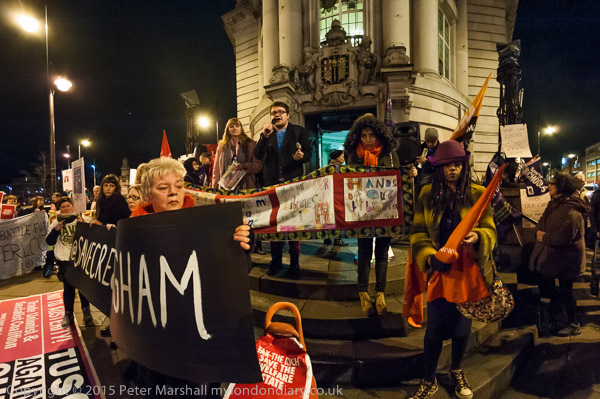
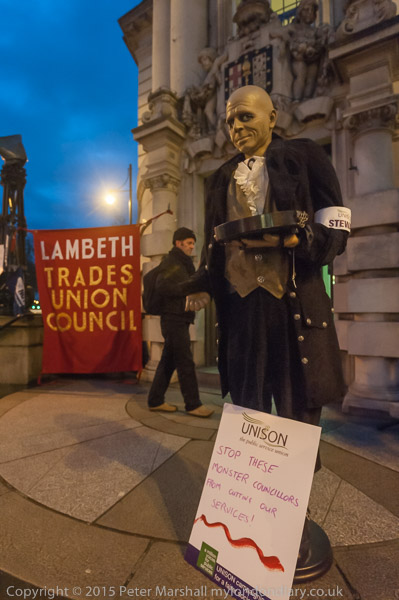
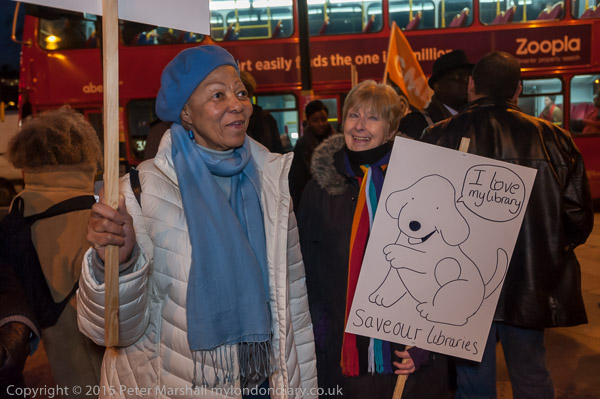
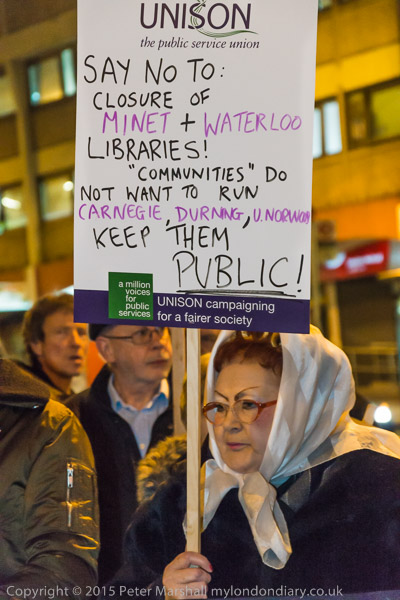
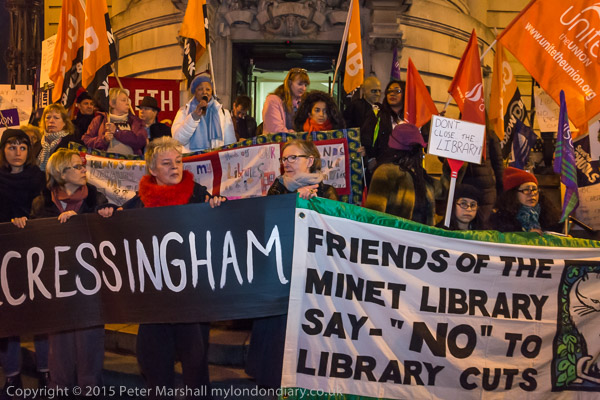
A lively rally took place urging councillors who were arriving for the council meeting to reject library closures and other £90 millon cuts which were being passed there by the large Labour majority on the council. Labour then held 59 of the 63 council seats. Among the speakers at the rally was the only Green Party councillor, Scott Ainslie, who was to vote against the cuts. The Green Party gained four more seats in the 2018 council elections but lost three of these in 2022. Right-wing Labour councillors still have an overwheming majority and the council continues its policies which fail the community.

Lambeth’s finances were stretched by the development of a new Town Hall or Civic Centre the cost of which roughly doubled from the original contract of £55 million ot £104 million. Policies such as the closure of libraries and the demolition and sale of popular and well-built council estates like Cressingham Gardens had already produced a great deal of protest in the borough.

The £90 million cuts passed at the council meeting later that evening have had a disproportionate impact on children, old people and the disabled who always rely on local services more than the average person. Council employees at the rally opposed the cuts not only because they feared for their own jobs, but because they knew those that remain in post will not be able to offer the public the same quality of service that they do at present.

Lambeth against £90m cuts


Flickr – Facebook – My London Diary – Hull Photos – Lea Valley – Paris
London’s Industrial Heritage – London Photos

All photographs on this page are copyright © Peter Marshall.
Contact me to buy prints or licence to reproduce.


A Chateau, Wix’s Lane & Shaftesbury

Continuing my walk in Clapham on Saturday July 29th 1989 which began with Some Madness and Houses in Clapham.

Clapham Common Northside, Cedars Rd, Clapham, Lambeth, 1989 89-7n-24

This truly grand scale building facing Clapham Common is at the western edge of the London Borough of Lambeth and the road in the foreground is Cedars Road. A terrace of five mansions at 48-52 Clapham Common North side, it was built by J T Knowles in 1860 with the two ends as pavilions with roofs like those of French Renaissance chateaux. It was Grade II listed in 1969 as Knowles Terrace.

Earlier the road had been lined with villas built for rich City merchants in the mid-eighteenth century.

Clapham Common Northside, Wix's Lane, Clapham, Lambeth, 1989 89-7n-25
Clapham Common North Side, Wix’s Lane, Clapham, Lambeth, 1989 89-7n-25

Wix’s Lane is the boundary between Lambeth and Wandsworth, although the street sign is from the Borough of Battersea which was became a part of Wandsworth in 1965 and my map shows the boundary as running along this wall.

Charles Wix was a builder and he built a villa for himself on Clapham Common North Side on the west corner of Wix’s Lane around 1780, living there until his death in 1820. Not long after this was rebuilt as Cedars Cottage but it and its neighbours were later replaced by a rather bland red-brick terrace.

The view here gives a better view of the rather heavy ornamental work on the 1860s Knowles Terrace.

School, Wix's Lane, Battersea, Wandsworth, 1989 89-7n-26
School, Wix’s Lane, Battersea, Wandsworth, 1989 89-7n-26

The London School Board built Wix’s Lane School, which opened on 27th April 1903. It later became Wix County Primary School. It is now still in use as Belleville Wix Academy and also houses a Lycée Francais.

Wix’s Lane had been a field path from Clapham Common to Lavender Hill but when villas were built along this section of Clapham Common North Side they were given back entrances from it for stabling their horses and carriages. The school was the first building on its west side, taking a large section of the gardens of one of these houses, Byram House.

School, Wix's Lane, Battersea, Wandsworth, 1989  89-7n-11
School, Wix’s Lane, Battersea, Wandsworth, 1989 89-7n-1

The Belleville Wix Academy history page includes a quote from a 1937 school inspector ‘”in the early years it was not uncommon to see twenty or thirty children being led to and from Wix’s Lane School by maidservants“. However, it goes on to say: “now the larger houses are divided into flats, and these, as well as the smaller houses in the neighbourhood, are occupied mainly by clerical workers in the City, by local tradesman and shop keepers, and by artisans and labourers of the better type“. “Poverty exists“, it states, “although it is mainly courageously hidden“‘ .

Flats, Cedars Rd, Clapham, Lambeth, 1989 89-7n-12

I walked back to Cedars Road and walked up it past some rather more modern flats on my way to Wandsworth Road. Much of both sides of this tree-lined road are now covered by similar modern flats, and few of the trees are cedars. A few older houses remain but although I photographed a couple of them I’ve not put these pictures on-line.

House, Glycena Rd, Grayshott Rd,  Battersea, Wandsworth, 1989 89-7o-65
House, Glycena Rd, Grayshott Rd, Battersea, Wandsworth, 1989 89-7o-65

I turned west on Wandsworth Road and then went up Acanthus Road, on my way to Brassey Square.. Acanthus Road becomes Grayshott Road, and this house is on the corner of that and Glycena Road.

This and a similar house opposite act as a gateway to the Shaftesbury Park Estate built between 1872 and 1877 by the Artizans’, Labourers’, & General Dwellings Company, about which I’ve written in previous posts. These houses and their short terraces are one of only two listed parts of the estate. It was just a little further up the road at what are now Nos 65-7 that Lord Shaftesbury formally began the estate with a memorial stone in 1872. It is still in place but I didn’t photograph it.

Sabine Rd, Brassey Square, Shaftesbury Estate, Battersea, Wandsworth, 1989 89-7o-51
Sabine Rd, Brassey Square, Shaftesbury Park Estate, Battersea, Wandsworth, 1989 89-7o-51

I turned east down Sabine Road, another of the first streets to be built after that stone was laid with its message ‘Healthy homes, first condition of social progress’ in 1872. Supposedly the main figure in the 1951 Ealing comedy The Lavender Hill Mob lived in a seedy boarding house here, though none of the film was shot in the area. In just a few yards I was in Brassey Square, intended to be the centre of the estate which is now the Shaftesbury Park Estate Conservation Area.

Brassey Square which took its name from contractor Thomas Brassey and his three sons who all became MPs and had shares and it was meant to have a garden at its centre, but this was built over in 1879. This building with its frontage on Sabine Road has doors numbered 78 and 1 presumably for that road and Brassey Square respectively. The building is locally listed and is presumed to have been a part of the never-completed plan to build a library, central hall and co-operative shops fronting Brassey Square.

My account of the walk will continue in a later post.


Flickr – Facebook – My London Diary – Hull Photos – Lea Valley – Paris
London’s Industrial Heritage – London Photos

All photographs on this page are copyright © Peter Marshall.
Contact me to buy prints or licence to reproduce.


Some Madness and Houses in Clapham

Some Madness and Houses in Clapham: On the 29th July 1989 my walk began in Clapham and I found this sign on The Pavement. I could make very little of it then and still can’t now.

Notice, The Pavement, Clapham, Lambeth, 1989 89-7n-43

At the top of the painting on the wall is a geometric device surround by a circle with a square inside divided into four quarters and various triangles inside and on its two vertical edges. Four arrows from the circle have a 90 degree left turn and point anticlockwise and to the letters ‘PH.’, ‘MAY’, ‘MARY’ and ‘C.R.’. Underneath I can just make out the scrawled word ‘MADONNA’, though I think think this has been overwritten at the start to read ‘CRAP’ and there are some other letters and numbers including a ‘6’.

Below this, boldly painted in the same script as the words around the device are a series of words or rather letters in which there are some actual words and some plausible inventions. The whole is a mystery though I rather suspect one that many have involved copious amounts of illegal substances. There was some colour in this notice which you can see in the different shades of grey, and a few sections were in red, particularly the only lower case line just above the bottom, ‘dunhillthwaiton’ while the bottom line, ‘HYPOSTASISTA’ was in green.

I think this was a part of the block called The Polygon which was demolished in the early 2000s. But it is difficult to understand street names in this area of Clapham, and this writing on the wall is impossible.

Houses, Rectory Gardens, Clapham, Lambeth, 1989 89-7n-45

I wrote about Rectory Gardens at more length in the post about an earlier visit there in May 1989. Built in the 1870s as philanthropic housing for low paid workers after being damaged in the war they were squatted in the late 1960s and 70s and a unique artistic community grew up there. Lambeth Council bought the area and intended to develop it in 1970, but there was strong local opposition both from residents and others in the local area.

Houses, Rectory Gardens, Clapham, Lambeth, 1989 89-7n-46

The Clapham Society wanted them to be kept as a group and run by a housing association but eventually Lambeth Council evicted the residents and in 2016 sold them off to a developer to build expensive luxury properties in “a triangular mews-style development“.

Porch, 39, Turret Grove, Clapham, Lambeth, 1989 89-7n-32

I walked up Rectory Grove to Turret Grove, developed on the site of the Elzabethan manor house, Clapham Manor, demolished in 1837. Some of the houses in it date from 1844-5 and are in the Rectory Grove Conservation Area which notes their “attractive trellis style porches“.

Doorways, Clapham Common Northside area, Clapham, Lambeth, 1989 89-7n-35

I made my way through the backstreets towards Clapham Common. One of the streets I walked down was Macaulay Road and this has some impressive doorways and I think this pair were probably on this road.

Zachary Macaulay, born in Scotland had emigrated to Jamaica in 1784 when he was 16 and worked as an assistant manager on a sugar plantation, returning to London five years later. In 1790 he visited Sierra Leone, set up as a home for emancipated slaves many of whom had fought for Britain in the American War of Independence, returning in 1792 and becoming its Governor from 1794-9. He became one of the leading members of the Clapham Sect working for the abolition of slavery, able to provide William Wilberforce with first-hand information and statistics.

In 1799 he came back to Clapham with 25 children from Sierra Leone and set up a the School of Africans to train them with skills to support the development of their country when they returned. Unfortunately “one by one they succumbed to the cold“, though in fact what killed most of them was measles and only six survived.

Further down the street was once the site of the Ross Optical Works which made cameras, lenses and projectors which moved here in 1891 and expanded greatly in 1916 when their work was considered essential to the war effort. At its peak the company employed 1200 people. Ross Ensign was said to be the premier optical company in the United Kingdom, but was unable to compete with foreign competition and closed in 1975.

Clapham Common Northside, Clapham, Lambeth, 1989 89-7n-23

I think I probably photographed this house on the corner of Clapham Common Northside and The Chase mainly because it was so different from the rest of the properties, terraces and blocks along there. A large house, but only two storeys and with an attractive upper floor window, but largely hidden behind its rampant bushes and trees in its front garden.

On its side in The Chase are three plaques commemorating street parties for the Queen’s Birthday, a royal wedding and the Golden Jubilee in recent years.

To be continued.


Flickr – Facebook – My London Diary – Hull Photos – Lea Valley – Paris
London’s Industrial Heritage – London Photos

All photographs on this page are copyright © Peter Marshall.
Contact me to buy prints or licence to reproduce.


Nine Elms Riverside – July 1989

Nine Elms Riverside – July 1989: One of the benefits of working as a teacher as I still was in 1989 was certainly the long Summer holiday and I spent quite a lot of these taking photographs as well as going away for several weeks with my family – though some years this was also a photographic opportunity. And most years we also spent a week or so in Hull where I was able to add a few pictures to the work that had resulted in my exhibition Still Occupied in the Ferens Art Gallery there in 1983.

But our travels around the country in the Summer of 1989 – which as well as Hull included a week with a group of friends in a large holiday cottage in Scotland – only began in August, and the day after my visit to Hackney on Friday 28th July 1989 I returned to take up my work where I had left off earlier in Nine Elms.

Brunswick House, Market Towers, Wandsworth Rd, Vauxhall, Lambeth, 1989 89-7k-13

Tuuning west out of Vauxhall Station took me to the junction of Wandsworth Road and Nine Elms Lane. Brunswick House at right appeared in an earlier post on my walks in 1989. This mid 17th century house, extended in 1758, bought by in 1869 by “the London and South West Railway Company who used it as offices and a Scientific and Literary Institute. In 1994 it was sold to the railway staff association who again sold it in 2002. It is now a restaurant and the yard around it is used by an architectural salvage and supply company.“

Market Towers was clearly a very much later building, or rather pair of buildings, the taller 290ft high with 23 floors, completed in 1975, with offices a pub, the Market Tavern, on the first floor. The pub was built to serve workers at the adjoining New Covent Garden Market completed in 1974 and its licence allowed it to open in the early hours. By the 1980s this had made it into “South London’s first gay pub with a 2am licence“.

According to Wikipedia, the buildings were bought by the misleadingly named property developer Green Property in 2008 and four years later they were given planning permission to redevelop. Instead they sold it to Chinese developer Dalian Wanda. It was demolished in 2014-5 who gained revised planning permission for two buildings containing 436 flats and a hotel, City Tower with 58 floors and 654ft tall and River Tower 42 floors and 525ft. The project was sold on to another Chinese company, and there were various problems over building contracts which delayed completion. The Park Hyatt London River Thames hotel is now predicted to open in mid-2024.

Nine Elms Cold Store, Nine Elms Lane, Nine Elms, Lambeth, 1989  89-7k-14
Nine Elms Cold Store, Nine Elms Lane, Nine Elms, Lambeth, 1989 89-7k-14

This tall, windowless monolith states across its top ‘NINE ELMS COLD STORE‘ and was built in 1964 on a former gas works site to store meat and other frozen goods brought by ship into the London Docks and transferred here by lighters. At its side was a large railway goods yard, from which these goods could be taken by rail as well as lorries from the site. But only a few years after its completion, London’s docks began to close and by 1979 it was redundant.

This gas works had closed in 1956 and the site was in use as a coach park when the cold store was built, and also included a small creek, Vauxhall Creek, which once had been the mouth of the River Effra, long culverted and diverted which was then filled in. After it ceased to be used as a cold store it stood for 20 years with various schemes for redevelopment coming to nothing. Part of the delay was caused by the huge cost of demolition, part by Lambeth Council not then wanting the kind of luxury riverside flats than now occupy the site, the 50 storey 594 ft St George Wharf Tower completed in 2014, as well as by some dodgy business dealings.

The cold store was used for various films as a dystopian urban location, was a dangerous gay cruising handily placed for the Market Tavern, as well as allegedly for “black magic, devil worship, sacrifices, and orgies” but was finally demolished in 1999.

River Thames, Riverside Walk, Nine Elms, Wandsworth, 1989 89-7k-15

I had crossed the border from Lambeth to Wandsworth and beyond the cold store the Riverside Walk had been opened up by the council as far as the Thames Water pumping station at Heathwall and after a short diversion past that to Kirtling Street, some years later in 1996 becoming a part of the new Thames Path.

This view from the path across the river past a moored lighter is from its start and there are now new buildings on the riverbank at the left, but the rest remain. These buildings are on Grosvenor Road, Pimlico. You can see the tower of Westminster Cathedral in the distance and I think to its left is the rather ugly block which contains Pimlico station.

A large brick arch on the riverbank is the ancient mouth of the River Tyburn, long since culverted. Plans for the resurfacing of the river by the Tyburn Angling Society seem limited to Mayfair and not to extend to the Thames, though the chances of it happening are as close to zero as can be imagined.

Battersea Power Station, River Thames, Riverside Walk, Nine Elms, Wandsworth, 1989 89-7l-02

The bend of the river here makes it look as if I was walking on water to take this picture, but my feet were firmly on dry land. Battersea Power Station has since then been given something of a facelift, with the removal of some of the more interesting features of the riverfront, as well as now being surrounded on several sides by large blocks of flats and being turned into a wasteful luxury shopping centre.

The pair of distant chimneys just to its right are Lots Road Power Station. The nearer bridge is Grosvenor Railway Bridge taking trains into Victoria Station, but Chelsea Bridge just upriver can also be seen clearly.

Battersea Power Station, River Thames, Riverside Walk, Nine Elms, Wandsworth, 1989  89-7l-64
Battersea Power Station, River Thames, Riverside Walk, Nine Elms, Wandsworth, 1989 89-7l-64

Another view upstream from the riverside path, which shows all four chimneys of Battersea Power Station as well as the riverside path and some of the earlier flats built beside the river here, Elm Quay Court. This luxury flat development built in 1976-8 includes secure underground parking and a 47ft swimming pool, gym and sauna.

Elm Quay Court, 30 Nine Elms Lane, Wandsworth, 1989 89-7l-54

A view of the Elm Quay Court flats from the road. The new US Embassy was built opposite them. Neither building seems attractive to me. The best feature of the US Embassy is the moat which runs along only its north side, and the best feature of Elm Quay Court is the riverside walk, which enables the public to walk past it almost without seeing the building.

My account of my walk will continue in a later post.


Flickr – Facebook – My London Diary – Hull Photos – Lea Valley – Paris
London’s Industrial Heritage – London Photos

All photographs on this page are copyright © Peter Marshall. Contact me to buy prints or licence to reproduce.

Cressingham Gardens Calls For A Ballot – 2017

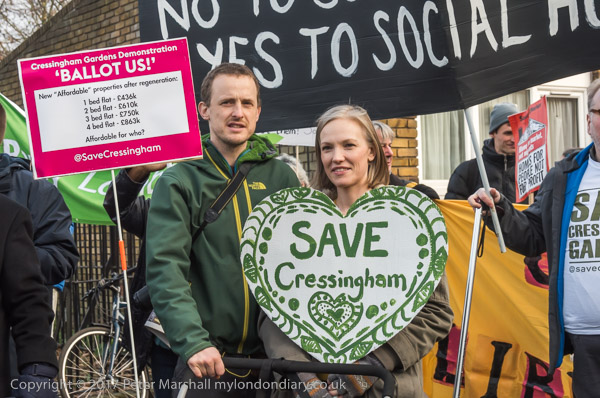
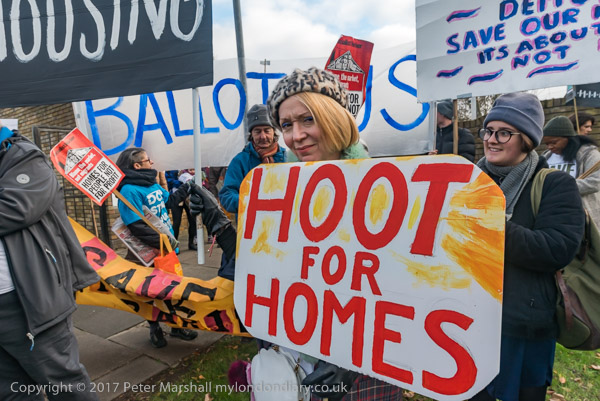
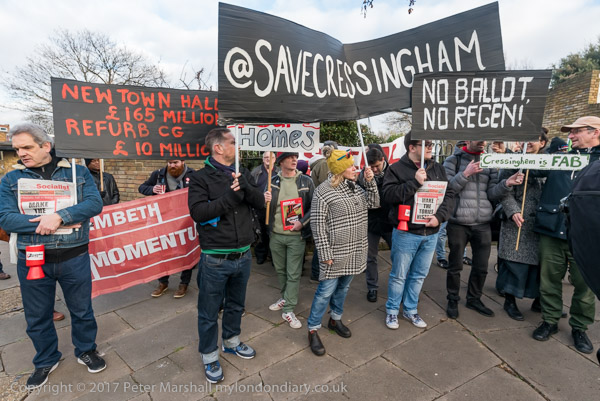
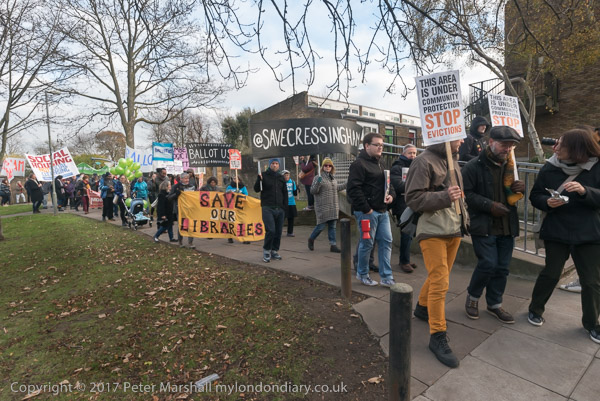
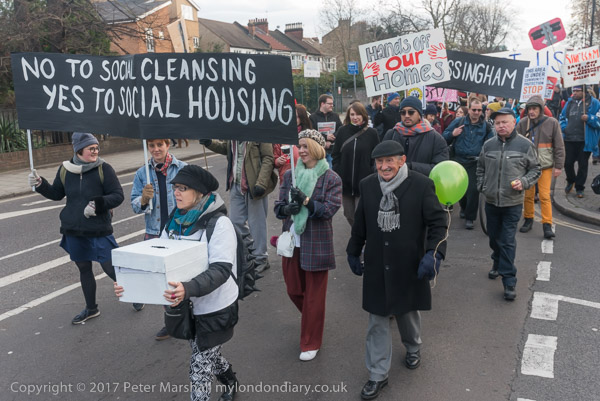
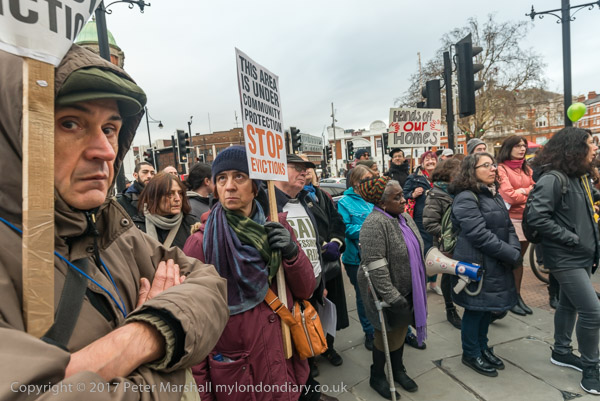
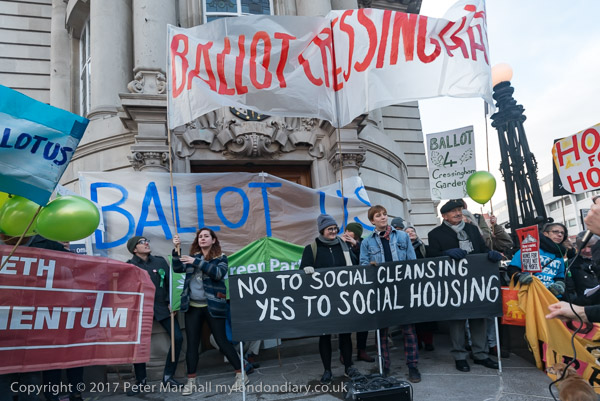
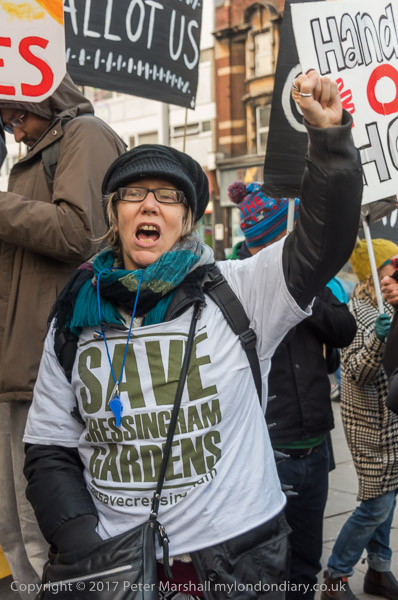
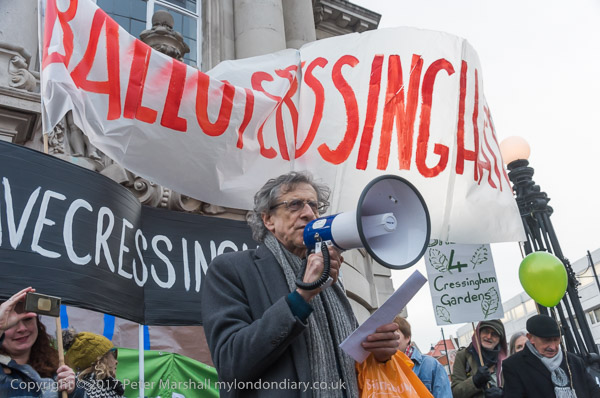
Cressingham Gardens Calls For A Ballot – On Saturday 2nd December 2017 residents of Cressingham Gardens in Tulse Hill marched with supporters to a rally at Lambeth Town Hall in Brixton to demand Lambeth Council hold a ballot of residents over the plans to demolish their homes. I went early to take a walk around the estate and take some photographs before the rally and march.


Cressingham Gardens – Tulse Hill, Brixton

Cressingham Gardens Calls For A Ballot

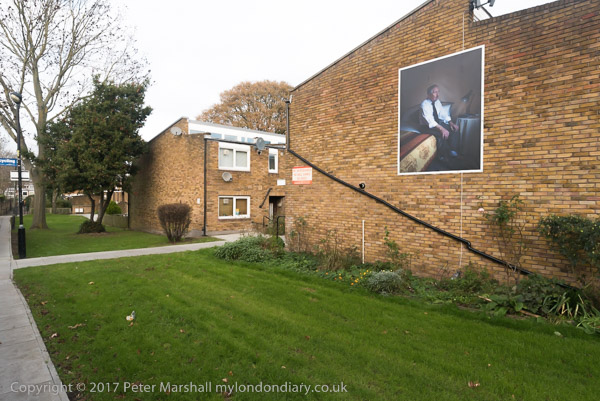
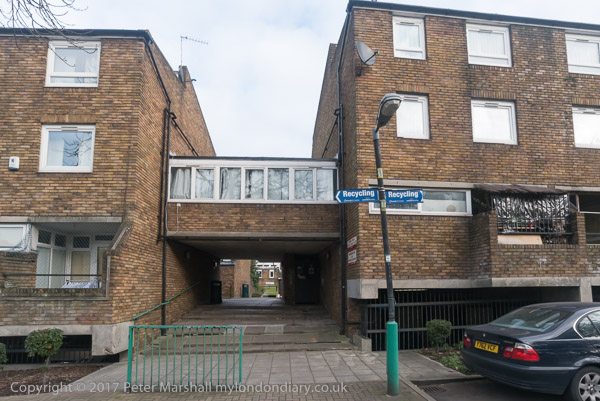
Council estates generally get a bad press, with media attention concentrating on those which were badly planned and have been allowed to deteriorate, often deliberately populated with more than than share of families with problems of various kinds, used as ‘sink estates’ by local councils. Some councils have even employed PR companies to denigrate and demonise those of their estates they want to demolish and sell off to private developers.

Cressingham Gardens Calls For A Ballot
This has always been a popular estate, and has a low crime rate for the area

These developers have also powerfully lobbied our main political parties who have handed over much of their policies over housing to developers and estate agents and other property professionals who stand to make huge profits from turning public property into private estates.

Cressingham Gardens Calls For A Ballot

Yet many council estates are pleasant places to live, often much better planned than private developments of the same era, and providing more space for people than the cramped and expensive flats that are replacing them where redevelopment schemes have gone ahead. Lambeth Council have several such estates, including those at Central Hill and Cressingham Gardens where this would clearly be the case, and residents at both sites have campaigned strongly to keep their homes.

Cressingham Gardens Calls For A Ballot

We seem always to be in a housing crisis in the UK, and some of the solutions that were taken to meet this have not always worked to well, particularly with some system-built high rises which were shoddily erected by private developers for councils.

After I left home in the early 1960s I lived in private rented flats, then in a New Town in a flat from the development agency and then for many years now as an owner occupier. The private rentals were pretty squalid and the publicly owned flat was rather more spacious than the small Victorian house we have lived in since. It would have been good to have been able to move into socially owned housing when we relocated but it wasn’t available.
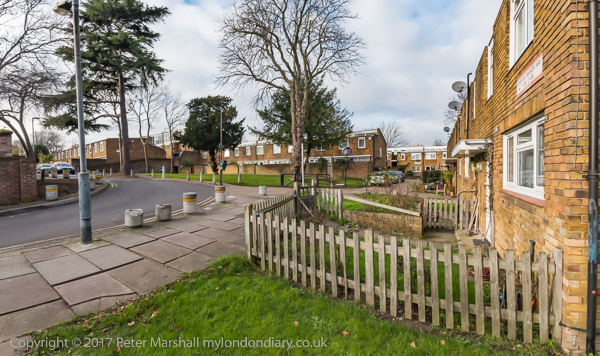
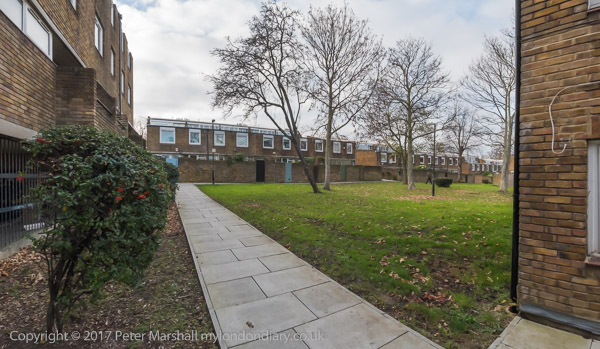
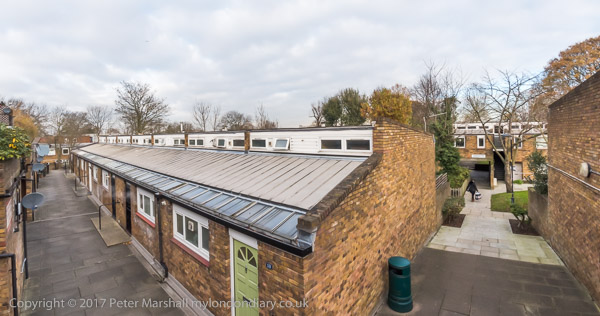
Until the Thatcher government came into power public housing had regarded as something desirable with even Conservative Councils such as Lambeth was then having a mission to provide quality housing for working class Lambeth residents. They employed some of the best architects in the country, such as Edward Hollamby, the chief architect for Lambeth Council who was responsible for Cressingham Gardens and designed this low rise ‘garden estate’ development built in 1967 to 1979 at low cost and with a high population density, but with the 306 homes each having their own private outdoor space.
As the Twentieth Century Society state “this is one of the most exceptional and progressive post-war social housing estates in the UK” but the application for listing the estate in 2013 was rejected despite Historic England praising the way the design responds to its setting, with skill and sensitivity, “both in the scale and massing of the built elements, as well as through the integration of these elements with informal open spaces which bring a park-like character into the estate”. It appears to have been a decision made in defiance of both the estate’s architectural and historical merit and solely on political grounds.

The estate is on the Twentieth Century Society Buildings at Risk list. Lambeth Council have completed their preparation and brief for its complete demolition and their web site states they “will shortly be starting RIBA Stage 2 (Concept Design).“


Cressingham Gardens residents say Ballot Us!

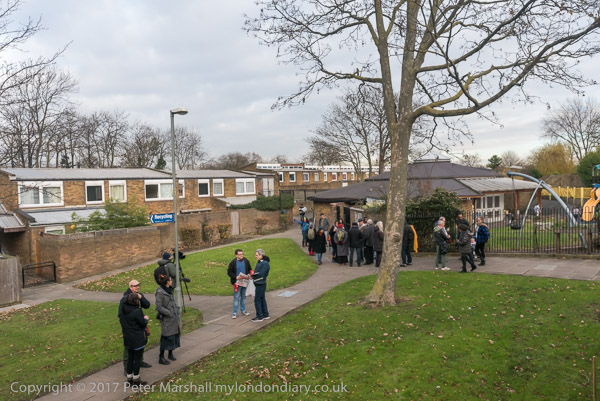
People met up next to the Rotunda in the centre of the estate designed by Hollamby as a children’s nursery, many carrying banners and posters. Residents were joined by other campaigners, including those trying to save Lambeth’s libraries and housing campaigners from north London.

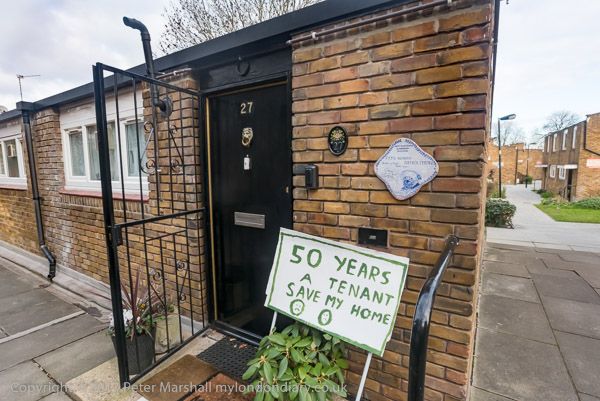
Residents love living on Cressingham – a small well-planned estate with a great community feeling and many know that they will be unable to afford the so-called afford ‘affordable’ homes that the council wants to replace their homes with – a 2 bed flat after regeneration will cost £610 (at 2017 values.)

They want the estate to be refurbished rather than demolished, which the council says would cost £10 million. Many dispute the council’s costings and say that some of the problems the council has identified are a matter of poor maintenance rather than needing expensive building works. But residents in any case point to the council having just spent over £165 million on a new Town Hall and say refurbishment is a cheap option.

It isn’t the cost of refurbishment which makes the council turn it down, but the profits that developers can make from the site – and which the council hopes to be able to get a share. Though such schemes haven’t always worked out well. Although the developers have done very nicely out of demolishing the Heygate site in Southwark and building high density blocks on it, the council made a huge loss, though some individuals involved have ended up in lucrative jobs on the back of it.

Lambeth is a Labour Council, and since the previous Labour Party conference party policy had been that no demolition of council estates should take place without consent, but Lambeth Council seem determined to ignore this and go ahead with their plans for a so-called ‘regeneration’ which would see all 300 homes demolished, without any plans to provide immediate council housing for the roughly 1000 residents who would be made homeless. To the council these residents are simply occupying a site worth several hundred thousand pounds – an asset the council wants to realise. It doesn’t care about communities, about people.

Those who have become leaseholders of their homes are likely to get even more shoddy treatment. The amount of compensation they are likely to receive is likely to be less than half they would need to buy a comparable property in the area – on or the rebuilt estate.

Cressingham is in a very desirable location, on the edge of a large park and with good transport links a short distance away. Many are likely to have to move miles away on the edge of London or outside to find property they can afford, far from where they now live and work.

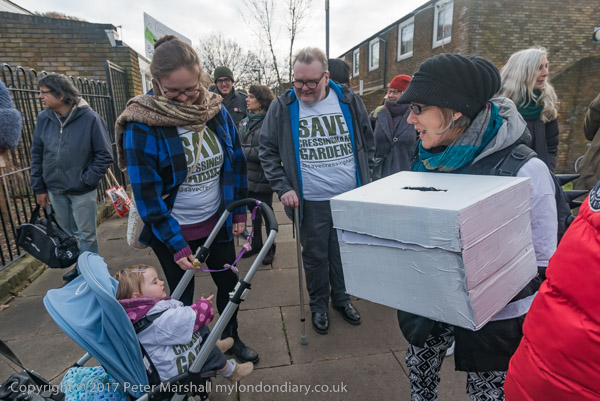
The march set off for Brixton Town Hall on the corner of Acre Lane where a small crowd of supporters was waiting for them. The placed a box containing petition signatures in front of the locked doors on the steps and a rally began with shouts calling for a ballot.

Among those who had come to speak along with residents from the estate were Tanya Murat of Southwark Homes for All and Piers Corbyn, a housing campaigner also from neighbouring Southwark.

One of the strikers from the Ritzy cinema opposite told us that none of them could now afford to live in Lambeth now, and it’s clear that we need more social housing not less in the area. A local Green Party member also told us that they were the only party in the area campaigning for more social housing.

Potent Whisper performed his take on Regeneration, ‘Estate of War’, from this Rhyming Guide to Housing. The video of this was recorded in Cressingham Gardens.

Others who had come along included people from Class War and the e RCG (Revolutionary Communist Group) who have been very active in supporting social housing campaigns as well as Roger Lewis of DPAC who told us how council cuts affect the disabled disproportunately.

More on My London Diary:
Cressingham residents say Ballot Us!
Cressingham Gardens


Bonnington Square and Kennington Lane – 1989

Bonnington Square and Kennington Lane – The final set of pictures from my walk on 19th July 1989 which began with Stockwell Park, Bus Garage, Tower and Mason. It continues from my post More From Stockwell & South Lambeth.

Bonnington Square, Vauxhall, Lambeth, 1989 89-7h-31
Vauxhall Grove, Bonnington Square, Vauxhall, Lambeth, 1989 89-7h-31

At the end of Langley Road I came to a remarkable area of Vauxhall. Built in the 1870s for railway workers Bonnington Square was in the late 1970s compulsorily purchased by the GLC who intended to demolish it and build a school. But one resident, a Turkish shopkeeper, took legal action to prevent the demolition and eventually the GLC gave up. Squatters moved in to occupy almost a hundred emptied properties, setting up a vegetarian cafe, a wholefood shop and bars and a community garden.

Bonnington Square, Vauxhall, Lambeth, 1989 89-7h-32

The squatters formed a housing co-op and eventually negotiated a lease and in 1998 were able to buy the buildings from Lambeth Council. Most are now still owned by low-rent housing cooperatives. A few are privately owned, I think including some where the GLC had not managed to get residents to move out. The gardens are still collectively run, as was the café.

Bonnington Square, Vauxhall, Lambeth, 1989 89-7h-33

The story is told in The Mavericks of Bonnington Square which also includes a 20 minute film produced around 2011 which gives an interesting view of the area and the incredible transformation made by those who moved in, and also includes many of their photographs from the early days. People had more or less to rebuild many of the properties and developed an incredible community spirit in doing so. The area is now described as a “botanical oasis hidden in the midst of Vauxhall” and includes two community gardens, one on an area destroyed by wartime bombing.

Bonnington Square, Vauxhall, Lambeth, 1989 89-7h-31

I went to Bonnington Square quite a few times, often taking a short wander through on my way from visiting friends who lived in a council flat close to the Oval to Vauxhall Station, not to take pictures but just because it was an interesting diversion if I had a few minutes before my train came, and I also went to some of the festivals there.

St Peters, Vauxhall, Kennington Lane, Vauxhall, Lambeth, 1989 89-7h-26

I often walked past St Peters Church and went inside a few times, including to a service led by a trendy young cleric in black leathers. Now I think worhips there is rather different. The Grade II* listed church built in 1863-4 was the first major town church by the renowned British Gothic Revival architect John Loughborough Pearson. It has magnificent interior and a fine exterior; shortages of cash meant the church was rather plainer than Pearson’s orginal plans, probably much to its advantage. The site was given free by the developer of Vauxhall Gardens on the provision that all seats in the church should be free and not rented. It has a fine acoustic and now hosts concerts as well as services.

Around the corner linked to the side of the church are the schools built a few years earlier (also designed by Pearson) to train local children to be draughtsmen and artists for Maudslay’s engineering works and Doulton’s pottery factory nearby. The wall at the left of the picture is of another building by Pearson, though you can see little of it in this picture, his St Peter’s Orphanage and Training College for the daughters of clergy and professionals and also Grade II* listed, now converted into flats as Herbert House.

Shops, Kennington Lane, Vauxhall, Lambeth, 1989 89-7h-25

A lively row of small shops is still present here on Kennington lane, although now rather less useful and perhaps a little more run-down. I stood regularly at the bus stop here for buses to Camberwell and Peckham as well as walking past on another longer route to see my friends or to take my cameras in for repair at Fixation down the road, and made a few photographs here over the years.

Window display, Kennington Lane, Vauxhall, Lambeth, 1989 89-7h-11

This was part of the window display in one of those shops in July 1989., including two Edward Weston posters of Clark Gable and Grouch Marx. The Marilyn Monroe image was her first of her to appear on the cover of LIFE on April 7, 1952, taken by Philip Halsman, and it was later published widely, including again inside LIFE in 1962 at the time of her death.

Happy Birthday Nicaragua, Harleyford Rd, Kennington Lane, Vauxhall, Lambeth, 1989 89-7h-24

On the corner of a very busy traffic junction just yards southeast of Vauxhall Station this white wall was a good site for graffiti, though in my picture it is partly obscured by the street furniture. I think I chose the viewpoint to make sure that the message ‘Happy Birthday Nicaragua – 10 years of liberation – (and a long way from Thatcher)’ was clear.

The Sandinistas took power in Nicaragua in July 1979, ending long years of dictatorhsip by the Samoza family who had been put into power there by the US who occupied the country from 1912 until 1933. Thatcher was only prime minister from 1979 until 1990 but it seemed much longer and caused a decisive shift to the right and towards an emphasis on individual greed rather than social responsibility that continues to this day.


South Lambeth & Vauxhall 1989

South Lambeth & Vauxhall 1989: Yet again I’ve found some more pictures from my walk in South Lambeth on 19th July 1989, which began with Stockwell Park, Bus Garage, Tower and Mason. This time the pictures comefrom the end of the walk where I had wrongly remembered my route that day. I didn’t always develop films in the order in which they were taken and things sometimes got rather out of order in my files.

After taking pictures on Old South Lambeth Road I thought I had simply walked to Vauxhall Station without taking more pictures. But I now realise I had walked further up the South Lambeth Road an had then gone on to take some photographs in Vauxhall.

South Lambeth Library, South Lambeth Rd, South Lambeth, Lambeth, 1989 89-7h-66

In a previous post I wrote about the library and linked to an article on Vauxhall History about the fights by people in the area on several occasions to keep their library open. Thanks to their efforts the library, in the heart of Lambeth’s Portuguese community, is still open five days a week, though doubtless it will not be long before Lambeth Council tries yet again to close and demolish it.

South Lambeth Library, South Lambeth Rd, South Lambeth, Lambeth, 1989 89-7h-51

Despite the street name on the wall, South Lambeth Library is on South Lambeth Rd, and Wilcox Close is here simply a pedestrian way than runs along its southern side, with vehicle access to the houses in the Wilcox Cloase being from Kenchester Close, another street in the Mawbey Brough council estate built here in the 1970s – one of the times the community had to unite to save the library.

This picture concentrates on the highly ornamented frontage of the building. Particularly impressive are the decorated words TATE FREE LIBRARY.

South Lambeth Library, South Lambeth Rd, South Lambeth, Lambeth, 1989 89-7h-52

A final picture of the library in this post shows more of the library building, which is only locally listed, which gives it no protection. In a previous post I suggested that this was because it had been considerably altered since it was built in 1888, losing the copper cupolas on top of its powers possibly to meet demand for metals in the war and also losing a fine porch, probably to allow road widening. Historic England seem to be very reluctant to list buildings which have been significantly altered.

Wheatsheaf Hall, Wheatsheaf Lane, South Lambeth, Lambeth, 1989 89-7h-55

Opened in 1896 as the Wheatsheaf Congregational Church Mission and used until 1939 as a mission hall, it claims to have been the first free public library in Lambeth, though possibly this was in the small villa on the site before this, as South Lambeth Library opened in 1888. The building was Grade II listed in 1975.

In 1980 Lambeth Council began proceedings to evict the then tenants Cinebuild to develop it as a tenant’s hall and community centre which opened in 1988 and continues in use “for community and business meetings, meditation groups, faith groups, council surgeries, rehearsal space, weddings, christenings, birthday parties and bingo.”

Wheatsheaf Hall, Wheatsheaf Lane, South Lambeth, Lambeth, 1989 89-7h-42

Another view of Wheatsheaf Lane and the hall, which still looks much the same now. The pub glimpsed at left was The Wheatsheaf, reflecting the agricultural nature of the area, parts of which were still fields when this was first opened. It is known to have been here in 1788, though this building is Victorian. It closed as a pub in 2017 and is now a Brazilian restaurant.

St Anne & All Saints, Miles St, South Lambeth Rd, South Lambeth, Lambeth, 1989 89-7h-44

According to Vauxhall History, a chapel was built on this site in 1793 after much pleading from local parishoners who had to walk across marshland to get to St Mary’s Church next to Lambeth Palace. It was a dangerous route as this offered hiding places for robbers who would attack those walking through it.

They were allowed to build a private chapel and the cost of building was paid for by selling shares entitling those who bought them to seats in the chapel and leasing other seats. There were no free seats and the poor still had to cross the hazardous marsh.

Perhaps it was because it was a chapel for the rich and not the rapidly growing working class population of the area was that led to a fire which partly burnt the chapel down in 1856 and an incident of sacrilege of which details have not survived the following year.

In 1860 the Church of England decided to set up a separate parish of South Lambeth and to build a new church on the chapel site. They wanted to take over the chapel, and it took them 8 years to find all the shareholders and get the site conveyed to them. A slow process of rebuilding then began to turn the chapel into something more suitable for a parish church which was only completed in 1876 to the designs of architect R Parkinson. It was rebuilt again in 1958 after bomb damage in the Second World War.

The church was dedicated to St Anne probably as a tribute to Ann Beaufoy, the wife of George Beaufoy who had become head of the local vinegar factory in 1851 and had been one of the promoters of the new parish. It was his son Mark Beaufoy, who became MP for Kennington who chaired the meeting in his home in 1881 to found the Waifs and Strays Home, now the Children’s Society.

Behind the church is the tall tower block of BT’s Keybridge House on South Lambeth Rd, built 1975-7 and demolished in 2015. Few would mourn its passing but many wish its successor was rather better.

'SCHOOLS ARE PRISONS', Langley Lane, Vauxhall, Lambeth, 1989 89-7h-46
‘SCHOOLS ARE PRISONS’, Langley Lane, Vauxhall, Lambeth, 1989 89-7h-46

This was taken in Langley Lane but although the wall is still there the building behind it has gone and it is now just a car park at the rear of the imposing 5 storey block of the former LCC’s 1908 Lawn Lane Schools. Later this was Vauxhall Central Girls School which in 1957 this became one of two buildings of Vauxhall Manor Secondary School, a comprehensive 11-18 girls school. This merged with the Beaufoy School, a school for boys in 1983 to become the mixed comprehensive Lilian Baylis School, now on Kennington Lane The Lawn Lane building has now been converted to flats as ‘The Academy’.

A later post will I hope finish this walk with some pictures from Vauxhall.