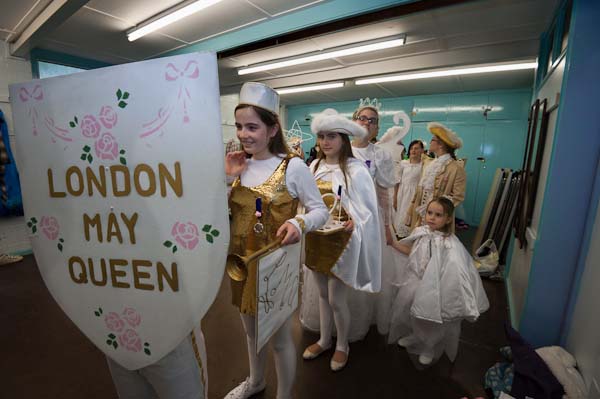
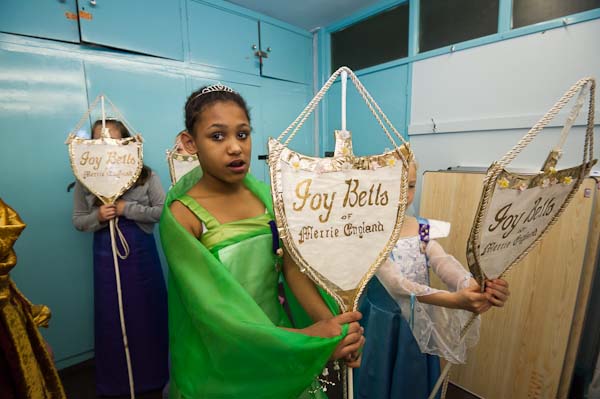
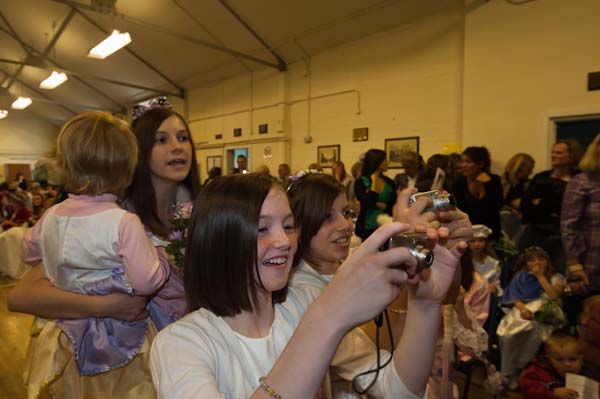
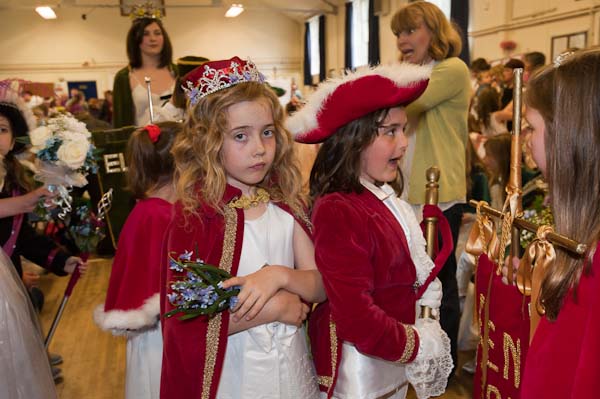
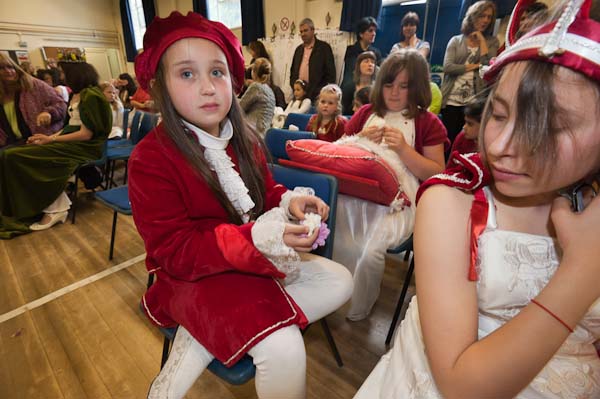
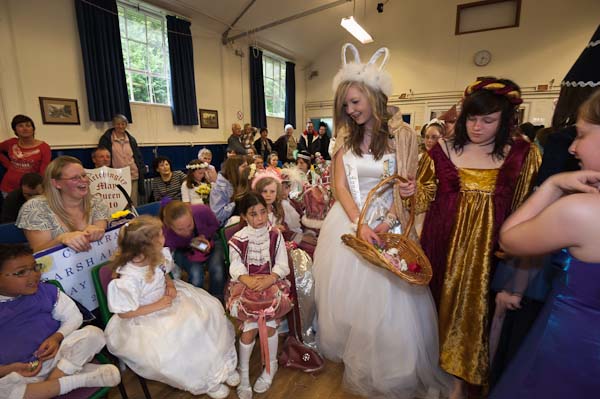
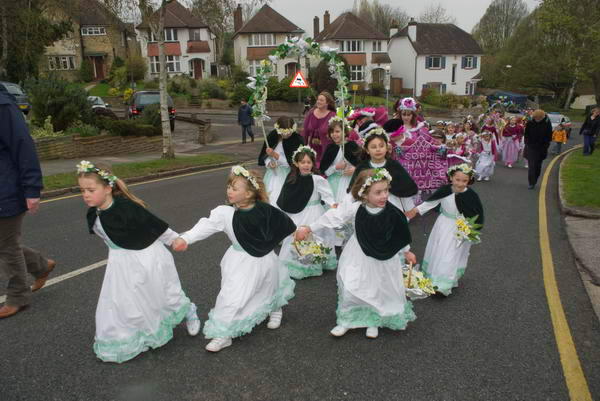
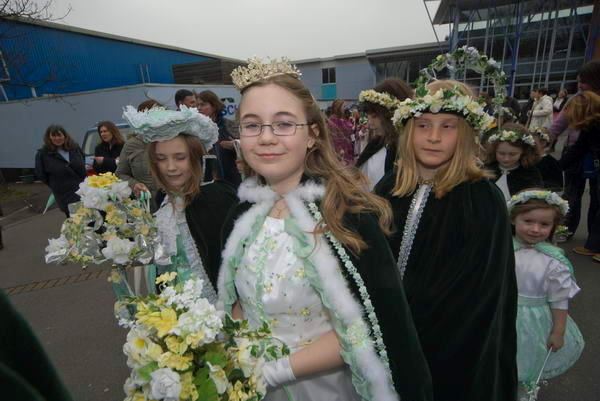
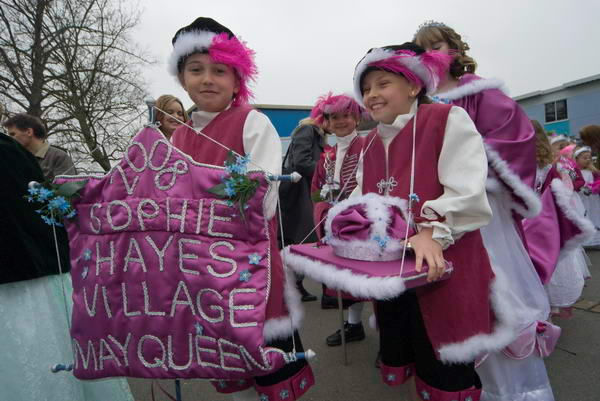
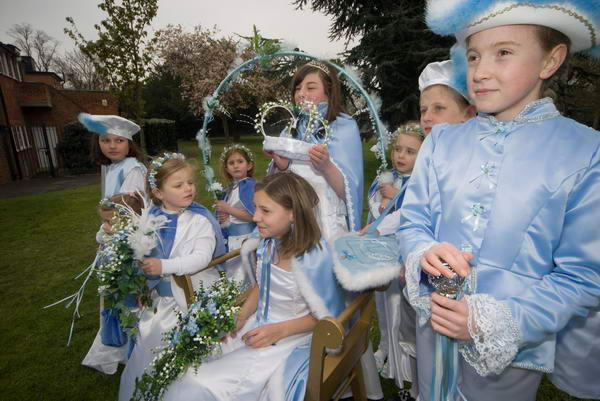
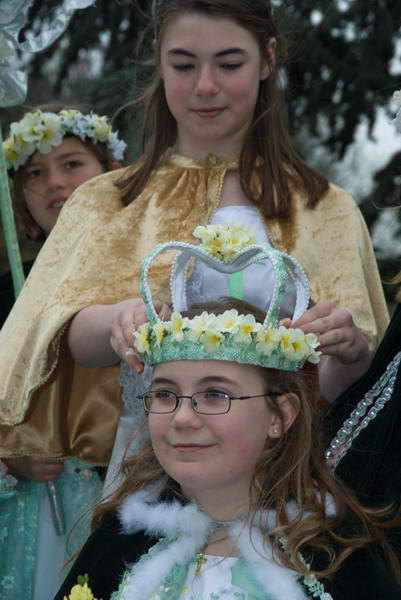
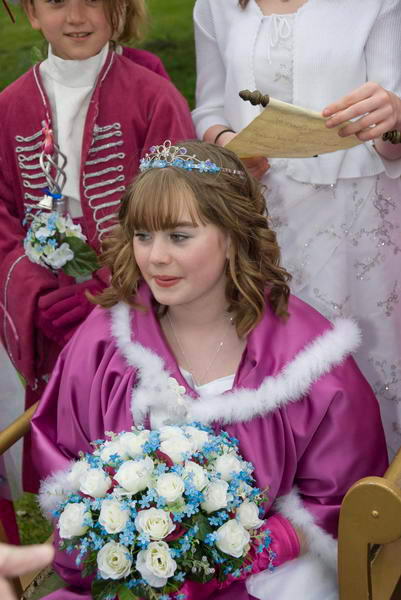
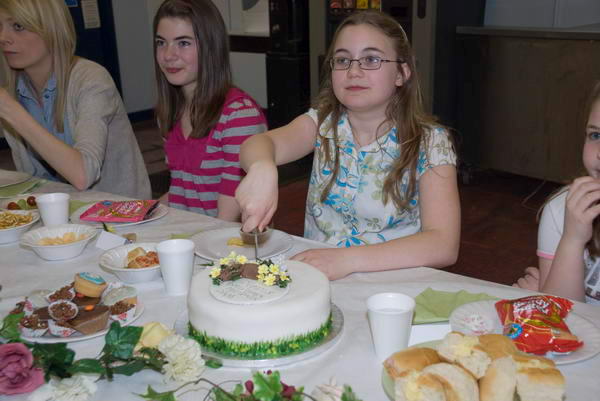
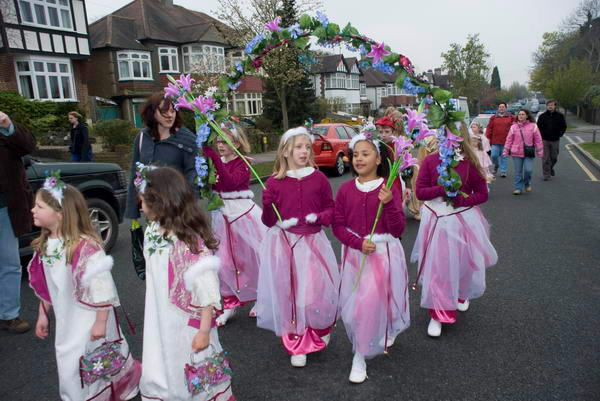
Rain Hit May Queen Festival: Saturday 8th May 2010 was a day of cold rain in southeast London, and the organisers of the London May Queen Festival had to abandon the usual procession by several hundred girls around the village of Hayes.
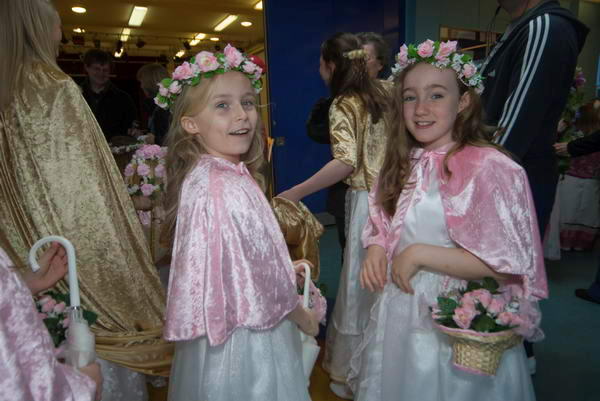
Instead the ceremonies went on in a crowded Hayes Village Hall, though there was room only for the London May Queen’s retinue, the 26 realm queens and small groups of their attendants, along with their family members. I’d photographed a number of previous events had been invited by one of the mothers to come and take photographs.
Photography was a little of a challenge as the light was fairly low and rather mixed, with cloudy daylight coming through the windows of the hall and long fluorescent tubes coming down from the roof of the hall. Though I did take some pictures by available light, the great majority of these were made using flash as the main source. Fortunately the Nikon SB-800 Speedlight with its i-TTL through the lens metering was an incredible advance on older flash systems and performed (with a little help from me) admirably.
Because we were packed into the hall, most of the time I was working very close to at least some of the people I was photographing and using my Nikon wide-angle zoom. This creates problems with uneven lighting – a person 1 metre away from the flash will receive 9 times the light of someone 3 metres away.
The main hall didn’t have a ceiling I could use to bounce light from (I could in some side rooms), but I did have a small diffuser and sometimes was able to angle the flash away from the near subject to give greater illumination on people further away. Edge fall-off from flash is normally a problem in wide-angle pictures, but sometimes you can put it to use.
I wasn’t the only photographer
Nowadays it is far easier to apply some compensation for uneven lighting in post-processing, but then it was still rather tedious and I don’t think I did so on any of these. As usual I took all pictures as RAW images, adjusting them in software (Lightroom) for contrast, colour balance and exposure. I think all are uncropped; it isn’t a religion for me, but I do like to get things framed right when I expose.
Barnes Cray & the Cray: Panoramas made with a swing-lens camera on a walk in September 1994 from Barnes Cray to Crayford Marshes in the London Borough of Bexley.
In 1750 Miles Barne, son of a wealthy London banker of the same name, inherited the large May Place Estate on the death of his father-in-law. Various members of the Barne family played important roles in the development of the area, with their names incorporated into Barnehurst and Barnes Cray.
Barnes Cray House had an interesting life not least when it was home to a farmer who went to the High Court to stop neighbouring land being used as a firing range by the company which became Vickers. Vickers eventually bought the house as a home for the man in charge of their Cray works, but when their factory moved away gave it to the local council who opened it as a maternity hospital. This closed in 1936 and the house was demolished.
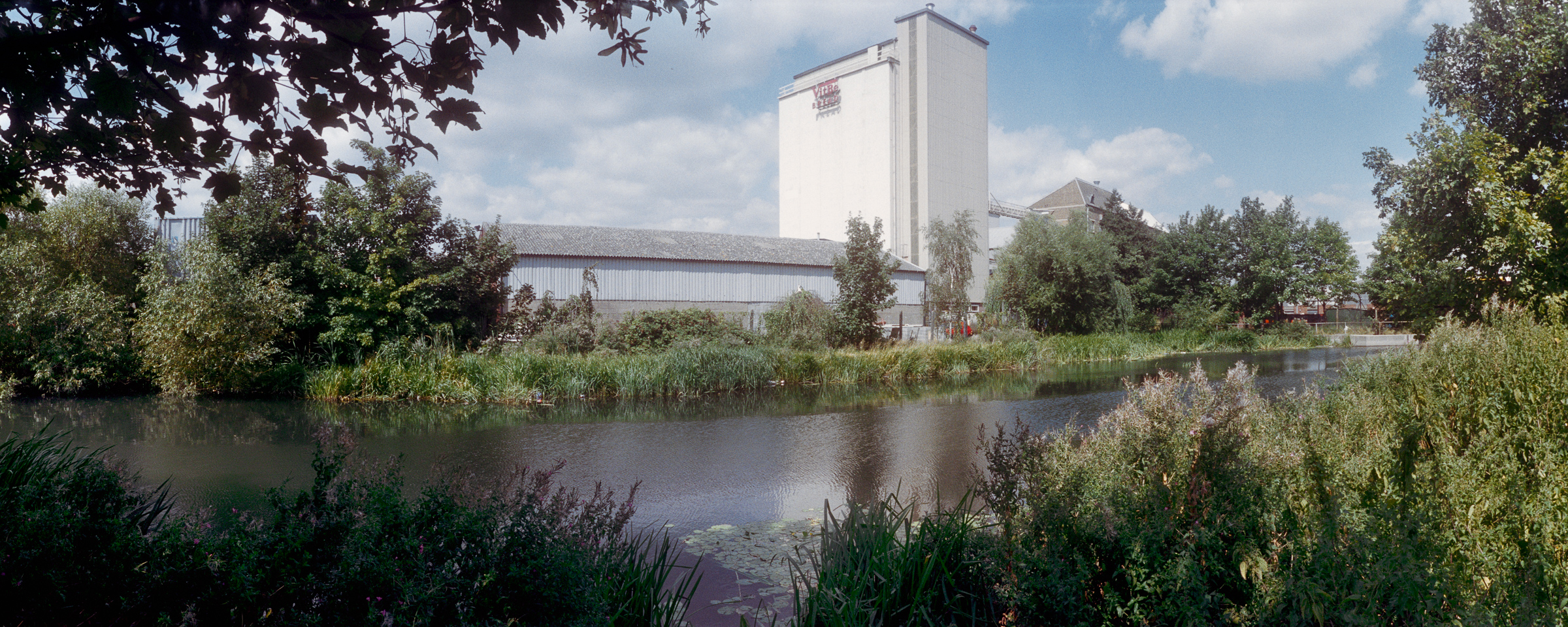
River Cray, Crayford Flour Mill, Barnes Cray Bexley, 1994, 94-907-23
Industry came to the area in the Victorian era with a calico printing works using water from the River Wansunt, later making rubber goods, felt and finally making ‘Brussels Carpets’ – patterned carpets which have the loops of the pile uncut before being demolished in 1890. The Wansunt is a tributary of the River Cray which it joins close to here.
River Cray, Barnes Cray, Bexley, 1994, 94-904-61
The First World War led to a great expansion in the arms industry and Vickers built thousands of homes in Barnes Cray to house its huge workforce – at one point almost 15,000. The development was of good quality homes for workers with a nod to the ‘Garden Village’ vision. The development took the name Barnes Cray.
An iron mill on the Cray was replaced in 1735 by a saw mill which in turn became a flour mill. In 1927 this began making Vitbe flour, with added wheatgerm to increase its Vitamin B levels, widely used by many bakereries including those of the Aerated Bread Co. In 1956 the company was renamed Vitbe Flour Mills Ltd and it was acquired by Associated British Foods in 1961.
I went for a lengthy walk on the Crayford Marshes, taking many panoramic images, but cannot remember the exact locations. Here is one of them but there are quite a few others on Flickr – you can browse this by clicking on this or other images in this post.
Bexkleyheath & Crayford: I spent several days in mid-August in Bexley in south-east London visiting Bexleyheath, Crayford and Barnes Cray and some of the areas around, and returned to the area the following month. I think all the pictures in this post were made in August.
Crayford, Bexley, 1994, 94-812-45
Crayford obviously gets its name from a ford over the River Cray, the major tributary of the River Darent which it joins not far from here and short distance from where this flows into the Thames. Its name is thought to mean a fast flowing stream and it powered an number of mills on its route – including a paper mill at Crayford. The tidal creek is still navigable from the Thames to Crayford, and was apparently canalised in 1845. There were still barges serving the flour mill in the 1980s.
Crayford, Bexley, 1994, 94-812-33
Crayford, Bexley, 1994, 94-812-34
Crayford, Bexley, 1994, 94-812-35
Taken through the links of a fence.
The Frontier Post, Bar & Grill, Bexleyheath, Bexley, 1994, 94-812-21
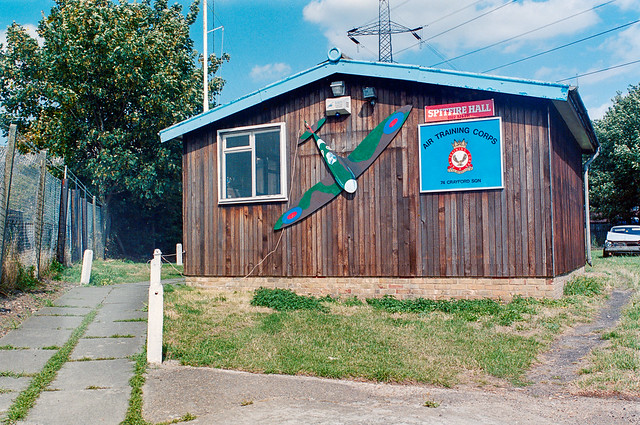
Spitfire Hall, Air Training Corps, Swaisland Drive, Crayford, Bexley, 1994, 94-812-11
Sainsburys, Petrol Station, Roman Way, Crayford, Bexley, 1994, 94-812-12
I returned to Crayford and Barnes Cray the following month, making a number of colour panoramas as well as black and white picture pictures which I’ll post at some time later – or you can find them in my Flickr albums for 1994.
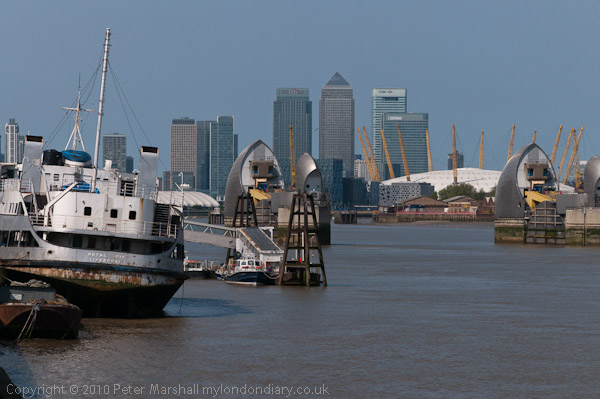
The view upriver from Charlton with the Thames barrier, Dome and Canary Wharf
Charlton to Belvedere: On Monday 25 April 2011 I went with my wife and elder son on a walk from Charlton Station to Belvedere. They walked but I rode on my folding Brompton bike as I was still suffering from plantar fasciitis and walking any distance became too painful.
A derelict pub in Charlton
As a cyclist any pressure is on the ball of the foot, with no weight at all on the heel and arch where the pain can be intense. Gel insoles help a little for walking and I was still managing to photograph events, but longer – and faster – walks were still completely out of the question for me.
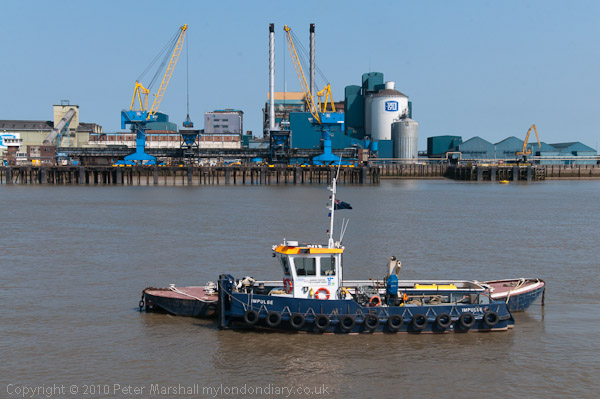
Tate & Lyle in Silvertown
I’d been to see my doctor who was sympathetic and told me that physiotherapy might help, but given the waiting list for appointments the pain would probably have gone away before I got one. But there were exercises that could help – and after I had spent a few months rolling a baked bean tin back and forth under my heal while having breakfast the pain did eventually go away.
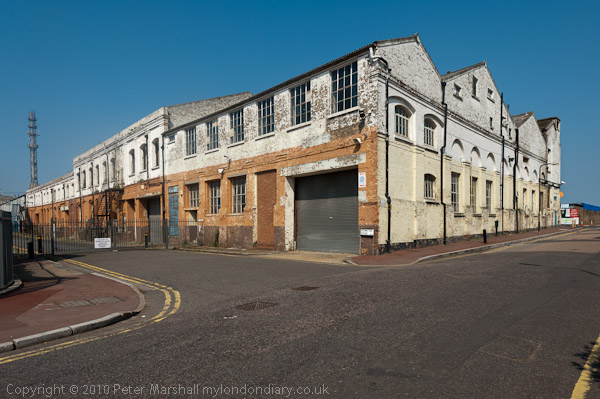
Warspite Rd/Bowater Rd SE18
The bike was a great idea. Linda and Sam were fast walkers and intent on getting to our destination, while as a photographer I kept stopping and sometimes wandering a little to one side to get into the right position to take pictures. Then I would see them a couple of hundred yards ahead and would need to run to catch up. So much easier on the bike.
I took advantage of my bike to make some longer than normal diversions, at one stage cycling down a road to reach the river where there was no riverside path but riverside steps. I had a scary moment here, walking out on a ledge to get a better view I lost my balance and began to shake uncontrollably in front of a 10 foot drop onto the concrete steps and rubble of the foreshore. Fortunately I managed instead to grab hold of a rail behind me and after holding it for a few seconds steady myself enough to edge back to safety. I was only too aware of a history of photographers falling to their deaths while ‘getting a better view’.
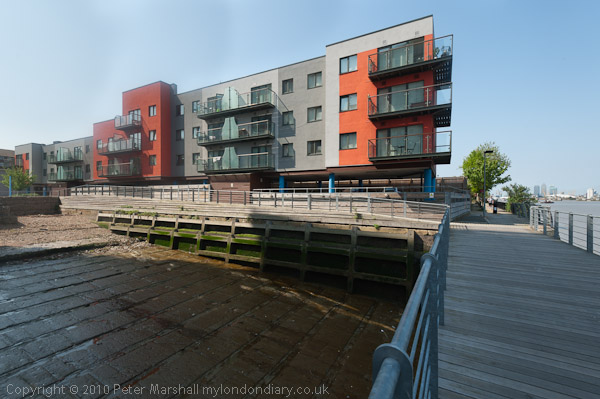
Recent flats on the former Royal Dockyard at Woolwich
Eventually I stopped shaking and was able to get back on my bike and hurry after the others. And no, I didn’t tell them what had happened and they still won’t know about it unless they read this.
We were on the John Burns, named after the great trade unionist and Labour politician who called the Thames ‘liquid history’.
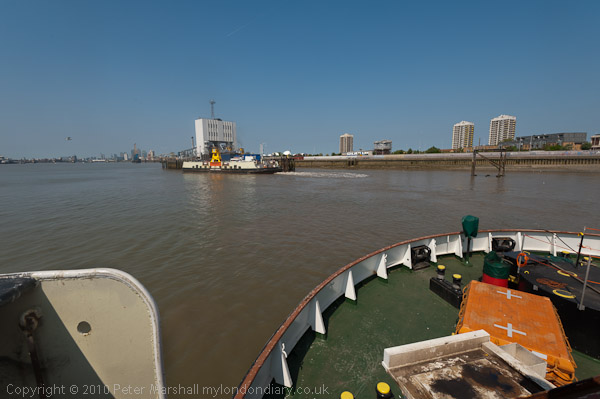
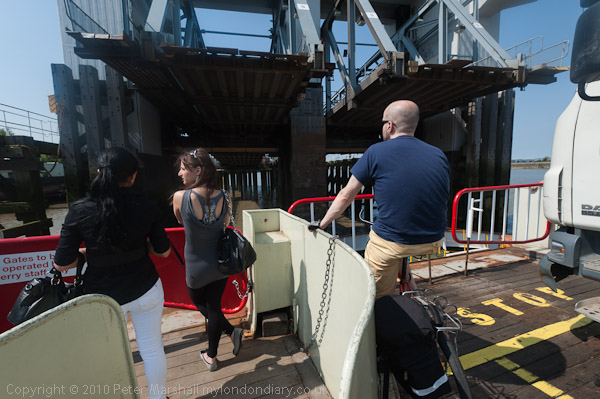
At Woolwich we took a ride across on the Free Ferry. Folding the Brompton I could walk past the ‘No Bicycles’ sign and go below deck with the others. I’d hoped we could return by the tunnel, but it was closed so we had a short walk in North Woolwich and a second ferry ride.
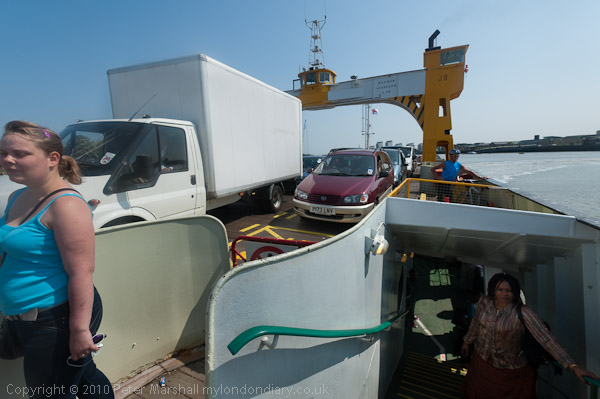
Coming back to Woolwich I kept on the vehicle deck. Bikes get to ride off before the cars.
When the Thames Path was declared a National Trail and then opened in 1996 it ended at the Thames Barrier. Our walk in 2011 began at Charlton station so only the first short section was on that and beyond we were walking the Thames Path Extension. I had previously walked all of this route, and further on as far as Cliffe. If you have the stamina you can now continue all the way to the Isle of Grain though a bike would really be a good idea. Perhaps one day I’ll do it.
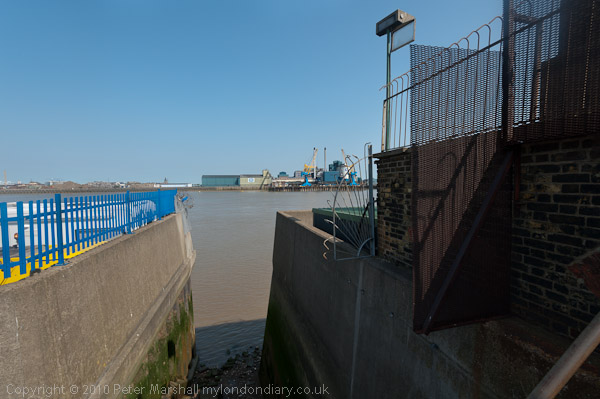
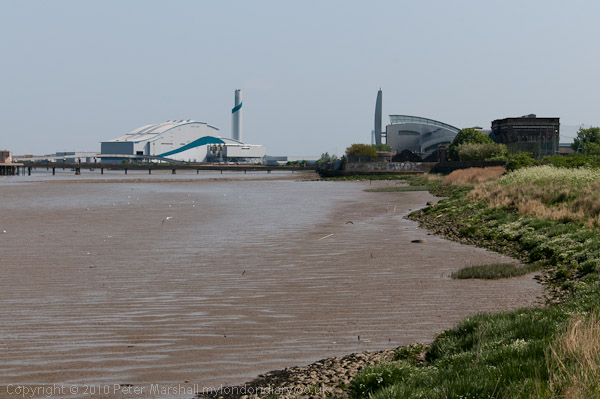
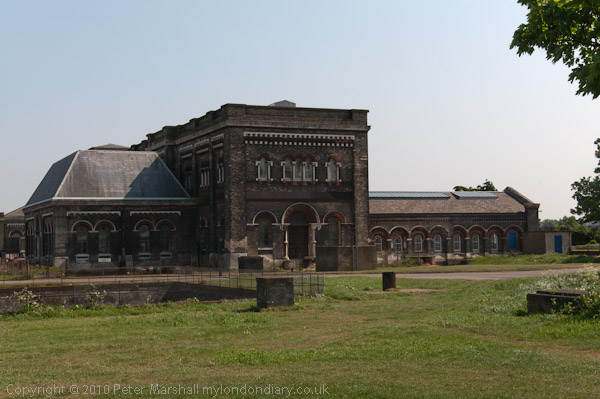
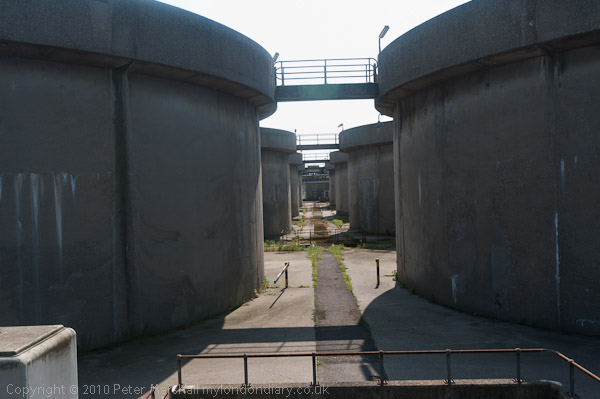
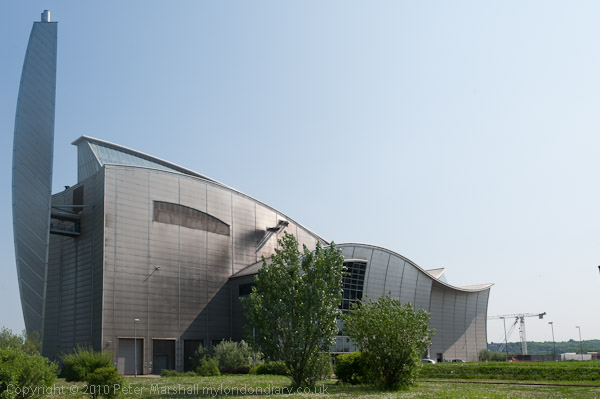
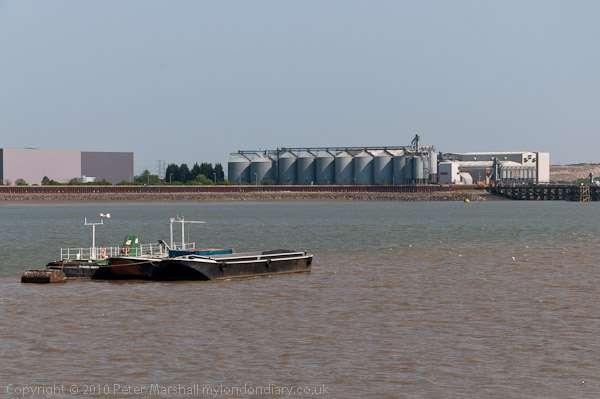
The Royal Arsenal site, once an official secret is now a tourist destination, complete with various sculptures, including Peter Burke‘s AssemblyThere are glimpses of the river and these waste transfer barges though trees and over bushe and Beckton on the opposite bankOne of the larger tributaries of the Thames is the treated outfall from Beckton sewage works at left. close to Barking CreekWaste incinerators and the Bazalgette pumping stationThe Romanesque Crossness Southern Outfall Works opened in 1865, pumping sewage out when the tide would take it seawardsPart of the more utilitarian 1950s sewage treatment plant at CrossnessThe 1998 sludge incinerator, an elegant swan-like metal structureLooking downstream to silos at Rainham
On this ‘walk’ I gave up here and cycled to Belvedere station to get home for a meeting in the evening, while the two walkers continued to the Darent and then walked back to Slade Green station.
Many more pictures on My London Diary from the walk and the ferry at More Thames Path.
Prospect Cottages, Point Pleasant, Wandsworth, 1990, 90-3c-43
I get a fleeting view of these cottages as my train goes past between Putney and Wandsworth Town at ‘Point Pleasant Junction’ which still connects the National Rail lines with the District Line to Wimbledon. The bridge over the lines was closed in 1987 as unsafe and partly demolished, though the piers remain and the remaining link made bi-directional. It is now only used by excusions and some empty trains – but I was on a train that took this route during an emergency deviation quite a few years ago.
I don’t know how Point Pleasant got its name, though it seems to date back as long as the street existed. Perhaps it was simply lead to a pleasant view of the River Thames.
I think these cottages are present on the earliest maps of the area I have seen from the early years of the 19th century, though its hard to be sure and they may have replaced earlier cottages on the site. Surprisingly the 14 cottages do not appear to be even locally listed.
Works, Point Pleasant, Wandsworth, 1990, 90-3c-44
But Point Pleasant was long an industrial area. According to Ediths Street’s Edward Barker set up an ironworks here in 1634 making small articles such as frying pans and to have been a major arms supplier to the Civil War. His site was sold to Gatty and Waller in 1771 and they set up a chemical works distilling vinegar and producing other chemicals.
The Union Brewery opened here in 1820 and closed in 1920. Richard Seligman set up the Aluminium Plant and Vessel Co. a specialist aluminium welding business, on part of the brewery site in 1920 and his works eventually covered most of Point Pleasant, moving out to Crawley in 1952. I think this factory, built in two stages, was a part of those works.
Point Pleasant, Wandsworth, 1990, 90-3c-45
Redevelopment of the whole area was just beginning in 1990, and although it started well – and even received a Housing Design award in 2005, later developments have been considerably higher and far less sympathetic.
Prospect House, Point Pleasant, Wandsworth, 1990, 90-3c-32
There is one Grade II listed property in the area, this house built for a local businessman in 1805-6 who probably did enjoy a pleasant view. It is listed as an excvellent example of domestic Georgian architecture. Just down the road is a locally listed pub which I failed to photograph or to visit. Then I think it was then a Watney’s pub, The Foresters Arms, but shortly after, when its resident cat went missing and then returned was renamed ‘The Cat’s Back’. Taken over by Harvey’s in 2011 it is now apparently a pub worth visiting both for the beer and its now quirky interior. Perhaps time for me to revisit Point Pleasant!
River Thames, from, Wandsworth Park, Wandsworth, 1990, 90-3c-34
The riverside view downsteam from close to Point Pleasant. Certainly interesting but I don’t think I would describe it as pleasant. Moorings now obscure much of the view.
The Shell Oil terminal on Osiers Road, an area marked on old maps as a marsh with tidal channels on the corner of the River Wandle and River Thames. Doubtless before Shell it had willows, perhaps harvested for wicker baskets etc.
The site is now crowded with much taller blocks of flats, including a 21 storey tower, with 275 homes. At least it no longer reeks of oil, though I think I could still smell it faintly when I walked around the new riverside path here shortly after it opened.
Still one more set of pictures from this long walk to come.
Woolwich Riverside and Royal Artillery: More pictures from my walk around Woolwich in August 1994
Waste Land, Woolwich Church St, Woolwich Ferry, River Thames, Woolwich, Greenwich, 1994, 94-807-42
This area, previously occupied by engineering works, has now been redeveloped with a luxury development of tall housing blocks on Mast Quay, “A magnificent crafted living space with panoramic views of the River Thames.”
As well as getting a free ferry, Woolwich also got a foot tunnel under the River Thames, opened by the London County Council in 1912. The tunnel is just over 500 meters long and remains delightfully cool on hot summer days.
Many cyclists also use the tunnel despite bylwws prohibiting cyclists. Electronic signs were installed in 2016 which used a computerised system to measure traffic and messaged ‘No cycling allowed‘ in red at busy times but ‘Please consider pedestrians‘ in green when the tunnel was fairly empty. Greenwich council was in favour of changing the bylaws to legalise this, but Tower Hamlets refused and the system was discontinued. Many cyclists still ride.
The tunnel provides a useful route across the river, particularly when the ferry is out of action, but most times I’ve used it one of both of the lifts at each end have not been working. I’ve never counted the steps but there are rather a lot of them, particularly when going up.
River Thames, Woolwich, Greenwich, 1994, 94-809-21
Downstream from the ferry in what in 1994 was I think an open area, once the site of Woolwich Power Station, demolished in 1978-9 though the coaling jetty in this picture is still there. There is still a riverside walk but most of the site is now occupied by tall blocks of flats.
River Thames, Woolwich, Greenwich, 1994, 94-809-22
A bridge here links the former coaling jetty with the riverside path.
Steps from Riverside Path, Woolwich, Greenwich, 1994, 94-809-33
This area is now covered by tall flats, though there is a small segment of parkland with fountains.
I cannot remember exactly where I found this mural of the Thames Barrier in Woolwich and I think it was soon demolished.
Royal Artillery Memorial, St George’s Garrison Church, Grand Depot Road, Woolwich, Greenwich, 1994, 94-812-52
Built for the garrison in 1862-3 it was hit by a V1 flying bomb in 1944 and the church was largely destroyed by fire. In 1970 more of the building was demolished but a canopy roof added to protect the apse and its polychromatic Victorian brick and decorations, with a memorial garden added in the former nave. It was listed in 1973. In 2011 it was transferred out of military ownership and since then there has been some restoration work, partly lottery funded.
Cannon, Royal Artillery Barracks, Woolwich, Greenwich, 1994, 94-808-32
The barracks was the home of the Royal Artillery from 1776 until 2007. Its 1,000 foot long Georgian frontage is said to be the longest in Europe if not the world. Since 2007 most of it has been rebuilt behind this, and in 2016 the Ministry of Defence announced plans for all army units to move out by 2028.
The cannon is the “17.75-ton Bhurtpore gun, captured by Field Marshall the Viscount Combermere after the 1826 siege of Bhurtpore” and brought here in 1828. When the Royal Artillery moved out they took this and four other cannons with them, doubtless a vital part of our country’s defence.
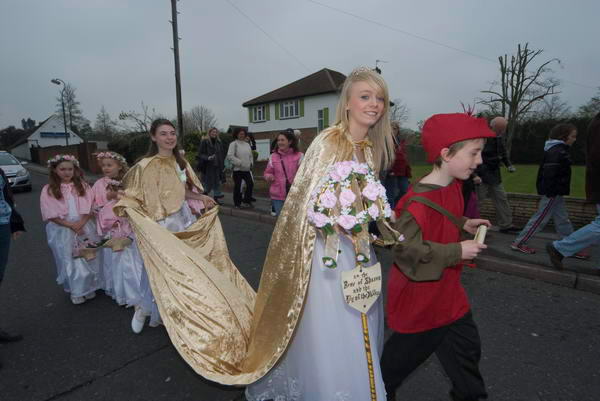
Hayes in the south-east corner of Greater London in the London Borough of Bromley is at the centre of a tradition that goes back over a hundred years, the London May Queen. At its height in the inter-war period this attracted great publicity and was filmed by Pathé News for showing in cinemas around the country – you can watch some of those films on their site.
The event began in a local school
I came to the May Queens from the posthumous book of photographs by British photographer Tony Ray-Jones ‘A Day Off’, published in 1974 soon after his tragically early death which contained a handful of his pictures from May Queen festivals taken in the late 1960s.
One of these, not one of his better photographs and I wondered why it had made the book, was ”May Queen Gathering, Sittingbourne, 1968‘, which shows around 30 young women all wearing crowns in three rows in front of a maypole. I wasn’t impressed by his picture but thought it seemed an intriguing event to photograph. The location in the caption (written after his death by a colleague) was corrected in a later publication and he had taken it at the annual London May Queen festival at ‘Hayes, Kent’ in London.
The London May Queen festival still follows the design and pattern laid down at its inception by schoolmaster Joseph Deedy in 1913. The Hayes festival at which the London May Queen is crowned is simply the peak of a series of events by various May Queen ‘realms’ each with their own May Queens and retinues from various communities in this area of south and south-east London.
Each realm has its own colour and flower
I’ve often written at greater length about the organisation including several posts on this site such as Ray-Jones & London May Queen – 2005. My work with the May Queens was encouraged by a major London museum who promised me a show – but this was cancelled at the last minute for financial reasons, I think a victim of the 2008 financial crisis. I had hoped we would bring out a book to accompany the show, but in the end I self-published this, bringing out a second edition with minor corrections in 2012, a year before the crowning of London’s 100th May Queen.
The London May Queen at this event
The book preview at the link above shows the whole book, including my fairly lengthy texts and over 70 pictures, mainly from London May Queen.
Crowning the Hayes May QueenThe Hayes Common May Queen is crownedThen came the Hayes Village May Queen
Although the event may seem rather quaint with queens, pages and other positions in the realms, the activities are designed to be fun for the young girls but also to develop their confidence and self reliance. And there are teas with cake.
Some girls drop out as they get older, and progress through the various levels of the realms and of the London May Queen group to which the realm queens move up is determined solely by seniority in the organisation.
Altogether for the project I took over 12,000 pictures, adding a few more when I was later invited back to photograph her crowning by one of the later May Queens. All the pictures with this post are from 19th April 2008 in Hayes.
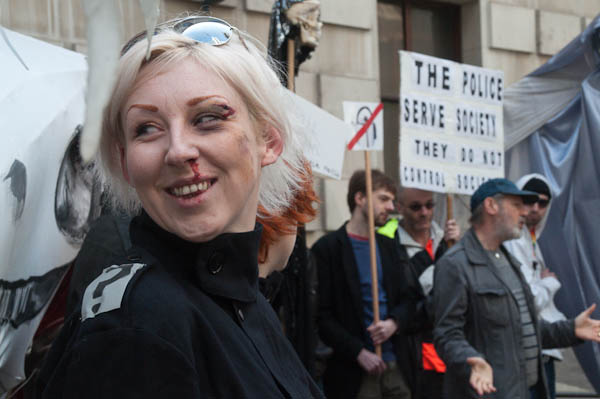
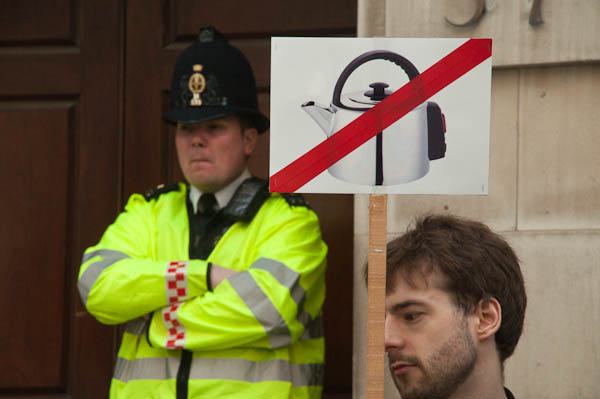
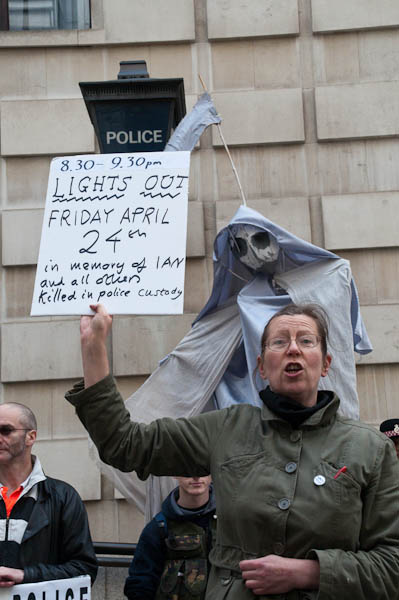
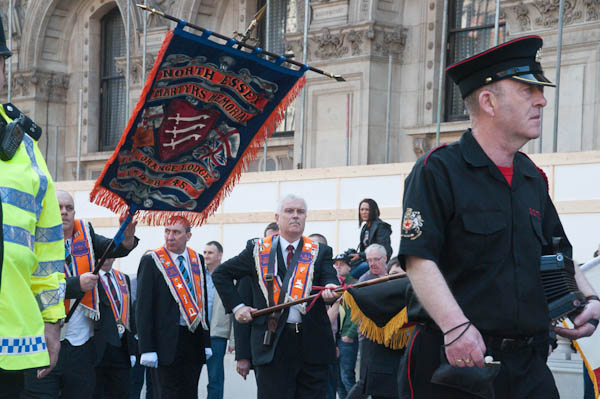
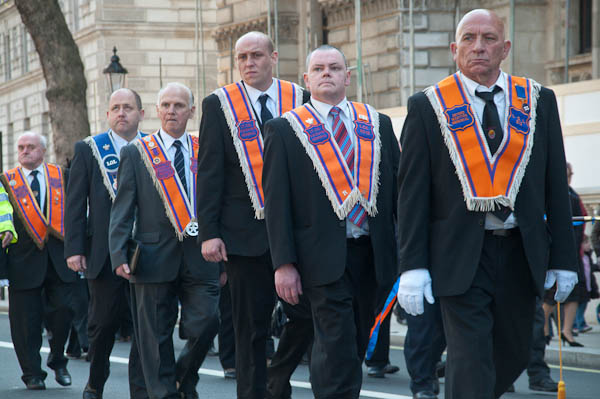
Police, Shakespeare, Tamils, Dutch, LOL: Saturday April 18th 2009 was another varied day for me, beginning at the City of London Police HQ with a protest over their policing of demonstrations – including the killing of Ian Tomlinson on April 1st, then a chance meeting with a Shakespeare event close to where he died. In Westminster I photographed a continuing Tamil hunger strike and went on to the Dutch festival in Trafalgar Square before photographing the annual Loyal Orange Lodge Parade, leaving them in Whitehall to finally go home.
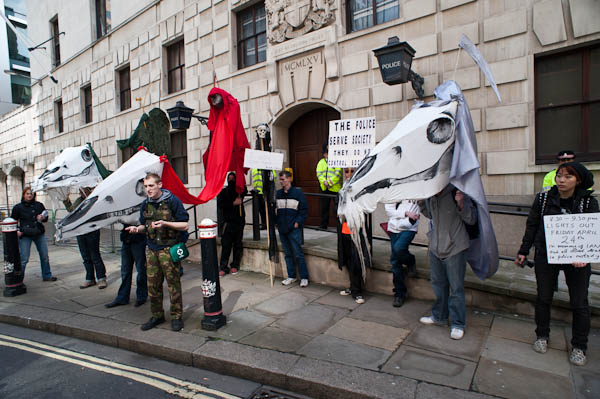
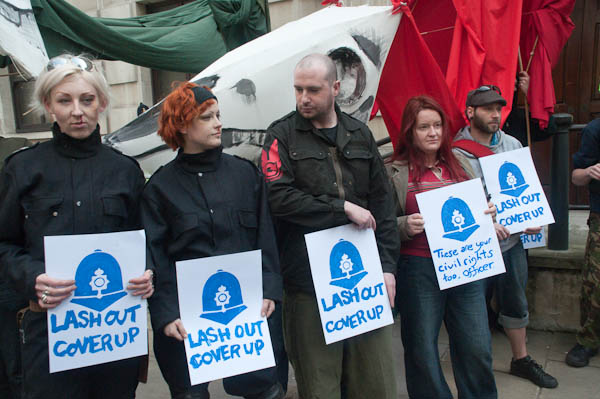
Protest Against London Police
City of London Police HQ, Wood St
The carnival-themed protest in London on April 1st was met with an extraordinary display of police violence “police chiefs and politicians had spent the previous week ramping up the temperature and predicting violence.”
Three and a half Horsemen of the Apocalypse outside the Police Station on Wood St
As I reported on the April 1st protest: “Many of the police, particularly the TSG, came along to the event psyched up and spoiling for a fight” and their violence was not restricted to the small number of protesters who had come to cause trouble, but was also directed at the great majority of peaceful protesters – and to the press who were photographing the event.
Many police officers had removed or hidden their ID numbers to avoid being identified by protesters or recorded in photographs, a clear sign that they were intending to break the law.
Videos taken of the police attacks on the crowds show ‘people being attacked simply holding up their arms to protect themselves as police assault them with batons and riot shields used as weapons, people standing there and chanting “We are not a riot” and “Shame, shame, shame on you.” ‘
Protesters call for a “lights out” hour on Friday evening for Ian Tomlinson and all others killed in police custody
The protesters called for police to remember they are there to serve the public and for an end to the wholesale “kettling” of protests, the disbanding of the TSG and for proper training of police in handling demonstrations. They called on senior officers to enforce proper discipline and regulations and a complete end to all officers turning a blind eye when their colleagues behave illegally.
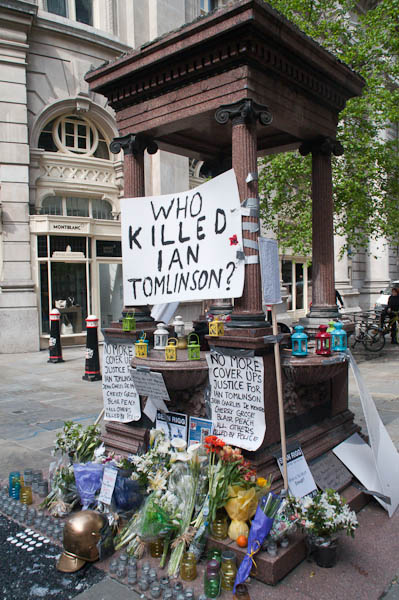
Flowers and posters remembering Ian Tomlinson around the Cornhill Fountain
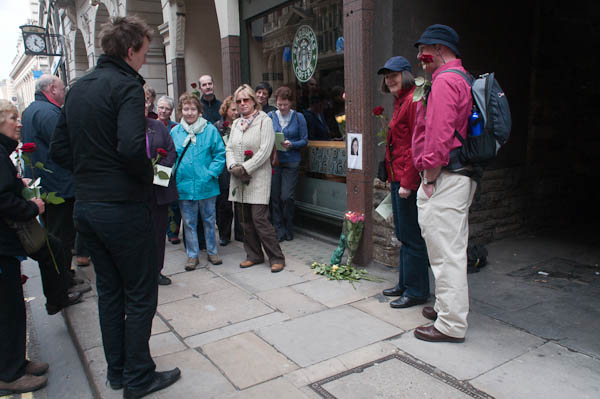
At the end of the protest I walked to the display on Cornhill set up around the Cornhill Fountain a few yards from where Ian Tomlinson died, staggering there after being assaulted by a police officer while making his way home after work, with police refusing to give him medical attention until too late.
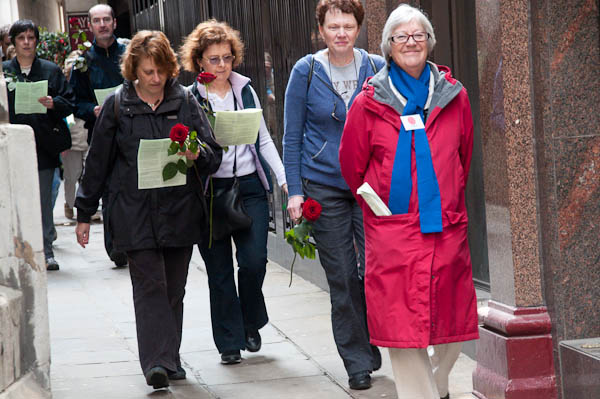
I was standing there when to my surprise a group of around 20 people, each holding a red flower came towards me, led by a woman with a badge saying ‘Steward.’ They stopped for a short performance exactly where Tomlinson died, where there was a picture of a woman and some flowers
They then stopped and a man read a short piece, which sounded vaguely familiar. As the group left I asked him about it “and found that this was one of around 20 groups each being taken on a guided walk around the city to various sites with similar performances to this of one of the sonnets to celebrate Shakespeare’s birthday next Thursday.”
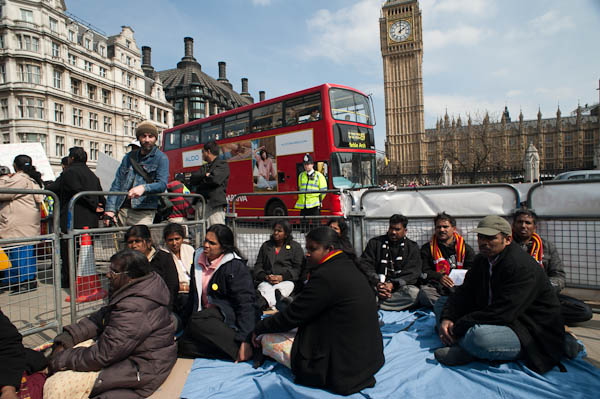
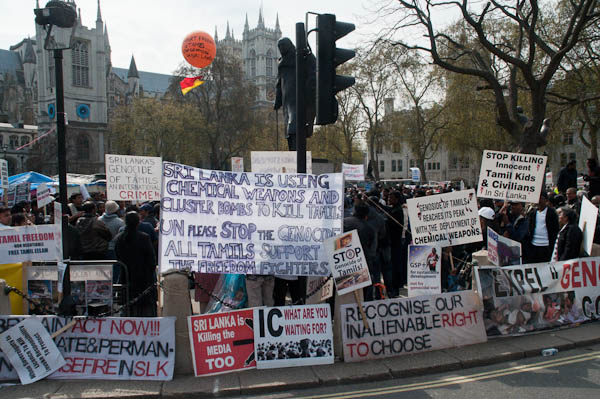
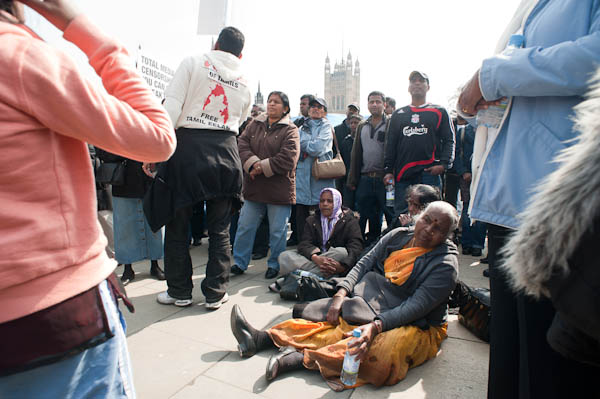
Eight days earlier I had visited the hunger strike by two young Tamil men over the ongoing genocide of Tamils in Sri Lanka. They had begun their hunger strike on 6th April and the hunger strike was still continuing on the 18th, with a dozen of so others joining them each day for a one day fast, and a crowd of around 500 more Tamils beside their pen in support.
They protesters all supported the Tamil Tigers in their fight for an independent homeland and called for “an immediate and permanent ceasefire in Sri Lanka, with full access for the UN, the Red Cross and other agencies, as well as the international press, along with an opportunity for the Tamils in Sri Lanka to have a free and independently observed referendum on their future.”
Not long after, in May 2009, the fight by the Tamil Tigers for independence ended in defeat. Since then Tamils have been subjected to continuing human rights violations although their situation is reported to have improved somewhat since 2015.
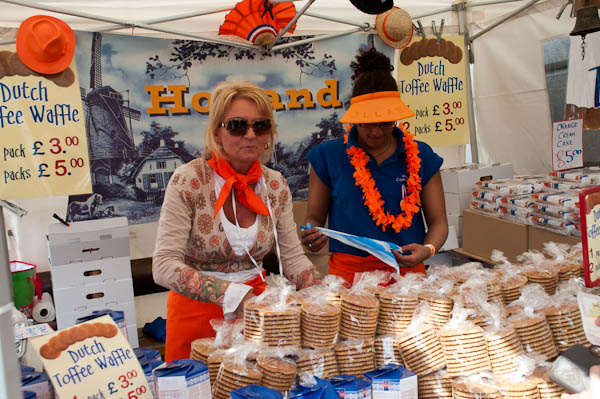
“In Trafalgar Square, the Dutch were holding a festival to prove their lack of understanding of popular music and to sell cheese, chips and beer. The cheese did look quite attractive. The only thing missing seemed to be a windmill, but I probably just didn’t look hard enough.”
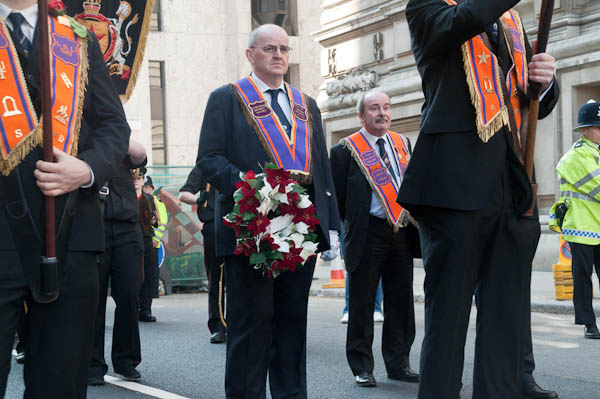
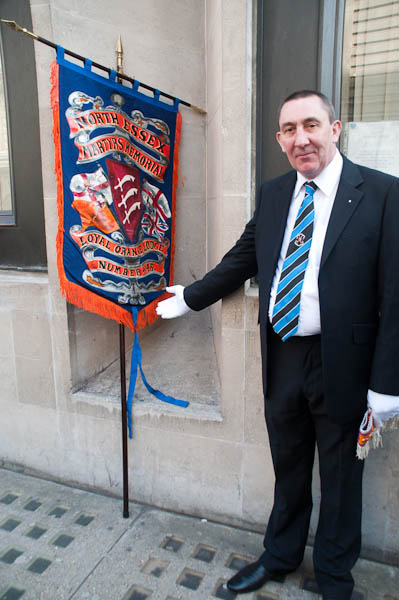
On My London Dairy you can read more about the Orange Order which takes its name “from William, Prince of Orange who landed in Devon in 1688 to restore parliamentary democracy and prevent the imposition of the Catholic religion by James II. This was the ‘Glorious Revolution’ which forced James II to flee and made William king as William III.“
It led to greater freedom for dissenting nonconformist Protestants but Catholics were denied the right to vote, be MPs, become army officers or marry the monarch. That marriage is still out.
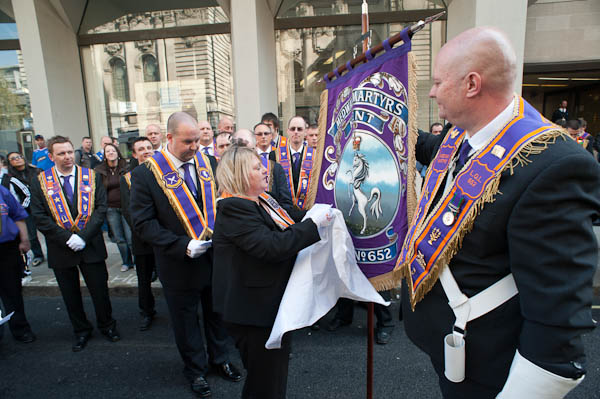
The Worthy Mistress of Corby First Ladies LOL53 unveils a new banner before the start of the march
The regular Orange marches in London are largely uncontroversial, but in Northern Ireland they still perpetuate the division between the Protestant and Catholic communities which led to the ‘troubles’.
Banners are lowered as a mark of respect as they march past the Cenotaph
I photographed them laying wreaths at the Cenotaph in Whitehall and marching past but theen left as they went on to the the statue of of “King Billy” in St James’s Square.
I’ve often been threatened and made unwelcome when photographing Orange marches, because of my political views or possibly those of a photographer who worked for Searchlight magazine which gathers information on the far right they have confused me with. Others taking part in Orange Order marches have congratulated me for my pictures.
River Wandle, The Causeway, Wandsworth, 1990, 90-3b-25
I found it hard to drag myself away from this spot on the path beside the River Wandle where the previous post had ended and took several more pictures before moving on, including this one.
Tyres, River Wandle, The Causeway, Wandsworth, 1990, 90-3c-53
I didn’t move far, just a few yards further on before taking the picture above, which shows the same heap of tyres and the same covered pipe bridge – but from the other side. I think most of these pipe bridges date from the time the east side of the Wandle was occupied by the gas works.
River Wandle, The Causeway, Wandsworth, 1990, 90-3c-65
Much of the former gasworks site was then occupied by the concrete plant I wandered back and forth for some time taking pictures and cannot now remember the exact locations as the area has changed so much. This area is now a huge building site with a tall residential tower now going up.
River Wandle, The Causeway, Wandsworth, 1990, 90-3c-54
This is where the River Wandle and Bell Lane Creek rejoin, running to the right of this picture into the Thames just a few yards away. The tide was low and you can see there is little or no water running out from the Wandle with all the flow all going down Bell Lane Creek. The Shell Oil Terminal Site was in Osiers Road and this and adjoining sites have now been redeveloped with blocks of flats of various heights, the tallest around 15 storey. One gain from this is that there is now a walkway by the Wandle leading to the Thames; the previous diversion was not without interest – but had an overpowering strong smell of oil.
River Wandle, The Causeway, Wandsworth, 1990, 90-3c-55
Here I think I was looking roughly south I think over or through a fence at the north edge of the cement works where there is a cement lorry. I think this may be part of the works, possibly a water intake or perhaps a settling tank for water used for hosing down the lorries and plant, but that is simply guesswork. But as often with my pictures I did record a six-figure map reference – 257752.
River Wandle, The Causeway, Wandsworth, 1990, 90-3c-56
Also taken from The Causeway a few feet west from the previous image you can see the gasholder in the background – and at right the railway viaduct.
Finally I dragged myself away from the Wandle and made my way west to Point Pleasant where my next post on this walk will begin, coming back to those oil storage tanks beside the Wandle.
More From the Woolwich Free Ferry: I went on the ferry across to North Woolwich, taking pictures while I was on the ferry, I think mainly in black and white.
Woolwich Ferry, River Thames, Woolwich, Greenwich, 1994, 94-810-51
Taken while I was waiting at Woolwich for vehicles and passengers could come off the ferry.
Woolwich Ferry, River Thames, Woolwich, Greenwich, 1994, 94-811-42
At North Woolwich while vehicles were still driving off and foot passengers were boarding for the journey to Woolwich.
Riverside Path, River Thames, North Woolwich, Greenwich, 1994, 94-810-12
I got off the ferry at North Woolwich and took a short walk along the riverside path, making this picture and then returning to catch the ferry back. This screw was in the path. The ferry terminal is at right.
Woolwich Ferry, River Thames, Woolwich, Greenwich, 1994, 94-810-32
I don’t know whether the pictures below on the ferry were made on the outward or return journey.
Woolwich Ferry, River Thames, Woolwich, Greenwich, 1994, 94-810-33
Woolwich Ferry, River Thames, Woolwich, Greenwich, 1994, 94-810-41
Soon I was back in Woolwich and taking more pictures there – to be in a later post.