Costa, A Corner & Our Lady of Sorrows

Costa, A Corner & Our Lady of Sorrows continues my walks in Peckham in March 1989. The previous post was A Laundry, Crescent, Shops, Mission & Settlement.

G Costa & Co, Marlborough Works, Staffordshire St, Peckham, Southwark, 1989 89-3b-54

G Costa, importers and distributors of fine foods was founded in 1879 and incorporated in 1913. The company moved out of Peckham to another of its sites in Aylesford Kent in 1994, and was bought by Associated British Foods in 2003.

Among its products is the Blue Dragon range of sauces and ingredients for Chinese, Japanese and S E Asian meals. The factory site has since been developed as housing.

Staffordshire St area, Peckham, Southwark, 1989 89-3b-55
Staffordshire St, Peckham, Southwark, 1989 89-3b-55

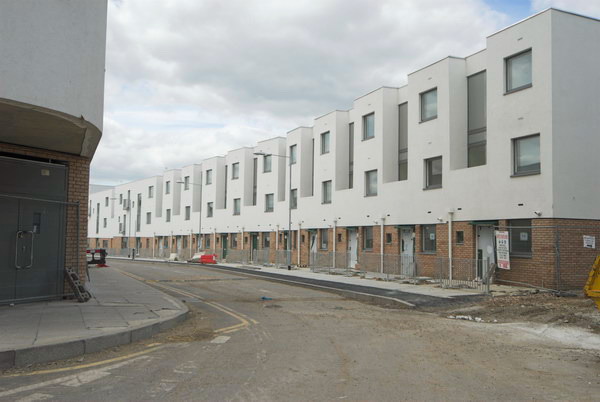
Although this building has been replaced by a new block, these is still a slight bend here at the south end of Staffordshire Street just before it ends on Peckham High St. There are still some posts along the side of the pavement, but no longer needed to protect pedestrians from lorries from the factory, but three hoops to lock a bike to outside the entrance to Gaumont House.

This block was the site of the first Gaumont Palace Theatre to be built in London in 1932, on the site of the 1898 Peckham Hippodrome Theatre on Peckham High St between Marmont Road and Staffordshire Street. Later it became simply The Gaumont and was damaged by bombing in 1941 and a V1 flying bomb in 1944, managing to re-open after both a few months later. Refurbished in 1948 it closed in 1961 and was converted into a Top Rank Bingo club with boxing matches once a week. It was sadly modernised in the 1970s, closed in 1998 and was demolished in 2002.

I was attracted by the odd pattern of rectangles, including one one the pavement in the foreground and others along the wall, with those each side of the leaning lamp post formed by shadows rather than the actual doorways and subtly subverting the impression of space in the picture.

Marmont Rd, Peckham High St, Peckham, Southwark, 1989 89-3b-56

I took two pictures on this street corner, the first on an impulse when a man walked in front of me as I was getting ready to take a picture, his shadow falling on the tiles of the doorway.

Marmont Rd, Peckham High St, Peckham, Southwark, 1989 89-3b-41

But this is the picture I had stopped to take, and rather more carefully composed. If you look carefully from this corner now you can see that the five windows in my picture have all been bricked up, with just a small window left at the top of the lowest one. The block of flats further down Marmont Road is still there though now rather hidden by trees.

At right the curve with lights is above the tiled entrance to the foyer of the Top Rank Bingo Club, built in1932 as the Gaumont Palace Theatre, though later modernised. The large foyer extended out into the street corner in a single storey curve from the massive brick block of the cinema.

There is still a curved corner at the right, but to a newer and rather anonymous building on the site, Gaumont House.

Houses, Friary Rd, Peckham, Southwark, 1989 89-3b-42

This terrace of splendid double-fronted Victorian houses, continued at the left by some slightly less grand without a first floor window over the central door is still there on Friary Road.

The road was developed in the 1840s as Lower Park Road, when Peckham Park, also known as Peckham New Town was a very desirable middle class suburb. Like many other London roads it was renamed in the 1930s and became Friary Road, named for the Friary on the corner of this road and Bird in Bush Road.

Our Lady of Sorrows, Catholic, Church, Bird in Bush Rd, Peckham, Southwark, 1989 89-3b-43

For some reason the church here is listed as the Church of Our Lady of Seven Dolours on the Old Kent Road, Southwark, London, SE15, a quarter of a mile away, although the listing does include the correct address of Bird in Bush Road where my picture was taken showing the side of the Grade II listed church.

This very large church was designed by the prominent Victorian church architect E W Pugin and built from 1859 to 1866, delayed by lack of funds, for the Capuchin Friars. They built a Friary next door (designed by James O’Byrne) on what is now Friary Road in the 1884s and served the church there until 2000 when the Friary buildings were handed to the archdiocese and are now home to a Vincentian community.

Our Lady of Sorrows, Catholic, Church, Mission House, Friary Rd, Peckham, Southwark, 1989 89-3b-44
Peckham Friary, Catholic, Church, Mission House, Friary Rd, Peckham, Southwark, 1989 89-3b-44

These are the 1884 buildings for the Capuchin Friars from where they served the church and community until 2000.

More on this walk in March 1989 to follow. The first post about this walk was Shops, Removals, Housing and the Pioneer Health Centre.


Climate March & One In Love Valentine Party

On Saturday 1th February 2005 I went to two events in London, a march calling for action on climate change and a street party to reclaim Valentine’s Day from commercial exploitation and to celebrate the power of love.


Campaign against Climate Change Kyoto Climate March

Climate March & One In Love Valentine Party

It’s depressing to look back at the pictures of this event and see how many of the placards and posters are still relevant 18 years later. Still leaders around the world are failing to commit to the actions needed to avoid global disaster.

Climate March & One In Love Valentine Party

Perhaps we are just a little closer to some real movement, but in the UK things have started to go backwards with a government now in thrall to the fossil fuel companies and promoting new oil exploration in the North Sea, a new coal mine and even going back to fracking.

Climate March & One In Love Valentine Party

Sometimes it seems the main changes have been that the Prime Minister is now Sunak rather than Blair and that the US Embassy to which the march was heading is now on the other side of the Thames in Nine Elms rather than in Grosvenor Square.

Back in 2005 it was President Bush in the White House who was the major villain, standing up for US oil interests and their mission to fatally pollute the world. Biden has talked a better talk than Trump, but hasn’t committed to the shift in policies that is essential for the planet to have a future that will support human life.

The march was organised by the Campaign Against Climate Change, back then almost a lone voice in actively raising the issues around global warming, though the Green Party was there too. At least since then many other groups have become involved, notably in recent years Extinction Rebellion and Just Stop Oil, bringing rather different tactics to bear.

It was a longish march, from Lincoln’s Inn Fields to Trafalgar Square and then on to the US Embassy, and I left the marchers as they went past Piccadilly Circus to join another event taking place there.

More pictures


O-I-L One in Love, Reclaim Love, Eros, Picadilly Circus

I’d missed the first of these Valentine street parties organised by Irish poet Venus CúMara in 2004, as I had only heard of it too late to attend. Appropriately that year I had gone with my wife to Paris for Valentine’s Day and her birthday a few years later.

Since 2005 I’ve been there and taken photographs most years. She believes that “the human race could potentially be a humane race if we were to step away from the value of money to the value of Life” and this event celebrates this.

Venus celebrates as the prayer ends

‘Reclaim Love’ is a global movement Venus began to unite people all over the earth with a common prayer for peace. And during the street party here and at other similar parties in othe places around the world people joined hands at 3.30pm in a “Massive Healing Reclaim Love Meditation Circle beaming Love and Happiness and our Vision for world peace out into the cosmos” to recite that prayer, “MAY ALL THE BEINGS IN ALL THE WORLDS BE HAPPY AND AT PEACE“.

Venus dances

I wrote about the 16th annual party at some length on this site in Valentine for Venus, posted in 2019, so I won’t go into more details again. As well as that post you can also find posts every February on My London Diary from 2005 to 2019 except for 2016, when I was too ill to go, and 2017 when I was in Hull (both celbrating the city of culture and again my wife’s birthday.)


More about both events on the February 2005 page 2 of My London Diary


Before the Olympics – 2007

Five years and a few months before the London 2012 Olympic Games took place much of the site was still open although businesses had been moved out and some of the buildings were becoming derelict. I’d had an invitation to a party at a site there the previous evening but hadn’t been able to attend, but on Sunday 11th February 2007 I took my Brompton on the trains to Stratford Station for a tour of the area. It began as a rather gloomy day but the weather at least brightened up later.

Carpenters Rd from Wharton Road

I did return to parts of the area in later months as the close down was taking effect – and even led a two-day workshop at the View Tube in April 2010. And in June I was there to photograph workmen putting up the blue fence to keep us out of the whole Olympic area until well after the games were gone.

Before the Olympics - 2007
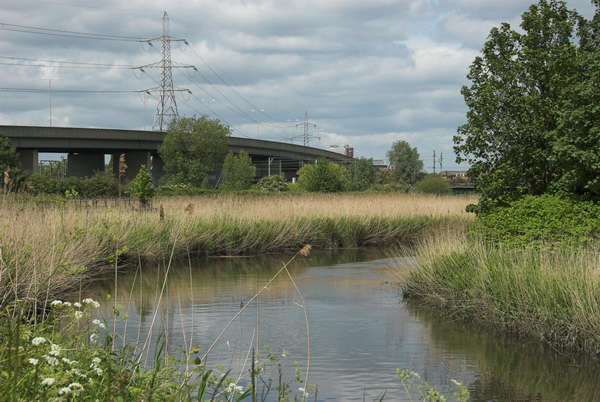
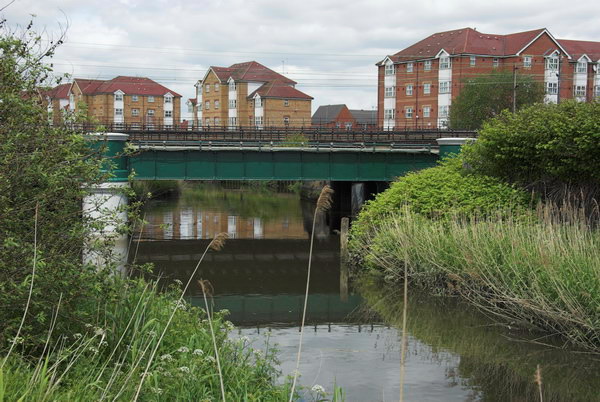
Footbridge to railway works over Waterworks River, Stratford Marsh.

Here’s what I wrote on back in 2007 about my ride around the area, much of which I spent pushing and carrying my Brompton bike along footpaths. But it did make it possible for me to cover rather more ground than would have been possible on foot. I’ve corrected the capitalisation etc. There are several pages of pictures with the original on My London Diary, just a few of which are shown here.

Before the Olympics - 2007
Marshgate Lane and Bow Back Rivers

2012 Olympic Site – Stratford, Sunday 11 Feb, 2007

Before the Olympics - 2007
Tate Moss, home to four artists and a venue for gigs of various kinds, now lost for the Olympics

Sunday I went to the Olympic site again, keen to photograph before the area becomes ‘fortress Olympics’ and is destroyed. Many of the businesses have now moved out and some of the small industrial estates are looking pretty empty. Tate Moss, who occupied a site by the City Mill River had staged their final event the night before, but the partying didn’t keep going long enough for me to look in and the place was deserted.

Marshgate Lane under the Northern Outfall Sewer is blocked with old tyres

Some of the riverside paths were open again after the test borings that have been going on, although several were fenced off over a year ago. The gate to the path by the waterworks river from the Greenway wasn’t locked, so I took a walk up this, but I knew that it was no longer possible to get out onto Marshgate Lane so had to retrace my steps.

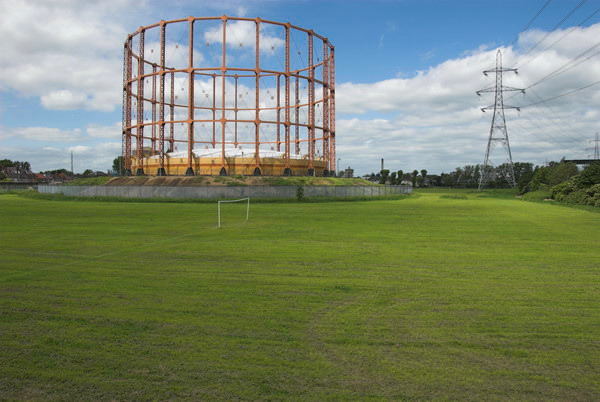
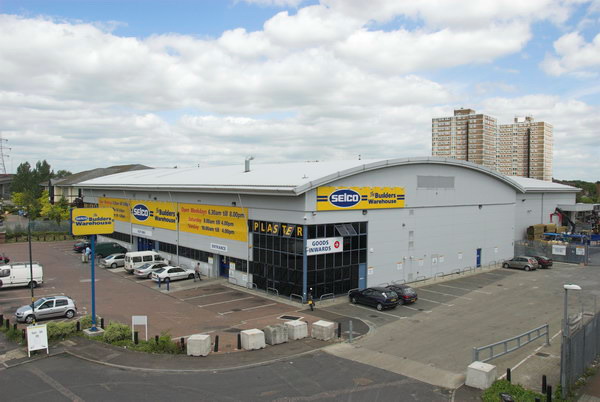
The Marshgate Centre and Banner Chemicals from the Greenway

The route back up to the Greenway from Marshgate Lane was almost completely obstructed by heaps of old car tires, and I had to carry my Brompton for a few yards and climb up onto a grass bank where the steps were completely blocked. Parts of the road were no longer open to cars too.

City Mill River

From there I moved on to Hackney Wick and Waterden road, and I finished the day as the light was getting low on Hackney Marshes, one of the areas in which locally important sporting facilities will be lost at least for a few years, perhaps for good.

Original text on the February 2007 page (you will need to scroll down.)


Banner Chemicals

My article back then ended with the paragraph above, but my ride didn’t – I had to get back home. It had previously taken me to a number of places just outside the condemned area, including some that were to be demolished for Crossrail, and it didn’t actually end on the Hackney Marshes, as the pictures on My London Diary demonstrate.

Kings Yard

I decided to ride back to Stratford to get the train home, and that ride took me back past Clays Lane, where the estate was to be demolished for the athletes’ village and I stopped several more times on my way to take more pictures in the gloom. Even when I arrived at Stratford around sunset there was still enough light for a few final images.

Clays Lane

You can see many more pictures from the entire ride on My London Diary


Anonymous Oppose Scientology, Chinese New Year

On Sunday 10th of February 2008 I photographed protests against the Church of Scientology before going into Chinatown for the Chinese New Year celebrations.


‘Anonymous’ Protest – Church of Scientology – Blackfriars & Tottenham Court Road

Anonymous Oppose Scientology, Chinese New Year

This was the first time I’d come across protesters wearing the ‘Anonymous’ masks that became a common feature at protests in the following years. This grinning Guy Fawkes mask was designed by illustrator David Lloyd for the 1980s graphic novel by Alan Moore and 2005 film ‘V for Vendetta.’

Anonymous Oppose Scientology, Chinese New Year
Placards refer to the high costs and unfair attacks on opponents

When hacktivists set up Project Chanology to campaign against Scientology at the start of 2008, they realised that like all other critics of the movement they would face vicious and intensive personal attacks from the group and needed to protect their identities both on-line and in person.

Anonymous Oppose Scientology, Chinese New Year
Some wore photocopy masks of Scientology’s founder L Ron Hubbard

So those behind Project Chanology decided to call themselves ‘Anonymous’ and hide themselves behind these masks when protesting. The London protest was one of over 50 protests in cities around the world at this time in which many of those taking part wore them.

Anonymous Oppose Scientology, Chinese New Year

As I wrote at the time “I’m just amazed that Scientology is still around, despite having been comprehensively exposed so many times over the years. You can find out more about it on Wikipedia.”

Xenu.net reveals much of the uglier side of the cult

Wikipedia records that “The Church of Scientology has been described by government inquiries, international parliamentary bodies, scholars, law lords, and numerous superior court judgments as both a dangerous cult and a manipulative profit-making business.”

To my surprise round 4-500 had come for a peaceful protest on the walkway facing the Church of Scientology building in Queen Victoria Street at Blackfriars. After the protest there many of them went on to a second demonstration opposite the Dianetics & Scientology Life Improvement Centre in Tottenham Court Road, where those passing by are often lured into the building to take tests and pressured to join the cult, which demands large financial contributions from members.

More pictures at ‘Anonymous’ Protest – Church of Scientology on My London Diary.


Chinese New Year Celebrations, Soho

Things were festive in Chinatown which was packed with visitors celebrating the Chinese New Year.

Though many of those who work in the area it was a very busy day, selling Chinese decorations, toys and food.

Performers were going around the area as Chinese lions, leaping up to grab salad vegetables hung at shop doorways and bringing good luck to the businesses in exchange for cash.

Gerrard Street at the centre of Chinatown was thronging with crowds, though my ultrawide lens meant I could still work even though it was difficult to get a clear view. But soon I just had to leave for some quieter back streets for a while.

There was a money god, but he was only handing out entry forms for a competition to win a return ticket to Hong Kong

martial arts demonstrations…

and a dancing dragon carried by children from Surrey. But I soon tired of the noise and the crowds and as I commented “there are 51 other weekends of the year when its probably more interesting to come and see Chinatown how it really is.” And I went home. I think this was the last year I photographed the festival.

More pictures at Chinese New Year Celebrations, Soho on My London Diary, where you can also find images of the festival from 2001, 2002, 2003, 2004, 2005, 2006 and 2007 using the search box at the top of the page.

A Laundry, Crescent, Shops, Mission & Settlement

Continuing my walk in Peckham in March 1989. The previous post on this walk was London & Brighton, Graffiti, Boys At Colmore Press.

Skips, Quantock Laundry, Queen's Rd, Peckham, Southwark, 1989 89-3a-13
Skips, Quantock Laundry, Queen’s Rd, Peckham, Southwark, 1989 89-3a-13

Houses in this row on Queen’s Rd were being renovated and turned into flats. Many of these properties were still in a fairly poor condition in 1989. Although these houses all seem of rather similar quality and are all I think “Early to mid C19”, number 52, just out of my picture on the left has been singled out for listing, despite it and others having had significant rebuilding in the 20th century.

It was only listed in 1998. Perhaps it was then under threat of demolition. Most of these houses were being converted into flats at the time I was photographing them.

There is still a Quantock Laundry, but in Weston-Super-Mare, where the name seems rather more appropriate.

Houses, King's Grove, Peckham, Southwark, 1989 89-3a-14
Houses, King’s Grove, Peckham, Southwark, 1989 89-3a-14

25 and 27 King’s Grove are part of a long terrace on the west side at the Queen’s Road end of the street. The face a rather grander row of joined semidetached villas on the opposite side of the road.

Culmore Rd, Clifton Crescent, Peckham, Southwark, 1989 89-3a-15

The view across Brimmington Park towards the three tower blocks of the Tustin Estate on the Old Kent Road. The park was created when a number of terraced houses and small factories were demolished in the 1970s. Perhaps the name was a reference to the rather grander Royal York Crescent in Clifton, Bristol.

Clifton Crescent was built in 1847-51. It was saved from demolition by Southwark Council by local campaigners in 1972-4, when the properties were in a poor condition after years of neglect. It was the fight to save this crescent that led after demolition had begun to the formation of the Peckham Society, a Civic Trust affiliated society which continues to argue the case for conserving what remains of Peckham and making new developments acceptable to residents. The society also had a more militant wing.

Clifton Crescent was an unusually large Victorian development for this area and unlike most other large crescents was built in red brick. Grade II listing in 1974 helped to ensure its survival and in 1977 the facade was restored and the houses converted to flats by the London Borough of Southwark.

My next pictures appear to be taken on Rye Lane, and I can no longer remember whether this was on the same walk or on another a week or two later. But since I was still in Peckham I will continue with them here.

Simon's Jewellery, Rye Lane, Peckham, Southwark, 1989 89-3b-01
Simon’s Jewellery, Rye Lane, Peckham, Southwark, 1989 89-3b-01

On the west side close to the Peckham High Street end of Rye Lane. The shop has been recently refurbished, but the facade above remains much the same, though the long box which I assume once carried the name of a shop has long been removed.

What She Wants, Rye Lane, Peckham, Southwark, 1989 89-3b-64

What She Wants at 26 Rye Lane later became Atlantic Clothing, was briefly Solo then around 2014 became FAS Hair & Cosmetics. The upper floor windows have long been bricked up and the first floor of the wall above the shop front graffitied, making the decoration on the frontage difficult to see.

The Halifax is still there at 22-4, its single storey shop, along with that of Vodaphone next door still hiding the considerably more elegant building above it. You can still see the upper floors from the opposite side of the road on the corner with Hanover Park.

Orchard Mission Hall, Mission Place, Peckham, Southwark, 1989 3b-65

Following an evangelical campaign at Peckham Wesleyan Church (Methodist) in 1887 a group of young men began to hold meetings and services in this deprived area of Peckham. They met in the open air, and in various other places including the disused Blue Anchor pub and a cottage in an row know as The Orchard close to here.

In 1893 they moved into Batchelors Hall, but in 1904 the Ragged School Union (later known as the Shaftesbury Society) bought a site in Blue Anchor Lane (now Mission Place) and built this building, which opened in 1906 and is still there, considerably restored.

The Peckham Settlement, Goldsmith Rd, Peckham, Southwark, 1989 89-3b-52

A couple of the lime trees here have gone, but building work in 2016 has transformed this short row into 44-50 Goldsmith Road, four separate houses, adding three new front doors with steps up to them, more imposing doorways and windows and a fence alongside the pavement – and a price tag around £900,000 each.

This building was a part of The Peckham Settlement, established in 1896 and led by the head mistress of Wycombe Abbey, a girls public school in Buckinghamshire, Miss Frances Dove to alleviate the social problems of the area. It was an innovative project, setting up the first children’s nursery in London and pioneering ‘meals on wheels’ and an unemployment insurance scheme and in 1987 the first government sponsored ‘job club’. It moved to this area in Goldsmith Rd in 1930. A financial crisis in 2012 meant it had to sell the buildings to pay its debts, with a surplus providing investment income to make grants for local charities and community groups.

The Peckham Settlement, Staffordshire St, Goldsmith Rd, Peckham, Southwark, 1989 89-3b-53

More of the buildings of the Peckham Settlement in Staffordshire Street.

To be continued…


The first post about this walk was Shops, Removals, Housing and the Pioneer Health Centre


London & Brighton, Graffiti, Boys At Colmore Press

My posts on this walk in Peckham in March 1989 began with Shops, Removals, Housing and the Pioneer Health Centre, and this post continues from where that post ended, on Queen’s Road, Peckham.

House, Queen's Rd, Peckham, Southwark, 1989 89-3a-41
House, Queen’s Rd, Peckham, Southwark, 1989 89-3a-41

Houses at 142-148 on Queen’s Road are Grade II listed, as well as 152-158 further east, toegther with 2-6 St Mary’s Road. I don’t think there is now a number 150, and these form a fairly continuous group of large early 19th century houses. My picture shows 146-148. I also photographed but have not digitised the pair of houses at 156-158, the latter also known as St Mary’s Court.

No 148 has the name EVAN COOK Ltd on its door, a private limited company dissolved in 2015 whose activities are listed as ‘Other transportation support activities‘ and offered Export Packaging, Removals and Storage. They appear to have owned a number of properties in south London. In my previous post I included a photograph of their large premises on Lugard Road, where the company name is remembered in Evan Cook Close. The company had begun by selling second-hand furniture around here in 1893.

London & Brighton, pub, Asylum Rd, Queens Rd, Peckham, Southwark, 1989 89-3a-44

I walked under the railway bridge at Queens Road station (the apostrophe in Queen’s seems optional in this area) and on the corner of the road was this pub opposite the station named for the London & Brighton Railway. Formed in 1837 in 1846 it merged with four other railway companies to become the London, Brighton and South Coast Railway (LB&SCR) and in 1923 this became part of the Southern Railway, until nationalisation.

But the South London line from London Bridge to a new Peckham station here only opened to passengers in 1867, after the merger. The road, formerly Peckham Lane, was renamed after Queen Victoria in 1866 and the station was soon renamed to Queen’s Road. I think the Peckham on its name came much later to avoid confusion with other London stations, Queen’s Road Battersea and Queen’s Road Walthamstow.

The pub was closed in 2008 but its sign – a different one from that in my picture – stands as a sad reminder on Queen’s Rd. The building remained standing until 2013 and was a popular squatted centre with parties and music gigs for some time with some interesting murals. It was replaced by a four storey block of flats, London & Brighton Appartments, with shops and parking on the ground level.

Ora Lighting, Kings Grove, Peckham, Southwark, 1989 89-3a-45

The next turning to the east going north from Queen’s Road is King’s Grove. This small works has been converted into a taller block at 2c King’s Grove, Quay 2c. Designed by owners architect Ken Taylor and sculptor Julia Manheim on a site described as a former milk depot this now now houses design and sculpture studios and three flats. Built into the front wall is a large window used to display art works, the m2 Gallery, using what would otherwise have been a blank wall of a small room containing gas, water and electric meters etc. The building, completed around 2003 has featured in some Open House weeks.

Graffiti, Wood's Road, Peckham, Southwark, 1989 89-3a-33
Graffiti, Wood’s Road, Peckham, Southwark, 1989 89-3a-33

The letters appear to be Eco Charp which meant nothing to me. I now find from Flickr that he was a teenage graffiti tagger from a local Greek/Cypriot family who were in various businesses including ice cream vans in the area and connected with the Peckham snooker hall at 267 Rye Lane which in the 1990s became the rave nightclub Lazerdrome. Apparently his family made clear to Eco Charp when he was about 18 that he had to grow up and stop his graffiti activities.

The house is the Grade II listed 2 Wood’s Road, which featured in one of my posts on earlier walks in the area, first built in the late 17th century but much altered in the 19th and recently renovated.

Colmore Press, Colmore Mews, Wood's Road, Peckham, Southwark, 1989 89-3a-23
Colmore Press, Colmore Mews, Wood’s Road, Peckham, Southwark, 1989 89-3a-23

This disused print works was on Colmore Mews, a small street off Wood’s Road. just south of Queen’s Road. Two young boys were climbing up the side of the disused building. This was at the rear of the offices of the of the company at 62a Queen’s Road, Peckham. None of th buildings visible in the picture remain. The fence at left was around the playgorund at the rear of the school on Woods Rd, now John Donne Primary School.

Boy, Colmore Mews, Wood's Road, Peckham, Southwark, 1989 89-3a-25
Boy, Colmore Mews, Wood’s Road, Peckham, Southwark, 1989 89-3a-25

As often happened, one of the boys asked me to take his picture, and I obliged. Behind him on both sides were some of the buildings on both sides of Colmore Mews, now replaced.

Boys, Colmore Press, Colmore Mews, Wood's Road, Peckham, Southwark, 1989 89-3a-11
Boys, Colmore Press, Colmore Mews, Wood’s Road, Peckham, Southwark, 1989 89-3a-11

His friend then also wanted his picture taken and I took two more pictures of the two boys as they went back to climbing up the wall before continuing on my walk.

Boys, Colmore Press, Colmore Mews, Wood's Road, Peckham, Southwark, 1989 89-3a-12
Boys, Colmore Press, Colmore Mews, Wood’s Road, Peckham, Southwark, 1989 89-3a-12

Back in 1989 it was still not unusual for children to play on the streets – just as I had with my friends as a working class child. I didn’t think they were likely to come to much harm.

I returned back to Queen’s Road where a later post will continue. The previous (and first) post about this walk was Shops, Removals, Housing and the Pioneer Health Centre


An East London Ride – 2010

Salmon Lane Locki, Regents Canal

It’s perhaps misleading to call this a ride, since I spent most of the day on Wednesday 3rd February 2010 actually off my bike, parking it neatly to take photographs. Although a bicycle has been my main personal transport now for over 70 years (when I’m not using public transport or walking) I’m not really a cyclist. Or at least just a pragmatic cyclist, using a bike just to get from A to B (and on this day to C,D and most of the letters of the alphabet.)

An East London Ride - 2010
Memorial to firewatchers of Stepney Gas Works

And just very occasionally for a bit of exercise. I have used exercise bikes and always thought why bother when you could use the real thing, though I suppose when its pouring with rain or below zero there might be some point in them. And though one wouldn’t help me to take photographs I would be less likely to be killed by careless or dangerous drivers.

An East London Ride - 2010
Bromley-by-Bow gasholders, Twelvetrees Bridge

Back at the end of 2002 I bought myself a Brompton folding bike, and a year or three later when I was undergoing a Q & A interview for an amateur photography magazine it became my answer to ‘What is your most useful photographic accessory’. It had replaced the answer to a similar question from another such magazine which was ‘a good pair of shoes’.

Eternal flame, West Ham Memorial Gardens

Once you have practised a few times the Brompton folds (and unfolds) in a few seconds into a fairly compact package, which has the advantage you can take it at any time onto our trains and underground system. It’s too heavy for me to comfortably carry any distance, but I added the tiny wheels which mean you can pull it rather like a suitcase, only actually lifting it when necessary. And I bought the bag which fits on in front of the handlebars which was about the right size for my camera gear and essentials like a bottle of water or a flask of coffee and sandwiches.

The end of the ‘Fatwalk’

I can’t know remember exactly how I got to the start of my ride, though I think I probably rode from Waterloo to Fenchurch Street for a train to Limehouse station, crossing the Thames on Southwark Bridge. But from there on the pictures make my route fairly clear.

Bow Creek and Bow Locks

I cycled roughly along the Regents Canal up to the former Stepney Gas Works site north of Ben Johnson Road. There had been a fight to save more elements of the former gas works including gas holders which were some of the oldest surviving in the world; although some were said by English Heritage to be of national importance an attempt to get one of them listed failed. Eventually the area was redeveloped by Bellway Homes with only token ‘public art’ residues of the works.

From there I headed east to the bridge at Twelvetrees Crescent across Bow Creek and the Lea Navigation to visit another gas works site, the West Ham Memorial Gardens where war memorials, a permanent flame and a statue of Sir Corbett Woodhall are in a small wooded area close to the remarkable group of gas holders for the former Bromley-by-Bow Gas Works.

Three Mills

From there I went down to the recently opened path beside Bow Creek, part of a planned riverside walk which had been landed with the ridiculous name of The Fatwalk. As I commented then, most of the walk, meant to lead from Three Mills all the way to the Thames was still closed (and is still closed 13 years later) and by the time they were open the “nincompoop who thought that ‘The Fatwalk’ was a good name for this route will probably have retired or died or moved to another job for which he (or she) is equally incapable and common sense will prevail as we walk or cycle along the Bow Creek Trail.”

New Lock, Prescott Channel

The walk still only goes as far south as Cody Dock, now a thriving community resource and hub with events and exhibitions and worth a visit, but in 2010 still undeveloped. The silly name has gone and this path is now also a part of London’s sculpture trail, The Line, making its way from the Greenwich Peninsula to Stratford.

Three Mills Wall River

At the end of the Fatwalk, I had to turn around and go back to the Twelvetrees Crescent bridge, where I once again photographed the locks from the Lea Navigation to Bow Creek. Now there are new steps leading down from this bridge to the towpath, but then I had to go across and join the fast-moving traffic on the Blackwall Tunnel Northern Approach to make my way to Three Mills.

Stratford High St

Three Mills is home to one of Newhams only four Grade I listed buildings and the House Mill, a tide mill, was built in 1776, though there had been tide mills here at least since the Domesday book.

Olympic stadium

The film studios here were converted from a gin factory where Chaim Weizmann developed a new biochemical process to produce acetone needed for explosive production in the First World War – which led to the Balfour Declaration and later to Weizmann becoming the first president of Israel.

Bridge over City Mill River

Past the studios I visited the new lock on the Prescott Channel, opened in 2009. Supposedly this was to be used by barges to carry away waste and bring in material for the development of the Olympic site instead of lorries, but was in practice only used for photo-opportunities. The Prescott Channel was built in the 1930s, part of a large flood relief programme, that was also largely to provide jobs at the height of the depression.

I get interviewed for a student film

Finally I cycled up to the Olympic site, a building site with little or no public access, but parts of the ‘Greenway’ – the path on the Northern Sewage Outfall – were still open and gave extensive views. The reason I was in London on this particular day, when the weather wasn’t at its best was to be interviewed and filmed by a group of students at the View tube on the Greenway. I can’t remember ever seeing the video. After the interview I made my way to Stratford to fold the Brompton and start my journey home on the Jubilee Line.

Bow Creek – right click to open at a viewable size in a new tab

As well as taking single images I also produced a number of panoramas, taking a series of pictures from the same position to be stitched together. These include some 360 degree views, produced by software from 6 or 8 individual images. The pictures were taken on a Nikon D700 and are each 12Mp, but the combined files are huge. It isn’t easy to display these on the web, and they fit even less well on this blog. I’ll post one here on a rather smaller scale and invite you to double click on it to see it larger, though still much reduced. You can find more online here.

Olympic Site Revisited
Three Mills
Bow and The Fatwalk


Palestine, Nine Elms and London – Feb 1st 2020

Three years ago on Saturday 1st February 2020 I went to London to photograph a protest against Trump’s ‘Deal of the Century’ plans which, according to the BBC,gives Mr Netanyahu all he wants – and offers Palestinians very little; a sort-of state that will be truncated, without proper sovereignty, surrounded by Israel’s territory and threaded between Jewish settlements.” When that finished I took a short walk along the Thames Path towards Battersea Power station before catching a bus back to Vauxhall for the train home.

Later in February I did quite a lot of walking and riding in buses and trains around London, and as in quite a few other months, gathered together some of the pictures I took on these journeys together with a link from the bottom of the page on My London Diary for the month.


Palestinians against Trump’s Deal – US Embassy, Nine Elms

Palestine, Nine Elms and London - Feb 1st 2020

Supporters of Palestine came to the US Embassy in Nine Elms in protest against Trump’s so-called peace plan, which they say aims to liquidate the Palestinian cause and minimise sovereignty for the Palestinian people across Palestine, marginalising them in isolated ghettos in a rigid implementation of the current apartheid regime.

Palestine, Nine Elms and London - Feb 1st 2020

The protest was supported by a wide range of organisations including the Palestinian Forum in Britain (PFB), the Palestinian Community Association in London, the General Union for Palestinian Students/British Branch, The Palestinian Youth Foundation in Britain “Olive” and Stop the war and supported by the Palestine Solidarity Campaign (PSC), Friends of Al-Aqsa (FoA) and the Muslim Association of Britain (MAB).

Palestine, Nine Elms and London - Feb 1st 2020

There were quite a few protesters of Palestinian heritage living in the UK, as well as many supporters from the wider British left at the protest.

Palestine, Nine Elms and London - Feb 1st 2020

A handful of some of the usual anti-Palestinian Zionists came to oppose the protest, shouting at the protesters. Police moved in to protect them when the protesters began shouting back and kept the two groups apart. There were also Jews present protesting on behalf of Palestine.

Among the protesters was one dressed as Saudi Prince Mohammad bin Salman,holding a bone saw, like that used to dismember Saudi dissident and journalist for The Washington Post Jamal Kashoggi by the team he sent to the Saudi consulate in Istanbul, Turkey on 2 October 2018. He posed with a man in a Trump mask who was handing him fistfuls of dollars to support the plan. There was also a giant inflatable of the Saudi prince, with large black horns.

There were a number of speeches supporting the Palestinian cause as well as a great deal of chanting against the Trump plan, which had no chance of being implemented but was largely a propaganda exercise to enhance Trump’s support among the Jewish population of the USA.

More pictures at Palestinians against Trump’s Deal.


Nine Elms

Nine Elms is one of the largest developments in Europe. The bank of the River Thames here was once crammed with wharves and full of varied industrial sites, but by the 1970s these had either closed or were about to close. At the end of the protest I took another short walk around the area.

In this area much of the land was taken up by railway yards and depots, but the area closer to the River Thames also had a jam factory and some paint and engineering works. and at the Vauxhall end, a giant cold store.

In 1971 the New Covent Garden Market began to move here from central London on Land that had formerly been a railway goods depots and an engine shed, and two markets, one for flowers and the larger for fruit and vegetables, south of the railway, opened for business in 1974. Both markets have been redeveloped since and are planned to move out to a site in Dagenham in the next few years.

The largest area north of the railway was occupied by Battersea Power Station, a relatively late-comer to the area. It occupied a site which had previously been a waterworks, taking water from the Thames. At its south end was a large Great Western Railway Goods Depot, and to the east a gas works. Another gas works occupied the site roughly where the US Embassy now stands.

In the nineteen-seventies there were a few new blocks of riverside flats but development of the area only really got into gear in this century and is still continuing. The power station, which finally closed in 1983 and lay derelict for some years, particularly after its roof was removed by an early development which failed, was only finally re-opened as an up-market shopping centretourist attraction with luxury flats at the end of 2022.

More pictures Nine Elms


London Images – February 2020

Most of these pictures come from several bus journeys from or to the station, from Waterloo Bridge, in Holborn and some in the City of London. Also a few from closer to my home in Staines and Laleham.

Some of you may like to try to identify these locations before you go to look at more in London Images on My London Diary, where captions reveal them.


Shia Muslims Arbaeen Procession London

From My London Diary for 30th January 2011, with minor amendments. You can see many more pictures with the original post.

Shia Muslims Arbaeen Procession London

Several thousand Shia Muslims came to Marble Arch on 30th January 2011 for the 30th annual Arbaeen (Chelum) procession in London, commemorating the sacrifice made by the grandson of Mohammed, Imam Husain, killed with his family and companions at Kerbala in 680AD. Arbaeen takes place 40 days after Ashura, the day commemorating the martyrdom and marks the end of the traditional 40 days of mourning. After prayers and recitations they paraded along Park Lane in a ceremony of mourning.

Shia Muslims Arbaeen Procession London

Imam Husain is seen by Shia Muslims as making a great stand against the oppression of a tyrant and representing the forces of good against evil. Husain and his small group of supporters were hugely outnumbered but chose to fight to the death for their beliefs rather than to compromise. Their stand is a symbol of freedom and dignity, and an aspiration to people and nations to strive for freedom, justice and equality.

Shia Muslims Arbaeen Procession London

Arbaeen is also said to commemorate the return of the wives and families of those killed – who were marched away as captives to Damascus after the massacre – to Kerbala to mourn the dead after their release around a year later.

Shia Muslims Arbaeen Procession London

Millions now attend the annual Arbaeen event in Kerbala (though it was banned while Saddam Hussein was in power) and the London event attracts Muslims from all over the UK, although numbers this year seemed rather fewer than in some previous years.

The Hussaini Islamic Trust UK first organised this annual procession since 1982, making it the oldest Arbaeen/Chelum Procession of Imam Husain in the west. It was the first annual Muslim procession in Central London and is still one of the larger annual Muslim processions in the UK. It is held on the Sunday closest to Arbaeen.

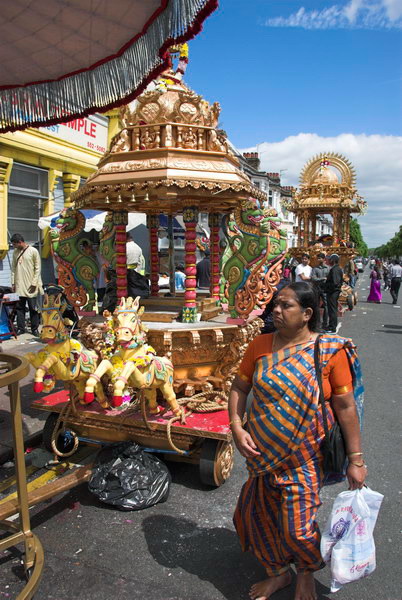
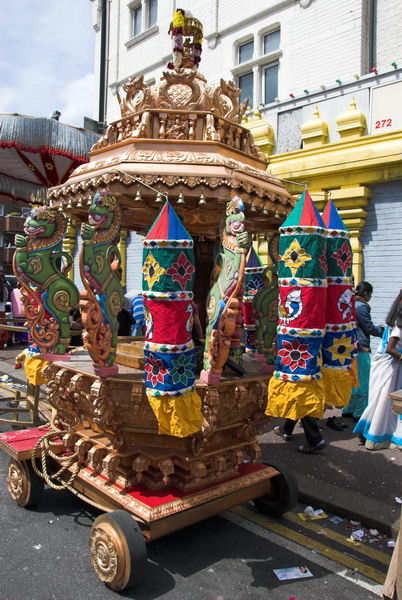
The procession includes several large replicas of the shrines of Karbala; known as Shabbih, these gold and silver models are over 10 feet high and the largest in Europe. There was also a decorated and blood-stained white horse or Zuljana representing the horse of Imam Husain, a cradle remembering his 6 month old child Hazrat Ali Asghar who was also murdered and a coffin.

The day started at Marble Arch with prayers and recitation which were followed by speeches in English, Arabic and Urdu before the procession set off. I missed some of this as I was busy covering another event, but returned shortly after the procession set off down Park Lane.

Groups among the men chanted and all those marching beat their chests as a token of mourning, most in a symbolic rather than very physical manner, but as the procession made its way down the road some were soon stripped to the waist and beating themselves vigorously, producing red marks and some drawing blood.

The women marched in a tightly packed separate group at the rear of the march, held back by a number of women stewards and pushing the cradle and one of the Shabbih. Like the men they chanted and made gestures of mourning. Although they were almost all dressed in black, many of them were carrying standards and flags, and some had some brightly coloured embroidery and headscarves.
After the march there are light refreshments provided, but I left before that, catching a bus along Park Lane. The procession only occupies one of the three lanes of each of the dual carriageways and traffic keeps flowing throughout, although with some slight delays.

More pictures from this event in 2011at Shia Muslims 30th Arbaeen Procession. I photographed this procession in other years from 2007 to 2012 and you can find pictures from these by entering Arbaeen in the search box on My London Diary.


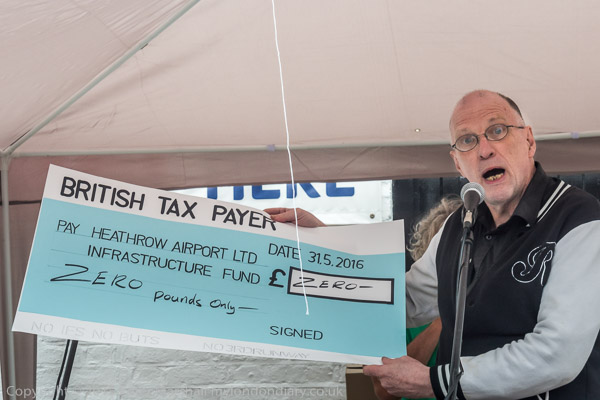
As I mention in the account above, I left the march to photograph another protest, in Oxford St, a short walk away from Marble Arch. Around 50 UK Uncut activists dressed as doctors and nurses a staged a peaceful protest in Boots in Oxford St against their avoidance of UK tax, closing the store. You can read about it in UK Uncut Protest Boots Tax Scam.


Before the Olympics – A walk in 2005

I published this post seventeen years ago on My London Diary, following an organised walk around the Olympic Site by locals while London was making its unfortunately successful bid to host the 2012 games. I’ve corrected the capitalisation but otherwise it remains as written. Going around the area some ten years after the games there is nothing I would want to change in the piece, though the legacy has turned out even worse than we feared back then, with so many broken promises.


Olympic site? – Stratford and Temple Mills, 23 Jan, 2005

Before the Olympics
Carpenters Road lock, Old River Lea, London

I first got to know the lower Lea (or Lee) valley around twenty-five years ago, when many of the traditional industries, many based around the Lea Navigation, had or were just ending. Parts of it were almost a dark continent, with the Bow Back Rivers machete country. Secateurs became an essential photo accessory, and together with a heavy duty tripod swung with abandon hacked a path alongside streams overgrown with bramble, nettles and bushes.

Before the Olympics
Channelsea River, allotments and path near Eastway Cycle Circuit

Since then, things have changed, with proper paths, nature trails, signposts and more, although it remains an area of relative peace and quiet. All this could soon change. You can hardly move in or around London without the almost continuous reminder of the 2012 Olympic bid. Large sums are being spent to convince us it is a good thing, despite concurrent claims that over 70% of Londoners already support it.

Before the Olympics
Bully Point Nature Reserve, Stratford

For this particular area of London it will mean dramatic changes, and whatever the good intentions of the developers (and I’ve read them) these will probably be environmentally disastrous. Development on this scale almost always is. Even the proponents acknowledge short-term problems, while local environmentalists point out the massaging and misrepresentation in parts of their planning, as well as the failure to ensure a proper post-games future for the area. While some of the proposals make sense for the area, the short-term priorities of the games will result in many that do not.

Before the Olympics
Off-road tracks at Eastway Cycle Circuit, Temple Mills

I’m not against the Olympics as such; in some ways they could be a good thing for the country, although the whole movement has been allowed to get seriously out of hand. I’m cynical enough to know that much of the enthusiasm for London 2012 comes from companies who are already making serious money from the promotion and will make even more should they happen, and realistic enough to know that any local opposition to them can only enforce very minor changes to their impact. Such local views are likely to carry far more weight on developments in the area should the London bid fail.

Allotments on ridge between Old River Lea and Channelsea River, Stratford.

Sunday I cycled from Stratford to Temple Mills to join a walk around the northern part of the site, organised by No To London 2012, a coalition of East London community groups and social justice campaigners. A group of just over twenty of us spent an enjoyable couple of hours looking at the area and the impact the Olympic developments would have. it was an opportunity that IOC delegates are not likely to have, with their view of these particular areas expected to be with a pair of binoculars from a distant tower block.

Clays Lane estate, Stratford

We stood first of all on a part of Hackney Marshes, watching the local footballers play on an area marked for a vast coach park, wondering how long it would take for it to be returned to recreational use, before making our way south across the A12 to the Eastway Cycle Circuit, now a well-used recreational area which will also be dramatically changed, becoming in the long term part of a larger Velopark, and on to the recently established Bully Point Nature Reserve at the southwest of the site between the Channelsea River and the River Lea, a viewpoint over the major land-forming currently taking place as a part of the Channel Tunnel Rail Link works and the future development of Stratford City.

Wick Field on edge of Hackney Marsh

Returning to Eastway, we climbed over a barrier onto Arena Field. Until a few years back this was a cricket ground, but travellers occupied it and the pavilion was burnt down. It was then used as a landfill site, raising the overall ground level around twenty feet. On the other side of Eastway we walked through Wick Field, site of massive tree-planting by Hackney. The new path we walked through, designed and made by one of those on the walk, was pleasant if muddy.

Canary Wharf towers from Eastway Cycle Circuit

At the end of the walk I went back to the bench in Wick Field, in the centre of a fine row of plane trees running parallel to the Lea Navigation and sat down to eat my lunch. In front of me a grassy fire-break path stretched into the distance, marred only slightly by dimly seen lorries at its end on the elevated roadway. As I sat there, the unmistakable low-slung red-brown shape of a fox strode slowly across the path a hundred yards away.

London 2012 Olympic advertising at Stratford Station

I made my way back to Stratford by Leyton, returning to look at some of my memories – St Josephs Cemetery and the nearby crossroads on Langthorne Road, the stump of Claremont Road and then a few pictures around the centre of Stratford itself.


You can see more pictures from the walk and my cycle rides from and to Stratford Station before and after the walk http://mylondondiary.co.uk/2005/01/jan3.htm with the original posting. All pictures were made with a Nikon D70, with some of the panoramas stitched together from several images.

You can see these and more pictures from the area on my Lea Valley web site, Some are also in my book Before The Olympics, first published in 2010, ISBN: 978-1-909363-00-7 still available from Blurb both as an expensive paperback or as a PDF.