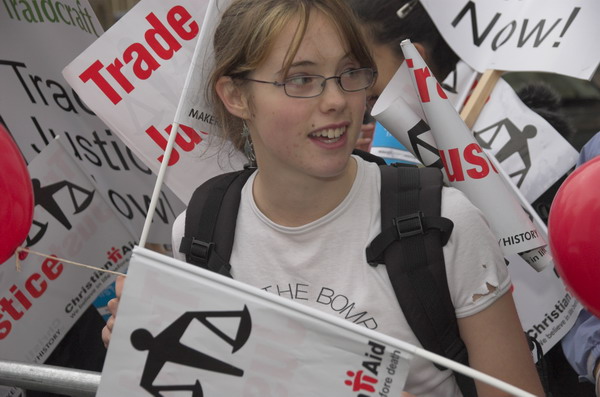
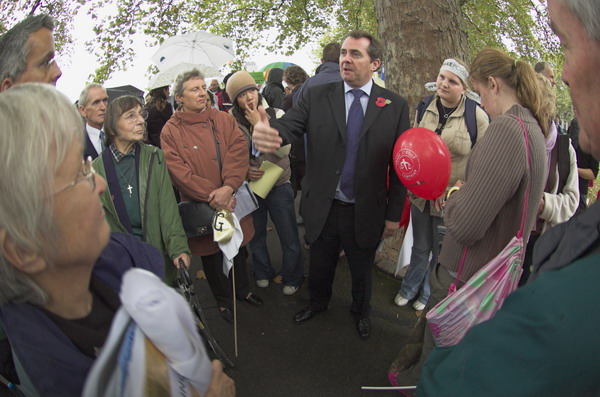
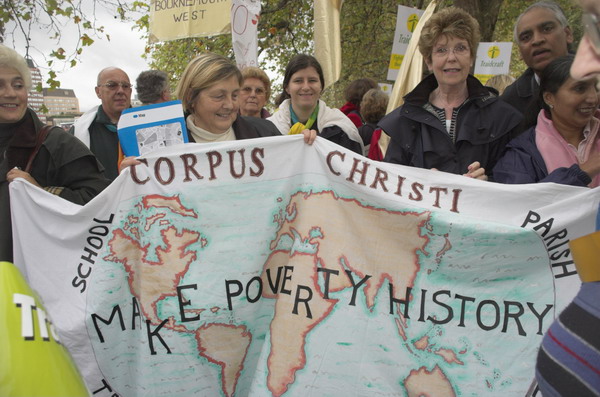
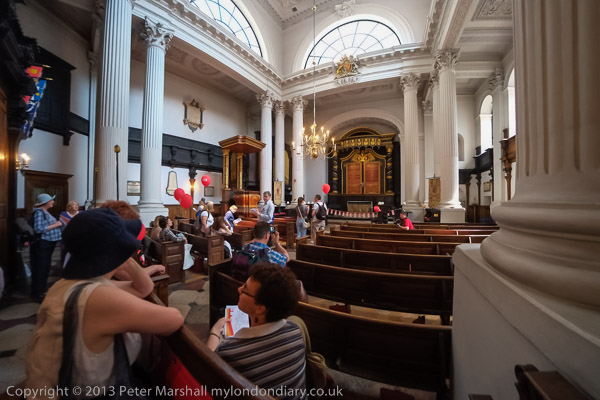
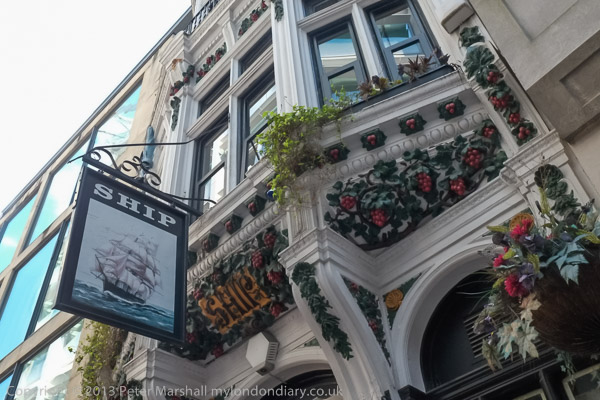
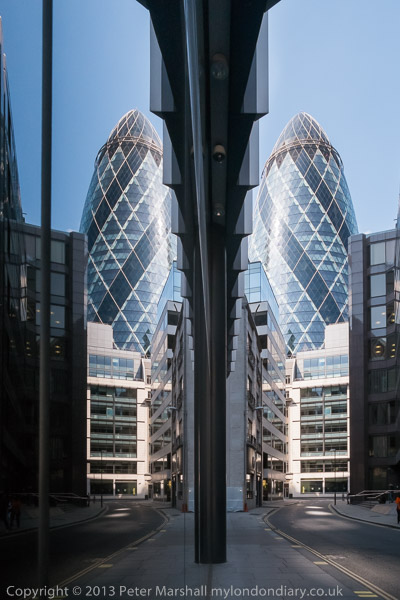
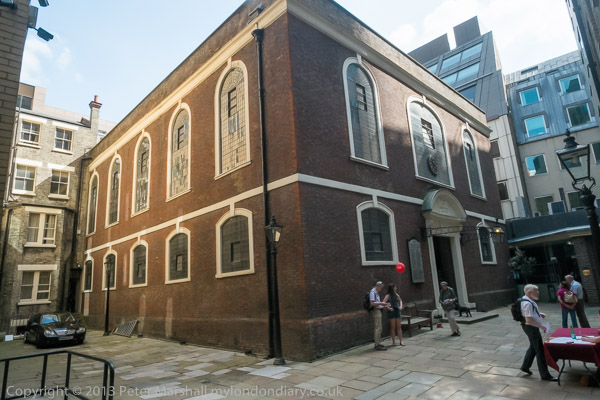
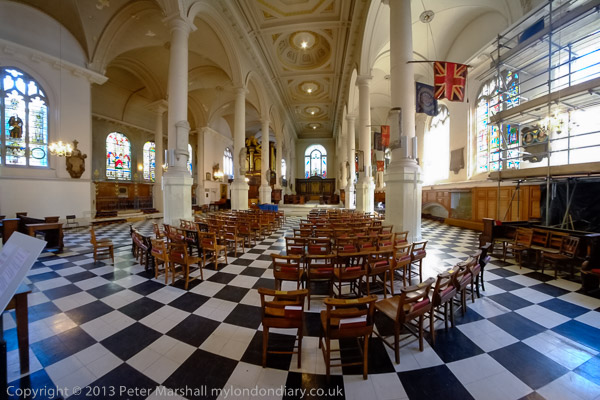
Christian Aid Sponsored Walk – London Churches – 2007

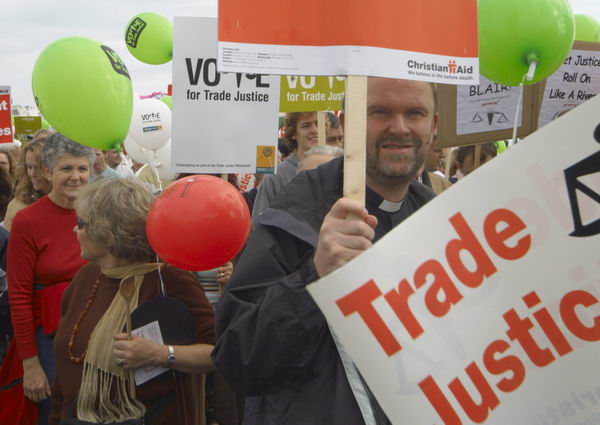
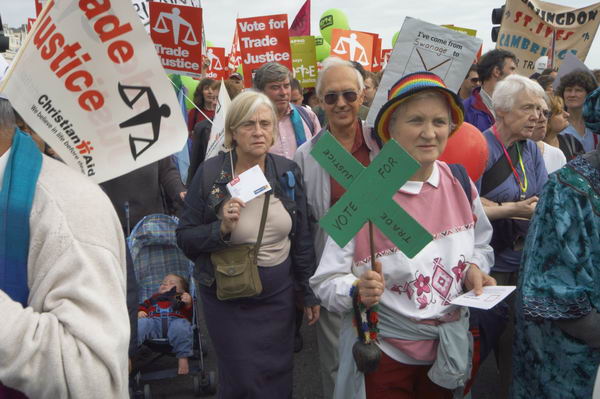
Christian Aid Sponsored Walk – London Churches: Soon after we moved to our present address in 1974, Linda took over as Christian Aid organiser for the area, only retiring from this in recent months. Over the years she has gone on a number of sponsored walks for them and some related organisations as well as organising some in our area.

I’ve often walked with her on these, as well as sometimes sponsoring her, largely to keep her company, but sometimes to make sure she didn’t get lost despite the clear maps given to walkers and the large numbers of people following the walks. But also because the routes took you to and past some interesting places and sometimes into churches or areas of them seldom open to the public.

Although I have had a great interest in architecture I’ve never had a great interest in photographing church interiors, partly because they have been so much photographed by others, and the photographs I made on these walks were very much pictures on my days off. Often I carried very little equipment, though Sunday 20 May, 2007 was something of an exception as together with my Nikon D200 I had Nikon wide and telephoto zooms and a fisheye.

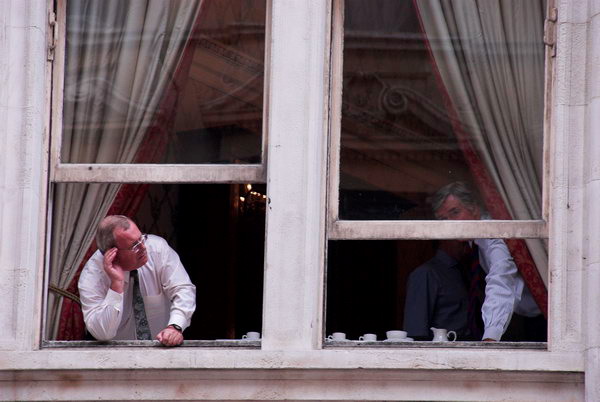
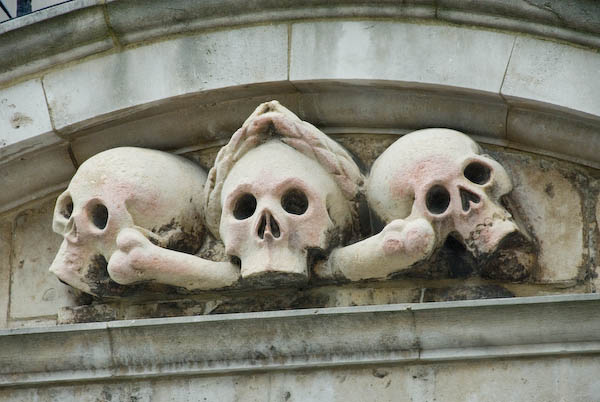
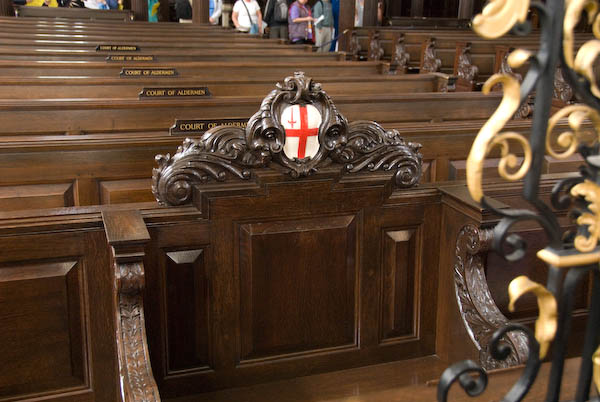
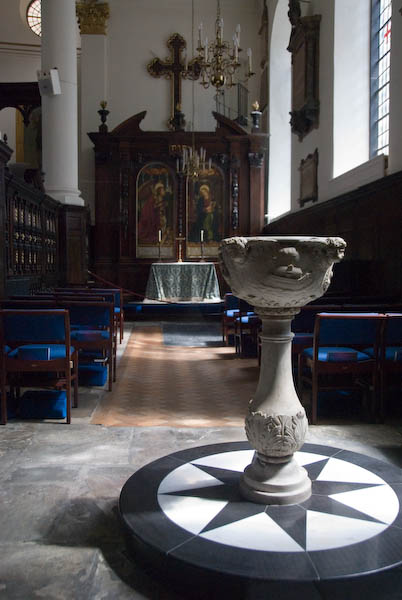
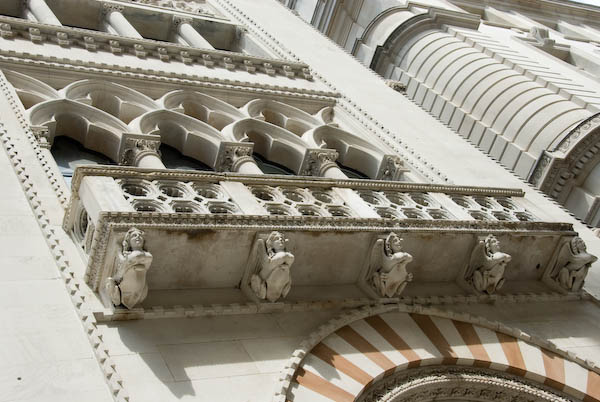
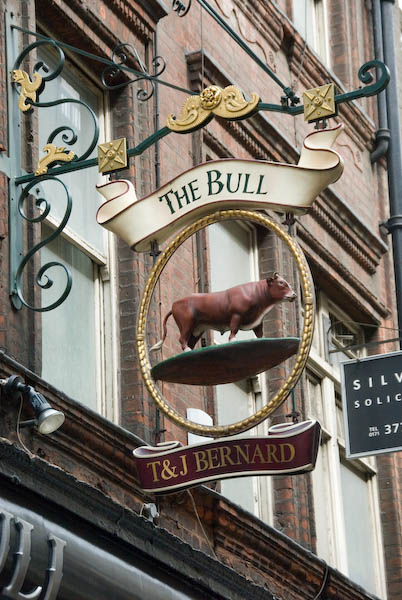
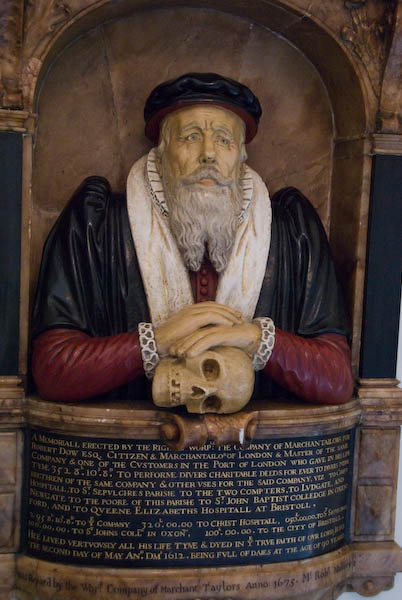
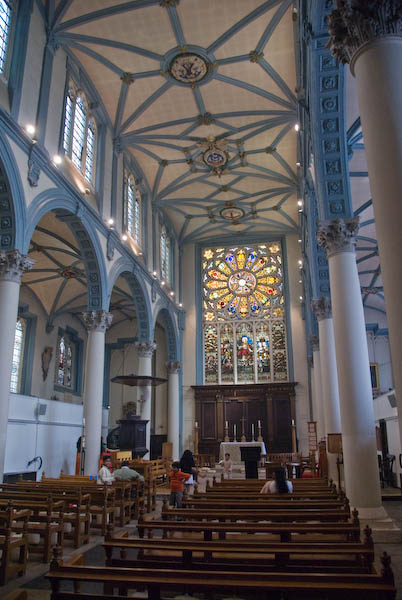
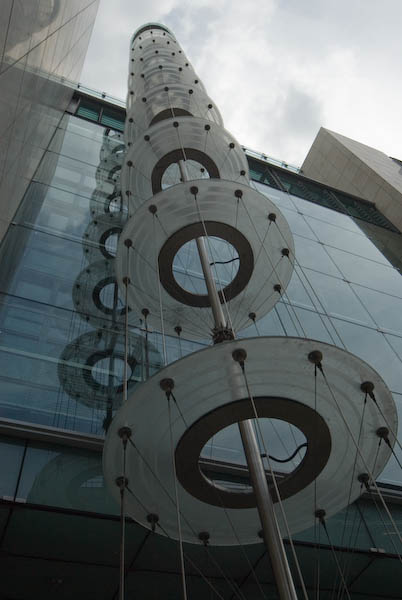
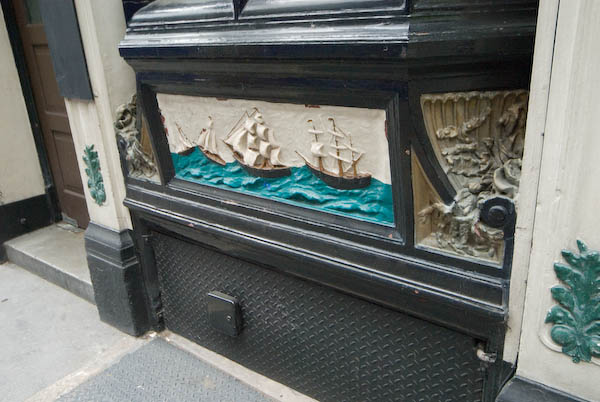
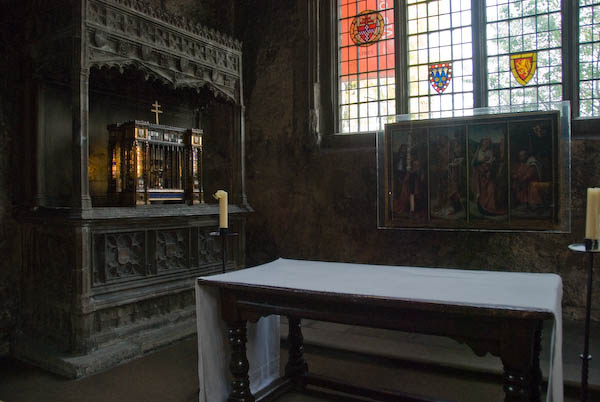
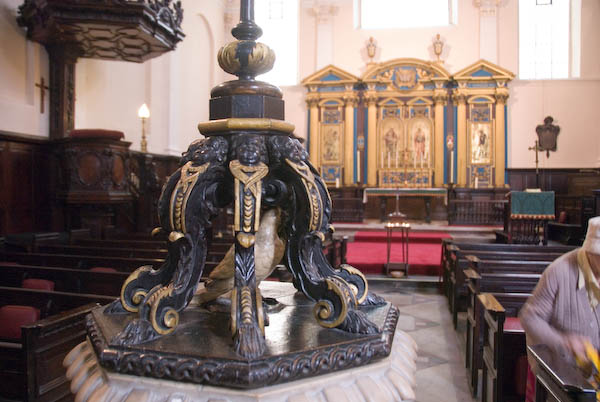
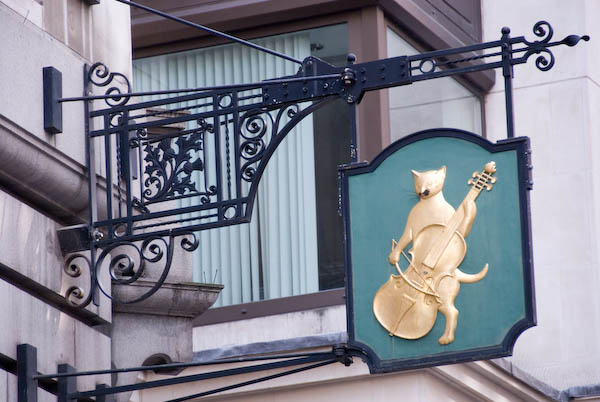
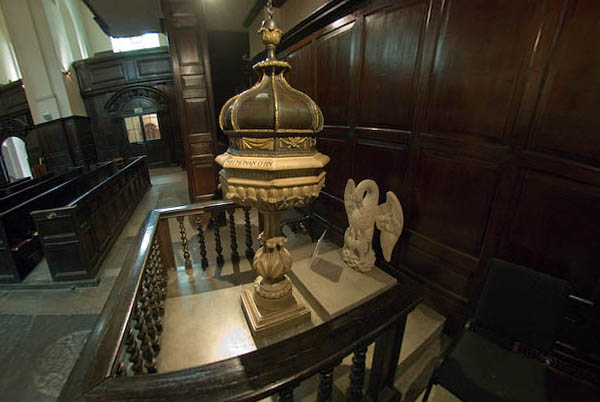
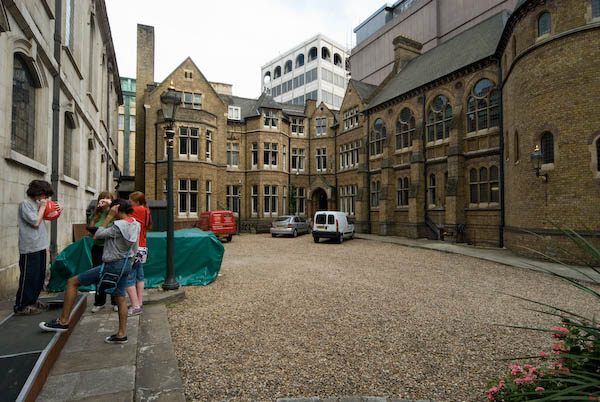
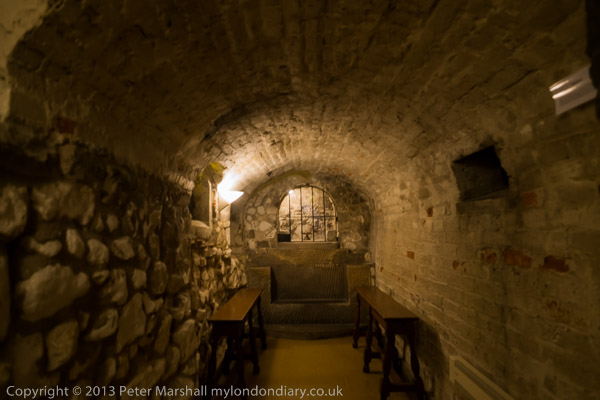
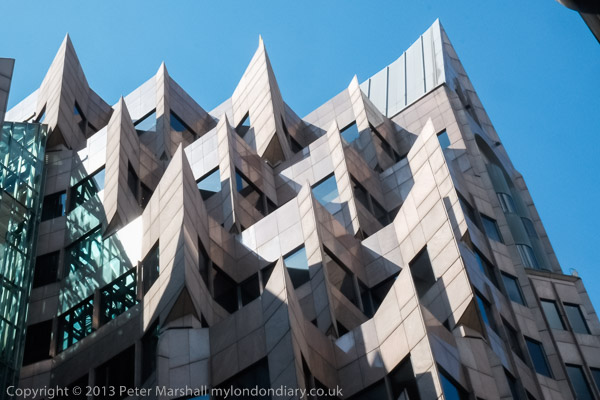
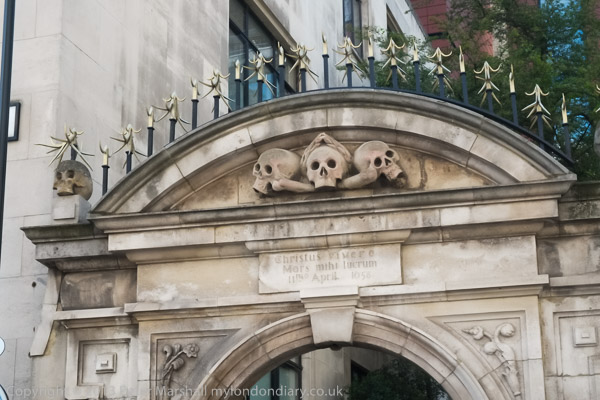
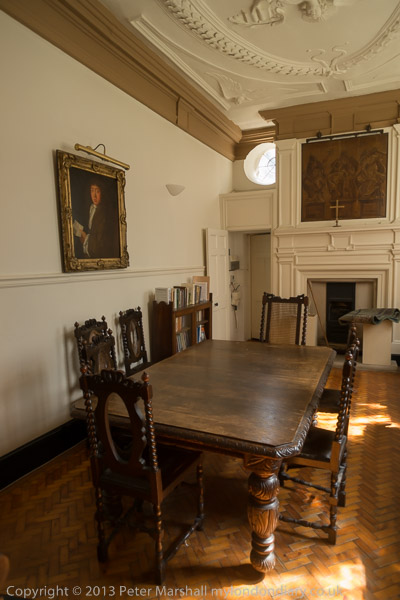
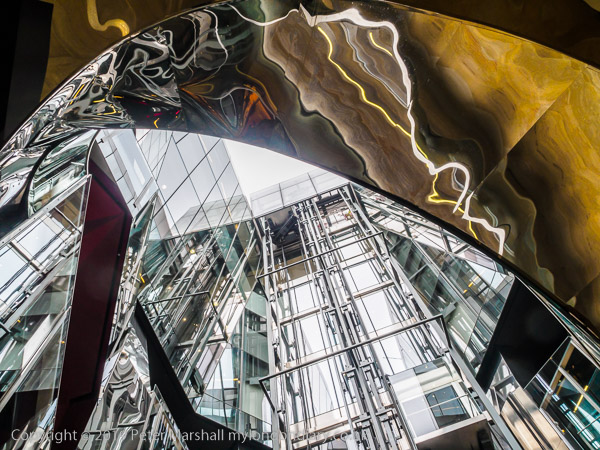
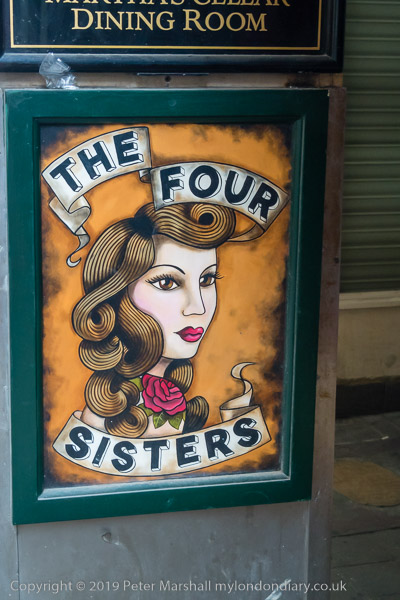
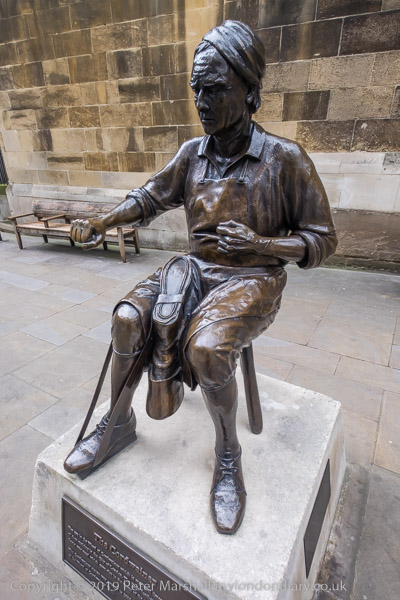
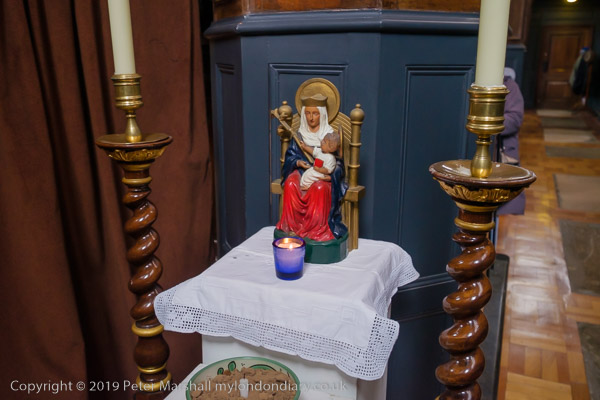
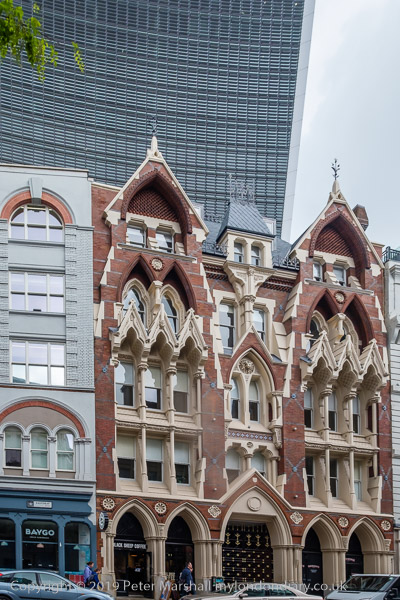
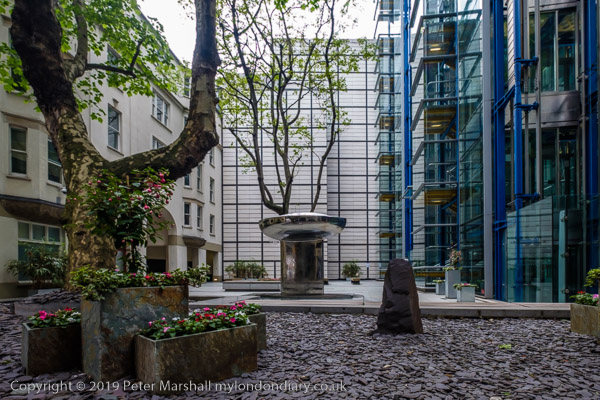
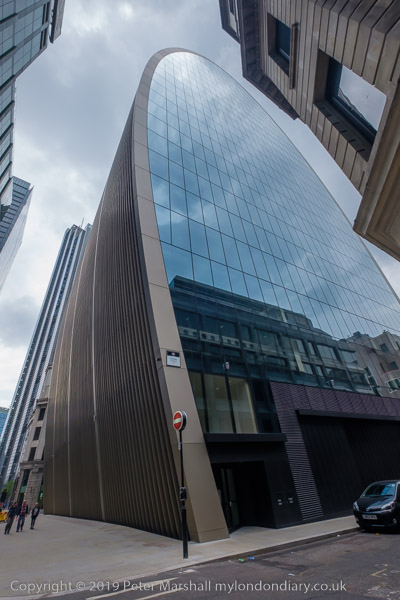
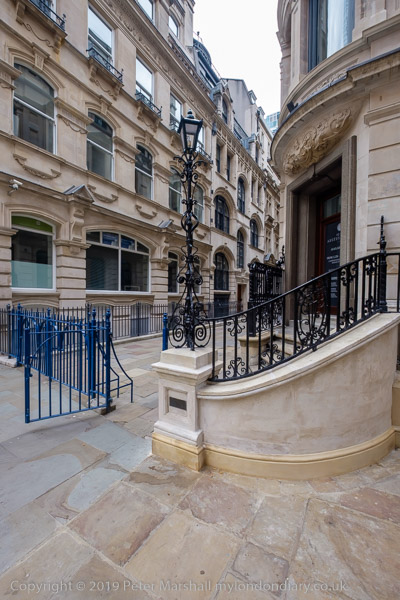
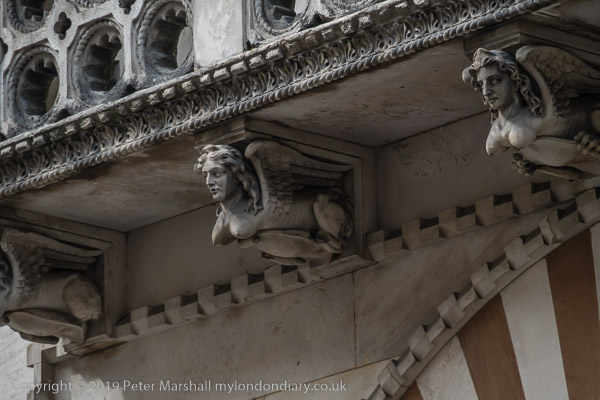
On My London Diary you can see over a hundred pictures I made on the walk, some of very well known and much photographed parts of the City of London, others less so. There are captions identifying most on those pages, but here I’ll post them without them – and just a couple of clues to the more difficult.

The plaque marks where Dositey Obradovich, first Serbian Minister of Education lived in London in 1784
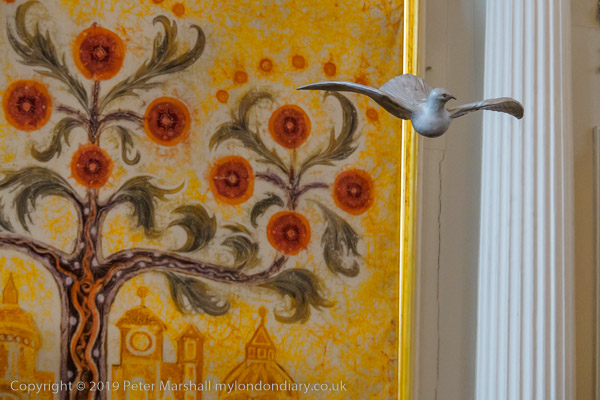
The bird a pelican, though to me it looked like a swan.

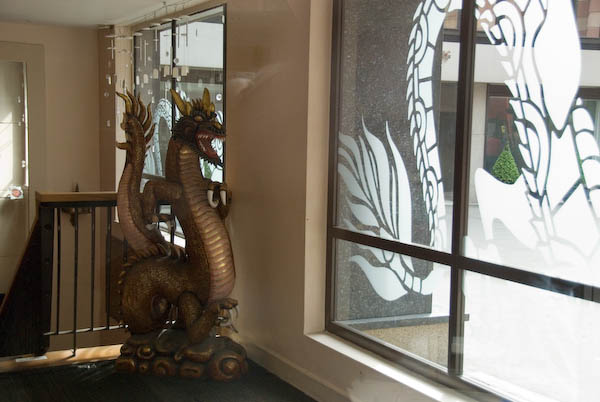
If you can name all these I’ve posted above, you must surely be a certified London Green Badge Guide – and I think anything over half shows a fairly intimate knowledge of the City. I think all the answers are in my post on My London Diary at Christian Aid walk – London churches.

And finally, one I can’t remember where I found it – perhaps someone can tell me in a comment.


FlickrFacebookMy London DiaryHull PhotosLea ValleyParis
London’s Industrial HeritageLondon Photos

All photographs on this page are copyright © Peter Marshall.
Contact me to buy prints or licence to reproduce.
Christian Aid, Mordechai Vanunu & Mass Lone Demos – 2007

Christian Aid, Mordechai Vanunu & Mass Lone Demos. My photography on Saturday 21st April 2007 began with a small event close to home with music and tree planting celebrating 50 years of Christian Aid. I then rushed into London for the start of the Mass Lone Demo initiated by Mark Thomas as a protest against SOCPA, the Serious Organised Crime and Police Act which greatly restricted the right to protest in the area around Parliament.

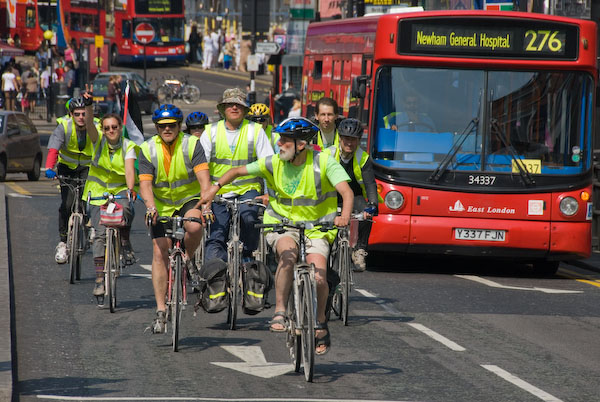
After a short while there I travelled to Hackney where cyclists, some who had begun at the Faslane nuclear submarine base on the Clyde, were beginning the final leg of the Vanunu Freedom Ride. After they had set off I returned to take more pictures of the Mass Lone Demo, then took the tube to meet the cyclists again close to the IsraelI Embassy in Kensington.

Below is what I wrote in 2007, with the usual minor corrections and links to more pictures from the day on My London Diary.


Christian Aid: Tree Planting – Celebrating 50 Years

Staines, Middlesex

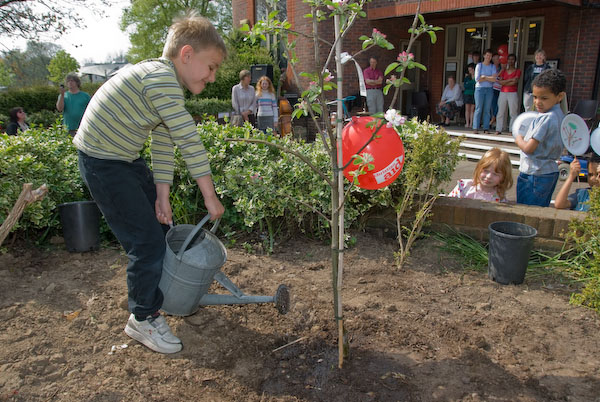
Saturday was another beautiful day, sunny, warm but not too hot, and the quintet with a fine singer created a mellow atmosphere as we gathered to plant two apple trees to celebrate 50 years of Christian Aid. the music included several of my Ellingtonian favourites, there were some interesting home-made cakes, and it was great to relax for a while in the sun.

Christian Aid, Mordechai Vanunu & Mass Lone Demos - 2007
One of the 2 apple trees planted at Staines to celebrate 50 years of Christian Aid gets watered in.

The trees were given and planted by Colin Squire of Squires Garden Centres, and as he commented, the Cox’s Orange Pippin was an appropriate choice, as not only is it a fine apple, but was first grown by Richard Cox just three miles away at Colnbrook in 1830.

The two trees are in a public area, and we hope that in years to come the public will come and help themselves and enjoy their crop.

More pictures from the event on My London Diary.


Mass Lone Demos – the BIG one

Westminster

Christian Aid, Mordechai Vanunu & Mass Lone Demos - 2007
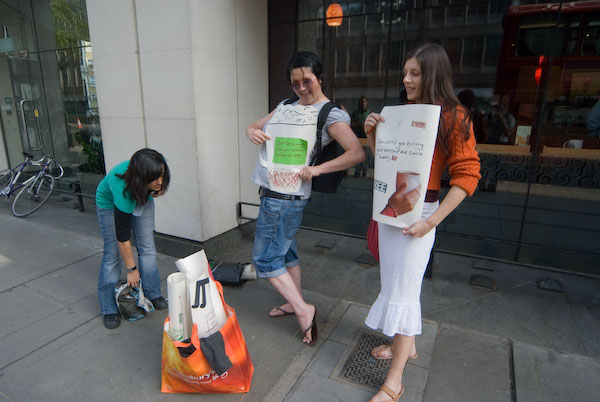
Starbucks in Victoria St – 3 of the over 2000 demonstrations

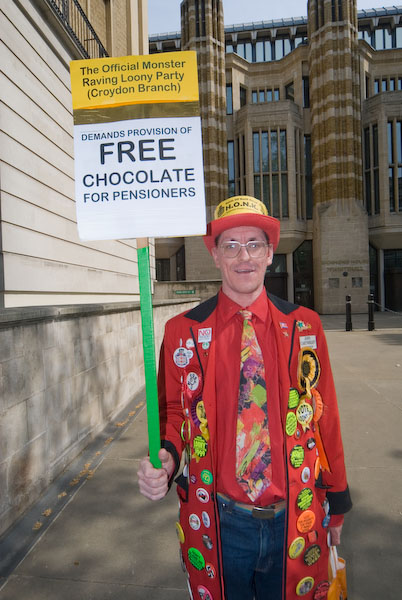
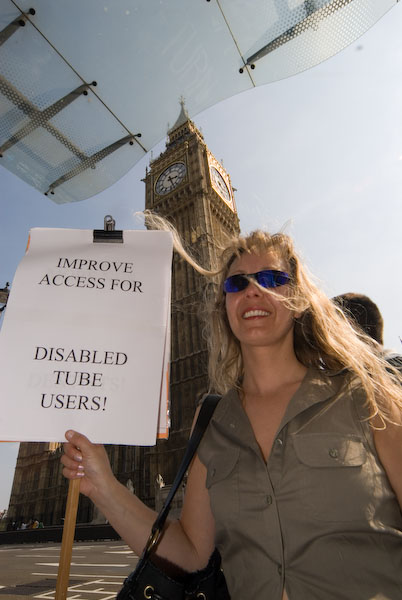
Mark Thomas’s latest twist to the Mass Lone Demo was for demonstrators to set out a list of 20 demonstrations they would eaach hold in the SOCPA area on Saturday and to apply for permission for each of them. He was aiming for 2000 demonstrations (and hoping for an entry in the Guinness Book Of Records.) The police figure for the number of demonstrations that permission was applied for was 2,486, but it was actually quite hard to find many of them.

Christian Aid, Mordechai Vanunu & Mass Lone Demos - 2007

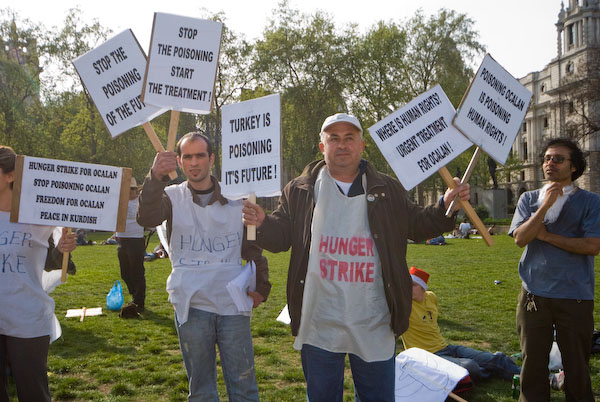
I’d hoped to photograph people at such highly desirable sites for demos as the Mothers Union, the Adam Smith Institute and the Embassy of the Republic of Slovenia, but nobody was there when I looked. However I did find a few, [and also some Kurds who were not part of the Lone Demos] but unfortunately had to miss the final event to get to Kensington.

Christian Aid, Mordechai Vanunu & Mass Lone Demos - 2007
Kurds declare a hunger strike, demanding an end to the poisoning of Ocalan and his freedom

Mass Lone Demos – the BIG one


The Vanunu Freedom Ride Reaches London

Hackney and Notting Hill Gate

Christian Aid, Mordechai Vanunu & Mass Lone Demos - 2007
Freedom Riders in Hackney – they rode from Faslane nuclear base near Glasgow

Mordechai Vanunu told the world about Israel’s nuclear weapons – still denied, still secret and still not subject to any international inspection. He worked on the program for 9 years until 1985, and in 1986 blew the whistle, talking to the press. Days later he was lured to Italy and kidnapped from there by the Israeli Secret Service. Convicted of treason in Israel he spent 18 years in jail, 12 of them in solitary.

Christian Aid, Mordechai Vanunu & Mass Lone Demos - 2007

Released in 2004 he has been under severe restrictions on movement, who he can meet and what he can say. He would like to leave srael but it seems likely he will be sent back to prison. The ride demanded his freedom, the setting up of a nuclear-free Middle East as well as freedom for Palestine.

‘Vanunu’ at Hackney

The riders started at the Faslane base to the west of Glasgow where daily demonstrations are taking place outside the base of the ridiculous UK nuclear deterrent (ridiculous to have it, and in no way independent as we need us permission to use the weapons.) The ride stopped at many places on the way to demonstrate and hold meetings, including Menwith Hill spy station and Lakenheath USAF base.

A rally at the end of the ride at Notting Hill Gate, not far from the Israeli embassy

They were met at Hackney Town Hall by members of Hackney & Islington CND and CNF vice-chair Sophie Bolt. From Hackney they cycled on via Downing Street to Kensington, where there was a rally at which Jeremy Corbyn MP, Kate Hudson, CND chair and Louise Richards of War On Want were among the speakers.

The Israeli embassy in London is on a private street with security lodges at each end. cyclists are not allowed in the street, and demonstrations are certainly not tolerated.

Vananu Freedom Ride at Hackney and Kensington.


FlickrFacebookMy London DiaryHull PhotosLea ValleyParis
London’s Industrial HeritageLondon Photos

All photographs on this page are copyright © Peter Marshall.
Contact me to buy prints or licence to reproduce.

Mass Lobby for Trade Justice – 2005

Westminster, Wednesday 2nd November 2005

Mass Lobby for Trade Justice - 2005

Trade Justice means policies that are “designed to deliver a sustainable economic system that tackles poverty and protects the environment.”

Mass Lobby for Trade Justice - 2005

The Trade Justice movement includes “trade unions and charities focusing on sustainable development, human rights and the environment.”

Mass Lobby for Trade Justice - 2005

Trade Justice is different from ‘free trade‘ in that it calls for trade rules that enable poor countries to chose solutions to end poverty and protect the environment rather than those that allow international businesses to profit at the expense of people and environment and would ensure that the trade rules are made transparently and democratically.

Mass Lobby for Trade Justice - 2005

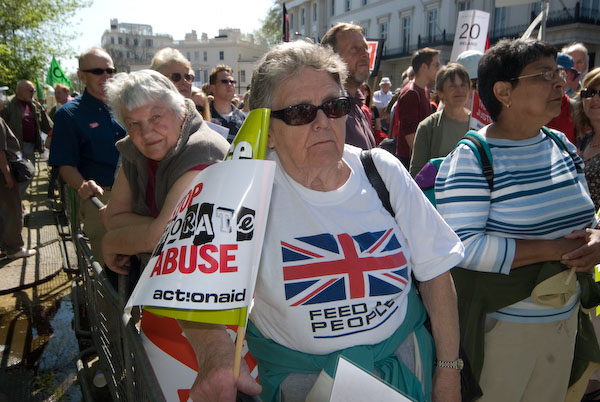
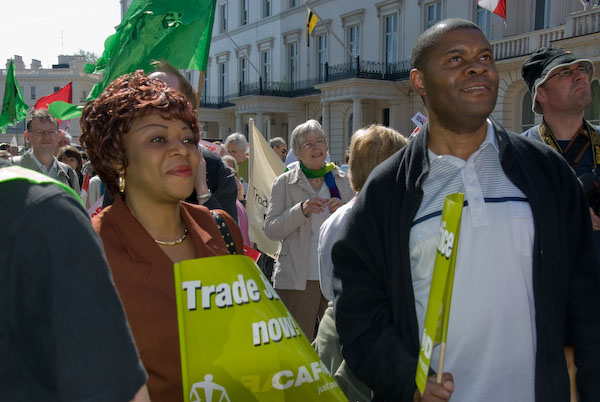
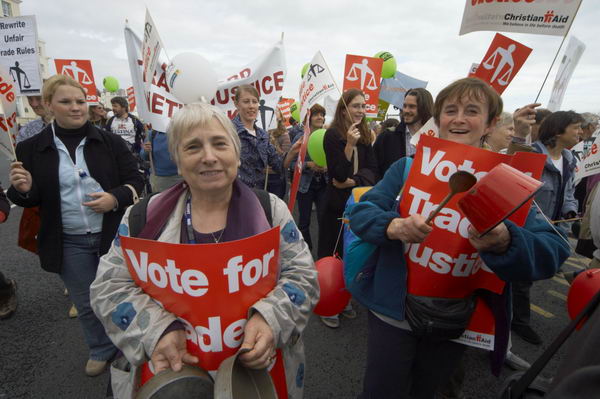
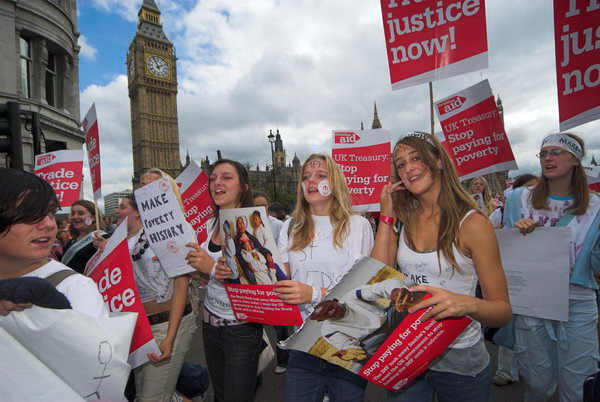
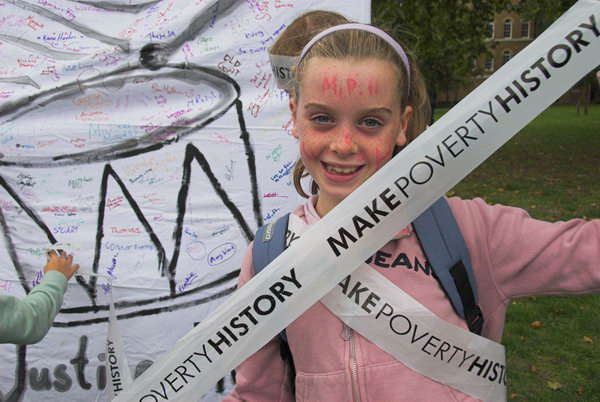
The Trade Justice Movement was formed in 2000 to bring together organisations promoting trade justice to work together more effectively. As you can see from my pictures this event included Christian Aid, Cafod, Make Poverty History, Traidcraft, War on Want, World Development Movement and others, and people had come from around the country to meet their MPs.

Mass Lobby for Trade Justice - 2005

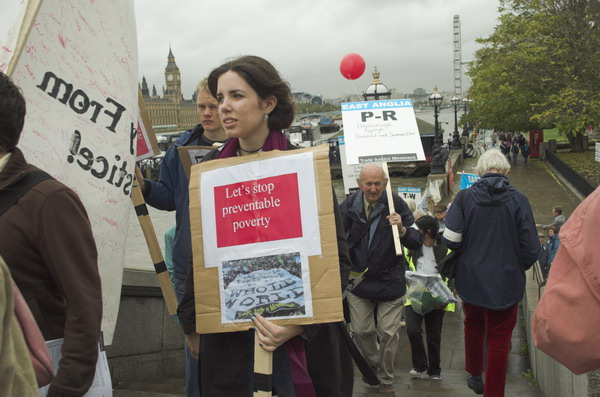
Many MPs had agreed to come out from Parliament to meet their constituents and they had agreed to do so at a long line of meetings with some in front of parliament and others through into Victoria Tower Gardens and on across Lambeth Bridge.

They came out despite the weather – and you can see many umbrellas in the pictures I took. There were frequent showers, some heavy and I got rather wet – as I commented “you can’t hold an umbrella and take pictures like this.”

My camera was reasonably weather-sealed and I try to wipe the raindrops off the front of the lens before each pictures but zoom lenses which I use for almost all pictures tend to get condensation on inner glass surfaces from damp air drawn during zooming and become unusable until they have dried out. I gave up taking pictures after two hours, but my wife who had gone up to lobby our MP had to wait a further three hours to see him.

Although many MPs came out to meet their constituents, some used the occasion as a way to speak to them in a rather patronising manner about how they didn’t really understand the real business of international trade rather than really listen and take on the arguments they were making.

I think this lobby will have had very little effect compared to the lobbying of major companies and professional lobbyists on their behalf who give MPs large amounts of cash and VIP tickets to sporting and other event etc. We know the huge amounts MPs have received and declared from various sources – including the private health companies and various sources connected to Israel and its hard to believe that they don’t get results from their cash – and it seems clear they do from some government statements and policies. Surely all such donations should be banned.

Anyway, here is what I wrote back in 2005:

“8,000 or more of us queued up along both banks of the Thames from Westminster to Lambeth bridge and beyond to take part in a mass lobby for trade justice. People continued to queue, some for four hours and more to see talk to their members of parliament, despite a long wait in often heavy pouring rain. We arrived at Westminster around 12.15 and it was almost 5pm before my wife was able to meet our MP.

“Others were more fortunate, with a number of MPs from all parties coming out onto the street and into Victoria Tower Gardens to meet their constituents. The lobby aimed to make clear the difference between ‘fair trade’ and ‘free trade’ and to stress the necessity to make trade fair so that economically weak nations have a chance to develop.

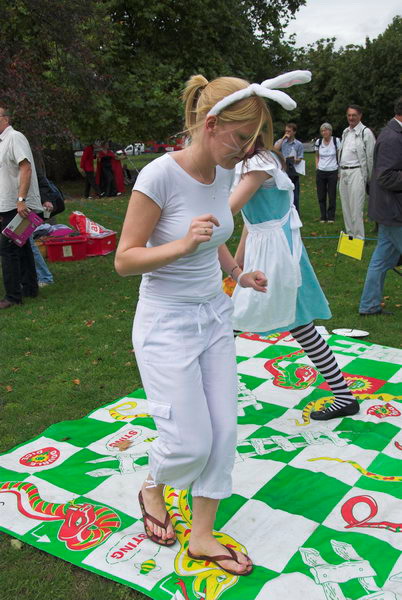
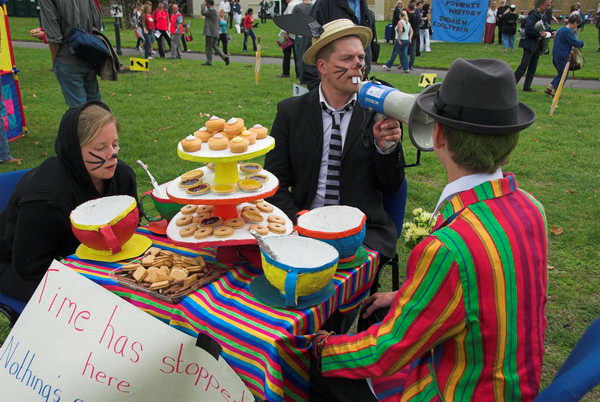
“Despite the lousy weather (not good for photography or queuing) spirits were high among those waiting, and there were some street theatre performances that helped.”

Many more pictures from the event here on My London Diary.


FlickrFacebookMy London DiaryHull PhotosLea ValleyParis
London’s Industrial HeritageLondon Photos

All photographs on this page are copyright © Peter Marshall.
Contact me to buy prints or licence to reproduce.

Circle The City – 2014

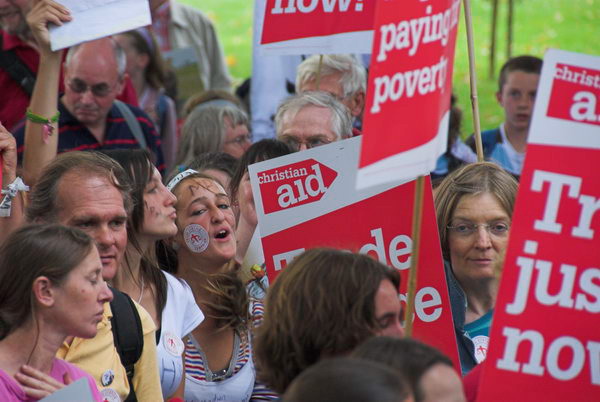
Circle The City: On Sunday 18th May 2014 I accompanied my wife who was taking part in a sponsored walk around churches in the City of London to raise money for Christian Aid, part of the activities in Christian Aid Week. The 2025 Christian Aid Week ended yesterday (17 May 2025) but it isn’t too late to donate towards their work with local partners and communities in countries around the world “to fight injustice, respond to humanitarian emergencies, campaign for change, and help people claim the services and rights they are entitled to.”

Circle The City - 2014
Hawksmoor’s St Mary Woolnuth

Christian Aid is one of the better aid charities, currently working through local grass roots organisations in some of most vulnerable communities in 29 countries in Africa, Asia, the Middle East, Europe and Latin America and the Caribbean. They don’t give money to governments and the projects they support are organised and managed by local people – with robust procedures to ensure the money is spent effectively. Some of those they support are Christian but many are not – something which has led to some churches failing to support their work.

Circle The City - 2014
The crypt of All Hallows by the Tower
Circle The City - 2014
Minster Court, Mark Lane

Other churches have decided against supporting Christian Aid because of their political campaigning, “pressing for policies that can best help the poor…. All we care about is eradicating poverty and injustice and the causes of these.” Compared to some other large charities they are more efficient, with 84p in every pound donated “working for long-term change, responding to humanitarian emergencies and using our voice to call for global change“.

Circle The City - 2014
Gateway to “the churchyard of Saint Ghastly Grim”, St Olave Hart St.
St Olave Hart St
The Ship, Hart St

The event was extremely well organised, with those taking part getting maps and directions at St Mary-le-Bow on Cheapside where there was a service before the walk. People also collected red helium-filled balloons to carry on the walk, and some of these were tied to mark the route and the various points – mainly churches where marchers could get their sponsorship forms signed as they walked around which also had Christian Aid bunting.

A double Gherkin
Bevis Marks Synagogue is the oldest synagogue in Great Britain, built in 1701

Most of the churches were open for people to walk around and some had refreshments and toilets. It would have been hard to get lost, but some people have zero sense of direction and find it difficult to hold a map the right way up and my presence was helpful. But I had really gone along to keep my wife company – and of course to take some pictures, some of which appeared in her church magazine.

A yurt at the rear of St Ethelburga-the-Virgin within Bishopsgate

I’d visited most of the City churches before and photographed inside them, but there are a few that are seldom open to the public but opened up for the occasion, and I also took other pictures as we walked around. Most of them, even those of other buildings include other marchers and some of the churches were crowded with them. Those red balloons didn’t always improve my pictures, but I also ate more cake than on my other city walks.

Saint Sepulchre-Without-Newgate

There are many more pictures in the post on My London Diary at Christian Aid Circle the City.


FlickrFacebookMy London DiaryHull PhotosLea ValleyParis
London’s Industrial HeritageLondon Photos

All photographs on this page are copyright © Peter Marshall.
Contact me to buy prints or licence to reproduce.

Trade Justice Mass Action 2007

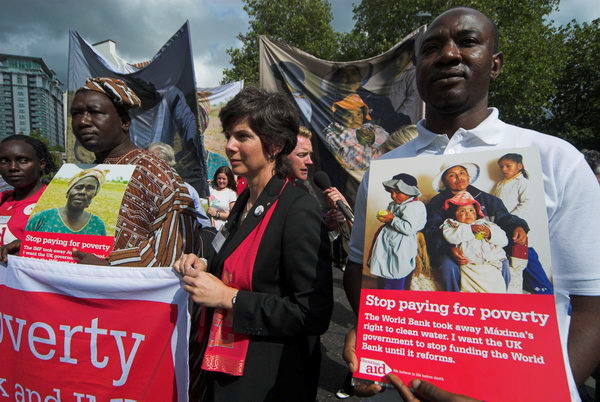
Trade Justice Mass Action. Thursday 19th April 2007 saw a mass action by the Trade Justice Movement in London which was a part of a wider global day of action by campaigners across Europe as well as in Africa, the Caribbean and the Pacific – the ‘APC’ countries.

Trade Justice Mass Action 2007

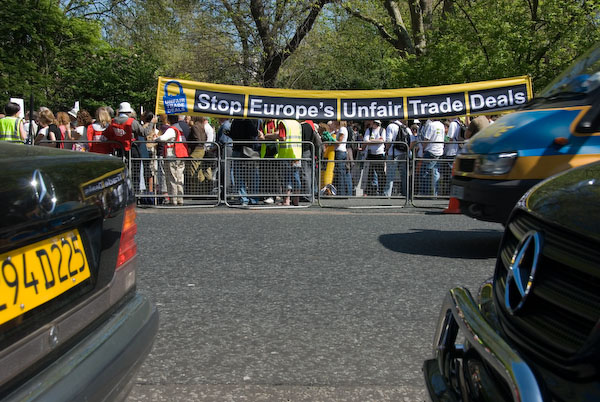
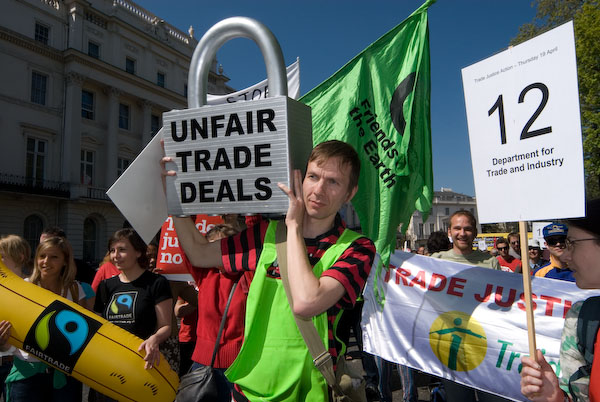
The protest was particularly about the agreements between the APC countries and the EU, and the unfair trade deals (economic partnership agreements or EPAs) that the EU was negotiating. The African, Caribbean and Pacific Group of States organisation was founded in 1975 and the 71 countries then involved came to an trade agreement with the European Economic Community (EEC) in Lomé, Togo, the Lomé Convention.

Trade Justice Mass Action 2007

This “provided for most ACP agricultural and mineral exports to enter the EEC free of duty. Preferential access based on a quota system was agreed for products, such as sugar and beef, in competition with EEC agriculture” from the 71 countries in the ACP and it also provided funds for aid and investment.

Trade Justice Mass Action 2007

The Lomé Convention was twice updated but in 1995 the United States complained to the World Trade Organisation that it was unfair to them and the WTO Dispute Settlement Body ruled in their favour. Many argue that the WTO prioritizes the interests of wealthy nations and multinational companies and undermines national sovereignty, and hinders efforts to address global issues like poverty and climate change.

Trade Justice Mass Action 2007

Negotiations between the European Union and the 78 ACP countries held in Coutonou, Benin in 2000 led to a new agreement, the Cotonou Agreement, signed by all except Cuba, which came into force in 2003 – and was later revised in 2005 and 2010.

According to Wikipedia, “The Cotonou Agreement is aimed at the reduction and eventual eradication of poverty while contributing to sustainable development and to the gradual integration of ACP countries into the world economy. The revised Cotonou Agreement is also concerned with the fight against impunity and promotion of criminal justice through the International Criminal Court.”

At the Spanish Embassy

The ACP, now renamed the Organisation of African, Caribbean and Pacific States, came to a new agreement, the Samoa Agreement, to replace this which entered into force provisionally in January 2024 but has proved more controversial, particularly because of its support for gender equality.

At the Spanish Embassy

The Mass Action in 2007 was organised by the Trade Justice Movement, which included 78 UK-based organisations including aid organisations such as Action Aid, Cafod, Christian Aid, Oxfam, Tearfund, War On Want and the World Development Movement, trade unions, churches, fair trade groups and more.

At the Austrian Embassy

It began with a rally in Belgrave Square, a square containing many empbassies. The rally was outside the German (and Austrian) embassies, with speakers from a number of the groups including Frances O’Grady from the Trade Union Congress, Tony Juniper of Friends of the Earth and speakers from some APC countries.

Setting off for the Department of Trade and Industry

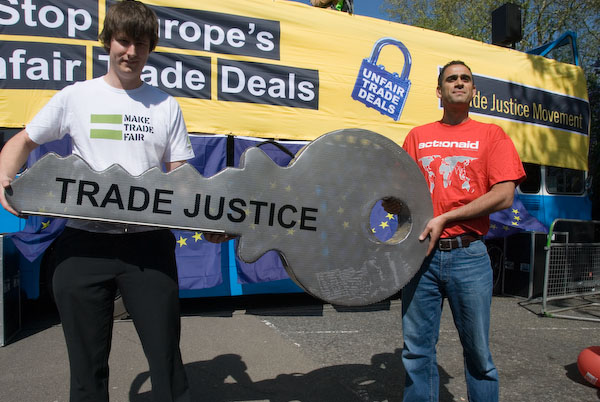
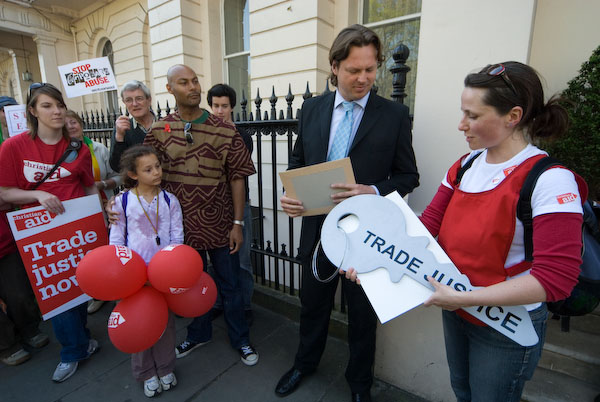
At the end of the rally groups left to deliver a letter and a large key to every EU country’s embassy with a letter and a key, demanding that the EU stops negotiating unfair trade deals (economic partnership agreements or EPAs) with developing countries. One group went to the Department of Trade and Industry to deliver to the UK. I could not go with all the groups going to all 27 locations to deliver these, but did manage to take photographs of the groups outside the Finnish, Spanish and Austrian embassies.


FlickrFacebookMy London DiaryHull PhotosLea ValleyParis
London’s Industrial HeritageLondon Photos

All photographs on this page are copyright © Peter Marshall.
Contact me to buy prints or licence to reproduce.

Jesse Jackson, Cuts & Paris • New York • London Opening 2010

Jesse Jackson, Cuts & Paris • New York • London Opening: Wednesday 20th October 2010 was an unusual day for me. I don’t often photograph conferences, but I started at one where Jesse Jackson was speaking and then went to lobby my MP over tax justice. Kwasi Kwarteng was seldom seen in the constituency but later became notorious when he helped Liz Truss crash the economy. From there I used to cover people marching to Downing Street against the government spending cuts before leaving to go to the Shoreditch Gallery for the opening of a show by three photographers I had organised, ‘Paris – New York – London’ (I was Paris.)


Jesse Jackson & Christian Aid Lobby – Westminster

Jesse Jackson, Cuts & Paris • New York • London Opening 2010

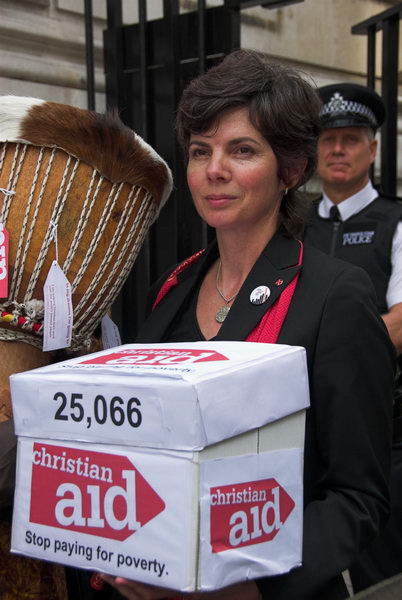
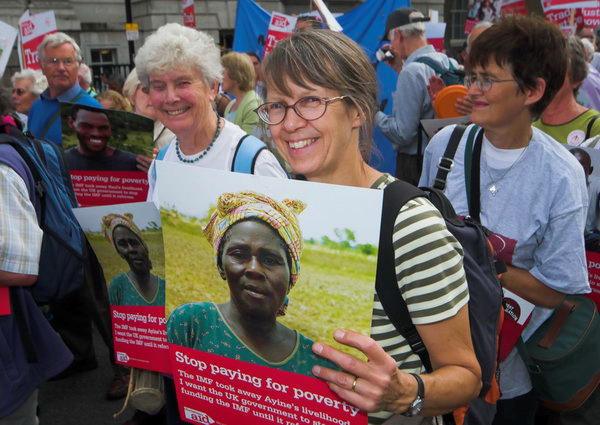
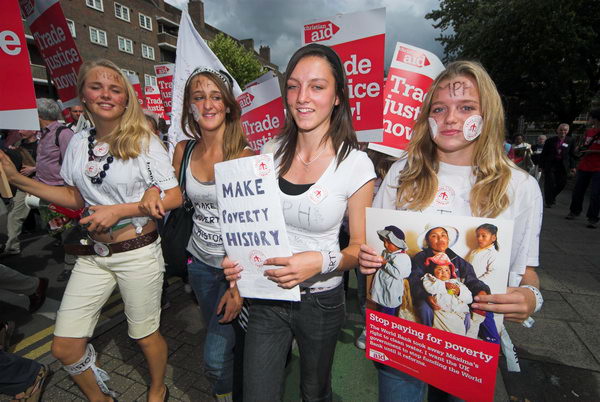
2,500 Christian Aid supporters including my wife had come to Westminster to lobby their MPs on 20.10.2010, asking them to press for transparency and fairness in the global tax system and for action on climate change.

Jesse Jackson, Cuts & Paris • New York • London Opening 2010

According to campaigners for tax justice various forms of tax dodging by multinational companies was then robbing the global South of more than $160 billion a year. And our high dependence of fossil fuels had led to a climate crisis which impacts these countries far more severely despite their much lower per capita carbon footprints.

Jesse Jackson, Cuts & Paris • New York • London Opening 2010

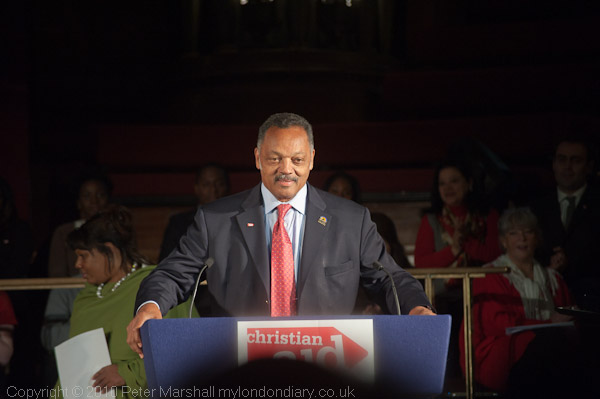
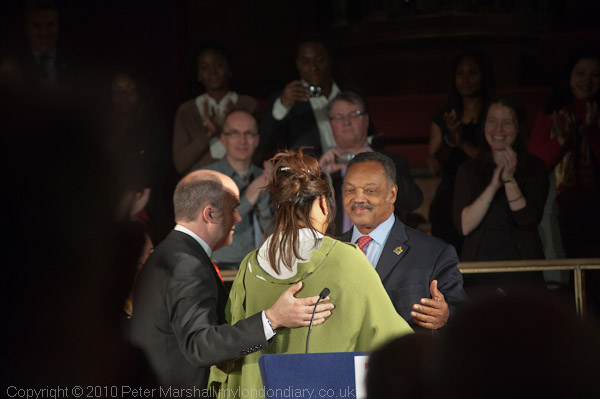
The rally took place in the vast Methodist Central Hall, opposite Westminster Abbey, and as we were reminded where the United Nations started. There was a huge ovation for US Civil Rights leader, activist and politician Jesse Jackson, a protégée of Martin Luther King president and founder of the Rainbow PUSH Coalition.

But there were also other distinguished speakers including the then new director of Christian Aid, Loretta Minghella, Suzanne Matale from Zambia and secretary of state for international development and MP for Sutton Coldfield, Rt. Hon Andrew Mitchell MP.

Jesse Jackson, Cuts & Paris • New York • London Opening 2010

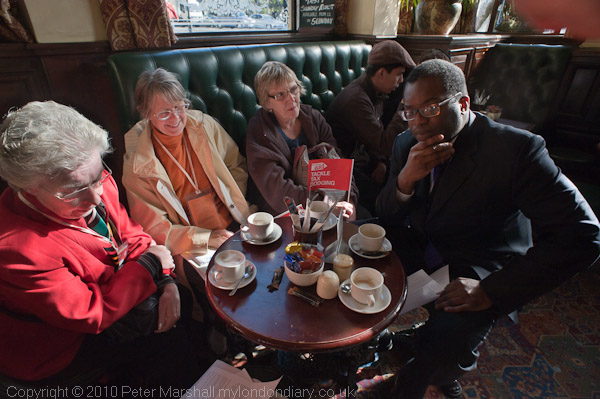
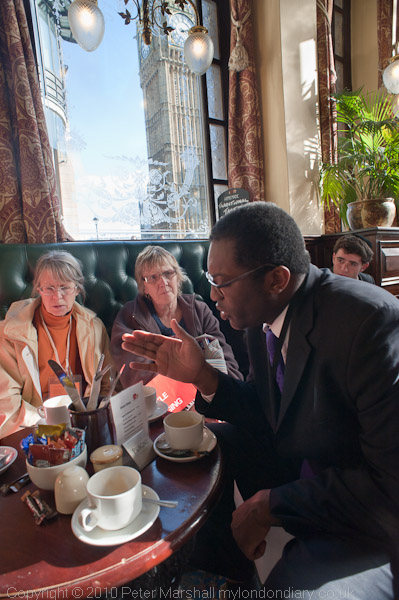
After the rally we met our local MP Kwasi Kwarteng and went with him into a pub opposite Parliament where he he listened to us and basically told us we didn’t understand global finance and climate change, before going outside to pose with for photographs.

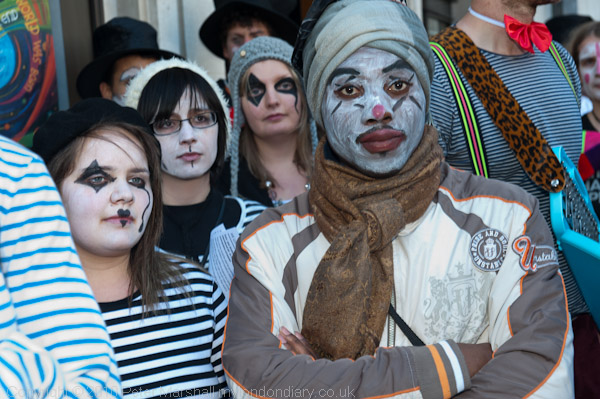
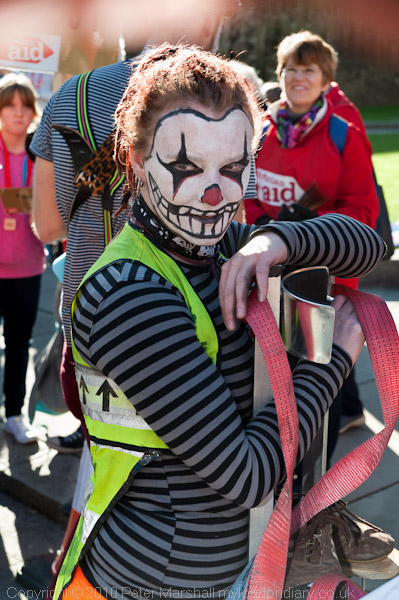
Outside there was some street theatre by younger Christian Aid supporters as people queued to meet there MPs and I made a few pictures before rushing away to find people marching to protest against government cuts.

Jesse Jackson & Christian Aid Lobby


March Against Spending Cuts – Malet St & Lincolns Inn Fields

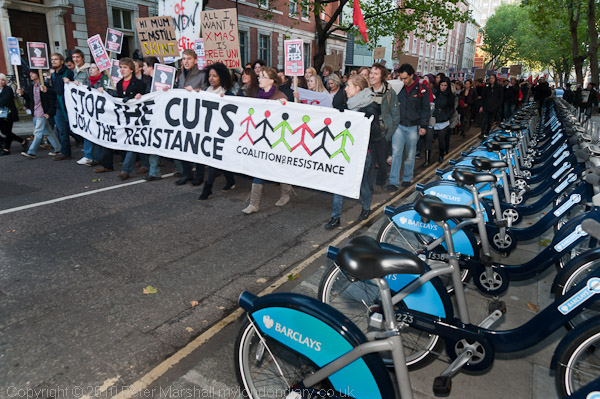
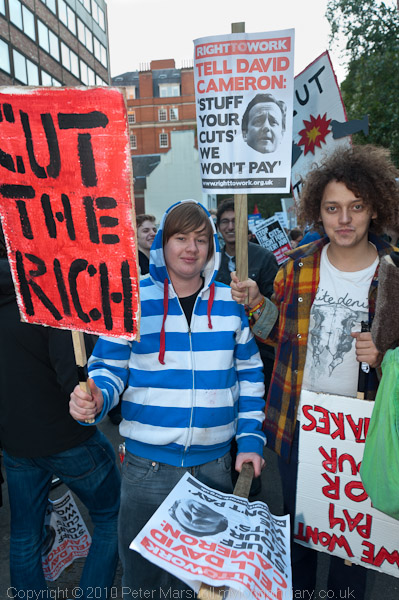
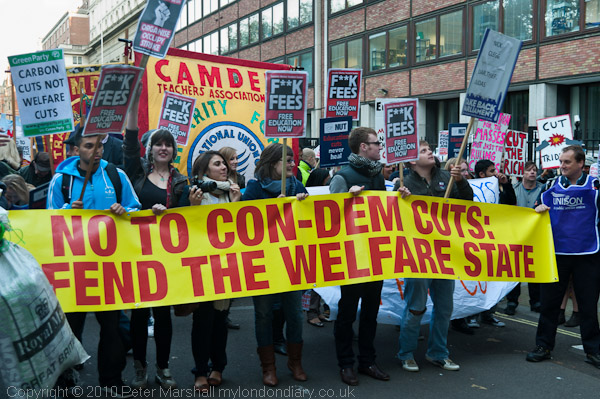
Earlier in the day the government had announced there would be considerable cuts in welfare benefits and the loss of many public sector jobs as services are cut following their comprehensive spending review.

The deficit left by New Labour had given the Tories in the Con-Dem coalition a perfect excuse to slash the public sector and privatise services in a way they would never have dared before. £83 billion to be cut from public services, in a move that the Coalition of Resistance pointed out will mean many workers with less to spend and cause a slump in the economy.

But as I commented “Big business must be rubbing its hands with glee at the thought of the profits it will be able to make in the health service, from so-called ‘free schools’ and elsewhere.”

But for the rest of us the prospect was bleak. More than a million jobs lost – and some would be replaced in the private sector with lower wages, fewer benefits, lower standards of delivery and safety and higher workloads. Profit will come before anything else in the kind of “efficiency” we’ve seen in hospital cleaning – where I found used needles and dressings under my hospital bed as cleaners were not allowed the time to do the job properly.

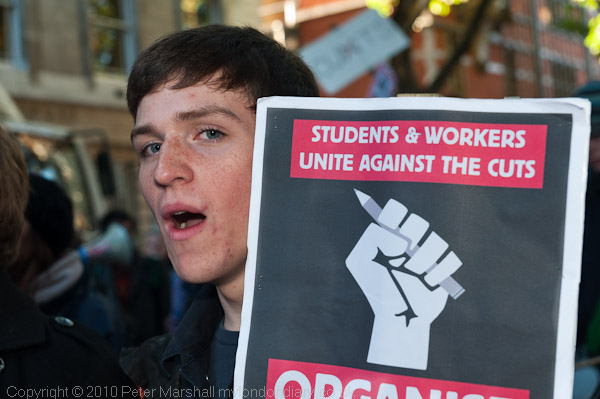
I went to photograph students setting off from outside the student union in Malet Street for the march to Downing Street, then went to Lincoln’s Inn Fields where trade unionists and more students gathering and there were speeches from an open top bus before they too set off.

But I went in the opposite direction to my opening at the Shoreditch Gallery.

March Against Spending Cuts

Paris • New York • London Opening – Shoreditch Gallery, Hoxton Market

Me at the opening where I gave a speech – photograph © Paul Baldesare, 2010

This show contained work by John Benton-Harris from New York, Paul Baldesare from London and myself from Paris and can still be seen online.

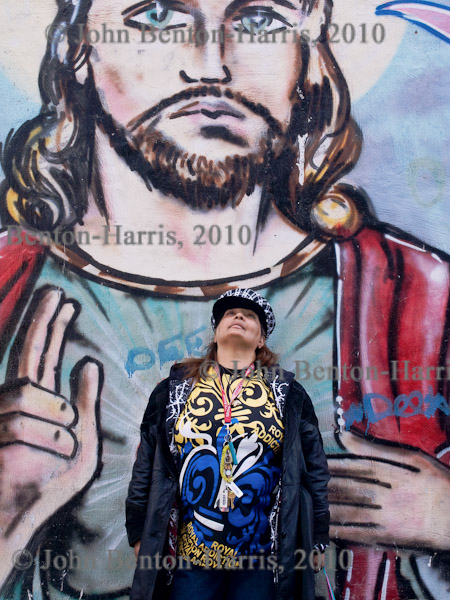
Addicted To Jesus – Arthur Avenue, Bronx NYC – 14th March 2009 © John Benton-Harris

John Benton Harris (1929-2023), one of the finest photographers to come out of New York, settled in London in 1965 but continued also to photograph his native city and elsewhere. He was long a personal friend and I worked with him on a number of his projects including his Café Royal Zines and his unpublished book on the English.

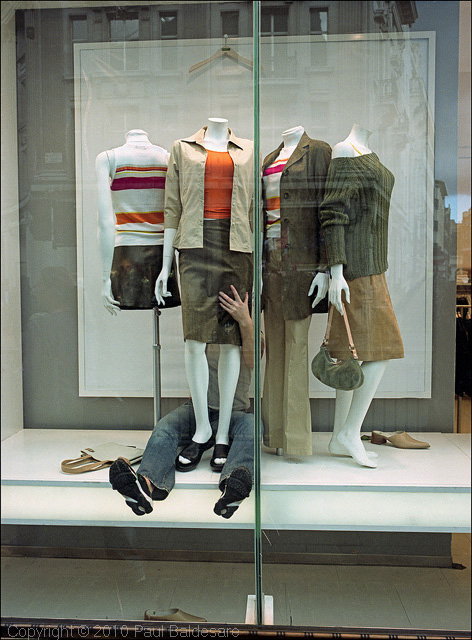
Window dresser, Oxford Circus, London © Paul Baldesare, 2010

Paul Baldesare, another friend of mine with whom I’ve often shown pictures and a former student of John Benton-Harris showed work from one of his many projects on London, He is probably best known for his pictures on the tube.

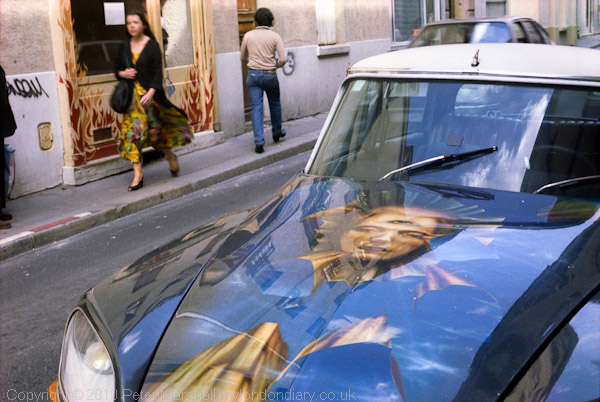
And I was showing a selection of images made in Paris in 1988 from a book I had also then recently published on Blurb.


FlickrFacebookMy London DiaryHull PhotosLea ValleyParis
London’s Industrial HeritageLondon Photos

All photographs on this page are copyright © Peter Marshall.
Contact me to buy prints or licence to reproduce.

Trade Justice At Brighton 2004

Trade Justice At Brighton: Twenty years ago on Sunday 26th September 2004 I spent the day in Brighton, not with my bucket and spade on the beach but with my Nikon D100 camera, and both a wide-angle and telephoto zoom lenses.

Trade Justice At Brighton 2004

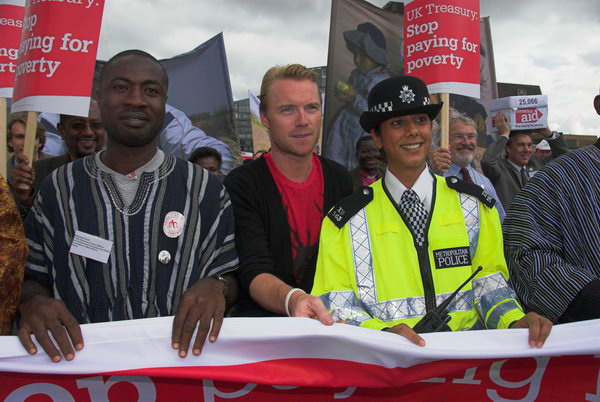
I was there with around 6000 other people at an event organised by the Trade Justice Movement going to lobby at the Labour Party conference – who at that time were in government with Tony Blair as prime minister.

Trade Justice At Brighton 2004

According to its web site, “The Trade Justice Movement is a UK coalition of nearly sixty civil society organisations, with millions of individual members, calling for trade rules that work for people and planet.

Trade Justice At Brighton 2004
Caroline Lucas, Green Party, MP for Brighton Pavillion 2010-2024

They want not free trade but fair trade “with the rules weighted to ensure sustainable outcomes for ordinary people and the environment. We believe that everyone has the right to feed their families, make a decent living and protect their environment. But the rich and powerful are pursuing trade policies that put profits before the needs of people and planet.”

Trade Justice At Brighton 2004

And of course the rich and powerful are still in charge, still driving headlong towards global catastrophe while concentrating on amassing global power and vast fortunes, amounts far beyond what anyone can actually spend or benefit from. Certainly the world does not need – and cannot afford – billionaires.

We need a fairer system to share the world’s resources, and fair trade has a large part to play in this. Back in 2004 the Trade Justice Movement tried to get our government to change its policies but with little effect – and it is still trying to do so.

On the web site they list that they are calling on the UK government to:

  • Ensure that trade rules allow governments, particularly in poor countries, can choose the best solutions to end poverty and protect the environment;
  • Ensure that trade rules do not allow big business to profit at the expense of people and the environment.
  • Ensure that decisions about trade rules are made in a way that is fully transparent and democratic.

My description of the day in Brighton in 2004 was that it began with a rally on the promenade and “continued with a march along the seafront to the centre where the Labour party annual conference was in session. With around 6000 on the march, it straddled about a quarter-mile of seafront.

Outside the conference centre there was a two-minute silence before a further several minutes of deafening cacophony from whistles, banging on drums and saucepans and anything else that could make a noise.”

Then ballot papers calling for trade justice were collected in and put into large ballot boxes along the seafront. Many people had brought cards completed by friends and a good start was made towards collecting the million signatures aimed at.

On My London Diary I divided the pictures into four groups, General, Speakers, Performers and pictures from the March. This now seems rather confusing, but this was a time when few of those accessing the site were then on broadband. So there were pages of large postage-stamp sized thumbnails which would load reasonably rapidly, with the instruction “Click on any image to load these; they will be slow to download unless you are on broadband.

The links on the September My London Diary page still go to the pages of thumbnails, but you can go directly to the larger images now on the links below.

General
Speakers
Performers
March & Ballot


FlickrFacebookMy London DiaryHull PhotosLea ValleyParis
London’s Industrial HeritageLondon Photos

All photographs on this page are copyright © Peter Marshall.
Contact me to buy prints or licence to reproduce.
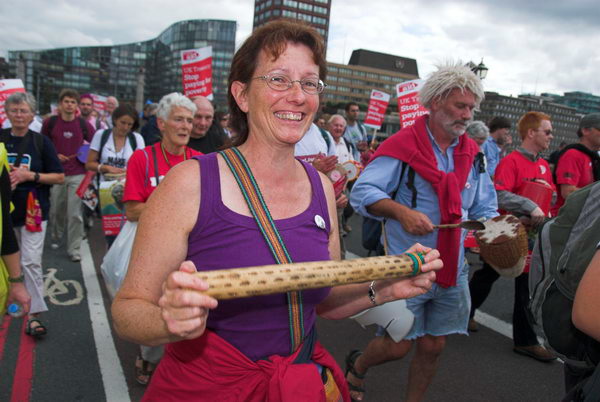

Circling The City Quiz 2019

Circling The City Quiz: I don’t often now go out camera in hand with no specific aim in mind but Sunday 19th May 2019 was a day without any photographic plan. I was keeping my wife company on a sponsored walk and making sure she didn’t use her powerfully inverse sense of direction to get lost.

Circling The City Quiz

Circling The City Quiz

The walk was organised by Christian Aid and came at the end of the annual Christian Aid week which always takes place in the second week of May (this years it was 12-18 May.) There are events organised by churches across the country as well as some door-to-door collections (the largest in the UK, though these are becoming increasingly difficult), as well as regional events like this walk. You can add your donation at this link.

Circling The City Quiz

Circling The City Quiz

Christian Aid was founded at the end of the war in 1945 to give aid to the millions of refugees and displaced people in Europe, but now works with grass roots groups of all faiths (and none) in 24 countries across the world. This year its appeal was focused on Burundi where over 70% of the people face hunger and poverty every single day.

Whatever one feels about the faith that motivates its work, I think it is one of the better large NGOs in various ways. As well as working with local grass roots partners in the countries where it gives support, its activities in fund-raising in the UK are also very important in educating many across the country in development issues and the problems faced by ordinary people across the world.

We were given a very clear map and guide to take us around a series of churches in the city – mainly of course rebuilt by Christopher Wren and his co-workers after the 1666 fire, most of which were open for the event and some were offering refreshments. So our progress was slow and a few were closed by the time we arrived, but I was able to take some photographs inside 8 or 9 of the the dozen on the route we followed, including a couple I don’t recall having been inside before.

Here I’ll mainly post some of the pictures I took on the streets as we made our way around the city, along with a few from the churches.

I’ve deliberately not captioned them so those who know London can have a little fun in trying to work out where they were made. If you can get more than ten out of the fourteen you know London pretty well, and anyone who gets all 14 deserves (and probably already has) a London Green Guide badge. Unfortunately I can’t award these and you will need to take a course to get one.

You can check most of your answers in the post on My London Diary at City Churches Christian Aid Walk.


FlickrFacebookMy London DiaryHull PhotosLea ValleyParis
London’s Industrial HeritageLondon Photos

All photographs on this page are copyright © Peter Marshall.
Contact me to buy prints or licence to reproduce.
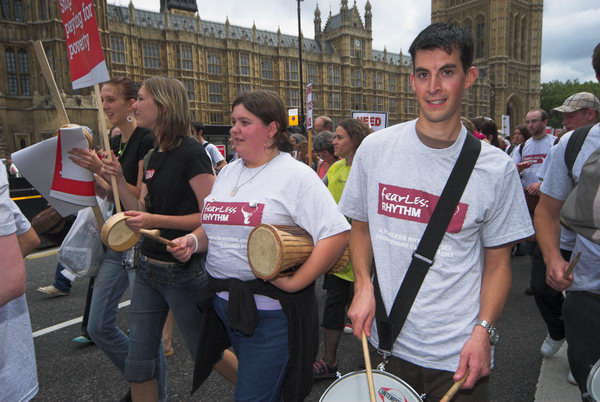

Martydom of Ali & Cut the Carbon

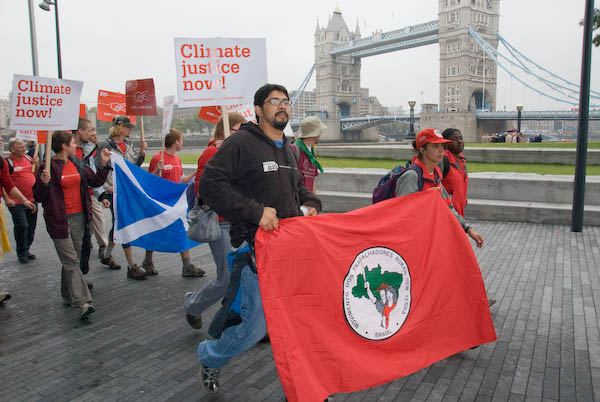
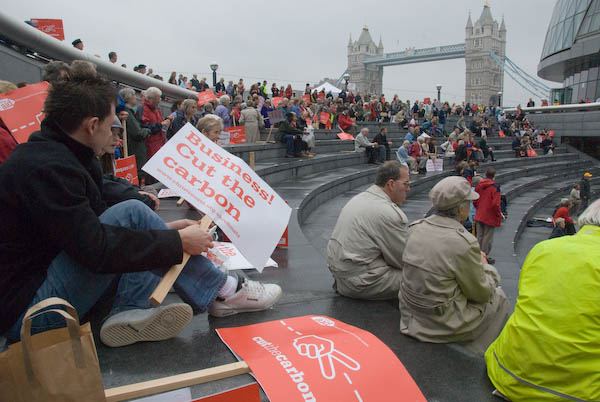
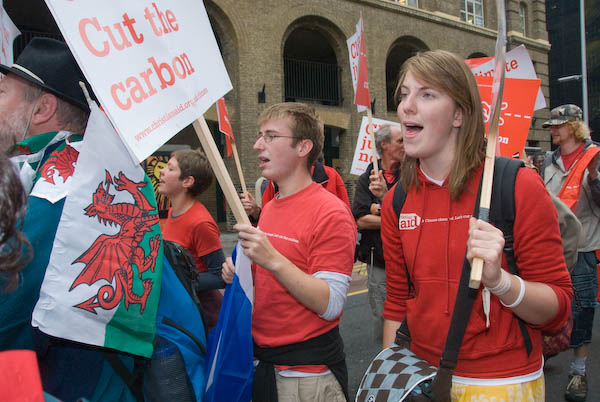
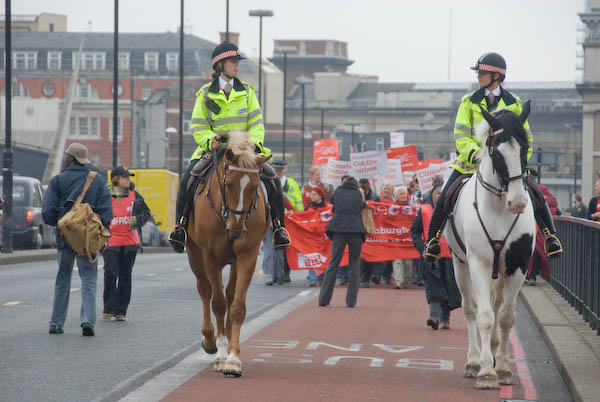
Martydom of Ali & Cut the Carbon: Two unconnected events in London on Sunday 30th September 2007. I photographed a Muslim festival in Park Lane before making my way to Battersea where a long march organised by Christian Aid around Britain was resting before its final push to the City of London calling for urgent action to cut our carbon emissions. Sixteen years ago it was already clear we needed to do this to avoid climate catastrophe – but our government has clearly not yet got the message with its recent decisions, including giving the go ahead to exploit the Rosebank field.


Mourning the Martrydom of Ali – Marble Arch

Martydom of Ali & Cut the Carbon

Ali Ibn Abi Talib grew up in the household of the prophet Muhammad and was the first male to profess his belief in his guardian’s divine revelation.

Martydom of Ali & Cut the Carbon

Later he married Muhammad’s daughter Fatimah and became a great warrior and leader and also one of the foremost Islamic scholars. He was made Caliph after the previous Calip was assassinated, and was then himself assassinated while praying in the mosque at Kufa, Iraq dying a few days later on the 21st of Ramadan in 661CE.

Martydom of Ali & Cut the Carbon

Revered by all Muslims, he is particularly celebrated by Shia, who regard him as second only in importance to Muhammad, and celebrate his martydom annually, including in a colourful march on the streets of London.

Martydom of Ali & Cut the Carbon

They gathered in front of Marble Arch for a lengthy period of mourning before a ceremonial coffin was carried out and men and women rushed to touch it. People began to beat their breasts, the men with extreme force and the women very much more decorously.

Eventually they formed into a procession and moved off down Park Lane, with much continued mourning and beating of breasts, led by a tall banner about Ali, then the men, followed by the ceremonial bier and finally the by the women with more banners.

Although the men were happy to be photographed, some were concerned that I also photographed the women taking part in this and other similar events. But after putting the photographs from events like this on-line I received e-mails from some of the women in them thanking me for having recorded their participation.

I left the marchers as they moved down Park Lane. The procession continues for some hours, moving slowly and then returning to Marble Arch but I had to go to Battersea.
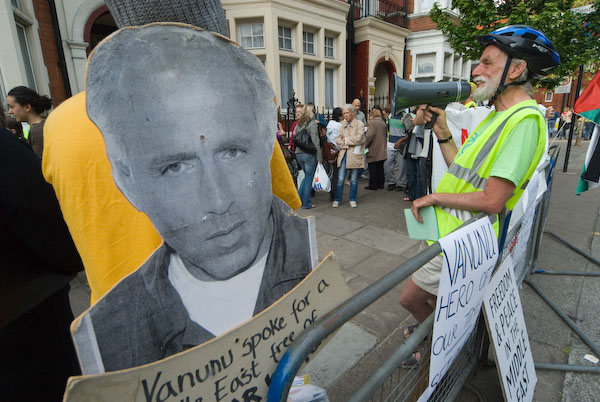
Many more pictures beginning at on My London Diary.


Cut The Carbon March: Christian Aid – St Mary’s Battersea

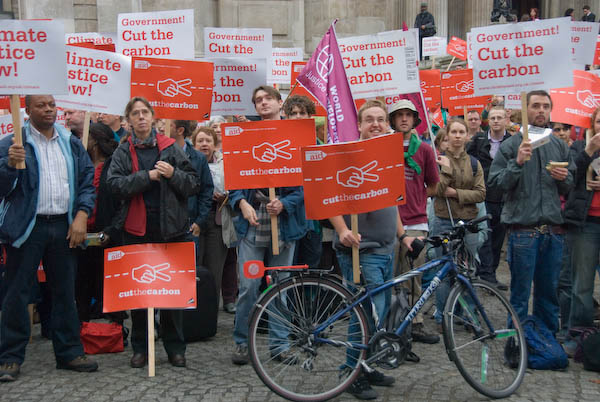
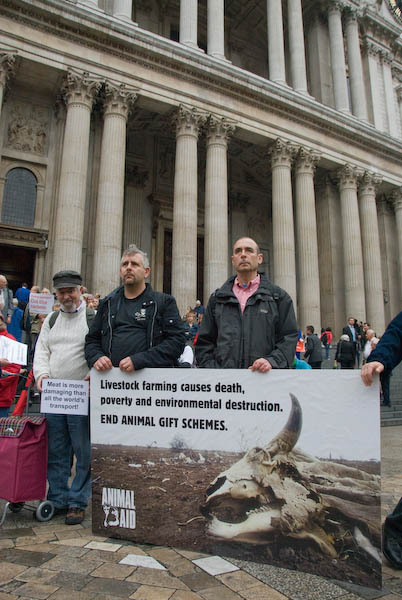
The ‘Cut The Carbon March’ organised by Christian Aid called for the UK and the world to take urgent action to reduce the carbon emissions which are leading to a catastrophic global warming which was already threatening the lives and livelihoods of many around the world, particularly in the Global South.

Clearly all countries needed to take urgent action to avoid the growing catastrophe, and countries such as the UK with higher per capita carbon footprints need to take a lead in this as well as helping other less industrialised countries to do so. We have benefited from a couple of hundred years of carbon-dirty industrial growth which has brought to world to the brink.

The marchers, including a number of international participants, had begun in Northern Ireland in July, moving on to Scotland, England and Wales on a thousand mile route through major cities which were listed on the back of the t-shirts worn by the marchers. The march was intended to convince people of the necessity to cut carbon emissions from the UK and globally. As well as marching there were events at their stops on the route, including a visit to the Labour Party conference in Bournemouth where they had met with then Prime Minister Gordon Brown.

Many others had joined the core marchers, walking with them for short sections of the route and providing hospitality at churches along the way. They were stopping in Battersea and taking part in an evening service in St Mary’s there before the final day of the march which was to end at St Paul’s Cathedral on October 1st.

I was late and the marchers had arrived at St Mary’s just I few minutes before me and were enjoying a rest in its riverside churchyard. Later some talked about the march and why they had given up their summer to take part in it as it was so vital that the UK and the world take serious action.

We were reminded that some of the world’s lower-lying countries were being threatened by the sea level rise from global warming, with ice-caps melting as a high Spring tide began to flood parts of the churchyard, but fortunately stopped with only a few large puddles at one side. But the sea-level will continue to rise and make some whole island countries uninhabitable as well as large areas of others already subject to flooding.

More recently we are also now seeing the effects of global heating and climate instability clearly in the UK, Europe and North America with record high temperatures, huge forest wild fires and odd weather patterns affecting crop yields. But the fossil fuel companies are still huge lobbyists and contributors to party funds and still our UK government, while paying lip-service to zero carbon in the rather distant future of 2050, continues to pump up the carbon with new coal, gas and oil exploitation. Total madness.

But this was a fine September evening and St Mary’s is a fine listed building and I was pleased yet again to take a tour inside and admire its architecture, fine monuments and modern stained glass windows for both William Blake and Joseph Mallord Turner who knew it well, as well as the riverside views.

More pictures on My London Diary


As well as the pictures you can see what I wrote about these events at the time near the bottom of the September 2007 page of My London Diary.


Food Sovereignty, Big IF & Naked Cyclists

Food Sovereignty, Big IF & Naked Cyclists: Saturday 8th June 2013 was another varied day of protests in London.


Food Sovereignty not Food Security – Unilever House, Blackfriars

Food Sovereignty, Big IF & Naked Cyclists

Friends of the Earth, War On Want and others held a protest outside Unilever House where David Cameron was addressing carefully picked delegates at his ‘Hunger Summit’. They were protesting against the ‘new alliance for food security and nutrition’, a special initiative launched by the G8 in 2012.

Food Sovereignty, Big IF & Naked Cyclists

Cameron’s ‘summit’ and the protest came before a G8 meeting and Unilever’s iconic London offices overlooking the Thames at Blackfriars, was particularly appropriate as Unilever, along with other global agribusinesses such as Monsanto and Cargill are the major beneficiaries of the ‘new alliance.’

Food Sovereignty, Big IF & Naked Cyclists

The G8 initiative will spend billions of dollars to finance the expansion of these agribusiness in Africa but damage existing landowners and farmers, who will either have to sign agreements to land grabs by the giant corporations and replace their traditional plants and seed with GM and other high-tech seeds and supplies or see their markets disappear.

Food Sovereignty, Big IF & Naked Cyclists

The initiative will marginalise small African farmers, driving them from their traditionally owned land, increasing unemployment and the movement to cities. As in India some will be driven to suicide as their only solution. It should increase agricultural output in the short term but most of it will be food for export or biofuels, and hunger will increase – along with the profits of the mega-corporations. Almost certainly all these technological fixes will in the long term fail, leading to further desertification.

African farmers need support that increases their economic, social and cultural resilience, methods to increase their productivity through simple low-tech improvements in land use, that preserve and improve the soil, and increase water retention, that improve traditional crop varieties by proven old-fashioned methods. Various projects have demonstrated the success of these approaches – but they fail to increase the profits of multinational companies so do not attract support from the G8.

Food Sovereignty, Big IF & Naked Cyclists

Almost 200 African groups signed a Statement By Civil Society In Africa which condemned the proposals, describing them as “a new wave of colonialism”, pointing out that they work to the benefit of the corporations and not for Africa.

This was a peaceful and family-friendly protest, with campaigners bringing containers with growing plants and baskets of fruit and vegetables to set up a small garden on the road island in front of the main entrance to Unilever House.

More about the protest and the Statement by Civil Society in Africa at No to G8 New Alliance on Food Security.


Big IF Solidarity Walk – Westminster to Hyde Park

The second protest I photographed was also about global hunger, with thousands marching in solidarity with the one in eight people around the world who go hungry and to demand that the G8 world leaders tackle the root causes of global hunger.

The problem isn’t about producing food as “The world produces enough food for everyone, but more than two million children die every year because they can’t get enough to eat.” The problem is the unfair distribution of wealth and power which means many of those who need food don’t get it, while others have more they can eat.

The walk to send a message to the G8 was supported by a wide range of organisations including Christian Aid, Oxfam, Cafod, Save the Children and many more who work in countries around the world, and many had begun the event by attending a service in a packed Westminster Central Hall in Westminster, the Methodist church where the first meeting of the UN General Assembly was held in 1946.

This wasn’t a march but a walk, with people taking a rather circuitous route and walking in small groups on the pavements, which made it rather more difficult to photograph.

More at Big IF Solidarity Walk.


World Naked Bike Ride – Marble Arch & Westminster

The World Naked Bike Ride is an annual protest against oil dependency and and the negative social and environmental impacts of a car dominated culture as well as a demonstration of the vulnerability of cyclists in traffic and to celebrate body freedom. It began in Spain in 2001 and has spread to London and round 70 other cities in over 30 countries.

In London it has usually attracted around a thousand cyclists, along with a few others on skateboards etc, and provides considerable interest, with crowds of tourists stopping to watch and to photograph, and although everyone around me seemed to be greatly amused, there seemed to be little or no appreciation of the reasons behind the protest.

Not all riders are naked for the event, some riding partially clothed. The dress code is that people should ride ‘as bare as they dare’ and only the wearing of footwear is compulsory for safety reasons. Many riders have some creative body paint, some with slogans on their body to promote the ideas behind the ride, and I’ve chosen images for this post that show these.

In 2013 the ride began at four different points, Marble Arch, West Norwood, Clapham Junction and near Kings Cross, with the routes converging on Westminster Bridge, from where they went on to ride to St Paul’s Cathedral and back through Holborn and Trafalgar Square to Hyde Park Corner.

I went to Marble Arch for the start of the event there and later took photographs on Westminster Bridge where the four groups were intended to meet up, but tho cyclists from Marble Arch were held up and arrived after the others had left.

It’s a ride that attracts considerably more men than women as riders, although my pictures might seem to suggest the opposite. There are several reasons why I find the women more interesting, partly because I think more of them make an effort with body painting and other ways to create an impression. It’s also rather harder to photograph nude male cyclists in ways that many publications would find acceptable, and my selection of images is largely for submission to agencies.

There are many more pictures on My London Diary at World Naked Bike Ride. At the top of each page of pictures I included the statement “These pictures include some nudity – don’t view them if this might offend you” above a long area of empty white space, with two links to either take viewers down the page to see them or back to the main June page.