Shaker Aamer, Raif Badawi & Climate Change: On Wednesday 17 June 2015 the weekly ‘Stand with Shaker’ vigil outside Parliament was visited by two of the new intake of MPs. Outside Downing Street human rights organisations took part in a national day of action calling for the release of Saudi blogger Raif Badawi. A mass lobby on climate change brought around 250 MPs out of Parliament to meet voters who were urging them to persuade our government to take a leading role in the forthcoming Paris climate talks and after the lobby there was a large rally on Millbank.
New MPs Stand with Shaker
Parliament Square
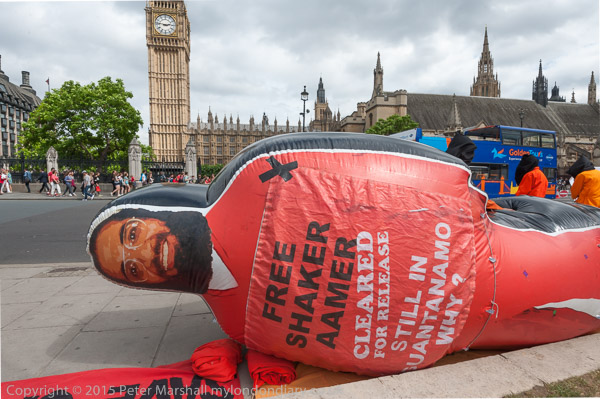
In 2015 the Free Shaker Aamer campaign was holding a lunchtime vigil on the pavement opposite Parliament every Wednesday when it was in session, calling for our government to urge the US authorities to release London resident Shaker Aamer still held in the illegal Guantanamo torture camp. Two newly elected MPs came to support the campaign.
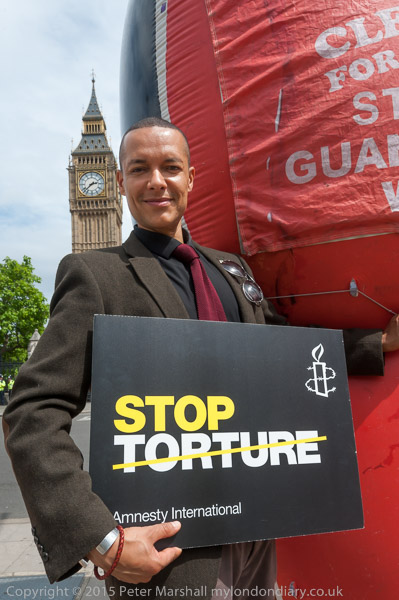
Aamer was one of the original residents brought to the camp in 2002 after being sold to the US Army by bandits in Afghanistan where he was working for a Muslim charity,. He was first cleared for release in 2007.
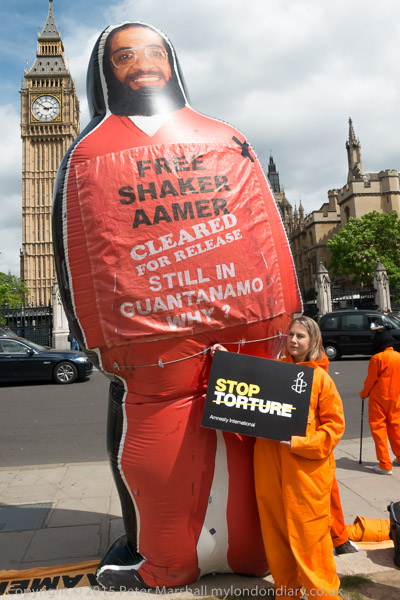
He remained held there years later, probably because he would be able to give evidence about his torture at Bagram and Guantanamo which would embarrass both US and UK security services. He was finally released in September 2015.
Support Saudi blogger Raif Badawi
Downing St

Human rights organisations including Index on Censorship, English Pen and the Peter Tatchell Foundation held a rally and handed in a letter to PM David Cameron calling on him to urge the Saudi government to release Saudi Blogger Raif Badawi.
Badawi was arrested in 2012 and convicted for founding a liberal web site which was alleged to be insluting Islam. Hia sentence was increased in 2013 to a 1 million riyals (£175,000) fine, ten-year in prison and 1000 lashes, a punishment he was unlikely to survive.
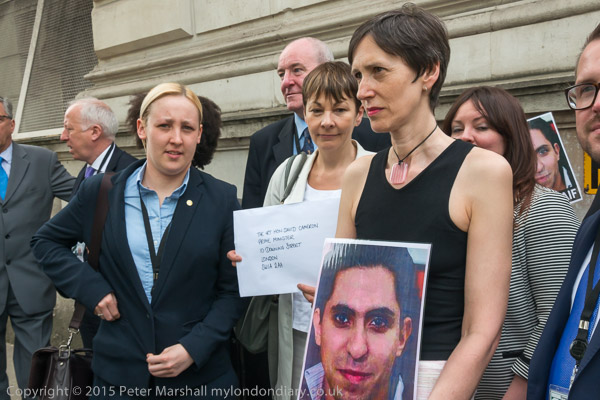
Badawi was flogged 50 times on 9 January 2015 and was due to be given another 50 lashes every Friday until the total was reached. But further floggings had been postponed so far as he had not recovered sufficiently.
Threats of flogging continued until at least 2016, but were delayed on health grounds sometimes only hours before they were to be carried out in what seems to have been a deliberate psychological torture. Finally he was released in 2022 but with a ban on travelling abroad until 2032. His wife and children fled the country and were granted political asylum in Canada in 2013.
Support Saudi blogger Raif Badawi
Climate Coalition Mass Lobby on Climate Change
Westminster & Lambeth
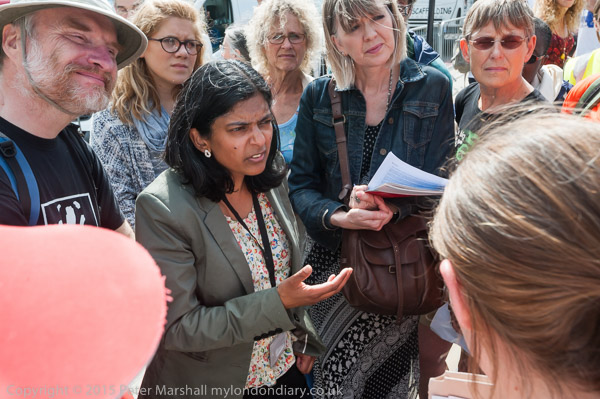
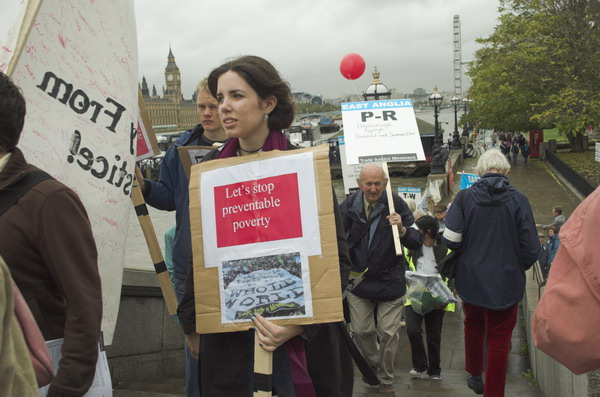
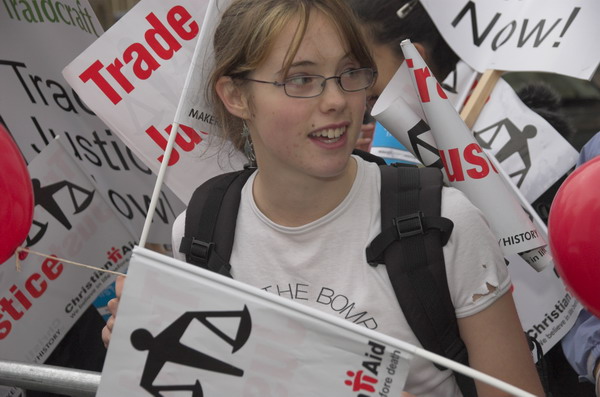
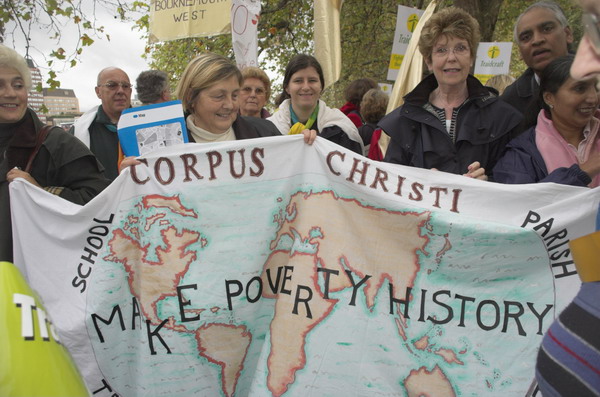
Thousands came to lobby their MPs, who met constituency groups either inside the Houses of Parliament or in a series of meetings spread out in Victoria Gardens, across Lambeth Bridge and on along the Albert Embankment.
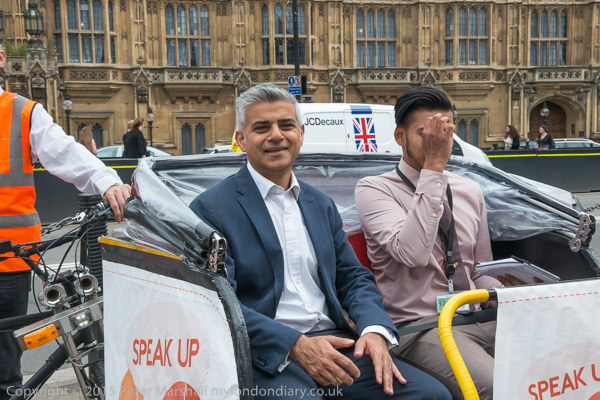
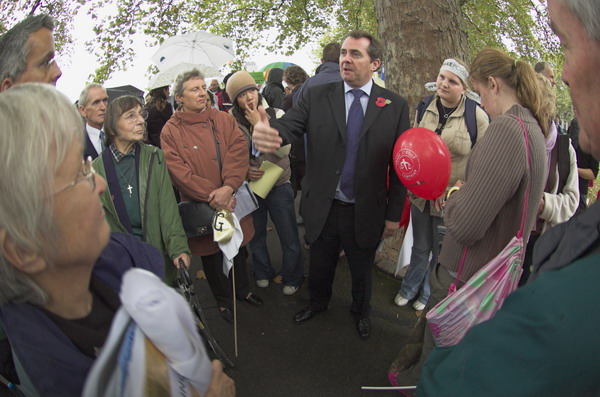
I listened in briefly to a number of these meetings as I was walking around to take pictures. Most MPs seemed aware of the need for action, but too many were making excuses for not being able to take the kind of urgent action needed, and some seemed to me to have a have a patronising attitude that would certainly have lost them my vote.
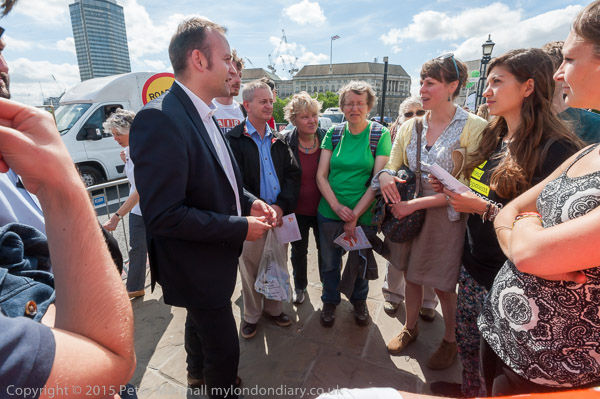
The only heated argument I saw was with Neil Coyle, MP for Bermondsey and Old Southwark. After talking with him on climate change, the conversation moved on to housing, with Coyle defending the indefensible actions of the Labour local authority in emptying out their council estates and handing them over to be developed for private sale.
Climate Coalition Rally
Millbank
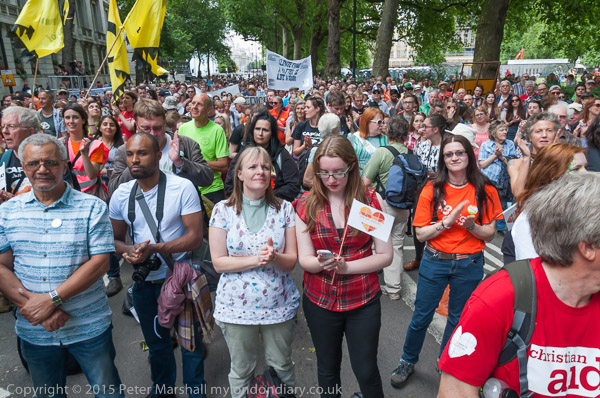
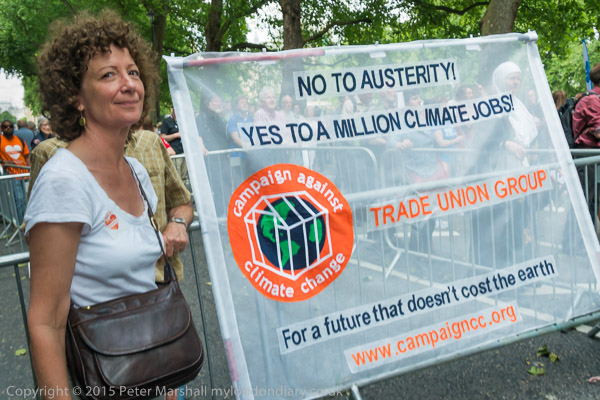
After the lobby, the crowds moved on to Millbank for a rally, though many who had come from more distant parts of the country had instead begun their long journeys home. As well as filling Millbank, others sat on the grass in Victoria Gardens, where they could hear the many speakers, though not see them or the giant screen on which they and some short films were shown.
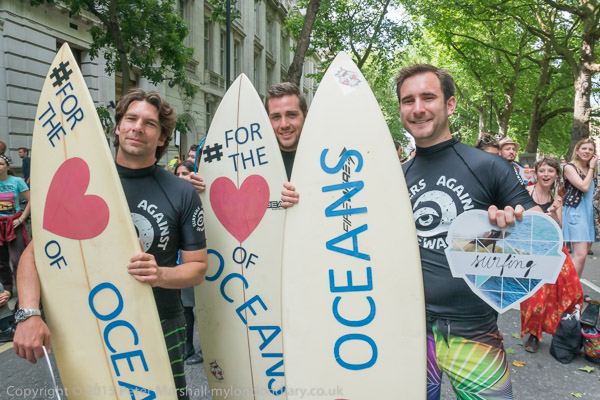

With more than a hundred organisations taking part in the lobby, there were rather too many speakers for me, along with a number of celebrities, some of whom had very little of substance to contribute.
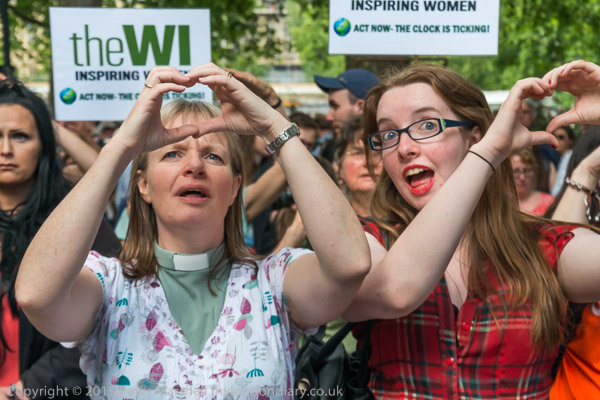
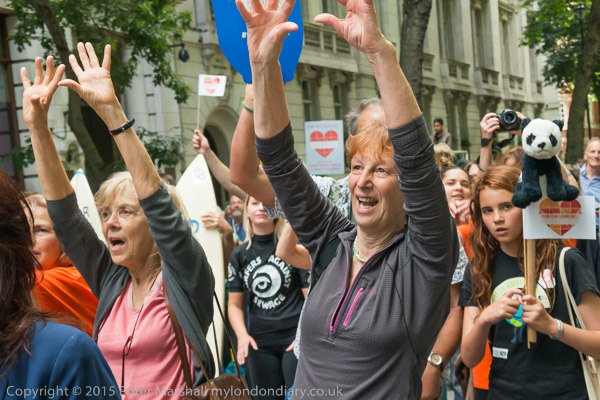
But there were others certainly worth listening to – and I name some and there are some photographs on My London Diary. But for me it was only the closing speech by Asad Rehman of Friends of the Earth which made a real attempt to tackle the political issues that are central to any effective action on climate.

Many more photographs on My London Diary at Climate Coalition Rally.
Flickr – Facebook – My London Diary – Hull Photos – Lea Valley – Paris
London’s Industrial Heritage – London Photos
All photographs on this page are copyright © Peter Marshall.
Contact me to buy prints or licence to reproduce.