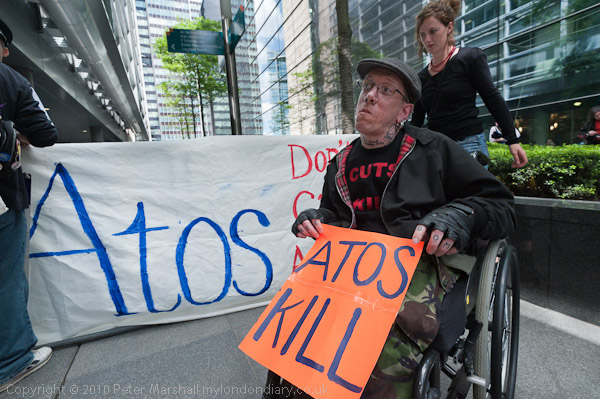
Atos Kills Disabled People – 2011

Atos Kills Disabled People - 2011
Protesers say Atos Kills Disabled People

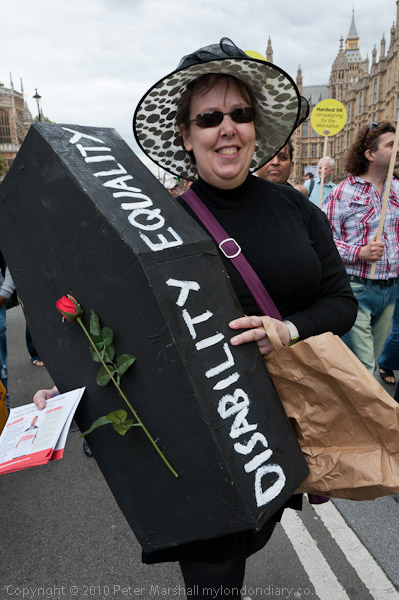
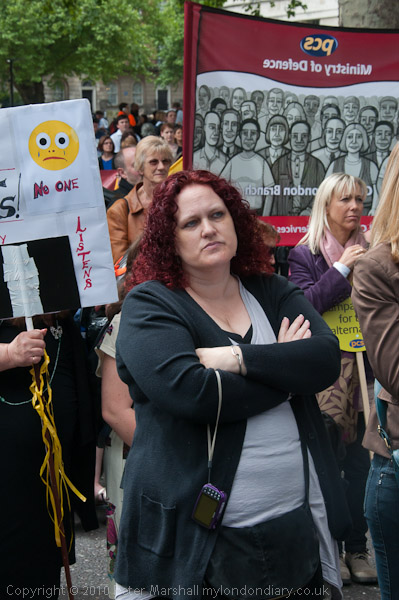
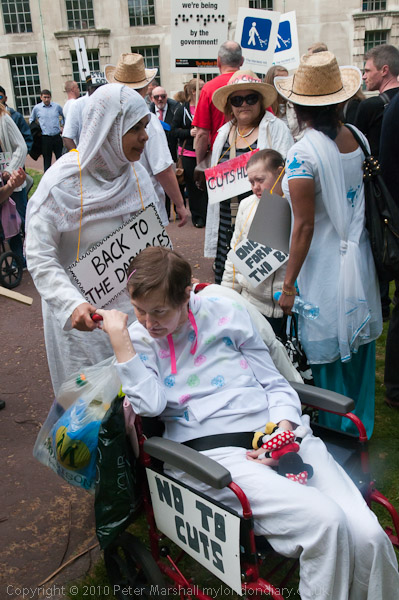
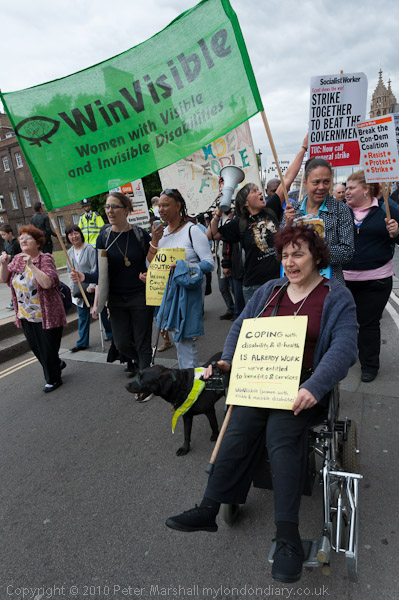
Atos Kills Disabled People: On Monday 9th May 2011 I photographed a London protest in a ‘National Week of Action Against Atos Origin‘ organised by disability activists, claimant groups and anti-cuts campaigners and supported by over 50 groups around the country.

Atos Kills Disabled People - 2011

There were around a hundred people, many with disabilities at the protest when I arrived outside the offices of Atos Healthcare in Triton Square, London. The coalition government was replacing Incapacity Benefit by Employment and Support Allowance (ESA). Atos were being paid by the government to carry out computer-based tests to assess whether disabled people were capable of working. Many people clearly unable to work were being labelled as ‘fit to work’ and their benefits stopped.

The tests were designed to misrepresent the situation of claimants, not recording their actual responses to questions but giving the people carrying them out a choice of stock phrases. Often the replies chosen did not properly reflect the situation of the claimant.
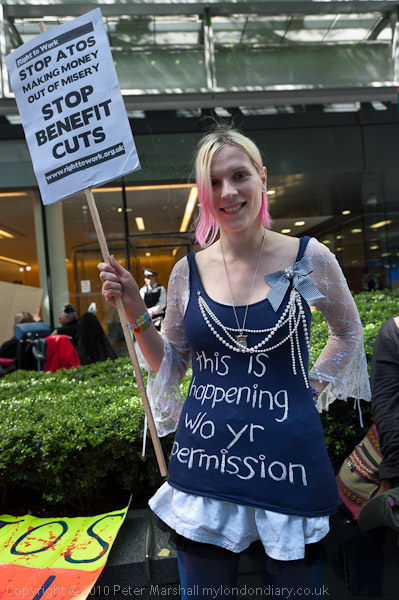
Atos Kills Disabled People - 2011

A report commissioned by the government had found that Atos was not carrying out the tests properly, but their contract was still renewed. Many of those carrying out the tests were not qualified doctors, and are only allowed a short time to reach a decisions on what are often complex cases. They were also set clear targets for the proportion of claimants they must fail.
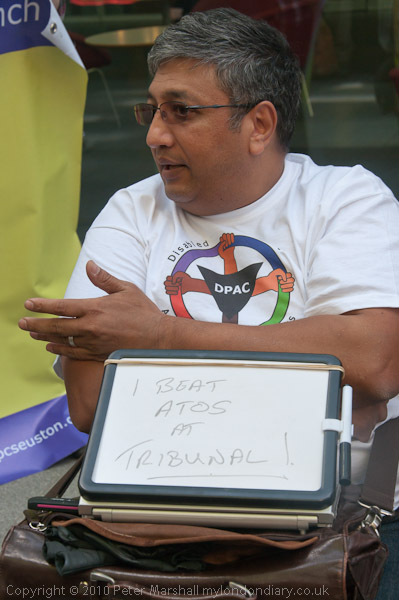
Atos Kills Disabled People - 2011

The design of the tests and the way they were being applied clearly discriminated against those suffering from mental illness and those with intermittent or fluctuating conditions. Many who are failed and refused ESA go to appeal and after some months a majority get their benefits restored – only to have them taken away again by another round of Atos testing. This cruel system had led to a number of those who had been refused benefits taking their own lives.
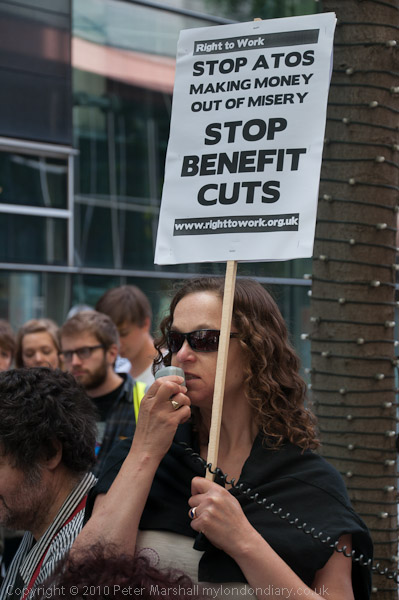
Among the groups taking part in the action were Disabled People Against Cuts, London Coalition Against Poverty, Mad Pride, Right to Work, Winvisible and Solidarity Federation.
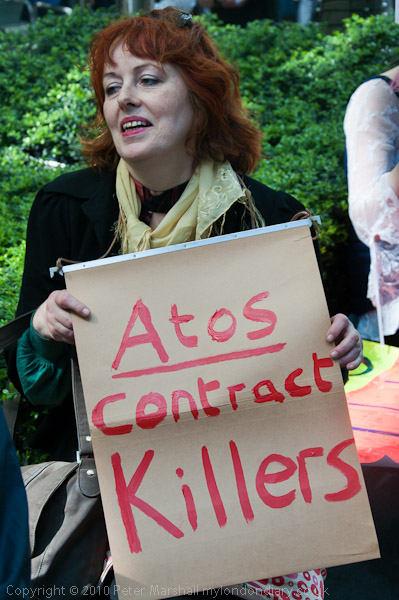
Atos Kills Disabled People - 2011

Many disabled people are unable to travel to protests like this because of their disability and the failure of our Underground and train systems to provide support for disabled travel. The support needed is still very patchy and often unreliable. As well as physical protests such as this, there were also on-line protests taking place during the week of actiona.

Atos Kills Disabled People - 2011

Other disabled people fear taking part in protests might prejudice their Atos assessments with assessors concluding if they were fit to protest they are fit to work. If better support was provided more would be keen and able to do so.

You can read more about the protest on My London Diary and see more pictures at Disabled Protest Calls Atos Killers


Southbank Centre

Urban Fox sitting on the edge of the gallery

On my way home from the protest I stopped and took some pictures here.

More at Southbank Centre.


FlickrFacebookMy London DiaryHull PhotosLea ValleyParis
London’s Industrial HeritageLondon Photos

All photographs on this page are copyright © Peter Marshall.
Contact me to buy prints or licence to reproduce.
Hardest Hit March Against Cuts – 2011

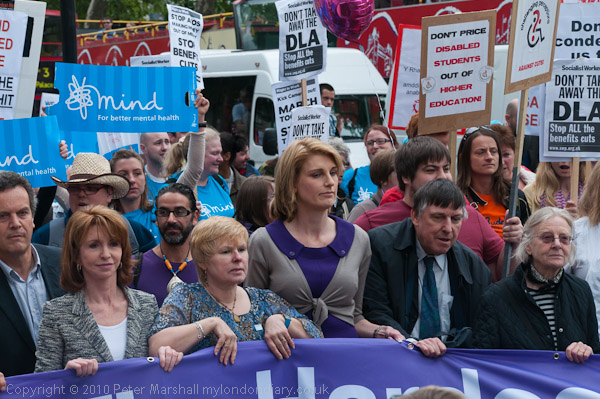
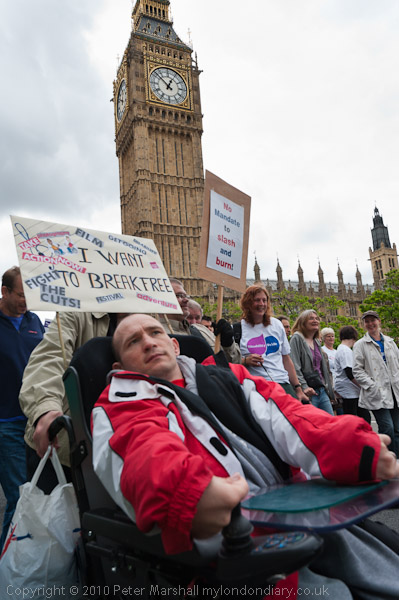
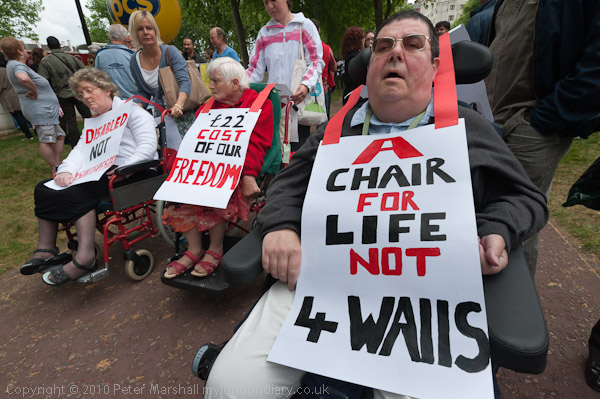
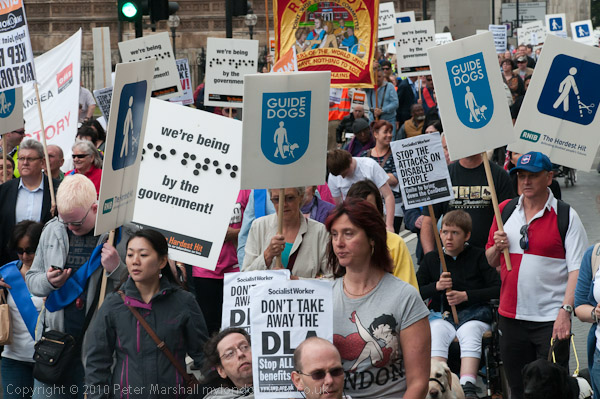
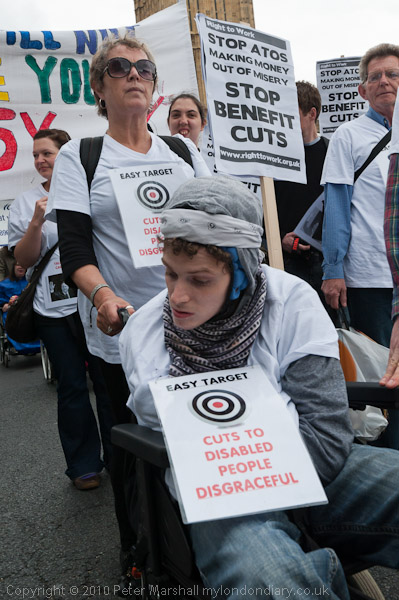
Hardest Hit March Against Cuts: On Wednesday 11th March 2011 around 10,000 people, many in wheelchairs came to march in London calling for an end to harassment and benefit cuts for the disabled.

Hardest Hit March Against Cuts - 2011

The Hardest Hit march was supported by a huge range of charities and organisations representing and supporting the physically and mentally disabled, including major unions such as PCS, UCU and Unite.

Hardest Hit March Against Cuts - 2011

The protest came a year after the formation of the coalition government led by David Cameron with Lib-Dem leader Nick Clegg as his deputy, with real power staying with the Tory majority and is now widely seen as a disaster for the Lib-Dems. Under Chancellor George Osborne the coalition plunged the country into the start of ten years of austerity, with particularly swingeing cuts to local government services as well as a drastic attack on all those claiming benefits.

Hardest Hit March Against Cuts - 2011

The cuts disproportionately affected the poor and the disabled while the wealthiest in our society were hardly if at all affected. In 2018 the UN special rapporter on extreme poverty concluded his visit to the UK by reminding us that ‘Poverty is a political choice‘ and that ‘Austerity could easily have spared the poor, if the political will had existed to do so’.

Hardest Hit March Against Cuts - 2011

For the disabled and those on benefits there were cuts and freezes and the situation was made worse by the ignorance and incompetence of Iain Duncan Smith, Secretary of State for Work and Pensions from 2010 to 2016.

It was under Labour in October 2008 that Work Capability Assessments were introduced but the numbers made before 2010 were relatively small and they were used for new Employment and Support Allowance (ESA) claimants and a small number of ESA reassessments. It was only in Spring 2011 under the coalition government that a programme began to move those on existing benefits onto ESA using the WCA tests administered by Atos began.

Already by 2011 there had been serious criticisms both of the unsatisfactory nature of the tests and of the failures by Atos to administer them correctly, and this protest march called both for an end to the cuts in benefits for the disabled and “and in particular for an end to the discredited and iniquitous testing regime administered by Atos Healthcare, which has replaced proper medical tests by a computer-based system that often ignores the actual needs of those being assessed, and has as unacceptably high error rate, with a majority of appeals against its assessments succeeding.

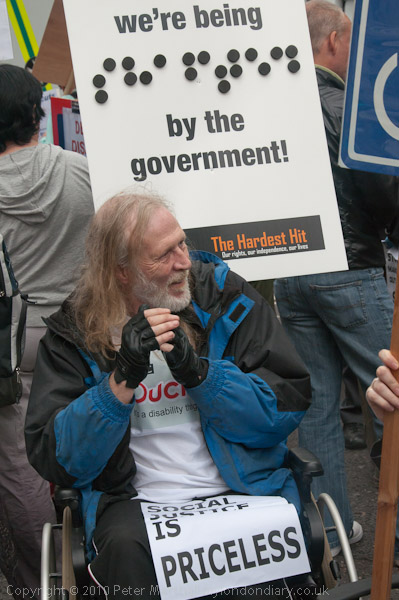
The Braille spells out SHAFTED

Despite the huge body of evidence and the many deaths the system caused, only minor changes were made and it was not until 2014 that the contract with Atos was ended, only for them to be replaced by Maximus who carried on the same way. Atos, now renamed IAS, remains now a part of the assessment system for ESA, Universal Credit and PIP along with Maximus and Capita.

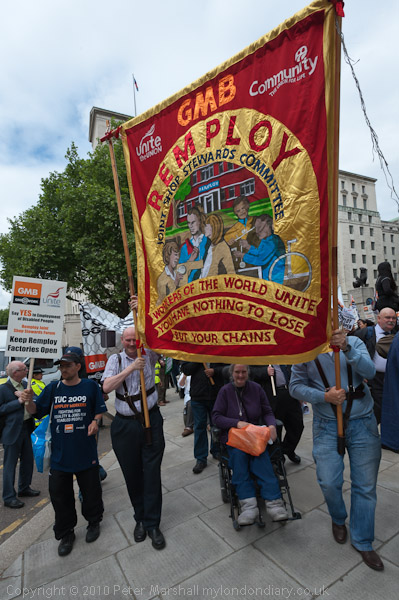
Both New Labour and the Coalition made cuts in many positive projects and organisations set up to help the disabled. One of these was Remploy, whose last state-run sheltered factory set up to employ disabled labour closed in 2013 with the loss of over 1700 jobs. It is now a part of Maximus.

This protest got more media attention than most, largely because of the presence among those leading the march of Sally Bercow, the wife of the then Speaker of the Commons, and actress and activist Jane Asher, president of three of the organisations involved, Arthritis Care, National Autistic Society and Parkinson’s UK. It was followed by a mass lobby of MPs.

Since then there have been many more protests against the unfair treatment of the disabled as various benefits have been scrapped and Universal Credit has led to further problems, but nothing on this scale. Disabled people have not only suffered most they have also become some of the more active protesters, particularly led by groups that were on this march including Disable People Against Cuts (DPAC), Mental Health Resistance Network (MHRN), Winvisible, Black Triangle and others.

This ‘Hardest Hit’ march came during a ‘National Week of Action Against Atos Origin‘ organised by disability activists, claimant groups and anti-cuts campaigners and two days earlier they had protested outside the offices of Atos Healthcare in London. You can see more on My London Diary in Disabled Protest Calls Atos Killers.

More at Hardest Hit March Against Cuts.


Discriminatory Welfare Reforms 2016

SNP MP Tommy Sheppard speaking

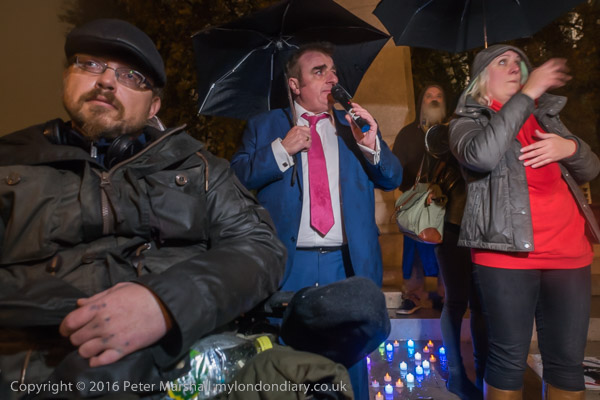
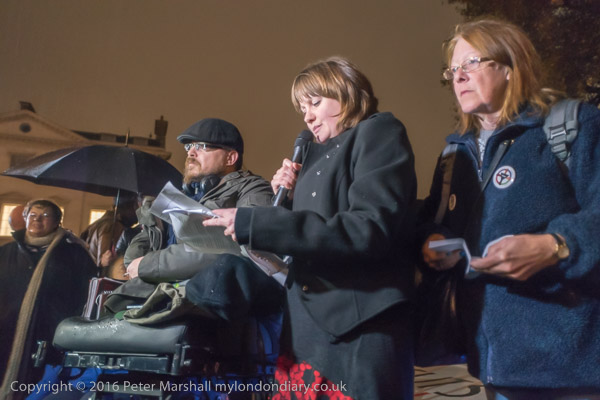
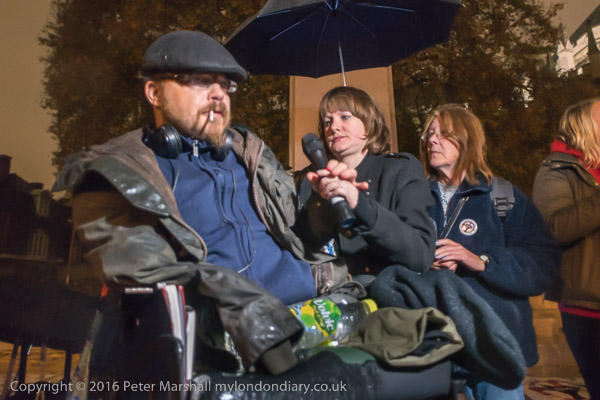
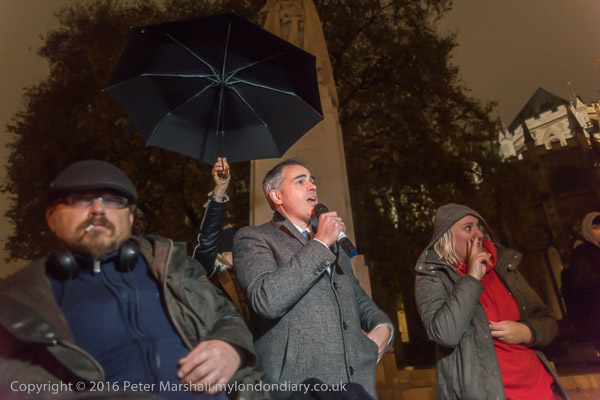
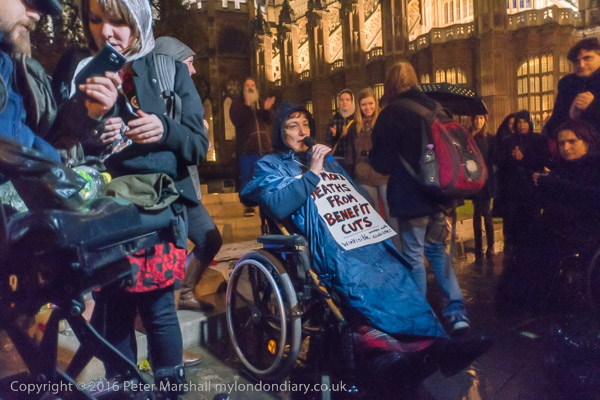
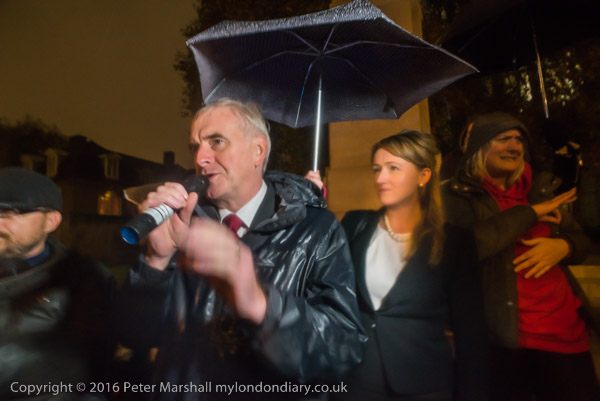
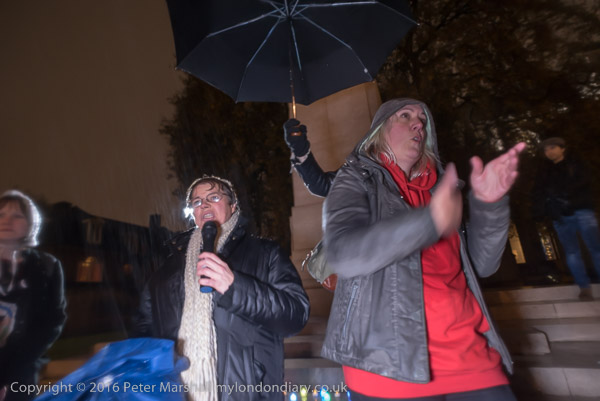
Five years ago it was a cold, wet and windy night on Wednesday 16th December as I tried to photograph a protest in Old Palace Yard opposite the Houses of Parliament by Disabled People Against Cuts and Black Triangle as inside Tory MPs were voting for the Welfare Reform and Act 2016 which abolished the work-related activity component of the Employment and Support Allowance for new claimants from April 2017.

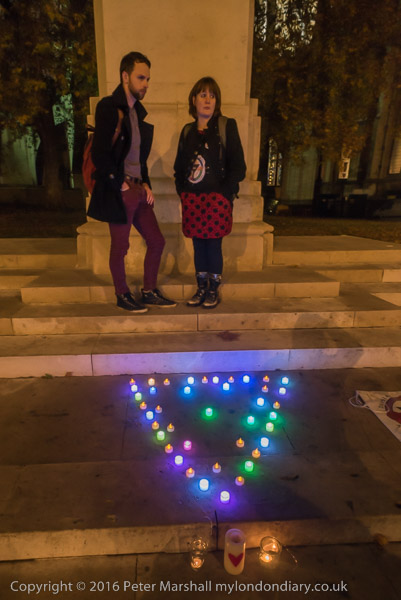
Candle tribute to DPAC co-founder Debbie Jolly

ESA is a benefit for those who have a health condition or disability which limits their ability to work. To claim it people have to undergo a Work Capability Assessment, which either find them fit for work and so not eligible, decides they should go into a group which has to undertake ‘work-related activity’ which might at some later date make them capable of work or puts them into a support group where they are not required to undertake such activities.

Equivalent measures were also introduced for those who have been transferred to Universal Credit, and mean that those who have to undergo work-related activities will get roughly £30 a week less, a huge proportion of their benefits which would go down from £102 to £73 per week. The government claimed that this will “remove the financial incentives that could otherwise discourage claimants from taking steps back to work” and when proposed said it would save £640 million a year by 2020-21.

Andy Greene of DPAC chaired the event

The House of Lords amended the bill to remove the cut, but the amendment was overturned by the Tory majority in the House of Commons.

Green Party co-Leader Jonathan Bartley

The protest came after the report of a United Nations Convention on the Rights of Persons with Disabilities (UNCRPD) inquiry had published a report condemning the ‘grave and systematic violations of disabled people’s rights’ which had resulted from the UK government welfare reforms.

Claire Glasman of WinVisible speaking

The event also included a vigil with candles and a silence in memory of one of the co-founders of DPAC, Debbie Jolly who had died the previous week. The group was founded to campaign against the unfair Work Capability Assessments in 2010. Unsound in their nature the tests were conducted by largely unqualified staff working with incentives and targets to fail claimanst by commercial companies including Atos.

John McDonnell MP with Rebecca Long-Bailey holding an umbrella

There was a long list of speakers including SNP MP Tommy Sheppard, Labour Shadow Chancellor John McDOnnell, Green Party co-leader Jonathan Bartley, Claire Glasman of WinVisible and John McArdle of Black Triangle and I tried hard to take photographs and keep my cameras and flash unit and LED light as dry as possible. The LED light was really not powerful enough except at very close distances and there was very little ambient light in the area. I was having problems taking pictures and these were not helped when at a critical point the six AA batteries fell out of the LED unit as I had forgotten to fix the back in place, and rolled across the pavement and into the crowd listening to the speeches. Fortunately those around me picked them up and handed them back to me.

This wasn’t an occasion for great pictures, but I was pleased to have been able to produce a reasonably decent set of images despite the weather and the lousy light.