Christian Aid Sponsored Walk – London Churches: Soon after we moved to our present address in 1974, Linda took over as Christian Aid organiser for the area, only retiring from this in recent months. Over the years she has gone on a number of sponsored walks for them and some related organisations as well as organising some in our area.
I’ve often walked with her on these, as well as sometimes sponsoring her, largely to keep her company, but sometimes to make sure she didn’t get lost despite the clear maps given to walkers and the large numbers of people following the walks. But also because the routes took you to and past some interesting places and sometimes into churches or areas of them seldom open to the public.
Although I have had a great interest in architecture I’ve never had a great interest in photographing church interiors, partly because they have been so much photographed by others, and the photographs I made on these walks were very much pictures on my days off. Often I carried very little equipment, though Sunday 20 May, 2007 was something of an exception as together with my Nikon D200 I had Nikon wide and telephoto zooms and a fisheye.
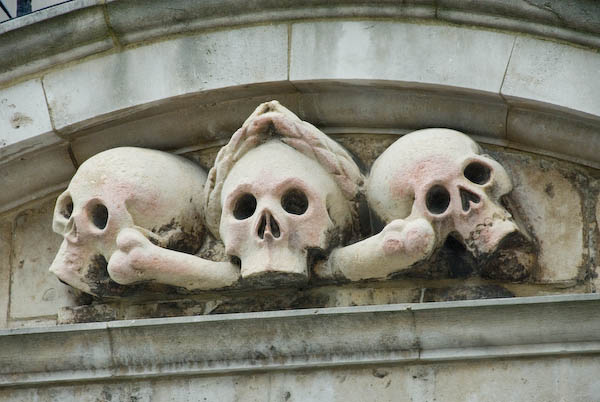
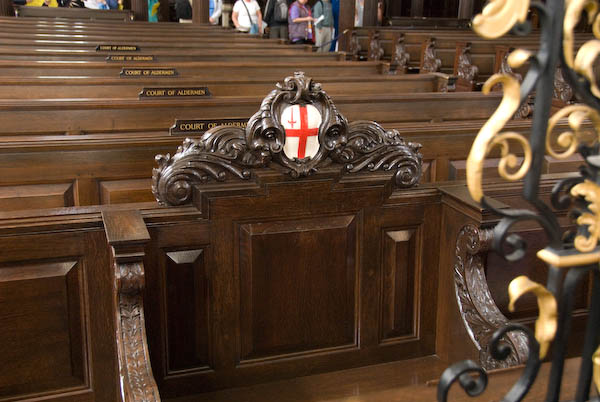
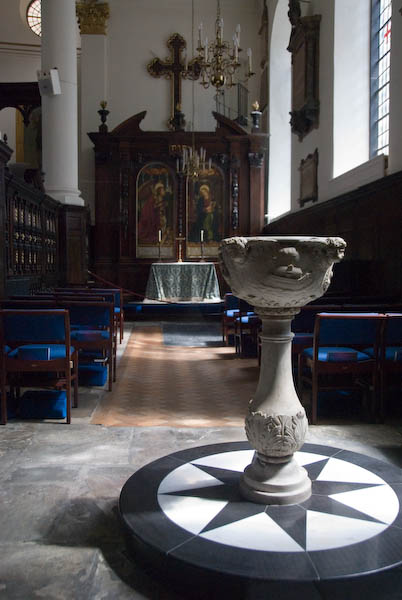
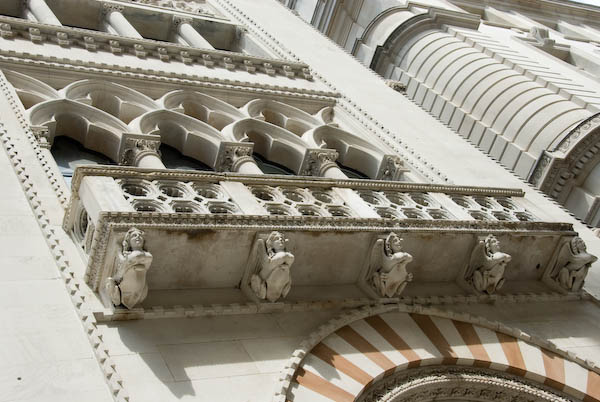
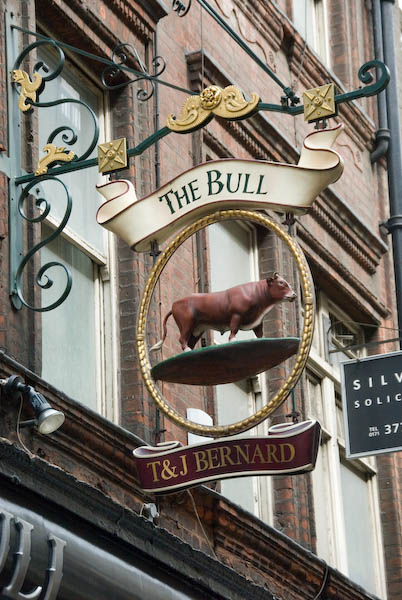
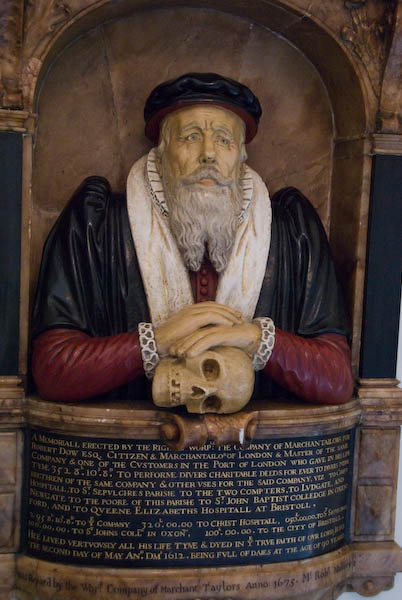
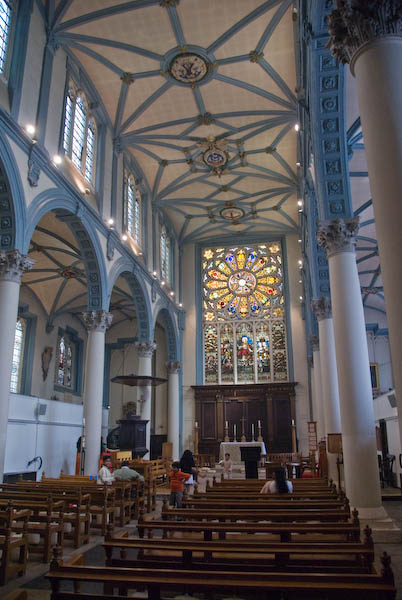
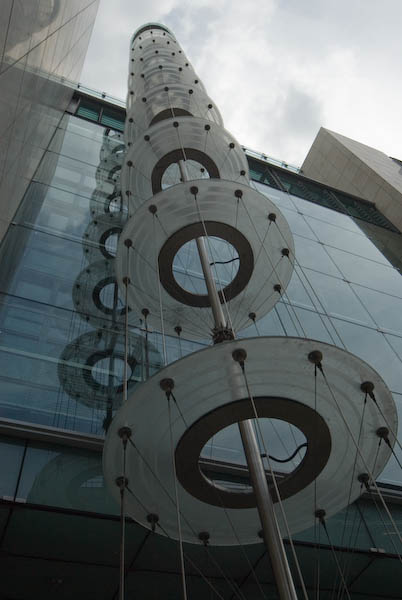
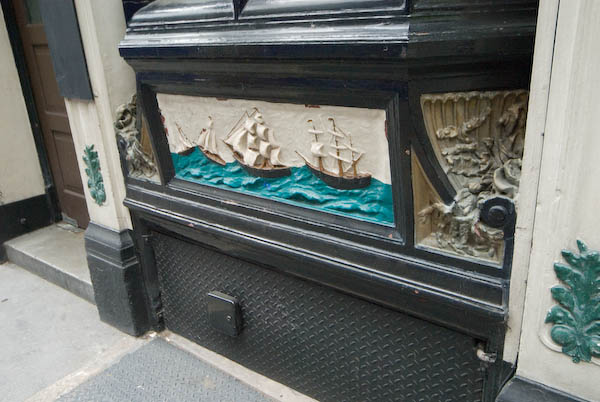
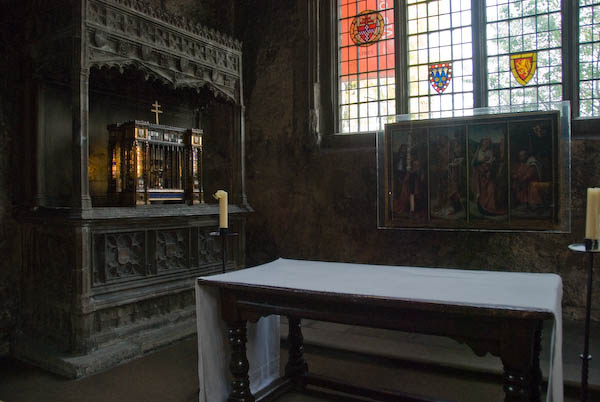
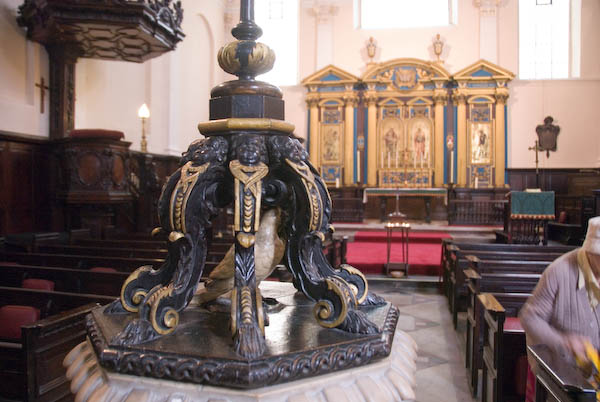
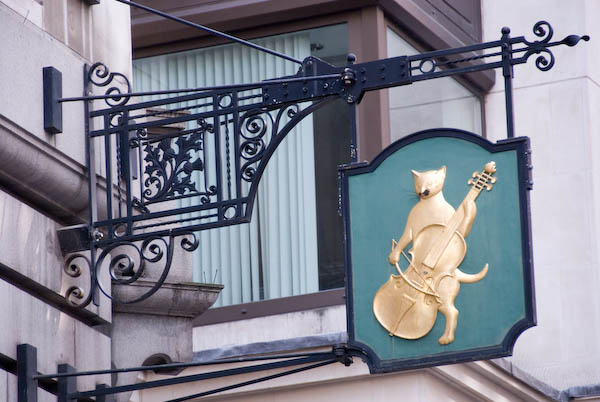
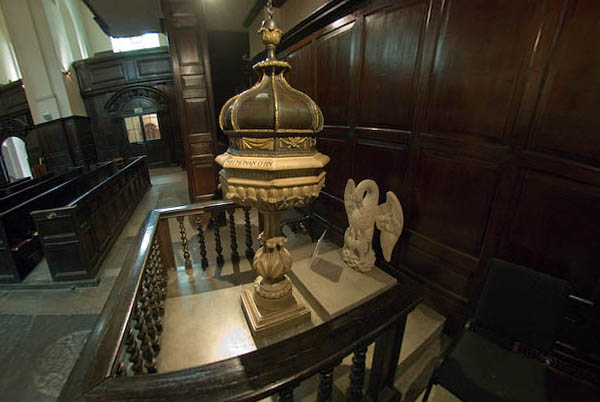
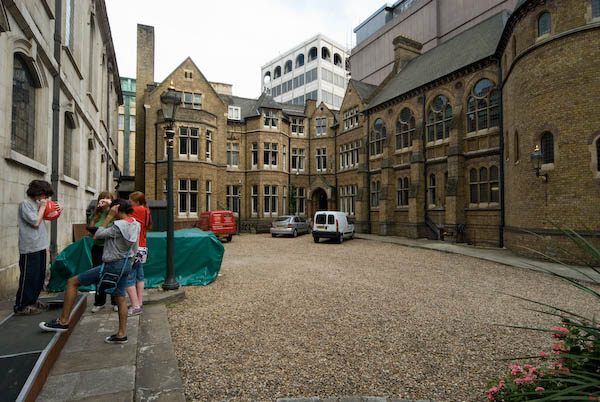
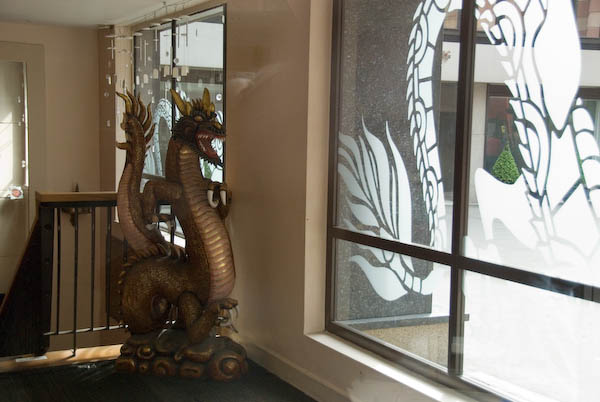
On My London Diary you can see over a hundred pictures I made on the walk, some of very well known and much photographed parts of the City of London, others less so. There are captions identifying most on those pages, but here I’ll post them without them – and just a couple of clues to the more difficult.
The plaque marks where Dositey Obradovich, first Serbian Minister of Education lived in London in 1784The bird a pelican, though to me it looked like a swan.
If you can name all these I’ve posted above, you must surely be a certified London Green Badge Guide – and I think anything over half shows a fairly intimate knowledge of the City. I think all the answers are in my post on My London Diary at Christian Aid walk – London churches.
And finally, one I can’t remember where I found it – perhaps someone can tell me in a comment.
Stamford Brook, Ravenscourt Park and a Bull: My photographs on Sunday 7th January 1990 began with a couple of views of the Thames though the window of my District Line train which I’ve not put online, but my walk started after I got off at Stamford Brook station and walked south down Goldhawk Rd.
This fine house at 397-399 attracted my attention. It had been Grade II listed in 1976, but the listing text was unusually vague about its date, calling it “Early to mid C19” and the Westcroft Square conservation area document is equally vague.
Beyond the house is a large noticeboard for ‘Z GREGORY BROTHERS, BUILDING CONTRACTORS’ at 399a, still there and I think only the phone number has changed, and another fairly grand semi-detached house which I think are late Victorian.
St Peter’s Square, Hammersmith, Hammersmith & Fulham, 1990, 90-1d-53
Since I was so close I couldn’t resist another short visit to St Peter’s Square south of the main road which changes its name here from Chiswick High Road to King Street. After the county of London was formed in 1889 this was the boundary between London and Middlesex and it is now the boundary between the London boroughs of Hounslow and Hammersmith & Fulham.
I’d photographed this square fairly extensively the previous month – see my post here) and only stopped to take a handful of pictures – this the only one online – and I was rather pleased with it.
Back on the main road I photographed the corner of Goldhawk Road and King Street, known as Young’s Corner and, as a plaque at first floor level also informs us, ‘REBUILT 1894’, though I’m rather surprised the architect wanted his name on the rather drab two storey buildingon the corner. But at least it doesn’t completely hide the much grander Victorian building at 417 Goldhawk behind behind with its slim turret – and it is perhaps this building for which the architect was claiming credit rather than the shop.
Grocer John Young had leased a shop here in 1830, and it later also became a post office. When at his death in 1860 his youngest son Charles Spencer Young took over the business he eventually turned it into a shop to display prints as a successful picture dealer. When horse-drawn trams ran to here in 1882, the tramway stop was named Young’s Corner.
King St, Stamford Brook, Hammersmith & Fulham, 1990, 90-1d-56
A fine row of three shops at 352- 356 King Street. At left is a basic and rather ugly more modern building – described in the conservation area document as “modern infill of no merit and bulky appearance“.
Ravenscourt Park, Hammersmith & Fulham, 1990, 90-1d-45
Ravenscourt Park is not just an Underground station, but a decent sized park with a lake fed by Stamford Brook, which originally was part of a moat around the manor house of Palingswick (or Paddenswick) Manor. It and the area got its name after the house was bought in 1747 by Thomas Corbett who renamed it Ravenscourt, thought to be a not very good pun on his name – ‘corbeau‘ being French for raven.
I hardly went into the park, and this house is 260 King Street.
The house at 260 King Street is at the left of this picture, followed by a row of shops including one of more interest to me than most, Mac’s Cameras. Max Irming-Geissler set up the shop here in the late 1950s and it continued more or less until his death in 2012. It was a great place to look at a window full of second-hand cameras and lenses, though I don’t think I ever actually bought anything there.
The Bull, Ravenscourt Arms, King St, Hammersmith, Hammersmith & Fulham, 1990, 90-1d-31
This Grade II listed black bull was created by Obadiah Pulham of Pulham & Son in Woodbridge, Suffolk, a well-known maker of garden ornaments, grottoes and follies. It is almost certainly made from Pulhamite, their own proprietary artificial rock, similar to the better-known Coade stone. I think it might actually have been William Lockwood’s Portland Stone Cement. James Pulham was an apprentice to Lockwood and became manager of Lockwood’s Spitalfields office around 1820 with his brother Obidiah as his assistant.
It was created as a pub sign for the Black Bull coaching inn at 122a Holborn and gets a mention from Dickens in Martin Chuzzlewit published in 1843. The pub was demolished in 1904 for an extension to Gamages but the bull was saved by Hammersmith MP Sir William Bull to put above the entrance to his law firm in King Street.
When these offices were demolished it was located outside a 1960s pub, at 257 King Street, a short way down Vencourt Place. The pub later changed its name from the Ravenscourt Arms to the Black Bull. The pub closed around 2018 but it and the bull are I think still there.