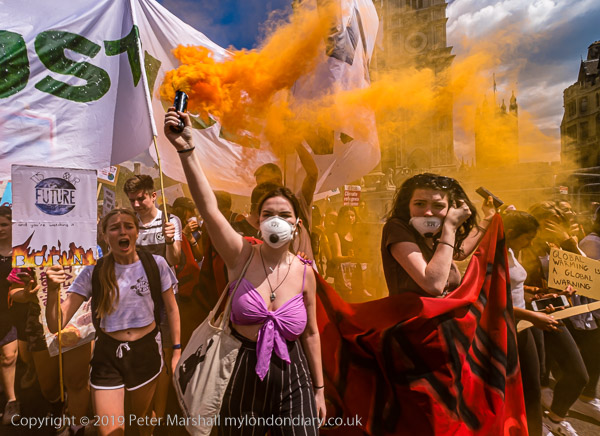
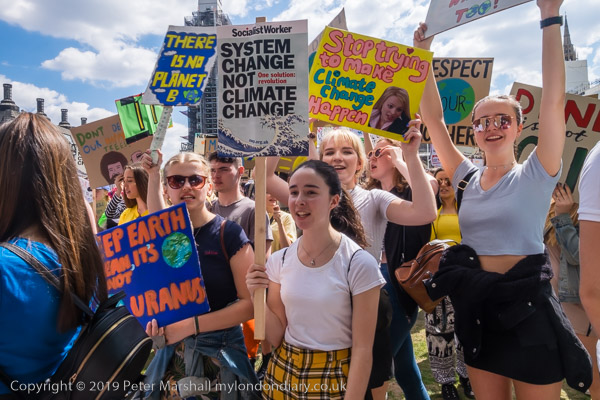
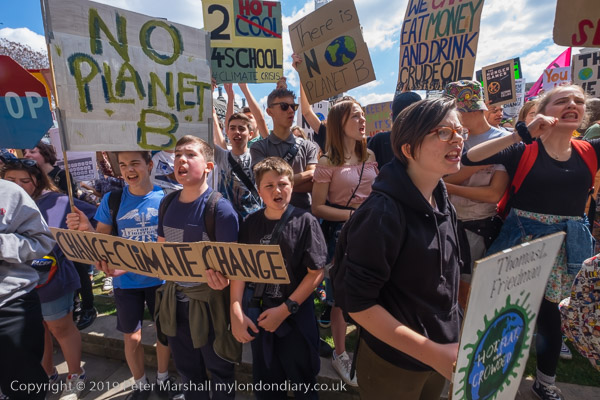
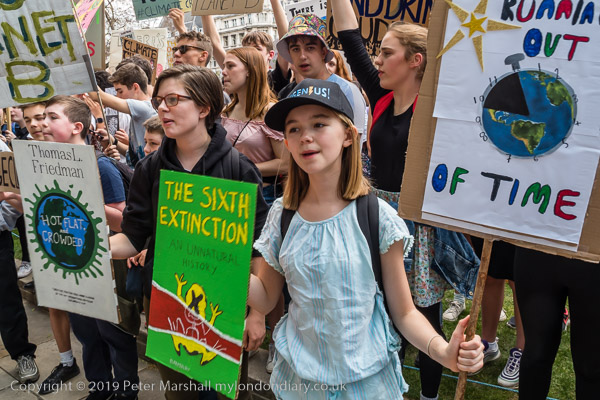
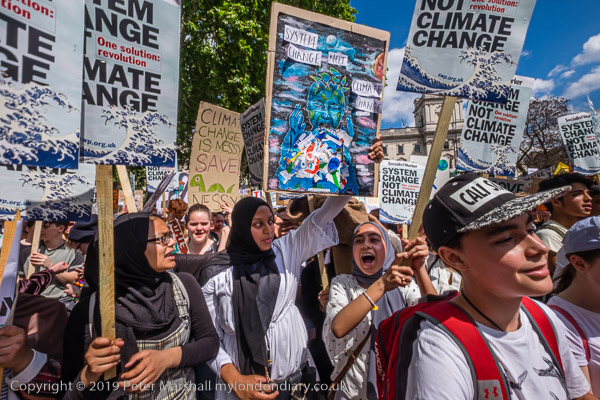
Youth Strike for Climate: London, Friday 24 May 2019
As we are expecting record May temperatures in the next few days and a summer with more deaths than ever from excessive heat, it is abundantly clear that the response of governments and politicians around the world to the climate crisis has for many years been woefully inadequate – and continues to be so.
Of course many of us have been pointing this out for many years, stressing the need for drastic changes to move away from the use of fossil fuels. As well as a huge shift to renewable energy this would also have needed dramatic changes in lifestyle in the industrialised countries and a move away from the politics and economics of greed and inequality.
Back in 2019 many young people saw we were heading towards catastrophe and failing globally to take effective steps to ameliorate the unavoidable crisis. They face a future world where temperatures will be generally several – perhaps five – degrees higher and our current global weather systems will be replaced by more extremes, with even more common fires and floods.
The younger you are now, the worse the problems will get in your lifetime, so it is hardly surprising that the young are more concented, and that many thousands around the world took part in a global climate strike against the lack of action by governments worldwide to combat the climate crisis in London in May 2019.
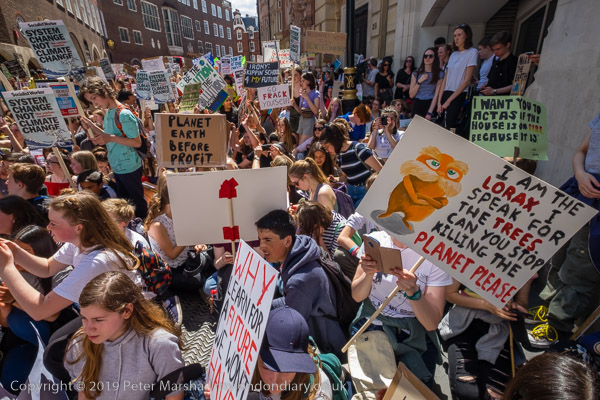
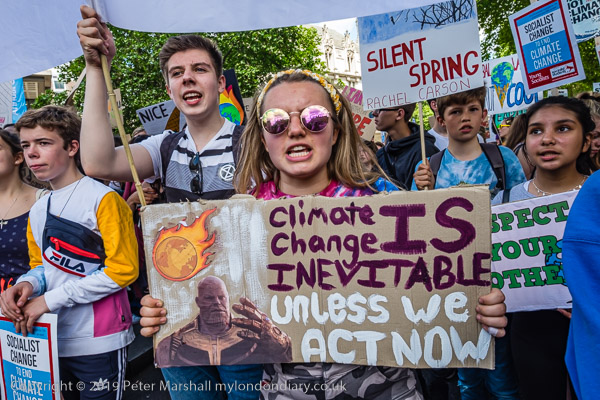
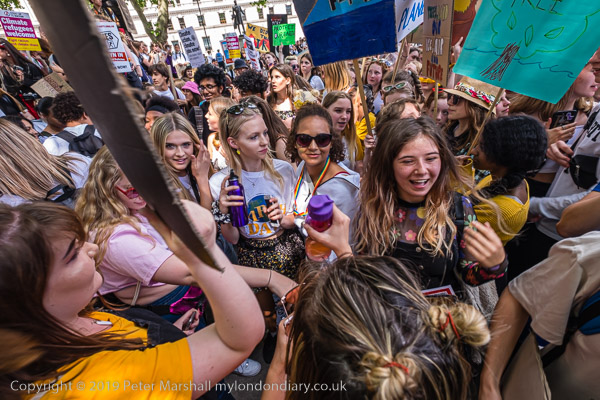
It was a protest with a great deal of energy, with a large crowd of mainly school students meeting in Parliament Square before marching past several ministries and staging a sit-down outside the Ministry of Education demanding that climate change becomes a vital aspect of the curriculum.
A crowded sit-down on the street at the Education Ministry
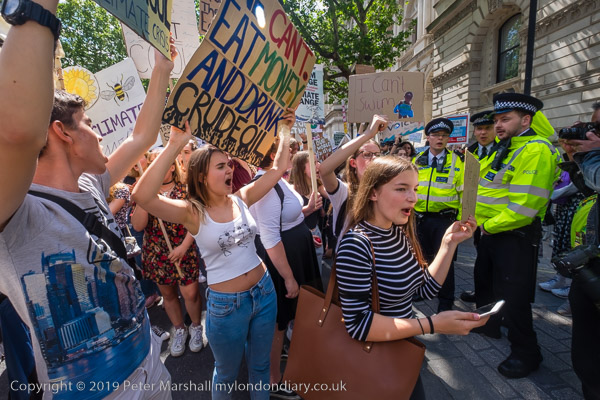
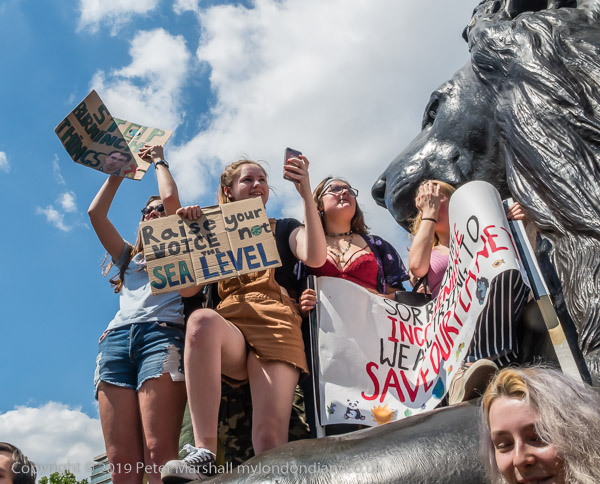
Clearly many school art departments were already getting involved, with protesters carrying an unusually numerous wide range of placards, for once hugely outnumbering those mass-produced by the Socialist Workers Party.
A brief protest at Downing St
From there they marched back up Whitehall past Downing Street to hold a rally in front of Nelson’s Column, then returning to protest at the Department for Business, Energy & Industrial Strategy and finally going back to Parliament Square.
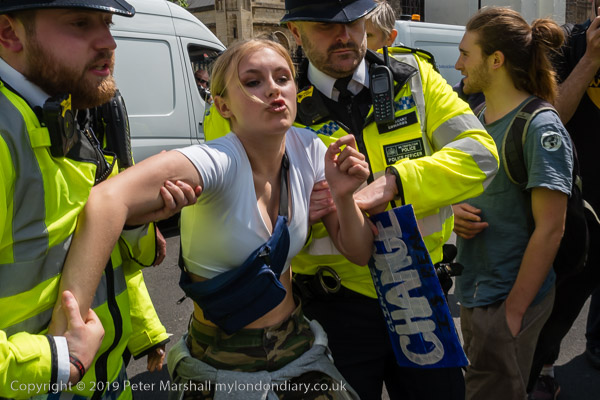
By then I think some police tempers were getting a little frayed and some students were manhandled rather aggressively off the road – and at least one minor was arrested.
I’d got tired with some often rather fast marching and the protest was still continuing when I decided it was time to go home.
Martydom of Ali & Cut the Carbon: Two unconnected events in London on Sunday 30th September 2007. I photographed a Muslim festival in Park Lane before making my way to Battersea where a long march organised by Christian Aid around Britain was resting before its final push to the City of London calling for urgent action to cut our carbon emissions. Sixteen years ago it was already clear we needed to do this to avoid climate catastrophe – but our government has clearly not yet got the message with its recent decisions, including giving the go ahead to exploit the Rosebank field.
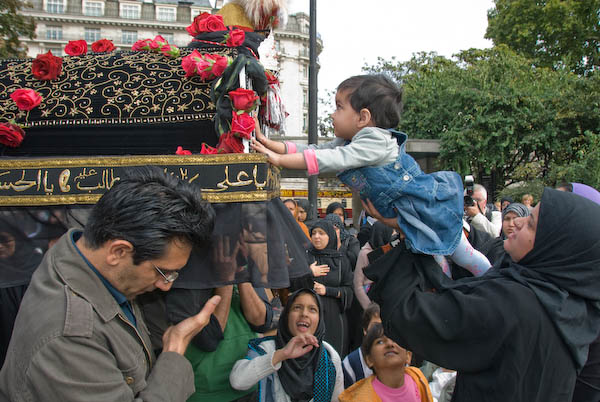
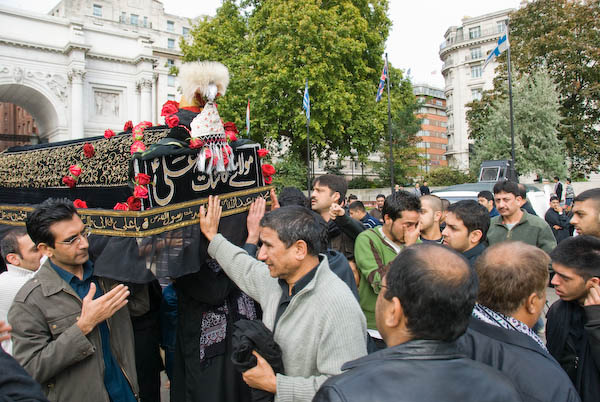
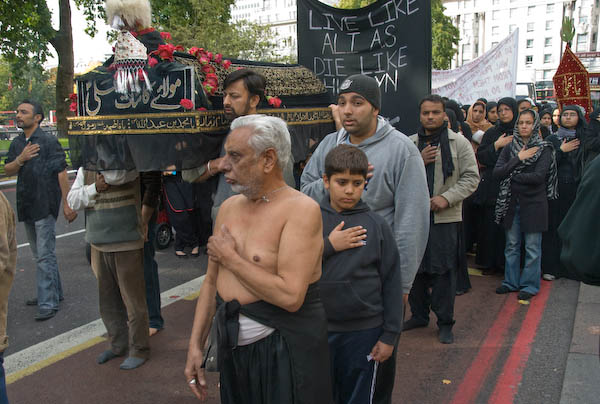
Mourning the Martrydom of Ali – Marble Arch
Ali Ibn Abi Talib grew up in the household of the prophet Muhammad and was the first male to profess his belief in his guardian’s divine revelation.
Later he married Muhammad’s daughter Fatimah and became a great warrior and leader and also one of the foremost Islamic scholars. He was made Caliph after the previous Calip was assassinated, and was then himself assassinated while praying in the mosque at Kufa, Iraq dying a few days later on the 21st of Ramadan in 661CE.
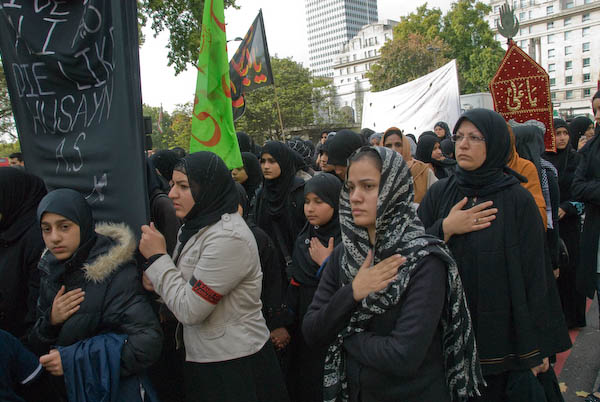
Revered by all Muslims, he is particularly celebrated by Shia, who regard him as second only in importance to Muhammad, and celebrate his martydom annually, including in a colourful march on the streets of London.
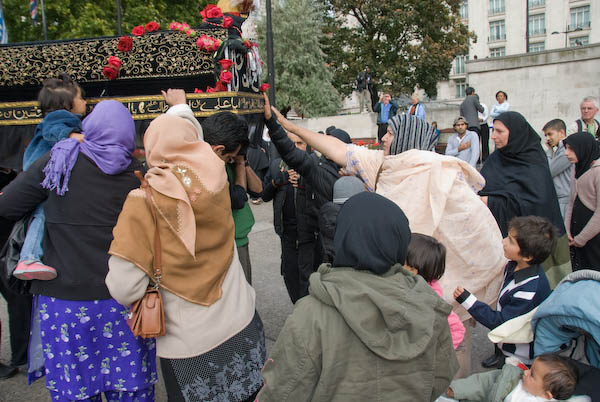
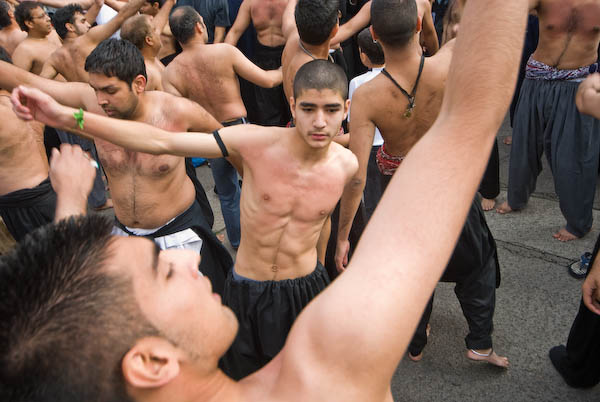
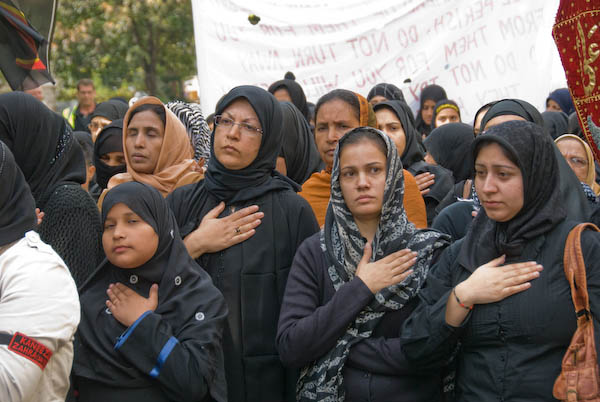
They gathered in front of Marble Arch for a lengthy period of mourning before a ceremonial coffin was carried out and men and women rushed to touch it. People began to beat their breasts, the men with extreme force and the women very much more decorously.
Eventually they formed into a procession and moved off down Park Lane, with much continued mourning and beating of breasts, led by a tall banner about Ali, then the men, followed by the ceremonial bier and finally the by the women with more banners.
Although the men were happy to be photographed, some were concerned that I also photographed the women taking part in this and other similar events. But after putting the photographs from events like this on-line I received e-mails from some of the women in them thanking me for having recorded their participation.
I left the marchers as they moved down Park Lane. The procession continues for some hours, moving slowly and then returning to Marble Arch but I had to go to Battersea.
Cut The Carbon March: Christian Aid – St Mary’s Battersea
The ‘Cut The Carbon March’ organised by Christian Aid called for the UK and the world to take urgent action to reduce the carbon emissions which are leading to a catastrophic global warming which was already threatening the lives and livelihoods of many around the world, particularly in the Global South.
Clearly all countries needed to take urgent action to avoid the growing catastrophe, and countries such as the UK with higher per capita carbon footprints need to take a lead in this as well as helping other less industrialised countries to do so. We have benefited from a couple of hundred years of carbon-dirty industrial growth which has brought to world to the brink.
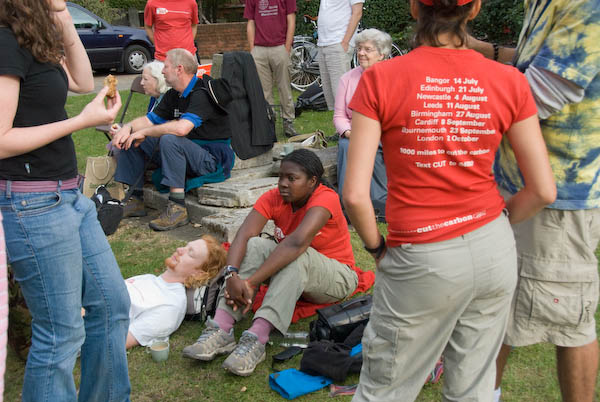
The marchers, including a number of international participants, had begun in Northern Ireland in July, moving on to Scotland, England and Wales on a thousand mile route through major cities which were listed on the back of the t-shirts worn by the marchers. The march was intended to convince people of the necessity to cut carbon emissions from the UK and globally. As well as marching there were events at their stops on the route, including a visit to the Labour Party conference in Bournemouth where they had met with then Prime Minister Gordon Brown.
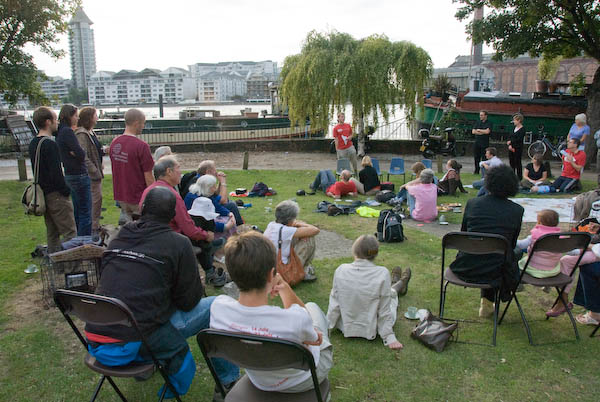
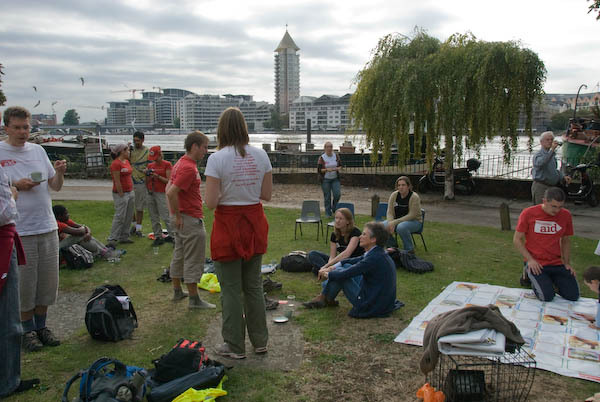
Many others had joined the core marchers, walking with them for short sections of the route and providing hospitality at churches along the way. They were stopping in Battersea and taking part in an evening service in St Mary’s there before the final day of the march which was to end at St Paul’s Cathedral on October 1st.
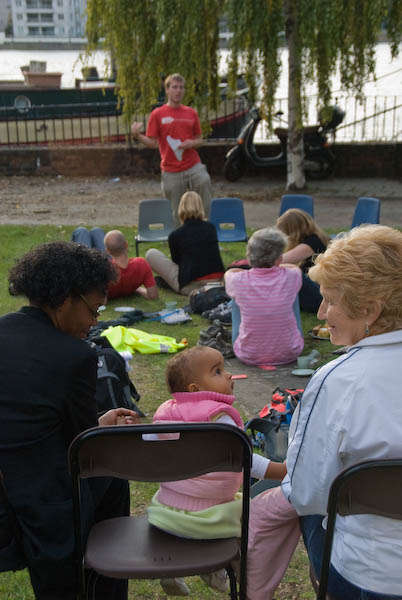
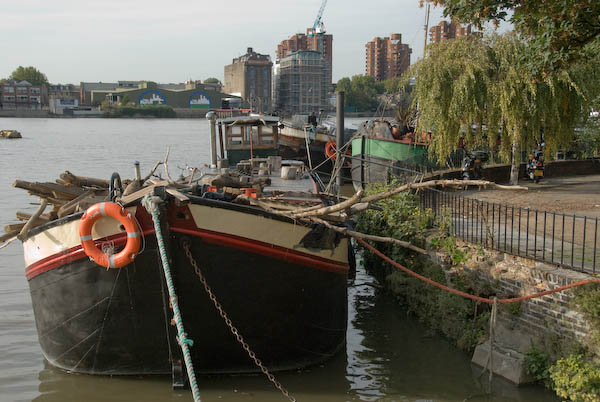
I was late and the marchers had arrived at St Mary’s just I few minutes before me and were enjoying a rest in its riverside churchyard. Later some talked about the march and why they had given up their summer to take part in it as it was so vital that the UK and the world take serious action.
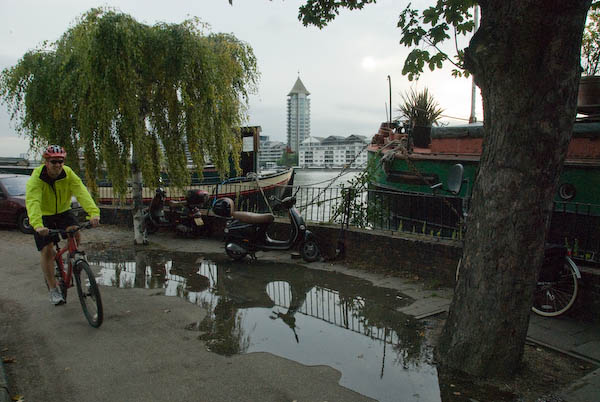
We were reminded that some of the world’s lower-lying countries were being threatened by the sea level rise from global warming, with ice-caps melting as a high Spring tide began to flood parts of the churchyard, but fortunately stopped with only a few large puddles at one side. But the sea-level will continue to rise and make some whole island countries uninhabitable as well as large areas of others already subject to flooding.
More recently we are also now seeing the effects of global heating and climate instability clearly in the UK, Europe and North America with record high temperatures, huge forest wild fires and odd weather patterns affecting crop yields. But the fossil fuel companies are still huge lobbyists and contributors to party funds and still our UK government, while paying lip-service to zero carbon in the rather distant future of 2050, continues to pump up the carbon with new coal, gas and oil exploitation. Total madness.
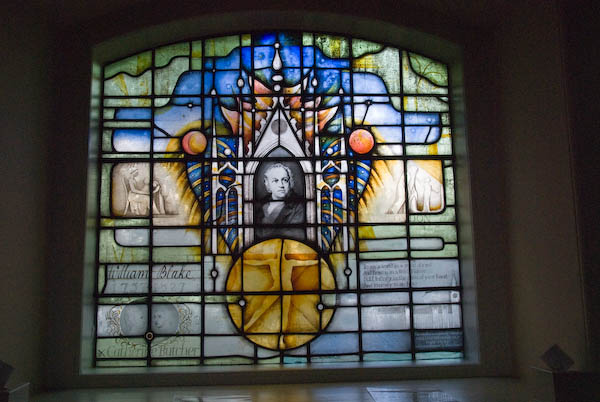
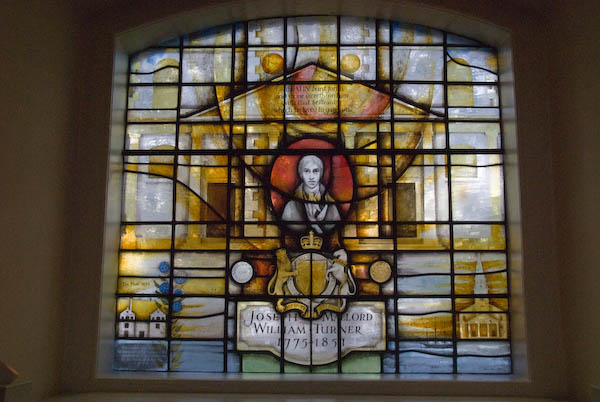
But this was a fine September evening and St Mary’s is a fine listed building and I was pleased yet again to take a tour inside and admire its architecture, fine monuments and modern stained glass windows for both William Blake and Joseph Mallord Turner who knew it well, as well as the riverside views.