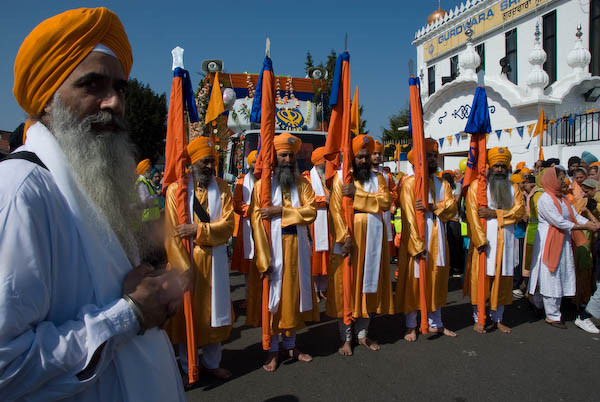
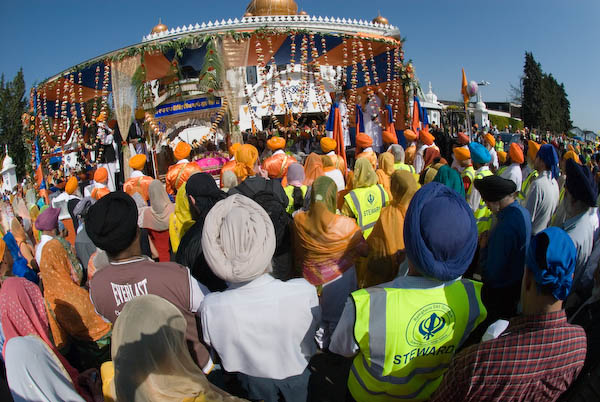
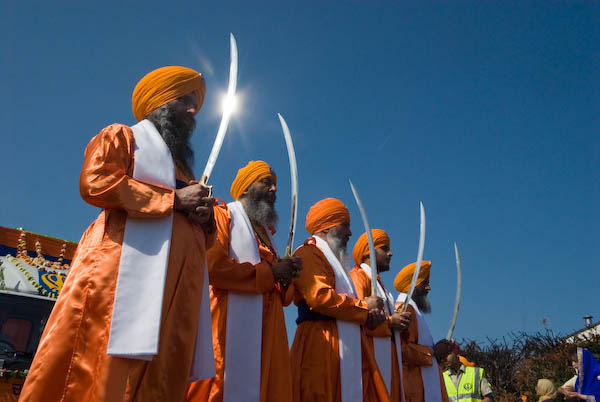
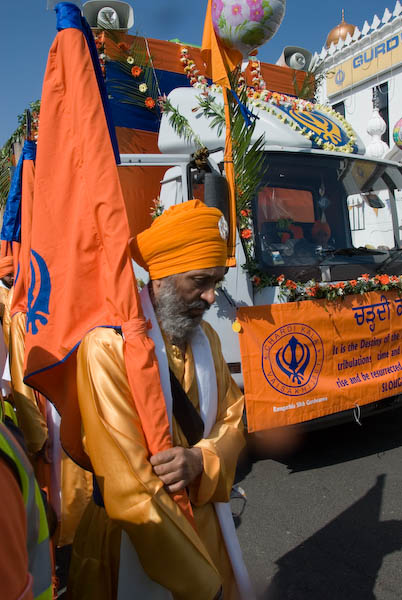
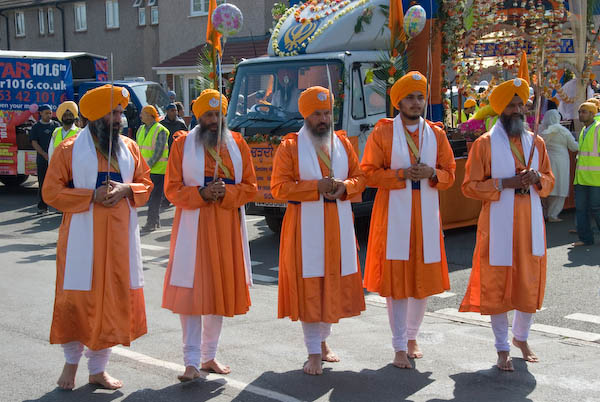
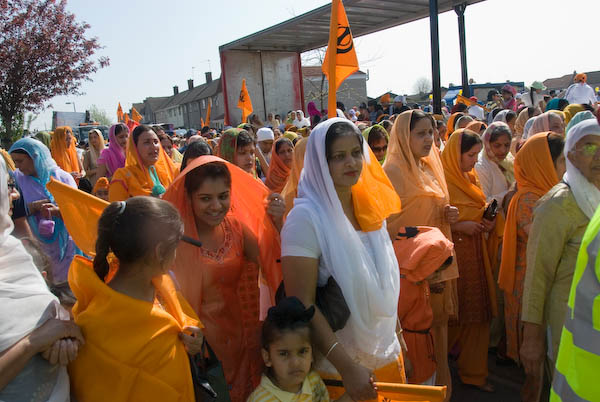
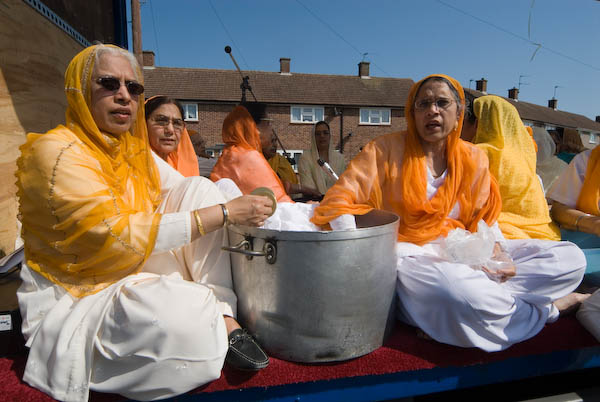
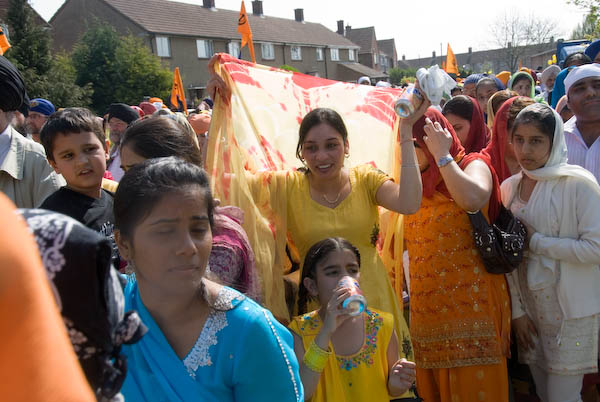
Vaisakhi Procession, Slough: On Sunday 15 April, 2007 I decided at the last minute to rush to Slough, picked up my rumāl and arrived just in time to photograph the Vaisakhi Procession as it left the Gurdwara. Two years later in 2009 I returned and was able to cover it more thoroughly and you can see the results on My London Diary – but in this post I’ll stay with the pictures and text from 2007. As usual I’ve made the text easier to read, correcting the capitalisation and typos etc.
Vaisakhi in Slough
Slough, Berkshire
I’d hoped to relax a bit on Sunday, have a day off from working with a camera, catch up with things. But Linda heard something on the radio about Vaisakhi in Slough, so I looked on the web, found the procession started at 10.30 and jumped on my ancient bike.
By then it was 10.15am, and according to the AA, the 9.5 miles should have taken me 27 minutes by car (and you could probably add a bit for parking etc onto that.)
So 40 minutes wasn’t too bad going, and I arrived just before the procession started to move off, just before 11.00am.
By the time I left two hours later, the procession carrying the Sikh holy scriptures and led as always by Khalsa carrying flags and swords was just around the corner a couple of hundred yards away in Shaggy Calf Lane (though it had taken a rather longer route than me to get there.) And as well as photographing the event and many of those taking part, I’d also had a very enjoyable free lunch.
I made my way home rather more slowly. One of the great advantages of travelling by bike is that you can stop exactly where you like to take photos.
As well as a few buildings in Slough, and what remains of a landmark garage at the west end of the Colnbrook Bypass (now sold and doubtless to be redeveloped) I spent some time in Horton, which in my youth really was a country village, and still retains some of that feeling, before returning to Staines via Wraysbury.
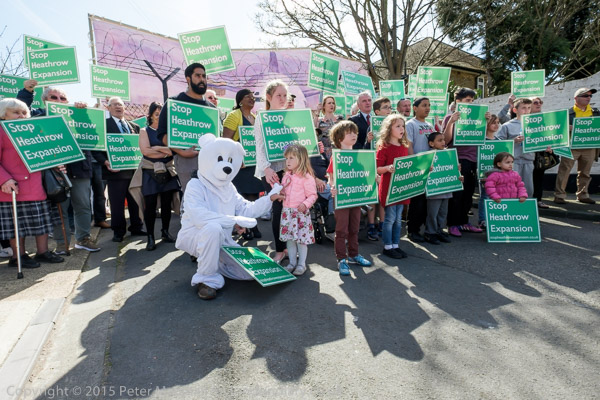
Heathrow Villages fight for survival: On Sunday 12th April 2015 in the run up to the 2015 General Election, campaigners launched a renewed fight against the expansion of Heathrow which threatens to swallow up much of the area, showing again the local determination to protect its historic community against a third runway.
As a fairly local resident although on the other side of Heathrow I’d been involved in the successful campaign a dozen years earlier against the expansion, which had eventually convinced all political parties that expansion at Heathrow was politically impossible. And when the 2010 election put a Tory Lib-Dem coalition into power plans were cancelled as the Lib-Dems had always strongly opposed them.
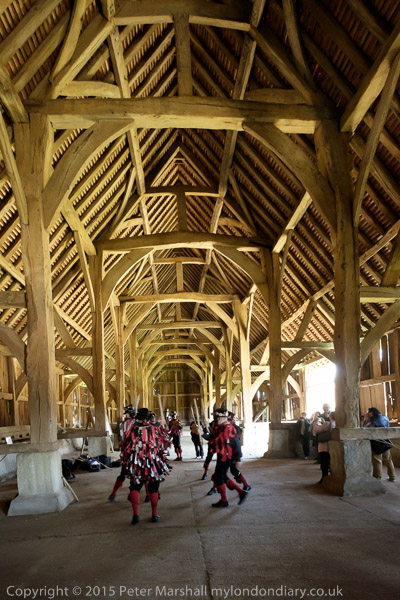
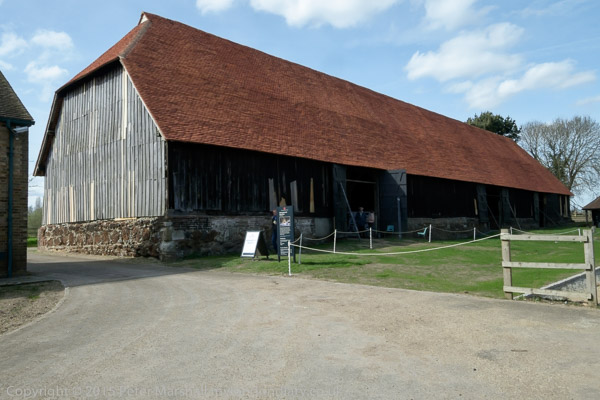
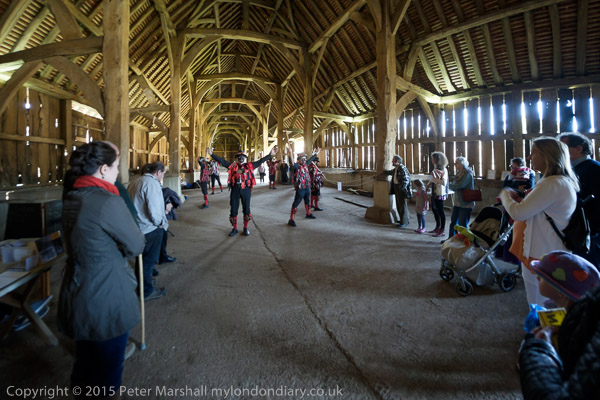
Datchet Border Morris in the Great Barn
But Heathrow had not taken NO for an answer and had continued to spend a considerable amount lobbying for it, including setting up a heavily funded PR organisation called ‘Back Heathrow’ to come up with spurious survey results suggesting local backing for expansion.
In 2012 the coalition government set up an Airports Commission led by Sir Howard Davies who had held many leading roles as an economist for both governments and private companies and who when appointed resigned from his roles as an adviser to GIC Private Limited, formerly known as Government of Singapore Investment Corporation, a part owner of Heathrow.
Officially the commission’s role was to consider how the UK could “maintain its status as an international hub for aviation and immediate actions to improve the use of existing runway capacity in the next 5 years” but unofficially it was designed to produce a political consensus in its final report in Summer 2015 that would put Heathrow expansion back on track.
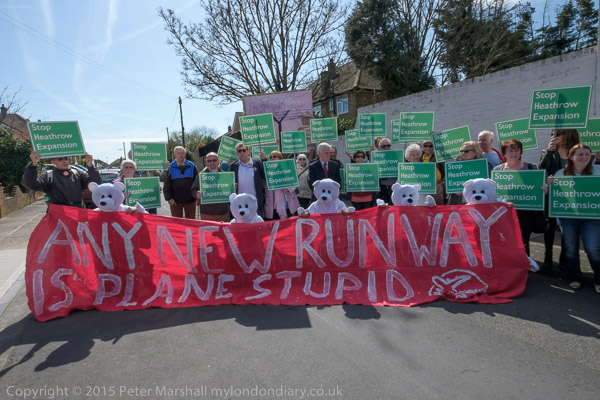
The Polar Bears brought their banner ‘Any new runway is Plane Stupid’
In October 2016 the Tories under Theresa May made a third runway and a new terminal a central Government policy, and in June 2018 the House of Commons voted by a large majority in favour, despite the opposition or abstention of most London MPs.
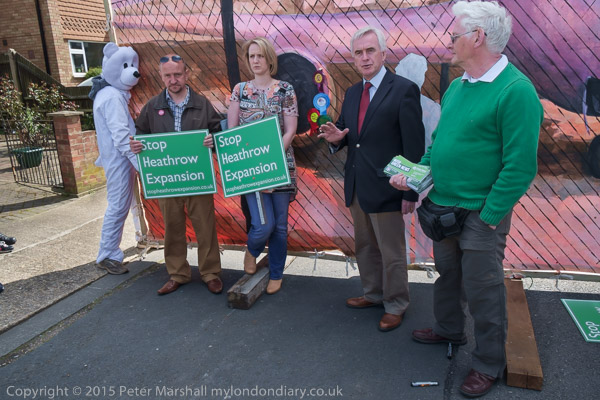
Clifford Dixon (UKIP), Pearl Lewis (Conservative), John McDonnell (Labour) and Alick Munro (Green)
The Supreme Court in 2020 ruled the government’s decision had been unlawful as they had not taken their committments to climate change under the Paris agreement into account. The government then accepted the judgement, but Heathrow appealed and won, with the ban being lifted.
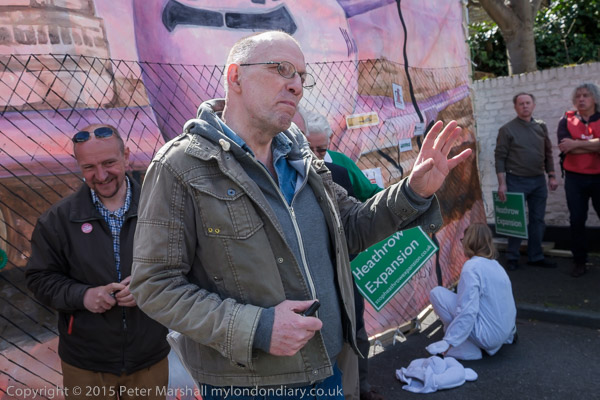
John Stewart of HACAN(Heathrow Association for the Control of Aircraft Noise)
However the plans have so far not gone ahead, in part because governments have not agreed to pick up the huge infrastructure costs around the airport that would be required and that Heathrow were unwilling to finance.
A war veteran plants a tree on the recreation ground against Heathrow expansion
When the right-wing led Labour government came to power in 2024, they immediately set about making changes to the planning process that would enable developments like Heathrow to go ahead with little or no proper examination and inquiries. And in January 2025 they “confirmed it was the new Labour government’s plan to proceed with a third runway within the current parliamentary term.”
However the arguments against expansion continue to grow in strength, particularly on environmental grounds and the Trump-initiated slump in world trade seems likely to damage the economic arguments for expansion as well as increase the already huge costs of the project. So it still seems unlikely that it will happen, and certainly not by the “projected completion date around 2040.”
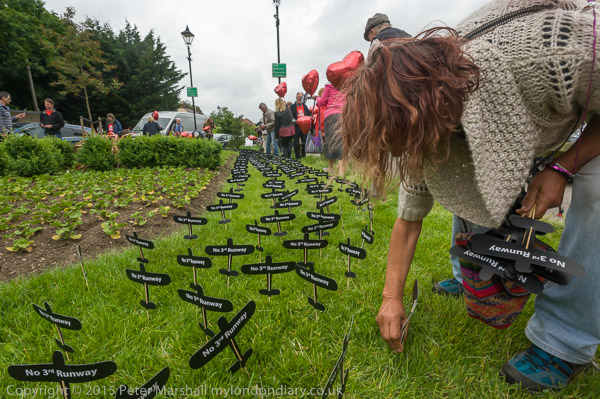
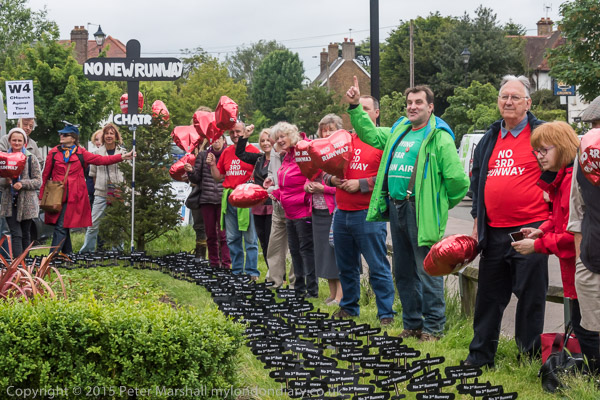
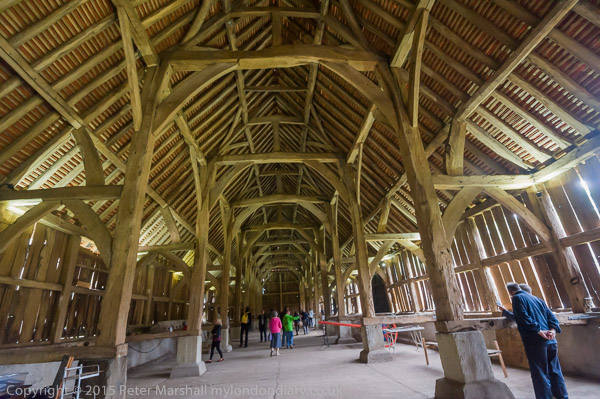
You can read more about the activities in Harmondsworth around the village centre back in April 2015 on My London Diary and see the strength of the local opposition back then. There were Morris Dancers performing outside the village pubs and inside the incredible Grade I listed Great Barn and a rally with the Plane Stupid polar bear, speeches from the general election candidates and protesters on what would be the new Heathrow boundary in the village centre.
Heathrow has of course promised the Great Barn would be protected along with the fine part 12th Century Parish Church, but they would not be the same without their context.
Heathrow represents a huge failure by successive governments over many years to set up a new major airport for London at some more suitable location. Even when opened as a civil airport in 1946 it was not a particularly suitable location, though when relatively small and quiet aircraft such as the DC3 were in use it was not a great problem. But once these began to be replaced by larger noisier and more polluting jets and passenger numbers and traffic in the surrounding area shot up the need to close it and move to a new location was clear. Heathrow’s answer was always to expand and make the problems worse, building new terminals (and actually closing runways that had become too short for the newer aircraft.) Heathrow should have been closed down years ago – and would have been a great site for a new town.
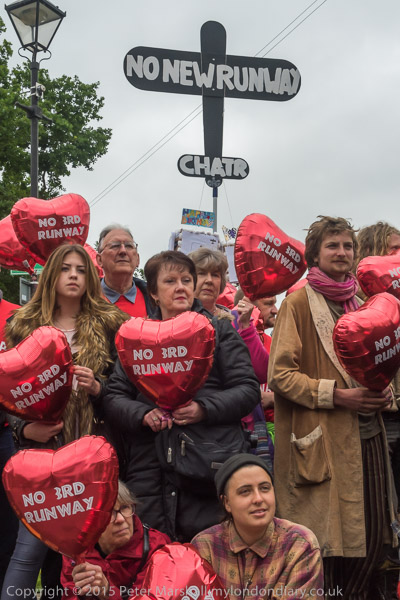
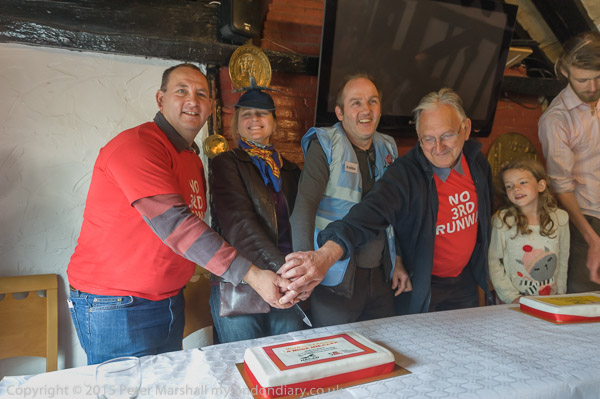
No Third Runway at Heathrow: Heathrow Airport celebrated its 70th anniversary on Monday 30th May 2016. and local residents marked the occasion with a protest on the village green at Harmondsworth against the plans to build a third runway which would destroy over 750 local homes.
I grew up under the flightpath a couple of miles from touchdown on the main runway used for incoming flights, standing in my back garden and crossing off the registration letters of the planes passing rather close overhead in my spotters book. Those early planes – like the Douglas DC3 and the Vickers Viscount – were small and relatively quiet and gave young boys like me hours of interest with little disruption of normal life, but the generations that followed were very different, larger and ear-shattering. The complaints against their noise grew rapidly – and those easy to read letters on the underside of the wings disappeared so it was harder to identify flights in our complaints.
Heathrow had been planted on the edge of London’s built up area by deception, beginning as a ‘military’ airport towards the end of the Second World War when it was known it would never be used as such, by people who were determined to make it London’s major civil airport. They did it to get around the objecteons there would have been later to a civil airport here.
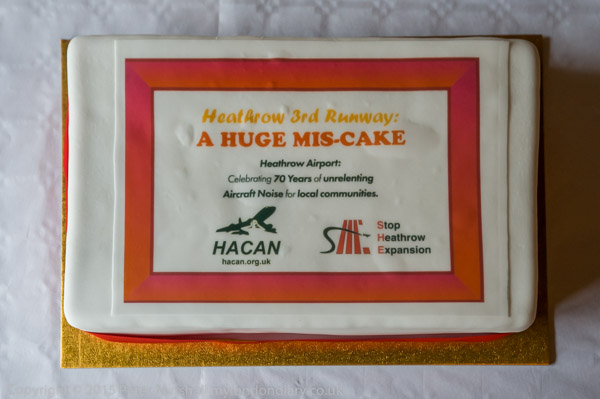
‘A huge mis-cake’ Heathrow Airport: Celebrating 70 years of unrelenting Aircraft Noise for local communities’
Over the years Heathrow continued to grow and grow. More flights and more terminals. More local traffic and more pollution. Every new development was made with promises that were later broken. T4 was promised to be the last new terminal – but then came the application to build T5. With this came the promise that Heathrow would never ask for another runway – but this was broken even before T5 had opened.
The enquiry into the third runway was said to be final – but while the local community were still celebrating their victory – and David Cameron was saying ” No Ifs, No Buts, No Third Runway”, Heathrow Airport was already plotting the setting up of a new inquiry that would somehow against all the evidence come up with the result they wanted – the Davies Commission.
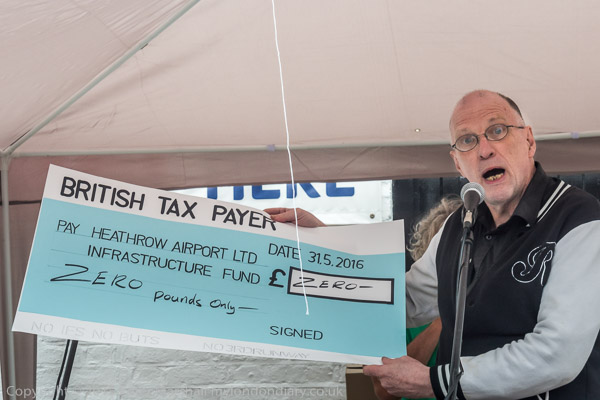
John Stewart – HACAN – Heathrow want taxpayers to pay for the new roads, tunnels etc needed
In 2016 the threat of the new ‘third runway’ loomed dangerously over the area again, with the Conservative Government backing the proposals. Many of those who came to the event at Harmondsworth feared they would soon lose their homes – and property in the area was blighted as it had been for many years. Others outside the actual development would find their lives made impossible by aircraft noise, with people from almost the whole of West London suffering, particularly from flights in the early morning, with plane after plane passing overhead.
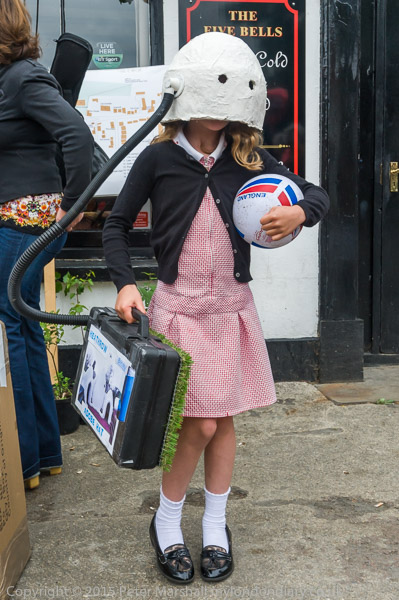
The Heathrow Adobe Hat, with portable air purifier and environmentally biodiverse suitcase
Heathrow’s noise and pollution affect a surprisingly large area of London. Twenty years ago I was in a hospital bed in Tooting in south London, around 12 miles away as the jet flies, awake early in the morning partly by their noise, watching and hearing a whole line of plane after plane in line for touchdown.
Neil Keveren, Chair of Stop Heathrow Expansion (SHE)
In our local area we get the pollution from the planes, both from running their engines on the ground and also from takeoff and landing. But more importantly the airport generates huge amounts of road traffic, both on local roads and the motorways serving the area – M3, M4 and M25.
Seven years on it seems increasingly unlikely that there will ever be a third runway built. Even the most jet-headed politicians are beginning to see that we cannot continue with airport expansion and meet the need to cut carbon emissions. Financial constraints increasingly make it less likely too.
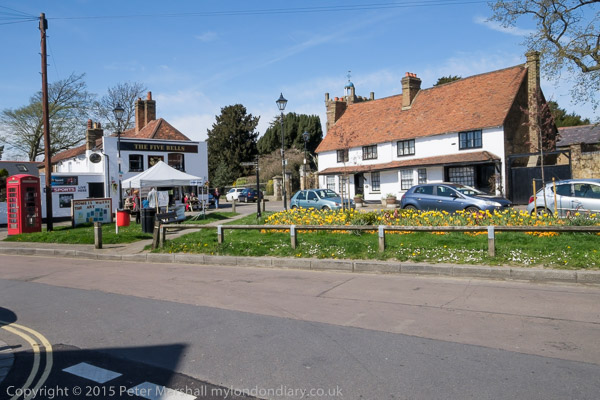
My post on My London Diary has the details about the event on Monday 30th May 2016 and of course more pictures, including some of the village itself, including its pubs, church and remarkable Grade I listed tithe barn, said to be the largest wooden structure in the country, dating from 1426. Local campaigners saved that a few years ago and it was bought by English Heritage in 2012 and has been much restored. It lies just outside the area the airport would take over for the new runway and would be at serous danger from vibration – and would almost certainly need to be re-sited.
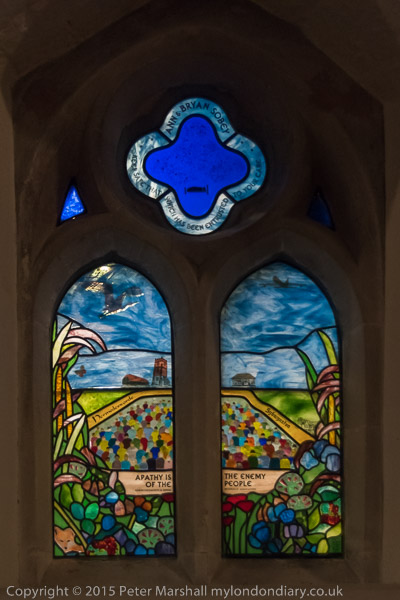
A church window remembers Ann & Bryan Sobey who led the ‘Right to Sleep’ campaign for restrictions on night flights into Heathrow
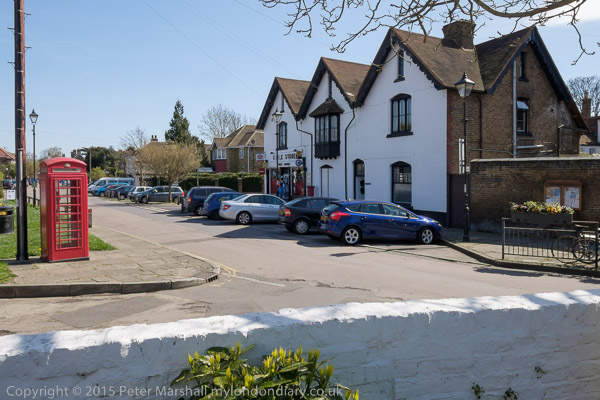
Though on the edge of London Harmondsworth still has a village atmosphere, and still seems much like the village I cycled through in my youth. I hope it remains that way.