Smiley Culture & Orange Order – 2011

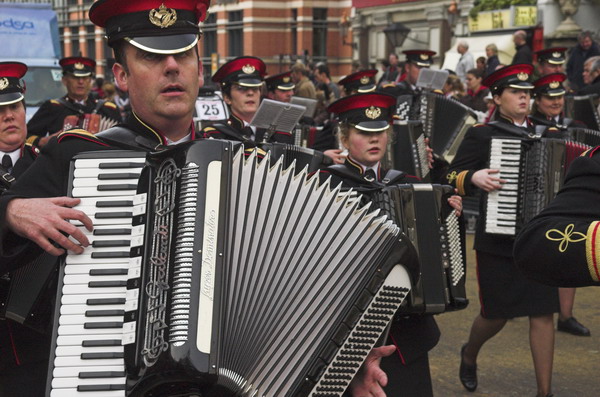
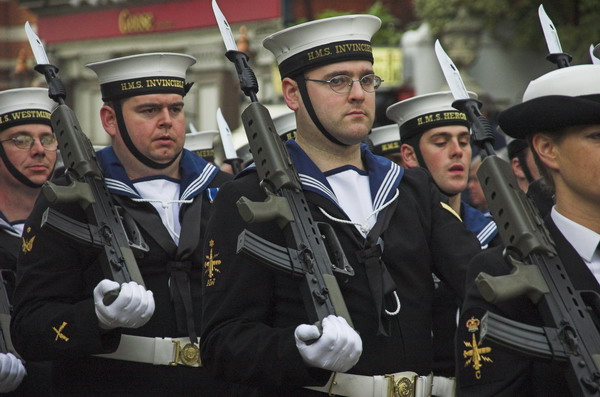
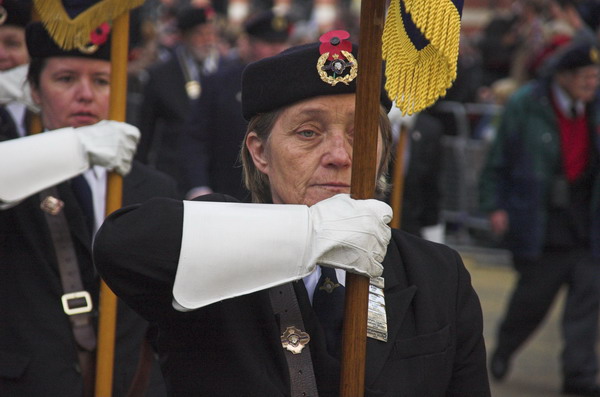
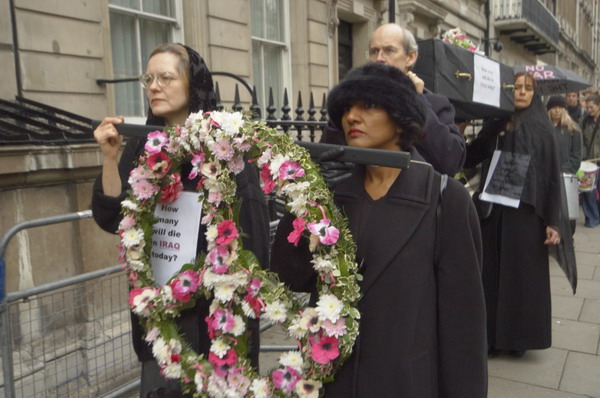
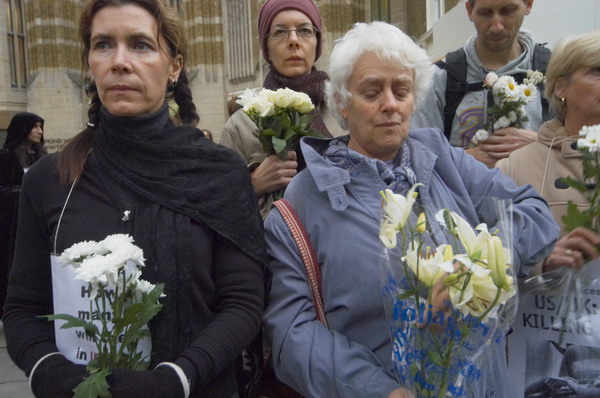
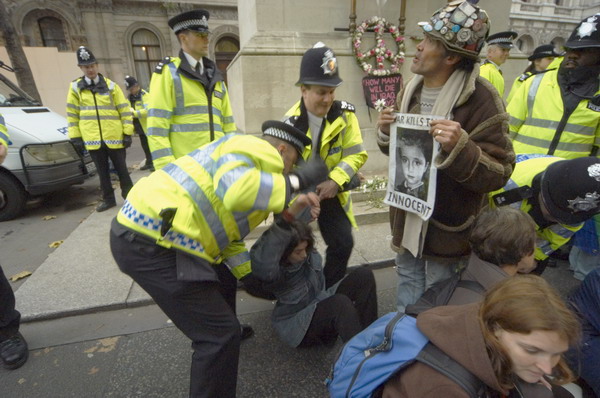
Smiley Culture & Orange Order: On Saturday 16th April I photographed two very different marches in London. The first was by several thousand people, mostly black, in protest over the death of reggae star Smiley Culture during a police drugs raid on his home and later I took pictures of the annual parade in Westminster by the City of London District Loyal Orange Lodge.


Who Killed Smiley Culture?

Smiley Culture & Orange Order - 2011

On 15th March 2011 police raided the South Croydon home of reggae star Smiley Culture at around 7am, apparently in relation to a drugs charge on which he was due to appear in court shortly. An hour and a half after their arrival, he is alleged to have been allowed to go into his kitchen alone to make a cup of tea, and to have killed himself with a single stab to the heart.

Smiley Culture & Orange Order - 2011

As many commented, it seemed a most unlikely story. Surely police would “not have allowed a man they had arrested to go alone into his own kitchen, where apart from the possibility of escape they would also know there would be dangerous weapons. And killing oneself with a single stab wound to the heart is not an easy task. His family and friends are sure there was no reason why he should have wanted to commit suicide.”

Smiley Culture & Orange Order - 2011

In April 2011 the case was being investigated by the Independent Police Complaints Commission and their report went to the coroner. At the inquest in 2013 the jury were unable to reach a unanimous verdict but the coroner accepted a majority verdict that the death had been suicide, while criticising the police for their lack of care and the IPCC for faults in their investigation.

Smiley Culture & Orange Order - 2011

Wikipedia reports that at the request of the coroner the IPCC report “was neither made public nor made available to Emmanuel’s family” and questions remain about the actual circumstances of his death and of the IPCC’s statement “that there was neither criminal conduct by officers, nor individual failings by officers that might amount to misconduct.

As I pointed out in my post, “Deaths in police custody are unfortunately not rare, and according to Inquest, in the twenty one years since 1990 there have been a total of 930, with 247 of these in the Met area.

I went on to say that few of these cases get “more than a short paragraph in the local press” unless as in this case they involve celebrities or take place in public with witnesses and often videos of the event; “most of them take place in the secrecy of the police station or other premises with police officers as the only witnesses.

Among those taking part in this march were families whose sons and brothers also died while in police custody, and in my post on My London Diary I mentioned some of these. The march took place on the “anniversary of the death of David Oluwale, killed in the first known incident of racist policing in 1969; his death remains the only case in British history that police officers have been found guilty of criminal offences leading to the death of a suspect, although they were found guilty only of assaults, the judge ordering the charge of manslaughter to be dropped.”

The death of Smiley Culture was one of several cases identified as a contributing factor to the riots later in the year after the police shooting of Mark Duggan by a study led by the LSE and The Guardian.

In February 2025 a blue plaque was unveiled outside Smiley Culture’s home from 1976-1980 on the Wandsworth Road, close to where this march began, celebrating his contributions to music and culture.

More about the march and rally and many more pictures on My London Diary at Who Killed Smiley Culture?.


Orange Parade in London

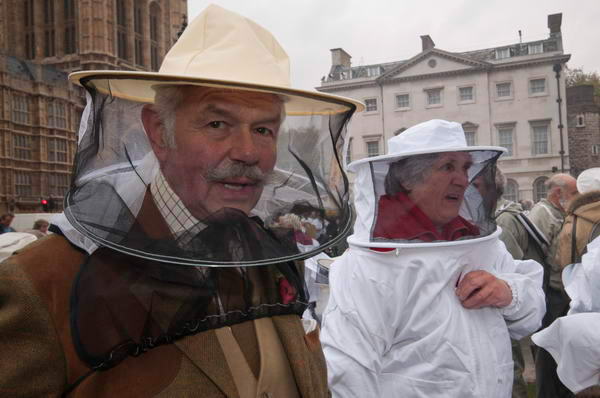
The City of London District Loyal Orange Lodge (L.O.L.) led their annual parade through London with lodges and bands from around the country taking part.

Founded in 1796 to uphold the Protestant religion, the Orange Order was was revived in the early twentieth century to oppose Home Rule for Ireland, and still plays a powerful role in Northern Ireland politics and government, embedded in Unionist politics.

Parades in Northern Ireland are still controversial and seen by many Catholics as deliberately provocative, while many Orangemen regard the Parades Commission, set up to regulate these events as discriminating against them. But here in London they have little political significance and are a colourful celebration of the Irish Protestant tradition.

From Millbank the parade marched around Parliament Sqaure and then on to the Cenotaph where wreaths were laid in memory of the fallen and former comrades by the City of London Lodge, two lodges from Glasgow and the Maine Flute Band from Ballymena.

I left them opposite Downing Street where some had gone in to deliver a letter to the Prime Minister before the parade moved on to its end at statue of the Duke of York in Waterloo Place.

More at Orange Parade in London.


FlickrFacebookMy London DiaryHull PhotosLea ValleyParis
London’s Industrial HeritageLondon Photos

All photographs on this page are copyright © Peter Marshall.
Contact me to buy prints or licence to reproduce.


Milad 2007 – Eid Milad-Un-Nabi

Milad 2007 – Eid Milad-Un-Nabi: On Saturday 14th April 2007 I was invited to the Eid Milad-Un-Nabi Procession and Community Day in Tooting in the south of London.

Milad 2007 - Eid Milad-Un-Nabi

Eid-e-Milad-un-Nabi, also known as Mawlid, is observed on the 12th day of the third month of the Islamic calendar, Rabi’ al-Awwal. It commemorates the birth of the Prophet Muhammad. The name means “the first Spring” and it is a bank holiday in parts of India and there are processions in Lahore and elsewhere in Pakistan where it is a national holiday as in almost all Islamic countries. The day is celebrated by both Sunni and Shia Muslims. Some local Muslim Saints also have Mawlid celebrations on their birth dates in some Muslim countries.

Milad 2007 - Eid Milad-Un-Nabi

In 2025, Mawlid is the Islamic Day from sunset to sunset on Thu, 4 Sept 2025 – Fri, 5 Sept 2025. Here is the post I made in 2007 on My London Diary with normal capitalisation and minor corrections.

Milad 2007 - Eid Milad-Un-Nabi

April seems to be a very religious month for me. On Saturday 15th I went to the celebration of the Prophet’s birthday organised by the Sunni Muslim Association in Tooting which included a Juloos or procession from Tooting Bec Common through Tooting to the Leisure Centre in Garratt Lane.

Milad 2007 - Eid Milad-Un-Nabi

Eid Milad-un-Nabi, or simply Milad, is an all-day community event and one that doesn’t tolerate “political banners or activists“. It was one of the friendliest events I’ve photographed, and as well as several hundred Muslims, their were also honoured guests including the Mayor of Wandsworth, various representatives of the police, of the fire service, a chaplain, someone from the local council of churches, the local conservative candidate and others.

Milad 2007 - Eid Milad-Un-Nabi

It was a hot day, and walking in the sun made it feel hotter. I was glad to arrive at the leisure centre and take off my shoes, and relax on the mat in the hall. It was just a little dark for taking pictures (and I was still having to use an old flash unit while I wait for the new one to be returned from servicing) and both the whirling dervishes and the Islamic Martial Arts display presented a challenge, although the speakers were not too difficult.

The speeches, in English, stressed the peaceful aspects of Islam (and declared suicide bombing and violent demonstrations over the cartoons of the prophet as un-Islamic.) Perhaps the longest speech was by Lord Sheikh, a Conservative life peer since 2006, chairman of the Conservative Muslim Forum and also chairman of the Conservative Ethnic Diversity Council, who has had an extremely successful career in insurance since coming here from Uganda.

I left shortly after, and decided not to wait to pay homage to the Holy Relic Of The Prophet (peace be upon him) as I wasn’t sure if I was in a suitable state of purity and cleanliness. Probably not. But it had been a very positive and enjoyable day.

More pictures on My London Diary.


FlickrFacebookMy London DiaryHull PhotosLea ValleyParis
London’s Industrial HeritageLondon Photos

All photographs on this page are copyright © Peter Marshall.
Contact me to buy prints or licence to reproduce.


Heathrow Villages fight for survival – 2015

Heathrow Villages fight for survival: On Sunday 12th April 2015 in the run up to the 2015 General Election, campaigners launched a renewed fight against the expansion of Heathrow which threatens to swallow up much of the area, showing again the local determination to protect its historic community against a third runway.

Heathrow Villages fight for survival - 2015

As a fairly local resident although on the other side of Heathrow I’d been involved in the successful campaign a dozen years earlier against the expansion, which had eventually convinced all political parties that expansion at Heathrow was politically impossible. And when the 2010 election put a Tory Lib-Dem coalition into power plans were cancelled as the Lib-Dems had always strongly opposed them.

Heathrow Villages fight for survival - 2015
Datchet Border Morris in the Great Barn

But Heathrow had not taken NO for an answer and had continued to spend a considerable amount lobbying for it, including setting up a heavily funded PR organisation called ‘Back Heathrow’ to come up with spurious survey results suggesting local backing for expansion.

Heathrow Villages fight for survival - 2015

In 2012 the coalition government set up an Airports Commission led by Sir Howard Davies who had held many leading roles as an economist for both governments and private companies and who when appointed resigned from his roles as an adviser to GIC Private Limited, formerly known as Government of Singapore Investment Corporation, a part owner of Heathrow.

Heathrow Villages fight for survival - 2015

Officially the commission’s role was to consider how the UK could “maintain its status as an international hub for aviation and immediate actions to improve the use of existing runway capacity in the next 5 years” but unofficially it was designed to produce a political consensus in its final report in Summer 2015 that would put Heathrow expansion back on track.

The Polar Bears brought their banner ‘Any new runway is Plane Stupid’

In October 2016 the Tories under Theresa May made a third runway and a new terminal a central Government policy, and in June 2018 the House of Commons voted by a large majority in favour, despite the opposition or abstention of most London MPs.

Clifford Dixon (UKIP), Pearl Lewis (Conservative), John McDonnell (Labour) and Alick Munro (Green)

The Supreme Court in 2020 ruled the government’s decision had been unlawful as they had not taken their committments to climate change under the Paris agreement into account. The government then accepted the judgement, but Heathrow appealed and won, with the ban being lifted.

John Stewart of HACAN (Heathrow Association for the Control of Aircraft Noise)

However the plans have so far not gone ahead, in part because governments have not agreed to pick up the huge infrastructure costs around the airport that would be required and that Heathrow were unwilling to finance.

A war veteran plants a tree on the recreation ground against Heathrow expansion

When the right-wing led Labour government came to power in 2024, they immediately set about making changes to the planning process that would enable developments like Heathrow to go ahead with little or no proper examination and inquiries. And in January 2025 they “confirmed it was the new Labour government’s plan to proceed with a third runway within the current parliamentary term.”

However the arguments against expansion continue to grow in strength, particularly on environmental grounds and the Trump-initiated slump in world trade seems likely to damage the economic arguments for expansion as well as increase the already huge costs of the project. So it still seems unlikely that it will happen, and certainly not by the “projected completion date around 2040.”

You can read more about the activities in Harmondsworth around the village centre back in April 2015 on My London Diary and see the strength of the local opposition back then. There were Morris Dancers performing outside the village pubs and inside the incredible Grade I listed Great Barn and a rally with the Plane Stupid polar bear, speeches from the general election candidates and protesters on what would be the new Heathrow boundary in the village centre.

Heathrow has of course promised the Great Barn would be protected along with the fine part 12th Century Parish Church, but they would not be the same without their context.

Heathrow represents a huge failure by successive governments over many years to set up a new major airport for London at some more suitable location. Even when opened as a civil airport in 1946 it was not a particularly suitable location, though when relatively small and quiet aircraft such as the DC3 were in use it was not a great problem. But once these began to be replaced by larger noisier and more polluting jets and passenger numbers and traffic in the surrounding area shot up the need to close it and move to a new location was clear. Heathrow’s answer was always to expand and make the problems worse, building new terminals (and actually closing runways that had become too short for the newer aircraft.) Heathrow should have been closed down years ago – and would have been a great site for a new town.

Heathrow Villages fight for survival.


FlickrFacebookMy London DiaryHull PhotosLea ValleyParis
London’s Industrial HeritageLondon Photos

All photographs on this page are copyright © Peter Marshall.
Contact me to buy prints or licence to reproduce.

Ratcliff Highway and Limehouse Basin – 1990

Ratcliff Highway and Limehouse Basin: My first photographic walk in 1990 came at the end of the Christmas and New Year season on 6th January 1990 when I returned to Limehouse for another walk. I’d taken quite a few pictures there back in 1984 and I thought it was time for another extensive visit. Getting there was easier now that the DLR ran to Limehouse. I left the station and walked down Branch Road.

Scout HQ, Branch Rd, Limehouse, Tower Hamlets, 1990, 89-12d-46

Obviously not built as a Scout HQ, but something rather more official, and this was built in 1898 as the Stepney Borough Coroner’s Court.

Branch Road was apparently earlier called Horseferry Branch Road and led to a ferry across the Thames here – and Branch Road still leads to a road called Horseferry Rd. An ancient ferry ran from Ratcliff Cross Stairs and would have taken horses and carts as well as people across to Rotherhithe. You can still go down to the foreshore here from Narrow Street down the Grade II listed stairs but of course there is no ferry. The listing is probably more for the historic interest of the site – the stairs themselves are are relatively modern concrete replacement and the ancient causeway here apparently disappeared around 2000.

Tubular Barriers, The Queens Head, The Highway, Limehouse, Tower Hamlets, 1990, 89-12d-34

At 491 The Highway – formerly known as Ratcliffe Highway – close to the corner with Butcher Row – the Queens Head pub to the right of this view – was demolished soon after I made this picture in 1990, along with the rest of these buildings. At the left is a sign for the Limehouse Link tunnel, built between 1989 and 1993 and I think this was a storage yard for the work. The western end of the tunnel is a short distance to the east.

Electrocute Murdoch, Tubular Barriers, 493, The Highway, Limehouse, Tower Hamlets, 1990, 89-12d-35

Another part of the Tubular Barriers site on The Highway which I think I photographed mainly for the graffiti ‘ELECTROCUTE MURDOCH’ on its wall. I think this was at the corner with Butcher Row. Though the company name also made me think of the Mike Oldfield album Tubular Bells.

There had been a particularly bitter and hard fought (sometimes literally) fight over the opening of Murdoch’s News International print works at Wapping in 1986, following the dismissal of all 6000 of the print workers at the previous Fleet Street hot metal print plant.

Works, 503-9, The Highway, Limehouse, Tower Hamlets, 1990, 89-12d-25

Control of the development of the Docklands areas was in 1981 taken away from the local authorities and given to the London Docklands Development Corporation (LDDC) a quango agency set up by Margaret Thatcher’s Secretary of State for the Environment, Michael Heseltine. Although this resulted in a faster regeneration of the area this was largely driven by the interests of global capital and often went against the interests and needs of the local communities. This whole area was demolished around 1990. I did wonder if the three-storey building might be a former pub.

Works, 503-9, The Highway, Limehouse, Tower Hamlets, 1990, 89-12d-12

Notices on the shop-front at right read

‘DOCKLANDS LOCAL
PLUMBERS & ELECTRICIANS

CAN THE LDDC LEGALLY
STEAL OUR LAND?
57 MEN
TO LOSE THEIR JOBS’

The LDDC had wide ranging powers and legalised thefts such as this. It was an area in need of redevelopment and the LDDC got this moving at pace, but it would have been far better to have found ways to retain former businesses and provide more social housing and other community assets.

Limehouse Dock, Redevelopment, 1990, Limehouse, Tower Hamlets, 90-12d-14
Limehouse Basin, Redevelopment, 1990 Limehouse, Tower Hamlets, 89-12d-14

Much of the area around Limehouse Basin was derelict in 1990 as this view from the south shows. At the right is St Anne’s Limehouse.

Entrance Lock, River Thames, Limehouse Basin, Narrow St, Limehouse, Tower Hamlets, 1990, 90-1a-63

Considerable building work was taking place around the lock linking Limehouse Basin to the River Thames.

This is the ship lock and there had once been two narrower barge locks a short distance west. The ship lock was built slantwise to make for and easier entry by larger ships (up to 2000 tons) from the river and was a part of its enlargement in 1869. The lock had two compartments with three gates. In 1990 the outer gates to the Thames were still in place (in pictures not yet digitised) but no longer in use and the other two replaced by this much narrower single lock, suitable for the smaller vessels now using the Basin as a Marina.

Entrance, Limehouse Basin, Narrow St, Limehouse, Tower Hamlets, 1990,
Entrance, Limehouse Basin, Narrow St, Limehouse, Tower Hamlets, 1990, 90-1a-53

A building for Limehouse Waterside and Marina on the corner of the 1869 Ship Lock and Limehouse Basin. Running across on the opposite side of the water is London’s third oldest railway viaduct, built in 1840 for the London and Blackwall Railway and now in use for the DLR.

More from Limehouse in a later post.


FlickrFacebookMy London DiaryHull PhotosLea ValleyParis
London’s Industrial HeritageLondon Photos

All photographs on this page are copyright © Peter Marshall.
Contact me to buy prints or licence to reproduce.


New Charlton in Colour – 1995

New Charlton in Colour – 1995. New Charlton has now been given the new and more descriptive name of Charlton Riverside and is the area between the River Thames and the main road from Greenwich to Woolwich, Woolwich Road. The major feature of the area other than the river is the Thames Barrier, but although I photographed this in black and white it does not appear in my selection of colour pictures. I had photographed it in black and white and colour on several occasions since 1984 from both sides of the river and so felt no need to visit it again in 1995.

Eastmoor St, New Charlton, Greenwich, 1995, 95c5-743

I did find a very different barrier on Eastmoor Street, with this monumental slab apparently cut out to leave a gateway through this reflective red wall. Whatever its original purpose – I think perhaps an art work – it seemed to have served for target practice probably for bricks thrown by local youths.

Classic Car Restorations, New Charlton, Greenwich, 1995, 95c5-733

And I did photograph Thames Barrier Classic Car Restoration with its texts and pictures of cars on its wall.

Carpet Kingdom, New Charlton, Greenwich, 1995, 95c5-732

The redevelopment of the area had begun when the Thames Barrier was opened, but much was still industrial or derelict but large parts are now occupied by large retail units. Carpet Kingdom was one of the first to open, though I don’t remember exactly where. There is now a rather larger Carpet Giant in the area,

Mural, Floyd Rd, Charlton, Greenwich, 1995, 95c5-726
Mural, Floyd Road, Charlton, Greenwich, 1995, 95c5-726

You can still see this giant mural, details from which are in my two pictures. It was painted on the wall of this house in 1976 by the Greenwich Mural Workshop in 1976 and has now faded considerably.

Mural, New Charlton, Greenwich, 1995, 95c5-725
Mural, Charlton, Greenwich, 1995, 95c5-725

Just south of the railway line close to Charlton’s ground at The Valley and so in Charlton rather than New Chalton, I had glimpsed it in my journeys past on the train and so went to photograph it.

Annette, Hair Stylist, Valley Grove, Charlton, Greenwich, 1995, 95c5-724

Annette Hair Styling was just around the corner from the mural in Valley Grove, so also in Charlton rather than New Charlton.

More colour from Charlton in a later post


FlickrFacebookMy London DiaryHull PhotosLea ValleyParis
London’s Industrial HeritageLondon Photos

All photographs on this page are copyright © Peter Marshall.
Contact me to buy prints or licence to reproduce.

Visteon, City & Fashion Victims – 2009

Visteon, City & Fashion Victims: On Saturday 4th April 2009 I went to protest in support of the Visteon factory occupation in Enfield, came back the the City but missed a protest over the police murder of newsvendor Ian Tomlinson and then photographed a fashion show protest on Oxford Street against the slave-like labour of workers in Bangladesh producing cheap clothes for Primark.


Solidarity at Visteon Enfield

Visteon, City & Fashion Victims - 2009

I wrote a few days ago about the Visteon pensions scandal where former Ford workers who were transferred to parts manufacturer Visteon, ‘An Enterprise of Ford Motor Company‘, in 2000 had lost up to half of their pensions when Visteon went into administration on 31st March 2009 when administrators KPMG immediately closed the company down.

Visteon, City & Fashion Victims - 2009
An Enterprise of Ford Motor Company, Limited

Together with workers at the Visteon Belfast site, the workers at Visteon Enfield had occupied their factories and were refusing to leave until Visteon and Ford made good on the firm promises made in 2000 they had that they would receive the same pensions and redundancy arrangements they had enjoyed previously.

Visteon, City & Fashion Victims - 2009
Workers on the roof demand the terms promised by Ford when the business was sold off

Workers in Belfast had occupied their factory immediately after a 5 minute meeting had told them they had lost their jobs and that they had an hour to take any personal possessions and leave work immediately – without pay. Enfield workers occupied their factory the following day.

Visteon, City & Fashion Victims - 2009

KPMG’s response was to go to the courts and secure a court order for repossession, while Ford simply denied all responsibility in the matter (though five years later were eventually forced by Unite to pay some compensation.)

I went to the factory at Ponders End, Enfield along with several hundred other trade unionists and others for a rally outside the plant to show our support for their case. A number of those who spoke at the rally had organised collections for the occupiers in their workplaces, reporting unanimous support for the dismissed workers, and others had also brought practical support – sleeping bags, food and money – to enable the occupation to continue.

More at Solidarity at Visteon Enfield


City Walk – Bank and Bishopsgate.

I was later than I had hoped by the time my train from Ponders End reached Liverpool Street and had missed the rally at Bank in memory of the news vendor Ian Tomlinson who died of a heart attack minutes after being attacked and violently pushed to the ground in an unprovoked attack by a riot policeman, dieing from a heart attack minutes after. The murder had been captured on video by an onlooker and The Guardian had published the video – still on their web site.

After the rally the protesters had marched away – and I could see and hear a police helicopter following them on the way towards Bethnal Green. I didn’t have time to try and catch up with them, but wandered through some of the streets in the City, including some that Tomlinson had wandered through as he tried to make his way home through the area where police were kettling and attacking the April 1st Financial Fools Day G20Meltdown protesters. On 4th April those streets were empty.

More pictures at City Walk.


Primark – Fashion on the Cheap from Sweatshops

War on Want and No Sweat were drawing attention to Primark profiting from selling clothes made by sweated labour in Bangladesh with a ‘fashion show’ outside the company’s flagship Oxford Street store.

Models used the pavement as a catwalk, walking in chains “to symbolise the slave labour conditions of the Bangladeshi workers who make the cut-price fashions on sale at Primark. Workers who make the clothes earn as little as 7p an hour and work up to 80 hours a week.”

The Primark store opened here in 2007 and flourished as the recession made people turn to cheaper suppliers with their profits in the year to September 2008 up by up by 17% at £233 million.

Notices in the store windows claimed they “care about the conditions of the workers who make their clothes, but the reports by War on Want tells a very different story. These clothes are only cheap because those who make them get poverty pay, work long hours and get sacked if they try to organise or ask for improvements in their dangerous and unhealthy working conditions.”

Although the links on the My London Diary post are now out of date, War on Want are still campaigning for garment workers around the world including in Bangladesh, as are No Sweat.

In 2009 I commented:

Primark and others could still have a moral and reasonably profitable business if they restrained their greed and ensured that the workers who make their clothes worked in reasonable conditions and got a living wage – which in Bangladesh is only around £45 a month. But that is over three times what workers making clothes for Primark are currently paid.

Primark’s profits continue to rise, and although it claims it has “improved working conditions and implemented ethical initiatives, reports and investigations suggest that worker exploitation in its supply chain, including issues like low wages and unsafe working conditions, unfortunately still persists” according to Google’s Generative AI.

More at Primark – Fashion from Sweatshops.


FlickrFacebookMy London DiaryHull PhotosLea ValleyParis
London’s Industrial HeritageLondon Photos

All photographs on this page are copyright © Peter Marshall.
Contact me to buy prints or licence to reproduce.


Vaisakhi in Hounslow – 2008

Vaisakhi in Hounslow – Sunday 30th March 2008

Vaisakhi in Hounslow - 2008

Vaisakhi is the traditional New Year and harvest festival of the Punjab in India and Pakistan and gained added significance for Sikhs, the majority population in the area when at Vaisakhi in 1699 Guru Gobind Singh, the 10th Guru, founded the Sikh nation with the establishment of the Khalsa Panth.

Vaisakhi in Hounslow - 2008

Vaisahki is actually the 13th or 14th of April each year, but the festival is celebrated over several weeks at different Gurdwaras. You can read more about Vaisakhi and see some of my earlier pictures from various Nagar Kirtan (Sikh processions) on My London Diary posts from 2004, 2005, 2006 and 2007 and although they follow a similar pattern there are differences. In Hounslow the event seemed to me to have more active participation by women and girls than in some of the others.

Vaisakhi in Hounslow - 2008

I’d previously photographed the celebrations at most of of the Gurdwaras around London as a part of a larger project on religious celebrations in London, but had somehow missed out on covering the festival in Hounslow.

Vaisakhi in Hounslow - 2008

I’d always enjoyed photographing Vaisahki as the Sikhs were always very hospitable – I was made very welcome and guided and encouraged to take photographs and Hounslow was no exception. I wrote a fairly long description of the event on My London Dairy and included some of my personal history in the area where I – and my father – grew up.

The procession began at the Gurdwara Sri Guru Singh Sabha which was built on the site of the dye factory where I had my first full-time job – and where many of the shop-floor workers were Sikh. On the route various people had set up stalls offering free food and soft drinks to everyone in the procession – and I enjoyed their hospitality, but was soon too full to be able to accept more.

It went along streets that were very familiar to me, past the clinic where I was weighed and measured as a baby and my mother was given free orange juice and cod-liver oil (which I didn’t thank them for.) Past the nursery school, Major Drake Brockman’s Academy, from which I was expelled aged 4, past the school my father left in 1913 at the age of 14 (though he wouldn’t recognise it now) on to the Gurdwara Guru Nanak Nishkam Sewak Jatha where the procession halted for more celebrations before continuing back to its starting point.

Much more – and many more pictures at Vaisakhi Celebration in Hounslow


FlickrFacebookMy London DiaryHull PhotosLea ValleyParis
London’s Industrial HeritageLondon Photos

All photographs on this page are copyright © Peter Marshall.
Contact me to buy prints or licence to reproduce.


Woolwich to New Charlton Panoramas – 1995

Woolwich to New Charlton Panoramas: Continuing my occasional series of colour images from 1995 – I think this is the eleventh post – with some colour panoramas made in May 1995 on a walk from Woolwich to New Charlton.

River Thames, Church Hill, Woolwich, Greenwich, 1995, 95p5-342

My walk had begun when I got off the train at Woolwich Arsenal on my way back from Dartford on May 7th and I think these pictures were made that afternoon as I walked from there to another station keeping close to the River Thames. But I did but return to Woolwich the following Sunday, May 14th and some of these pictures could have been made then.

A path leads up from the roundabout at the start of Woolwich Church Street to Church Hill and St Mary Magdalene Church, built on a spur of high ground leading out towards the river. Originally this ground went rather closer to the Thames, but much of it was quarried for sand though the digging had to stop at the church. Although the present church dates only from 1727-39 there had been a church on this site since the 9th century if not earlier and it was probably a much earlier site of settlement.

The road in front of the church, Church Hill, gives a splendid panoramic view of the Thames. In 1995 you could still see the remains of Woolwich’s riverside industry, but by the time I photographed here again in 2000 all had gone and the area was empty and derilect. Now it is filled with four tall blocks of flats and some other housing.

Former Woolwich Dockyard Dry Docks, Europe Rd, Woolwich, Greenwich, 1995, 95p5-343

Woolwich Dockyard was the Navy’s most important dockyard for many years and ships were built here from 1512 to the Victorian era. By then it had become too small for the new ships and the Royal Dockyard closed in 1869. Parts remained in industrial use and a large area was bought by Greenwich Council in the 1960s where they built the Woolwich Dockyard Estate in the 1970s – part at the left of this picture. I think this is the Grade II listed Graving Dock.

Ernest Bevin, Ferry Boat, River Thames, Woolwich, Greenwich, 1995, 95p5-332

Taken on the Woolwich Dockyard Estate this shows one of the old dry docks and at a mooring in the Thames the Woolwich Ferry Ernest Bevin. You can just see part of the south ferry terminal in the centre of the image.

The ferry across the Thames became a free ferry run by the LCC in 1889 – two days after they had replaced the Metropolitan Board of Works who had organised and funded it. A number of public bridges had been built to make crossing the river in West London easy and free and it had been decided that there must also be a free crossing in East London. The Ernest Bevin was one of three ferries in the third generation of ships which came into operation in 1963 and it was replaced in 2019. All have been named after local figues and Bevin was elected as MP for Woolwich East in 1950.

Flats, Frances St, Woolwich, Greenwich, 1995, 95p5-462

These point blocks, close to Woolwich Dockyard Station were built for Greenwich Council are St Mary’s Towers, one of the more successful housing schemes of the late 50s and early 60s, opened by Princess Margaret in 1961. They remain now still in good condition and popular.

River Thames, Woolwich, Greenwich, 1995, 95p5-472

Back to the River Thames and another cleared area of the former Dockyard with a view across the river to Tate & Lyle’s Silvertown works.

River Thames, Warspite Rd, Woolwich, Greenwich, 1995, 95p5-433

Another former dockyard area still in industrial use. I think this is Thameside Wharf on Harrington Way. Some of the buildings here were once part of the Siemens Brothers Telegraph Works factory established in 1863 and became Thameside studios for artists around 1990.

Bugsby's Way, New Charlton, Greenwich, 1995, 95p5-521
Bugsby’s Way, New Charlton, Greenwich, 1995, 95p5-521

Bugsby’s Way took its name from this part of the River Thames known from around 1830 as Bugsby’s Hole or Bugsby’s Reach which probably got its name from this once “marshy area to the south of Blackwall Point where executed criminals were formerly hung in chains.” As E.W.Green suggested in 1948, ‘bug‘ was the old British (ancient Welsh) word for ‘spook’ or ghost, and what could be a better place to meet with ghouls. Bugsby’s Way was built across this marshy area by the London Borough of Greenwich in 1984.

Beatle Line Ltd, Bugsby's Way, New Charlton, Greenwich, 1995, 95p5-511
Beatle Line Ltd, Bugsby’s Way, New Charlton, Greenwich, 1995, 95p5-511

Another picture from Bugsby’s Way. The Beatle Line perhaps got its name from the later meaning of ‘bug’, perhaps from a different Anglo-Saxon root, at first simply meaning beatle, though later coming into popular use for a wider range of species – including the famous moth found by Grace Hopper and colleagues in the Mark II computer at Harvard University in 1947.

More pictures from Charlton in a later post.


FlickrFacebookMy London DiaryHull PhotosLea ValleyParis
London’s Industrial HeritageLondon Photos

All photographs on this page are copyright © Peter Marshall.
Contact me to buy prints or licence to reproduce.


Redbridge 1995 Colour

Redbridge 1995 Colour: Redbridge is one of the boroughs in the north-east of London and not one that I visit very frequently. The only major town in the borough is Ilford, and had they called the borough that more people would know where it is.

North Circular, Mll, River Roding, South Woodford, Redbridge, 1995, 95p4-2073

Instead they named it after an area in the suburbs of Ilford, which got its name from a red brick bridge over the River Roding. It stood out as most other bridges were stone and shades of white. The bridge was demolished in 1921 but the name stuck.

Industrial Estate, Roding Lane South, Woodford Green, Redbridge, 1995, 95p4-2063

Much of the borough is covered by suburban sprawl, particularly from the interwar years, but significant parts of Essex’s Epping Forest remain, and where the red bridge once stood is now a huge road junction where the North Circular Road (here the South Woodford to Barking Relief Road) intersects with the A12 Eastern Avenue. And a little further north is Charle Brown’s Roundabout where the North Circular and other roads lead to the M11 in a complex interchange. The name came from the landlord of a pub, The Roundabout, demolished in 1972 to build M11 slip roads, and has no link to the more famous Limehouse pub.

Industrial Estate, Roding Lane South, Woodford Green, Redbridge, 1995, 95p4-2051

The extension of the Central Line of the London Underground system to here – the Hainault Loop – was held up by the Second World War but opened in 1947 with some fine stations including https://en.wikipedia.org/wiki/Gants_Hill_tube_station Gants Hill whose underground concourse between the platforms is often said to be inspired by the Moscow Metro.

North Circular, Mll, River Roding, South Woodford, Redbridge, 1995, 95p4-2043

It was designed by Charles Holden, better known for his 1930s stations on the Piccadilly and other lines, and who was doubtless responsible in part for the advice given to Moscow in the early 1930s. In turn London Transport produced a report on the Moscow system and decided to build an underground Underground station on similar lines, designed by Holden.

Subway, Southend Road, Claybury, Redbridge, 1995, 95p4-2022

Unlike his earlier stations, Gants Hill is almost entirely underground, with its ticket hall below the Gants Hill roundabout on Eastern Avenue. The line follows Eastern Avenue to the station after Gants Hill, Newbury Park where it comes to the surface and turns north until it exits the borough of Redbridge at Grange Hill.

Subway, North Circular, Gants Hill, Redbridge, 1995, 95p7-342

I think all the the pictures I made in 1995 were made on walks beginning and ending either at Ilford (on the District line) or stations on the Central Line, including South Woodford, Redbridge and Gants Hill.

Splash, Hand Car Wash, Redbridge, 1995, 95c8-664
Splash, Hand Car Wash, Redbridge, 1995, 95c9-244
Subway, Eastern Avenue, Redbridge, 1995, 95c9-254
Café, Redbridge, 1995, 95c9-246

FlickrFacebookMy London DiaryHull PhotosLea ValleyParis
London’s Industrial HeritageLondon Photos

All photographs on this page are copyright © Peter Marshall.
Contact me to buy prints or licence to reproduce.


Spring Time for Druids – 2007

Spring Time for Druids: in 2007 the Spring Equinox was on 21 March, though I think in most years it is a few hours earlier on the 20th. Yesterday, in 2025 it apparently came at 9.01am, though for me it had come around ten days earlier when a patch of my garden was deep in flowering crocuses (or crocus or croci.) And for weather forecasters Spring starts on March 1st.

Spring Time for Druids - 2007

Later in the day The Druid Order will have come out at 12 noon yesterday at Tower Hill Terrace, but I didn’t feel moved to go to join them. I photographed their ceremonies on several years, both there and at the Autumn Equinox on Primrose Hill, and also published some more detailed reports (having done some research in the Mount Haemus lectures and other sources) with some of my pictures of later events.

Spring Time for Druids - 2007

The pictures here are from March 21st 2007, the first time I had attended a Druid ceremony and I then knew very little about them, and my comments on My London Diary perhaps reflect this. But the pictures I made were rather similar to those I made in later years and as with some other events I no longer feel I have anything new to say and no longer go.

Spring Time for Druids - 2007

I think druids might say their ceremonies were timeless, and certainly The Druid Order still use the order of service which they invented and printed aproaching a hundred years ago and I think the banners they carry and the other items used have a similar inter-war history. But I understand they only began this anunual event at Tower Hill in 1956.

We have very little real evidence of the druids of the distant past in our country, though I think their ceremonies may well have involved rather more bloodthirsty sacrifices than the current rather anodyne public festivities.

Spring Time for Druids - 2007

But here are some of my thoughts from this first encounter back in 2007:

It was in some ways impressive, with their white robes, but rather to staid and measured for my taste. Celebrations need to be done with much more joy. This had more the feeling of a funeral – despite the white dress.

There was an air of dusty scholarship, of dull Victorian scribes trying to major on gravitas in the Order of Service, and a sermon of mumbled though possibly worthy boredom. Hard to imagine William Blake as chief druid of this tribe, I’m sure they must have done things differently in his days.

I’m not sure how far back these celebrations go at Tower Hill. Modern Druidry revived in the eighteenth century, partly as archaeologists re-discovered sites such as Stonehenge and Avebury and asked themselves what went on there. What relationship the rites they came up with bear to those of pre-Christian times is impossible to know (though one suspects rather little.)

My pictures on My London Diary (link at bottom of this post) are in the order they were taken and together with the captions give a fairly detailed account of the event, although I think I did it a little better in some later years.

William Blake was among a long list named in the ceremony as a former druid. According to the article A Note on William Blake and the Druids of Primrose Hill there is no evidence for the claims that William Blake was a druid or chief druid, although he may have known some who did take part the annual rituals on the hill which were begun by some Welsh Bards in 1792 claiming that their Bardic traditions “had preserved the true esoteric lore of the Druids.”

Back inside the church hall, where I left them and went in search of a cup of tea.

In fact Blake commented negatively on Druids in his writing and images, particularly objecting “to reported Druid practices of ritual human sacrifice, and forced submission to priestly rites and rituals.

More pictures and captions from the 2007 The Druid Order: Spring Equinox on My London Diary


FlickrFacebookMy London DiaryHull PhotosLea ValleyParis
London’s Industrial HeritageLondon Photos

All photographs on this page are copyright © Peter Marshall.
Contact me to buy prints or licence to reproduce.