Stratford, Woolwich & Chelsea

Stratford, Woolwich & Chelsea
Perhaps the only thing these three parts of London really have in common was that I photographed in them in the last few days of July 1988. The first two were on a family visit to the railway museum then at North Woolwich station, largely for the benefit on my two sons, then aged 12 and 9, and both with a real interest in railways and had decide on this as a birthday outing for the elder. I think we probably had a few of their friends with us, some in the second picture below.

Stratford Station, Stratford, Newham, 1988 88-7m-34-positive_2400
Stratford Station, Stratford, Newham, 1988 88-7m-34

North London Line, Stratford Station, Stratford, Newham, 1988 88-7m-35-positive_2400
North London Line, Stratford Station, Stratford, Newham, 1988 88-7m-35

And once we were in North Woolwich it would have been a shame to miss the free ride across the River Thames on the Woolwich Ferry. One of their favourite books when younger had been Alfie and the Ferryboat, by Charles Keeping, published in 1968 Keeping, born close the the Thames in Lambeth tells the story of a small boy from Woolwich crossing the river on the ferryboat to ‘the other side of the world’ in search of his old sailor friend Bunty and his dog.

Woolwich Ferry, North Woolwich, Newham, 1988 88-7m-24-positive_2400
Woolwich Ferry, North Woolwich, Newham, 1988 88-7m-24

Keeping was a superb and innovative illustrator and the book is perhaps his best work. Copies of it are now hard to find and rather expensive.

Woolwich, Greenwich, 1988 88-7m-12-positive_2400
Woolwich, Greenwich, 1988 88-7m-12

The ferry that Alfie took was one of the same that we took, which were introduced in 1963 – the John Burns, Ernest Bevin and James Newman, double-ended ships with powerful diesel engines which were replaced in 2018 after 55 years on the run.

I only made twelve black and white pictures on this trip, along with three in colour, probably too occupied with herding 12 year-old boys than photography, and getting them all back to a birthday tea on the other side of London.

Moorings, River Thames,Cheyne Walk, Worlds End, Chelsea, Kensington & Chelsea, 1988 88-7m-14-positive_2400
Moorings, River Thames, Cheyne Walk, Worlds End, Chelsea, Kensington & Chelsea, 1988 88-7m-14

Days are long in July, and four days later I began taking pictures on Battersea Brdige and then a short walk in Chelsea.

Crosby Hall, Cheyne Walk, Chelsea, Kensington & Chelsea, 1988 88-7n-02-positive_2400
Crosby Hall, Cheyne Walk, Chelsea, Kensington & Chelsea, 1988 88-7n-02

Probably I had looked at pictures I had taken earlier in the year and decided there were some I would like to retake, or perhaps found some things I had missed. I spent a lot of time on researching the areas I was photographing, which was much harder before the days of the world wide web – and many of the books I had to rely on were years out of date, often pre-war or even older.

Sir Hans Sloane, memorial, Chelsea Old Church, Cheyne Walk , Chelsea, Kensington & Chelsea, 1988 88-7n-62-positive_2400
Sir Hans Sloane, memorial, Chelsea Old Church, Cheyne Walk , Chelsea, Kensington & Chelsea, 1988 88-7n-62

I think I may not have got a picture – or not one I liked of this memorial to Sir Hans Sloane (1660-1753), an Anglo-Irish doctor and collector who travelled widely to France and the Caribbean, where he supposedly invented drinking chocolate as well as giving a harrowing account of the sadistic punishments inflicted on slaves and married the wealthy widow of one of the larger slave owners.

Her money from slavery and his income from a doctor and investments in property and slave trading companies enabled him to build up a collection of 71,000 items which he left to the British Nation. These provided the foundation of the British Museum, the British Library and the Natural History Museum.

Christchurch St, Chelsea, Kensington & Chelsea, 1988 88-7n-55-positive_2400
Christchurch St, Chelsea, Kensington & Chelsea, 1988 88-7n-55

But after taking around thirty pictures the next (not on-line) shows a view from the back of two women on a station escalator, with the next frame on the Commercial Road in Limehouse. I think I will have taken the Underground from Sloane Square to Tower Hill and walked to Tower Gateway for the DLR which had opened in 1987 to Limehouse. But pictures from my longer walk from there will be in a further post.


Click on any of the pictures to see a larger version in my album 1988 London Photos, from where you can browse the rest of the album.
Why we are short of Nurses

Why we are short of Nurses
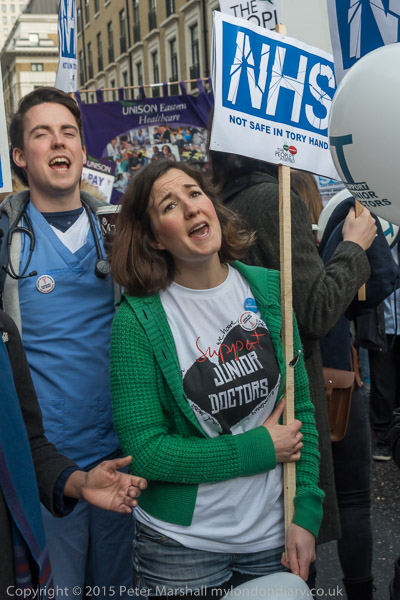
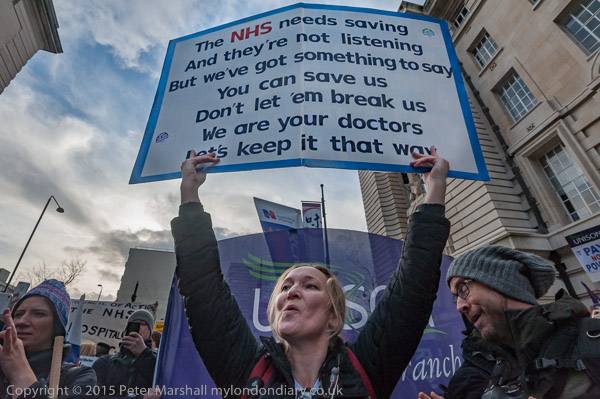
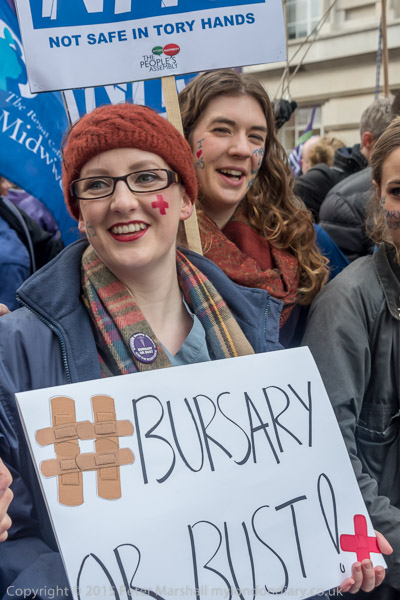
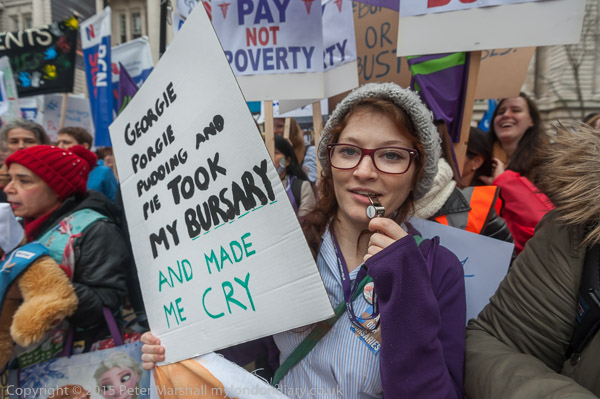
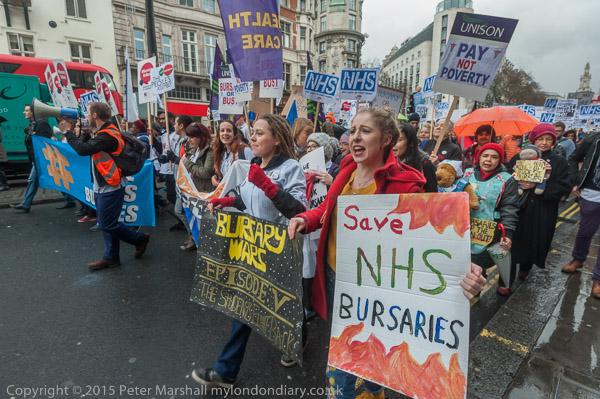
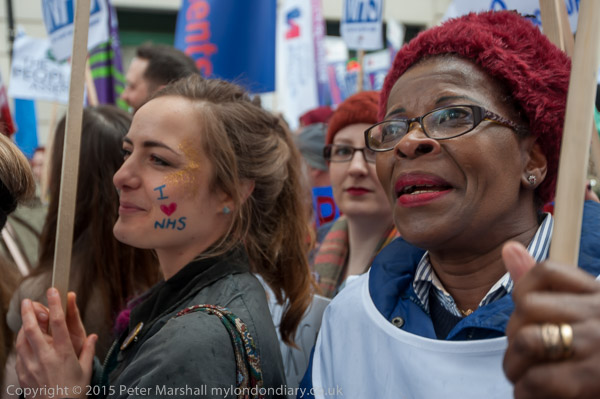
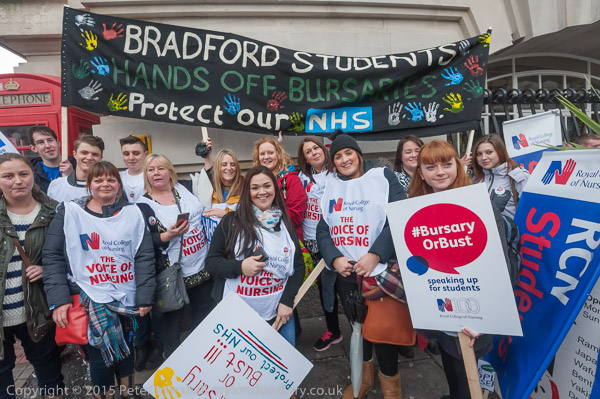
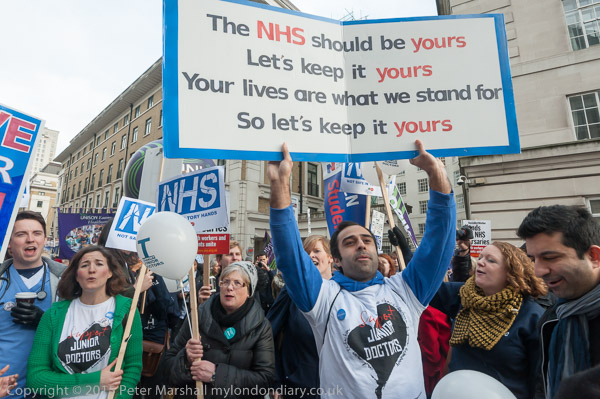
On January 9th 2016 I took the pictures shown here of a rally and march against the axing of bursaries for student nurses and midwives. The current huge surge in hospitalisation of Covid victims as Omicron rages through the nation has highlighted the huge shortage of qualified medical people in the NHS at all levels.

For years, but increasingly since the Tory-led coalition came to power in 2010, there have been huge shortages, with the NHS having to recruit from overseas – including from many poorer countries which are even more short of staff than the UK.

We have of course been bringing in nurses and doctors from abroad for many years – at least from the 1950s – rather than training enough from our own population. It has never been that there were not enough young people who want to be nurses and doctors – and in my years as a teacher I taught quite a few suitable young men and women who were well qualified but failed to gain admission to medical schools where there were perhaps 12 applicants for every place.

Hospitals have also become hugely reliant on agency nurses rather than directly employed staff, partly because of relatively low pay, but also because of a lack of self-defeating lack of flexibility by underfunded NHS hospitals which actually results in increased costs.

But for training nurses, the Tory government really messed things up in 2016 by removing the training bursaries for NHS nurses and midwives. Unlike other students they perform essential work for the NHS in hospitals caring for patients as an integral part of their courses, which makes it virtually impossible for them to undertake other part-time employment during their studies.

And in 2017 things got even worse and nursing students have had to pay tuition fees in the same way as other university students, leaving them with large loans to pay off when they complete their courses and go into employment.

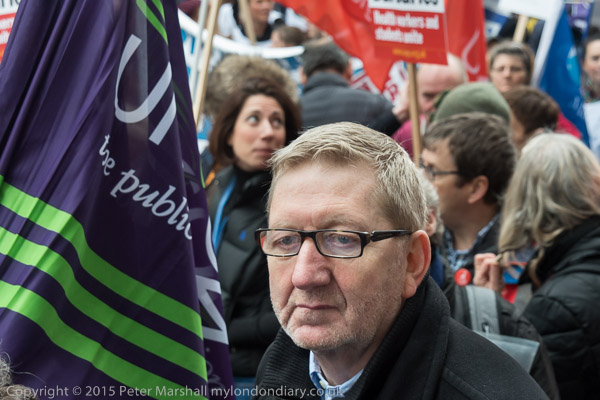
Len McClusky, General Secretary of Unite next to a Unison banner

In 2020 the Royal College of Nursing published a report Beyond the Bursary: Workforce Supply which makes the point that at the start of the pandemic there were almost 40,000 nursing vacancies in the NHS in England alone, and called on government to develop a fully funded workforce strategy and aim for “an oversupply of nurses given years of underinvestment and the growing needs of our population.

The report notes that following the removal of the bursary there was a 31% drop in applicants for nursing courses, and over 4% fewer being accepted. Where we needed and increase in numbers being trained due to the shortage, government policies directly produced a decrease.

The RCN called on the government to abolish the tuition fees for nursing courses and reimburse the fees for those students affected by the removal of the bursary. And although the welcomed the decision to bring back an annual maintenance grant of £5000 for nursing students (£8,000 for some difficult to recruit specialities) from September 2020 they asked for that to be increased to a level that reflects the actual cost.

Of course the pandemic has made things worse. Some have died from Covid, partly as a result of the failure to provide effective protective clothing – and those contracts given to Tory mates with no experience in the field while some established companies failed to get orders. Many among those who recovered from Covid continue to suffer its after-effects – ‘long-Covid’. Others have simply been exhausted by overwork – and this is “a workforce that felt undervalued, unrewarded and where one in three were nearing retirement age.”

Brexit too has taken its toll, both with nurses from European countries leaving the UK and the failure of our government to respect the early promises it made to EU citizens working in the UK has not helped. Brexit and the continuing squabbles by the government over the treaty it signed is also a deterrent to people to now come and work here.

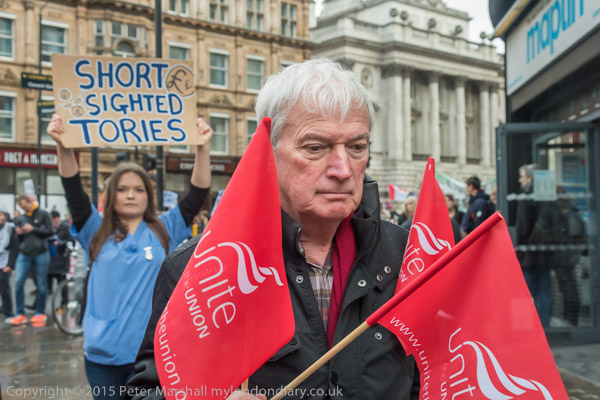
The shortage of nurses – and other medical staff – is a direct result of government policies. Not just the Tories but also of Labour under Blair and Brown, and is a part of the slow sabotaging of the NHS as a part of a policy of creeping privatisation that has been underway since at least the Thatcher years, though vastly accelerated since 2010. Unfortunately it isn’t as one placard states that the Tories are short-sighted, but that they are playing a long game to undermine our National Health Service.

More pictures on My London Diary:
NHS Bursaries March
NHS Bursaries rally before march


Belsize Park Hampstead 1988

Belsize Park, Hampstead, Camden, 1988 88-7m-02-positive_2400
Belsize Park, Hampstead, Camden, 1988 88-7m-02

Belsize Park Hampstead 1988
Belsize is a confusing area for the casual wanderer and many of the streets have ‘Belsize’ in their name, including Belsize Avenue, Belsize Court, Belsize Crescent, Belsize Gardens, Belsize Grove, Belsize Lane, Belsize Mews, Belsize Park, Belsize Park Gardens, Belsize Place, Belsize Square, and Belsize Terrace.

Belsize Park, Hampstead, Camden, 1988 88-7m-04-positive_2400
Belsize Park, Hampstead, Camden, 1988 88-7m-04

I’m not entirely sure whether my captions place all of the houses that are featured in exactly the correct Belsize street, though I’ve tried hard to get them correct. But many of these streets are lined with very similar houses by the same developer – or rather they fall into two groups, the stucco and the later red-brick.

Belsize Park, Hampstead, Camden, 1988 88-7m-61-positive_2400
Belsize Park, Hampstead, Camden, 1988 88-7m-61

As my previous post Hampstead & Belsize 1988 stated, the older houses in the area from the 1860s which feature in this post were stucco, built by Daniel Tidey who went bust in 1870, when development in the 1870s was largely in red brick by William Willett.

Belsize Square, Hampstead, Camden, 1988 88-7m-63-positive_2400
Belsize Square, Hampstead, Camden, 1988 88-7m-63

I liked the Ladies bicycle parked at the bottom of the stairs, its wheels contrasting with the rectangular columns at the gate and base of the steps. It seemed a suitably old-fashioned steed, with caliper brakes and a wicked basket, held by a rather flimsy looking lock to the rail at the bottom of the steps. It was also a tonal contrast, although actually a rather rusty red colour. I also took a colour picture from an almost identical viewpoint which works well, with the green of the vegetation and some attractive muted colours on some of the doors.

Belsize Square, Hampstead, Camden, 1988 88-7m-65-positive_2400
Belsize Square, Hampstead, Camden, 1988 88-7m-65

The backs of these houses have an unusual rounded bay extending from basement to roof.

Belsize Park, Hampstead, Camden, 1988 88-7m-53-positive_2400
Belsize Park, Hampstead, Camden, 1988 88-7m-53

A grand set of steps up to the front door, now with three bells – most of these large properties have now been converted to flats. The tiles here are breaking up and a small area at right is now filled with flowers. There are bootscrapers at both side, probably rather more necessary in the days of horse-drawn traffic than now.

Belsize Park Gdns, Hampstead, Camden, 1988 88-7m-56

Two different framings of the same profusely growing plant – I think a false castor oil plant – and I can’t decide which I prefer. The leaves were beautifully lustrous dark green.

Belsize Park Gdns, Hampstead, Camden, 1988 88-7m-32-positive_2400
Belsize Park Gdns, Hampstead, Camden, 1988 88-7m-32

It is a beautiful plant, and has flowers and produces black seeds, but unlike the true castor oil plant it vaguely resembles, the seeds of Fatsia japonica are I think not particularly toxic.

Belsize Grove, Hampstead, Camden, 1988 88-7m-33-positive_2400
Belsize Grove, Hampstead, Camden, 1988 88-7m-33

The iron-work on this house is perhaps a little too much for my taste, both over-intricate and somehow too fat looking. I think it may now be rather more hidden by vegetation than when I made this picture around 33 years ago.

This was the last picture I made on this walk, probably as I made my way to Belsize Park Underground station on my way home.


Protest tells Harrods ‘Stop Stealing Tips’

Protest tells Harrods ‘Stop Stealing Tips’
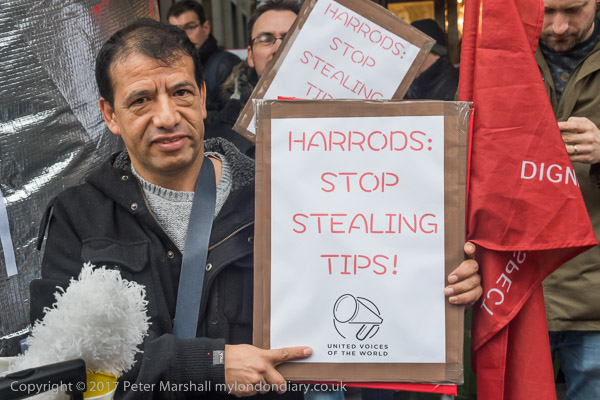
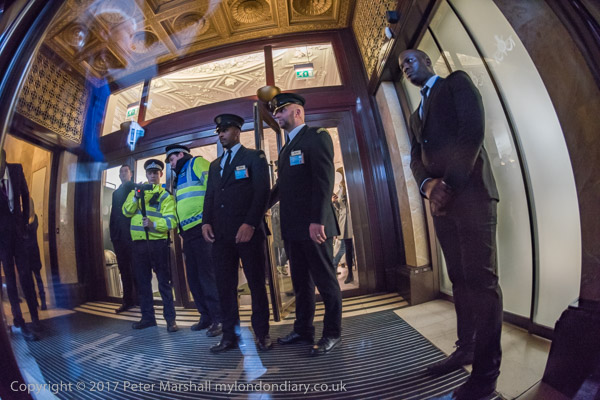
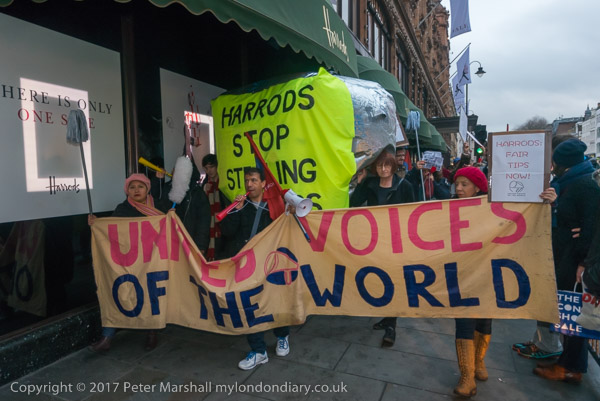
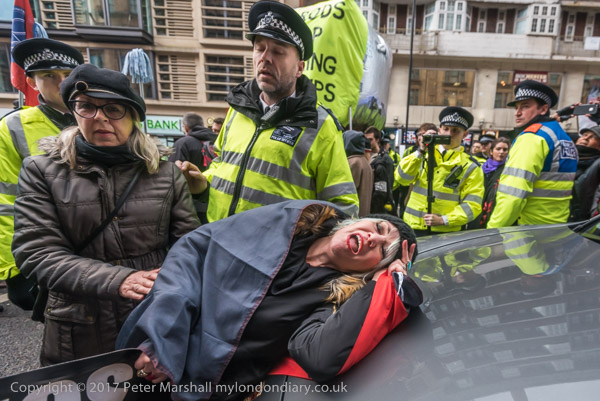
On Saturday 7th December 2017, the United Voices of the World trade union held a protest outside Harrods in Kensington demanding that the restauarant workers there receive the service changes that customers pay on meals.

The UVW is a grass roots union that represents workers in low paid sectors, and their members include chefs and waiters at Harrods. As well as demanding that the workers get the tips they are also demanding that conditions and wages to be improved for waiters who are currently paid at or a few pence per hour above the legal minimum, overworked and poorly managed.

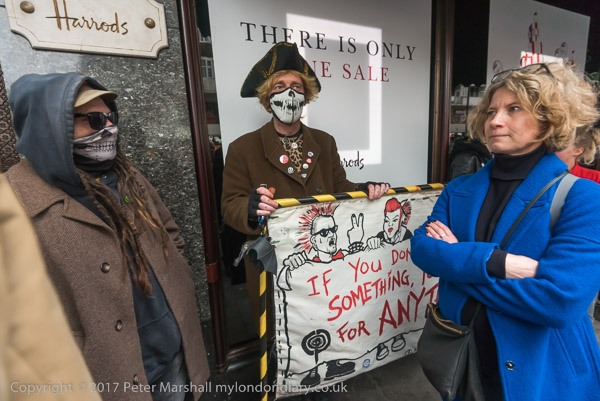
A few people seemed not to support the protest

Harrods, the richest and most prestigious department store in the world, is owned by the immensely wealthy Qatari royal family – and they were then adding to that wealth by taking up to 75% of the tips that customers believed and intended to be going to the staff who served them.

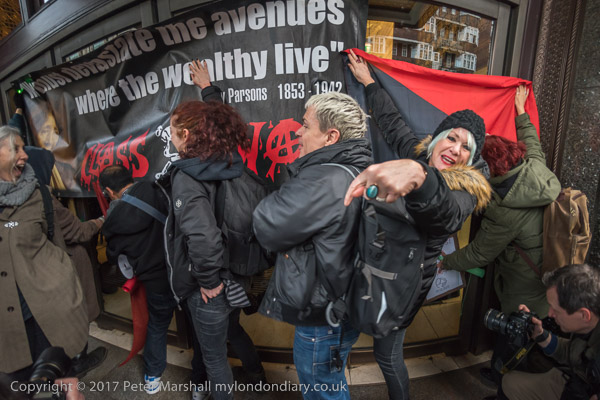
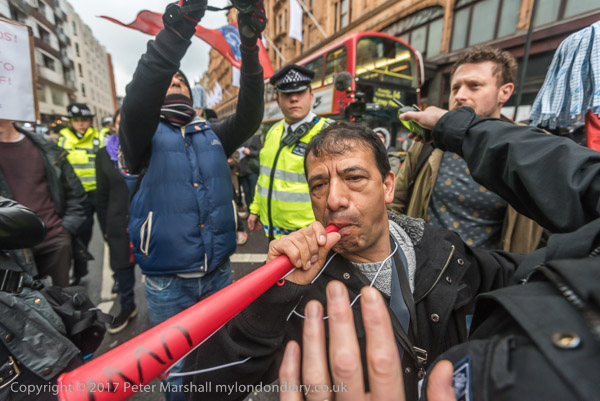
THe UVW succeeded in getting a great deal of public support and even some from our right-wing mass media (it almost certainly helped there that Harrods is owned by foreigners) and several hundred people came to protest outside the store, notably including supporters of Class War.

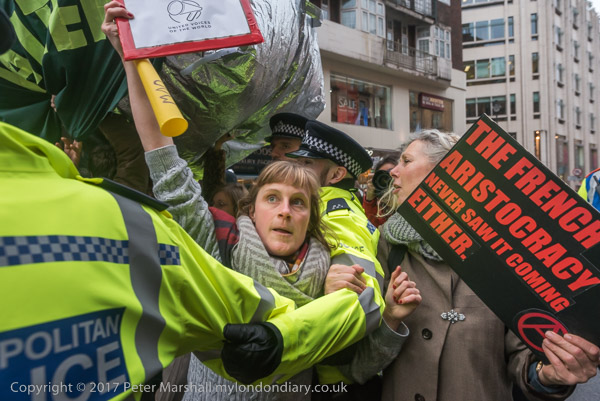
Harrods was supported by a large contingent of police, who at times went beyond there duty to keep the peace and seemed to be taking the side of the Qatari royal family who of course have many friends in high places including the Foreign Office who will have put pressure on the Met to take effective action against the protesters.

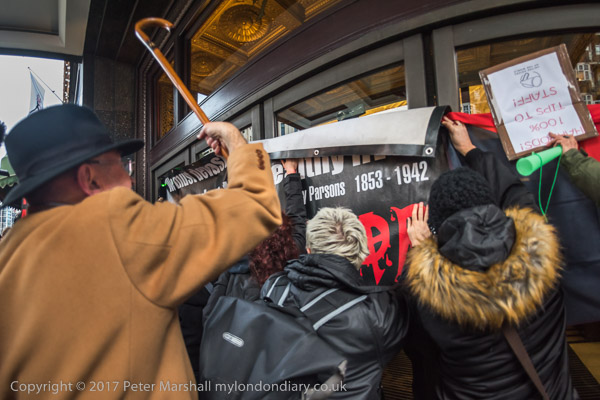
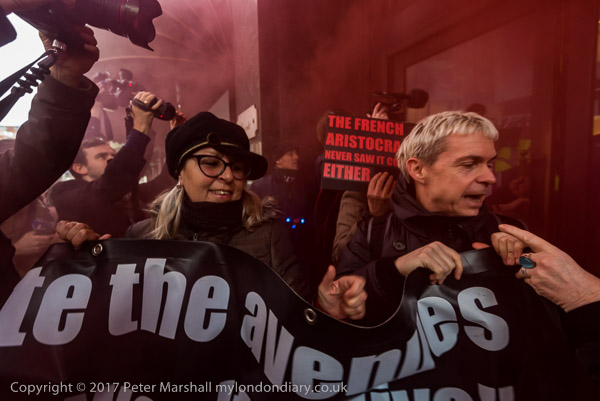
Police film the protest from inside Harrods – but Class War held a banner in front of the doors

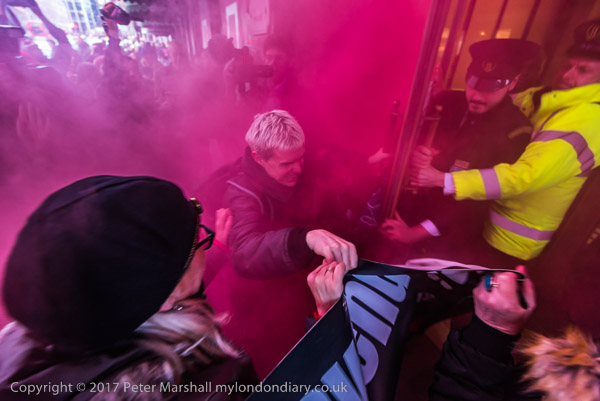
I described the protest as “robust but peaceful” and although at times the protesters blocked the entrances and crowded around the doors, at times holding them open they made no real attempt to enter the store, as police warned that they would immediately be arrested for aggravated trespass. A couple were arrested for trivial matters on the street during the protest, but generally the protest went well and people were in a good mood as it ended and I caught the tube to go home.

Later I heard that as UVW members were packing away their flags, banners, drums and vuvuzelas, police had come and made 4 more arrests, including that of UVW General Secretary Petros Elia. It also appeared that some had been dragged inside the store and locked up by Harrods security staff before being handed over to police.

All were later released without charge, but on police bail – with the condition that they were not to go within 50m of Harrods. It appears to have been a deliberate abuse of the law to try to stop further protests at Harrods – however legitimate these may be. One man who had been grabbed after letting off a smoke flare on the street during the protest – now a rather common occurrence at protests – had apparently accepted a police caution.

Following the protest, and with threats of more protests to come, Harrods finally gave in and agreed to give 100% of the service charge to staff, with an independent tronc master to administer the distribution with staff on the committee.

The UVW continues to fight for its workers at Harrods, and in December 2021 planned a further protest in advance of a strike in the Christmas shopping period. The strike and protest were both called off after Harrods agreed to large pay rises, taking all the waiters and chefs above the London Living Wage – for some it meant a pay rise of almost £5,000 a year, and Harrods has also guaranteed annual increases of 3% from 2023.

Small but active trade unions such as the UVW, along with a few of the major unions are showing that collective action works, while some larger unions seem more rather less interested in their lower paid members. In March 2021, Labour’s North of Tyne Mayor Jamie Driscoll published an article in the Journal and Evening Chronicle and on his blog with the title ‘What Have Trade Unions Ever Done For Us?’ which included the following two paragraphs

For a start, unions stopped child labour. Unionised workplaces are safer, with 50% fewer accidents. Every year unions train 10,000 safety reps. Union members earn, on average, 12.5 per cent more than non-members. They have better job security, and stay in their jobs for an average of five years longer than non-members. Unionised workplaces have higher productivity and fewer industrial tribunals.

Apart from that, though, trade unions have only gained us paid holidays, maternity and paternity leave, paid sick leave, equal pay legislation, pensions, and workplace anti-discrimination laws. Oh, and the weekend. It was unions that fought for a five day working week.

Jamie Driscoll’s blog

If you work, join a union. “You have a legal right to join a union. It’s illegal for an employer to disadvantage you because you are a union member.”

Epiphany Rising Against Monarchy

Epiphany Rising Against Monarchy
Relatively few nowadays observe the 12 days of Christmas which come to an end on January 6th with Epiphany. Traditionally in the UK and some other countries it was when Christmas decorations were taken down, but also a feast day celebrating the arrival of the Three Kings with their gifts. Nowadays most seem to put up decorations even before the start of Advent and often take them down by the New Year.

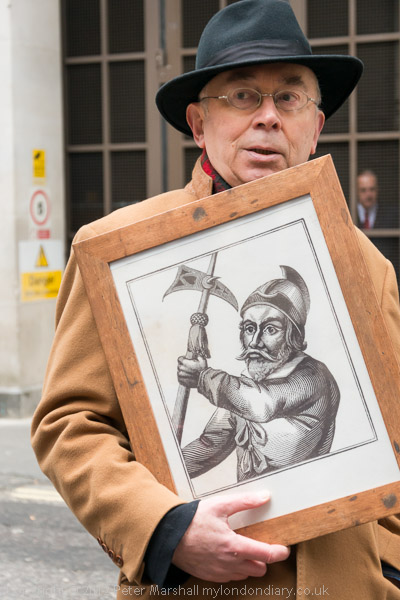
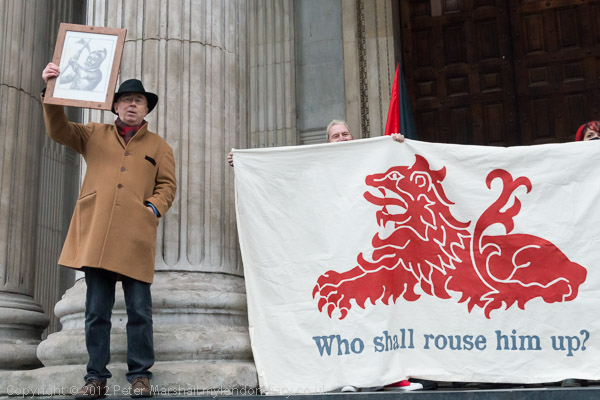
Ian Bone holds a picture of Thomas Venner

Epiphany gained a new importance in literature and moved to entirely lower case in the work of James Joyce, where his hero Stephen Daedalus defines it as “a sudden spiritual manifestation, whether in the vulgarity of speech or of gesture or in a memorable phase of the mind itself.” Epiphanies are moments of revelation that change the the way a character or person sees life or a particular situation, suddenly seeing things in a new light. I think all great photographs are epiphanies.

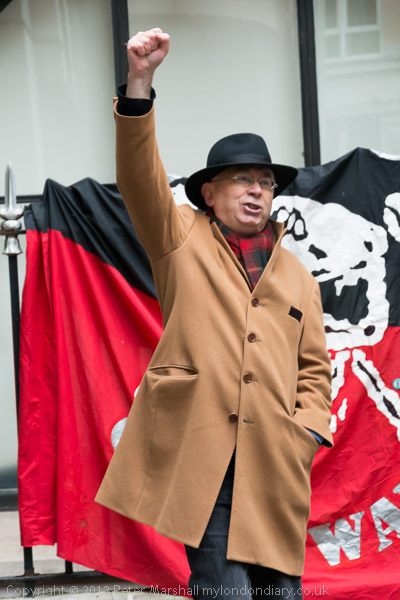
Ian Bone speaks

But getting back to the 6th of January, and in particular the 6th of January 1661 which was the subject of a partial re-enactment on the 6th of January 2013, we need to remember the centrality of religion in those times. Though many might now protest against the monarchy, particularly in recent days over the ennobling of a war criminal and the alleged criminal acts against minors by one of the royal family, few would now do so for the kind of religious reasons that led Thomas Venner and his fellow Fifth Monarchists to carry out a bloody armed insurrection in the City of London.

As I wrote in My London Diary:

The Fifth Monarchists were an important religious movement in England during the rule of Oliver Cromwell, seeing the execution of King Charles as being part of the fulfulment of the Biblical prophesy in the book of Daniel about the end of the four kingdoms of history being followed by the “rule of a son of man” for a thousand years (which they took as the rule by the Pope) after which would come the Christ’s reign on earth. For this to happen, the old order had to be ended by violence – as had begun with the beheading of the king.

They included three of those who had signed the execution warrant, but they soon become disillusioned with Cromwell, who they saw as trying to make himself a king and they began to agitate against him. Thomas Venner was imprisoned for several years for plotting to overthrow Cromwell, but released when Richard Cromwell became Protector.s

They were incensed by the restoration of the monarchy, and in particular by the savagery shown by the new order against the ‘regicides’, including Fifth Monarchist Major-General Harrison who showed great bravery during his gruesome public execution by hanging, drawing and quartering.

My London Diary

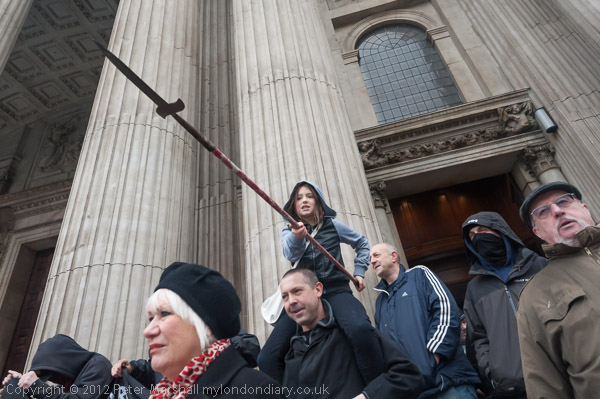
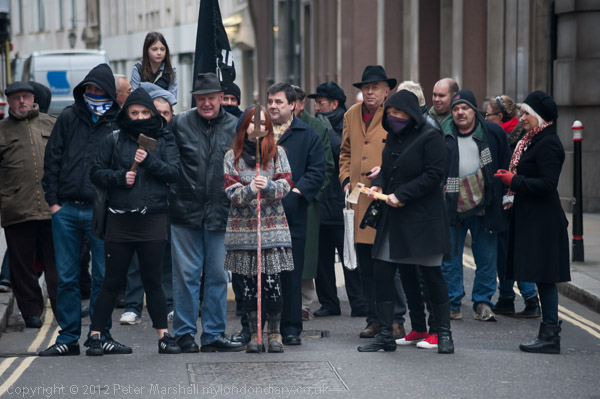
Like Venner’s the re-enactment began at Swan Alley (now Great Swan Alley) and with around a similar number of his 50 or so followers, and were variously armed with pikes and other weapons. The event in 2013 began with a speech by Ian Bone about the history of the earlier event, followed by several other anarchists and socialists whose comments related the it to our current times. The event was for a short film, Epiphany, with Ian Bone as writer working with director Suzy Gillett.

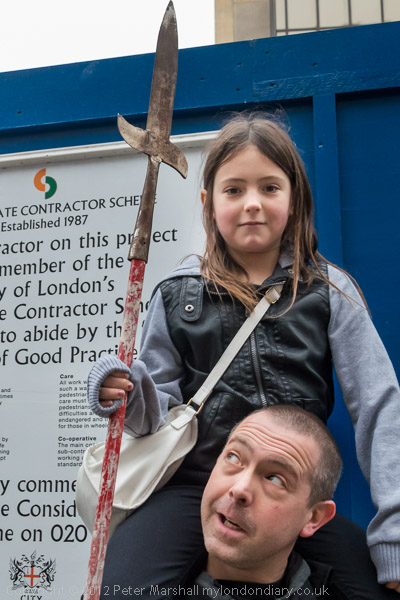
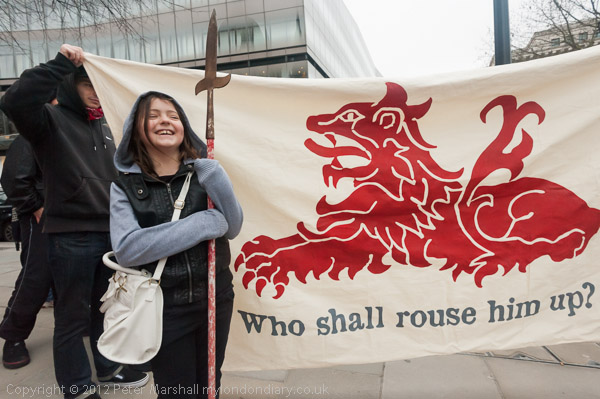
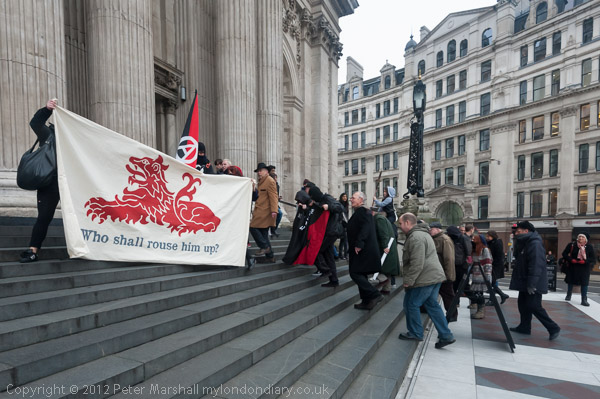
I suspect Venner’s address was rather more fiery, but we did have a very fine banner, with a heraldic lion and the text ‘Who shall rouse him up?’, and as in 1661 the mob was led out of the yard by a young woman bearing a pike and the battle cry “King Jesus and the heads upon the gates“. Among those taking part was Sam, grandson of Philip Sidney Noakes, the last of the Muggletonians, another of the radical seventeenth century religious movements with his daughter Rachel.

Sam, grandson of Philip Sidney Noakes, the last of the Muggletonians, with his daughter Rachel

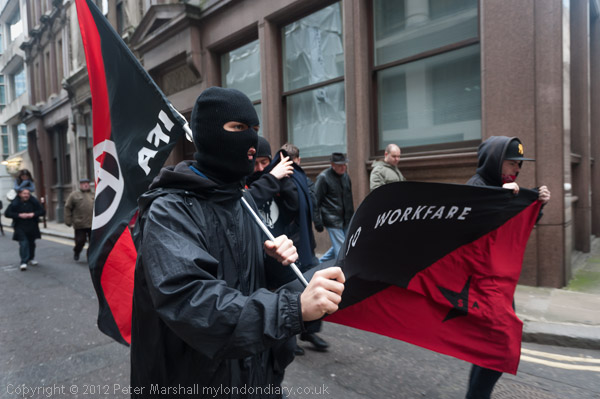
There were other anarchist banners and black and red flags and banners and people shouted some of the old slogans, ‘King Jesus‘, ‘Heads On Pikes‘ and ‘Nobility In Chains’. Though some were carrying axes and hammers, certainly illegal offensive weapons, none were put into use into what was a rather tame stroll with a number of stops to allow the film director Suzy Gillett to move the camera into position on the way via the Guildhall to the steps of St Paul’s Cathedral.

There the group were content with posing for photographs, rather than following Venner’s example and storming in and holding it for several days, along with other parts of the city, until finally the army was sent in against them. Most were then killed and the others captured after a long and bloody fight. Venner himself was wounded in 19 places before he was finally overpowered.

Together with ten others after a brief trial he was sentenced to be hung, drawn and quartered; the sentence was carried out in front of the meeting place of his congregation in Swan Yard on 19 Jan 1661. Many other Fifth Monarchists who had taken no part in the rising were hunted down and hung or imprisoned, and draconian laws were enacted against dissenters but this did not end the movement.

You can read a fuller account of the event in Epiphany Rising Against King on My London Diary, and even more detail in a post on the Bristol Radical History Group site.


Digital Panoramas on the Thames Path

Digital Panoramas on the Thames Path
I’ve long had an interest in panoramic photographs, both in taking them and also appreciating the work of well-known photographers who have made panoramic images. From the earliest days some photographers wanted to make pictures with a wider field of view than was possible with a normal camera and lenses, and the first patent for a specialised panoramic camera was filed in Austria in 1843, using a curved Daguerreotype plate and rotating lens.

The earliest existing panoramic photographs appear to be those by Friedrich von Martens made in the early 1840s – such as this example on Wikimedia dated from 1846. There are also paper prints from the same era, presumably made from calotype negatives. As well as making single exposures with an angle of view of around 150°, von Martens and others made panoramas using multiple exposures, often with normal lenses. Martens produced what was probably the first 360° panorama using three curved Daguerreotype plates.

Normally we use cameras with rectilinear lenses to render straight lines in the subject as straight lines in the picture. But as the distance from the lens centre to the film or sensor gets longer towards the edges and corners, the image magnification also increases. This begins to be noticeable with extreme wideangle lenses, although more of a problem with some subject matter than others.

Although I’ve worked with a full-frame lens at 12mm, I’ve found that for general purposes a practical limit is around 15-16mm with 18mm generally more useful, corresponding to an horizontal angle of view of 90°. Beyond that the image stretching usually becomes too noticeable.

The first really popular specialised panoramic film cameras were the 1899 #4 Kodak Panoram and the Circut, patented in 1904 and produced in a range of sizes until 1945. Some were still in use until recently for producing long roll photographs of perhaps 800 pupils sitting in rows on the school field. They rotated slowly enough for some students to run around the back of the group and appear at both ends. Cameras of this type were used to great effect by photographers including Josef Sudek.

Having made several multi-image panoramas and found the process limiting I bought my first rather more modest panoramic camera, a Japanese Widelux taking images on 35mm film in 1991. Later I bought a Russian Horizon which gave similar results, and a 120 format Chinese model. I still have these along with a Hasselblad X-Pan, not really a true panoramic camera, but using a panoramic format – with the standard lens it only gives a similar angle of view to a 28mm lens, and even with the 30mmm wideangle I mainly used only around a 90° angle of view.

These cameras were the main reason I continued using some film after going digital in 2002. But some years later I found a way of working with digital cameras to make panoramic images, using a fisheye lens and then ‘defishing’ this with software to give a similar image to those made with the swing lens cameras.

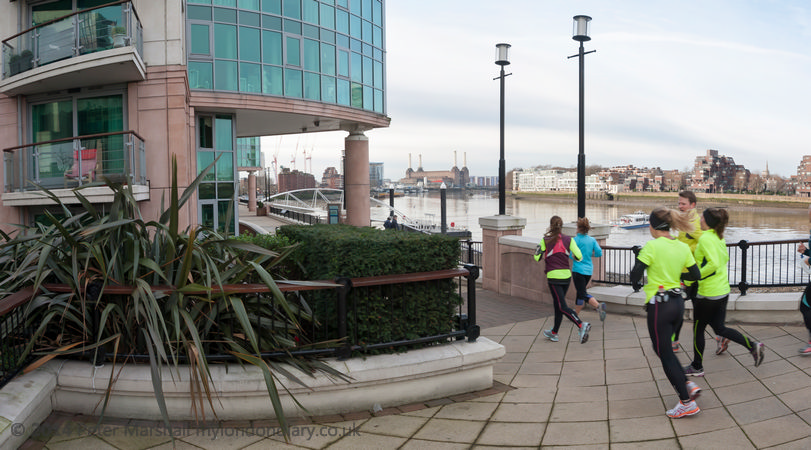
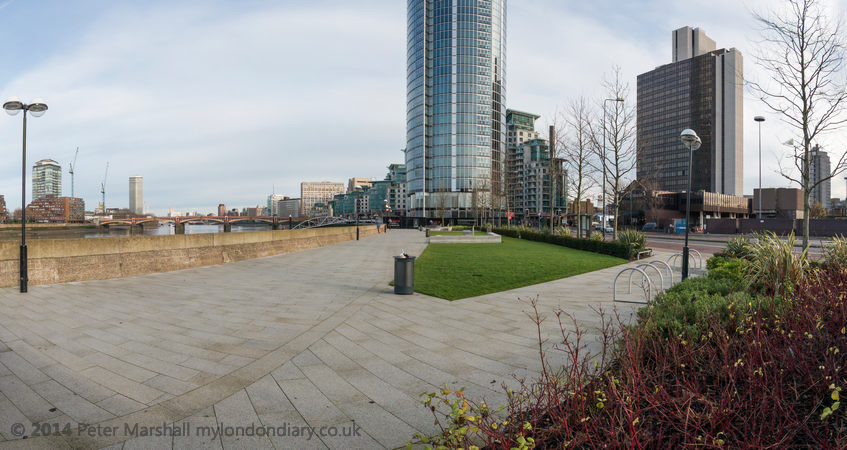
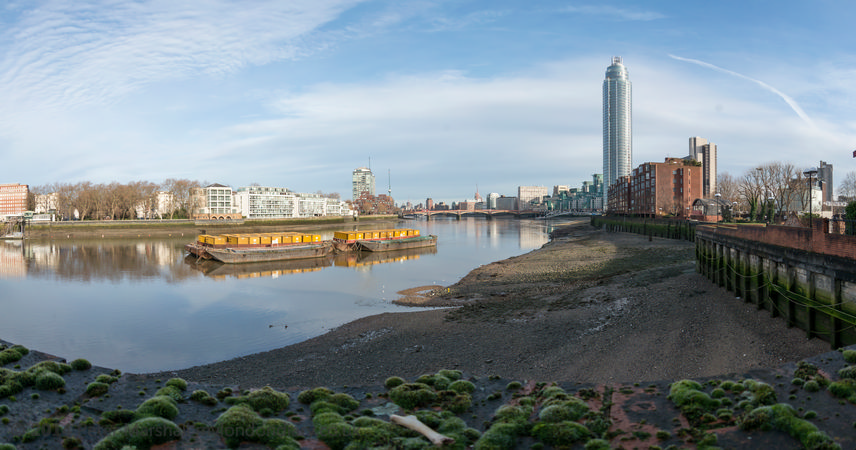
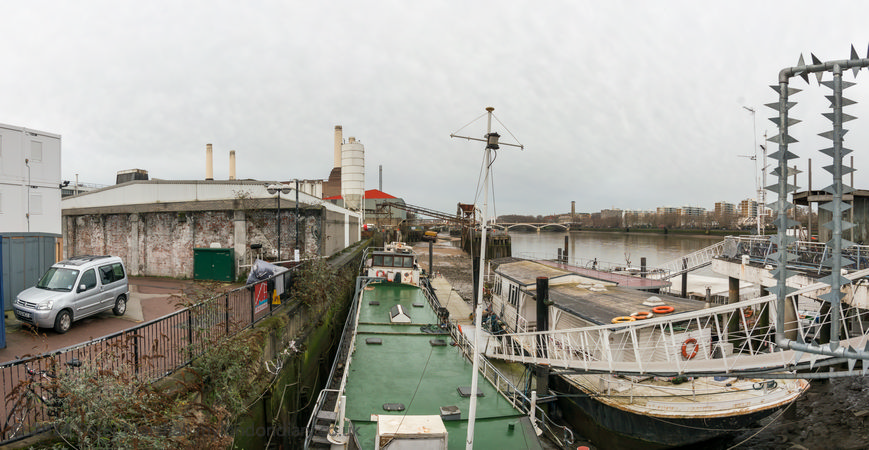
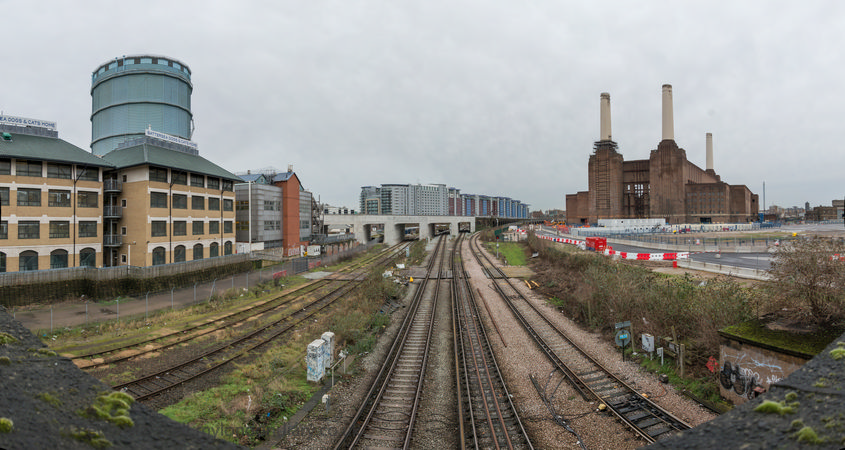
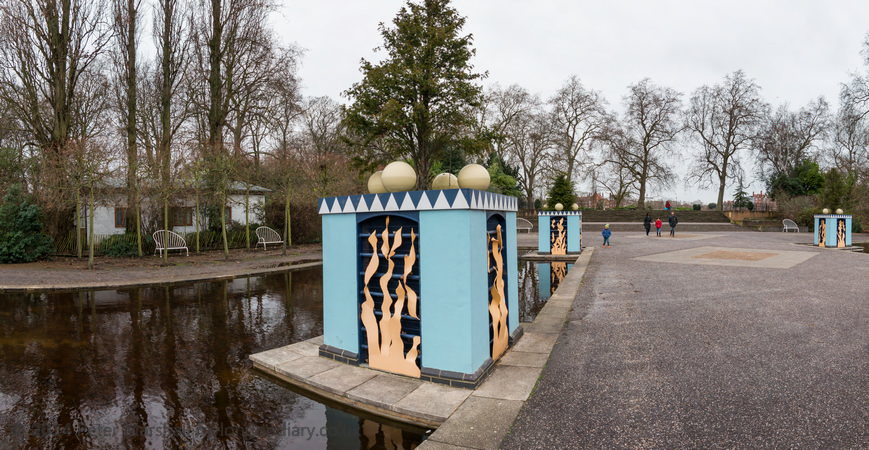
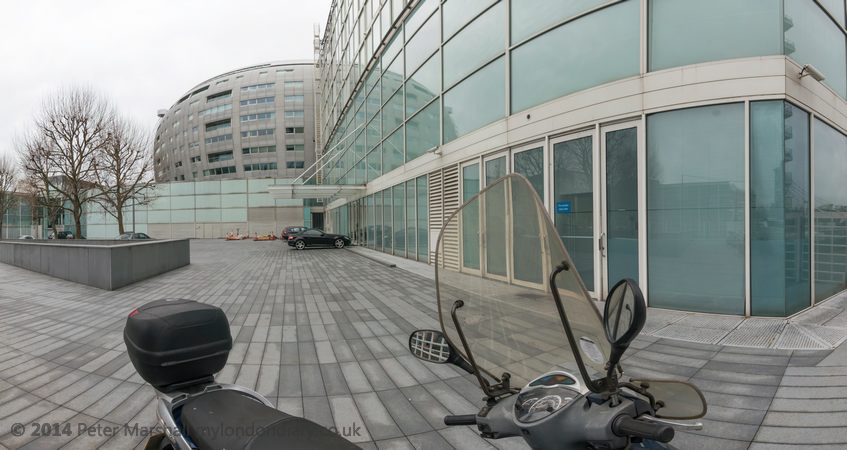
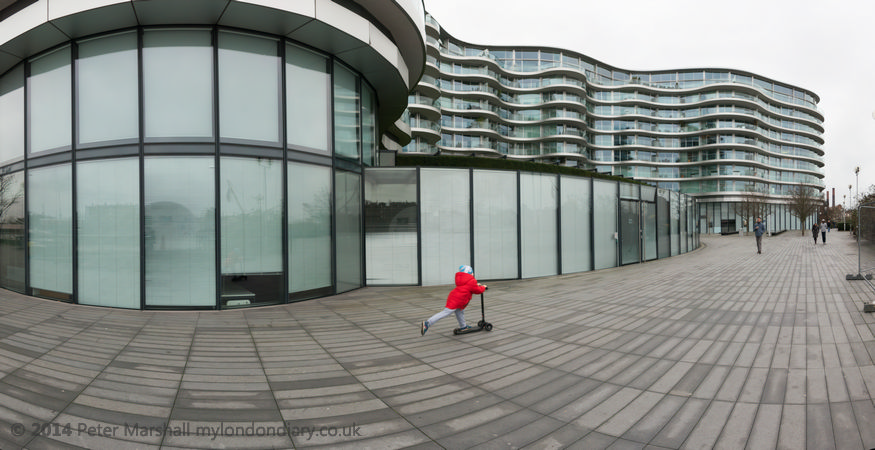
These pictures were taken seven years ago on a short walk along one of my favourite sections of the Thames Path in London, from Vauxhall to Wandsworth on Sunday 5th January 2014.

I took images handheld with a Nikon D800E using a Nikon 16mm f2.8 fisheye lens, and later converted them using an Equirectangular projection in PTGui software. I now generally use the more convenient Lightroom Export plug-in https://www.imadio.com/products/prodpage_hemi.aspx ‘Fisheye-Hemi’ from Imadio.

You can see larger images and many more from the walk at Thames Path Panoramas on My London Diary.


An Olympic Bike Ride

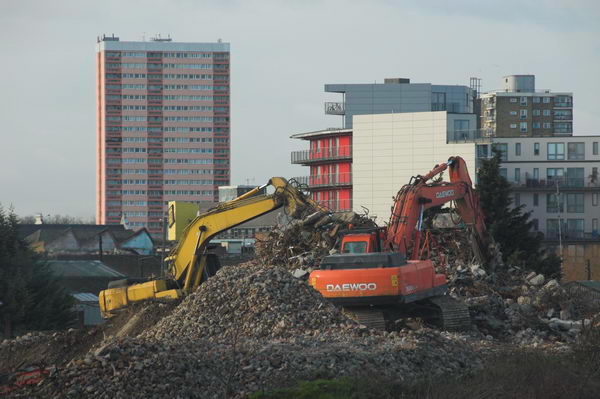
Businesses later demolished at the heart of the site for London’s 2012 Olympics

An Olympic Bike Ride: At the end of 2002 I finally bought a Brompton, a rather expensive folding bicycle which then cost me around £600. Perhaps not a lot for a new bike then and certainly not now, but rather more than the £13-7s6d or so the other bike I was still riding had cost in 1958.

Clays Lane Housing Co-operative – demolished for the Olympics

I’d been thinking about it for years, and it would certainly have been very useful for the work that I’d been doing around outer London in the previous decade, but I’ve only used it infrequently for my photography.

Eastway Cycle Circuit – lost to the Olympics

Though it’s a great way to get to places, taking it by train or underground and riding from a convenient station, Bromptons are a powerful magnet for bike thieves, so easy to put in a car boot or van, and selling at a relatively high price. It isn’t safe to lock them anywhere in public view when even the best cycle lock can only detain the well-equipped thief for around 30 seconds.

Bully Fen Wood – Community Woodland lost to the Olympics

So rather than using it for my general photography – mainly of protests and other events – I’ve used it for cycle rides on which I’ve taken photographs, both around where I live – it’s easier to jump on and off than my full-size bike – and in and around London.

Factory on Waterden Road – demolished for the Olympics

Thursday 4th January 2007 was a nice winter’s day, not too cold and blue skies with just a few clouds, and I went with the Brompton to Waterloo and then on the Jubilee Line to Stratford. Preparations had begun for the 2012 London Olympics and I wanted to see and photograph what I could of the changes that were taking place.

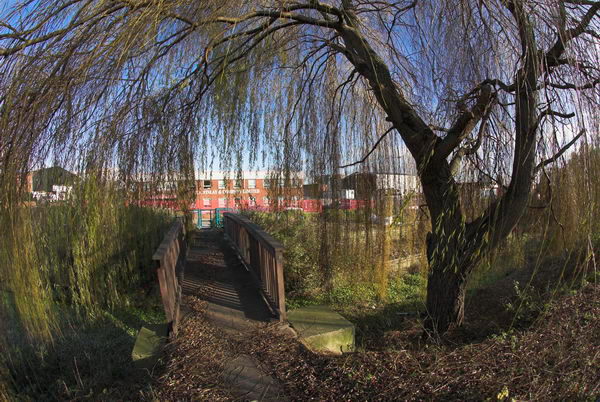
The footbridge has been kept in the new Olympic Park

My account of the day on My London Diary begins with my tongue-in-cheek suggestion that it would have been much preferable on environmental ground to shut down Heathrow and use that as the Olympic site, but goes on to describe a conversation I had with one of the residents at Clays Lane, then about to be demolished (spelling etc corrected.)

‘he talked of living in a fascist state, with lack of consultation and individual powerlessness, and of the games as having always had a militaristic overtone. hardly surprising there is little support for the games here, as initial promises that people from the Clays Lane Housing Co-operative would be rehoused in conditions “as good as, if not better than” their present estate were soon changed to “at least as good as in so far as is reasonably practicable.”‘

My London Diary

Work on the site seen from the Greenway

From Clays Lane I moved to the Eastway Cycle Track, already closed and fenced off – I decided against going through a gap in the fence to ride around it. The Community Woodland at Bully Fen Wood was also already closed. and I cycled on around the roads at the north of the site to Hackney Wick.

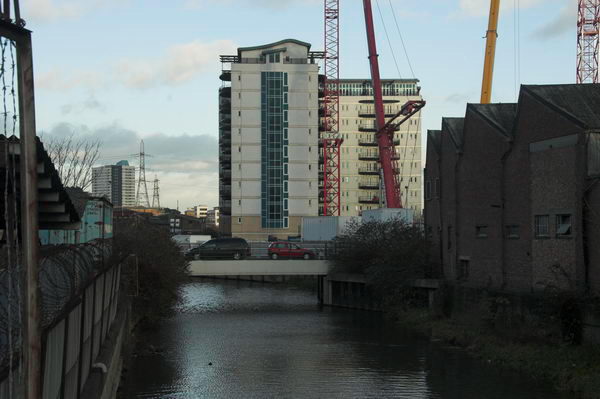
Pudding Mill River and Marshgate Lane – all now gone

Along Waterden Road I photographed some of the other industrial sites that were to be lost to the games, then turned along Carpenters Road and into Marshgate Lane, all soon to be fenced off and everthing on them destroyed. After taking pictures around Marshgate Lane I went back and into Hackney Wick, photographing the Kings Yard workshops on Carpenters Road soon to be demolished on my way.

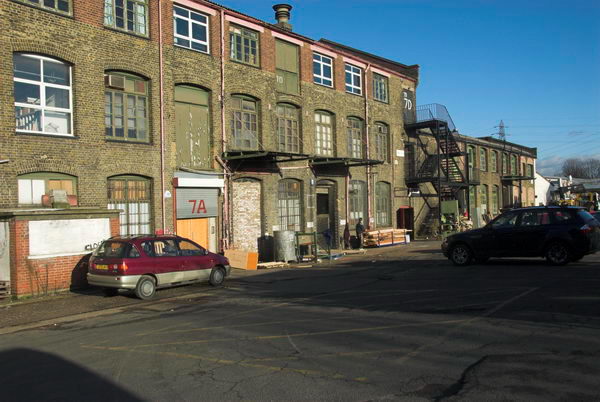
Kings Yard – demolished for the Olympics

Hackney Wick to the west of the Lea Navigation is largely outside the Olympic compulsory purchase area, but some large areas of industry were scheduled for demolition and I took more pictures. I found the towpath here beside the navigation still open and rode down it to Stratford High Street, where more industry to the north of the road is also going.

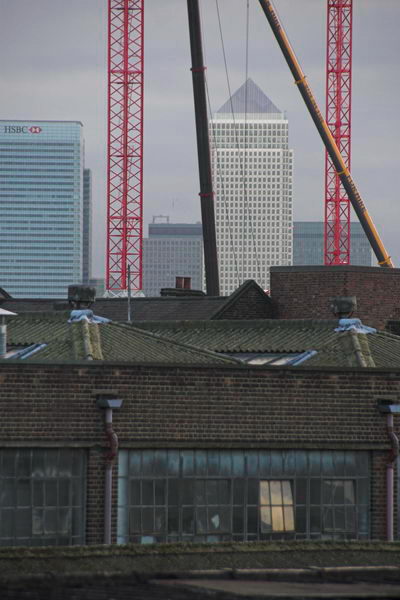
Canary Wharf from Stratford Marsh

I spent some time going up the roads and paths here going from the High Street into Stratford Marsh which were still open, then went east along the top of the outfall sewer past areas also covered by the Olympic CPO.

St Thomas Creek, Bow Back Rivers – factories at left and right to be demolished

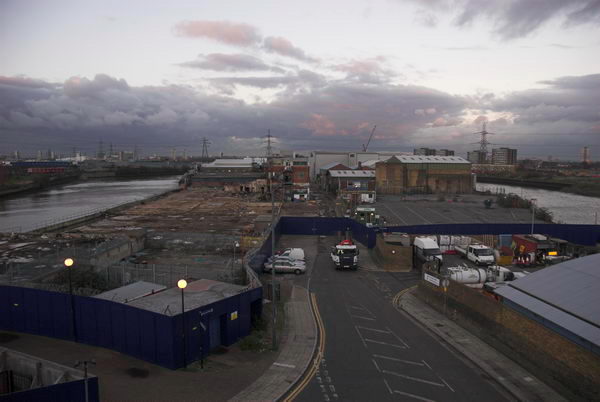
There was still a little light and I came down from the ‘Greenway’ and cycled down to Bow Creek from West Ham, going down the path on the west side of the creek to the Lower Lea Crossing. I wanted a picture showing the Pura Foods site then being demolished, but also made a number of other twilight pictures from this elevated viewpoint, and also some from the Silvertown Way viaduct as I made my way to Canning Town Station for the train home.

Pura Foods being demolished for London City Island development

Many more pictures from this ride on My London Diary, starting a little way down the January 2007 page.


John Lewis Cleaners Protest

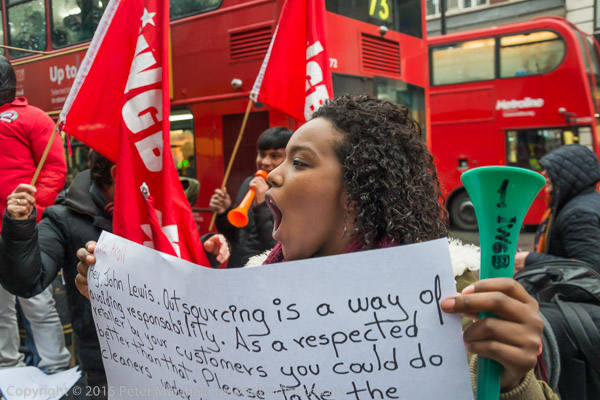
A protester holds a message from John Lewis customer Una Kroll: ‘Outsourcing is a way of avoiding responsibility’

John Lewis Cleaners Protest
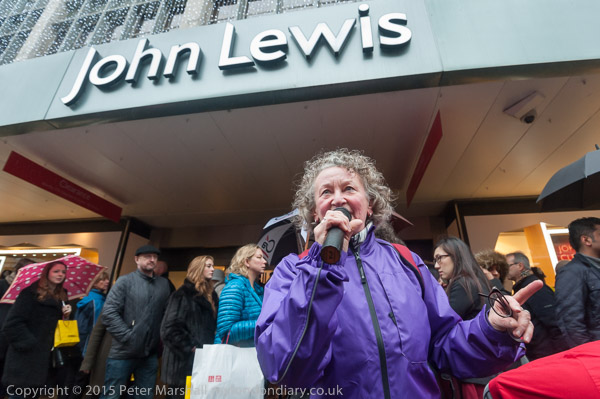
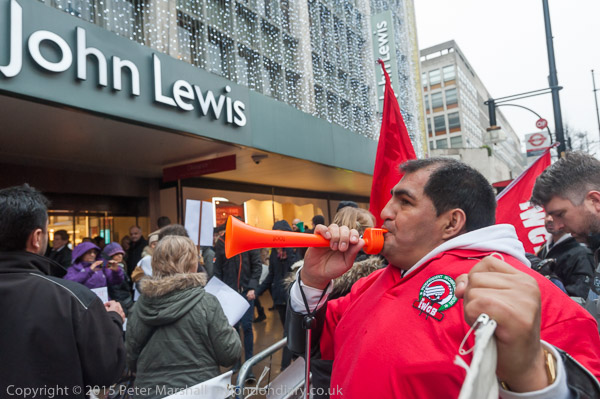
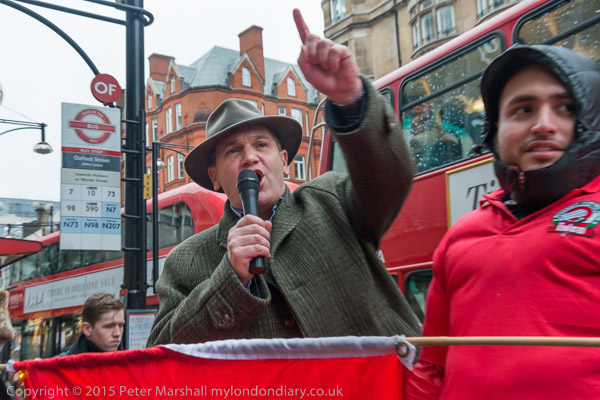
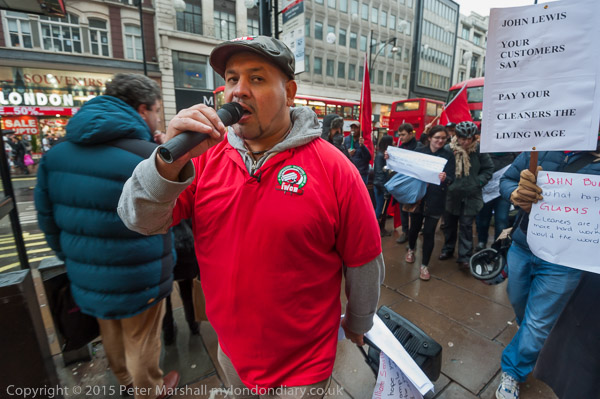
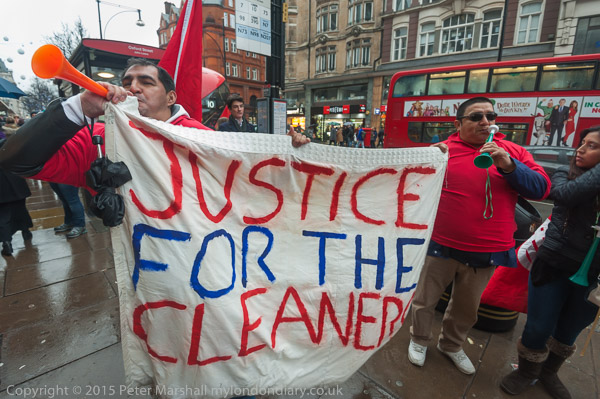
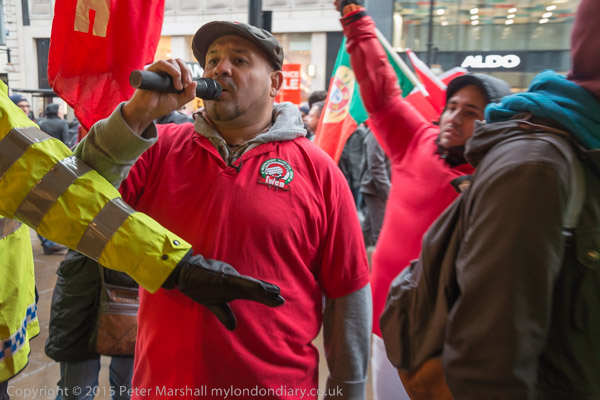
On Saturday 3rd January 2015 I met cleaners from the Cleaners And Facilities Branch of the IWGB (Independent Workers Union of Great Britain) outside John Lewis’s flagship Oxford Street store. They were there to hold a protest rally demanding the company lived up to its ethical reputation and paid the workers who keep the shop clean a living wage.

When John Spedan Lewis set up his small drapers shop on Oxford Street in 1864 he had the revolutionary idea of involving those who worked for him in the running and progress of the business, setting up a constitution that made all of them partners.

The ultimate purpose was expressed in Principle 1 of this consitution:

The happiness of all its members, through their worthwhile and satisfying employment in a successful business.
Because the Partnership is owned in trust for its members, they share the responsibilities of ownership as well as its rewards – profit, knowledge and power.

John Lewis Partnership

Green Party London Assembly member Jenny Jones, Baroness Jones of Moulsecoomb, speaking at the protest

But although staff on the counters and running other aspects of the business remain partners – and almost every year get an extra bonus payment as a share of the profits, the cleaners who work in the store who are not included in the scheme and say that in this and other respects they are being treated as second-class citizens.

Although the cleaners work in the store next to the John Lewis partners they are not employed by John Lewis. John Lewis pays a cleaning contractor to employ its cleaners, who get lower rates of pay and far inferior conditions of service than staff who are directly employed.

This lets John Lewis maintain the pretence of being an ethical employer while these people who work there get bullied, work under poor and often unsafe conditions, are paid less than a living wage and get only statutory minimum holidays and sick pay.

Mick Dooley of London TUSC

Neither John Lewis nor the cleaning contractor recognise the IWGB although a large majority of the cleaners belong to it, and neither had been willing to engage in talks about the dispute. John Lewis attempts to disclaim any responsibility for the cleaners, but the trade unionists and others who came to speak dismissed this as a a shallow attempt at deception. The work done by the cleaners takes place in the store and is essential to its running and should be properly recognised and paid.

In a protest before Christmas I had met with members of the IWGB in the restuarant at the top of the store and photographed an unannounced protest by them inside the store. This time was very different, with the protest being held on the wide pavement outside and given as much advance publicity as possible.

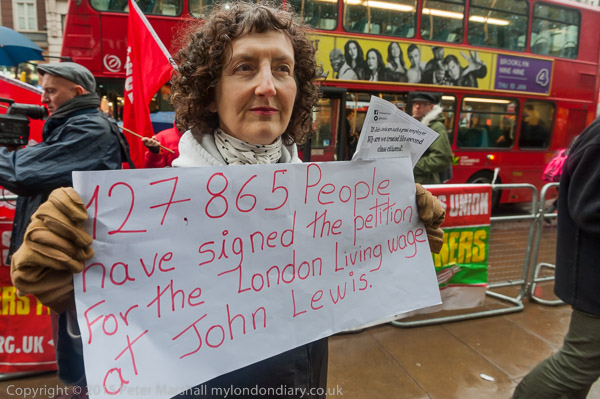
The union had received considerable support from John Lewis customers, with over 125,00 signing a petition calling on the company to live up to its ethical reputation and ensure that the cleaners are paid a living wage. Some of them came to protest with the union.

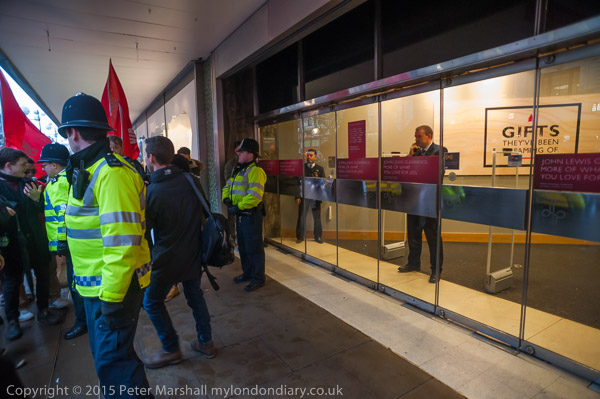
After speeches in front of the store on Oxford St, the protesters marched around the block containing the store which has entrances for shoppers on three sides. Although they arrived at some of these before the police and security they made no attempt to go inside, determined to avoid any trespass, though there were some arguments with police over a thin metal line in the pavement which marked the edge of the property.

Many shoppers on the street stopped briefly to find what the protest was about and most expressed support for the workers. The main doors to the store were closed by John Lewis security staff for much of the roughly an hour and a half protest.

Happy New YEAR? We Can Hope

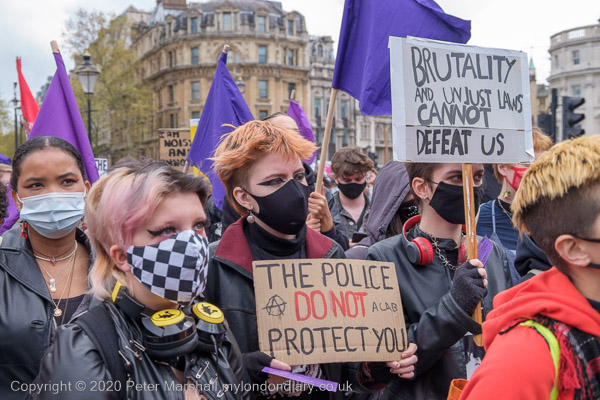
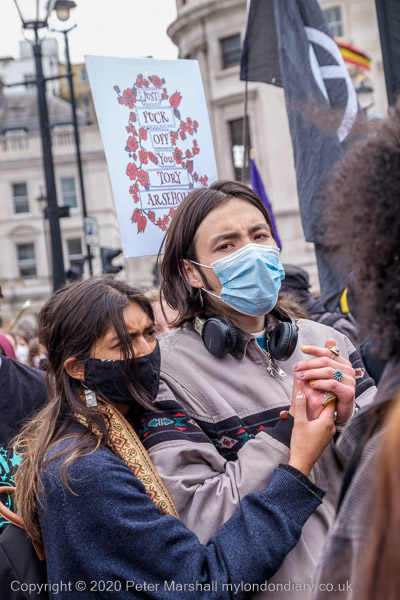
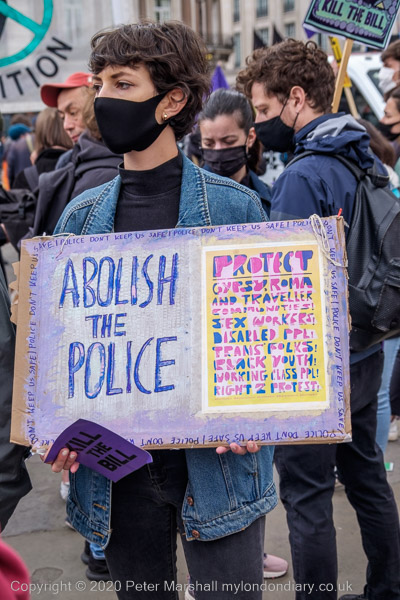
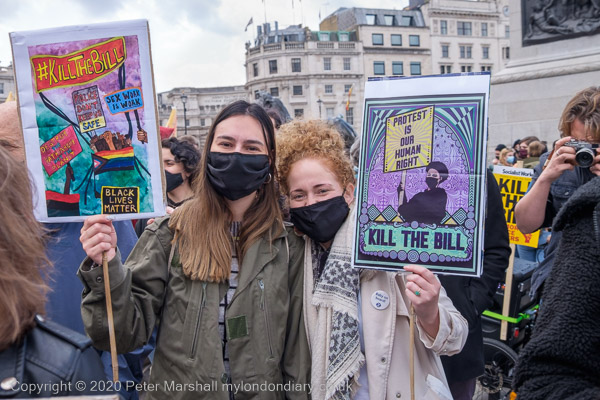
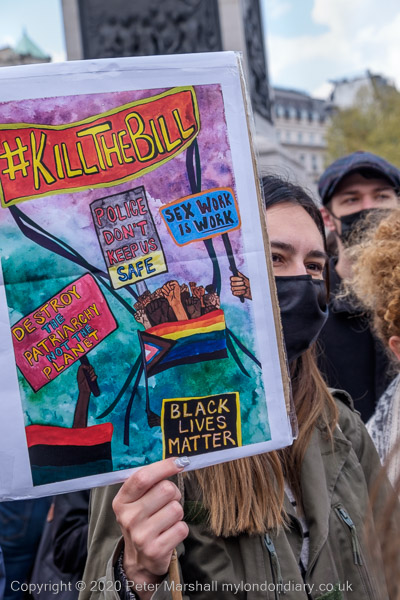
London, UK. 1st May 2021. Several thousands held a rally in Trafalgar Square before marching past the Ministries of Justice, DWP and Education to the Home Office against the Police, Crime, Sentencing and Courts Bill which will ban effective protests, criminalising many and create new offences with heavy sentences, discriminating against Gypsy, Roma and Travellers and expanding racist stop and search powers. Peter Marshall

Happy New YEAR? We Can Hope. We can only hope 2022 will be a better year than 2021, though despite everything I found plenty to enjoy in the last year. But I’m not making any resolutions, other than to try and keep going as best I can.

Some Thoughts on 2021

The first few months, still under lockdown and largely isolating at home were dull. When a trip to the dentists is the highlight of your week you know there is something seriously wrong.

London, UK. 1st May 2021

But the vaccinations – my first at the end of January and the second in mid-April – were very welcome. I’ve no sympathy for those who refused them, their arguments are entirely specious – like those for not wearing masks – apart from a very small group with genuine medical reasons.

London, UK. 1st May 2021.

I was fortunate not to have more than a little soreness from the needle for the day or two after the injection. Though I was rather disappointed when a few weeks later a lateral flow blood test for antibodies gave a negative result, though these tests are apparently even less reliable than those for Covid – where I’ve been pleased so far to always get a negative.

London, UK. 1st May 2021.

But a couple of weeks after the second dose I felt confident enough – despite my advanced years and diabetes – to go up to London rather than miss another May Day. Although the official May Day March was cancelled there was a large protest taking place. The pictures here are all from that day.

London, UK. 1st May 2021

Of course I wore a mask – as did many of those in the protest against the Tory bill attempting to seriously limit our rights to protest also did, even though we were out of doors. It did after all get quite crowded on the streets. Even some of the police wore masks.

London, UK. 1st May 2021.

It was good then and on later days when I went up to London to meet many I’d not seen for over a year, though sad to remember there are some I won’t see again, largely victims of the Boris Johnson’s failures to bring in effective measures in time.

London, UK. 1st May 2021.

As the year went on I continued making occasional visits to London to photograph events, though many were still cancelled. I decided also to cut down on the number of events I attended, concentrating on those I felt more strongly about that were taking place on Saturdays, seldom covering things during the week. And although I’ve not posted these on my own web site, pictures are available on Alamy. You can go to my Alamy portfolio page to see them all.

London, UK. 1st May 2021.

I also began occasionally meeting socially with family and a few friends – though still rather cautiously and keeping in mind the need to avoid too much risk. We kept mainly outdoors and mainly ate in near-empty pubs.

But then came Omicron, since when things for me have rather closed down again, even though I got my booster early. We had Christmas and Boxing Day meals with only two of our immediate family and I’ve again stopped going to London.

London, UK. 1st May 2021.

On the plus side, the hiatus since early March 2019 has given me the time to get to grips with digitising and posting online many photographs from my early years – now almost to the end of 1992 with the black and white work. Now I have over 18,000 images on-line in albums on Flickr, mainly black and white images of London – but also Hull and Paris and a few other places, and some in colour.

London, UK. 1st May 2021.

So far those images have generated over 4.5 million views and a considerable amount of feedback, though rather to my surprise much of this has been about the cars on the streets in some pictures rather than the buildings or people I was photographing.

London, UK. 1st May 2021.

I think though I’ve not checked that I’ve also managed to put a post here on >Re:PHOTO for every day in 2021, something I can’t promise to do for 2022. It takes up quite bit of my time, though it helps that I can write the posts a day or two in advance and schedule them to be posted.


There are no adverts on this site and it receives no sponsorship, and I like to keep it that way. But it does take a considerable amount of my time and thought, and if you enjoy reading it, please share on social media.
And small donations via Paypal – perhaps the cost of a beer – would be appreciated.

Hampstead & Belsize 1988

Heath St, Hampstead, Camden, 1988 88-7k-26-positive_2400
Heath St, Hampstead, Camden, 1988 88-7k-26

Hampstead & Belsize 1988 These pictures are from the second part of a lengthy walk from Swiss Cottage. They start with a long section through Hampstead and on to Hampstead Heath, in which I took relatively few pictures.

Looking at my contact sheets I can trace my route down Hampstead High St and Rosslyn Hill along Pond St to South End Green and then north to Hampstead Ponds, where I probably sat to eat my sandwiches before taking a look at South Hill Park Gardens, going down Keats Grove past Keats House, then down past St John’s on Downshire Hill and across Rosslyn Hill and along Thurlow Rd to Lyndhurst Terrace and to Lyndhurst Rd.

But although there is nothing wrong with the pictures I took on that eaction of the walk, none of them excited my attention enough for me to mark them up for digitisation and putting them on-line – and the sequence of over 20 frames is one of the longest gaps in making my on-line albums. Perhaps I should add a few more to the album.
Lyndhurst Rd, Eldon Grove, Hampstead, Camden, 1988 88-7l-44-positive_2400
Lyndhurst Rd, Eldon Grove, Hampstead, Camden, 1988 88-7l-44

This unusual building on the corner of Lyndhurst Road and Eldon Grove has its own street name, Tower Close. There appear to be five properties here, each valued at between £2.4m and £3.69m. I think it was probably fairly recently built when I photographed it in 1988 and I found it both unusual and unusually ugly; my picture is far too kind.
Girl Guides, Girl Scouts, World Centre,  Lyndhurst Rd, Hampstead, Camden, 1988 88-7l-46
Girl Guides, Girl Scouts, World Centre, Lyndhurst Rd, Hampstead, Camden, 1988 88-7l-46

Olave House moved here in 1984. Previously the building had been Rosslyn Lodge, once home to the Earl of Rosslyn, and was converted into offices for the Girl Guides. The west wing of the house had been demolished and a new building at the west of the site was opened as a Guide hostel and conference centre, Pax Lodge, in 1991.

Rosslyn Lodge, a small villa, according to the Victoria County History, “was rebuilt, probably between 1799 and 1802, and was described in 1808 as new, with four bedrooms, a double coach house, and gardener’s house.” In the First World War was loaned by its owner to became the Rosslyn Lodge Auxiliary Military Hospital, which closed in 1919. Later it became a nurses home.

Hunters Lodge, Belsize Lane, Hampstead, Camden, 1988 88-7l-33-positive_2400
Hunters Lodge, Belsize Lane, Hampstead, Camden, 1988 88-7l-33

The Grade II listing text describes this tersely as “Detached cottage ornee. c1810. By Joseph Parkinson. For William Tate. Stucco.” though it goes on to give rather more detail.

It concludes with a historical note from the Camden History Society “William Tate, merchant, was a lessee of the Baltic merchant George Todd who acquired a large piece of Belsize Park in 1808. Parkinson exhibited the designs for Langwathby, as it was then known, at the Royal Academy in 1810.” Langwathby is a small village in Cumbria on the River Eden around 5 miles north east of Penrith, and was probably the birthplace of William Tate.

Belsize Crescent, Hampstead, Camden, 1988 88-7l-22-positive_2400
Belsize Crescent, Hampstead, Camden, 1988 88-7l-22

Belsize Crescent according again to the Victoria County History, was constructed as Prince Consort Road in 1865 and was sublet by Daniel Tidey to another builder, William Willett in 1869. Before Tidey went bust in 1870 he had built over 250 houses in Belsize Park. After 1870 Willett was the main builder in the area, building houses in Belsize Avenue, Lyndhurst Gardens and Wedderburn Road.

Belsize Crescent, Hampstead, Camden, 1988 88-7l-23-positive_2400
Belsize Crescent, Hampstead, Camden, 1988 88-7l-23

Tidey had built houses in Italianate stucco, but Willett’s were in red brick, and again according to the VCH “were solidly constructed and set a new artistic standard for speculative architecture… they were red-brick and varied in design, many of them by the Willetts’ own architects Harry B. Measures and, after 1891, Amos Faulkner.”

Belsize Lane, Hampstead, Camden, 1988 88-7l-26-positive_2400
Belsize Lane, Hampstead, Camden, 1988 88-7l-26

William Willett’s son, also William Willett and like his father a builder, is the man you have to thank or curse for ‘Summer Time’ introduced by the Summer Time Act 1916. It had been suggested by others many years before but it was thanks to his campaigning it became law the year following his death.

Probably he wanted to get more hours of work out his builders at a time when building work was reliant on daylight with little or no artificial lighting. Fortunately we got a simpler version than his earlier proposal which would have seen us moving the clocks on four Sundays in both April and October by 20 minute steps – giving a total of 80 minutes change and doubtless massive confusion.

My walk will continue in a later post.


Click on any of the images above and you will be taken to a larger version in my album 1988 London Pictures from where you can browse the album.