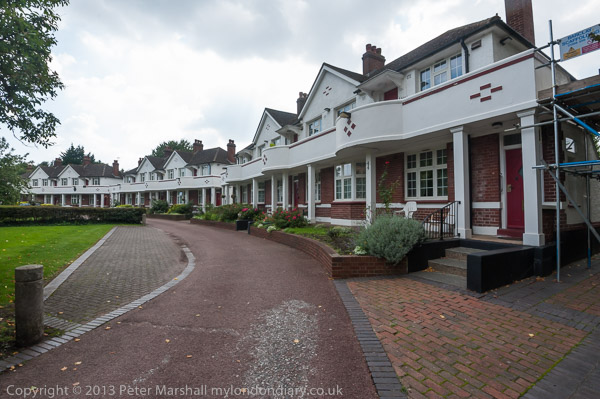
London Walk January 2006

London Walk January 2006: I now have no idea why I spent around two and a half hours wandering around London on the afternoon of 20th January 2006, but the pictures tell the story of my route. These images are a selection from a rather larger number I actually made. [The pictures are larger than they appear in this post and you may download them, but like all pictures on this blog are copyright; they must be attributed if posted on social media and a licence is required for any commercial use.]

London Walk January 2006
© 2006, Peter Marshall

I suspect I was going to some evening event and simply took advantage of some fine weather to go up earlier and take some pictures. The first one shows some of the sculptural detail above the outpatients entrance of the former Royal Waterloo Hospital for Children and Women on Waterloo Road the roundabout close to the station, where I will have arrived by train.

London Walk January 2006
© 2006, Peter Marshall

I then walked on to Waterloo Bridge, pausing to take a picture of the National Theatre, with the roof of the film museum in the foreground.

London Walk January 2006
© 2006, Peter Marshall

There was an exhibition ‘after the wave’ on square pillars in front of the National Theatre which rather seemed to echo the shape of the building.

London Walk January 2006
© 2006, Peter Marshall

On Waterloo Bridge I took several pictures looking downstream across the River Thames, this one concentrating on the north bank and St Paul’s Cathedral.

© 2006, Peter Marshall

A wider view shows boats moored in the river and the skyline of London, now rather more crowded.

© 2006, Peter Marshall

Another with St Paul’s at the left .

© 2006, Peter Marshall

On Strand I photographed this lion and two Chinese men relaxing above Twinings, providers of tea to the Queen.

© 2006, Peter Marshall

And these fine fish on Lloyds Bank Law Court Branch at 222 Strand, then still open as a bank – it closed in 2017. It had been called the most beautiful bank in the country. The fish are presumably because this Grade II listed building was built in 1882 by Goymour Cuthbert and W Wimble for the Palsgave Restaurant for the Royal Courts of Justice opposite and was only taken over by Lloyds in 1894.

© 2006, Peter Marshall

Some fine ironwork and a beehive above the doorway to the bank.

© 2006, Peter Marshall

Above the doorway at 193 Fleet Street is this figure of statue of Kaled, the page of Byron’s Count Lara by Giuseppe Grandi, dating from 1872. More about it on Ornamental Passions.

© 2006, Peter Marshall

The building was built for pawnbrokers George Attenborough and Son in 1883 and has some fine sculptural detail including these winged lions, on either side of the wrought iron support from which originally the pawnbrokers three balls were hung. The Latin motto underneath is ‘Sub Hoc floresco‘, Under This I flourish.

© 2006, Peter Marshall

On each side of the clock of St Dunstan’s in the West on Fleet Street are the two mythical giants, Gog and Magog (Corineus and Gogmagog) described in the biblical book of Revelation as the allies of Satan against God when we come to the end of days, but also the guardians of London – and the City is surely on Satan’s side as the money laundering capital of the world. They strike the chimes for the clock here, said to be the oldest public clock in London.

My walk continued – and I’ll post some more from it at some later date. You can already see some of the pictures on My London Diary.


FlickrFacebookMy London DiaryHull PhotosLea ValleyParis
London’s Industrial HeritageLondon Photos

All photographs on this page are copyright © Peter Marshall.
Contact me to buy prints or licence to reproduce.
1995 Colour – Part 2 – Greenwich Meridian

1995 Colour – Greenwich Meridian: The second of a series of posts on my colour work, mainly in London, from 1995, 35 years ago and when I’d been working extensively with colour negative film for ten years, though still continuing to work with black and white.

Obelisk, Trig Point, Pole Hill, Chingford, Waltham Forest, 1995, 95p03-841

In 1992 I began making colour panoramas using a Japanese Widelux F8 swing lens panoramic camera – and later I used a Russian Horizon which gave similar results. Both worked with normal 35mm film but produced negatives that were a little under 60mm wide rather than the 36mm of normal cameras. Both use clockwork to swing the taking lens around a third of a circle exposing the film through a narrow slit behind the lens. The film was held in a curved path – again around a third of a circle – with the lens at the centre of the circle so that the lens to film distance remained constant.

Peacham Hall, King's Head Hill, Woodberry Way, Chingford, Waltham Forest, 1995, 95p03-411
Peacham Hall, King’s Head Hill, Woodberry Way, Chingford, Waltham Forest, 1995, 95p03-411

This arrangement avoided the change in distance from the lens to film that gives some stretching of the subject towards the edges of the frame – and begins to become very noticeable in ultra-wide lenses, particularly wider than around 18mm focal length on a 35mm camera.

95p03-552-Edit
Level Crossing, Highams Park, Waltham Forest, 95p03-552

Using the curved film plane avoids this distortion and enables a much wider field of view, while using a fairly moderate focal length – the Widelux has a 26mm f2.8 lens and gives negatives 24x56mm with a horizontal angle of view of 123 degrees.

Bridges, North Circular, Hale End Rd, Hale End, Waltham Forest, 1995, 95p03-463

But there is a downside. Creating the image in this way gives a curvature to objects which is unlike our normal vision which is particularly noticeable on any straight lines, though lines parallel to the axis the lens rotates around remain straight – so if you hold the camera level, verticals will remain straight. But other lines become curved with the effect increasing away from the image centre, giving what is often called a “cigar effect“.

Raglan Rd, Lea Bridge Rd, Whipps Cross, Waltham Forest, 1995, 95p4-373

This is a constraint which makes composition far more difficult using a swing lens camera, and was not helped by a rather poor viewfinder on the Widelux. Usually for landscape work I tried to visualise the effect of the curvature and chose a suitable camera position, levelled the camera on a heavy Manfrotto tripod using the spirit level on the camera top plate, lining the camera up using two arrows on the top plate to show the extent of the view (more accurately than the viewfinder) and then pressing the cable release to make the picture.

Stratford Bus Station, Great Eastern Rd, Stratford,, 1995, 95p4-922
Stratford Bus Station, Great Eastern Rd, Stratford, Newham, 1995, 95p4-922

For photographing events and some creative effects this is a camera you can use handheld, but you have to remember that even when using its fastest speed of 1/250 second the camera actually takes quite a lot longer to scan around the curved film.

Crowley's Wharf, River Thames, Greenwich, 1995, 95p4-672
Crowley’s Wharf, River Thames, Greenwich, 1995, 95p4-672

These pictures are from a project I began in 1995 with the approaching Millennium in mind. It seemed to me to make sense to carry out a project based on the Greenwich Meridian.

Greenwich Boating Pond, Park Vista, Greenwich, 1995, 95p4-1431

So I set about walking the Meridian, photographing it at various points in London and used some of these pictures in an attempt to get public funding for a Meridian Walk with some markers in pavements and a web site and publication. Panoramic images seemed a very appropriate format for illustrating the line.

Greenwich Meridian, Royal Observatory, Greenwich, 1995, 95p4-1242

Unfortunately my grant application as usual was unsuccessful, but I did go on to take some more photographs. In 2009 others produced a Greenwich Meridian Long Distance Path covering all of the Meridian in England from Peacehaven to Sand La Mere which of course goes through London and we also have The Line Sculpture Trail. Quite a few more Meridian markers were also added in London since I made this walk.

Many more panoramas from my Meridian project and other colour images from 1995 in the album 1995 London Colour.


FlickrFacebookMy London DiaryHull PhotosLea ValleyParis
London’s Industrial HeritageLondon Photos

All photographs on this page are copyright © Peter Marshall.
Contact me to buy prints or licence to reproduce.


Hackney Wick & Manor Gardens – 2007

Hackney Wick & Manor Gardens: On Tuesday January 16 2007 I took a walk in Hackney Wick on my way to what was to become one of many casualties to the London Olympics, the Manor Gardens allotments, for an open day when the press and public were invited to see the vibrant site that was under threat.

Hackney Wick & Manor Gardens

Here with a few corrections and some of the pictures is what I wrote about the day. Many more pictures are still on My London Diary.


Hackney Wick remains one of the more interesting areas of London, and I took a few pictures despite the light rain on my rather meandering way to the Manor Gardens Allotments off Waterden Road.

Hackney Wick & Manor Gardens
A bridge over the River Lea led to Manor Garden Allotments

The Manor Gardens Allotments were another of the charitable provisions that came out of the link with Eton College and the Eton College Mission set up in Hackney Wick.

Hackney Wick & Manor Gardens

Arthur Villiers was one of four Old Etonians (the others were Gerald Wellesley, founder of the Eton Manor Old Boys Club for over 18s, Alfred Wagg and Sir Edward Cadogan) who in 1924 set up a charitable trust to keep the clubs running.

Hackney Wick & Manor Gardens

Villiers, who was a director of Barings Bank, had previously in around 1900 provided the Manor Gardens Allotments on an adjoining site as a means of providing both healthy exercise as well as suitable nutrition for the young men of the area. The land was provided for the community to use in perpetuity.

Since then it has continued in use, with a short break when the area was used for a wartime gun battery. At least a couple of the allotment ‘sheds’ are heavy concrete structures left over from this use.

Over the years it has been a thriving community of cultivators, recovering in recent years from some slight loss of interest, with the current renewal of interest in green and healthy living and eating.

Then came the London Bid for the 2012 Olympics, which put the allotments within the site. It could have been seen as a golden opportunity to give the games some green credibility behind the lip-service the bid gave to biodiversity and sustainability, and certainly as a commitment to the post-2012 legacy of the games – to leave sites such as Manor Gardens and the adjoining nature reserve as a green centerpiece to the site. Unfortunately the architects and developers seem hell-bent to create a brown Olympics, creating an irredeemably distressed site that will only be economically recoverable when all the concrete has crumbled.

The New Year Feast was an Open Day at Manor Garden Allotments, inviting the public and press to see the site and the 80 plots for themselves. A rather low-tech ‘Olympic torch’ was carried across the bridge to the site and used to start a bonfire.

Then we had a party around it, with a couple of speeches and some tasty refreshments. There was support from some celebrities, as well as the opportunity to meet some of the plot-holders, some of whom have raised crops here since the 1940s – and those whose parents had plots in the 1920s. There are also many newer tenants, very much reflecting the multicultural nature of the surrounding area.

It would be a great shame to lose this splendid facility for four weeks of use in 2012, when it could easily be built around. It isn’t in a critical area but will simply be under concrete as a footpath, and probably also the site of a huge advertising ‘scoreboard’ for the games sponsor.

What will it say about the 2012 Olympics for a site that is currently a beacon for healthy green eating to be selling Big Macs?

The planning application was to submitted on 1st Feb 2007, with eviction expected on 2nd April 2007. it is unlikely that the replacement site offered at Marsh Lane can be ready before 2008. Hopes are not high, but it would certainly be a great green miracle if the allotments survive.


Of course the miracle did not happen, and the Olympic juggernaut took its course, destroying the allotments and much else. By June 2008 allotment holders were struggling to grow crops on a new site on common land at Leyton. The move was expensive and the contractors used to prepare the site had ruined it by sterilising and compacting soil with heavy equipment and much of the site was waterlogged, with the only healthy crops being grown in grow-bags.

The allotment holders had been promised they would be able to return to their old home after the Olympics, but this promise was not kept. Eventually in 2017 some were able to go to a much smaller new site at Pudding Mill Lane. It’s future came under threat in 2022 by plans for extensive development around its edges which will overshadow it restricting cultivation on much of the site.

Many more pictures of the allotments, some of the surrounding areas and of the New Year Feast on My London Diary.


FlickrFacebookMy London DiaryHull PhotosLea ValleyParis
London’s Industrial HeritageLondon Photos

All photographs on this page are copyright © Peter Marshall.
Contact me to buy prints or licence to reproduce.


Arbaeen Procession in London – 2012

Arbaeen Procession in London: On Sunday 15 January 2012 around 5000 Shi’ite Muslims gathered at Marble Arch for London’s 31st annual Arbaeen procession.

Arbaeen Procession in London - 2012
The cradle commemorating Imam Husain’s murdered baby son and people at prayer before the procession.

Organised by the Hussaini Islamic Trust UK, the process with its colourful flags, large gold and silver replica shrines and men and women beating their breasts in a symbol of mourning for Imam Husain went along Park Avenue.

Arbaeen Procession in London - 2012

Imam Husain, the grandson of Mohammed, was killed with his family and companions at Kerbala in 680AD. Shi’ites celebrate his martydom with 40 days of mourning each year, beginning with Ashura and ending with Arbaeen.

Arbaeen Procession in London - 2012

Husain is seen by Shia Muslims as making a great stand against the oppression of a tyrant and representing the forces of good against evil. Although hugely outnumbered he and his companions chose to fight on to death rather than compromise their beliefs.

Arbaeen Procession in London - 2012

Their stand remains a symbol of freedom and dignity, and an aspiration to people and nations to strive for freedom, justice and equality. Among many who have admired Husain are Ghandi, Charles Dickens and historians Edward Gibbon and Thomas Carlyle.

Arbaeen also celebrates the return of the wives and families of the martyrs to Kerbala the following year from Damascus where the had been marched as captives.

Millions now attend the annual Arbaeen event in Kerbala although it was banned when Saddam Hussein was in power.

The London procession was first held in 1982 and is the oldest Arbaeen/Chelum Procession of Imam Husain in the west. It was the first annual Muslim procession to take place in Central London and is still one of the larger annual Muslim processions in the UK, attracting Muslims from across the UK.

I arrived at Marble Arch in time for the prayers, recitation, speeches and chanting at the start of the event and to admire the three large gold and silver replicas of the shrines of Karbala; known as Shabbih, over 10 feet high and the largest in Europe,the decorated and blood-stained white horse Zuljana, the cradle remembering his 6 month old child Hazrat Ali Asghar and a ceremonial coffin before the procession began.

Both men and women on the procession beat their breasts – the men with great energy and the women much more decorously as they moved slowly down Park Lane.

The event was continuing when I left hours later.

You can read more about the procession and follow it in my pictures on My London Diary at Arbaeen Procession in London.


FlickrFacebookMy London DiaryHull PhotosLea ValleyParis
London’s Industrial HeritageLondon Photos

All photographs on this page are copyright © Peter Marshall.
Contact me to buy prints or licence to reproduce.

Crouch End & Upper Holloway – 1989

The final post on my walk on Sunday 19th November 1989 which had begun in Highgate. You can read the previous part at A Reservoir, Flats, a Cockerel and a Café.

Gateway, Albert Mansions, Crouch Hill, Crouch End, Islington, Haringey, 1989 89-11i-61
Gateway, Albert Mansions, Crouch Hill, Crouch End, Haringey, 1989 89-11i-61

I walked down Haslemere Road and then turned down Vicarage Path, following this to Crouch Hill.

Albert Mansions, described by various estate agents as “a hidden gem in Crouch Hill” dates from 1903. Although the driveway is clearly marked ‘PRIVATE residents only‘, Vicarage Path goes past the building and emerges at the side of the left gatepost in my photograph. I clearly found this gateway more interesting than the actual mansion building where three and four bedroom leashold flats now sell for approaching a million.

House, Heathville Rd, Highcroft Rd, Crouch End, Islington, 1989 89-11i-64
House, Heathville Rd, 6, Highcroft Rd, Crouch End, Islington, 1989 89-11i-64

I walked down Crouch Hill and turned west down Ashley Rd. When I reached Highcroft Road I saw an interesting roof a short distance down and walked up to take this picture. Taken from just across the street it rather fails to show clearly the pyramidal cap to the roof, which is more evident in the previous frame (not on-line) taken of the row along this side of the street. But does give a good idea of the architectural detailing, including a fancily written date which I can’t quite read but is perhaps 1897 or 9 and a rather striking head – I wondered who was the model for this intense face. I’m rather suprised that this building does not appear to be locally listed

House, Highcroft Rd, Crouch End, Islington, 1989 89-11i-65

This locally listed house at 3 Highcroft Road was built in 1875 as the vicarage to St Mary’s Church opposite, and has rather fine porch with a somewhat ecclesiastical look. Like many of the large vicarages provided for Victorian clerics who were expected to have large families and servants I imagine it was sold off some years before I made the picture.

Houses, Hornsey Rise, Upper Holloway, Islington, 1989 89-11i-66

I returned to Ashley Road, walking past St Mary’s church without photographing it. Most of our Anglican churches seem to have been photographed time after time from the Victorian period on, not least because many vicars with time on their hands took up photography as a hobby. I seldom chose to add to the multitude.

There is a line of similar fine houses between Ashley Road and Shaftestbury Road, at 2-20 facing Elthorne Park, but I chose to photograph these because of the wall with its sculptures and irorwork in front of what I think was 6 Hornsey Rise. The wall and ironwork are still there but the figures next to the pavement have long gone. At the right of the picture you can see the Shaftesbury Tavern.

House, Hornsey Rise, Upper Holloway, Islington, 1989 89-11i-53

Hornsey Rise was developed from 1848, although it only got the name almost 40 years later replaceing the different names of various short lengths such as this. This picture gives a closer view of one of the two ornamental gates and the house , with the doorway to number 4 at the right of the image.

The Shaftesbury Tavern, Shaftesbury Rd, Hornsey Rise, Upper Holloway, Islington, 1989 89-11i-54

This pub at 534 is the last building on Hornsey Road, which becomes Hornsey Rise beyond Shaftesbury Rd. According to its local listing it “was built in 1858, by speculative builder Thomas Beall, as the area around it began to be developed. It is a handsome well-preserved building with contrasting brickwork in red and London stock, and pilasters and arches at the upper storey level.

I choose to photograph not the main pub building but its “1897 addition” on Shaftesbury Rd. However CAMRA states that the pub itself was built “in 1897 with rich wood and glasswork, so typical of the golden age of pub-building.” Looking at the pub exterior I am inclined to believe them and the current building probably replaced or significantly altered Beall’s. As they also state, “The pub was restored in 2014 from a ‘very tired’ state by the small pub chain Remarkable Restaurants Ltd“.

Shops, Fairbridge Rd, Hornsey Rd, Upper Holloway, Islington, 1989 89-11i-55

I continued walking down Hornsey Road I photographed this handsome late Victorian building at 471 Hornsey Rd on the corner with Fairbridge Road. Then it was a timber merchant with T C TIMBER on the first floor corner blind window and a rather jaunty-looking painted figure of a town crier in ancient dress looking like a poor piece of advertising clip-art in that above it on the second floor. The shop is now Hornsey Carpets and that figure now looks very washed out and on the first floor is some strange image I make no sense of.

Kokayi, Supplementary School, Hanley Rd, Upper Holloway, Islington, 1989 89-11i-56

Further down Hornsey Road I went down Hanley Road where I photographed the doorway of the Kokayi Supplementary School. A charity of this name was later registered in 1997 “To advance the education of children and young people particularly children and young people of African and Afro-Caribbean descent by the provision of a supplementary school: By the provision of advice and guidance in matters concerning their education and career development; And by such other charitable ways as the charity through its trustees may from time to time decide.” The charity was removed in 2014 as it had ceased to function.

I was at the end of my walk and made my way to Finsbury Park Station. It was several weeks before I was able to go out and take photographs again.


FlickrFacebookMy London DiaryHull PhotosLea ValleyParis
London’s Industrial HeritageLondon Photos

All photographs on this page are copyright © Peter Marshall.
Contact me to buy prints or licence to reproduce.


A Reservoir, Flats, a Cockerel and a Café

A Reservoir, Flats, a Cockerel and a Café: More from my walk in Highgate on Sunday 19th November. You can read the previous part at Churches, Flats, Houses & a Pineapple – Highgate 1989

New River Company, Reservoir, Engine House, Hornsey Lane, Haringey, 1989 89-11h-43

Beyond these large red-brick buildings that line the north side of Hornsey Lane is the grass covered reservoir built by the New River Company and just beyond that across Tile Kiln Lane is their Engine House dating from around 1859. Now called the Pump House the site includes the base of a large chimney for a steam-driven pump. This reservoir and pump and others in the area became necessary as higher areas in Hampstead and Highgate were developed. The locally listed building has more recently been converted to residential use.

Northwood Hall, Flats, Hornsey Lane, 89-11h-35

A few yards further east I crossed the Archway Bridge, where perhaps surprisingly I didn’t take any pictures of the view down the road. I did take three photographs of one of the ornamental lamposts but haven’t digitised any of these. The two at the east end seem rather similar to some of those on the Thames embankment with entwined fish swimming around them. About 5 years ago the fairly low ornamental fence on each side of the bridge has been augmented with a tall metal fence to prevent people jumping to their death on the road below.

Further east of the bridge is Northwood Hall, an art deco block built as “ultra modern labour-saving” luxury flats in 1935 and designed in a cross shape by George Edward Bright who had earlier worked as an assistant to Herbert Baker, Edwin Lutyens and Guy Dawber. The almost 200 flats were set in extensive gardens with “a restaurant for residents, guest rooms and outdoor amenities including a tennis court. Indoors, there were uniformed porters available 24/7 and an optional maids’ service charged at hourly rates. In kitchens, double door cupboards opening onto the corridors were used to provide additional services including rubbish collection, shoe cleaning and delivery of papers, food and even cooked meals.”

Sat on a hill overlooking London the residents on all but its ground floor have extensive views across London ‘on a clear day as far as Crystal Palace‘ and the building is a landmark visible from much of north London.

Cockerel, Bronze, John Willaas, Ashmount Primary School, Hornsey Lane, Crouch End, Islington, 1989 89-11h-24

This sculpture was commission by and paid for by the architect of the LCC’s Ashmount School, H.T. Cadbury-Brown. Built in 1954-6 it was an important early example of an all-glass curtain wall construction.
The cockerel now stands on top of the wall outside the Whitehall Park School, built on part of the Ashmount site with the rest being used for housing.

Crouch End Hill, Crouch End, Haringey, 1989 89-11h-13

Advertising for Nautilus Fitness and Tree Surgery on Crouch End Hill, immediately south of the former Crouch End Station – where the old track is now the Parkland Walk. I wondered what the large letters BSG on the wall stood for but could come up with no sensible solution. I think the picture is looking down Stroud Green Road.

Crescent Cafe, Crouch End Hill, Crouch End, Haringey, 1989 89-11h-15
Crescent Café, Crouch End Hill, Crouch End, Haringey, 1989 89-11h-15

The Crescent Café was in part of the former Crouch End Station buildings. A Cafe continues here – with a name change to Sercem Cafe for a couple of years before going back to being Crescent Cafe again until around 2021-2 and is now Merro. The station probably dates from when the line opened in 1867; the station closed in 1954 but goods traffic along the line continued until 1970.

The Café was closed on the Sunday I took this picture. At right you can see one of the tall brick pillars on top a a curved wall that go beside and across the bridge across the former railway. I’d photographed the cafe and these twelve years earlier but hadn’t put the wall picture online.

Monkridge, Crouch End Hill, Crouch End, Haringey, 1989 89-11h-16

I turned north up Crouch End Hill and photographed another mansion block, Monkridge, just a few yards further on. This was apparently built between 1912 and 1935 with around 40 flats and a lower building. The two blocks are very similar in design with this being slightly large actually on Crouch End Hill and the other behind on Haslemere Road.

The final post on this walk will follow shortly.


FlickrFacebookMy London DiaryHull PhotosLea ValleyParis
London’s Industrial HeritageLondon Photos

All photographs on this page are copyright © Peter Marshall.
Contact me to buy prints or licence to reproduce.

1995 Colour – Part 1

1995 Colour – Part 1: The first of a series of posts on my colour work, mainly in London, from 1995, 35 years ago and when I’d been working extensively with colour negative film for ten years, though still continuing to work with black and white.

1995 Colour - Part 1
Car Wash, St Paul’s Cray, Bromley, 1995, 95c01-122

Although I’d always taken both colour and black and white photographs since I began in photography, black and white had dominated my work. It was still the serious side of photography in the 1970s; almost all gallery shows then were black and white, and most publications were still only printed in monochrome, including photographic magazines, although some occasionally had a few colour pages.

1995 Colour - Part 1
Frost & Smith, Accident Repairs, Cray Rd, Bexley, 1995, 95c01-123

And back then, almost all professional colour was taken using colour slide film such as Ektachrome and Kodachrome. Films were mainly sold inclusive of processing and you sent away your exposed film and a few days later s box of slides came back through the post. Professionals might use Ektachrome and take it to a lab for processing, but that worked out more expensive, though you could get the results in an hour or so.

1995 Colour - Part 1
St Paul’s Cray, Bromley, 1995, 95c01-132

I was interested in colour but in the early years took far fewer colour images, largely because of the cost, though I did cut this down by buying colour film in bulk and home processing, though this needed much tighter control of time and temperature than black and white and the results were not always quite as they should have been.

1995 Colour - Part 1
Hi-Q, Tyres, Sevenoaks Way, St Paul’s Cray, Bromley, 1995, 95c01-133

Most photographers at the time felt that colour negative film was only for amateurs, but two things changed that for me. One was my frustration with transparency film which simply could not handle many of the high contrast scenes I was interested in, giving impenetrable shadows where I wanted detail and the second was seeing some prints produced by another photographer, printed on Fuji paper.

1995 Colour - Part 1
Opticians, Walthamstow, 1994, Waltham Forest, 95c01-141

There was a clarity about the colours that this paper gave when compared with Kodak, Agfa and the others, but the other great advantage was that there was little or no colour shift with exposure. This meant that I could dodge and burn prints with a similar creative control to working with black and white.

Chinese Takeaway, Hoe St, Walthamstow, 1994, 95c01-155

Some time early in 1985 I made the decision to switch entirely from transparency to negative for all of my personal colour work.

Belvedere, Bexley, 1994, 95c01-161

This post is the first of a number which will show some of my colour images from 1995.

Belvedere, Bexley, 1994, 95c01-163

These pictures were all made in December 1994 or January 1995 with some 1994 images only being processed in January 1995.

War Memorial, Callender’s Cables, Church Manorway, Belvedere, Bexley, 1994, 95c01-165

I’ll publish more in later posts, perhaps also including some of the colour panoramas I made. There is much more of my colour work on film in a number of Flickr albums.


FlickrFacebookMy London DiaryHull PhotosLea ValleyParis
London’s Industrial HeritageLondon Photos

All photographs on this page are copyright © Peter Marshall.
Contact me to buy prints or licence to reproduce.

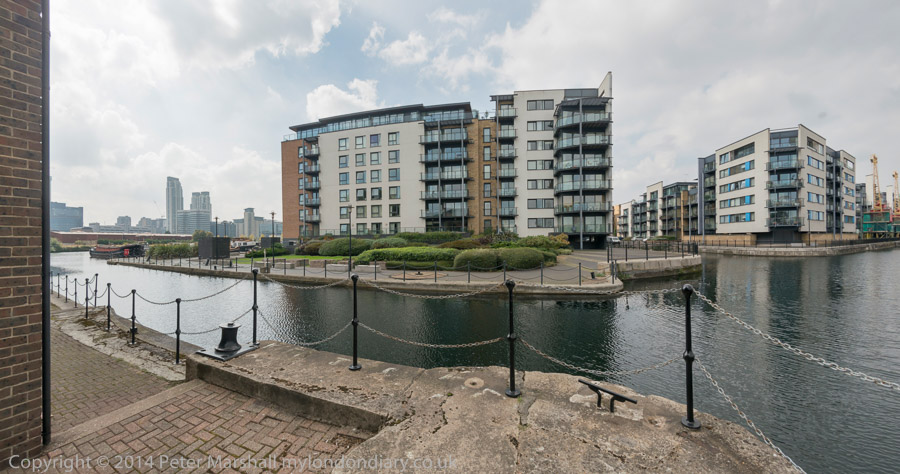
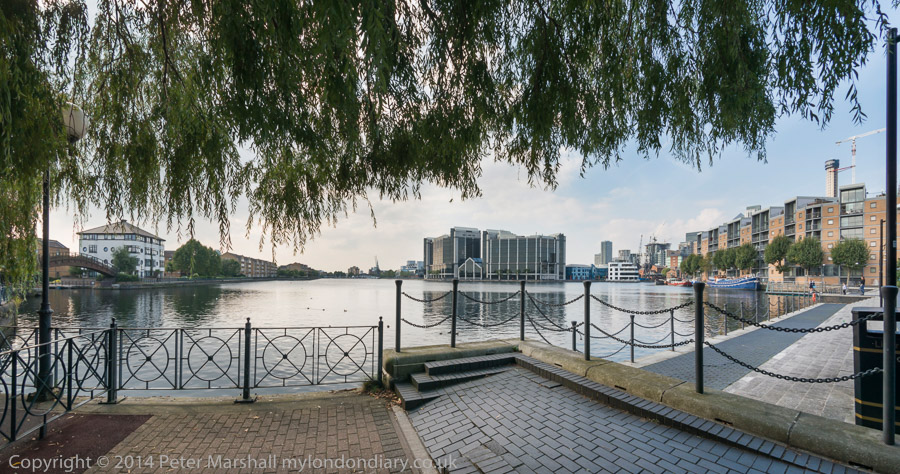
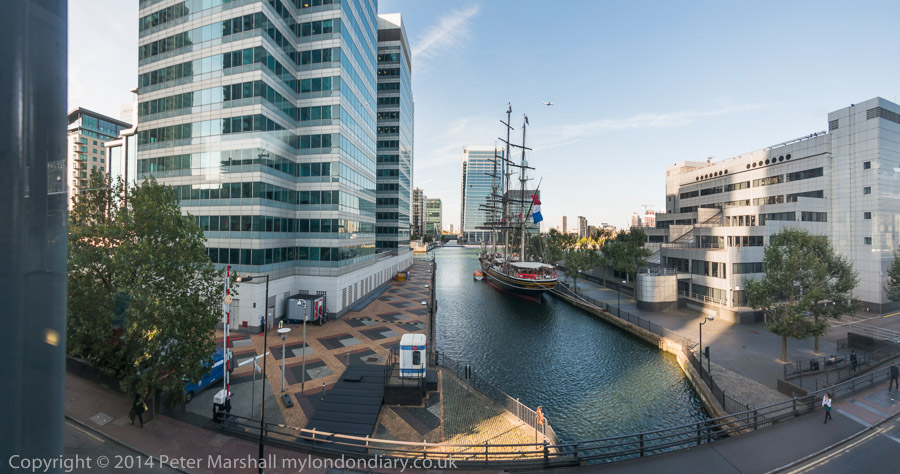
Thames Path Panoramas – Vauxhall to Wandsworth 2014

Thames Path Panoramas: Back in January 2013 I had photographed and taken part in a rather less bloody re-enactment of the Epiphany bloody armed insurrection by Thomas Venner and fellow Fifth Monarchists against the re-imposition of the monarchy in 1661 being performed by Class War for film director Suzy Gillett. I’d tried hard to avoid getting in the way of the camera but do appear for a few seconds as the insurrection made its way to seize St Paul’s Cathedral.

Thames Path Panoramas

On Sunday 5th January, a year less a day later I and others involved were invited to a private afternoon screening of the film at the Cinema Museum close to the Elephant & Castle. As it was a fine day I went up some hours earlier to walk and photograph a little nearby section of the Thames Path.

Thames Path Panoramas

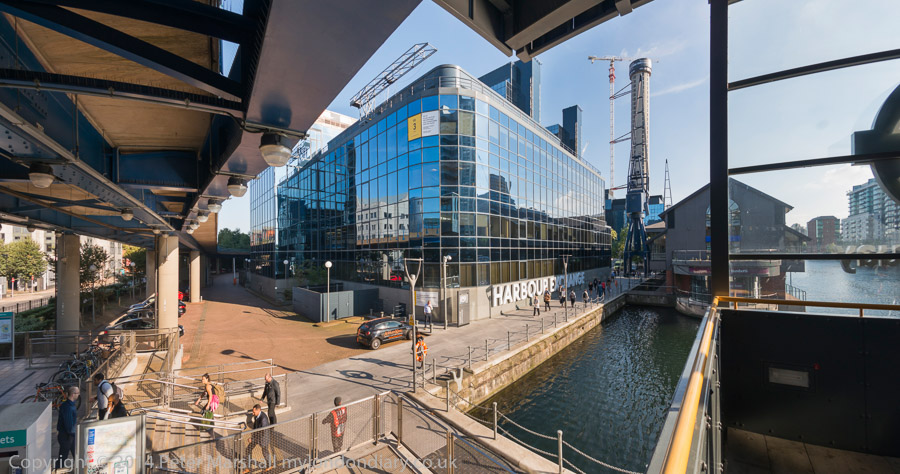
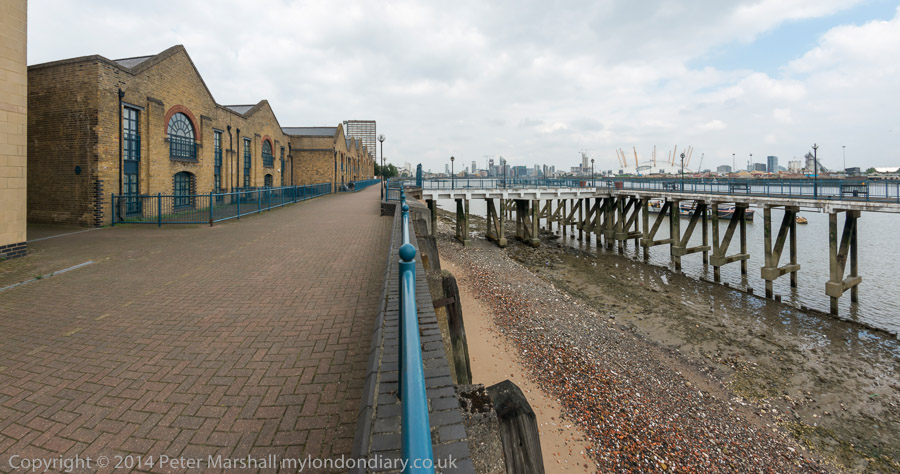
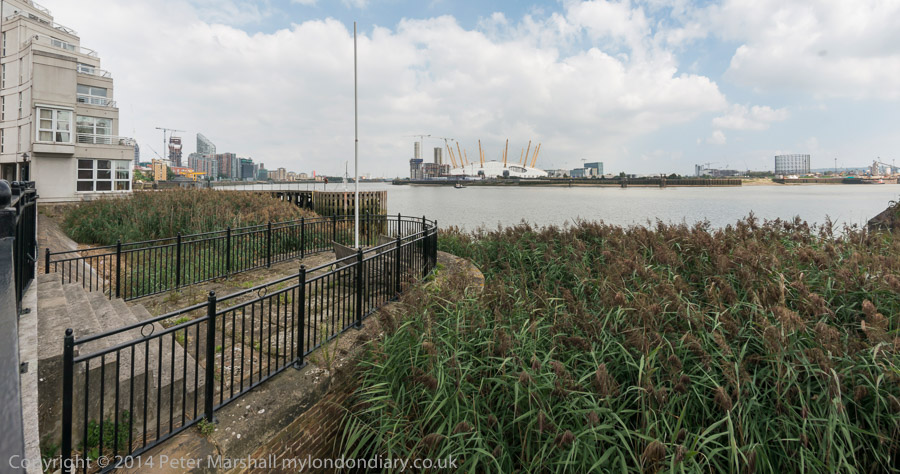
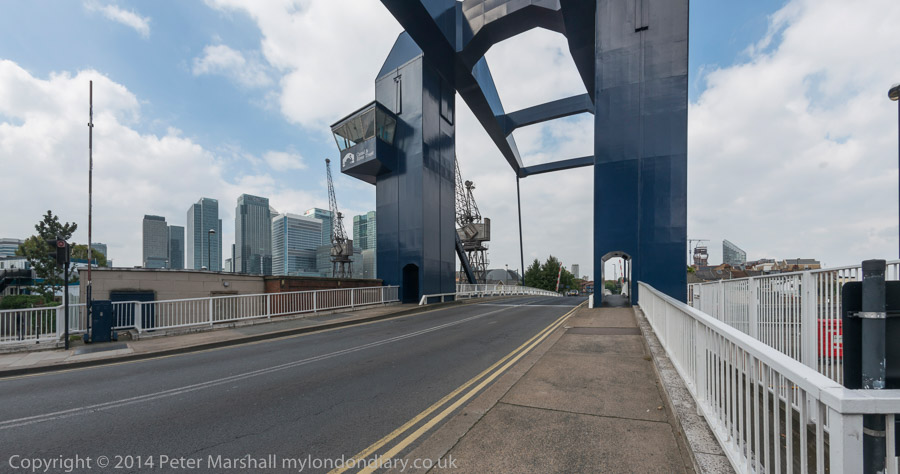
I’d been making panoramic photographs since the 1980s, at first by cutting and mounting together a few prints from black and white images. Back in 1991 I’d bought my first panoramic camera, a Japanese Widelux F8 with a lens that swings around while making a picture on 35mm film, held in a curve so that the centre of the lens remains at a constant distance from the film. Later I bought several more similar but much cheaper cameras made in Russia and a Chinese beast taking 120 film.

Thames Path Panoramas

These cameras all produced a very wide angle of view – around 120 or 130 degrees – but with a different perspective to “normal” cameras, with some characteristic curvature of objects. The normal rectilinear view stretches out objects at the edges of the frame and is only really usable up to around a 90 degree angle of view. Later I did work with a Hassleblad X-Pan camera and with a 30mm lens which gives a 94 degree horizontal view – around the maximum usable for a rectilinear view.

Thames Path Panoramas

Digital methods changed the game. At first I used a film scanner and software that enabled me to merge several scanned images. Then things became even easier when I shifted to a digital camera. For projects such as ‘The Secret Gardens of St John’s Wood‘ I combined up to around 8 different 12.3Mp digital images form a Nikon D300 to make very large prints with wide angles of view.

But by 2014 I was working with a Nikon D800E and it had occurred to me that there was a simpler solution with its 36.3Mp images. I could use the 16mm Nikon fisheye which gives 180 degree diagonal coverage filling the frame and then convert these images digitally from their fisheye projection to the more friendly cylindrical projection of my panoramic cameras.

I could now make panoramas almost as easily as taking any other images, capturing moving as well as static scenes with ease. For most panoramic images it is important to have the camera level, and the D800E had nice clear indicators that could be displayed in the viewfinder to ensure this, and with an f2.8 lens tripods became a thing of the past.

For these images I used the incredibly flexible PTGui software, but later found the simpler Fish-Eye Hemi plugin for Lightroom more convenient, though PTGui allows some interesting options. Unfortunately this plugin is no longer available, though I hope it or a similar plugin will be made available again. Using it you transform the images without any loss of image at the centres of both horizontal and vertical sides so you can visualise what will be in your final image when looking at the viewfinder while taking images.

Many more pictures at Thames Path Panoramas.


FlickrFacebookMy London DiaryHull PhotosLea ValleyParis
London’s Industrial HeritageLondon Photos

All photographs on this page are copyright © Peter Marshall.
Contact me to buy prints or licence to reproduce.

Around the Olympic Site – January 2007

Around the Olympic Site: Thursday 4th January, 2007 looked like being a pleasant enough day for a bike ride around the area where preparations were getting into full swing for the London 2012 Olympics to see how things were going in the area. So I wrapped up warm and put my folding bike on the train to make my way to Stratford.

Around the Olympic Site
Clays Lane travellers site, Park Village and Clays Lane estate

Most of the central area of the site was already closed off to the public, but I was able to cycle to various parts of the perimeter and take photographs, though I was disappointed to find large areas where nothing was yet taking place already fenced off. From Stratford I went around in an anti-clockwise direction and on My London Diary you can read a fairly long piece about where I went and my opinions about what was happening.

Around the Olympic Site
Eastway Cycle Circuit now fenced off

It was becoming more and more clear that many of those who lived and worked in and around the area were being very shabbily treated, with nothing being allowed to stand in the way of the Olympic juggernaut. People were being lied to, promises being made and then abandoned.

Around the Olympic Site
Bully Fen Wood is Community Woodland no more

Probably the worst case of this was with the 430 residents of the Clays Lane Housing Co-Operative who were first promised they would be rehoused in conditions “as good as, if not better than” their present estate but were later told “at least as good as in so far as is reasonably practicable.”

Around the Olympic Site
Everything on Waterden Road was later demolished

The tenants there had already suffered from their cooperative estate with its strong community being transferred against their wishes to Peabody Housing following an adverse Housing Corporation inquiry, losing their mutual status. After their eviction under the Olympic Compulsory Purchase Order (CPO) they were dispersed and many found they were having to pay much higher rents and living in worse conditions in places that lacked any of the feeling of community of Clays Lane.

Carpenters Lock and part of the closed area

I’d hoped to visit the Eastway Cycle Circuit and the Bully Fen nature Reserve, but both were fenced off, as were some of the footpaths I had hoped to cycle down, resulting in some fairly lengthy detours. Some of the closures claimed to be “temporary” – but some were still closed ten years later.

Samuel Banner, inventor of white spirit, founded the company in 1860. It relocated to Teeside

I commented “Parliament smooths the way for the Olympic Delivery Authority at the expense of people and environment, enabling them to slough off the inconvenience of democracy and justice. The situation for some of the local people – particularly those living in Clays Lane – can only be described as Kafkaesque.”

Huge areas were being flattened

I rode down Marshgate Lane and went onto the Greenway and then returned and went on to Hackney Wick, pausing to eat my sandwich lunch in a sheltered suntrap by the lock on the Hertford Union Canal before riding on the Greenway, turning back where this was blocked and coming back to the Lea Navigation towpath and on to Stratford High Street.

Bridge over Pudding Mill River to Marshgate Lane, Stratford Marsh.

From here I was able to go along a short length of footpath next to the Waterworks River before returning to the Greenway on the other side of the High Street, past some more areas covered by the CPO.

Bow Back River. Both sides in the foreground are part of the CPO area

By now the light was beginning to fade, but I rode on to Canning Town and took a brief look (and some rather dark pictures) of the Pura foods site then being demolished before riding over the Lower Lea Crossing to the station for the Jubilee Line back to Waterloo.

Parts of Pura Food had yet to be demolished.

Many more pictures begin a short scroll down the January 2007 page of My London Diary.


FlickrFacebookMy London DiaryHull PhotosLea ValleyParis
London’s Industrial HeritageLondon Photos

All photographs on this page are copyright © Peter Marshall.
Contact me to buy prints or licence to reproduce.


Westhumble & Ranmore Common 2011

Westhumble & Ranmore Common, Surrey – 30th December 2011

Westhumble & Ranmore Common 2011
The Pilgrims Way – and lower down the valley the railway from Guildford to Dorking

On Friday we went for another walk on the North Downs in Surrey, in a popular area for walking. In Summer it can get rather crowded with walkers but on a rather dull and damp winter’s day, even though many would have been still away from work over their Christmas break, relatively few were out walking the downs.

Westhumble & Ranmore Common 2011
Leladene and blue plaque to Fanny Burney

The second picture I made on the walk was this one of Leladene with its blue plaque to Fanny Burney. Leladene, later renamed to Camilla Lacey was for some years the home of Burney (1752 – 1840) who came to live there after her marriage to one of the exiles from the French revolution who had made Mickleham their home, General Alexandre d’Arblay. As well as being one of the most notable authors of her age she was also for four years ‘keeper of the robes’ to Queen Charlotte, the wife of George III.

Westhumble & Ranmore Common 2011
Norbury Park Saw Mill

In 2010 I wrote a brief description of the walk, although I seem to have missed out a line or so when I copied it to My London Diary so I’ve needed to do a little rewriting to make sense of one part of it. So I’ll rewrite it a little rather than simply copying here.

The weather wasn’t great and days are so short at this time of year, so we decided not to go to far for a walk, and did a roughly ten-mile circuit from Box Hill & Westhumble station.
Westhumble & Ranmore Common 2011
Roaringhouse Farm

It was dry when we started, with some very muddy paths, though parts of the path were sheltered by the trees as we went along through Druids Grove.

Thatched bridge at Polesden Lacy

Many of the old yews (some perhaps 2000 years old) have now been blown down in gales but there are still quite a few on each side of the path. From there we walked past the Albury Park sawmills and on through Polesden Lacy, passing under it’s thatched bridge.

The Causeway, Polesden Lacy

The steep track down from where we crossed from the North Downs Way to the Pilgrim’s Way a couple of hundred feet lower down the slope was a greasy mud slide, but we picked up some hefty sticks to help us keep upright, and from then on the way was easy going, with just a short uphill scramble to join the North Downs Way to take us back to Westhumble.

Hogden Lane

The light, never good, was fading as we walked above the Denbies vineyard and it was getting dark by the time we reached the station around 4.15pm.

I first got to know this area a little as a boy in the 1950s. I had got my first two-wheeler bike to replace an earlier tricycle on my sixth birthday and by the time I was 9 or 10 was going out for longish rides on a slightly larger replacement, sometimes with one or two friends, but for longer rides mainly on my own.

Denbies vineyard

One of those rides I made quite a few times took me across the River Thames at Hampton Court then on south through the ‘Scilly Isles’ roundabout and on to Leatherhead and the the A24 to Box Hill, around 20 miles each way.

My routes were carefully planned with the help of the “One Ihch” Ordnance Survey map. Generally I looked for the shortest way even when it meant cycling along busy major roads like the A3 though the final stretch along the A24 Mickleham bypass built in 1937-8 to Box Hill was on one of the few roads in the UK with a separate cycle path.

Box Hill and Westhumble station – and a long wait for the train with no seats in the dry on the up platform. It had been a good walk, though the views would have been better in clearer weather.


FlickrFacebookMy London DiaryHull PhotosLea ValleyParis
London’s Industrial HeritageLondon Photos

All photographs on this page are copyright © Peter Marshall.
Contact me to buy prints or licence to reproduce.