Stop The War – Hands Off Iraq – 2002

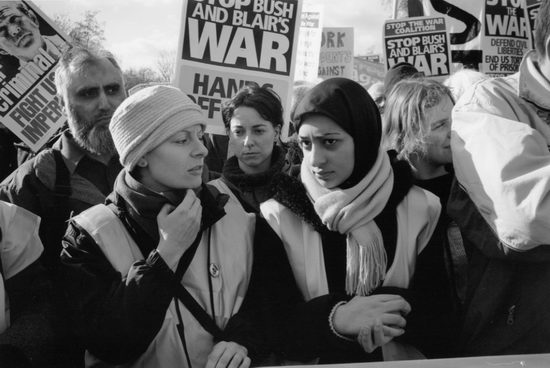
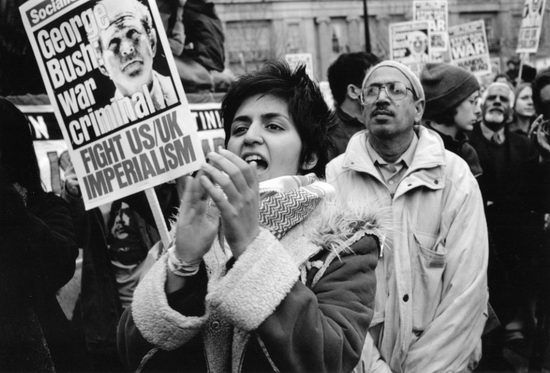
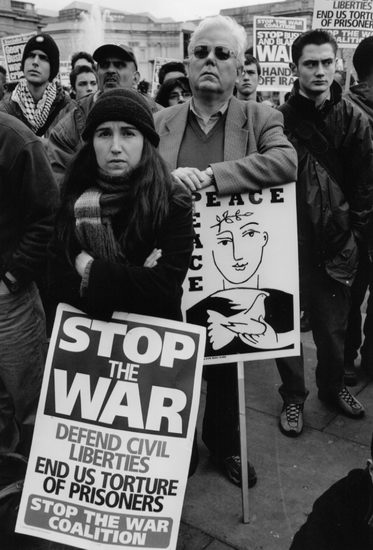
Stop The War – Hands Off Iraq: The protest in London against the US plans to invade Iraq on Saturday 30th March 2002 was I think the first of the really huge protests in London and across the world against the invasion then being planned by U.S. president George W Bush following the September 11th terrorist attacks on the United States.
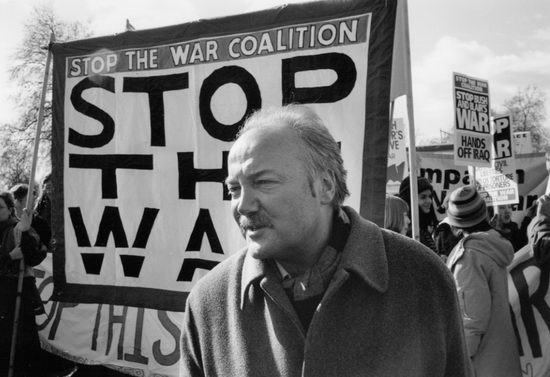
George Galloway MP at the start of the march in Hyde Park

The Stop the War Coalition had been formed shortly after the 9/11 attacks and had organised this protest together with the Campaign for Nuclear Disarmament and the Muslim Association of Britain.
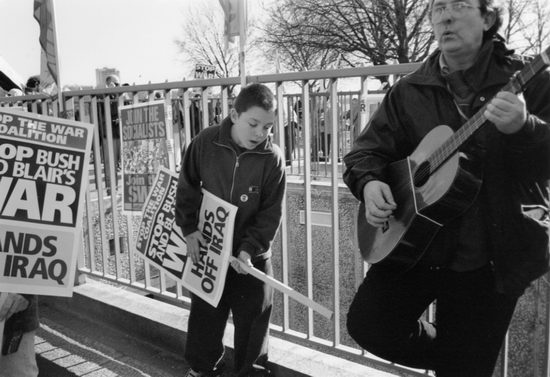
Air guitar – hyde park

It is hard to give any accurate estimate of the numbers taking part in protests as large as this, but I think there must have been well over a hundred thousand marching – much smaller than the well over a million that marched in London 11 months later in February 2003, but still a very significant number. It received very little coverage in the mass media and so it is now still difficult to find anything about it online.
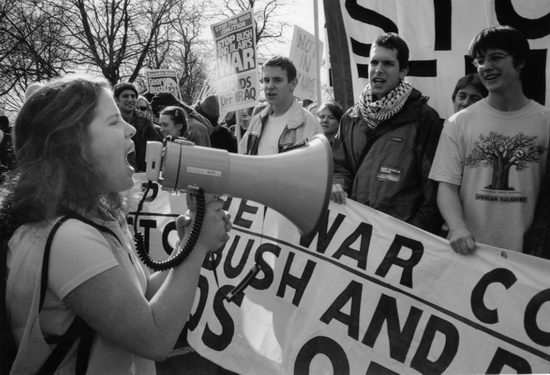
Helen Salmon and students, Hyde Park

By March 2002 the initial huge public sympathy with the USA over the 9/ll attacks had given place to a feeling that Bush and his “war on terror” was determined to attack Iraq at all cost even though it seemed unlikely that there was any real link between Iraq and Al-Qaida, and there was little if any evidence that Iraq still possessed “weapons of mass destruction“.
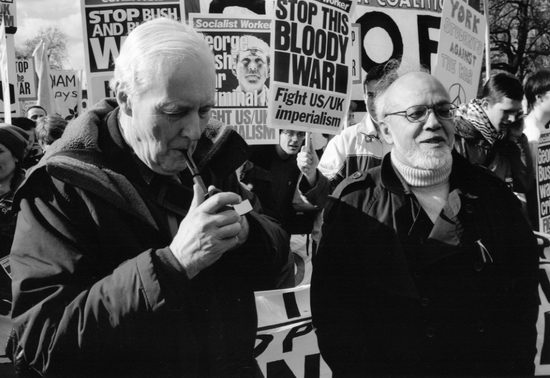
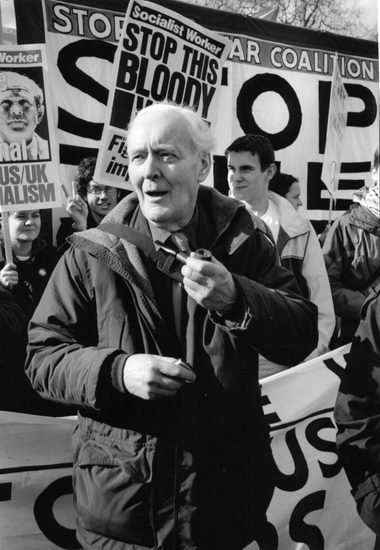
Tony Benn and Dr Siddiqui at Hyde Park

Iraq had ended work to produce biological, chemical, and nuclear weapons in the 1990s and most or all of its stockpiles had been destroyed. In November 2002 Saddam Hussein had allowed UN inspectors search Iraqi facilities for WMDs and they found none. The US alleged that Iraq had hidden them – and forged documents were produced about uranium. No WMDs were found during the US invasion and occupation of Iraq in 2003-2011 and US secretary of state Colin “Powell and George Bush eventually admitted Iraq had not had them.”
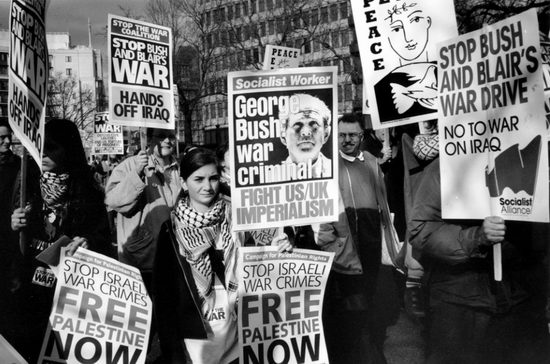
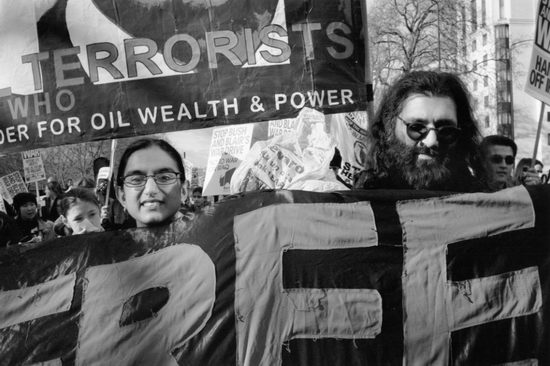
Stop The War – Hands Off Iraq – 2 Mar 02 – Park Lane

Despite then known facts, Tony Blair had decided to support the US invasion against the huge opposition from the British public. He and his government lied to parliament, most notably with the “Dodgy Dossier” and other documents. The dossier, “sexed up” by Alistair Campbell was largely plagiarised from a thesis by a graduate student at California State University, and contained many errors and unchecked statements, and contradicted much of actual evidence from intelligence sources. It should have ended the political career and any credibility for both.
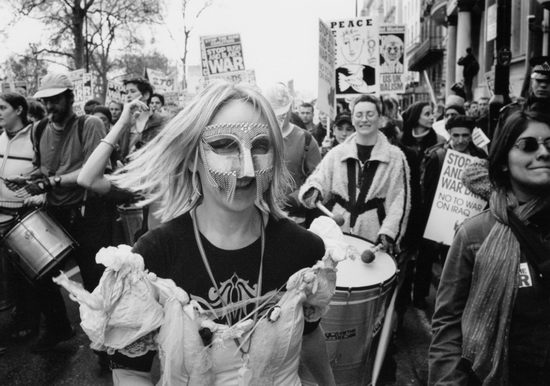
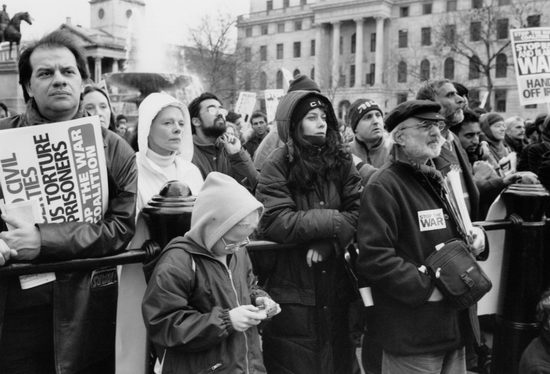
Piccadilly
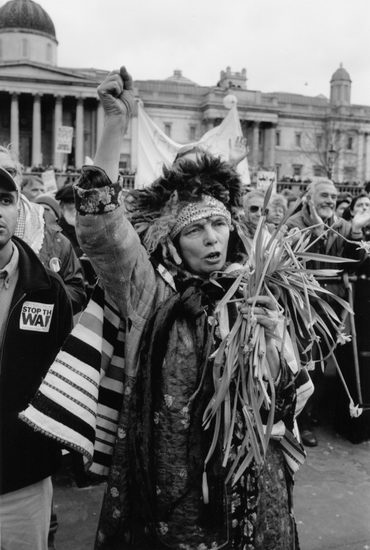
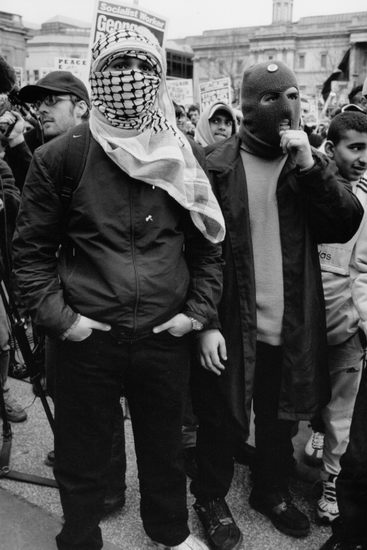
Trafalgar Square

Back in 2002 I was working with both black and white and colour film, but it was difficult for me to digitise the colour work – and I only posted black and white images on My London Diary. I still have only digitised a few of the many colour images I made at that time.

Included in this post are all of the images I posted on My London Diary and below is the short text I wrote to go with them. The files are small and they were posted across several pages as many then still accessed the web on slow dial-up modems. They are reduced versions of the images I filed to my agency, made by scanning black and white prints.The original post is still online, but adds nothing to this post.
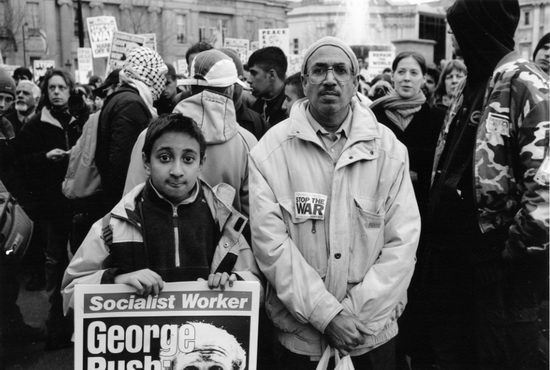

The Stop the War, Hands off Iraq demonstration on 2 March was a large sign of public opinion. People were still leaving Hyde Park at the start of the march when Trafalgar Square was full to overflowing two and a half hours later.

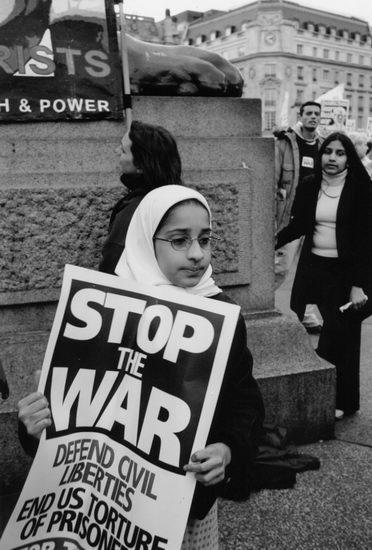
Police estimates of the number were risible as usual – and can only reflect an attempt to marginalise the significant body of opinion opposed to the war or a complete mathematical inability on behalf of the police.

Tony Benn told us it wasn’t worth taking his picture – “It won’t get in the papers unless I go and kick a policeman” but he didn’t and was quite right.


FlickrFacebookMy London DiaryHull PhotosLea ValleyParis
London’s Industrial HeritageLondon Photos

All photographs on this page are copyright © Peter Marshall.
Contact me to buy prints or licence to reproduce.
Muslims, Our Railways & Little Venice – 2005

Muslims, Our Railways & Little Venice: Twenty years ago I published this post on My London Dairy about my day taking pictures, but it isn’t easy to find. So here it is again with the usual minor corrections and a few pictures, with links to the others already on-line.


Muslims United Against Oppression – Marble Arch

Muslims, Our Railways & Little Venice - 2005
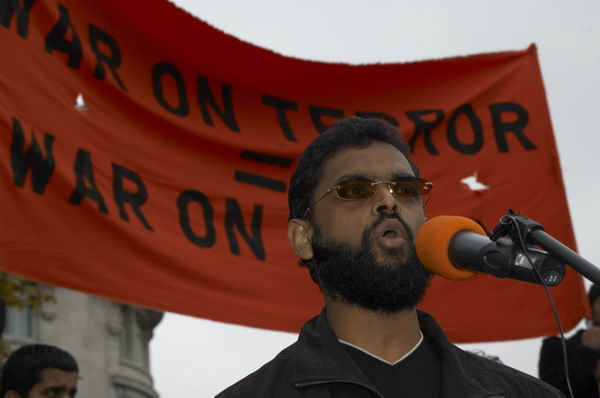
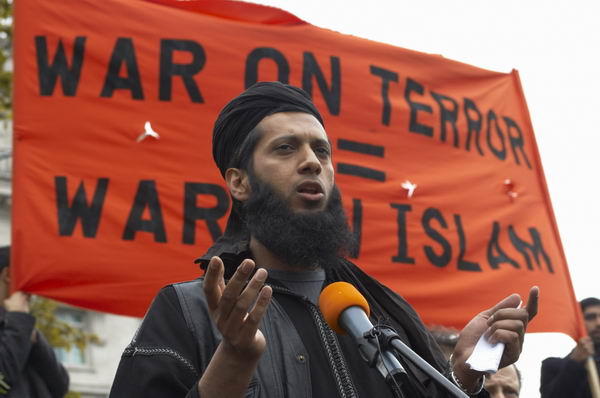
Mozzam Begg reads his poem. War on Terror = War on Islam

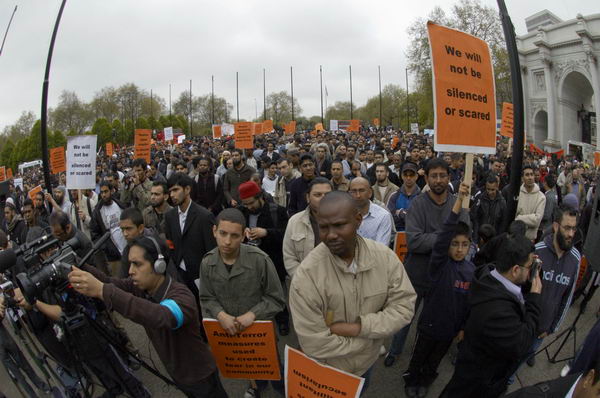
Saturday 30th April 2005 was a busy day. I started at Marble Arch where a number of Muslim organisations were showing their unity in protesting against the anti-terrorism laws and the way the ‘war on terror‘ was used to detain prisoners at Guantanamo Bay and Bellmarsh, to carry out increased stop and searches on Muslims in the UK, and threaten them with extradition, and to label the liberation struggles in Palestine, Kashmir, Iraq and Chechnya as terrorism.

Muslims, Our Railways & Little Venice - 2005

The ‘Muslims United Against Oppression’ march and rally was organised by ‘Stop Political Terror’, the ‘Islamic Human Rights Commission’, ‘Hizb ut-Tahrir Britain’, ‘Cage Prisoners’, the ‘Islamic Party Of Britain’, ‘Muslim Directory’ and other organisations, and representatives of many of these spoke at Marble Arch. There were also two former Guantanamo detainees who spoke, Martin Mubanga and Mozzam Begg, who read a moving poem.

Muslims, Our Railways & Little Venice - 2005
Ashfaq Ahmad

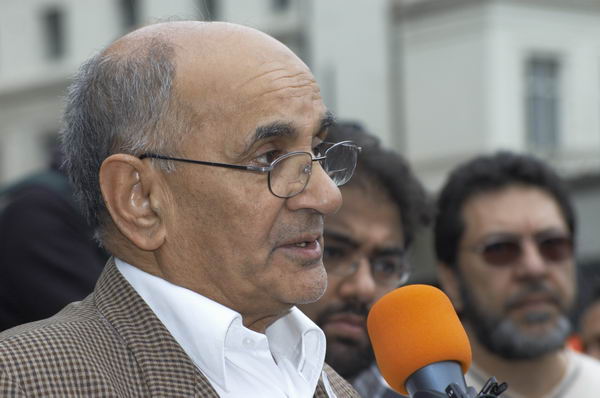
Ashfaq Ahmad spoke about the detention of his son, Babar Ahmad, who was born and brought up in south London. On December 2nd 2003, anti-terrorist police broke into his house in the early hours, and assaulted him brutally in front of his wife before taking him away. Six days later he was released without charge. He had over 50 injuries to his body, two potentially life-threatening, but despite this the Crown Prosecution Service decided there was insufficient evidence to prosecute any of the officers involved.

Muslims, Our Railways & Little Venice - 2005

Babar Ahmad was again arrested on 5th August 2004 following an extradition request by the US government. In 2005 he was still in prison awaiting a final verdict on whether he will be sent to the USA, although a fair trial there seems unlikely.* The allegations against him appear to be that he emailed a US sailor on two dates (one was Babar’s wedding day, the other in the middle of his honeymoon on a remote island without internet access), that he had a brochure from the Empire State Building (true, his father had got it on a visit there in 1973) and that he had travelled on a false passport, despite the fact that his real one has the appropriate entry and exit stamps.

Unfortunately our extradition agreement with the USA apparently does not allow Britain to refuse requests on the grounds of evidence.

Having failed to treat Babar with any justice in this country following his arrest – almost certainly a case of mistaken identity that too many would lose face over to readily admit – it now looks as if we will hand him over to our American allies for further mistreatment.

Around 5000 Muslims made there way from Marble Arch and along the Edgeware Road towards Paddington Green Police Station for a further rally.

more pictures

* Babar Ahmed spent 8 years in a UK prison before eventually being sent the the USA for trial. Although there was huge pressure to try him in the UK the CPS decided there was “insufficient evidence to prosecute” him. In 2009 he was awarded £60,000 compensation for the “serious gratuitous prolonged unjustified violence” and “religious abuse” during his arrest; the four officers who were accused of this and dozens of other assaults on black and Asian men were tried but acquitted in 2011. After his extradition in 2012 he spent two years in solitary confinement in pre-trial detention in a Supermax prison. Eventually he came to a plea bargain which led to his release in July 2015.


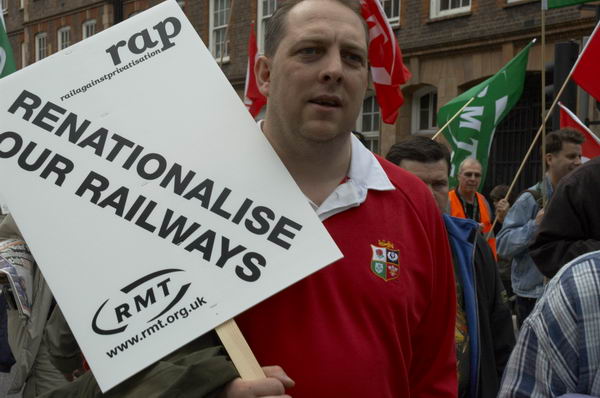
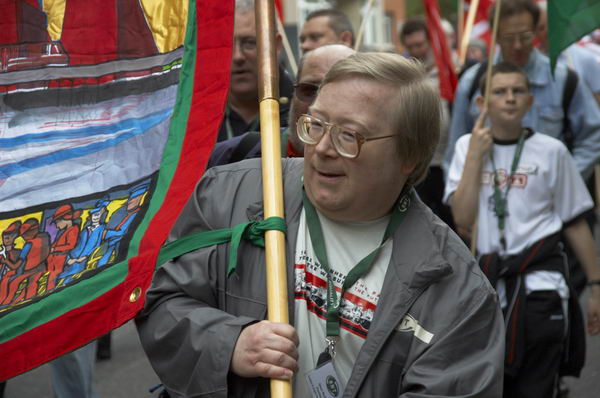
RMT march to Renationalise the Railways – Bloomsbury

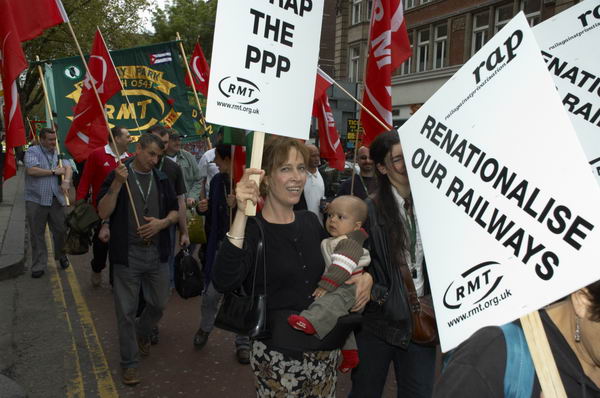
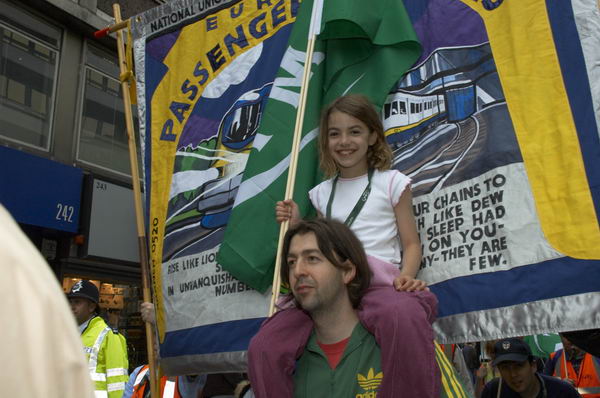
I made my way to the Charing Cross Road to meet the RMT march against rail privatisation, a two-week, 14-city national mobile demonstration from Glasgow to London to make the case for re-nationalising the rail network.

As someone who travels frequently by rail, I’m fully convinced of the need for some action. On my line to London, services are less frequent and less reliable and slower than when I moved here thirty years ago. The latest trick has been to write yet more ‘spare minutes’ into the timetables so that more trains will arrive on time. Journeys that a few years ago took 28 minutes are now timetabled for 34 minutes. [Now in 2025 this has increased to 37 minutes.]

There certainly seem to be a great problem over signalling on the lines, with trains that should have a clear run on green with miles of clear track in front of them continually finding amber or double amber and occasionally red. Either systems are not working or there are not the signallers to work them.

The whole fare structure is also a nonsense, far too complex for anyone to understand. None of the enquiry services ever seem to be able to tell you anything other than standard fares (if that) and journeys covering more than one operator are a nightmare. Try several online systems and you are likely to get several different answers as to fares and availability. As a first move back to a sensible system why not set up a national fare structure, with train operators paid for running trains from a central body?

It was a good-natured demonstration making a real point, but unfortunately not one any likely government wants to hear.

more images


Canalways Calvacade – Litttle Venice

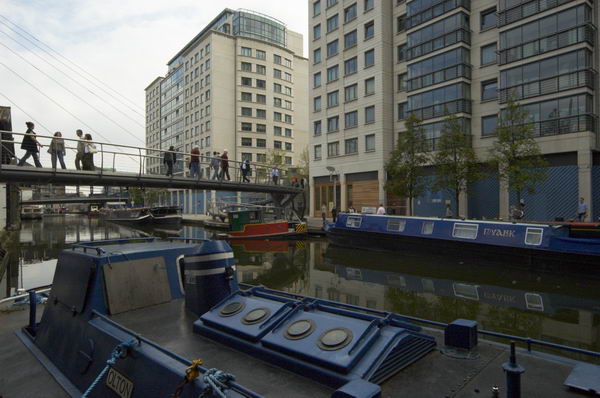
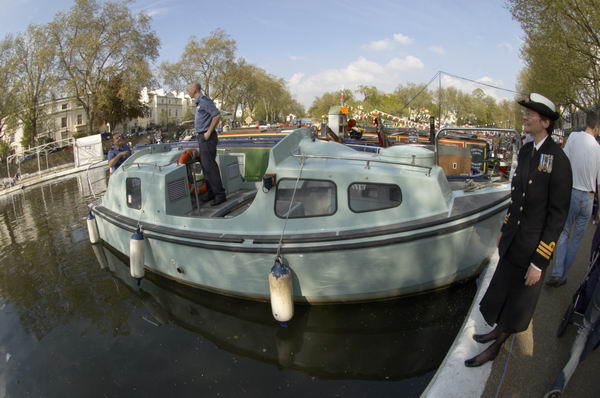
Finally I went off to Little Venice, where the Inland Waterways Association was having a three day Canalway Cavalcade celebrating the bicentenary of the Battle of Trafalgar. In 1805, canals were growing as the main form of inland transport, and it was the year two of the major civil engineering structures of our canals, the Pontcysyllte Aqueduct and the Blisworth Tunnel were completed.

I’m not a great canal person, though I often cycle along the towpaths. But the first time I ever drove a narrowboat, I found myself in charge of 70 feet of steel hull through the dark narrow length of Blisworth, and later the same year also took the marginally overwide craft across Pontcysyllte, where there was considerable resistance to its movement through the narrow channel. Getting through some of the locks on the way there and back was harder, and we learnt some less conventional locking techniques, opening the upper gates for the water to force the marginally over-wide hull through, scraping its sides past the brickwork.

However I’d not come to see the boats, even though the navy were taking part, with one of our smaller ships, a crew of three and commander from the Royal Naval Reserve.

more pictures


London Isn’t Venice, Yet! – Mutiny Arts, Little Venice

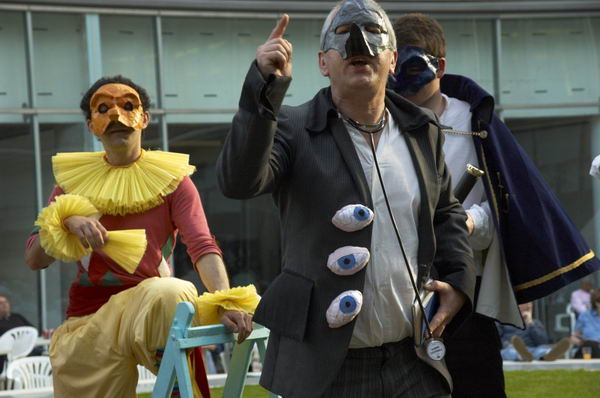
Mutiny Arts from Brixton were to perform an ecological drama, London Isn’t Venice, Yet!, warning of the dangers of global warming and rising sea levels.

The sea level is rising fast

The play went down well with the audience in the Sheldon Square ampitheatre, part of a new office development in Paddington.

More pictures


FlickrFacebookMy London DiaryHull PhotosLea ValleyParis
London’s Industrial HeritageLondon Photos

All photographs on this page are copyright © Peter Marshall.
Contact me to buy prints or licence to reproduce.


Guantanamo – America’s Shameful Prison

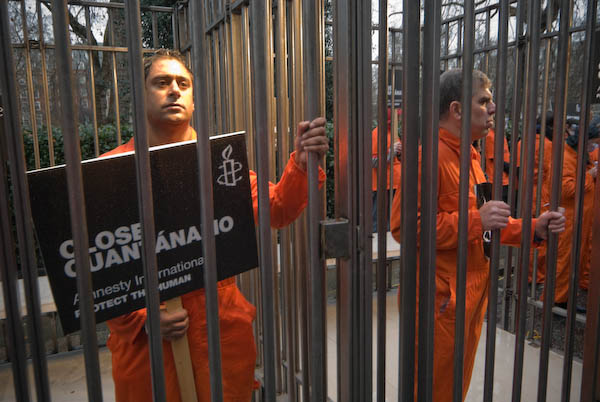
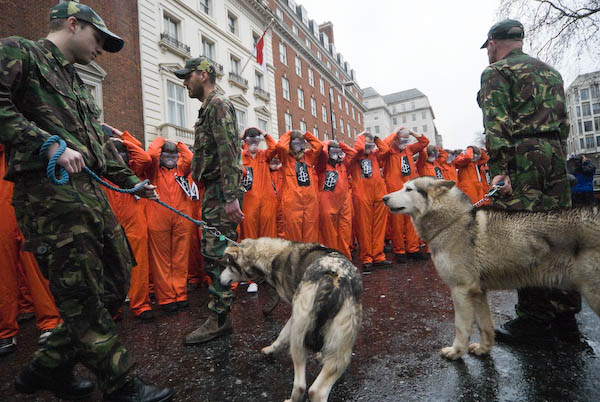
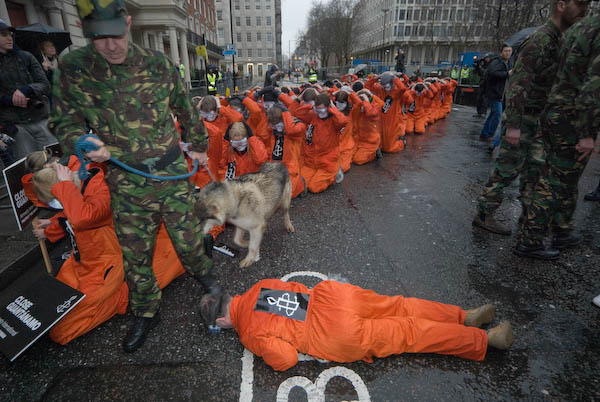
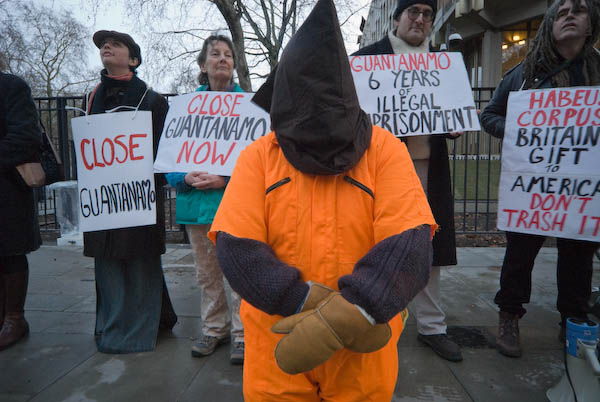
Amnesty International protesters close to the US Embassy

January 11th was for quite a few years a busy day for protests; it marked the anniversary of the setting up by the United States of a military prison as a torture camp at the disputed US Guantanamo Bay naval camp on the island of Cuba.

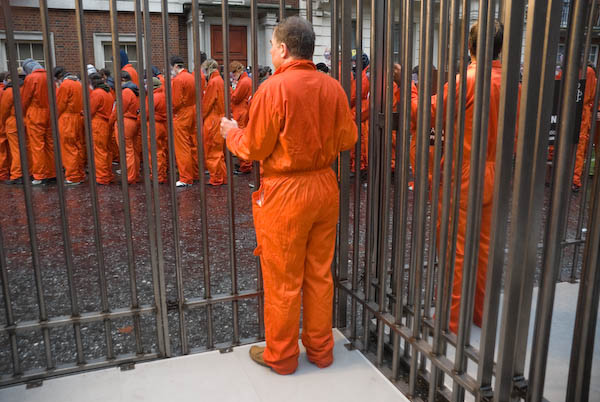
Prisoners’ had taken turns in the cage overnight

Set up in the aftermath of the 9/11 attack as a part of George W Bush’s ‘War on Terror’, the camp and the activities which took place there destroyed any final vestige of higher moral ground America could lay claim to in its role of world policeman, something that its various largely clandestine involvements in various South American American coups and activities in the Middle East and elsewhere had already largely laid waste.

Guantanamo is still there, still open, though the great majority of the 779 men brought there have been released. Most were totally innocent, victims of a US policy of offering $5,000 rewards for the capture of ‘terrorists’ to Pakistani and Afghan groups, who took the money for turning in anyone they felt would get them the money.

In October 2021, there were still 39 men held at Guantanamo, including ten who had long been cleared for release. Very few of those held over the years have faced trails trials and very few were involved in any acts of terrorism. Bush and Obama acted slowly but together released well over 700 of the prisoners, but Trump only released one, effectively stopping the process.

Protests continue in the UK, but on a much smaller scale, particularly since the last British resident, Shaker Aamer was released without charge or trial after 13 years of imprisonment and torture in 2015.

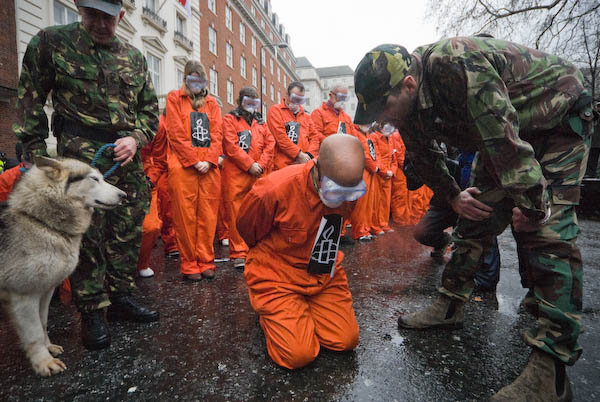
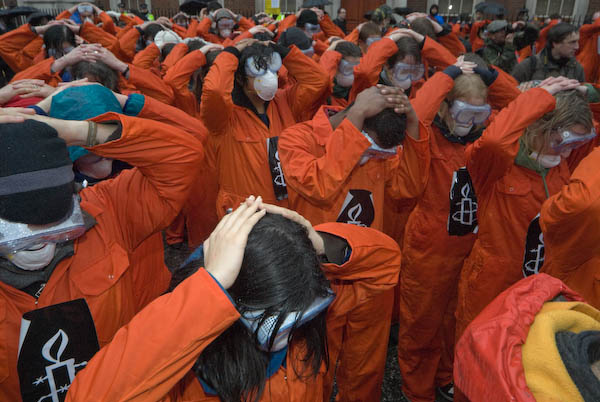
In 2008 Amnesty International organised a large protest in Grosvenor Square, a few yards from the US Embassy, though the street in front of the embassy had been closed to prevent protests there. They brought with them two cages, similar to those in which the prisoners were imprisoned outdoors at Guantanamo, with a large group of people wearing the orange jumpsuits which they are made to wear there. Protesters dressed as guards in military style uniforms harassed the ‘prisoners’ interrogating them and threatening them with violence and with aggressive-looking dogs.

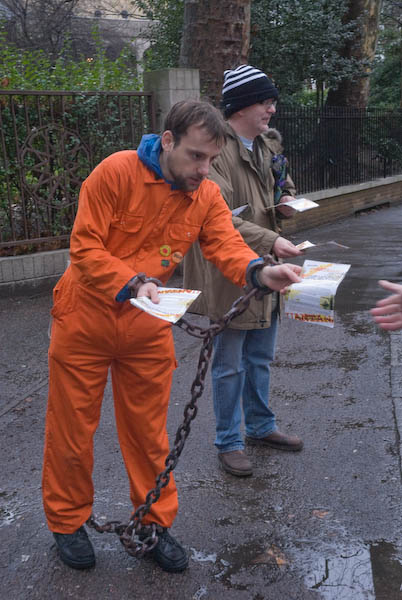
From Grosvenor Square I went up to the Regents Park Mosque, where activists from Cageprisoners and the London Guantánamo Campaign, some also in those orange jumpsuits and one manacled hand and foot. There they were handing out leaflets to those attending Friday Prayers.

Later I went with them to Paddington Green Police station, where terrorist suspects are detained and questioned in this country. They were going on to continue to protest in Parliament Square, but I returned first to the US Embassy, where the London Catholic Worker Community was holding a two hour vigil closed to the corner of the Embassy, holding placards and lighting candles for those still held and several who had died there. Several were alleged to have committed suicide, but later evidence emerged strongly suggesting they had died during torture.

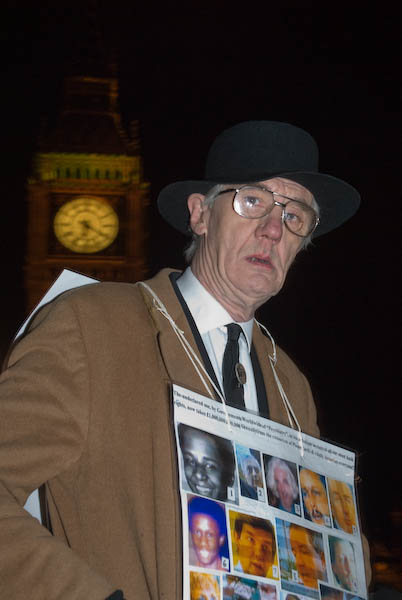
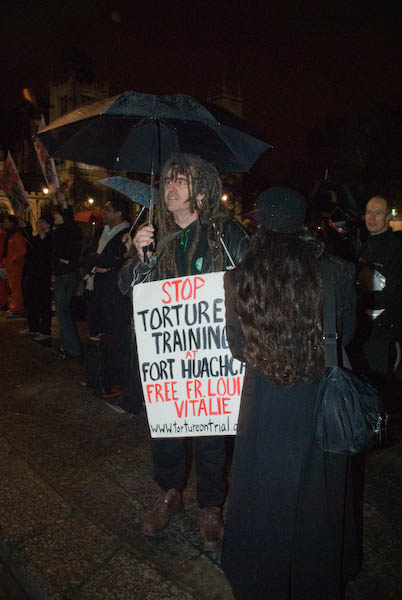
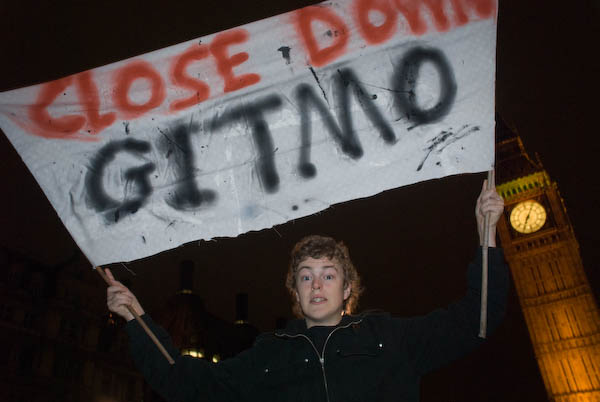
The final event of the day was a rally in Parliament Square organised by Cageprisoners and the London Guantánamo Campaign with a number of speakers including Victoria Brittain, former Guantanamo prisoner Moazzam Begg, laywers including Gareth Peirce, Bruce Kent, Yvonne Ridley and Jean Lambert MEP.

It was dark, cold and wet, but those present were cheered by the announcement at the end of the rally that Scotland Yard were investigating allegations of 14 criminal offences committed by Tony Blair and Lord Goldsmith and others which resulted in the deaths of Iraqi citizens during the armed invasion and occupation of Iraq.

Unfortunately and predictably these investigations came to nothing, and though the Chilcot report was damning in parts, Blair not only got off scot-free but this New Year was awarded a knighthood. A few days ago one of several petitions to have his “Knight Companion of the Most Noble Order of the Garter” rescinded reached over a million signatures. Mine was one of them.

Six years of Guantanamo: Amnesty
London Guantanamo Campaign / Cageprisoners
Guantanamo – London Catholic Worker
Guantanamo – Parliament Square Rally