BP Greenwashing & Benefits Cuts

BP Greenwashing & Benefits Cuts – Thursday 19th May 2016 – Seven years ago today.


Greenpeace ‘Sinking Cities’ banners at BM/BP show – British Museum
BP Greenwashing & Benefits Cuts

There are some protests which are advertised well in advance and other actions which are kept highly secret with only a small group taking part being in the know. And the action on the opening day of the BP sposored exhibition Sinking Cities at the British Museum was definitely one of the latter.

I heard about it only as I was on my way up to London for another event close by, and detoured slightly to cover it. I live on the edge of London, just inside the M25 and can’t usually respond to ‘breaking news’ as it takes me too long to get there.
BP Greenwashing & Benefits Cuts

Clearly the BP sponsorship of ‘Sinking Cities’ was going to be controversial as there has been a long campaign, particularly by ‘BP or Not BP’ to get the British Museum to end the deal which has allowed BP to ‘greenwash’ their polluting and climate destroying activities, which have significantly contributed to global warming and so to recent floods in cities across the globe.

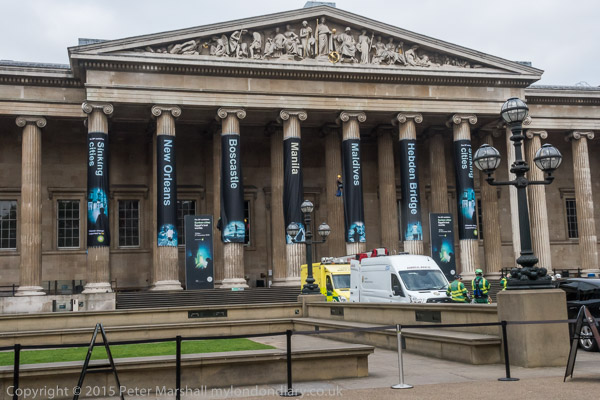
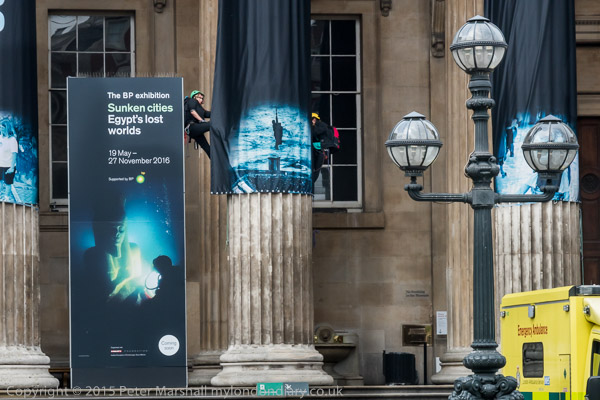
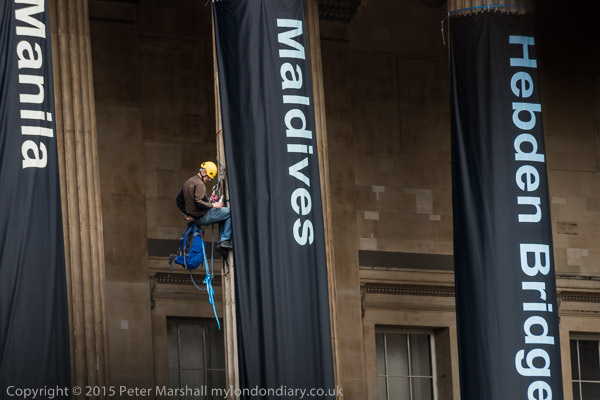
Greenpeace had come with very professionally produced large banners for ‘Sinking Cities’, naming some of the places which have been flooded recently by global warming induced climate change and had managed to come inside and hang this down the columns across the front of the museum’s Main entrance. At first glance they really looked as if they were a part of the Museum’s own publicity.
BP Greenwashing & Benefits Cuts

It really was impressive, and the Museum had been caught on the hop, reacting in panic they closed the whole museum for the day, dissapointing many who had come. This seemed unnecessary as the museum could simply have closed this front entrance to deal with the climbers and remove the banners. The climbers on the columns were obviously experienced and operating safely and apparently without damage to the museum structure.

It served as rather a good advertising stunt for the show, but of course was rather embarrassing for the sponsors BP which is why the Museum felt it necessary to remove them. Most other major arts organisations in London including the Tate Museums, the Royal Opera House and the National Portrait Gallery had dropped BP as a sponsor following pressure by protests such as these and pressure from artists, musicians and staff who work in them.

‘Sinking Cities’ banners at BM/BP show


No More Deaths from Benefit Cuts – Tottenham Court Rd
BP Greenwashing & Benefits Cuts

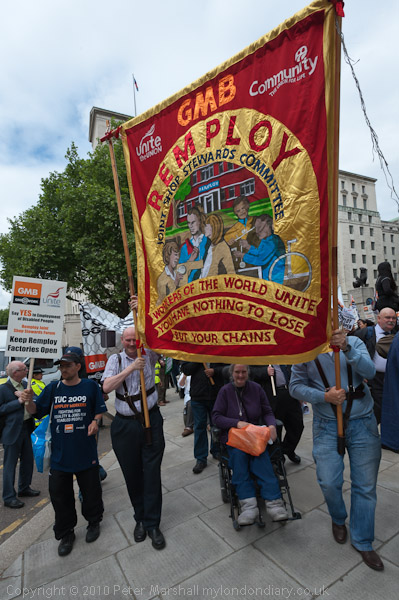
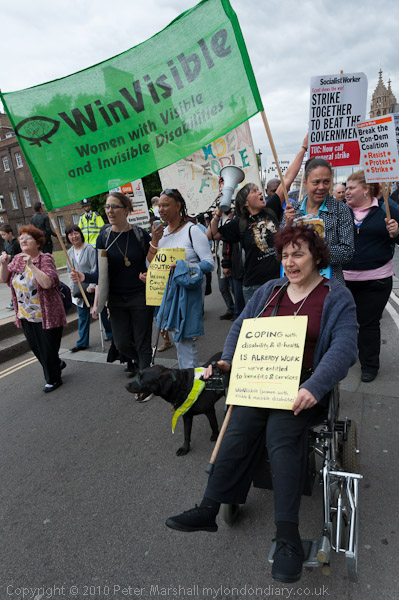
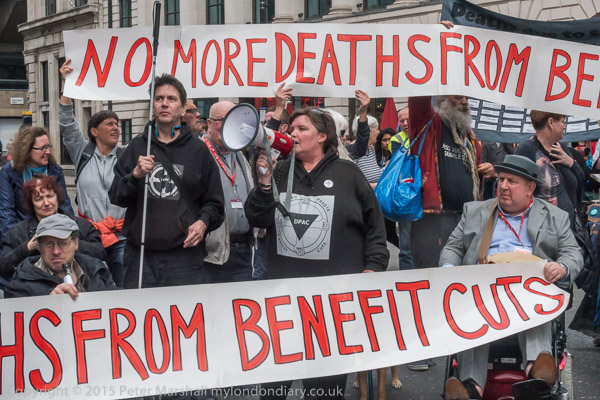
I had come to London that morning as delegates at the TUC disabled workers conference led by activists from Disabled People Against Cuts (DPAC), Mental Health Resistance Network (MHRN) and Winvisible (Women with visible and invisible disabilities) were to hold a lunchtime protest which I had been invited to photograph.
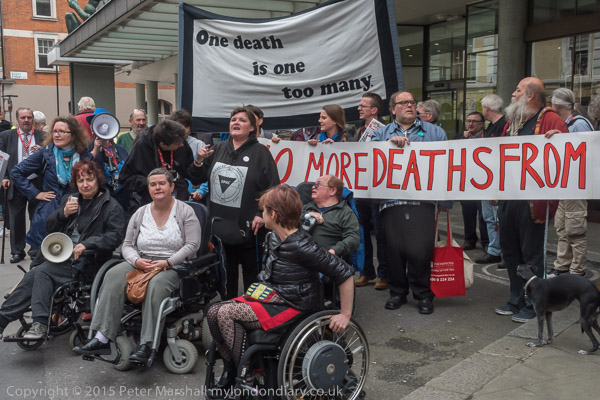
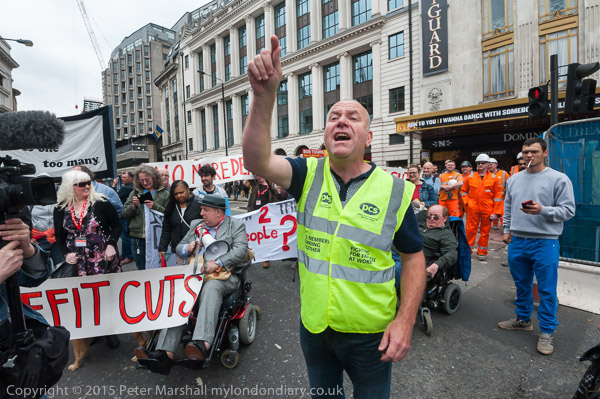
They came out and marched, led by people in wheelchairs from Congress House to Tottenham Court Road calling for an end to government benefit cuts which have led to the deaths of many disabled people – including 2 DPAC members the previous day.
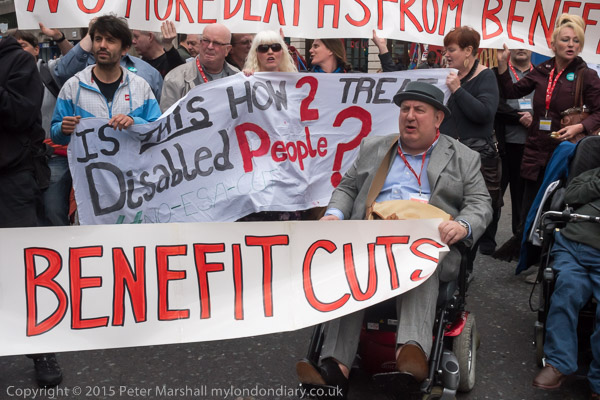
Two long banners gave the message ‘NO MORE DEATHS FROM BENEFIT CUTS’ and on arriving at Tottenham Court Road they held these across the road stopping traffic in both directions.
Another banner was full of the names of some of those known to have died because of sanctions and cuts in benefits, among them David Clapson, a diabetic ex-soldier who died penniless, alone and starving after being sanctioned. He didn’t even have enough money to keep the refrigerator to store his insulin running.
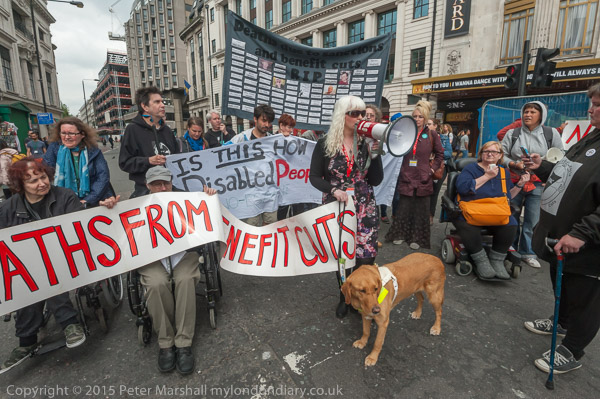
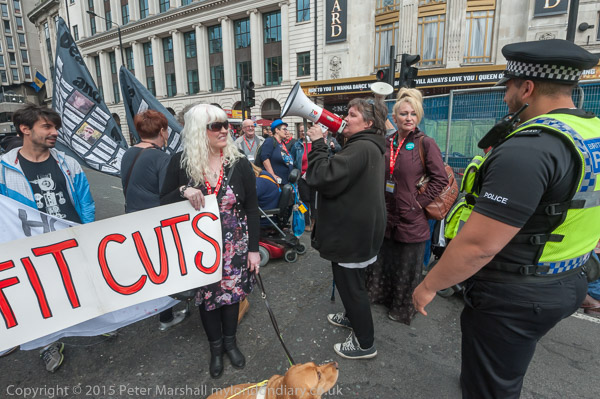
Another banner asked the question ‘IS THIS HOW 2 TREAT Disabled People?’. The protesters held a short and noisy rally, getting considerably support from many around including many workers also on their lunch breaks. There were a few short speeches before it was time for the protesters to march back for the afternoon session at Congress House, with a police officer arriving just as they were about to leave. As usual he is confused to find that no-one is in charge.
When the Tories got into power, at first in coalition in 2010, they determined they would save money by cutting benefits thinking the disabled would be an easy target. Groups such as DPAC and the others at this event have shown them how wrong they were. These people rely on benefits to live and to have a decent life and have organised and reacted to try to retain them against the government’s attacks.

More at No More Deaths from Benefit Cuts.

Christian Aid Circle The City 2009

Christian Aid Circle The City: This week every year is Christian Aid Week, when thousands of people engage in various activities to raise money for the work of this charity in the majority world. These include people trudging the streets of towns and cities delivering and then collecting gift envelopes, tea parties, sponsored walks and many other activities which to raise money.

Christian Aid is a charity embodying Christian principles but its support goes to people and grass roots organisations in many countries in the global south, many not Christian. It states it “exists to create a world where everyone can live a full life, free from poverty” and in 2021-2 helped 1.4 million people through its programmes. It provides humanitarian aid in emergencies but also runs many projects, particularly with women and promoting women’s rights and supporting the poorest and marginalised people.

Their web site lists the 25 countries in which they are currently active, working with local people and partner organisations – Bangladesh, Burkina Faso, Burundi, Colombia, Democratic Republic of Congo, Dominican Republisk, El Salvador, Ethiopia, Guatemala, Haiti, Honduras, India, Iraq, Israel and the occupied Palestinian territory, Kenya, Lebanon, Malawi, Myanmar (Burma), Nicaragua, Nigeria, Sierra Leone, South Sudan, Syria, Zambia and Zimbabwe.

Although I think they are a very worthwhile charity I’ve long supported others which work in similar ways but my wife is a local Christian Aid organiser and I’ve supported her in this work – including this year helping with a sponsored walk around the churches in our own area.

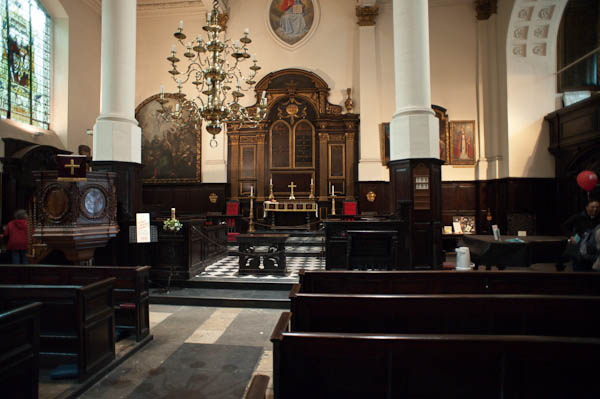
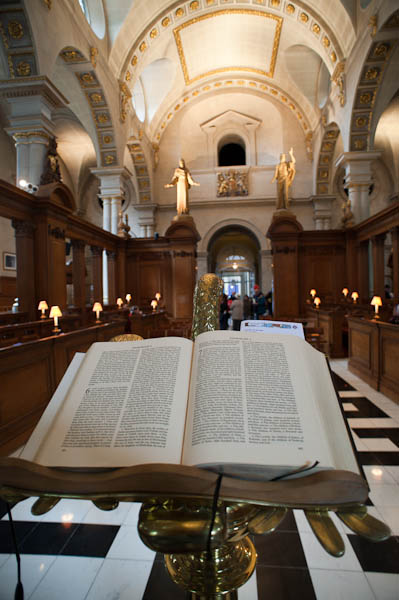
For a number of years she took part in an annual sponsored walk around the City of London, Christian Aid’s ‘Circle the City‘ a fund-raising sponsored stroll from church to church to church in the city. And often I went with her to keep her company and make sure she didn’t get lost. Of course I took a camera with me and took a few pictures, mainly of the many Wren churches we visited on the route. But in 2009 I decided to photograph it a little more seriously.

The pictures here are all from the walk on Sunday 17 May, 2009, and this is the post I made on My London Diary about it.

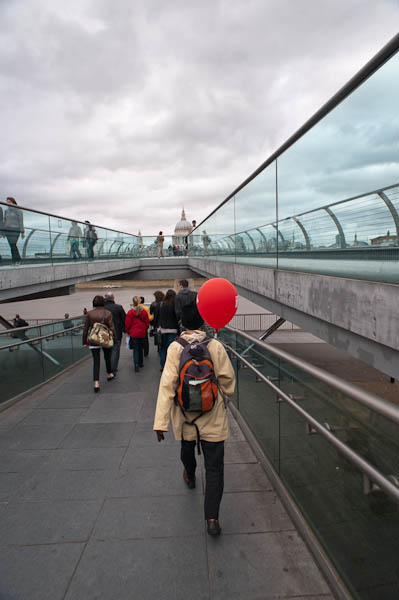
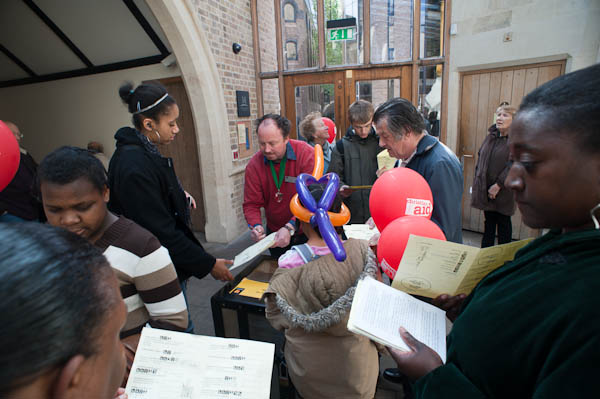
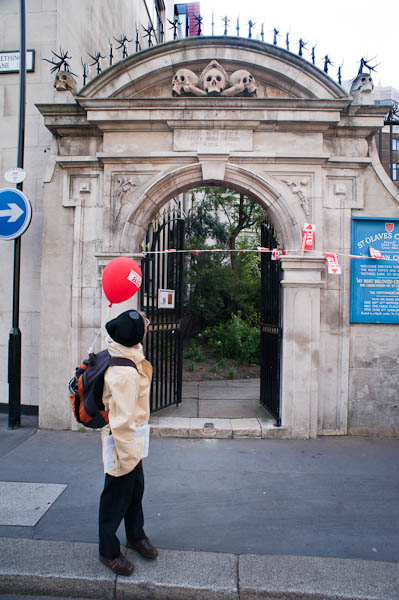
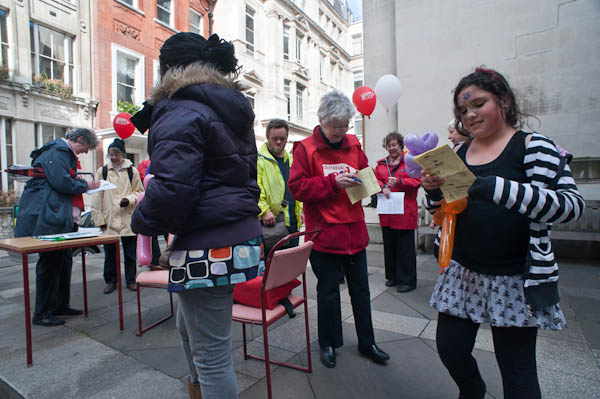
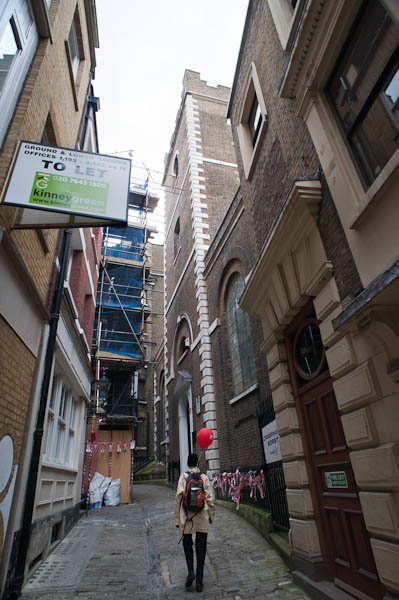
Sunday afternoon I followed a woman with a red balloon on a six mile (10 km) trail around the city, or rather two cities of London and Southwark, which led us to around 30 different ritual locations. We gained access to many of these and in several were offered drinks and food.

It was Christian Aid’s ‘Circle the City’ a fund-raising sponsored stroll from church to church to church… the woman was rather well known to me and all I got to drink was tea, coffee and lemon squash, though the asparagus quiche at All Hallows by the Tower was delicious.

In the course of our walk we got to see – if only rather briefly – the interiors of some of Wren’s finest, and one or two by other architects. And the event at the end of Christian Aid Week had raised a considerable amount for the projects that Christian Aid supports in the majority world.

More pictures from the walk and captions on My London Diary at Circle the City: Christian Aid.

If you don’t get a collector calling this week you can still make a donation to this worthwhile charity online at the Christian Aid web site. And of course donations are welcome at other times too, so if you are reading this later you can still support their work.


Estuary

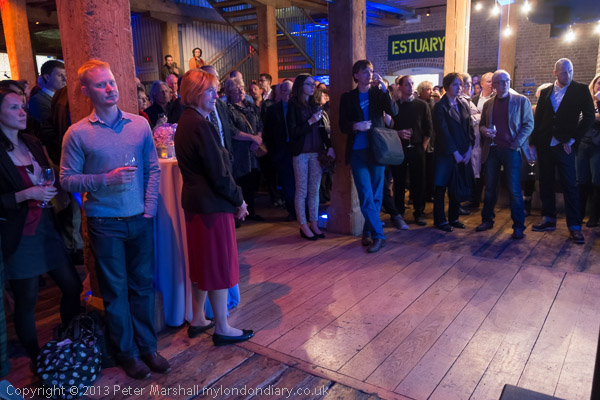
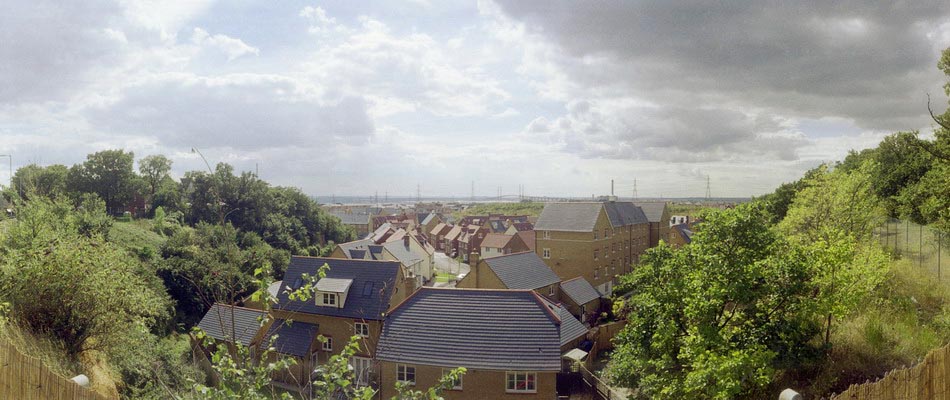
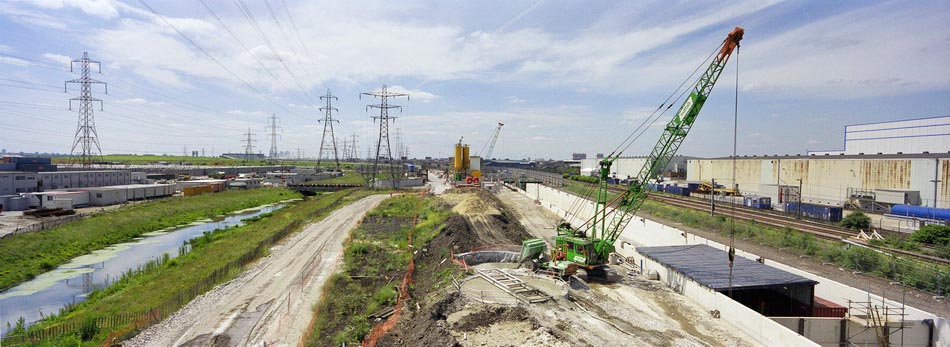
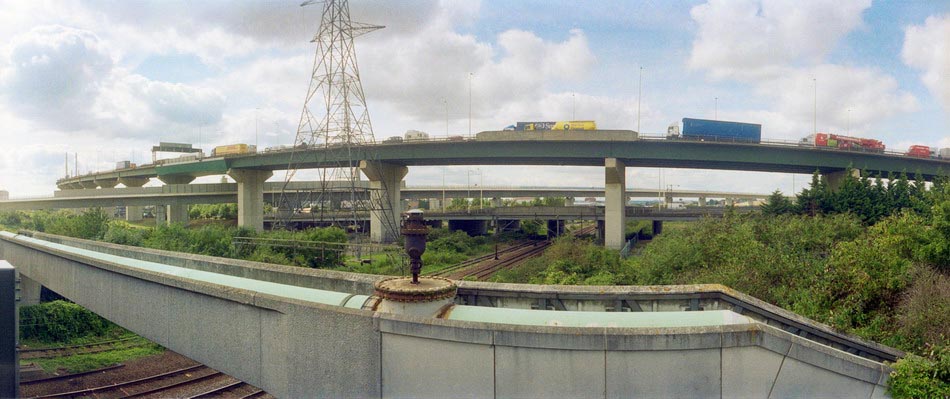
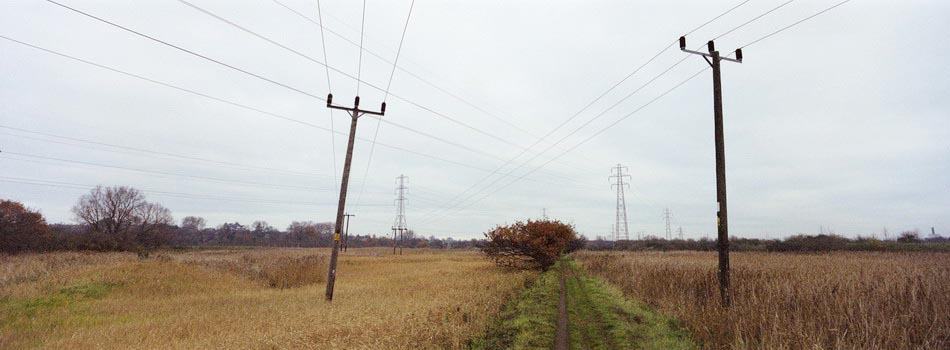
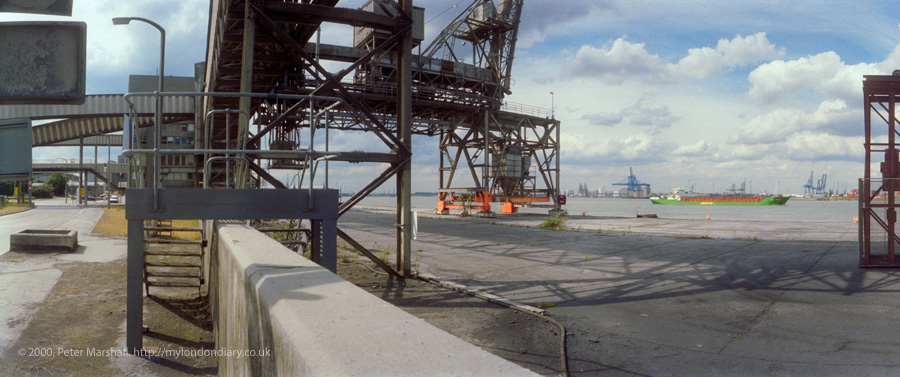
Ten years ago on Thursday 16th May 2013 I was pleased to attend the opening of the exhibition Estuary, held to mark the 10th anniversary of the Museum of London Docklands at West India Quay, a short walk from Canary Wharf. I was delighted to be one of the dozen artists in various media to be included, with ten of my panoramic images from my work on the north and south banks of the Thames.

Estuary opening

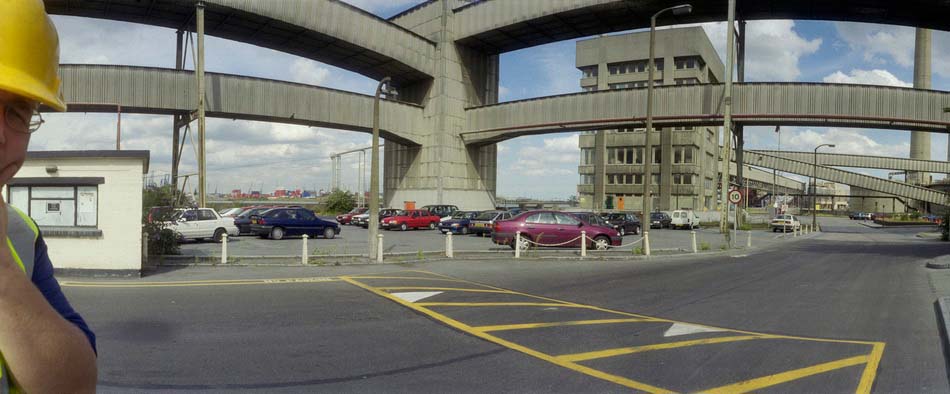
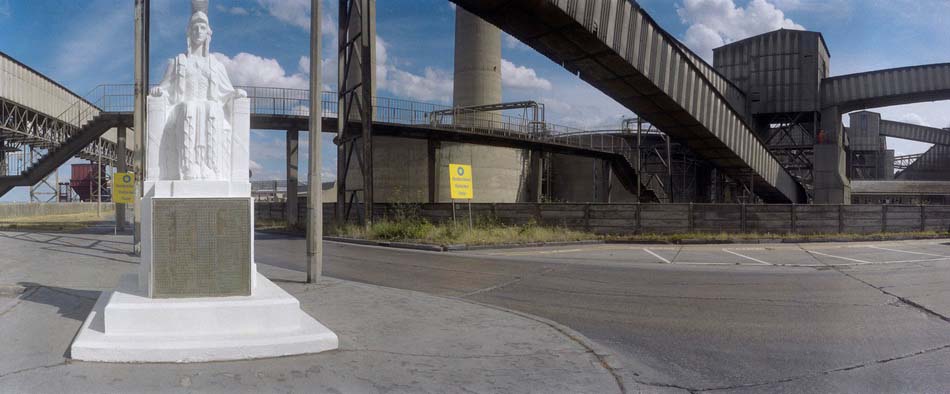
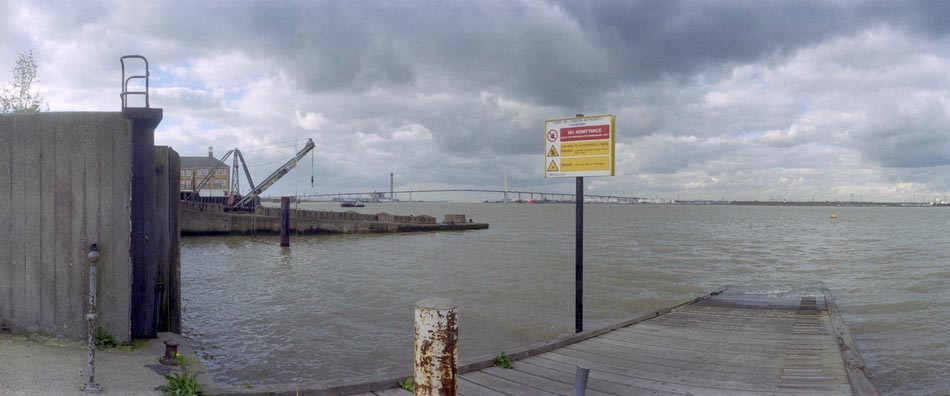
I’d begun photographing the lower reaches of the Thames back in the 1980s, then working largely in black and white and my work concentrated on the then fast disappearing industrial sites along the river. At first I worked on the Kent bank on the south of the river, having a particular interest in the cement industry that occupied and had radically changed much of area between Dartford and Gravesend. Later I also worked along the north bank.

Estuary
Cement works, Northfleet, 2000

Estuary is a term that has various definitions, and both its upstream and downstream limits have, as Wikipedia states, “been defined differently at different times and for different purposes.” For my own purposes it has been rather elastic, usually beginning at the Thames Barrier and going east as far as it was convenient to travel by public transport, on foot or by bicycle from convenient stations. In earlier years I went further along the Kent bank by car in some outings with friends including Terry King as far as Sheppey.

Estuary
Cement works, Northfleet, 2000

The exhibition had come as a surprise. The ten picture in it were from around a hundred images the Museum of London had bought from various of my projects for its collection a few years earlier and I think the first I knew about it was when I received the invitation to the opening, or perhaps by an email a couple of weeks before that.

Estuary
Greenhithe, 2000

These pictures all dated from the early years of this century, those from Kent in 2000 and from Essex in 2004 and all were in panoramic format. In 2000 I was working with two swing lens cameras, a Japanese Widelux F8 and a much cheaper Russian Horizon 202. Both work with rotating lens and a curved film plane, invented by give Friedrich von Martens in his Megaskop-Kamera in 1844, but instead of the daguerrotype plates he worked with use standard 35mm film, producing negatives around 56x24mm.

Chafford Hundred, 2004

The two cameras have a similar field of view horizontally around 130 degrees and have a cylindrical perspective which renders lines parallel to the film edges straight but gives an increasing curvature to horizontal lines away from the centre of the image. The image quality of the two is very similar but the cheaper camera has a rather more useful viewfinder.

Dagenham, 2004

By 2004 I had two further pieces of equipment which extended my panoramic photography. One was a new camera, the Hassleblad X-Pan, which had generally received rave reviews. I found it rather disappointing at first and it was only after I added the 30mm wideangle lens that it became useful for me. The X-Pan is a standard rectilinear camera design but gives negatives 65x24mm rather than the normal full-frame 36x24mm. The horizontal angle of view it produces with the 30mm is at the limits of rectilinear perspective, before stretching at the edges becomes too apparent, and is considerably less than the swing lens cameras at 94 degrees. The lens comes with a separate viewfinder that fits on the top of the camera, but does make operation a little less convenient.

West Thurrock, 2005

The second, and very important for working along the north bank was a Brompton folding bicycle, which enabled me to travel the greater distances needed there. Of course I also used this and the X-Pan for later pictures elsewhere.

Mucking, 2005

You can see more of these pictures in two sections of the Urban Landscapes web site, which also includes work by other photgraphers, both British and overseas. Some of the pictures I’ve chosen for today’s post were in the Estuary show, but others were not – I have a rather larger body of work to select from than the Museum, some of which appears in my book Thamesgate Panoramas.

Northfleet, 2000

The site has separate sections on the Thames Gateway in Essex and Kent, as well as from my Greenwich Meridian project in 1994-6 and a wider selection of panoramic work from around London from 1996-2005, though there is much more that I still have to put on-line. Some is also now on Flickr.


Nakba, South Africa, Fair Votes & Iran

Nakba, South Africa, Fair Votes & Iran: Events I covered in London on 15th May 2023 and one I just missed.


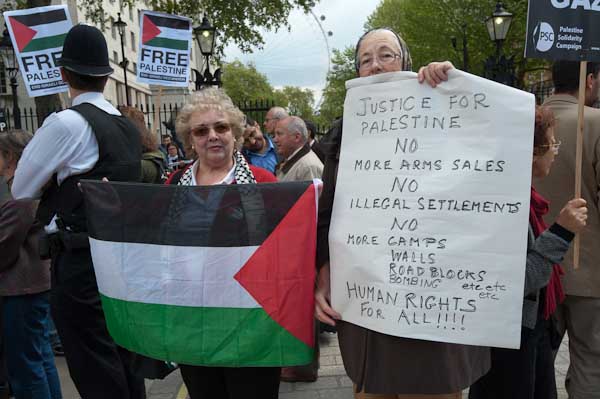
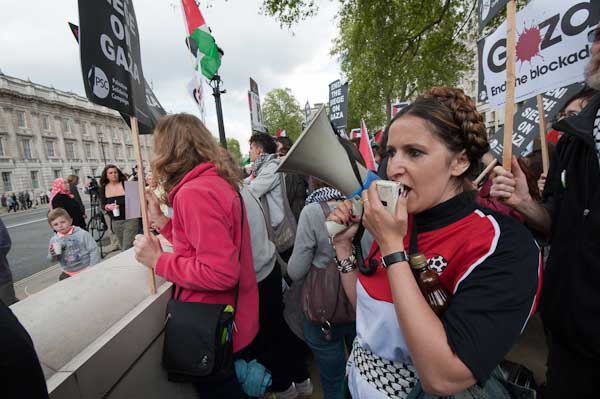
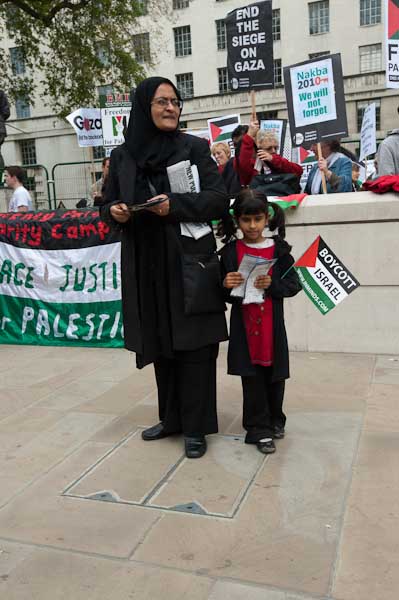
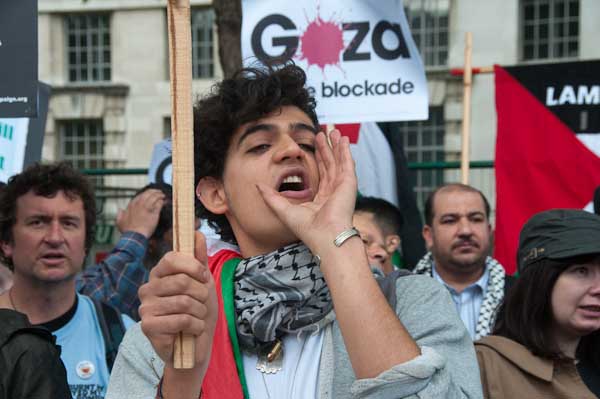
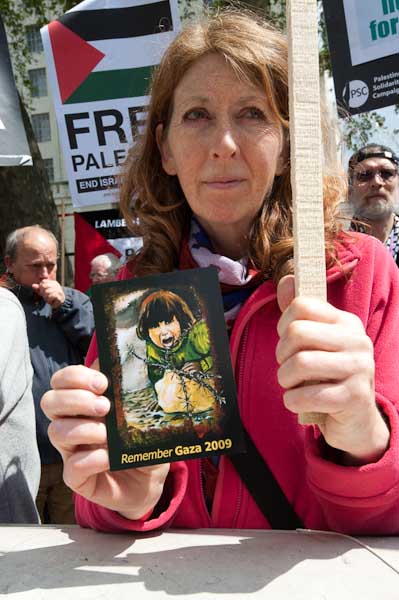
Nakba Protest For Free Palestine – Downing St

Nakba, South Africa, Fair Votes & Iran

May 15 is Nakba Day, remembering the 1948 disaster when Palestinians were expelled from their land and calling for an end to Israeli occupation and breaches of international law.

Nakba, South Africa, Fair Votes & Iran

Over 400 Palestinian villages were destroyed and the 1948 partition of Palestine to create the state of Israel created around 700,000 Palestinian refugees, many of whom or their descendants are still in refugee camps. Protests take place on or around May 15 every year around the world calling for justice for Palestine.

Nakba, South Africa, Fair Votes & Iran

The biggest in London is on the nearest weekend to the 15th, and the 2023 London march organised by Palestine Solidarity Campaign together with Stop the War Coalition, Palestinian Forum in Britain, Friends of Al-Aqsa, Muslim Association of Britain and Campaign for Nuclear Disarmament was last Saturday, May 13th, marching from the BBC.

Nakba, South Africa, Fair Votes & Iran

Organisations supporting this rally included Artists’ Union England, BFAWU, CWU, The MU, NEU, PCS, RMT, TSSA, UCU, UNISON and Unite the Union. In most recent years I’ve photographed these protests, but this year the rail strike meant I was unable to do so.

Back on 15th May 2010 the Nakba protest was a static one opposite Downing Street. Last Saturday the march to the rally began at the BBC, deliberately chosen to yet again expose the failure of our major broadcaster to report on protests in the UK, particularly those calling for freedom for Palestine.

It may not be written down anywhere in the BBC, but the broadcaster definitely has a policy of playing down or usually totally ignoring protests in the UK, at least unless it can condemn any acts of violence of criminal damage by protesters. Occasionally any involving major celebrities may also get a mention, though they may need to get arrested for the BBC to notice. You have more chance of your protest getting a mention if it occurs in another country, preferably one with a regime our government disapproves, than under their noses in London.

Other UK media tend to follow the example of the BBC and if you want to know about protests that are happening in the UK you need to follow foreign media such as Al Jazeera or RT, or read left wing publications in print or online. There you may even find out what the protests were about.

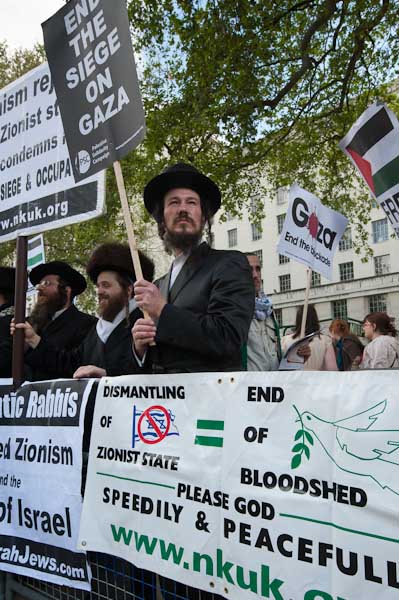
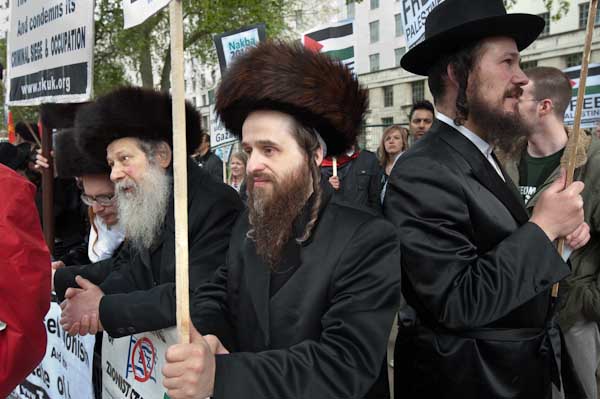
Among the protesters were many Jews opposed to the actions of the State of Israel who form a major part of most if not all left wing and anarchist groups. Most obvious were those from the ultra-orthodox ‘Neturei Karta’ who are totally opposed to Zionism and the idea of a Jewish political state. They say the Torah prohibits the use of human force to establish a Jewish state before the coming of the Messiah, and support the right of the Palestinians to their land, which should be returned to them. The say Jews should live in peace and harmony with their Muslim neighbours in Palestine as their ancestors did for many centuries.

Nakba Protest For Free Palestine


South African Right March in London – Trafalgar Square

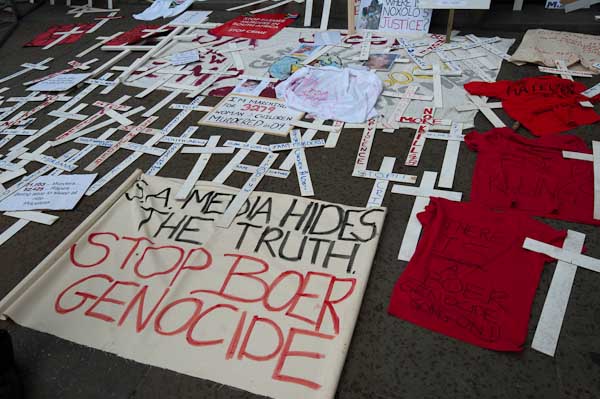
I arrived in Trafalgar Square too late to see a march by expatriate right-wingers, part of a campaign to persuade football supporters not to go to South Africa for the the World Cup. They say the country is too violent with around 18,000 murders a year.

Unfortunately that high rate is fairly typical among many countries in the global south and lower than in many of them. Perhaps the main difference between South Africa and the others is the large white population who also suffer from the violence and murders.

The march organisers had earlier regretted that police had prohibited any marchers carrying flags or banners of the extreme right Afrikaner Weerstandsbeweging (AWB) or other white nationalist groups. The extreme racist AWB protest at the ‘Boer Genocide’ and is committed to setting up an independent Volkstaat on parts of South Africa with extreme apartheid policies.

Although there were only a handful of people in red shirts who had taken part in the march I was able to photograph some of the crosses, posters and banners they had left behind in front of South Africa House before police removed them.

South African Right March in London


Purple Protest Demands Fair Votes – Old Palace Yard

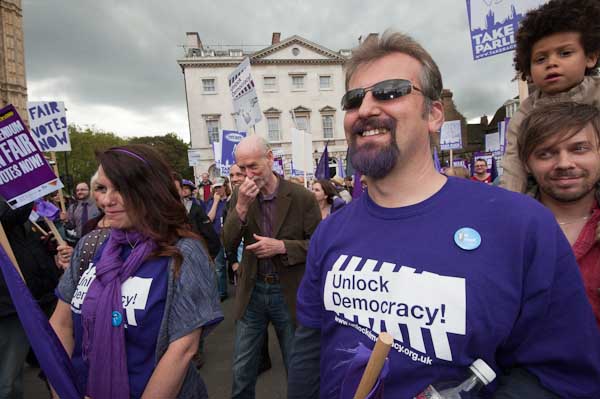
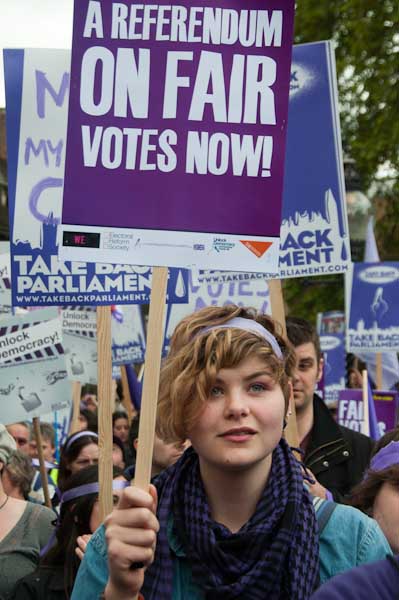
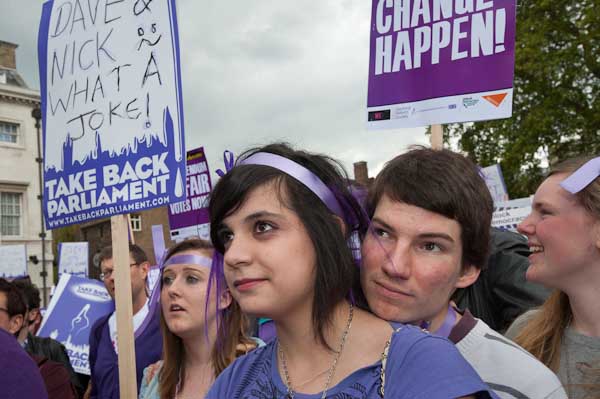
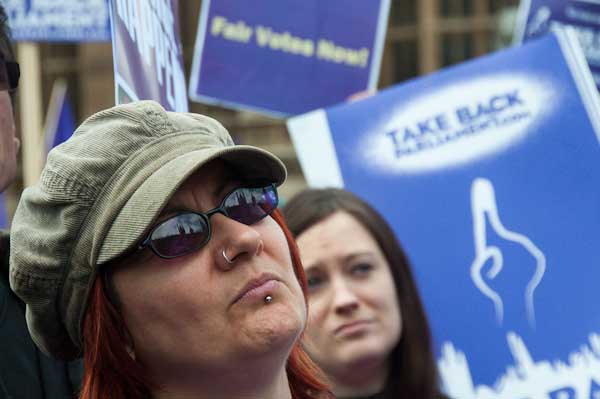
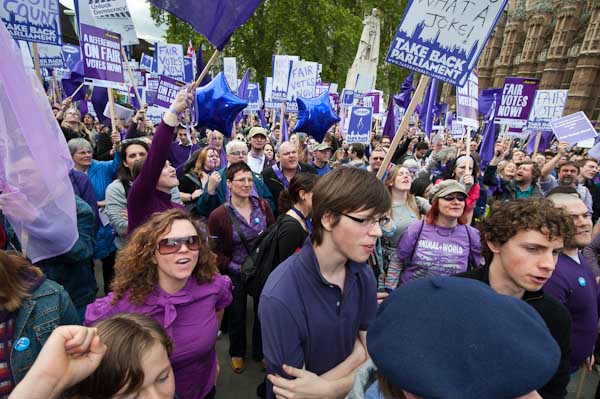
More than a thousand people, mainly wearing purple, had come to Westminster to demand a fair voting system, feeling cheated by the recent election results which failed to produce a government reflecting how people voted.

The 2010 election had clearly failed to reflect the votes cast, particularly for the Lib-Dems who got almost a quarter of the votes but less than one tenth of the seats. Perhaps even more importantly it showed that over a third of the population had so little confidence in our political system that they didn’t bother to cast there vote.

These results had left to a movement springing up rapidly through the Internet, using Twitter, Facebook, You Tube and other social networking sites, and it also attracted the backing of existing electoral campaigning groups such as the Electoral Reform Society, Unlock Democracy (incorporating Charter 88), 38 Degrees and Power2010.

Most of us have experience of elections taking place using the single transferable vote system with give much greater fairness. The Lib-Dems had demanded a UK-wide referendum on the Parliamentary voting system for taking part in the coalition governement, but the proposals were dismissed as more an attempt to defuse the issue than to deal with it. The vague proposal was in any case decisively rejected, though only 42% of the electorate bothered to vote.

This year has seen another attack on the fairness of our elections with the introduction of the need for photo-ID to cast a vote. I don’t know how many were put off from trying to vote by this requirement, but apparently 1.2% of those who turned up to polling stations were not allowed to vote.

Purple Protest Demands Fair Votes


Protest Against Executions in Iran

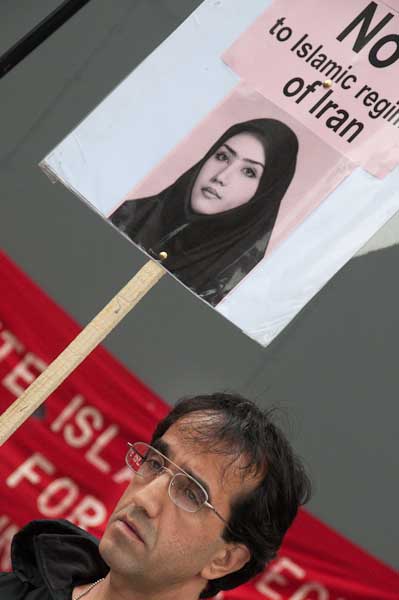
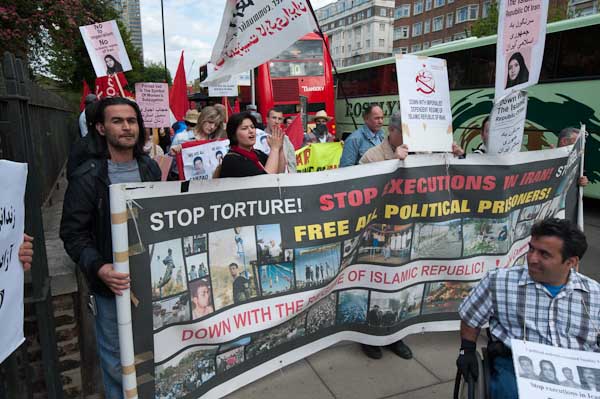
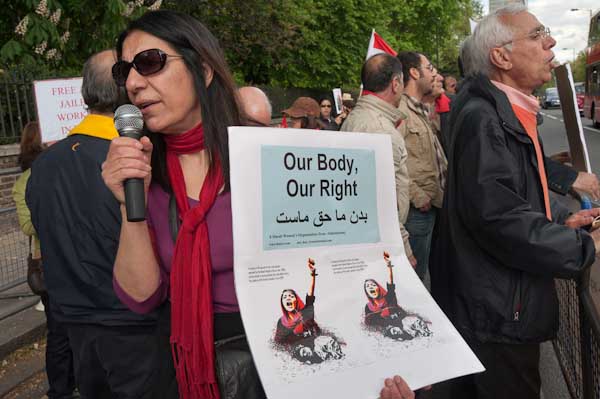
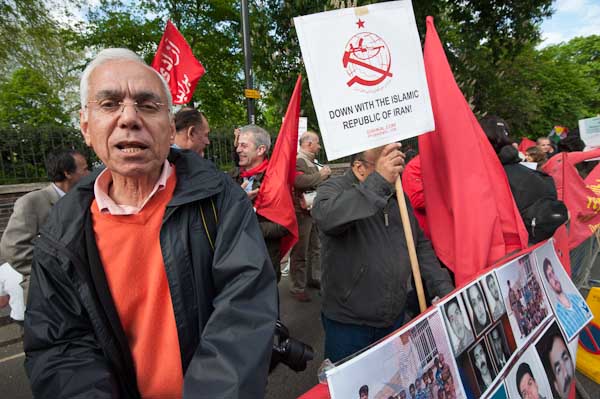
Around a hundred people demonstrated in Trafalgar Square and then marched for a rally opposite the Iran Embassy following the execution last Sunday of 5 political activists, the latest of many such death sentences.

In the previous year millions in Iran had protested for greater freedom in Iran, with the protests making headlines around the world after the fatal shooting of Neda Agha-Soltan in June 2009. Thousands have been arrested, tortured to make untrue confessions and then condemned in unfair trials and many have been executed.

The death of Jina Mahsa Amini after being arrested by the religious morality police for allegedly not wearing the hijab in accordance with government standards in September 2022 has led to a series of protests in Iran and around the world on an even more widespread scale than those in 2009-10, 2007 and 2019. Again the protests in Iran have been brutally repressed with at least 476 people killed by the end of 2022, and many arrested and tortured and a number of protesters hanged.

The protest on 15 May 2010 came after the executions of five political activists – four men and a woman – on Sunday 9 May; Farzad Kamangar, Ali Heydarian, Farhad Vakili, Mehdi Eslamian and Shirin Alam-Houli.

The protests in London around the world in 2022-3 have been on a larger scale than in 2010, with large and continuing protests with the slogan ‘Woman Life Freedom’.

Protest Against Executions in Iran


Hairdressers, Mansions, Baptists, Tiles & Greeks

The first part of this walk I made on Sunday 9th April 1989 is at Peckham and East Dulwich 1989.

Hairdresser, North Cross Rd, East Dulwich, Southwark, 1989 89-4i-61

I’d taken a picture of this poster in a hairdresser’s window when I’d walked along North Cross Road a couple of months earlier but hadn’t been entirely satisfied with it. In winter I had been working with Kodak’s TMAX400 and I think I felt that the fine graphic detail on the poster would be better on the more fine-grained TMAX100 I had switched to for the summer. The difference isn’t huge but it does show. The framing is also a little different, though in making this digital image I have made this version just a little more skewed than my usual slight lean. I blame it on living in a house where nothing is quite a right angle.

North Cross Rd, East Dulwich, Southwark, 1989 89-4i-62

I’m not sure what the shop at 65 North Cross Road was then selling but I rather liked the graphic on the window. It could have been, as it now is, another hairdresser. The doorway was for the flat above.

Fruit & Veg, Coldharbour Place, Camberwell, Lambeth, 1989 89-4i-63
Coldharbour Place, Camberwell, Lambeth, 1989 89-4i-63

I think I may have jumped on a bus on Lordship Lane to take me to Camberwell Green. Coming up to London for many of these walks I used a Travelcard which had first been introduced by the Greater Londo Council in 1981 and had greatly simplified travel around London. At the beginning of 1989 it had been extended to cover British Rail services, replacing an earlier One Day Capitalcard. The GLC had lost a legal battle to cut London fares in 1982, and was abolished by Thatcher in 1986, with fairly disastrous consequences, but their rationalisation of travel continued. Without it I don’t think I would have been able to do much of my extensive work across London. Now it seems that Tory cuts are going to force TfL to get rid of it for those of us travelling into London.

This is the next frame on my film, and was made around a mile and a half away, probably around a 15 minute bus ride from the previous image. The picture was made from Coldharbour Lane looking down Coldharbour Place, which continues with a narrow alley to Denmark Hill. The large building at left was a garage and has now been replaced by a larger block of flats, but the buildings at the right which front onto Denmark Hill remain and the wall at right is now covered by the ‘Great Wave’ mural based on Hokusai’s iconic image.

Denmark Place, Baptist Church, Coldharbour Lane, Camberwell, Lambeth, 1989 89-4i-64

This Grade II listed church was built in 1823 and though some alterations were made in 1869 still looks remarkably like it did in Victorian times. I wounder why it has four doors along its frontage, and is without a central door. Possibly the doors at the left and right of the set may lead to galleries around the main hall, and some more strict churches had separate doors for men and women, but although the listed text has a fairly full description of the exterior it gives no clues for the reasons behind the design.

Shops, Coldharbour Lane, Camberwell, Lambeth, 1989 89-4i-65

A rather fine row of shops with flats above, Denmark Mansions at 78-96 Coldharbour Lane. These mansions replaced earlier semi-detached villas with front gardens on the street at some time around 1900 though I can find no exact date.

Kenbury St, Camberwell, Lambeth, 1989 89-4i-51

A derelict frontage in Kenbury St, just off Coldharbour Lane. This is part of Kenbury Mansions and has long been restored. These buildings are rather decorative fronts on a rather large solid block behind, each front door leading to half a dozen flats.

Arcanum Works, Warner Rd, Camberwell, Lambeth, 1989 89-4i-54

Arcanum means the mysteries or secrets of a subject but other than the name I’m unsure what was mysterious about the Arcanum Terrazzo & Stone Company Limited who shared this works with the Decorative Tile Company Limited and the yard at rear with Wandle Paving Ltd.

This building is still there, but is now the Glory Divine Christian Centre & Community Hall. The factory behind is labelled as a Brewery on the 1877 OS large-scale map, but by the time of the 1916 OS map had turned sour as a Vinegar Works.

St Marys Greek Orthodox Cathedral, Camberwell New Rd, Camberwell, Lambeth, 1989 89-4i-55

The Greek Orthodox Cathedral of the Nativity of the Mother of God, Camberwell is a church in the Archdiocese of Thyateira & Great Britain. Greek Orthodox Christians had begun to celebrate in nearby St Giles in 1962.

In 1963 they moved into and later bought the former Catholic Apostolic Church, Camberwell New Road built for this splinter group of Anglo-Catholics in 1877, architect J & J Belcher. They had worshipped there until 1961. The church was damaged by bombing in 1941 and lost the impressive frontage rising behind the cloisters which can be seen in an illustration on Archiseek.com – with almost half the former nave now being a courtyard.

St Marys Greek Orthodox Cathedral, Camberwell New Rd, Camberwell, Lambeth, 1989 89-4i-42

I peered into the rather strange buildings to take this picture of the cloisters which the Anglo-Catholics had required of the architect. The more recent addition at left is probably very practical but rather spoils the impression.

My walk will continue in a later post. The previous post was the first on this walk, Peckham and East Dulwich 1989.


Bengali New Year and Levellers 2013

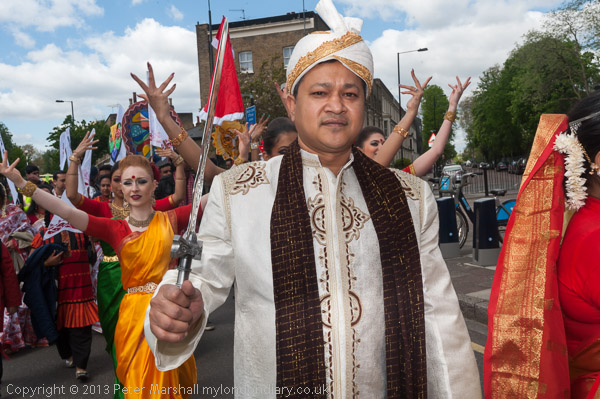
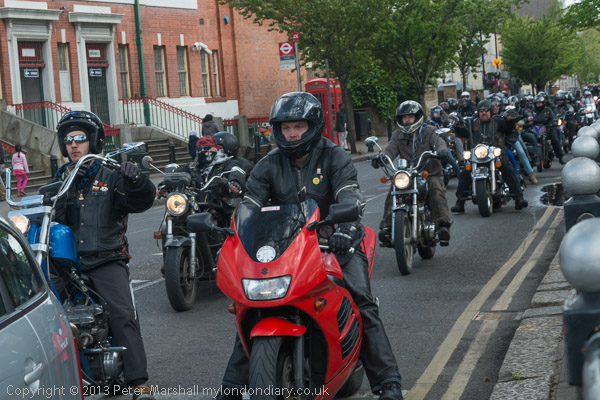
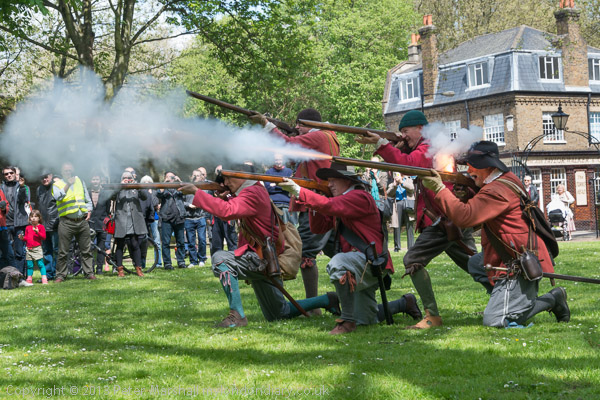
Bengali New Year and Levellers: I spent Sunday 12th May in East London, beginning at Weavers Fields in Bethnal Green for the Boishakhi Mela procession and then moving on to Wapping where a plaque was being unveiled at the burial place of Leveller Thomas Rainsborough. On my way there I was passed by a large group of motorcyclists out for a ride.


Boishakhi Mela Procession – Bethnal Green

Bengali New Year and Levellers 2013

The Bengali New Year is in the middle of April, but when the annual celebrations by the Bangladeshi community in Tower Hamlets began in 1997 they decided April in London was too cold and likely to rain and moved their celebration to a month later.

Bengali New Year and Levellers 2013

The celebration, which I’d photographed in 2006 and 2008, had been based around Brick Lane, but had by 2013 become a victim of its own popularity and had outgrown its original location, and had been moved to Victoria Park, well away from the centre of the Bangladeshi community. I think in later years it returned to its original location in the Brick Lane area, but I’ve not been back since.

Bengali New Year and Levellers 2013

The Mela is said to be the largest celebration of Boishaki outside of Bangladesh, and it was certainly very crowded when I was in Brick Lane in 2008. Tower Hamlets Council had that year banned it on safety grounds from using their parks, but later allowed them to use Weavers Fields for the main stage. It is said to be the second largest street festival in UK – though at around 80,000 taking part it is still an order of magnitude smaller than Notting Hill.

Bengali New Year and Levellers 2013

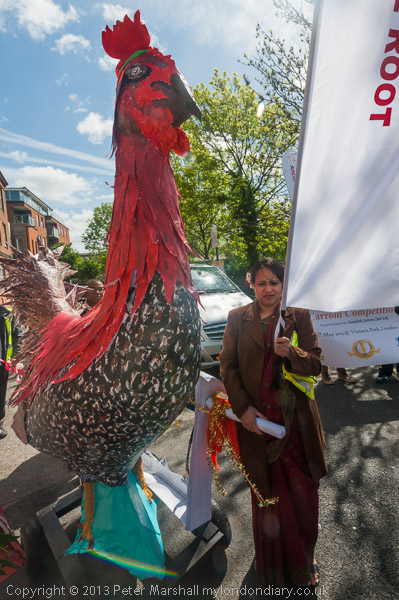
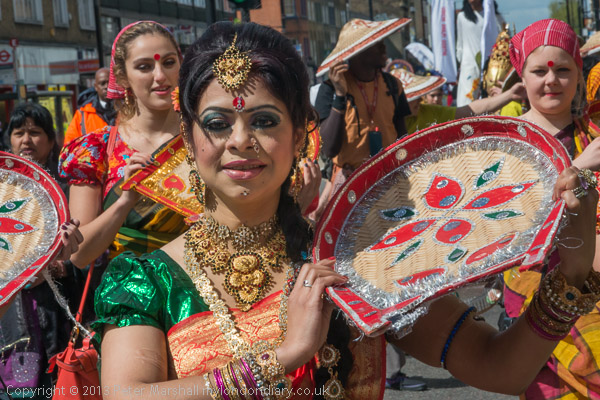
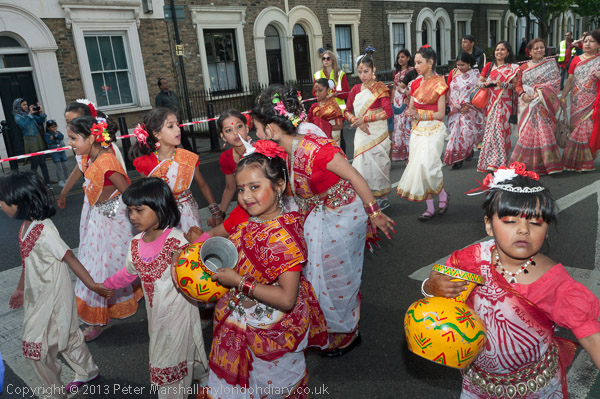
But as the pictures show it is a very colourful event. The council took over the management of the festival in 2009 when a record 95,000 people attended.

I walked with the procession to the gates of Victoria Park taking photographs, but left as they entered the park to go to Wapping.

Boishakhi Mela Procession


Bikers – Bethnal Green

The Boishakhi Mela Procession had been held up for a couple of minutes in Bethnal Green and had to wait as a large group of motorcyclists made its way down Old Ford Road where they were to go. I talked briefly with some of the bikers as they waited at the traffic lights, but conversation was rather difficult over the noise of perhaps a hundred poorly silenced engines. But I think they were simply a group from Dagenham and other parts of Essex out for a ride around London.

Bikers


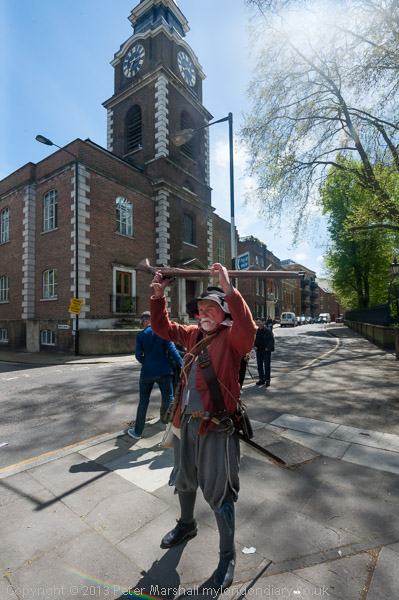
Leveller Thomas Rainsborough – St John’s Churchyard, Wapping

Although I had walked through and photographed the small park, saved from being built on by local campaigners, which had been the churchyard of St John’s in Wapping, I don’t think I had previously known it was where Thomas Rainsborough had been buried.

Colonel Thomas Rainsborough was a military leader in Cromwell’s New Model Army, fighting for Parliament against the king in the English Civil War. He was killed by a Royalist raising party during the siege of Pontefract on 29 October 1648 and buried at Wapping on 14th November.

Rainsborough is best remembered now for his statement in the Putney Debates in London in 1647 about all men being equal:

"For really I think that the poorest he that is in England hath a life to live as the greatest he; and therefore truly, sir, I think it’s clear that every man that is to live under a government ought first by his own consent to put himself under that government; and I do think that the poorest man in England is not bound in a strict sense to that government that he hath not had a voice to put himself under…"

It was truly a revolutionary idea at the time, and he was labelled as an extremist. He was the most senior officer to support the Levellers.

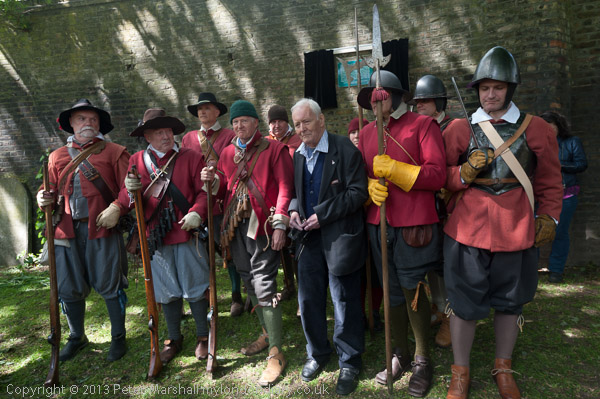
The four Royalists had entered his lodgings at night and attempted to arrest him. There was a huge funeral procession by Levellers from Tottenham to Wapping for his burial. His sea-green regimental standard (a replica of which was carried by the Sealed Knot’s ‘Colonel Rainsborough’s Regiment of Foote’ in today’s ceremonies) was torn into strips and the sea-green ribbons became a Leveller symbol.

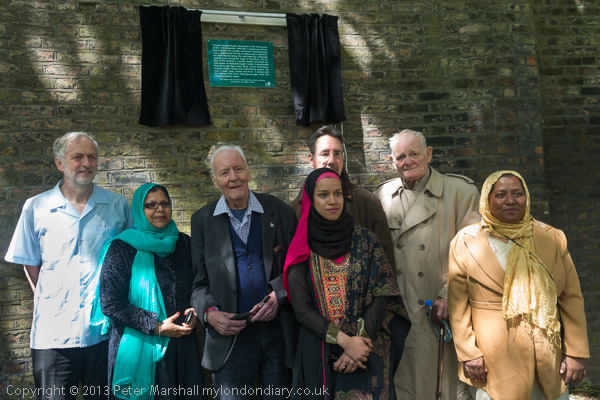
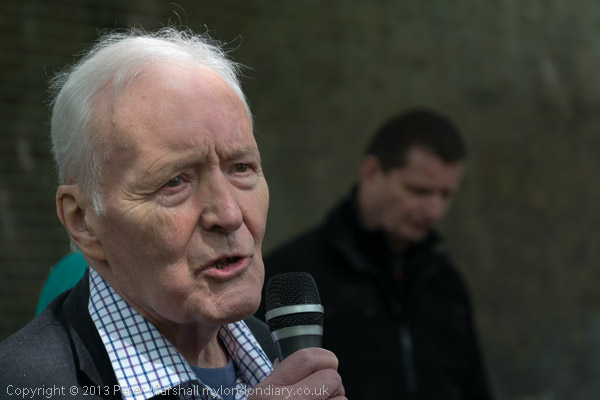
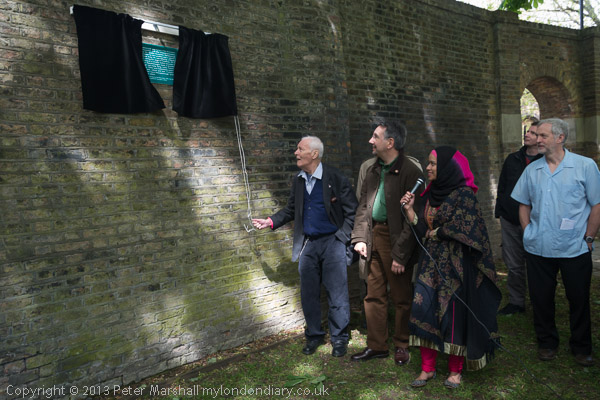
He had been an important military leader, in command of 1500 musketeers, but today there just five from the Sealed Knot, along with an officer and some pikemen, but they put on an impressive performance for the hundred or so of us who had turned up for the event, with speeches by John Reese, Tony Benn and others before Tony Benn pulled the string to unveil the plaque. This included words from the inscription on his long lost tomb which proclaimed he had made ‘Kings, Lords, Commons, Judges shake, Cities and Committees quake‘.

After the official proceedings and while photographs were being taken Ian Bone of Class War seized the opportunity to speak against the appropriation of Rainsborough by members of the political establishment who had taken part in the ceremony, but would still be opposed to the radical ideas put forward by the Levellers.

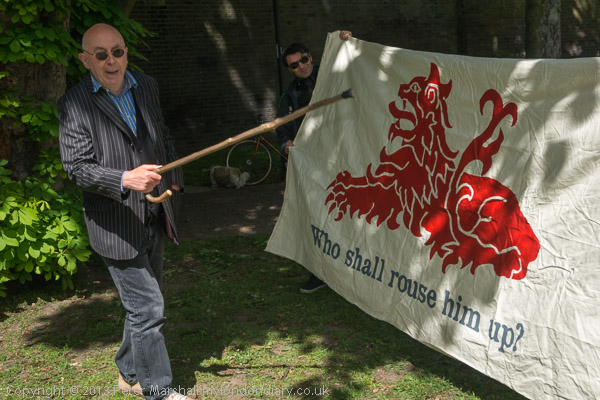
Standing in front of a fine banner showing a red sleeping lion with the text ‘Who shall rouse him up’ he spoke about the more radical Fifth Monarchists, fifty of whom staged a brief and doomed insurrection following the restoration in 1661, led by Thomas Venner. They stormed St Paul’s Cathedral on January 1 and held parts of London for three days before all were killed or taken prisoner. Venner was captured after suffering 19 wounds, tried and then hanged, drawn and quartered on 19 January 1661.

More at Leveller Thomas Rainsborough.


Hardest Hit March Against Cuts – 2011

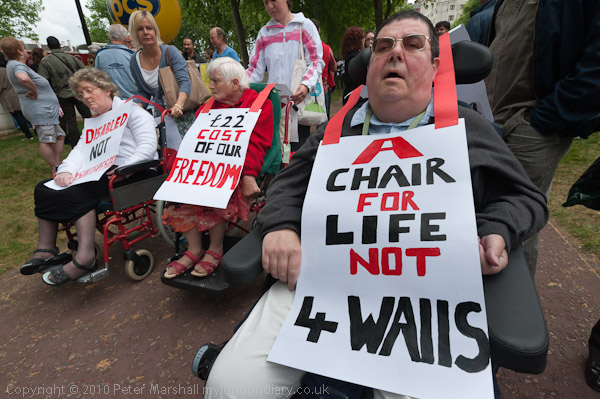
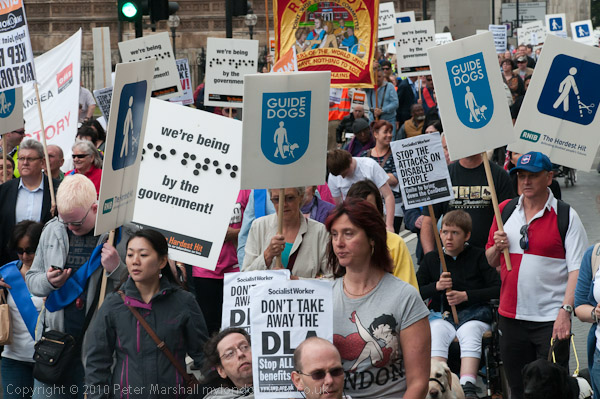
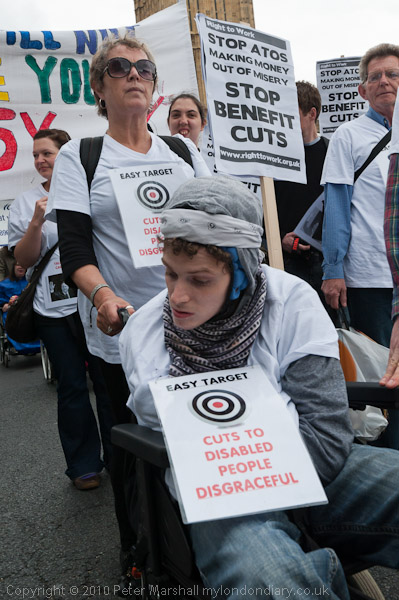
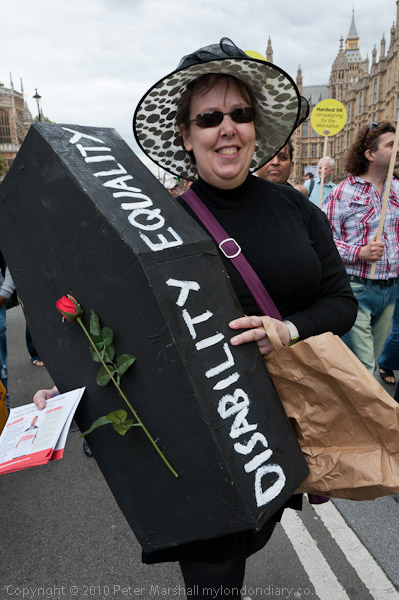
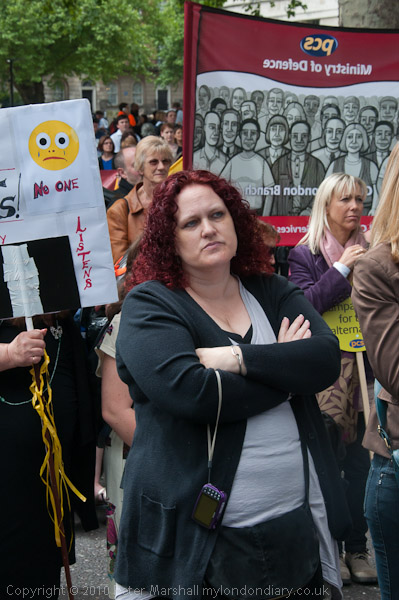
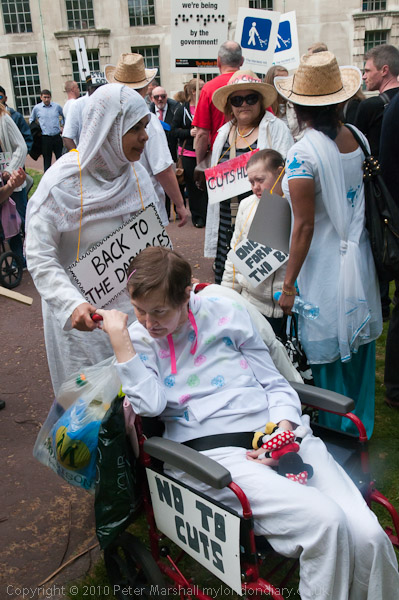
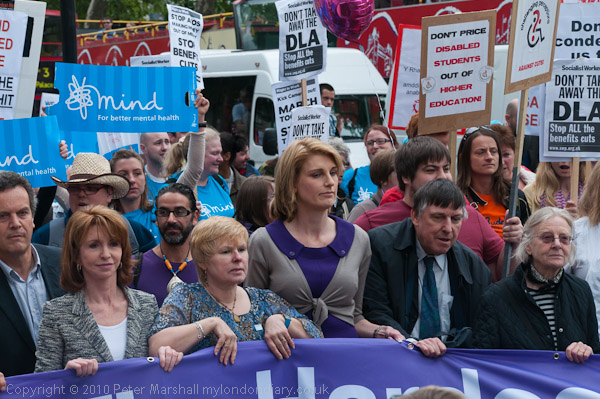
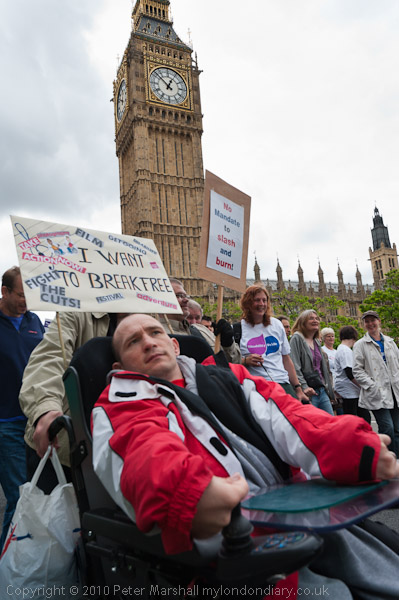
Hardest Hit March Against Cuts: On Wednesday 11th March 2011 around 10,000 people, many in wheelchairs came to march in London calling for an end to harassment and benefit cuts for the disabled.

Hardest Hit March Against Cuts - 2011

The Hardest Hit march was supported by a huge range of charities and organisations representing and supporting the physically and mentally disabled, including major unions such as PCS, UCU and Unite.

Hardest Hit March Against Cuts - 2011

The protest came a year after the formation of the coalition government led by David Cameron with Lib-Dem leader Nick Clegg as his deputy, with real power staying with the Tory majority and is now widely seen as a disaster for the Lib-Dems. Under Chancellor George Osborne the coalition plunged the country into the start of ten years of austerity, with particularly swingeing cuts to local government services as well as a drastic attack on all those claiming benefits.

Hardest Hit March Against Cuts - 2011

The cuts disproportionately affected the poor and the disabled while the wealthiest in our society were hardly if at all affected. In 2018 the UN special rapporter on extreme poverty concluded his visit to the UK by reminding us that ‘Poverty is a political choice‘ and that ‘Austerity could easily have spared the poor, if the political will had existed to do so’.

Hardest Hit March Against Cuts - 2011

For the disabled and those on benefits there were cuts and freezes and the situation was made worse by the ignorance and incompetence of Iain Duncan Smith, Secretary of State for Work and Pensions from 2010 to 2016.

It was under Labour in October 2008 that Work Capability Assessments were introduced but the numbers made before 2010 were relatively small and they were used for new Employment and Support Allowance (ESA) claimants and a small number of ESA reassessments. It was only in Spring 2011 under the coalition government that a programme began to move those on existing benefits onto ESA using the WCA tests administered by Atos began.

Already by 2011 there had been serious criticisms both of the unsatisfactory nature of the tests and of the failures by Atos to administer them correctly, and this protest march called both for an end to the cuts in benefits for the disabled and “and in particular for an end to the discredited and iniquitous testing regime administered by Atos Healthcare, which has replaced proper medical tests by a computer-based system that often ignores the actual needs of those being assessed, and has as unacceptably high error rate, with a majority of appeals against its assessments succeeding.

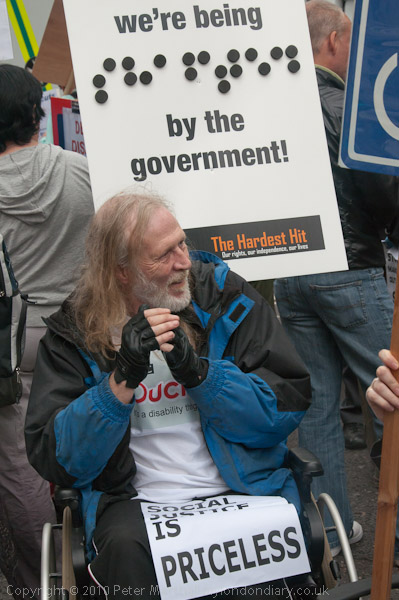
The Braille spells out SHAFTED

Despite the huge body of evidence and the many deaths the system caused, only minor changes were made and it was not until 2014 that the contract with Atos was ended, only for them to be replaced by Maximus who carried on the same way. Atos, now renamed IAS, remains now a part of the assessment system for ESA, Universal Credit and PIP along with Maximus and Capita.

Both New Labour and the Coalition made cuts in many positive projects and organisations set up to help the disabled. One of these was Remploy, whose last state-run sheltered factory set up to employ disabled labour closed in 2013 with the loss of over 1700 jobs. It is now a part of Maximus.

This protest got more media attention than most, largely because of the presence among those leading the march of Sally Bercow, the wife of the then Speaker of the Commons, and actress and activist Jane Asher, president of three of the organisations involved, Arthritis Care, National Autistic Society and Parkinson’s UK. It was followed by a mass lobby of MPs.

Since then there have been many more protests against the unfair treatment of the disabled as various benefits have been scrapped and Universal Credit has led to further problems, but nothing on this scale. Disabled people have not only suffered most they have also become some of the more active protesters, particularly led by groups that were on this march including Disable People Against Cuts (DPAC), Mental Health Resistance Network (MHRN), Winvisible, Black Triangle and others.

This ‘Hardest Hit’ march came during a ‘National Week of Action Against Atos Origin‘ organised by disability activists, claimant groups and anti-cuts campaigners and two days earlier they had protested outside the offices of Atos Healthcare in London. You can see more on My London Diary in Disabled Protest Calls Atos Killers.

More at Hardest Hit March Against Cuts.

Peckham and East Dulwich 1989

Courtyard, Peckham Rye Station, Rye Lane, Peckham, Southwark, 1989 89-4h-35

The day after my walk around King’s Cross, in part on a walk led by GLIAS, on Sunday 9th April 1989 I was back in London on my own, south of the river for a walk beginning in Peckham.

People have often asked my why I photographed the areas of South London, and although I tell them I also photographed the North, East and West, my interest was certainly was certainly inspired by a remarkable book, London South Of the River, by Sam Price Myers, published in 1949, illutstrated by some fine wood engravings by Rachel Reckitt.

Back in 1989 there was relatively little graffiti in the area, but much of the walls in the 1930’s building at the centre of the picture where an arcade leads left towards Rye Lane was covered fairly colourfully last time I visited. You can just see a little of the station at right through the first arch. The second arch on Station Way leads to Blenheim Grove,

Courtyard, Peckham Rye Station, Rye Lane, Peckham, Southwark, 1989 89-4h-36

Myers does not have a great deal to say about Peckham, but has an engaging enthusiasm for the subject matter. His short section on the area does, like me start at Peckham Rye Station, though I had probably not arrived by train but on a bus to Peckham from Vauxhall. The book also contains some decent photographs, though greatly weakened by the rather pallid reproduction of the era, by a number of photographers including Ursula Hartleben and Bernard Alfieri.

My copy, bearing the stamp of the Illustrated London News Editorial Library, was certainly £4 well spent, and I find a copy in rather better condition now offered for sale on the web for £555; the advert shows several of Reckitt’s illustrations, and another was posted by a friend on Twitter. You can still find copies of the book in similar condition to mine for a rather more reasonable price.

This picture is looking north up Station Way from outside the station entrance towards Holly Grove. My interest on this occasion was obviously rather more in the 1930s building than the Victorian station,

Shop, Blenheim Grove, Peckham, Southwark, 1989 89-4h-21

This was another part of the 1930s development in front of the station between it and Rye Lane, here with shops and flats above. I walked the few yards east into Rye Lane and continued south down this, taking few pictures as I had photographed this area on previous walks.

Matrix Gym, Rye Lane, Peckham, Southwark, 1989 89-4h-23

Continuing south, Rye Lane merges into Peckham Rye, and I often confused the two. The numbers on the door frame here are 257-261 and this was a part of the former Co-Op building at the bottom of Rye Lane, now demolished and replaced.

Lock, Peckham Rye, Peckham, Southwark, 1989 89-4h-12

The giant lock with its legend YALE LOCKS was became labelled the entrance to Ezel Court (which I think was just the flats above the shops), but I assume that at one time either 56 – here dealing with pets – or the shop to the left had sold locks. In recent years these have become a Mini Super Market and a restaurant. I had photographed this earlier in the year and another picture appears in my post Peckham Rye to Goose Green – 1989.

Houses, Kelmore Grove, East Dulwich, Southwark, 1989 89-4h-13

I continued down Peckham Rye to the junction where I turned to the west along East Dulwich Road. In 1879 this there were really substantial villas along the south of East Dulwich Rd, but by the early 90s Oakhurst Grove, Kelmore Grove and The Gardens at the back of these had been laid and lined with substantial family homes.

These beautifully decorated late Victorian houses are on the south side of Kelmore Grove, with slightly plainer examples on the other side of the road. Although only two storey, these are substantial semi-detached houses with a wide frontage with a large room on each side of the central hallway.

Houses, Oakhurst Grove, East Dulwich, Southwark, 1989 89-4h-14

The houses in Oakhurst Grove have alternate bays and rather curious towers in what are semi-detached three storey houses. The two doors in each pair are adjacent with only a room on one side and although taller they are less grand than those in the picture above. But they also have some fine brickwork and decorative elements.
This walk will continue in later posts.


Buildings, Dancers, Gym and a Bison

This is the final part of my walk around King’s Cross after the walk led by the Greater London Industrial Archeology Society finished on Saturday 8th April 1989. The previous post was Goods Way, Gasholders & St Pancras.

Stanley Buildings, Stanley Passage, Cheney Rd, King's Cross, Camden, 1989 89-4h-61
Stanley Buildings, Stanley Passage, Cheney Rd, King’s Cross, Camden, 1989 89-4h-61

I was clearly in no hurry to get home and spent some time wandering around the area taking pictures. In this post they are in the order that I made them, along with some others, mainly near duplicates, but I haven’t kept to this in posting them to the album.

This block of flats was built 1864-5 by the Improved Industrial Dwellings Company, architect Matthew Allen. They were grade II listed five years after I made this picture and have been retained in the fairly comprehensive development around them, being incorporated after considerable rebuilding around 2014 into a modern office development.

The listing text decribes them as part of a group with the “King’s Cross Gasholders, Goods Way and Barlow’s great shed to St Pancras Station, Euston Road” and “in addition an important part of a dramatic Victorian industrial landscape.” Unfortunately this is no longer the case, and it is now simply an addendum to a modern development.

Gasholder, Cheney Rd, Battlebridge Rd, King's Cross, Camden, 1989 89-4h-62
Gasholder, Cheney Rd, Battlebridge Rd, King’s Cross, Camden, 1989 89-4h-62

Here and in the next picture we see a landscape and portrait view of a nearby part of that “dramatic Victorian industrial landscape”, now gone and replaced by modern blocks

89-4h-64-Edit_2400
Gasholder, Cheney Rd, Battlebridge Rd, King’s Cross, Camden, 1989 89-4h-64-Edit_2400

I made the landscape format view first, but then decided that it was probably better to include the top of the gasholder.

German Gymnasium, Cheney Rd, King's Cross, Camden, 1989 89-4h-65
German Gymnasium, Cheney Rd, King’s Cross, Camden, 1989 89-4h-65

The German Gymnasium on the south side of Clarence Passage was also built in 1964-5, paid for by the German Gymnastics Society and London’s German community and it had its front entrance on Pancras Road. It was one of the first venues used by the National Olympian Association for its first games in 1866.

Dancers, Mural, Stanley Buildings, Pancras Rd, King's Cross, Camden, 1989 89-4h-56
Dancers, Mural, Stanley Buildings, Pancras Rd, King’s Cross, Camden, 1989 89-4h-56

My favourite mural in London, on the side of this block of flats. I don’t know when this disappeared. The ‘preserved’ building has a huge featureless brick wall facing Pancras Road which could do with something like this to liven it up.

German Gymnasium, Cheney Rd, King's Cross, Camden, 1989 89-4h-42
German Gymnasium, Cheney Rd, King’s Cross, Camden, 1989 89-4h-42

Although this building was Grade II listed in 1976, part of its western end was demolished for the construction of St Pancras International, with a new end wall being built in matching fashion. The building is now in use as a restaurant and bar.

Culross Buildings, Kings Cross Station, King's Cross, Camden, 1989 89-4h-43
Culross Buildings, Kings Cross Station, King’s Cross, Camden, 1989 89-4h-43

I had wandered here to the side of the Motorail terminal at King Cross, where you used to be able to drive your car onto a train and sleep in a bunk bed all the way to Edinburgh or Aberdeen. This was the first such service, I think dating from the 1950s by British Rail, who set it up as Car Sleeper Limited, but it was soon joined by a network of similar services serving other stations and distant destinations, with London terminals at Olympia, Paddington and Euston.

As the motorway network grew, demand for motorail decreased, and I think the service from Kings Cross ended around the time I made this picture.

Culross Buildings, Kings Cross Station, King's Cross, Camden, 1989 89-4h-44
Culross Buildings, Kings Cross Station, King’s Cross, Camden, 1989 89-4h-44

Another image from somewhere around the north of King’s Cross Station where I had wandered.

Great Northern Hotel, Pancras Rd, King's Cross, Camden, 1989 89-4h-45
Great Northern Hotel, Pancras Rd, King’s Cross, Camden, 1989 89-4h-45

Back on Pancras Rd I walked to the eastern side of the Great Northern Hotel facing King’s Cross Station to take this picture of the main facade. The area in front of the hotel is now covered by the extended station building from 2008. The building was a part of Lewis Cubitt’s plans for the station, built in 1854 and Grade II listed in 1984. The slightly less impressive convex rear of the building is still fully visible on Pancras Rd.

Ox, Pancras Rd, King's Cross, Camden, 1989 89-4h-46
Ox, Pancras Rd, King’s Cross, Camden, 1989 89-4h-46

This rather threadbare beast was for some years a feature of Pancras Road, and although I’ve called it an Ox I think it was really a Bison. I think it was there simply to draw attention to the shop behind, or perhaps just to make it easier to find. Perhaps someone will be able to post more about it in a comment?

A short distance down the road was the Underground entrance at which my walk ended and my journey home began.

The first post on this walk was Kings Cross, St George’s Gardens & More

VE Day 2005

May 8th is VE Day, celebrating the end of the war in Europe on May 8th 1945. In France it is a national and public holiday, and other countries celebrate it too, even with events in Germany celebrating those who opposed Nazism. Russia and some other countries celebrate Victory Day on 9th May. We had the early May bank holiday moved to May 8th for the 50th and 75 anniversaries in 1995 and 2020, but otherwise it is not hugely observed.

But 2005 was the 60th anniversary, and VE Day fell on a Sunday, and there were events taking place on both Saturday 7th and Sunday 8th which I photographed. Here I’ll post some pictures and what I posted about the events in 2005.


VE Day Commemorated – Ilford, 7 May, 2005

VE Day 2005

60 Years ago, my view of the world was dark, wet and warm and I was almost certainly unaware of what was happening outside, and I think my mother’s part in the VE day celebrations will have been fairly muted and sedentary, though I’m sure both she and my father (the first war had taken him to Germany, but this one only got his as far as Potters Bar on his bike to inspect the bees) shared the feelings of the nation.

VE Day 2005

I wanted to avoid the large stage-managed media events. Couldn’t stand the thought of Vera Lynn and Cliff Richard, or the Prince Of Wales. So I went to Ilford to see how the people in Redbridge were commemorating the occasion.

VE Day 2005

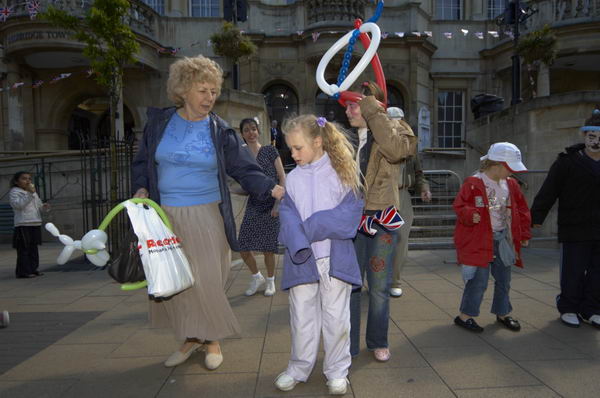
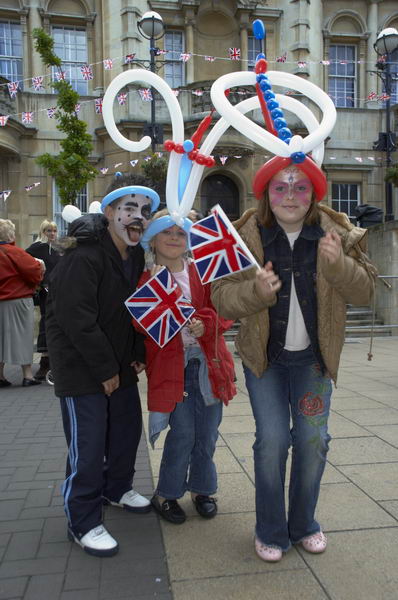
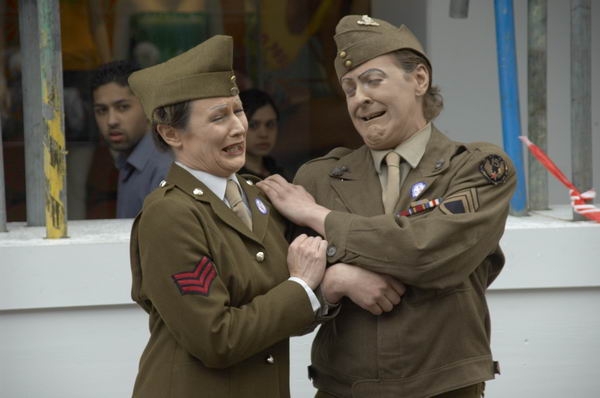
A couple of small groups playing mainly forties jazz tunes, some dancing, kids and oldies having fun, balloons, uniformed ‘statues’, free tea, a few veterans and a small but informative museum display made a pleasant afternoon in the high street.

more pictures on My London Diary.


VE Day Parade – Bromley, 8th May 2005

VE Day 2005

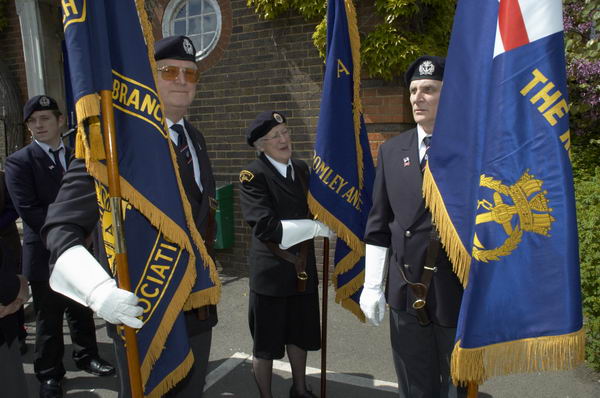
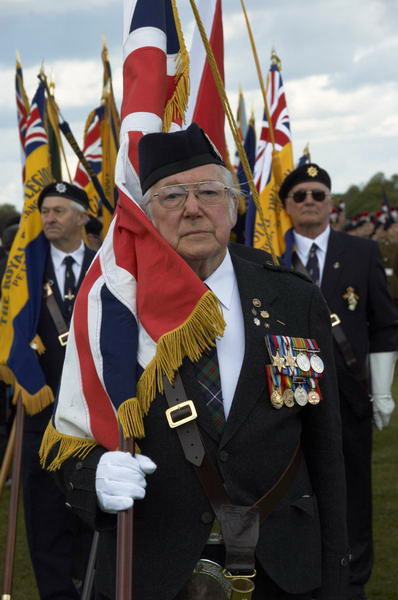
Sunday afternoon I attended a more formal event in Bromley, which seems to have more uniformed organisations than any other London borough, and the forces were out in force. Marching behind the bagpipes came the veterans, most looking surprisingly well despite their age, and with medals to show for their service around the world. One showed me his Russian medal for service in the Baltic, others had been in the far east as well as Africa and Europe.

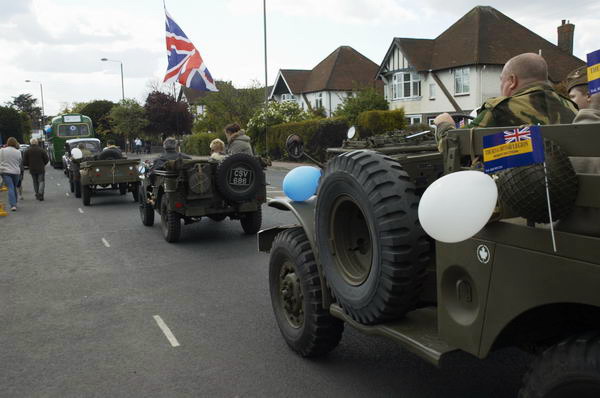
The parade to Norman Park was joined by more veterans and supporters in buses, as well as a number of vintage vehicles, civil and military. At the park, the mayor, the bishop and a team of other clergy joined up for a drumhead service in a large tented area, holding well over a thousand people.

A few of the veterans felt this was one church parade too many and like me made for the beer tent. Perhaps like me they had also called in to the Area of Remembrance on the way. There was an impressive dignity about the veterans and the event seemed a moving tribute to them and their comrades who died.

more pictures on My London Diary.