Conscientious Objectors, Cannabis Education & Bengali New Year – 2005

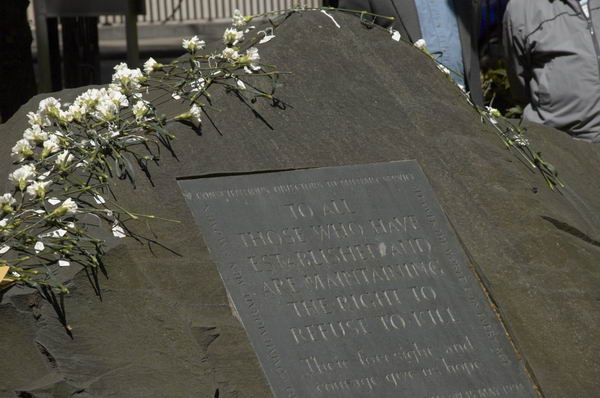
Conscientious Objectors, Cannabis Education & Bengali New Year: Three unrelated events on 15th May 2005 in London. May 15th has been observed in Europe as Conscientious Objectors’ Day since 1982 and became International in 1985 when it was adopted by War Resisters’ International. A ceremony is held every year on the day in Tavistock Square at the site of the massive slate Conscientious Objectors’ Commemorative Stone which has the inscriptions:

TO COMMEMORATE MEN & WOMEN
CONSCIENTIOUS OBJECTORS TO MILITARY SERVICE
ALL OVER THE WORLD & IN EVERY AGE

TO ALL THOSE WHO HAVE
ESTABLISHED AND
ARE MAINTAINING
THE RIGHT TO
REFUSE TO KILL

Their foresight and
courage give us hope

THIS STONE WAS DEDICATED ON 15 MAY 1994
INTERNATIONAL CONSCIENTIOUS OBJECTORS' DAY
Conscientious Objectors, Cannabis Education & Bengali New Year - 2005

I left before the end of the ceremony and hurried to Russell Square for the start of the annual march calling for the legalisation of cannabis, walking with this to Trafalgar Square and then taking the tube to go to Brick Lane for the Bengali New Year Festival. Below is what I wrote in 2005.


The Right to Refuse to Kill – International Conscientious Objectors Day

Tavistock Square
Conscientious Objectors, Cannabis Education & Bengali New Year - 2005

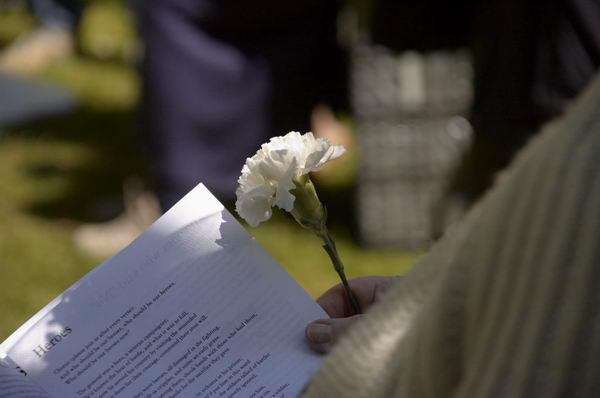
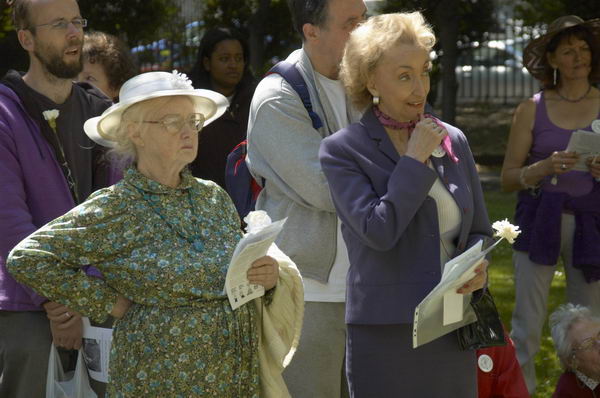
May 15th was International Conscientious Objectors’ Day, and the ‘right to refuse to kill’ group of people from the Peace Pledge Union, Conscience, The Unitarian Peace Fellowship, Christian CND, The Anglican Pacifist Fellowship, Pax Christi, The Women’s International League For Peace And Freedom And Dances Of Universal Peace had organised a ceremony at the Commemorative stone in Tavistock Square. After a brief introduction by Tony Kempster of the Anglican Pacifist Fellowship, Sue Gilmurray sang her song ‘Heroes’ and then Angela Sinclair who was a conscientious objector in the Second World War told her story and spoke about the right not to take part in war.
Conscientious Objectors, Cannabis Education & Bengali New Year - 2005

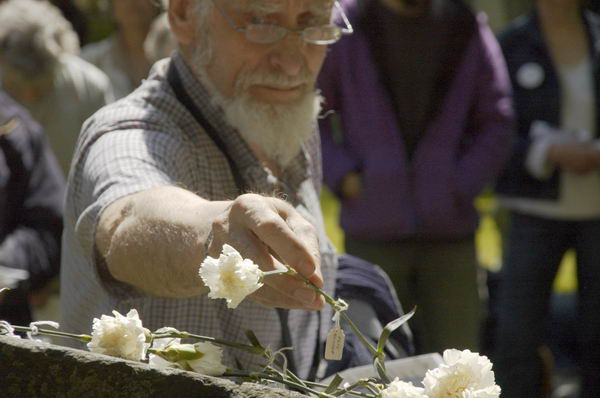
After a speaker from Amnesty and another from Conscience, the names of almost seventy conscientious objectors, many of who had died for their beliefs, were read out. The organisers had given out white flowers labelled with their names, and as each name was read, the person holding their flower came and placed it on the stone. After a one minute silence the commemoration continued with another song and then dancing, but I had to leave at this point.
Conscientious Objectors, Cannabis Education & Bengali New Year - 2005

more pictures


Cannabis Education March & Rally

Russell Square to Trafalgar Square,
Conscientious Objectors, Cannabis Education & Bengali New Year - 2005

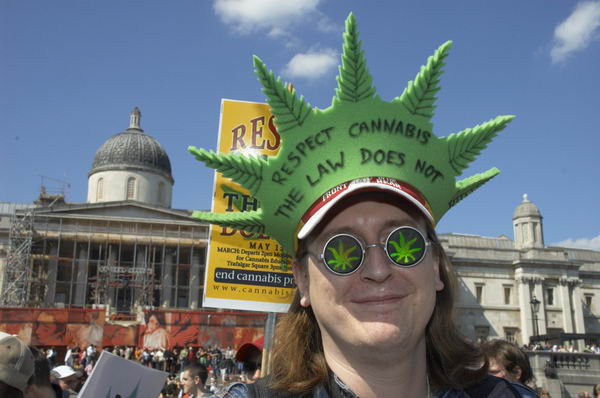
The annual march to demand the legalisation of cannabis had to be postponed and moved to a central London location after Lambeth council had refused to allow it to use Brockwell Park. Probably for this reason, the numbers seemed well down on previous years.
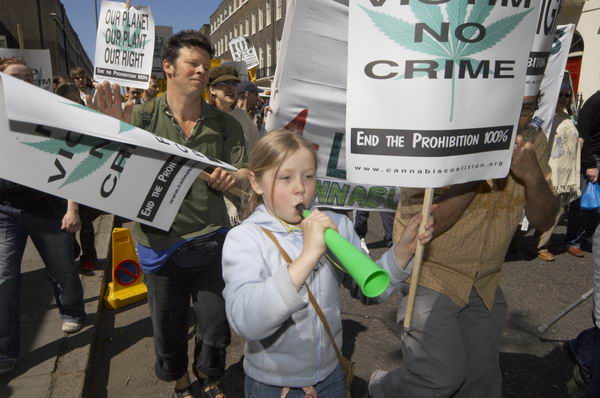
The last year had seen both an increasing recognition of the value of cannabis in relieving pain for some conditions, and also in revealing the mental health problems it causes some users. Despite these, the existing anti-drugs policies are more and more discredited, leading to increasing crime and addiction, and also greatly increasing the probability of cannabis users moving on to more dangerous and addictive drugs.
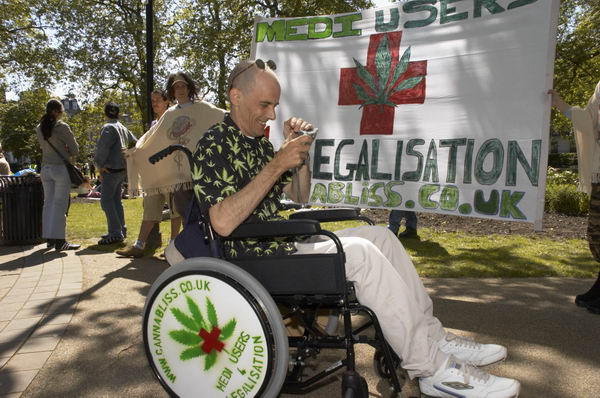
Cannabis needs to be taken out of the hands of drug dealers, and into some form of legalised supply chain which would cut out the drug dealers, allow better supervision of the product and create a total separation between cannabis and other more dangerous substances.
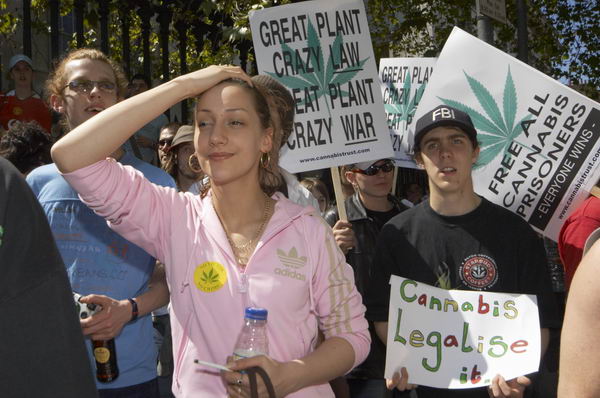
It would also allow the creation of a tax revenue, some of which could be spent on the rehabilitation of drug users.

Many more pictures


Bengali New Year Festival (Baishaki Mela)

Brick Lane
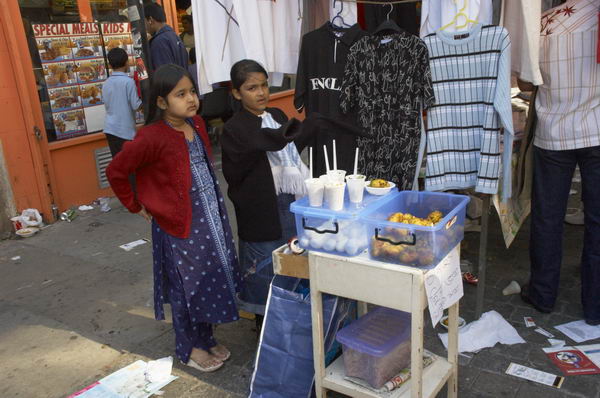
I went with the march to Trafalgar Square and stayed to listen to a couple of the speakers, but soon lost interest and got on the District Line to go up to Brick Lane for the Bengali New Year Festival.
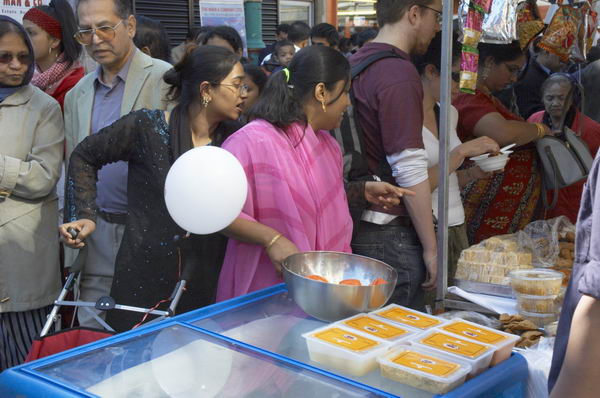
When I got there it was just too crowded; after walking around for a few minutes I gave up and came home.

More pictures


FlickrFacebookMy London DiaryHull PhotosLea ValleyParis
London’s Industrial HeritageLondon Photos

All photographs on this page are copyright © Peter Marshall.
Contact me to buy prints or licence to reproduce.
Bengali New Year and Levellers 2013

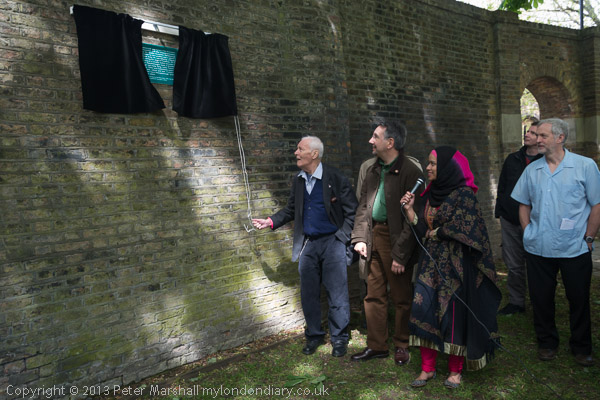
Bengali New Year and Levellers: I spent Sunday 12th May in East London, beginning at Weavers Fields in Bethnal Green for the Boishakhi Mela procession and then moving on to Wapping where a plaque was being unveiled at the burial place of Leveller Thomas Rainsborough. On my way there I was passed by a large group of motorcyclists out for a ride.


Boishakhi Mela Procession – Bethnal Green

Bengali New Year and Levellers 2013

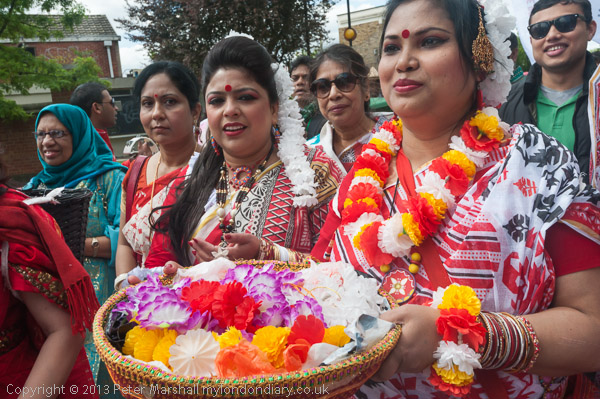
The Bengali New Year is in the middle of April, but when the annual celebrations by the Bangladeshi community in Tower Hamlets began in 1997 they decided April in London was too cold and likely to rain and moved their celebration to a month later.

Bengali New Year and Levellers 2013

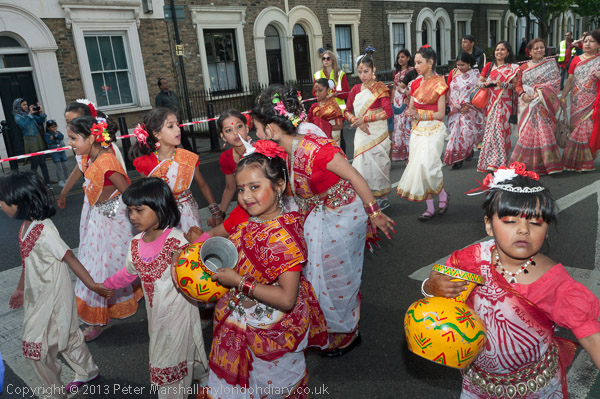
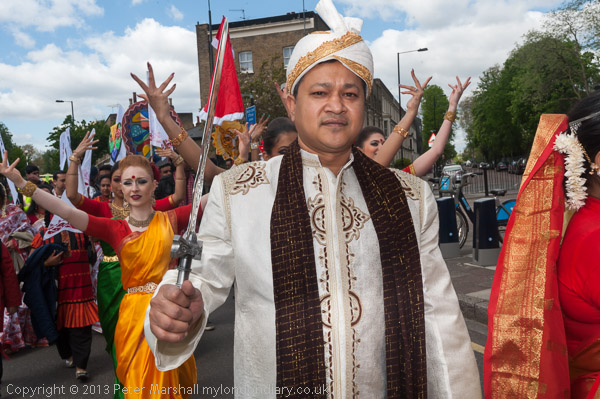
The celebration, which I’d photographed in 2006 and 2008, had been based around Brick Lane, but had by 2013 become a victim of its own popularity and had outgrown its original location, and had been moved to Victoria Park, well away from the centre of the Bangladeshi community. I think in later years it returned to its original location in the Brick Lane area, but I’ve not been back since.

Bengali New Year and Levellers 2013

The Mela is said to be the largest celebration of Boishaki outside of Bangladesh, and it was certainly very crowded when I was in Brick Lane in 2008. Tower Hamlets Council had that year banned it on safety grounds from using their parks, but later allowed them to use Weavers Fields for the main stage. It is said to be the second largest street festival in UK – though at around 80,000 taking part it is still an order of magnitude smaller than Notting Hill.

Bengali New Year and Levellers 2013

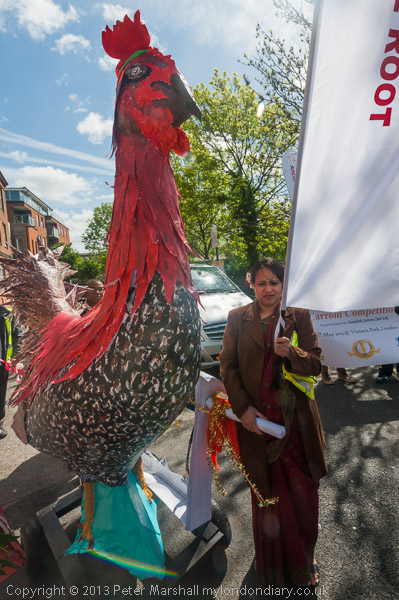
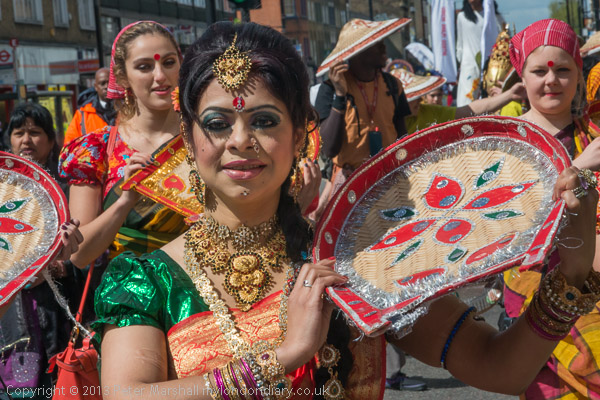
But as the pictures show it is a very colourful event. The council took over the management of the festival in 2009 when a record 95,000 people attended.

I walked with the procession to the gates of Victoria Park taking photographs, but left as they entered the park to go to Wapping.

Boishakhi Mela Procession


Bikers – Bethnal Green

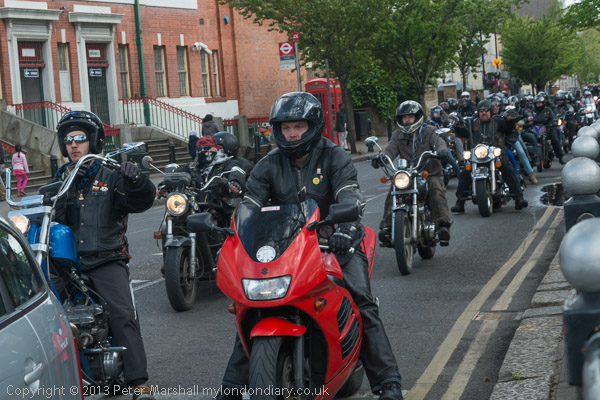
The Boishakhi Mela Procession had been held up for a couple of minutes in Bethnal Green and had to wait as a large group of motorcyclists made its way down Old Ford Road where they were to go. I talked briefly with some of the bikers as they waited at the traffic lights, but conversation was rather difficult over the noise of perhaps a hundred poorly silenced engines. But I think they were simply a group from Dagenham and other parts of Essex out for a ride around London.

Bikers


Leveller Thomas Rainsborough – St John’s Churchyard, Wapping

Although I had walked through and photographed the small park, saved from being built on by local campaigners, which had been the churchyard of St John’s in Wapping, I don’t think I had previously known it was where Thomas Rainsborough had been buried.

Colonel Thomas Rainsborough was a military leader in Cromwell’s New Model Army, fighting for Parliament against the king in the English Civil War. He was killed by a Royalist raising party during the siege of Pontefract on 29 October 1648 and buried at Wapping on 14th November.

Rainsborough is best remembered now for his statement in the Putney Debates in London in 1647 about all men being equal:

"For really I think that the poorest he that is in England hath a life to live as the greatest he; and therefore truly, sir, I think it’s clear that every man that is to live under a government ought first by his own consent to put himself under that government; and I do think that the poorest man in England is not bound in a strict sense to that government that he hath not had a voice to put himself under…"

It was truly a revolutionary idea at the time, and he was labelled as an extremist. He was the most senior officer to support the Levellers.

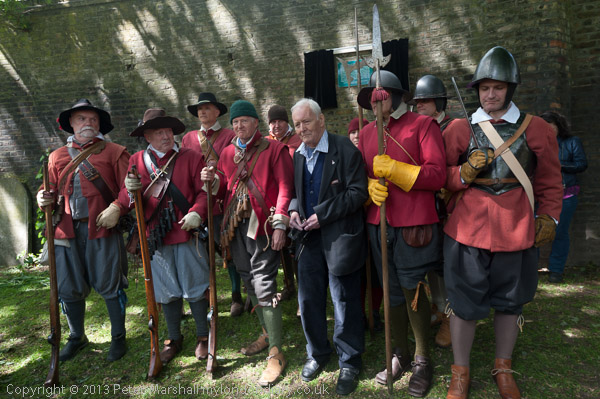
The four Royalists had entered his lodgings at night and attempted to arrest him. There was a huge funeral procession by Levellers from Tottenham to Wapping for his burial. His sea-green regimental standard (a replica of which was carried by the Sealed Knot’s ‘Colonel Rainsborough’s Regiment of Foote’ in today’s ceremonies) was torn into strips and the sea-green ribbons became a Leveller symbol.

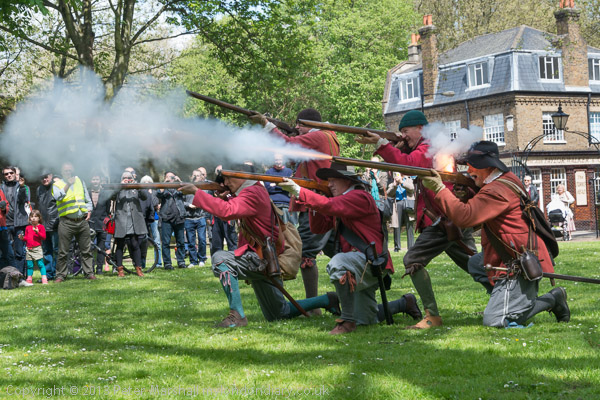
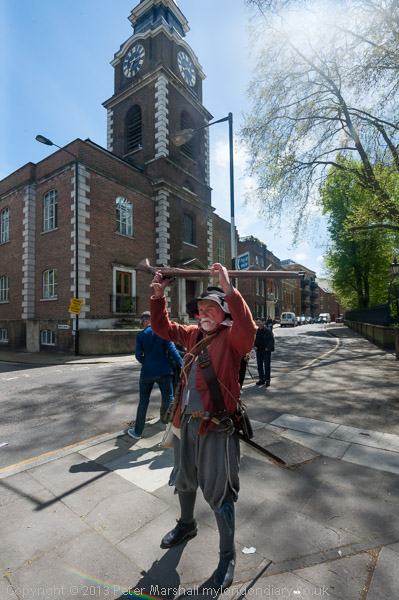
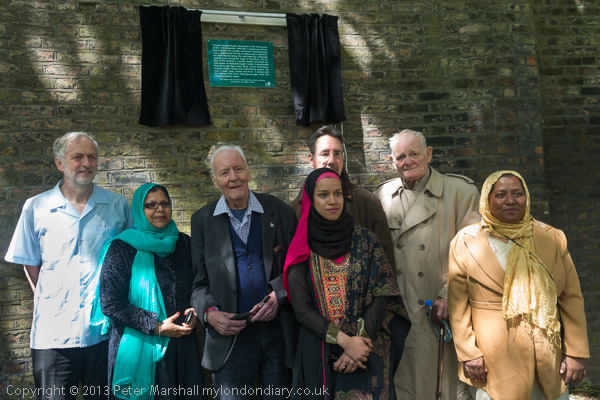
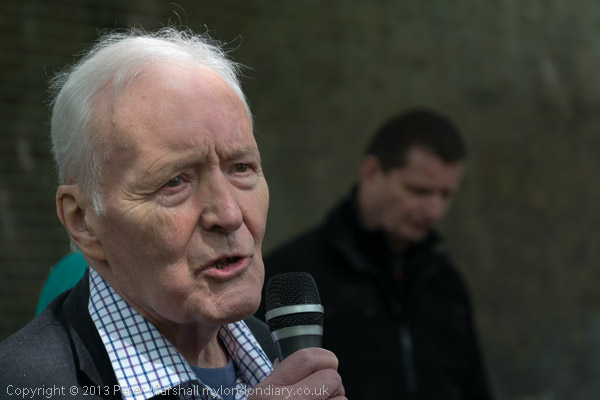
He had been an important military leader, in command of 1500 musketeers, but today there just five from the Sealed Knot, along with an officer and some pikemen, but they put on an impressive performance for the hundred or so of us who had turned up for the event, with speeches by John Reese, Tony Benn and others before Tony Benn pulled the string to unveil the plaque. This included words from the inscription on his long lost tomb which proclaimed he had made ‘Kings, Lords, Commons, Judges shake, Cities and Committees quake‘.

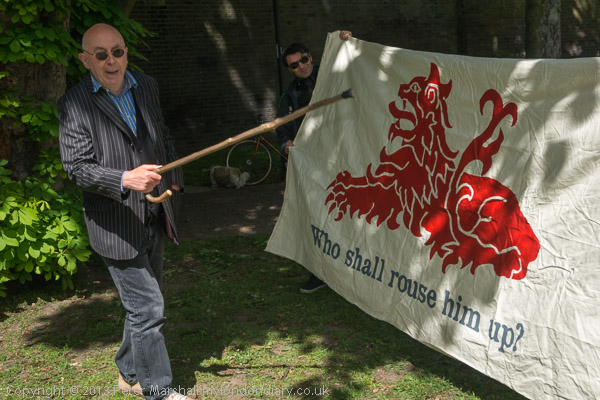
After the official proceedings and while photographs were being taken Ian Bone of Class War seized the opportunity to speak against the appropriation of Rainsborough by members of the political establishment who had taken part in the ceremony, but would still be opposed to the radical ideas put forward by the Levellers.

Standing in front of a fine banner showing a red sleeping lion with the text ‘Who shall rouse him up’ he spoke about the more radical Fifth Monarchists, fifty of whom staged a brief and doomed insurrection following the restoration in 1661, led by Thomas Venner. They stormed St Paul’s Cathedral on January 1 and held parts of London for three days before all were killed or taken prisoner. Venner was captured after suffering 19 wounds, tried and then hanged, drawn and quartered on 19 January 1661.

More at Leveller Thomas Rainsborough.