A Day with Class War – 2015

A Day with Class War: On Saturday 14th March I spent much of the day with Class War who had registered as a political party to stand a handful of candidates in the May 2015 General Election. Of course they didn’t expect to gain any MPs but it had seemed a good way to attract some publicity to their views – and to have a little fun. They began at Chingford with an election campaign launch for Lisa McKenzie who was standing against Tory minister Iain Duncan Smith.

After a public meeting on the street there the group retired to a nearby pub to celebrate the election launch before I travelled with Chingford and Purley candidates and a few supporters to visit and show solidarity with people on the Aylesbury Estate in Southwark who had occupied a flat there to highlight the shameful treatment by Southwark Council of residents whose homes are being demolished and are being forced out of the area.


Class War Chingford Election Launch

Chingford, London

A Day with Class War - 2015
Police seized Class War’s ‘Political Leaders’ banner two days earlier but they still had posters from the 2010 election with the same message

Lisa McKenzie came to Chingford with a small group of Class War supporters to announce she was giving electors there a chance to kick out Tory minister Iain Duncan Smith and the evil policies he represented, which inflict misery on the poor and disabled.

A Day with Class War - 2015

From the station they marched behind the ‘Lucy Parsons’ banner “We must devastate the avenues where the wealthy live” past the Conservative Association offices and the Assembly Hall to the end of Station Rd. Unfortunately police had seized their even more appropriate banner calling the main political leaders (as I put it) ‘f***ing wankers‘ at the Poor Doors protest two days earlier, but they still had plenty of posters with the same message.

They were followed down the street by a van full of police officers who were obviously taking this first official visit by the Class War candidate for the Chingford constituency very seriously.

At the end of the street Class War turned around and walked back to a convenient place to hold a meeting where candidate Lisa McKensie, then a research fellow at the LSE whose study of the St Ann’s Estate in Nottingham where she lived for many years was recently published as Getting By: Estates, Class and Culture in Austerity Britain and several others made speeches.

A Day with Class War - 2015

Police stood and watched from the opposite side of the road and after 10 minutes an officer walked across the road and ordered Stan who was one of those holding the ‘wanker’ posters to put it away or be arrested. There was some argument but eventually Stan rolled it up and the sergeant walked back across the road, standing with arms folded staring at the group – with several others still holding similar posters.

A Day with Class War - 2015
Ian Bone mimicked the officer who was watching from across the road

Most of those who walked past ignored the group, but some took the Class War election leaflets and were clearly amused, though one elderly man on a passing bus made his opinion clear in an appropriately Churchillian fashion.

A Day with Class War - 2015

After around half an hour the launch ended and the group walked back towards the station, with Lisa stopping off briefly to put one of her election leaflets through the door of the Conservative Association. When they went inside the pub opposite the station the police van drove off, but several police remained watching the pub.

Class War Chingford Election Launch


Class War Celebrate Election Launch

Station House, Chingford

The media summary with my pictures from inside the Station House pub stated:

After a march and street rally in Station Rd, Chingford, Class War cadres adjourned with their candidate Lisa Mckenzie, who is opposing controversial Tory minister Iain Duncan Smith, to discus their forthcoming election campaign in the constituency.

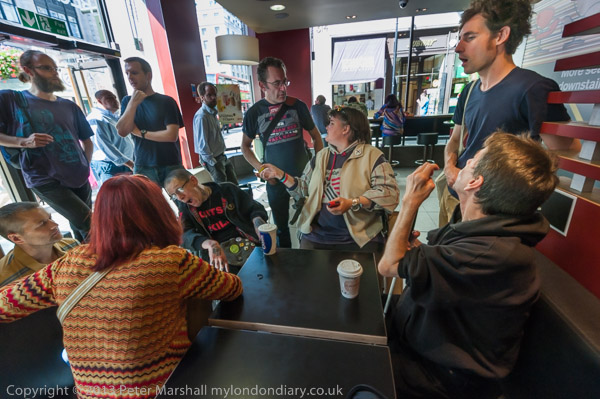
There was some talk about the campaign and Jane Nicholl got out a few ‘Iain Duncan Smith‘ masks for people to buy and wear – and I commented “the pub seems likely to become an unofficial campaign headquarters for Class War.”

I was pleased to buy a pint and have a drink with them, something I seldom do after protests as I’m usually rushing away to get home and file my pictures. Most photographers now carry a laptop and file on the spot, but I’ve resisted doing so – few of the events I cover are breaking news.

But while we were there a phone call came from the occupiers on the Aylesbury Estate in Southwark calling for support and I decided to go with them.

Class War celebrate Election Launch


Class War go to Aylesbury Estate

Walworth, Southwark

On the Overground

I was waiting in the pub to travel with two Class War election candidates, Lisa McKenzie standing for Chingford and Jon Bigger for South Croydon, along with several supporters, across London to the Aylesbury Estate in Southwark where people had occupied a flat in solidarity with occupiers who are being forced out from the large council estate which is being re-developed.

Police watched us until the train left

Some families were still living on this block of the estate which was now surrounded with high fences and anti-climb barriers with police and bailiffs severely restricting access to the estate by residents and visitors.

As I wrote then: “Southwark Council, having neglected the estate for many years, has decided to hand it over to developers who will knock it down and redevelop the area mainly for sale or rent at inflated London prices. The residents are being forced to move out against their wishes – clearly expressed in a council organised ballot in 2001 – to stay, and most will have to move out of the area and into more expensive privately rented accomodation with little or no security of tenure.”

The fence makes this part of the Aylesbury look like a prison camp

Police followed us to the station and watched us until the train left. It was a long journey by Overground, Underground and bus, with much banter and playing with the IDS masks but fortunately I knew the right bus stop to get off.

Security men guard the entrance to the flats where 12 families are still officially in residence
Swinging up from one set of stairs to another

As we walked towards the estate we met a group of activists who led us to the only way still not blocked into the sector of the estate with occupied flat. It involved a lengthy detour on the estates elevated walkways into Chiltern House. The lift was still working – there were still a dozen families living there, but after we got off at the eight floor we still had to walk up some stairs and then swing though a narrow gap onto another set of stairs that led to the occupied flat. It was something of a challenge to me carrying my heavy camera bag.

Aysen Dennis, a campaigner from the Aylesbury Estate
Jon Bigger, Stan and others

We were rewarded by extensive views over most of South London both through the windows and from the balcony – which as I commented made estates like these rich pickings for developers. Southwark had made a huge loss on selling off the neighbouring Heygate Estate, selling of off for a small fraction of its market valuation and seemed to be doing the same with the Aylesbury Estate. As I commented it is “Hard to see why local councils of any hue should commit treason against their local population in this way.”

Lisa McKenzie

Some people inside the occupied flat were very hostile to photographers and I took few pictures there, mainly of the people I had come with. I think a couple of those present and most vocal against having their pictures taken were almost certainly undercover police who had infiltrated the campaign to save the estate.

Jenny and Stan hold the Class War banner next to the lifts in Chiltern House

I left with some of Class War, again making the slightly tricky and tortuous route out we had got in by to avoid the security men at the official gate in the tall fence around the block.

Class War go to Aylesbury Estate


FlickrFacebookMy London DiaryHull PhotosLea ValleyParis
London’s Industrial HeritageLondon Photos

All photographs on this page are copyright © Peter Marshall.
Contact me to buy prints or licence to reproduce.


More From the Riverside – 1994

More From the Riverside: More pictures from my walk by the River Thames at Erith and Belvedere on Monday 1st August 1994 to its end in Plumstead.

My previous post from this walk, Thames Riverside – Erith 1994 ended as I approached the Erith Oil Works jetty. The path here climbs up to go over the roadway from the jetty into the works which provided some good views of the jetty,

Jetty, River Thames, Erith Oil Works, Erith, Bexley, 1994, 94-802-52
Riverside Path, River Thames, Erith Oil Works, Erith, Bexley, 1994, 94-804-23
Riverside Path, River Thames, Erith Oil Works, Erith, Bexley, 1994, 94-802-42

Looking upstream from the bridge over the roadway from the jetty to Erith Oil Works – the tanks at left are part of the oil works site.

Jetty, River Thames, Erith Oil Works, Erith, Bexley, 1994, 94-804-21

I continued along the path, looking back to take another view of the jetty

Bulk Carrier Tecumseh, Jetty, River Thames, Erith Oil Works, Erith, Bexley, 1994, 94-804-32
Bulk Carrier Tecumseh, Jetty, River Thames, Erith Oil Works, Erith, Bexley, 1994, 94-804-53

This whole shoreline was once lined by industrial sites with their own jetties, by 1994 mainly like this now derelict and shortened.

Riverside Path, River Thames, Belvedere, Bexley, 1994, 94-805-45
Riverside Path, River Thames, Belvedere, Bexley, 1994, 94-805-32

Looking inshore there will still industrial sites, but much no longer relying on the river, though there were still some like the aggregate works that still had working jetties.

Jetty, Riverside Path, River Thames, Erith, Bexley, 1994, 94-802-43

Another disused jetty a short distance upstream from the Oil Works.

Wharf, Mulberry Way, Riverside Path, River Thames, Belvedere, Bexley, 1994, 94-805-31

Sheds and neat stacks of orange and green boxes at a wharf – now serviced by road – at Mulberry Way. This gets its name from the temporary portable floating harbours some of which were constructed here in 1944 by Nuttall Brothers and towed to the French coast after D-Day to land supplies for the Allied invasion. Two temporary harbours were constructed on the Normandy coast; one only lasted a few days before being destroyed by a storm but that at Arromanches remained in use for 10 months.

Wharf, Mulberry Way, Riverside Path, River Thames, Belvedere, Bexley, 1994, 94-802-33

A panoraamic view from the same viewpoint as the previous image. I had climbed up on the wide concrete flood defence wall here to make the picture. The sky was filled with clouds, perfect weather for panoramic landscapes.

Remains of wharf, Riverside Path, River Thames, Belvedere, Bexley, 1994, 94-802-21

I kept walking along the riverside path, coming to these timbers which would once have supported a long landing stage on a wharf with a short jetty into deep water. Across the river you can see Tilbury Docks at the left of the picture, with the blue hull of a ship there and some cranes, and further towards the centre the chimney and turbine hall of East Tilbury Power Station.

The horizon, dead centre in the picture is straight but as you move further down in the picture the curvature produced by the cylindrical perspective become more and more apparent. The path at left is straight and it remained straight to where I was standing to take the picture and beyond. Usually I tried to compose photographs so that this curvature was less apparent, but here I rather liked the effect.

I was working with two swing lens panoramic cameras (and two ‘normal’ SLR cameras.) Normal wide-angle lenses use rectilinear perspective become unusable with a horizontal angle of view of around 90 degrees as the distance from the centre of the lens to the film increases as light travels to the edges of the frame, increasing the size of image objects. The curved film plane in a swing lens camera keeps the lens centre to film distance constant so objects are recorded at the same scale across the image. Of course the wooden posts get smaller in the image the further away they are from the camera.

Riverside Path, River Thames, Belvedere, Bexley, 1994, 94-802-23

The curvature is much less apparent in this image taken a few minutes later and a few yards further upstream. But the shadow at bottom left as actually the shadow of the same straight flood wall as the larger shadow at the right.

Both of the panoramic cameras I had gave images with a horizontal angle of view of somewhere around 130 degrees.

I’ll post more pictures from this walk later. More pictures also in my Flickr album 1994 London colour – and you can see these images larger there by clicking on them in this post.


FlickrFacebookMy London DiaryHull PhotosLea ValleyParis
London’s Industrial HeritageLondon Photos

All photographs on this page are copyright © Peter Marshall.
Contact me to buy prints or licence to reproduce.

London St Patrick’s Day Parade – 2006

London St Patrick's Day Parade - 2006

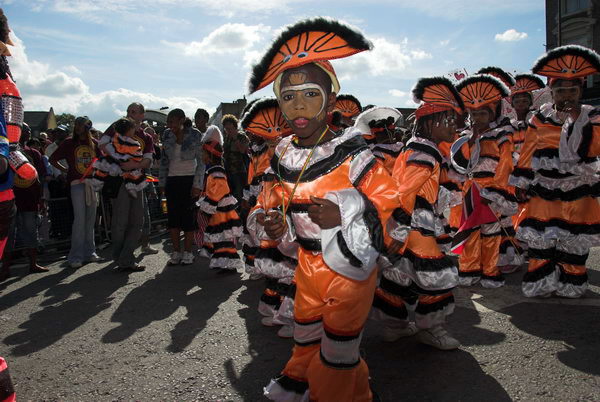
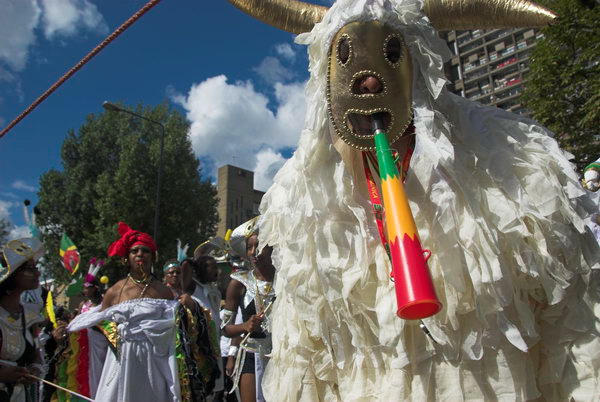
London St Patrick’s Day Parade: I used to enjoy St Patrick’s Day in London, particularly the parade in Willesden Green on the actual day itself. The main London celebrations take place the Sunday before this, and I made these pictures on Sunday 12th March 2006.

London St Patrick's Day Parade - 2006

This annual London parade had begun in 2002 when Ken Livingstone, London’s first elected mayor. Though a Londoner, he had long been a supporter of a united Ireland and from 1987 to 2001 was MP for Brent East, a constituency with a large Irish population.

London St Patrick's Day Parade - 2006

In his years as the leader of the Greater London Council from 1981 until its abolition by Thatcher in 1986 Livingstone had done much to change attitudes in London towards women and minority communities, and on being elected as London Mayor he began his victory speech saying “As I was saying before I was so rudely interrupted 14 years ago…” and continued these and other policies from his years at the GLC.

London St Patrick's Day Parade - 2006

One small part of his legacy to London was the opening up of Trafalgar Square to various Community celebrations – though there is much more, including changes to London’s transport begun under the GLC which made much of my photography of London much easier. His successor took the credit for Livingstone’s ‘Boris Bikes’ though Ken was not responsible for the multiple bikes for hire that now litter our pavements in a rather mad private developments of this.

London St Patrick's Day Parade - 2006

I photographed the first London St Patrick’s Day Parade in 2002. All the pictures here are from the 2006 Parade and below is the short text I wrote for this.

London now has one of the larger celebrations of St Patricks Day, held on the Sunday before the actual day, with a parade from Hyde Park to Trafalagar Square and events there as well as in Leicester Square and Covent Garden.

The parade celebrates the enormous contribution the Irish have made to the capital – approximately 400,000 people of Irish descent form the largest minority group in London. Paraders come from various community associations and other Irish groups and cultural organisations in the London Boroughs, including Irish dancing, music and sports. There are also some groups from Ireland.

Leading the parade is an Irish Wolfhound, the mascot of the London Irish team, along with various Irish leaders and of course the Mayor of London, Ken Livingstone, more green than red on this occasion.


Unfortunately government cuts under the coalition’s austerity programme meant the Brent council could no longer support the St Patrick’s Day parade in Willesden Green and I last photographed a rather smaller event there in 2013. The London St Patrick’s Parade and St Patrick’s Festival at Trafalgar Square are on Sunday 15 March 2026, but like so many events is much more organised and for me less interesting, and its years since I last went.

More pictures from 2006 on My London Diary


FlickrFacebookMy London DiaryHull PhotosLea ValleyParis
London’s Industrial HeritageLondon Photos

All photographs on this page are copyright © Peter Marshall.
Contact me to buy prints or licence to reproduce.

Fukushima & Million Women Rise – 2017

Fukushima & Million Women Rise: Saturday 11th March 2017 was the sixth anniversary of Fukushima nuclear power plant disaster in Japan and a march called for an end to nuclear power programmes around the world including in the UK. It was also the nearest Saturday to International Women’s Day and I photographed the Million Women Rise march.


Fukushima Anniversary Challenges Nuclear Future

London

Fukushima & Million Women Rise - 2017

Six years on, radiation was still leaking from the plant which was damaged by a tsunami from the Tohoku earthquake. This destroyed most of the plant’s cooling system and created the world’s worst nuclear disaster since Chernobyl.

Fukushima & Million Women Rise - 2017

Estimates of the human cost in the long-term from the radiation leaks vary considerably, but the financial cost of cleanup up has been estimated at around $180 US.

Fukushima & Million Women Rise - 2017
Buddhist Reverend Gyoro Nagase from Battersea and Reverend Sister Yoshie Maruta from Milton Keynes

Nuclear power has never achieved the early promises of cheap energy and remains the most expensive way of generating electricity. It is now promoted as an essential backup for renewable energy when the sun doesn’t shine and the wind doesn’t blow but its importance will fade as we exploit other continuous renewable sources and cheaper storage solutions become available. And as we move away from a grid-based power system to more local generation. Should nuclear fusion ever become feasible it promises to be a much safer, cheaper and cleaner way to generate electricity.

Fukushima & Million Women Rise - 2017

Probably the UK’s nuclear programme was never really about energy, but about our nuclear weapons programme.

Fukushima & Million Women Rise - 2017

The marchers met at the Japanese embassy on Piccadilly and marched on the pavement handing out leaflets to Downing Street. I left them on the march to photograph the start of Million Women Rise and then took to tube to Westminster for the Downing Street rally.

More on My London Diary: Fukushima anniversary challenges nuclear future.


Million Women Rise Against Male Violence

Oxford St

Fukushima & Million Women Rise - 2017
Women get ready to march in Orchard St

Around two or three thousand women gathered in Orchard Street to march to a rally in Trafalgar Square.

‘Women of the World Unite Against Violence’

Many carried feminist placards and there were groups from various women’s organisations around the country, including from various ethnic communities.

This was a march for women only, but most of them were very happy for me to photograph them, but I was not able to mingle freely with them as I would on most marches, and my pictures were from the sidelines or in front of the march.

Violence Against Women is a Global Pandemic’

I was able to take many pictures, but not always as I would have liked. But I think they are an interesting set – and here are just a few of them.

I left as the march reached Bond Street station to go back for the Fukushima rally.

Many more pictures on My London Diary: Million Women Rise against male violence,


FlickrFacebookMy London DiaryHull PhotosLea ValleyParis
London’s Industrial HeritageLondon Photos

All photographs on this page are copyright © Peter Marshall.
Contact me to buy prints or licence to reproduce.

ACTSA: Rally for Dignity & Tibet – 2007

ACTSA: Rally for Dignity & Tibet: On Saturday 10 March 2007 I photographed the ACTSA rally in Trafalgar Square and earlier in the day the annual march calling for an end to to Chinese occupation of Tibet.


Rally for Dignity

Trafalgar Square & Zimbabwe Embassy

Action for Southern Africa (ACTSA) organised a rally in Trafalgar Square calling for an end to the crimes of the Mugabe regime in Zimbabwe. They called for peace, justice and solidarity with the people and an end to murder, rape and torture there and supported the DIGNITY!PERIOD campaign to provide essential sanitary protection for women backed by Amicus and Unison unions as well as ACTSA.

Many carried and gave out red carnations as symbols of the campaign and marched to lay them with placards at the door of the Zimbabwe Embassy in Strand.

Here is what I wrote in 2007:

For many years I've been a supporter of ACTSA, although I think my membership may have lapsed recently (its hard to keep up with my post.) They were the organisers of a 'Rally For Dignity' which celebrated the role of women in the worldwide struggle for justice.
Held two days after International Women's Day (8 March) it focused particularly on the struggle for freedom in Zimbabwe and on the efforts of the Zimbabwe Congress of Trade Unions.
Zimbabwe is currently in a mess, and the cause of that mess is Robert Mugabe. It is a beautiful country with some wonderful people, but so sadly crippled by a cruel, corrupt and senseless dictator who has seized land and persecuted any who dare oppose him.
The economy is in ruins, and men, women and children suffer as he rewards and lines the pockets of his supporters.
One product of many in short supply is sanitary towels, and ZCTU [Zimbabwe Congress of Trade Unions] organised the donation of these necessities by overseas friends, only to have the government demand duty on their import.

Mugabe resigned to avoid impeachment in 2017, and died in 2019 but the human rights situation in Zimbabwe remains dire.

More pictures from ACTSA: Rally for Dignity.


Free Tibet: 48th Anniversary of the Tibetan Rising

Westminster

Earlier in the day I had once again photographed the annual march on the anniversary of the Tibetan Rising. I’ve written about this annual event in several posts recently so won’t write more about the 2007 march here.

You can find what I wrote in 2007 if you scroll down the March 2007 page on My London Diary, where there is also a picture of London’s second longest running protest, by Falun Gong opposite the Chinese Embassy against torture of religious prisoners in China.

Pictures of the Tibetan march continue here.


FlickrFacebookMy London DiaryHull PhotosLea ValleyParis
London’s Industrial HeritageLondon Photos

All photographs on this page are copyright © Peter Marshall.
Contact me to buy prints or licence to reproduce.

Free Tibet March – 2002

Free Tibet March: On Saturday 9th March 2002 I photographed the annual Free Tibet march and a short time later put some of the photographs online on My London Diary.

Free Tibet March - 2002
Tibetan nun imprisoned for protest in Tibet

I wrote only a very short text for My London Diary then – here it is in full (re-capitalised):

9 March was the occasion of an annual march from the Chinese Embassy to Whitehall to protest against Chinese occupation of Tibet. Among those taking part were those who had been imprisoned by the Chinese for their protests in Tibet.

Back then the library I was sending pictures to only accepted prints or transparencies of colour pictures and I was only then working with colour negative film.

Free Tibet March - 2002

But I did take colour pictures, knowing that they would at some time be a part of a historical record of protest, along with my black and white pictures.

Free Tibet March - 2002

Financially it wasn’t worth me making colour prints, which was a rather slower, more expensive and rather trickier business than printing in black and white – even though I had an expensive colour enlarger and C-Type roller transport line in my darkroom. Many newspapers and magazines were then still totally or largely in black and white and sales were unlikely to cover costs.

Free Tibet March - 2002

But of course things were rapidly changing, and publication quality digital cameras were arriving on the market at affordable prices. By the end of 2002 I working with my first DSLR, a Nikon D100, and soon I was able to write files out to a CD and take those to the library.

Free Tibet March - 2002

But there were sometimes still advantages to working in black and white. In colour the Tibetan protests were dominated by the strong colours of the Tibetan flag which gave every image something of the same look.

Free Tibet March - 2002

And the 6.2Mp RAW files from the Nikon couldn’t quite produce the same quality as black and white film, though good enough for press and magazine work. As digital cameras and processing software both improved though, it soon became possible to produce digital files that could more or less match or better than those from film and eventually I switched to work only on digital.

Free Tibet March - 2002

The pictures here were put on the web in 2002 by scanning 8×10 silver gelatin prints on my flatbed scanner which I filed at around 32Mp files – a size I think I wasn’t able to achieve with a digital camera until over 10 years later. The quality was also better than the files from my first film scanner.

Free Tibet March - 2002

The pictures here are all those I put online in 2002, though I probably took over 200 black and white images. But I would only print and scan those I wanted to submit. At the moment I am going though my many years of working on film and digitising rather more to put on Flickr and the Internet archive, though it will be a few years before I get to doing this for my 2002 work.

Free Tibet March - 2002

FlickrFacebookMy London DiaryHull PhotosLea ValleyParis
London’s Industrial HeritageLondon Photos

All photographs on this page are copyright © Peter Marshall.
Contact me to buy prints or licence to reproduce.

International Women’s Day – 2002

International Women’s Day - 2002

International Women’s Day: I’m not sure if this march on Friday 8th March 2002 was the first International Women’s Day event that I photographed, but it was the first that I published on My London Diary.

International Women’s Day - 2002

Back then all the pictures I published were in black and white, though I was also taking pictures in colour but was unable to easily digitise them. I still have to do so for many of the colour pictures I made on film, though I did make prints of a few of them in my darkroom.

International Women’s Day - 2002

Looking through these pictures I recognise quite a few faces I still photograph at protests, among them the founder of the Global Women’s Strike and the the International Wages for Housework Campaign Selma James.

International Women’s Day - 2002 - Selma James

Selma and other women from the Crossroads Women’s Centre in Kentish Town are still there at many of the protests I photograph, with banners from some of the various women’s groups based at the centre.

International Women’s Day - 2002

International Women’s Day seems to have become much more widely celebrated since 2002, or at least getting more media attention, though this seems still very much around the very real problems faced by middle class professionals (including of course women in the media) than those faced by by working class women, refugees, asylum seekers, poor women being targeted by social services, those with disabilities, sex workers, victims of domestic violence, rape etc which are at the centre of this event and continuing protests.

Back in 2002, I didn’t write much about this march, at least in partly due to ignorance, but also I seldom wrote much about the events I was covering as I had a full-time job writing about photograph on the web, as well as my own photography – where the pictures I submitted had only brief captions.

“The 8 March is a World Woman’s Day and was celebrated by some as a Global Women’s Strike. The march in London stopped outside key sites including the War Office and World Bank for speeches.”

This was the full set of textt and images I posted in 2002 on My London Diary.


FlickrFacebookMy London DiaryHull PhotosLea ValleyParis
London’s Industrial HeritageLondon Photos

All photographs on this page are copyright © Peter Marshall.
Contact me to buy prints or licence to reproduce.

Iran & Midwives – 2010

Iran & Midwives: On Sunday 7th March 2010 I photographed a protest marking International Women’s Day organised by Iranian women over the 31 years of repression and calling for an end to the Islamic regime who marched to a rally in Trafalgar Square. I then went south of the river to Geraldine Harmsworth Park for the start of a march back to Downing Street in support of better integrated midwifery services for all women.

Iran & Midwives - 2010
Of course there were Dads as well on the midwives march

Both Iran and maternity services are now still live issues. Baroness Amos’s interim review into maternity and neonatal services in England is harrowing and two thirds of maternity services are rated either “inadequate” or “requires improvement”.

Today I will be at a protest against the illegal war by Israel and the USA on Iran. Of course few if any support the Iranian Islamic regime, certainly not among those who like me will be at the protest.

The attacks on Iran, including the assassination of Ali Khamenei, are extremely unlikely to lead to regime change – and if anything are likely to lead to even greater repression, hardship and bloodshed in a country which is being pounded into greater poverty and extreme disorder, with possibly many years of destructive multi-sided civil wars. The decision to attack now appears to have been prompted by the Israeli fears that an agreement between the US and Iran might have been imminent – and perhaps also by the US feeling that a war might improve Trump’s position in the US mid-term elections.


Support the Iranian Women’s Struggle

Iranian Embassy to Trafalgar Square

Iran & Midwives - 2010

Women and men, mainly Iranians, held a rally opposite the Iranian embassy in Kensington to mark International Women’s Day and protest against the 31 years of anti-women Islamic laws and repression and calling for an end to the Islamic regime.

Iran & Midwives - 2010

The protest was organised by the 8 March Women’s Organsiation (Iran-Afghanistan) and they marched from there to Trafalgar Square where there was a larger rally on the North Terrace with speeches and messages from the 8 March Women’s Organisation, the European Democratic Women Movement (Turkey), Hands off People of Iran, the Organisation of Women’s Freedom in Iraq and the Million Women Rise movement.

Iran & Midwives - 2010

The speches were followed by performances by a number of artists including Iranian singers and poets.

More at Support the Iranian Women’s Struggle.


Mums and Midwives Reclaim Birth

Geraldine Harmsworth Park to Downing St

Iran & Midwives - 2010
Hands off our Midwives – London Anarcha Feminist Kolektiv – Royal College of Midwives

The Albany Midwifery Practice in Peckham in South London – one of the most highly deprived areas of England – was widely regarded as a model of best practice and a centre of excellence in NHS midwifery, giving support to women throughout pregnancy, birth and the post-natal period, encouraging women to make informed choices about how and where they give birth.

But at the end of 2009, King’s College Hospital terminated their contract following a critical report from the Centre for Maternal and Child Enquiries (CMACE) which King’s claim showed “serious shortcomings” over one aspect of their work, forcing the centre to close down. This report was shown to be based on incorrect use of statistics.

King’s decision was seen as an attack on on alternative ways of maternity care that provide better overall outcomes and better meet the needs of women.

Their perinatal mortality rates were well below the national average and well under half those for those in its London Borough. And far fewer of their mothers gave birth by Caesarean section – just over half of the rate in King’s College Hospital. Perhaps at the root of King’s objection to Albany was that almost half of the women chose to give birth at home – compared to 1 in 16 for the area as a whole.

More than three quarters of Albany mothers also continued to breastfeed their babies, well over twice the national average.

The march and rally was supported by AIMS (Association For Improvements In The Maternity Services), NCT (National Childbirth Trust), ARM (Association of Radical Midwives), IM UK (Independent Midwives UK) and Albany Mums.

As well as calling for a public inquiry into the decision to end the Albany contract it also called for a move across the country to replace the current doctor-led hospital services , often un-supportive and even traumatic for mothers, with services following the Albany example which provide a much more comprehensive service with better information and fuller support for women at no greater cost.

Peckham has a record of innovative medical services, with the groundbreaking Peckham Experiment in community health which began 100 years ago in 1926 and was ended under the NHS in 1950. The case of the Albany model of care echoes this, and there approach was fully vindicated in a detailed analysis published in 2017 which concluded “consideration should be given to making similar models of care available to all women.”

More at Mums & Midwives Reclaim Birth.


FlickrFacebookMy London DiaryHull PhotosLea ValleyParis
London’s Industrial HeritageLondon Photos

All photographs on this page are copyright © Peter Marshall.
Contact me to buy prints or licence to reproduce.

Tibet Freedom & Women Rise – 2010

Tibet Freedom & Women Rise: On Saturday 6th March 2010 I photographed a march marking the 51st anniversary of the Tibetan National Uprising and calling for freedom from China and then went to Marble Arch for Million Women Rise, an all-women march calling for an end to male violence against women.


Tibet Freedom March

Chinese Embassy to Westminster

Tibet Freedom & Women Rise - 2010
China Stole My Land, My Voice, My Freedom – the march at Piccadilly Circus

The Tibetan National Uprising began on 10 March 1959, prompted by fears that the Chinese authorities in charge of Tibet would arrest the Dalai Lama. The protests soon developed to demand independence from China which had annexed Tibet in 1951.

Tibet Freedom & Women Rise - 2010

As well as civilians those taking part included Tibetan guerillas who had been trained by the US Central Intelligence Agency in camps in Nepal and the CIA organised several aerial supply missions. The Agency had supported Tibetan guerrillas from the mid-1950s and even after armed resistance ended in 1962 the CIA continued to train Tibetans in the USA, returning them to stir up revolts in Tibet until at least 1972.

Tibet Freedom & Women Rise - 2010

The National Uprising was bloodily put down by the Chinese People’s Liberation Army, with widely varying estimates of the number of Tibetans killed, possibly over 80,000. The Dalai Lama and others fled to India where he and his followers were granted asylum.

Tibet Freedom & Women Rise - 2010

In 2008 there had been further protests and demonstrations in Tibet against the Chinese Communist Party’s treatment and persecution of Tibetans which began around the 49th anniversary of the 1959 Uprising. The protests were again violently repressed, with over 200 young Tibetans killed and many imprisoned. Over 1000 were still unaccounted for in 2010 and two, Lobsang Gyaltsen and Mr Loyak, had been executed in October 2009.

Tibet Freedom & Women Rise - 2010

The protest by around 600 people, many of them Tibetans, began outside the Chinese Embassy with a short speech and the singing of the Tibetan National Anthem was sung, followed by a minutes silence in memory of the dead and prayers.

A small delegation went with a letter to the door of the Chinese Embassy, but no one from the Embassy was there to take it so they handed it to the police officer there and the march set off down Regent Street to a rally at Downing Street.

I reported, “Near the front of the march was a large banner with the Tibetans’ message “China stole my land, my voice, my freedom.” Among the slogans chanted by marchers were “Tibetans have no voice in Tibet“, “China: stop silencing Tibetans“; “Britain: stand up for Tibetans in Tibet” and “Stop the torture in Tibet”.

More pictures on My London Diary at Tibet Freedom March.


Million Women Rise

Marble Arch to Trafalgar Square

I left the Tibet Freedom March to rush to Marble Arch where several thousand women had gathered for the Million Women Rise march, arriving just before they set off.

Million Women Rise (MWR) founder Sabrina Qureshi addresses the women before the start of the march

The Million Women Rise movement was founded by campaigner and former outreach worker Sabrina Qureshi in 2007. I photographed their march in 2008. It takes place every year around March 8th, International Women’s Day, when there have been other events in London for many years which I had often photographed.

Kurdish women with the ROJ banner

Million Women Rise differs in being a women-only event and “led by Black/ Global Majority Women for all Women and Girls.” The annual march is supported by a wide range of groups and they included some left-wing organisations. But others have been excluded from speaking at the rallies or told they are not welcome on the marches.

In 2010 I wrote a little about the violence women experience:

“In this country almost 1 in 4 women are said to have experienced some form of sexual assault and on average two women are murdered each week by a partner or former partner. A third of all teenage girls who are in relationships suffer unwanted sexual acts and one in four are the subject of actual physical violence.”

“Trafficking is a large-scale global industry, with two million girls between the ages of 5 and fifteen being sold into sex slavery each year. Lack of health provision is also a major problem; one woman dies in pregnancy for every minute of the year, and most of these deaths are preventable”

Now, particularly after what we have seen in Gaza with so many women and children among the dead, I might perhaps have also written about affect of wars. Among those on the marching were Tamils and women from the DRC where wars were killing many women and children, as well as from repressive regimes including Iran.

More on My London Diary at Million Women Rise.


FlickrFacebookMy London DiaryHull PhotosLea ValleyParis
London’s Industrial HeritageLondon Photos

All photographs on this page are copyright © Peter Marshall.
Contact me to buy prints or licence to reproduce.

Climate Rush & Cleaners 2009

Climate Rush & Cleaners: On Thursday March 5th 2009 Climate Rush and friends staged a colourful protest against the huge support being given to the banks while the people were having to pay the price for their irresponsible and dishonest behaviour which had precipitated the financial crisis. I left their protest to photograph cleaners who were protesting at Willis Group insurance brokers demanding to be paid a living wage and better conditions of service.

Climate Rush hits RBS HQ

RBS, 250 Bishopsgate

Climate Rush & Cleaners 2009
Tamsin Omond says ‘Give us our money back and stop trashing the planet’

Here’s what I wrote back in 2009:

“The banks would have gone bankrupt but the government stepped in and paid off the former bosses – including Sir Fred Goowin of RBS – with double gold plated platinum pension pots as a reward for their greed, incompetence and dodgy investments. But even under the new management – unfortunately not of the people who are still just ripped off – the banks continue to bankroll the trashing of the planet, backing schemes such as a coal-fired power station at Kingsnorth.

Climate Rush & Cleaners 2009

So the Climate Rush came to the HQ of the RBS in Bishopsgate to protest (and party), drawing media attention to the bank’s crimes against the planet. Around a couple of hundred protesters, some in various costumes, a cycled hauled sound system for speeches and music and some lively dancers made it an enjoyable protest for those taking part and those passing by – and a little more to remember and talk about than a simple static protest.”

Climate Rush & Cleaners 2009

This was a piece of street theatre but the police had come out in force, obviously expecting something different, part of a growing paranoia about the coming ‘Storm The Banks‘ protest which this was advertised here and elsewhere to take place on April 1st. Obviously the police do not understand hyperbole.
Climate Rush & Cleaners 2009
A young ‘banker’ accepts the ‘RBS FInancial Fool’ award – a dead parrot – on behalf of RBS

In the lead up to April 1st, the G20 Meltdown – Financial Fools Day police (and politicians) released a number of provocative statements to try and justify the actions they were intending to take against the protesters – including the peaceful Climate Camp on Bishopsgate.

Climate Rush & Cleaners 2009

On April 1st, there was some disruptive action by protesters but the police went wild. I’d left a peaceful protest at Bank when I saw that police were beginning to kettle the protesters as I wanted to cover an event at the US Embassy. Had I stayed I too might have been assaulted by police like a fellow photographer. A police baton took out much of his teeth – he later received a large cash settlement from the police for his injuries and the cost of extensive dental treatment.

Climate Rush & Cleaners 2009

Later riot police stormed peaceful protesters in the Climate Camp who raised their hands in the air chanting “this is not a riot!” and later got they even more out of hand, wantonly smashing property and people. It was a riot, but by the police.
And Ian Tomlinson, an innocent bystander, going home through the Bank area after his work as a newsvendor, died after an unprovoked attack by a riot police officer.

On March 5th, the police simply stood and watched the protest – more a carnival, with presentations of the ‘RBS Financial Fool‘ award – a dead parrot – and the ‘No New Coal Award‘ and much music and dancing.

More pictures on My London Diary at Climate Rush at RBS.


Cleaners for Justice demonstrate at Willis

Lime St

Cleaners at Willis Group, one of the City’s largest insurance brokers with offices facing those of Lloyds, were protesting outside the Willis building after five cleaners were sacked for trying to organise cleaners to take action and campaign for a living wage and better conditions of service.
Unite had been one of the unions involved in the Justice for Cleaners campaign which was launched in May 2006, but were no longer supporting the cleaners – and Unite had even agreed with the Willis management that these outsourced cleaners would not hold demonstrations outside the offices without informing them, They refused to support the sacked cleaners against their employer Mitie.
So the cleaners decided they needed a union that would support them, and went to the London branch of the Industrial Workers of the World, established in 2005 at the time of the centenary of the international IWW movement.

Later cleaners formed their own grass roots unions, the IWGB, CAIWU and the UVW who branched out to support other low paid workers, with very successful campaigns against outsourcing, low pay and harassment, gaining the London Living Wage for many of their members.

Cleaners for Justice demonstrate at Willis


FlickrFacebookMy London DiaryHull PhotosLea ValleyParis
London’s Industrial HeritageLondon Photos

All photographs on this page are copyright © Peter Marshall.
Contact me to buy prints or licence to reproduce.