Fukushima & Million Women Rise – 2017

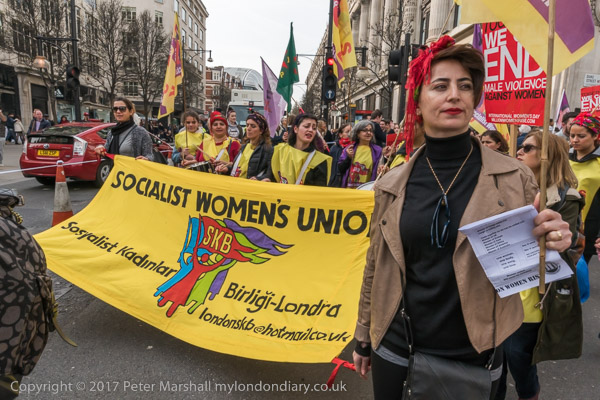
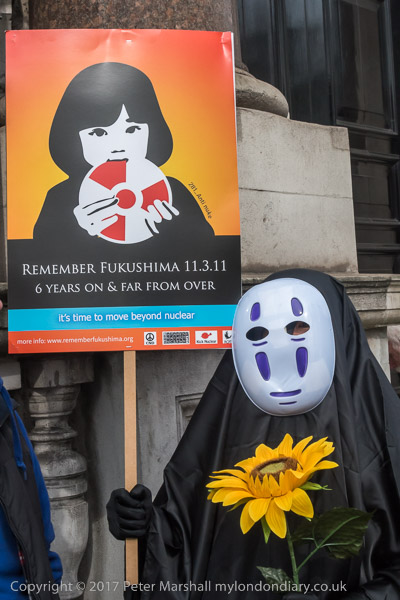
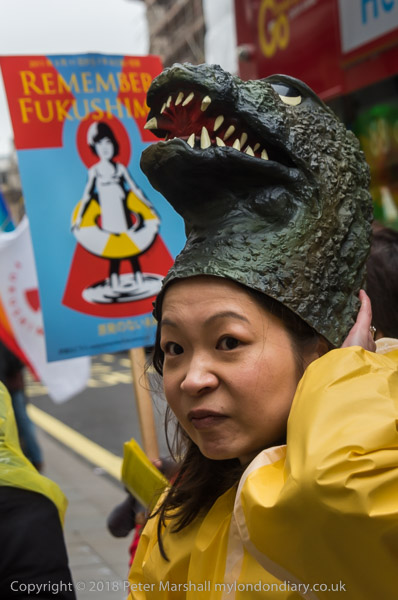
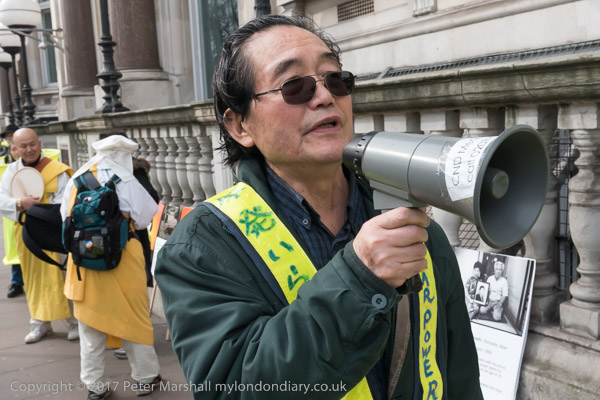
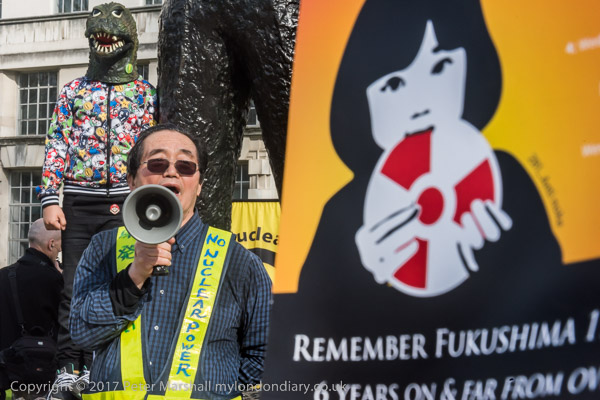
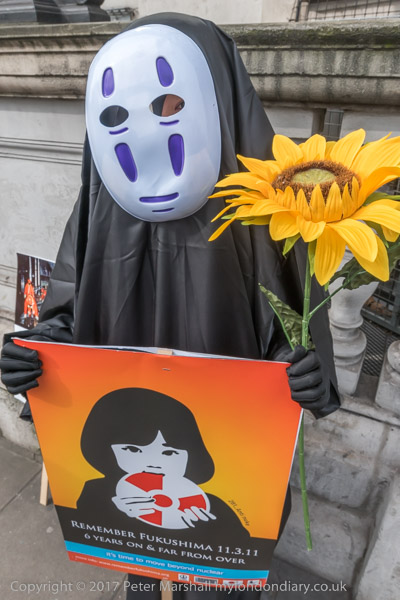
Fukushima & Million Women Rise: Saturday 11th March 2017 was the sixth anniversary of Fukushima nuclear power plant disaster in Japan and a march called for an end to nuclear power programmes around the world including in the UK. It was also the nearest Saturday to International Women’s Day and I photographed the Million Women Rise march.


Fukushima Anniversary Challenges Nuclear Future

London
Fukushima & Million Women Rise - 2017

Six years on, radiation was still leaking from the plant which was damaged by a tsunami from the Tohoku earthquake. This destroyed most of the plant’s cooling system and created the world’s worst nuclear disaster since Chernobyl.
Fukushima & Million Women Rise - 2017

Estimates of the human cost in the long-term from the radiation leaks vary considerably, but the financial cost of cleanup up has been estimated at around $180 US.
Fukushima & Million Women Rise - 2017
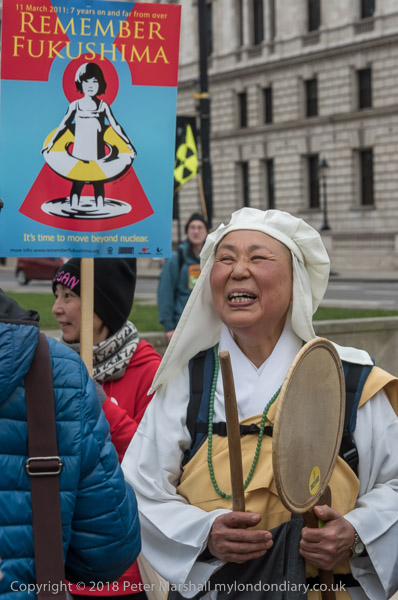
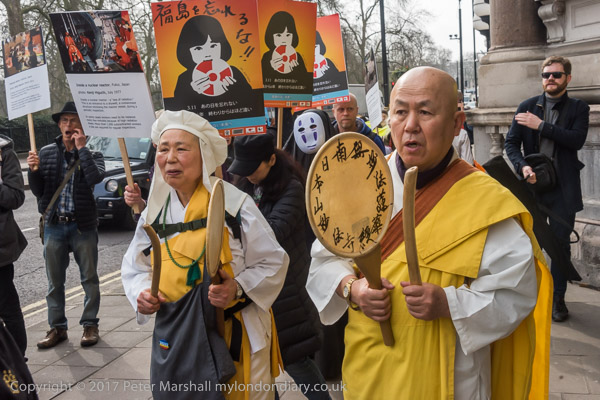
Buddhist Reverend Gyoro Nagase from Battersea and Reverend Sister Yoshie Maruta from Milton Keynes

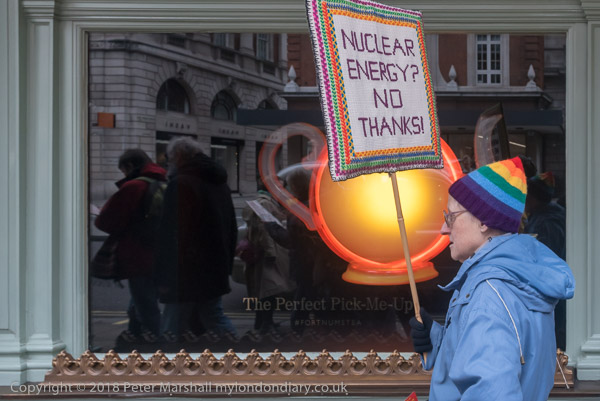
Nuclear power has never achieved the early promises of cheap energy and remains the most expensive way of generating electricity. It is now promoted as an essential backup for renewable energy when the sun doesn’t shine and the wind doesn’t blow but its importance will fade as we exploit other continuous renewable sources and cheaper storage solutions become available. And as we move away from a grid-based power system to more local generation. Should nuclear fusion ever become feasible it promises to be a much safer, cheaper and cleaner way to generate electricity.
Fukushima & Million Women Rise - 2017

Probably the UK’s nuclear programme was never really about energy, but about our nuclear weapons programme.
Fukushima & Million Women Rise - 2017

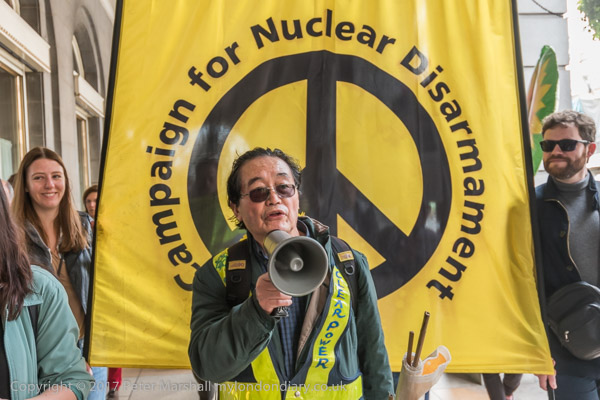
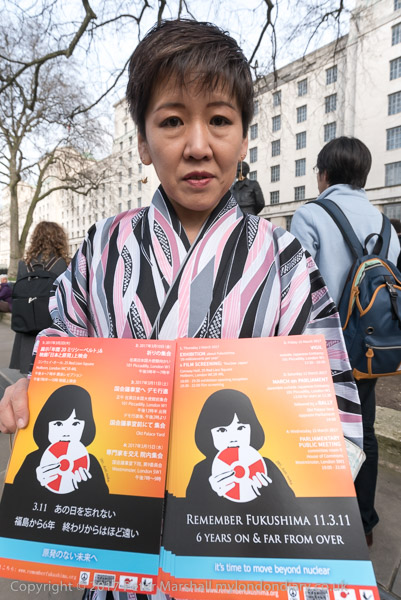
The marchers met at the Japanese embassy on Piccadilly and marched on the pavement handing out leaflets to Downing Street. I left them on the march to photograph the start of Million Women Rise and then took to tube to Westminster for the Downing Street rally.

More on My London Diary: Fukushima anniversary challenges nuclear future.


Million Women Rise Against Male Violence

Oxford St
Fukushima & Million Women Rise - 2017
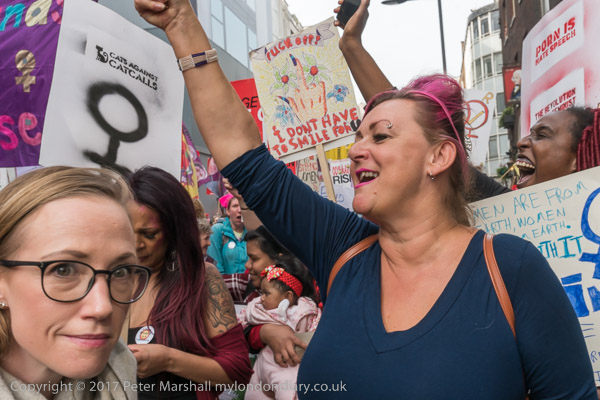
Women get ready to march in Orchard St

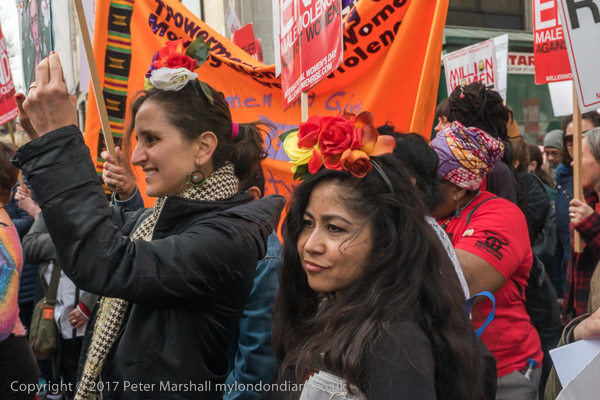
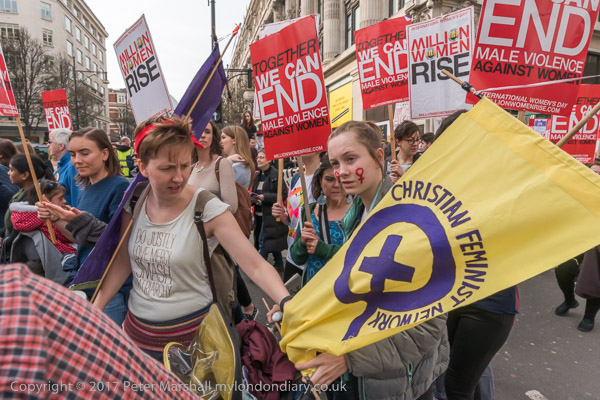
Around two or three thousand women gathered in Orchard Street to march to a rally in Trafalgar Square.

‘Women of the World Unite Against Violence’

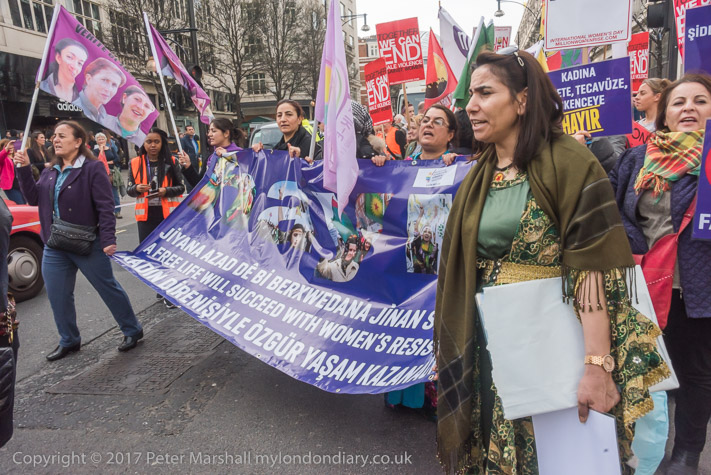
Many carried feminist placards and there were groups from various women’s organisations around the country, including from various ethnic communities.

This was a march for women only, but most of them were very happy for me to photograph them, but I was not able to mingle freely with them as I would on most marches, and my pictures were from the sidelines or in front of the march.

Violence Against Women is a Global Pandemic’

I was able to take many pictures, but not always as I would have liked. But I think they are an interesting set – and here are just a few of them.
I left as the march reached Bond Street station to go back for the Fukushima rally.

Many more pictures on My London Diary: Million Women Rise against male violence,


FlickrFacebookMy London DiaryHull PhotosLea ValleyParis
London’s Industrial HeritageLondon Photos

All photographs on this page are copyright © Peter Marshall.
Contact me to buy prints or licence to reproduce.
Fukushima, No to Racism & No to Assad

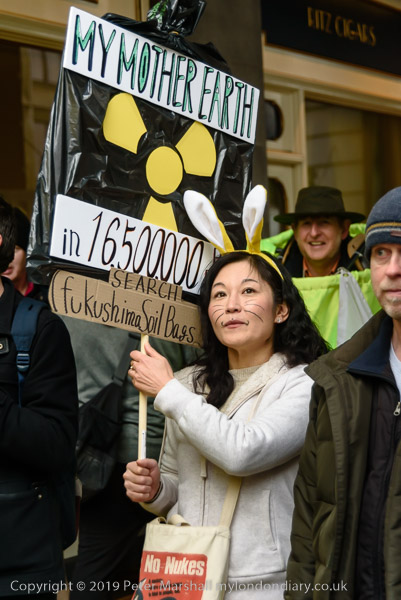
Fukushima, No to Racism & No to Assad. Three years ago on Saturday 16th March 2019 people marched in London 8 years after the Fukushima nuclear disaster, still spreading radioactivity, took part in a large demonstration on UN Anti-Racist Day chanting ‘No to Fascism’ and ‘Refugees are welcome’ here while Syrians calling for a peaceful, democratic Syria marched to a rally in Whitehall on the 8th anniversary of the start of the Syrian revolution.


Remember Fukushima 8 years On

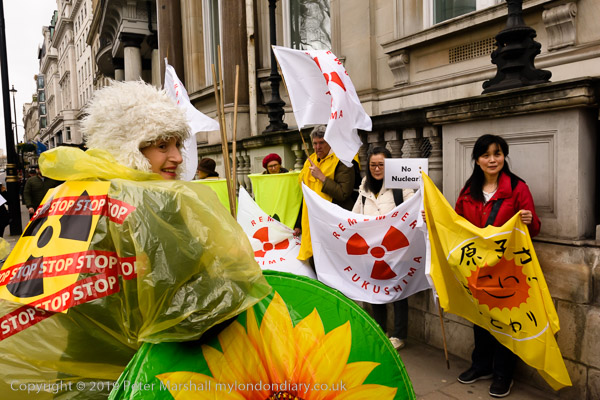
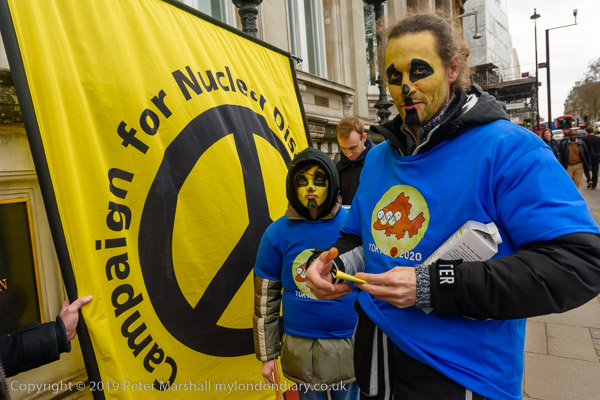
Anti-nuclear campaigners met outside the Japanese Embassy on the eight anniversary of the meltdown of three nuclear reactors at Fukushima. Little progress has been made on cleaning up the site and large amounts of radioactive material are still being released.

50,000 people are still refugees and many are being given no alternative but to move back into areas still heavily contaminated. The clean-up is proving much more difficult than anticipated.

From the Japanese Embassy they marched down Piccadilly, where I left them to go to another protest, returning later to photograph them at a rally opposite Parliamen.

Remember Fukushima 8 years On


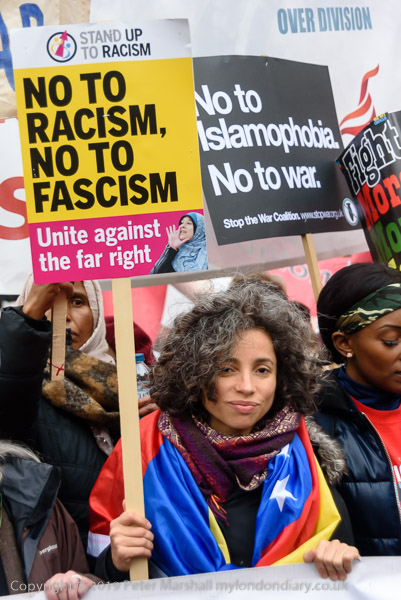
No to Racism, No to Fascism

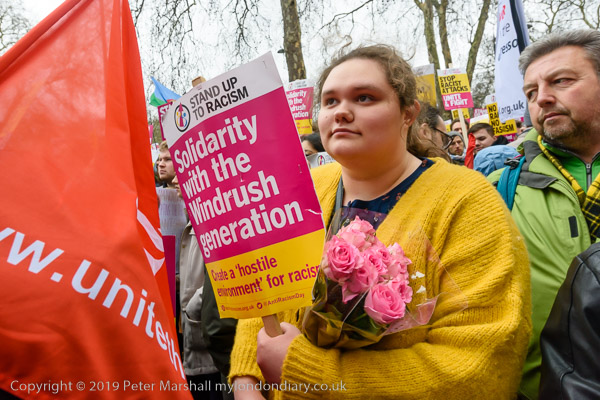
Park Lane was packed at the start of the march on UN Anti-Racism Day to show solidarity with the victims of racist attacks and oppose Islamophobic hate crimes and racist policies in the UK and elsewhere.

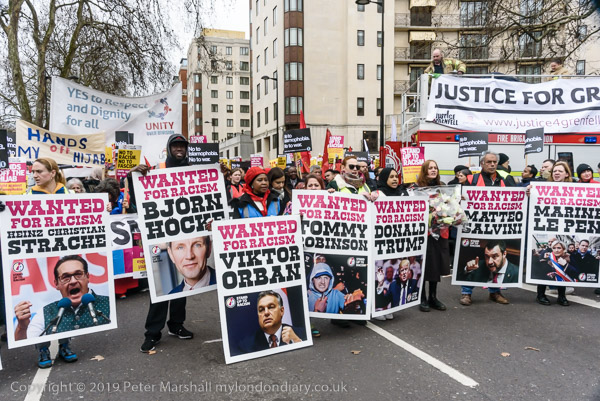
The march was joined by a wide range of groups, all agreed that ‘Refugees Are Welcome Here’ and opposed to fascism and racism. Many held large posters denouncing racist leaders from around the world, including Presidents Trump and Bolsonaro as well as fascist party leaders.

The march to a rally in Whitehall had an added significance after the previous day’s Christchurch mosque attack by a white supremacist terrorist who killed 51 people and injured 40.

No to Racism, No to Fascism


8th Anniversary of the Syrian Revolution

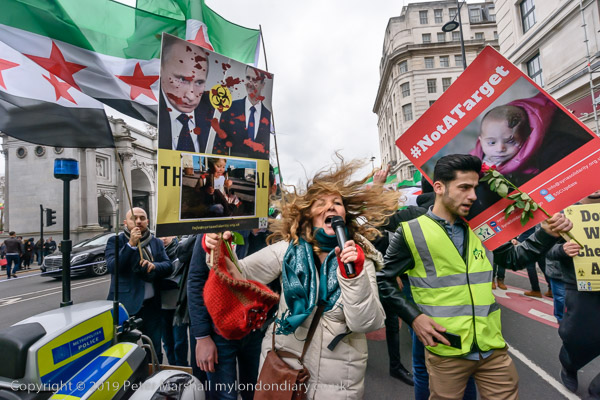
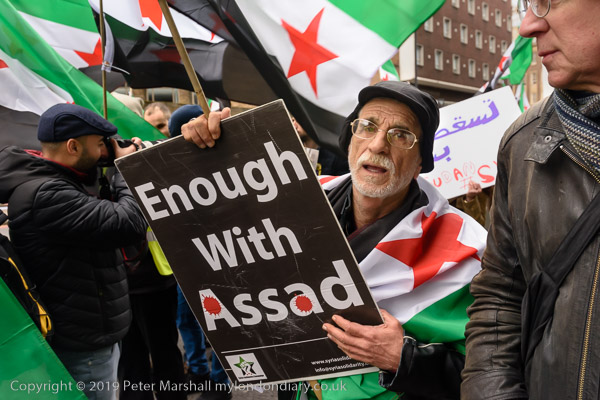
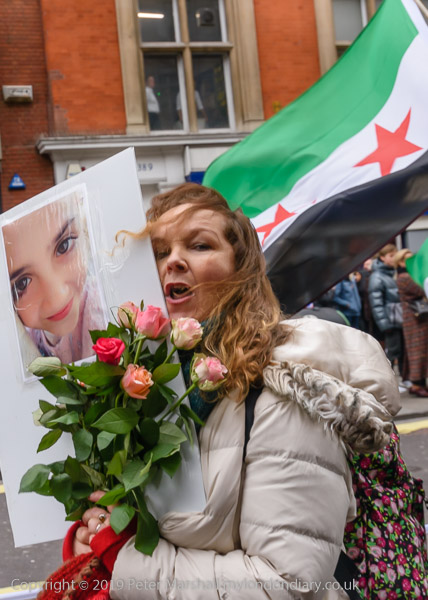
I left the anti-racist march on Piccadilly and walked and ran back up to Marble Arch, close to which I met Syrians opposed to the Assad regime who were marching through London from Paddington Green to a rally in Whitehall on the 8th anniversary of the start of the Syrian revolution.

Unfortunately their revolution was sold out by Western leaders who failed to stand up to the Russian support for President Assad and his authoritarian regime, ending any real hope of Assad being defeated and a peaceful democratic Syria.

Although the fight continues in Syria, and there remain some autonomous areas such as Rojava, the revolution as a whole seems doomed to failure at least for the foreseeable future.

8th Anniversary of the Syrian Revolution


More on My London Diary about the three events:

8th Anniversary of the Syrian Revolution
No to Racism, No to Fascism
Remember Fukushima 8 years On


Fukushima 10 years on

On 11th March 2011 the Fukushima Daiichi Nuclear Power Plant in Japan suffered the worst nuclear disaster since the 1986 Chernobyl meltdown. An earthquake had led to the reactors to automatically shut down their electricity production which led to the plant relying on emergency power generators to run the cooling pumps needed to keep the reactors safe. But the tsunami tidal wave almost 50 ft high caused by the earthquake swept over the plant’s sea wall and flooded the generators, cutting the power supply.

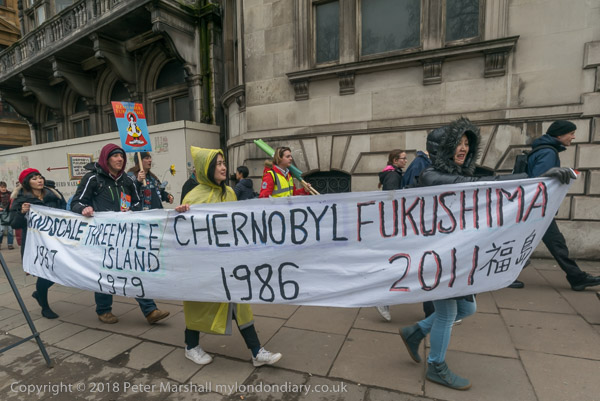
Windscale 1957, Three Mile Island 1979, Chernobyl 1986, Fukushima 2011′ 

Without cooling, three reactors heated up and then melted down and over the following three days there were three explosions of hydrogen gas and the release of huge amounts of radiation from the damaged reactors to the air and the Pacific Ocean. The release of radiation into the ocean was continued at high levels for at least 2 years, and there is still some leakage from the plant.

154,000 people in the area had to be evacuated from their homes in a area of 20km radius from the nuclear plant. The clean-up is expected to continue for another 20-30 years. You can read much more about the disaster in ‘10 Years Since The Fukushima Nuclear Disaster‘ by Philip White.

The possibility of such a disaster had been predicted in studies carried out some years earlier and an internal report by the company running the plant, TEPCO, had in 2000 recommended that there should be improved safety measures, but the management rejected both this and a 2008 internal report calling for better protection against seawater flooding.

Campaigners in London held regular protests outside the Japanese Embassy and TEPCO’s London offices for some years and have organised larger annual protests on or close to the March 11th. Among the on-line events scheduled for 2021 is the free International Uranium Film Festival with two films online including Fukushima No Daimyo, a 2014 Italian film (in Japanese with Portuguese sub-titles) from March 11-18.

More pictures on My London Diary:

2017: Fukushima anniversary challenges nuclear future
2018: Remember Fukushima, 7th Anniversary
2019: Remember Fukushima 8 years On
and in 2011, 2013 and 2014.


All photographs on this and my other sites, unless otherwise stated, are taken by and copyright of Peter Marshall, and are available for reproduction or can be bought as prints.