Fukushima & Million Women Rise – 2017

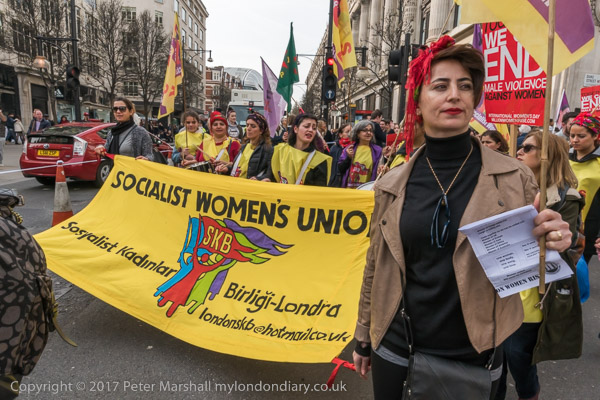
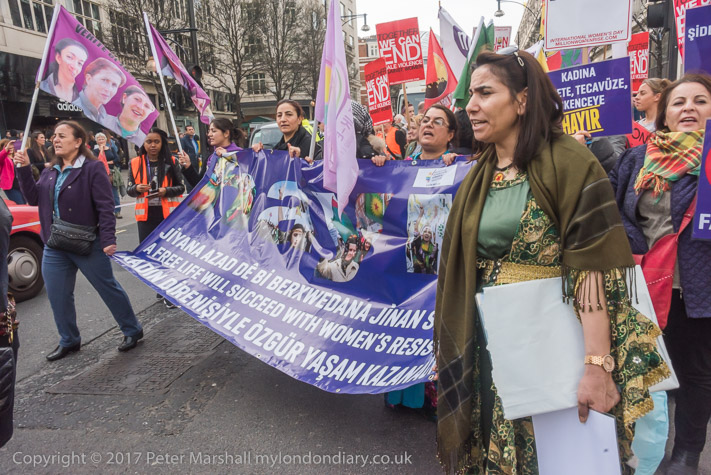
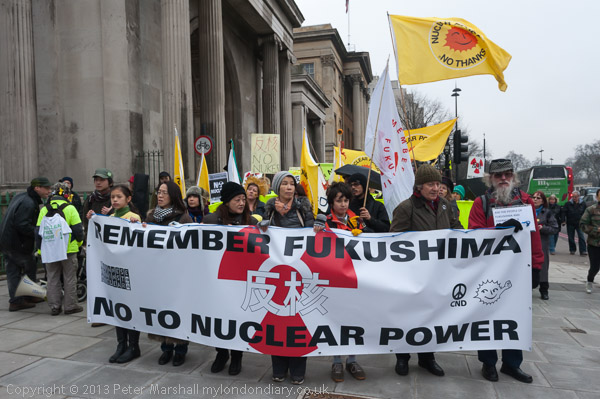
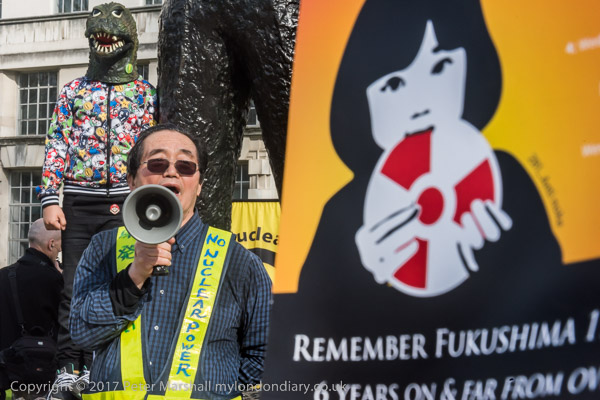
Fukushima & Million Women Rise: Saturday 11th March 2017 was the sixth anniversary of Fukushima nuclear power plant disaster in Japan and a march called for an end to nuclear power programmes around the world including in the UK. It was also the nearest Saturday to International Women’s Day and I photographed the Million Women Rise march.


Fukushima Anniversary Challenges Nuclear Future

London
Fukushima & Million Women Rise - 2017

Six years on, radiation was still leaking from the plant which was damaged by a tsunami from the Tohoku earthquake. This destroyed most of the plant’s cooling system and created the world’s worst nuclear disaster since Chernobyl.
Fukushima & Million Women Rise - 2017

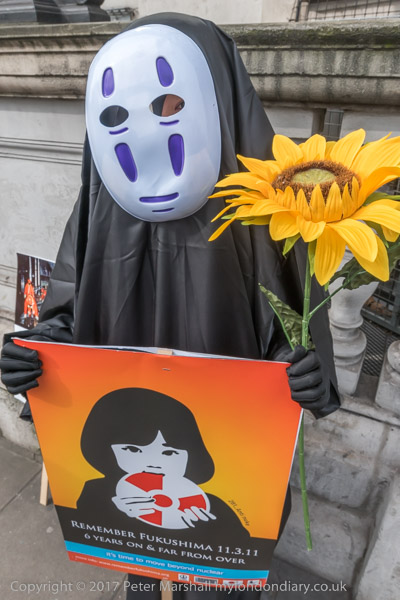
Estimates of the human cost in the long-term from the radiation leaks vary considerably, but the financial cost of cleanup up has been estimated at around $180 US.
Fukushima & Million Women Rise - 2017
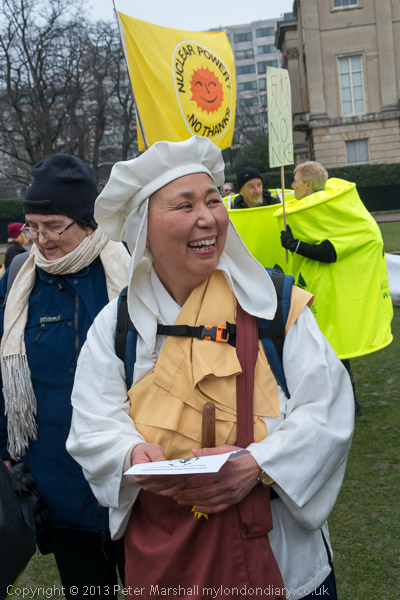
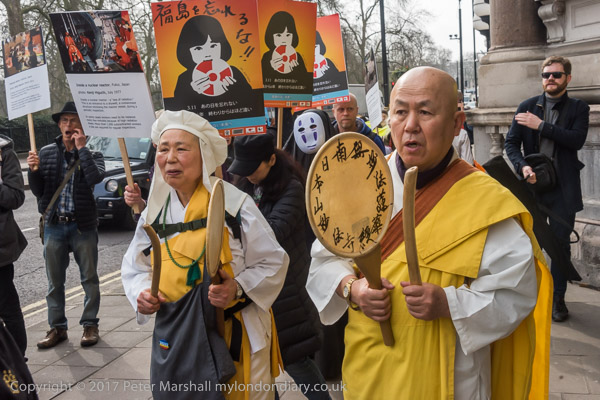
Buddhist Reverend Gyoro Nagase from Battersea and Reverend Sister Yoshie Maruta from Milton Keynes

Nuclear power has never achieved the early promises of cheap energy and remains the most expensive way of generating electricity. It is now promoted as an essential backup for renewable energy when the sun doesn’t shine and the wind doesn’t blow but its importance will fade as we exploit other continuous renewable sources and cheaper storage solutions become available. And as we move away from a grid-based power system to more local generation. Should nuclear fusion ever become feasible it promises to be a much safer, cheaper and cleaner way to generate electricity.
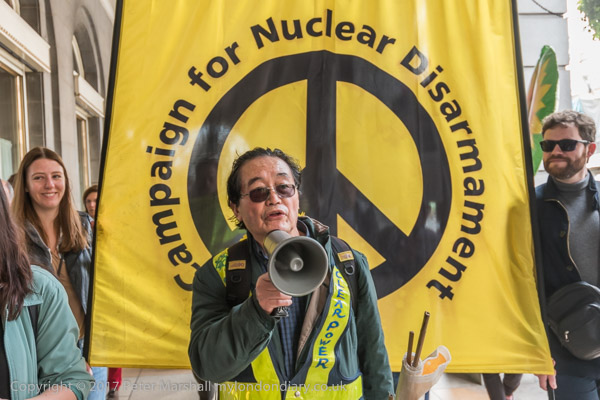
Fukushima & Million Women Rise - 2017

Probably the UK’s nuclear programme was never really about energy, but about our nuclear weapons programme.
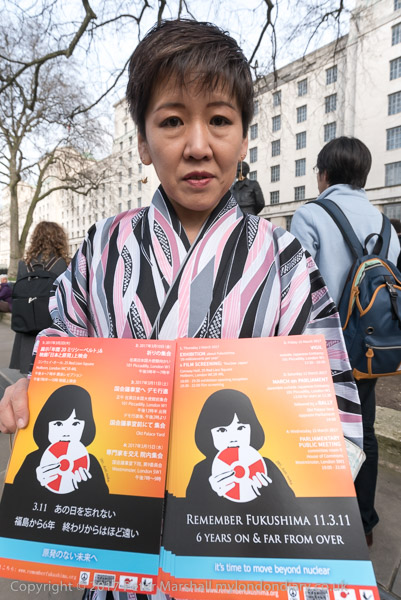
Fukushima & Million Women Rise - 2017

The marchers met at the Japanese embassy on Piccadilly and marched on the pavement handing out leaflets to Downing Street. I left them on the march to photograph the start of Million Women Rise and then took to tube to Westminster for the Downing Street rally.

More on My London Diary: Fukushima anniversary challenges nuclear future.


Million Women Rise Against Male Violence

Oxford St
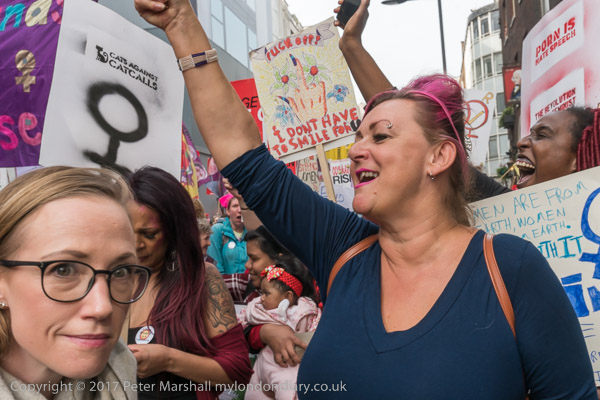
Fukushima & Million Women Rise - 2017
Women get ready to march in Orchard St

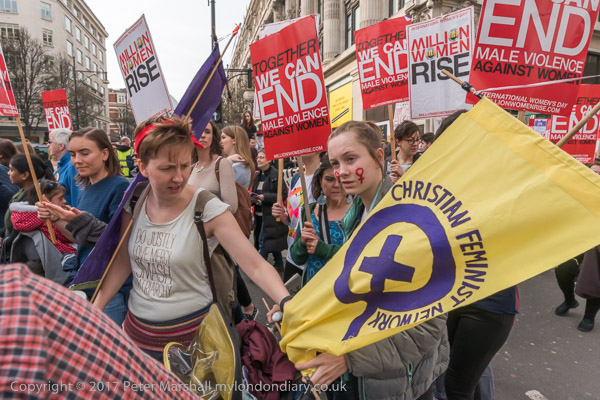
Around two or three thousand women gathered in Orchard Street to march to a rally in Trafalgar Square.

‘Women of the World Unite Against Violence’

Many carried feminist placards and there were groups from various women’s organisations around the country, including from various ethnic communities.

This was a march for women only, but most of them were very happy for me to photograph them, but I was not able to mingle freely with them as I would on most marches, and my pictures were from the sidelines or in front of the march.

Violence Against Women is a Global Pandemic’

I was able to take many pictures, but not always as I would have liked. But I think they are an interesting set – and here are just a few of them.
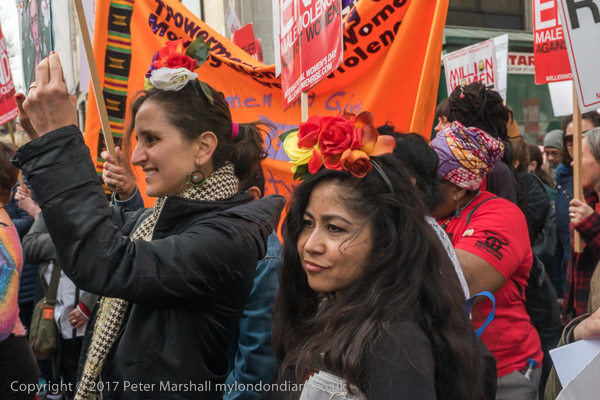
I left as the march reached Bond Street station to go back for the Fukushima rally.

Many more pictures on My London Diary: Million Women Rise against male violence,


FlickrFacebookMy London DiaryHull PhotosLea ValleyParis
London’s Industrial HeritageLondon Photos

All photographs on this page are copyright © Peter Marshall.
Contact me to buy prints or licence to reproduce.
Fukushima Anniversary Questions Nuclear Power

Fukushima Anniversary Questions Nuclear Power Safety – London, 9th March 2013

Fukushima Anniversary Questions Nuclear Power

On 11th March 2011 Japan suffered its most powerful recorded earthquake. The Fukushima power plants fusion reactors were immediately shut down and diesel generators started to pump the coolant needed to keep the reactors safe.

Fukushima Anniversary Questions Nuclear Power

But the earthquake generated a tsunami, with giant 45ft waves which swept over the sea walls of the power plant, flooding and disabling the emergency generators. As Wikipedia states “The resultant loss of reactor core cooling led to three nuclear meltdowns, three hydrogen explosions, and the release of radioactive contamination in Units 1, 2 and 3 between 12 and 15 March.

Fukushima Anniversary Questions Nuclear Power

Around 110,000 people were evacuated from a 12 mile exclusion zone around the plant because of airborne radioactive contamination, with many losing their livelihoods as well as their homes. The Tokyo Electric Power Company (TEPCO) who owned the site are still carrying out necessary cleanup of the site and removal of the radioactive fuel debris is expected to take until around 2040 or 2050.

Fukushima Anniversary Questions Nuclear Power

A TEPCO report in 2000 had recommended improved safety measures against seawater flooding, designed to stop tsunami waves greater than those that caused the 2011 disaster, but these and several other warnings were dismissed by the company as unrealistic. Earlier scientist had expressed concerns about the dangers of building nuclear power plants in Japan because of the earthquake problems.

Japanese expatriates in London began a series of weekly protests against nuclear power at the Japanese Embassy on Piccadilly and also protested outside the TEPCO offices in Berkeley Square. The protest on Saturday 9th March was was organised by ‘Japanese Against Nuclear UK’ together with ‘Kick Nuclear’ and CND.

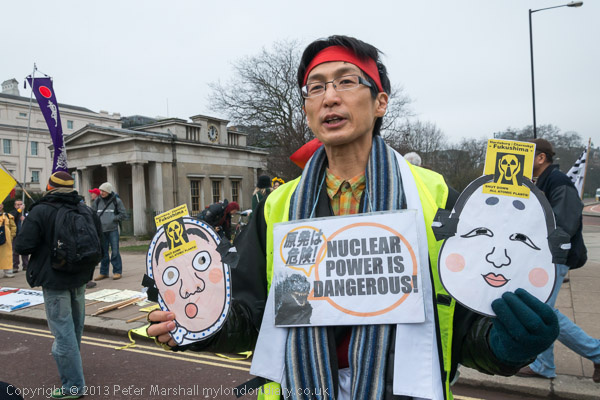
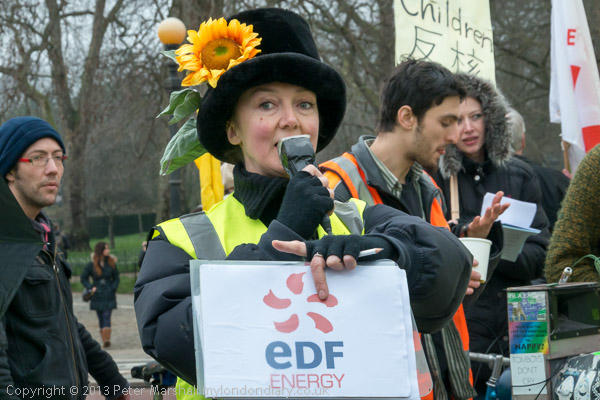
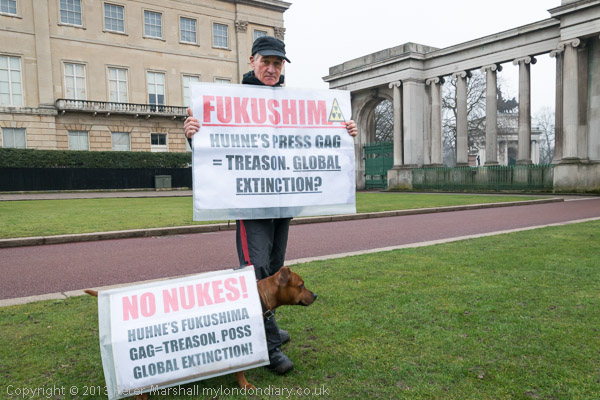
I went to photograph the protesters as they met up for the march at Hyde Park Corner. They intended to make brief protests at several locations including the Japanese embassy, the EDF office and Downing St before ending with a rally and final protest opposite Parliament in Old Palace Yard.

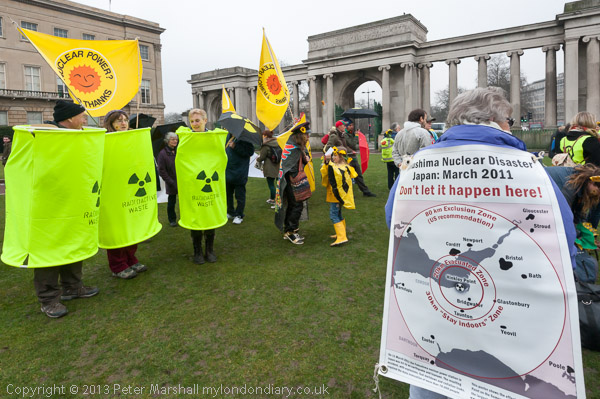
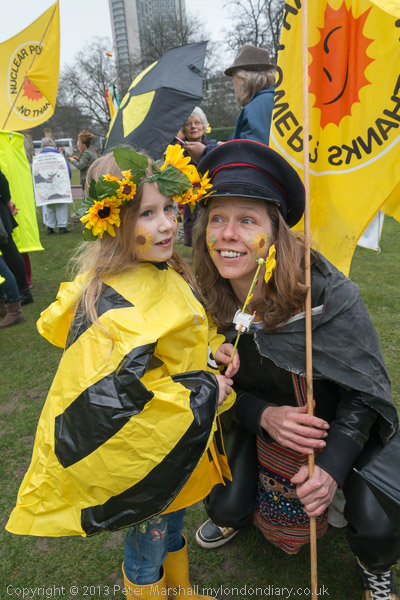
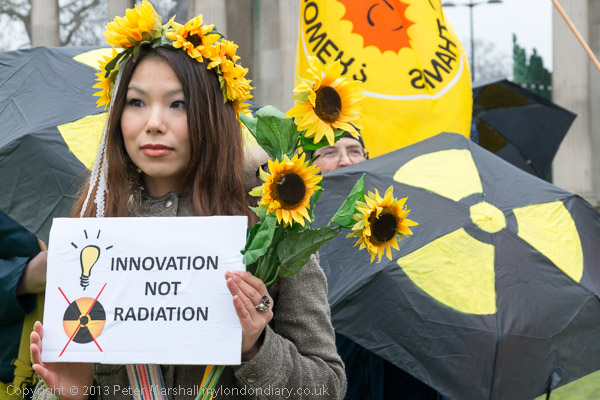
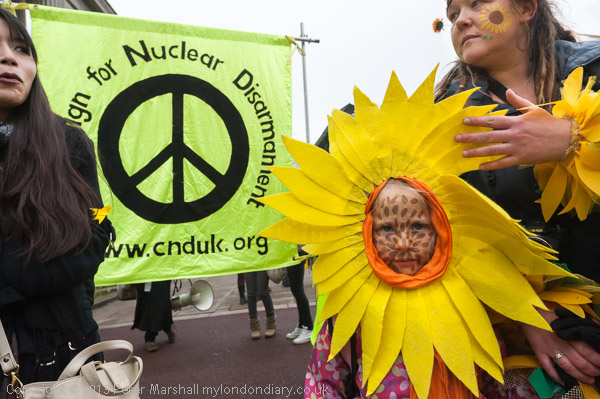
Many of them had come with sunflowers, a symbol of renewable clean energy, particularly solar energy. There were several banners with the smiley sun symbol and the message ‘Nuclear Power? No Thanks’ and a group of people encased in fluorescent yellow barrels with a radioactive danger symbol and labelled ‘Radioactive Waste.’

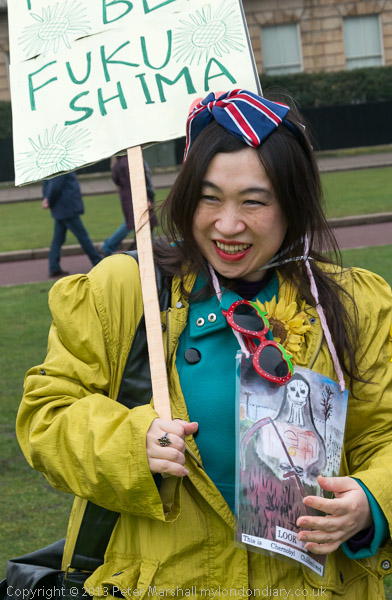
Some of the Japanese protesters had brought Japanese masks used to hide faces at protests in Japan against Fukushima, although many preferred to have sunflowers painted on their faces.

Among those who had come to protest were some who had come on a coach from Somerset, where they were opposing plans by EDF to build a new power station at Hinkley Point. The plans for the first new nuclear reactor in Britain for over 30 years were approved by the EDF board and the UK government in 2016. The first reactor arrived there last month though the project is several years behind time and is now expected by EDF to be completed in 2028.

Although some environmentalists have backed nuclear as a necessary part of our energy supply if we are to cut carbon emissions, it seems likely that increases in the efficiency and the continuing drop in costs of renewable alternatives will make the new power station a huge white elephant, producing electricity at a much higher cost guaranteed by the UK government to the developers.

More on My London Diary at Fukushima 2nd Anniversary.


I left the protesters as the march was about to start to go to the Million Women Rise march which was taking place at the same time. You can see more about that at Million Women Rise.