Fukushima & Million Women Rise – 2017

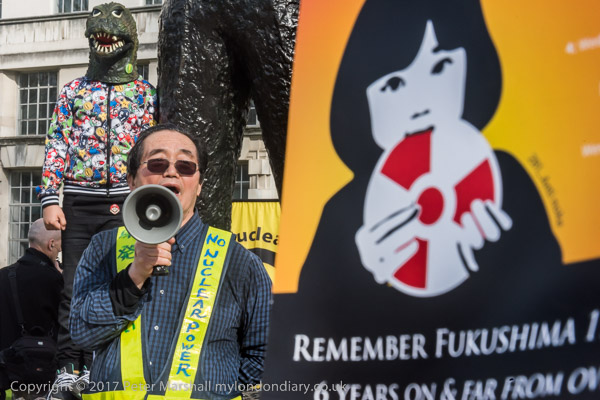
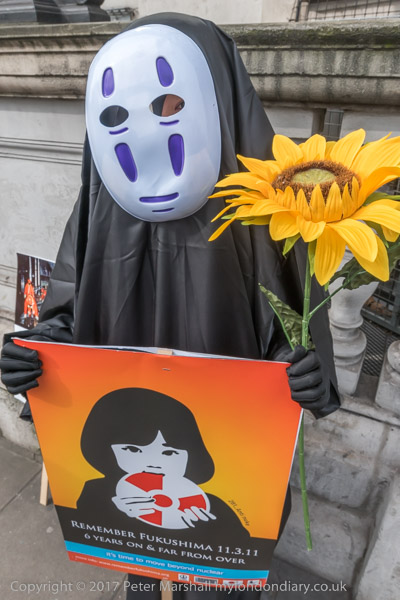
Fukushima & Million Women Rise: Saturday 11th March 2017 was the sixth anniversary of Fukushima nuclear power plant disaster in Japan and a march called for an end to nuclear power programmes around the world including in the UK. It was also the nearest Saturday to International Women’s Day and I photographed the Million Women Rise march.


Fukushima Anniversary Challenges Nuclear Future

London
Fukushima & Million Women Rise - 2017

Six years on, radiation was still leaking from the plant which was damaged by a tsunami from the Tohoku earthquake. This destroyed most of the plant’s cooling system and created the world’s worst nuclear disaster since Chernobyl.
Fukushima & Million Women Rise - 2017

Estimates of the human cost in the long-term from the radiation leaks vary considerably, but the financial cost of cleanup up has been estimated at around $180 US.
Fukushima & Million Women Rise - 2017
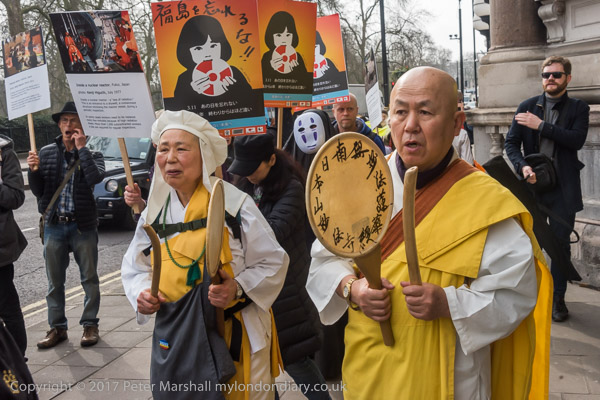
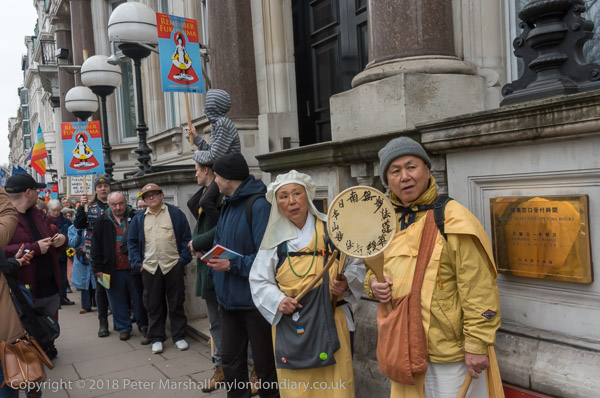
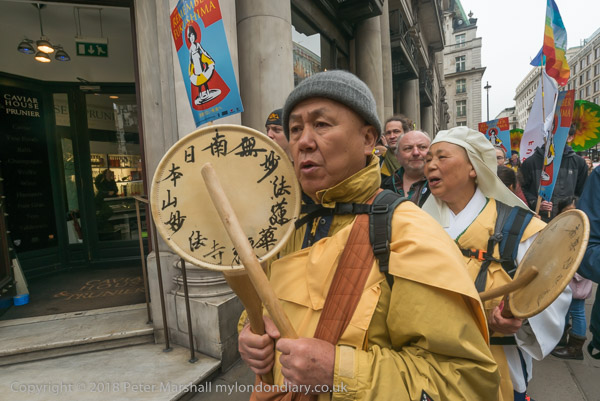
Buddhist Reverend Gyoro Nagase from Battersea and Reverend Sister Yoshie Maruta from Milton Keynes

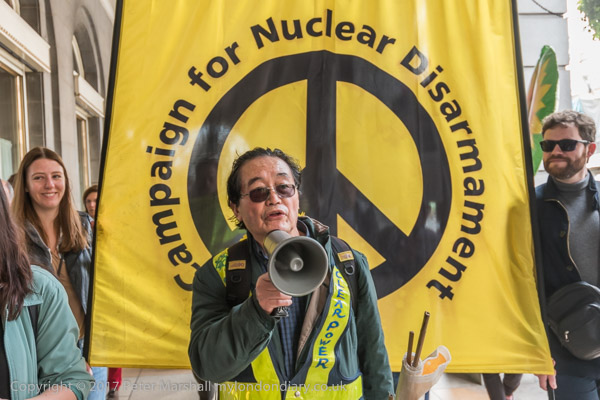
Nuclear power has never achieved the early promises of cheap energy and remains the most expensive way of generating electricity. It is now promoted as an essential backup for renewable energy when the sun doesn’t shine and the wind doesn’t blow but its importance will fade as we exploit other continuous renewable sources and cheaper storage solutions become available. And as we move away from a grid-based power system to more local generation. Should nuclear fusion ever become feasible it promises to be a much safer, cheaper and cleaner way to generate electricity.
Fukushima & Million Women Rise - 2017

Probably the UK’s nuclear programme was never really about energy, but about our nuclear weapons programme.
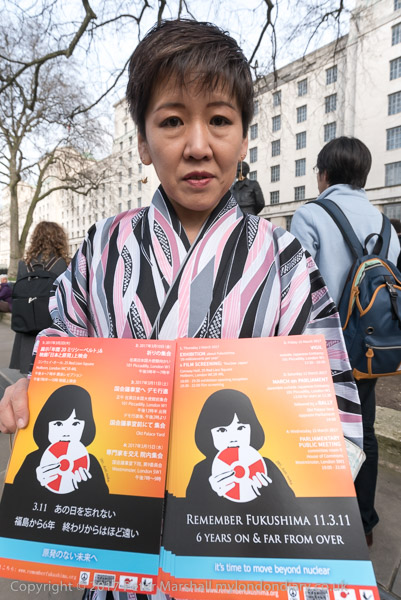
Fukushima & Million Women Rise - 2017

The marchers met at the Japanese embassy on Piccadilly and marched on the pavement handing out leaflets to Downing Street. I left them on the march to photograph the start of Million Women Rise and then took to tube to Westminster for the Downing Street rally.

More on My London Diary: Fukushima anniversary challenges nuclear future.


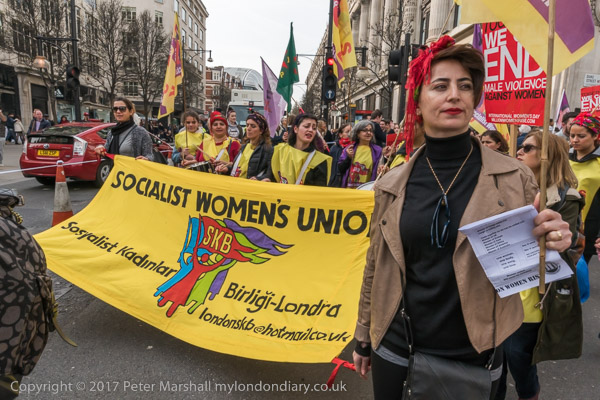
Million Women Rise Against Male Violence

Oxford St
Fukushima & Million Women Rise - 2017
Women get ready to march in Orchard St

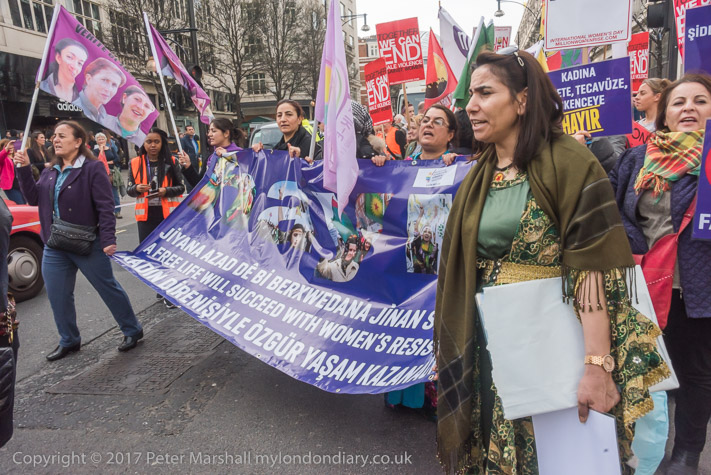
Around two or three thousand women gathered in Orchard Street to march to a rally in Trafalgar Square.

‘Women of the World Unite Against Violence’

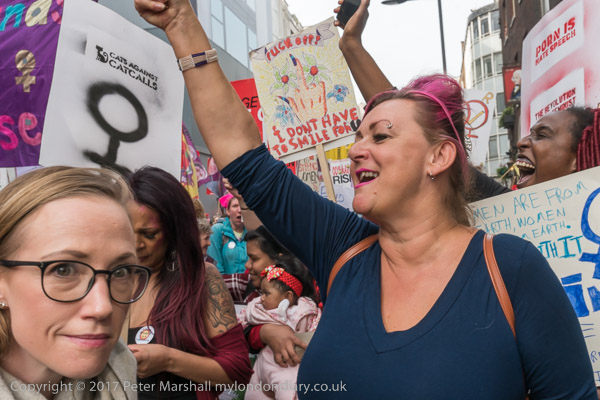
Many carried feminist placards and there were groups from various women’s organisations around the country, including from various ethnic communities.

This was a march for women only, but most of them were very happy for me to photograph them, but I was not able to mingle freely with them as I would on most marches, and my pictures were from the sidelines or in front of the march.

Violence Against Women is a Global Pandemic’

I was able to take many pictures, but not always as I would have liked. But I think they are an interesting set – and here are just a few of them.
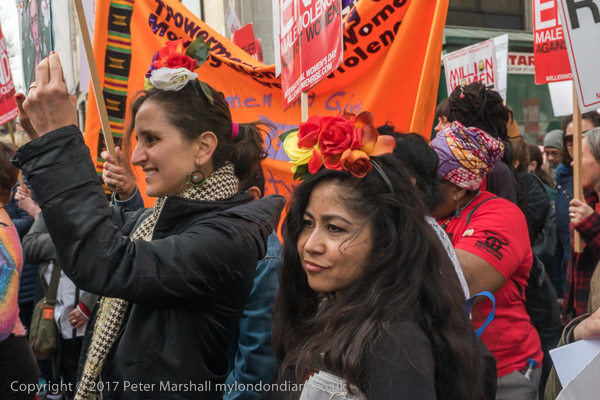
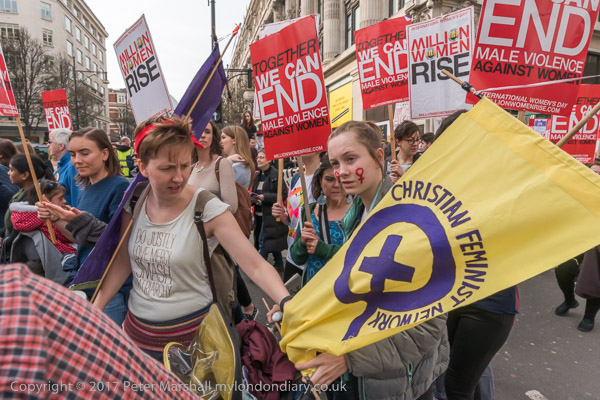
I left as the march reached Bond Street station to go back for the Fukushima rally.

Many more pictures on My London Diary: Million Women Rise against male violence,


FlickrFacebookMy London DiaryHull PhotosLea ValleyParis
London’s Industrial HeritageLondon Photos

All photographs on this page are copyright © Peter Marshall.
Contact me to buy prints or licence to reproduce.
Fukushima Nuclear Distaster Remembered

Fukushima Nuclear Distaster Remembered. Recent shelling of an administration building at a Ukrainian nuclear plant revived memories and fears of the nuclear disaster eleven years ago at the Fukushima Daiichi Nuclear Power Plant in Okuma, Fukushima, Japan. In those 11 years I’ve photographed various events in London, including this one on the 7th anniversary.

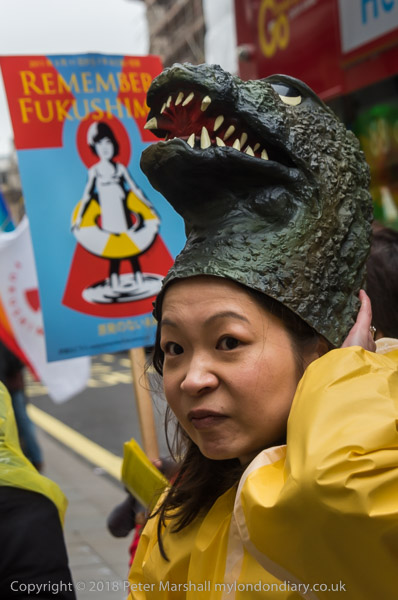
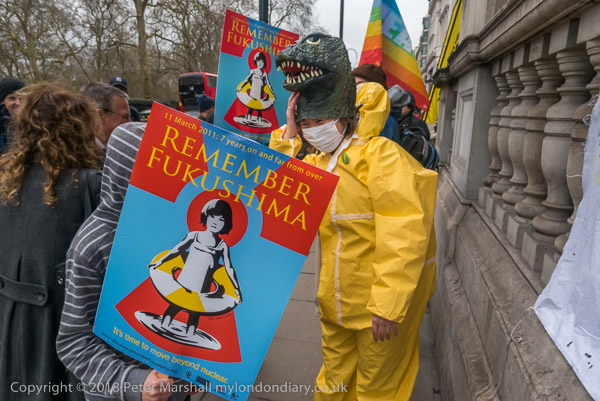
Remember Fukushima, 7th Anniversary

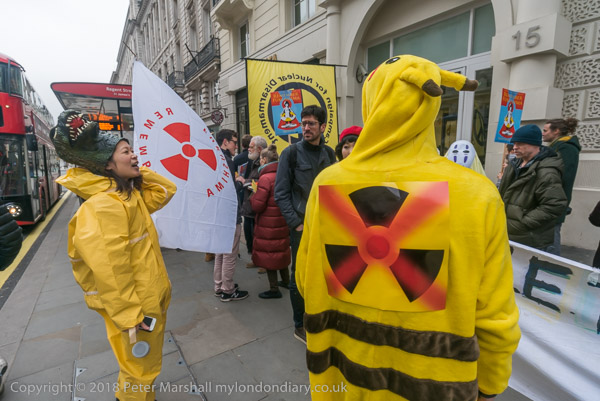
On Sunday 11th March 2018, Kick Nuclear (London) and Japanese Against Nuclear London supported by CND remembered the victims of the continuing Fukushima disaster and all victims of nuclear power and nuclear bombs.

It wasn’t a huge protest, perhaps because after 7 years the media seem to have decided that Fukushima is no longer news, but radiation is still being released from the damaged nuclear plant and its effects will be felt for many years, with estimates of between 100-650 people expected to die from long term cancers caused by the immediate radioactivity leak and more from the continuing release of radiation.

The marchers gathered outside the Japanese Embassy on Piccadilly, where there were still monthly protests over the disaster. There was a vigil there and outside the offices of the plant operators TEPCO in High Holborn on 28th January 2022 which I was unable to attend after it was found that the radiation level was far worse than had been thought, presenting a serious challenge to the continuing shutdown process and overall decommissioning of the site.

Outside Lockheed Martin’s offices

Nuclear power has never lived up to the early promises of plentiful low cost electricity and remains both expensive and dangerous. In the UK it was always linked to the production of military weapons, and we were fed lies about its potential. There are still no satisfactory solutions to the disposal of highly radioactive nuclear waste which requires safe storage into the next millennium – a toxic legacy to our future generations.

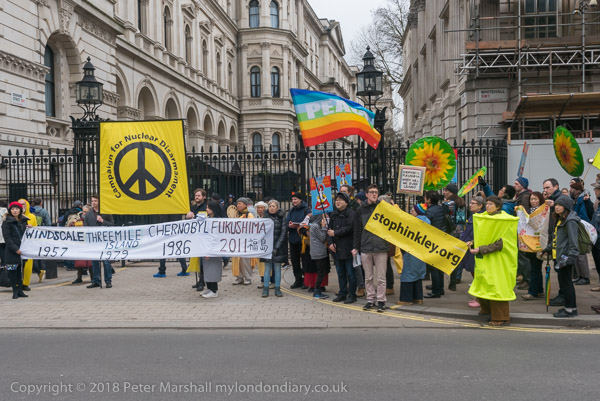
Fortunately the UK seldom experiences more than minor earthquakes and the control systems here are rather more sophisticated than those at Chernobyl. But the Windscale fire in October 1957 was one of the worst nuclear disasters in the world, sending radioactive fallout across the UK and Europe.

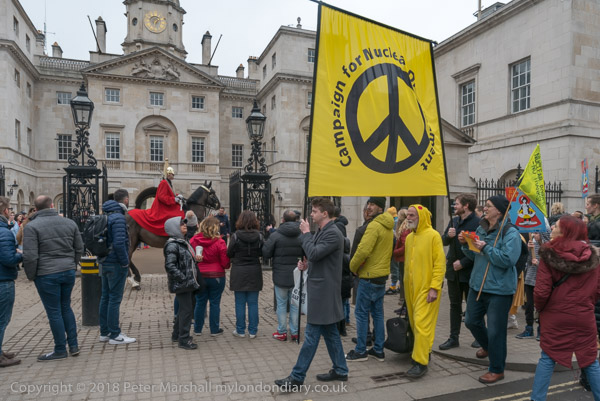
Protesters wait for a horse who doesn’t like yellow to be walked away

Later it was found that as well as large amounts of iodine-131 which causes thyroid cancer there were also significant amounts of the more dangerous polonium-210 (the deadly poison put in the tea of former Russian spy, Alexander Litvinenko, in London in 2006.) It later emerged that there had been earlier accidents at the the plant releasing significant amounts of strontium-90.

Reports of the Windscale accident were heavily censored by the fact that milk from farms over an area of 190 square miles close to this military nuclear plant meant it could not entirely be covered up this time.

From the Japanese Embassy there was a procession along Piccadilly to Lower Regent St where it stopped for a brief protest outside the offices of Lockheed Martin, one of the companies making nuclear weapons, before stopping for a photograph in front of Downing St and going on the Old Palace Yard, opposite the Houses of Parliament where they held a rally.

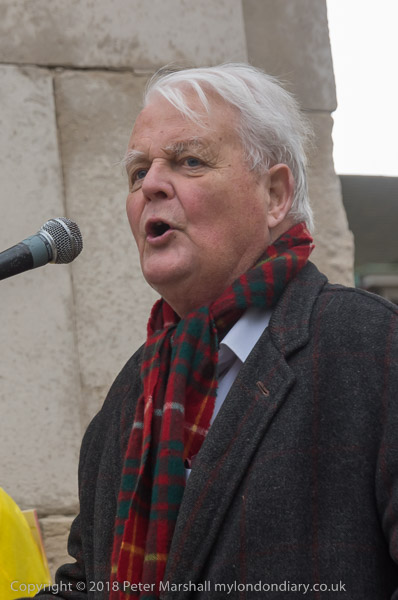
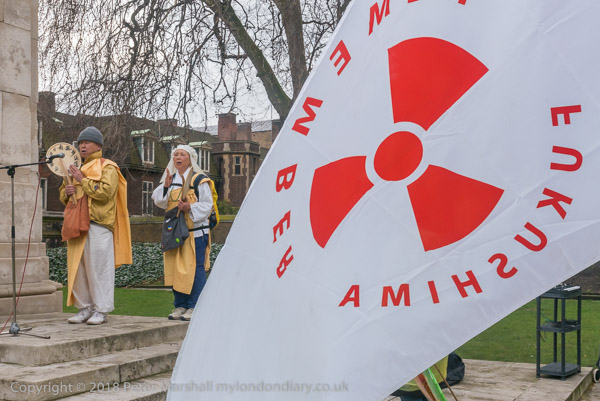
Speakers at the rally included Bruce Kent and Kate Hudson of CND and fashion designer Kate Hamnett. The speeches condemned the continuing nuclear power programme which has always been closely linked with the production of nuclear weapons and, never an economically viable method of power production, has now been rendered entirely obsolete by improved renewable energy sources. There were some musical performances and a poet read one of her poems about Fukushima. I had to leave before the rally concluded with a die-in.

More at: Remember Fukushima, 7th Anniversary