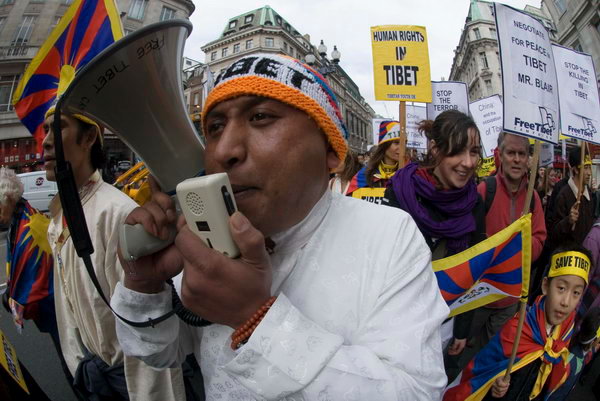
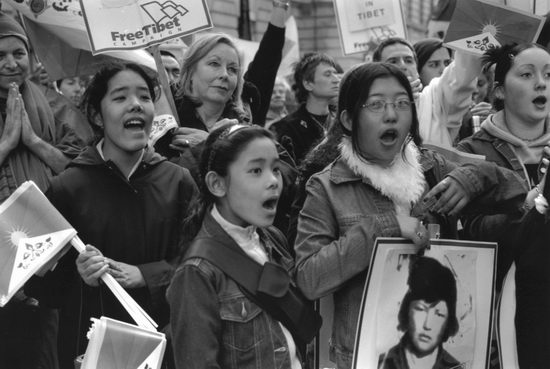
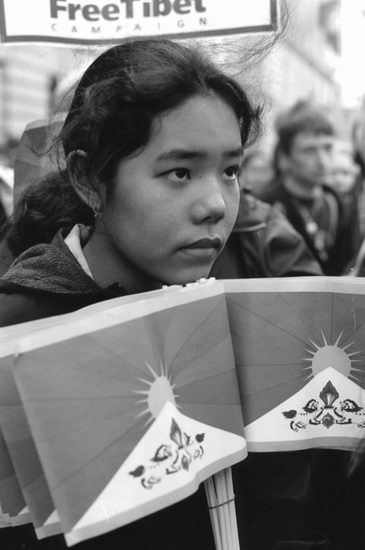
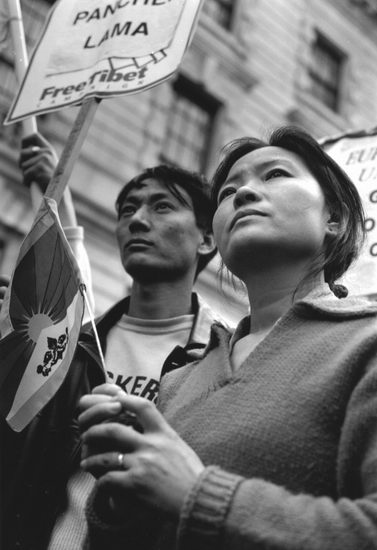
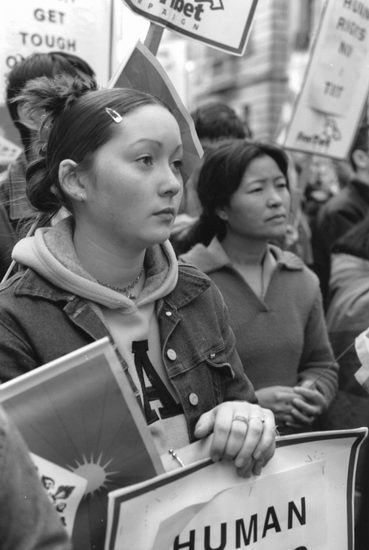
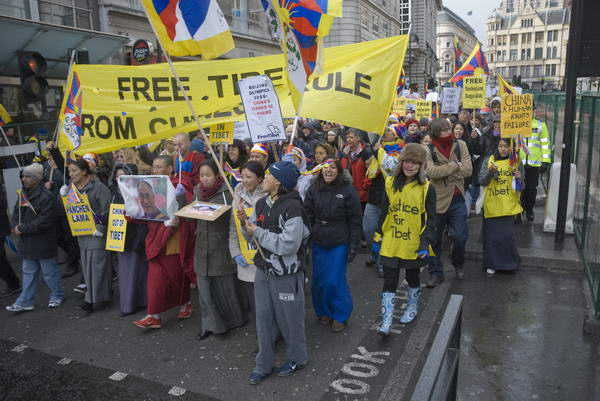
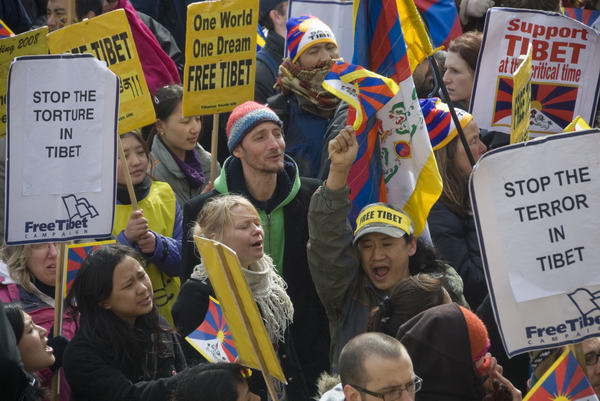
ACTSA: Rally for Dignity & Tibet: On Saturday 10 March 2007 I photographed the ACTSA rally in Trafalgar Square and earlier in the day the annual march calling for an end to to Chinese occupation of Tibet.
Rally for Dignity
Trafalgar Square & Zimbabwe Embassy
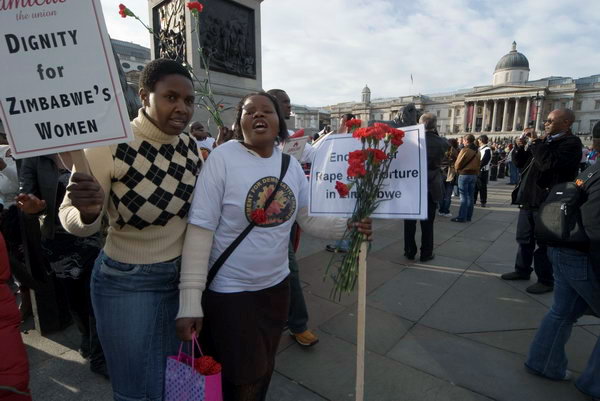
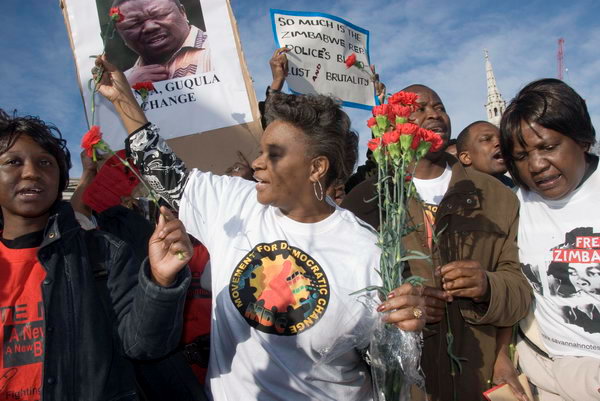
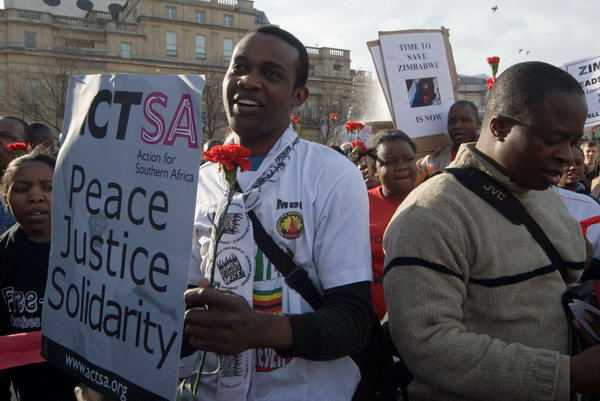
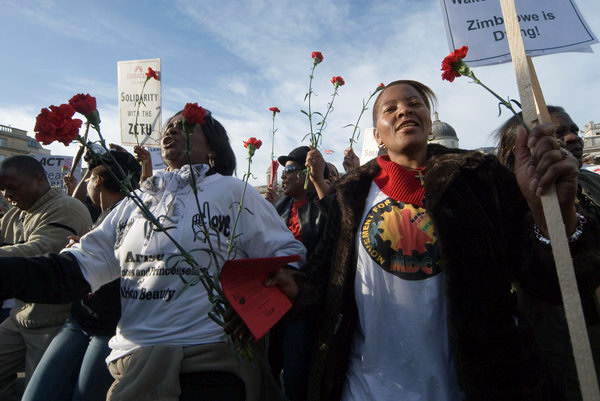
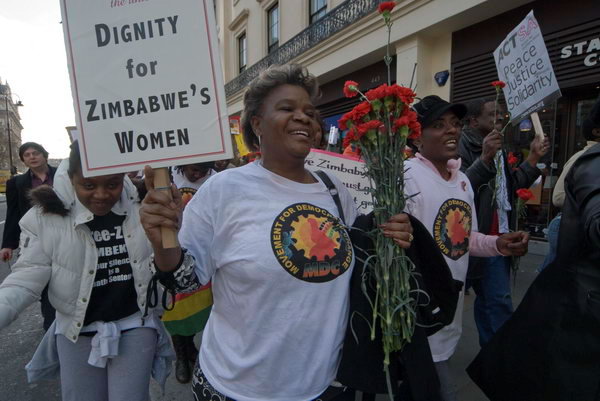
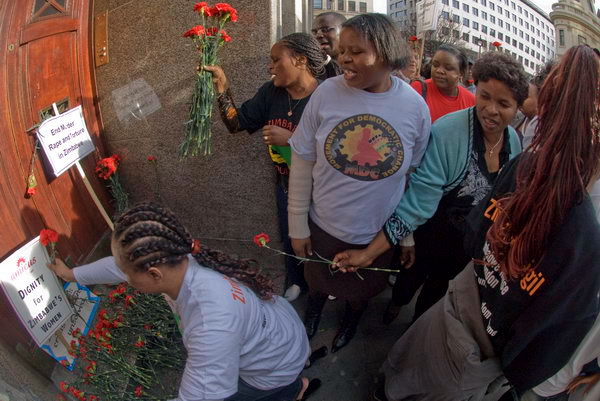
Action for Southern Africa (ACTSA) organised a rally in Trafalgar Square calling for an end to the crimes of the Mugabe regime in Zimbabwe. They called for peace, justice and solidarity with the people and an end to murder, rape and torture there and supported the DIGNITY!PERIOD campaign to provide essential sanitary protection for women backed by Amicus and Unison unions as well as ACTSA.
Many carried and gave out red carnations as symbols of the campaign and marched to lay them with placards at the door of the Zimbabwe Embassy in Strand.
Here is what I wrote in 2007:
For many years I've been a supporter of ACTSA, although I think my membership may have lapsed recently (its hard to keep up with my post.) They were the organisers of a 'Rally For Dignity' which celebrated the role of women in the worldwide struggle for justice.
Held two days after International Women's Day (8 March) it focused particularly on the struggle for freedom in Zimbabwe and on the efforts of the Zimbabwe Congress of Trade Unions.
Zimbabwe is currently in a mess, and the cause of that mess is Robert Mugabe. It is a beautiful country with some wonderful people, but so sadly crippled by a cruel, corrupt and senseless dictator who has seized land and persecuted any who dare oppose him.
The economy is in ruins, and men, women and children suffer as he rewards and lines the pockets of his supporters.
One product of many in short supply is sanitary towels, and ZCTU [Zimbabwe Congress of Trade Unions] organised the donation of these necessities by overseas friends, only to have the government demand duty on their import.
Free Tibet: 48th Anniversary of the Tibetan Rising
Westminster
Earlier in the day I had once again photographed the annual march on the anniversary of the Tibetan Rising. I’ve written about this annual event in several posts recently so won’t write more about the 2007 march here.
You can find what I wrote in 2007 if you scroll down the March 2007 page on My London Diary, where there is also a picture of London’s second longest running protest, by Falun Gong opposite the Chinese Embassy against torture of religious prisoners in China.
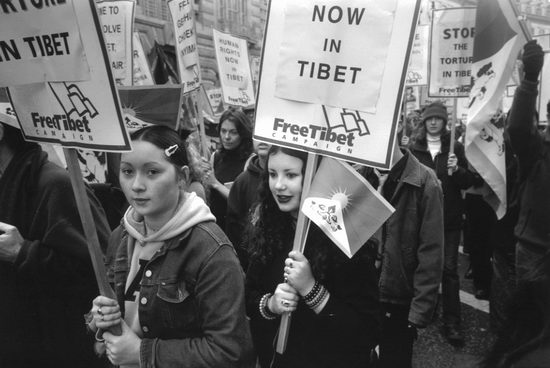
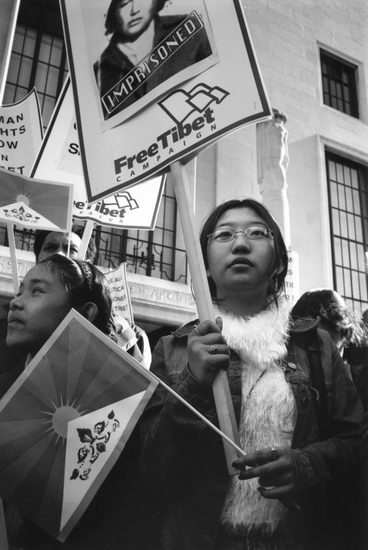
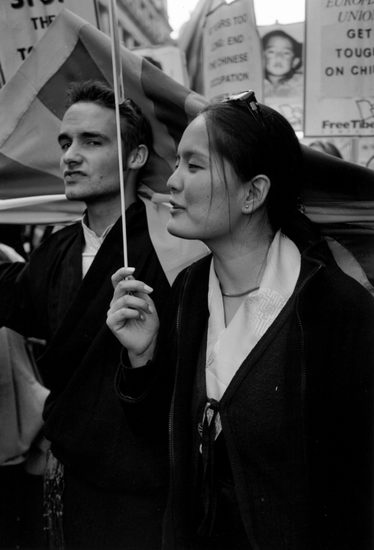
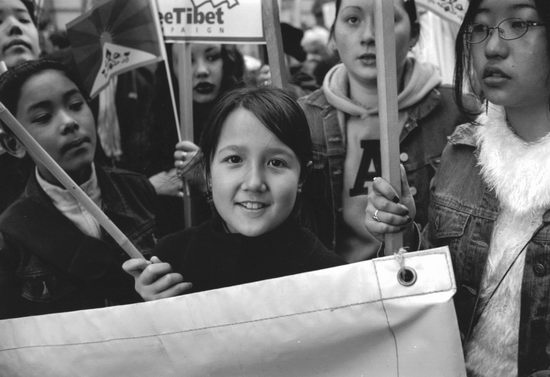
Free Tibet March: On Saturday 9th March 2002 I photographed the annual Free Tibet march and a short time later put some of the photographs online on My London Diary.
Tibetan nun imprisoned for protest in Tibet
I wrote only a very short text for My London Diary then – here it is in full (re-capitalised):
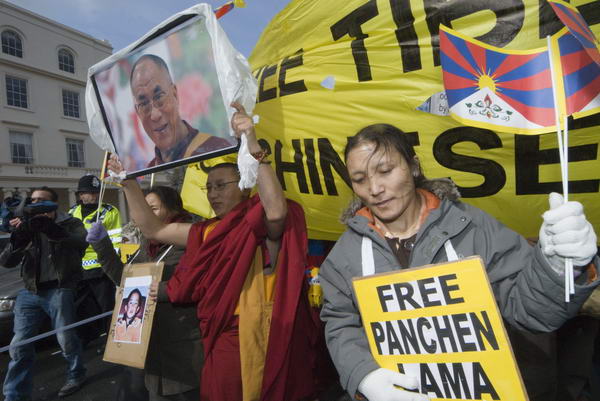
9 March was the occasion of an annual march from the Chinese Embassy to Whitehall to protest against Chinese occupation of Tibet. Among those taking part were those who had been imprisoned by the Chinese for their protests in Tibet.
Back then the library I was sending pictures to only accepted prints or transparencies of colour pictures and I was only then working with colour negative film.
But I did take colour pictures, knowing that they would at some time be a part of a historical record of protest, along with my black and white pictures.
Financially it wasn’t worth me making colour prints, which was a rather slower, more expensive and rather trickier business than printing in black and white – even though I had an expensive colour enlarger and C-Type roller transport line in my darkroom. Many newspapers and magazines were then still totally or largely in black and white and sales were unlikely to cover costs.
But of course things were rapidly changing, and publication quality digital cameras were arriving on the market at affordable prices. By the end of 2002 I working with my first DSLR, a Nikon D100, and soon I was able to write files out to a CD and take those to the library.
But there were sometimes still advantages to working in black and white. In colour the Tibetan protests were dominated by the strong colours of the Tibetan flag which gave every image something of the same look.
And the 6.2Mp RAW files from the Nikon couldn’t quite produce the same quality as black and white film, though good enough for press and magazine work. As digital cameras and processing software both improved though, it soon became possible to produce digital files that could more or less match or better than those from film and eventually I switched to work only on digital.
The pictures here were put on the web in 2002 by scanning 8×10 silver gelatin prints on my flatbed scanner which I filed at around 32Mp files – a size I think I wasn’t able to achieve with a digital camera until over 10 years later. The quality was also better than the files from my first film scanner.
The pictures here are all those I put online in 2002, though I probably took over 200 black and white images. But I would only print and scan those I wanted to submit. At the moment I am going though my many years of working on film and digitising rather more to put on Flickr and the Internet archive, though it will be a few years before I get to doing this for my 2002 work.
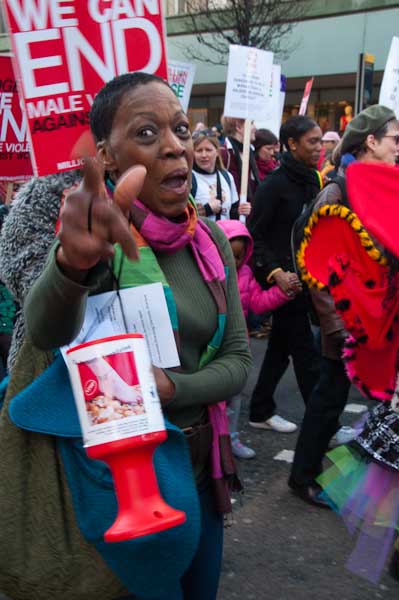
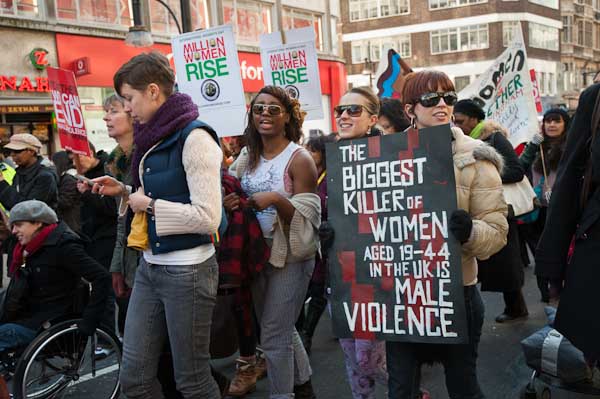
Tibet Freedom & Women Rise: On Saturday 6th March 2010 I photographed a march marking the 51st anniversary of the Tibetan National Uprising and calling for freedom from China and then went to Marble Arch for Million Women Rise, an all-women march calling for an end to male violence against women.
Tibet Freedom March
Chinese Embassy to Westminster
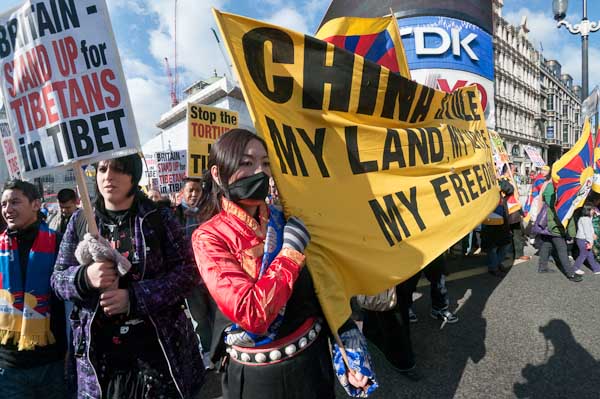
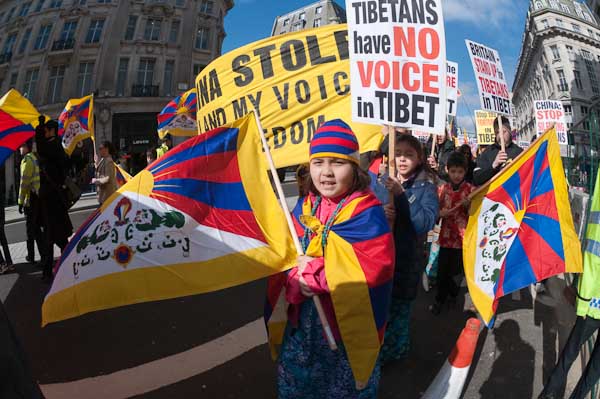
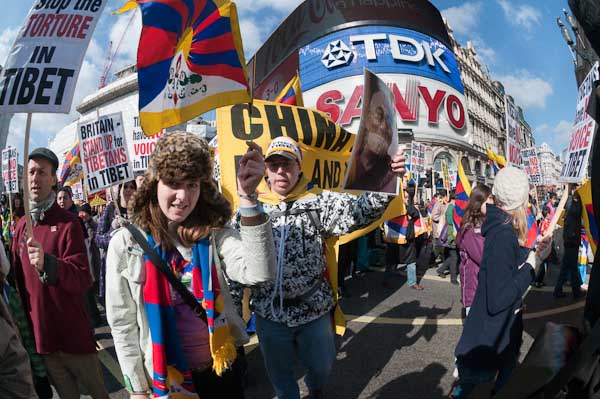
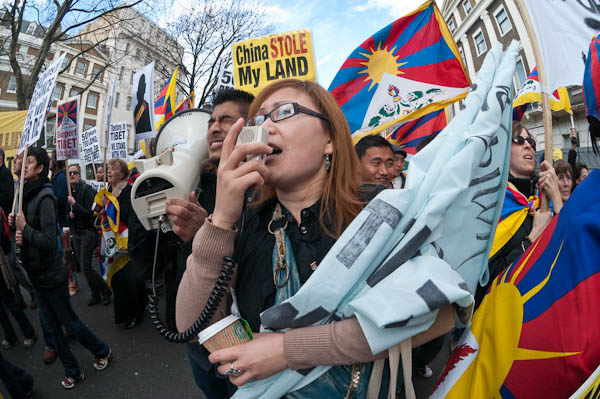
China Stole My Land, My Voice, My Freedom – the march at Piccadilly Circus
The Tibetan National Uprising began on 10 March 1959, prompted by fears that the Chinese authorities in charge of Tibet would arrest the Dalai Lama. The protests soon developed to demand independence from China which had annexed Tibet in 1951.
As well as civilians those taking part included Tibetan guerillas who had been trained by the US Central Intelligence Agency in camps in Nepal and the CIA organised several aerial supply missions. The Agency had supported Tibetan guerrillas from the mid-1950s and even after armed resistance ended in 1962 the CIA continued to train Tibetans in the USA, returning them to stir up revolts in Tibet until at least 1972.
The National Uprising was bloodily put down by the Chinese People’s Liberation Army, with widely varying estimates of the number of Tibetans killed, possibly over 80,000. The Dalai Lama and others fled to India where he and his followers were granted asylum.
In 2008 there had been further protests and demonstrations in Tibet against the Chinese Communist Party’s treatment and persecution of Tibetans which began around the 49th anniversary of the 1959 Uprising. The protests were again violently repressed, with over 200 young Tibetans killed and many imprisoned. Over 1000 were still unaccounted for in 2010 and two, Lobsang Gyaltsen and Mr Loyak, had been executed in October 2009.
The protest by around 600 people, many of them Tibetans, began outside the Chinese Embassy with a short speech and the singing of the Tibetan National Anthem was sung, followed by a minutes silence in memory of the dead and prayers.
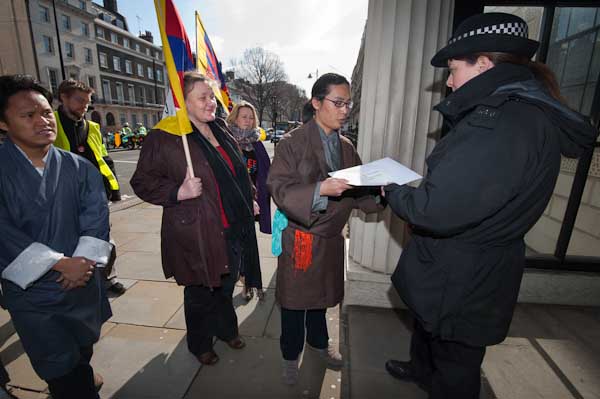
A small delegation went with a letter to the door of the Chinese Embassy, but no one from the Embassy was there to take it so they handed it to the police officer there and the march set off down Regent Street to a rally at Downing Street.
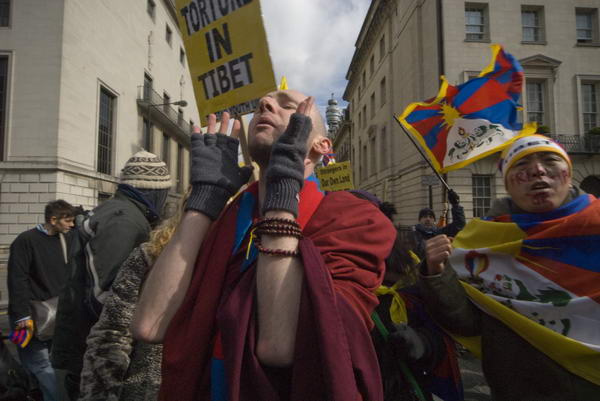
I reported, “Near the front of the march was a large banner with the Tibetans’ message “China stole my land, my voice, my freedom.” Among the slogans chanted by marchers were “Tibetans have no voice in Tibet“, “China: stop silencing Tibetans“; “Britain: stand up for Tibetans in Tibet” and “Stop the torture in Tibet”.
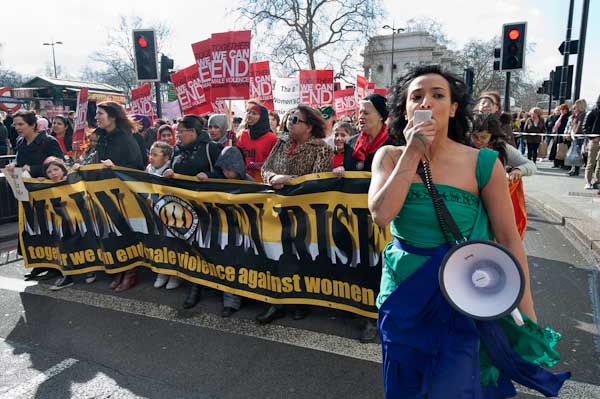
I left the Tibet Freedom March to rush to Marble Arch where several thousand women had gathered for the Million Women Rise march, arriving just before they set off.
Million Women Rise (MWR) founder Sabrina Qureshi addresses the women before the start of the march
The Million Women Rise movement was founded by campaigner and former outreach worker Sabrina Qureshi in 2007. I photographed their march in 2008. It takes place every year around March 8th, International Women’s Day, when there have been other events in London for many years which I had often photographed.
Kurdish women with the ROJ banner
Million Women Rise differs in being a women-only event and “led by Black/ Global Majority Women for all Women and Girls.” The annual march is supported by a wide range of groups and they included some left-wing organisations. But others have been excluded from speaking at the rallies or told they are not welcome on the marches.
In 2010 I wrote a little about the violence women experience:
“In this country almost 1 in 4 women are said to have experienced some form of sexual assault and on average two women are murdered each week by a partner or former partner. A third of all teenage girls who are in relationships suffer unwanted sexual acts and one in four are the subject of actual physical violence.”
“Trafficking is a large-scale global industry, with two million girls between the ages of 5 and fifteen being sold into sex slavery each year. Lack of health provision is also a major problem; one woman dies in pregnancy for every minute of the year, and most of these deaths are preventable”
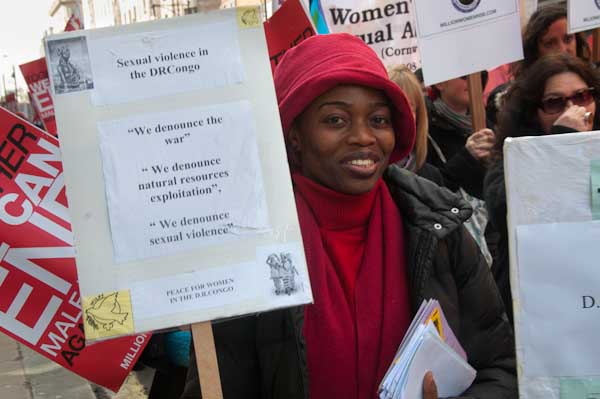
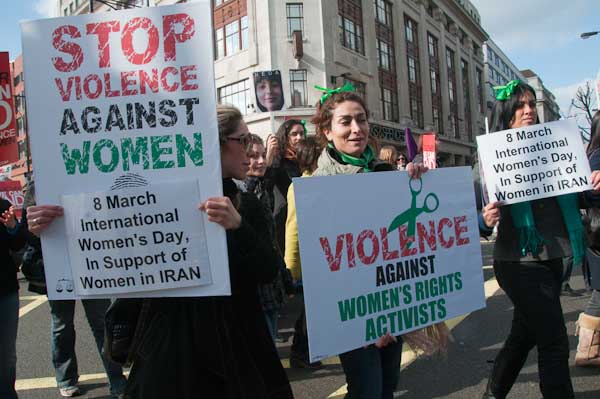
Now, particularly after what we have seen in Gaza with so many women and children among the dead, I might perhaps have also written about affect of wars. Among those on the marching were Tamils and women from the DRC where wars were killing many women and children, as well as from repressive regimes including Iran.
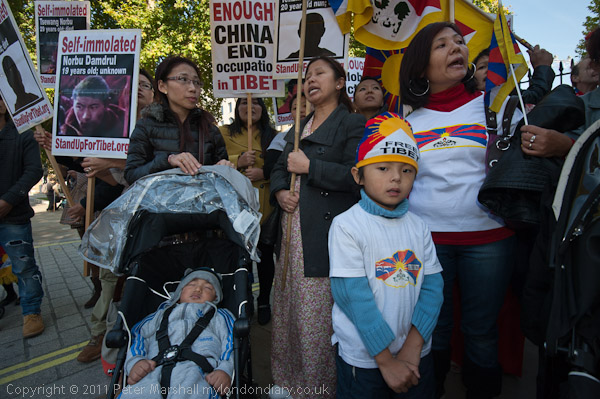
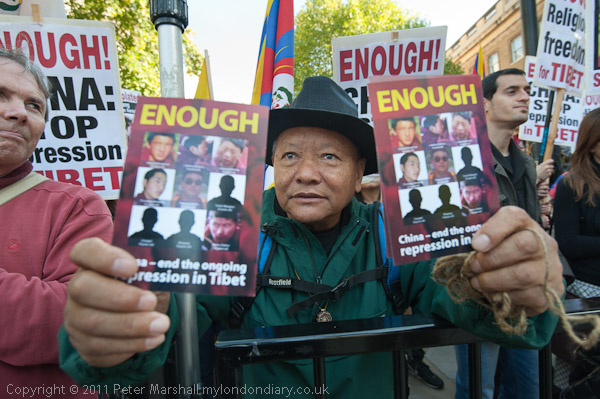
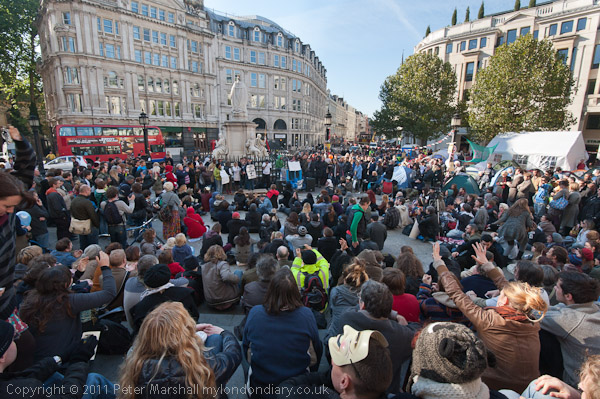
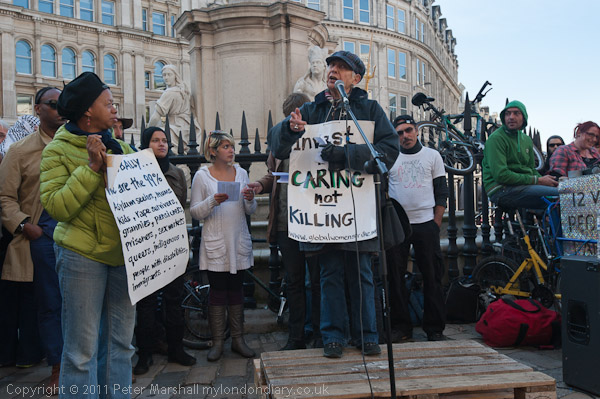
Hardest Hit, Biofuels, Tibet and OccupyLSX: Saturday 22 October 2011 began for me with a protest at City Hall (still then in Southwark close to Tower Bridge) Next in Whitehall I photographed a protest against the pollution, environmental damage and human rights abuses of burning forests produce energy. Also on Whitehall I met Tibetans and supporters marching from the Chines Embassy to Downing Street demanding an end to China’s increasing repression in Tibet. Finally I went to St Paul’s Churchyard for a brief visit to Occupy London a week after their camp there had begun.
Hardest Hit Protest At City Hall
City Hall, More London
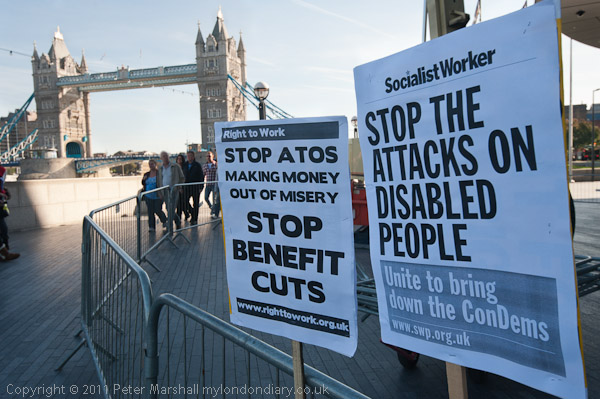
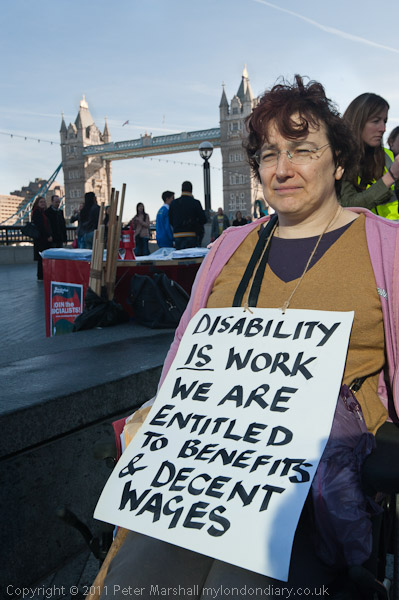
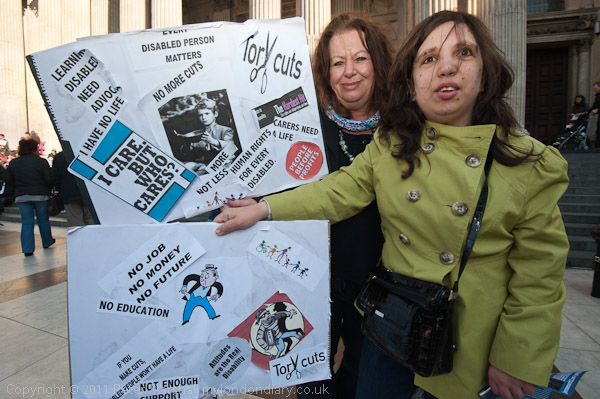
The Hardest Hit campaign, organised jointly by the Disability Benefits Consortium and the UK Disabled People’s Council were holding a rally outside City Hall as a part of protests in cities and towns across the country calling on the government to stop the cuts in benefits and services and changes in the assessment of disabilities which have hugely affected their lives.
Of course the Mayor of London was not responsible for the cuts, and I assume this was just a convenient location he had made available for the protest. Of course many services provided by local government had been cut as a result of the government funding cuts. And as usual the government claimed to be concerned with the plight of the disabled and to be trying to help them while at the same time making cuts that really hurt them.
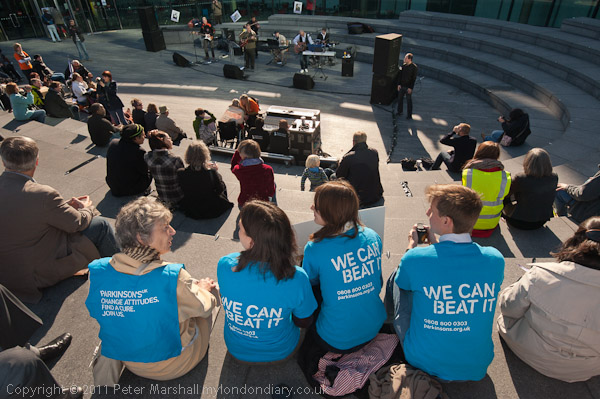
The protest took place in the Scoop, an outdoor sunken amphitheatre next to City Hall, part of the More London development, an events space which can seat around a thousand and it looked a little empty though there were many disabled protesters, some with carers and supporters.
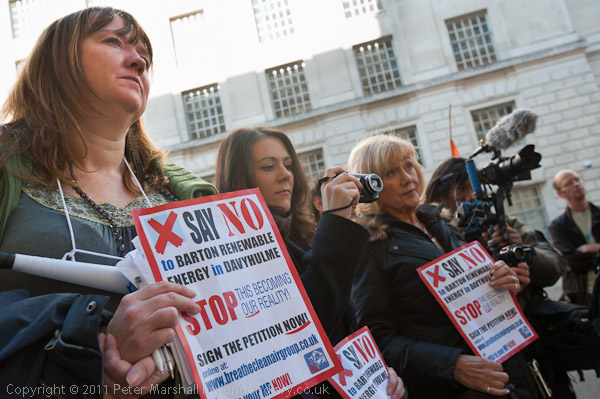
Protesters against Barton Renewable Energy in Davyhulme, Manchester
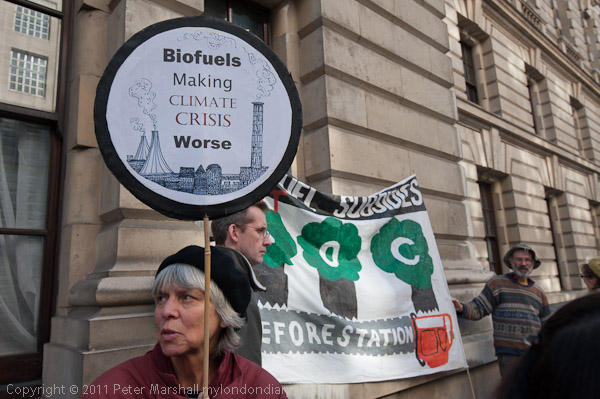
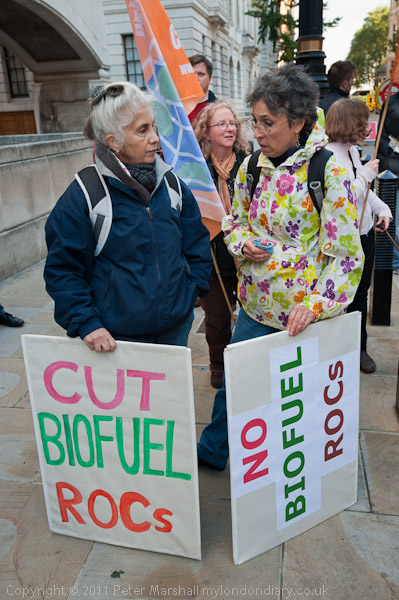
People had come from across the country to protest at continued government support for biofuel energy production despite it now being clear that this is contibuting to climate change, causes deforestation and the loss of valuable forest land, results in a loss of food production and threatens human rights in many areas.
Biofuels were once seen as a green alternative which would help us reduce global warming, but it is now clear that are worse polluters than coal or oil. Despite this, they still receive huge payouts from funding meant to encourage renewable energy sources. The huge wood-burning plant at Drax in Yorkshire in 2024 received £869 million in public subsidies – over £2 million a day for polluting the planet.
At last in February 2025 the UK government has announced a cut in the subsidies for Drax, and the winding down of using imported wood pellets for energy generation. But even when this comes into force in 2027 Drax will still be getting £1.2 million a day. Drax will cut its power production to around half its current level and further reductions are expected from then.
Tibetans shout their message to Downing St, across Whitehall
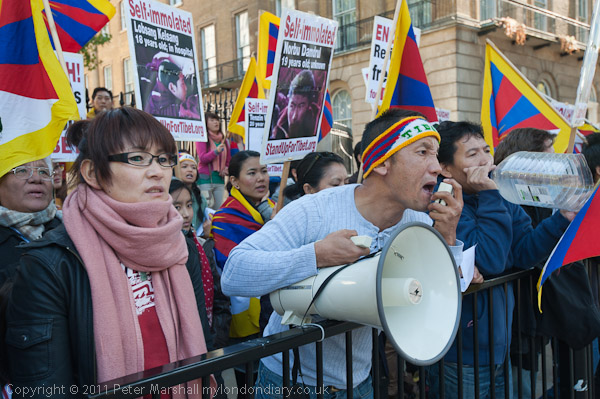
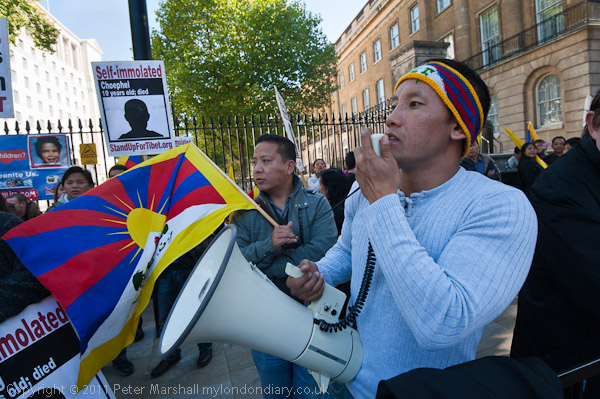
Several hundred Tibetans and supporters marched from the Chinese Embassy to Downing Street in a protest over China’s increasing repression in Tibet, where in March 2011 eight young monks and a nun had set themselves on fire in desperate protests. Five had died.
Protests around the world like this one aimed to get the international community to end their silence over the Chinese abuses of human and civil rights in Tibet. It was supported by the Tibet Society, Free Tibet, Students for a Free Tibet, Tibetan Youth UK and the Tibetan Community in Britain.
The held a rally opposite Downing Street and delivered a letter to the Prime Minister calling for the UK Government to take action.
There was to be a world-wide day of action on Wednesday 2 Novemeber, the to call for action from international governments the day before world leaders meet in Nice, France for the G20 Summit.
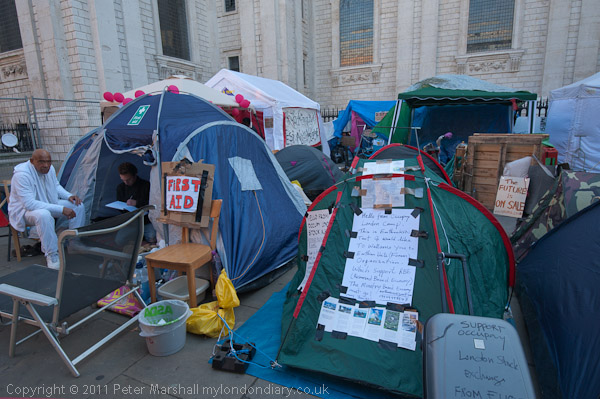
A week earlier on 15th October 2011 I had been at the protest when around 2000 Occupy protesters had tried to protest outside the Stock Exchange but were prevented by police. They had returned to the steps of St Paul’s and held a general meeting. Police kettled the protesters (and me) there, but I left when a group of them forced their way through the police line. Those that were still kettled decided to stay and occupy the area after police told them they should leave. A week later they were still there and I went back to see what was happening.
There was a full program of events for the day, and a general meeting was taking place with Selma James speaking.
A mother and daughter concerned about privatisation of the NHS at OccupyLSX
As I said “the organisation of the camp is impressive, although clearly there are some people around who don’t respect the camp’s ‘no alcohol’ rule. But like the previous camps in central London, the camp attracts a number of the rough sleepers and odd characters who normally wander the streets of our city. It’s a useful service for people who are normally neglected, but does bring some problems.”
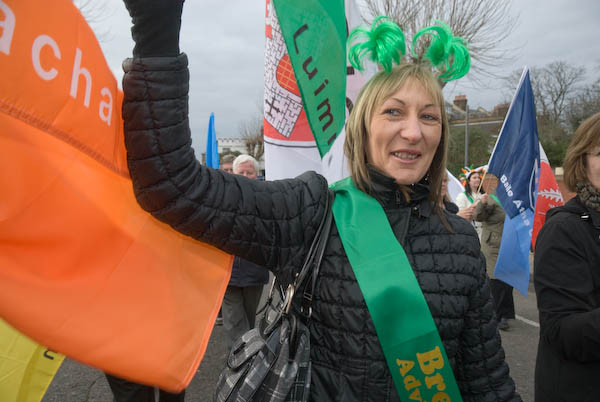
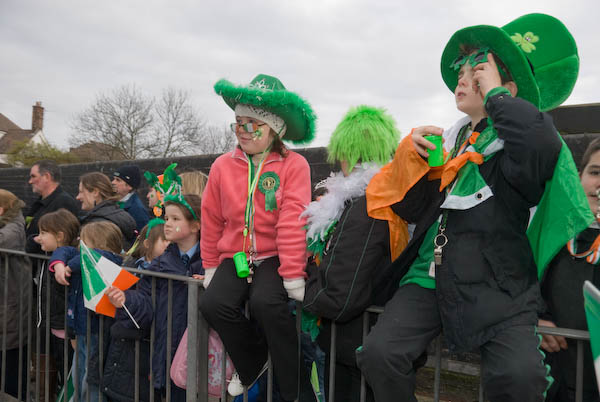
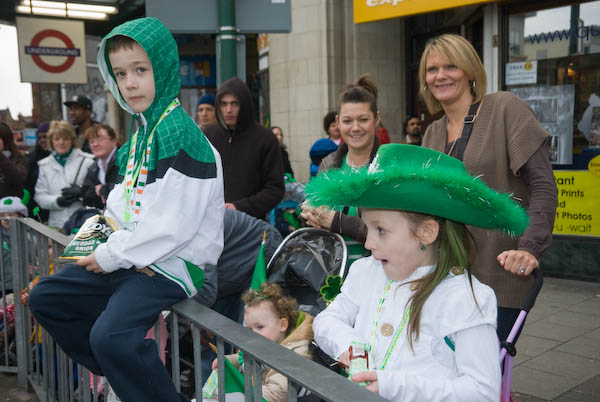
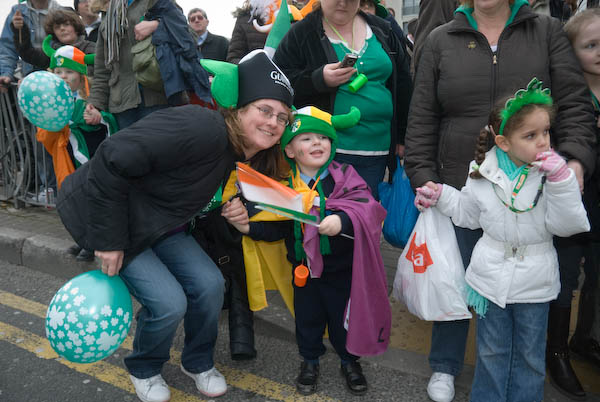
St Patrick’s Day – 2008: A parade in Willesden on Monday March 17th 2008 celebrated St Patrick’s Day. I came to it from a protest by the all-Irish environmental and social justice movement Gluaiseacht against the Corrib Gas Project in Mayo outside the Shell Centre, and had to rush away for a protest by Tibetans at the Chinese Embassy.
Brent St Patrick’s Day Parade – Willesden Green
Brent is one of London’s more diverse boroughs and has a large population of Irish and Anglo-Irish residents, particularly in what was sometimes called “County Kilburn“. As a borough it promoted various events to celebrate and unite its different communities, and among them I think was the only London borough to have its own St Patrick’s Day Parade.
Or it did until government cuts in funding to local authorities which hit particularly hard on boroughs like Brent meant it could no longer afford to support these community events.
London does now celebrate St Patrick’s Day with a march and event in Trafalgar Square on the nearest Sunday to the day itself, and I photographed the first of these, promoted by then London Mayor Ken Livingstone in 2002, though I only put a few black and white images on to My London Diary.
But the parade in Brent, though often involving some of the same people and floats was always a more interesting and intimate event, with the large local element giving it greater authenticity and I was sorry to see it go.
Local people came to view the parade, some waiting patiently on the pavement, others spilling out of packed bars drinks in hand as it arrived.
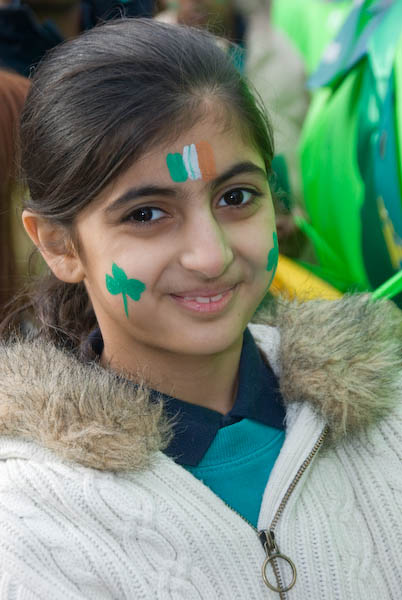
Local schools got involved, with children of all ethnicities becoming involved – and their families coming to watch.
I went to where the march was to start, at an Islamic Centre close to Willesden Green Underground Station, where the streets were most crowded and followed the procession as it made its way to the library in High Road Willesden where there were various musical performances and a bit of a funfair.
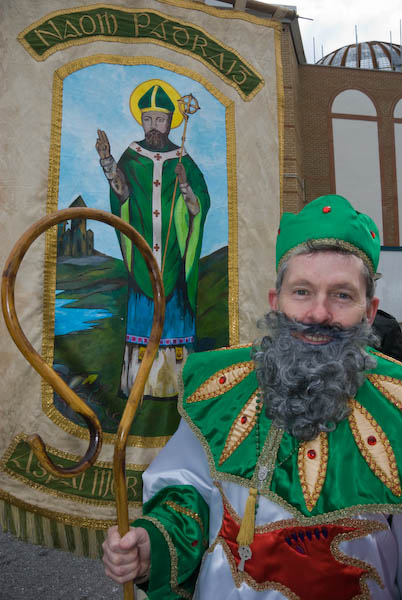
St Patrick was there of course, with the Mayor of Brent and others leading the parade. People walked with flags of the Irish counties (or at least the 26 of the 32 that are in the Republic of Ireland.)
I had to rush away shortly after the parade began to cover another protest.
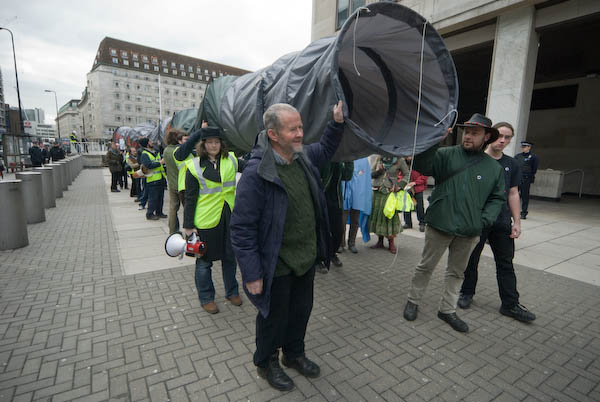
All-Irish environmental and social justice movement Gluaiseacht were in London for the weekend, and on St Patrick’s Day itself gathered outside the Shell HQ at Waterloo, bringing with them a very large pipeline.
The protest was over the Corrib Gas Project in Mayo in the north-west of Ireland, which the Irish Government has given at a knock-down price to Shell, Statoil and Marathon. It’s a project estimated to be worth over 50 billion Euros, but the Irish people will hardly benefit from the profits – and Shell gets the largest share.
Even worse the people in Mayo will suffer from the pollution around an inland refinery and a high pressure pipeline that will endanger local communities. Protests in Ireland have led to innocent people being jailed.
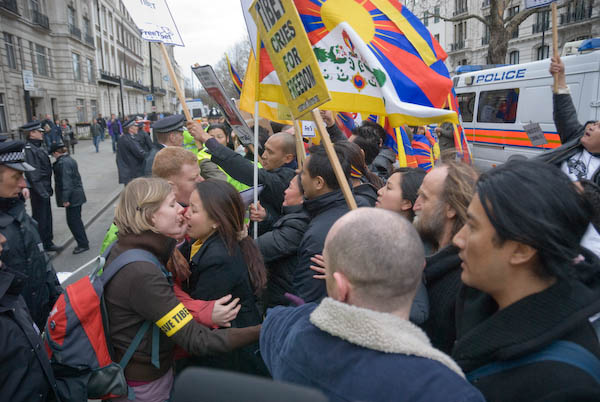
According to the Chinese Authorities, they “exercised restraint” in dealing with the Lhasa protests, using only non-lethal weapons and only killing 13 innocent civilians. Monday afternoon’s demonstration in Portland Place opposite the Chinese Embassy was timed to coincide with the midnight deadline in Lhasa for protesters to surrender.
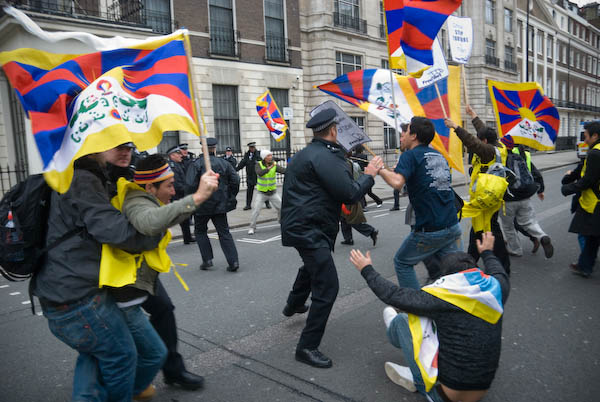
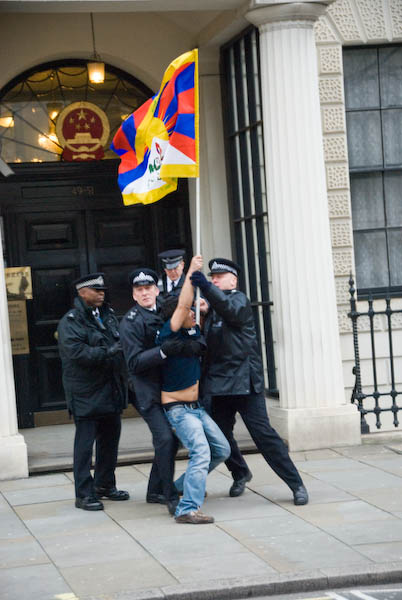
After protesting for around an hour on the opposite side of the wide dual carriageway, one man jumped over the barriers and rushed across towards the embassy door waving a Tibetan flag. Others followed and police were unable to stop them.
The stewards from the protest tried to get them to make back and were eventually able to persuade them with some gentle pushing to make back to the central island in the road where the protest continued, with some of the protesters sitting down.
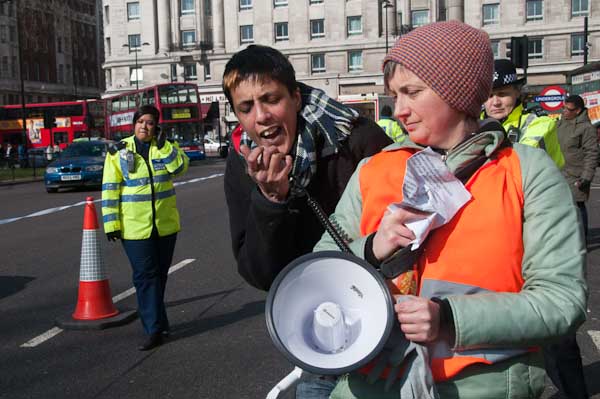
Eventually police reinforcements arrived and after failing to persuade them them to move an officer read out something over a loudspeaker. The protest was too noisy for me to hear it, but I think it was a warning that the protesters would be arrested if they didn’t go back to the pavement. The stewards then persuaded everyone to move back to the pavement to continue their vigil, and I went home.
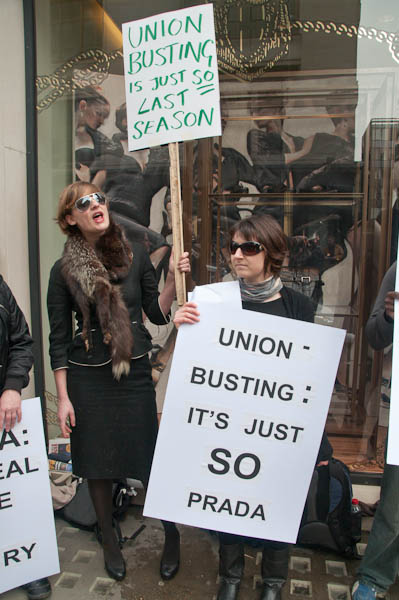
Union Busting, Tibet, Women & Sharia: My work on Saturday 7th March began outside fashion store Prada in Mayfair. I moved on to the Chinese Embassy for the annual Tibet Freedom March, then to Portman Square for a International Women’s Day march and finally to Trafalgar Square where ‘One Law for All’ were marching to a public meeting against the use of Sharia and other faith-based laws in the UK.
Union Busting – Just SO Last Season – Prada, Old Bond St
A dozen people from Labour Behind the Label, part of the international ‘Clean Clothes Campaign’ which campaigns in support of garment workers worldwide were protesting outside Prada, one of the best-known luxury brands around the world.
The ridiculously expensive fashion luxury goods its customers buy are not made in Milan where Prada was founding but in factories such as the DESA factory in Turkey. Workers there are on ridiculously low pay and work long shifts – sometimes up to 40 hours.
When in April 2008 workers at DESA decided to join the Turkish leather workers union, 44 were sacked and 50 forced to resign from the union.
Demonstrations outside the DESA factory have led to repression and arrests and when one union leader refused to accept a bribe, her family was threatened, and later that day men on a motorbike attempted to kidnap her 11 year old daughter.
Prada wasn’t the only luxury goods seller profiting from this despicable exploitation – the DESA factory in the Dzce Industrial Zone also makes goods for Mulberry, Louis Vuitton, Samsonite, Aspinal of London, Nicole Farhi and Luella.
As well as publishing more about the protest – and of course more pictures, my London Diary post also pointed out that it isn’t just the high price designer labels that support sweatshops, but also Matalan and other cheap suppliers and supermarkets – and urged readers to visit the Labour Behind the Label web site to find out more and support their actions.
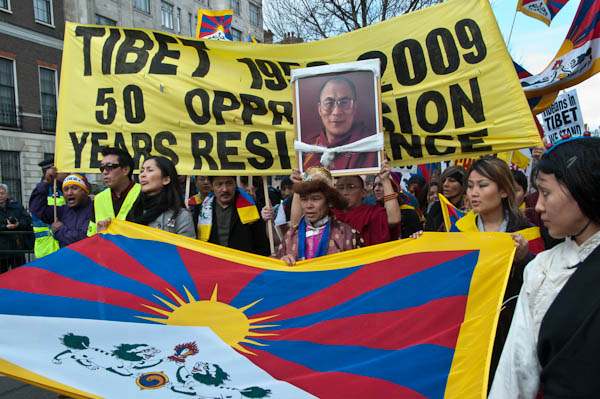
The march marked the 50th anniversary of the brutal repression by China of the ‘Tibetan People’s Uprising‘, when over 80,000 Tibetans were killed and many others jailed.
It was then the Dalai Lama fled the country along with many others. Those still in Tibet still suffer the same kind of brutal repression, with thousands missing after the demonstrations in Tibet in 2008, and hundreds serving lengthy prison sentences.
Many on the protest carried Tibetan flags. Two months earlier a young Tibetan, Pema Tsepak, had been beaten to death for carrying one in his own town in Tibet.
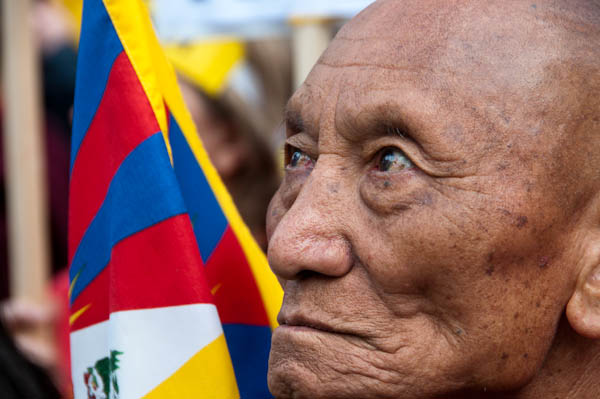
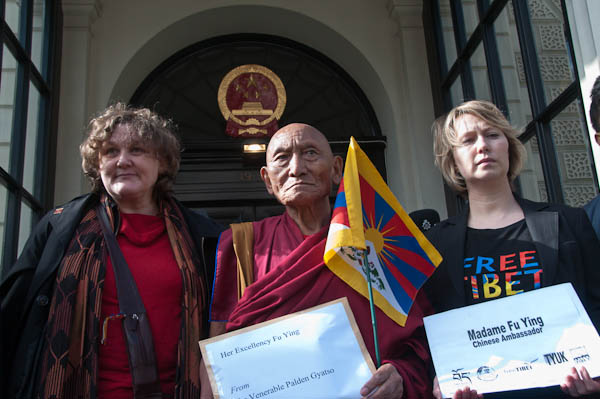
Palden Gyatso.
At the start of the march opposite the Chinese Embassy, Palden Gyatso, a Tibetan monk who spent 33 years in prison and labour camps from 1959 to 1992 and was permanently damaged by the beatings and inhumane torture he suffered tried to deliver a letter to the Chinese Embassy but the Embassy was not accepting any post.
Gyatso’s autobiography was the basis for the film, ‘Fire Under the Snow‘ – you can watch a trailer on YouTube.
I left the march when it reached Oxford Street to go to the International Women’s Day march.
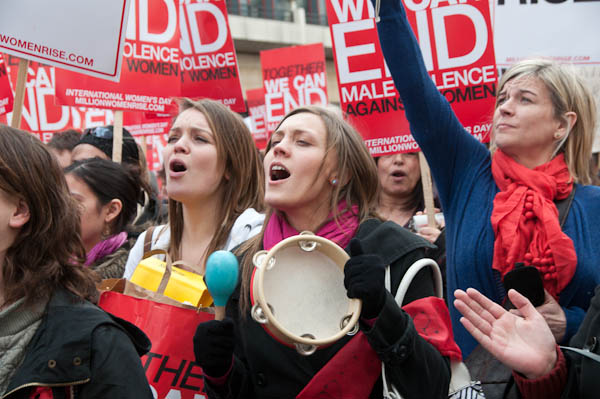
Million Women Rise 2009 – Portman Square, Oxford St
The main celebration of International Women’s Day in London in 2009 was the ‘Million Women Rise 2009‘, a women-only march to end male violence against women.
This annual march since it started the previous year coincided with the global United Nation theme for 2009 which was ‘Women and men united to end violence against women and girls‘, but Million Women Rise is a women-only march.
Hackney Women Rise. The march was co-ordinated by Sabrina Qureshi
This year the numbers seemed rather smaller, despite the predictions of a much larger event, but it was still a lively event and one that made a greater impact with its route through London’s major shopping streets – Oxford Street and Regent Street and across Piccadilly Circus to a rally in Waterloo Place.
As they marched the women chanted their main message: “However we dress, wherever we go, yes means yes, no means no!” and called for an end to male violence against women.
“Yes means Yes and No means No” Women march along Oxford St
This was a national march with coaches bringing women from Birmingham, Bradford, Hebden Bridge, Wales, Nottingham and Todmorden as well as other groups coming from around the country. There was also a strong participation by Kurdish and Turkish groups based in London.
One group marched behind the main march, choosing to follow the UN theme rather than be a women-only march; “the European Confederation of Workers from Turkey (ATIK) Women’s Commission group included men marching (as their placards proclaimed in Turkish) in a spirit of socialist equality, fraternity and freedom.”
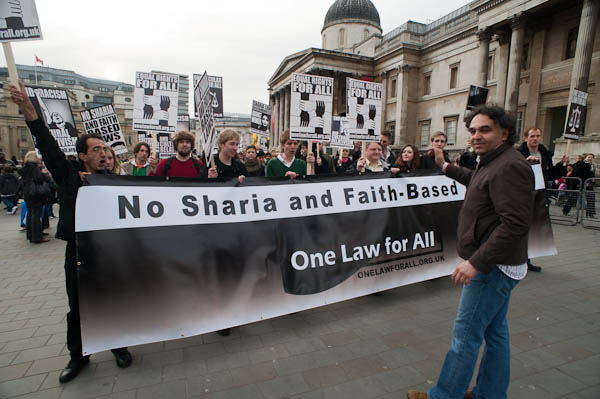
One Law For All – No Sharia Law in Britain – Trafalgar Square
The One Law for All campaign had been launched three months earlier on Human Rights Day by prominent civil rights activists, lawyers, feminists and academics as well as the National Secular Society.
A speaker from the Worker Communist Party of Iran UK Committee
Among those supporting it were many who had previously lived under Sharia, including both Muslims and ex-Muslims, some who had fled their home countries to claim asylum after persecution for political activities including the refusal to adhere to religious dictats.
The organisation objects to the setting up of Sharia courts in the UK, on the grounds that Sharia law is discriminatory and unjust, particularly against women and children. While supporters of religious courts see these as promoting minority rights and social cohesion they see them as a cheap short cut to injustice and call for one secular law to govern all of us.
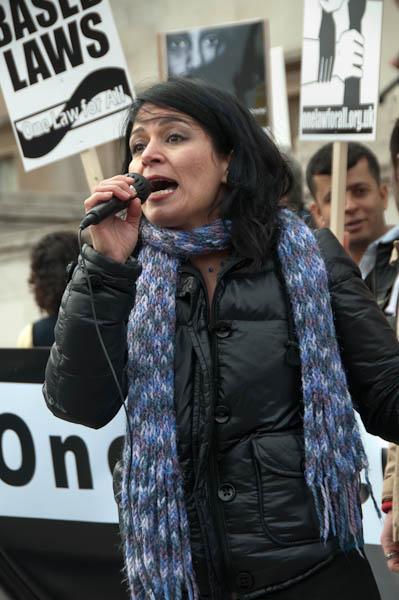
Maryam Namazie
After an hour of speeches One Law for All Spokesperson Maryam Namazie made a final address before the roughly 250 people present marched to a public meeting at Conway Hall. But I left for home instead.
Tibet, Syria, Fukushima, EVF & Lions – Protests in London on Saturday 15th March covered a wide range of issues across the world. Another varied day for me in town.
London March for Freedom for Tibet – Downing St
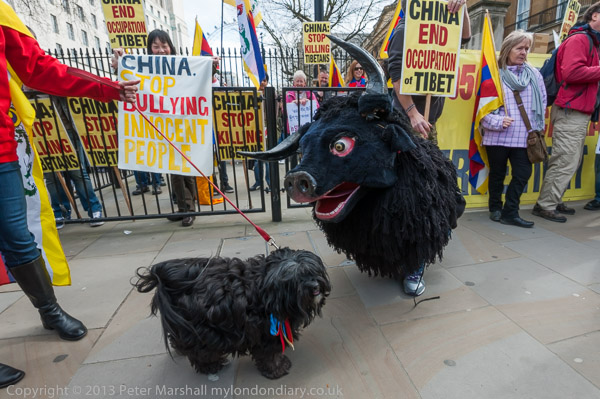
Around a thousand Tibetans and supporters of the Free Tibet campaign met at Downing Street to march to a rally at the Chinese Embassy on the 55th anniversary of the Tibetan National Uprising against oppressive Chinese rule.
Before the start of the march they sang the Tibetan national anthem then marched up Whitehall. I left the marchers at Trafalgar Square to cover another event.
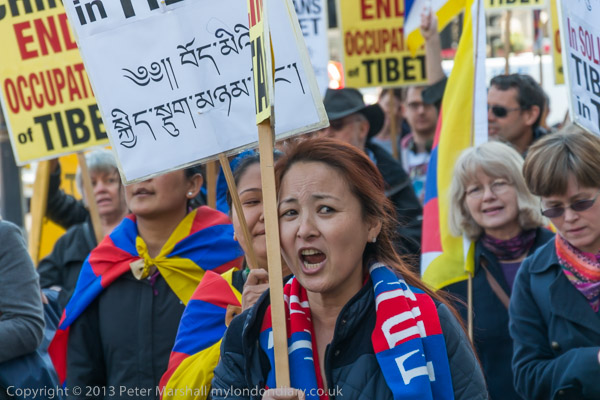
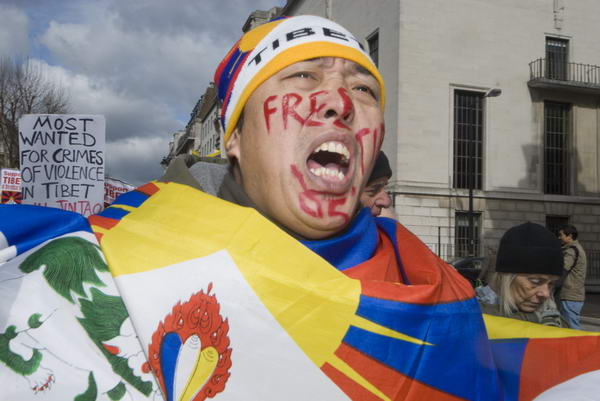
It was a colourful march, with many carrying the Tibetan National Flag or wearing items in its colours. In my post on My London Diary I wrote more about Tibet and the brutal Chinese regime there along with many more pictures. London March for Freedom for Tibet
Syrians March for International Action
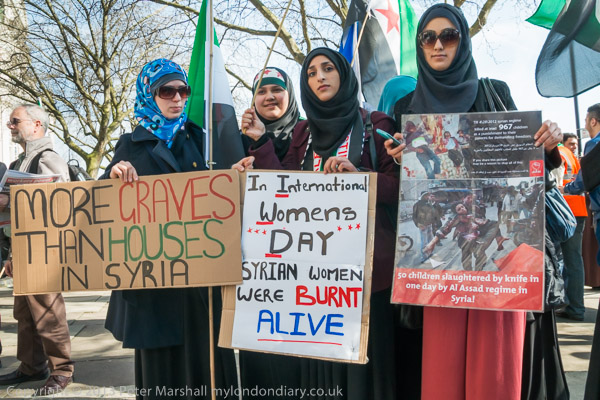
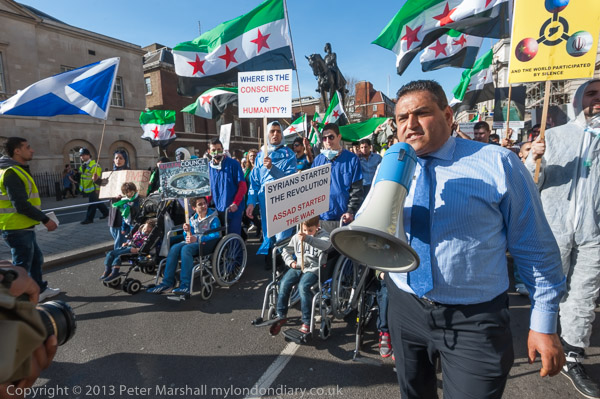
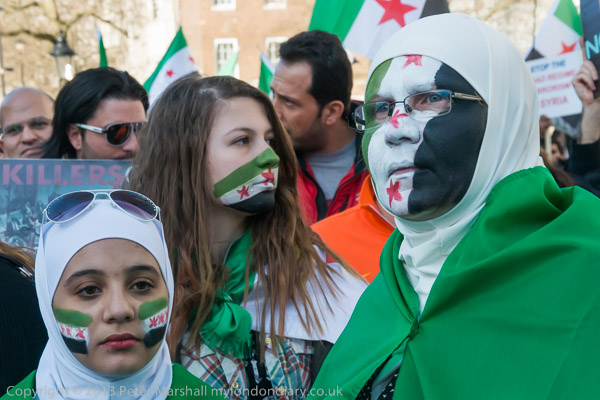
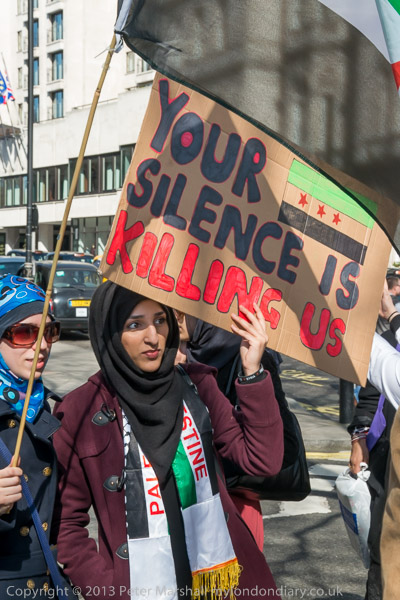
Before going to Downing Street I had gone to Hyde Park Corner where Syrians were gathering at the start of their march to Downing St on the third anniversary of the start of their fight for freedom to show their commitment to the cause and their solidarity with fellow Syrians inside and outside Syria.
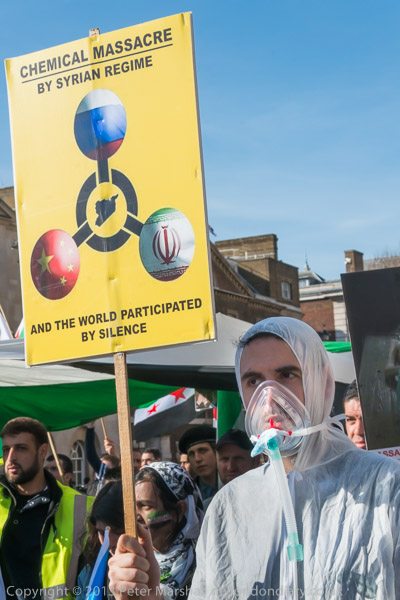
They were calling for the international community to help them get rid of the Assad regime which had murdered over 150,000, seriously injured 500,000 and imprisoned 250,000 people in Syria. 1.5 million refugees had fled Syria and over 4.5 million were internally displaced and recently Assads forces had started using chemical weapons.
I left Piccadilly as the march was about to leave and met them again as they turned into Whitehall and began their protest opposite Downing Street. Unfortunately the west was not prepared to stand fully behind the Syrian revolution, with Turkey very much opposed to the autonomy it was providing for the Kurds and supporting ISIS and Russia stepping in to support Assad.
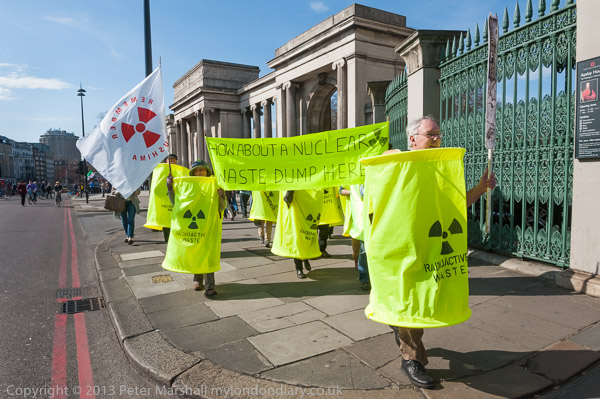
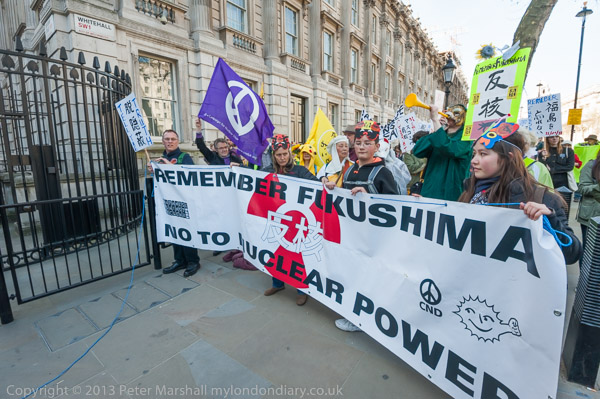
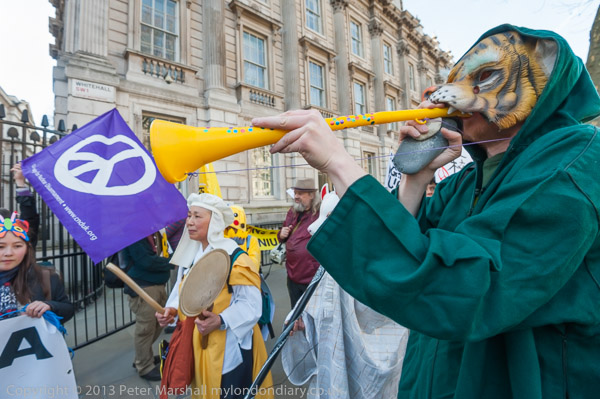
Also at Hyde Park Corner were protesters on the third anniversary of the nuclear melt-down at Fukushima, including many Japanese, marching to remind the world of the dangers of nuclear power and nuclear weapons.
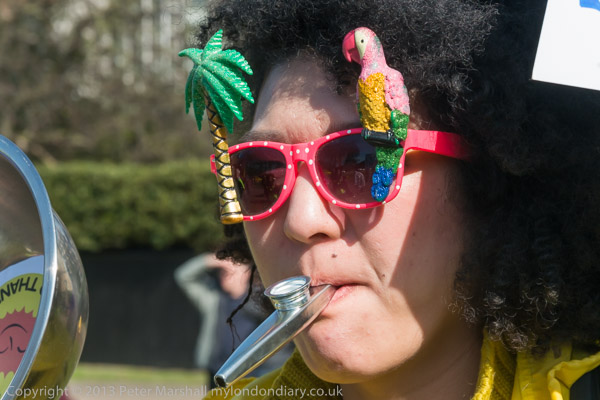
They were led by a group dress as flurescent barrels of roadioactive waste, while others were dressed up in various ways and some carried giant sunflowers. It was a fairly small group but made a colourful impression as it made its way first to the Japanese Embassy.I left them as they arrived there.
I met the group again as it arrived at Downing Street where they stopped for a short protest and photographs in front of the gates before moving on to a rally in Parliament Square. But I had other things to do.
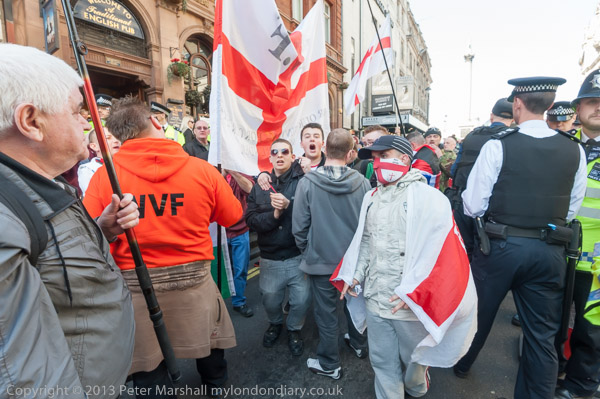
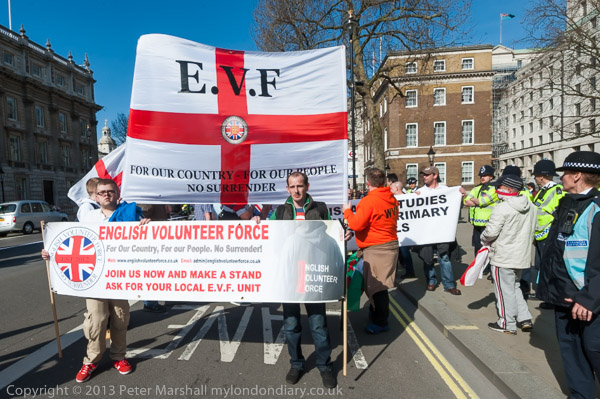
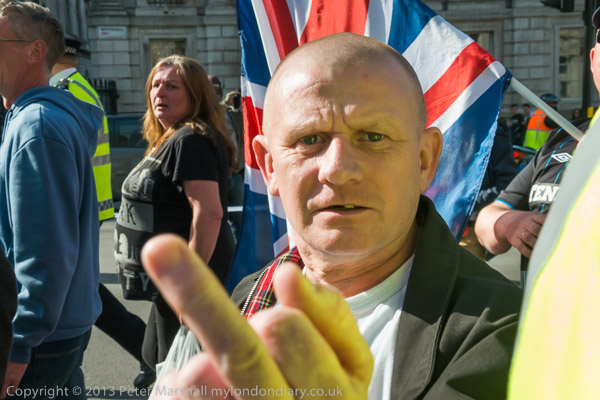
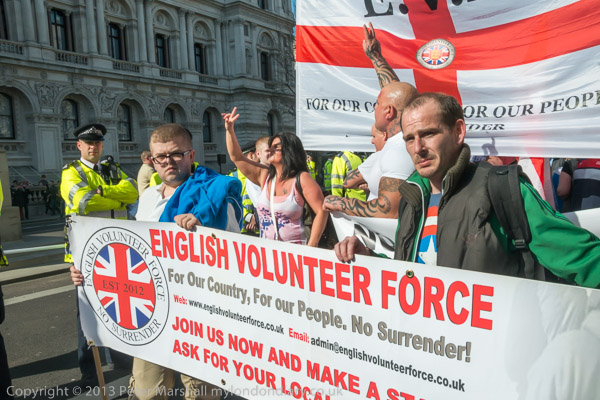
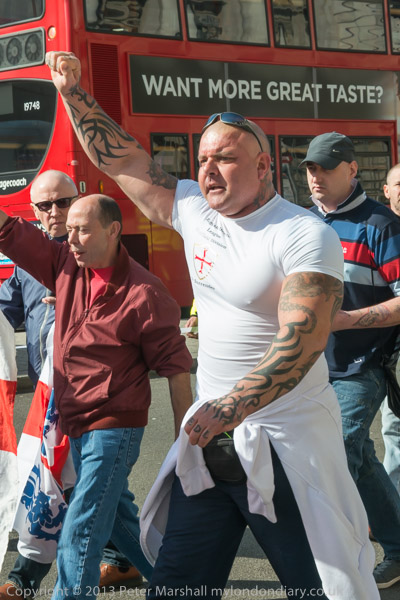
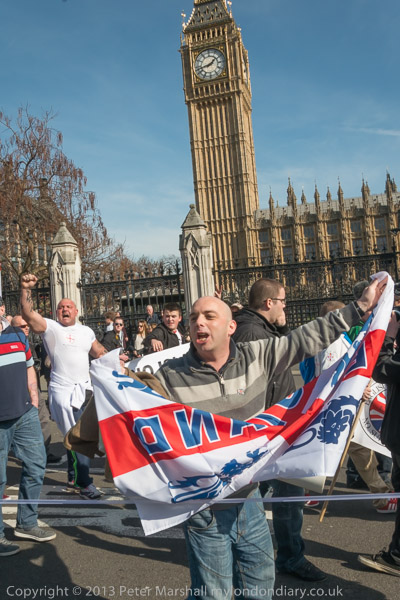
I met the English Volunteer Force, combining a number of right wing ‘patriotic’ groups outside the Lord Moon of the Mall at the top of Whitehall just a minute or two before their march to Parliament Square began from there.
I had a little trouble getting there through a loose line of police who were there to ensure that the anti-fascist opposition to the march were kept well away. The around a hundred EVF supporters were accompanied by rather more police as they marched down Whitehall, but I was able to walk with the and to talk to a few of the protesters who knew me from earlier right-wing events.
They seemed pleased that I was covering the event, but as I reported in 2014, “one man came over and shouted at me, pushing my camera into my face. I complained to police at this assault but they simply pushed me away. Later the same individual came and threatened me, and a police officer did ask him to stop, though it seemed rather half-hearted given that he was clearly breaking the law.“
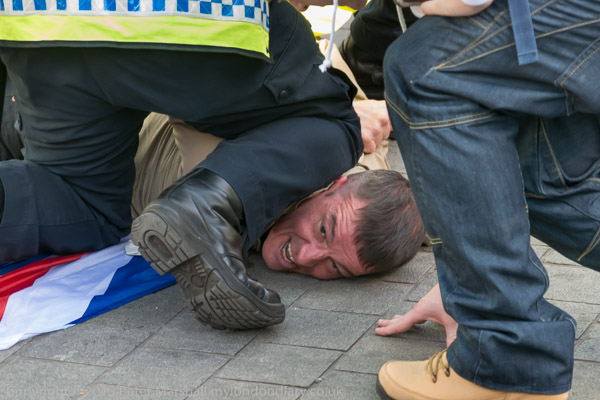
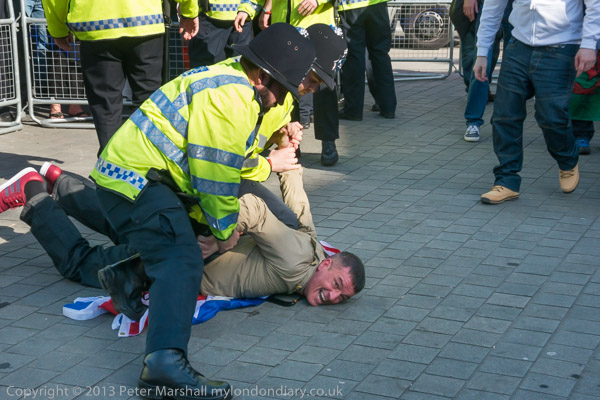
The major police effort was directed against the larger number of anti-facists and was largely successful in keeping the two groups apart and enabling the EVF to hold their rally as planned in Old Palace Yard. I saw several arrests of EVF supporters who tried to attack the anti-fascists. Police had kettled some of these briefly but they were soon allowed to leave so long as they went away from Parliament.
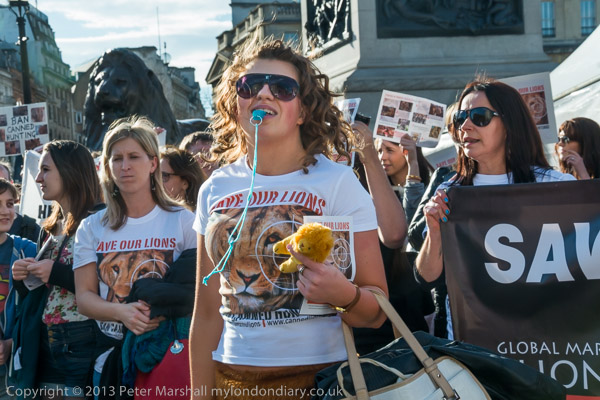
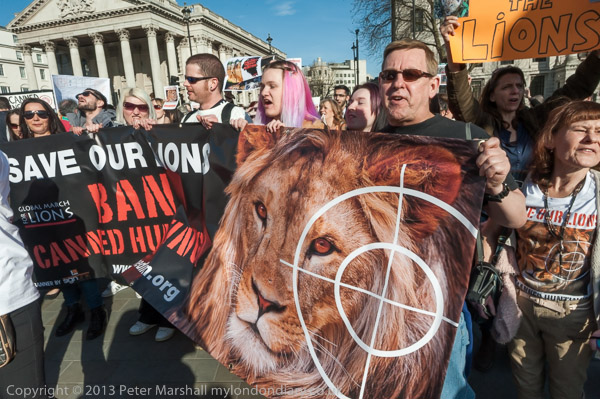
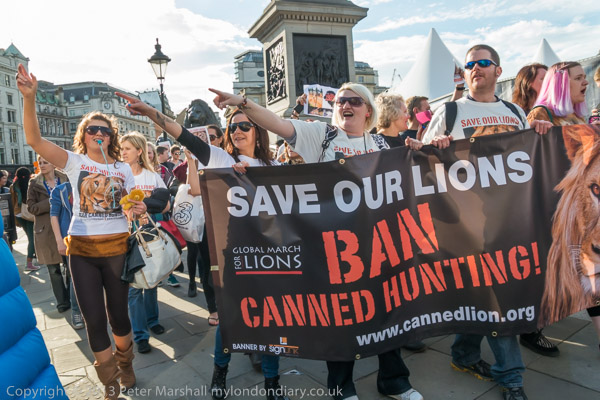
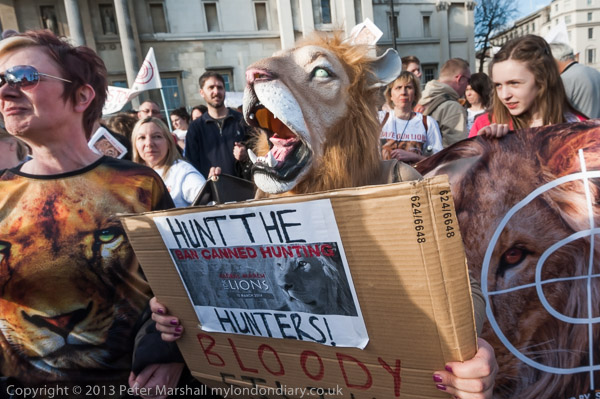
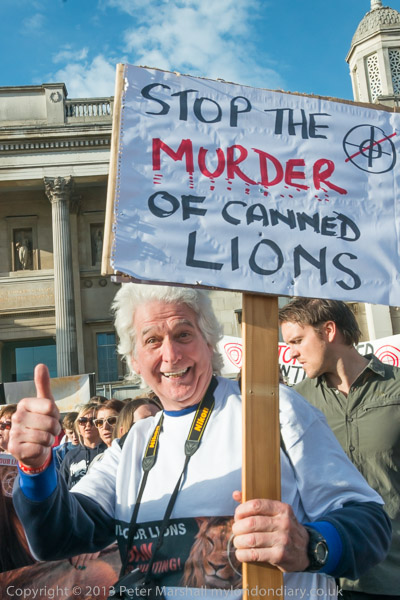
Save Our Lions – Ban Canned Hunting – Trafalgar Square
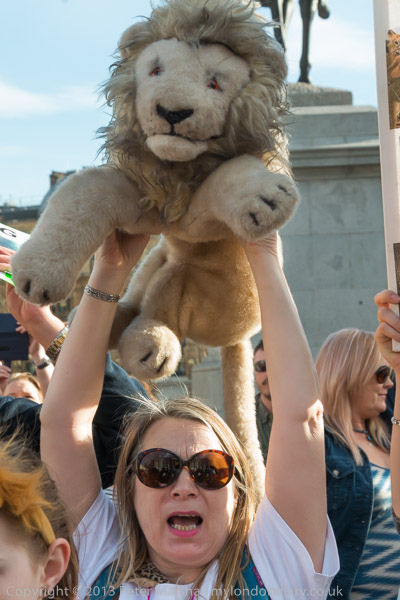
I walked up to Trafalgar Square where several marches from different starting points in London were combining for a protest calling for a ban on the ‘canned’ hunting of captive lions by wealthy trophy tourists.
‘Canned hunting’ is big business in South Africa, with more than 8,000 lions in captivity, bred on lion farms and over 160 lion killing camps. These lions are raised without fear of humans and are often drugged to make them easy kills.
The tourists kill male lions and buy the lions heads stuffed and mounted as trophies. The bones fetch high prices in the Far East for use in ‘medicines’ or ‘aphrodisiacs’ though they have no testable beneficial effects.
Most female cubs are killed at birth with just a few being kept for breeding. The cubs are kept and tourists pay to ‘pet’ and play with them and when they are a little larger pay for the experience of ‘walking with lions’. Once they outgrow this, they are crammed into overcrowded cages in poor conditions until they are mature and can be shot.
Canned hunting also threatens the wild lion population as some are captured to combat the inbreeding in captive lion populations.
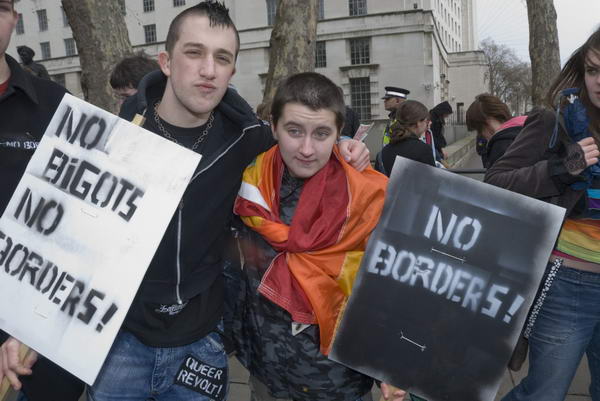
Back on Saturday 22nd March 2008 I had a rather varied day in London, meeting protesters cycling to Aldermaston on my way to photograph a march for freedom in Tibet, then going to a protest against the deportation of a gay man to Iran and finally to a pillow fight.
Bikes Not Bombs: London – Aldermaston
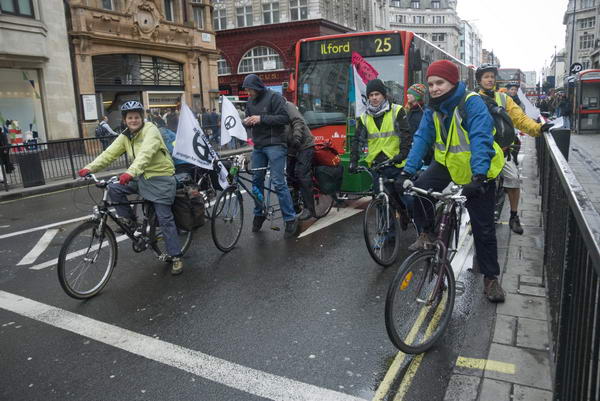
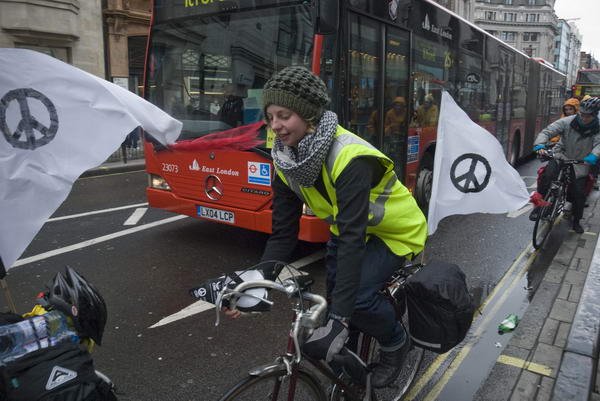
I was on foot and had just come out of Oxford Circus station when I saw the CND Bikes Not Bombs group of cyclists who had begun their ride in Trafalgar Square earlier and were on their way to ride to Aldermaston. Though when I took a few photographs as you can see from the bus they were cycling in exactly the wrong direction, east towards Ilford. Of course they weren’t lost, just trying to attract some attention to the protest, riding with a sound system along London’s busiest shopping street.
I’d thought briefly about taking part myself in the event, as I’d used a bike to get around since I was six, having graduated then from a first a pedal car and then a tricycle. I did own a car briefly when I was around 21, but soon realised it was impractical in cities, expensive, polluting and environmentally unsound and never made the same mistake again.
But for the reasons I listed on My London Diary – sloth, other events, lousy weather and a dislike of early rising – I didn’t join this official ride, though I did cycle on my own from Reading to Aldermaston and back on the following Monday to join the protesters there.
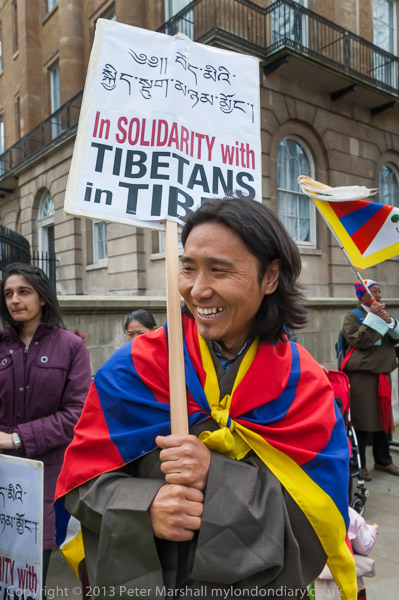
I was on my way to Park Crescent, a short walk north of the Chinese Embassy where Tibetans and supporters of freedom in Tibet were meeting to march through London on the 49th anniversary of the 1959 Tibetan uprising.
Tibet came under effective control of the Chinese government in 1951, when an agreement had been come to the status of Tibet within the recently established People’s Republic of China. In 1949 Tibetan protesters feared the Chinese were about to arrest the 14th Dalai Lama. Protests were at first peaceful but were brutally repressed by the People’s Liberation Army and there was heavy fighting which also involved Tibetan separatists who had been carrying out guerrilla warfare against Chinese forces.
The Dalai Lama fled the country and set up an independent Tibetan government in India, where he still lives – and was awarded the Nobel Peace Prize in 1989. The Tibetan uprising had begun on 10th March 1959 and this day is celebrated each year as Tibetan Uprising Day and Women’s Uprising Day. Since 2009, following protests on 10th March 2008 in Lhasa, the Chinese-controlled authority in Tibet have celebrated the day they fully regained control, 28th March as the national anniversary of Serfs Emancipation Day.
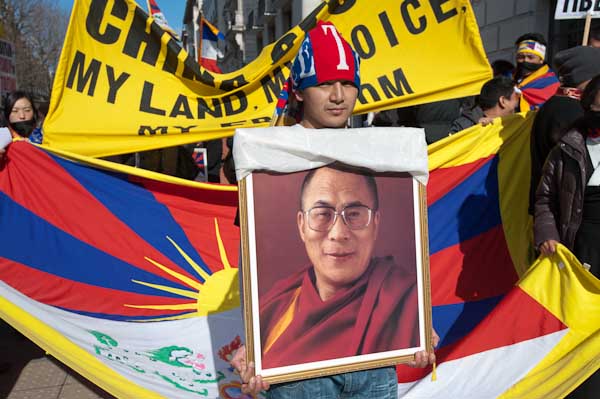
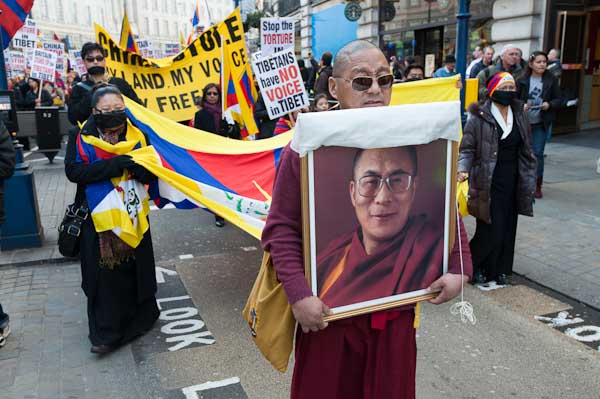
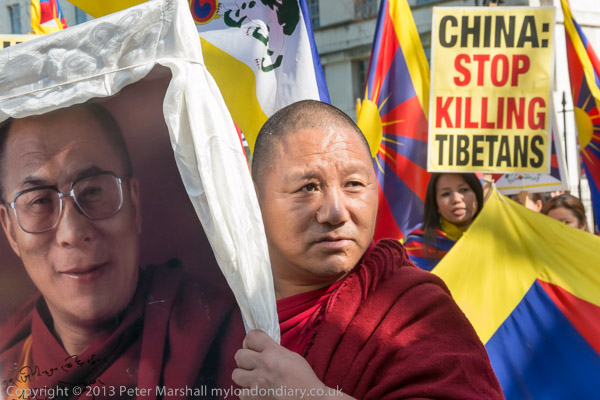
The Tibetan Independence Movement who organise annual protests calling for freedom for Tibet was originally funded and trained by the CIA, but this was withdrawn following Richard Nixon’s visit to China in 1972. And the Dalai Lama who had originally backed it, and who appears as a large photograph carried reverently in the marches, also withdrew support for the independence movement in the 1970s.
It is clear from reports by Amnesty International and others is that there are considerable human rights abuses in Tibet. The 2021 US State Department report listing includes “unlawful or arbitrary killings, including extrajudicial killings by the government; torture and cases of cruel, inhuman, and degrading treatment or punishment by the government; arbitrary arrest or detention; political prisoners; politically motivated reprisals against individuals located outside the country; serious problems with the independence of the judiciary; arbitrary or unlawful interference with privacy; serious restrictions on free expression and media, including censorship; serious restrictions on internet freedom including site blocking; substantial interference with the freedom of peaceful assembly and freedom of association; severe restrictions on religious freedom….”
But of course human rights are not always respected in this country, and we currently have a government which is proposing to withdraw from some international human rights conventions and proposing racist anti-immigrant policies which are deliberately in breach of them.
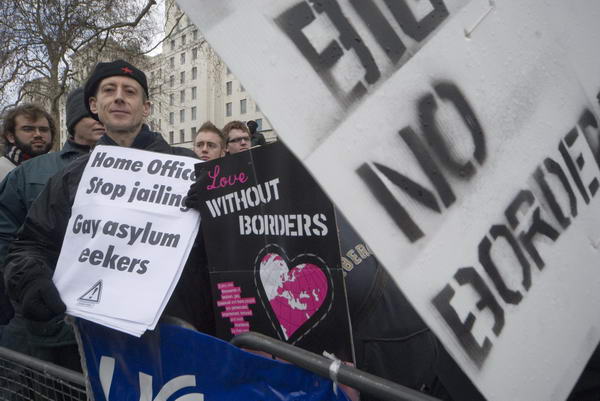
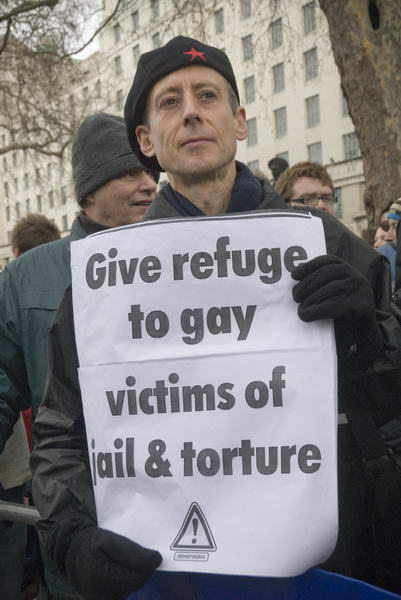
Back in 2008, the Labour government was also riding roughshod over the human rights of some immigrants, setting up a system of large-scale detention of asylum seekers and treating individuals unfairly in a bid to outflank the Tories on cutting immigration through blatantly right-wing policies.
Mehdi Kazemi had come to the UK to study after having been involved in a consensual homosexual relationship in Iran. After his boyfriend was executed for this he became a wanted man in Iran and he went to the Netherlands to apply for political asylum.
This was refused as he had come from the UK and so was not allowed under the 2003 Dublin Agreement. The Uk had refused him permission to stay in Britain and were proposing to deport him to Iran where he would be tried and executed.
His case was just one of many where the Home Office were failing to recognise the need for refugees to claim asylum on the grounds of persecution because of their sexual orientation, and for failing to have accurate and up-to-date information on homophobic persecution in countries to which LGBT asylum seekers might be deported.
Support for Kazemi at this protest and by a number of MPs, MEPs and human rights activists did eventually result in the Home Office agreeing to review his case and he was given leave to remain here in May 2008.
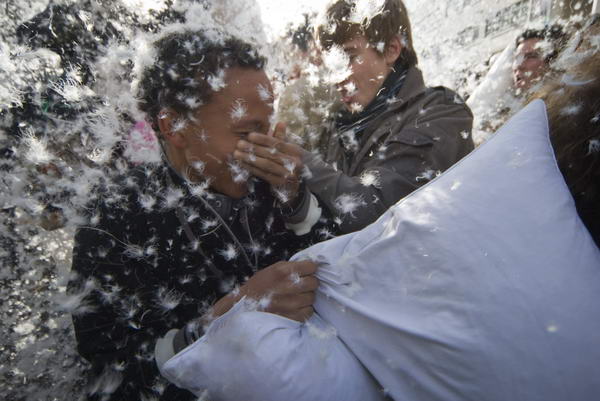
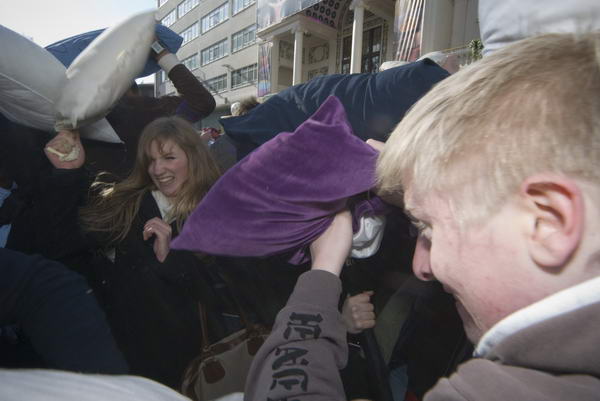
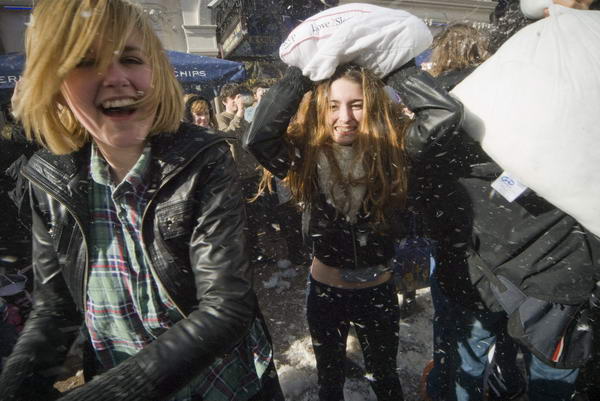
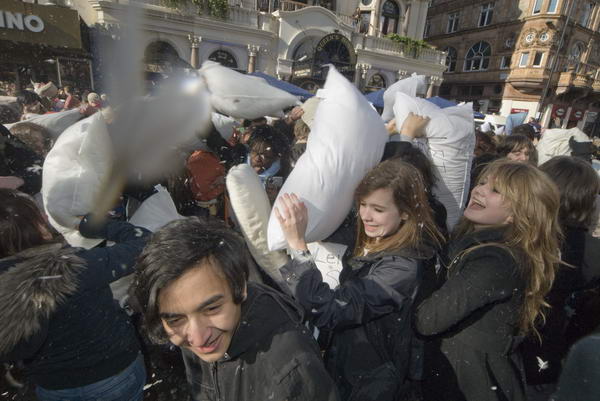
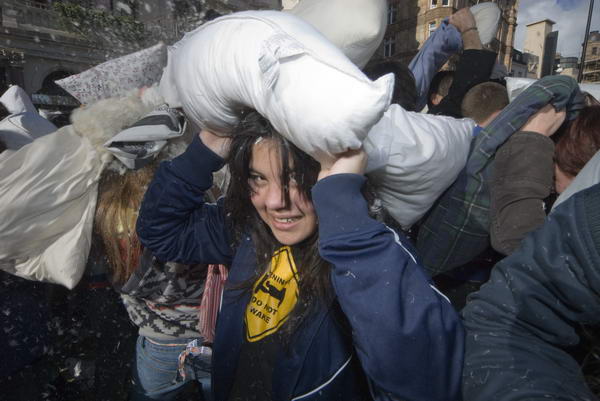
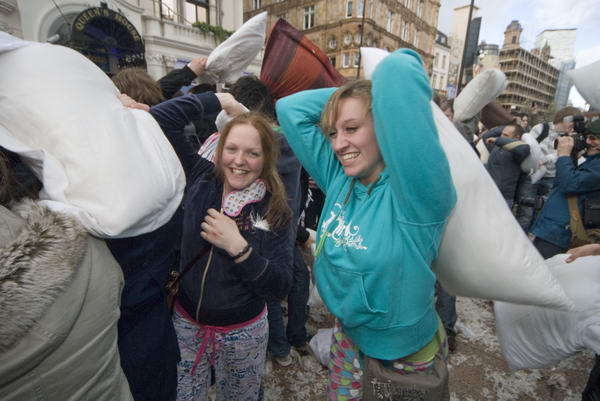
My day ended in very much lighter mood with a pillow fight in Leicester Square, one of many organised in capitals around the world due to kick off at 15.03PM.
I commented: “Of course its a trivial, silly event, but the idea and the kind of organisation involved I think represents something new and exciting, a kind of ‘Demo 2.0’ which we will surely see more of in the future.”
Perhaps this hasn’t had as much impact here in the UK as I had hoped, but I think may have been more important elsewhere in the world. To some extent it has been outgrown as Facebook, Twitter and other social media apps have become more important and even protests organised months and years in advance make use of them.
But it was interesting if rather tricky to photograph, and I got stuck in without a pillow and at some danger to my health, main not “from impact but suffocation when some pillows split open to fill the air with clouds of feathers and feather-dust. At times I wished I was wearing a mask to protect my lungs; keeping my mouth firmly closed and breathing though my nose only stopped the larger particles.“
And I also found the the autofocus on my DSLR was too efficient at focusing on feathers in the air, and until I turned it off and went manual many of my pictures failed to be sharp for the people and pillows behind the screen of feathers.
Later as the pixel count on DSLRs increased and full-frame cameras appeared I found it very useful to work in many situations using just the central ‘DX’ half-frame area of the viewfinder – which would have been very useful to let me see the people and pillows coming for me, but on this occasion I found “chaos really rules taking pictures becomes a press and hope situation. I think some of them do give an idea of what it was like to be there.
Tibet, Syrians, Nuclear Melt-Down, Islamophobia & Lions. Saturday 15th March, seven years ago was another typically varied day of protests on the streets of London which I covered.
London March for Freedom for Tibet
Every year Tibetans and supporters in London protest around the anniversary of the Tibetan National Uprising against Chinese rule in 1959, ten years after the Chinese invasion of the country. In 1959 the Dalai Lama and 120,000 Tibetans escaped to India and established the Tibetan Government in Exile.
In 2014 they met at Downing St for a march to a rally outside the Chinese Embassy in Portland Place, calling for Tibet to be free and in charge of its own destiny again and for an end to the illegal Chinese occupation. They say China is destroying Tibetan culture, and Tibetans are rapidly becoming a minority in their country as thousands of migrants are brought in. Peaceful protests by Tibetans are met by arrests, torture, death and lies, and China’s economic power means western countries adopt what they have called a policy of ‘constructive engagement’ with China, effectively turning a blind eye to the occupation and to human rights abuses in Tibet.
I left the Tibetans shortly after their march went through Trafalgar Square to photograph another protest.
I had met the Syrians before the start of their march close to Hyde Park corner and had left them as they began their march along Piccadilly on the third anniversary of the start of their fight for freedom. I met them again as they came down Whitehall for a rally at Downing St to show their commitment to the cause and their solidarity with fellow Syrians inside and outside Syria.
The marchers from the National Coalition for Syrian Revolutionary and Opposition Forces and the UK Syrian community called for Assad to go and were appealing to the Britain and the international community to help them to get rid of him. Unfortunately although western leaders condemned the actions of the Syrian government they were not prepared to back up their words with action, and it was left to Russia, who backed Assad to determine the future of the country. Few can doubt that the weakness shown by the west over Syria was not a major factor in Putin thinking he could successfully invade Ukraine.
Ukraine is not of course Syria, but it is hard to read the statement made by the Syrians I quoted in my post without seeing some parallels: “Syria, once proud of its contribution to culture, its distinguished history and its beautiful mosques and churches has been overwhelmed with a brutal dictatorship. Syrian homes have turned to rubble, echoing the unheard screams of its inhabitants. The regime has tried to silence the call of freedom by murdering over 150,000, injuring 500,000, imprisoning 250,000, making 1.5 million refugees and caused over 4.5 million internally displaced people within Syria, and recently started using chemical weapons…” Putin in Syria saved a brutal dictatorship, while in Ukraine it seems his aim is to impose a different regime on the country, perhaps less brutal but requiring similar means for it to be imposed.
Earlier I had been at Hyde Park Corner where protesters had gathered on the third anniversary of the nuclear melt-down at Fukushima to march through London, first to the Japanese Embassy and then on to a short stop at Downing St before a rally in Parliament Square.
I photographed them again at Downing St, but had to leave as they marched away to their rally.
The English Volunteer Force is a coalition of various far-right groups and described the protest on Facebook as “highlighting multiple issues from immigration, Islamic hate preachers, sharia law, Sharia zones, Sharia patrol groups, banning the Burhka!, Halal meat, endless applications for more mosques etc.” They insist that they are ‘patriotic’ and are not racist, and claim not to be against Muslims but simply against Muslim extremists, though I found this hard to take seriously.
The march started outside the Lord Moon of the Mall pub close to the Trafalgar Square end of Whitehall where people were just coming out of the pub as I arrived. Police were taking a great deal of trouble to keep anti-fascist who were intent on stopping the march from getting close to it, but were unhelpful when I complained about an assault by one of the protesters who shouted at me and pushed my camera into my face.
A few minutes before the assault I’d mingled with the protesters as they walked down to Downing St, joking with some I knew from earlier right-wing protests I’d covered previously. They seemed pleased that I was covering the event – and although they were clear we differed greatly in our views had personally invited me to some cover some ‘patriotic’ events as they trusted me to report accurately on them.
There were several groups of counter-protesters but generally they were kept apart by police – and by stewards in an official protest area against the EVF opposite Downing St. There were a few arrests both of anti-fascists and of EVF marchers who tried to attack them, and one of the larger groups of anti-fascist was kettled by police on Parliament St.
Finally I walked back up Whitehall to Trafalgar Square, where hundreds had come for the Global March for Lions, marching from different starting points to meet and call for a ban on the ‘canned’ hunting of captive lions by wealthy trophy tourists.
Legal but unscrupulous, ‘canned hunting’ is big business in South Africa, with more than 8,000 lions in captivity, bred on lion farms. Rich visitors pay large sums to take part in lion shoots, where the targets are unable to escape, often raised to be tame and used to human presence and drugged to make them easy kills. Over 160 lion killing camps have been set up in South African in the last 15 years.
As I commented: “It is a terrible way to treat a wild and noble animal, but it also greatly threatens the wild lion population. To prevent the inbreeding that is rife in captive lion populations, wild lions continue to be captured, while the growth in the Asian lion bone trade increased poaching.”