Racist Thugs Not Welcome – 2014

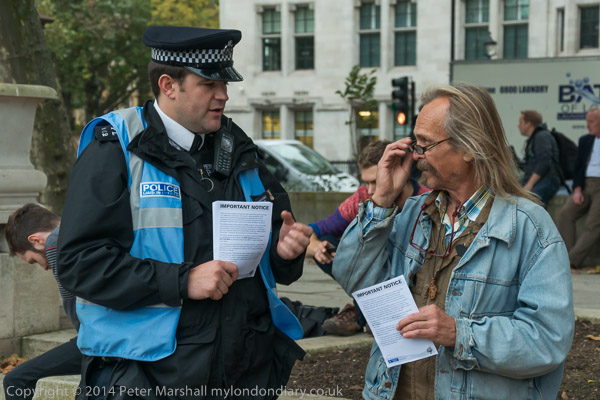
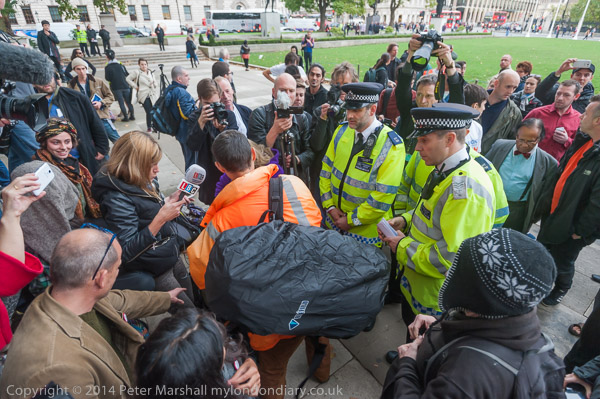
Racist Thugs Not Welcome: Recent events in Southport and elsewhere have brought racist thugs to the attention of politicians and police, but many of the same people have been out on our streets for many years, under various different names – the National Front, BNP, EDL, Football Lads and more, their activities largely ignored by the media and sometimes assisted by police.

Racist Thugs Not Welcome
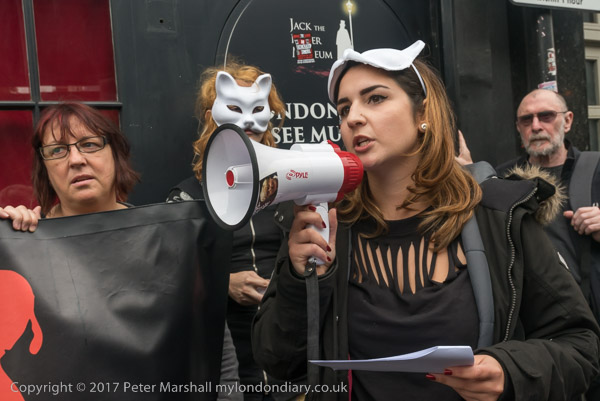
An anti-fascist protester sends a clear message to the South East Alliance as police drag her away

They represent a small rotten mouldy patch on the skin of our society, which inside and at its core is decent and open-minded, but they have been encouraged by the red-top newspapers of the right and also by the speeches and actions of politicians of both our leading parties in their ever rightward rhetoric around “illegal immigrants“, hostile environments and more, and the attacks on Muslims as a whole while refusing to take Islamophobia seriously.

Racist Thugs Not Welcome

As many – including Amnesty International point out, there is no such thing as an illegal immigrant. The term is a “pejorative term of uncertain meaning“. As the Migrant Rights Network puts it more directly, it is “dehumanising, immoral, and contributes to the demonisation of migrant communities.” It is a clearly racist term and one that politicians and media should be treating in the same way as the ‘N‘ word, the ‘P‘ word and others.

Racist Thugs Not Welcome

Ten years ago today, on Saturday 30th August 2014, racist thugs who then called themselves the ‘South East Alliance’ (SEA) came to Cricklewood to protest close to the empty offices they say are used as a recruiting centre by the Muslim Brotherhood.

Racist Thugs Not Welcome

They were a small group, perhaps around 30 people and a much larger group which grew to several hundred organised by ‘North West London United’ had come to oppose their protest.

The office had been that of World Media Services, run by Egyptians who supported the Muslim Brotherhood, an organisation set up in their country in 1928 which had set up hospitals, schools and businesses as well as preaching Islam. In 2012 its candidate Mohamed Morsi had become the first Egyptian president to gain power through a democratic election, but a year later had been overthrown by a military coup and the group was banned in Egypt. World Media Services had, along with other publishing services, produced an unofficial English Language web site about the Brotherhood.

Police were also out in force and from the bus from Kilburn along the route the SEA were to march later saw around a dozen police vans as well as a row of motorcyclists. Outside the offices on Cricklewood Broadway I found people had already started to gather with banners around 90 minutes before the march was due to arrive – and by the time I got on the bus to go back to the start of the march there were around 150 there, with more arriving.

At Kilburn Station it was very different. The SEA were supposed to be arriving from 12 and the march setting off at 1pm, but when I arrived there were only a small group of police. Ten minutes later, SEA leader Paul Pitt (I met him before when he was the Essex EDL organiser) arrived with three others. There were still only four when the march set off at 1.15pm and after photographing them marching I got on a bus back to Cricklewood.

By this time a few SEA protesters had arrived directly in Cricklewood and been directed into a pen on the pavement opposite the offices, and police were keeping the two groups well separated. But around 30 anti-fascists moved towards the march – now up to 11 people – as they saw its flags in the distance. Police stopped both groups in “an uneasy confrontation, with just a double line of police separating the two groups, and photographers milling around.

At one point Paul Pitt who had refused to stop shouting foul abuse was warned by police and then when he tried to push through the police line was handcuffed and cautioned.

But another officer then intervened and he was was freed. Police then escorted the 11 to the pen with the other SEA protesters.

A few minutes later another small SEA march came down a side street, with a few holding up posters, banners and flags. They used the poles holding the flags to try to injure photographers, but police did nothing to stop them.

Later when I was photographing them inside the pen they again used these long bamboo poles as weapons. Rather than warn them or take away the poles, police moved photographers back and set a small line of police to keep us out of range. I complained to the officers but as usual they took no notice.

While I was there a number of the anti-fascists were arrested and taken away by police, but none of the SEA were arrested and the police made it clear to them that they were ‘facilitating their protest‘. The extreme right often complain about “two-tier policing” and this did seem to be a clear example of this, but with the SEA being awarded kid glove treatment.

More at South East Alliance ‘Racist Thugs Not Welcome’.


FlickrFacebookMy London DiaryHull PhotosLea ValleyParis
London’s Industrial HeritageLondon Photos

All photographs on this page are copyright © Peter Marshall.
Contact me to buy prints or licence to reproduce.
Childrens’ Day at Notting Hlll – 2010

Childrens’ Day at Notting Hlll: Sunday 29th August 2010 was the first day of the two day festival though it’s called Childrens’ Day there are also plenty of adults there and sometimes having some rather adult fun. You will fine rather more pictures of children in the collection on My London Diary than in this post.

Childrens' Day at Notting Hlll
(C)2009 Peter Marshall – Right -Click and select ‘Open Image in new tab’ to load a larger version in a separate web page.

It does have the advantage of being just a little less crowded than the main Monday of carnival, when even though I try to avoid the most crowded places where it’s hard to move let along take photographs, but there is perhaps just a little less excitement and mayhem.

Childrens' Day at Notting Hlll

But by 2010, the carnival had begun to lose its charm for me and was no longer one of those dates entered into my calendar at the beginning of the year, and I had decided only to go on the slightly quieter (it’s relative) day of the year.

Childrens' Day at Notting Hlll

The sound is always a vital part of carnival, but can be a threat to health. When the beat makes your internal organs jump up and down and you can see the tarmac vibrating you know its really a bit too loud. And it could take several days for the pain in my ears to dissipate and normal – or at least near-normal – hearing return.

Childrens' Day at Notting Hlll

When I was young I seemed to recover but I think now the changes could well be permanent. My hearing isn’t perfect and some of those high notes are long gone, but its good enough to get by most of the time and I don’t want to risk it more.

I used to laugh a bit at the TV crews at carnival wearing ear protectors and think they were missing the spirit of it, but at least they were sensible. But I don’t think I could have produced the work I did wearing them.

2010 wasn’t the final carnival I attended – and one year I might just go again though I’ve not done so since 2011. But if I do I think I’d probably only stay long enough to drink a can or two of Red Stripe and probably take few pictures.

As I commented on My London Diary I took only one DSLR camera – the Exif Data remings me it was a Nikon D700 – and one lens, a Sigma 24.0-70.0mm f/2.8 and I worked all the time in full-frame Raw mode. The great majority of the pictures were made within 1-2 metres from the subject so people were very aware a photographer was pointing a large camera and lens at them, though many were too engaged in what they were doing to act up for the camera.

I was pleased with the pictures, but the small versions on My London Diary don’t really do them justice. So I’ve included a large one at the top of the post. Like some of the other pictures it was taken in a heavy shower that sent many of those watching rushing for cover but the carnival continued. If you double click on the top image it should open at a larger size on its own page in your browser.

More on My London Diary at Notting Hill Carnival.


FlickrFacebookMy London DiaryHull PhotosLea ValleyParis
London’s Industrial HeritageLondon Photos

All photographs on this page are copyright © Peter Marshall.
Contact me to buy prints or licence to reproduce.


Sipson Celebrates Third Runway Victory – 2010

Sipson Celebrates Third Runway Victory: On Saturday 28 August 2010 residents of Sipson and the neighbouring Middlesex villages of Harmondsworth and Harlington held a Family Fun Day to celebrate the successful end to their campaign against BAA’s plans to create a larger airport at London Heathrow by building a new runway and destroying their villages.

Sipson Celebrates Third Runway Victory

One of the first acts when the new Tory Lib-Dem coaltion came into power was to cancel the plans for the expansion of Heathrow by the building of a third runway, which had been agreed under New Labour. It was perhaps one of the few positive results from the coalition between the Conservatives and the Liberal Democrats, with leading MPs from both parties at least those in the London area having earlier campaigned against the plans.

Sipson Celebrates Third Runway Victory

The fight against expansion had been long and hard, involving what leading campaigner John Stewart of HACAN described as ‘a ‘Victory Against All The Odds’, putting “success down to three main things: the building up of what it calls the largest and most diverse coalition ever to oppose expansion of an airport in the UK; a willingness to challenge the economic case for expansion; and a determination by the campaigners to set the agenda.”‘

Sipson Celebrates Third Runway Victory
Local MP John McDonnell talks with John Stewart of HACAN and then London Assembly member Murad Qureshi

In 1999 the owners of Heathrow, the largely Spanish owned BAA plc – the company formed by the privatisation of the British Airports Authority and now the Heathrow Airport Holdings Limited, had pledged at the Terminal 5 inquiry that they would never ask for a third runway. But only three years later they had brought forward massive plans for airport expansion, including a third runway.

Sipson Celebrates Third Runway Victory

And although again they had promised they would not call for a sixth terminal the plans soon included one, along with ground areas for standing aircraft and a relocated motorway spur that would cover most of Harlington, Sipson and Harmondsworth, as well as subjecting a further area of West London to increased aircraft noise and excessive pollution. BAA even declined to rule out making a request for a fourth major runway at Heathrow.

The first large-scale protest march took place in June 2003 and their were many further actions, including a mass protest at Heathrow in May 2008 and many smaller events, lobbies and meetings. The Climate Camp had come to Harmondsworth in 2007, Greenpeace who bought a local orchard as their ‘Airplot’ and direct action campaigners such as ‘Plane Stupid’, ‘Camp for Climate Action’ and ‘Climate Rush’ all gained publicity for the case against expansion.

John Stewart of HACAN

But Heathrow didn’t give up, and kept up the lobbying to persuade the Tories to give the project the go-ahead. The government set up an Airport Commission with a employee of one of Heathrow’s major owners having to leave his job with them to chair it. As intended this came up with preferring expansion at Heathrow in 2015, and this was adopted as government policy in 2016. But when it became clear that Heathrow would have to come up with the money, their plans were cut down – and in 2017 they dropped the plans for Terminal Six.

Geraldine Nicholson, Chair of NoTRAG

After a judicial review in 2020 ruled that the plans for expansion were unlawful because they had not taken into account the commitment to combat climate change, the government announced it would not appeal. But Heathrow did, took the case to the Supreme Court who in December 2020 lifted the ban so the planning application could go ahead.

Covid then came to the rescue, with the drop in passenger numbers meaning plans were put on hold. But according to Wikipedia, from which some of the above information comes, “as of June 2024 the third runway is still planned with a projected completion date around 2040.”

Back in 2010, although celebrating victory, campaigners and local residents were clear that the fight had to go one, and it has done. It seems rather unlikely giving the increasingly clear nature of our global climate catastrophe that Heathrow will ever get a third runway. Although the celebrations in 2010 may have been somewhat premature I think it was then that Heathrow really lost the battle. Since then we have been seeing the thrashings of a dying great beast.

You can read more about the Family Fun Day, organised by Hillingdon Council and NoTRAG on 28 August 2010 and see many more pictures on My London Diary at Sipson Celebrates Third Runway Victory.

Climate Camp at Blackheath 2009

Climate Camp at Blackheath – Wednesday 26th August 2009

On Wednesday 26 August 2009 I joined Climate Campers who were meeting at several locations around London to go to an as yet unspecified location for that year’s Climate Camp.

I’d chosen to go with the Blue Group who were meeting at Stockwell Underground Station in south London, chosen as one of the starting points because of the events of 22 July 2005.

As I wrote back then, on “the escalator at Stockwell station it’s hard not to shiver at the memory of those videos showing Jean Charles de Menezes strolling down to catch his last train, and police coming though the gates in pursuit. There is a memorial to him outside the station, including a great deal of information about the event and the misinformation and covering up by police.

Arriving there I found around 80 Climate Campers and half a dozen police being filmed and photographed by around 30 media and nothing very much happening. It was like that for the next couple of hours, during which we all went to a local park to have our sandwiches and some played games.

Eventually around 2pm we were called back to the station where we followed the leader who had a blue flag onto a train and off at Bank, where all trooped to the DLR, alighting at Greenwich. From here we trudged up the hill to Blackheath Common. Police were keeping a low profile, watching from a distance.

When we arrived the site on the common was still being secured and some people were hard at work erecting fences and vital resources – such as toilets. Legal observers were holding a meeting, but others were just making use of some comfortable furniture on the site or listening to singers.

I tried to photograph as many of these activities as I could.

In earlier years I’d had problems with Climate Camp and in particular their media policy. As I wrote “Press photographers visiting the site will be required to sign a media policy that most of us would find unacceptable and to be accompanied while on the site by a minder. (It can’t of course apply to the police photographers in their helicopter or cherry picker.) The policy appears to be driven by a few individuals with paranoid ideas about privacy and a totally irrational fear of being photographed. It really does not steal your soul!

On the Wednesday the camp was still being set up and everyone had unfettered access. But this year in any case I’d actually been invited to take part as part of the media team for the camp – and on my later visit was provided with a sash to identify me as such – though I did still come across a little of that paranoia even when wearing it.

But there were also so many people I knew and others who recognised me from from other events that I felt very much at home walking around the site. The main problem I had was trying to keep moving rather than being drawn into lengthy conversations.

There was a meeting to welcome us all to the Climate Camp, after which the preparations for the camp continued, with water supplies being laid on, even baths plumbed in, various larger tents being erected as well as a large banner CAPITALISM IS CRISIS.

I had other things to do on the Friday and Saturday, but was able to return for a day at the camp on the Saturday, to make a record of the camp’s activities and of the campers at work and play, as well as some of the visitors who came to see what was happening. You can see my accounts and pictures from both days on My London Diary.

More on My London Diary:
Climate Camp: Blue Group Swoop
Climate Camp: Setup
Climate Camp: Saturday


FlickrFacebookMy London DiaryHull PhotosLea ValleyParis
London’s Industrial HeritageLondon Photos

All photographs on this page are copyright © Peter Marshall.
Contact me to buy prints or licence to reproduce.


Notting Hill Carnival – Monday 25 August, 2008

Notting Hill Carnival: Here with some minor alterations is the piece I wrote for My London Diary about Carnival in 2008, with a few of the pictures. You can see many more pictures from the day on My London Diary.

Notting Hill Carnival

There isn’t a great deal more to say about Notting Hill, although it did seem to be significantly less crowded than in recent years (some sources estimate attendance yesterday as three quarters of a million), and I walked easily through a number of areas that have usually been filled with seething masses. There did also seem to be fewer lorries and groups on the circuit than in previous years, but the big mas bands at the core of the event were out in force as usual.

Notting Hill Carnival

Perhaps there are just too many other events on over the weekend and people were tired. Perhaps with the difficult economic times there is less funding for groups and less commercial interest (though Unison were still behind South Connections.) The weather wasn’t great either, though it didn’t rain.

Notting Hill Carnival

Of course there are still many people who won’t go to carnival because they are scared of possible crime and violence. Police have reported that they had over 300 crimes reported to them at carnival on Monday and made around 150 arrests – considerably up on last year. With a reported 11,000 officers on duty it was still probably the safest place in the country, although I saw no sign of the metal detectors that were intended to prevent knifes being carried. In around five hours I only saw one brief incident as a young man was escorted away. The only knives I saw were plastic.

Notting Hill Carnival

Of course carnival did go through troubled times. Its genesis was as a black response to the race riots in Notting Hill fifty years ago, although it only became a parade around the streets in 1965. In 1976 there was serious fighting when 3000 police attempted to take over and control the event and had to withdraw. Since then there have been various attempts to control and even stop carnival in Notting Hill, including the organising of alternative events elsewhere. And carnival itself has become much more managed and along with this, much safer to attend

Notting Hill Carnival

I first went to carnival and took pictures around 20 years ago and have returned every year except one when a knee injury made it impossible (I made an effort, limping from home to our local station where I collapsed, unable to climb the footbridge, and decided I really wasn’t up to it.)

In October 2008 I took part in a show in the Shoreditch Gallery at the Juggler (now long close) in Hoxton Market, confusingly half a mile away from the site in Hoxton St where Hoxton Market is held and I was photographing Sunday’s ‘1948 Street Party‘. Hoxton Market is immediately to the north of the Holiday Inn on Old Street. The show, still online, was called ‘English Carnival’ and was a part of the East London Photomonth 2008.

The other 3 photographers, Paul Baldesare, Dave Trainer and Bob Watkins, showed pictures from ‘traditional’ English carnivals – like the Hayling Island one at the beginning of this month (August 2008), but my pictures were from Notting Hill – which now with other carnivals drawing their main inspiration from the Caribbean and elsewhere around the world is very much a part of the English carnival scene.

The work I chose for this show was a black and white portfolio of 20 images which had been previously published in ‘Visual Anthropology Review‘, where it accompanied a scholarly essay on carnival by distinguished academic, George Mentore along with his perceptive comments on my pictures.

You can see many more of my pictures from Notting Hill Carnival in two albums, Notting Hill Carnival – the 1990s and Notting Hill Panoramas -1992 and from later years on the August pages of My London Diary.


FlickrFacebookMy London DiaryHull PhotosLea ValleyParis
London’s Industrial HeritageLondon Photos

All photographs on this page are copyright © Peter Marshall.
Contact me to buy prints or licence to reproduce.


‘Tommy Robinson’ & Poland

Tommy Robinson’ & Poland: Five years ago today, Saturday 24th August 2019 I covered two protests in London against the extreme right. Anti-fascists opposed a protest outside the BBC after far-right activist Stephen Christopher Yaxley-Lennon, better known as Tommy Robinson was jailed for violating a court order, and there was a protest at the Polish Embassy in solidarity with LGBTQ+ people in Poland whose lives are under threat from the right-wing Law & Justice Party and the Catholic Church.


Anti-fascists outnumber ‘Free Tommy’ Protest

'Tommy Robinson' & Poland

Robinson was sentenced to 9 months for 3 offences outside Leeds Crown Court which could have led to the collapse of a grooming gang trial, and has previous convictions for violence, financial and immigration frauds, drug possession and public order offences.

'Tommy Robinson' & Poland

The claim by his supporters that he was imprisoned for ‘journalism’ and in some way is a defender of free speech is simply ludicrous. He knew he was breaking the law and pleaded guilty.

'Tommy Robinson' & Poland
Free Tommy supporters shout at the opposition

All journalists know that they have both rights and responsibilities and we are governed by the laws of the country, particularly with respect to the publication of material. Good journalists often publish material that some people would not want published, citing the public interest in doing so, but in this case Robinson’s actions were clearly against any public interest and could have led to a serious criminal prosecution having to be abandoned.

'Tommy Robinson' & Poland

Two groups of protesters came to oppose the protest outside the BBC by Robinson supporters. I met the London Anti-Fascist Assembly and others at Oxford Circus and accompanied them as they marched up Regent Street towards the BBC.

Police marched with them too, and stopped them a few yards from the Robinson protest. When we arrived there were only a handful of ‘Free Tommy’ supporters waiting on the steps of All Souls Langham Place. They shouted back as the Anti-Fascists shoted at them and a police officer warned one of the women about her language as the police moved the Anti-Fascists back to the other side of the road

After some considerably shouting at the extreme right they were pushed by police into a pen on the opposite side of the road. Here they continued to shout at the extreme right protesters and a long list of EDL and Far Right convicted sex offenders was handed out.

Shortly after a large group of Stand Up to Racism supporters arrived to stand beside the Antifa protesters. A couple of police horses came as well as a few more Free Tommy supporters who had marched from Trafalgar Square protected by a police escort.

But theirs was still a small protest, greatly outnumbered by those opposed to them.

The stand-off shouting match continued, with police largely keeping the two groups apart. I left for 45 minutes to cover another protest, and returned to find little had changed, but saw one anti-fascist being led away to a police van after being arrested for refusing to get off the road when ordered by police.

More pictures on My London Diary at Anti-fascists outnumber Protest for ‘Tommy’.


Solidarity with Polish LGBTQ+ community – Polish Embassy

Conveniently the Polish Embassy where protesters had gathered to show solidarity the LGBTQ+ community in Poland is only a few minutes walk from the BBC

LGBTQ+ people in Poland are currently living in fear, their lives threatened under the rule of the right-wing Law & Justice Party which together with the Catholic Church have accused them of being a threat to children and to Poland itself.

Some local authorities have declared ‘LGBT Free Zones’ and nationalists groups have actively attacked members of the LGBTQ+ community and Pride events.

Among those who came to speak at the rally alongside Polish gay rights activists were Nicola Field of Lesbians and Gays Support The Miners, Peter Tatchell and Weyman Bennett of Stand Up to Racism

Solidarity with Polish LGBTQ+ community


FlickrFacebookMy London DiaryHull PhotosLea ValleyParis
London’s Industrial HeritageLondon Photos

All photographs on this page are copyright © Peter Marshall.
Contact me to buy prints or licence to reproduce.

South Tottenham & Stamford Hill

South Tottenham & Stamford Hill: Continuing my walk on Sunday 8th October which had begun at Seven Sisters Station from where I had walked south down the High Road – the pictures start some way down my post Abney Park & South Tottenham.

South Tottenham & Stamford Hill
Shop window, High Rd, South Tottenham, Haringey, 1989 89-10c-13

On the High Road in South Tottenham I found another of the 20 images which were a part of my web site and book ‘1989’, ISBN: 978-1-909363-01-4, and above is the page from that.

The Emerald Bar, St Ann's Rd, 1989 South Tottenham, Haringey, 1989 89-10d-63
The Emerald Bar, St Ann’s Rd, South Tottenham, Haringey, 1989 89-10d-63

I turned from the High Road into St Ann’s Road and a short way down came to this sign for the Emerald Bar. Now disappeared this was obviously an Irish bar (the Shamrock as well as the name was a clue!) and only a short walk from St Ignatius Catholic Church on the High Road. It appeared to be in a part of the yard of St Ignatius Primary School.

The brickwork at the entrance and the rather curious design of the sign both had a curiously amateur feel. On the large noticeboard below the bar’s name I could just make out the words STRIPPER and HERE; there were a few other letters but nothing I could make sense of.

Stamford Hill, 1989 89-10d-52
High Rd, Stamford Hill, 1989 89-10d-52

I took another picture on St Ann’s Road (not online) but soon returned to the High Road and continued south, where this road becomes Stamford Hill, past Phililp Kosher Butcher at 292 (picture not online) crossing the busy road to photograph some rather grander houses which I think are actually at 11-15 High Road on the border of Haringey and Hackney.

The House of Value, Ravensdale Rd, Stamford Hill, Hackney, 1989 89-10d-53

Back on the other side of the street was the turning into Ravensdale Rd where above Beeny’s Fresh Fish is still one of London’s best-known ‘ghost signs’. When I made this picture most of the signs for Yager’s Costumes were covered by two large billboards and only the YAGER’S, BUY YOUR WINTER COATS HERE AND SAVE MONEY and THE HOUSE OF VALUE could be read.

The House of Value, Ravensdale Rd, Stamford Hill, Hackney, 1989 89-10d-54

I think the Yagers who owned Yager’s Costumes were probably a part of the Yager family, Jews with Austrian/Romanian parents who came to England at some time before the 1901 census. By 1911 they were living not far away in Downs Park Road Hackney. Harry Yager started a number of businesses including a timber merchants and Park Royal Coachworks. He had a hall named after him at Stamford Hill Synagogue. But the family history has no mention of a clothing company.

A company, Yager’s (Stamford Hill) Ltd, Company number 23013, was apparently registered in 1928 but dissolved by 1932 but Companies House records available online do not go back far enough to find information.

Benny’s Fresh Fish is now a shop offering shoe repairs and key cutting and the rest of the shop is a café.

Rookwood Court, Rookwood Rd, Castlewood Rd, Clapton, Hackney, 1989 89-10d-43

I continued down Stamford Hill and then turned east along Clapton Common. On reaching the grass and trees I went to there left along Castlewood Road where after some rather dreary postwar blocks I came to this fine 1930s block of flats, Rookwood Court, on the corner of Rookwood Rd. These private flats with a view (for some) across the common were built in around 1936. New windows installed around 2011-12 doubtless make the flats more comfortable but have lost some of the appeal of the building.

Next door to them you can see the tower and spire of the Church of the Good Shepherd in Rookwood Road, now the Georgian Orthodox Church. More about that in the next post.


FlickrFacebookMy London DiaryHull PhotosLea ValleyParis
London’s Industrial HeritageLondon Photos

All photographs on this page are copyright © Peter Marshall.
Contact me to buy prints or licence to reproduce.

Abney Park & South Tottenham

Abney Park & South Tottenham: I ended my walk on Sunday 1st October 1989 (which had begun at Finsbury Park) in Abney Park Cemetery, one of London’s ‘Magnificent Seven’ garden cemeteries laid out after an 1832 Act of Parliament encouraged the establishment of private cemeteries in the outer suburbs of London as graveyards in the inner city were dangerously overflowing.

Abney Park Cemetery was laid out on the grounds of Abney House and its neighbours and named after Sir Thomas Abney, Lord Mayor of London in 1700–1701, who had Abney House built for him in 1676 – it was demolished for the cemetery which opened in 1840.

Those involved with setting up the cemetery were members of the Congregational Church but it was set up on a wholly non-denominational basis. For the next 40 years was the burial place of choice for many leading non-conformists. Among those who had played a part in the landscaping of the area around Abney House long before it became a cemetery was the prolific Congregational hymn writer Isaac Watts, many of whose hymns are still well-known and loved, and there is a statue of him in the cemetery.

Unusually, as well as a cemetery it was also established as an arboretum and retains a magnificent collection of trees and a significant example of landscape design. From 1880 it was run strictly on commercial lines, but when the company went into administration in the 1970s the cemetery became hugely overgrown. In the 1980s it was taken over by Hackney council, but at first they did little to improve its condition other than establishing it as a nature reserve. More recently it has been considerably improved with the help of lottery funding.

Rev Henry Richard, (1812–1888), the Apostle of Peace, Abney Park Cemetery, Stoke Newington, Hackney, 1989 89-10c-42
Rev Henry Richard, (1812–1888), the Apostle of Peace, Abney Park Cemetery, Stoke Newington, Hackney, 1989

According to WikipediaHenry Richard (3 April 1812 – 20 August 1888) was a Congregational minister and Welsh Member of Parliament between 1868–1888. Richard was an advocate of peace and international arbitration, as secretary of the Peace Society for forty years (1848–1884). His other interests included anti-slavery work. “

The memorial over his grave was erected by public subscription in 1891, and his statue in the Square in Tregaron where he was born was unveiled in 1893.

Young Angel, Abney Park Cemetery, Stoke Newington, Hackney, 1989 89-10c-31

I can tell you nothing about George Clayton other than is recorded here, but I was attracted both by the young angel and surrounding flowers in this relatively recent example of a memorial, shortly before the cemetery fell out of use.

I didn’t spend long in the cemetery on this occasion, walking through it to get to Stoke Newington Station as by the I was in a hurry to get home. I took around a dozen pictures in my walk through the park but have so far only put two of these online. But I did return to it on my next walk a week later – and have been back quite a few times since.

My next walk began from Seven Sisters Station a week later, and I walked from the Victoria Line exit south down the High Road.

Motor Auctions, High Rd, South Tottenham, Haringey, 1989 89-10c-22

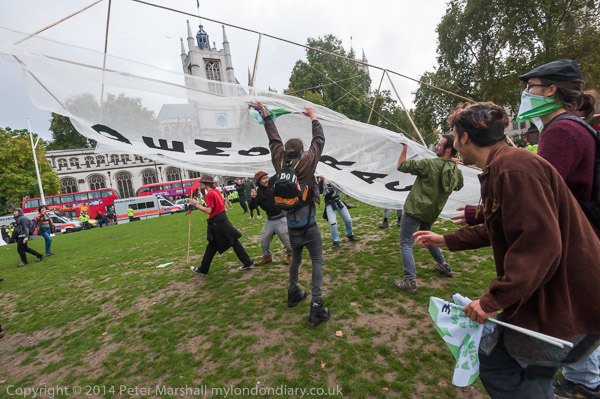
Sometimes I came across what seemed to me, at least in a photograph, a kind of visual conundrum and this was one of them. Probably standing where I was to take the picture I could have sorted out why what appears to be a view through a rather smeared tranparent sheet in some places shows what is behind it but elsewhere replaces it with a different view. Kind of seeing through a glass darkly. And what is this strange structure which holds this sheet. I can’t now tell you. But the empty can of Ginger Beer spiked on the fence is quite clear.

Posters, High Rd, South Tottenham, Haringey, 1989 89-10c-23

Turkey and Africa meet on the posters here. The Türkiye Devrimci Komünist Partisi – Revolutionary Communist Party of Turkey – is, according to Wikipedia, “a clandestine communist party in Turkey” and “Not to be confused with Revolutionary Communist Party (Turkey).Kahrolsun Fasist Diktatorluk! I think translates as ‘Down With Fascist Dictatorship’ and presumably means that of Turkey rather than Haringey Council.

Underneath is a poster for and event at Dougie’s Nightclub in the Lower Clapton Road, which would appear to feature sounds from Africa and Zimbabwe in particular. Dougie’s was in a function room for the White Hart pub, which later became the Clapton Cinematograph before becoming a night club, Dougie’s in 1983. Later it was the Palace Pavilion nightclub where stabbings and shootings made this road known as ‘Murder Mile’

And underneath these, other posters which little or almost nothing can be seen. It was a well-used post, just south of the railway bridge and then just to the side of a small shop or cafe, the former station ticket office, since demolished to provide a path to South Tottenham Station.

The Dutch House, High Rd, Crowland Rd, South Tottenham, Haringey, 1989 89-10c-24

The Dutch House public house at 148-156 High Road, Tottenham has recently been renamed The Station House and is now an Irish pub. This area was developed around 1880-1900 and this building dates from shortly after 1894. Locally listed it was not built as a pub, but possibly as a music hal. It it has some incredible Venetian and Moorish detailing as this picture shows. It is by far the most interesting architecture in the area and I think should be given proper listing.

The Dutch House, High Rd, Crowland Rd, South Tottenham, Haringey, 1989 89-10c-26
The Dutch House, High Rd, Crowland Rd, South Tottenham, Haringey, 1989

Originally this building was completed with a spire above that incredible corner tower which perhaps seems oddly truncated now. But of course I would have had to stand much further back to take the picture were it still there. As well as a pub, the building also housed clothing factories and fashion shops.

More from this walk in later posts.


FlickrFacebookMy London DiaryHull PhotosLea ValleyParis
London’s Industrial HeritageLondon Photos

All photographs on this page are copyright © Peter Marshall.
Contact me to buy prints or licence to reproduce.

Sean Rigg Memorial – 4 Years

Sean Rigg Memorial – 4 Years – Brixton Tuesday 21st August 2012

Sean Rigg Memorial - 4 Years

There is a lengthy piece on Wikipedia about the death of Sean Rigg whic states that his “case became a cause célèbre for civil rights and justice campaigners in the United Kingdom, who called for “improvement and change on a national level” regarding deaths in police custody and the police treatment of suspects with mental health issues.”

Sean Rigg Memorial - 4 Years

It goes into some detail of the circumstances of his death and the various enquiries that followed but fails to properly represent the huge effort investigating and campaigning by his family, particularly by his sister Marcia Rigg, which brought to light the many lies and failures of the police.

Sean Rigg Memorial - 4 Years

In 2023, the Independent Office for Police Conduct (IOPC) made an unprecedented apology in a letter to Marcia Rigg which you can read in full with her response on the Inquest site.

Sean Rigg Memorial - 4 Years

The Inquest post also has a clear brief summary of Sean’s arrest and the detention that killed him ad the failures of the IPCC investigation, along with a comment by Inquet’s director Deborah Coles, as well as the background to the case.

Mona Donle, Sean Rigg’s mother and his sisters Marcia and Samantha lead the march

I’ve written on a number of occasions about the case – and of other suspicious deaths in police custody, including others involving Brixton Police Station, in particular the death of Ricky Bishop in 2001. Here I’ll simply write about the events in Brixton on the evening of Tuesday 21st August 2012.

Fortunately I did not want a seat in the Assembly Hall inside Lambeth Town Hall as every one was filled for the memorial event four years to the day after his death. By the time this was over people were standing around the side of the hall and others waiting outside for the vigil.

Around 200 people lined up behind Mona Donle, Sean Rigg’s mother and his sisters Marcia and Samantha to march with the Sean Rigg banner to the memorial tree outside Brixton Police Station. Some held placards and carried flowers with his sisters carrying a framed portrait of Sean.

People laid flowers and lit candles at the memorial tree and put up Sean’s portrait and there were some speeches.

Mona Donle, a Brixton resident described a disturbing incident the previous Sunday in Windrush Square when three police officers violently assaulted a man who was clearly disturbed and acting unpredictably: “One officer choked him by holding his forearm across the man’s throat. Then another officer stamped on him. The foot was on his face and then the man passed out – we kept telling them to call an ambulance.”

As I noted, “The police account reads differently, making no mention of the violence and suggesting that the ambulance arrived ‘approximately’ five minutes after the arrest.” An eye witness told me it was around 20 minutes before the ambulance came and that the man had only just come round.

Sean’s mother spoke briefly and then Mona Donle went in to take in a formal complaint about the incident she had seen. At first I watched them from the doorway but when others piled in I joined them.

It was very crowded inside the police station lobby. The complaint was handed in, and a signed and dated copy was returned to the complainant.

But they demanded to hear from a senior officer about what had happened, and after a few minutes Superintendent David McLaren came out, gave a short statement and tried to answer some of the questions, though clearly no-one was satisfied with his answers. The lobby was very crowded and getting hot and it was soon time for me to leave.

It didn’t seem likely that there would be much more happening. One of two people had tried to stir up a little trouble but the Rigg family had made it clear that they wanted this to be an occasion where respect was show for Sean and with others had helped to quieten things down.

More pictures on My London Diary at Sean Rigg Memorial – 4 Years.


FlickrFacebookMy London DiaryHull PhotosLea ValleyParis
London’s Industrial HeritageLondon Photos

All photographs on this page are copyright © Peter Marshall.
Contact me to buy prints or licence to reproduce.

Highbury to Stoke Newington Church Street – 1989

Highbury to Stoke Newington Church Street: Continuing my walk from Sunday 1st October 1989 which had begun at Finsbury Park and continued to the Nags Head before returning to Finsbury Park. The previous post ended on Blackstock Road.

House, Kelross Rd, Northolme Rd, Highbury, Islington, 1989 89-10b-46
House, Kelross Rd, Northolme Rd, Highbury, Islington, 1989

Blackstock Road continues south into Highbury as Highbury Park and I walked some way down this before turning east into Northolme Road. Highbury Park was developed in the 1870s but the houses in Northholme Road date from the 1890s. This and neighbouring roads were built on the Holm Estate and the LCC applied for permission to develop these roads in 1890.

North Holme is near Helmsley, North Riding of Yorkshire and although it has been described as a “township” is a small cluster of buildings, more a farm than even a village close to the River Dove. “The Revd Joseph Parker, DD (1830-1902) … lived in 1866 at a house in Highbury Park he called ‘North Holme‘. The sites of Northolme Road, Sotheby Road and Ardilaun Road were on part of the grounds of his house.” He was the “Minister of the City Temple, 1869-1901, author, preacher and twice
Chairman of the Congregational Union
“.

This house is at the eastern end of Northolme Road, where it meets Kelross Road and is a detached villa rather larger than the terraces along long the rest of the road.

Clissold Park, Stoke Newington, Hackney, 1989 89-10b-35

From here Kelross passage leads to Highbury New Park, a street with villas built from around 1850. But I pressed on across it into Collins Road, making my way towards Clissold Park and Stoke Newington Church St.

Clissold House was built as Paradise House for Quaker City merchant Jonathan Hoare, a noted philanthropist and anti-slavery campaigner and brother of banker Samuel Hoare Jr. The water here was a stretch of the New River which brought clean drinking water from Hertfordshire to London, but I think at some point the river here was culverted, although the bridge taking Stoke Newington Church St across it remained until the 1930s.

The park was first created as grounds for this GradeII listed house. Hoare got into financial difficulties and lost the house and grounds, which passed through several owners before being owned by Augustus Clissold. When he died in 1882 the estate was bought by the Ecclesiastical Commissioners who intended to make money from developing it as housing, but the Metropolitan Board of Works were persuaded in 1887 to buy it to be a public park.

By 1989 the house and park were in a poor condition and Clissold House was put on English Heritages ‘at risk’ register in 1991. Since then both park and house have been restored with the aid of lottery money.

Park Crescent, Spensley Walk, Stoke Newington Church St, Stoke Newington, Hackney, 1989 89-10b-23

Grade II listed Park Crescent at 207-223 Stoke Newington Church Street was built in 1855, but by the 1980s was in a very dilapidated state and became home to around 90 squatters alongside only a handful of legal tenants. The houses were then owned by Hackey council who planned to sell them to housing associations.

Park Crescent, Spensley Walk, Stoke Newington Church St, Stoke Newington, Hackney, 1989  89-10b-11
Park Crescent, Spensley Walk, Stoke Newington Church St, Stoke Newington, Hackney, 1989 89-10b-11

Three motorbikes parked outside one of the houses of Park Crescent. You can clearly see the poor state of the buildings which need Acrow props to support the porches, with the steps at right being roped off to block access to the unsafe building.

Park Crescent now looks very neat and tidy compared to this.

Shops, 185-189, Stoke Newington Church St, Stoke Newington, Hackney, 1989 89-10c-51

The building at 185 Stoke Newington Church St had been sold when I made this picture in October 1989, but The Modern Man, a hairdressers, was still alive in another shop on the street, shown in my next picture.

This row of buildings with ground-floor shops is still there and like the rest of the area has become rather better kept and is now that epitome of gentrification, an estate agents which has also expanded into 187.

Perhaps surprisingly the 5 Star Cleaners at 189 is still a dry cleaners, though under a different name.

The Modern Man, Stoke Newington Church St, Stoke Newington, Hackney, 1989 89-10c-52

I found The Modern Man still in business at 121 Stoke Newington Church St at the corner with Marton Road. It didn’t survive the gentrification of the area and the shop has passed through several hands as ‘frere jacques’, ‘search and rescue, ‘Ooh Lou Lou Cakery’ and ‘The Caffeine Fix’.

I don’t know how long Tanya’s Cafe-Diner Take away lasted but around 2009 it became Lydia Cafe Restaurant and retained the name Lydia until recently becoming ‘The Tiffin Tin.’.

My walk was almost at an end, but I’ll share are few more pictures in a later post.


FlickrFacebookMy London DiaryHull PhotosLea ValleyParis
London’s Industrial HeritageLondon Photos

All photographs on this page are copyright © Peter Marshall.
Contact me to buy prints or licence to reproduce.