Filipino Health Workers, Coal Line, Tax Dodgers, Biafra & National Gallery – 2015

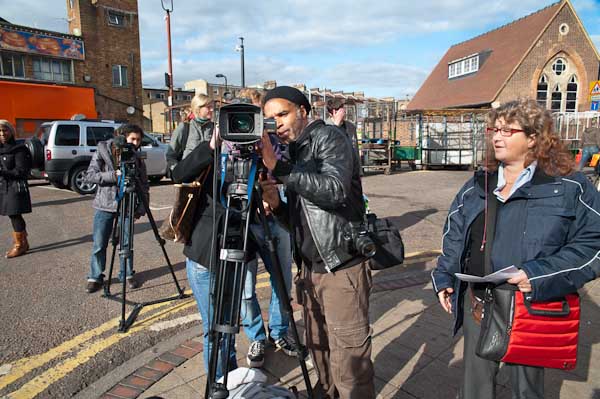
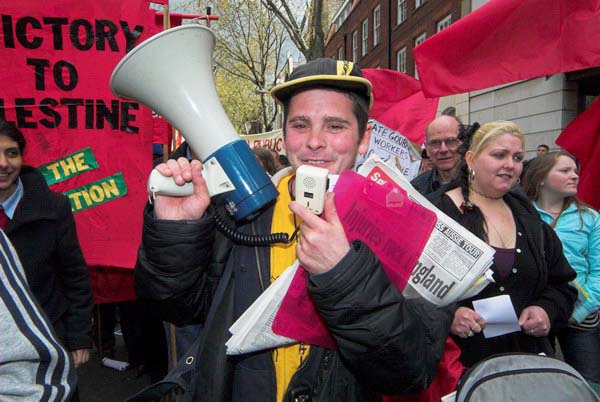
Filipino Health Workers, Coal Line, Tax Dodgers, Biafra & National Gallery: Ten years ago today, Saturday 30th May 2015, I began at the Daily Mail offices in Kensington where Filipino NHS workers were protesting about scandalous insults the rag had made, then went to Peckham to view the proposals for a linear park confusingly named and promoted as the ‘Coal Line’. From there I came back to central London for a UK Uncut banner drop on Westminster Bridge against tax dodgers, a Trafalgar Square protest by Biafrans and finally a rally there by staff on strike at the National Gallery.


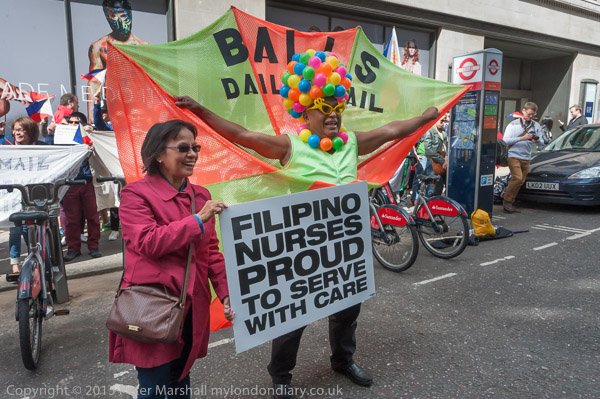
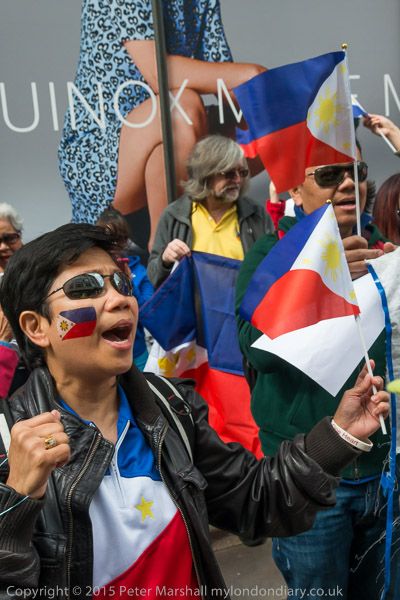
Filipino Nurses tell Daily Mail to apologise – Kensington

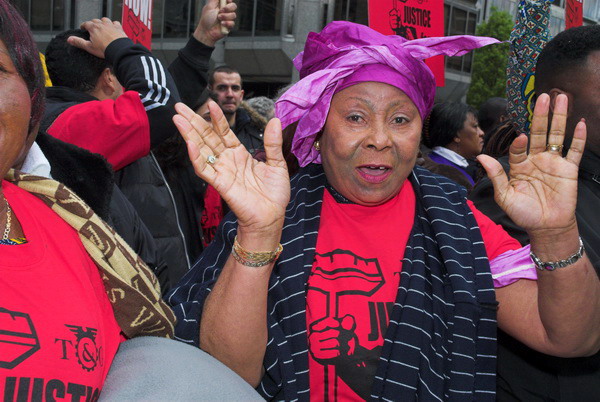
Filipino health workers came to protest atthe Daily Mail over its reporting of the Victoriano Chua case which insulted Filipino NHS workers as a whole despite the vital contribution they make to the NHS. The demand the Daily Mail apologise for its racist comments and recognise the contribution that they make.

As a patient in intensive care in 2003 I had been very impressed by the care and attention I received from a Filipino nurse, and others when I was on the general ward had all been “competent, committed and caring” – along with those of other nationalities. We should be training more British nurses and improving conditions to keep them working for the NHS, but without staff from abroad at all levels the NHS would have collapsed long ago.

More pictures at Filipino Nurses tell Daily Mail apologise.


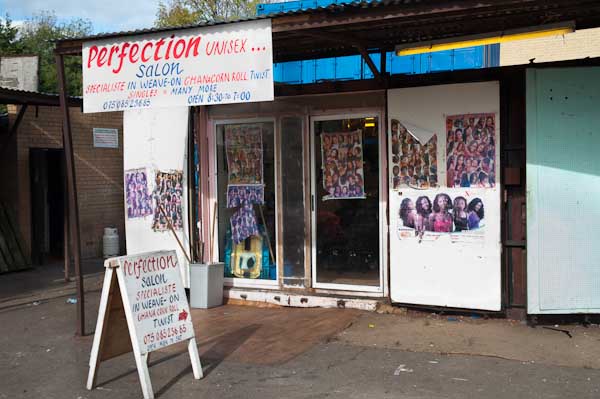
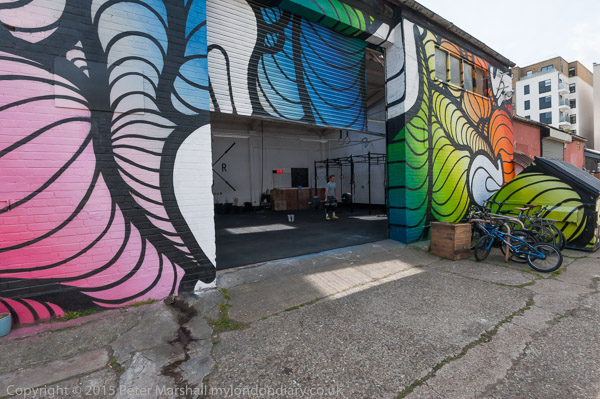
Walking the Coal Line – Peckham

The Chelsea Fringe festival began in 2012 as an unofficial fringe, an alternative gardens festival to the annual Chelsea Flower Show and has since become an international event. Anyone can take part so long as “it’s on topic, legal and interesting, it can go in the Fringe, no matter how outlandish or odd it may seem.” It is “unsponsored, unfunded, unbranded and wholly independent, with no medals or judging committees. It relies entirely on volunteer efforts and survives on its registration fees.

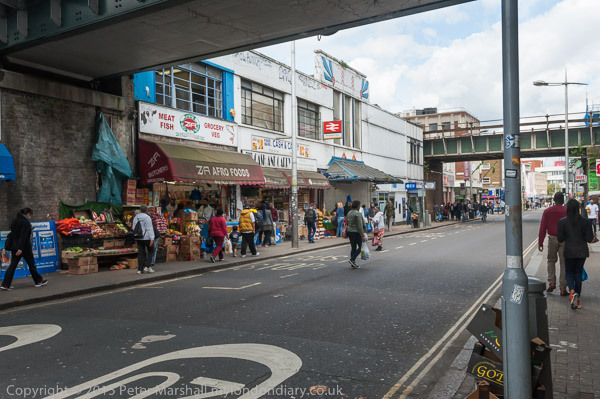
Rye Lane – the walk would start here opposite ZA Afro Foods and Peckham Rye Station

The Coal Line project began in 2014 and became a registered charity backed by many local people as well as TfL, Southwark Council, The Peckham Settlement, Sustrans and the Mayor of London for a 900 metre linear park linking Peckham Rye Station on Rye Land with Queens Road Peckham station.

Derek Jarman memorial garden

It seemed a good idea and would provide useful local short cuts for walkers and cyclists as well as a link in longer leisure walks at a relatively low cost. But its advocates over-hyped it tremendously, comparing it to the ‘High Line’ in New York.

Copeland Park

I wrote in 2015:

“More interesting than the Coal Line are both the Bussey Building in the former industrial estate Copeland Park and the multistorey car park. Saved from demolition by a locals, the Bussey Building, reached by an alley between shops in Rye Lane, houses small businesses, artists, faith groups, art spces and a rooftop bar.The multi-storey car park on its upper floors now has a cafe, a local radio performance space and another rooftop bar, next to the Derek Jarman memorial garden, as well as better views than the Bussey across Peckham and to central London.

Cossall Walk

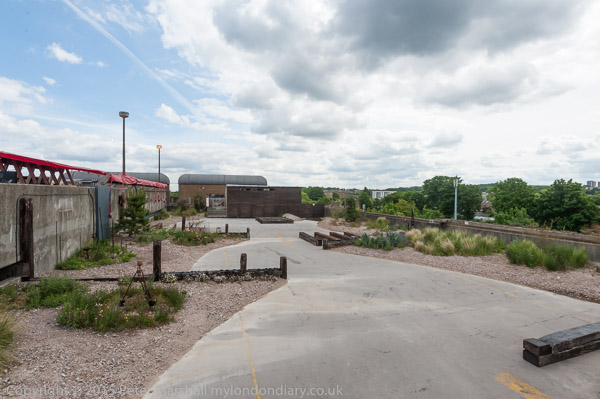
Part of the Coal Line is already open to the public as a small nature reserve, left by the railway line after a scheme for a massive inner-ring road was fortunately abandoned. Its legacy is a hefty wall along part of the edge of the service road by the Cossall Walk line of flats.”

More from along the Coal Line and other parts of Peckham at Walking the Coal Line.


UK Uncut Art Protest – Westminster Bridge

Protesters at Waterloo – Rich get Richer, Poor Get Poor – Osborne and Cameron

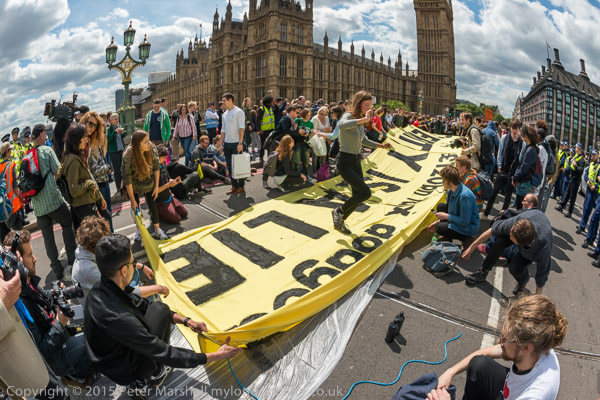
UK Uncut supporters marched from Waterloo to Westminster Bridge where they spread a large piece of cloth on the roadway and painted a banner telling Parliament that collecting dodged taxes would bring in more than cutting public services.

Painting the banner on Westminster Bridge
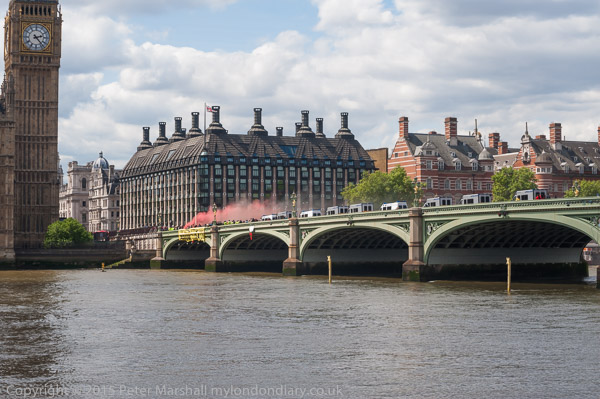
The message on the banner was £12 bn more cuts £120 bn tax dodged – AUSTERITY IS A LIE’.

I had to run to the southern end of the bridge and then rush down the Albert Embankment to photograph the banner hanging from the bridge along with the smoke from flares. It was perhaps the least interesting photograph of the event and it would have been rather better had they put it over the opposite side of the bridge to have the Houses of Parliament as a background.

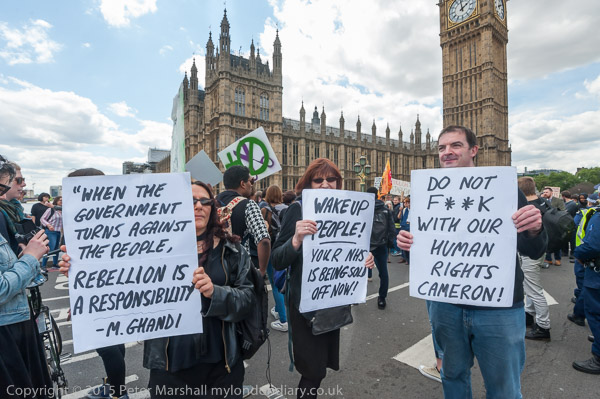
While this was happening on Westminster Bridge, there was another protest against Tory plans to repeal the Human Rights Act closer to Parliament which I was sorry to have missed, with just a few people still standing on the roadway.

More pictures at UK Uncut Art Protest.


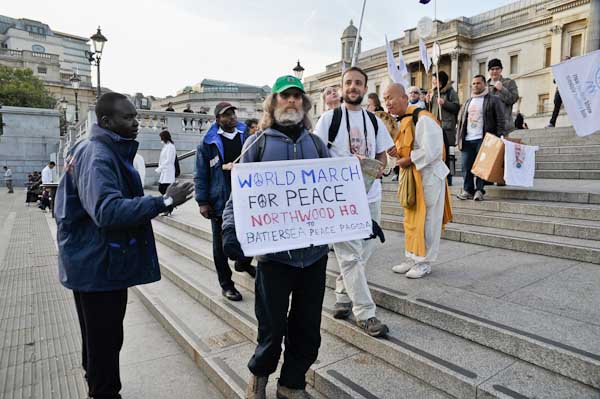
Biafrans demand independence – Trafalgar Square

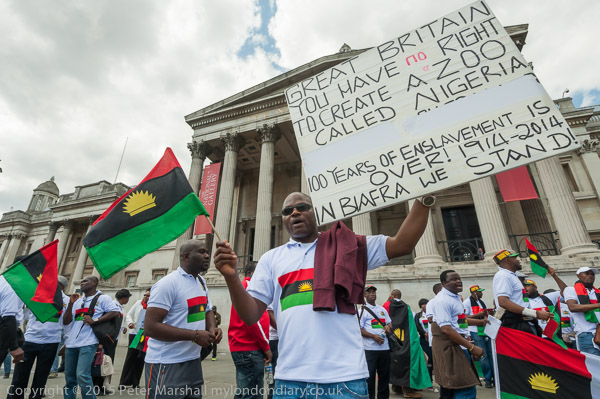
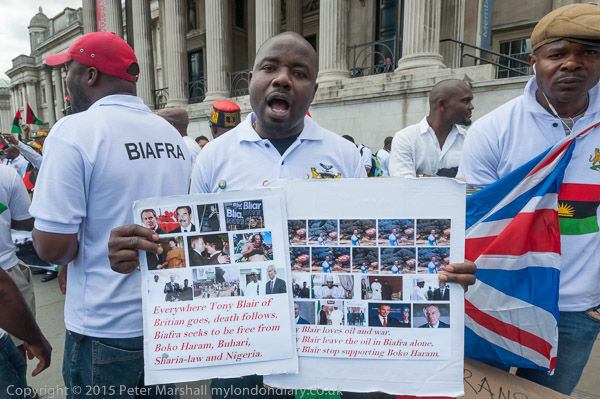
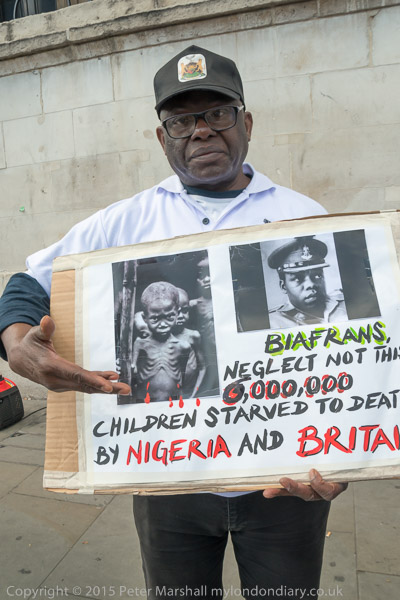
Biafrans had come to Trafalgar Square on the anniversary of their declaration of independence in 1967 which began a long and bloody civil war in which as well as those killed in fighting many Biafran civilians died of starvation.

Death follows Tony Blair of Britain

Biafrans say that the Igbo Kingdom of Nri lasted from the 10th century until 1911, although it was incorporated into Southern Nigeria by the 1884 Berlin Conference. Britain decided to unite Northern and Southern Nigeria in 1914 as the North was in financial difficulties.

Many at the protest wore t-shirts with Biafran flag and coat of arms and waved Biafran flags, still demanding independence for their country, as well as remembering those who died in the Ngerian-Biafran War.

More pictures at Biafrans demand independence.


Mass rally Supports National Gallery Strikers – Trafalgar Square

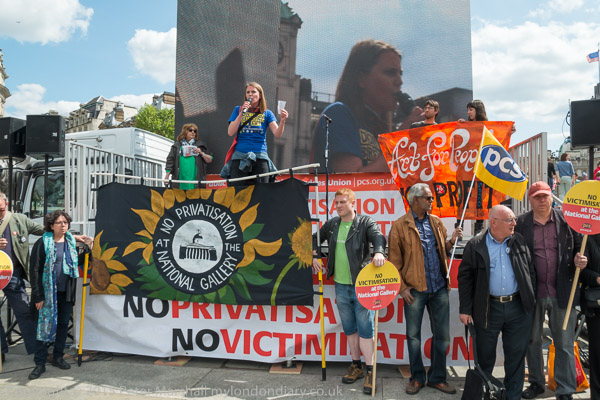
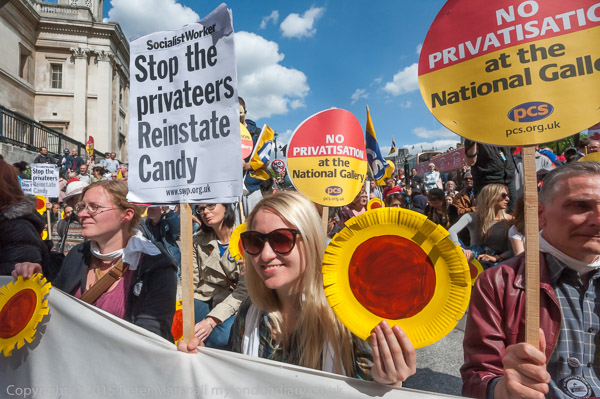
Workers at the National Gallery were on strike against plans to privatise staffing at the gallery and were supported at a rally with many trade unionists including speakers and in the body of the square.

They were also demanding the reinstatement of Candy Udwin, a PCS rep at the National Gallery, who had been sacked for her trade union activities over the privatisation. Speakers included PCS General Secretary Mark Serwotka and comedian and activist Kate Smurthwaite.

Exhibitions in the Sainsbury wing have already been guarded by privatised staff, and the security there is also run by the private company. At the end of the rally the crowd moved to protest at the Sainsbury Wing. Police stopped them entering the gallery and the doors were locked.

Many more pictures at Mass rally Supports National Gallery strikers.


FlickrFacebookMy London DiaryHull PhotosLea ValleyParis
London’s Industrial HeritageLondon Photos

All photographs on this page are copyright © Peter Marshall.
Contact me to buy prints or licence to reproduce.
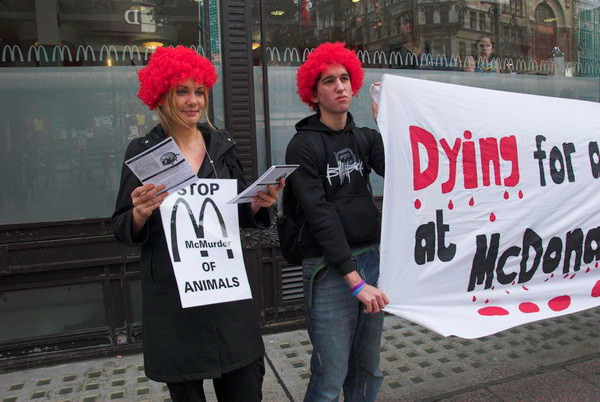
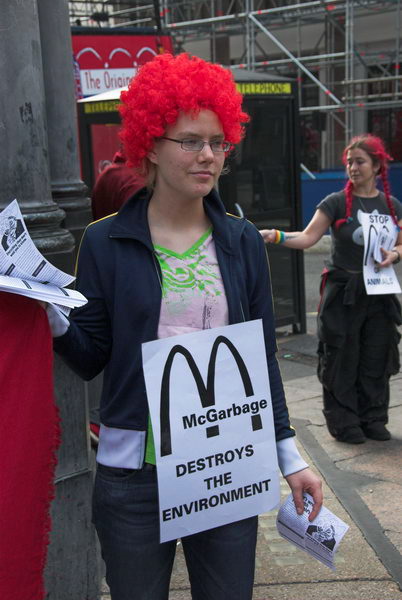
Workers, May Day March & Police Party 2006

Workers, May Day March & Police Party: May 1st is of course May Day, International Workers’ Day, and I will be at Clerkenwell for the annual May Day march in London, and perhaps some other events to celebrate the day. For Catholics it is also dedicated to Saint Joseph the Worker, the husband of Mary, the mother of Jesus and approopriately in 2006 my day started outside Westminster Cathedral with the launch of the London Citizens Workers’ Association. Here is what I posted back on May Day in 2006 – with the usual corrections and links to more pictures on My London Diary.


London Citizens Workers’ Association – Westminster Cathedral

Workers, May Day March & Police Party

May 1st saw the launch of the London Citizens Workers’ Association, a new organisation to support low-wage and migrant workers across London, backed by faith organisations, trade unions and social justice organisations. May 1 is the feast of St Joseph the Worker and the event began with a procession into the cathedral and a ‘Mass For Workers’, but I didn’t bother to get up in time for that.

Workers, May Day March & Police Party

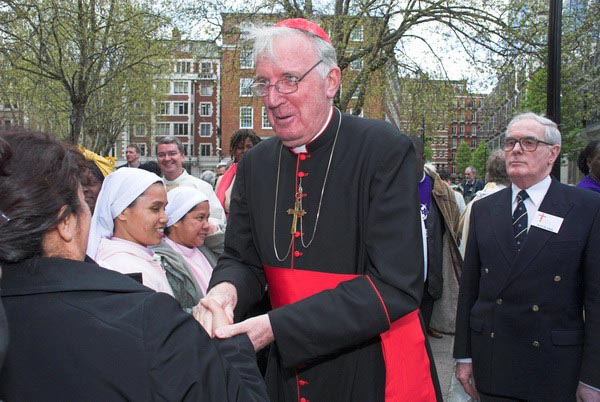
After the mass was a ‘Living Wage rally’ outside the cathedral, with speakers including Cardinal Cormac Murphy O’Connor (then leader of the Catholic Church in England & Wales), Sir Iqbal Sacranie (Secretary General, Muslim Council of Britain), and Jack Dromey (General Secretary of the TGWU) along with representatives of other unions and faiths, and of the new association.

Workers, May Day March & Police Party

The association aims to fight a campaign for a living wage for low paid workers as well as training them to organise and campaign and providing free advice on rights at work and legal support. Workers in low paid jobs often also lack decent working conditions and there was in 2006 little trade union representation*. It will also provide english classes.

Workers, May Day March & Police Party

Several large employers who have already taken steps to improve conditions were awarded ‘Living Wage Employers awards’ at the rally, but I didn’t wait around for this.
more pictures

[* Since 2006 we have seen the rise of several grass roots trade unions taking a strong stance for the rights of low paid workers, particularly migrant workers, including the United Voices of the World and the Independent Workers’ Union of Great Britain.]


London May Day March – Clerkenwell

Workers, May Day March & Police Party

Around half of London’s tube network seemed to be down for planned engineering works, and getting around was a bit like playing Mornington Crescent to some very special rules. But the Victoria Line and Thameslink got me to Farringdon well before the start of the annual May Day parade.

This seemed larger than in previous years, with a few more trade unions there, with particularly strong support from the RMT, but many others also took part, including my own – the NUJ (and there were many of us members covering the event as well.)

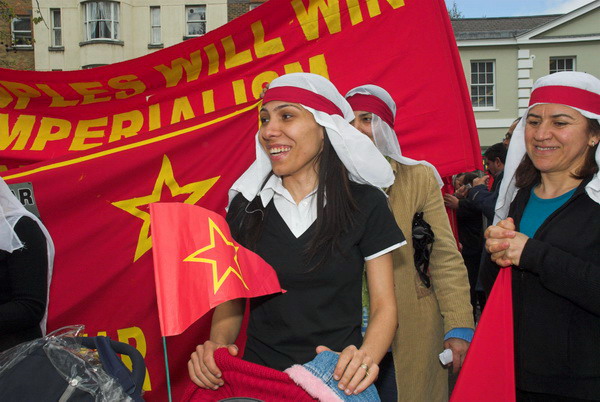
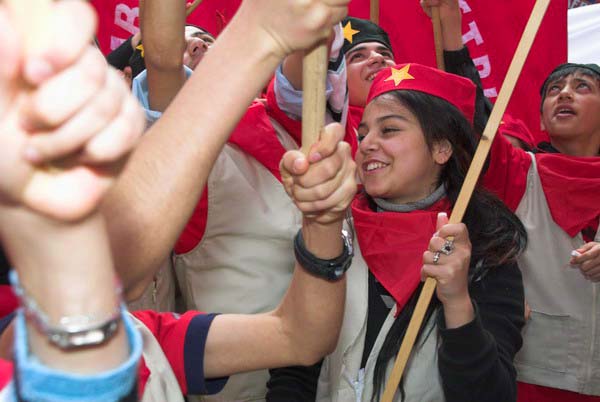
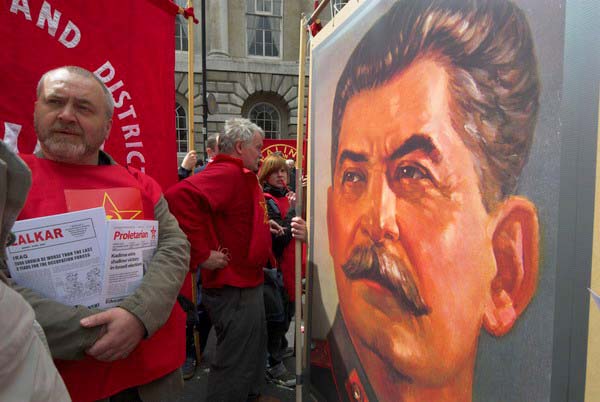
As usual, the most colourful aspect of the march was provided by the various Turkish communist parties, with strong youth wings. MKLP (and its KGO youth), the DHKC, the TIKB, the TKP/ML and probably more. There were some powerful reminders of the repression in Turkey in the portraits of some of those who have died in terrorist actions or death fasts.

Movements in a number of other countries were also represented, including Iraq, Iran Greece and Sri Lanka as well as the Kurds. Also taking part was the African Liberation Support Campaign Network.

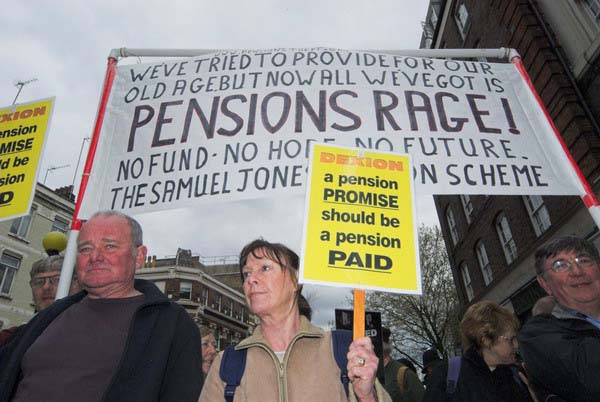
Gate Gourmet strikers marching behind their banner chanted “Tony Woodley – out out!” denouncing the attempts of the TGWU to force them to sign the compromise agreement which waives their rights to further work or legal redress. Others demanded that Remploy factories be kept open. There were protests over the Dexion and Samuel Jones pension outrages, and other causes.

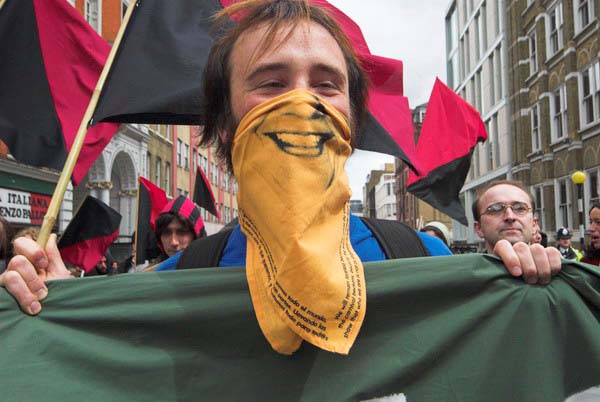
More or less bringing up the rear of the march were around 500-1000 in the Autonomous Bloc, an anti-capitalist grouping marching against ‘precarity’, the working environment of late capitalism.

Increasingly there is a polarisation of the employment market in our service-based economies, characterised at one end by poor conditions, lack of job security, temporary employment, use of migrant labour at one extreme, and at the other by increasing encroachment of work into the private lives of more highly paid employees, making them into company property in exchange for their security.

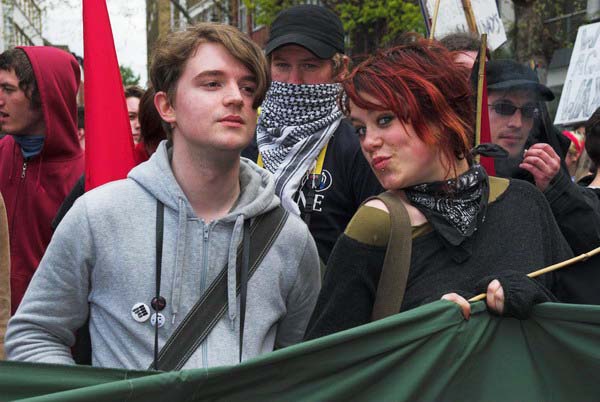
In contrast to the relatively low-profile police presence for the rest of the event, this bloc was flanked on both sides by a line of uniformed police. Many of the marchers in this section wore scarves covering the lower half of their faces, and some carried anarchist flags. Leading the block were a number of bicycles, and a pedal powered sound system.

The march continued on its way to Trafalgar Square, where people stood around mainly looking pretty bored. I didn’t catch much of the speeches but if what I heard was typical I could understand why.

more pictures


Autonomous Bloc in Trafalgar Square

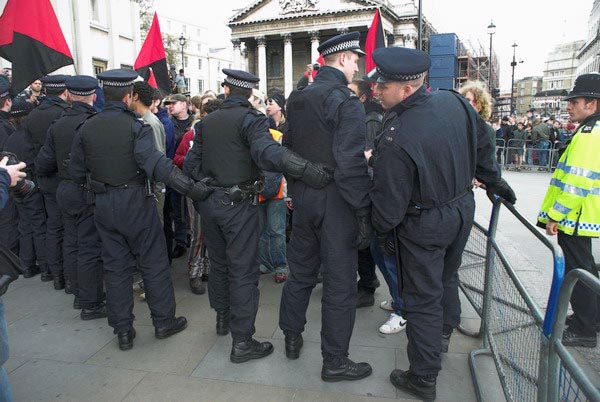
When the Autonomous Bloc arrived at the square, the police barred their entry on the grounds of public order and seized the sound system. More than half those marching left at this point, with the police making little attempt to stop individuals who wandered into the square.

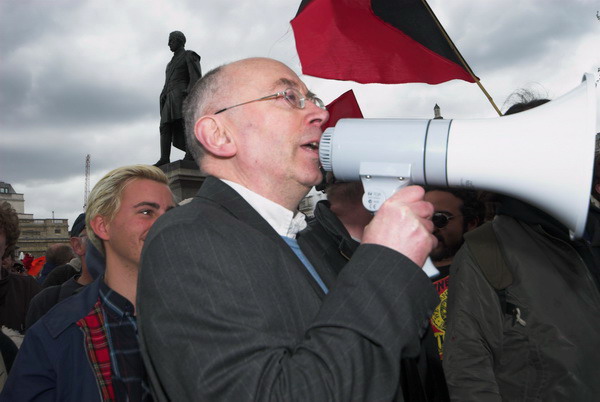
The rest of the bloc stayed on the road, with a few short speeches over a loud hailer, then moved up the side of the square towards the national gallery, where there was another short meeting. This was interrupted by the news that the police tactical support group was on its way, and they soon surrounded the relatively small group who had decided to stay.

I walked through the police line at this point, and they seemed to be making little attempt to stop anyone leaving, or at least didn’t detain them for more than a few minutes.

Pictures from the autonomous bloc on the main march here, but there are more pictures from Trafalgar Square here.


Space Hijackers Police Victory Party – Bank

While the marchers were walking to Trafalgar Square, I took what was left of the tube to Bank and the ‘Police Victory Party‘ organised on their behalf by the Space Hijackers.

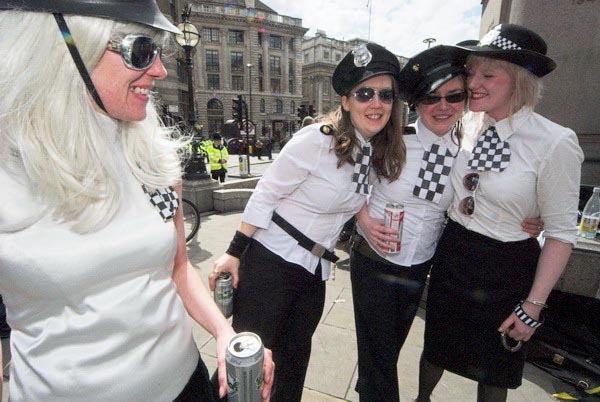
There I watched Tony Blair and some rather more attractive than usual police (and with pink fluffy hand-cuffs) being watched by some other police. A couple of the latter walked away when asked if they would mind being photographed, but some others seemed to be rather amused by the proceedings.

Of course, the police (both lots) were taking lots of pictures of the events too, and I can imagine some of them causing amusement at section house parties.

There was a ‘pin the blame on the anarchist’ game, a pinata (ta for the mini Mars bar) and some dancing before I had to rush off to make the gig at Trafalgar Square. Where the politics were perhaps less serious.

more pictures


FlickrFacebookMy London DiaryHull PhotosLea ValleyParis
London’s Industrial HeritageLondon Photos

All photographs on this page are copyright © Peter Marshall.
Contact me to buy prints or licence to reproduce.
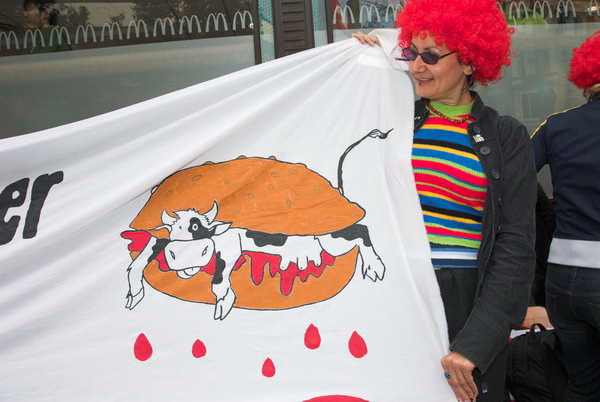

2004 Aldermaston March

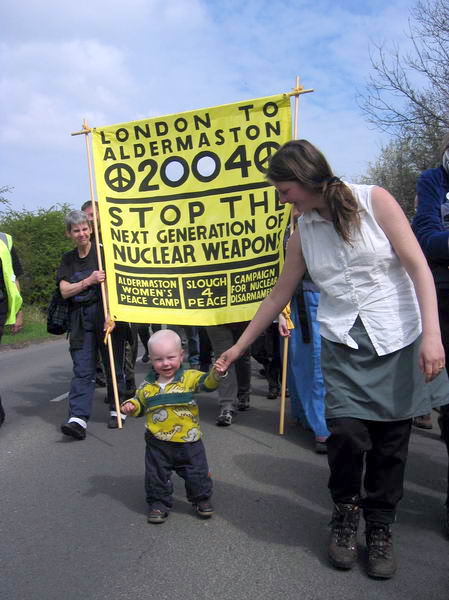
2004 Aldermaston March. On Friday 9th April the 2004 Aldermaston March began with a rally in Trafalgar Square before following the route taken by the first march back in April 1958, which had also begun with a rally in the square. The 2004 march was called as a protest against the development then of a new generation of nuclear weapons.

2004 Aldermaston March
A young marcher on the way from Reading to Aldermaston

I covered the rally and went with the marchers as far as Hyde Park, and cycled to join them again in Maidenhead on Sunday 11th, walking with them for a few miles before returning to pick up my bike and cycle home. On the final day I caught the train to Reading and walked with them to Aldermaston.

I put many of my pictures from the march on My London Diary where you can still view them, and wrote a post about the events which I’ll reproduce here with proper capitalisation and some minor corrections, along with a few of the pictures I made in London on Friday 9th April 2004.


Aldermaston 2004: No New Nukes Rally & Start of March

2004 Aldermaston March

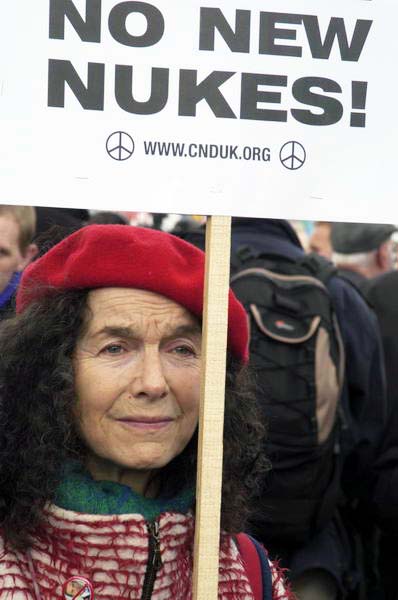
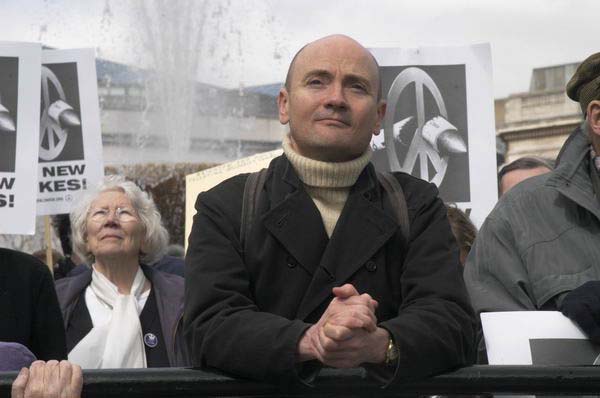
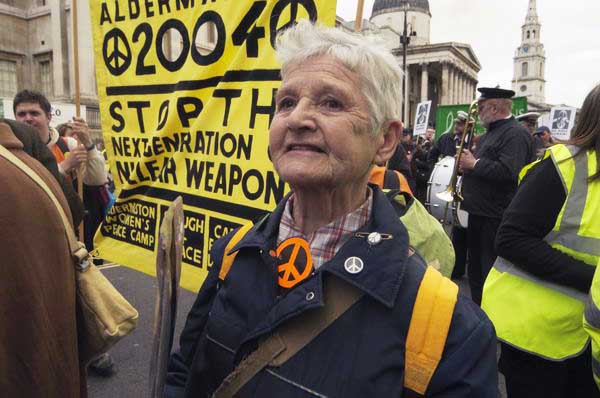
Aldermaston isn’t in London, but the ‘stop the next generation of nuclear weapons‘ march from London to Aldermaston started on Good Friday, 9 April 2004, from Trafalgar Square, where there was a ‘No New Nukes‘ rally.

2004 Aldermaston March

Aldermaston and nearby Burghfield are at the centre of the UK’s atomic weapon programme, and the march was a protest against the development of a new generation of nuclear weapons.

2004 Aldermaston March
Pat Arrowsmith addresses the rally

In 1958 the dangers of nuclear war were clear to most of us, and almost fifty years of the proliferation of weapons of mass destruction among members of the nuclear club make them even more of a danger now. We have seen another almost 50 years of lies and deception dressed up as security and national interest. For example we still haven’t been told of the nuclear warheads kept by our American allies at Lakenheath.

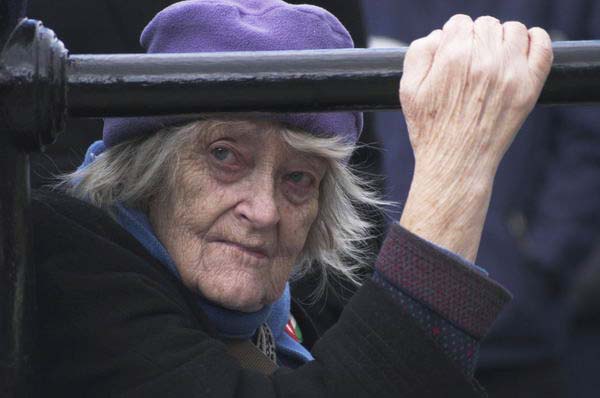
It was good to see many familiar faces, both on the platform and off, with addresses from Tony Benn, Jenny Jones, Pat Arrowsmith, Jeremu Corbyn and more, including a fine performance from Susannah York. There were a considerable number who had been on the first Aldermaston march, back in 1958, forty six years ago. I was too young to be involved then, but my two older brothers had been there.

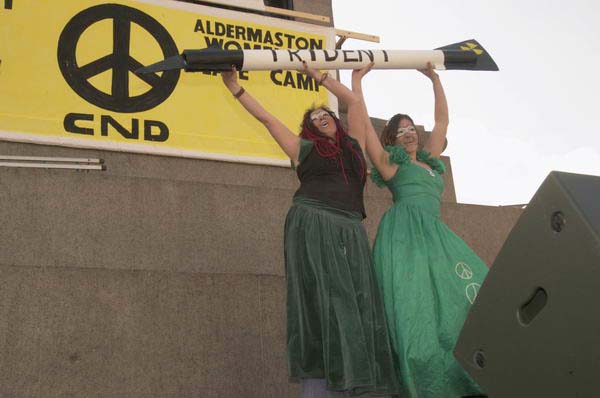
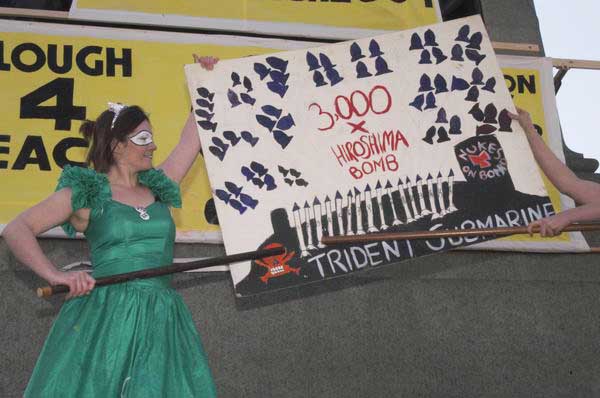
Street theatre about Trident from Theatre of War

‘Theatre Of War’ gave a spirited performance, and there was a jazz band to add a little spirit at the front of the march, perhaps a reminder of the trad boom of the fifties. Pat Arrowsmith, Bruce Kent and some other CND veterans were up there too, leading off the 2,300 who led off through St James. The police estimated the march at 1000. I actually stood and counted as they went by, and although it isn’t an exact science with a march this size, I won’t be more than fifty or so out either way.

A single Trident submarine has warheads equivalent to 3000 Hiroshima bombs.

It was a cheerful sendoff to those marchers on the long plod to Aldermaston, one of several marches there starting from different parts of the country.

At Hyde Park, the march proper formed up, with around 430 making their way west through Kensington and towards the first night stay at Southall. I couldn’t walk all the way, although I’d probably covered as much distance running around taking pictures and left the march in Kensington.

On Saturday, the march continued from Southall to Slough via Uxbridge. I had other things to do in the East End and central London, but I managed to catch up with the march on Sunday morning at Maidenhead Bridge with some furious bike riding from Staines.

Pat Arrowsmith

By then, some problems with Thames Valley Police had emerged, with the police trying to force the march on to the pavement, while some marchers insisted on keeping to the road. In the end a compromise emerged, with the police tolerating those who wanted to stay on the road walking close to the edge of the pavement.

From Maidenhead it seemed a long walk along the A4 to Knowl Hill for a rather late lunch stop. There we were greeted from a distance by the sounds of the Sheffield Samba Band who piped the march in to lunch. I regretted not bothering to pick up my meal tickets, but was really too busy to stop to eat. I photographed the column of marchers setting off for Reading and then started a more lonely walk back to Maidenhead and my bike.

Bristol Radical Cheerleaders

By this time I was feeling the strain. Even on my ‘day off’ on Saturday I’d walked over 10 miles with a heavy camera bag, and the weight of a Nikon with a solid lens round my neck was getting to be too much. So for Monday I travelled light, working with a tiny Canon Digital Ixus. It had the nasty habit of often not taking a picture until a second or so after you pressed the button, by which time I’ve usually put the camera down, so I came home with quite a few pictures of random patches of road and grass from Berkshire. However, as you can see on My London Diary, some came out.

On Monday I walked all the way and a few miles more, with pictures from Reading to Burghfield, were we stopped close to AWE Burghfield [where atomic bombs are made] to the end of the march rally at AWE Aldermaston, after which we took a walk halfway round the large site.

Aldermaston2004 was jointly organised by CND, the Aldermaston women’s peace Camp and Slough4Peace.


My pictures from the rally and march start here on My London Diary, with more pictures starting on further web pages for Friday, Sunday and Monday.

CND is still active, still campaigning for peace and a nuclear free world and opposing the UK’s possession of nuclear weapons. As they say, “Nuclear weapons threaten us all. And they are an obscene drain on public finances.” You can find out more about their actions and sign their petition calling on the government to embrace diplomacy and peace negotiations, instead of nuclear weapons and war and take steps towards nuclear disarmament and a safer world.


FlickrFacebookMy London DiaryHull PhotosLea ValleyParis
London’s Industrial HeritageLondon Photos

All photographs on this page are copyright © Peter Marshall.
Contact me to buy prints or licence to reproduce.
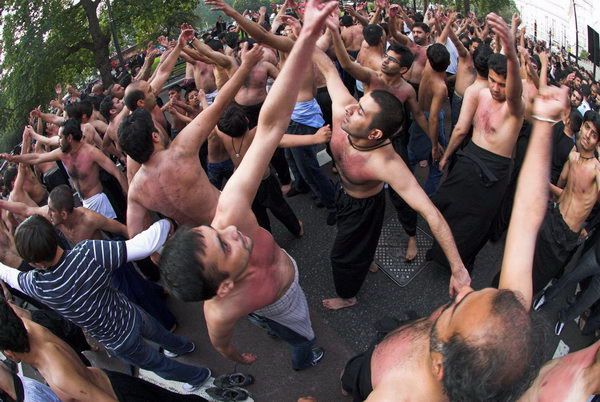

TUC ‘March For The Alternative – 2011

TUC ‘March For The Alternative – On 26th March 2011 between a quarter and half a million people marched through London against planned public spending cuts by the Conservative-Liberal Democrat coalition government in the largest demonstration since the 2003 protest against the plan to invade Iraq.

TUC 'March For The Alternative - 2011

The TUC argued that what the country needed was not austerity but policies that would grow the economy, and that we should raise income from those more able to pay rather than by measures that had the greatest impact on the poorest in society.

TUC 'March For The Alternative - 2011

It was the largest march and rally organised by the trade union movement since the Second World War, and like other major trade union marches was perhaps largely worthy but not exciting – and like others it achieved nothing. The cuts went ahead and we all suffered – except of course the wealthy – who continued to grow richer and richer, helped by government bail-outs and the deliberate failures to tackle tax evasion, stop tax avoidance loopholes and raise taxes on those with excessive wealth.

TUC 'March For The Alternative - 2011

The cuts particularly hit the public services, including teachers, nurses and other medical professionals – and eventually helped drive these areas into the critical conditions that they are now in. They resulted in financial problems and excessive workloads and also meant that those of us who rely on public provision for health and education often failing to get proper treatment. The gap between those who could afford private services and those who relied on the state provision increased.

TUC 'March For The Alternative - 2011

Particularly hard hit by the cuts were the disabled and for them the situation continues to worsen with our now Labour government announcing huge cuts which will leave many considerably worse off – and greatly reduce their ability to lead normal lives and contribute to society.

As well as the TUC, other groups contributed to the march, announcing various feeder marches and other activities, many of which added a little life and colour to the day’s events. They also resulted in over 200 arrests and a number of injuries.

Too much was happening on the day for me to rehash it all here, but you can read my seven posts on my London Diary for my account of events. I started with the feeder marches from South London, disowned by the TUC. The ‘Armed Wing of the TUC’ brought its street theatre Trojan Horse, Spitfire, Tank and armed Lollipop Ladies produced by Camberwell art students to Camberwell Green where they marched to Kennington where the South London Feeeder March was gathering for a rally before the march in Kennington Park – the site of the final “monster meeting” of the Chartists on 10th April 1848 from where they marched to Parliament to deliver their final petition.

I left there to take the tube to Trafalgar Square where I found that the main march had started early and was well on its way to Hyde Park and I stayed around there for over an hour as marchers filed past, including photographing the Morris Liberation Front, an idea of Henry Flitton specially for the TUC demonstration, with music, provided by a couple of mandolins playing the Clash’s ‘I fought the Law’ and the Smith’s ‘Panic.

Later in the day Trafalgar Square was the site of bitter fighting as police made a largely unprovoked attack on a partying crowd, but when I was there things were peaceful.

I left the square to follow several hundred anarchists, dressed in black and mainly wearing face masks making their way up past the National Portrait Gallery, many waving red and black flags. I went with them through the back streets to Piccadilly Circus and then up Regent Street where they turned off into Mayfair and were held off by police when they attacked a RBS branch – one of the main banks to receive a huge government handout.

At Oxford Circus they attacked Topshop, then owned by the prominent tax avoider Sir Philip Green. As I went to take photographs of police arresting one of the protesters and holding him on the ground I was “hit full on the chest by a paint-bomb possibly aimed at the police, although many of the protesters also have an irrational fear of photographers. My cameras were still working and I continued to photograph, but I had also become a subject for the other photographers.”

It wasn’t painful, but it was very messy and bright yellow. I scraped and washed the worst off in a nearby public toilet for around 20 minutes, then went out to take more photographs, joining UK Uncut supporters who had come to hold peaceful protests at tax dodging shops and banks around Oxford St and to party at Oxford Circus.

Eventually I followed them down to Piccadilly Circus where 4 hours after the start of the official march people were still filing past. I stopped there and photographed until the end of the march passed, rather than going with UK Uncut into Fortnum and Mason. Inside the story they sat down and occupied the store peacefully. if noisily calling on them to pay their taxes. After an hour or more a senior police officer told them they were free to leave, promising they could make their way home “without obstruction”. 138 were arrested as they left the store, charged with ‘aggravated trespass’. Most of the cases were latter dropped but at least 10 were found guilty, given a six-month conditional discharge and a £1,000 fine.

Even after the official end of the march there were various other groups following the march route – including a group of Libyans with green flags, marching in support of Colonel Gaddaffi. I walked back to Trafalgar Square where there were still plenty of people around but everything was pretty quiet, so I got on the tube to come home and try to wash more of the paint off.

I think it was later when police made a charge to try and clear Trafalgar Square than almost all the arrests on the actual march took place – according to GoogleFurther clashes were reported later in Trafalgar Square. 201 people were arrested, and 66 were injured, including 31 police officers.” Had the police simply gone away people would have eventually dispersed and there would have been no trouble.

Others also got hit by paintballs

Back home I spent hours trying to scrub out yellow paint, but the rather expensive jacket I was wearing was only ever really fit to wear for gardening. The also expensive jumper underneath still has some small traces of yellow 14 years and many washes later, though I do sometimes still wear it around the house. Until my Nikon D700 came to the end of its life, beyond economic repair, a few years later I would still come across the occasional speck of yellow paint.

Much more about the day and many more pictures in the following posts on My London Diary

26March: Armed Wing of the TUC
26March: South London Feeder March
26March: TUC March – Midday
26March: Dancing in Trafalgar Square
26March: Black Bloc Goes To Oxford St
26March: UK Uncut Party & Protest
26March: The End of the TUC March


FlickrFacebookMy London DiaryHull PhotosLea ValleyParis
London’s Industrial HeritageLondon Photos

All photographs on this page are copyright © Peter Marshall.
Contact me to buy prints or licence to reproduce.

Make Poverty History – 2005

Make Poverty History: Twenty years ago on February 3rd 2005 I was one of the 20,000 or so people who packed Trafalgar Square on a Thursday lunchtime to see and hear Nelson Mandela speak in the first major real event in the UK’s ‘Make Poverty History’ campaign.

Make Poverty History - 2005

Make Poverty History was a coalition of charities, religious groups, trade unions, campaigning groups and celebrities which had come together here and in a dozen other countries around the world to promote trade justice, to cancel the debts that were crippling poorer countries and to press for more aid and for this to be better targeted at improving the lives of people in the recipient countries.

Make Poverty History - 2005

The campaign in the UK had officially been launched on TV on New Year’s Day on the same day that Britain took over the Presidency of the G8 – and in July was to host a G8 summit that was supposed to be largely about poverty in Africa, but this rally was the first major national event.

Make Poverty History - 2005

I’d severely misjudged the numbers that would turn up for the rally, arriving only minutes before it was due to start and was unable to make my way through a densely packed crowd to anywhere near where the the speakers – including Mandela would be speaking.

Make Poverty History - 2005

This was an occasion when a long and heavy fast telephoto lens would have come in handy, but I’ve never owned one of these, preferring whenever possible to work at close range. But the relatively small zoom lens I had with a focal length of 200mm and a maximum aperture of only f5.6 did just about allow me to take some recognisable images of what was happening on the stage in the distance.

It helped that Nikon was still sticking to its conviction that its DX format, a sensor half the size of a 35mm frame was all that was needed for digital photography, giving the lens on my D70 the equivalent view of a 300mm on full-frame.

he ‘pills’ are a petition calling for urgent action on aids, to get 3 miilion people on treatment by 2005.

But I was please to have been able to capture some of the event – such as the handshake between Mandela and Bob Geldoff and children coming to meet Mandela, even if someone’s head got in my way a little of the time and those 6Mp images could perhaps have been just a little sharper.

Mosquito nets can help stamp out malaria in Africa

Later I was able to return to focal lengths more in my comfort zone, with a fisheye to show the crowds and more normal wide-angle views of people in the crowds.

The only way to be photographed with Nelson Mandela at the Rally

The ‘Make Poverty History’ movement lasted in the UK until 31st Januarly 2006, though relations between some of the 540 groups involved were very difficult. Oxfam in particular was seen as far to keep to follow a ‘New Labour’ line and some other major NGOs were also often felt to be insufficiently radical. Even though these groups dominated the campaign the TV adverts which had been aired at the start were soon banned by Ofcom as they were deemed to be “‘wholly or mainly political’ in nature, since they aimed to ‘achieve important changes'” – surely the whole point of the campaign.

Clearly the campaign had begun to disturb the rich and powerful who were feeling their privilege and profits from impoverishing the poor might be at risk. But although the campaign raised awareness of the problems its actual achievements were rather limited.

Bust of Nelson Mandela, sculpted by Ian Walters, commisioned by the GLC to mark the 70th anniversary of the African National Congress in 1982, and unveiled by Oliver Tambo in 1985. It records Mandela’s imprisonment in 1962, with added inscriptions marking his release in 1990, the Nobel Peace prize in 1993 and his inauguration as the first president of a free South Afrrica in 1994.

You can read more about the event and seem many more pictures on My London Diary


FlickrFacebookMy London DiaryHull PhotosLea ValleyParis
London’s Industrial HeritageLondon Photos

All photographs on this page are copyright © Peter Marshall.
Contact me to buy prints or licence to reproduce.

Peace, Congo, Iran, Egypt, Bikers, Trafalgar Square… 2012

Peace, Congo, Iran, Egypt, Bikers, Trafalgar Square: On Wednesday 25th January 2012 I went up to London in the middle of the afternoon and continued to take photographs at various places and events for several hours.


Parliament Square Peace Camp

Peace, Congo, Iran, Egypt, Bikers, Trafalgar Square… 2012

I began with a brief visit to the Peace Camp – as I often had over the years – but found that Barbara Tucker was busy tidying up in anticipation of yet another police raid in their long campaign of harassment of her and here supporters and on this occasion didn’t have time to talk. So I just took a couple of pictures and then walked up to Trafalgar Square. On May 10th 2012 the protest had been 4000 Days in Parliament Square but was evicted shortly after.


Congolese Keep Up Protests – Trafalgar Square

Peace, Congo, Iran, Egypt, Bikers, Trafalgar Square… 2012

In Trafalgar Square I found a small group of Congolese protesters in a pen on the pavement outside South Africa House, calling on South Africa to put pressure on the Congo regime. They called on South Africa to free political prisoners and recognise opposition leader Étienne Tshisekedi wa Mulumba as the duly elected President of the Democratic Republic of Congo. The 2011 elections were widely regarded as having been fixed and it is unclear whether he or the incumbent Joseph Kabila whose election was confirmed by the Supreme Court of the Democratic Republic of Congo actually got more votes.

The protesters told me that more people were expected to arrive for the protest soon and I promised to return. But I got a little held up elsewhere and by the time I returned everyone had left.


Peace For Iran – No To War – Foreign & Commonwealth Office, Whitehall

Peace, Congo, Iran, Egypt, Bikers, Trafalgar Square… 2012

I walked back along Whitehall to the Foreign & Commonwealth Office in King Charles St where a small group were protesting against going to war with Iran, calling for peace.

I waited with the protesters who told me they expected more to arrive, but had to leave after around 20 minutes. I think few were coming as a large protest was to happen a few days later (you can see my report and pictures on this at No War Against Iran & Syria)


Egyptians Protest Against SCAF – Egyptian Embassy

Peace, Congo, Iran, Egypt, Bikers, Trafalgar Square… 2012

I had to leave to go to the main event I had come into London to report, the protest by Egyptians on the first anniversary of the Egyptian revolution. Egypt was then suffering under the Supreme Council of the Armed Forces (SCAF) and they called for the revolution to continue and an end to military rule.

This was an energetic and protest by over a hundred Egyptians in solidarity with the estimated 300,000 who had marched to Tahrir Square earlier in the day.

A few from the British left had come to give their support, including Chris Nuneham of Stop the War who was one of those who spoke.

The speakers urged solidarity with the Egyptian people and also with the other revolutions of the Arab Spring, and called for an end to the Western attempts to enforce an agenda on the Arab nations.

They voiced their opposition to the increasingly likely military action against Iran, and called on those present to join the No War Against Iran & Syria protest at the US Embassy on the following Saturday.

Many more pictures from the Egyptian Embassy protest on My London Diary.


Westminster Bikers First Olympic Jubilee Demo Ride – Trafalgar Square

I returned to Trafalgar Square for a protest by motorbike riders, incensed by the so-called experimental parking charges for powered two wheelers.

‘No To the Bike Parking Tax’ see the parking charges introduced by Westminster Council as a simple money-making racket and have been making regular Wednesday protests against it as well as lobbying and making a legal challenge.

The daily fee for parking in a solo motorcycle bay is now only £1, and bikers can move from bay to bay.

More pictures


Around Trafalgar Square

After the bikers rode away I took a few pictures in Trafalgar Square under its dramatic red lighting then walked away. There had been a traffic accident on Northumberland Avenue which seemed to have involved two bikers and a cyclist and the police were now in attendance. I took a single frame as I approached but I didn’t investigate this further, walking down Whitehall.

Opposite Downing St a small protest was taking place calling for Freedom for Syria from the Assad regime, but nothing much was happening there and after making a couple of pictures I moved on, now in a hurry to get home and have something to eat.

You can read and see more pictures of these events on the January 2012 page of My London Diary


FlickrFacebookMy London DiaryHull PhotosLea ValleyParis
London’s Industrial HeritageLondon Photos

All photographs on this page are copyright © Peter Marshall.
Contact me to buy prints or licence to reproduce.

Heathrow, Gaza & the Tamils – 2009

Heathrow, Gaza & the Tamils: On Saturday 17th January 2009 I took a bus to Heathrow for a flash mob against a third runway, then the tube into Westminster for a protest against Israeli attacks on Gaza in Trafalgar Square which ended with a march to protest at Downing Street, where Tamils were protesting against the genocide taking place in Sri Lanka.


No Third Runway Decision Day Flashmob – Terminal 5, Heathrow Airport

Heathrow, Gaza & the Tamils - 2009

Earlier in the week the Labour government under Gordon Brown had announced they were to press ahead with airport expansion and build a third runway at Heathrow despite the environmental consequences. Several hundred people turned up at Terminal 5 for a ‘flashmob’ protest at 12 noon.

Heathrow, Gaza & the Tamils - 2009

“Attracting most press attention were four brave young ladies who had saved the ten quid for a red ‘STOP AIRPORT EXPANSION’ t-shirt and instead opted for red body paint with a black message across their midriffs, ‘Simply No Slaughter‘ and a pair of strategically placed gold sticking plasters proclaiming ‘art‘ and ‘port‘ (port was indeed on the left.)”

Heathrow, Gaza & the Tamils - 2009
Local MP John McDonnell looks a little embarassed

Many local residents were there, some with their children, along with John Stewart of HACAN (Heathrow Association for the Control of Aircraft Noise) the organisers of the event, and local MP John McDonnell who was being congratulated for his seizing the mace in the House of Commons when the announcement was made.

Heathrow, Gaza & the Tamils - 2009
Prime Minister Gordon Brown had approved the airport expansion

The demonstrators chanted, thrown red balloons in the air, red tennis balls at an ‘Aunt Sally’ of Transport Secretary Geoff Hoon and conga’ed around the area while a large squad of photographers photographed and videoed.

The campaigners were surrounded in a loose ring by police and airport security who made no attempt to stop them, though police had made some searches before the event began. Some of them were clearly amused by the event as were a few passengers making their way through the departure area.

John Stewart of HACAN thanks everyone for coming

After almost three-quarters of an hour of protest John Stewart thanked everyone for coming and repeated the determination of all those involved to keep up the fight to ensure that, despite the decision, the runway will never be built. So far it has been prevented, though it seems likely that despite the increasingly obvious and critical environmental crisis our current Labour government will resurrect this enviornmental catastrophe, though it remains doubtful if the private finance required can be found.

A cheer for John McDonnell

And there was a cheer for John McDonnell’s action in Parliament and a final chance to pelt the Transport Secretary before we all left for buses or tube.

Many more pictures at No Third Runway Decision Day Flashmob.


1000 Dead and Nothing Said – End the Slaughter of Gaza – Trafalgar Square

A man burns an Israeli flag in at the rally in Trafalgar Square

I was a little late arriving at the rally in Trafalgar Square but got there just in time to hear Tony Benn being announced and getting a huge greeting. As I commented he was “One of the greatest political figures of the last 50 years, [and} it’s a national tragedy that while he has so often been right on major issues, governments have seldom if ever followed his lead.”

An 11 year old Palestinian girl, now living in Manchester speaks

The square was fairly full with perhaps 5-10,000 protesters though there had been a much larger national protest in London a week earlier against the attacks on Gaza in previous weeks that had killed over a thousand Palestinians including more than 300 children.

Palestinian singer Reem Kelani spoke before singing a traditional song

After some more speeches a group of children all dressed in white robes marked with bloody red handprints who had been standing on the plinth came down and went with a deputation to take a letter from the rally to Downing St, calling for an immediate ceasefire and reparations for the war damage inflicted by the Israeli attacks.

I went with them down Whitehall to Downing St, where police led them into a pen close to the gates.

While Diane Abbott, MP, PSC General Secretary Betty Hunter and Lindsay German of Stop the War with others took the letter into Downing St, the children posed for pictures, at first while standing and then lying on the ground as if the innocent victims of an Israeli attack.

But unlike those 300 childen in Gaza, these children were just playing dead.

A few hours after this protest Israel announced a ceasefire on its own terms. The end of the killing was welcome, but there was no justice for Palestine.

Much more and many more pictures at Gaza: 1000 Dead and Nothing Said.


Tamils protest Sri Lankan Genocide – Downing St

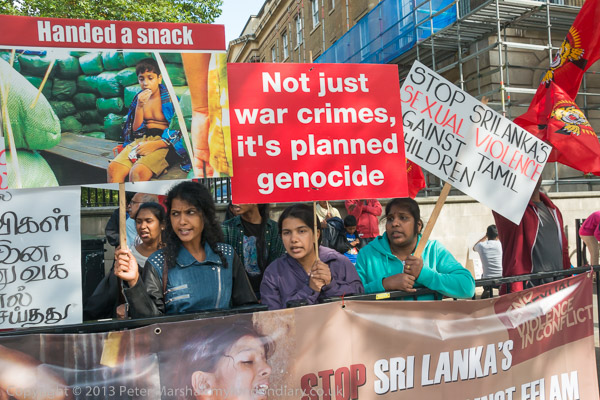
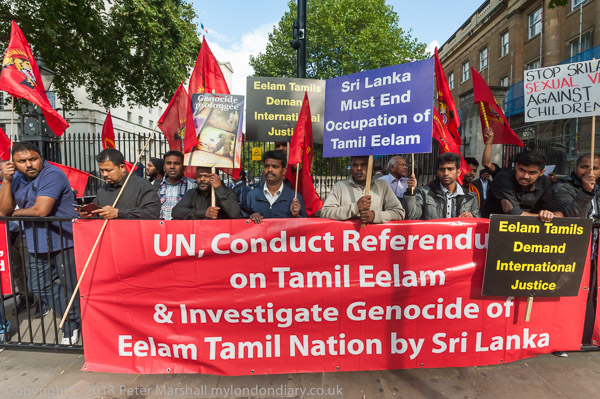
Several hundred Tamils were densely packed into a pen opposite opposite Downing Street to draw attention to the continuing attacks on Tamil civilians, schools, hospitals and churches by the Sri Lankan Army and Air Force and to call for an independent Tamil state, Tamil Eelam, in Sri Lanka.

Tamils accuse the Sri Lankan government of genocide, and claim that in the past month alone over 300,000 Tamils have been forced to move out of their homes by the bombardment.

The decades long civil war which ended in May 2009 with the defeat of the Tamil Tigers had attracted relatively little attention in the mainstream media, but the assasination of leading Sri Lankan opposition newspaper editor Lasantha Wickramatunga on his way to work a week earlier and the publication of the obituary he had written for himself, And then they came for me, was the subject of a two page article in The Guardian on the day of this protest.

Tamils protest Sri Lankan Genocide


FlickrFacebookMy London DiaryHull PhotosLea ValleyParis
London’s Industrial HeritageLondon Photos

All photographs on this page are copyright © Peter Marshall.
Contact me to buy prints or licence to reproduce.

Frost Fair, Oxford St and Santas – 2006

Frost Fair, Oxford St and Santas: I wrote a long post on My London Diary about my activities on Saturday 16th December 2006, which perhaps deserves bringing out of hiding and re-publishing, as usual with appropriate corrections, and with links to the many pictures I took, a few of which I’ll use to punctuate the re-posting.


Bankside Frost Fair: Traditional Thames Cutters

Frost Fair, Oxford St and Santas

Southwark’s Frost Fair is a reminder of days long gone, when Old London Bridge so restricted the flow of the Thames that there was a lake above it between the City and Southwark. In cold winters, this would freeze over, and in some years the ice became so thick that a fair could be held on it.

The chances of this happening again given global warming seem slight, although once the polar ice cap melts in twenty or so years time, the whole global weather system will be upturned. We may even lose our warming water and air streams and our climate could perversely become more continental with freezing winters and torrid summers. Of course, we may by then be abandoning the City and Southwark as water levels rise.

Today it was sunny, though there was a chill in the wind, and the tide was running out at a rate of knots that made it hard going upstream for the rowers in the cutters that came from the city to Southwark, going upstream of the Millennium Bridge before turning to reach the pier outside the Globe Theatre.

Frost Fair, Oxford St and Santas

Waiting for them there (and we were waiting a long time) was a group of London guildsmen. There was a speech of welcome, shaking of hands, and then the company went off for refreshments while I wandered through the Frost Fair. To be honest, there didn’t seem to be a great deal going on. A band playing, then some carols sung, food and drink being sold. Even the promised huskies didn’t seem to be around, though the stall was taking bookings for rides.
more pictures


St Paul’s & Oxford Street

Frost Fair, Oxford St and Santas

I should have been there yesterday for the lantern parade, but had other things to attend to, and there seemed to be little to do or to photograph today, so I strolled over the Millennium bridge and around St Paul’s to get a bus to the West End.

I was looking for Santas. I thought I might find some on Oxford Street, and have a look at the Xmas decorations too, but both seemed rather thin on the ground. A few holding sandwich boards, the odd person with a Santa hat. Stalls with hats and costumes for sale, but where were the people wearing them?

Frost Fair, Oxford St and Santas
Weekly picket outside M&S calls for an end to the ‘Apartheid Wall’ in Palestine and a boycott of Israeli goods

I paused briefly outside Marks and Spencers for the regular picket there, today a small choir was singing. I thought of the dispatches I’d recently read from Deacon Dave, on a peace visit to Palestine, assaulted by a Jewish settler, and the many stories of how Palestinians are being denied the right to work their lands, including the building of the wall that separates some from their fields.

Frost Fair, Oxford St and Santas

More pictures from St Pauls and Oxford St.


Santacon – Trafalgar Square

Santas get engaged!

I jumped back on a bus again, going to the top deck to peer out for Santas, and as the bus came up to Trafalgar Square, there they were, around the base of Nelson. I jumped up. Fortunately the bus was just coming to a stop and I was able to run off and start taking pictures.

The assembled Santas sang a few Santacon carols:
Away On A Bender,
O Come All Ye Santas, Hark!
The Drunken Santas Sing and more,
Hymns to drunken excess, though it was early in the day and most santas still seemed pretty sober.

We were all waiting for more Santas to arrive, and at last they did so in a group coming from the northeast of the square. Now there were certainly several hundred of them, though I couldn’t manage even a rough count, as people kept moving. As well as Santas there were also some others including a team of reindeer and a few oddities.

Then came a piece of real life drama as one Santa declared his love for another, down on his knees, surrounded by the crowd, producing an engagement ring.

A traditional knee-level approach despite the unusual dress

I can’t actually remember how I proposed (probably my wife can) but it certainly wasn’t like this. Certainly an event the two of them will remember (and fortunately she said yes.)

After that, anything else would be anticlimax, and as the Santas left to go up Strand, I turned away for home.

View many more pictures from Santacon on My London Diary.


FlickrFacebookMy London DiaryHull PhotosLea ValleyParis
London’s Industrial HeritageLondon Photos

All photographs on this page are copyright © Peter Marshall.
Contact me to buy prints or licence to reproduce.

Westminster & Waterloo November 1989

Westminster & Waterloo: I’m not sure now why I was in London on Wednesday November 1st 1989, but probably I had been to see an exhibition at the Photographers Gallery during my half-term holiday. I took a slightly longer walk than usual to get back to Waterloo from Soho through Trafalgar Square and then along to Waterloo Bridge and across it to get back to the station.

Trafalgar Square, Westminster, 1989 89-10j-65

Back in 1989 there were still people feeding the pigeons in Trafalgar Square and I made this rather atmospheric “contro-jour” image – not my usual kind of thing – I generally try to make pictures about substance rather than effect.

Trafalgar Square, Westminster, 1989 89-10j-66

My next frame was a little more like my normal work, though still making use of the backlit water in the fountains.

Royal Society of the Arts, John Adam St, Westminster, 1989 89-10j-56

Adelphi, the district south of Strand was developed by the Adams brothers (Robert and James), and the name is the Greek for brothers. The area here had been the London palace for the Bishop of Durham which had gardens going down the the River Thames and this was demolished for the new buildings. Financially the project was a disaster and they were only saved from bankruptcy by the Adam Buildings Act 1772 which enabled a public lottery to be run to save them.

The headquarters of the Royal Society of the Arts, then the Society for the Encouragement of Arts, Manufactures and Commerce, was built by the brothers between 1768 and 1772 and is said to be London’s first neoclassical building.

Adelphi Building, Robert St, Savoy Place, Westminster, 1989 89-10j-44

Parts of the area were demolished in the early 1930s for the building of the massive Art Deco New Adelphi Building by Collcutt & Hamp finished in 1938. A speculative office building it has since been occupied by a number of well-known companies. The Grade II listed building with sculptures by Gilbert Ledwood has been internally refurbished since I made this picture. There is a public right of way, Lower Robert Street, beneath the building.

Outpatients, Royal Waterloo Hospital for Children and Women, Waterloo Bridge, Stamford St, Waterloo, Lambeth, 1989 89-10j-35

I took a few more pictures in the area (not online) before making my way across Waterloo Bridge and onto Waterloo Road where I photographed the decoration on the former Outpatients Department of the Royal Waterloo Hospital for Children and Women.

This had been set up in the City of London in 1816 and was at the time one of very few hospitals that would treat children, though still only as outpatients. It gained the Royal in its title in 1821 when the Duke of York became a patron and moved to this new larger site three years later in 1824. The hospital was rebuilt to designs by Charles Nicholdson in 1903-5. It became part of the NHS in 1948 and closed in 1976.

In its later years it had a notorious psychiatric ‘Ward 5’ which carried out a number of highly dangerous treatments on its patients which led to deaths and other deleterious effects. On my 1990s map it is a part of King’s College.

St John's Waterloo, Waterloo Rd, Waterloo, Lambeth, 1989 89-10j-21
St John’s Waterloo, Waterloo Rd, Waterloo, Lambeth, 1989 89-10j-21

This fine building was built in the aftermath of the Napoleonic Wars when the population of London was expanding rapidly and the Houses of Parliament voted a sum not exceeding a million pounds for the building of new churches to serve areas with large populations “more particularly in the Metropolis and its Vicinity.”

It was one of three churches designed by Francis Octavius Bedford in this project, and they were all built in what was then becoming an unfashionable Greek Revival style, completed in 1824.

St John's Waterloo, Waterloo Rd, Waterloo, Lambeth, 1989 89-10j-23
St John’s Waterloo, Waterloo Rd, Waterloo, Lambeth, 1989 89-10j-23

The church was badly damaged in the Second World War in 1940, and stood without a roof and with much of the interior destroyed for almost ten years, with services taking place in the crypt. It was restored in 1950 with its interior in a ‘Festival of Britain’ style though some original parts remain, and was rededicated as the Festival of Britain Church. It is Grade II* listed.

I went across the road to Waterloo Station in time to catch my train home.


FlickrFacebookMy London DiaryHull PhotosLea ValleyParis
London’s Industrial HeritageLondon Photos

All photographs on this page are copyright © Peter Marshall.
Contact me to buy prints or licence to reproduce.

March & Rally Against Custody Deaths – 2024

March & Rally Against Custody Deaths: The march in London on Saturday 26th October 2024 by the United Families and Friends Campaign (UFFC) was the 25th annual remembrance of the thousands who have died after being arrested by police or held in prisons, secure mental health and immigration detention in suspicious circumstances.

UFFC March & Rally Against Custody Deaths - 2024

The exact number of these deaths is not known, but is clearly very much larger than any official statistics. At some earlier of these events people have carried a list with well over 2000 names from the last 40 or so years.

Just a few of these cases have become well-known, both through continuing protests by the families and friends of those who have been killed and in a few cases also through inquests and prosecutions. But prosecutions have been rare and convictions non-existent even where the evidence has seemed clear.

UFFC March & Rally Against Custody Deaths - 2024
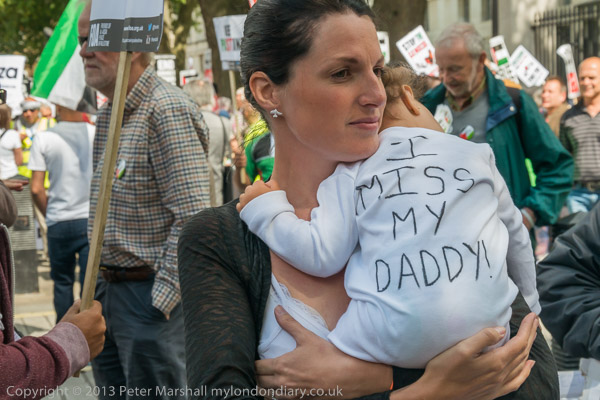
Marcia Rigg holds Keir Starmer’s 1988 booklet ‘The right to life’.

Most have involved physically fit young men, usually in their 20s, who have been arrested by police. People from all communities but with young black men being over-represented, but there are also those of Asian heritage, white British and all others, women, older people. Almost all from the poorer parts of our society.
UFFC March & Rally Against Custody Deaths - 2024

Attempts by the families to get information about the deaths have often been obstructed by police and official investigations into what happened have often been at best cursory, often more concerned with covering up than investigating. Despite the huge number of deaths there have been no convictions, no cases where families have felt they have received justice. And one of the most common chants is ‘No Justice, No Peace!’
UFFC March & Rally Against Custody Deaths - 2024

Few of these cases receive more than a short paragraph in a local newspaper, and where they do get more coverage it is largely due to the persistence of the families in finding the evidence, campaigning and presentations to inquests – often deliberately delayed for many years by the authorities.

One of these is of course the case of Sean Rigg, killed by Brixton Police in 2008. At his inquest four years later, despite several police officers committing perjury, the jury concluded the police “more than minimally” contributed to his death – and were highly critical of the restraint that killed him. Eventually one officer was charged with perjury but acquitted by the jury despite the evidence. His family, particularly his sister Marcia Rigg, continue to fight for justice.
This annual march and rally has usually been completely ignored by the mainstream press – though journalists including myself have covered it. This year there was rather more interest than usual following the ‘not-guilty’ verdict on the police officer who shot Chris Kaba in the head at close range.

On Saturday The Guardian misreported this event in a single sentence in an article on page 6 about Robinson’s arrest: “the United Families and Friends Campaign is planning a protest in Trafalgar Square against the acquittal this week of the firearms officer who shot Chris Kaba dead.”

Justice for Chris Kaba campaigner.

The UFFC wasn’t. It had planned its usual annual commemoration and protest over the many thousands of custody deaths, though supporters of Chris Kaba’s family took part in it, and one of them spoke breifly at the start and at the rally in Whitehall where there were also a number of speakers from other family campaigns.

Trafalgar Square – or rather its southern edge – was only the start of the march, which was to a rally in Whitehall. Normally this would have taken place at the entrance to Downing Street, but this year there was a police barricade some distance before this, and instead the rally took place in front of the Cabinet Office.

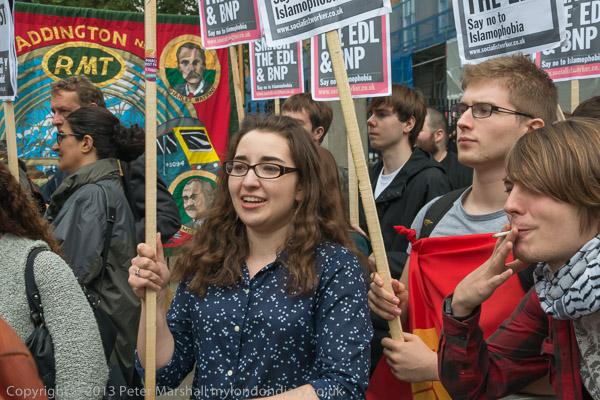
The interest aroused by the Kaba shooting did make for a larger protest than in previous years and it was augmented too by some people who had arrived early for the Stand Up to Racism rally. Several thousand filled out across the street to listen to the families speaking.

As usual a small delegation from the event were to deliver a letter to the Prime Minister at Downing Street, though in some years they have been refused entry by the police. They too were prevented by the police barricade, but later I heard that police had helped them deliver it. But as well as the letter, the envelope contained a copy of the 1998 booklet by Keir Starmer, ‘The Right To Life’ in which he had written “When citizens die at the hands of the police, or make serious allegation of torture in police custody, the reaction of the state raises very serious questions about the protection of human rights.”

Justice for Chris Kaba campaigners and Qian Zheng, partner of late Benjamin Zephaniah raise fists,

You can listen to one of the speeches from the rally, by Temi Mwale, founder of the 4Front Project, in which she quotes from that booklet in a video on the Real Media site.

The letter which was delivered to Keir Starmer also contains that quote from the his booklet, before some details of some cases and a listing of the five demands of the UFFC campaign:

As bereaved families, we demand:

  1. An end to all killings at the hands of the state.
    An end to all racist police practice and an end to fatal use of force.
  2. A radical reduction in the use of prisons. People are unnecessarily dying, as prisons
    do not address underlying causes of social harm.
  3. The individuals and state bodies responsible for deaths are pro-accountability for
    their wrong-doings, and an end to all cover ups.
  4. Legal Aid is made available to all families, automatically.

More pictures from the 2024 UFFC Annual March & Rally Against Custody Deaths


FlickrFacebookMy London DiaryHull PhotosLea ValleyParis
London’s Industrial HeritageLondon Photos

All photographs on this page are copyright © Peter Marshall.
Contact me to buy prints or licence to reproduce.