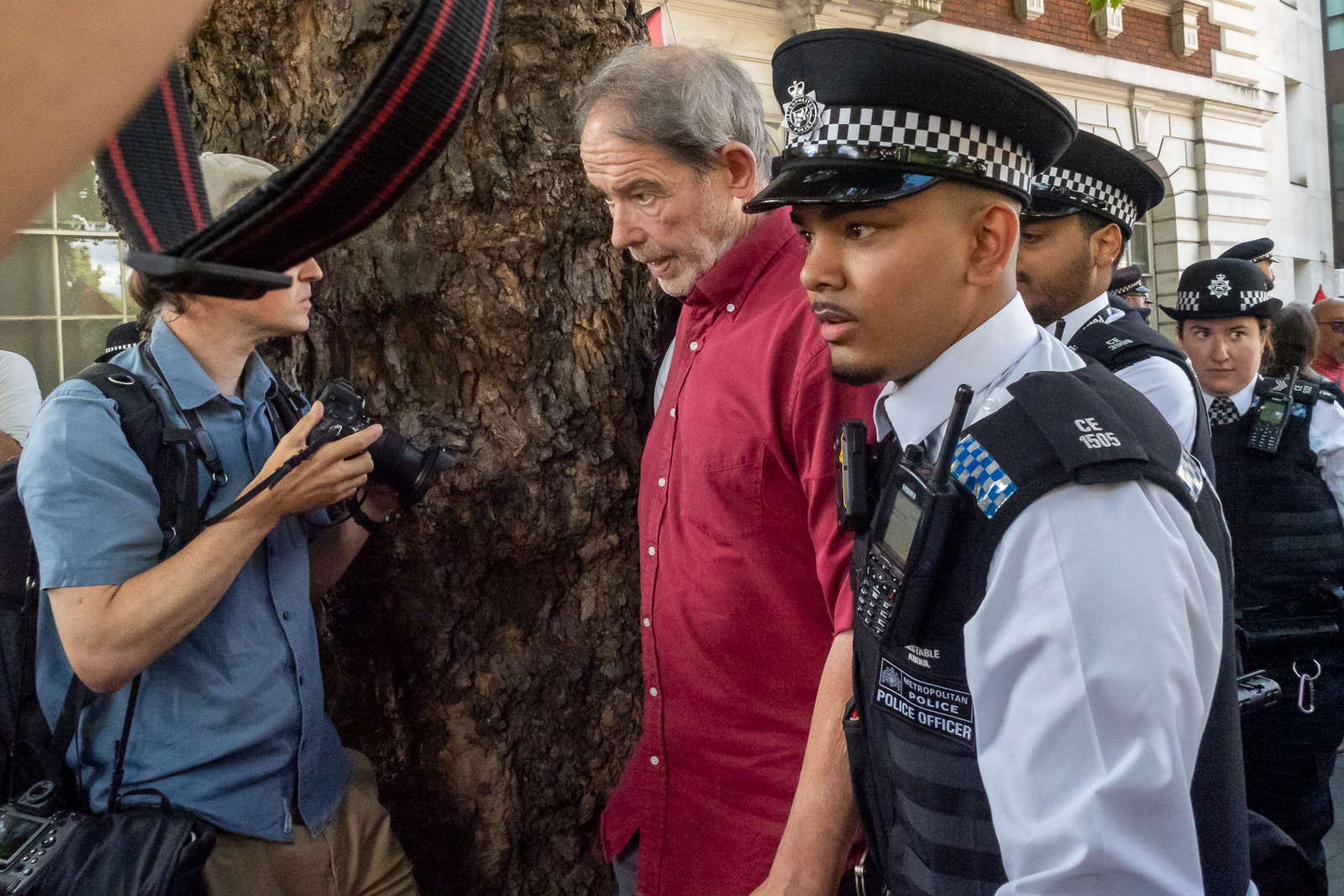
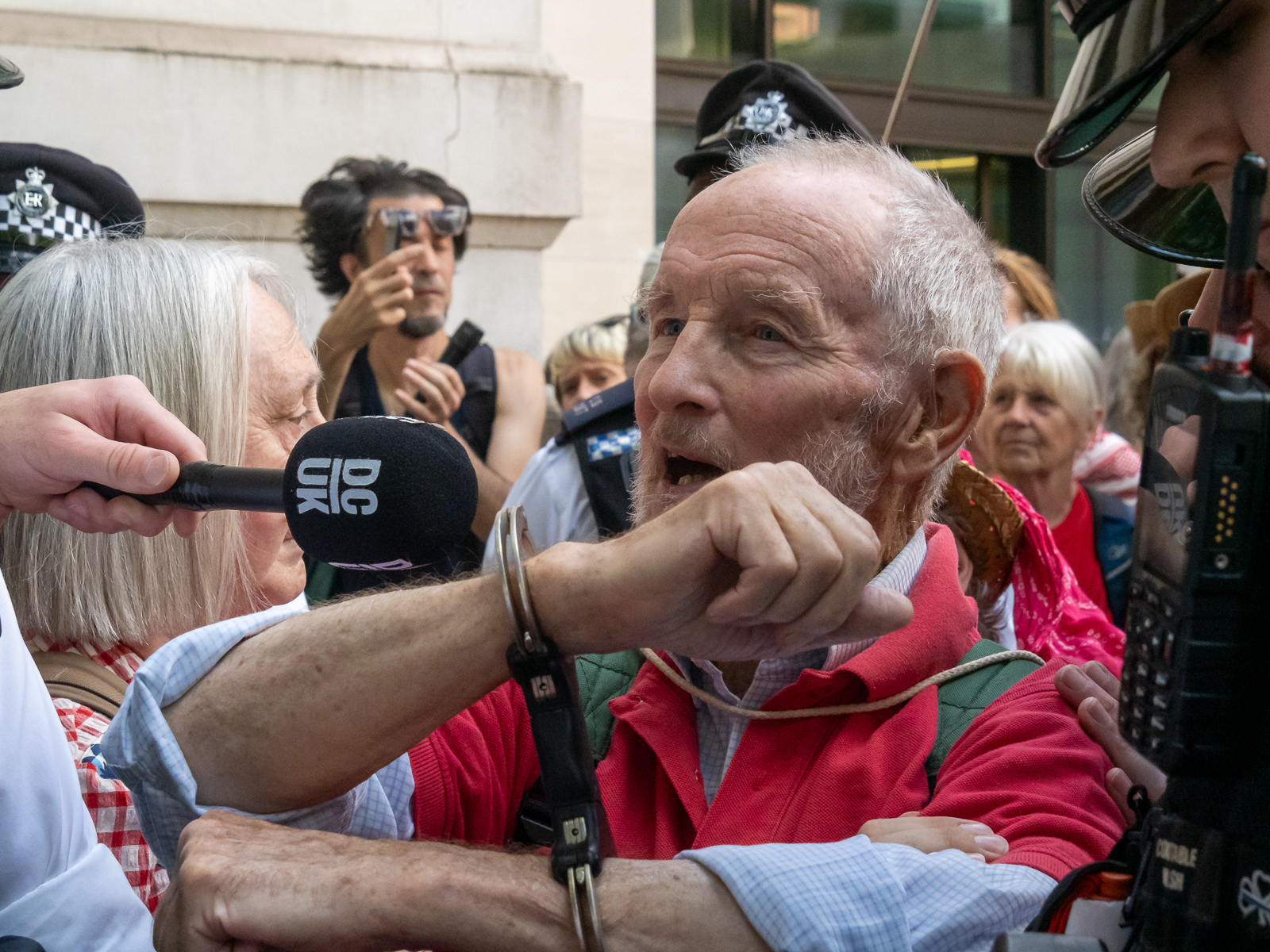
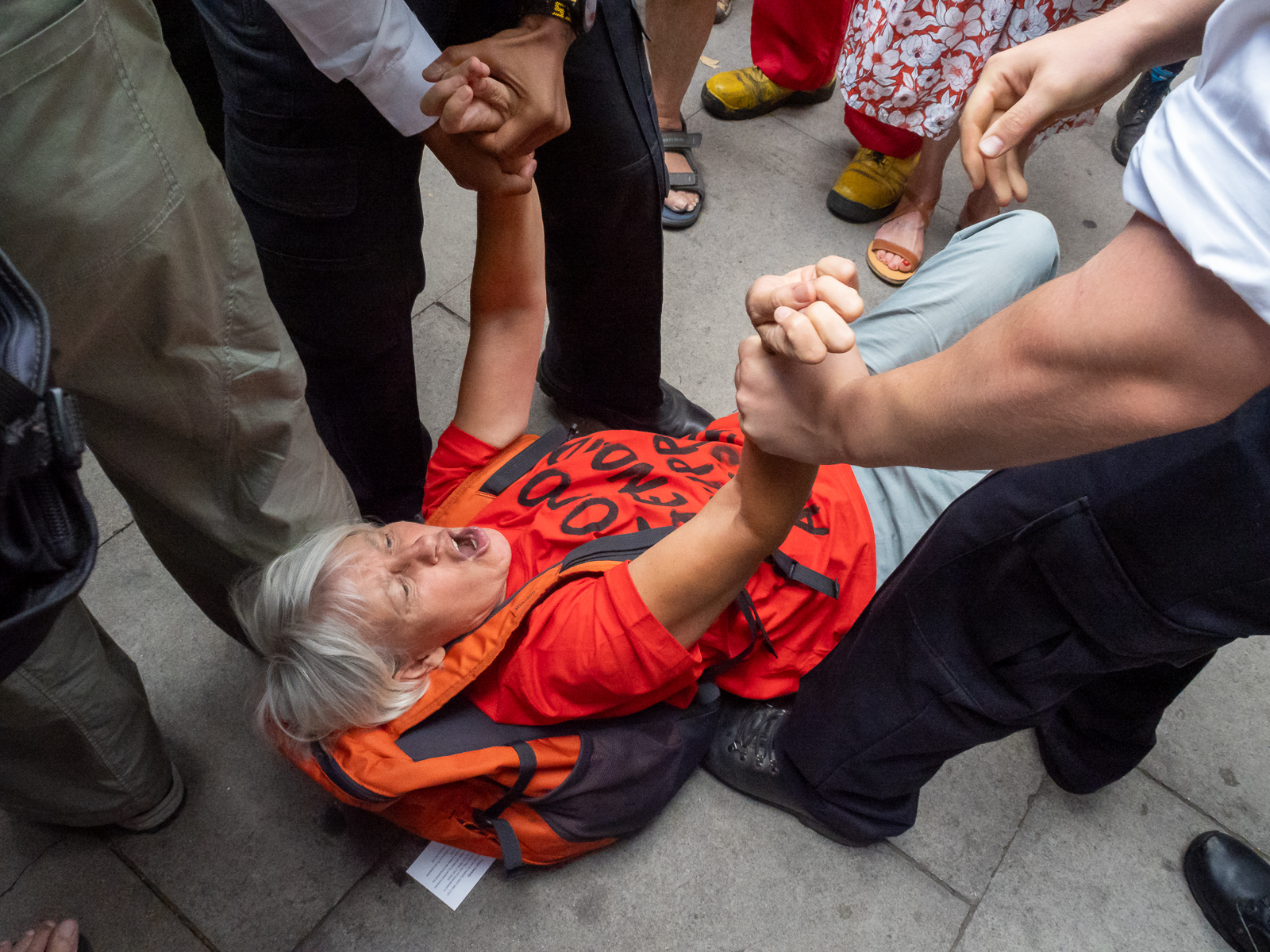
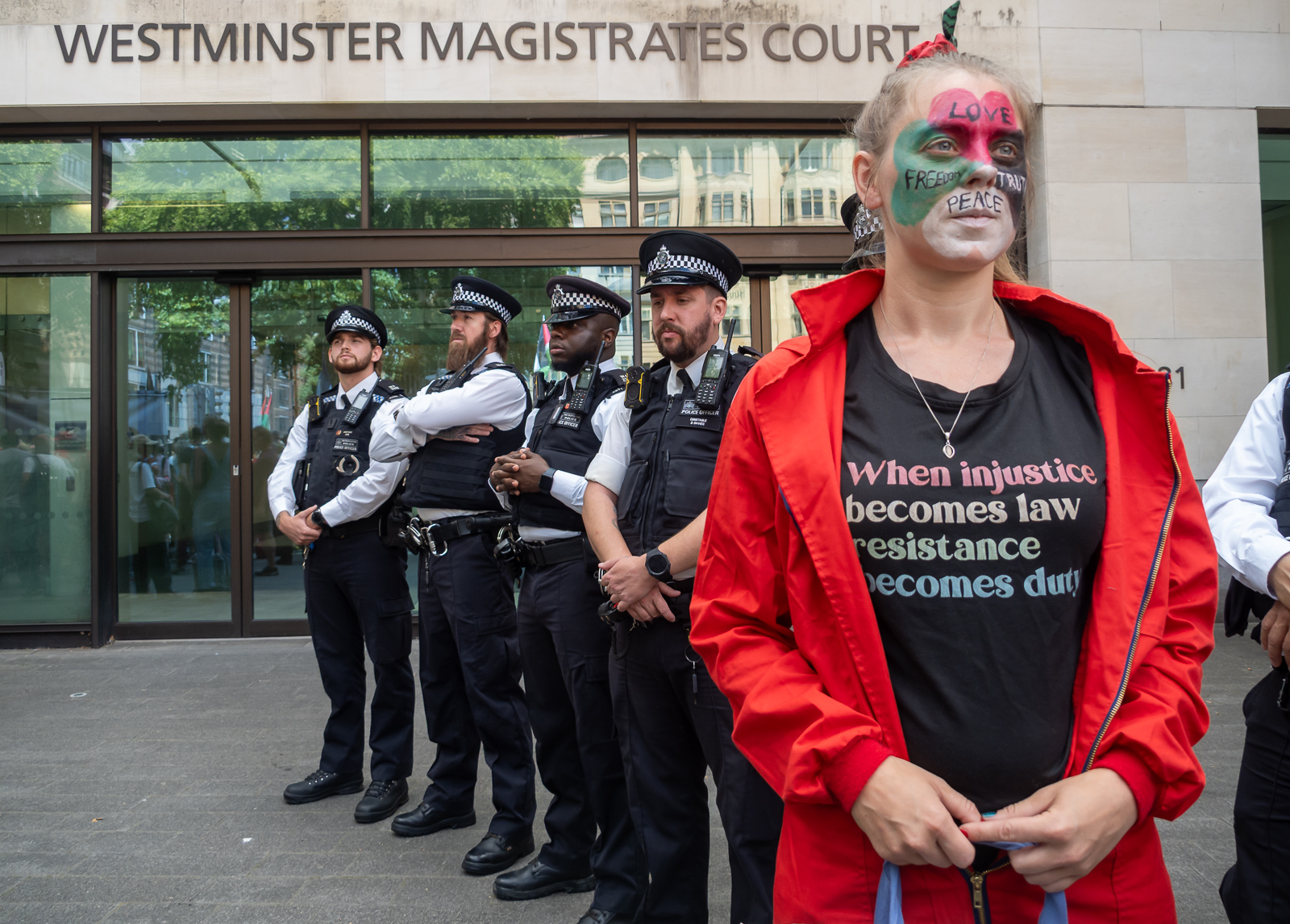
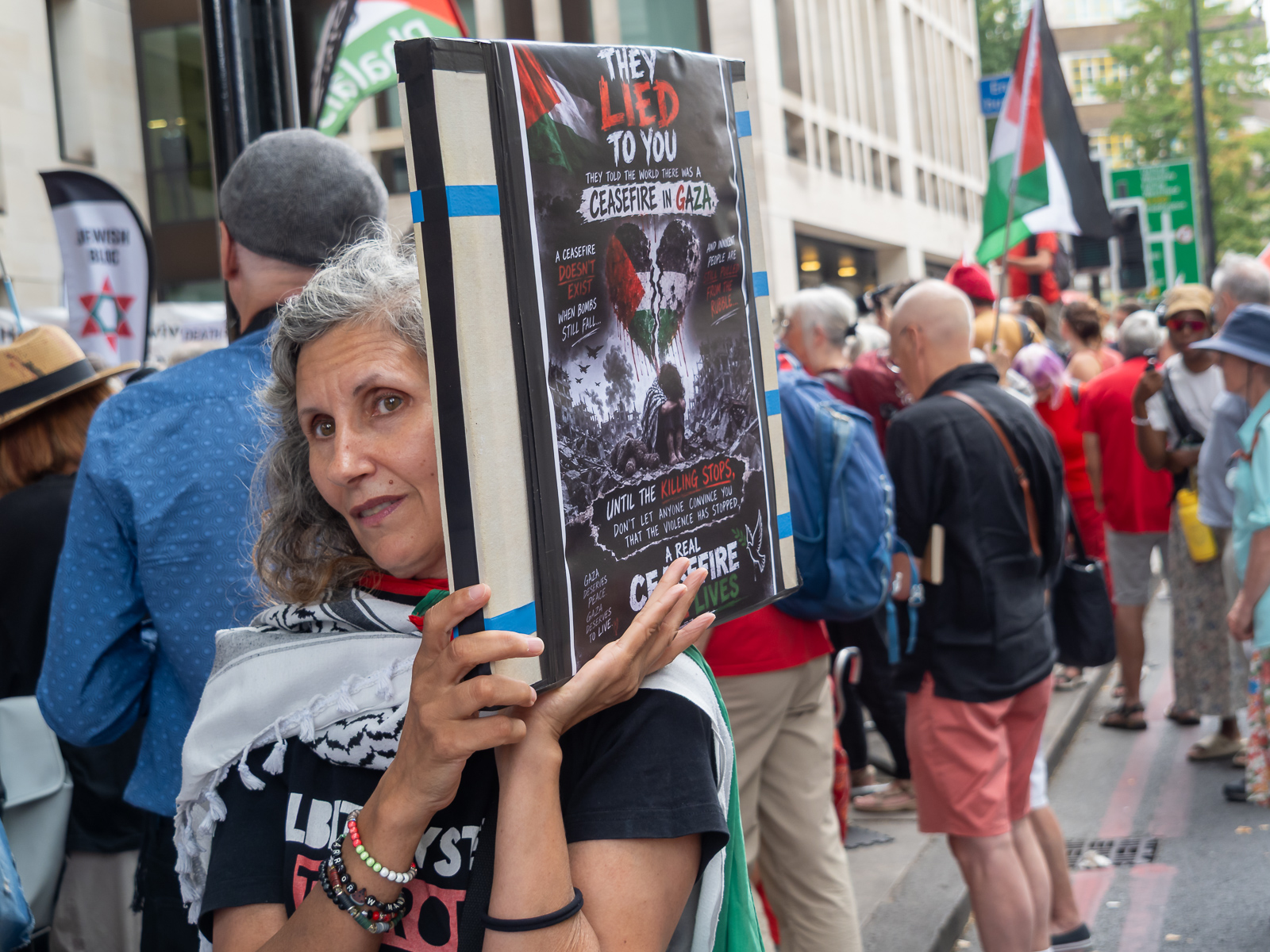
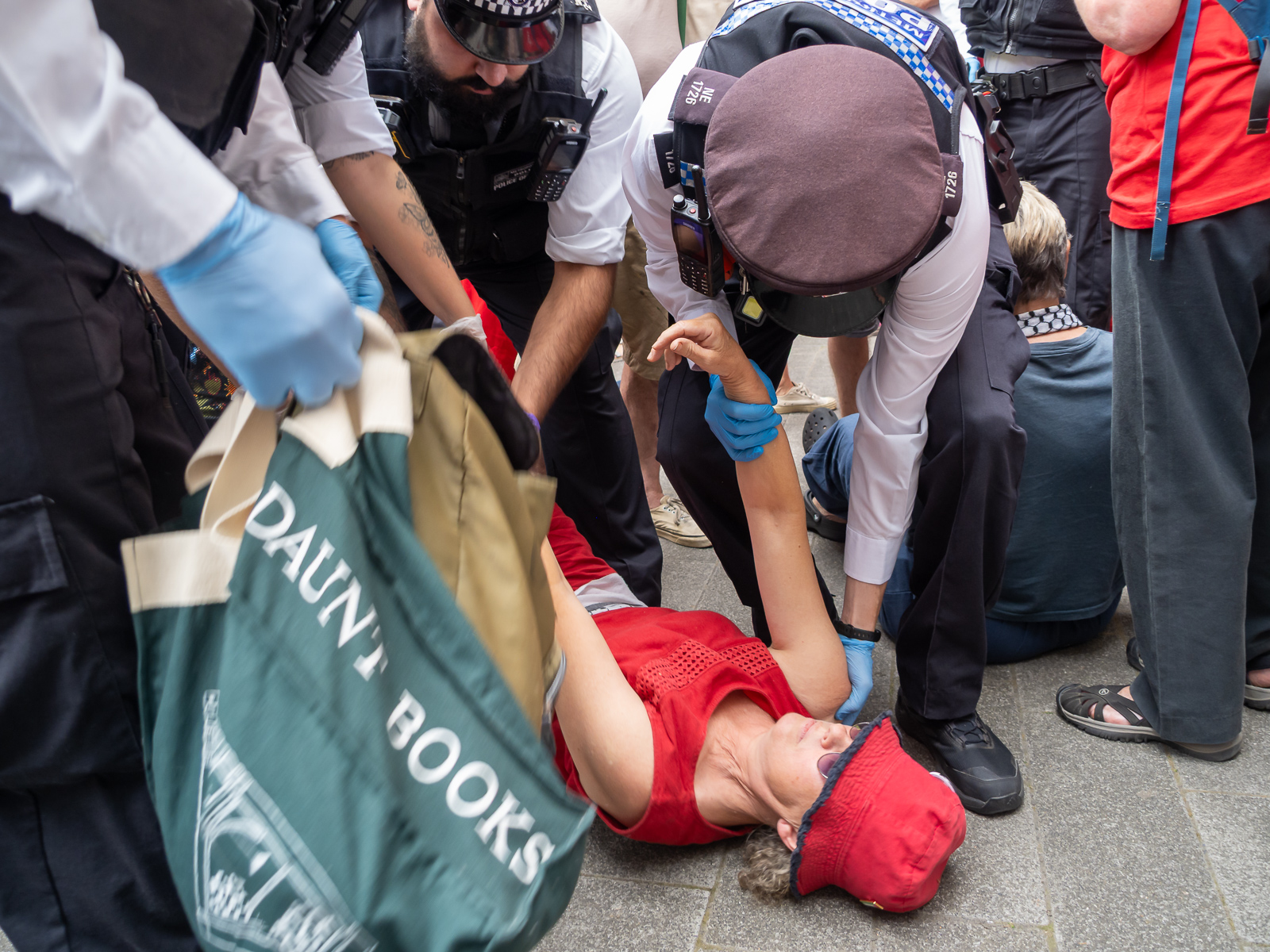
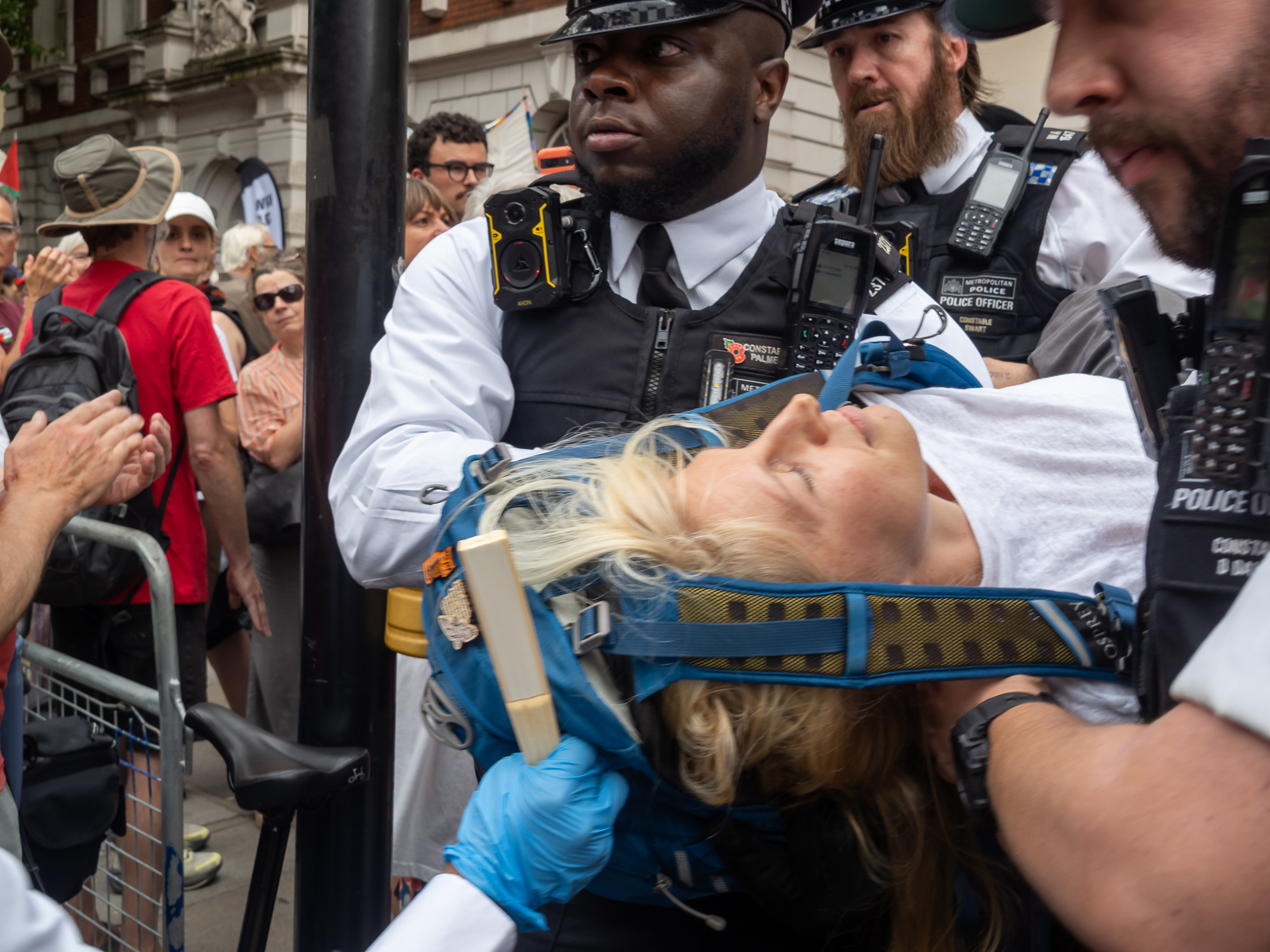
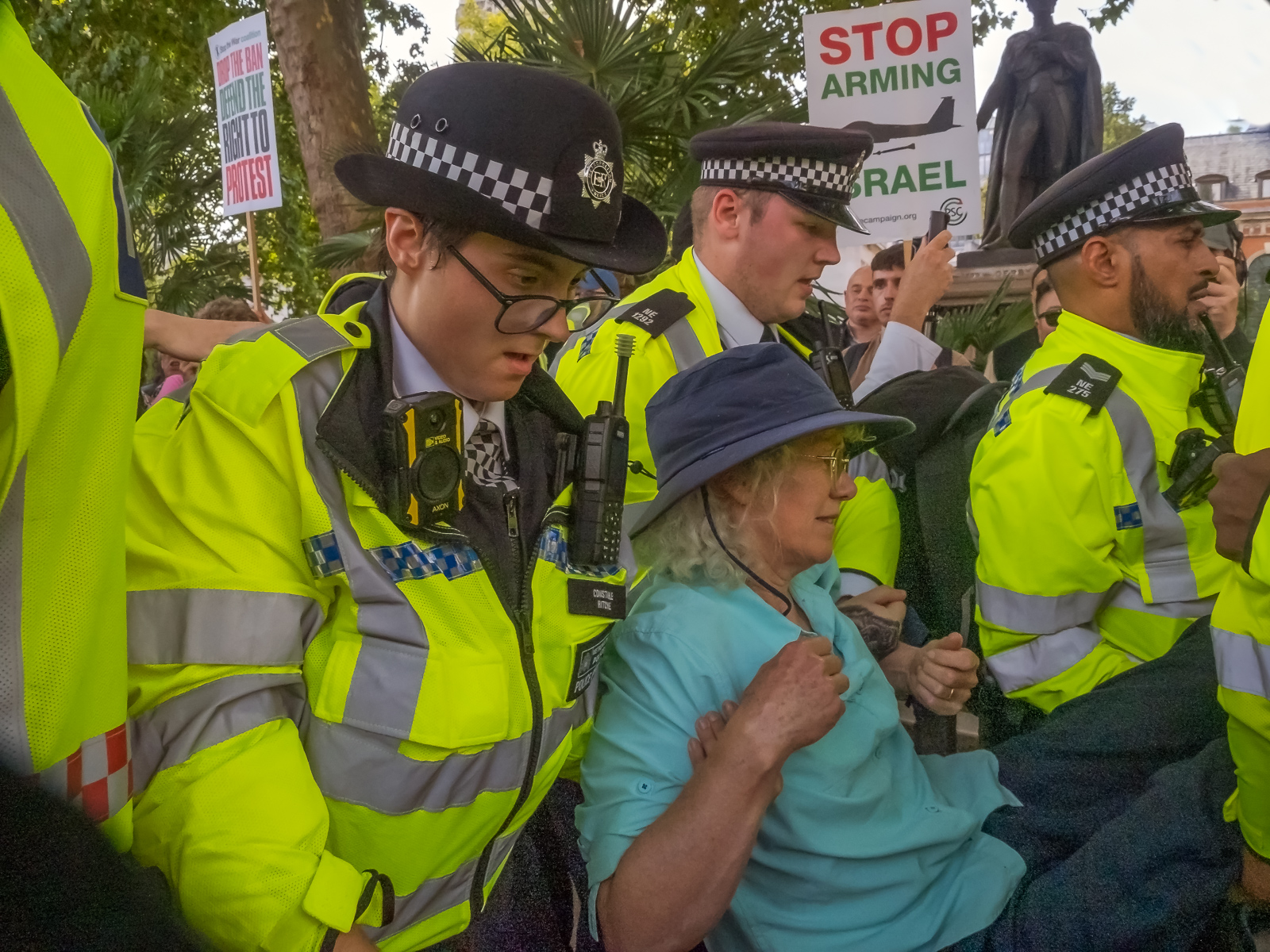
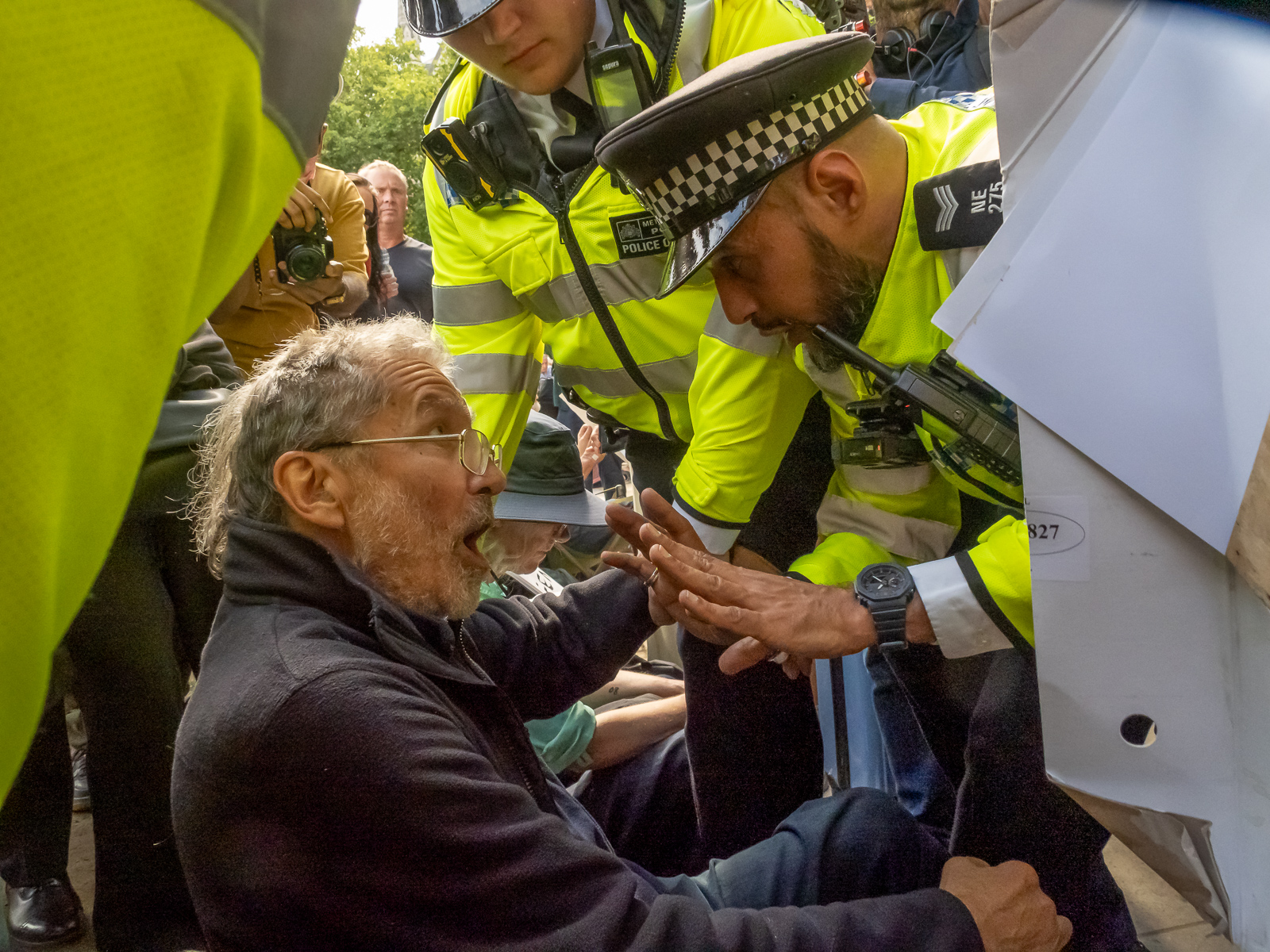
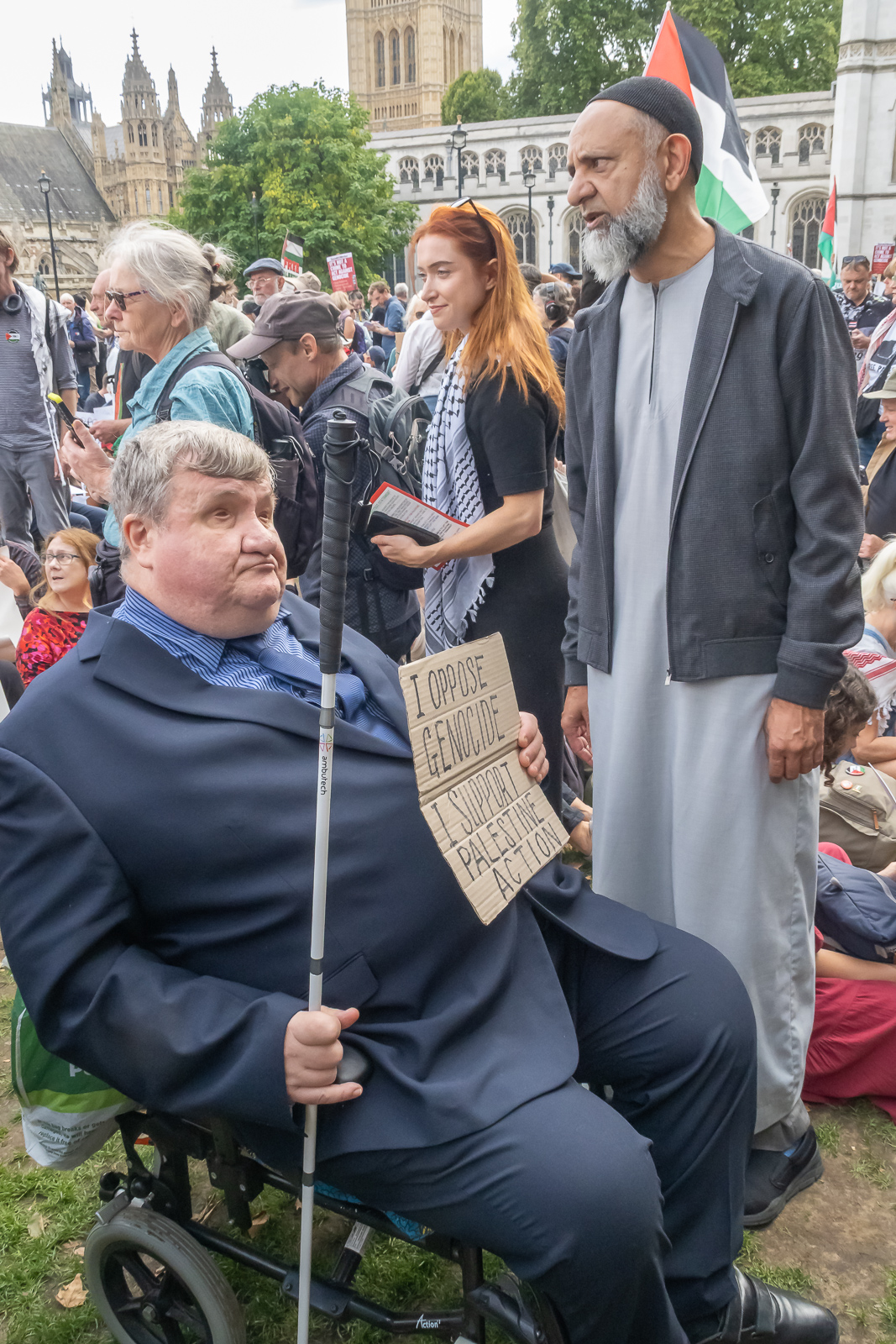
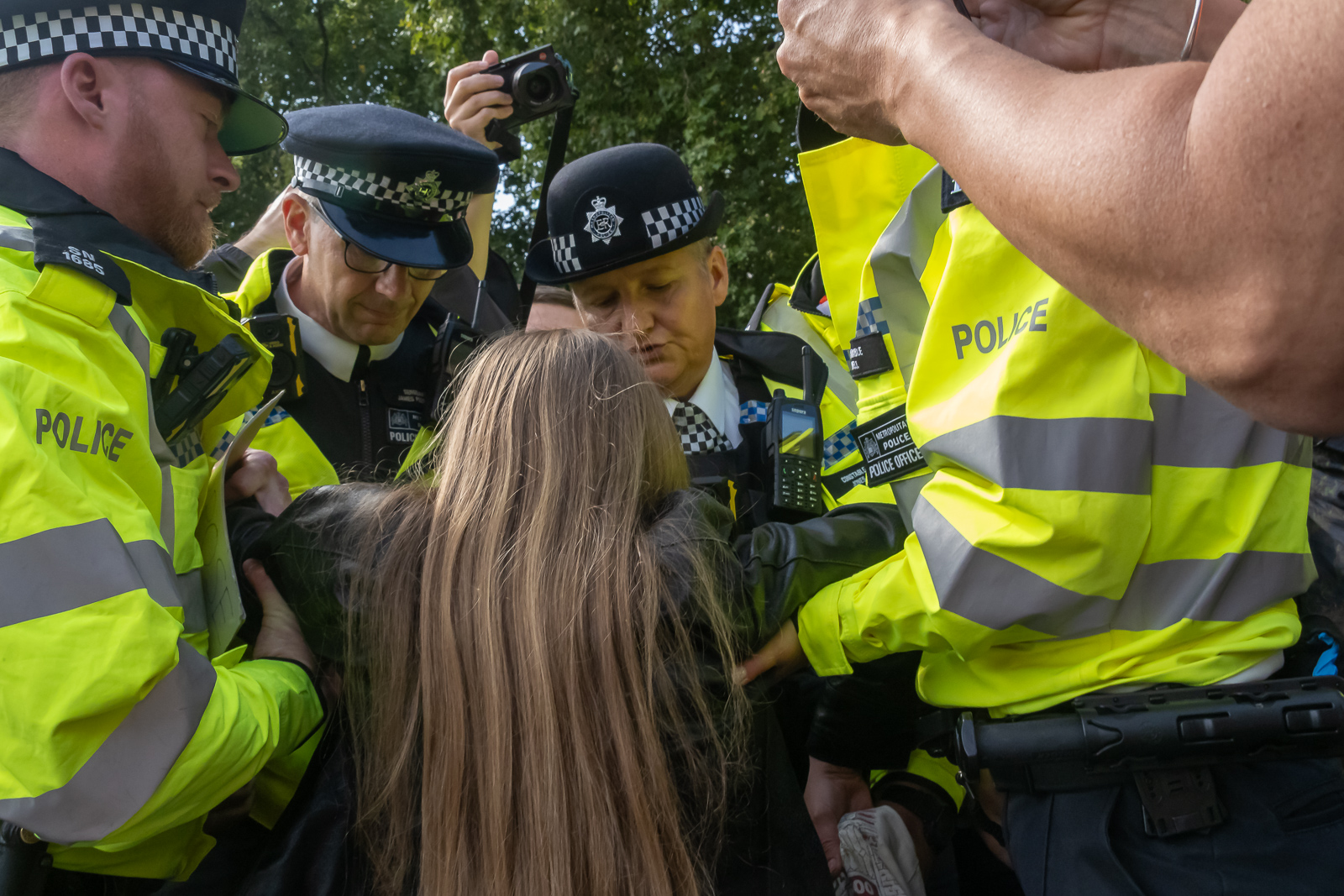
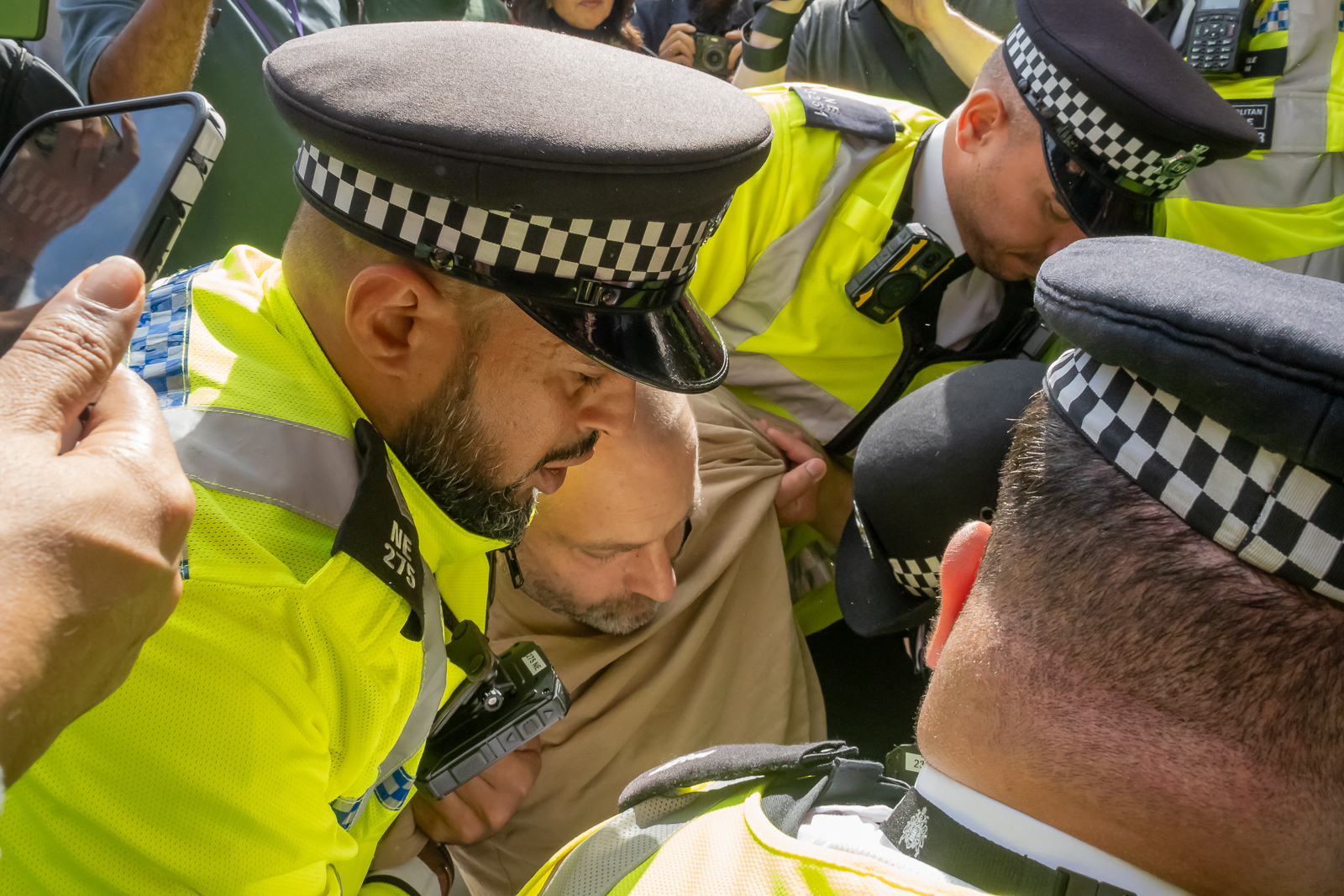
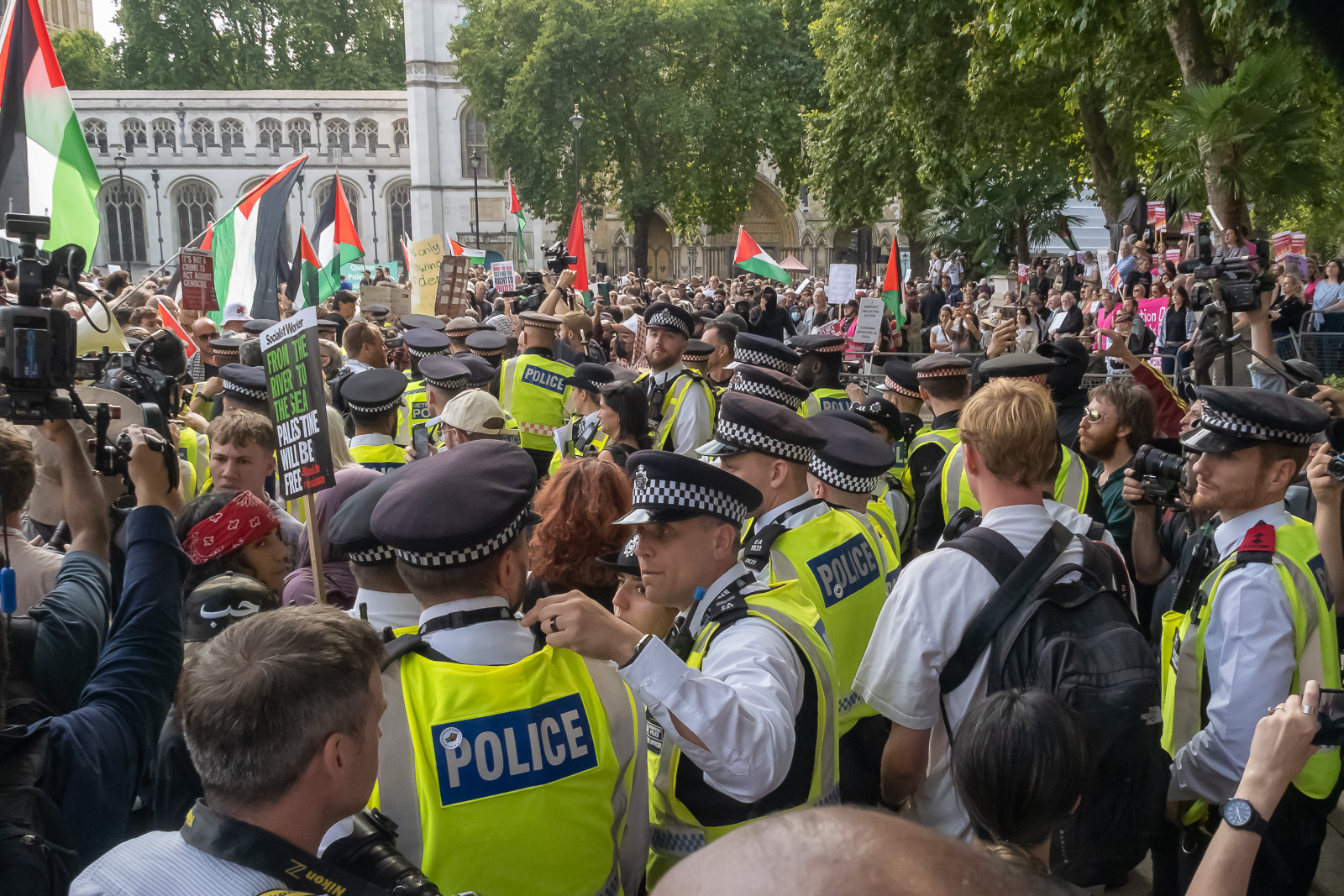
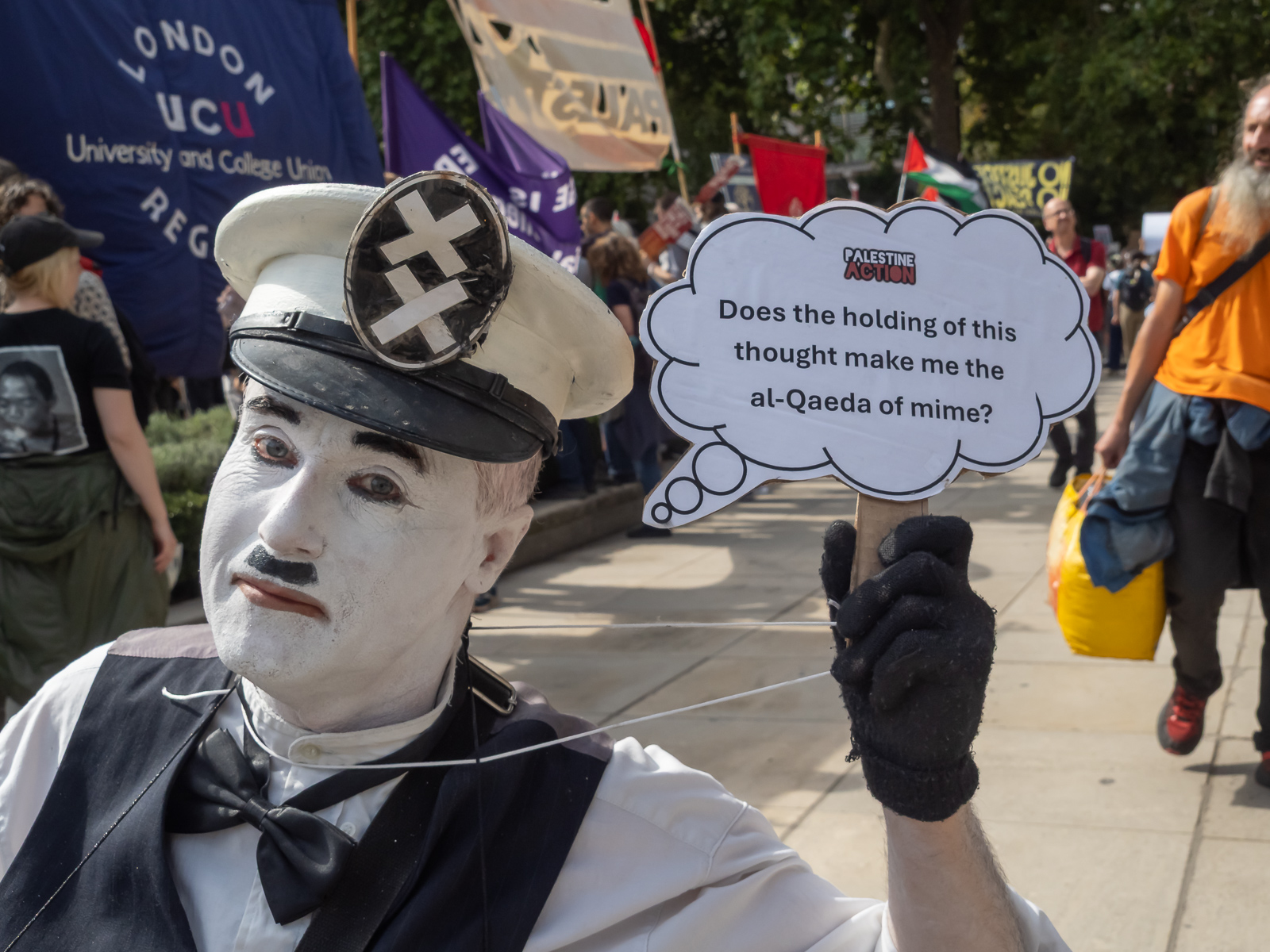
Police Prevent Peaceful Protest: On Thursday 30the July 2026 Defend Our Juries had arranged a static peaceful protest on the wide pavement in front of Westminster Magistrates Court on Marylebone Road. It was to begin at noon with an hour of speeches, music and poetry.
I arrived at the starting time to find several surrounding roads full of police vans and squads of police standing waiting while others were in the crowd making arrests.
There was a large crowd present, perhaps around a thousand demonstrating against the government ban on Palestine Action. They included many who had been arrested at previous events for holding signs in support of Palestine Action.
Over 1500 of these arrestees had earlier received letters from the court stating that their cases would be dealt with on this day – but most at least had been told they need not attend. Clearly magistrates cannot hear that many cases in a day and the intention had been to simply rubber-stamp the great majority without allowing those arrested to make any defence.
Defend Our Juries had in fact been told that because of administrative problems, the ‘non-hearing‘ of these cases would not be going ahead on this day. But they had decided to go ahead with the protest and after the hour of entertainment had invited all those charged – if they wanted – to come up the the small platform they were bringing and make a further statement of their support for Palestine Action and their intention to encourage others also support the banned group.
Most of those previously arrested had been charged under Section 13 of the Terrorism Act, but by making the intended statement would also be in breach of Sections 11 and 12 which carry more serious penalties – and would lead to a jury trial. Defend Our Juries were clearly intending to ramp up their challenge to the authorities in what they called a ‘Graduation Day’ ceremony.
Before I arrived police had already seized the platform and the public address system as well as several protesters – including one who who had been testing the sound system. Perhaps they will now argue that ‘1.2.3.4 …testing‘ is now a terrorist chant.
The Court of Appeal had surprised many by overruling the High Court’s decision that the ban was unlawful. It was was pushed through Parliament by combining them with a genuinely terrorist organisation, and would probably have met with considerable opposition otherwise. As the protest was taking place on Thursday the Supreme Court announced it would hear a further appeal in September which could quash the ban. Andy Burnham could end this nonsense now.
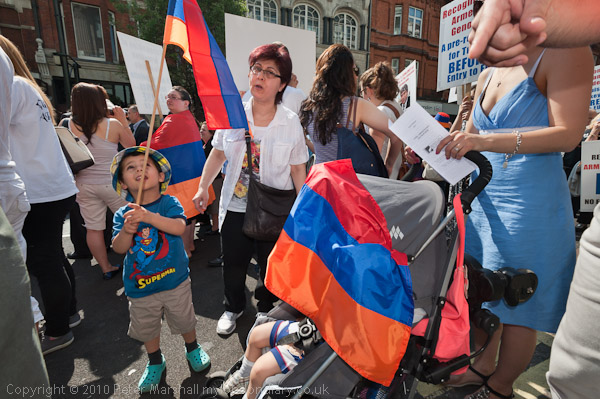
St George, Armenian Genocide & Congo: On St George’s Day, 23 April 2011 I found little celebration taking place in Lcndon but mad3e a few pictures before photographing an Armenian march calling on our government to officially recognise the Armenian Genocide, then a protest over human rights violations in the Congo.
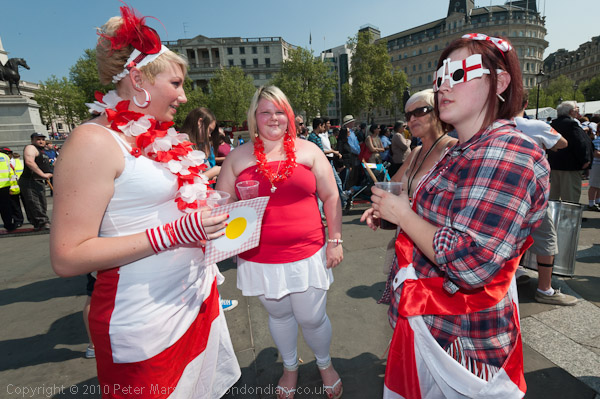
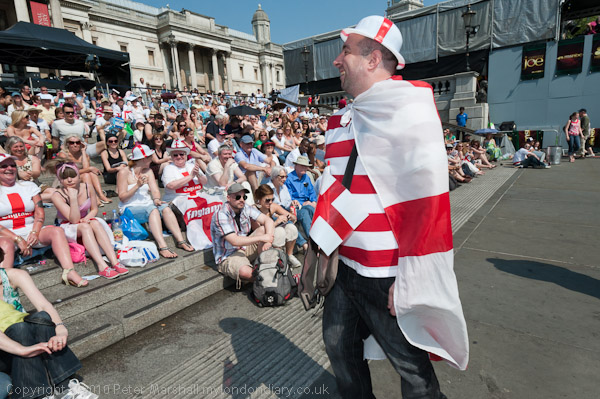
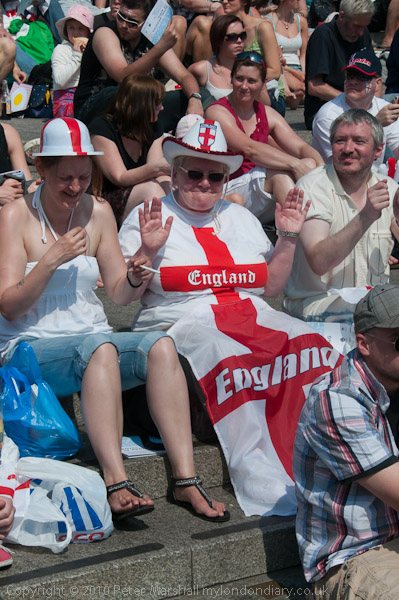
St George’s Day in London
Westminster
I found it hard to find much celebration of St George’s Day in London in 2011. He had become the patron saint of England in the Tudor era, but had been almost forgotten by the Royal Society of St. George was founded in 1894 to try and revive the tradition.
But it was not until the 1990s that we saw much revival, with the English football team and right wing political groups widely adopting the St George’s flag, preciously mainly the preserve of miniscule nationalist political groups. The Royal Society of St George was joined by English Heritage in promoting the idea.
I photographed the Royal Society of St George event at Covent Garden in 2005, but it was only in 2010 that London Mayor Boris Johnson hosted the first celebration in Trafalgar Square. Before these there had of course been celebrations in various pubs around London, soemtimes rather right-wing events. In 2016 I photographed two rival St Georges in the same pub in Southwark.
But it was the then Labour leader Jeremy Corbyn who was the first major leader to make a promise in his party manifesto. Had his 2017 election campaign not been sabotaged by the right wing in his party, today would now be a Bank Holiday.
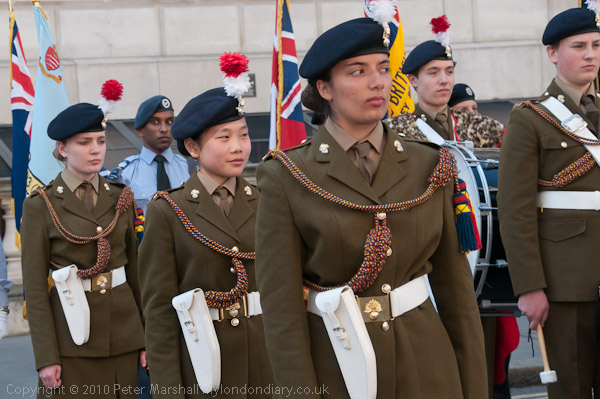
The 2011 celebrations in London seemed very limited. There was a parade marking the 150th anniversary of our military cadet units (though as I note in My London Diary this was rather premature for the air cadets.) And later I went to Trafalgar Square for the Mayor’s official celebrations and was very unimpressed.
Between 1915 and 1923 the Turkish authorities killed around 1.5 million Armenians, around 70% of Turkey’s Armenian population in a deliberate attempt to rid Turkey of people who did not fit in with their desire to create a homogeneous Turkish nation. Armenians have a strong national identity, centred around their Christian heritage which did not fit well into a largely Muslim Turkey.
The genocide began on 24 April 1915 when Turkish authorities arrested and murdered around a thousand leading members of the Armenian community in Constantinople. They then killed the roughly 300,000 Armenian conscripts in the Turkish Army.
This was followed by “mass killings, deportations and death marches of women, children and elderly men into the Syrian Desert. During those marches, many of the weak or exhausted were killed or died. Women were raped. The deportees were deprived of food and water. Starvation and dehydration became commonplace.”
Turkey still refuses to admit to the genocide, and insists that the deaths were the result of a civil war. But it was a ‘war’ against a people who had no weapons and no organisations to fight and were simply slaughtered because they were Armenian.
The term ‘genocide’ did not exist at the time and was coined by Raphael Lemkin who described it as “The sort of thing Hitler did to the Jews and the Turks did to the Armenians.” One of the first resolutions proposed by him and passed by the UN was ‘The Prevention and Punishment of the Crime of Genocide’.
The annual march in London calls on the UK Government to officially recognise the Armenian genocide – as the UN Commission on Human Rights and many countries around the world have done, including France, Germany, Italy and others of our European neighbours. It’s hard to understand why we have not done so, though successive UK governments have taken the line it is a matter for international courts to decide, not governments. But others think that trade issues are the real reason.
More about the march and the reasons behind it and about “Hrant Dink (1954-2007) ‘The 1,500,001st Victim of The Armenian Genocide'” on My London Diary.
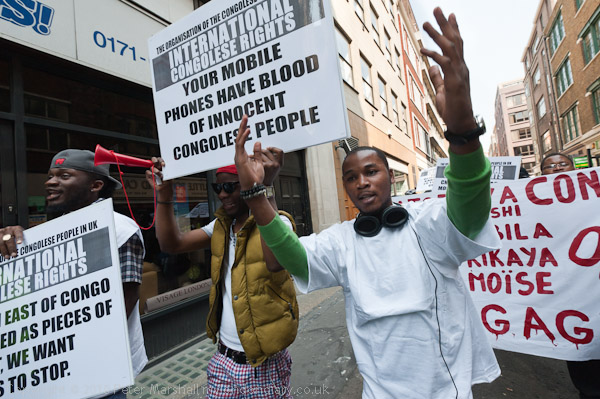
The International Congolese Rights organisation (ICR) were marching from the Congolese Embassy in Great Portland Street to Downing St calling attention to human rights violation in the Democratic Republic of Congo (DRC) and asking the UK Government to put pressure on President Kabila to hold elections or resign.
Formed in 2004 to defend the defend the rights of Congolese citizens living in the UK the ICR as held a number of demonstrations aimed at exposing the systematic violation of human rights in the DRC aimed at getting the UK and the international community to take action.
Ever since the end of colonial rule in the former Belgian Congo there has been fighting in the Congo. The DRC has vast mineral resources, probably “the richest of any country in the world, including 80% of the world’s cobalt reserves, and between 65-80% of coltan, the mineral from which tantalum capacitors, vital for mobile phones, games consoles, computers and other electronic devices.” It also has large amounts of copper and is the world’s second largest diamond producer. A large proportion of its trade is now with China.
Despite these resources, the DRC remains the second poorest country in the world, with almost three quarters of its 124 million people in extreme poverty as a result of its underdevelopment in the colonial era and the war and political turmoil since independence.
The main banner of the protest stated ‘David Cameron – Why Are So Quiet On 8 Million Deaths in D. R. Congo?‘ and people carried placards about the suffering in the country including the killings and the widespread use of rape as a military and political tactic.
They called for elections and for DRC President Joseph Kabila to step down and to face trial at the International Criminal Court.
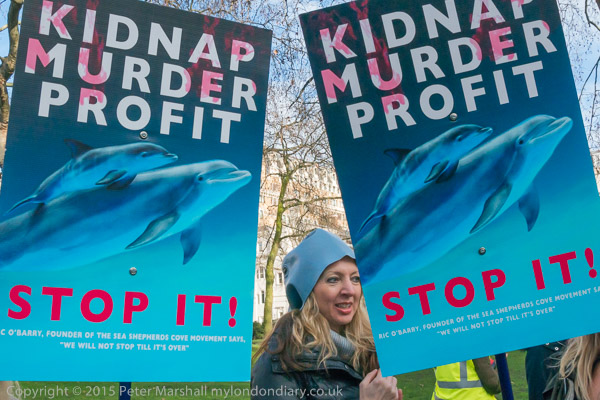
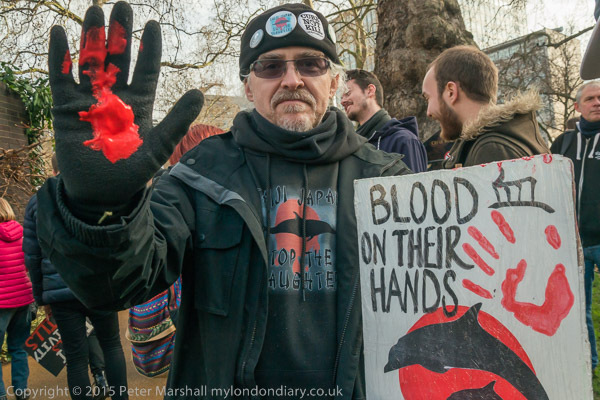
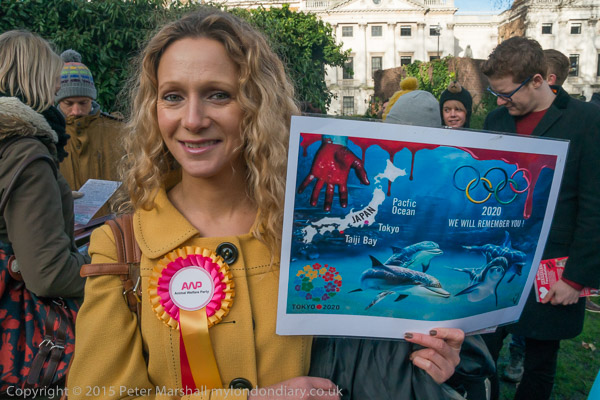
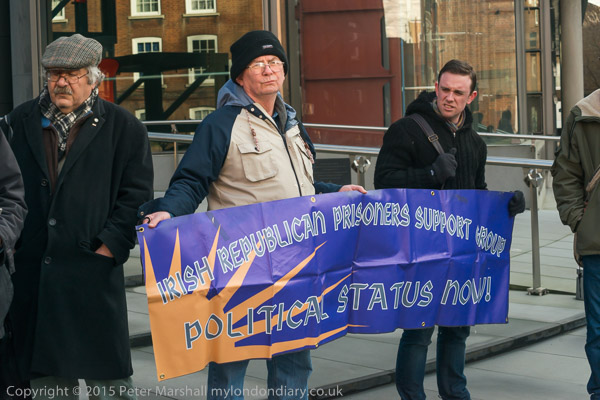
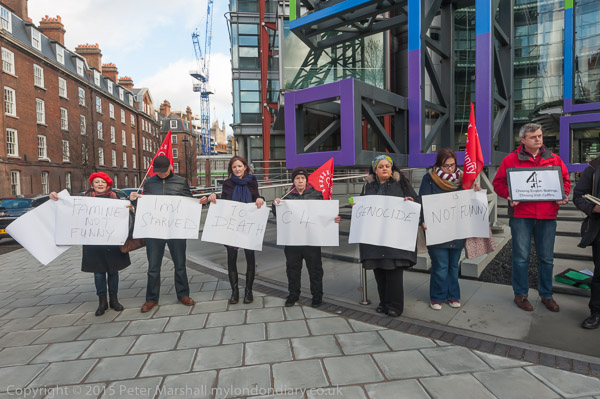
Dolphin Massacre & Irish Famine: On Saturday 17th January 2015 I photographed two very different protests. More than a thousand had come to Cavendish Square in the late morning for a march to protest against the bloody annual dolphin slaughter in Taiji cove, Japan and the cruelty of keeping captured dolphins in visitor attractions. I left as they went through Oxford Circus marching to a rally in Trafalgar Square to cover a much smaller protest outside the Channel 4 building on Horseferry Road by people outraged at their plans to produce a comedy series based on the 1840s Irish famine.
Carnival March to End Taiji Dolphin Massacre
Cavendish Square
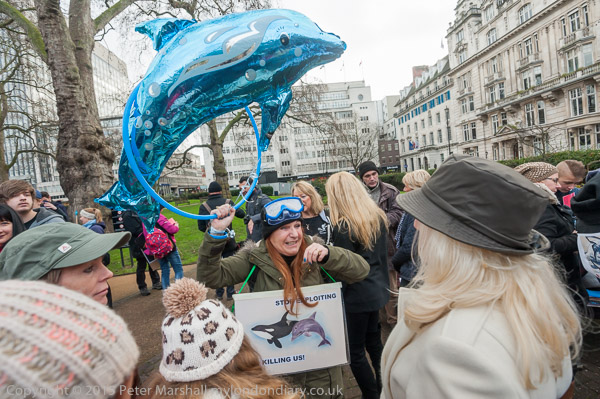
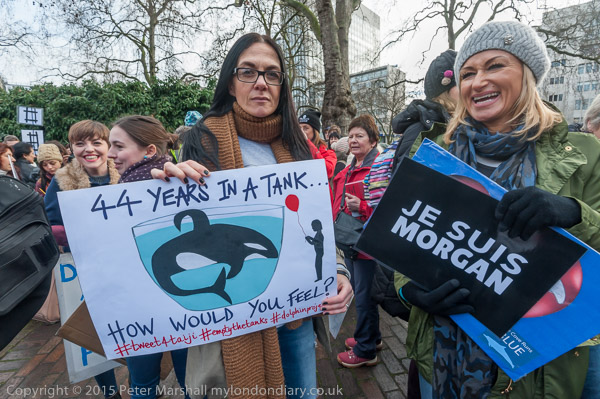
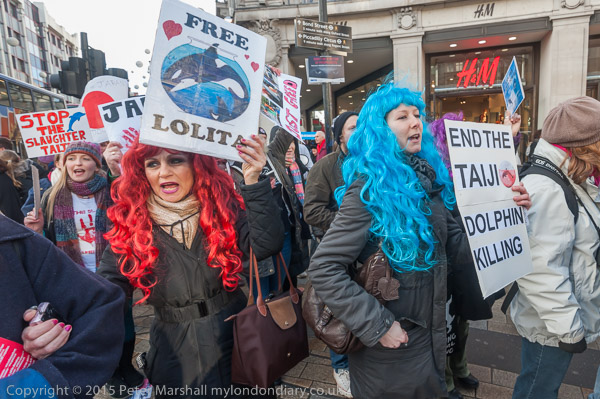
This had been planned as a carnival march and many of those taking part had obviously take considerable time and effort to dress up and make placards for the event. Some had brought model dolphins and many of the placards featured them.
Obviously those taking part felt very strongly about the cruelty both of the annual slaughter in Taiji Cove, where the dolphins are trapped in the shallow water and killed, their blood turning the sea red, and of the cruelty of keeping captured dolphins in visitor attractions where they have little space to swim and cannot enjoy any natural life.
Having seen the films of the killing I’m also very much opposed to it, and I’ve never liked the caging of animals for entertainment. But when photographing events like this I do often think how good it would be if these people would also put the same kind of effort into protesting over the wars and genocides that are killing millions of our own species.
But the protesters enthusiasm for the cause and the effort they put into visuals do make protests such as this easy and rewarding to photograph – and very different from more political protests which are often rather more soberly dressed and dominated by mass-produced placards.
Another difference is the much greater proportion of women taking part than in most protests, though of course women play a very important part in many of the events I photograph and in my pictures.
Vanessa Hudson, leader of the UK Animal Welfare Party which has stood candidates in local and European elections
I was surprised when the march set off from the square that they walked on the pavements rather than taking to the road.
A march this size doesn’t really fit on the pavements of the West End which are crowded with shoppers, and it made photographing the actual march more difficult, fragmented by tourists and often slowly wandering shoppers. I found myself continually bumping into people and spent more time apologising than taking pictures as well as finding it very difficult to get a clear view.
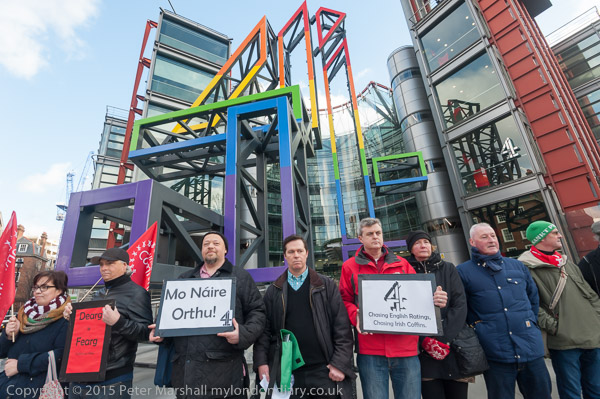
‘Dearg le Fearg’ means Red with Anger, and ‘Om Náire Orthu’ is Shame on You
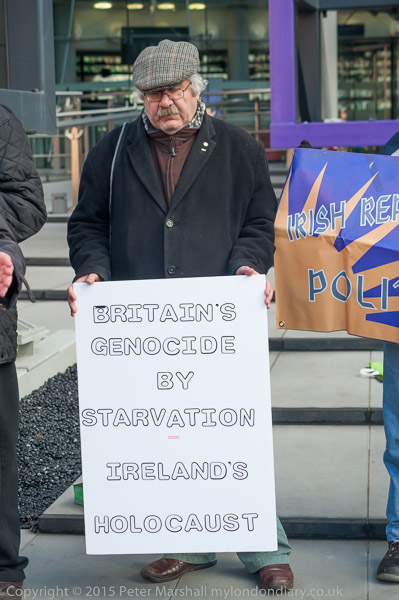
Outside Channel 4 around 50 people had come to protest against a proposed comedy series on the Irish famine, potato blight exploited in 1845-9 as a deliberate genocide by the English establishment, wiping out a million Irish, and forcing more into poverty, starvation and immigration.
The Great Famine or Irish Potato Famine led to the deaths by starvation of around a million Irish people, and also during it and in the next few years to around two million leaving the country, many for America. Roughly one in eight of the country’s inhabitants starved to death, and about a quarter of them emigrated, said by Wikipedia to be “one of the greatest exoduses from a single island in history.”
‘Famine Not Funny’, ‘1m Starved’, ‘to Death’, ‘C4’, ‘Genocide’ ‘is Not Funny’. ‘Chasing English Ratings – Chasing Irish Coffins’.
The UK government knew what was happening – and also knew that they could have avoided most of the deaths by simply stopping the export of large amounts of food from Ireland – as they had during previous times of famine in Ireland – but they decided not to do so. They even stopped ships carrying wheat from reaching the country. The interests of major landlords – mostly absentee landlords – were prioritised over the lives of poor Irish who were said to lack ‘moral fibre’ and some in England regarded the deaths as a ‘divine judgement’.
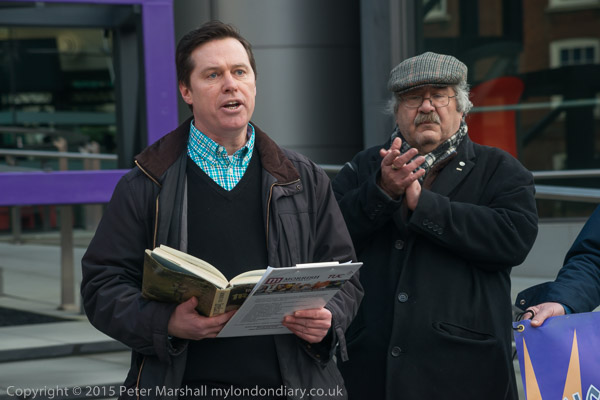
Austin Hearney of CRAIC and PCS reads some facts about the Irish Famine
My account on My London Dairy lists some of the speakers at the even, including its “organiser Austin Harney, Chair of CRAIC, (Campaign for the Rights and Actions of Irish Communities), Pat Reynolds of IBRG, (Irish in Britain Representation Group), Helen O’Connor of the Socialist Party, Peter Middleton of the Wolfe Tone Society (Sinn Fein), Zita Holbourne from BARAC, (Black Activists Rising Against the Cuts) and Irish traveller Phien O’Reachtign of PAAD.”
12 Days of Christmas -some of my favourite pictures from those I made in November 2025.
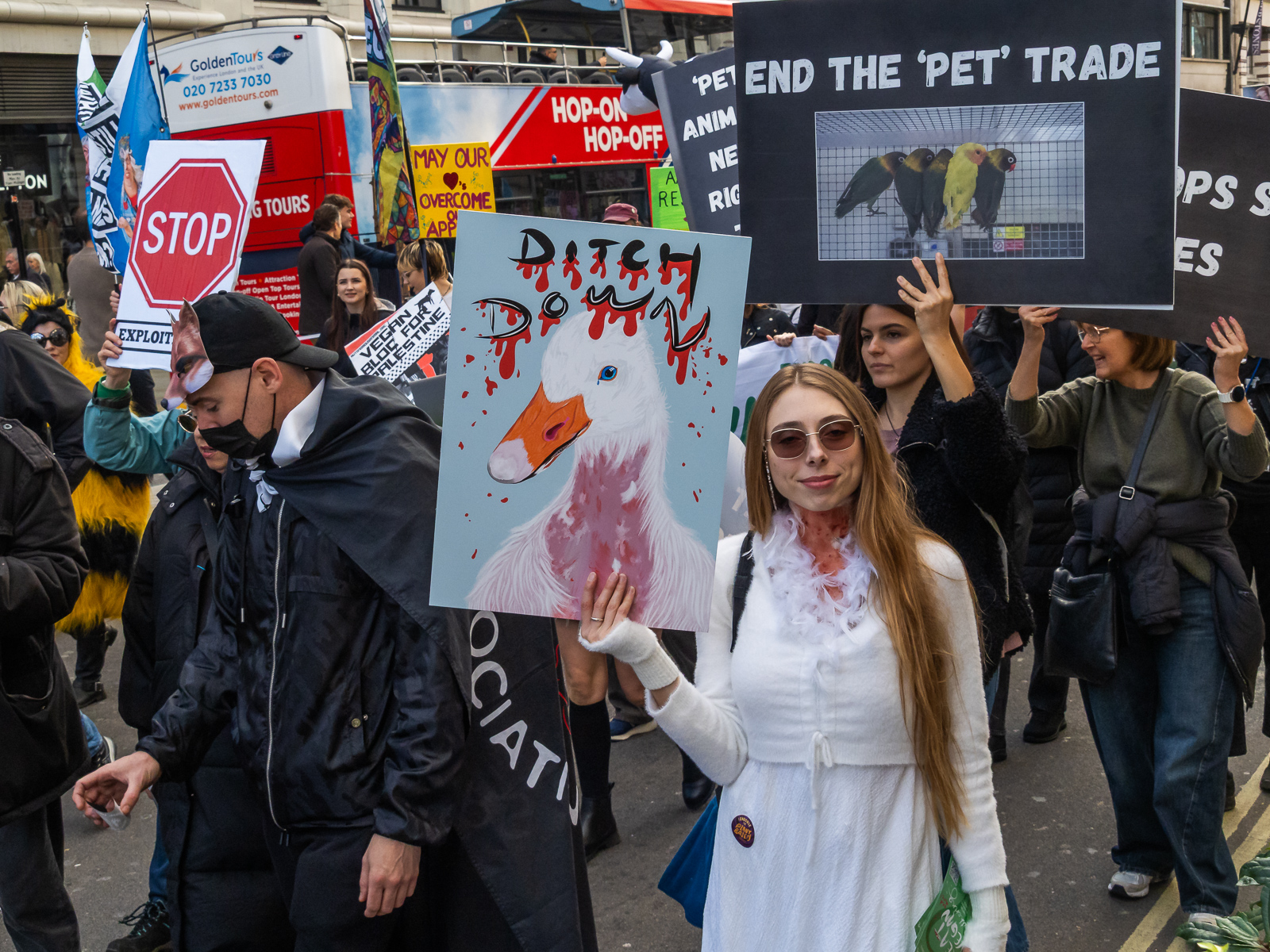
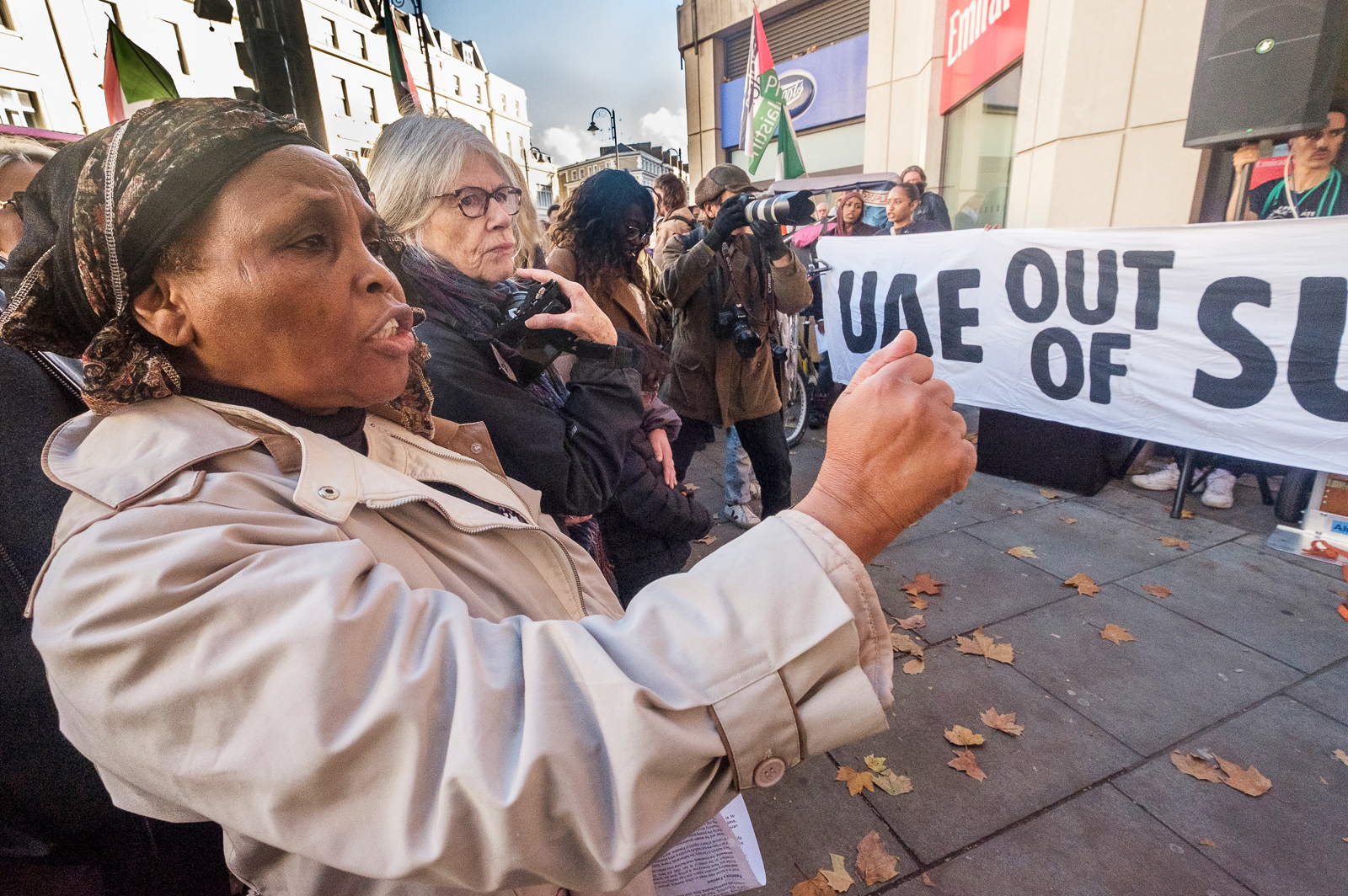
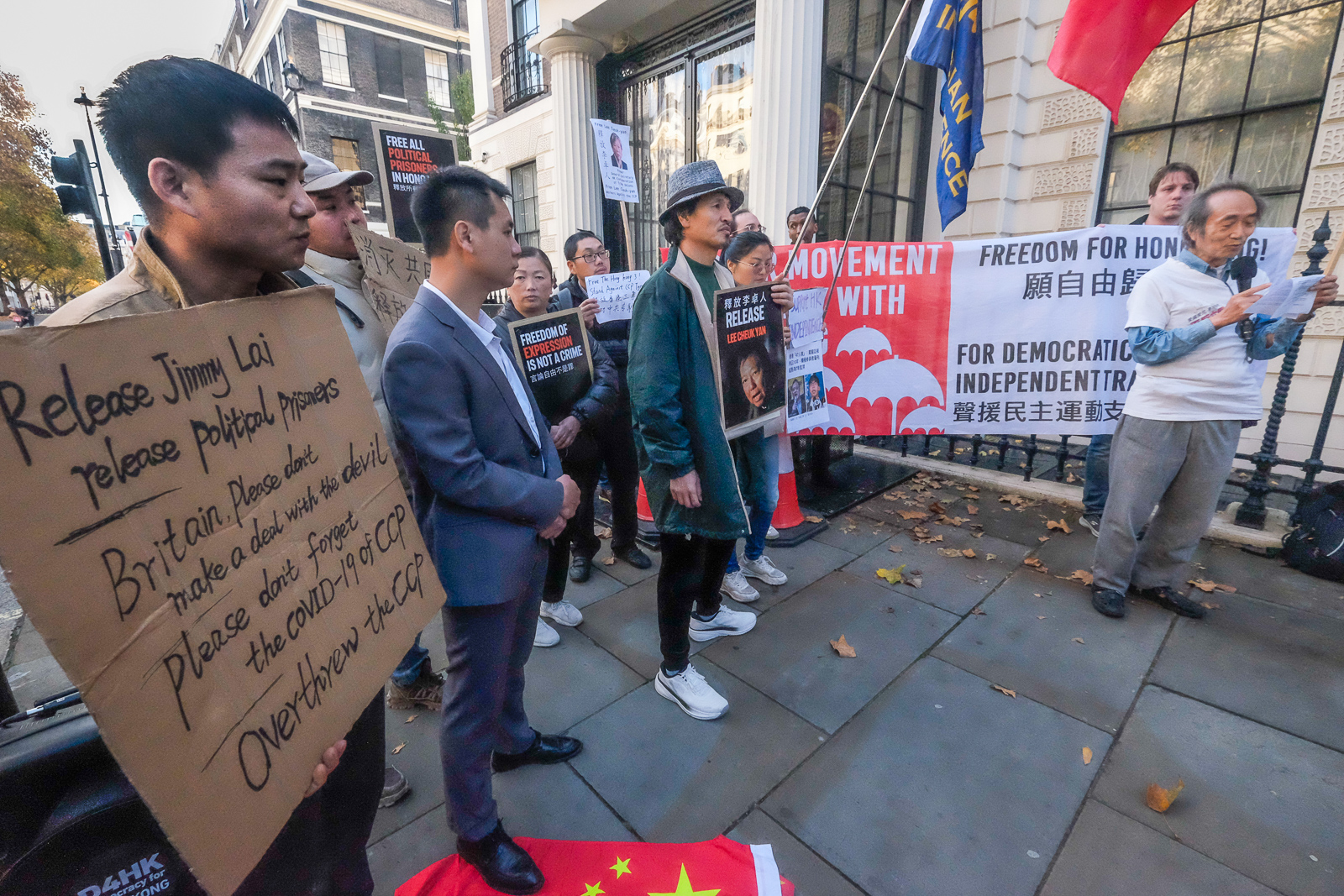
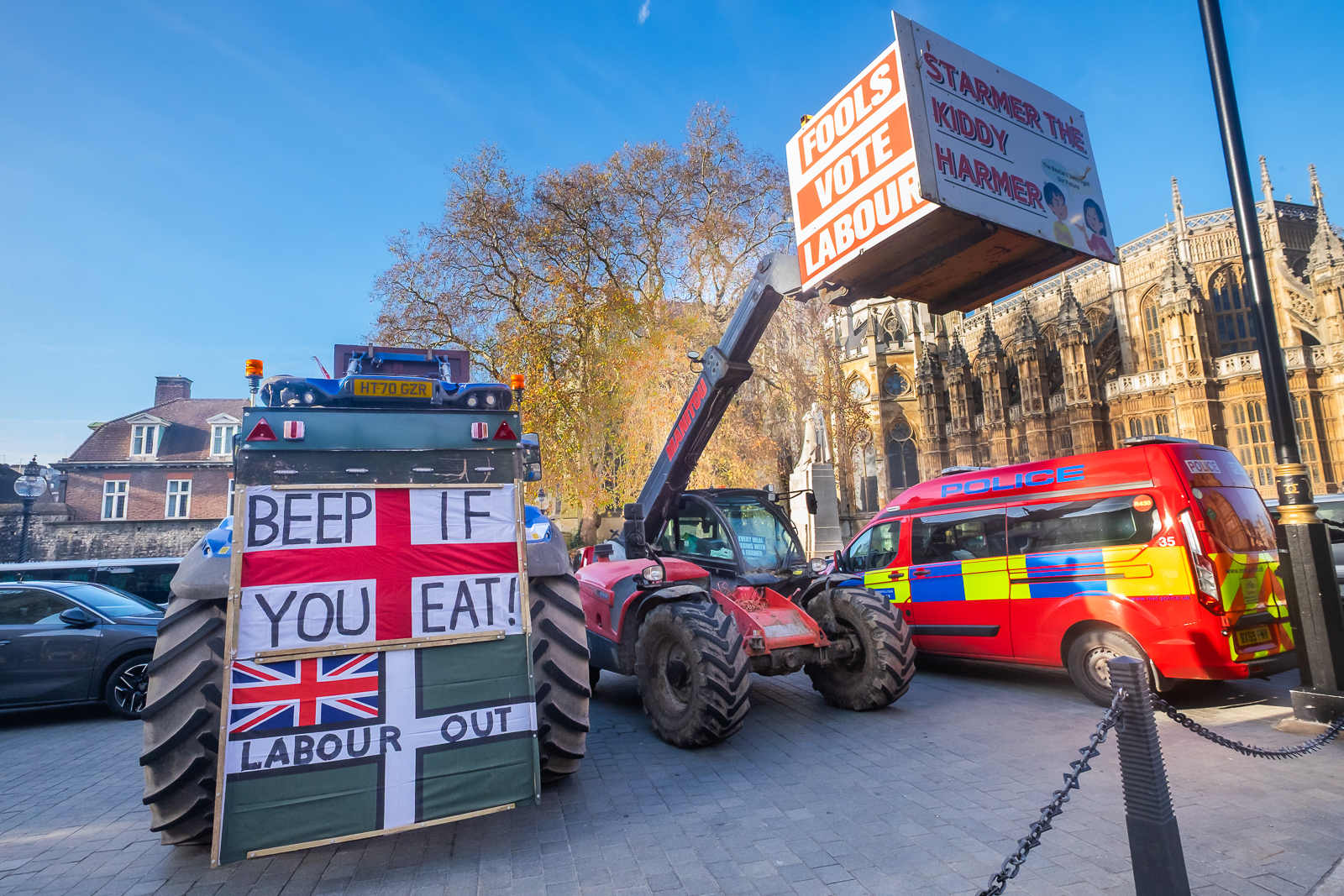
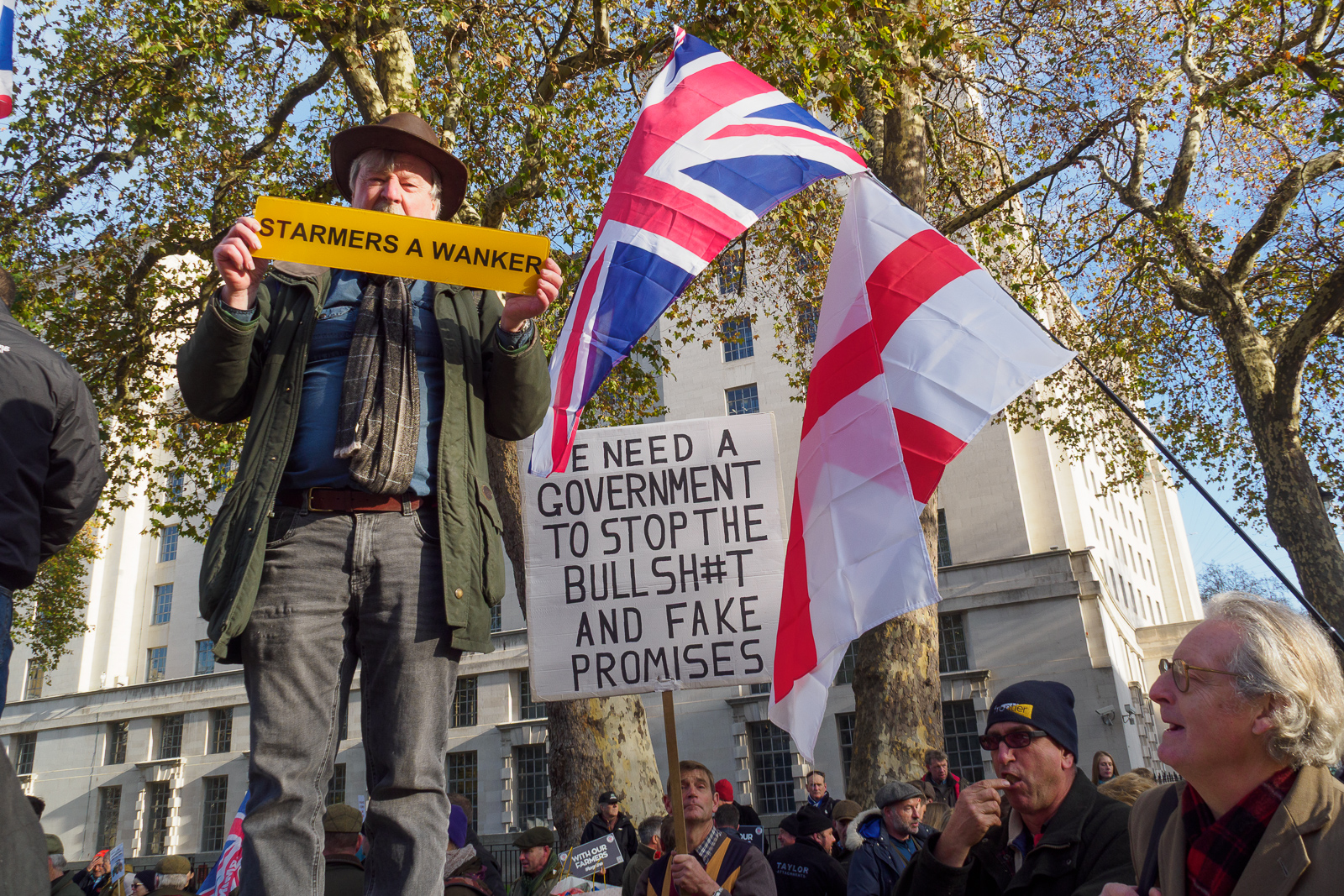
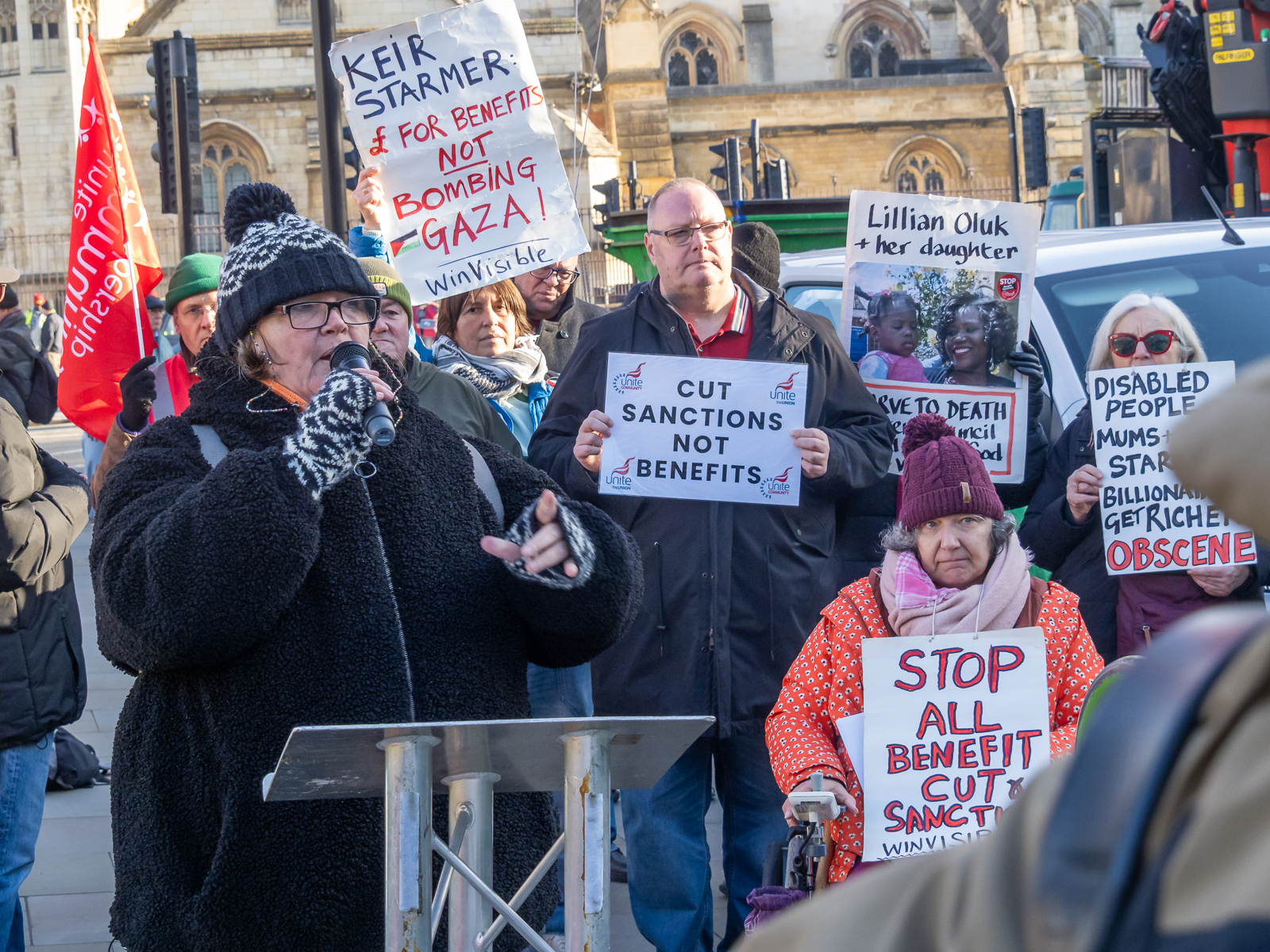
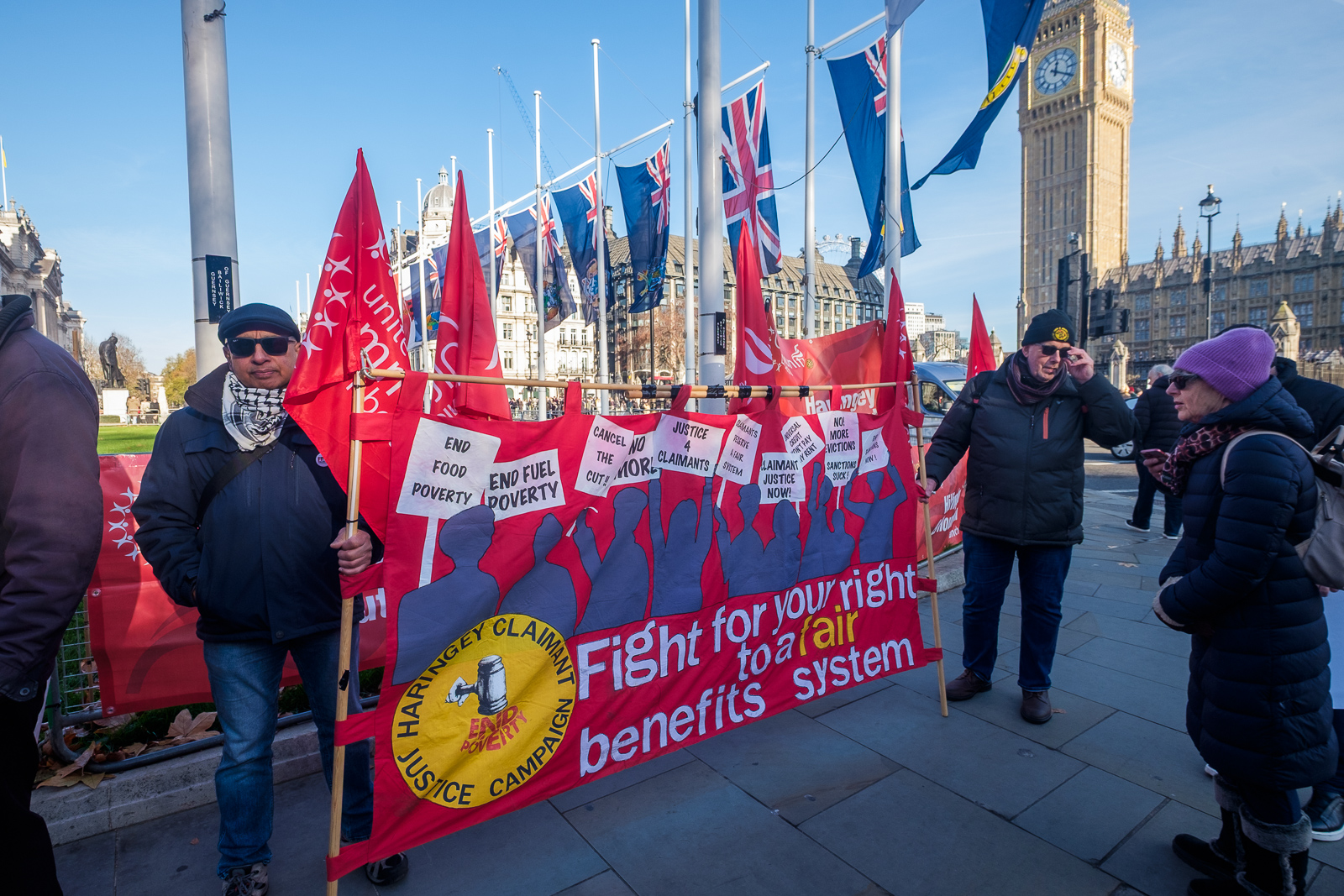
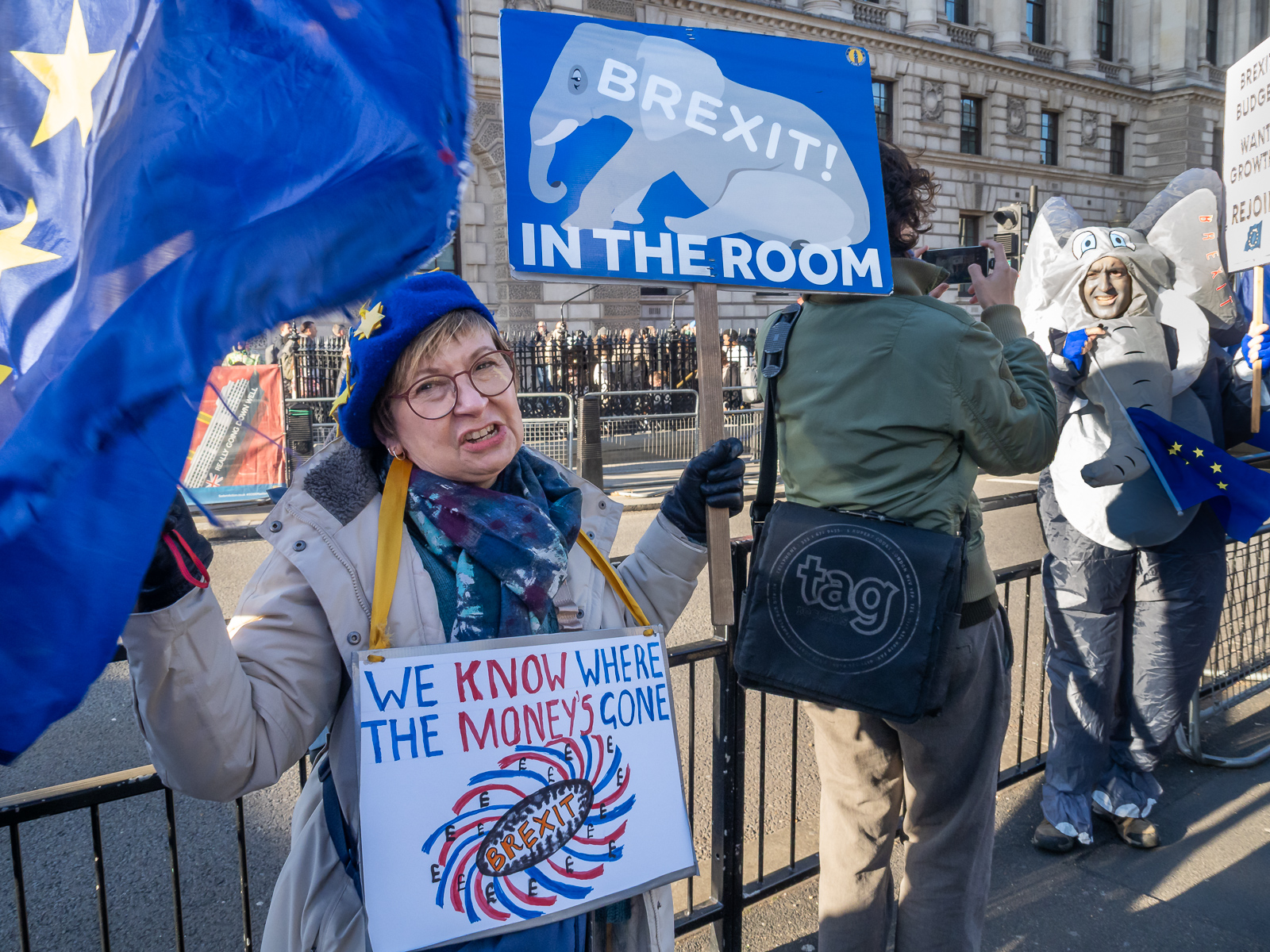
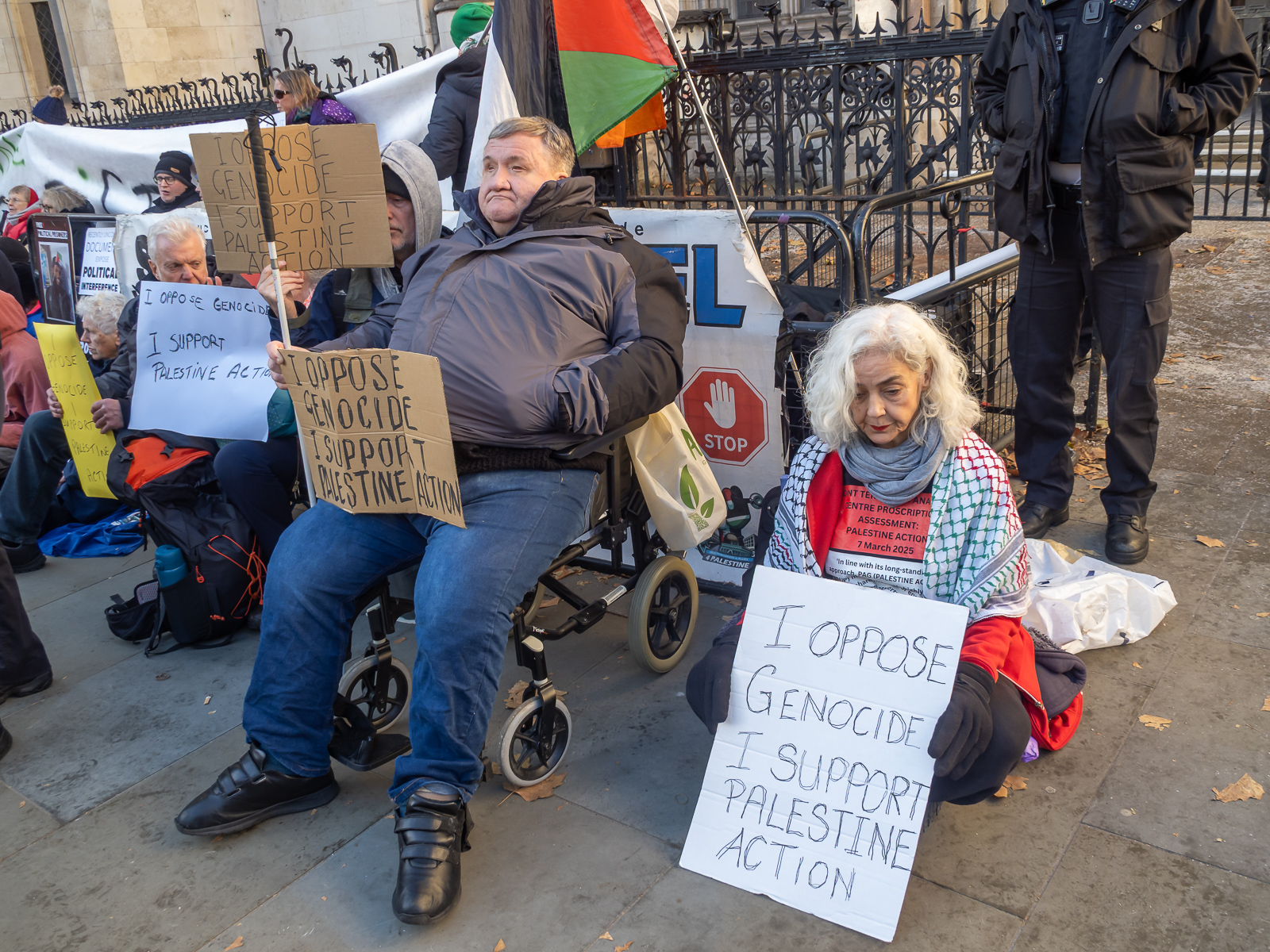
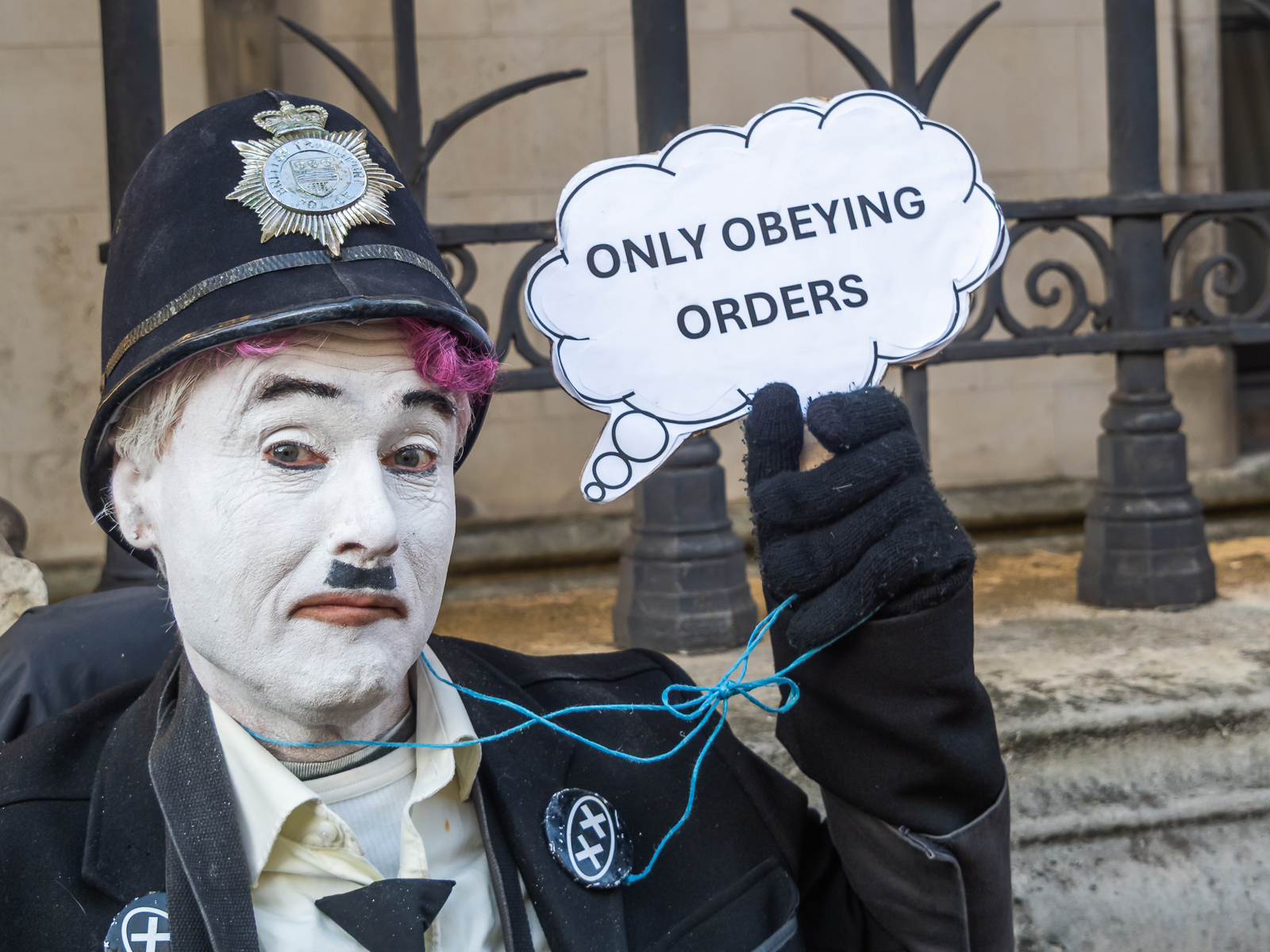
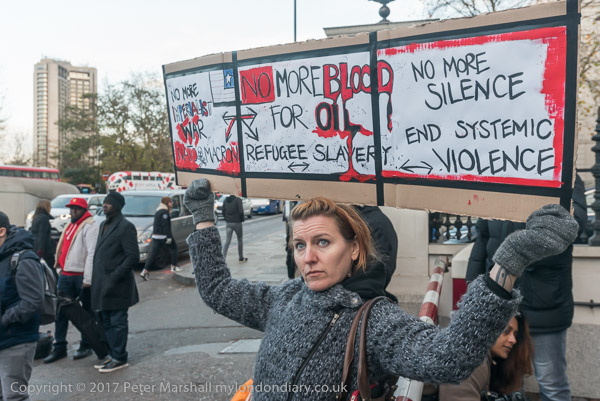
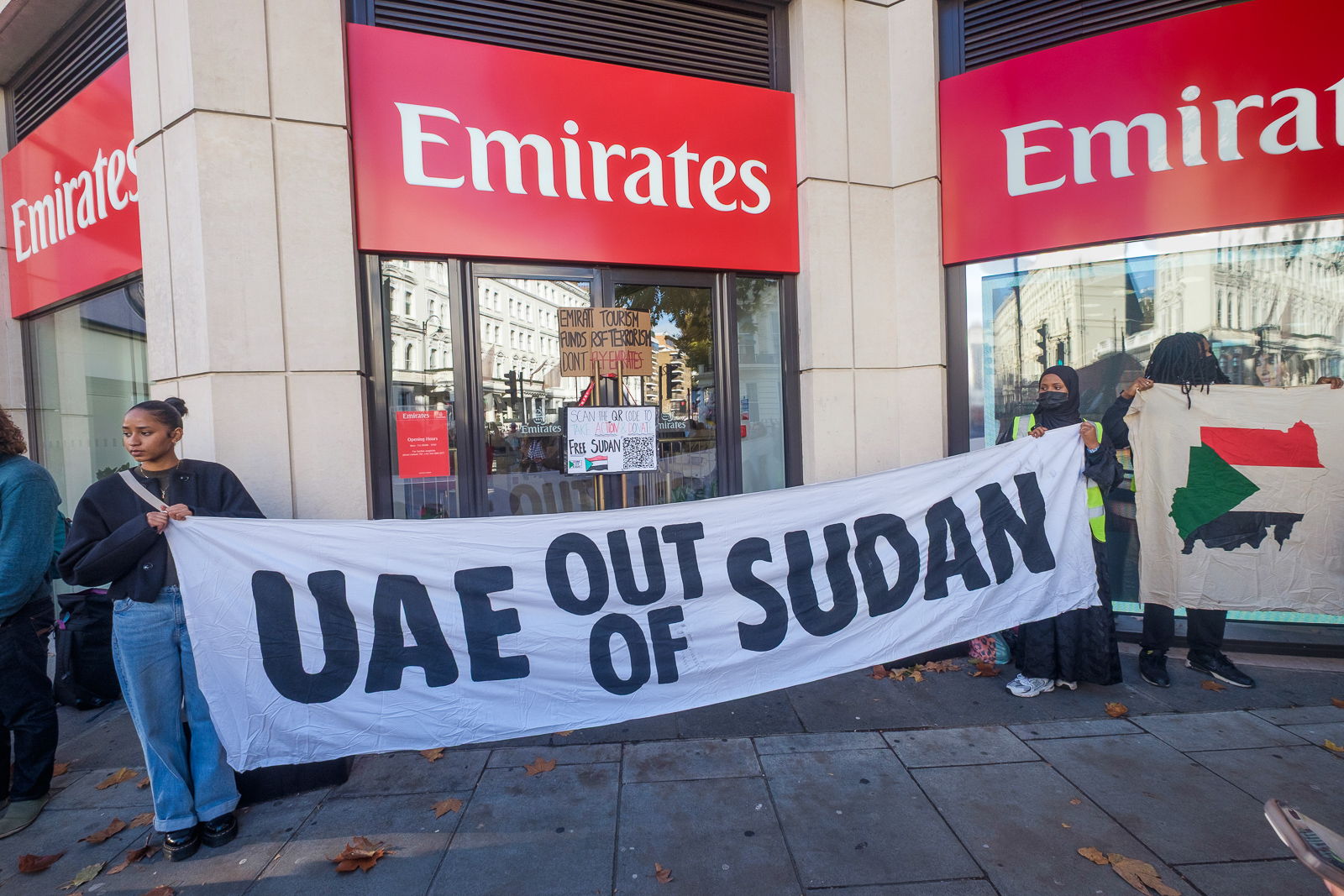
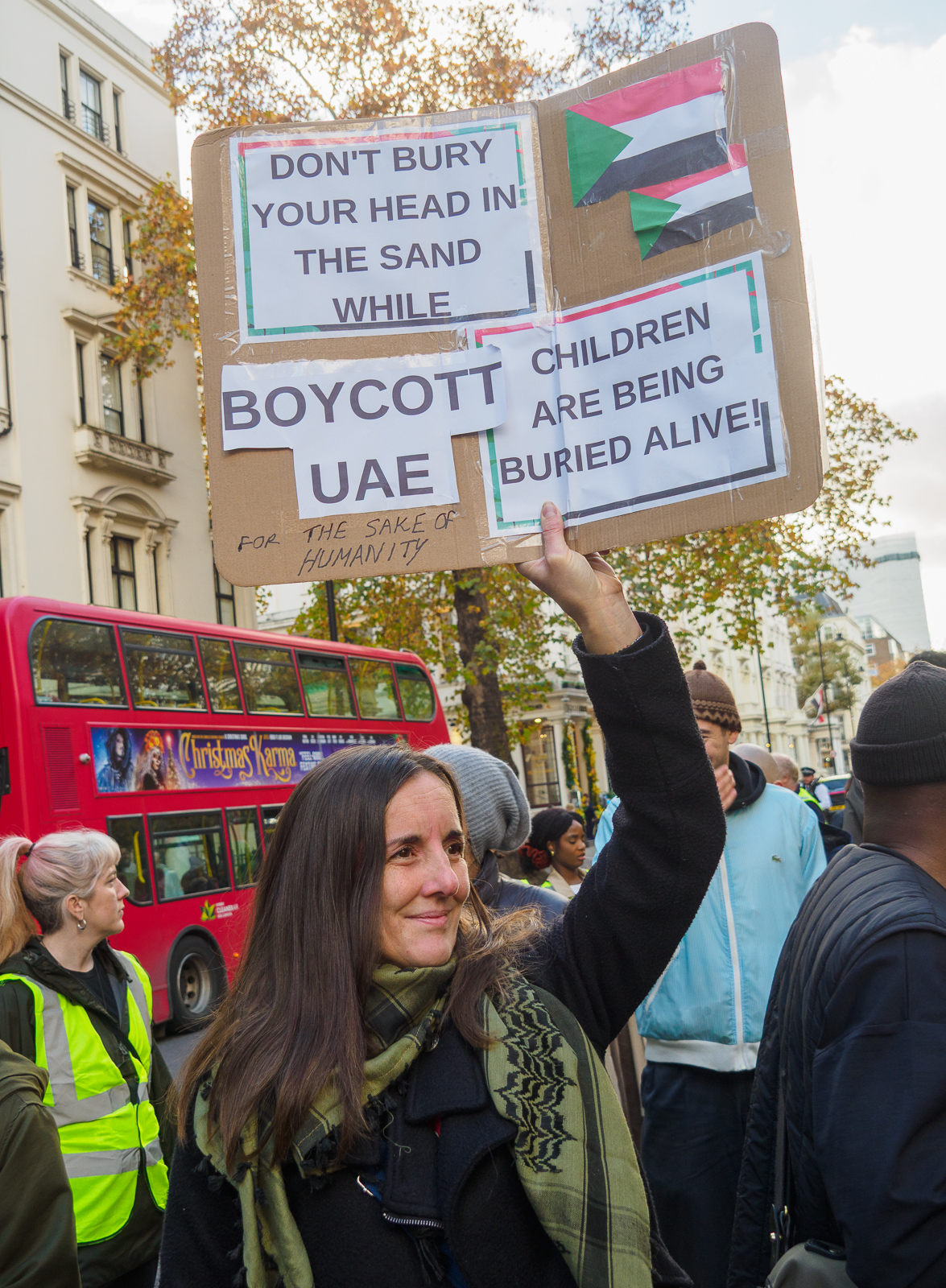
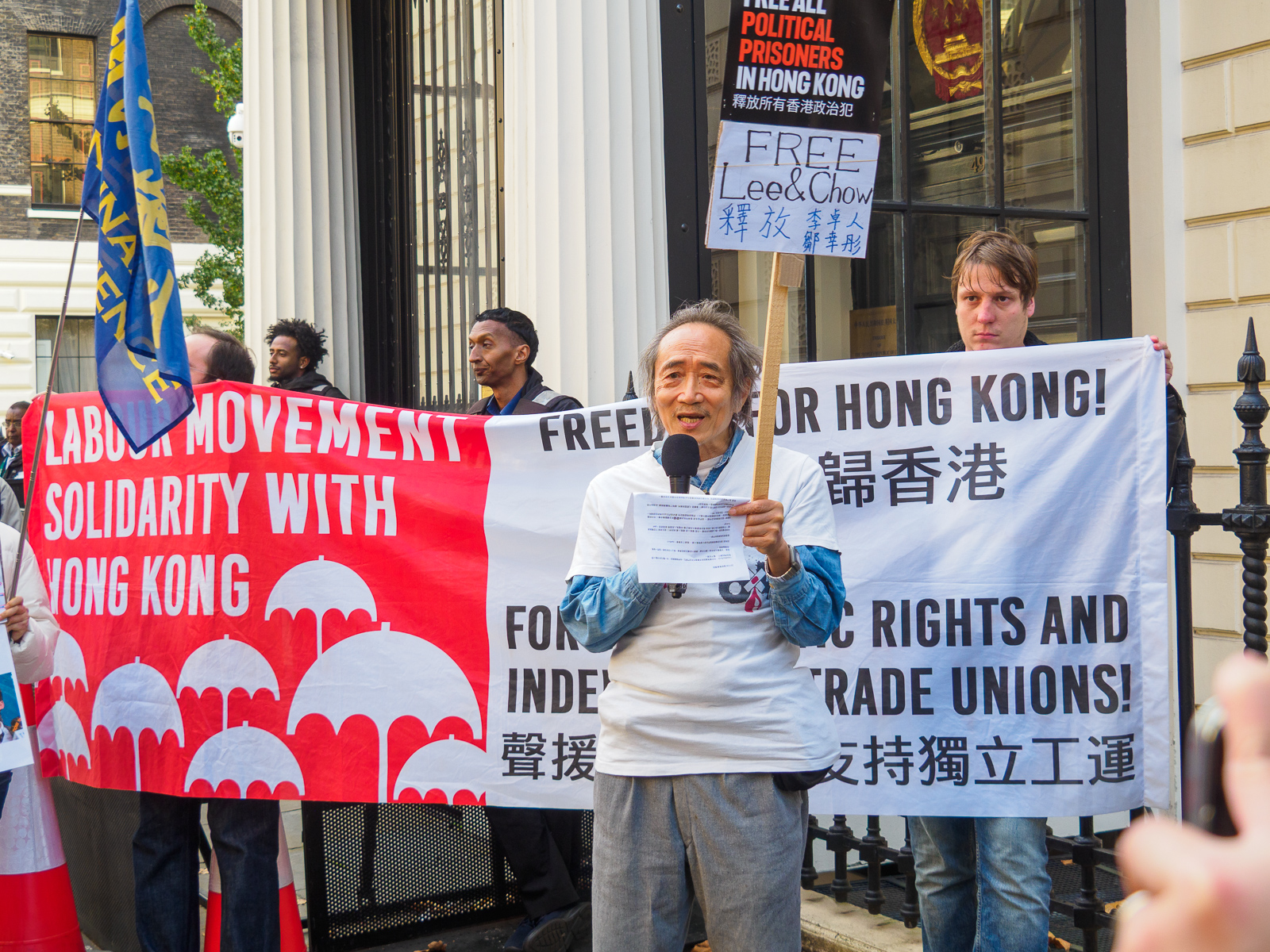
London, UK. 1 Nov 2025. Several thousands march from Marble Arch around the West End to demand that animals should not be treated as property or resources for humans. They say that animals feel love, pain, fear and joy “just like use” and say everyone should become vegan. They call for cages to be emptied, animal testing to be ended and for an end to all use of animals for any purpose whatsoever, demanding “Animal Liberation NOW!” Peter Marshall.London, UK. 8 Nov 2025. A rally and march from Gloucester Road station calls for an end to the UK-backed atrocity in Sudan. At Al-Fashir and elsewhere in Sudan UAE-backed RSF militia have committed executions, torture, mass displacement and deliberate starvation, armed by weapons sold by the UK to the UAE. Protesters demand the UK designate the RSF a terrorist organisation, end arms sales to the UAE and impose sanctions on them. In May Sudan took the UAE to the International Court of Justice for complicity in genocide. Peter Marshall.London, UK. 8 Nov 2025. Trade unionists protested outside the Chinese Embassy in solidarity with the three Hong Kong pro-democracy leaders charged with inciting subversion under Beijing’s National Security Law for organising protests and vigils whose trial begins on 11 Nov. They called for Lee Cheuk-yan, Chow Hang-tung, Albert Ho and all political prisoners to be released. One man who continually tried to disrupt the event was arrested.Peter Marshall.London, UK. 26 Nov 2025. Police banned farmers from bringing tractors to Parliament Square for their protest against the removal of inheritance tax relief at the last minute and instead told them they could hold a peaceful rally without vehicles opposite Downing St. A few did manage to drive to Parliament and a couple were parked opposite the House of Lords. Apparently some drivers were arrested in Trafalgar Square after refusing to drive out of London. Police had previously granted permission for the tractor protest. Peter MarshallLondon, UK. 26 Nov 2025. Police banned farmers from bringing tractors to Parliament Square for their protest against the removal of inheritance tax relief at the last minute and instead told them they could hold a peaceful rally without vehicles opposite Downing St. A few did manage to drive to Parliament and a couple were parked opposite the House of Lords. Apparently some drivers were arrested in Trafalgar Square after refusing to drive out of London. Police had previously granted permission for the tractor protest. Peter Marshall.London, UK. 26 Nov 2025. Paula Peters of DPAC speaking. Unite Community hold a Budget Day protest in Parliament Square as a part of a national day of action to protest against the ongoing cuts and sanctions to people’s benefits. They say sanctions which penalise people already struggling to feed, pay rent and heat homes, particularly the disabled, are now at record levels under this Labour government and are driving working people, disabled people, and children further into poverty. Peter MarshallLondon, UK. 26 Nov 2025. Unite Community hold a Budget Day protest in Parliament Square as a part of a national day of action to protest against the ongoing cuts and sanctions to people’s benefits. They say sanctions which penalise people already struggling to feed, pay rent and heat homes, particularly the disabled, are now at record levels under this Labour government and are driving working people, disabled people, and children further into poverty. Peter MarshallLondon, UK, 26 Nov 2025. Anti-Brexit campaigners including Steve Bray protested at the crossroad leading into Parliament Square with loud music and EU flags, as well as a Brexit elephant. They reminded people of the huge financial impact of Brexit on us all and the failure of any of the promised benefits to materialise – except for some of the super-rich and called for Britain to rejoin Europe. Peter MarshallLondon, UK. 29 Nov 2025. Blind wheelchair user Mike Higgins wants to be arrested again. Over two hundred people sat in silence holding placards “I oppose genocide, I support Palestine Action” outside the Royal Courts of Justice on the opening day of the Judicial Review of the ban on the organisation. They waited patiently for police to arrest them under the Terrorism Act. Many feel the ban is an abuse of law and are concerned at the attempt to scupper the review by appointing judgesfor the case with a clear conflict of interest. Police were slowly arresting people and carrying them away to waiting vans when I left. Peter Marshall.London, UK. 29 Nov 2025. Charlie X – Only Obeying Orders.Over two hundred people sat in silence holding placards “I oppose genocide, I support Palestine Action” outside the Royal Courts of Justice on the opening day of the Judicial Review of the ban on the organisation. They waited patiently for police to arrest them under the Terrorism Act. Many feel the ban is an abuse of law and are concerned at the attempt to scupper the review by appointing judgesfor the case with a clear conflict of interest. Police were slowly arresting people and carrying them away to waiting vans when I left. Peter Marshall
November turned out to have been a slighly confusing month for me and I managed to date some of my captions wrongly – thanks to careless “copy and paste”. I think the actual album dates for the Facebook albums are all correct.
Finally the 12 day of Christmas tomorrow – pictures from December 2025.
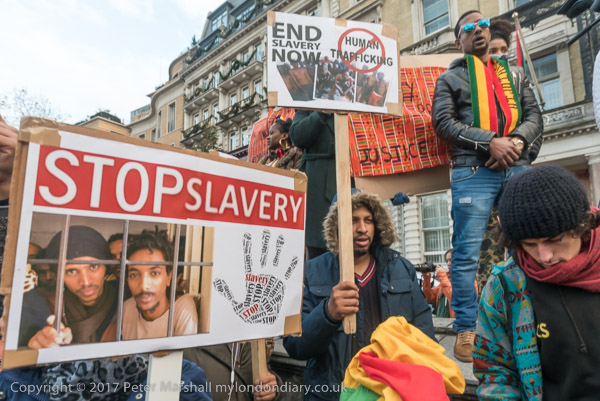
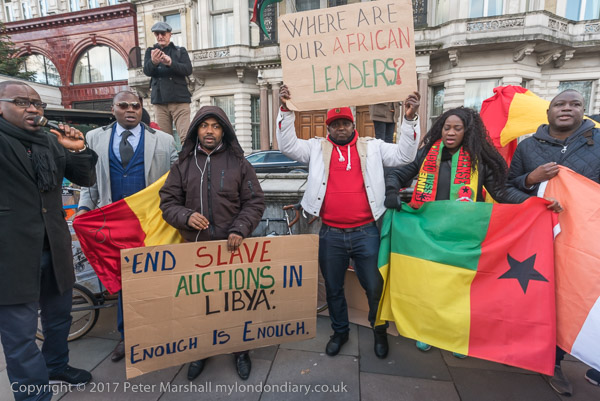
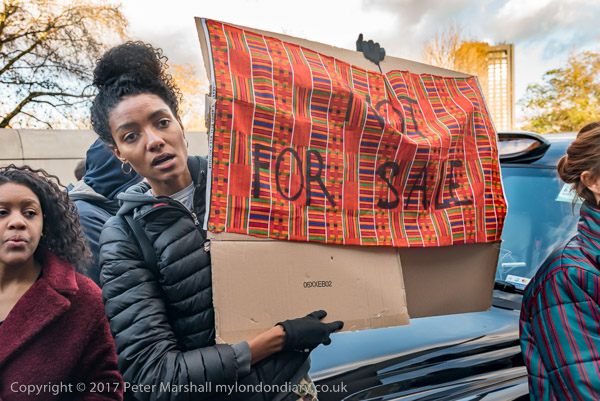
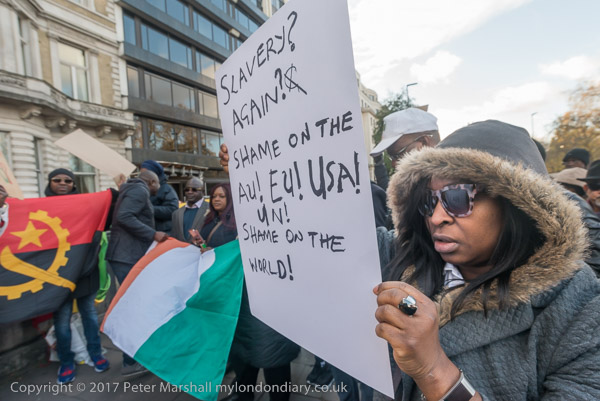
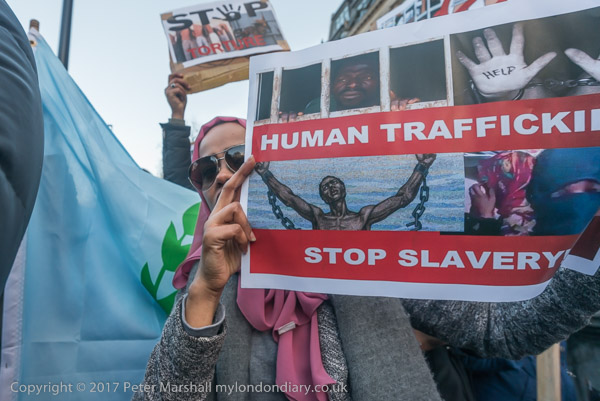
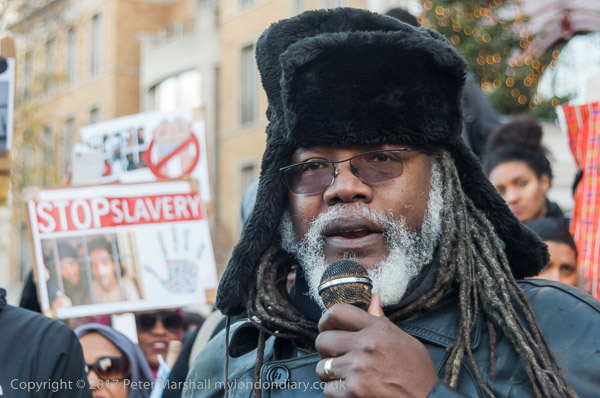
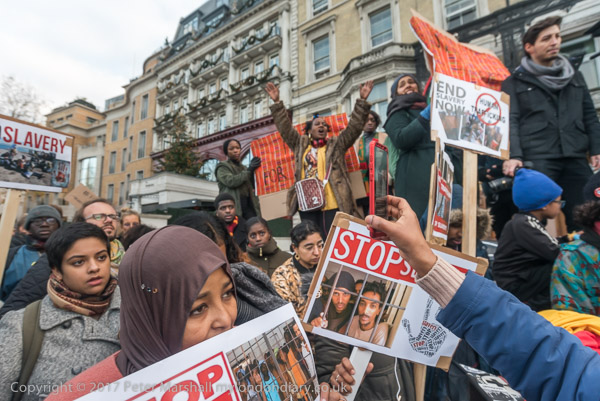
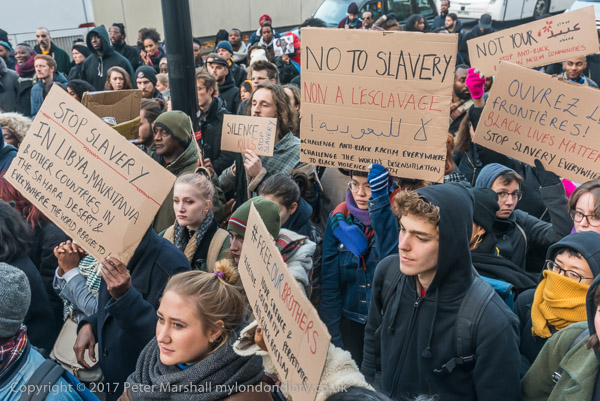
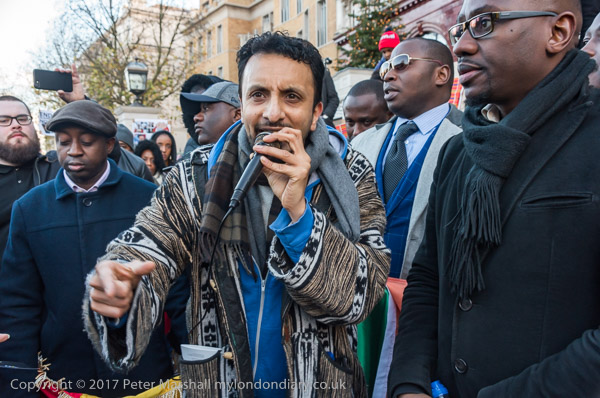
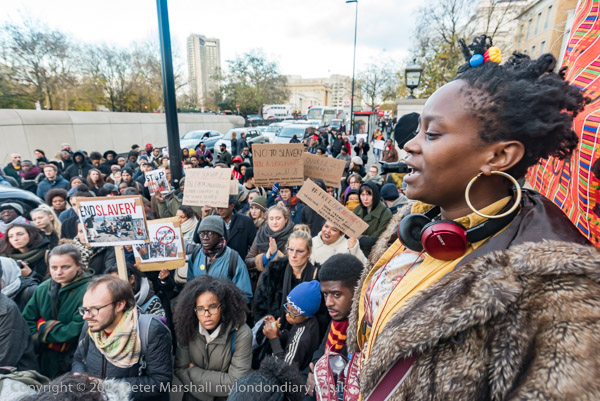
End Slave Auctions in Libya: On Sunday 26th November 2017 a large protest outside the Libyan Embassy in Knightsbridge called for an end to the slave auctions of Black African migrants in Libya.
The protest came following a number of reports earlier in the year showing migrants being sold as slaves in Libya. The situation had worsened since the EU clampdown on migration across the Mediterranean, working with the Libyan authorities to intercept and tow migrant boats back to be detained in Libya.
This clampdown had resulted in around 20,000 people, mainly from the Afgrican continent being detained in inhumane conditions in Libya, where many were being held with ransom demands being made from their families and others sold into slavery.
As Wikipedia notes, Libya has a history of slavery dating back into antiquity with slaves from across the Sahara being sold there along with Berbers (the pre-Arab residents of the area), Jews and Europeans captured in Barbary slaving raids around the Mediterranean and as far north as Ireland, Scotland and even Iceland.
The slave trade was made illegal by a decree in Tripoli in 1857, but this had little practical effect for many years and it was only under Italian rule in the 1930s that it was largely brought to an end.
As I wrote in 2017, “Many at the protest saw the situation in Libya as part of a continuing neo-colonialist attempt to control Africa’s natural resources which results in the instability and mass migration from African countries, and that the current Libyan regime are western puppets installed though Western intervention to replace the genuinely nationalist Gaddafi regime and are engaged in a process of de-Africanisation and elimination of Black Libyans, of which slave auctions are a logical extension.”
Glenroy Watson of the Global African Congress and RMT
As Wikipedia points out, since Gaddafi was brought down in 2011, Libya “has been plagued by disorder, leaving migrants with little cash and no papers vulnerable.“
Slaves in the past were kidnapped by raiders, but now they pay people smugglers to be brought to Libya, lured by the promise of being taken to a new life in Europe, but once in Libya are detained by the smugglers and local militias and subjected to torture, forced labour and sexual violence.
If ransoms are not paid they may be left to starve to death in detention. State security forces are also responsible for similar crimes against humanity for those returned from boats setting out across the Mediterranean, and the EU contributes by giving support to these forces.
Although the fate of migrants has seldom featured in our news media since 2017, little if anything has changed, as the 2025 report, The Scandal of a Slave Market in Libya from the Human Rights Research Center makes clear.
Sukant Chandan, a coordinator at the Malcolm X Movement, speaks from his experience in working with the opposition forces in Libya, and says how those currently in power in Libya have long carried out a policy of getting rid of Black Africans. He calls them a puppet government put into power to protest Western interests in Libya’s mineral wealth.
The area outside the Libyan Embassy soon became very crowded, with people lining the pavement for some distance in each direction and some spilling out onto the busy road. When I had to leave after approaching an hour and a half there were people still arriving and it took me several minutes to make my way through the crowd. I took a final picture of a woman holding a large poster on the edge of the protest on my way to Hyde Park Corner.
On My London Diary you can see more pictures, including some of the other speakers at the event.
Sudan & Hong Kong Protests: Last Saturday, 8th November 2025 I photographed a London rally and march against the horrific killings in Sudan before going to the Chinese Embassy where people were protesting for freedom of expression in Hong Kong, where three pro-democracy advocates were to go on trial this Tuesday for “subversion”.
End the UK-Complicit Genocide in Sudan
Gloucester Road Station
Sudan has been a divided country more or less since it gained independence in 1956, suffering a long civil war which eventually led to independence for South Sudan in 2011 and a brutal 30 year military dictatorship under Omar al-Bashir which included an ethnic genocide in Darfur from 2003 -2020. Al-Bashir was finally ousted by a coup early in 2019 following huge protests. Since 2023 the country has been devastated by a civil war between the Sudanese Armed Forces (SAF), and the paramilitary Rapid Support Forces (RSF).
The war is partly one over resources and access to the Red Sea, but also has a strong ethnic dimension with the RSF being “violently Arab supremacist or ethno-fascist“. They are backed financially by the United Arab Emirates who also supply them with arms. In return the RSF has taken control of Sudanese gold mines and illegally smuggles gold to Dubai.
The RSF also control the major gum arabic producing areas of the country. Sudan’s acacia trees produce around 80% of the world total of this vital ingredient used in many consumer products from Coca-cola to lipsticks and pet food. The RSF smuggles this out to be sold on world markets.
The war between the RSF and the SAF has resulted in more than 200,000 people being killed, mainly civilians with huge numbers – perhaps 14 million -being displaced and according to the UN, “2025 will see 30.4 million people in Sudan in need of humanitarian aid due to the military conflict in the country.“
Both the RSF and the SAF are reported as carrying out war crimes. The ‘London for Sudan’ leaflet states:
“The RSF are burning villages to the ground, recruiting child soldiers, poisoning water supplies, attacking hospitals & targetting journalists.
“The SAF are carpet bombing indiscriminately, wiping out markets and other vital infrastructure in their bid for control over the region.”
In the continuing El-Fasher massacre by the RSF, “an estimated 2,500 or more civilians have been executed or murdered since 26 October 2025.” though some analysts believe the actual numbers are in the tens of thousands. The RSF are known to use rape as a weapon and have have committed executions, torture, mass displacement and deliberate starvation, armed by weapons sold by the UK to the UAE. In May Sudan took the UAE to the International Court of Justice for complicity in genocide.
The protesters pointed out the British complicity in supporting the RSF by selling arms to the UAE which are then smuggled to the RSF. They demanded that the UK government designate the RSF a terrorist organisation and called on them to impose sanctions on the UAE for their support as well as ending arms sales to them.
After a short rally with several speeches and a moving poem in English by a Sudanese woman poet the march set off along the Cromwell Road heading for a final rally. I left them at South Kensington to go to a protest at the Chinese Embassy.
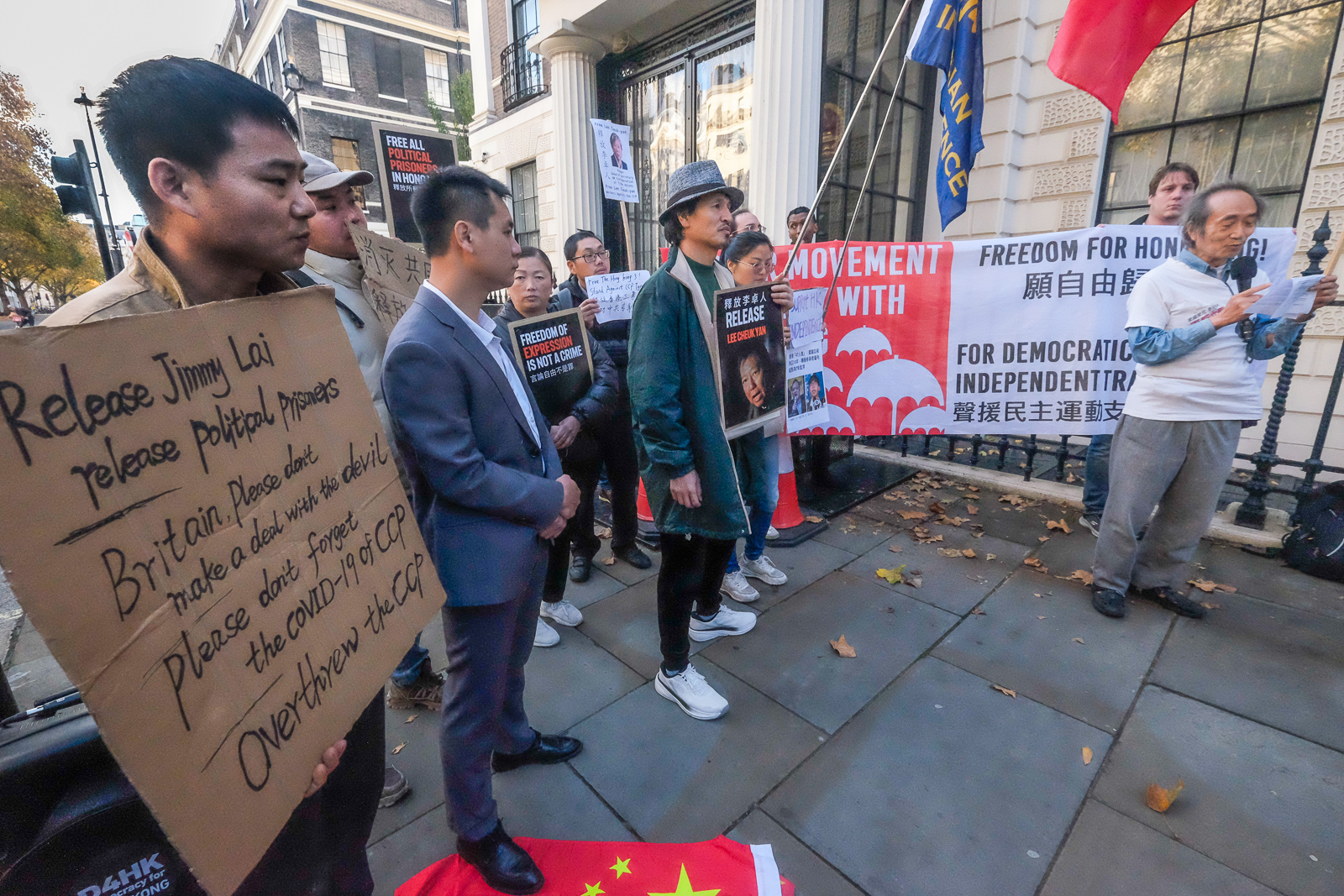
Trade unionists protested outside the Chinese Embassy in solidarity with the three Hong Kong pro-democracy leaders charged with inciting subversion under Beijing’s National Security Law for organising protests and vigils whose trial begins on 11 Nov.
They called for Lee Cheuk-yan, Chow Hang-tung, Albert Ho and all political prisoners to be released.
One man who continually tried to disrupt the event by shouting pro-China comments through a megaphone was finally pushed away across the road. Police argued with him and he was later arrested when he refused to obey police requests to stop.
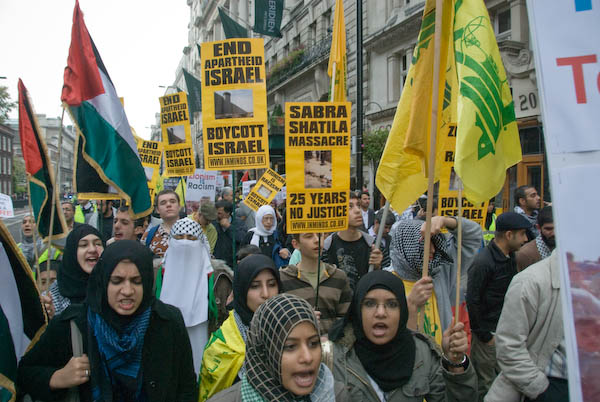
Al-Quds Day 2007: On October 7th, the second anniversary of the Hamas attack on Israel I find myself thinking about the long fight by Palestinians since so many were displaced and dispossessed in the 1948 Arab-Israeli war and the many thousands who since then have been killed by Israeli attacks.
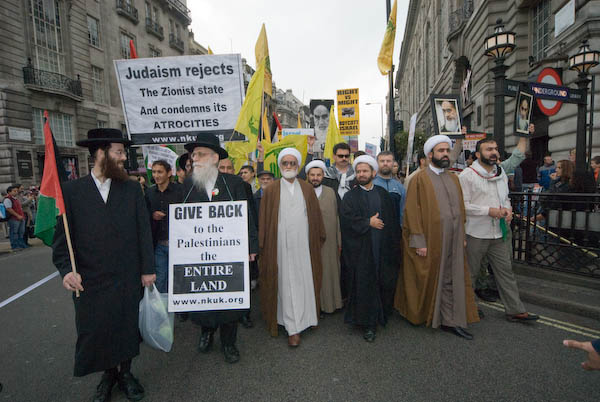
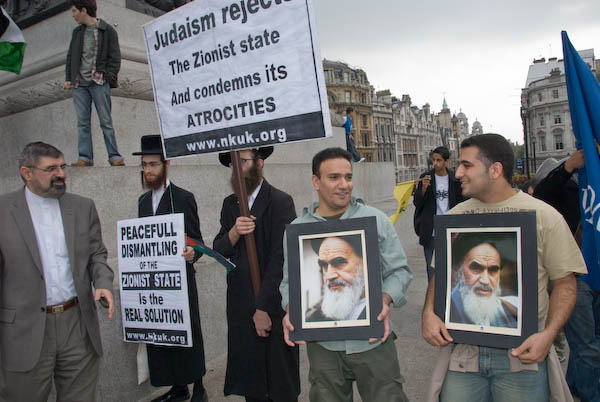
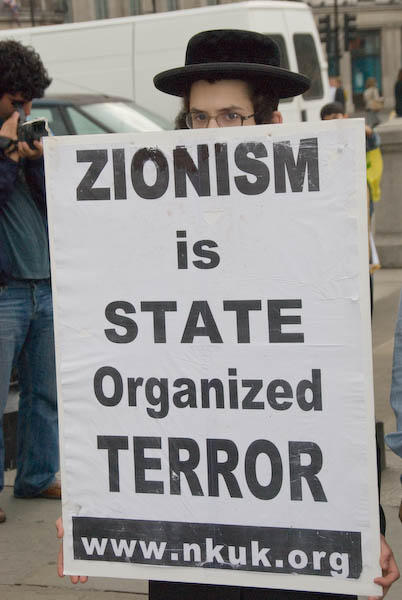
Neturei Karta orthodox Jews oppose Zionism and marched in the Al Quds march
And of course for those Israelis who have been killed – though in much smaller numbers – by suicide bombers, by rockets and during the October 2023 incursion or among the hostages, and including those Israelis killed by Israeli forces.
What we have seen since however is not a war, not self-defence but genocide, the bombing and deliberate starvation of the entire population of Gaza. It comes on top of years of siege with restrictions on essential supplies and of the bulldozing of people’s homes as well as the establishment of more and more illegal settlements across occupied Palestine.
And our country remains complicit, still supplying arms to enable the genocide despite government statements to the contrary, still labelling protests calling for peace as ‘hate marches‘ and still making false allegations about antisemitism while failing to deal with the real anti-Semites who plan and carry out attacks such at that we all condemn in Manchester.
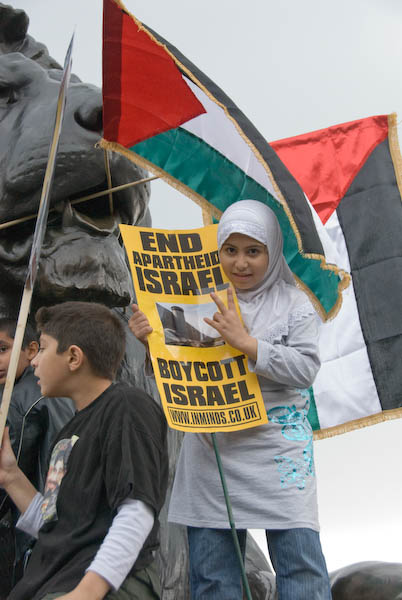
Thinking about what to post here for today, I came across the Al Quds Day march which took place in London on Sunday October 7, 2007. It was I think only the second time I’d photographed the annual event and I didn’t write a great deal about it then.
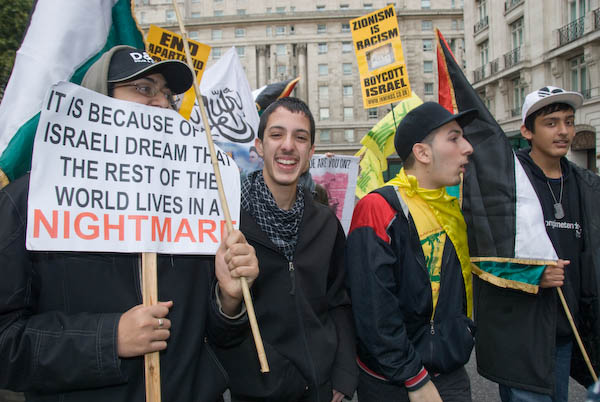
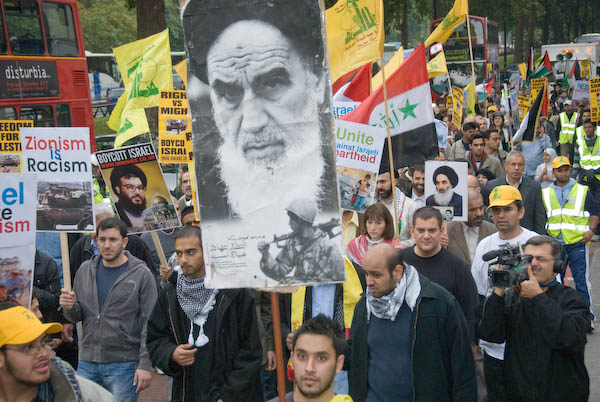
I did mention that this event was begun in 1979 when Ayatollah Khomeni declared the last Friday in Ramadan as Al Quds Day, (al-Quds being the Arabic name of Jerusalem), an annual anti-Zionist day of protest. In the UK the march has generally taken place on the following Sunday and is a demonstration in solidarity with the Palestinian people, largely by Muslims though also by anti-Zionist Jews and some of the UK left (many of whom are also Jewish.)
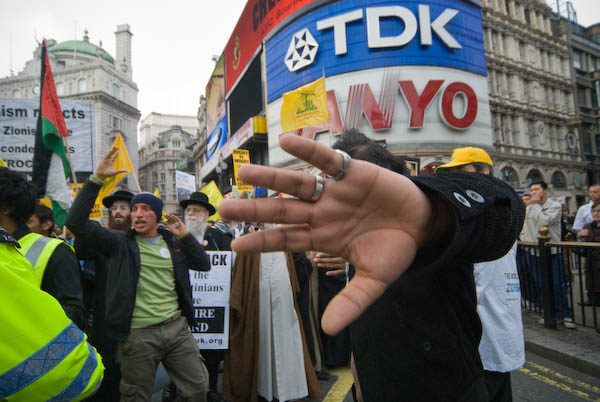
One man wanted to stop me taking pictures but of course I didn’t
In 2007 a mixture of groups came to demonstrate against the march, largely because of its links with Iran both from its founding and also as it was organised by the Iranian Human Rights Commision (Inminds) which is alleged to receive funding from the Iranian government. Unlike later years I saw no counter-protests by Zionist groups or individuals.
Back then many of the march carried flags of the Lebanese Shia Islamist political party and paramilitary group Hezbollah which emerged there after the Israeli invasion in 1982 and has strong ties with Iran. As well as running schools and hospitals and other social services it has also taken part militarily in opposing the various attacks by Israel on Lebanon.
Many Hezbollah leaders have been assassinated by Israel, some in what many describe as terrorist attacks. Until 2019 when its political wing was also proscribed the showing of the Hezbollah flag remained legal though contested in the UK.
As in earlier years the march ended with a rally in Trafalgar Square, though after 2008 the GLA refused to allow them to use the square, citing insurance problems.
Many more photographs of both the marchers and the rally and those who came to protest against the march on My London Diary at Al Qud’s Day March And Protest
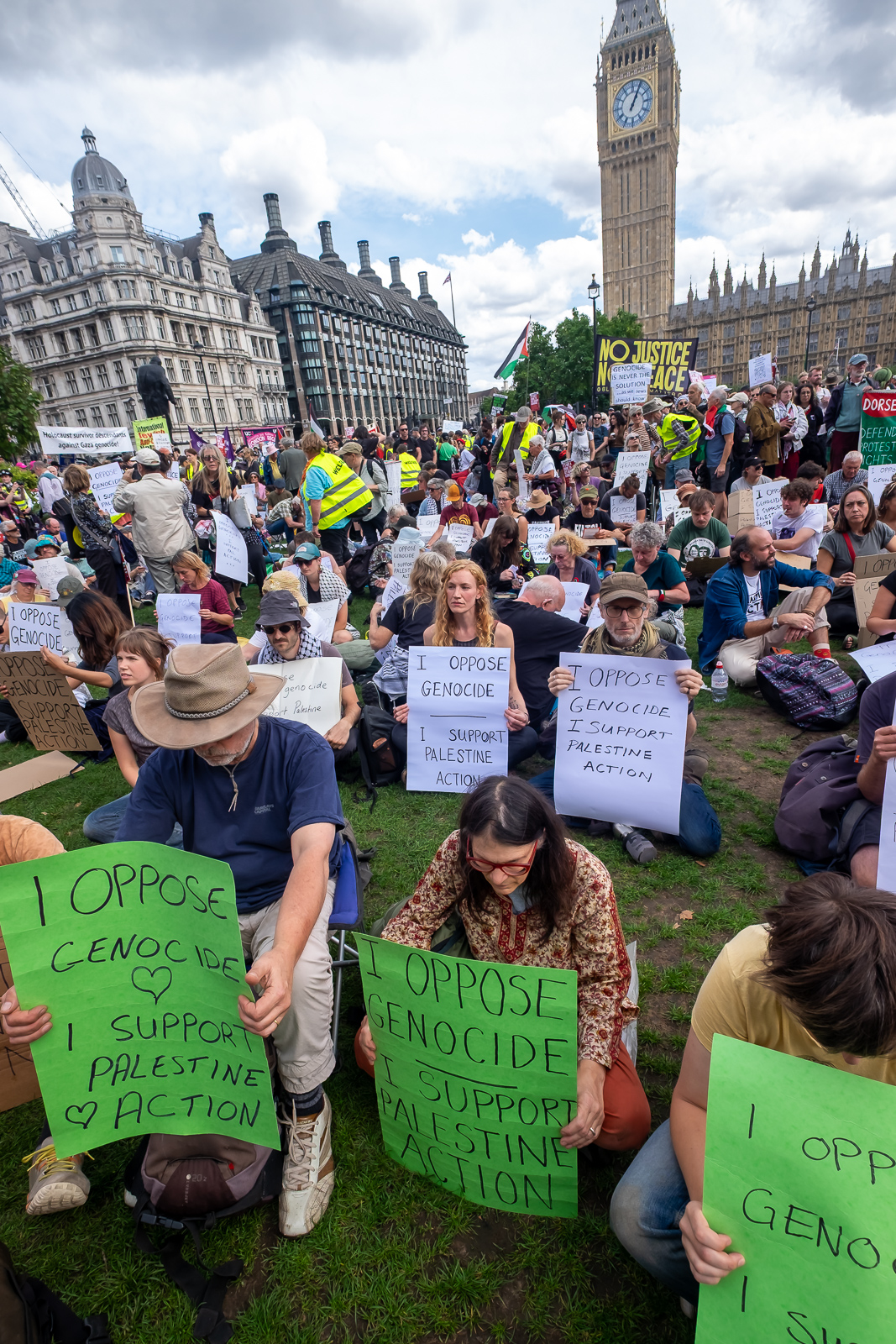
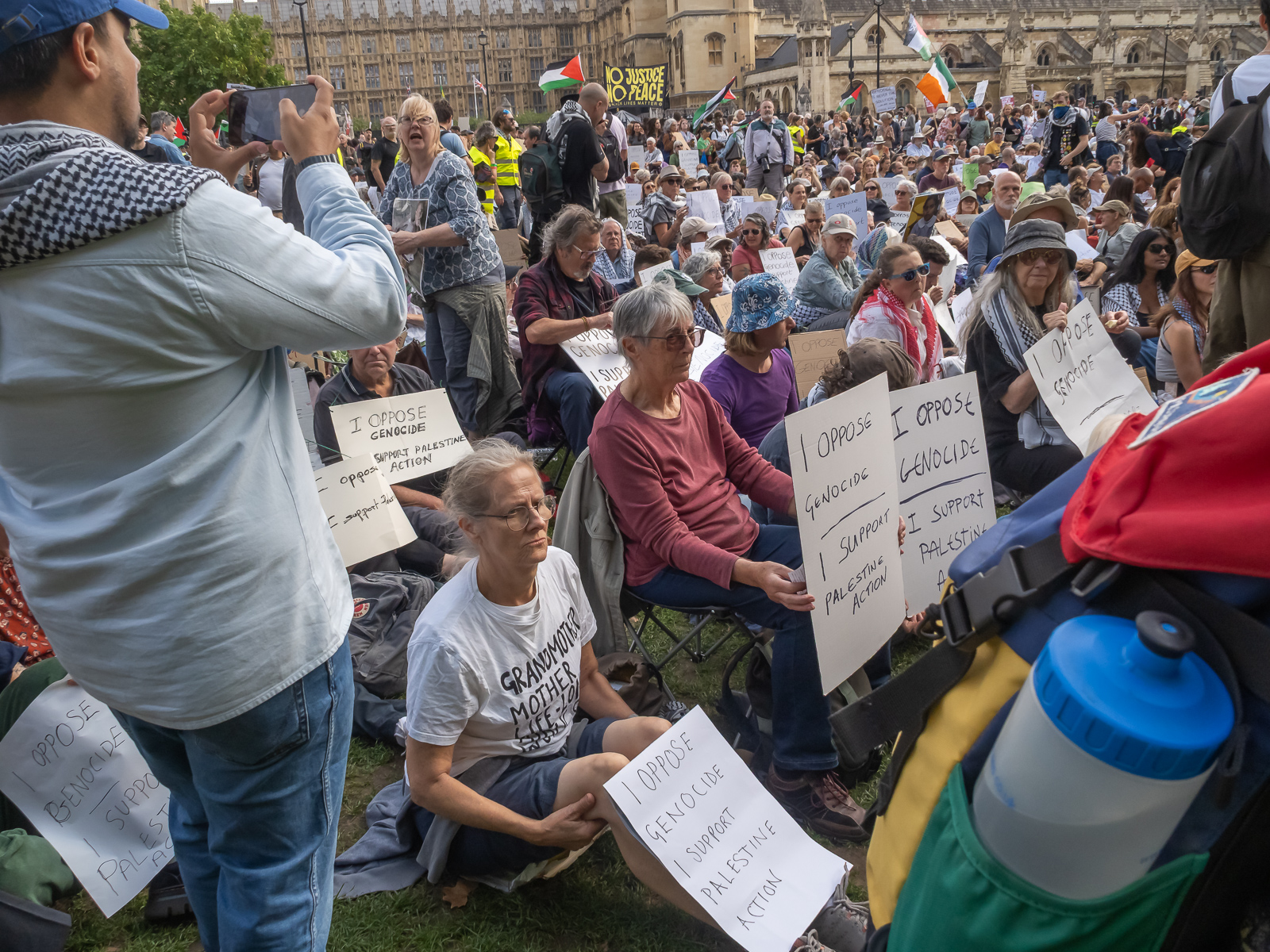
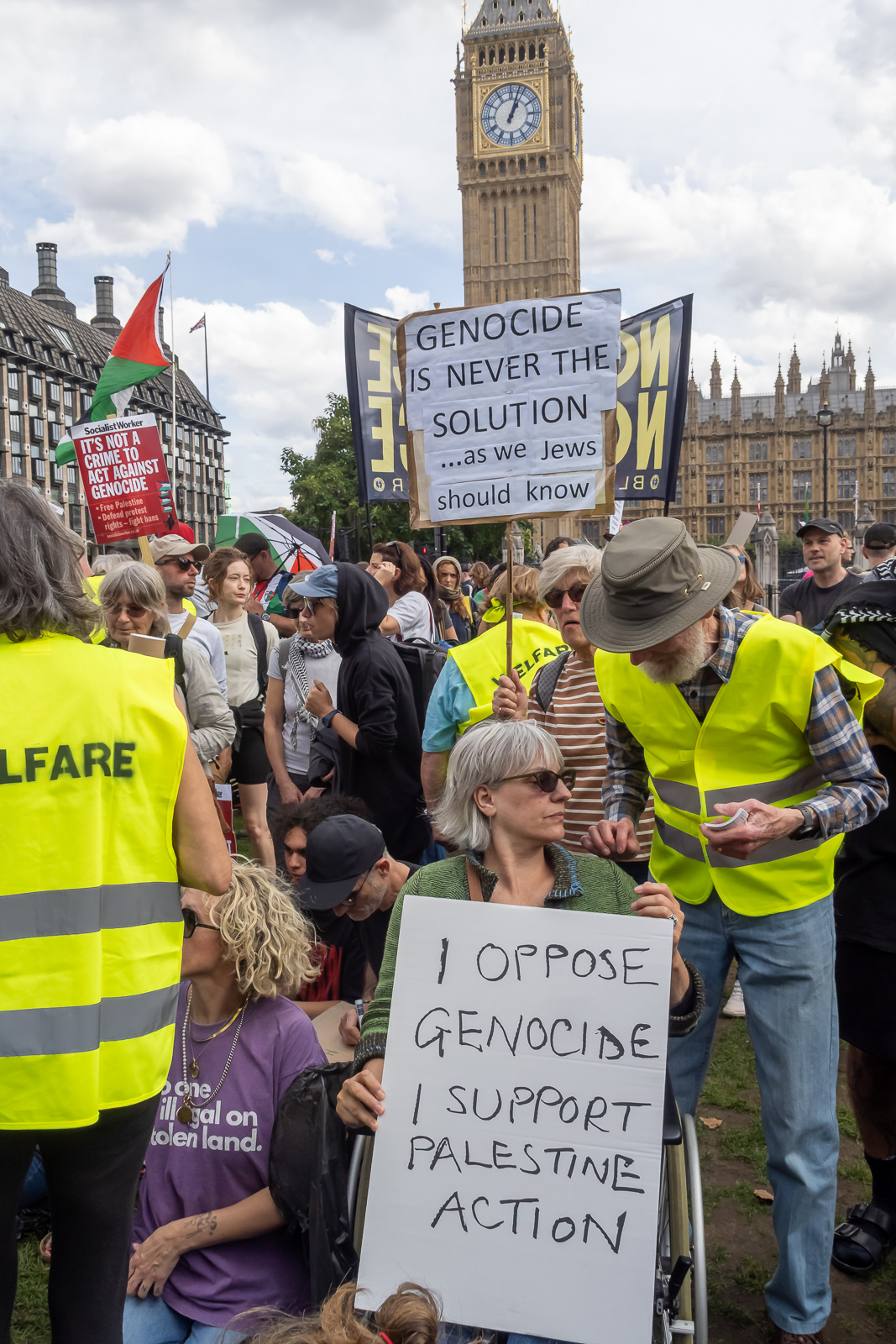
Defend Our Juries Protest Palestine Action Ban: Last Saturday, 6th September, 2025 around a thousand people came to sit calmly and peacefully in Parliament Square holding signs with the message ‘I OPPOSE GENOCIDE – I SUPPORT PALESTINE ACTION’.
London, UK. 6 Sep 2025
The protest was against the ban on Palestine Action imposed in July by then Home Secretary Yvette Cooper who designated the direct action group as a ‘terrorist organisation’ following extensive and dishonest lobbying from arms manufacturers and the Israeli government. Yvette Cooper is said to have received £215,000 from the Israel lobby last year.
London, UK. 6 Sep 2025.
The protest was the second mass protest in Parliament Square organised by Defend Our Jories, (DOJ) an organisation set up to defend the jury system against attempts by the government to “violate the most basic principles of natural justice and the right to a fair trial.“
The jury system is designed to “put the moral intuitions of ordinary people at the heart of the criminal justice system“. As DOJ says, “when juries have heard evidence of why people have taken direct action to advance climate or racial justice, or to stop genocide in Gaza, they have repeatedly reached not guilty verdicts.”
“These verdicts are deeply embarrassing to the government and the arms and oil industries, contradicting the narrative that the public supports the ‘crackdown on protest’. Lobbyists for the arms and oil industries, such as Policy Exchange, embedded within government, have been working to put a stop to them.”
London, UK. 6 Sep 2025.
As they say “extraordinary measures have been taken that violate the most basic principles of natural justice and the right to a fair trial“, with judges telling juries that they cannot acquit a defendant as a matter of conscience, and in at least one case threating the jury with criminal proceedings if they did so.
London, UK. 6 Sep2025. A woman is arrested.
Defendants have been banned from mentioning climate change in court and two Insulate Britain members were jailed for 7 weeks for doing so. Giovanna Lewis, a town councillor from Dorset told judge Silas Reid why she had defied his ruling, “I continue to be astonished that today in a British court of law, a judge can or would even want to ban and criminalise the mention of the words ‘fuel poverty’ and ‘climate crisis’. I wanted to bring public attention to the scandal of thousands of deaths in the UK due to fuel poverty and thousands of deaths around the world due to climate change. There is no choice but to give voice to the truth.”
London, UK. 6 Sep2025. A man is arrested.
The UN have declared that this violates international law, and carried out a mass protest after Trudy Warner was prosecuted for holding a sign “Jurors you have an absolute right to acquit a defendant according to your conscience” outside the trial of Insulate Britain activists, re-stating the principle of ‘jury equity’. This had been enshrined in a English law since 1670 as a memorial at the Old Bailey states. Eventually the High Court rejected the government’s application to send her to prison.
London, UK. 6 Sep2025. Mike Higgins, blind and in a wheelchair was arrested here in August, back here today
The protests by DOJ against the ban on Palestine Action in August and last Saturday were both entirely peaceful. Those taking part had come to be arrested and sat waiting for the police to do so. But a crowd of supporters in the square were appalled at the way in which the police did so, with snatch squads going into the protest and picking on individuals seemingly at random.
London, UK. 6 Sep2025.
The squads were soon surrounded by crowds, many intent on recording the arrests on cameras and mobile phones, many shouting ‘Shame on You‘ at the police for their actions. While other police simply stood around the perimeter of the square and watched in silence, some clearly uneasy about what was happening, those making the arrests sometimes reacted violently to the crowds around them. I saw one officer lashing out with his baton, though his colleagues soon stopped him.
London, UK. 6 Sep2025. A man is arrested.
It was difficult to understand the police tactics. Rather than go about making arrests in an organised and systematic manner by using the very large forces present to surround an area of the protest and carry out the arrests within that cordon, they appeared to have decided to do their job in the most provocative manner possible. Perhaps it was to put on a display for their political masters – and our now Home Secretary Shabana Mahmood was impressed as she watched the screens in the police control room.
London, UK. 6 Sep 2025.
I think they had decided to arrest first some particular individuals in the crowd – perhaps those who were in breach of bail conditions from the previous month’s protest. But nobody present was trying to evade arrest – the 1500 (according to DOJ) had all come to be arrested, although I think almost half got fed up with waiting and left. Others were still being arrested seven hours after the protest began.
London, UK. 6 Sep 2025. Neil Goodwin as Charlie X was later arrested
I left after watching for almost an hour to photograph the Palestine march, with around 200,000 people slowly marching towards the rally in Whitehall. Later that afternoon I uploaded around thirty images of this protest to Alamy and these together with a few more to a Facebook album.
One of the founders of Palestine Action has been granted an appeal against the ban – although the government is appealing against her right to appeal – almost certainly because they fear it will succeed. I hope for the future of our legal system and country it does.
Stop Starving Palestine Pan Protest: Last Friday evening thousands of us came to Whitehall shocked by the news and photographs coming out of Gaza, where much of the population is now suffering from malnutrition and over a thousand have already died of starvation.
The famine there is entirely due to the actions of the Israeli government and their army, the IDF. Over the past months they have denied access to the normal humanitarian supplies of foods and essential items to Gaza.
Israel has also disrupted the well-established channels through which food was distributed in Gaza through the UN and humanitarian agencies. Together with the USA they have set up an alternative way to supply food which has operated at only four centres; the amount of food supplied has been vastly inadequate and over a thousand of those queueing for it have been killed by the IDF.
A holocaust survivor speaks outside the Foreign & Commonwealth Office.
The world has been shocked by the pictures coming out from Gaza, and by well-documented stories from medical staff that snipers and not only target those queueing for food but ‘gaming’ by targeting different parts of the anatomy on different days. One day hospitals treated many who had been shot in their testicles.
For months we have been appalled by the accounts of the shelling and bombing of hospitals, medical facilities and the arrests and interrogation of medical staff, some of whom have clearly been tortured.
L
Large areas of Gaza are now covered with the rubble of people’s homes and people forced to flee and living in makeshift tents, often in so-called ‘safe areas’ have been killed by the military.
The attack began after an attack by Hamas across the border into Israel in which over a thousand died – including some by Israeli military fire and hundreds were kidnapped as hostages. But it has continued for over 600 days, with the killing of many, many thousands of innocent Palestinians, men, women and children in what has clearly become a series of war crimes.
Some Israeli ministers have clearly stated their intention to entirely rid Gaza of Palestinians, and Donald Trump has supported them, with plans to turn the area into a holiday resort. Israel clearly wants to settle the area with Israelis.
From the rest of the world we have seen words of condemnation, but little or no real action, with the USA using its veto in the UN. The UK has banned some of its arms exports and is nowmaking plans for air drops of food – but these will only be a small – and dangerous – drop in the ocean of desperate need.
On Friday evening I travelled up to London with my wife – carrying a large pan and a wooden spoon to bang it with in a protest calling on our government to take effective action.
I began by photographing a rally outside the Foreign & Commonwealth office by the International Jewish Anti-Zionist Network UK who began weekly protests in October 2023 against the Israeli Ambassador to the UK who had called for the illegal annexation of the West Bank and for “every school, every mosque, every second house” in Gaza to be destroyed. Their protests have been hounded by police, banned first from being outside her residence and then from Swiss Cottage.
Among the speakers I photographed there was a woman holocaust survivor who received tremendous support with people banging their pans and was unable to continue for several minutes. This was also one of the few parts of the evening of protest where many people had also come with placards.
A few yards up Whitehall there were crowds of protesters banging pans on both sides of Whitehall. Police tried to keep them on the pavement but when they appeared to be trying to arrest one of those who refused to move, crowds surged around them and occupied the whole of the highway.
There were a couple of speeches from in front of the gates to Downing Street, but many of those present were too far away to hear them and people kept up the banging of pans.
Eventually the organisers asked people to come and leave their pans in front of Downing Street and start moving towards Trafalgar Square. Some did, but many others still needed them to cook with. A thin police line held up the movement towards the square for around ten minutes – though the protesters could easily have broken through they waited patiently and then marched on to the square where I left them.
End the Genocide, Stop Arming Israel: Last Saturday, 19th July 2025, the weather forecast for London was dire. Thunderstorms and heavy rain until clearing a little later in the afternoon, with up to several inches of rain leading to some localised flooding. In the event it was a bit under two inches, with small rivers running along the side of some streets.
London, UK. 19 July 2025. Many thousands march in pouring rain in London
In this account I intend to write about my personal experiences and working as a photographer on the day rather than my views on the terrible situation in Palestine and the reprehensible actions of the Israeli government and army – and Hamas. I’ve often written about the need for peace and justice, for an end to occupation and destruction and for the release of hostages and prisoners.
London, UK. 19 July 2025.
Linda and I were determined to go out and join the national demonstration, to show our support for the people of Gaza, to demand our government stop selling arms to Israel and to call on the Israeli government to end its terrible destruction and genocidal attacks and to allow humanitarian aid for the people of Gaza, many now starving. A little rain was not going to stop us.
As usual I checked online for our trains, only to find that our services into London were subject to delay and cancellation due to signalling problems. We dropped everything and hurried to get an earlier train than we had intended – and which actually was more punctual than usual – only two or three minutes late into Waterloo.
It was raining fairly heavily as we walked out of the station and by the time we’d crossed the Jubilee bridge to the Embankment where the march was gathering we were already quite wet.
As the forecast was for afternoon temperatures in the low to mid twenties I’d grabbed a lightweight waterproof jacket on my way out, which was a mistake. It did keep the water off to start with but was soon getting soaked through in places. I realised too late that I should have worn my poncho – or a heavier jacket that although too warm would have kept me dry. At least I’d had the sense to put on my truly waterproof walking boots rather than my usual trainers.
We joined the large crowd that was sheltering under the bridge carrying the rail lines into Charing Cross and I started to take photographs. It was dry – so long as you avoided the areas where water was leaking down from above – but rather dark.
I was working with my Olympus OM-D E-M5 Mark III (what a crazy mouthful of a name) a camera that came out over 5 years ago. It’s a Micro 43 camera with a sensor only around half the size of full-frame, but that does mean it can be significantly smaller and lighter – something increasingly important to me as I get less able to carry heavy camera bags. And, vitally important today, it is a camera that has good weather protection.
I also had my Fuji X-T30 in my camera bag, with a 10-24 zoom fitted. Had I not rushed out I might have chosen a more suitable body and wide angle for use in wet weather. Neither that camera or lens are weather sealed (the more recent 10-24mm is) and for most of the day they stayed in my bag. I did take them out a couple of times when the rain had eased off, but hardly any of the pictures I took with them were usable.
Under the bridge light was low, but the Olympus has good image stablisation and the main problem was subject movement, as people shouted slogans, jumped up and down, banged drums and more. Being very crowded also meant people were often banging into me as I was working.
I also use small and light lenses – in the case the Olympus 14-150mm F4-5.6 – equivalent to 28-300mm on full frame, going from a decent but not extreme wide-angle to a long telephoto. Its a small, light and incredibly versatile lens, but not one at its best in low light with its rather small aperture.
I started off working with the lens on the P setting, the programme choosing suitable shutter speed and aperture – with the lens wide open and shutter speeds of around 1/15 to 1/25 second. But I soon realised to stop action I would need a faster speed and switched to manual, deliberating underexposing at 1/100th second, f5.0 and at ISO 3200. The RAW images were dark but I knew that I could get Lightroom to make them look fine – if sometimes lacking in shadow detail.
Eventually people began to move out into the rain and march and I went with them, holding my camera under my jacket and only taking it out quickly to take pictures. I looked in my bag for the chamois leather I usually hold to dry and hold in front of the lens filter and it wasn’t there – I’d left it back home in the pocket of the jacket I was wearing when it last rained while I was taking pictures. I had to make do with a handkerchief instead, giving the protective filter a quick wipe before each exposure.
Outside it was a little brighter and I was able to increase the shutter speed to something more sensible, and was using manual settings of 1/160 f5.6 with auto-ISO giving me correct exposure. I was mainly working at the wider focal lengths of the lens and f5.6 gave me enough depth of field.
I hadn’t got out my umbrella, but of course many others were carrying them to keep dry. I find it hard to work with one hand while holding an umbrella in the other. But other people’s umbrellas were a little of a nuisance, with water often pouring from them onto me as I took pictures, adding to the effect of the rain.
So I was getting increasing wet – and soon retreated to the sheltered area under the bridge where different groups were now coming through. Keeping close to the end of the sheltered area I was able to keep working at the same settings, with the ISO now 3200.
London, UK. 19 July 2025. Stephen Kapos and another holocaust survivor on the march.
After a while I went out into the wet again – the rain had eased off slightly, and took more pictures. Then I noticed the banner for the Jewish holocaust survivors and their descendants and went over to greet Stephen Kapos, photograph him and another survivor as they set off on the march.
Shortly after I decided I would move to Westminster Bridge to take pictures of the marchers with the Houses of Parliament in the background, and walked as quickly as I could to there. Crowds of marchers and tourists watching the march slowed my progress somewhat.
The bridge is open to light and I was now using 1/250 second, but still with the Olympus lens at its wide-angle lens there was no need to stop down and I was working at around ISO 640.
I think around half of the march had gone over the bridge before I got there and I stayed taking pictures around halfway across the bridge for around half an hour, only leaving when I could see the end of the march coming on to the bridge. Fortunately the rain had eased off, but I was still getting wet.
I then hurried taking a short cut to get to Waterloo Bridge, taking just a few pictures where hurried past the march again on York Road. I took more photographs as people came onto Waterloo Bridge and then saw that a large group had stopped in the shelter underneath the railyway bridge and were having a spirited protest there – so I went to photograph them. When they marched off I went with them to Waterloo Bridge.
I looked at my watch. I had thought about taking the tube to Westminster and then going to photograph the rally in Whitehall, but decided it was perhaps too late to bother. I’d taken a lot of photographs and was rather wet and also hungry and decided it was time to go home.
I went to Waterloo and got on a train. Eventually, 15 minutes late, it decided to leave, and with a few stoppages at signals got me home around 25 minutes later than it should. Fortunately I’d packed some sandwiches and was able to eat them sitting at Waterloo, though the view wasn’t interesting. I’d edited and filed my pictures by the time Linda arrived home.