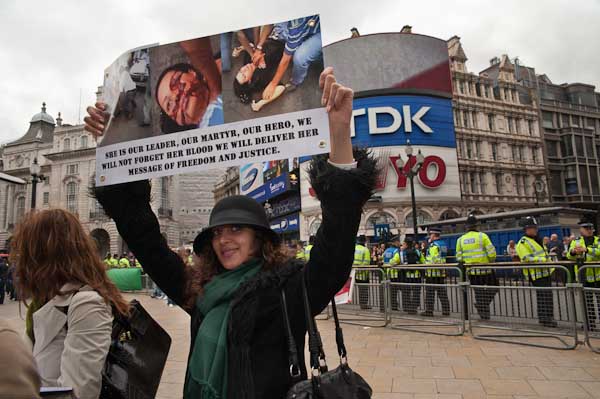
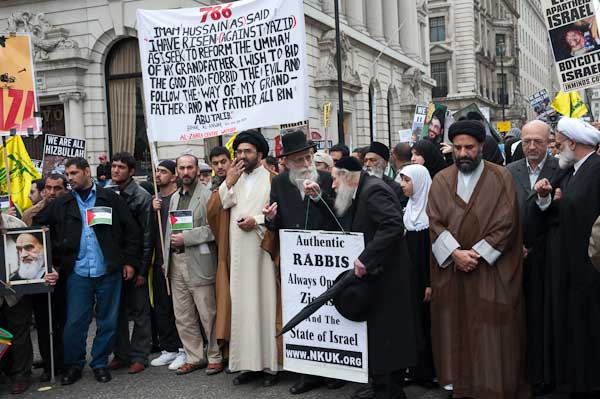
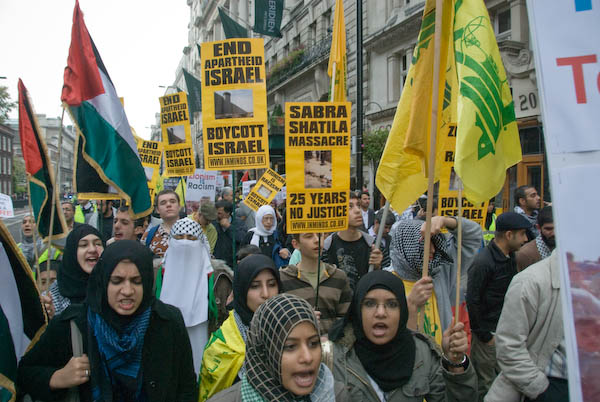
The annual Al Quds Day (Jerusalem Day) march in London as usual attracted controversy, with various groups coming out to protest against it. In 2009 these included Iranian democrats, royalists and socialists as well as far right groups including the English Defence League and March For England, but there seemed to be few organised Zionists on the streets.
Al Quds Day was initiated by Ayatollah Khomeini when he became Supreme Leader of Iran in 1989 as a day on the last Friday of Ramadan (the London march is on the following Sunday) to oppose the Israeli occupation and control of Jerusalem, and at least one of the groups involved in organising the event is said to received funding from the Iranian authorities – which accounts for the Iranian protesters.
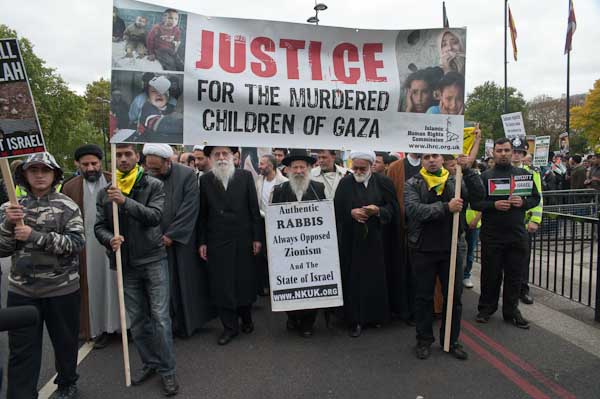
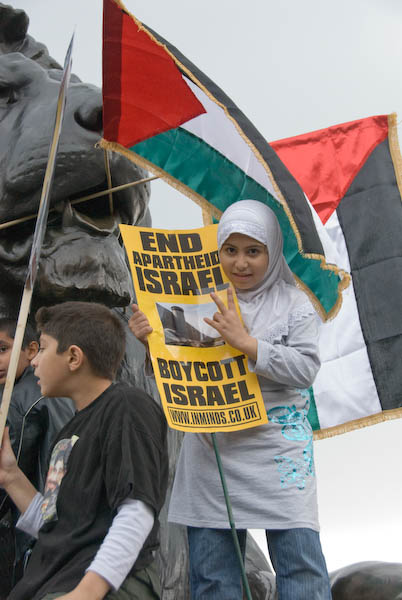
The march starts under the main banner ‘Justice for the Murdered Children of Gaza’
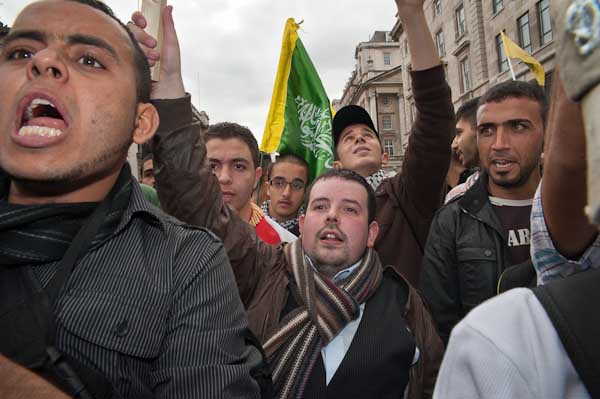
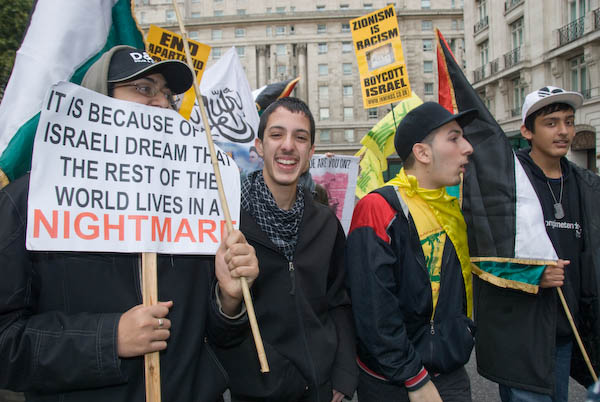
The march has become a wider protest calling for freedom for Palestine and an end to the Israeli occupation of land which for many centuries was Palestine. For many of the marchers this also means support for those fighting against Israeli occupation, both in Palestine and Lebanon.
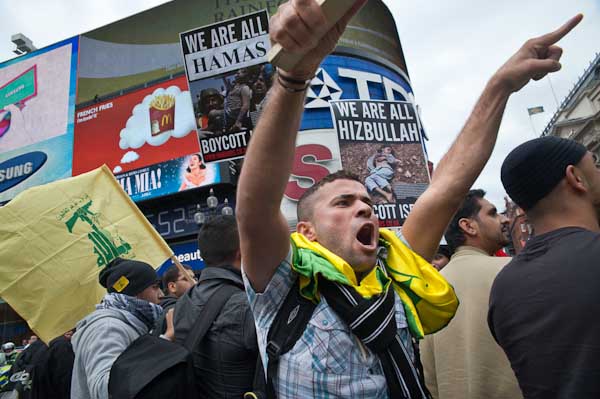
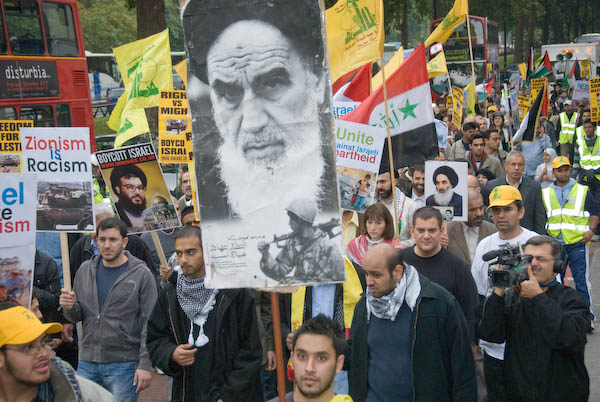
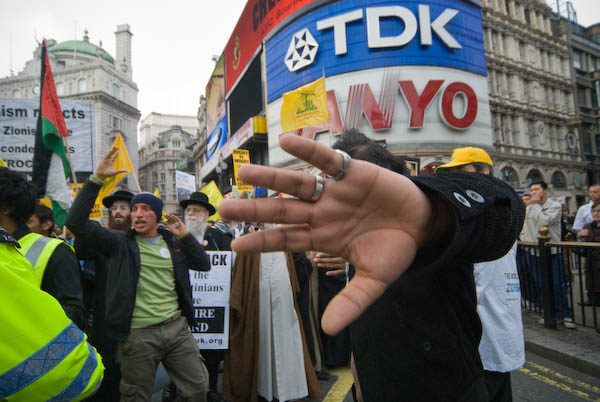
A few of the marchers carried Hezbollah flags, the flag of both the Lebanese Shia political party and its military wing. The military wing had been proscribed in the UK in 2008, but it was only in 2019 that this ban was extended to cover the political wing, making carrying the flag an offence. You can see a few of these yellow flags in my pictures. There are also some placards supporting Hezbollah and Hamas for their resistance to Israel.
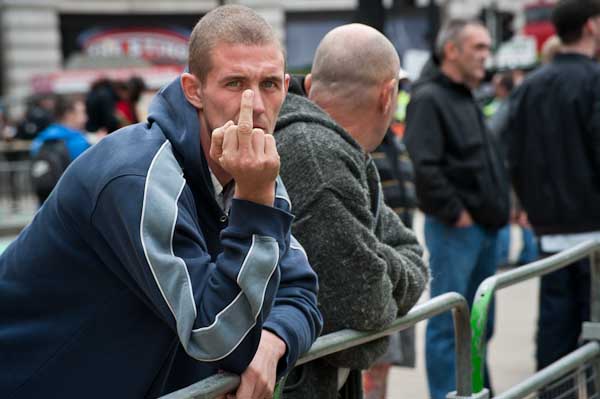
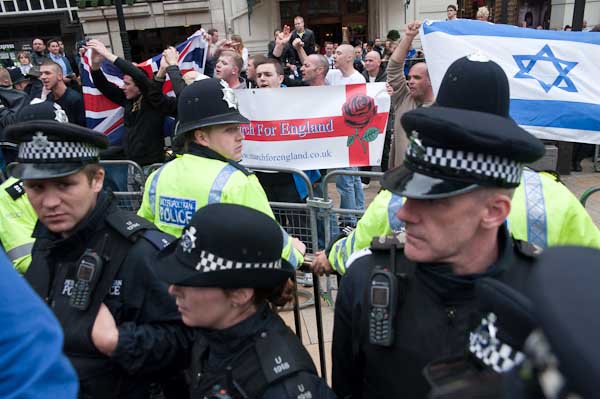
Demonstrators against the march were gathering earlier at Piccadilly CircusThey included Iranians as well as right wing football supporters
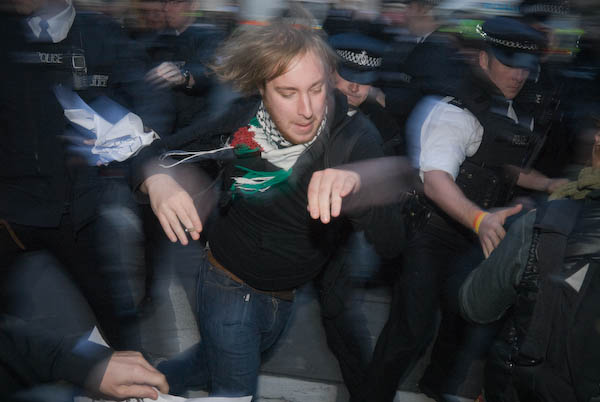
In 2009 the march was carefully policed to keep the marchers and protesters against the march from coming into contact and I saw some from both groups being stopped and searched in the area around Marble Arch where the march gathered.
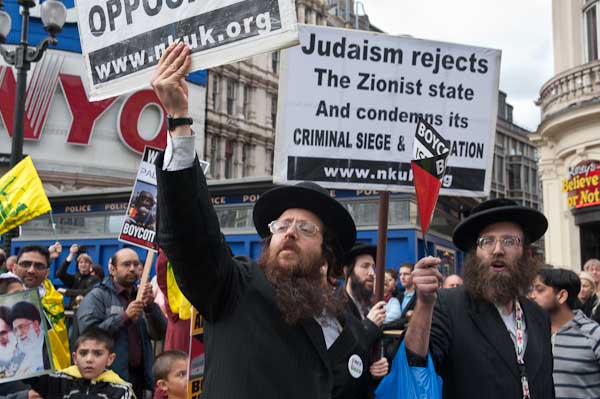
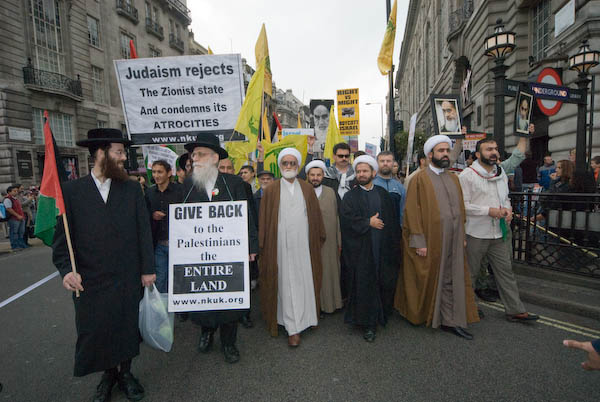
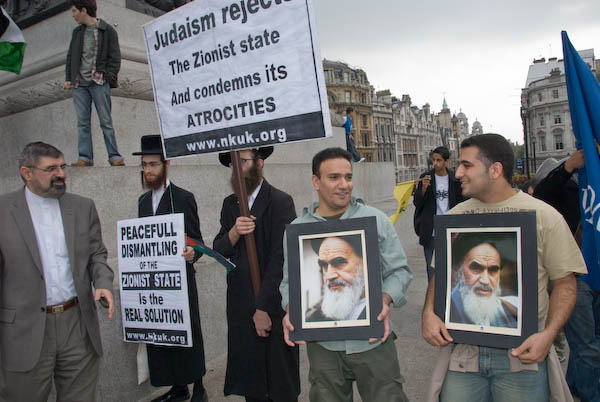
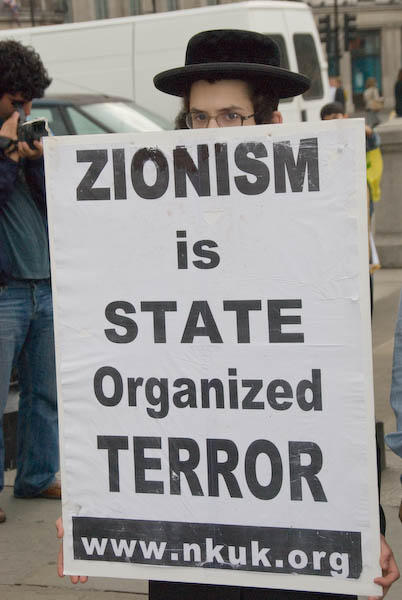
Neturei Karta marchers
People come to the march in coaches from mosques around the country and many come as families. Although there were separate men’s and women’s blocs the organisers announced that those who wanted to march as families were welcome to do so, and many, particularly the younger marchers, took advantage of this.
Rabbi Ahron Cohen who spoke at the rally at the end of the march
At the front of the march were Muslim clerics and two Neturei Karta Jewish leaders. These ultra-orthodox Jews are anti-Zionist and believe that Jews are forbidden from establishing a Jewish state until the arrival of the Messiah and support the peaceful dismantling of the state of Israel to become a part of Palestine.
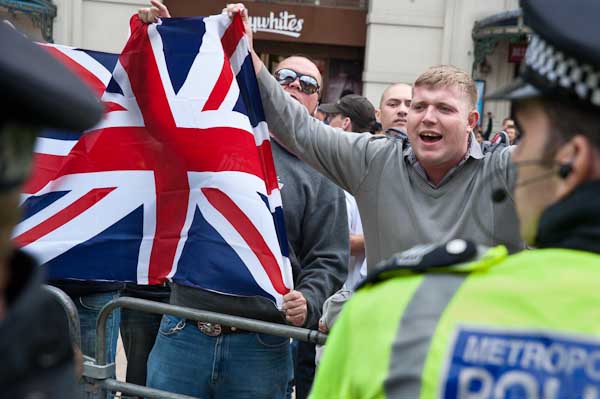
The main counter-protest came at Piccadilly Circus, with most of those taking part encircled around ‘Eros’ by a double line of police. They protested noisily as the march went by but most of the marchers followed the advice of the march stewards and ignored them. Some held up their posters and there were minor scuffles when a few marchers tried to leave the march and approach them.
As well as shouting insults at the Muslims, the counter-protesters were also making threats, gestures and shouting at the photographers, and I was glad not to be too close although the police bodies between made taking pictures difficult.
Police had also told the march organisers that they could not march to Trafalgar Square but must end with a rally in the much smaller area of Waterloo Place, which became extremely crowded. I left after listening to the first few speakers.
Al-Quds Day 2007: On October 7th, the second anniversary of the Hamas attack on Israel I find myself thinking about the long fight by Palestinians since so many were displaced and dispossessed in the 1948 Arab-Israeli war and the many thousands who since then have been killed by Israeli attacks.
Neturei Karta orthodox Jews oppose Zionism and marched in the Al Quds march
And of course for those Israelis who have been killed – though in much smaller numbers – by suicide bombers, by rockets and during the October 2023 incursion or among the hostages, and including those Israelis killed by Israeli forces.
What we have seen since however is not a war, not self-defence but genocide, the bombing and deliberate starvation of the entire population of Gaza. It comes on top of years of siege with restrictions on essential supplies and of the bulldozing of people’s homes as well as the establishment of more and more illegal settlements across occupied Palestine.
And our country remains complicit, still supplying arms to enable the genocide despite government statements to the contrary, still labelling protests calling for peace as ‘hate marches‘ and still making false allegations about antisemitism while failing to deal with the real anti-Semites who plan and carry out attacks such at that we all condemn in Manchester.
Thinking about what to post here for today, I came across the Al Quds Day march which took place in London on Sunday October 7, 2007. It was I think only the second time I’d photographed the annual event and I didn’t write a great deal about it then.
I did mention that this event was begun in 1979 when Ayatollah Khomeni declared the last Friday in Ramadan as Al Quds Day, (al-Quds being the Arabic name of Jerusalem), an annual anti-Zionist day of protest. In the UK the march has generally taken place on the following Sunday and is a demonstration in solidarity with the Palestinian people, largely by Muslims though also by anti-Zionist Jews and some of the UK left (many of whom are also Jewish.)
One man wanted to stop me taking pictures but of course I didn’t
In 2007 a mixture of groups came to demonstrate against the march, largely because of its links with Iran both from its founding and also as it was organised by the Iranian Human Rights Commision (Inminds) which is alleged to receive funding from the Iranian government. Unlike later years I saw no counter-protests by Zionist groups or individuals.
Back then many of the march carried flags of the Lebanese Shia Islamist political party and paramilitary group Hezbollah which emerged there after the Israeli invasion in 1982 and has strong ties with Iran. As well as running schools and hospitals and other social services it has also taken part militarily in opposing the various attacks by Israel on Lebanon.
Many Hezbollah leaders have been assassinated by Israel, some in what many describe as terrorist attacks. Until 2019 when its political wing was also proscribed the showing of the Hezbollah flag remained legal though contested in the UK.
As in earlier years the march ended with a rally in Trafalgar Square, though after 2008 the GLA refused to allow them to use the square, citing insurance problems.
Many more photographs of both the marchers and the rally and those who came to protest against the march on My London Diary at Al Qud’s Day March And Protest
Protest Under Threat – On Saturday 12th January 2008 I photographed six protests in London, and two of them were against the increased restrictions on public protest introduced by SOCPA, the Serious Organised Crime and Police Act 2005 which considerably increased the powers of arrest of police, criminalised trespass at designated ‘Protected Sites’ which included nuclear sites and a long list of royal, parliamentary, and government sites.
But most controversially it seriously restricted our right to demonstrate within a “designated area” of up to one kilometre from any point in Parliament Square. Although Trafalgar Square was excluded from this, it was a wide area which included areas on the south bank of the river including County Hall, the Jubilee Gardens, St Thomas’ Hospital and the London Eye and extended west on the north bank as far as Tate Britain.
These sections of the act were repealed or rather replaced in 2011 by the Police Reform and Social Responsibility Act 2011 which narrowed its scope to prohibiting some activities in Parliament Square, more specifically aimed at protests such as that by Brian Haw.
Hizb ut-Tahrir protest Bush’s Middle East tour – Marble Arch – Saudi Embassy
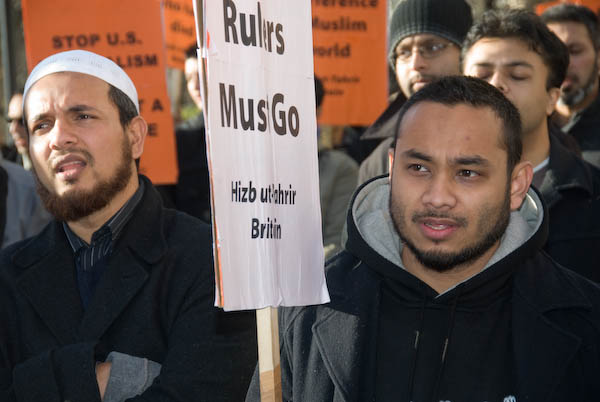
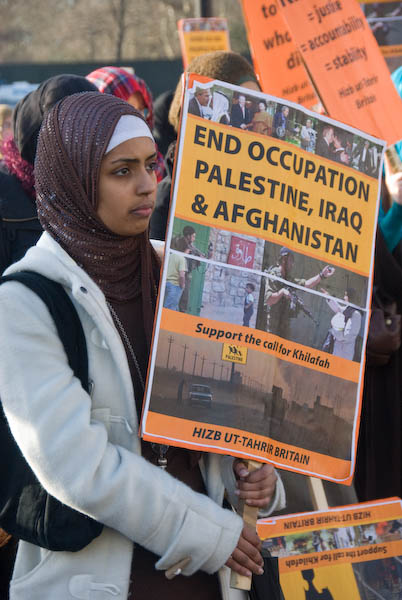
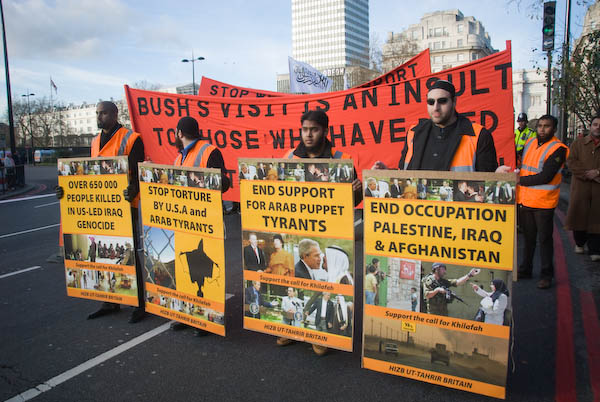
Other protests on the day included a march by supporters of Hizb ut-Tahrir Britain from Marble Arch to the Saudi Embassy in Mayfair to show their opposition to George Bush’s Middle East tour and American policies in the region as well as against the current corrupt ruling elites in the area.
Although I don’t support the ideology of Hizb ut-Tahrir and was certainly worried by their global intentions which we later saw put into practice by Islamic extremists in ISIS in Syria and others elsewhere as well as uneasy about their treatment of the women who were at their protests clearly as second-class citizens (and who I was often requested by stewards not to photograph), this like their other protests was extremely tightly managed by the organisation.
Clearly the protest presented no real threat to public order and it was hard to see why there was such a large police presence, when all that was needed was some traffic control and perhaps a few officers to monitor the speeches for any illegal content – though I don’t think there were any present who could understand those not in English. more pictures
Young Rich Protest Siena Airport Expansion
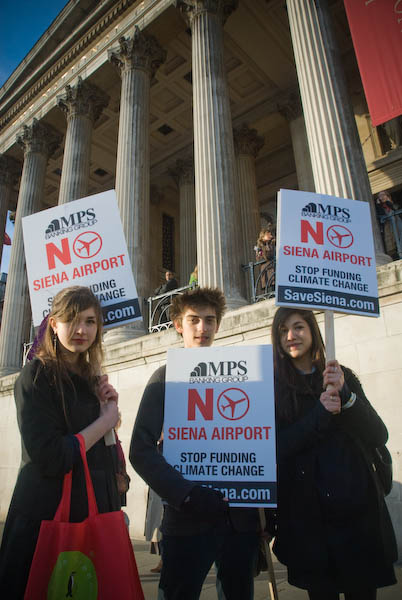
There were two protests taking place around Trafalgar Square, and one of them I found it a little hard to take seriously. This was what I described as a “small but very select” protest against the expansion of Sienna airport “led by the young grandson of a Lord” by “models and young people from some of the richest families around (the kind of people who own Guinness rather than drink it)” who enjoy their times at nice big villas there and don’t “want all sorts of riff-raff coming in on cheap flights“. Of course we should all be against airport expansion. more pictures
CSG Freedom to Protest Border Post – Trafalgar Square/Whitehall
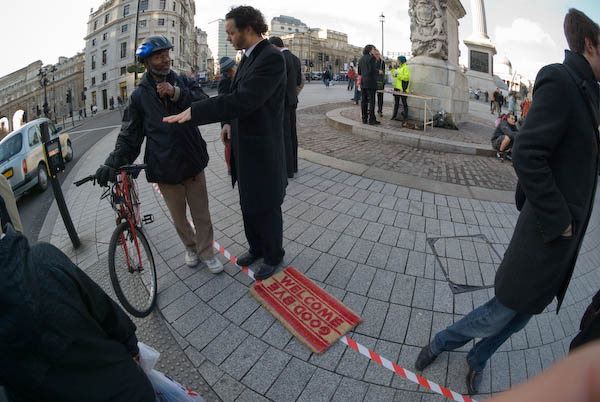
On the traffic island at the south of Trafalgar Square and the top of Whitehall a group calling themselves the CSG (Citizens Supporting Government – rather than the Met’s TSG, sometimes said to stand for Thugs Supporting Government rather than its official Territorial Support Group) set up a ‘Freedom to Protest Border Point’ again on Saturday on the edge of the SOCPA zone to advise the public about the danger of passing into the an area where freedom is severely restricted. more pictures
Freedom to Protest – outside Downing Street
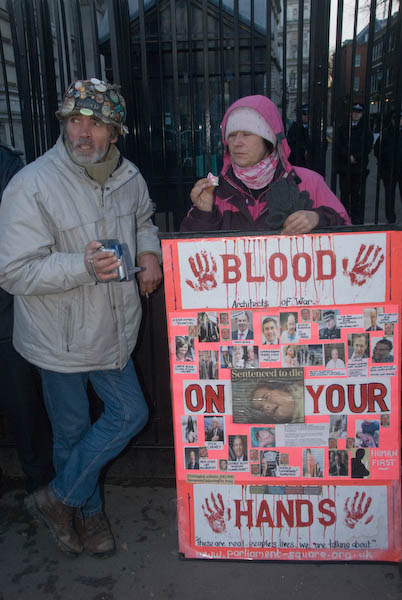
But the main Freedom To Protest demonstration was taking place at the gates of Downing Street with a couple of hundred protesters. Although police usually try to move protesters away from the gates, things as I arrived seemed fairly relaxed.
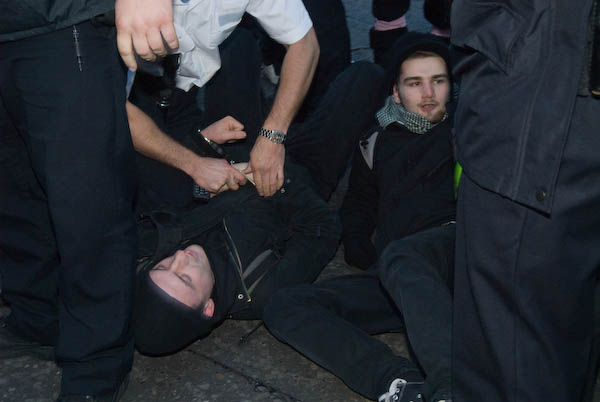
But when a number of protesters decided to sit or lie down in the middle of the road this prompted the police to take action. “They grabbed the first couple of guys who went down on the tarmac and handcuffed them as well as seeming to try out a few strange holds.”
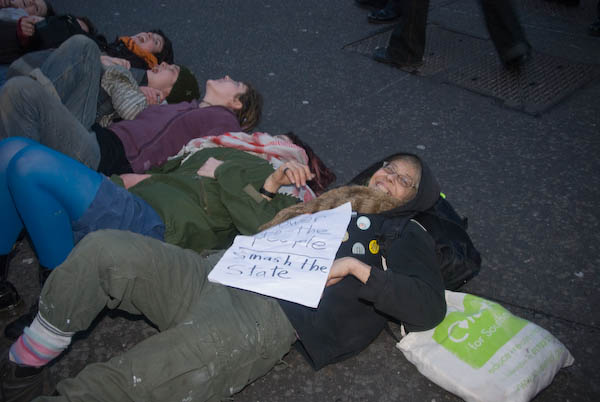
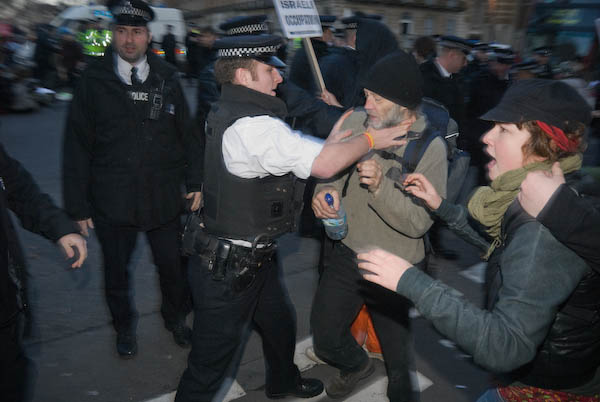
And when a dozen or so laid down in a neat line along the carriageway a squad of around 20 officers who had been waiting 50 yards down the road rushed in and began by clearing photographers and others standing on the road back onto the pavement. “Any who showed a reluctance to move were given a hand, sometimes with what seemed like unnecessary force. I was almost knocked flying when they threw one man bodily backwards – and I was in his way, probably rather luckily for him, as otherwise he could well have cracked his head open on the pavement.”
They then carried those sitting or laid on the ground back to the pavement, warning them they would be arrested if they returned to the road. Some who had linked arms were separated with some of the police clearly seeming to be enjoying themselves using pain compliance holds and inflicting unnecessary pain as they twisted arms behind backs and generally pushed the guys around.
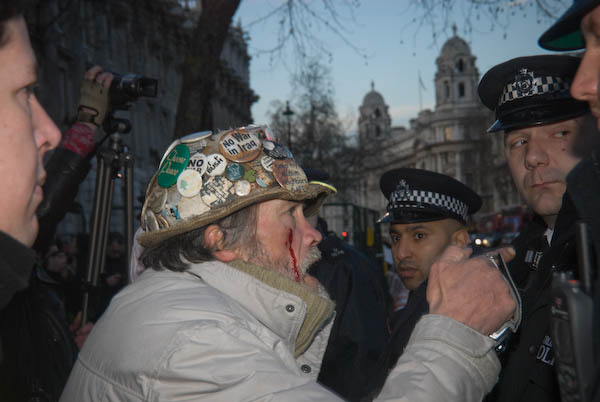
Brian Haw – whose continuing peace protest in Parliament Square had been one of the main targets of SOCPA – was there using a small video camera to record the police violence and I photographed him with a nasty trickle of blood running down his left cheek after an officer had forcefully pushed the camera into his face. When he tried to complain to the officers in charge he was ignored and finally told to go to a police station if he wished to complain. Some of the police were rather obviously amused at both his injury and his complaints. more pictures
Kenyans Demand Justice after Election Fraud
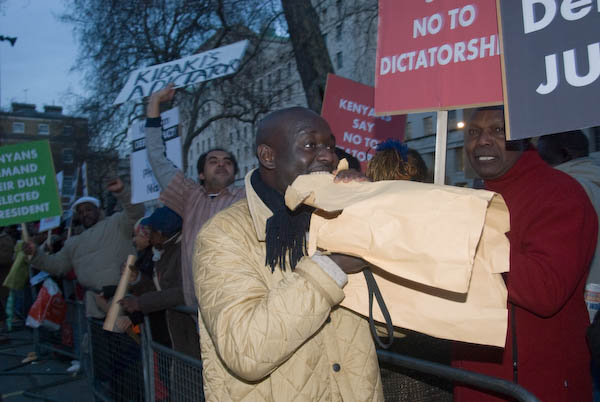
Across Whitehall in the designated protest area there were two protests taking place. Kenyans were protesting against election fraud in their country, where the man who had almost certainly lost the vote set up an electoral commission that was certain to declare him as the winner, and he remains President. SOCPA was having an effect on their protest as my picture shows, with a man using a megaphone hidden under brown paper! more pictures
End the Siege on Gaza
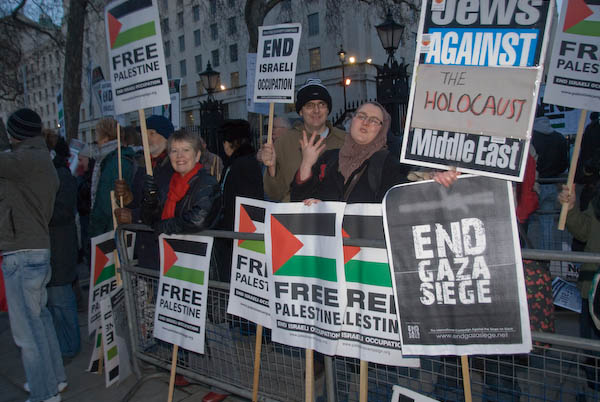
Also across Whitehall from Downing Street were a group of protesters calling for an end to the Israeli siege of Gaza which severely limits the supply of essential goods including medicines and for an end to the military occupation of Palestine.
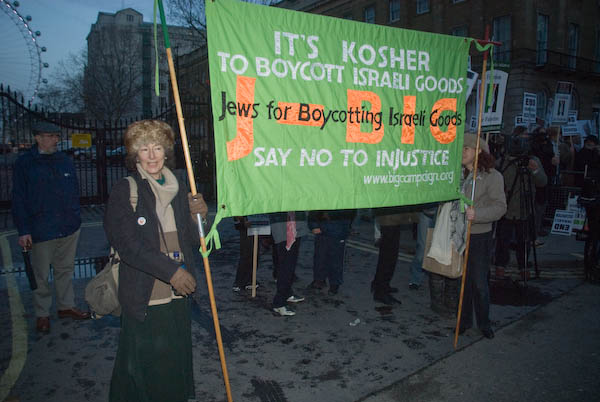
Among the protesters still present when I arrived rather late to photograph it were Jewish activists supporting Palestine and a boycott of Israeli goods, part of the growing campaign for BDS – Boycott, Divestment and Sanctions. In 2024 the UK government is putting through a Bill to stop “businesses and organisations–including those affiliated with Israel-being targeted through ongoing boycotts by public bodies” because of the increasing success of this campaign. If passed it will stop public bodies, “including universities, local authorities, and government departments, from making investment decisions that align with their human rights responsibilities and obligation.” They will be unable “to avoid causing or contributing to human rights abuses and international crimes” such as “the Chinese government’s systematic repression of Uyghurs, Israel’s crimes of apartheid or war crimes in Israeli settlements, Saudi Arabia and UAE’s war crimes in Yemen, or the Myanmar junta’s crimes against humanity.“ more pictures