Bring All the Troops Home NOW – 2007

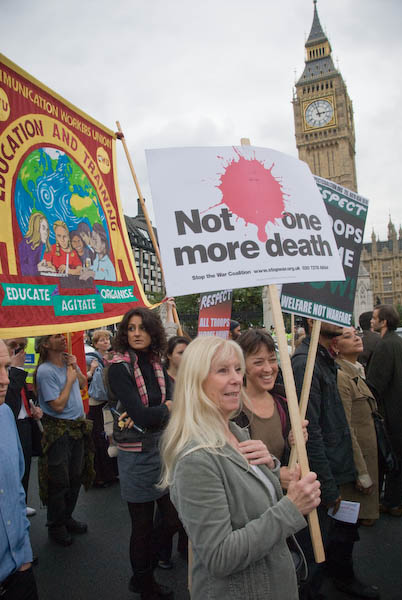
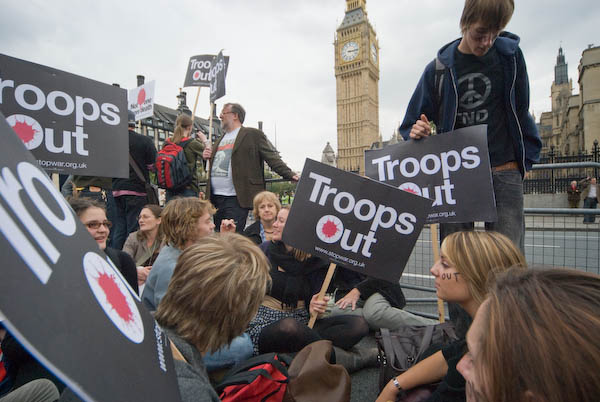
Bring All the Troops Home NOW: CND and Stop The War had called for a march to Parliament on 8th October 2007 to arrive when Gordon Brown was making his statement to Parliament on Iraq where British troops were still present having taken part in the US-led invasion in 2003.
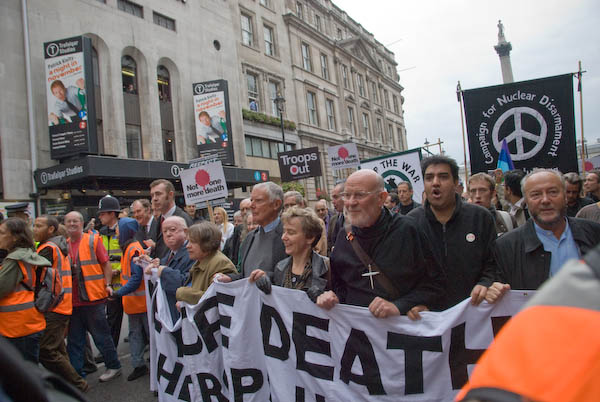
Bring All the Troops Home NOW - 2007

They wanted to march to make clear that all UK troops should come back here now. The invasion of Iraq in 2003 had led to the fall of Saddam Hussein but had been made without any real thought for the future of Iraq – except for the profits which US companies hoped to make. Saddam’s civil and military administration which had united the country were simply removed rather than being put to use to keep the country running and chaos reigned. Iraq didn’t need foreign armies but needed real support to set up a new civil society and that had not been forthcoming.
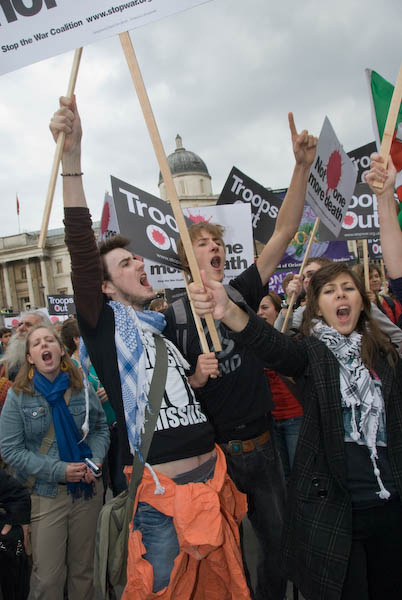
Bring All the Troops Home NOW - 2007
(C)2006,Peter Marshall

Gordon Brown tried to ban the protest, using “Sessional Orders” to the Commissioner of the Metropolitan Police for him to prevent the march under section 52 of the Metropolitan Police Act 1839. But CND and Stop The War made clear it would go ahead despite this.

On the morning of the march Prime Minister Gordon Brown – probably reacting both to huge public pressure and legal advice – lifted the ban, thus avoiding a huge burden on both police and courts. They might otherwise have ended with thousands of arrests – and cases which the courts would probably throw out.
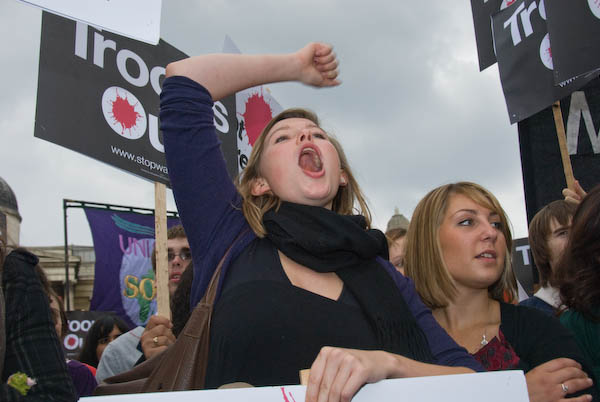
Bring All the Troops Home NOW - 2007
(C)2006,Peter Marshall

Around ten years later the powers that the Brown government had attempted to use were officially recognised to no longer have any legal effect – something I suspect had been part of legal advice given to Brown in 2007.
Bring All the Troops Home NOW - 2007
(C)2006,Peter Marshall

Last Saturday, October 4th 2025, I again watched a protest by Defend Our Juries in defiance of the government’s proscription of Palestine Action under terrorist laws, with police arresting almost 500 people for sitting holding a piece of cardboard with a message supporting the banned group. Many of those arrested seemed to be elderly and some also disabled, though there were also younger people.

The protestersy presented no danger to public order – other than challenging the legally doubtful ban on the group who few outside the government and those making arms for sale to Israel who had been heavily lobbying for a ban – believe could be described as terrorists. And this is something to be shortly tested in the courts. And the arrests made the police look unfeeling and stooges of the government rather than a force acting with the consent of the people.
(C)2006,Peter Marshall

Perhaps our current Labour government should have learnt from the example of George Brown in 2007. Supposedly we are a nation where the police operate by consent – which was clearly not the case here – and the police should have made this clear to the government and simply ignored this and earlier protests by ‘Defend Our Juries’. Which would of course have made the action – with people coming on purpose to be arrested and waiting patiently for hours for it to happen – totally ineffectual. And we do after all we have many laws which people – especially motorists – break every day and the police ignore.
(C)2006,Peter Marshall

Defend Our Juries also protests against the practice by some judges in some courts to prevent those charged from making a defence of their actions and instructing juries that they cannot use their consciences in coming to decisions – both vital protections essential to a fair legal system. Actions introduced into our legal system because successive governments have been angered by the decisions reached by juries in some cases. But it should not be the job of our legal system to serve the government but to serve the people and these developments endanger the whole basis of trial by jury which protects us and our democracy.
(C)2006,Peter Marshall

Here’s what I wrote in 2007 about the march and rally on 8th October 2007. All the pictures in this post come the event and there are many more on My London Diary.


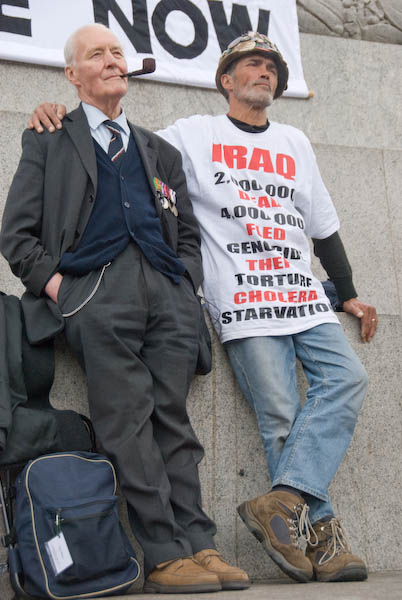
Brian Haw’s t-shirt summed up the disaster: “Iraq 2,000,000 dead 4,000,000 fled genocide theft torture cholera starvation” though there were a number of other crimes to mention, in particular the poisoning of so much the area for generations to come through the dumping there of so much of our nuclear waste in the form of ‘depleted uranium’ weapons.
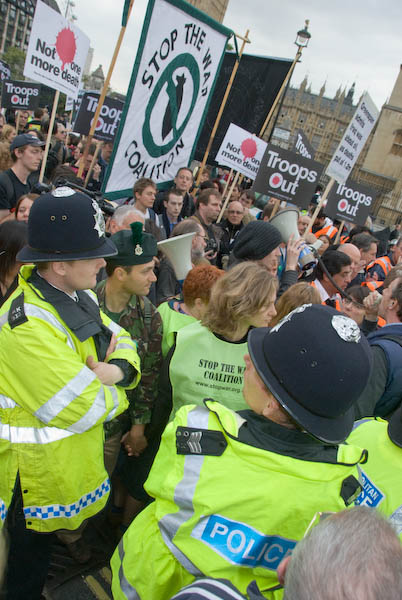
(C)2006,Peter Marshall

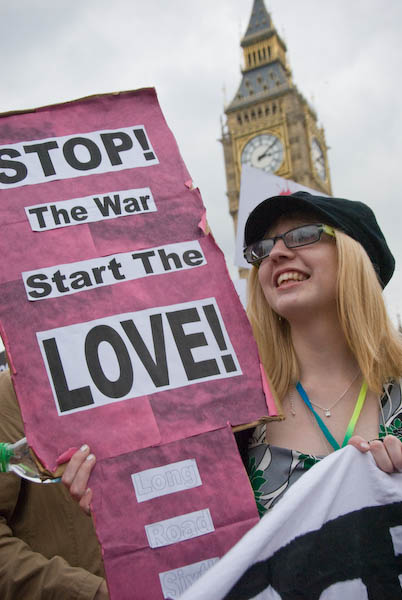
I was surprised at the level of support for Monday’s demonstration, a day when many of the supporters of the campaign would have been at work, and I had expected hundreds rather than the three thousand or so who actually turned up. The government’s clumsy ban on the event, using 1839 legislation passed against the Chartists, drummed up support, and to such an extent that on the morning of the rally they had to climb down and allow the march and the lobby of parliament to proceed.
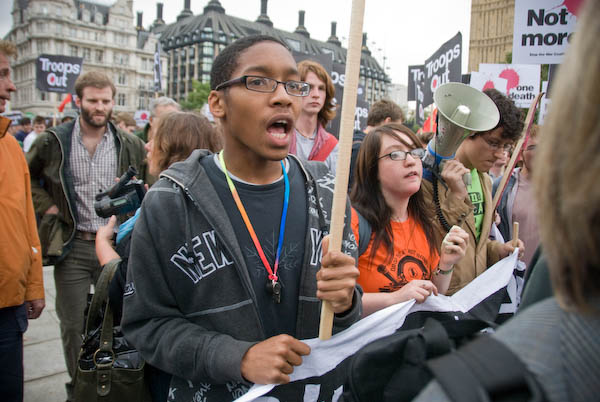
(C)2006,Peter Marshall

Later in the day, the success of the demonstration even became rather an embarrassment for Stop The War, who when I left around 4.30pm, two hours after the start of the march, were trying to help police in clearing the large crowd who were still blocking Parliament Street, Parliament Square and St Margaret St, urging them to move along to College Green. Later in the day a small group of protestors took down the barriers on the grassed area of parliament square, piling them up.
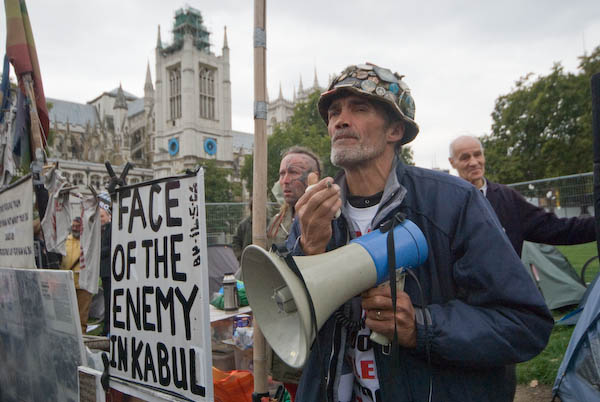
(C)2006,Peter Marshall

But the real embarrassment was for Gordon Brown, forced to climb down and allow democratic protest. Unfortunately he didn’t do the decent and sensible thing (and surely now inescapably the logical thing in the interests of both Iraq and Britain) and announce a speedy withdrawal of troops to be replaced by a real programme of support for the Iraqi people.
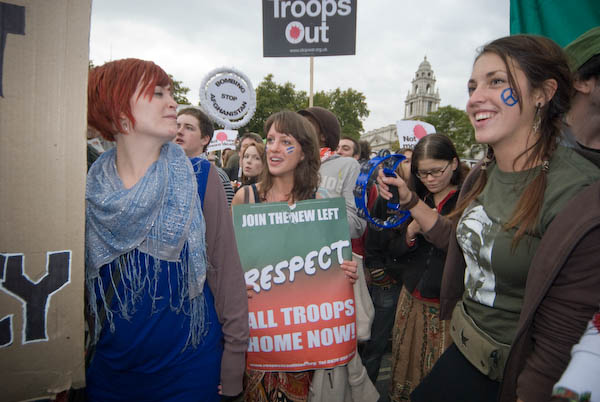
(C)2006,Peter Marshall

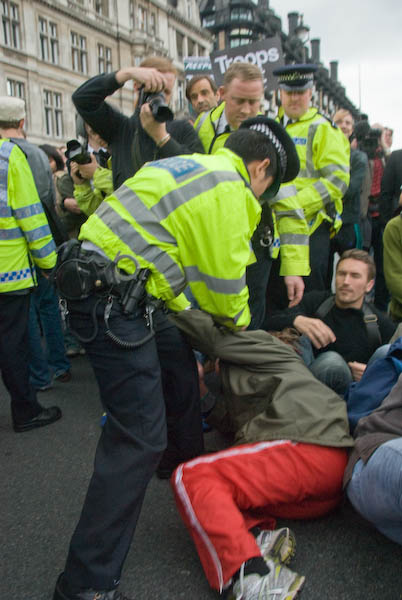
Although doubtless pressure from the police at the highest level was obviously vital in the decision to allow the march to go ahead, there were clearly a few officers in charge on the ground who weren’t happy.
(C)2006,Peter Marshall

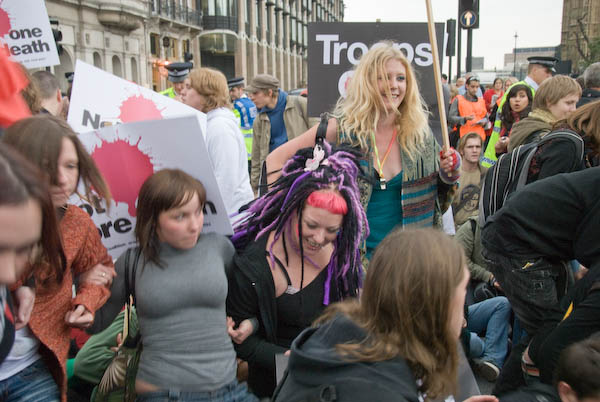
As we went down Whitehall, they obstructed photographers trying to photograph the event quite unnecessarily – so obviously so that some of the officers actually carrying out the orders were apologising to me as they did so. And later in the day a few tempers flared and there were a few fairly random assaults on demonstrators.

It did seem an unnecessarily provocative move to bring back Inspector Terry, apparently the man responsible for much of the harassment of Brian Haw and the officer in charge at the 2006 ‘Sack Parliament’ demo last year (photographer Marc Vallée who was injured is now taking legal action against the Met, with the support of the NUJ.)
(C)2006,Peter Marshall

British troops remained in Iraq in a combat role until 2009, with smaller numbers there mainly involved in training until the final withdrawal in 2011. You can read more about my NUJ colleague Marc Vallée being thrown to the ground by police and his eventually reaching a settlement on the EPUK web site.

Many more pictures from the march and rally on My London Diary at
Bring All the Troops Home NOW.


FlickrFacebookMy London DiaryHull PhotosLea ValleyParis
London’s Industrial HeritageLondon Photos

All photographs on this page are copyright © Peter Marshall.
Contact me to buy prints or licence to reproduce.
Al-Quds Day 2007

Al-Quds Day 2007: On October 7th, the second anniversary of the Hamas attack on Israel I find myself thinking about the long fight by Palestinians since so many were displaced and dispossessed in the 1948 Arab-Israeli war and the many thousands who since then have been killed by Israeli attacks.

Al-Quds Day 2007
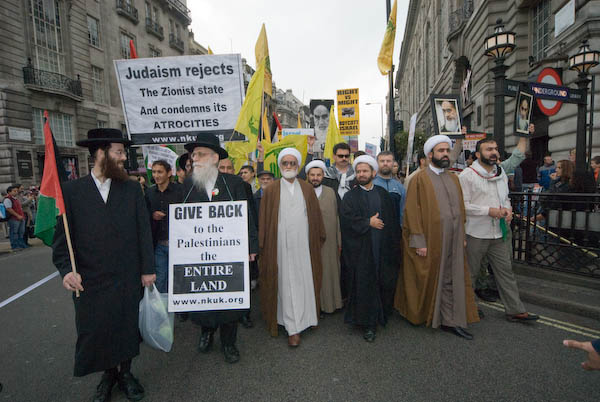
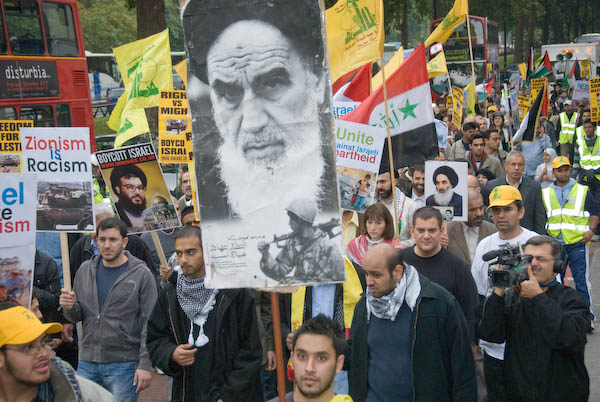
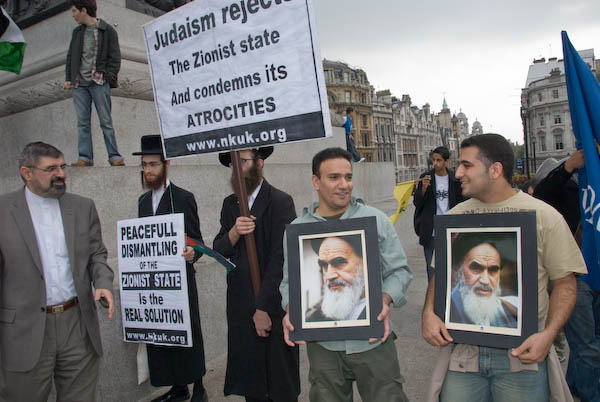
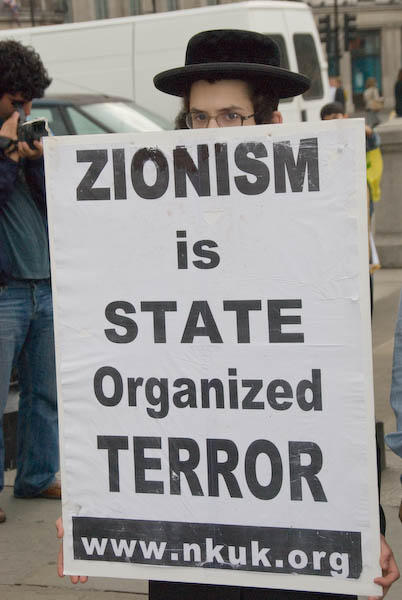
Neturei Karta orthodox Jews oppose Zionism and marched in the Al Quds march

And of course for those Israelis who have been killed – though in much smaller numbers – by suicide bombers, by rockets and during the October 2023 incursion or among the hostages, and including those Israelis killed by Israeli forces.

Al-Quds Day 2007

What we have seen since however is not a war, not self-defence but genocide, the bombing and deliberate starvation of the entire population of Gaza. It comes on top of years of siege with restrictions on essential supplies and of the bulldozing of people’s homes as well as the establishment of more and more illegal settlements across occupied Palestine.

Al-Quds Day 2007

And our country remains complicit, still supplying arms to enable the genocide despite government statements to the contrary, still labelling protests calling for peace as ‘hate marches‘ and still making false allegations about antisemitism while failing to deal with the real anti-Semites who plan and carry out attacks such at that we all condemn in Manchester.

Al-Quds Day 2007

Thinking about what to post here for today, I came across the Al Quds Day march which took place in London on Sunday October 7, 2007. It was I think only the second time I’d photographed the annual event and I didn’t write a great deal about it then.

Al-Quds Day 2007

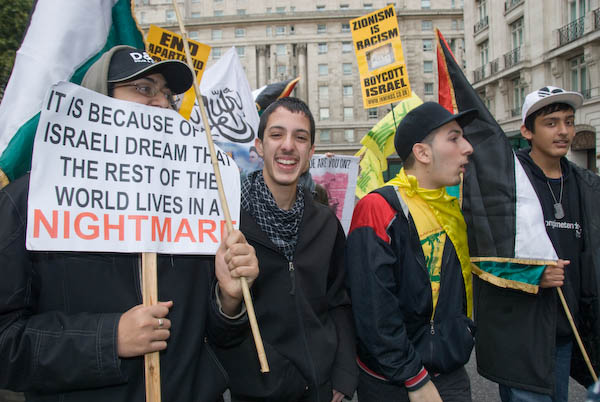
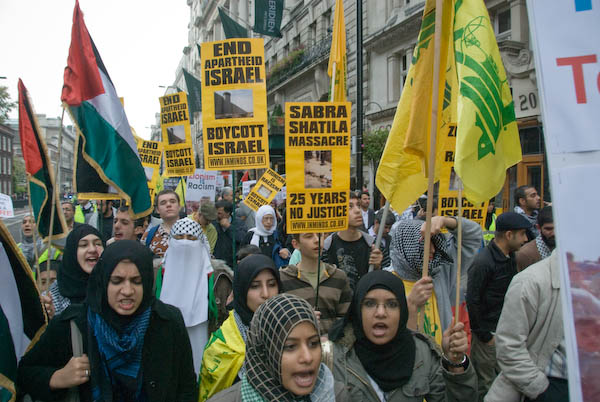
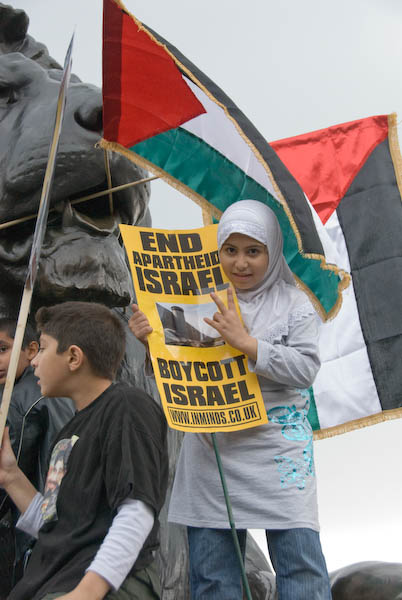
I did mention that this event was begun in 1979 when Ayatollah Khomeni declared the last Friday in Ramadan as Al Quds Day, (al-Quds being the Arabic name of Jerusalem), an annual anti-Zionist day of protest. In the UK the march has generally taken place on the following Sunday and is a demonstration in solidarity with the Palestinian people, largely by Muslims though also by anti-Zionist Jews and some of the UK left (many of whom are also Jewish.)

Al-Quds Day 2007
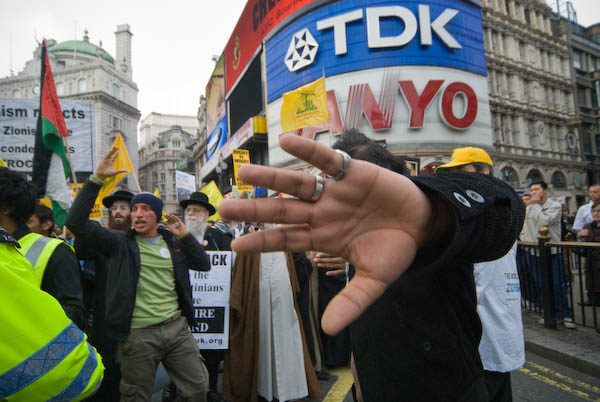
One man wanted to stop me taking pictures but of course I didn’t

In 2007 a mixture of groups came to demonstrate against the march, largely because of its links with Iran both from its founding and also as it was organised by the Iranian Human Rights Commision (Inminds) which is alleged to receive funding from the Iranian government. Unlike later years I saw no counter-protests by Zionist groups or individuals.

Back then many of the march carried flags of the Lebanese Shia Islamist political party and paramilitary group Hezbollah which emerged there after the Israeli invasion in 1982 and has strong ties with Iran. As well as running schools and hospitals and other social services it has also taken part militarily in opposing the various attacks by Israel on Lebanon.

Many Hezbollah leaders have been assassinated by Israel, some in what many describe as terrorist attacks. Until 2019 when its political wing was also proscribed the showing of the Hezbollah flag remained legal though contested in the UK.

As in earlier years the march ended with a rally in Trafalgar Square, though after 2008 the GLA refused to allow them to use the square, citing insurance problems.

Many more photographs of both the marchers and the rally and those who came to protest against the march on My London Diary at Al Qud’s Day March And Protest


FlickrFacebookMy London DiaryHull PhotosLea ValleyParis
London’s Industrial HeritageLondon Photos

All photographs on this page are copyright © Peter Marshall.
Contact me to buy prints or licence to reproduce.

Daily Mail, Kurdistan, Muslim Brotherhood & Iraq – 2013

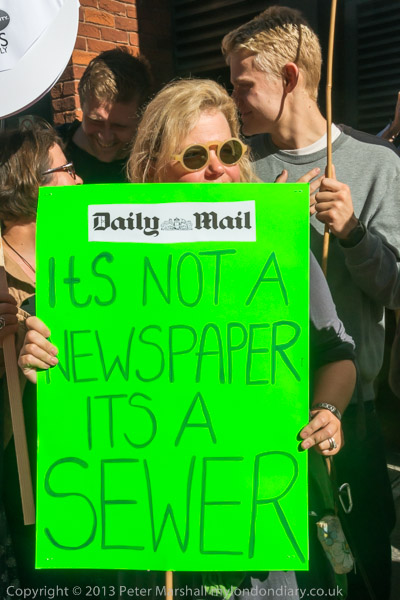
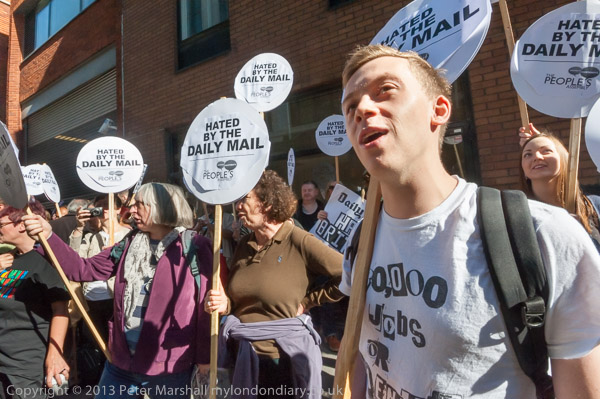
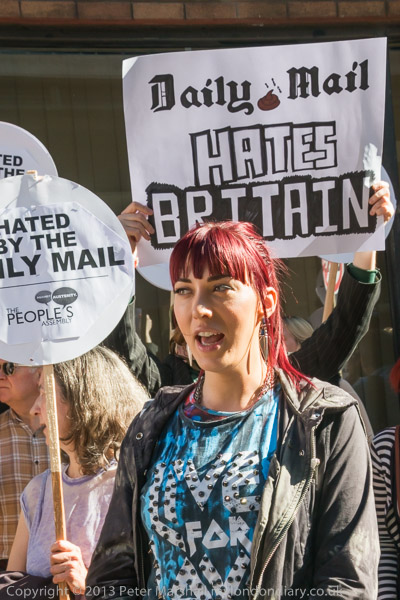
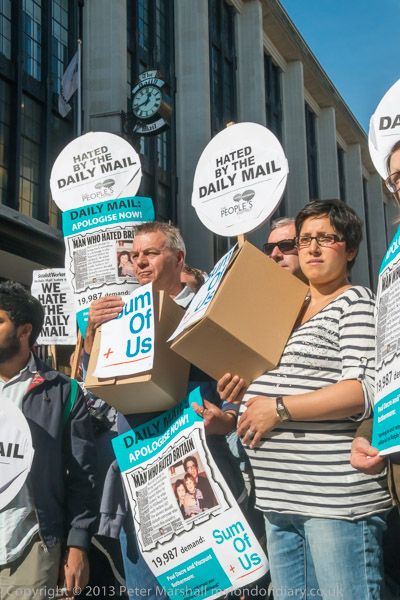
Daily Mail, Kurdistan, Muslim Brotherhood & Iraq: On Sunday 6th October 2013 I photographed a protest against the Daily Mail, Kurds marching calling for their leader to be released from Turkish jail, protests for and against the removal of President Morsi of Egypt and a protest calling for the release of hostages in Iraq.


Daily Mail You Told All the Lies – Kensington

Daily Mail, Kurdistan, Muslim Brotherhood & Iraq

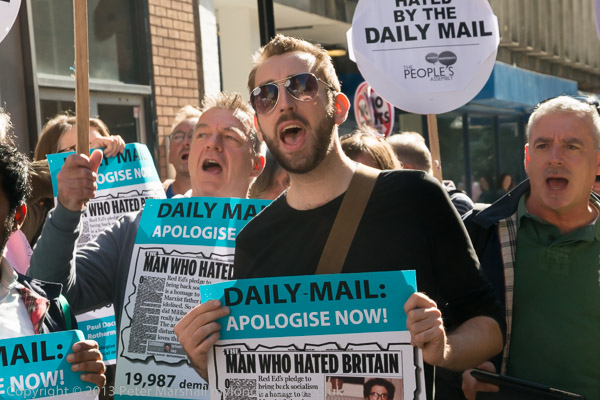
The Daily Mail has a long history of publishing lies against the BBC, NHS, public sector workers, trade unionists, socialists, women, Muslims, travellers and others, but the protest came after people were outraged by their smears and distortion in an entirely unfair attack of Ralph Milliband.

Daily Mail, Kurdistan, Muslim Brotherhood & Iraq

Their campaign against the father of Ed Milliband was intended to discredit the then Labour leader and Leader of the Opposition and many felt the Daily Mail had gone over the line of what is acceptable in British politics with their headline ‘MAN WHO HATED BRITAIN’, based on an out of context adolescent observation. Of course things in our press have worsened since then, particularly in the orchestrated attacks on Jeremy Corbyn accusing him of anti-semitism.

Daily Mail, Kurdistan, Muslim Brotherhood & Iraq

Ralph Milliband had fled Belgium with his working class Polish Jewish family in 1940 aged 16 when Germany invaded the country and went on to serve in the Royal Navy during the war. He settled in London after the war and became a British subject in 1948. As a sociologist he became one of the most respected academics of the post-war period, respected by people across the political spectrum.

Daily Mail, Kurdistan, Muslim Brotherhood & Iraq

The Daily Mail had supported the Blackshirts and Hitler in the 1930s and continued after the war to express hate for most of those institutions that have truly made Britain great – like the welfare state, the NHS and the BBC and the public sector generally. And more recently it had backed French fascist Marine Le Pen.

Daily Mail, Kurdistan, Muslim Brotherhood & Iraq

The protest was organised by The People’s Assembly, a nationwide group set up in opposition to the current government’s austerity programme and to defend the provision of education, health and welfare from general taxation and available to all. Several hundred came to the show they were proud of Britain and its welfare state and there was a great deal of chanting against the Daily Mail and and some songs before two people delivered boxes of a petition to their offices and the speeches began.

Daily Mail You Told All the Lies


Freedom for Ocalan & Kurdistan – Wood Green

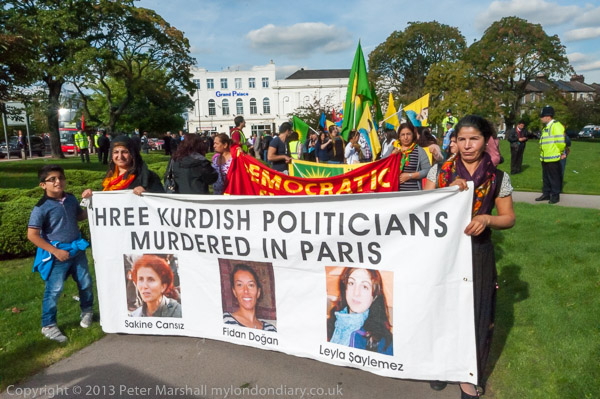
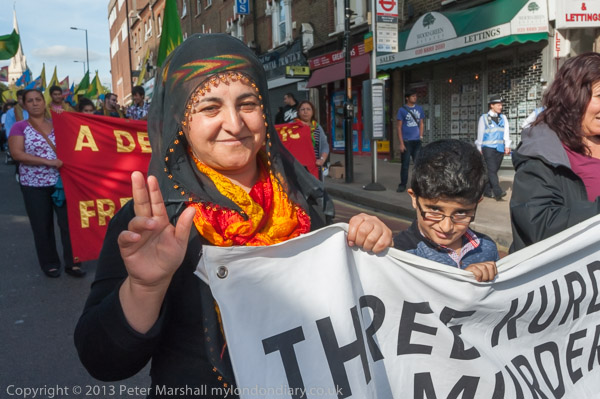
The speeches agains the Daily Mail were continuing as I rushed away to Wood Green in North London where Kurds were marching on the 15th anniversary of the kidnappping of their national leader Abdullah Ocalan by Turkey in 1998.

Since then Ocalan has been held, mainly in solitary confinement, in a Turkish prison.

I left the march as it went past Wood Green Station on its way to the Kurdish Community Centre in Haringey to make my way to Mayfair and the Egyptian Embassy

Freedom for Ocalan & Kurdistan


Egypt For & Against Muslim Brotherhood – Egyptian Embassy

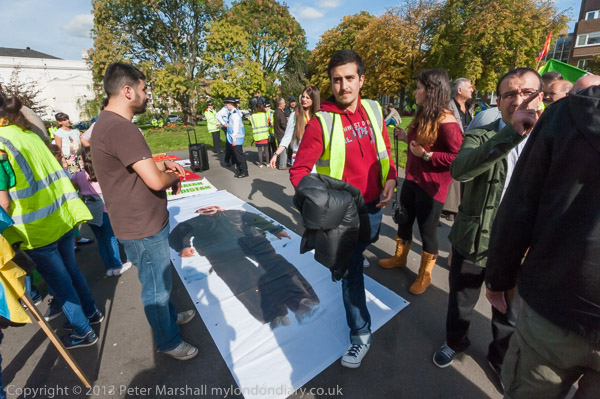
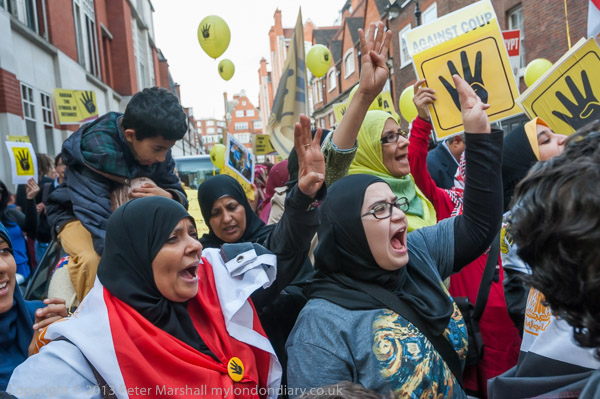
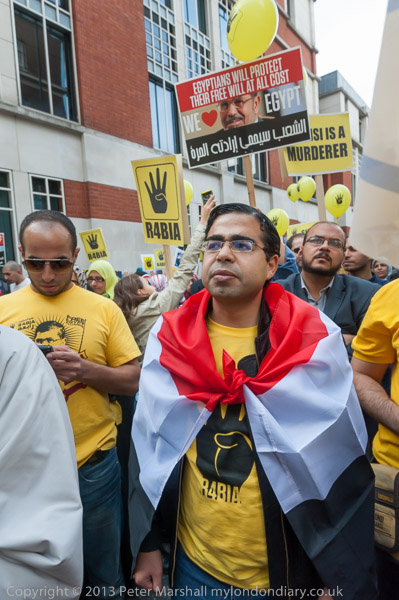
Opposite the Embassy in South Street were a group of protesters supporting the Muslim Brotherhood and opposing what the military coup which had recently removed the Egyptian President Mohamed Morsi the suppression of protests in Egypt against this.

Many carried placards showing the R4BIA four finger and thumb on palm sign to show support, begun after a Muslim Brotherhood sit-in at the Rabaa Al-Adawiya Mosque in Cairo was violently attacked by the military in August 2013 – Rabaa is ‘four’ or ‘fourth’ in Arabic.

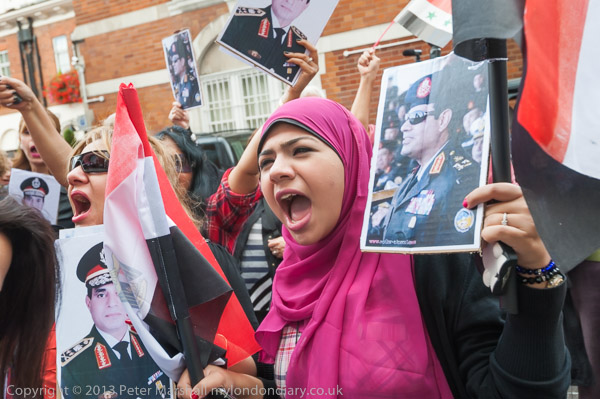
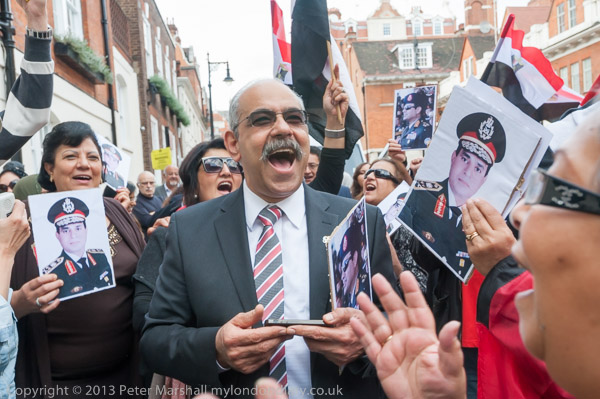
A short distance away a smaller group of Egyptians protested, many carrying pictures of Abdel Fattah El-Sisi, the Minister of Defense and Commander-in-Chief of the Egyptian Armed Forces who had led the coup and the massacres of protesters – a total of around 3,000 were killed and almost 19,000 arrested, They supported the removla of Morsi, who after a narrow win in the 2012 election had granted himself unlimited powers and issued an Islamist-backed draft constitution.

Sisi installed himself as leader and became president after elections in 2014, remaining in power as a dictator since then (including two further elections in which other candidates were barred from running or boycotted the election due to repression – said to be even worse than under Mubarak who had been forced to step down by the popular revolution in 2011.

Egypt For & Against Muslim Brotherhood


PMOI call for release of 7 Hostages in Iraq – Trafalgar Square

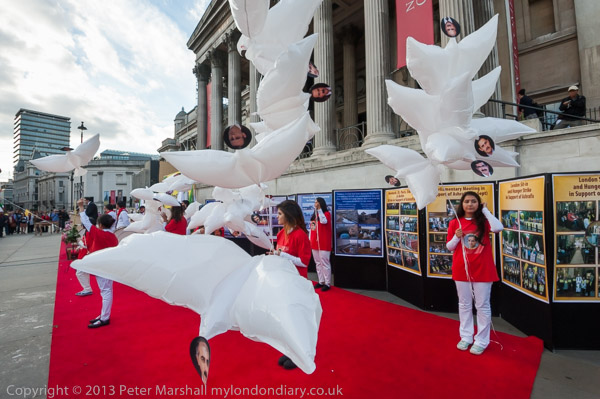
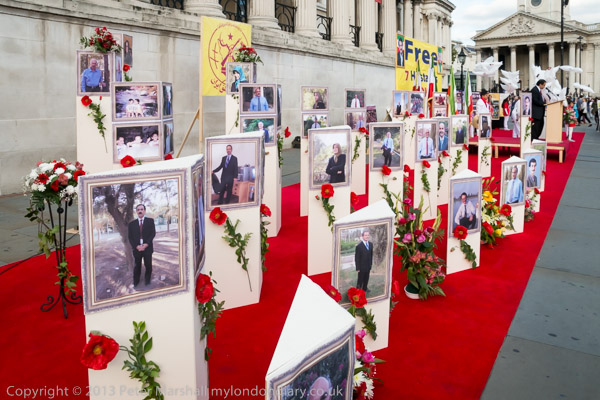
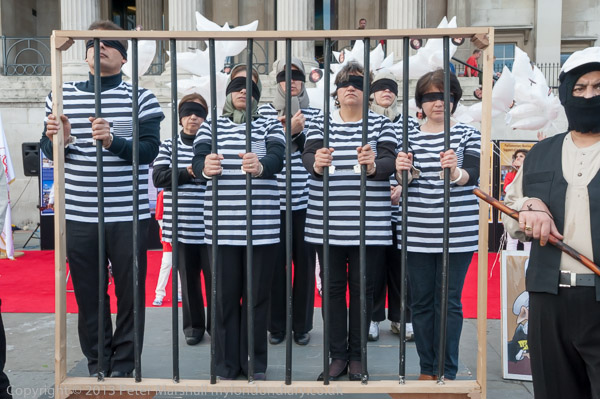
Finally in Trafalgar Square I photographed an elaborate display by the People’s Mojahedin Organization of Iran, the PMOI (aka MEK and MKO) which since 1986 had been exiled in Iraq (and is now in Albania.)

Photographs of the 52 killed by Iraqi forces on 1st September

After the 2003 Iraq invasion the MEK came to a ceasefire agreement with the USA, giving up their weapons – which included 19 British-made Chieftain tanks. When the USA left Iraq they were left at the mercy of the Iraqi authorities and have been subjected to a long history of attacks on their refugee camp.

Seven hostages are sill held in Baghdad

The latest of these, ordered by Iraqi Prime Minister Nouri al-Mailki, was at Camp Ashraf on September 1, 2013 and killed 52 with 7 hostages taken and held in the Baghdad Green Zone. In response hunger strikes started at Camp Ashraf and in Geneva, Berlin, Ottawa, Melbourne as well as London where they set up a camp in front of the US Embassy in Grosvenor Square.

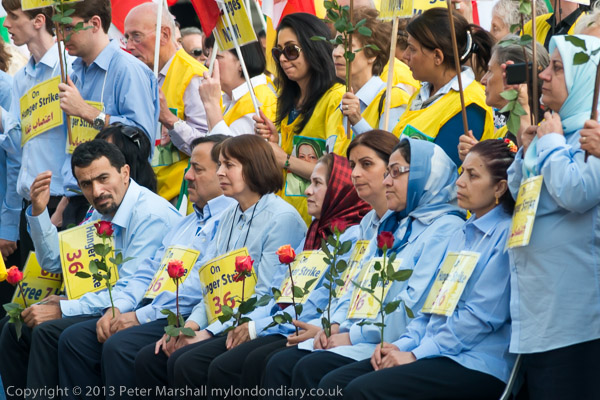
A line of hunger strikers, on the 36 day of their strike, was seated at the front of the audience at today’s rally, holding roses and taking an active part in the event, raising their fists and shouting.

The rally called for immediate release of the seven prisoners, and for UN forces to be stationed permanently at Camp Ashraf and Camp Liberty to provide the protection the PMOI, who the UN granted asylum status.

PMOI call for release of 7 Hostages in Iraq


FlickrFacebookMy London DiaryHull PhotosLea ValleyParis
London’s Industrial HeritageLondon Photos

All photographs on this page are copyright © Peter Marshall.
Contact me to buy prints or licence to reproduce.

Battlebridge, Canalside and Barnsbury – 1990

Battlebridge, Canalside and Barnsbury continues my walk which began at Kings Cross on Sunday February 11th 1990 with the post Kings Cross and Pentonville 1990.

Battlebridge Basin, Pentonville, Islington, 1990, 90-2b-11

Battlebridge Basin on the Regent’s Canal was opened at the same time as the Camden Town to Limehouse stretch of the canal in 1820, though the buildings around it took a couple of years longer to complete. In 1815 the landowner William Horsefall contracted with the canal company to allow them to dump the soil extracted from the Islington Tunnel a short distance away on his land, and he used this to form the basin.

It seems odd that you should need earth to form a basin, but it was needed to raise the ground level around it as part of the 480ft by 155ft basin is above the level of the streets around. Horsefall got an Act of Parliament to fill the basin with water from the canal and by 1822 it was surrounded by industrial premises, including timber yards. Among later occupants were W J Plaistowe & Co, jam, marmalade and preserve makers, here until 1926, and at Albert Wharf on the northeast corner were Cooper & Sewell (c1847-1880) and J Mowlem & Co (c1880-1922).

The best-known building on the basin was the warehouse built around 1860 by ice-cream maker Carlo Gatti to store ice brought from Norway, which since 1992 houses the London Canal Museum. In a Key Stage 2 teaching resource on their site is an excellent plan showing the uses of the different areas around the basin in the late 19th century.

Unlike other canal basins in London this was privately owned, known first of all as Horsefall Basin, then Maiden Lane Basin before taking its current name – the old name for the Kings Cross area, which had a bridge over the River Fleet. There seems to be no agreement as to which battle this was named after but few beleive the popular legend it was fought by Boudicea. In 1978 a group of boat owners came together so set up moorings here which over the years since have developed into a substantial marina.

Mercantile House, All Saints St, Pentonville, Islington, 1990, 90-2b-14

My previous post on this walk showed an overall picture of Mercantile House and gave a little of its history. In 1990 the whole site was undergoing redevelopment as you can see in pictures below. Mercantile House was retained.

All Saints St, Pentonville, Islington, 1990, 90-2b-13

I photographed Bartlett Ltd, Export Packers in 1979 from the canal towpath and wrote a little about Battlebridge Basin and Bartlett’s works then and wrote:

Although many of the canal-side buildings in the area have been replaced, a warehouse on the basin of Bartlett Export Packers survives in greatly altered form as Albert Dock. The works buildings in this picture, at the end of New Wharf Road, have been replaced by those of Ice Wharf, three blocks with 94 apartments in a highly regulated private development with 24 hour concierge service and a private, gated underground parking space where a 2 bed flat overlooking the canal could be yours for only £1,195,000.

Demolition of the buildings on All Saints Street whichg meets New Wharf Road at its west end provided me this view of part of Bartletts from here.

Regent's Canal, View West, from, Caledonian Rd, Pentonville, Islington, 90-2c-64
Regent’s Canal, View West, from, Caledonian Rd, Pentonville, Islington, 90-2c-64

From Thornhill Bridge on the Caledonian Road over the canal I could see the cleared development site and, in the distance St Pancras Hotel, the Post Office Tower and other buildings. At the left are the back of buildings on Caledonian Rd.

Regent's Canal, View West, from, Caledonian Rd, Pentonville, Islington, 1990, 90-2c-65
Regent’s Canal, View West, from, Caledonian Rd, Pentonville, Islington, 1990, 90-2c-65

A second view west from Thornhill Bridge includes Bartlett’s water tank and canalside buildings.

Thornhill Crescent, Barnsbury, Islington, 1990, 90-2c-52

I walked on north up Caledonian Road to Thornhill Crescent at the northern end of Thornhill Square, once of the well-known Barnsbury Squares, though it certainly is not square – together they are more of an oval, narrowing towards the southern end. Wikipedia calls it “an unusual large ovoid ellipse“.

Much of the land around here was owned by the Thornhill family who had come from Yorkshire and let to dairy farmers. George Thornhill began Thornhill Square in 1847, and Samuel Pocock, one of those rich farmers began Thronhill Crescent around 1849.

Lived in at first by prosperous middle class households, the area became run-down by the middle of the last century with many properties in multiple occupation and high levels of street crime. But Islington became fashionable in the 1960 and 70s and gentrification led many of those living to purchase the freeholds and the area went upmarket. Some flats now sell for over a million pounds and entire houses over two million.

More from Barnsbury in the next post in this series.


FlickrFacebookMy London DiaryHull PhotosLea ValleyParis
London’s Industrial HeritageLondon Photos

All photographs on this page are copyright © Peter Marshall.
Contact me to buy prints or licence to reproduce.

More City Panoramas – 1994

More City Panoramas: I spent several days wandering around the City of London – the “Square Mile” in July and August 1994, I think in prepaation for a group show in which I had decided this would be my contribution.

More City Panoramas - 1994
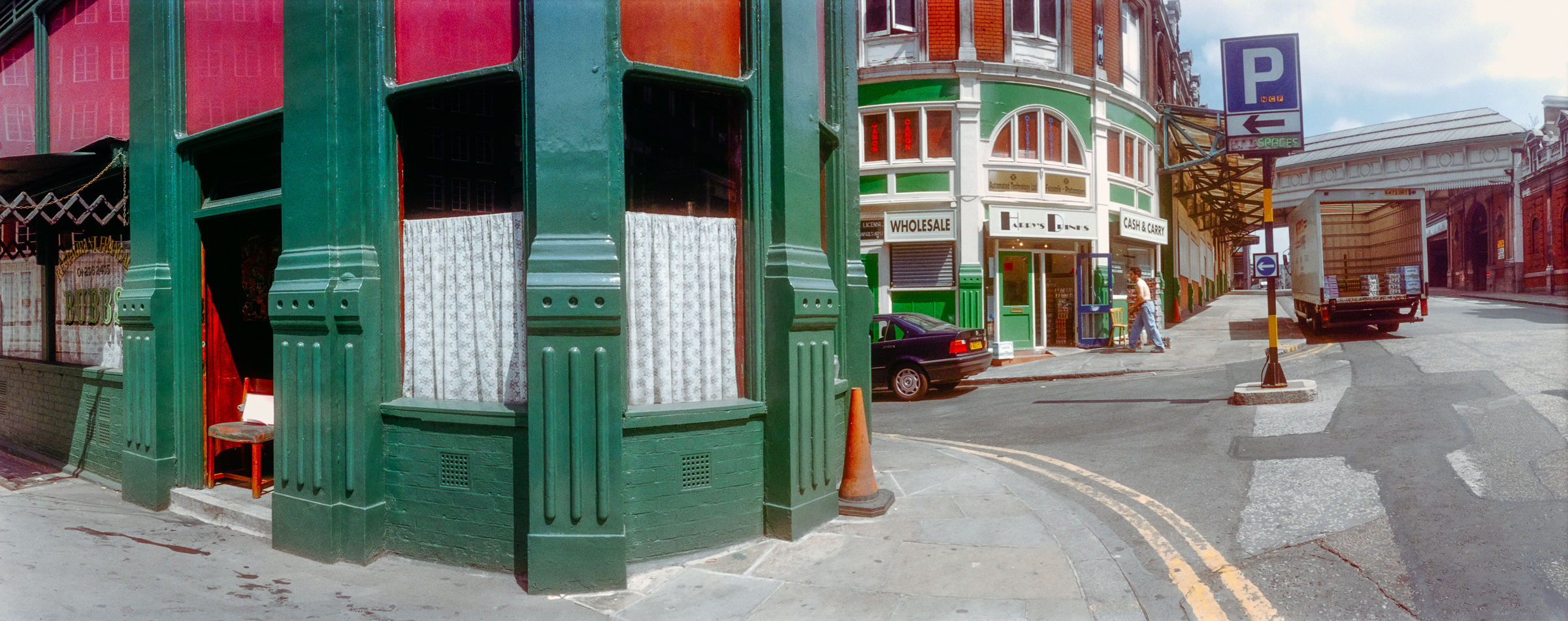
Bubbs, Restaurant Francais, Farringdon Rd, West Smithfield, City, 1994, 94-702-43

Bubb’s Le Restaurant Francais with the address Central Market, Farringdon Street is long closed, but a listing states that they served “a variety of traditional French dishes at their restaurant and can cater for private parties of up to 30 guests upon request.” There are still several French restaurants in the area.

A little further down West Smithfield was the London Central Market with on the corner a wholesale Cash and Carry and Harry’s Drinks and in the distance a covered way across the road between market buildings.

I photographed this corner on several occasions, making a similar panorama here in 1992, perhaps why I have not put this on Flickr.

More City Panoramas - 1994
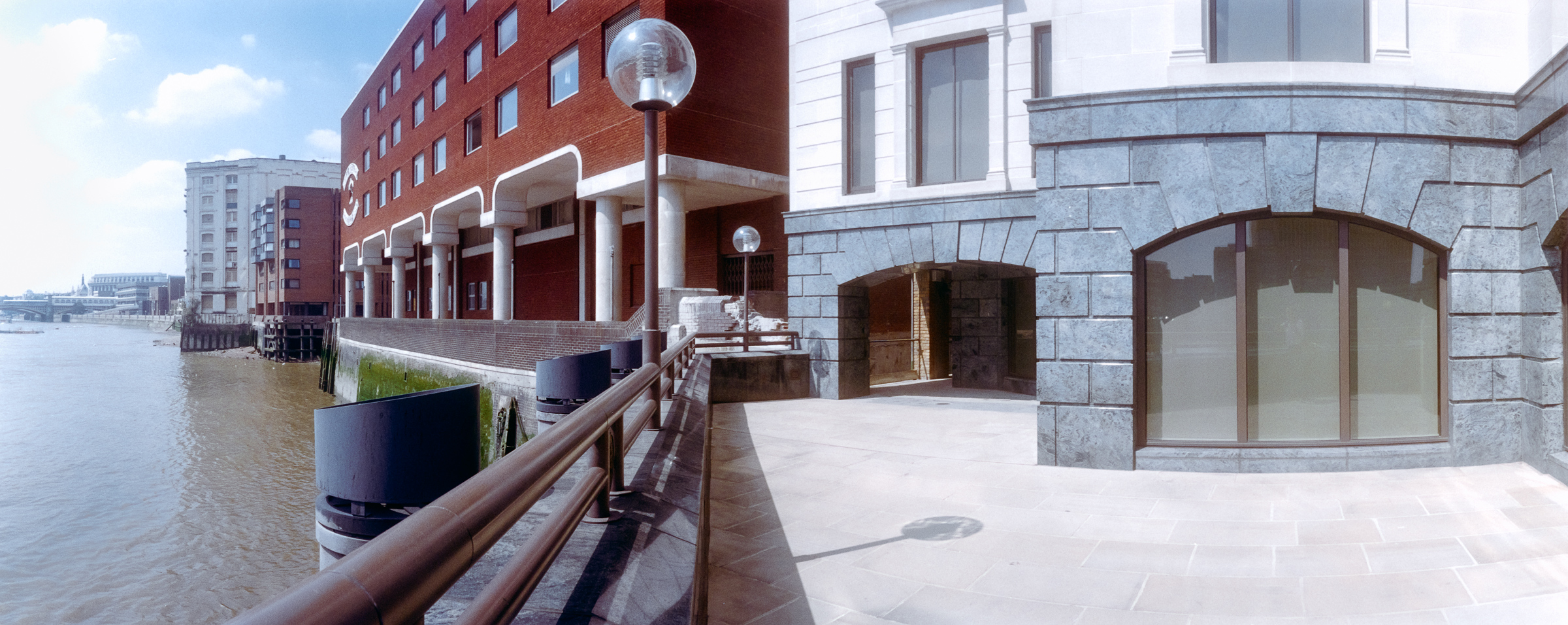
River Thames, Thames Path, Vintners Hall, Paul’s Walk, City, 1994, 94-703-52

Looking west along the river to Bull Wharf, Queenhithe and beyond. Bull Wharf proudly states it was REBUILT 1980 and it looks to me exceedingly ugly, probably why I didn’t upload this picture to Flickr. My picture perhaps makes the red brickwork event more virulent – the building looks much better to me in a black and white non-panoramic image I made at the same time from more or less the same spot.

Car Park, Smithfield St, City, 1994, 94-704-51

Slightly out of focus in the distance I can just make out Lady Justice on the roof of the Old Bailey and to her right more clearly the tower of Holy Sepulchre Church at the east end of Holborn Viaduct.

I think this car park probably extended to Hosier Lane and is now filled with the shops and offices of 12 Smithfield Street, built in 2004 and now described on Buildington as “an outdated office block that has suffered from poor environmental performance, limited architectural merit, and inefficient servicing. Its ground floor lacks engagement with the surrounding public realm, and its dated façade no longer reflects the character of the conservation area” and being refurbished and extended.

St Mary Somerset Church, Upper Thames St, City , 1994, 94-704-13

A rather dark rendering of this high contrast scene with deep shadow the block of St Paul’s Vista (or 1 High Timber St, now One Millennium Bridge) straddles Upper Thames Street with the bright sky above. My picture was made from the footbridge of Fye Foot Lane carrying a section of the CIty’s Highwalk across Upper Thames Street and Castle Baynard Street and on to Queen Victoria Street.

St Mary Somerset Church was one of those destroyed in the Great Fire of London in 1666 and like 50 others rebuilt by the office of Sir Christopher Wren. The tower remains between Lambeth Hill and Castle Baynard Street but the rest of the church was demolished in 1871 when like other redundant churches the land was sold to build churches in the rapidly expanding suburbs of London. The tower was a Ladies toilet before the Second World War, Damaged by bombing, it was restored by the city in 1956 and has now been converted into a private residence.

More City Panoramas - 1994
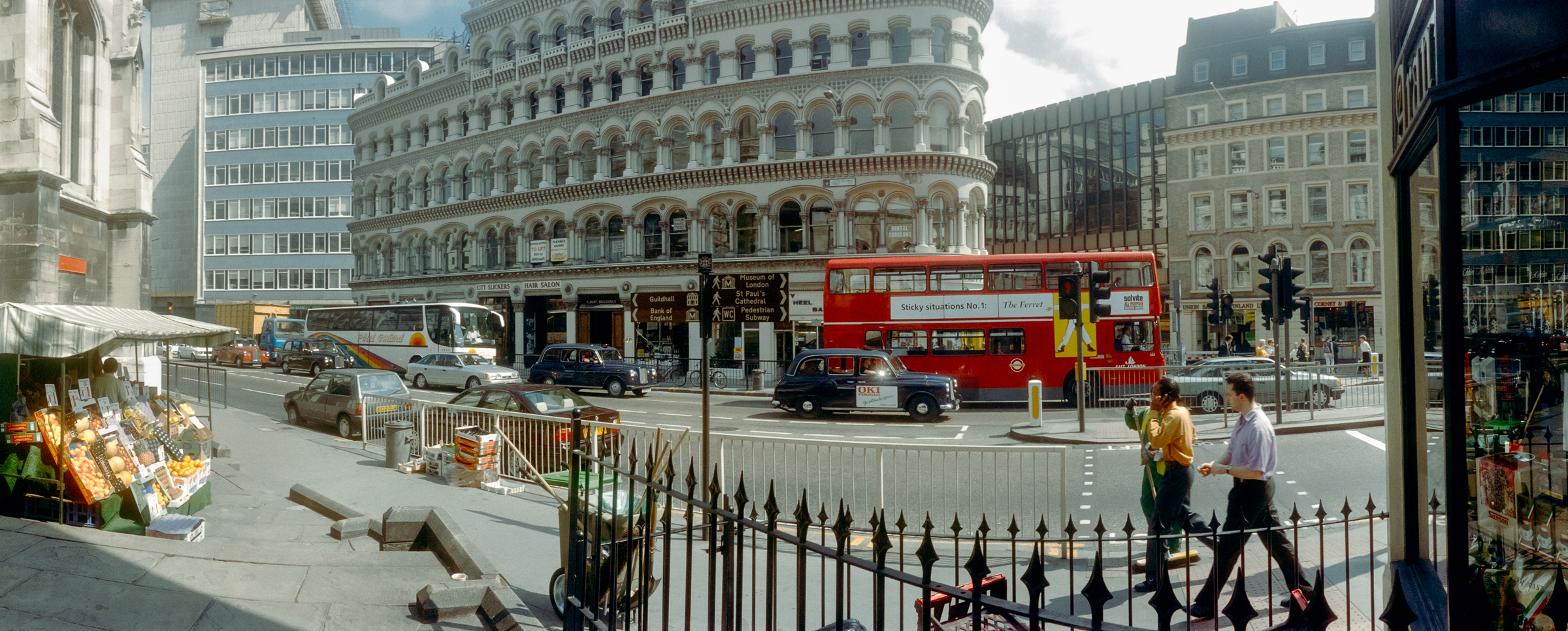
Highwalk, Footbridge, Huggin Hill, Upper Thames St, City, 1994, 94-705-41

A fruit and vegetable stall on the pavement in Front of St Mary Aldermary (another rebuilt by Wren after the Great Fire) on busy Queen Victoria Street which you can see at extreme left. I think the extremely low stone wall on the pavement and the railings mark the former edge of its churchyard.

I liked the range of architectural age and style across the upper half of this image, and particularly admired the ornate Victorian block in the centre of the picture. As well as a bus and a coach there are 5 London taxis in the picture, an aspect of London’s traffic congestion long overdue for reform.

Highwalk, Footbridge, Queen Victoria St, City, 1994, 94-705-31
Highwalk, Footbridge, Huggin Hill, Upper Thames St, City, 1994, 94-705-31

This was taken from a now-closed section of Highwalk across Upper Thames Street and the church at left is St Mary Somerset. The alley at right is Huggin Hill with a view of the distinctive building on the block between Queen Victoria St, Bread Lane and Cannon Street, 30 Cannon St built for Crédit Lyonnais between 1974 and 1977.

Highwalk, London Wall, City, 1994, 94-706-51

So many buildings have changed around here since 1994. The building right of centre is Standard Chartered on the corner of Aldermanbury and Aldermanbury Square and was remodelled around 2010 and the building left of centre is Brewer’s Hall, now with a roof extension. I think this section of the highwalk led up at Brewers Hall Gardens

More from July 1994 in the City later.


FlickrFacebookMy London DiaryHull PhotosLea ValleyParis
London’s Industrial HeritageLondon Photos

All photographs on this page are copyright © Peter Marshall.
Contact me to buy prints or licence to reproduce.


Kings Cross and Pentonville 1990

Kings Cross and Pentonville: Although I took a few pictures in the next few weeks, mainly on my way to or from meetings, it was well into February before I was able to go on another long photographic walk. Of course the weather at that time of year often isn’t too kind and days are short, but winter is the best season for photographing much of London’s buildings, as so much is hidden once trees come into leaf.

Grays Inn Rd, Kings Cross, Camden, 1990, 90-2b-54

I can’t now recall why I decided to return to the Kings Cross area on Sunday February 11th 1990, though I liked to revisit areas periodically, and the journey to the Victoria line station was an easy one, suitable for short days to give me more hours of usable light.

I left the station by the Pentonville Road entrance and walked back towards the main station, taking a couple of pictures on my way before heading down Grays Inn Road. This picture looking back towards Kings Cross Station includes both the station clock tower – I seem to have arrived shortly before 10am – and the well-known “lighthouse” built simply as advertising for Netten’s Oyster Bar. What seems an incredibly long horizontal pole holds one of the many traffic lights in the area .

Posters, Grays Inn Rd, Kings Cross, Camden, 1990, 90-2b-55

In the centre of these fly-posted posters is an advert for ‘THE BEST SHOP IN TOWN’, SHE-AN-ME at 123 Hammersmith Road, West Kensington, London W14. It offers ‘UNUSUAL – BONED DRESSES – 6″ HEEL BOOTS – LATEX RUBBER …’ and much more, a fetish shop specialising in PVC, rubberwear and bondage equipment. Although Yelp still has a listing for the business it is long gone; after some years as ‘Simply Pleasure’ it is now ‘Quick Local Store’ selling snacks, cold drinks, tobacco, souvenirs, toiletries and household items.

Scales, Weights, 319-321, Grays Inn Rd, Kings Cross, Camden, 1990, 90-2b-56

One of London’s more photographed signs, though now a little faded and above a Nail Bar and Computer Centre on this nicely curved building. The Greek Restuarant at 325 is now a fast-food place – and is flanked by two others.

Tattoo Studio, Pentonville Rd, Pentonville, Islington, 1990, 90-2b-43
Tattoo Studio, Pentonville Rd, Pentonville, Camden, 1990, 90-2b-43

I walked back onto Pentonville Road, here the boundary between the London boroughs of Camden and Islington. Modern Jock’s Tattoo Studio on the south side was on the ground floor and Chestnuts Hair Studio for Men and Women through the same door on the first floor, illustrated by arrows for the non-literate. Born around 1920 British tattooing legend Jock Liddel started as a tattoo artist at the age of 16 in Scotland and his famous shop was at 287 Pentonville Road for many years. He died in 1995 but had moved down to Kent a few years earlier. His shop and several adjoining are now an American multinational fast food burger and fries chain.

Signs, Caledonian Rd, Pentonville, Islington, 1990, 90-2b-34

‘Kings X People Say NO’ to the Chunnel Terminal for Kings X – Chaos for London’ read the array of posters on the back of a road sign, one of four signs in this picture, along with those for the Autodrome, Peacemeal Whole Foods and Loseley Dairy Ice Cream.

I was briefly and peripherally involved with the Kings Cross Railway Lands Group and their ‘Planning for Real’ exercise with local residents which formed a basis for the comprehensive alternative plan published in their Kings Cross Railwaylands Towards a People’s Plan Full Report published in October 1991.

Of course their plans were not adopted but the opposition certainly played a part in the decision to drop the plans for a new Kings Cross and instead to develop St Pancras as the international terminal. As an article on Londonist points out, “The plans would have seen 83 homes and 58 shops demolished. The scale of destruction would have witnessed landmark listed buildings like the Scala pulled down … The entire block between Caledonian Road, York Way and Caledonia Street would have also been lost.”

Northdown St, Caledonian Rd, Pentonville, Islington, 1990, 90-2b-23

The Kings X Sauna on the corner of Northdown Street and more useful shops and offices on Caldedonian Road. The sauna at No.70 later became an estate agents.

Mercantile House, All Saints St, Pentonville, Islington, 1990, 90-2b-25

Further north on Caledonian Road I turned west into All Saints St where I photographed Mercantile House which appropriately later became home to global brand consultancy agency Wolff Olins – who have now moved to Southwark.

Work began in 2022 to transform this and other buildings on the site into Regent’s Wharf, “a ground-breaking new campus … created with the next generation of innovators in mind.”

Mercantile House was built in 1891 as the Head Office for Thorley’s Food for Cattle with their mill behind it on the bank of the Regent’s Canal. They had moved onto the site in 1857.

A family owned business for over 100 years, Joseph Thorley’s Ltd was an iconic player of the industrial age, inventing and distributing ‘spicy aromatic condiments’ that would beef up your cattle, pep up your pigs and ensure your chicken laid the best clutch in the roost.

This MiracleGro for animals was made to a secret recipe and sold around the world even in far flung outposts such as the Falkland Islands, all from the headquarters at Regent’s Wharf in King’s Cross.”

Thorley’s progressive ideas extended to their charming and playful marketing, with eye-catching advertising and branding that has become collectable today. Animal feeds went by many wonderful names such as Grula for Horses, the famous Thorley’s Cake that reared ‘Champions’, Ovum for chickens and Rabbitum.”

More from this walk later.


FlickrFacebookMy London DiaryHull PhotosLea ValleyParis
London’s Industrial HeritageLondon Photos

All photographs on this page are copyright © Peter Marshall.
Contact me to buy prints or licence to reproduce.

Battle of Cable St – 75 Years On

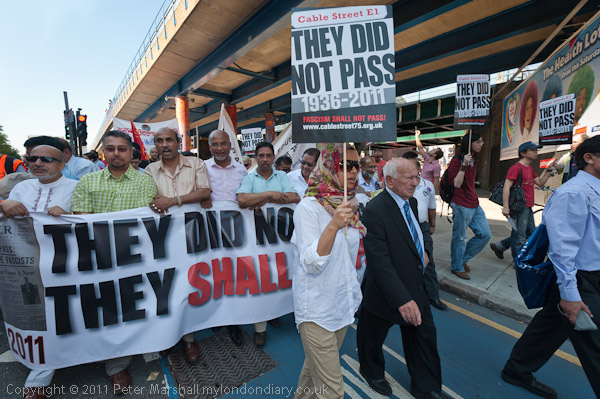
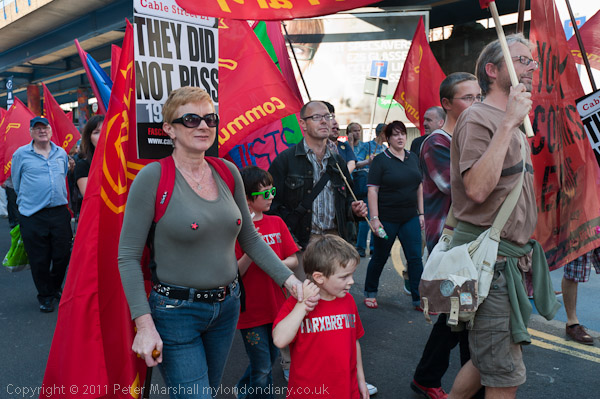
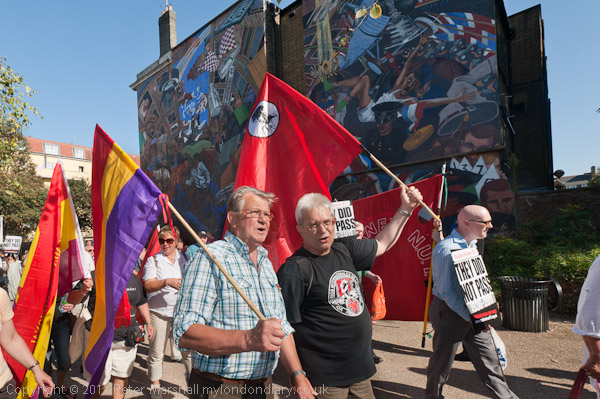
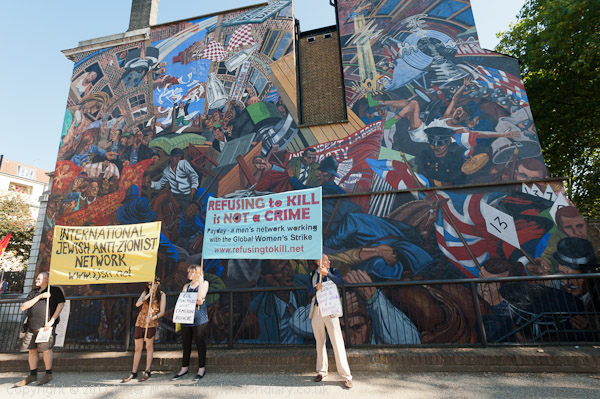
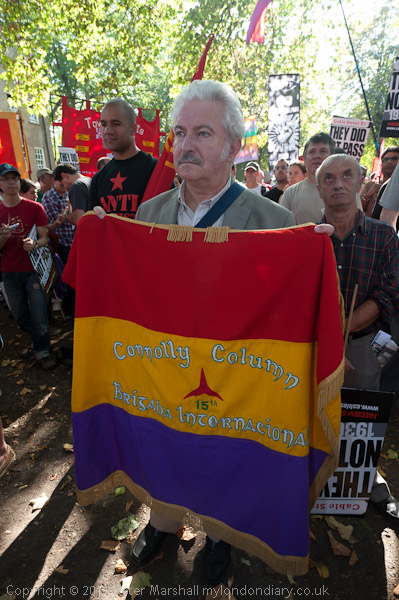
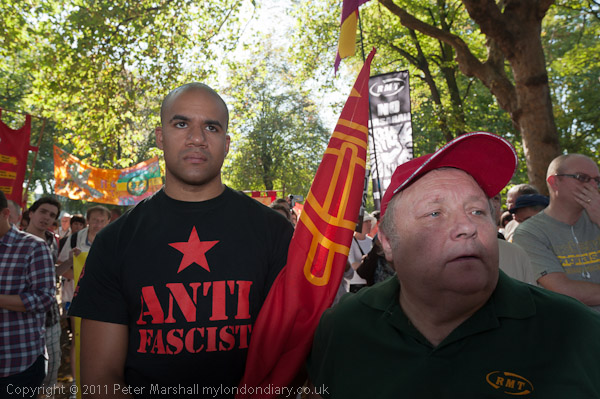
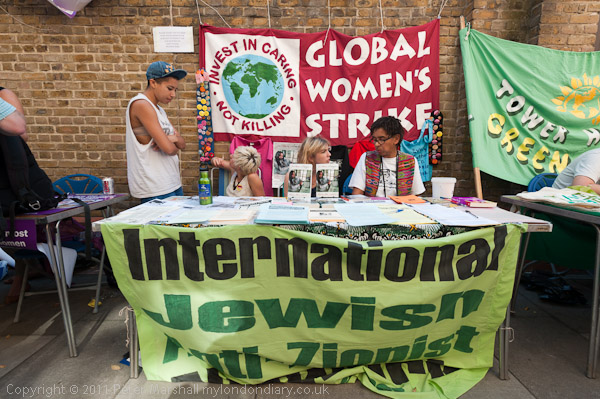
Battle of Cable St: On Sunday 2 October 2011 well over a thousand trade unionists and anti-fascists celebrated the 75th anniversary of the Battle of Cable Street when Mosley’s fascists were prevented from marching into London’s largely Jewish East End.

Battle of Cable St - 75 Years On
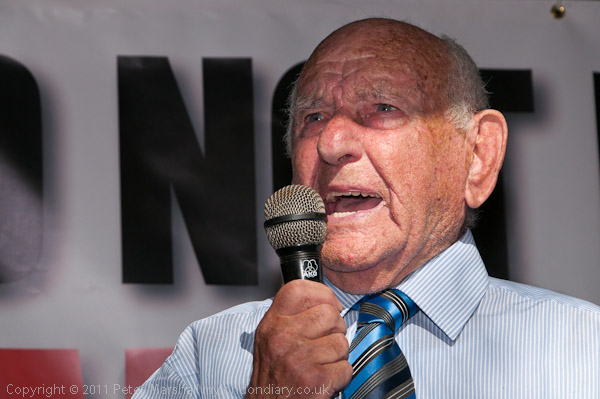
Max Levitas leads the march

Since 2011 we have seen other celebrations of this famous event and the people of the East End have also come together to stop other racist organisations marching into the East End, notably the EDL.

Battle of Cable St - 75 Years On
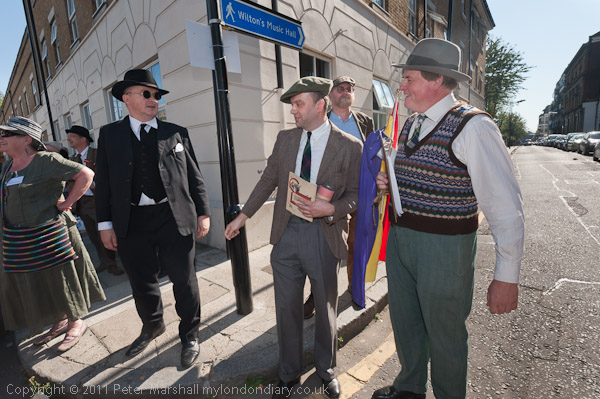
Some people came dressed for the 1930s

In 1936 Oswald Mosley led the ‘British Union of Fascists’, an organisation modelled on Mussolilni’s Italian fascist paramilitary groups on a march designed to intimidate the large Jewish community in the East End.

Battle of Cable St - 75 Years On

Although various groups tried to get the march banned the Home Secretary sided with the fascists insisting their democratic right to march had to be upheld by the police. The fascists were also supported by the right wing press, particularly the Daily Mail, while more liberal newspapers urged people to stay away from the counter demonstration.

Battle of Cable St - 75 Years On

The Board of Deputies of British Jews had condemned the march as anti-Semitic, and they had advised people to stay away from the march as did the Labour Party. The opposition to Mosley was led by local members of the Communist Party of Great Britain including Phil Piratin who nine ears later became Communist MP for Mile End. They eventually persuaded the party to back the counter-demonstration.

Battle of Cable St - 75 Years On

Somewhere between 100,000 and 300,000 people turned out to stop the fascists. Many were Jewish, and many were members or supporters of the Communist Party but the call brought out many others from the East End, including “Irish Catholics, Jews, Orthodox Jews, dockers and Somali seamen” in a huge mobilisation across the community.

There are three routes leading into the East End from the City of London where Mosely and people gathered at key points on them, particularly at Aldgate, where most of the fighting between police and protesters took place, particularly around Gardiner’s Corner – where a ten years ago Class War carried out their long series of Poor Doors protests against social apartheid in housing.

Police decided to try and force a way through at Cable Street a little to the south and tried to force a way through the crowds and remove the barricades they had set up.

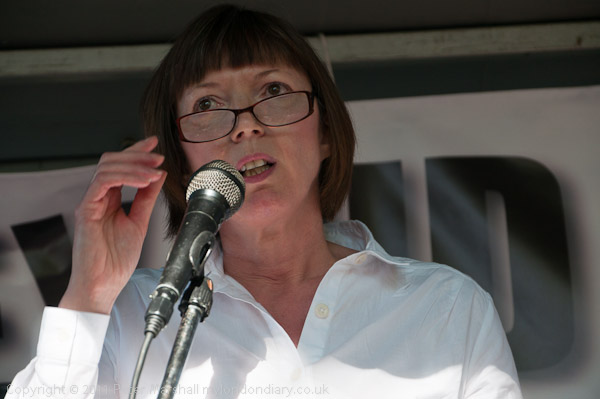
Frances O’Grady, TUC Deputy Gen Sec

According to Wikipedia, police managed to take and dismantle the first barrier but the anti-fascists set up another a few yards down the road.

The police attempts to take and remove the barricades were resisted in hand-to-hand fighting and also by missiles, including rubbish, rotten vegetables and the contents of chamber pots thrown at the police by women in houses along the street … children’s marbles were also used to counter charges by mounted police.”

Eventually the police gave up and told Mosley to march with his followers back to the West End, where they held a rally in Hyde Park rather than those they had intended in Limehouse, Bow, Bethnal Green and Hoxton.

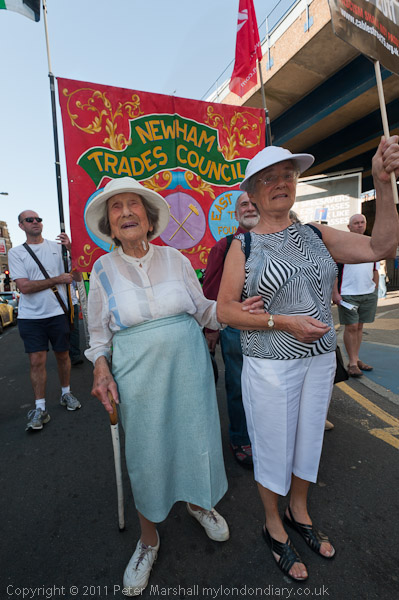
Seventy five years after the battle the crowd was rather smaller, but the well over a thousand who met at Aldgate included several veterans of the 1936 battle, among them 96 year old Max Levitas who led the march and spoke at the rally. He was also there and spoke at the 80th anniversary event in 2016.

The oldest person on the march was 106 year old lifelong political activist and suffragette Hetty Bower who had also been at the 1936 demonstration and was later one of the founder members of CND. I photographed her on several occasions at CND and other protests, the last at the Hiroshima Day commemoration in 2013 where she spoke briefly, a few months before her death.

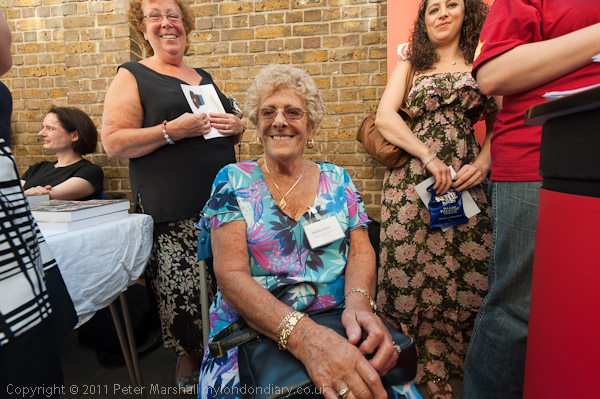
Beattie Orwell, 94, was another of the veterans of 1936

You can read more about the Cable Street 75 event on My London Diary, where there are also many more pictures.
Battle of Cable St – 75 Years


FlickrFacebookMy London DiaryHull PhotosLea ValleyParis
London’s Industrial HeritageLondon Photos

All photographs on this page are copyright © Peter Marshall.
Contact me to buy prints or licence to reproduce.

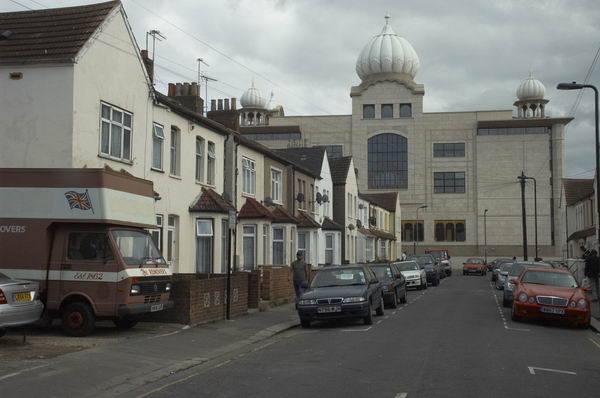
Sri Guru Singh Sabha Gurdwara – Southall 2005

Sri Guru Singh Sabha Gurdwara: On Saturday 1st October 2005 I enjoyed a tour of the largest Sikh Gurdwara in Europe. Building had begun in 2000 and the temple opened at the end of March 2003. The tour had been arranged by art and urban historian Mireille Galinou for the now long-defunct and much missed group ‘London Arts Café‘ – and you can still read more about on the web site I wrote for it, although the group came to an end in 2008.

Sri Guru Singh Sabha Gurdwara - Southall  2005
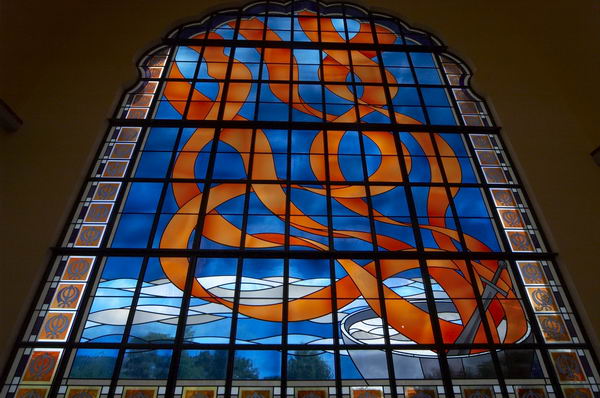
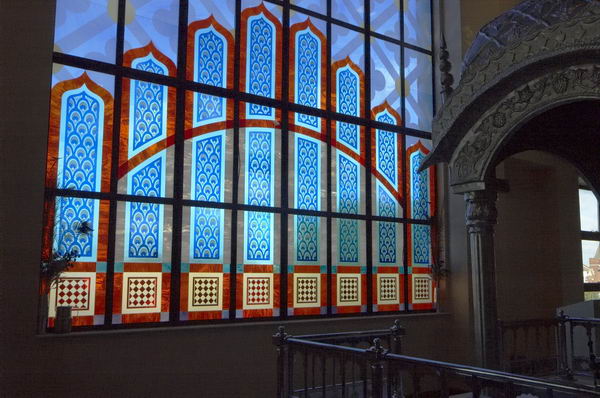
The use of stained galls is unusual in a Gurdwara

Here is what I wrote about the visit in 2005 and a few of the pictures I took at the Gurdwara – there are more on My London Diary.


October started with a fine day, and I went to visit the largest Sikh Temple or Gurdwara in europe (and the fourth largest in the world) which opened a couple of years ago in Southall, along with a group of friends from the London Arts Café. We were shown around the building by one of the Sikh volunteer guides and also the architect, Richard Adams of Architect Co-Partnership, which had won the open competition to design the building. He had worked fully with the Sikh community to produce a building suited to their needs, and it does so impressively: clean simple surfaces, powerful colour in the windows and light streaming into the central stairway and lobby from the large window and glass roof areas.

Sri Guru Singh Sabha Gurdwara - Southall  2005
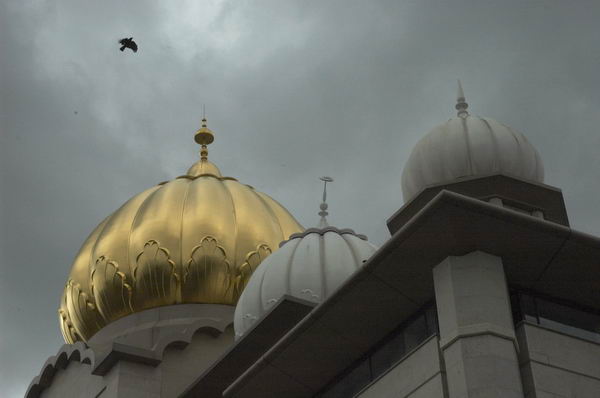
Gold leaf covers the main dome of the Gurdwara
Sri Guru Singh Sabha Gurdwara - Southall  2005
The Wedding Room
Sri Guru Singh Sabha Gurdwara - Southall  2005

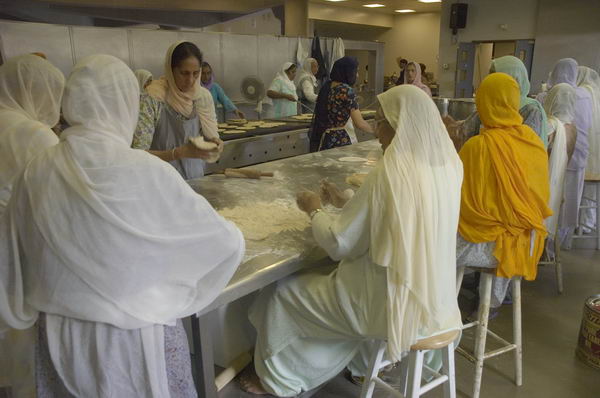
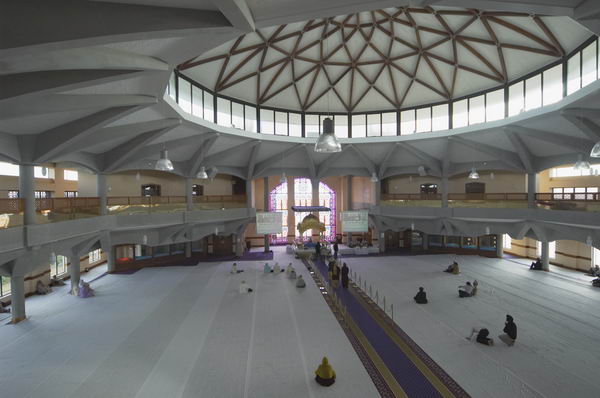
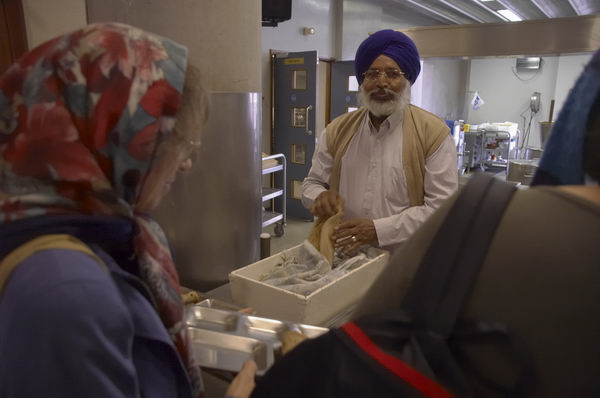
The Sri Guru Singh Sabha Gurdwara serves the community, both for workship and for other needs. As well as a vast prayer hall officially capable of seating up to 3,000 people (and actually holding rather more at major festivals) there is a fine marriage room, and various other facilities including a Langar (Dining Hall); this free community kitchen can serve over 20,000 vegetarian meals over a festival weekend.

Sri Guru Singh Sabha Gurdwara - Southall  2005
Preparing the vegetables
A team of women prepare pancakes

The Gurdwara had a powerfully religious atmosphere. On entering we followed the customary practice of removing our shoes, covering our heads with the scarves provided and washing our hands before commencing our visit.

The Prayer Hall

At various points both our guide and the architect explained how the building served the basic Sikh tenets of service, humility and equality, and also the spiritual guidance from the Sri Guru Granth Sahib, the religious writings which are were appointed as spiritual head of the Sikh religion, the Eternal Guru, by Guru Gobind Singh around three hundred years ago.

Musicians in the Prayer Hall

Although the architecture and the prayer hall in particular were impressive, what made the strongest impression on me was the kitchen, especially the team of women working together. The food was excellent, a real pleasure to eat, although my still rather painful knee made it easier for me to stand and eat at one of the tables rather than in the traditional manner seated on the floor. Although food is free, those eating may perform some service to the temple in thanks for their food, or give an donation of some kind, which we gladly did.

Southall is now Britain’s holy city, apparently with places of worship for over 50 religions or denominations. Brother Daniel Faivre’s ‘Glimpses Of A Holy City‘ published in 2001 after more than 20 years of living in Southall gives a good insight into some of this diversity.


Unfortunately Brother Daniel Faivre’s 104 page spiral bound book published in 2001 is no longer available. The Sri Guru Singh Sabha Gurdwara is, according to Wikipedia one of ten Sikh Gurdwaras in Southall, which also has two large Hindu ‘Mandir’ temples, six Mosques and “more than ten Christian churches including 5 Anglican, one Roman Catholic (St Anselm’s Church), Baptist, Methodist and several Pentecostal or Independent.” In the 2021 Census, 28.5% of the population were Sikh, 24.1% Muslim, 22.6% Christian 22.6% and 14.2% Hindu.

More pictures on My London Diary include some taken in Southall after leaving the Gurdwara.


FlickrFacebookMy London DiaryHull PhotosLea ValleyParis
London’s Industrial HeritageLondon Photos

All photographs on this page are copyright © Peter Marshall.
Contact me to buy prints or licence to reproduce.

Make Them Pay March, London – 2025

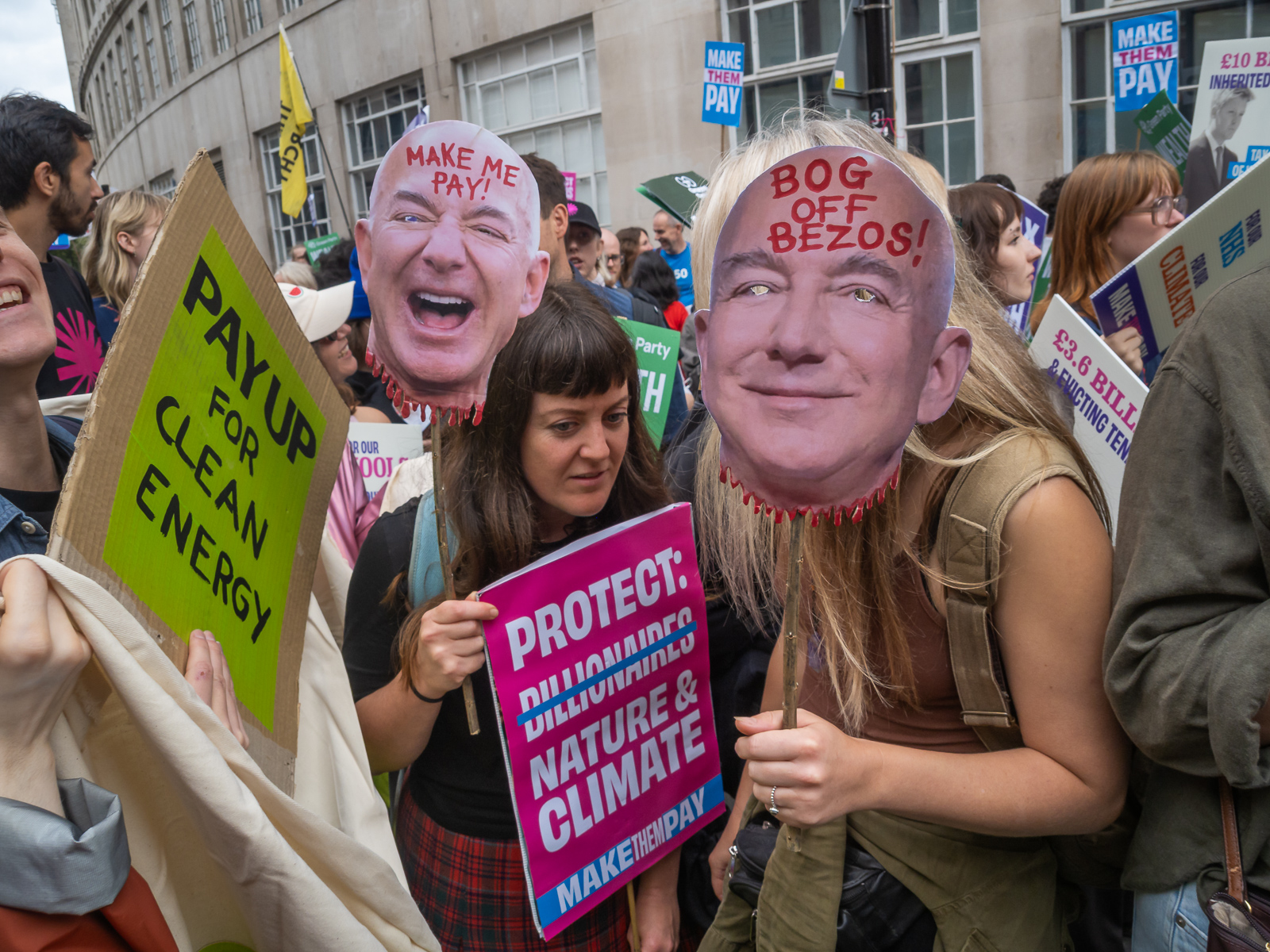
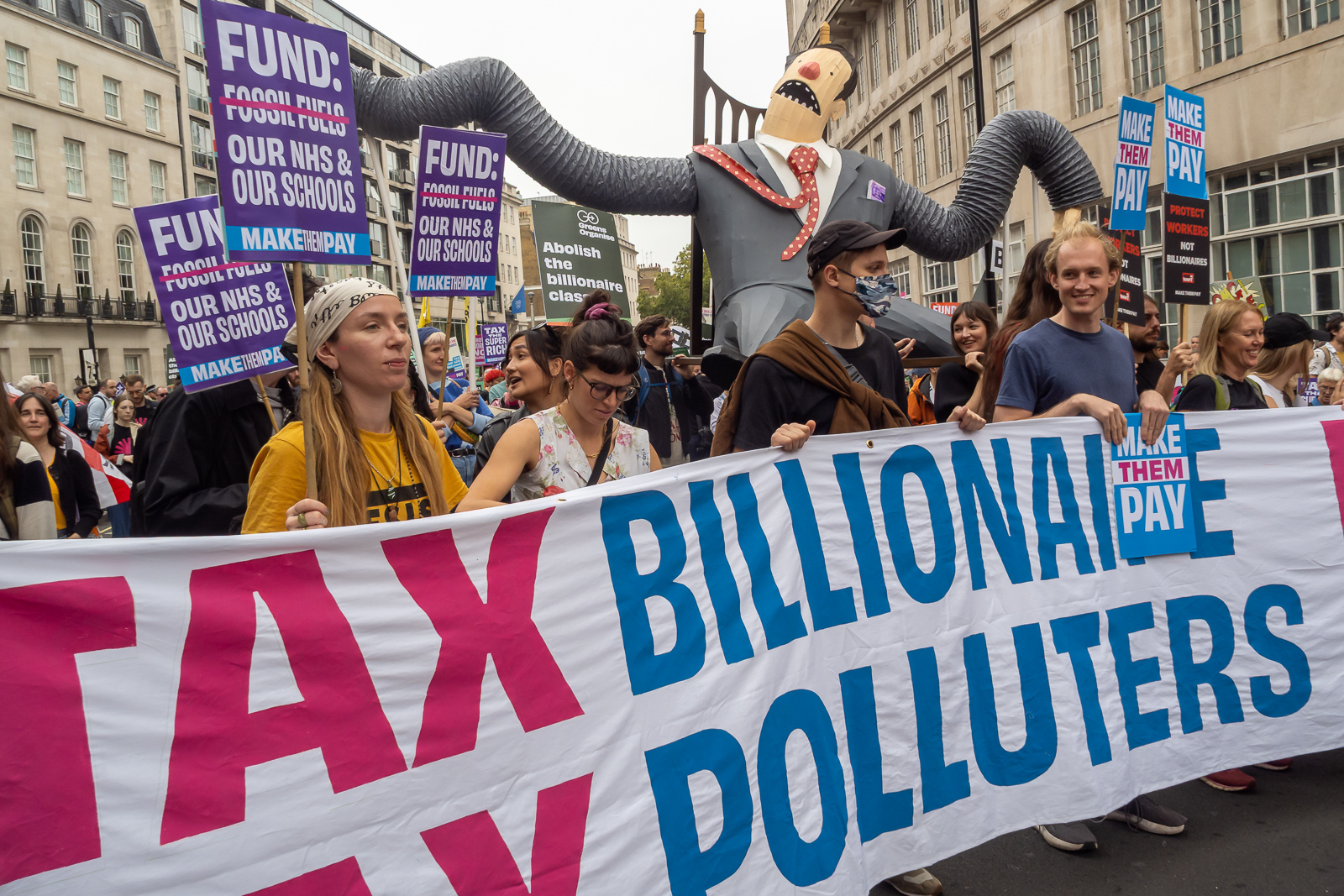
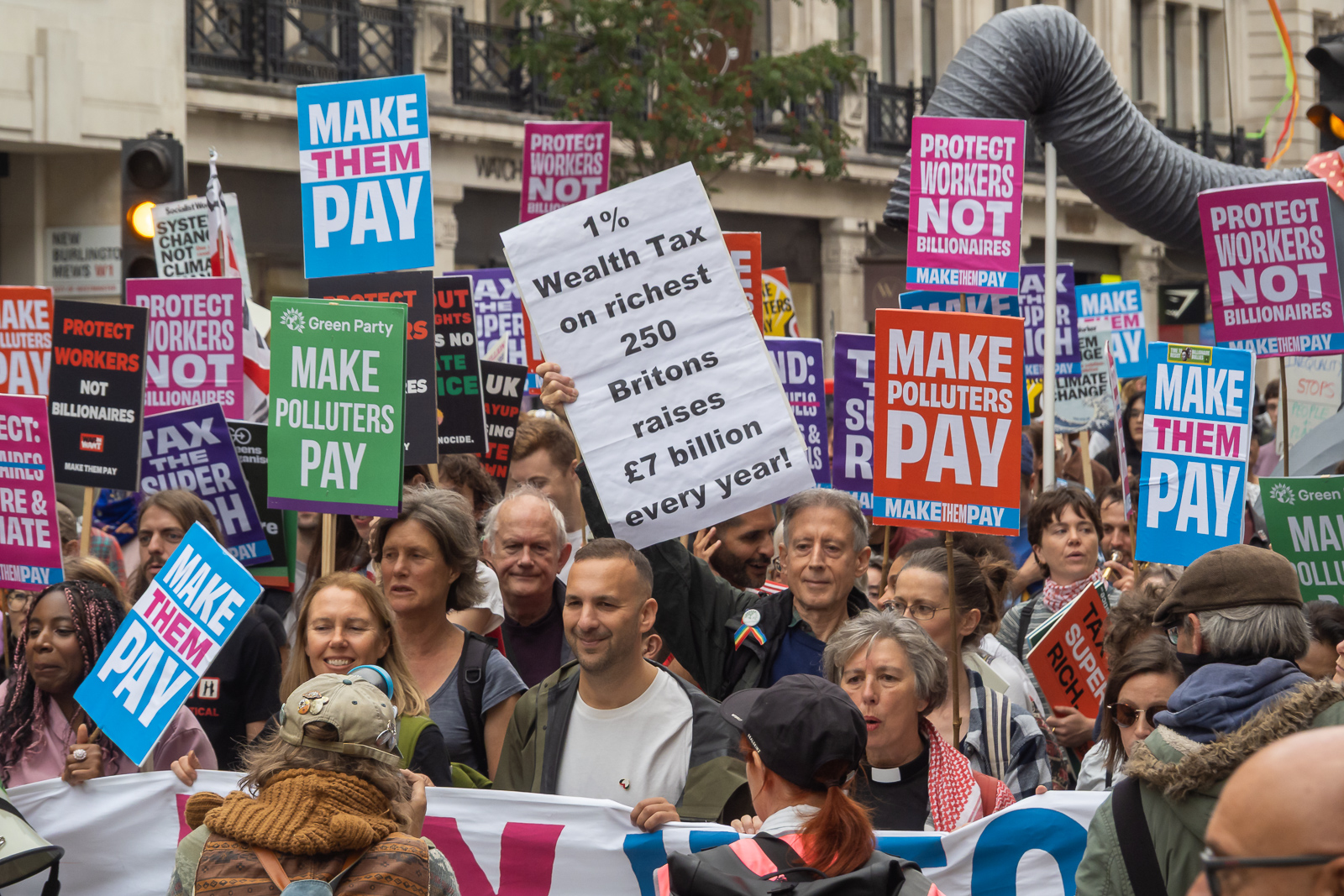
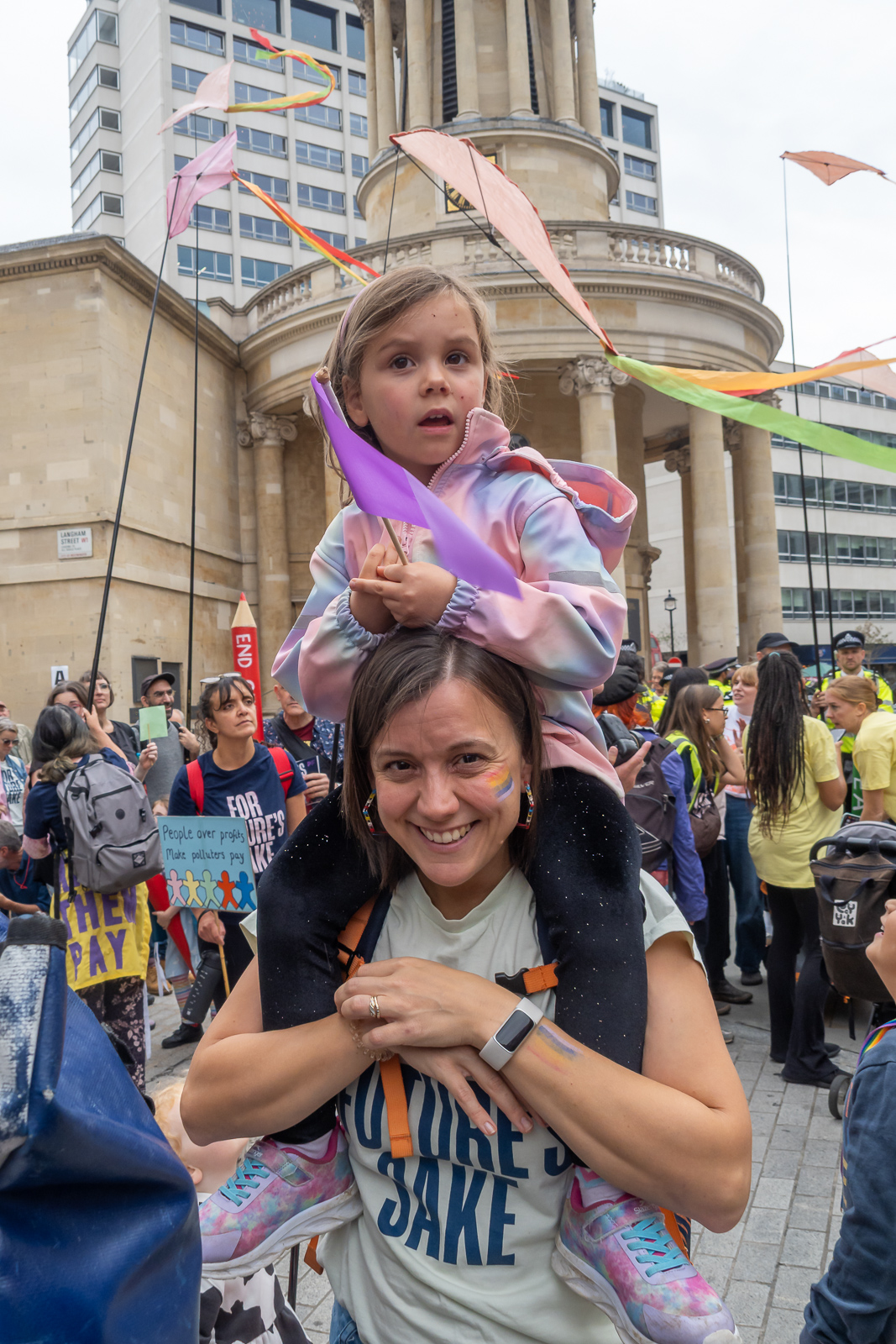
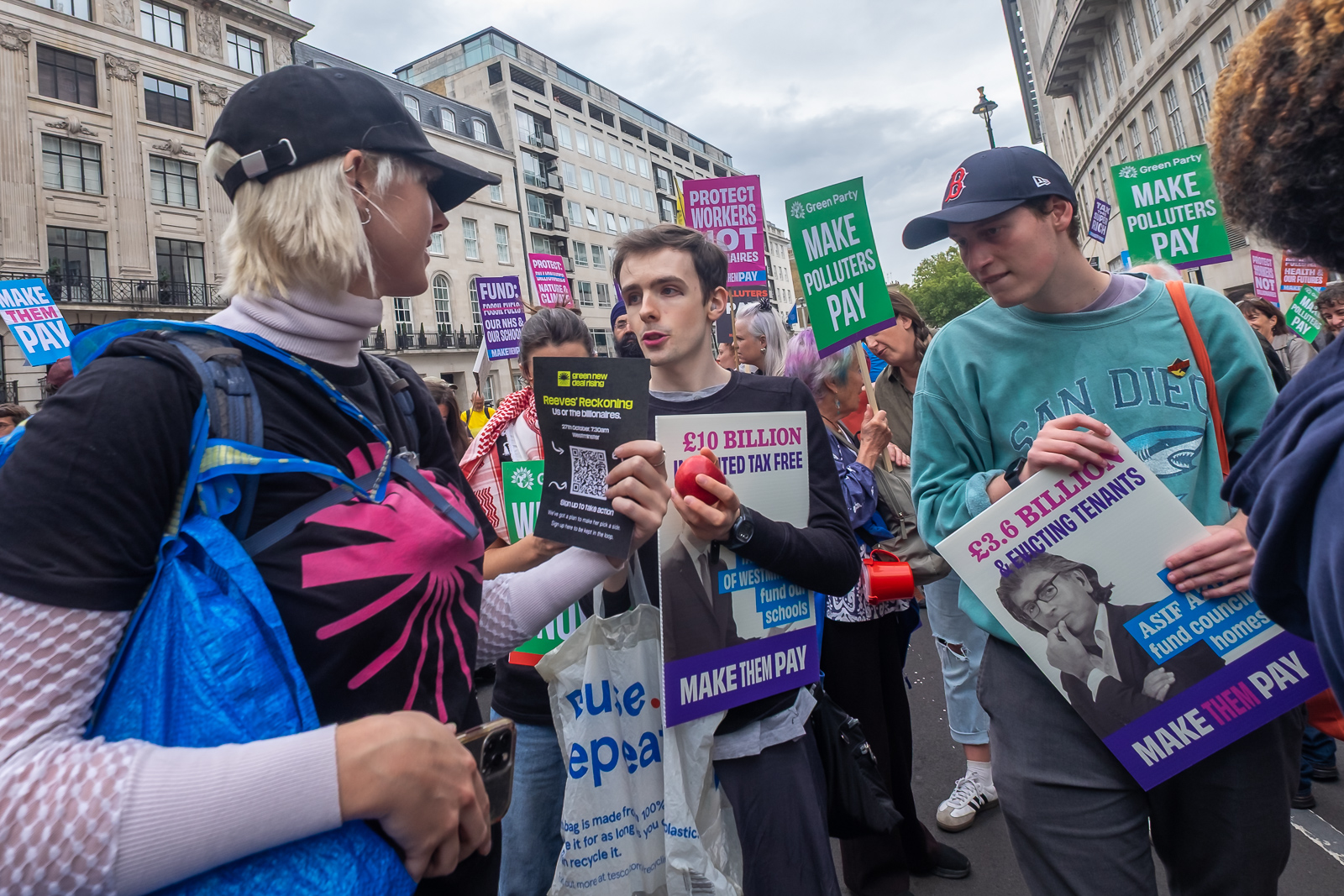
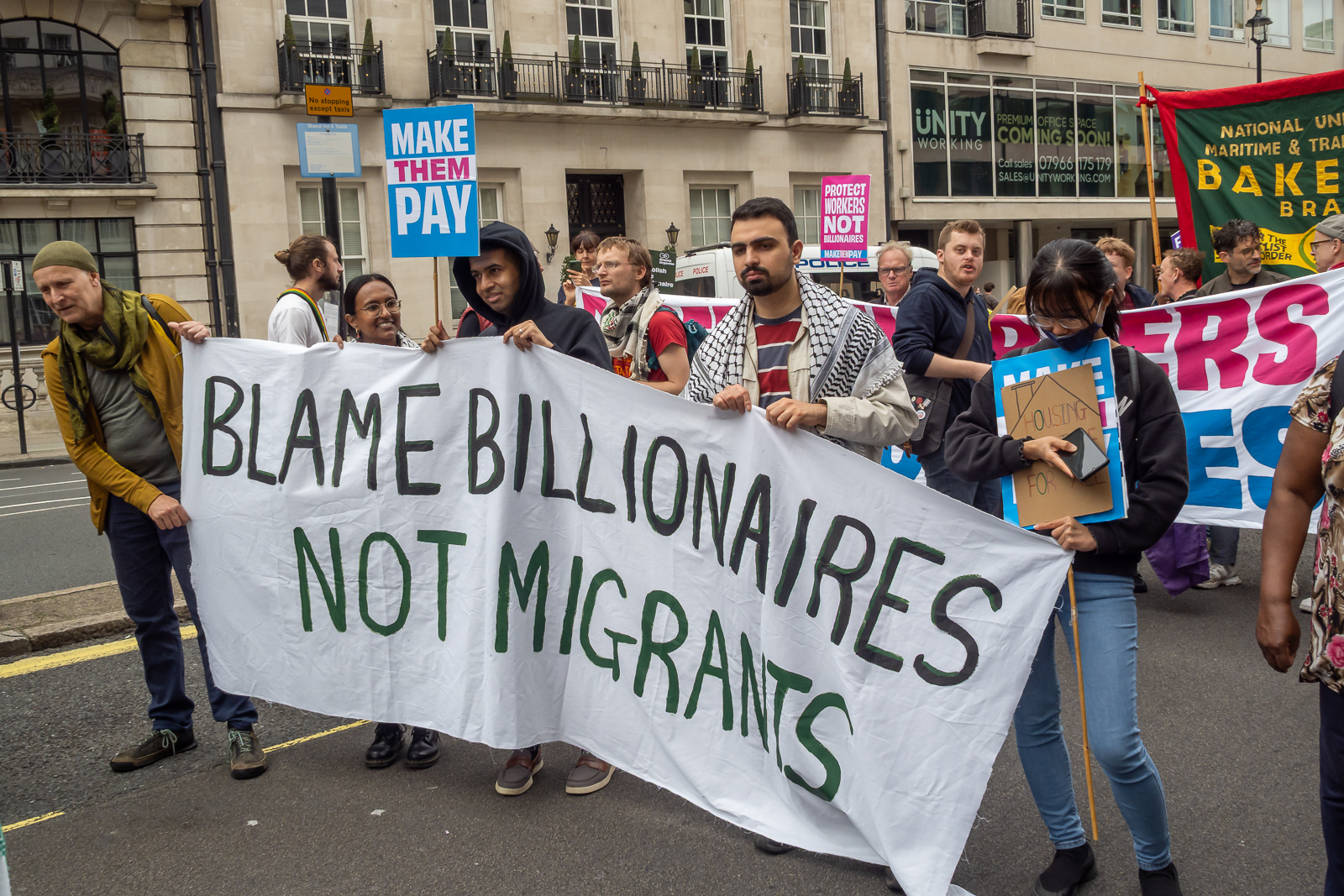
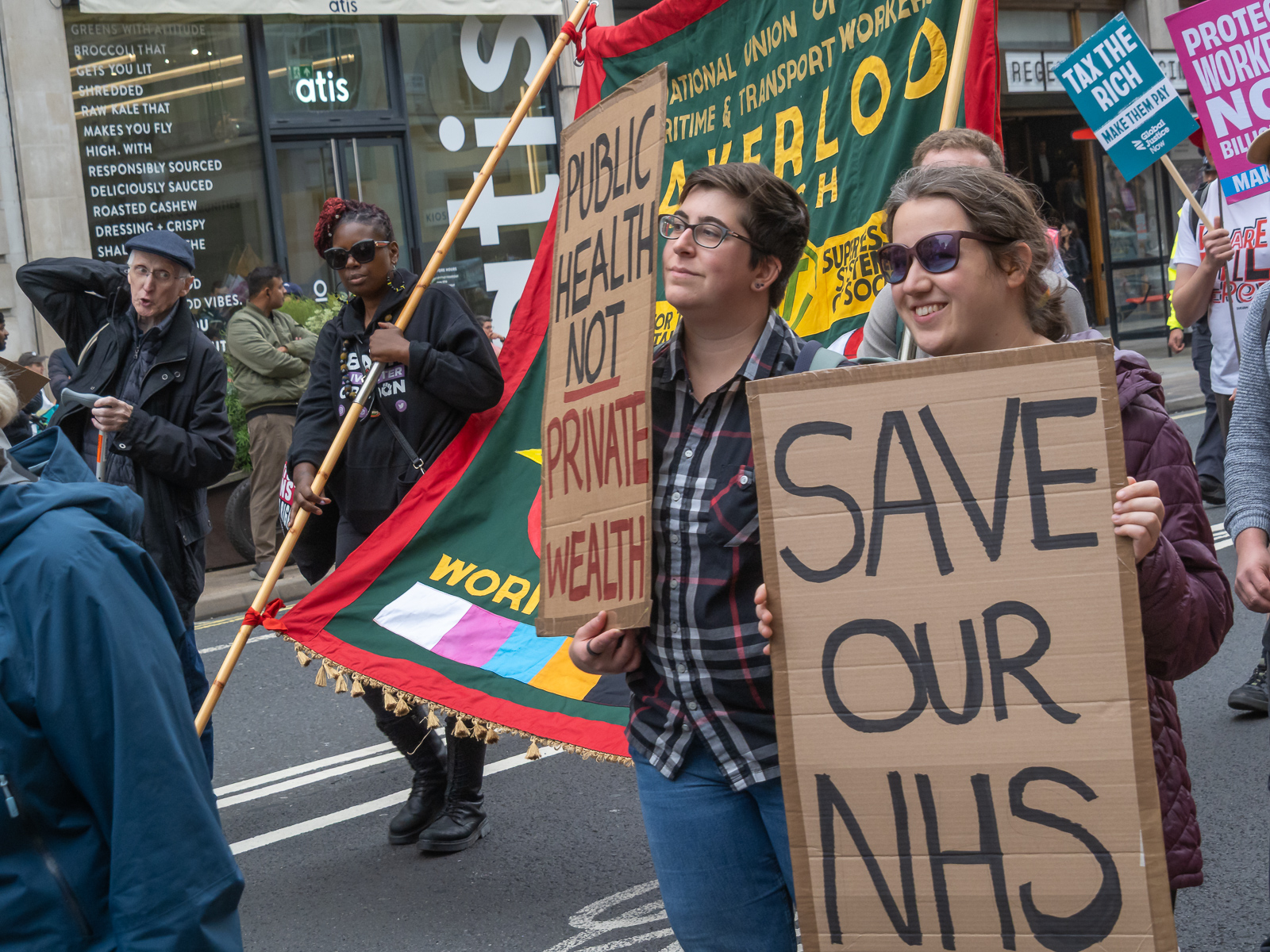
Make Them Pay March: Thousands came to the ‘Make Them Pay’ march from the BBC to Parliament Square in London on Saturday 20th September 2025, part of a global week of action on climate justice backed by an alliance of trade unions and campaigning organisations representing millions of workers, citizens and communities across Britain. They say ‘Billionaires have broken Britain – Make THEM pay to fix it‘ and demand the government tax the super-rich, protect workers rather than billionaires and make polluters pay.

Make Them Pay March, London - 2025
London, UK. 20 Sept 2025. Bog Off Bezos!

The march assembled in nine blocks, in anticipation of this being an extremely large protest given the number of organisations supporting it, but many of these were hard to spot on the march, though they may have been more obvious at the rally that followed.

Make Them Pay March, London - 2025
London, UK. 20 Sept 2025.

After a couple of hours photographing before the start and on the first mile or so of the march I was getting rather tired, but also finding that I was beginning to photograph exactly the same people and groups.

Make Them Pay March, London - 2025
London, UK. 20 Sept 2025.

It was time for me to take a rest and eat my sandwiches before going to photograph a protest over job losses for cleaners working for University College on the campus and at halls of residence.

Make Them Pay March, London - 2025
London, UK. 20 Sept 2025.

Here I’ll try to post a picture from each bloc as well as the list of the organisations involved – although there were many groups I could not identify on the march – and I apologise in advance for any pictures I have featured in the wrong blocs.

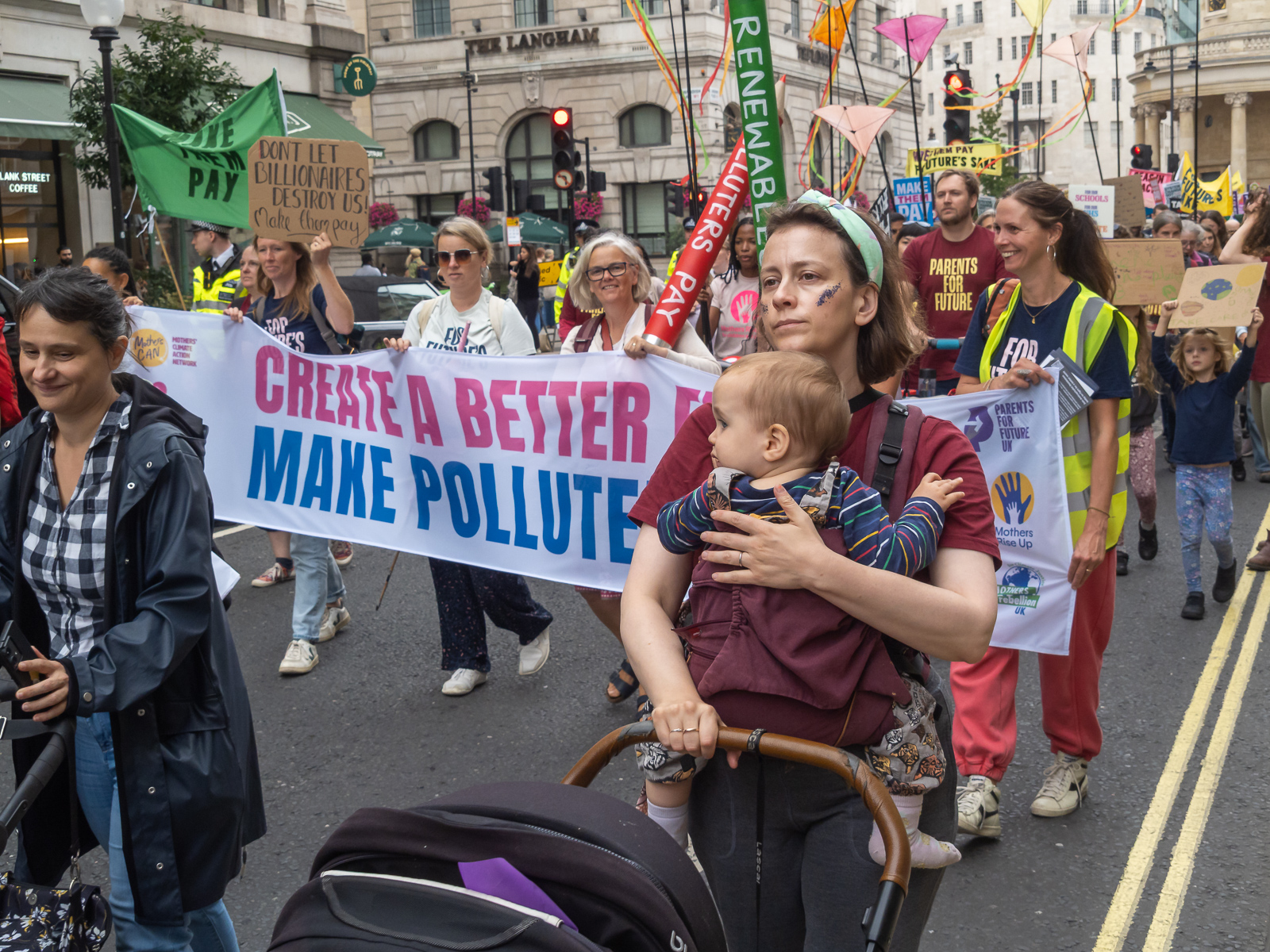
Bloc A: Parents, families and kids

London, UK. 20 Sept 2025. Create a better future.

Parents for Future, Mothers Rise Up and Mothers’ Manifesto.

Bloc B: Economic and social justice

London, UK. 20 Sept 2025.

Action Aid UK, Another Europe is Possible, Compass, Debt Justice, DPAC, Equal Right, Equality Trust, Fuel Poverty Action, Greens Organise, Green Party of England and Wales, Haldane Society of Socialist Lawyers, It’s Just Economics, Just Treatment, MenaFem Movement, New Economics Foundation, Patriotic Millionaires UK, Peace & Justice Project, Positive Money, Tax Justice UK, 350.org.

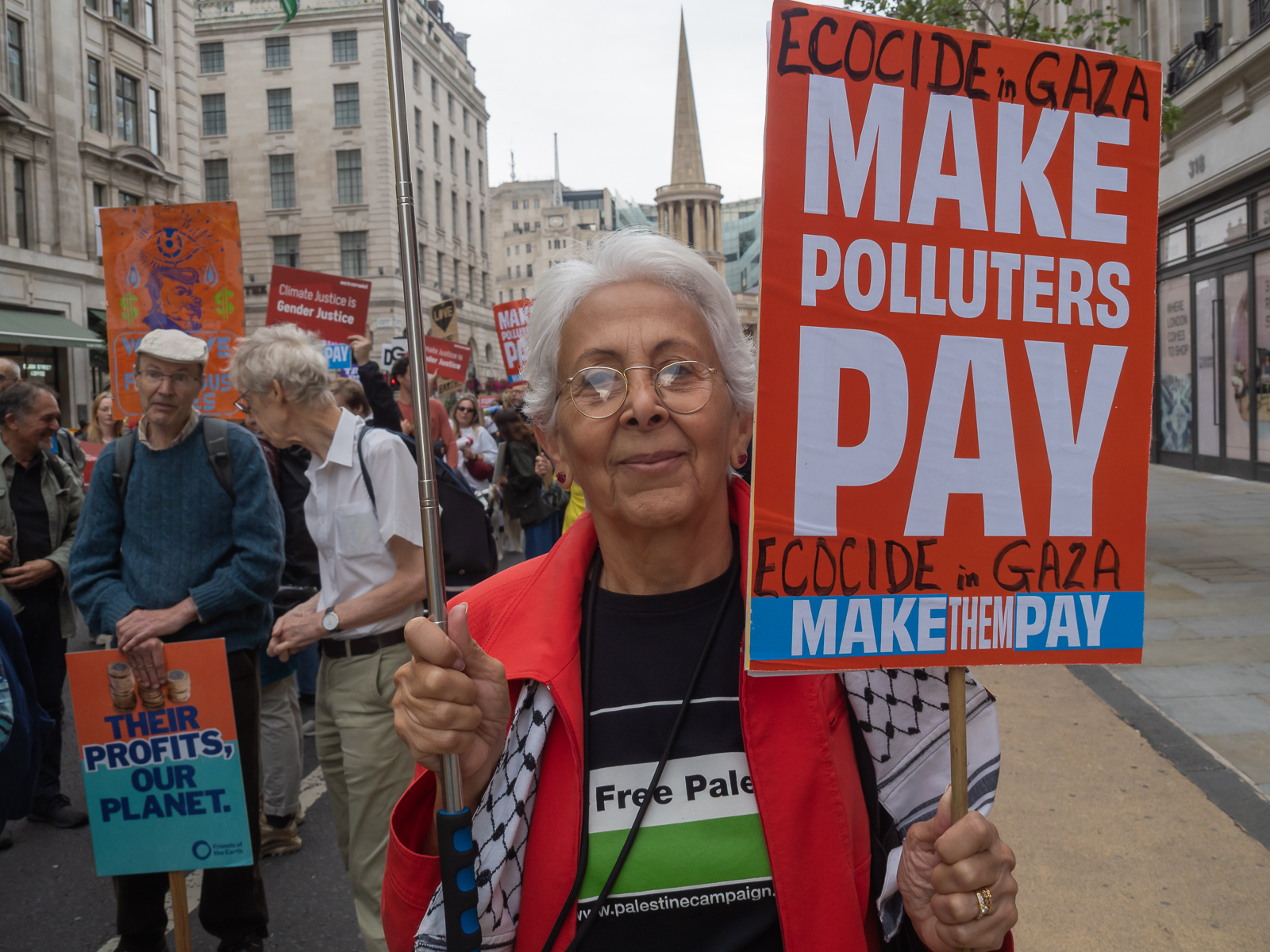
Bloc C: Palestine solidarity

London, UK. 20 Sept 2025. Ecocide in Gaza.

No named group took part, but there were a few Palestinian flags and a few individuals reminding us of the vast ecocide being inflicted on Gaza

Bloc D: Migrant and racial justice

London, UK. 20 Sept 2025.

Black Liberation Alliance, Joint Council for the Welfare of Immigrants,
Migrants Organise, No Borders in Climate Justice.

Bloc E: Workers and trade unions

London, UK. 20 Sept 2025.

Bakers’ Union, Equity, Fire Brigades Union, Greener Jobs Alliance, National Education Union.

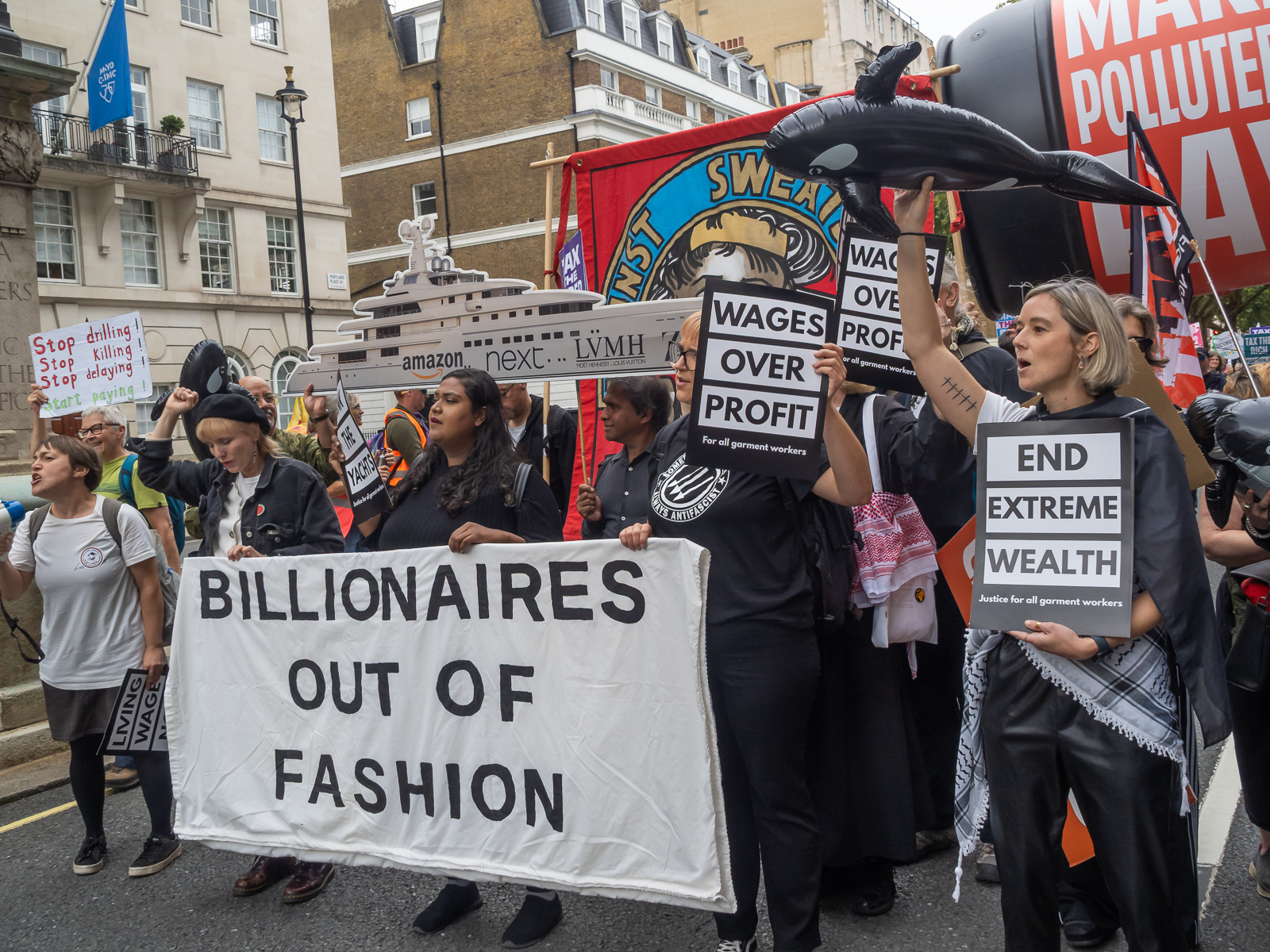
Bloc F: Billionaires out of fashion

London, UK. 20 Sept 2025. Billionaires out of fashion.

Labour Behind the Label, No Sweat .

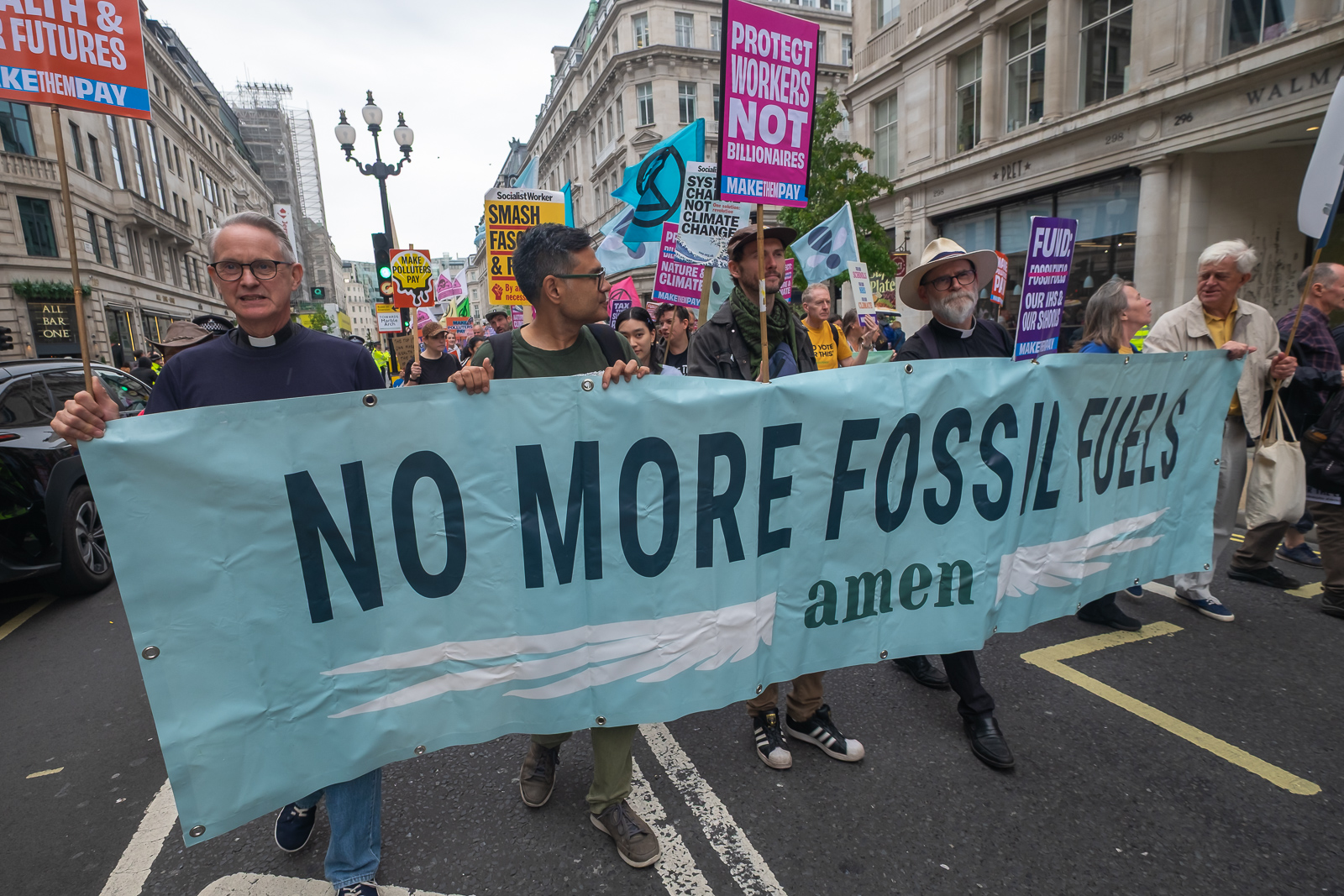
Bloc G: Faith groups

London, UK. 20 Sept 2025. No More Fossil Fuels.

CAFOD, Christian Climate Action, Christian Aid, Church Action on Poverty, Faith for the Climate, Muslim Aid, Muslim Charities Forum, Quakers in Britain.

Bloc H: Restore nature

London, UK. 20 Sept 2025.

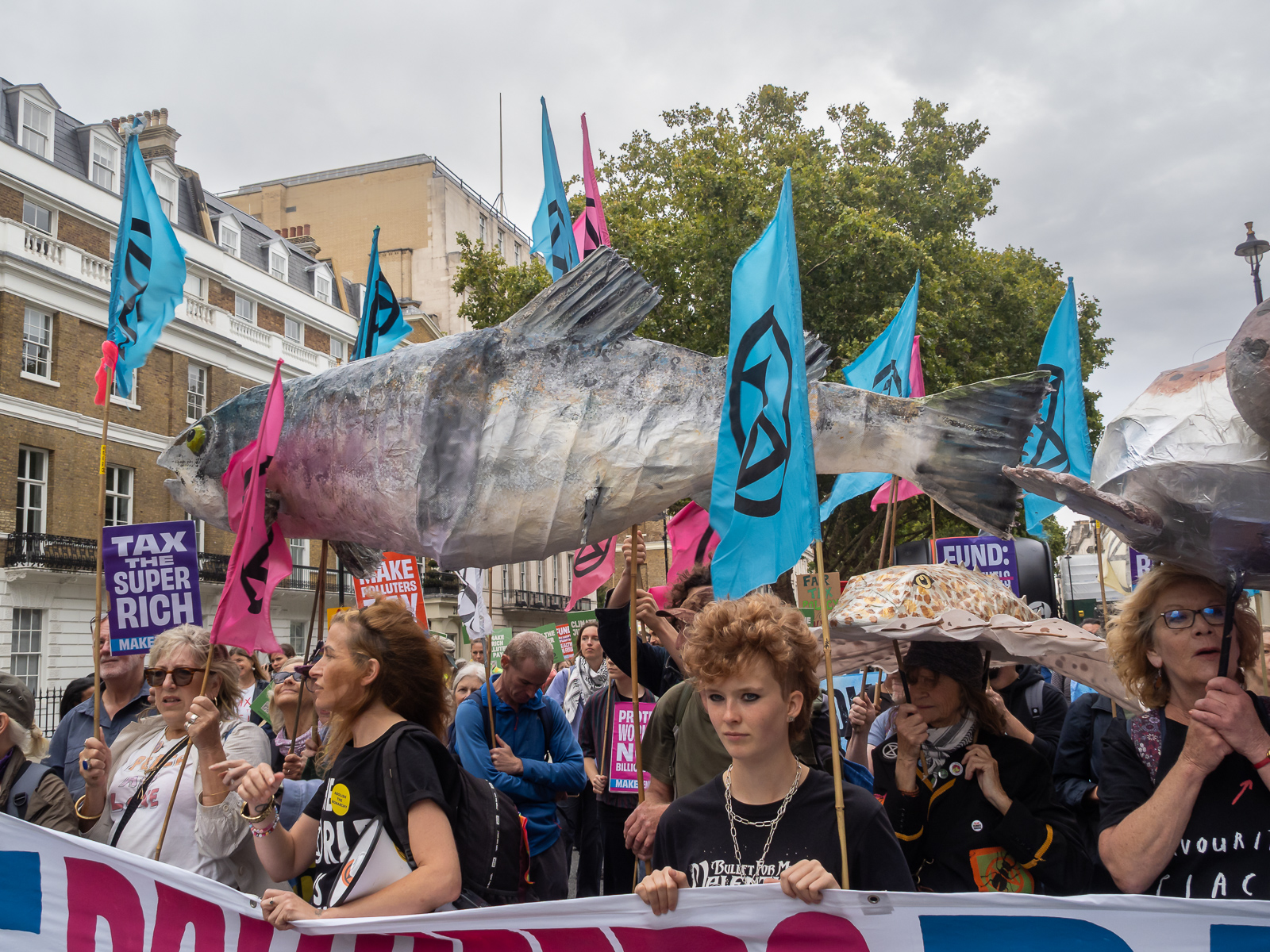
River Action, Take Back Water, Zero Hour. I can’t find a picture featuring these groups, but there were Extinction Rebellion supporters with a large fish.

Bloc J: Climate justice.

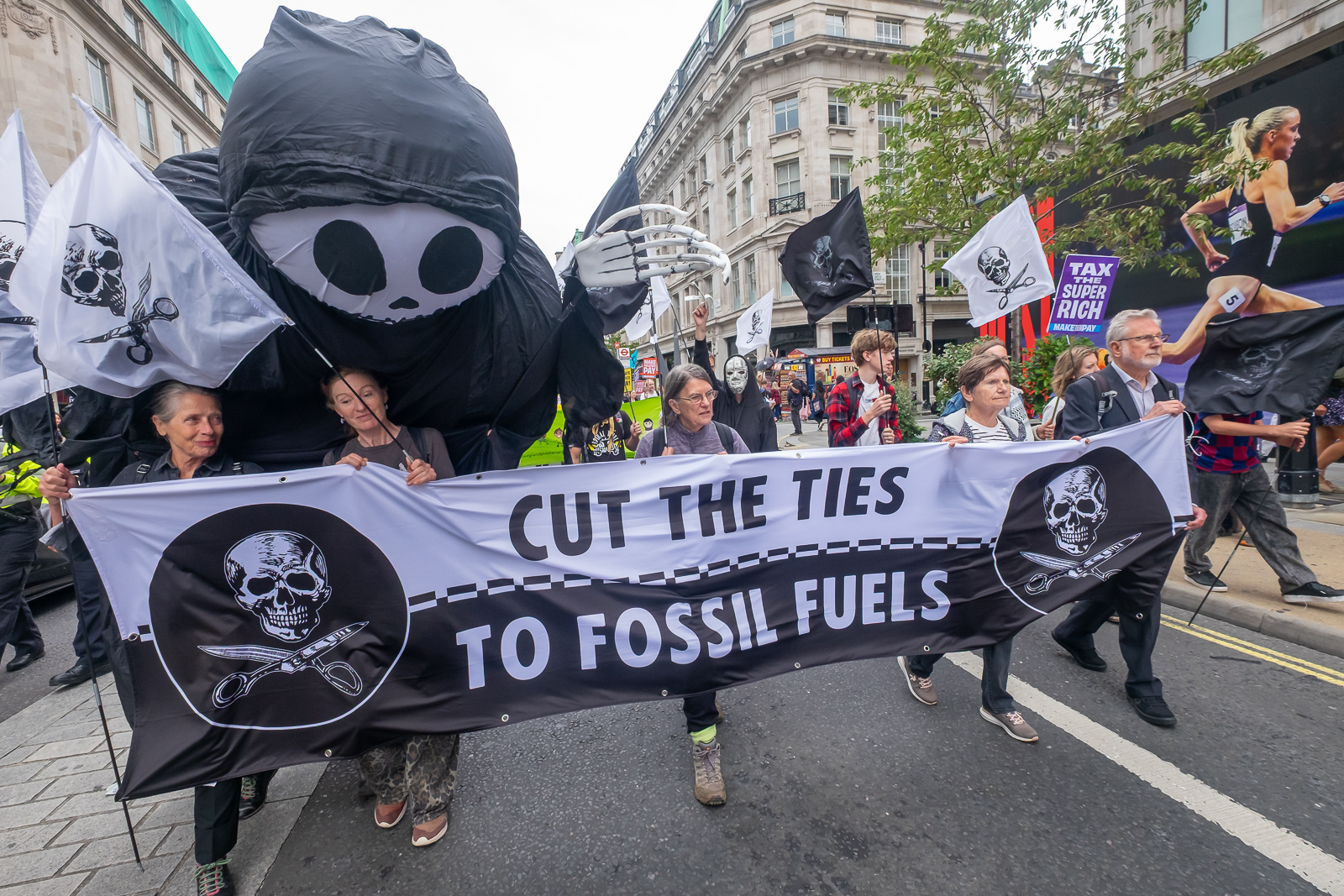
London, UK. 20 Sept 2025. Cut the ties to fossil fuels.

Anticapitalist Resistance, Campaign Against Climate Change, Climate Resistance, Debt for Climate, Ecojustice Ireland, Extinction Rebellion, Friends of the Earth EWNI, Global Justice Now, Global Witness, Greater Manchester Climate Justice Coalition, Green Economy Coalition, Greenpeace, Heat Strike, London Mining Network, Make Polluters Pay, Oxfam, People & Planet, Possible, Stop Rosebank, Tipping Point, Working Class Climate Alliance, War on Want, Yorkshire and Humber Climate Justice Coalition.

Many more pictures in my Facebook album Make Them Pay March including some that didn’t seem to fit in any of the blocs.


FlickrFacebookMy London DiaryHull PhotosLea ValleyParis
London’s Industrial HeritageLondon Photos

All photographs on this page are copyright © Peter Marshall.
Contact me to buy prints or licence to reproduce.

Surbiton Festival 2006

Surbiton Festival: On Saturday 30th September 2006 I went to Surbiton to photograph the annual Surbiton Festival for the second time.

Surbiton Festival 2006
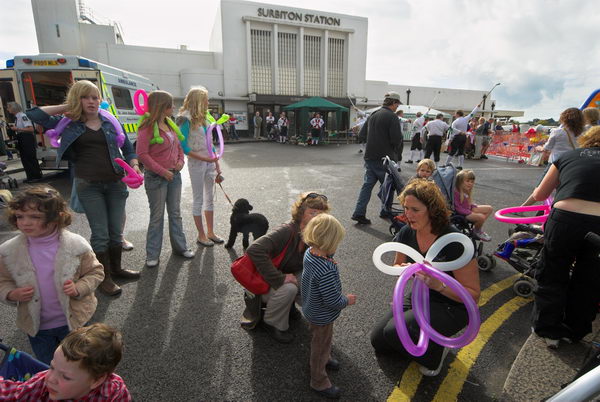
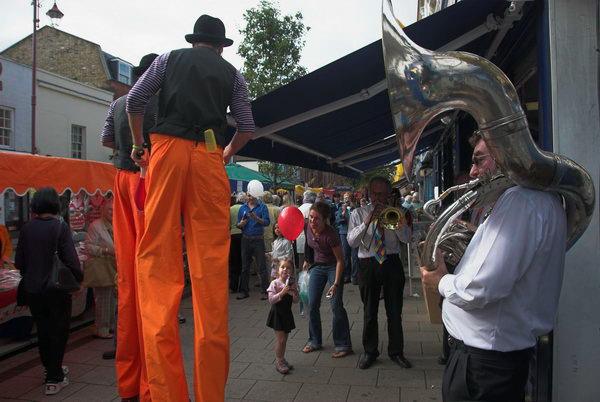
Balloons and morris dancers in Surbiton station car park

As a part of my photography of London I attended quite a few local events across London in the first decade of this century – in September 2004 I had photographed the Surbiton Festival and also the Angel Canal Festival, Walthamstow Festival, the City of London Flower Show, Lady Somerset Road Street Party, Brick Lane Festival, Thames Day, the Shoreditch Car Free Festival and Leytonstone Car-Free Festival, as well as several political protests and other events. I found it interesting how some of these reflected the different population of these areas.

Surbiton Festival 2006

But in 2006 I had another reason to go back to Surbiton, in that I was to appear with two other photographers, Mike Seaborne and Paul Baldesare in the exhibition Another London, at Kingston Museum in January 2007 and I wanted to include some pictures from the local area in my section of the show.

Surbiton Festival 2006
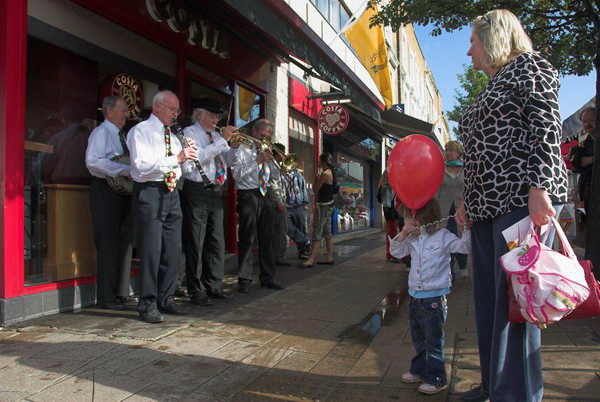
The band played sheltering from the heavy showers

You can still see all 26 of my pictures from that show (and those by the other two. My set included pictures from both the Surbiton Festivals I attended, as well as one from the July 2006 Kingston Regatta, two from the September 2006 Kingston Festival and one of Koreans watching the World Cup in nearby New Malden.

Surbiton Festival 2006

Surbiton is centred around Surbiton Station, a classic 1930s Southern Railway modernist structure and an important commuter station with an incredibly frequent service – around ten trains an hour to Waterloo, the faster taking around 20 minutes.

When it was first developed in the 1840s it was called ‘Kingston-upon-Railway‘, only getting its current name in 1869 – although this is a name with medieval roots, with Suth Bere-tun being Old English for an outlying farm – then part of the Royal Manor of Kingston (Norbiton was closer to the centre.)

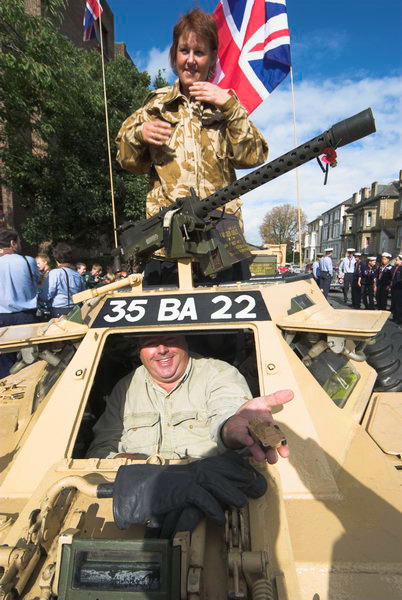
Only one military vehicle joined this year’s parade – unless you count the model held out in the driver’s hand.

Kingston is an ancient town – it was the town where Anglo-Saxon kings were crowned – but the Surbiton Festival is a modern tradition, begun by the Rotary Club a little over 25 years ago. It seems to have grown considerably since I went in 2006. The 2025 festival was last Saturday and though I considered briefly whether to go, I decided I had other things to do. Perhaps next year…

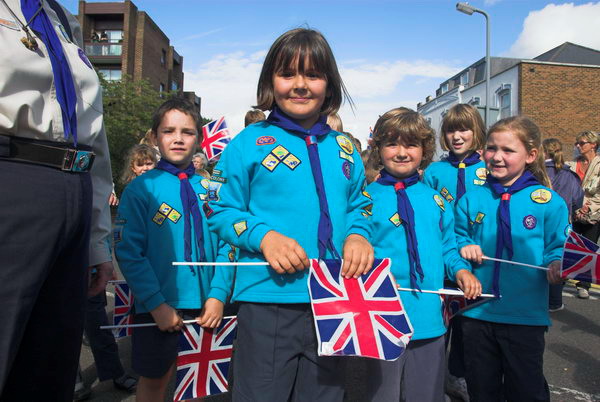
Beavers, Cubs, scouts and guides were all present

You can see a few more of the pictures I took in 2006 on My London Diary. The short text I wrote is a little hidden, so here it is in full – though there is more information in the picture captions.


The Annual Surbiton Festival seems still to be very much a local community based affair, and takes over one of the main shopping streets, still mainly lined by small shops. This year it’s centre was the station car park, with room for a brass band, morris dancing and other activities.

The day started with driving rain, but fortunately it stopped in time for the festival to start, opened by the Mayor of Kingston. I followed her for a while as she visited the stalls along the street, taking a real interest in what was going on.

The 10 am start meant that at first the streets were rather empty, but things began to fill up later. The parade was a little thinner than in previous years, and we [Paul Baldesare and myself] were disappointed not to see more.

After the parade I went back to watch the morris dancers perform a second set, but as it came on to rain, I decided it was time to take a train elsewhere


The Greensleeves Morris men

FlickrFacebookMy London DiaryHull PhotosLea ValleyParis
London’s Industrial HeritageLondon Photos

All photographs on this page are copyright © Peter Marshall.
Contact me to buy prints or licence to reproduce.