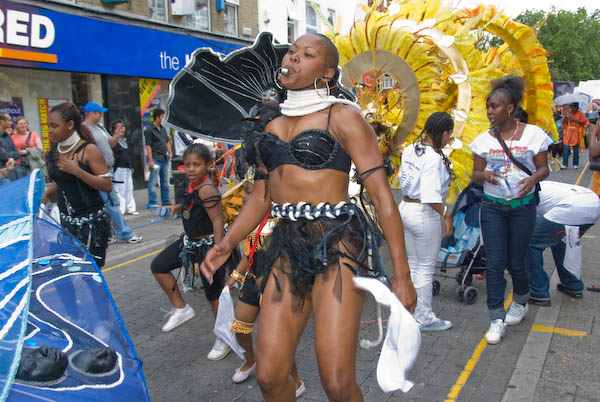
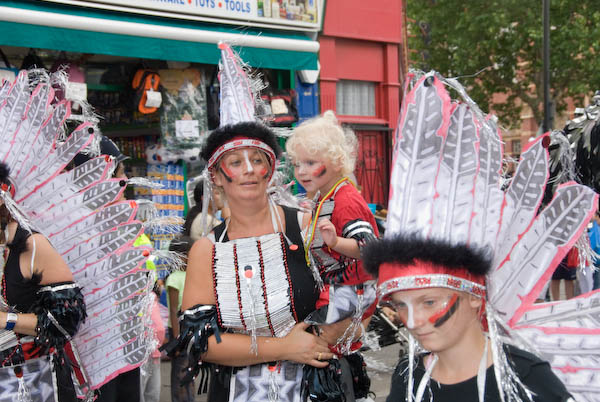
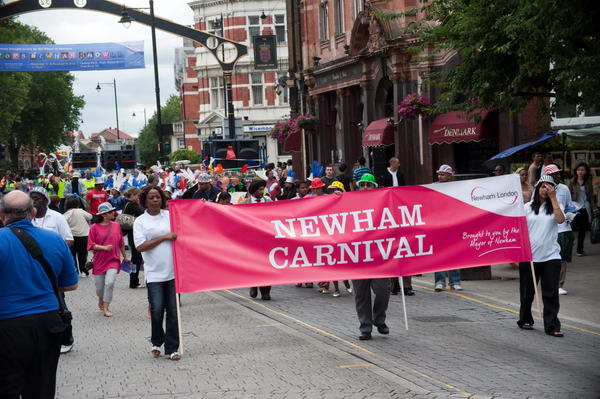
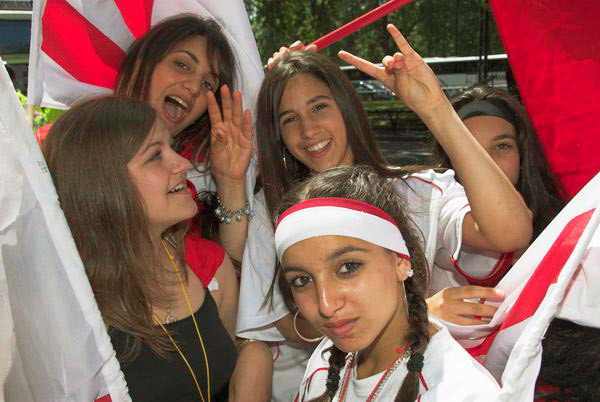
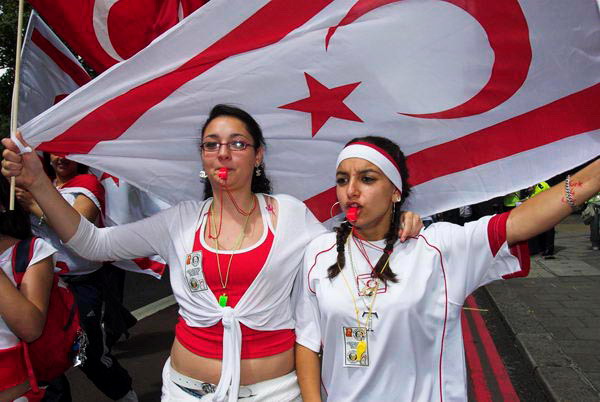
Streatham & Newham Carnivals: On Saturday 14 July 2007 I photographed carnivals in two areas of London, Streatham in south London and Newham in East London.
Although we had a long carnival tradition in England, and one that was much revived after the Second World War, many of those traditional carnivals had by around 2000 died out. But new carnival traditions, particularly from the Caribbean have come to take their place. Unlike the traditional events many of these received considerable funding from local authorities and organisations such as the Arts Council. While I was pleased to see this, I think we lost something by failing to support our own traditional and often rather zany activities.
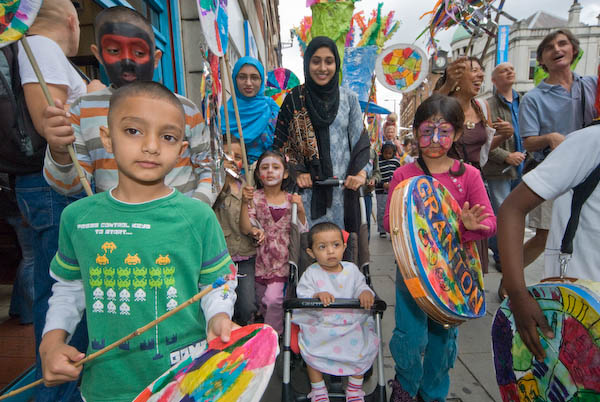
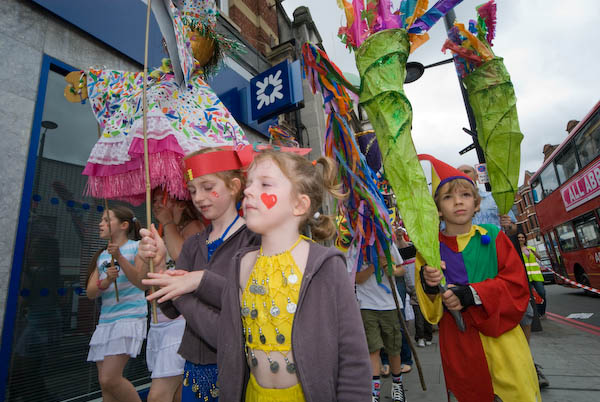
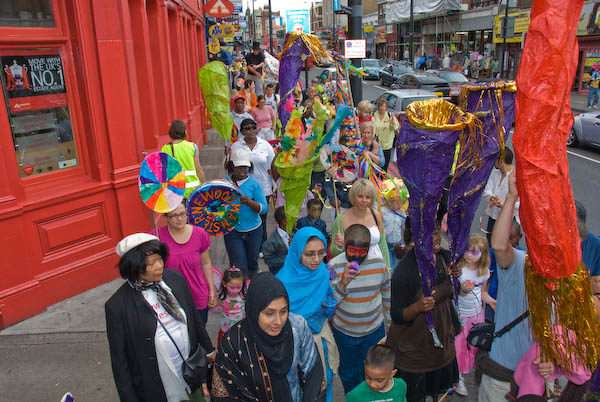
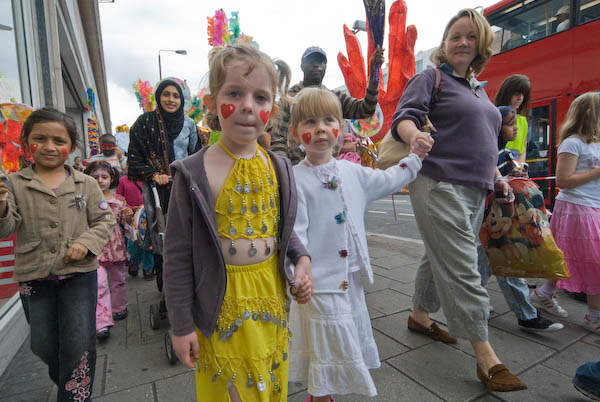
The two events were rather different. This was only the second Streatham Carnival and seemed to be supported by small local groups and individuals. It was specifically a children’s parade, mainly with primary age children and their parents. The Newham event is a much larger council organised and sponsored event and includes many community organisations and schools and is in part a PR event for Newham’s Mayor.
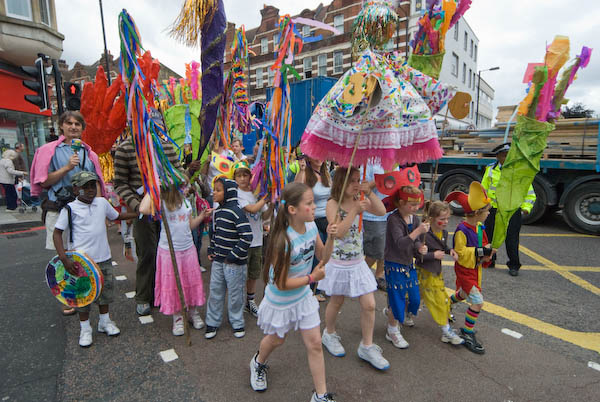
The Streatham procession was mainly on the pavements of one of London’s busier roads, while in Newham to procession took place in a park and along less busy urban roads. The Streatham parade had a spontaneous feel while in Newham you were aware of the weeks or months of planning by the various organisations.
Here I’ll post a few pictures from each of them – with links to more pictures on My London Diary – and the short texts I wrote in 2007.
Streatham Carnival Parade
Streatham High Road
The procession walked along the pavement on both sides of the High Road.
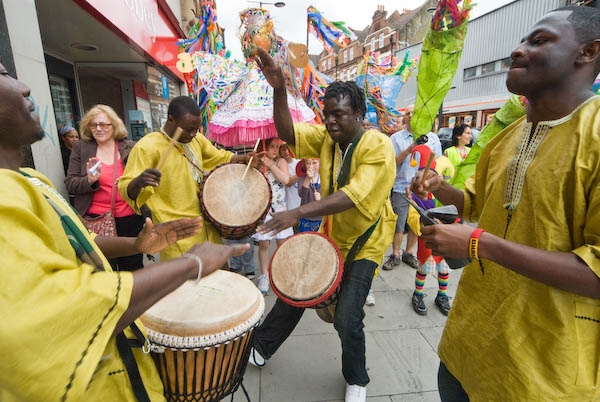
Saturday 14th July I photographed a small carnival procession in Streatham High Road, making its way down the pavement on the edge of the busy street, part of the Streatham Festival.
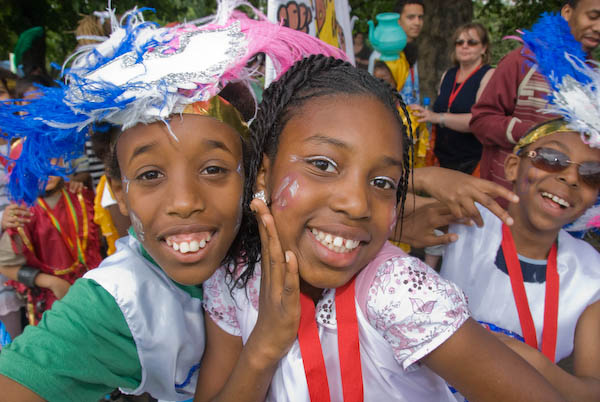
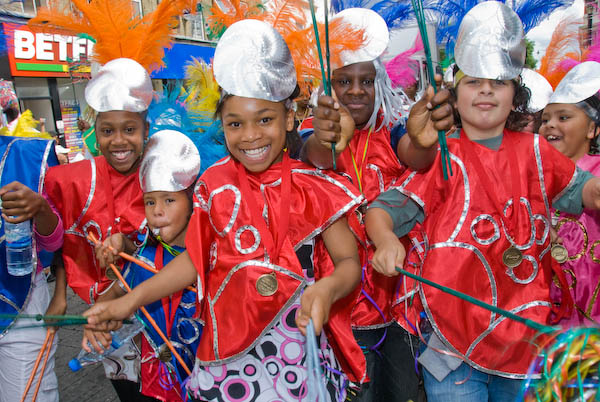
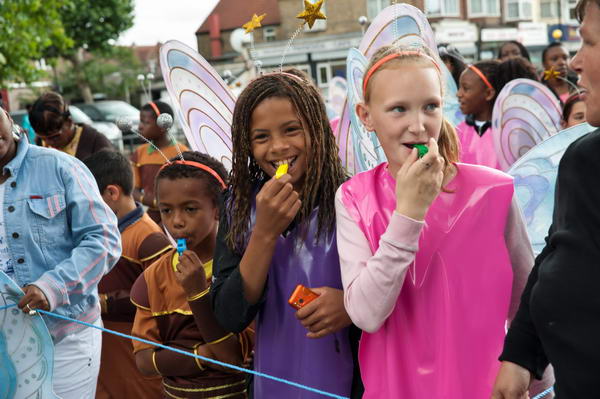
There were lots of kids having fun in Newham’s carnival
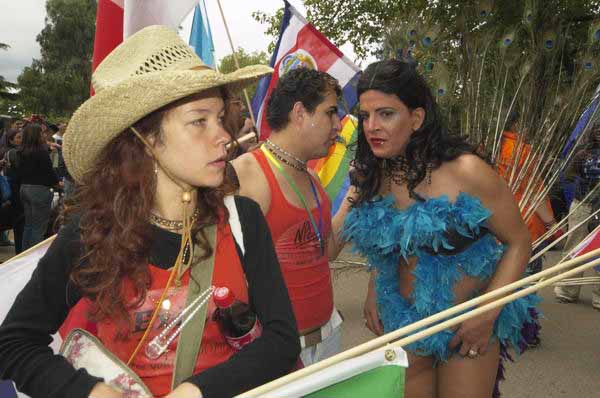
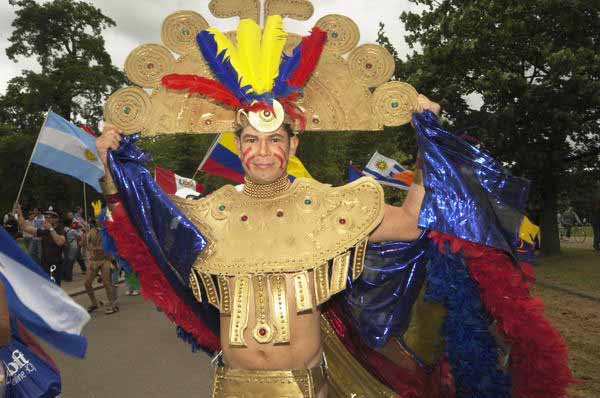
Newham Carnival was a much larger affair, with quite a few local schools taking part along with other community groups. The carnival had a largely West Indian feel, although there were some Indian dancers. Of course those taking part reflected the multiracial nature of Newham, with over 60% of residents from ethnic groups other than White English, but I would have liked to see more diversity reflected. We even have an English Carnival tradition – and no reason why this, along with Irish and other ethnic traditions shouldn’t be more evident in events such as this
Indian dancers were at the front of the processionThe Mayor dances with the procession
Looking through Windows – Leyton & Leytonstone: After photographing Claremont Road where the M11 protesters had covered many of the houses with some splendid art work I wandered off into the area around, eventually making my way from Leyton into Leytonstone. Many of the pictures I made on this walk were taken through the windows of shops that attracted my interest.
None of these pictures were taken from inside the premises, all looking in through their windows. To avoid unwanted reflections I held the lens against the glass and tried to shield the area around the lens. This wasn’t always entirely successful and some images have light areas in some corners. And of course occasionally I decided to include reflections in the pictures.
With a 50mm lens I could use a flexible rubber lenshood to seal around the lens and the window, but the lens mount on this created its own vignetting on wide-angle lenses. Much more recently a larger and much floppier version of this device which fits around a lens barrel has been marketed which I would have found very useful. So of course I bought one, but I can’t remember ever having used it – I just don’t take these kind of pictures any more.
Chinese, Fish & Chips, Leyton, Waltham Forest, 1994, 94-903-65
This walk, like most of my walks, was on a Sunday morning when few people were about, and I was seldom interrupted or asked what I was doing. I carried a cloth in my camera bag as I sometimes cleaned a small patch of window to get a clear view. I don’t think these pictures were unduly obtrusive as I was only recording the public face of these premises which was open to everyone walking past.
Most of these pictures were taken using an Olympus 35mm shift lens which enabled me to move the frame up,m down, left and right a little to frame precisely. For some I used wider lenses, both a 28mm and also an ultrawide 21mm f3.5. Though an excellent and very small and light lens this does show more vignetting in the corners than the less wide lenses which I haven’t always entirely corrected.
Shooting through glass does introduce another optical element which can change the colour of the images, sometimes making the negatives difficult to colour balance. With the ultra-wide light from the corners takes a significantly longer path through the window glass which can give some colour casts towards the edges of the pictures.
Hyams Gymnasium, 857, High Rd, Leytonstone, Waltham Forest, 1994, 94-903-42
I published a couple of black and white images of the gymnasium taken at the same time a couple of years ago, including one of this side wall in Gainsborough Road. Hyam’s was apparently a well-known sporting institution in the area, but as I commented then, is “now in very different use.
This is now The Walnut Tree, a Wetherspoon pub, and as often it has some history of the area it its web page, but this does not mention Hyams Gym. The figures on the building’s side have gone and its groundfloor windows have been bricked up but the rows of 8 or 9 upper floor gym windows remain.“
Hairdressers, High Rd, Leytonstone, Waltham Forest, 1994, 94-903-43
Using very wide-angle lenses which produce “normal” rectilinear results means that light going to the edges of the frame from the lens have a longer route and thus diverge more, distorting objects close to the edges of the picture. You can see this in the picture at extreme right of this picture.
Chinese Takeaway, Leytonstone, Waltham Forest, 1994, 94-903-44
Similarly the two blue and white plates are actually circular and facing the shop window, but that at the left is noticeably oval in this picture.
Chinese Takeaway, Leytonstone, Waltham Forest, 1994, 94-903-31
There did seem to be rather a lot of Chinese food available in the area in 1994. When I grew up in the 1960s Chinese food was a rarity except in areas such as Limehouse and Soho. There isn’t a particularly high Chinese origin population in the area – around 1% of the population, one of the lowest among London Boroughs and a third of that Tower Hamlets and Westminster.
I had a particular interest in the shop interiors in recording how they reflected the varied ethnicities of their owners, often with very different decoration and layout etc to traditional English small shops. It was one of many different changes I had observed over the years.
Big Brew, Childrens’ Carnival & London Bridge: On Saturday July 11th 2009 I’d been commissioned to photograph a bishop at fair trade events in Finchley, then rushed to Newham for a children’s carnival procession. Gettingg back to London Bridge for its 800th birthday celebration was made difficult by the planned closure of both District and Jubilee lines and I only made it minutes before the event ended.
Big Brew
Finchley and Edgware
The Diocese of London had organised a day of ‘Big Brew’ events at Anglican churches across Greater London promoting fairly traded goods, particularly tea and coffee. Fair Trade is a movement and system that ensures the farmers and other workers get a fair return for their work, safe working conditions and ensures that money from their products gets invested into their local communities for healthcare, education and other development opportunities. Both I and my wife had been active supporters of the movement since our student days, long before the Fairtrade certification mark was first introduced in 1988.
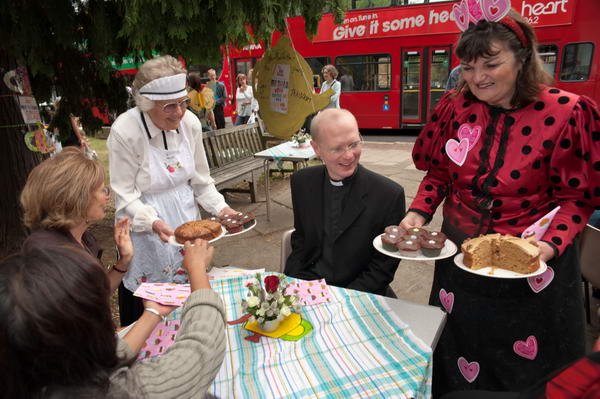
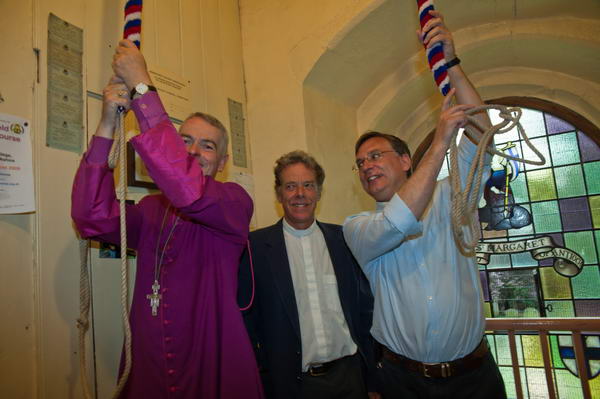
I had been persuaded to photograph two events organised by the parish churches in Finchley and Edgware which the Bishop of Edmonton, the Right Revd Peter Wheatley, a strong supporter of the fair trade movement would be attending.
St Mary’s Finchley had tables and chairs on the pavement with tea, coffee and a large assortment of delicious looking cakes. As well as the bishop, Barnet Mayor Councillor Brian Coleman and the leader of the opposition were there too.
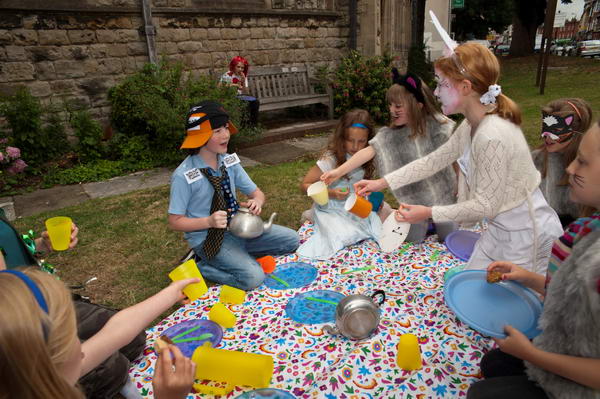
But for me the main attraction were the waitresses in caps and aprons and the ‘Mad Hatter’s Tea Party’ performed by children from the Church’s drama group.
Things were a little quieter at St Margaret’s Edgware, where I went on with the Bishop. We met the local MP Gareth Thomas and were offered the chance of ringing the church bells. Or at least they posed for a photograph pretending to ring them. It was very dark and needed a tricky bit of flash.
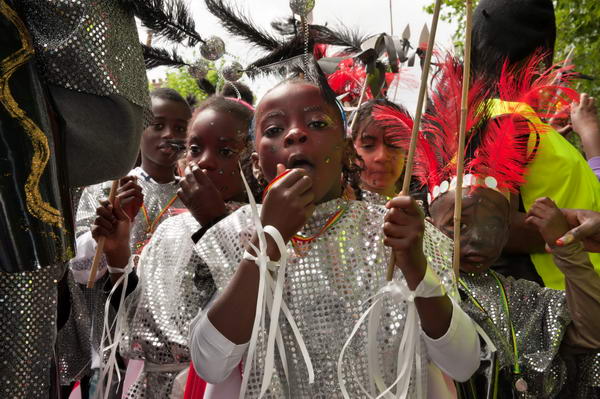
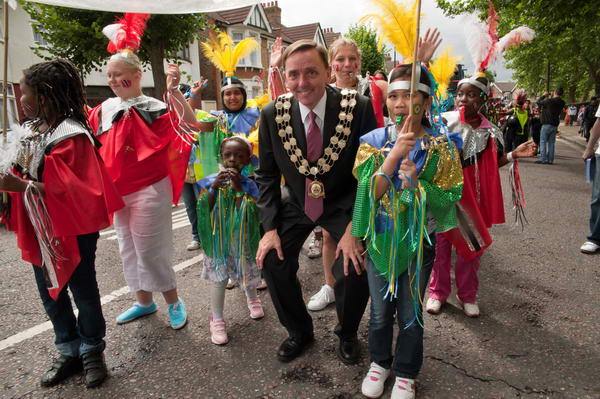
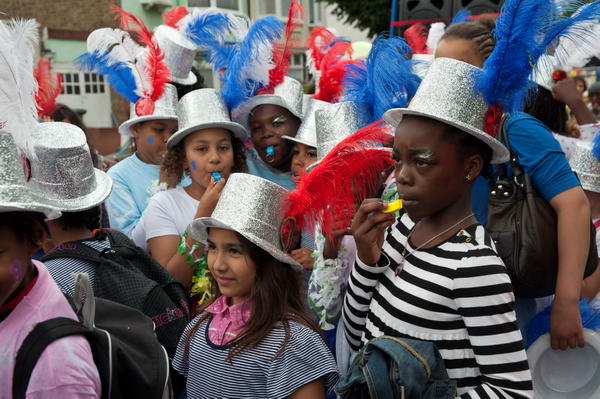
Newham Carnival seemed rather smaller than when I photographed it in 2007, but it was still a lively procession, with lots of kids having fun. The Mayor, Sir Robin Wales, came and joined in, though I found his performance rather embarrassing.
I suppose its a point in his favour that he doesn’t mind making a fool of himself
Keir Hardie was the country’s first Labour MP, elected in West Ham South in 1892. The County Borough of West Ham, now a part of Newham, elected England’s first Labour-controlled council in 1898. And in 2009 every one of its 60 councillors was Labour. Robin Wales became council leader in 1995 and became its elected mayor in 2002. In 2018 he was de-selected as Labour’s mayoral candidate following a bitter dispute inside Newham Labour party and is now a leading member of Reform UK.
Wales seemed very much to regard Newham as a personal fiefdom and used events such as this very much as PR opportunities.
In the Wikipedia article you can read a little – in a very bland fashion about some of the controversies of his reign as local dictator. Under his leadership Newham gained large amounts of high cost private developments but failed to deal with the incredible housing problem in the area – telling people if they couldn’t afford to live in Newham they should move. As his critics said, we want social housing not social cleansing.
I walked some way with the carnival procession, but then took a bus, which was held up even more than usual by the traffic congestion the procession created. Normally I would have taken the District line, but this was closed for engineering work. And at Canning Town, rather than the Jubilee line (also closed) I had to use the much slower Docklands Light Railway, so I arrived rather late for my next event.
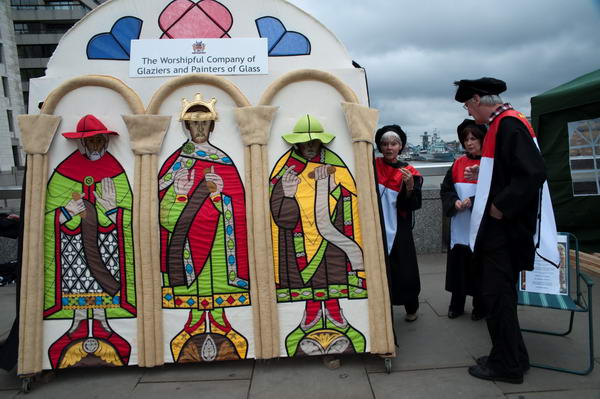
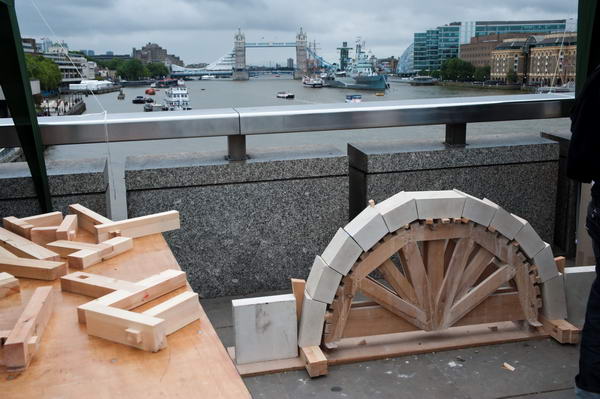
One of a number of guild displays on the modern London Bridge, 30 metres upstream from the old bridge
The Romans had built bridges across the Thames but these wooden structures did not survive. As I wrote (with minor corrections) in 2009:
“It was Peter de Colechurch who decided a stone bridge would be a better bet well over a thousand years after the first bridge, and started building one in 1176. It was a lengthy job, and was only finished 33 years later, and it was also very expensive.
To get back the cost houses were built on the bridge (as well as a chapel in the middle) and it soon became a thriving medieval shopping centre. There was actually very little space left for traffic to get across it, traffic moving in both directions on a 12 foot wide roadway (and in 1722 we got our first Highway Code, with the Lord Mayor laying down that carts coming from Southwark should stick to the west side, and those going south from the City drive on the east.)
This was part of the roadway across the 1209 London Bridge
You can get a good idea of its width from going to the church of St Magnus the Martyr, as its entrance porch is the only remaining part of the bridge, and if the church is open you can go inside and view (sometimes through a rather thick haze of incense) a large model of the whole bridge.
Found in the Thames
That bridge – with pretty well constant repairs and several major disasters – lasted until 1831 when a new bridge designed by John Rennie opened for business, around 100 ft upstream… The current bridge opened in 1971″
Cyprus Property, a Windmill and a Regatta: On Sunday July 9th 2006, after photographing a protest over property disputes in Cyprus I went to the Brixton Windmill Festival and then on to Kingston Regatta and walked to Hampton Court. I wrote at some length on My London Diary and you can read it below with more normal capitalisation and the odd other correction.
Cyprus Property March
Park Lane
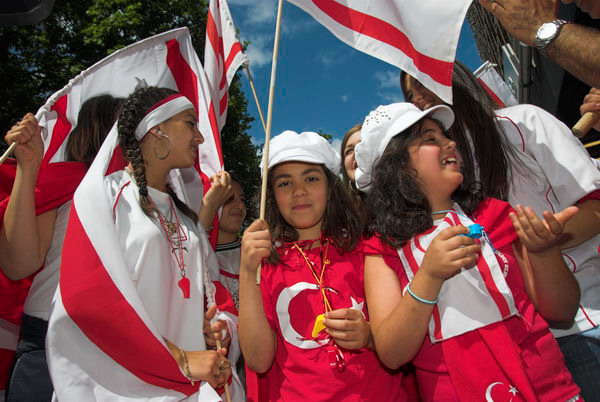
Turkish and Greek Cypriots lived together on Cyprus for many years.Three years after the island became independent in 1960, fighting started and the Turkish Cypriots were thrown out of their official positions. There were many killed in the fighting in the following years, and in 1974 both Greek and Turkish troops became involved.
Since then the island has been effectively divided into two, with the Turkish Cypriots in Northern Cyprus. Many Turkish and Greek Cypriots had to leave their homes and move to the other side of the de facto border, taking over properties vacated by those moving in the opposite direction.
Recently the situation has become more complex, with Cyprus being admitted to the EU in 2004, despite its split status. The UN had set up a re-unification plan that was approved by the Turkish population, but rejected by the Greeks. Entry to the EU has however meant that Greek property claims are now being taken up in Southern Cyprus and can then be enforced in other EU countries, including the UK.
One such case concerns the Orams, an English couple who bought land and built a villa on it in Northern Cyprus. They bought the land from a Turkish Cypriot who had received it in exchange for property he had to leave in southern Cyprus in 1974. The land had belonged to a Greek Cypriot who took the matter to a court in southern Cyprus recently, obtaining an order against them that they should demolish the house and pay damages (which the Orams are appealing against.) Although the judgement cannot be enforced in northern Cyprus, as this is still under Turkish control, the lawyers are trying to enforce it in the UK courts against the UK assets of the Orams.
Settlement of the property issues requires Greek and Turkish Cypriots to come together produce a plan for peace in the divided country. It would then be possible for a suitable property commission – such as that already set up under the advice of the EU in northern Cyprus – to work through all the cases.
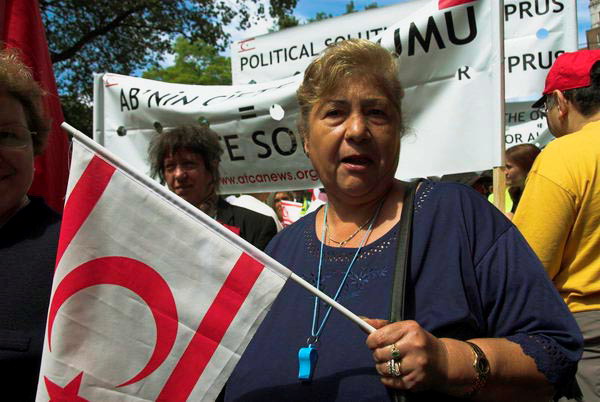
The marchers were asking for the support of the British government in refusing to accept the decision of the Cyprus court on ‘public policy’ grounds, and to make further attempts to establish a proper peace plan that would allow proper resolution of property and other disputes in the island.
[Following a series cases with appeals to the the High Court, the European Court of Justice, and back to the UK Appeal Court, the Orams lost their case and apparently abandoned their property in Cyprus in 2010. Property issues in Cyprus remain in a mess but are reported to be moving very slowly towards an amnesty in 2026.]
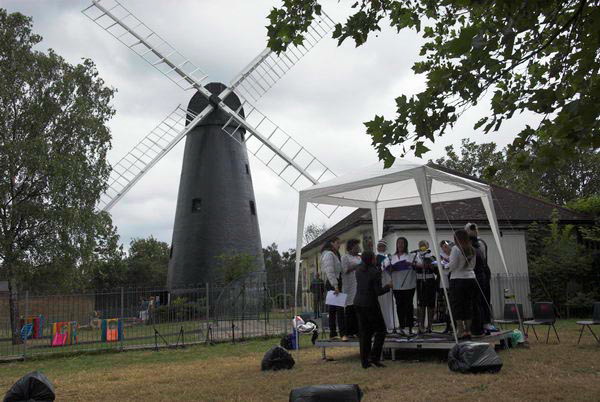
The Brixton Windmill Festival wasn’t music at the well-known pub, but at the real windmill 50 yards further on, built by a Mr Ashby many years ago to take advantage of its hilltop site to get the energy to grind his corn.
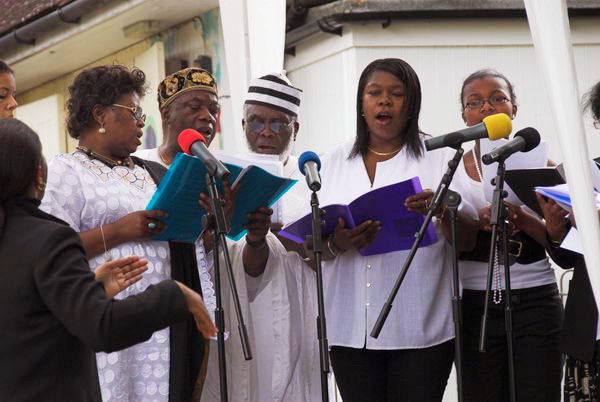
A local choir sang with spirit performing Amazing Grace as a tribute to those killed and injured on in the London Bombings of 7 July 2005
When I first visited around 30 years ago it had been recently restored by the GLC and I climbed up the rather rickety ladder holding the small occupant of the pushchair I had taken with me for a view of the surroundings. Since then it has been vandalised and partly restored, and though it’s still an impressive site, you are only allowed upstairs on very special occasions (and probably after signing a a form in triplicate saying you take your life entirely into your own hands.)
But it is still a useful site, a green patch in which to sit or stroll, some swings for kids, a cup of tea, and a reminder of past ages. There was some music at the festival, a group of local singers while I was there, as well as stalls from a number of local organisations, including the local history society, the credit union and also the police and others. I hope a few more people came after I left.
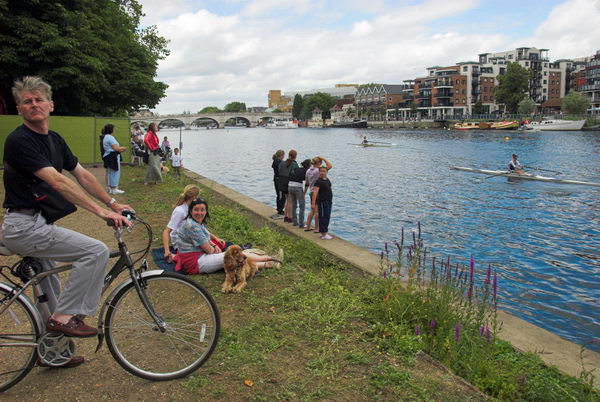
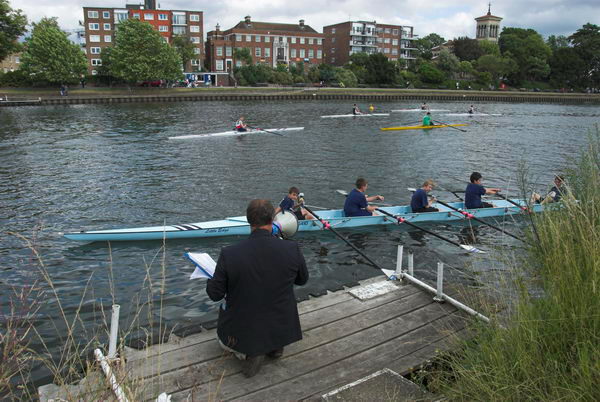
It was a pleasant afternoon for a walk by the Thames, and although the shopping streets of the town were hot and bothered as usual, once out on the bridge it was a different world. the river itself was rather busier than usual, with over half its width buoyed off for the regatta, with pairs and trios of boats being stroked lustily downstream chased by umpires in powered catamarans.
I walked past the regatta enclosure and stood a few minutes watching by the bank before continuing along the riverside path. The start and marshalling area were a little more interesting as the officials tried to sort out the various teams, heats and finals. There were quite a few grammar, not to mention Eton and a few other posh schools, but not a single comprehensive or secondary mod while I was in earshot.
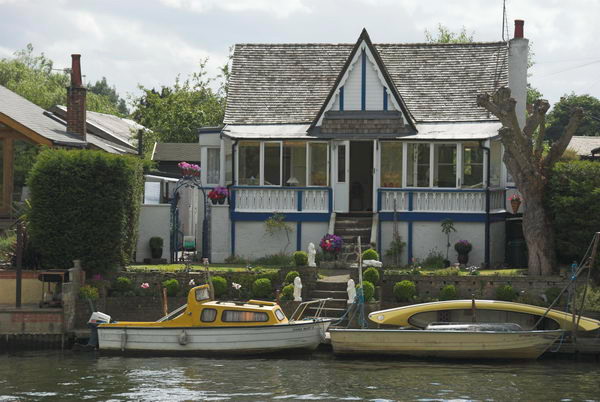
Island home
It turned out to be a rather longer walk to Hampton Court than I’d imagined (for once I’d not bothered with a map) and I was tired [and late] when I got to the river exit from the flower show.
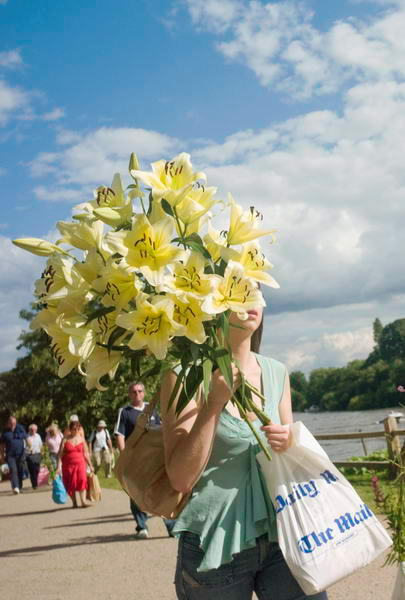
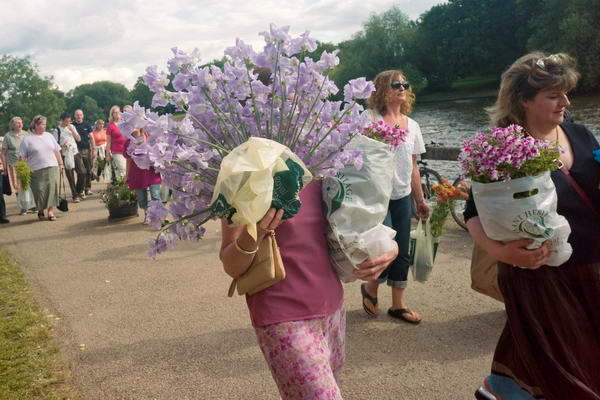
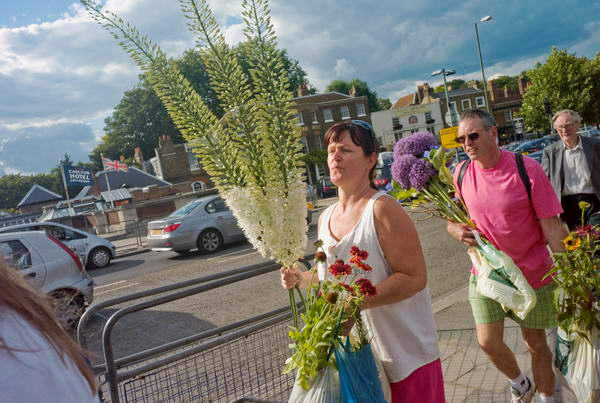
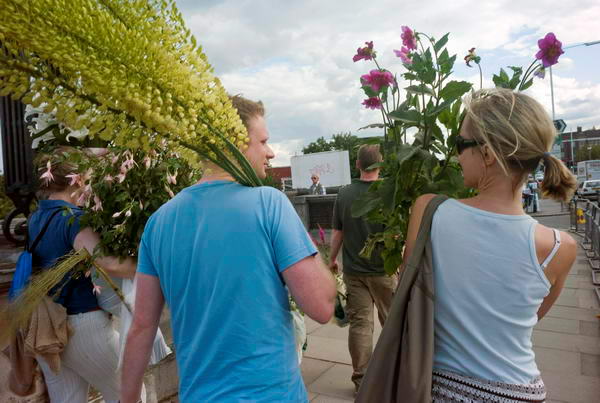
There were a few people carrying rather straggly looking plants and a couple of photographers already lying in wait to photograph them, but I couldn’t really work up a great deal of interest. so I walked on and caught the bus home.
[I’d been keen to go to Kingston as I was hoping to get more local pictures for the show ‘Another London’ with Mike Seaborne and Paul Baldesare which was to be in Kingston Museum at the start of 2007. You can still see all the pictures by all three of us on-line at the Another London web site, including one from the Regatta.]
Tour de France, More Cyclists & Flowers: On Sunday 8th July 2007 I began work in Woolwich where briefly cyclists flashed past me in the Tour de France, a few minutes from the start in Greenwich. From there I went to Hyde Park for another cycling event before meeting a friend to go to Hampton Court to photograph people leaving the flower show there.
Tour de Woolwich
Tour de France, Woolwich
After a time trial around London on Saturday, which I missed because I was at college, the Tour de France started for real at Greenwich on Sunday morning, after the cyclists had warmed up a little with a ride from central London.
I decided I’d like to see the real race, and chose Woolwich, just a few miles from the start as offering some decent viewpoints and also the background of the Thames for at least some of my pictures. [Though not those of the Tour itself.]
I arrived an hour or so before the riders, and found there were already people by the roadside sitting and waiting, building up to a fair crowd by the time the race reached us around 8 minutes after the start.
From the time I first saw the riders in the distance to when the last rider passed was 28 seconds, so I didn’t get a great deal of time to take pictures, although I soon ran out of space in the 21 raw shot buffer and had then to wait a second or so between shots.
Then the cyclists were gone, followed by car after car with spare bikes and it was time to go elsewhere
[I took a few pictures as I walked from Woolwich Arsenal station to the roadside point I had decided to view the race from, including of people waiting to see the race.
I was working with the Nikon D200, a great camera but with hindsight should have switched from RAW mode to jpeg when I would have been able to take many more frames as the cyclists flashed past. The pictures of the cyclists were made with my zoom telephoto lens at or close to its longest focal length at 200mm.
In retrospect perhaps I should not have pretended to be a sports photographer and gone instead for a single image looking down on whole the event from the hill above.]
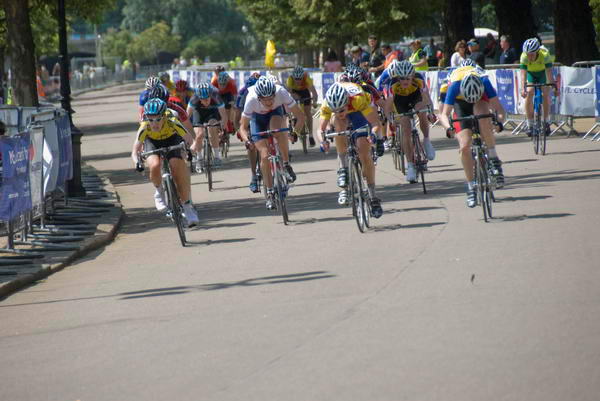
Back in Hyde Park, another cycling event, the Peoples’ Village was taking place, with various events on a loop of track around the Serpentine and the southern edge of the park.
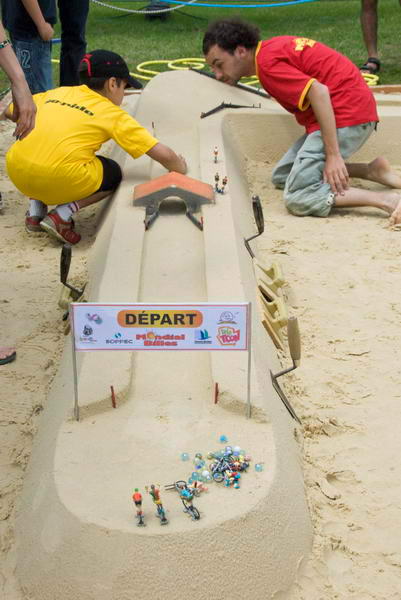
The marbles version of the Tour
There were also a number of stalls and a giant screen showing the Tour.
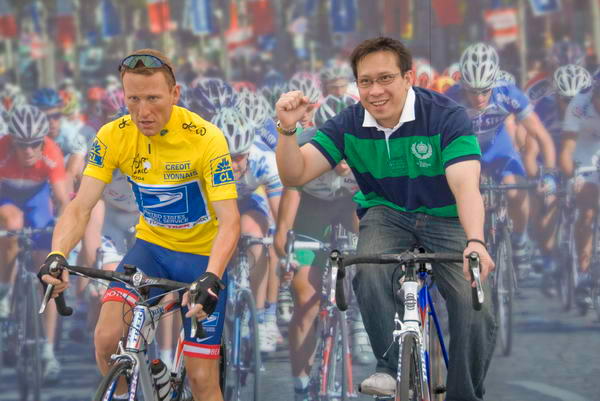
For a fiver, you could have your picture taken with a wax Lance Armstrong
I ate my sandwiches on the grass watching [the screen], though just as I sat down the peleton decided it was time for a ‘natural break’.
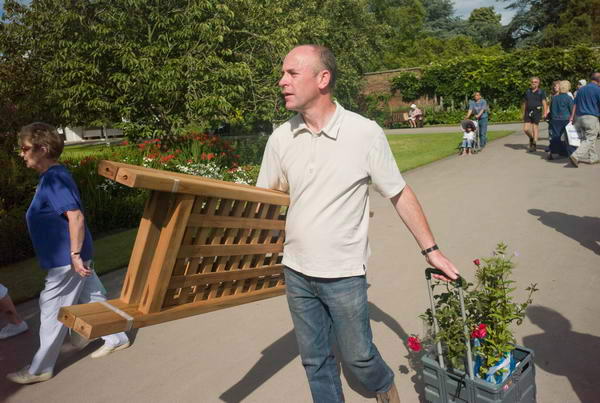
From Hyde Park I made my way down Oxford St to meet Paul, and we took the train [from Waterloo, after a pint or two in a pub] to Hampton Court to take some pictures of people leaving the Hampton Court Flower Show, carrying plants of various colours and sizes.
No M11 Link: Although this was one of the major environmental direct action campaigns of the 1990s it was one I did not cover for several reasons. Protests were only a small part of my photography back then and Leyton was an inconvenient journey across London from my home. It was also a campaign which was being documented by a number of dedicated photographers on a largely full-time basis, while I was still working a full-time teaching job a two-hour journey away. But I did visit Claremont Road in Leyton and take a few pictures.
The M11 Link was first planned as a part of the grandiose London Ringways scheme of the 1960s but fortunately most of this was abandoned after the disastrous effects of relatively short sections such as the Westway in North Kensington became clear in the 1970s. But the ‘A12 Hackney to M11 link road‘ remained on the table despite various public inquiries from 1976 on, where local activists were vigorous in their opposition. It was a Tory government in 1989 with their ‘The Roads for Prosperity’ white paper that put it firmly back on the table and preparations for its construction began in 1993.
These involved the demolition of 263 properties along the route, some occupied by long-term residents but others by a wide range of newcomers who had moved in during the 1980s as planning blight affected the area – including many artists and squatters. When the campaign began in 1993, they were joined by “large numbers of anti-road campaigners from around the UK and beyond, attracted by the availability of free housing along the route” where properties had been compulsorily purchased and were empty.
The protesters made use of a wide variety of direct action methods to make construction more difficult, including sit-ins, sabotaging of equipment and materials, concreting themselves in tunnels and a fantastic network of actual nets in the sky between houses.
Police and security staff had to be employed in large numbers and had a very difficult job. The protesters also made great use of then new technology including Desktop Publishing and Fax machines to promote their activities, and achieved considerable news coverage in both the national newspapers and TV.
The main centre of the protest in 1994 was a small street in Leyton, Claremont Road, where all the houses were to be demolished and all but one of the original residents had been moved out and the houses were squatted by protesters who formed a vibrant community. As Wikipedia states, “The houses were painted with extravagant designs, both internally and externally, and sculptures erected in the road; the road became an artistic spectacle that one said “had to be seen to be believed”.
And it was this that I went to photograph in September 1994 and can be seen in the pictures here and on Flickr.
Two months later around 700 bailiffs and police in riot gear arrived on 28th November to evict the protesters. It took them several days due to the various obstacles – and a secret tunnel that enabled evicted protesters to return to the street. The bill for the police needed to protect the bailiffs came to over a million pounds. The total cost of evicting protesters along the whole route was £6 million.
Protests continued against the link road and slowed its progress and doubled its cost. You can read a good account of the Claremont Road eviction and the later ‘Battle of George Green’ on the green fuse web site.
The road was only finally opened in October 1999 as part of the A12. By this time it was an anachronism, partly because the M12 motorway scheme had been scrapped in 1994, but also because of the overall increase in traffic levels meant it was congested from the start. ” By 2014, the road had become the ninth most congested in the entire country.”
There are quite a few more pictures on Flickr – click on any of the above images and you can then go through the whole set. There are also eight panoramas from the site beginning here.
Spain & Pride: A few days ago I watched online what was apparently the first full UK showing of Basilio Martín Patino’s 1974 film ‘Caudillo‘, produced in secret in Spain while Franco was still in power.
It’s a powerful documentary on the Spanish Civil War of 1936-9 and the rise of Franco, not surprisingly rather ragged around the edges, with some poor sound and seriously deficient subtitles but with an incredible amount of contemporary footage from both sides of the war.
It made me aware again of the terrible failure of Britain along with the other non-fascist powers to support the Spanish government and of the bravery of many thousands of individuals on the left here and elsewhere defy their governments and go to fight for freedom. Until 31st July 2026 you can still watch the Sands Films presentation of Caudillo here. There are some short sections from the over two hour-long film on You Tube.
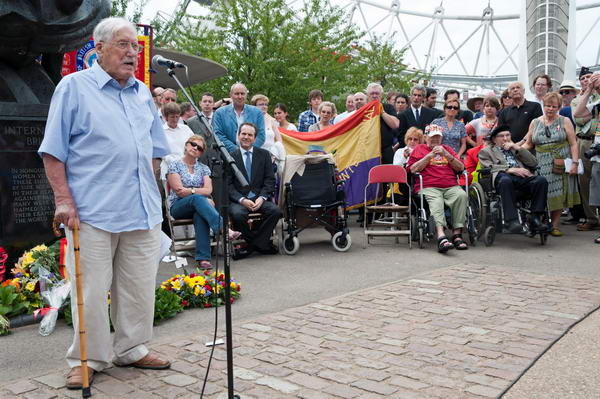
Back on 4th July 2009 I attended the annual International Brigade Commemoration at Jubilee Gardens in London, rushing away from Pride London to so.
International Brigade Commemoration
Jubilee Gardens
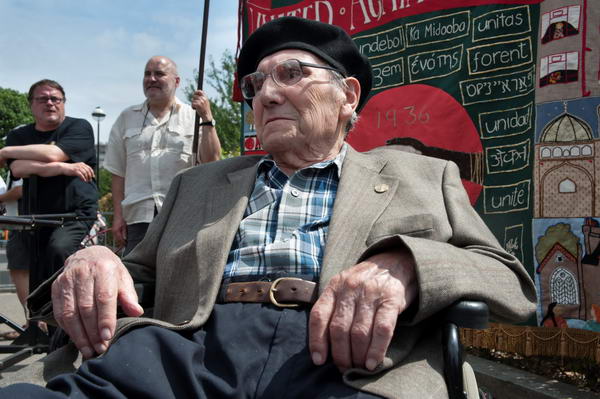
In 2009 there where are still a few alive who had gone to Spain – Lou Kenton, now 101, was an ambulance driver.
This month, July 2026, is the 100th anniversary of the start of the Spanish Civil War and this commemoration in 2009 was 70 years after it ended. As I commented, “Every year there are fewer and fewer of those who went to Spain to fight or work in the medical services, all now in their 90s or older. And every year a list of those who have died in the past year. “
Sam Lesser remembers Jack Jones, one of the great men of the twentieth century who had died in the previous year.
Wreaths came from the Spanish Ambassador, the Catalonian representative and others
There were women who went as well as men. While our politicians stood to one side and let Germany and Italy join the fight against the elected government of Spain and much of the Spanish people, many ordinary working people supported the Republic, particularly the communists and anarchists. Over 40,000 went to fight, mainly in the International Brigades and a further 10,000 as civilians, mainly as nurses and other medical staff.
The only two nations to support the Republican cause were Mexico and the Soviet Union, with Stalin sending large amounts of weapons – though many promised failed to arrive and others were antiquated.
But it was Stalin and the communists his advisers controlled who scuppered the chances of a Republican victory by attacking, imprisoning and disbanding the other groups successfully opposing Franco’s forces, freeing the poor to take over the land. A real revolution was anathema to Stalin who feared it might give his peasants ideas.
The consequence of losing the war were dire for the Spanish people (except the Catholic Church and the wealthy) with many years of repression and dictatorship – and for much of the world as it led to the Second World War.
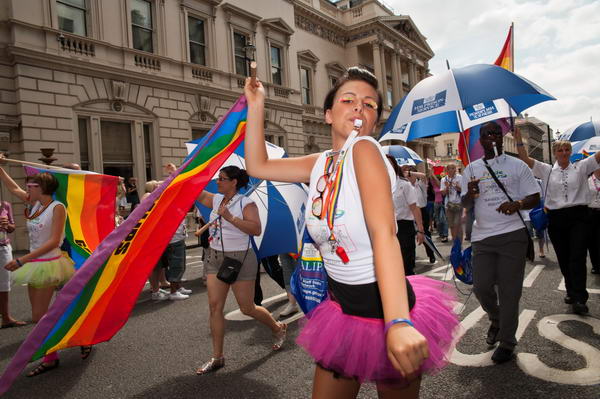
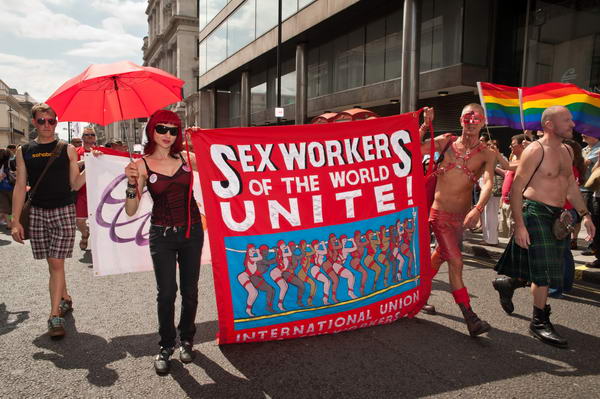
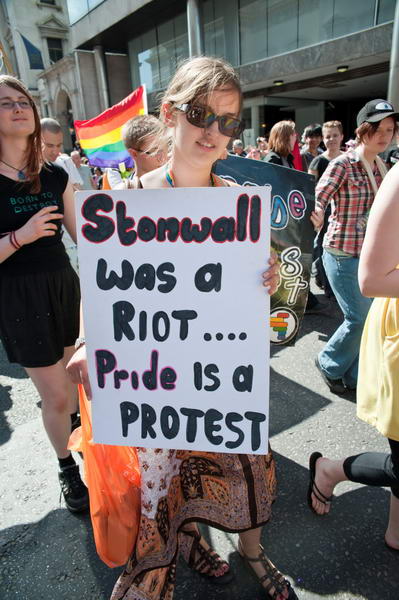
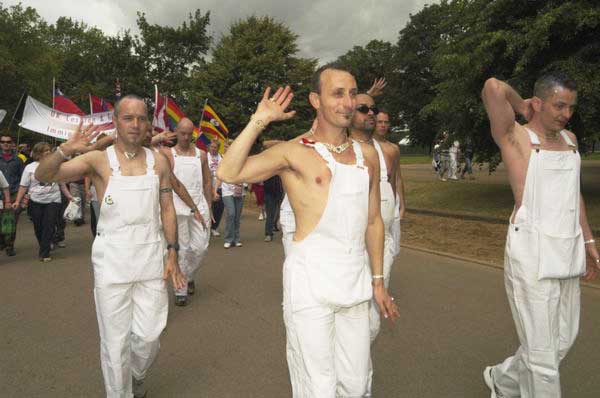
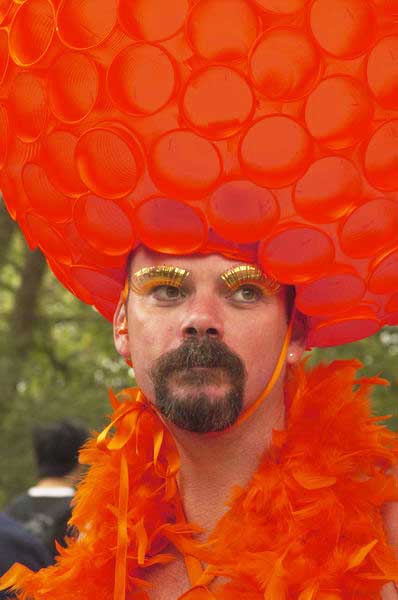
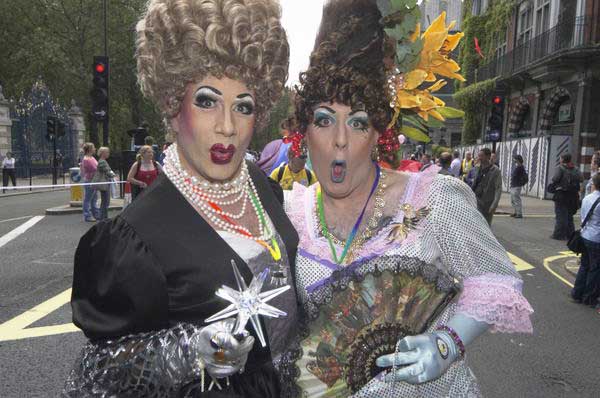
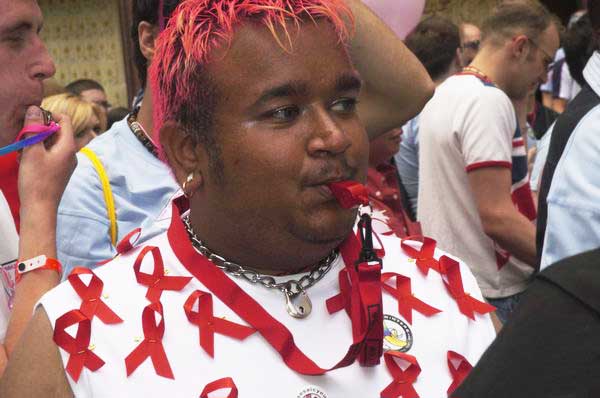
Earlier in the day I had photographed the 2009 Pride London March. I commented “Things have changed pretty dramatically over those 15 or more years [since I first attended], and Pride is largely a very different event, much more of a corporate than a personal or political one. Of course the LGBT community being what it is there is still plenty of room for the unusual, the eccentric,the flamboyant, the spectacle. And even, though perhaps rather more at the edges, the political.”
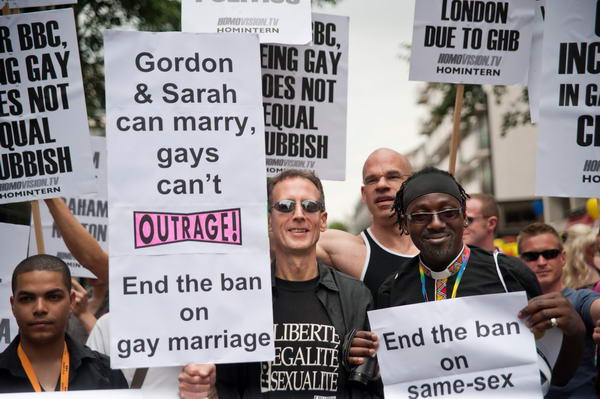
Outrage protest the ban on gay marriage – Sarah Brown was on the march
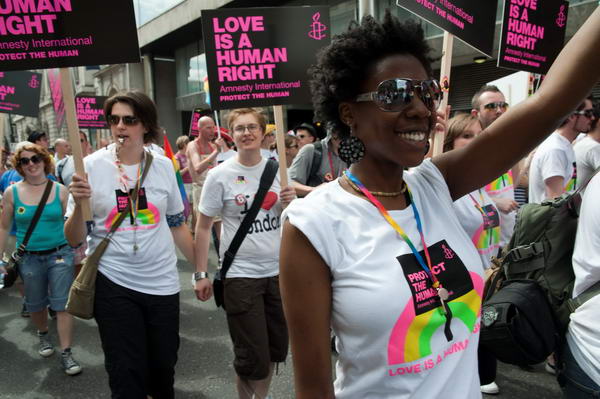
Here I’ll post a few of the more political, but I think the pictures on My London Diary cover the whole range described above.
StonewallAmnesty InternationalInternational Union of Sex Workers
And there was the usual small group of Christian bigots who had come to share their carefully selected texts
The United Protestant Council “annual witness against New Sodom, parading its shame on the streets of London.”
Many more pictures on My London Diary: Pride London.
London Pride: I think the Pride March on Saturday 3rd July 2004 was around the 12th Pride I had photographed and I was certainly beginning to feel it had lost the edge it had in the earlier years. It’s now some years since I bothered to apply for accreditation to cover the annual event, and didn’t bother to apply for one of the armbands my union were offering. It’s perhaps ten years since I last went.
I used to enjoy photographing the annual event, and you can see many of my pictures from those years on the Internet Archive and in the Café Royal Books publication ‘Pride Not Profit – London 1993–2000‘. I had a small show of some of the work at the Museum of London and a larger selection was projected as part of the Museum’s travelling show ‘Queer is Here‘ which began with a Museum showing in 2006. You can see the full set from this show online at Ten Years of Pride.
For the last few years I’ve intended to go to Soho to cover the buzz there after the march, but somehow I’ve always found other things to do. But perhaps I’ll be there tomorrow, if only to meet up with some old friends and have a drink together.
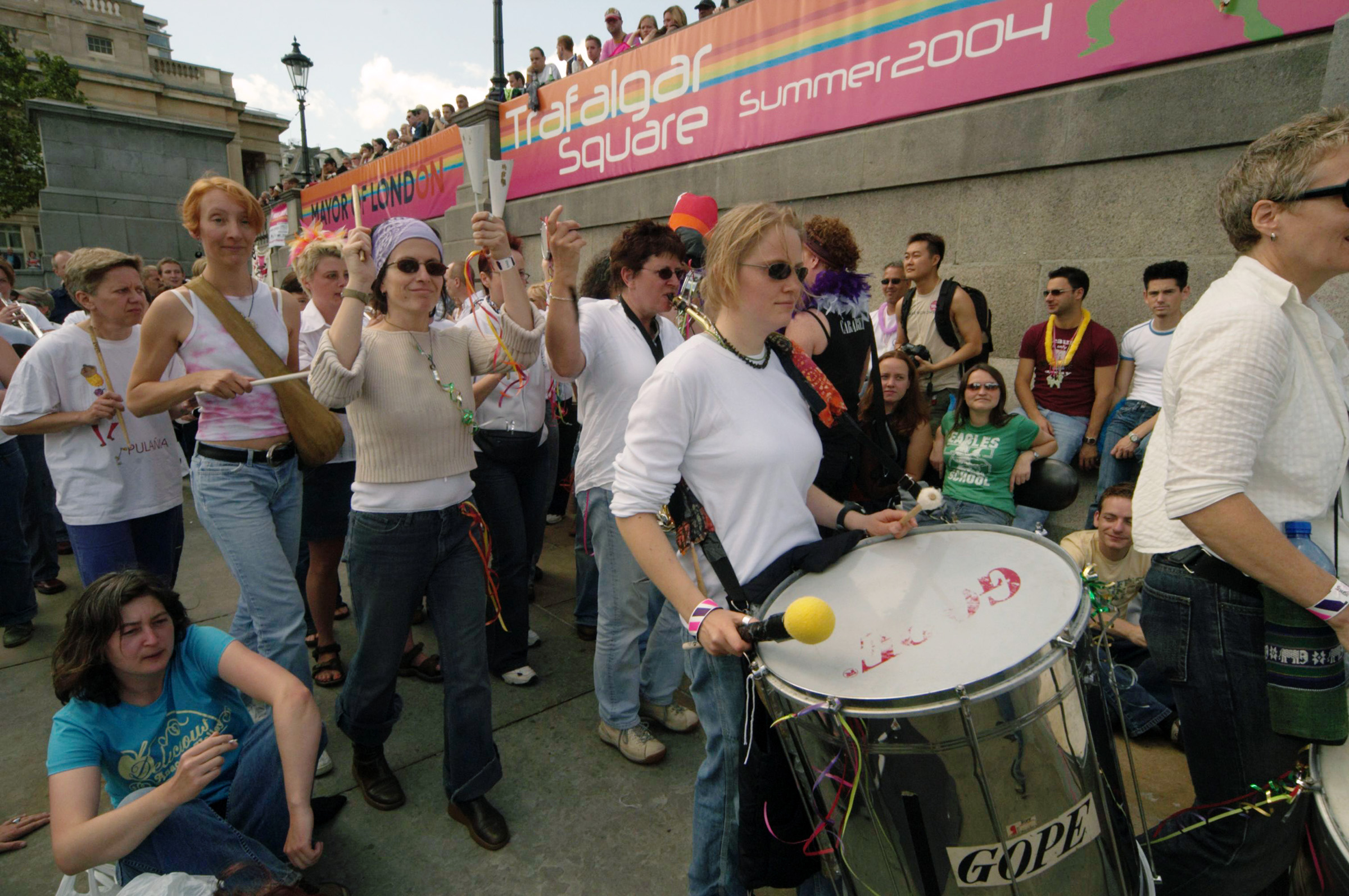
Anyway, here is what I wrote back in 2004 and some of the pictures I took on the march from Hyde Park. For some reason I can’t now remember I left the march to go to Paternoster Square close to St Paul’s Cathedral and took a few pictures of the buildings there before returning to the Pride Festival in Trafalgar Square.
London Pride
Pride is certainly not what it used to be. It’s lost the edge which came from protest and is now simply a parade, recognised by Ken [Livingstone, Mayor of London] and the police.
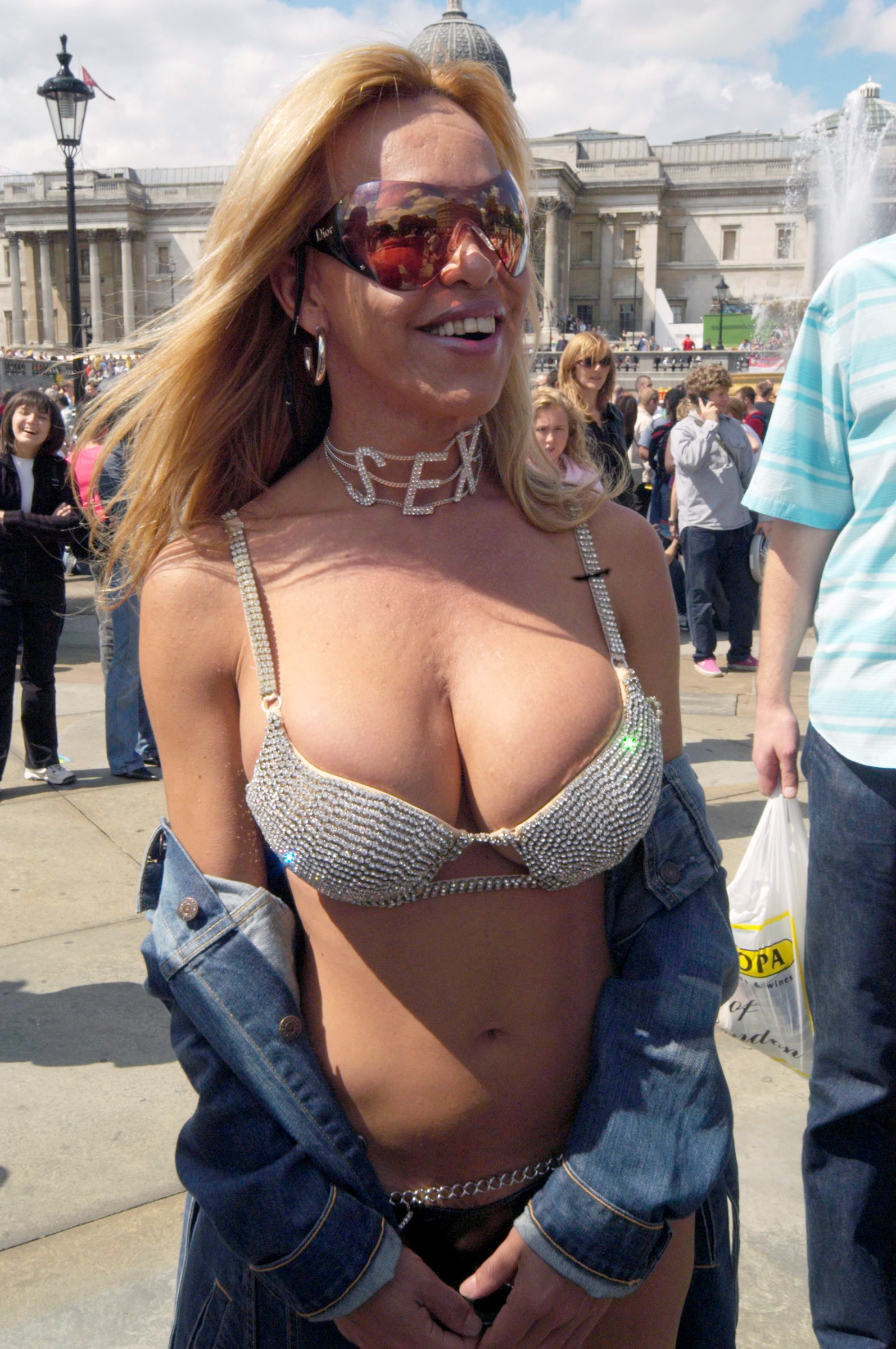
Good time people out for a good time rather than a crusade for a cause, although there were still a few banners on display against remaining areas of discrimination.
This years event also seemed rather small, considerably less than the press estimates before the event, although quite a few more came to the rally in Trafalgar Square.
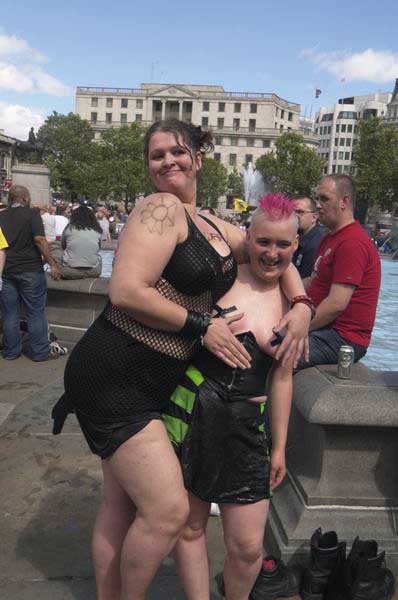
The event stewards took a dim view of people getting in the fountains, but the two women at right entertained the crowd a little, as well as keeping some of us photographers amused. “Oh God”, said one of them, “My mum will see these pictures”. The pose here is right out of a Donald McGill postcard, but I’ll leave the punch line to you..
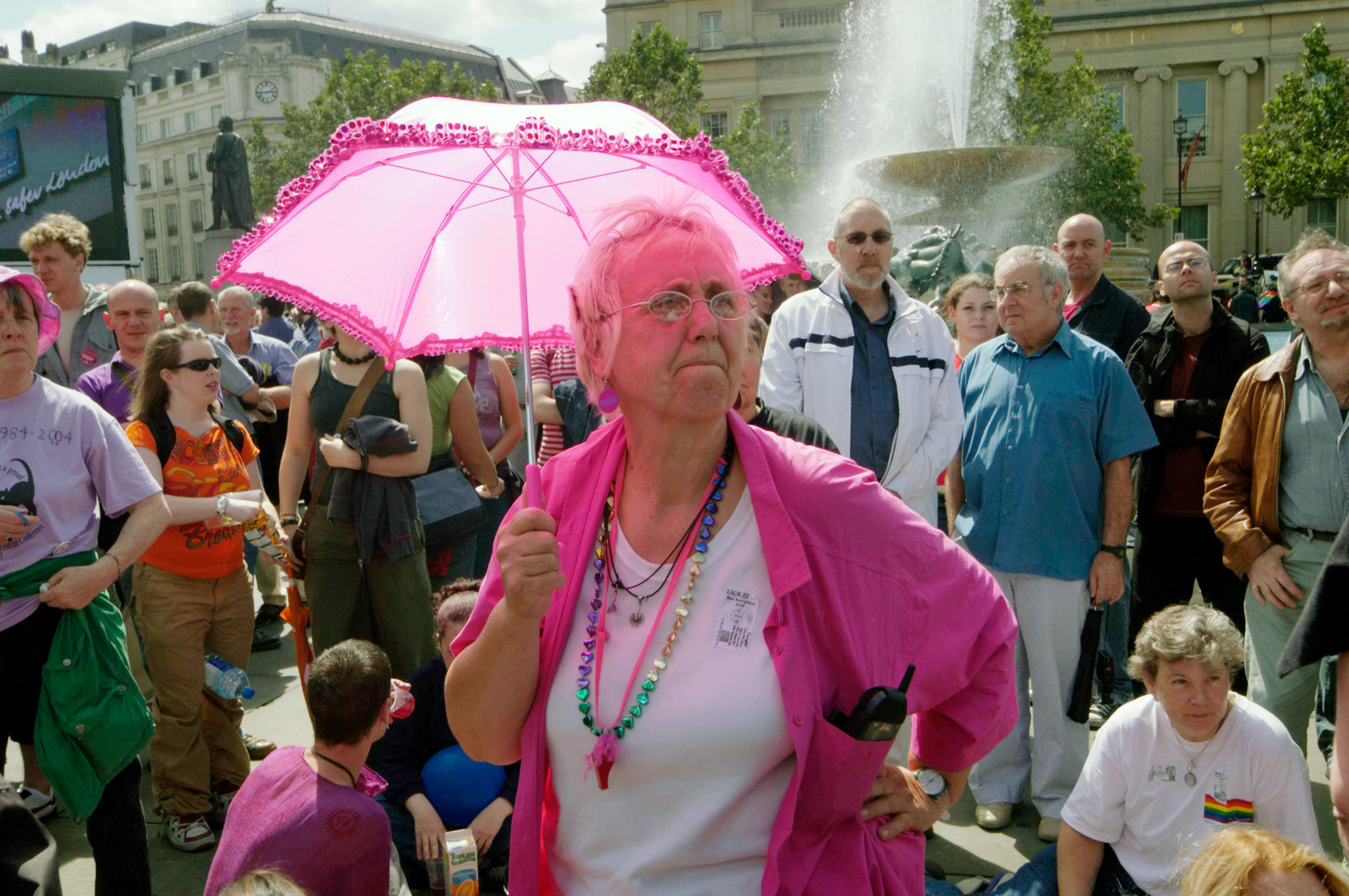
I don’t know how long they stayed, as the speeches were platitudinous beyond belief. Ken welcomed us to his square in one of the better attempts, and generally received an enthusiastic response, although there were quite a few voices of dissent and more who were taking very little interest.
Here are a few pictures here which I didn’t upload in 2004:
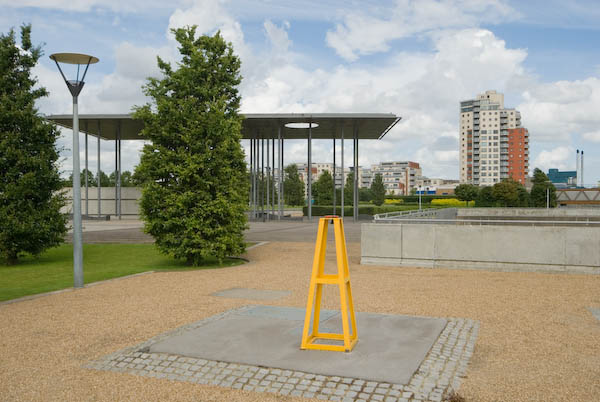
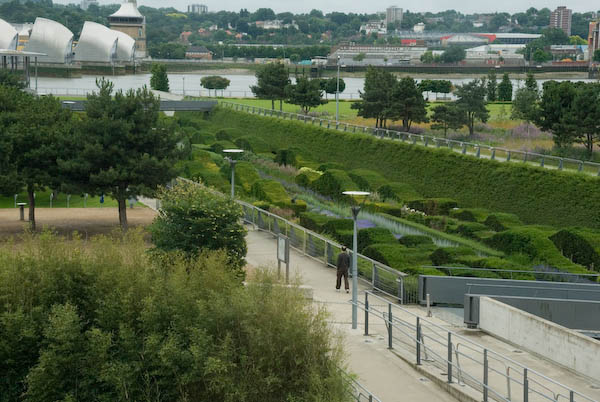
The children’s fun area is a nice idea, [32 computer controlled fountains] but this works better at Parc Citroen in Paris, and hasn’t stood up to British weather or use. We just don’t have the same level of upkeep in Newham as does the City of Paris. Competitions such as was carried out for this are a good idea, but only if the judges think rather more about what the result will look like in ten years time rather than on the sketches. It is also unfortunately not possible to enter the Green Dock at the ground level at the north end and walk through it (there is still an entry at the south end.)
[The park is managed by the Greater London Authority and was built on one of the most polluted sites in the country, the former PR Chemicals factory, which took years to decontaminate.]
The sides of the dock were lined by a metal fence with lower wires, which have currently been removed. In their place the fence is lined by normal street safety barriers, tied together with plastic bags. Although it may be effective, it is visually unacceptable and hopefully the fences are to be repaired and these removed.
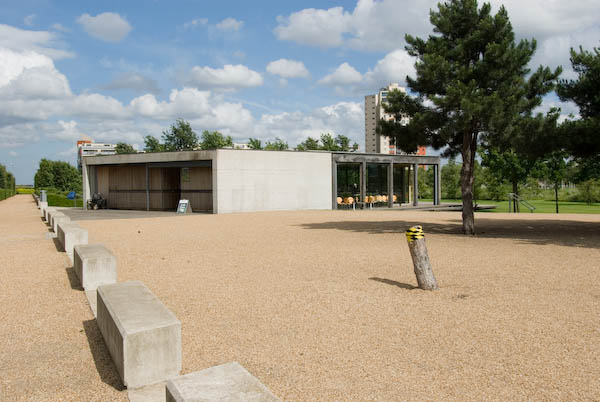
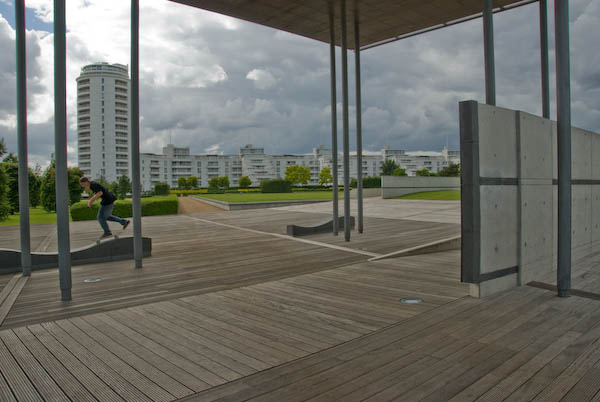
The two buildings in the park have a Japanese feel. One usefully houses toilets and a café, while the other was erected by Newham in memory of the victims of war. Its undulating seating was intended to carry on the wave theme of the Green Dock, but is perhaps of more interest to skateboarders than for comfort.
Walk along the edge of the ‘Green Dock’ to the riverside.
The park gives an excellent view of the Thames Barrier. Silvertown was one of the areas to be flooded in 1953, though rather less disastrously than Canvey, although some 1130 homes here were flooded. It took until 1982 for the Thames Barrier to be completed. Estimates of how much longer it will remain effective with the sea level rise due to global warming vary widely, but certainly at the moment it is getting used rather more often than was envisaged.
Walk back along the other edge of the Green Dock to the cafe and/or the station.
It’s some years since I’ve been back to the park, and it would be interesting to see how it has changed over the years. Perhaps I’ll find time this summer.
This walk will continue in a later post with Part 10: Riverside which mainly looks at views from the DLR.
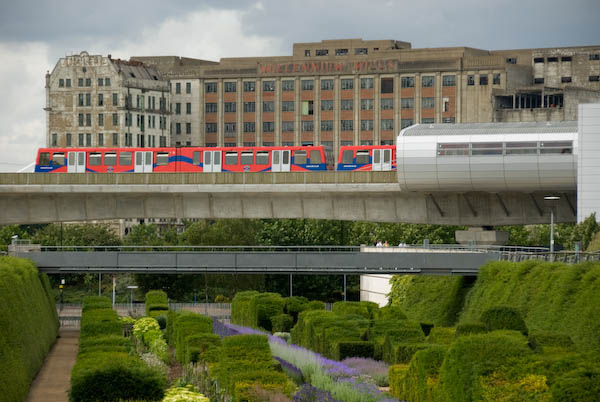
An elevated section of the Docklands Light Railway runs along the south side of North Woolwich Road. Opened in 2006, it currently runs to King George V station in North Woolwich, but tunnelling is in progress to take it under the Thames to Woolwich. [It opened in 2009]
DLR under construction from Silvertown Way – 2004.
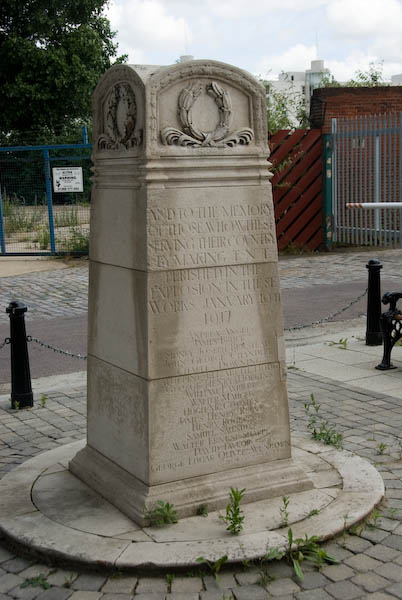
Turn left and walk east along North Woolwich Road; roughly 100 meters on is a site entrance which includes a monument to the Silvertown Explosion.
The Brunner Mond chemical works opened here at Crescent Wharf in West Silvertown in 1893, producing first soda and then caustic soda. But by 1914 the works was idle, and the government needed a factory to purify TNT. This was known to be extremely dangerous and a process that should be carried out in a remote area, and not in this highly populated area such as this. Dr FA Freeth, Brunner Mond’s head chemist later made his views about the process clear:
“It worked but was manifestly dangerous. At the end of every month we used to write to Silvertown to say that their plant would go up sooner or later.” But the Government, at a safe distance in Whitehall, decided that the risk was worth taking. It was the people of Silvertown who were, largely unwittingly, taking it.
“Sooner or later” turned out to be Friday 19 January 1917 when a fire caused 50 tons of TNT to explode. They heard the bang in Cambridge and Guildford. Around 70,000 properties were damaged, costing £2.5 million. Over 70 people were killed (12 of the bodies were never found) and 400 injured. Because of war-time restrictions, it was 3 days before the news was in the papers.
This site is now under application for development as Minoco Wharf. In January 2005 the Mayor removed its safeguarded wharf status, which will allow more freedom in its development. [Renamed ‘Royal Wharf’ and recently completed it includes 3,385 new homes, a primary school, leisure facilities and retail and commercial office space.]
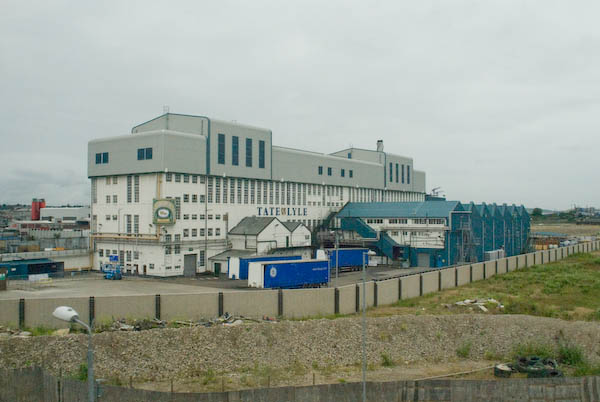
Tate & Lyle’s Plaistow wharf
A little to the west is Peruvian Wharf, which includes the site of the old guano works and Tate & Lyle’s Plaistow wharf. (Tate & Lyle have consolidated their activities at Thames Refinery to the east in Silvertown.)
The application to develop this site, which still has safeguarded wharf status, went to public enquiry and was refused in 2006. There are further applications, mainly for industrial use. The best views of these sites are from the DLR. [The site was bought by the Port of London Authority in 2016 and part leased to for an aggregate wharf and concrete batching plant.]
Continue along North Woolwich Road and walk up the steps immediately behind Barrier Point into Barrier Park.
Barrier Point residential development, architects Goddard Manton Partnership (they took some ideas from their earlier Pierhead Lock at West India Docks) is in two parts, the ‘Seven Steps’ garden apartments occupied in 2000, and the landmark tower completed in 2001. It provides 252 “concierged apartments” and attracted various awards, making it “the most decorated contemporary housing development” in Britain. It forms an impressive wall at right-angles to the Thames, with suitably maritime railings and decks, although these perhaps give it too much of a 1930s international modern feel. The tower, a shining white lighthouse, is a grand effect.
This walk will continue in a later post with Part 9: Barrier Park