Wandsworth Panoramas – March 2014

As a photographer I’ve long been interested in the difference between how we experience the world around us and how the camera records it. Some of those differences are obvious but others less so, and some we are seldom aware of.
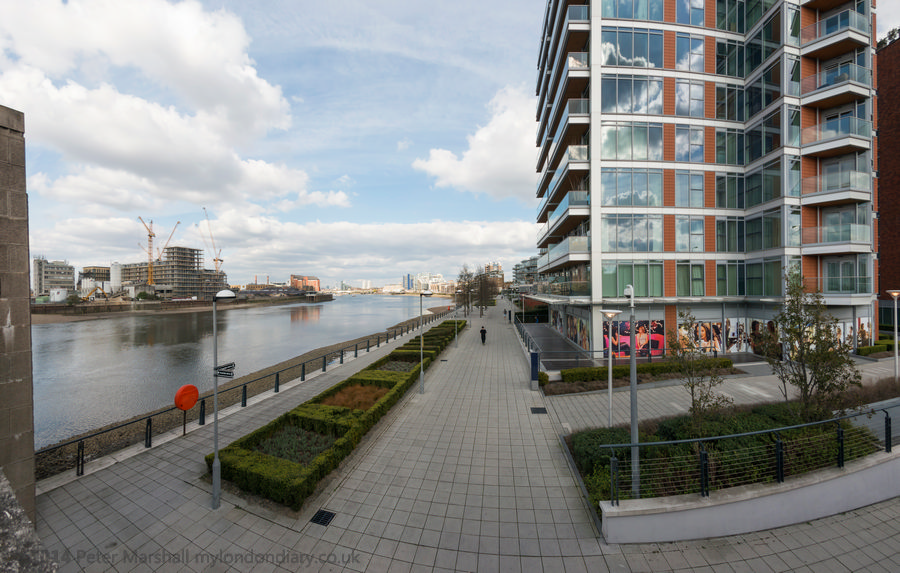
Wandsworth Panoramas - March 2014

The camera records an image produced by its lens which follows strict optical rules which I learnt about long ago in my physics lessons, though real lenses deviate slightly from those ideal and perfect specimens in those science texts.
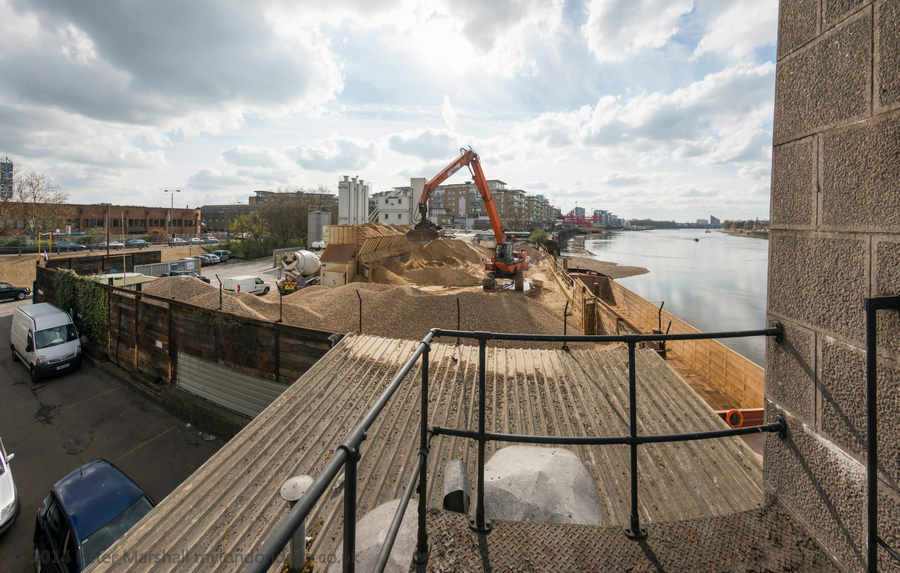
Wandsworth Panoramas - March 2014

The camera holds a film or sensor to record that image – and again does so following strict physical (and chemical for film) processes which may fail to record significant features and distort others to produce an essentially flat two-dimensional image. It may not even record colours but if it does they always to some extent arbitrary, as too are the tones.
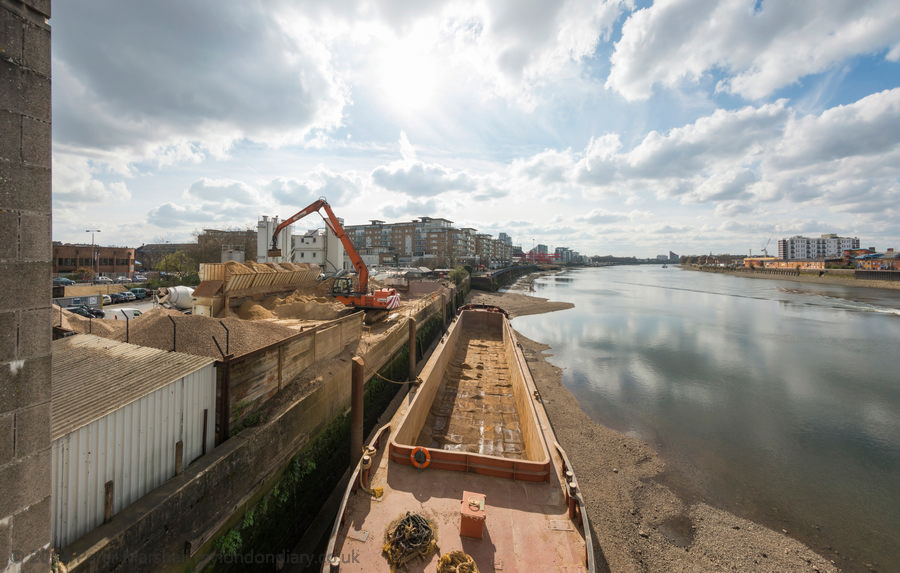
Wandsworth Panoramas - March 2014

Those of us who grew up on film are perhaps more aware of this than the digital generations. We had to be aware of the differences in recording of, for example Ilford’s Pan F and Kodak’s Tri-X, and how these were affected by processing and printing, and of the rather unreal but different colour renditions of Kodachrome, Kodacolor, Ektachrome, Agfa, Ferraniacolor and the other colour film films, each with its own qualities. Though perhaps if we ever used Orwo film quality was not the right word for its purplish nature.
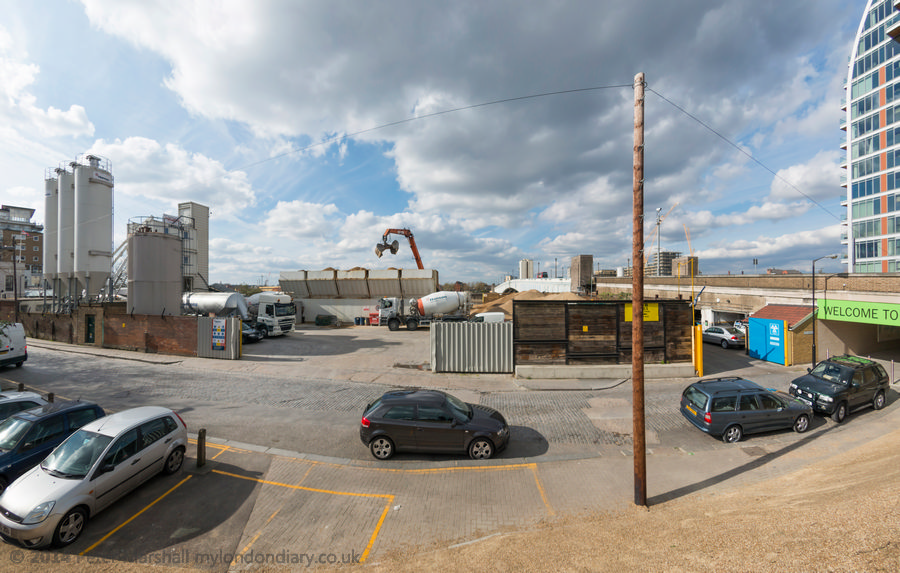
Wandsworth Panoramas - March 2014

Of course there are differences in the way digital cameras record colour, but these are rather smaller, and we can make use of software to make them match more closely or exaggerate the difference. Lightroom and Photoshop can make my Fuji files look very similar in terms of colour rendition to those from Nikon.
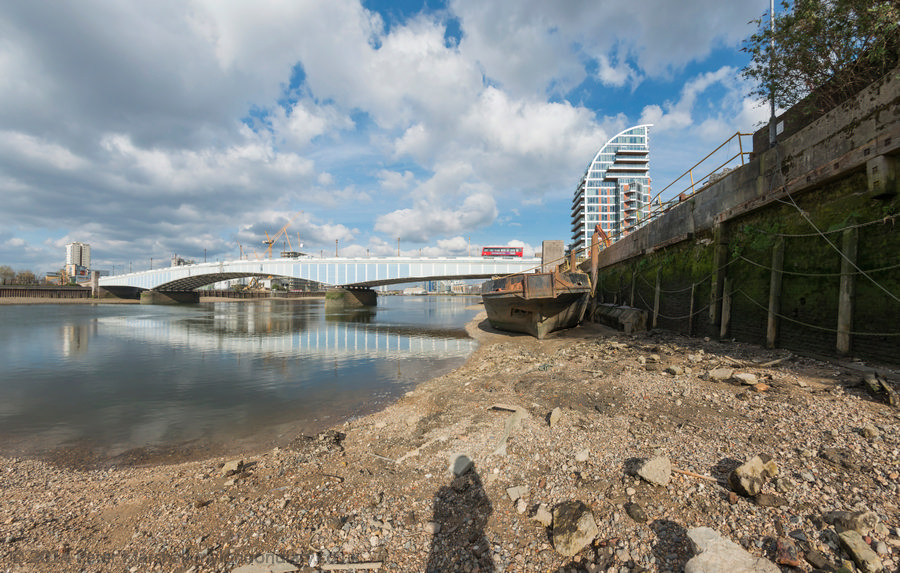
But our experience of a scene is very different, combining inputs from all of our senses, and it would be impossible to over-emphasise the subjective aspects. But even just visually it is still very different. While the lens cuts out all but a small rectangle in front of us, our eyes send information to the brain from a much wider field, much of it except from a small central section lacking in sharpness. Most of us have binocular vision, gathering this data from two eyes a short but significant distance apart, enabling us to see in depth. And our view is always dynamic, our eyes moving around, and as we swing our head around or up and down we have the sensation of moving through a static universe. Doing the same with a camera has a very different effect.
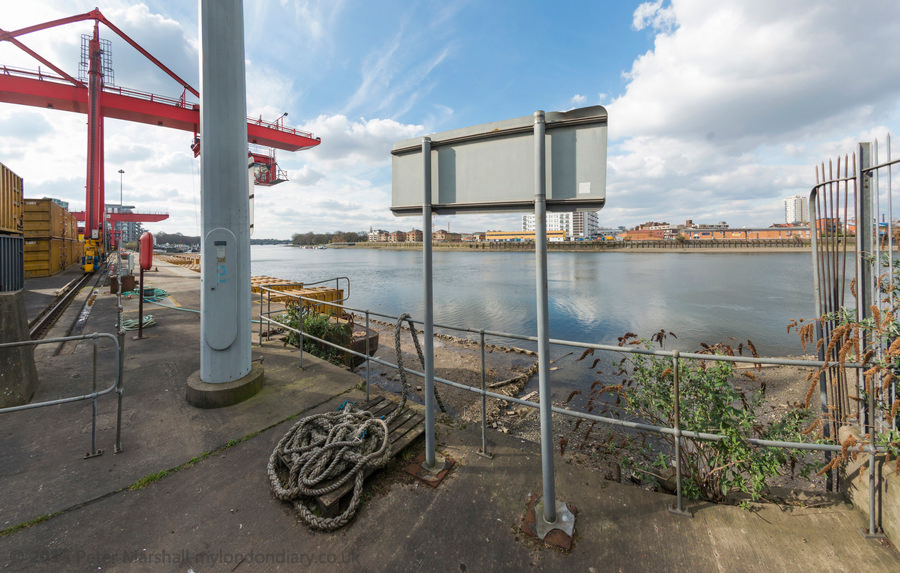
A standard lens – around 40 to 50mm on a full frame digital or 35mm film camera gives a similar idea of depth in its flat images to that we normally experience. With longer lens the effect of depth is reduced and by the time we get to really long lenses the images become flat patterns rather than appearing to represent a three dimensional scene. But what interested me more was what happened when the camera tried to represent a much wider angle of view than the standard, when the rectilinear rendering of normal lenses becomes impossible.
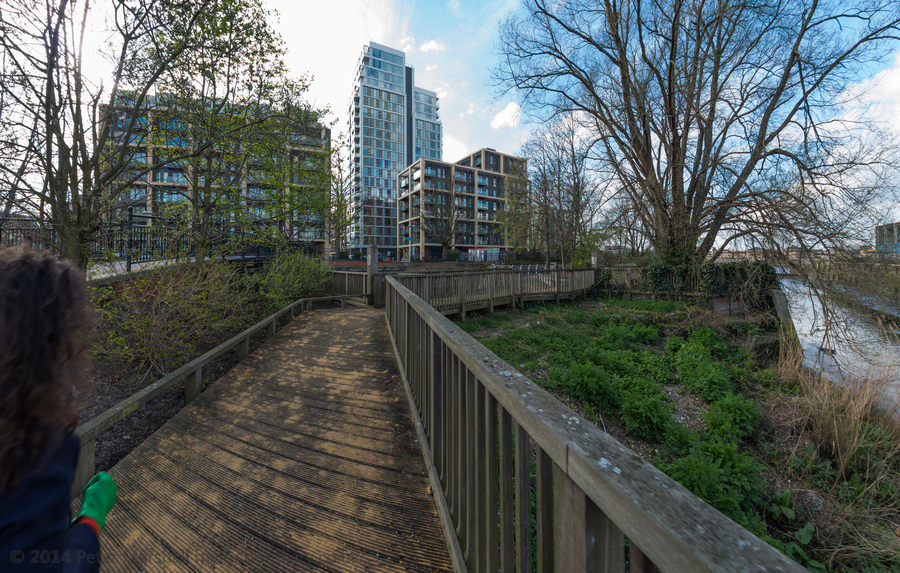
On Monday 14th of March I went for a walk with a painter friend who had brought her sketch book to introduce her to an area I thought she might find interesting. And I wanted to further explore some of the different ways of rendering very wide angles of view with digital cameras. I’d brought two Nikons with me, one fitted with a conventional wide-angle zoom which I used mainly at 16mm, close to the limit for such lenses (and I do have a wider lens which demonstrates this) and the other with a 16mm full-frame fisheye which fills the frame with an image which is 180 degrees across the diagonal.
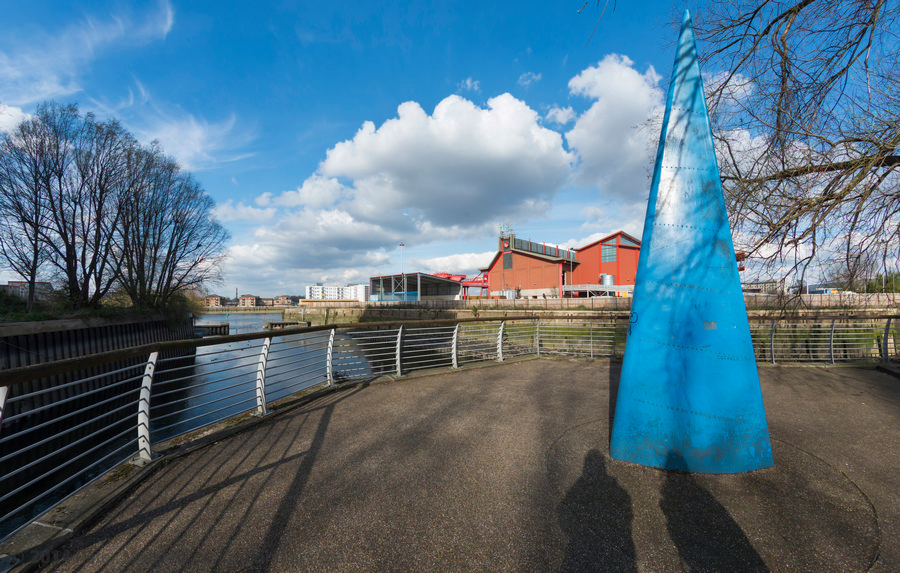
While my friend stopped to make sketches I had time to make a series of images from similar locations. I kept warmer as I was moving around, but she fairly soon got cold, which was a good excuse to visit the pub which appears in some of these pictures, after which I took her back to the station where we had met and went back to take some more pictures on my own.
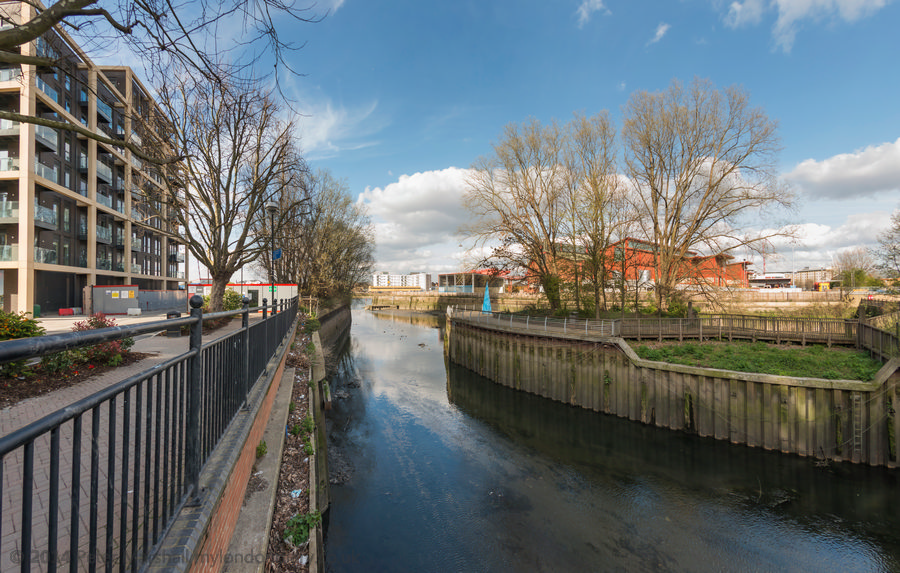
Back home I uploaded the images. Those from the conventional wide-angle zoom I’ve use as they were taken, with just the normal adjustments in Lightroom. But the fish-eye images I worked on with my panorama stitching software, PtGui, not to join images but to take the raw image data and process it it various different ways to produce cylindrical projections. If the camera was upright when the picture was taken, this will produce straight vertical lines for all upright elements. There are many different approaches to this which produce visually different results, some of which are common in mapping, such as Mercator.
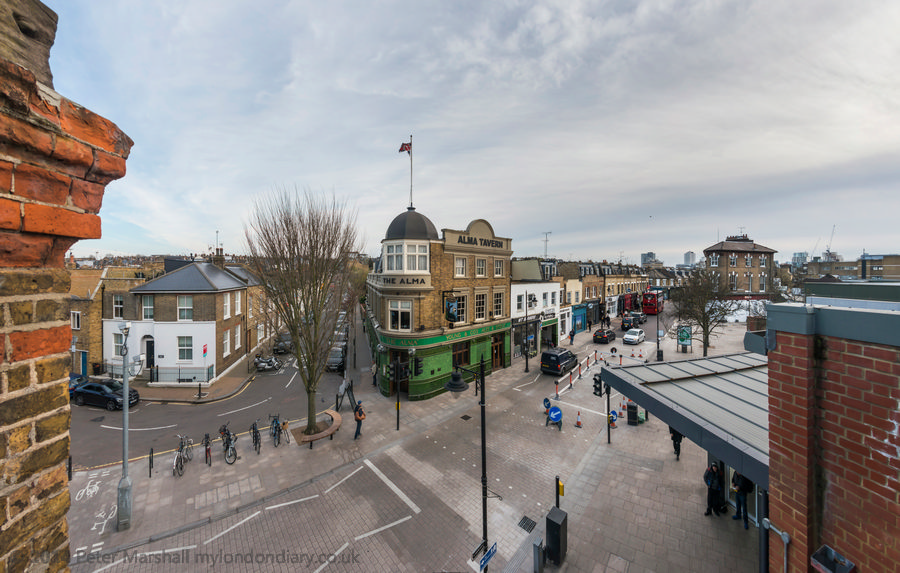
Those I’ve found most useful are the equirectangular, Vedutismo and Transverse Vedutismo projections used in these examples.

More panoramic images from my walk on My London Diary at Wandsworth Panoramas.


More From Bow Creek, April 1989

The second part of a short walk by Bow Creek on Friday 7th April 1989. The first part is at Bow Creek, East India Dock Way, April 1989.

London Sawmills, Bow Creek, East India Dock Rd, Canning Town, Newham, 1989 89-4b-15

I walked back a few yards to the west along the East India Dock Road and made this picture looking south down Bow Creek, again showing the stacked timber on the wharf. The closer of the two bridges visible was I think just a pipe bridge, probably to carry gas from the nearby gasworks from Poplar to Canning Town, and has since been removed.

The second bridge is a Dock Road Foot Bridge, more commonly called the Blue Bridge (a name it shares with several others in London), though it also carries pipes and is still in place. I think it was intended to provide a route for people living in South Bromley to Canning Town station, and it leads to a bridge taking the footpath over the DLR, but unfortunately this has been almost permanently locked. It has been at least partly rebuilt since I made this picture

Hidden by this bridge a few yards further downstream and fenced off is another bridge, Canning Town Old Railway Bridge, long disused which was built to carry a single rail track over the river.

Pipe Bridge, Bow Creek, Tower Hamlets, Newham, 1989 89-4c-61

I walked on across Bow Creek and took this picture of the pipe bridge. As you can see it was well fenced off and although there were steps up and a footway across I could not access this.

All this brickwork on the Middlesex side of the river has gone, I think when the road bridge here was widened and a link road provided to the Limehouse Link tunnel but the brick abutment remains on the Essex side. The bridge was built to give sufficient clearance for navigation.

Pipe Bridge, Bow Creek, Tower Hamlets, Newham, 1989  89-4c-63
Pipe Bridge, Bow Creek, Tower Hamlets, Newham, 1989 89-4c-63

At the centre of the river I had crossed from Newham into Tower Hamlets. My street atlas names this area as South Bromley, but I don’t think anyone now knows where that is, as there is no station of that name, the DLR having decided on East India instead.

A few yards on along waste ground I made another picture showing the pipe bridge and the river, before turning back to the East India Dock Road. I made two exposures and I wonder if I may have chosen the wrong one to digitise as it is just slightly unsharp.

London Sawmills, Bow Creek, East India Dock Rd, Canning Town, Newham, 1989 89-4c-65
London Sawmills, Bow Creek, East India Dock Rd, Canning Town, Tower Hamlets, 1989 89-4c-65

Across the water you can see much of the planks produced by the sawmill on the wharf, as well as stacks on a further wharf downriver between the building around 50 yards away on land but half a mile downstream round what is now the Bow Creek Ecology Park. Behind the cut timber you can see part of the Pura Foods edible oils factory on the opposite bank of the invisible river, and above that the top of the flood barrier across the river on the other side of the factory.

Timber was for many years a major industry on Bow Creek and along the Lea Navigation, as the Surrey Docks just across the Thames was mainly a timber dock, with large timber ponds. Boats and barges would have brought huge trunks to sawmills such as this, and the cut timber was also mainly transported further on by barge.

Pura Foods, Bow Creek, Tower Hamlets, 1989  89-4c-52
Pura Foods, Bow Creek, Tower Hamlets, 1989 89-4c-52

I walked further east and used a short telephoto lens to make this image of Pura Foods. Their factory processing vegetable oils here at Orchard Place had grown considerably over the years, as had the smells from it, and many locals were pleased when the factory moved out in 2006.

Almost all of my pictures at this time were taken with a 35mm lens, giving a moderate wide angle view. The Olympus Zuiko lens I used was unusual in being a shift lens, allow me to move the optical elements relative to the film to give additional control over the perspective. It made it possible for example to photograph taller buildings without tilting the camera which would have resulted in verticals that converged.

Lens design has improved considerably since, and so have our expectations of lenses. Many of my pictures made then have a lack of critical sharpness at the corners which we would now find unacceptable. Digital imaging in particular means we now routinely look at images on a much larger scale on screen than the prints we used to make.

West Ham Power Station, Bow Creek, East India Dock Rd, Newham, 1989 89-4c-55

I crossed to the other side of the busy East India Dock Road, going along Wharfside Road under it, and made this view looking north up Bow Creek. As you can see the West Ham Power Station was then being demolished. This was the last in a number of power stations on the site since 1904, when West Ham Council built one here to power its trams. This was West Ham B, built in 1951 and it used coal brought up Bow Creek as well as coke from the neighbouring Bromley Gas Works.

Power production at the station dropped off from the late 1960s and it closed in 1983. By 1989 its two 300ft cooling towers had already been demolished and the rest of the station was following.

West Ham Power Station, Bow Creek, East India Dock Rd, Newham, 1989 89-4c-56

A second view shows more of the Newham (or Essex) bank south of the main power station building and the closer parts are again full of stacked timber.

Newham Council together with Tower Hamlets has plans for a number of new bridges in the area providing links across Bow Creek, at Lochnagar St, Poplar Reach near to Cody Dock and Mayer Parry connecting the Leven Road former gasworks site to roughly where the old power station was, now the SEGRO industrial park.

It had been a short and interesting walk and I made my way to Canning Town station for the slow journey home. Canning Town is much easier to get to since the Jubilee Line opened at the end of 1999.


Bikes Not Bombs, Tibet, Deportation & Pillow Fight

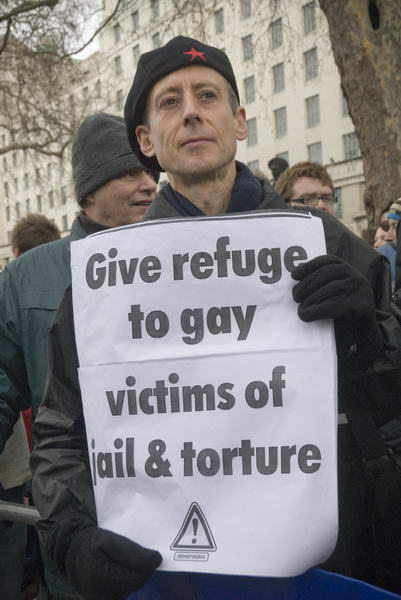
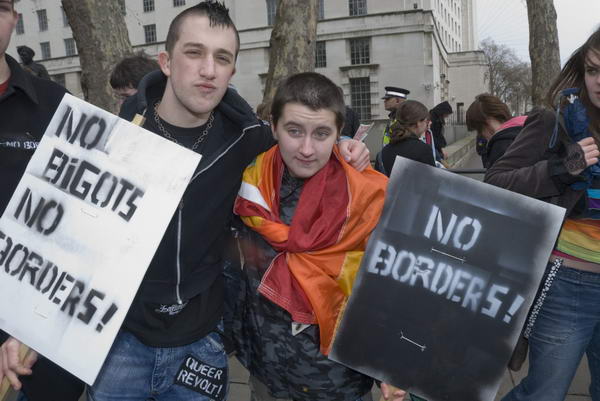
Back on Saturday 22nd March 2008 I had a rather varied day in London, meeting protesters cycling to Aldermaston on my way to photograph a march for freedom in Tibet, then going to a protest against the deportation of a gay man to Iran and finally to a pillow fight.


Bikes Not Bombs: London – Aldermaston

Bikes Not Bombs, Tibet, Deportation & Pillow Fight

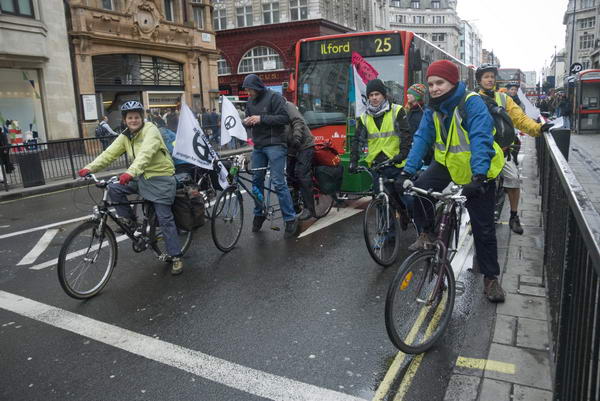
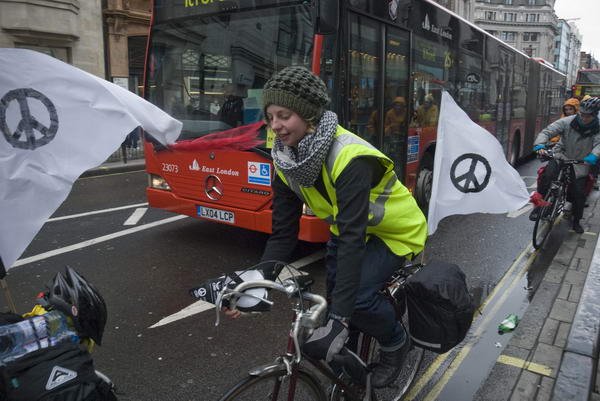
I was on foot and had just come out of Oxford Circus station when I saw the CND Bikes Not Bombs group of cyclists who had begun their ride in Trafalgar Square earlier and were on their way to ride to Aldermaston. Though when I took a few photographs as you can see from the bus they were cycling in exactly the wrong direction, east towards Ilford. Of course they weren’t lost, just trying to attract some attention to the protest, riding with a sound system along London’s busiest shopping street.

Bikes Not Bombs, Tibet, Deportation & Pillow Fight

I’d thought briefly about taking part myself in the event, as I’d used a bike to get around since I was six, having graduated then from a first a pedal car and then a tricycle. I did own a car briefly when I was around 21, but soon realised it was impractical in cities, expensive, polluting and environmentally unsound and never made the same mistake again.

But for the reasons I listed on My London Diary – sloth, other events, lousy weather and a dislike of early rising – I didn’t join this official ride, though I did cycle on my own from Reading to Aldermaston and back on the following Monday to join the protesters there.

Bikes Not Bombs: London – Aldermaston


Support Tibet March

Bikes Not Bombs, Tibet, Deportation & Pillow Fight

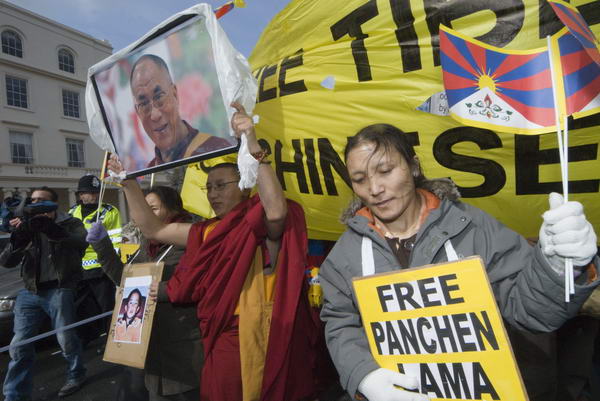
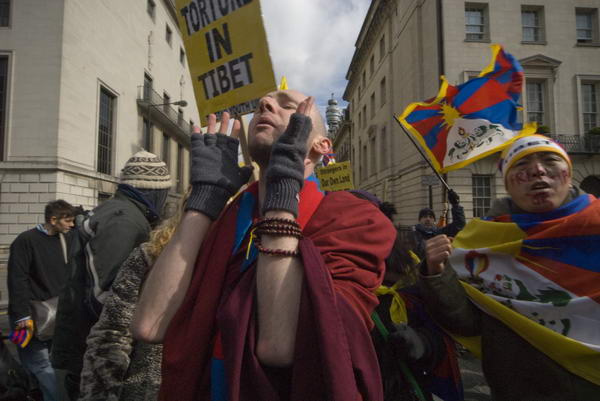
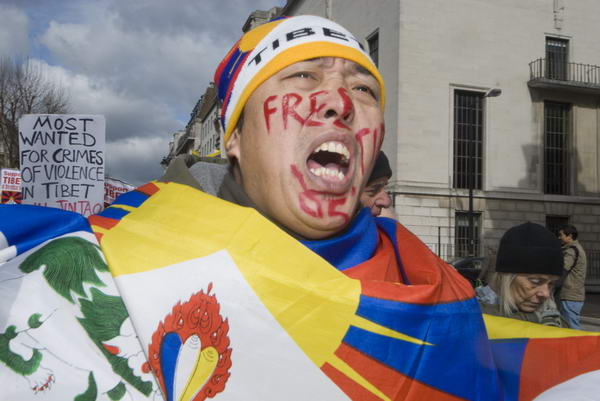
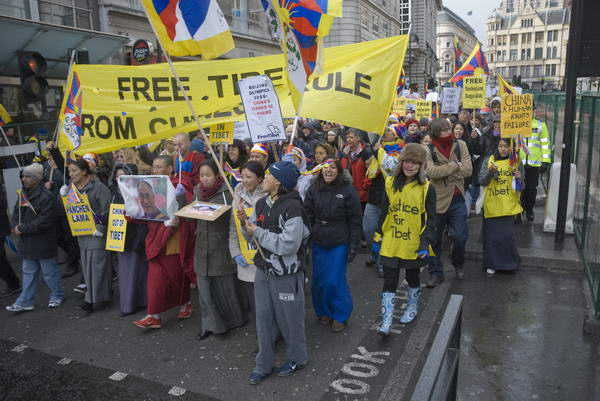
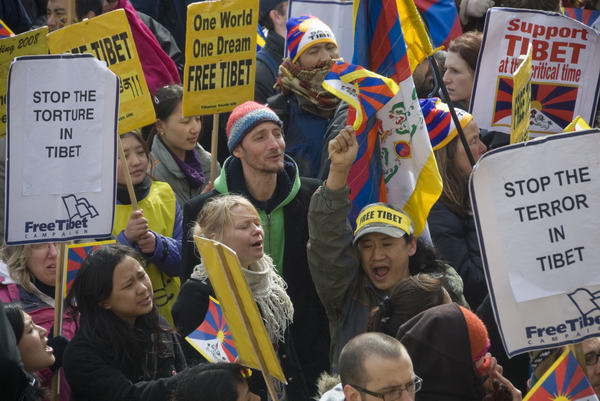
I was on my way to Park Crescent, a short walk north of the Chinese Embassy where Tibetans and supporters of freedom in Tibet were meeting to march through London on the 49th anniversary of the 1959 Tibetan uprising.

Bikes Not Bombs, Tibet, Deportation & Pillow Fight

Tibet came under effective control of the Chinese government in 1951, when an agreement had been come to the status of Tibet within the recently established People’s Republic of China. In 1949 Tibetan protesters feared the Chinese were about to arrest the 14th Dalai Lama. Protests were at first peaceful but were brutally repressed by the People’s Liberation Army and there was heavy fighting which also involved Tibetan separatists who had been carrying out guerrilla warfare against Chinese forces.

The Dalai Lama fled the country and set up an independent Tibetan government in India, where he still lives – and was awarded the Nobel Peace Prize in 1989. The Tibetan uprising had begun on 10th March 1959 and this day is celebrated each year as Tibetan Uprising Day and Women’s Uprising Day. Since 2009, following protests on 10th March 2008 in Lhasa, the Chinese-controlled authority in Tibet have celebrated the day they fully regained control, 28th March as the national anniversary of Serfs Emancipation Day.

The Tibetan Independence Movement who organise annual protests calling for freedom for Tibet was originally funded and trained by the CIA, but this was withdrawn following Richard Nixon’s visit to China in 1972. And the Dalai Lama who had originally backed it, and who appears as a large photograph carried reverently in the marches, also withdrew support for the independence movement in the 1970s.

It is clear from reports by Amnesty International and others is that there are considerable human rights abuses in Tibet. The 2021 US State Department report listing includes “unlawful or arbitrary killings, including extrajudicial killings by the government; torture and cases of cruel, inhuman, and degrading treatment or punishment by the government; arbitrary arrest or detention; political prisoners; politically motivated reprisals against individuals located outside the country; serious problems with the independence of the judiciary; arbitrary or unlawful interference with privacy; serious restrictions on free expression and media, including censorship; serious restrictions on internet freedom including site blocking; substantial interference with the freedom of peaceful assembly and freedom of association; severe restrictions on religious freedom….”

Support Tibet March


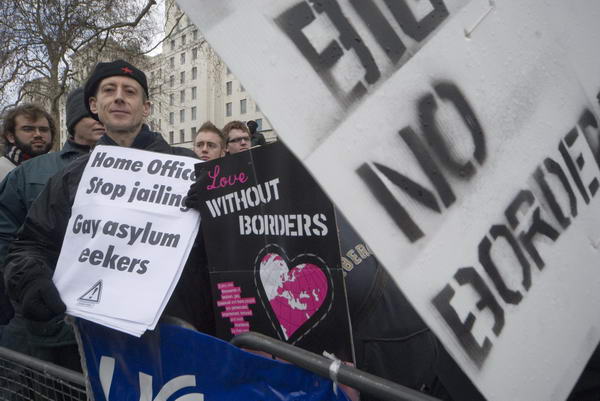
Defend Mehdi Kazemi – Downing St

But of course human rights are not always respected in this country, and we currently have a government which is proposing to withdraw from some international human rights conventions and proposing racist anti-immigrant policies which are deliberately in breach of them.

Back in 2008, the Labour government was also riding roughshod over the human rights of some immigrants, setting up a system of large-scale detention of asylum seekers and treating individuals unfairly in a bid to outflank the Tories on cutting immigration through blatantly right-wing policies.

Mehdi Kazemi had come to the UK to study after having been involved in a consensual homosexual relationship in Iran. After his boyfriend was executed for this he became a wanted man in Iran and he went to the Netherlands to apply for political asylum.

This was refused as he had come from the UK and so was not allowed under the 2003 Dublin Agreement. The Uk had refused him permission to stay in Britain and were proposing to deport him to Iran where he would be tried and executed.

His case was just one of many where the Home Office were failing to recognise the need for refugees to claim asylum on the grounds of persecution because of their sexual orientation, and for failing to have accurate and up-to-date information on homophobic persecution in countries to which LGBT asylum seekers might be deported.

Support for Kazemi at this protest and by a number of MPs, MEPs and human rights activists did eventually result in the Home Office agreeing to review his case and he was given leave to remain here in May 2008.

Defend Mehdi Kazemi


Flash Mob Global Pillow Fight – Leicester Square

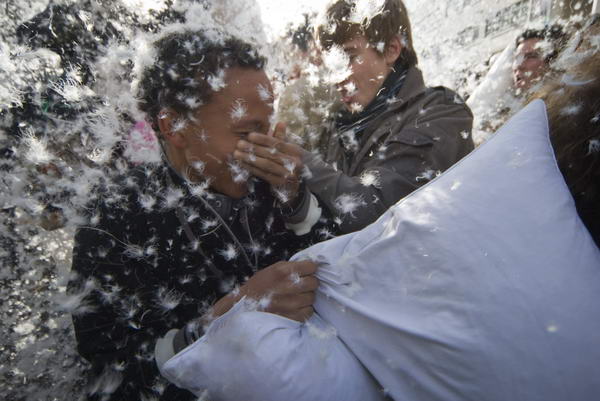
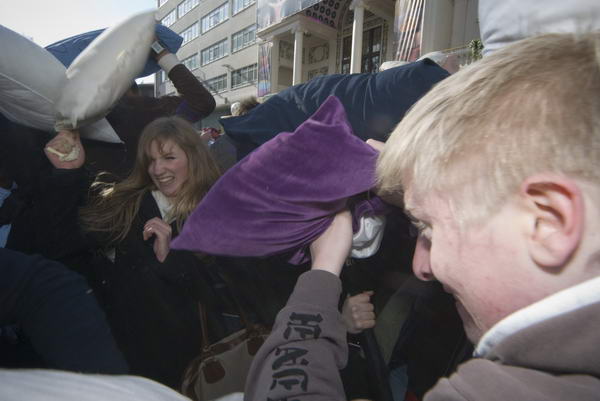
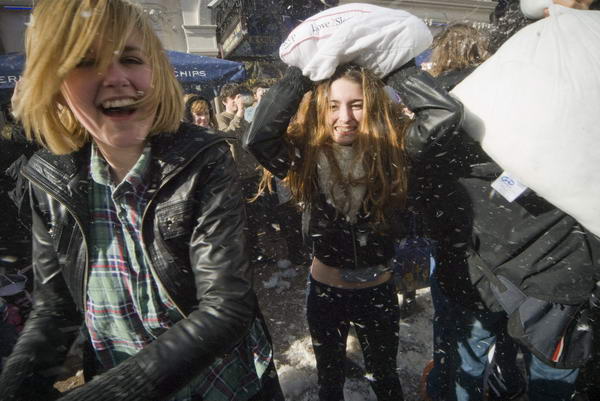
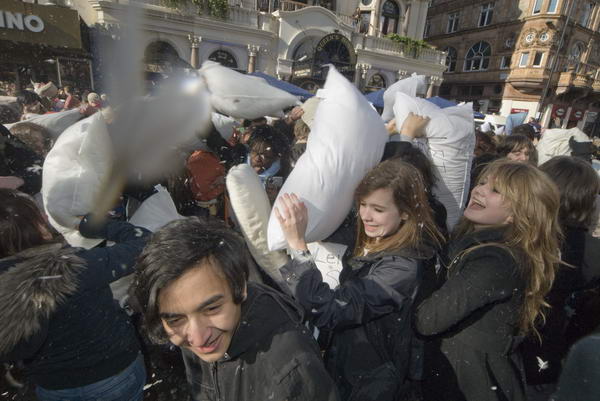
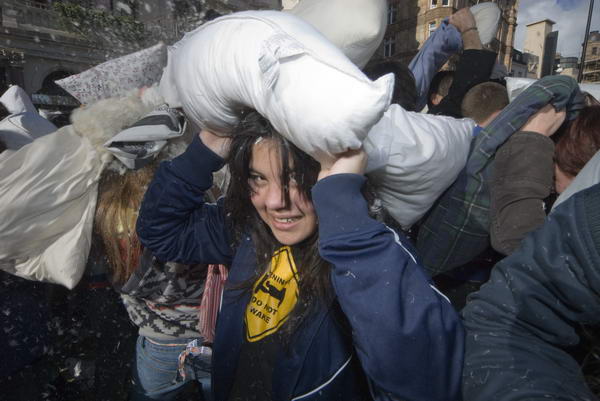
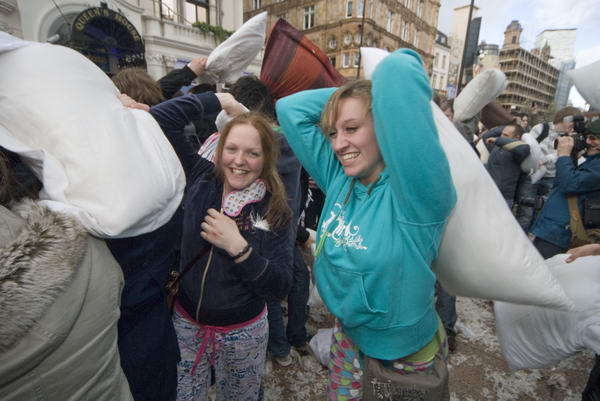
My day ended in very much lighter mood with a pillow fight in Leicester Square, one of many organised in capitals around the world due to kick off at 15.03PM.

I commented: “Of course its a trivial, silly event, but the idea and the kind of organisation involved I think represents something new and exciting, a kind of ‘Demo 2.0’ which we will surely see more of in the future.”

Perhaps this hasn’t had as much impact here in the UK as I had hoped, but I think may have been more important elsewhere in the world. To some extent it has been outgrown as Facebook, Twitter and other social media apps have become more important and even protests organised months and years in advance make use of them.

But it was interesting if rather tricky to photograph, and I got stuck in without a pillow and at some danger to my health, main not “from impact but suffocation when some pillows split open to fill the air with clouds of feathers and feather-dust. At times I wished I was wearing a mask to protect my lungs; keeping my mouth firmly closed and breathing though my nose only stopped the larger particles.

And I also found the the autofocus on my DSLR was too efficient at focusing on feathers in the air, and until I turned it off and went manual many of my pictures failed to be sharp for the people and pillows behind the screen of feathers.

Later as the pixel count on DSLRs increased and full-frame cameras appeared I found it very useful to work in many situations using just the central ‘DX’ half-frame area of the viewfinder – which would have been very useful to let me see the people and pillows coming for me, but on this occasion I found “chaos really rules taking pictures becomes a press and hope situation. I think some of them do give an idea of what it was like to be there.

Flash Mob Global Pillow Fight


Bow Creek, East India Dock Way, April 1989

I only had time for a short walk on Friday 7th April 1989, cycling home furiously from the college where I was teaching at noon as I had no afternoon classes, picking up my camera bag and rushing to catch a train into London.

Essex Wharf, Bow Creek, Pura Foods, Wharfside Rd, Canning Town, Newham, 1989 89-4b-31

Canning Town, where I was heading, was on the other side of London and not then the easiest of places to get to before the DLR and Jubilee lines were completed. My journey involved a slow transit around North London on the line from Richmond on the North London Line to the old Canning Town station immediately north of the A13 East India Dock Road, next to Stephenson Street.

Bow Creek, East India Dock Way

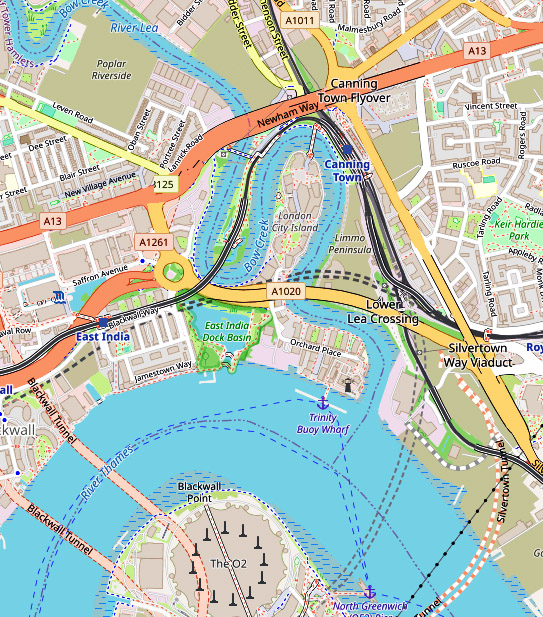
If you are not familiar with the geography of this area, a small clip from OpenStreetMap, slightly enhanced, will help. The East India Dock Road on this map is labelled Newham Way, which is here a flyover above the road itself. The former station I used was just to the north of this. Pura Foods was inside the loop which is now London City Island and there was no bridge across the river at the top of the bend.

Essex Wharf, Bow Creek, Pura Foods, Wharfside Rd, Canning Town, Newham, 1989 89-4b-34
Essex Wharf, Bow Creek, Flood Barrier, Pura Foods, Wharfside Rd, Canning Town, Newham, 1989 89-4b-34

A subway close to the station entrance took me to the other side of this busy road, where I had a view of Bow Creek, northern end of its loop dominated by Pura Foods, looking across waste ground where the DLR would shortly run. The flood barrier on Bow Creek became redundant when the Thames Barrier was built.

Essex Wharf, Bow Creek, Pura Foods, Wharfside Rd, Canning Town, Newham, 1989 89-4b-35

I moved slowly west along the East India Dock Road, stopping to take occasional images. There was a considerable amount of waste including old tires dumped here, but it was also a working industrial area, with workers cars parked alongside the river.

Essex Wharf, Bow Creek, Pura Foods, Wharfside Rd, Canning Town, Newham, 1989 89-4b-26
Essex Wharf, Bow Creek, Pura Foods, East India Dock Rd, Canning Town, Newham, 1989 89-4b-26

The main business on this side of the river appeared now to be the sawmill, though I also photographed the sign board for Haughton Engineering, but I’m unsure whether they were still in business.

Bow Creek, Pura Foods, Wharfside Rd, Canning Town, Newham, 1989  89-4b-11
Bow Creek, Pura Foods, Wharfside Rd, Canning Town, Newham, 1989 89-4b-11

It seemed to me an area which cried out for some panoramic images, and I took a set of three overlapping handheld pictures – the left of the set above – intending to combine them – which back then would have involved cutting and pasting the three together, but later I found I couldn’t quite get them to match up. Even when it became possible to do this digitally I found I hadn’t quite made these precisely enough.

Bow Creek, Pura Foods, Wharfside Rd, Canning Town, Newham, 1989 89-4b-12

It was experiences like this that led me a couple of years later to save up and buy a proper panoramic camera – I think the first one cost me around a month’s wages.

London Sawmills, Bow Creek, Wharfside Rd, Canning Town, Newham, 1989 89-4b-13

I continued walking west, the road on a low viaduct giving me a good view of the area to the south, coming to a timber yard where Bow Creek flowed into the area, going down south towards Orchard Place before turning north to go back towards the East India Dock Road where I had taken the earlier images.

London Sawmills, Bow Creek, East India Dock Rd, Canning Town, Newham, 1989 89-4b-15

I’ll post about the second and final part of this short walk later.


Druid Order – Spring Equinox at Tower Hill

Spring begins today, Monday, 20 March 2023, officially at 21:24 UTC, though our weather may not reflect this. Thanks to global warming the weather here is increasingly unpredictable and while most of us are protected from its extremes, plants and wild life seem to be getting more and more confused.

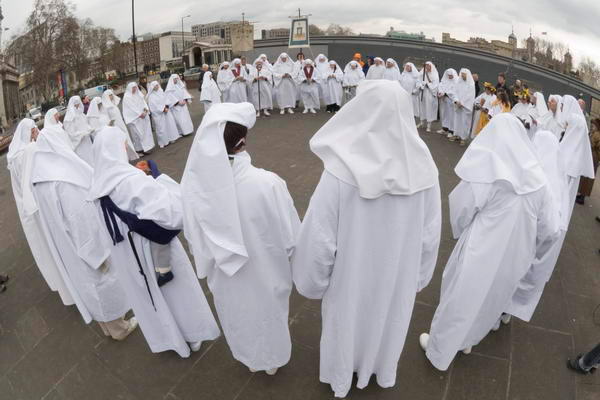
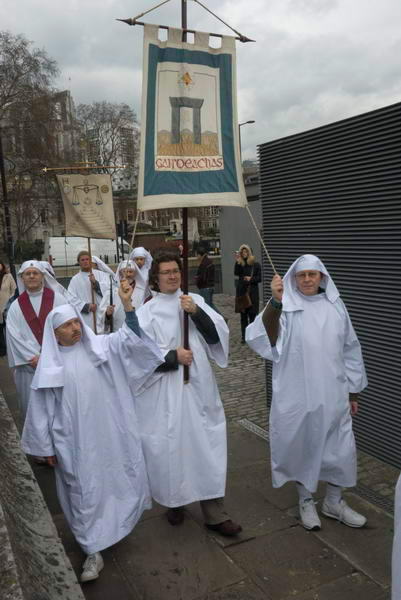
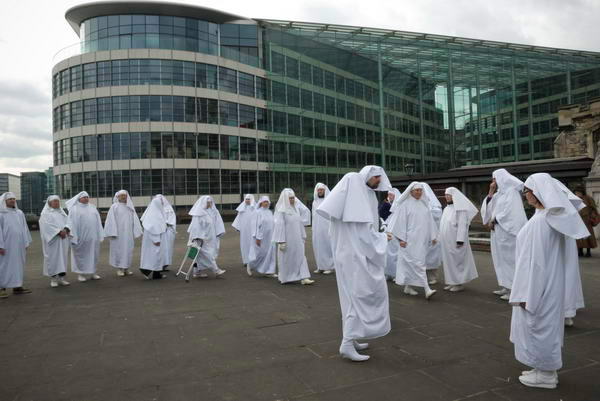
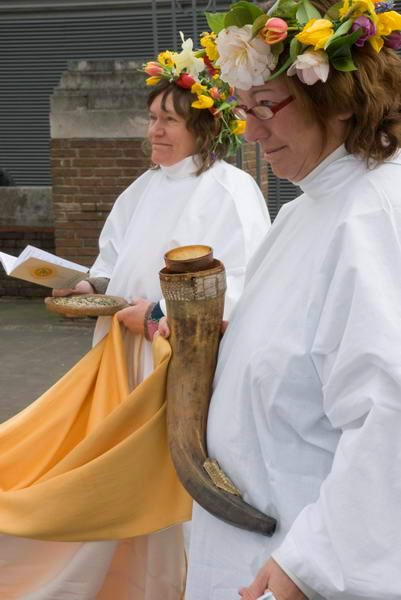
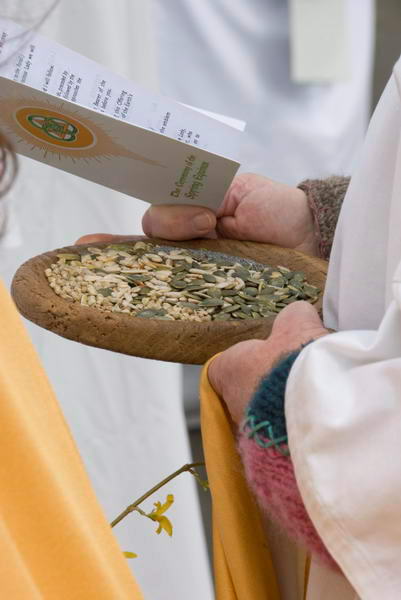
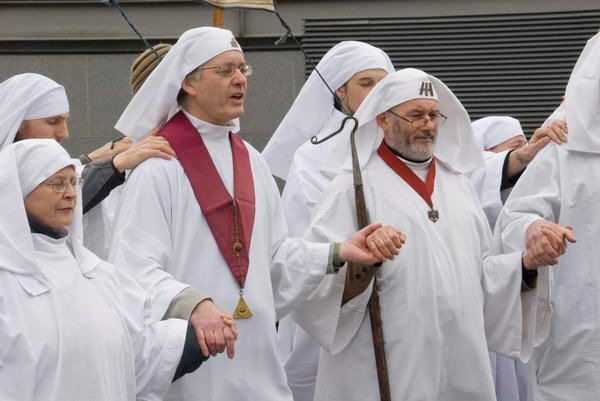
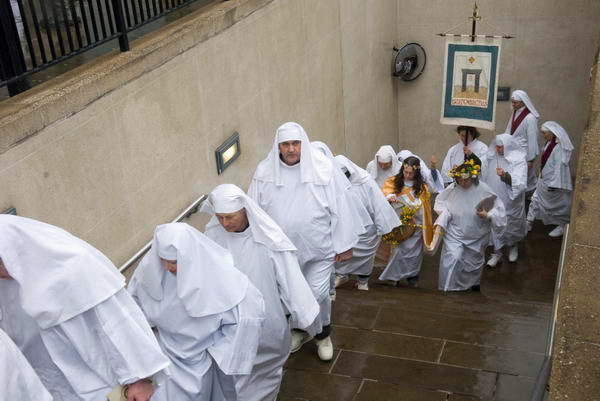
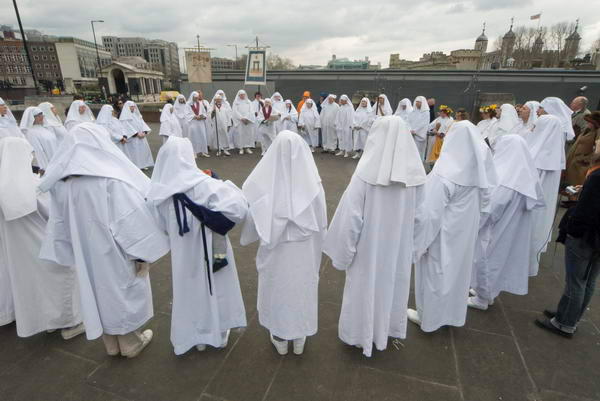
Druids celebrate the occasion at noon, with The Druid Order doing so on Tower Hill, processing there this year from The Ship in Hart Street in white robes with their banners and performing a ritual celebration.

Druid Order - Spring Equinox

The Ancient Druids were a Celtic upper class we know relatively about as they kept no written records of their religious activities but there are some descriptions by Caesar and other Roman and Greek authors of their importance and their pagan practices, although some aspects of these may have been based on hearsay and propaganda.

Druid Order - Spring Equinox

Druidry was apparently an entirely oral tradition, with druids spending years of study and learning texts and rituals by heart; some of these may have been passed down through the years in folklore, particularly in Ireland, but much or all of this may well be later romantic invention.

Druid Order - Spring Equinox

According to Wikipedia Caesar “wrote that they were one of the two most important social groups in the region (alongside the equites, or nobles) and were responsible for organizing worship and sacrifices, divination, and judicial procedure in Gallic, British, and Irish societies.”

Most of the ancient sources state that one aspect of their religious practices was human sacrifice, possibly of criminals “but when criminals were in short supply, innocents would be acceptable.”

One form that is said to have been used for this sacrifice was the “wicker man” where the victim was encased in a large wooden human effigy and was then burnt alive. But they are also said to have practised divination by stabbing a victim in the chest and observing the flow of blood and the convulsive movement of the limbs as the victim died.

Modern-day druid ceremonies are considerably tamer, with druids appearing as peaceful lovers of nature, which of course had much more obvious importance in ancient times – though we are now realising fairly desperately that our modern neglect or indifference to it is having disastrous consequences on biodiversity and future food supplies.

Some trees, in particular oak and hawthorn seem to have played a large role in the worship of ancient druids, and there are many groves of trees around the country believed by some to (sorry) have druidic roots. Certainly some of these ancient groves, whatever their origins seem to have a spiritual nature.

The Romans also wrote about the druids as philosophers, and Wikipedia has an quote from Caesar on this where he writes that they believed the human soul was indestructible, passing at death from one body to another. He also commented on their interest in astronomical matters – perhaps most obviously expressed at Stonehenge and other ancient monuments, as well as “on the extent and geographical distribution of the earth, on the different branches of natural philosophy, and on many problems connected with religion.

I’ve photographed the Druid Order ceremonies in several years on both the Spring Equinox at Tower Hill and the Autumn Equinox on Primrose Hill, a more dramatic setting. The pictures here come from 2008, but I’ve taken very similar ones in other years. Although inspired by earlier activities and mentioning some of those involved during their rituals, the actual form of their celebration is not ancient, but a little over a hundred years old.

More pictures from 2008: Druid Order – Spring Equinox.


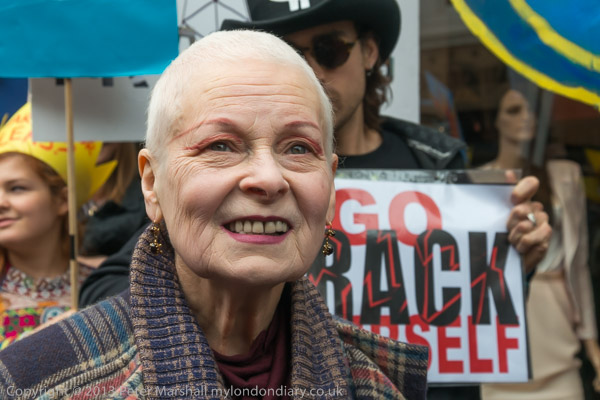
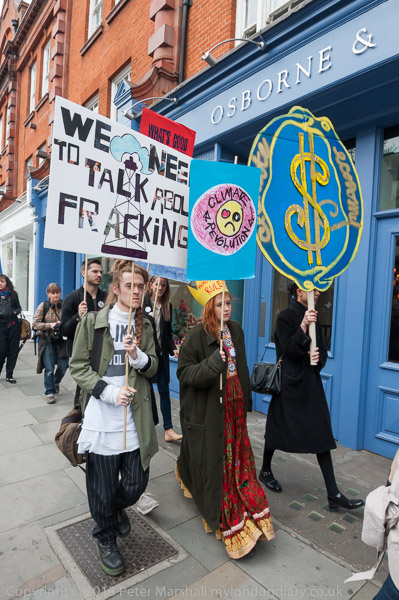
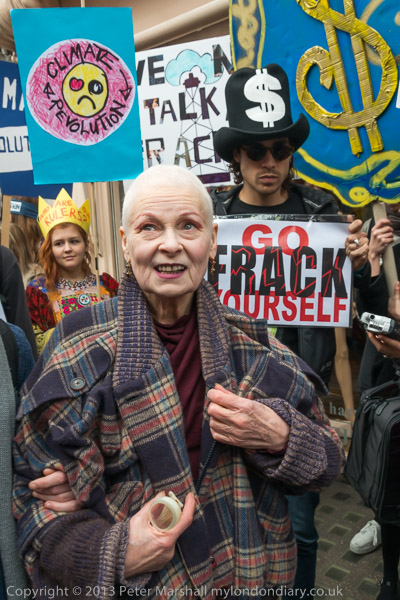
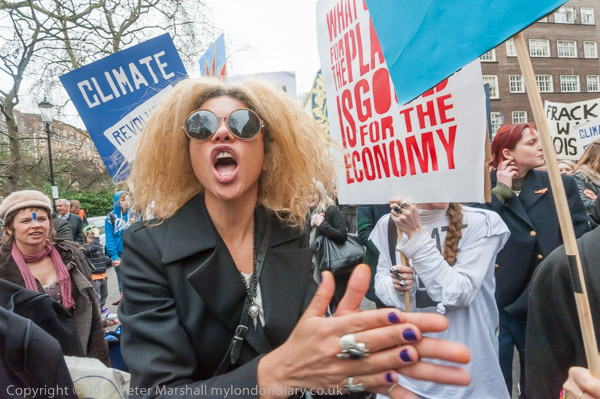
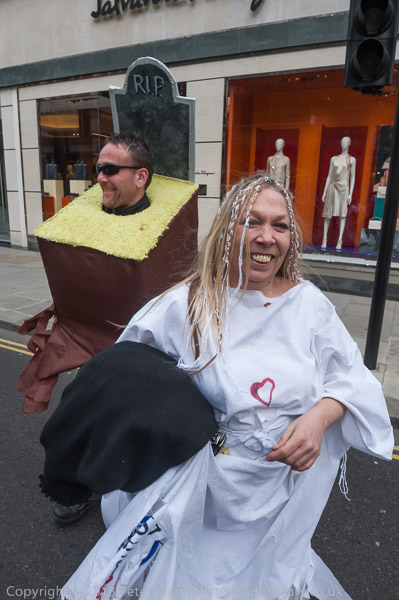
Climate Revolution Fracked Future Carnival 2014

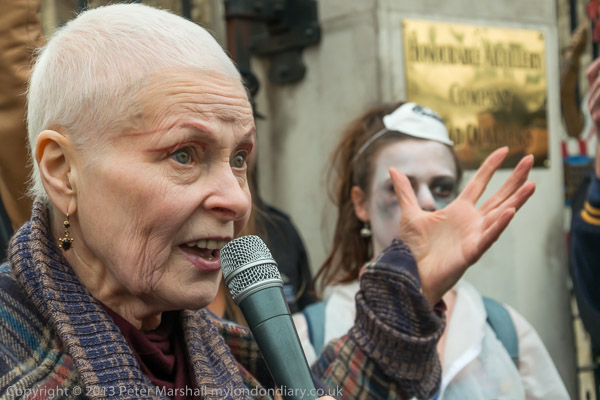
The Climate Revolution is an organisation set up by the late fashion designer Vivienne Westwood (1941-2022) at the London Paralympics closing ceremony in 2012 and she spent the last years of her life campaigning to halt climate change, stop war and defend human rights and protesting against capitalism. Her work is now continued by the not-for-profit organisation she set up, the Vivienne Foundation.

Climate Revolution Fracked Future Carnival

I’m not a follower of fashion, as those who know me will have noticed. But Westwood’s activism reached a rather different and wider audience than the more usual campaigning groups, gaining publicity across the whole world of fashion and at times attracting the kind of mass media attention that follows celebrities, rather than issues, now attract.

Climate Revolution Fracked Future Carnival

Protests taking place in the UK seldom seem to be news – last Wednesday striking workers brought much of London to a standstill and possibly 100,000 people marched through the streets and protested in various places but when I came home and searched on the BBC news site in the early evening there was not a mention of it, though there may have been a little coverage later.

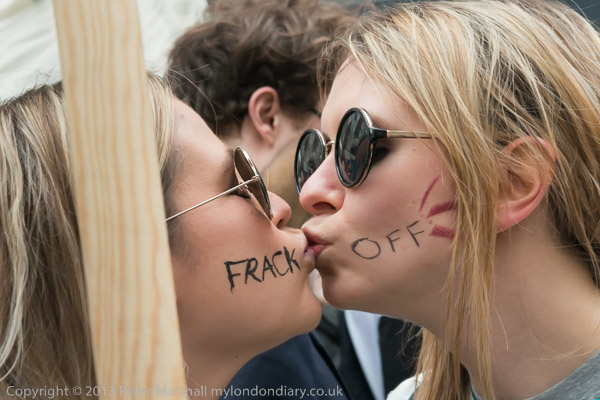
Climate Revolution Fracked Future Carnival

Others did rather better, but it needs something else for a protest to be news for our media. It can be that it happens abroad and particularly if it is against some regime unpopular with our (and the US) government. But it can also be if it is violent or particularly quirky or involves a major celebrity such as Dame Vivienne Westwood – and those protests she organised and her designs were always rather quirky too.

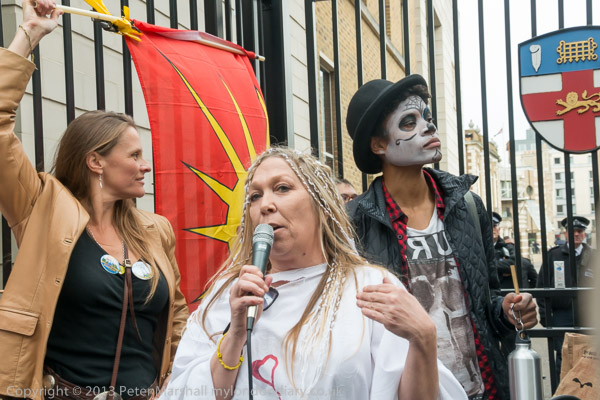
Although Westwood very much did her own thing, she was also great at cooperating with other groups working in the same area – such as the anti-fracking ‘Nanas from Nanashire’ who came down to London for this protest.

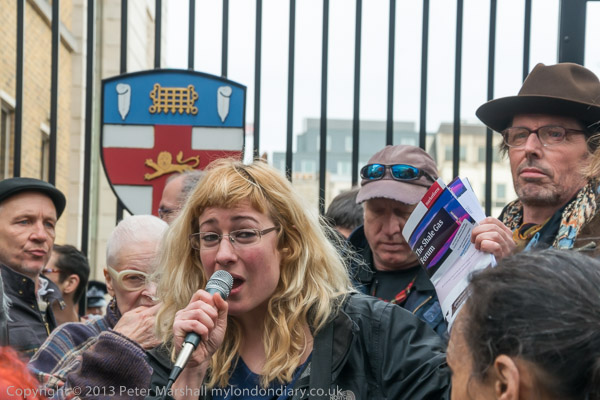
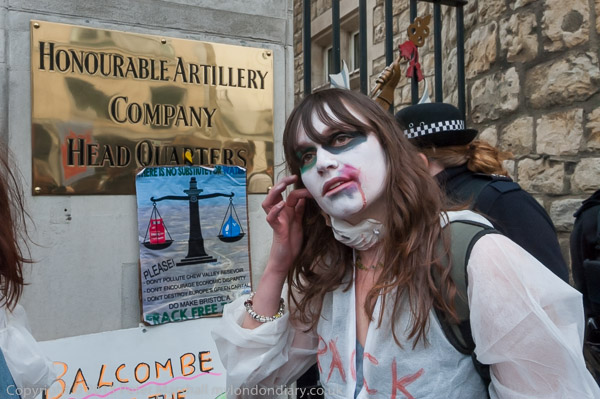
The protest was arranged to take place outside the Shale Gas Forum, where the CEOs of IGas, Cuadrilla and various government officials were plotting new ways to bring fracking to the UK, and to change our to allow this to happen. In particular they want to stop people being able to prevent dangerous mining beneath their properties which could cause dangerous and damaging subsidence. Their proposals would allowed companies to proceed without proper concern for safety and environmental consequences and give them some indemnity against damages and government would promise to pay a high price for the gas.
The Forum had been scheduled to take place at an expensive hotel in Belgravia, but after arrangements had been made for protest carnival to take place outside, it was moved to a ‘secret’ location elsewhere in London. Climate Revolution obviously had friends in high places who leaked the details to them.

It was Budget Day, but rather than going to take pictures around Westminster I decided it was more important to cover the protest against fracking. I met Westwood and her supporters, mainly fashion students, outside the Royal College of Arts Battersea location just south of Battersea Bridge and marched with them to the Jumeirah Carlton Tower hotel in Cadogan Place which had been the original venue for the frackers.
We knew the event had been relocated and their was some confusion at the end of the march as to whether it should entrain immediately at Knightsbridge station or go to the hotel. Eventually this was resolved and there was a rally outside the hotel with speakers including Vivienne Westwood and Vanessa Vine of BIFF (Britain & Ireland Frack Free).
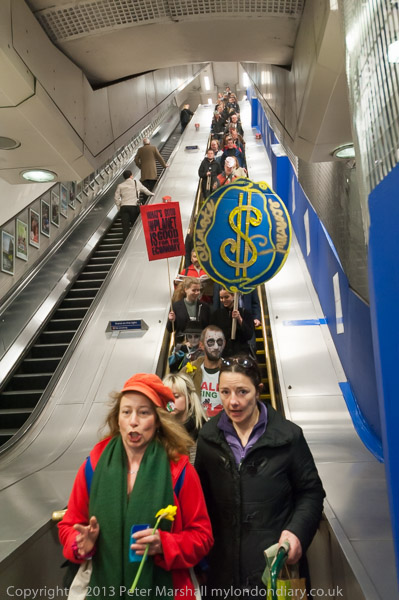
The new location was still a secret as we followed the Rhythms of Resistance samba band to Knightsbridge station, where more protesters were waiting and took the underground to Old Street.

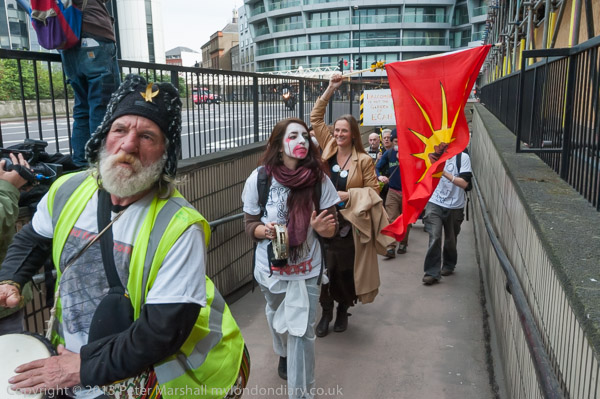
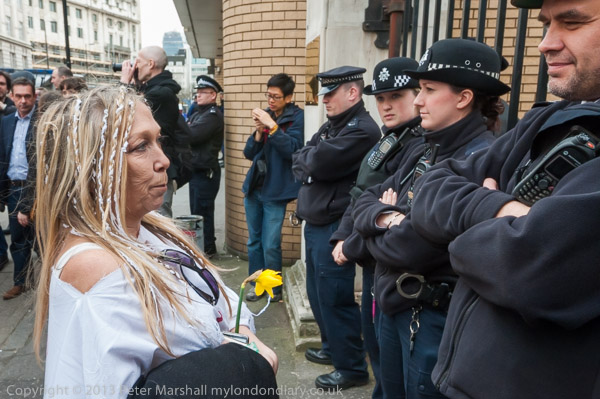
People were slow to arrive at Old Street, with some stopping off to buy coffee or sandwiches and others getting lost on the way, but eventually we were on the march again, on our way to the rear gates of the Territorial Army Centre on Bunhill Row, guarded by a few police.

Outside the event, people danced to Rhythms of Resistance, and there were speeches by Vivienne Westwood, Tina Louise from Residents Action on Fylde Fracking, Vanessa Vine, Frack Free Bristol, and others, some of whom had also spoken at Knightsbridge.

Some of us then walked through Bunhill Fields cemetery to City Road to protest on the other side of the military centre, and later most of the other protesters followed for a further rally at the main gates.
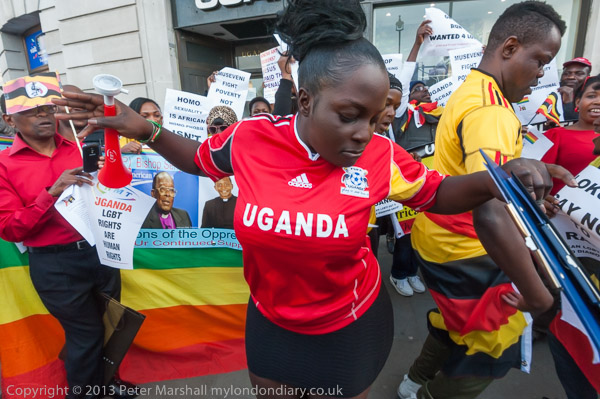
The protest was beginning to wind down and people were leaving and I left too, going to cover a protest by The African LGBTI Out & Proud Diamond Group and Peter Tatchell Foundation held a noisy protest at Uganda House calling for the repeal of Uganda’s draconian anti-gay laws.

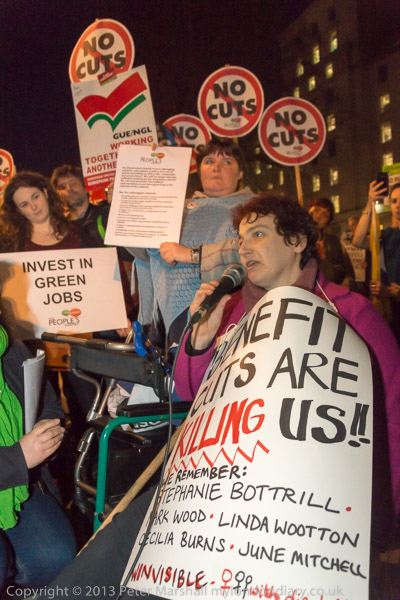
And from there I went on to Downing St, where the People’s Assembly were holding their Budget Day Protest before finally I could go home.

More on all these stories on My London Diary:

Climate Revolution March to Fracked Future Carnival
Fracked Future Carnival in Knightsbridge
Fracked Future Carnival at Shale Gas Forum

Protest over Uganda Gay Hate Laws
People’s Assembly Budget Day Protest


UN Anti-Racism Day 2017 & 2023

UN Anti-Racism Day 2017 & 2023

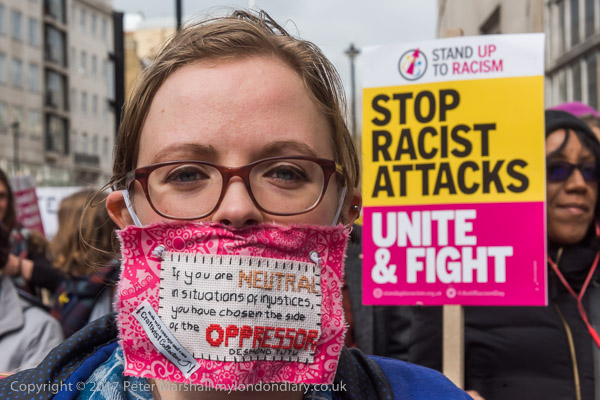
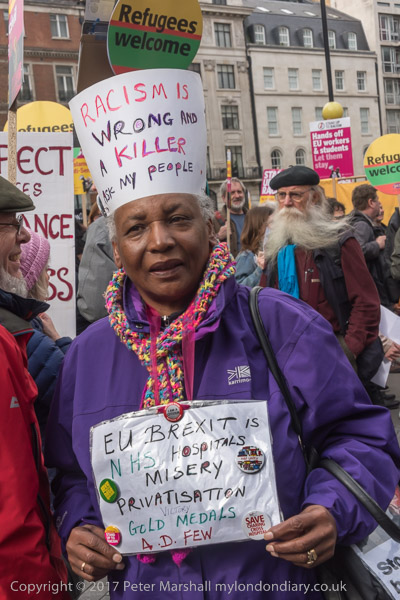
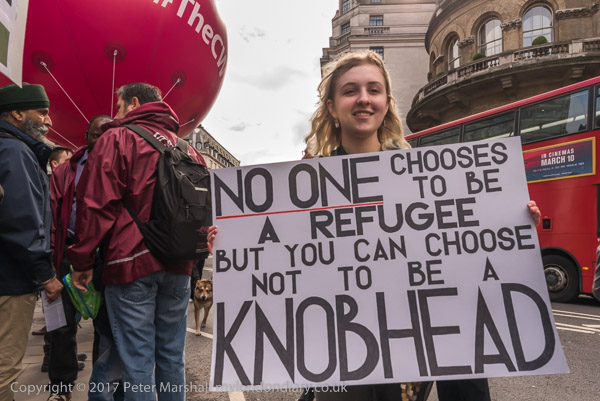
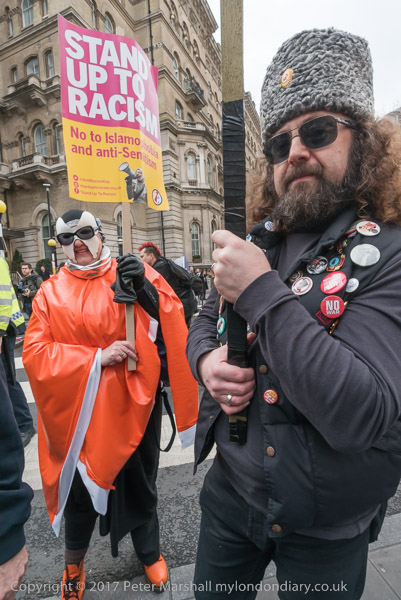
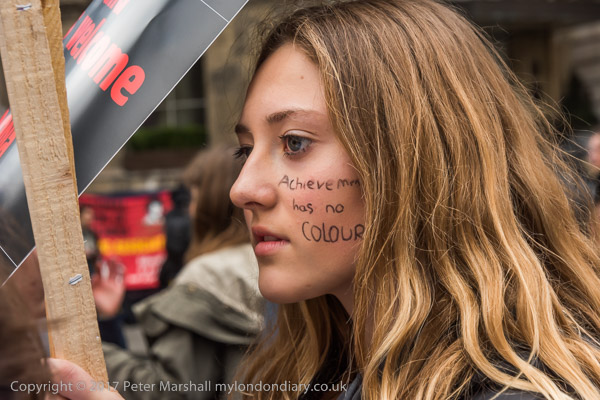
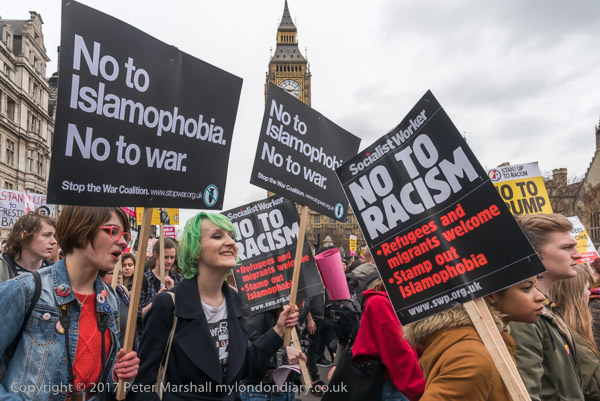
Today, 18th march is the UN Anti-Racism Day, and in 2017 it was also a Saturday, and tens of thousands marched through London, starting as they will today outside the BBC and ending with a large rally in Westminster.

UN Anti-Racism Day 2017 & 2023

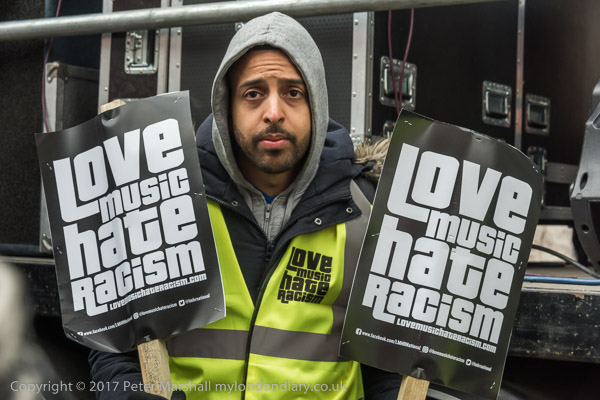
Today’s march, as in 2017, is organised by Stand Up to Racism, Unite Against Fascism and Love Music, Hate Racism and the TUC and supported by many other groups, including football fans from around the country who will be wearing team colours.

UN Anti-Racism Day 2017 & 2023

This years march is perhaps even more important, with the UK Government pursuing clearly racist policies against immigrants in last year’s Nationality and Borders Act, its attempt to deport refugees to Rwanda and Suella Braverman’s recently announced Illegal Migration Bill.

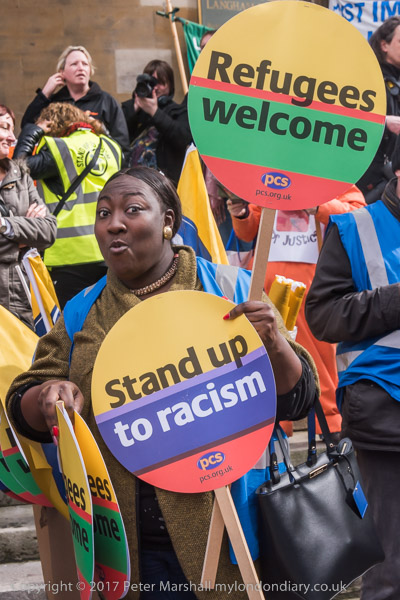
Phyll Opoku of PCS ‘Stand Up to Racism’

Football fans have been energised by the BBC’s reaction to Gary Lineker’s tweet. He was clearly correct in observing the hostile anti-refugees language used by the government to language used in Germany in the 1930s. They say the government are trying to stir up division and racism to deflect attention from their multiple crises and turn refugees into scapegoats.

Unfortunately it isn’t just the government, but also the official opposition who continue to up the ante over immigration, refusing to stand up to the government with any real attempt to improve our treatment of refugees and asylum seekers. Real opposition to racism has been left to a few increasingly isolated figures on the left of the party – including many of those who have been ejected for supposed anti-semitism, increasingly being used to expel Jewish members who support the Palestinian people. And of course left to footballers or former footballers.

Even Theresa May, who the 2017 march was strongly opposed to for promoting racist measures against immigrants and in particular Muslims in concert with Donald Trump has found Braverman’s latest proposals which will break international law on the human rights of migrants a step too far.

The 2023 march organisers say:

In Britain we face a crisis-ridden government attempting to use racism to make ordinary people pay for the cost of living crisis. The ‘Rwanda plan’, the Nationality and Borders Act, racist deportations and the hostile environment for refugees and migrants are all about divide and rule.

The government deny the reality of institutional racism – despite massively disproportionate deaths in black communities during the pandemic – and the reality of deaths in police custody, racist stop and search and discrimination across society.

Internationally we are seeing the growth of the racist and fascist right and an alarming rise in Islamophobia, antisemitism, Sinophobia, anti East/South East Asian racism and attacks on Gypsy, Roma and Traveller communities.

Despite a rail strike this Saturday I hope to be there later today, again taking photographs and marching with many thousands of others.

Much more from the 2017 march and rally on My London Diary: Thousands March Against Racism.


St Patrick’s Day Celebrations in London

St Patrick's Day Celebrations in London

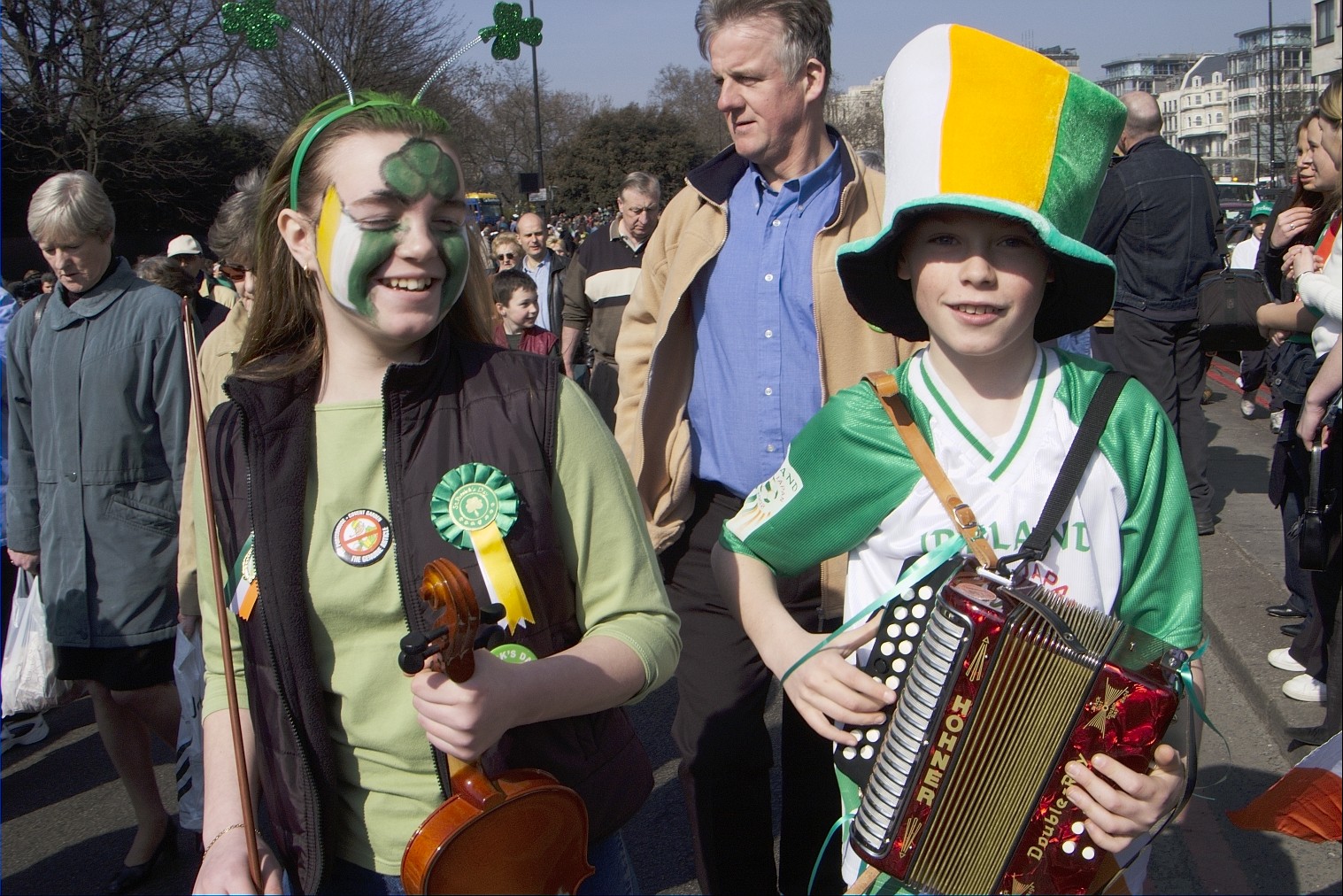
It’s now 21 years since St Patrick’s Day was first celebrated on a large scale in London, thanks to then London Mayor Ken Livingstone, who had long been a supporter of Irish republicanism, and MP for Brent East, from 1987 to 2001. His constituency included areas around Kilburn – Brent is the London Borough with the largest Irish population.

St Patrick's Day Celebrations in London

Until forced to drop its policies because of Tory cuts, Brent had a great record of supporting celebrations of a number of festivals for its different communities, and and last year I posted here about the various years I photographed the Brent St Patrick’s Day Parade.

St Patrick's Day Celebrations in London

In 2002, London had its first St Patrick’s Day Parade, from the Catholic Westminster Cathedral to Trafalgar Square, where there were a range of Irish performances and a great deal of singing and drinking to celebrate the event.

Unlike the Brent celebrations which were on the day itself, the official London celebrations which have continued annually since then happen on the day itself. In 2002 St Patrick’s Day was on a Sunday (and in 2013 and 2019) and the parade took place on the day, but in other years it has been celebrated on the nearest Sunday.

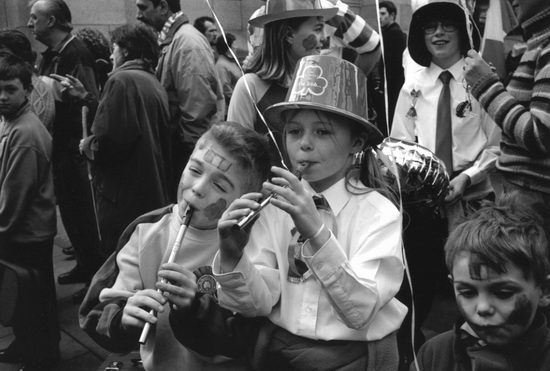
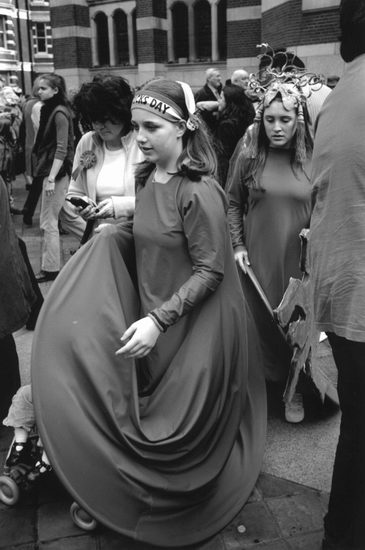
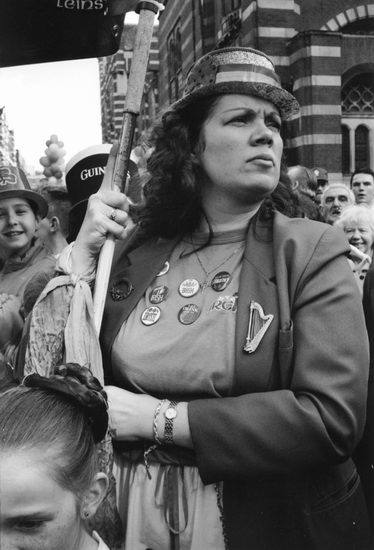
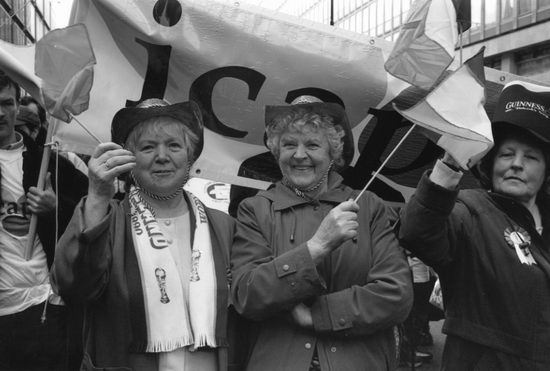
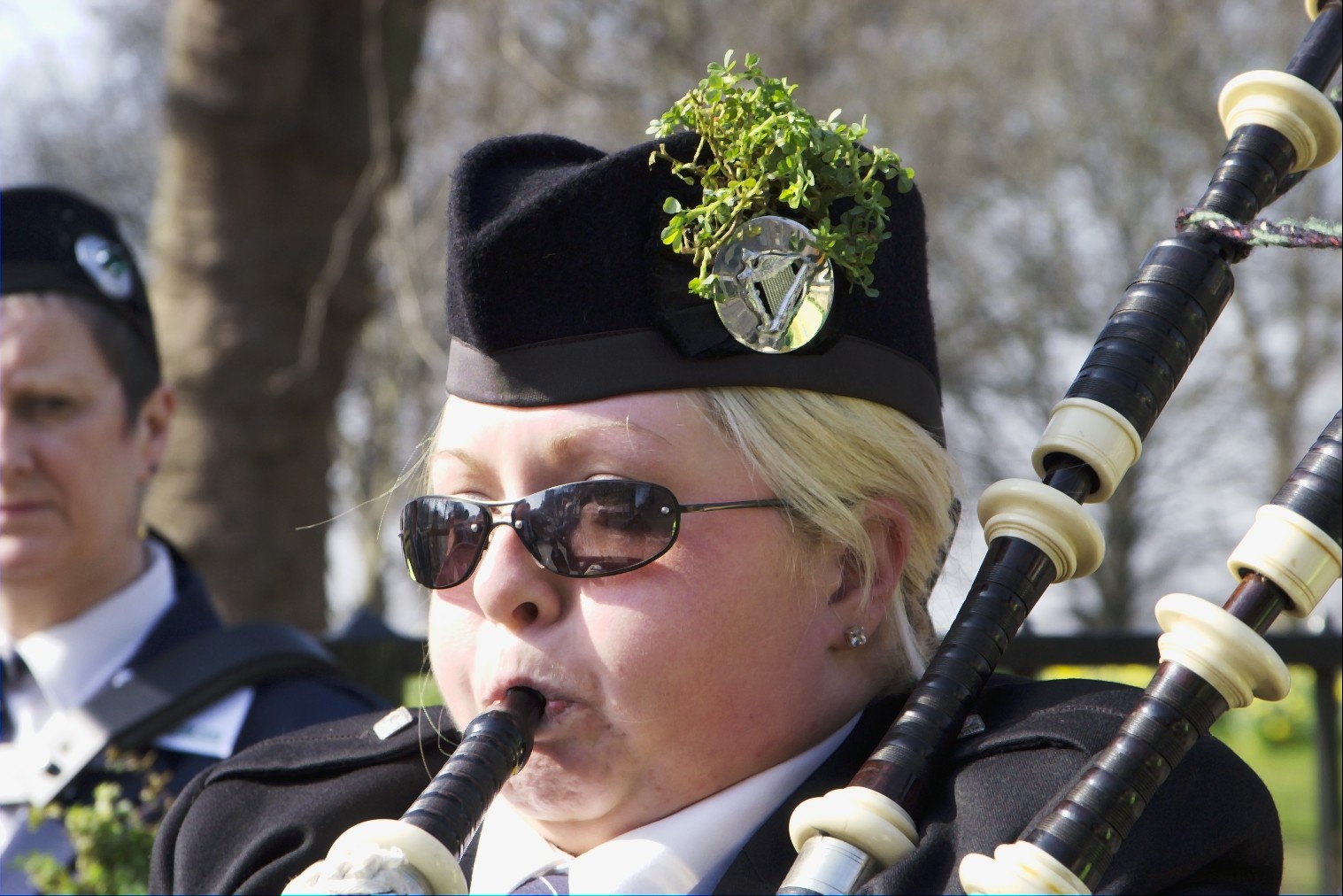
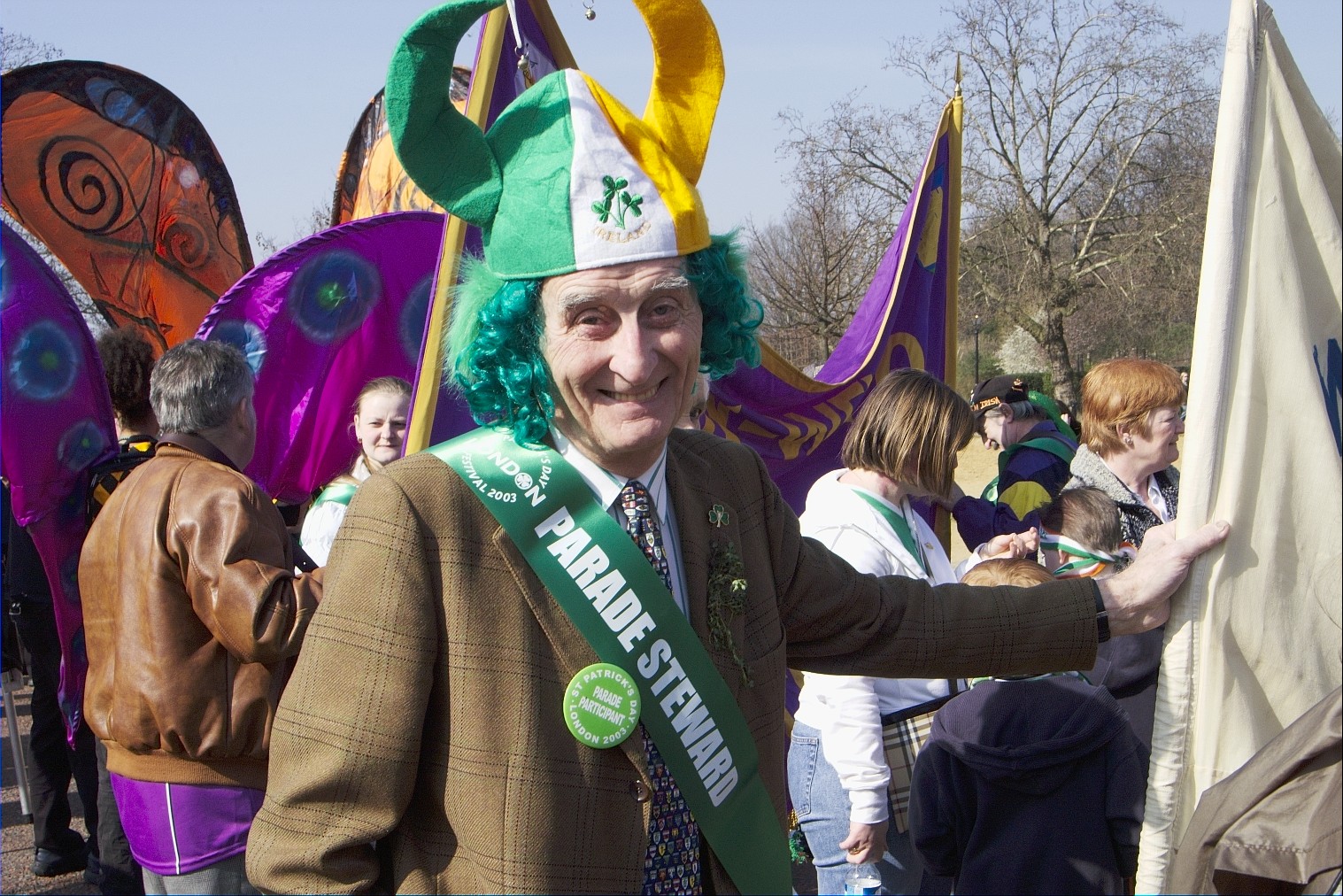
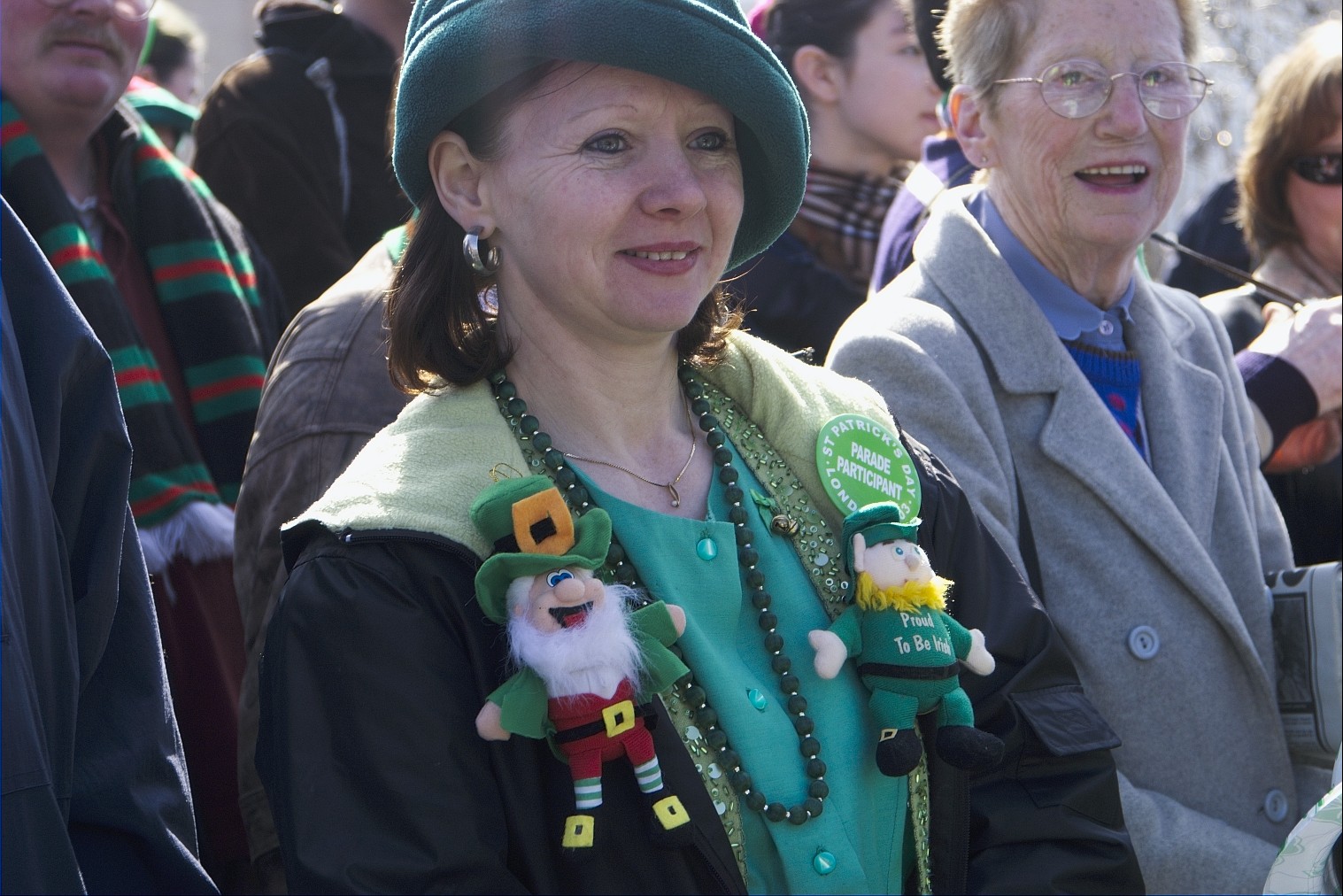
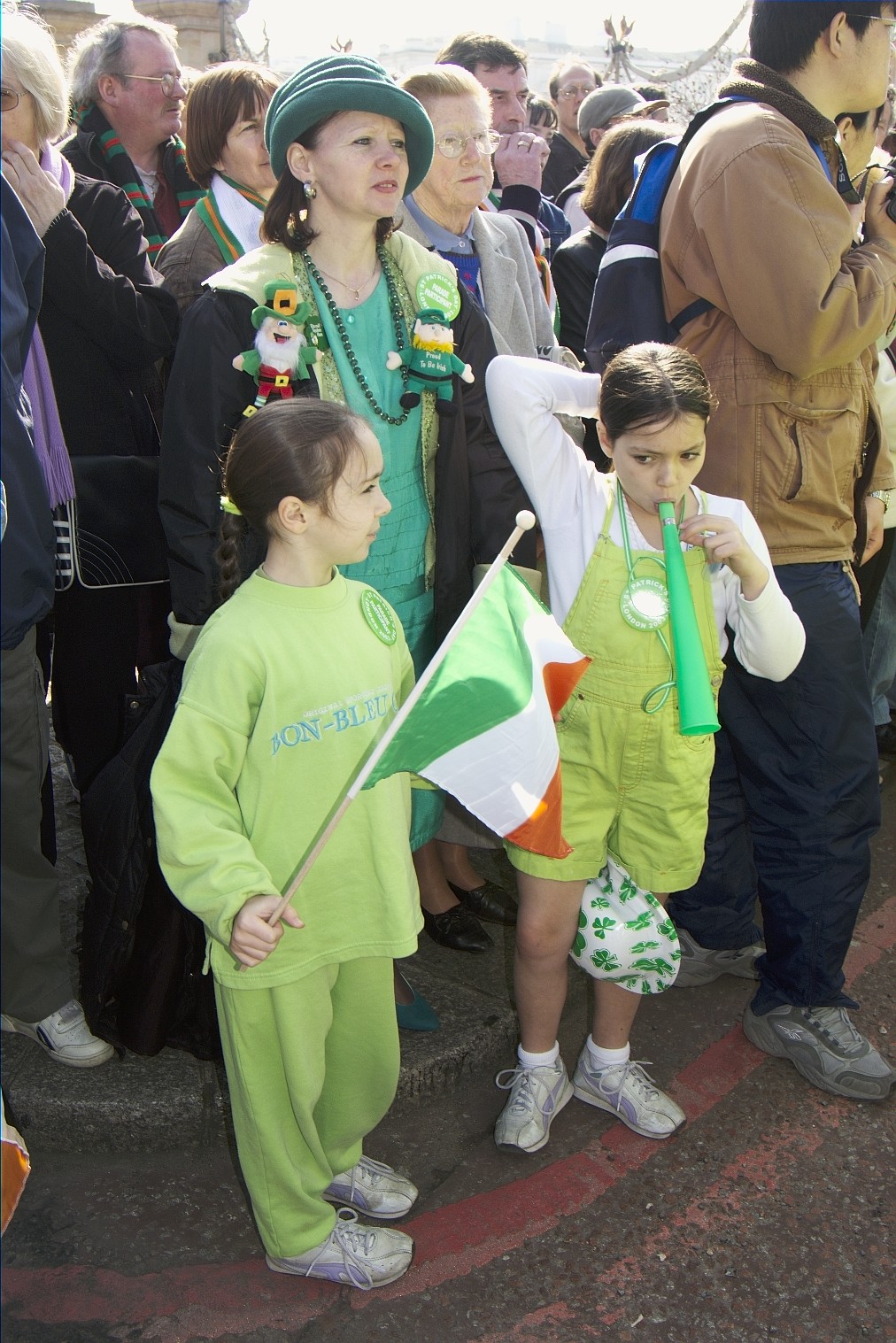
I did go back in 2003 to celebrate St Patrick’s Day, when the parade began from Hyde Park, but found it rather less interesting. Somehow I never got around to uploading any of the pictures I took to My London Diary, so these colour images are on-line for the first time.

Irish Piper, 2003
Parade Steward, 2003

These pictures were taken on my first digital camera capable of professional results, a Nikon D100, which was capable of making high quality digital images, although its 6.1Mp now seems meagre. Its small, dim viewfinder was also rather primitive and at the time I only owned a single lens to fit it, a 24-80mm zoom, which on its DX sensor gave the equivalent of a 36-120mm on 35mm film.

I was also working with two film cameras, one with black and white film and the other with colour negative, both I think using wider lenses. The pictures might be better, but I’ve only ever got around to printing one of them. It was coverage of events like these that really made me appreciate the huge advantage of digital, that the results were immediately available. I’ve still not digitised any of the colour pictures from 2002 or 2003.

It was this that really made possible ‘My London Diary’, though I had begun it a little earlier – and there is some earlier colour work taken with consumer-level digital cameras on it among the mainly black and white images which then were scanned from the 8×10″ RC prints I made to give to a picture library.


My London Diary has taken something of a rest recently, though I may go back to it at some later date. The reasons for this are mixed. The pandemic meant there was nothing much to add for rather a long time, just a lot of pictures taken on local walks and bike rides. the software I used to write it doesn’t work on my more recent computer, and I’ve almost reached the limit of the number of files that my web server allows. If I’d kept uploading files I could not have continued with >Re:PHOTO.

Lung Theatre ‘E15’ Battersea March 2017

Lung Theatre 'E15' Battersea March

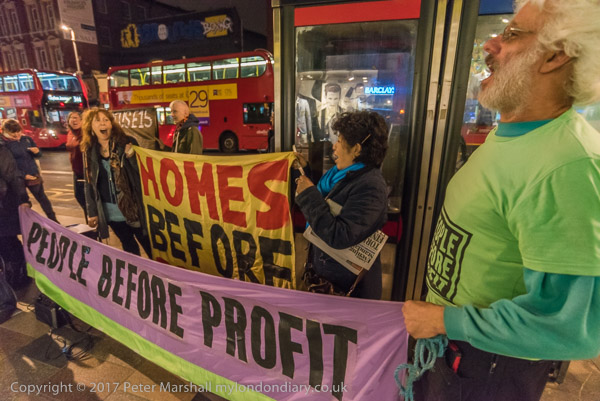
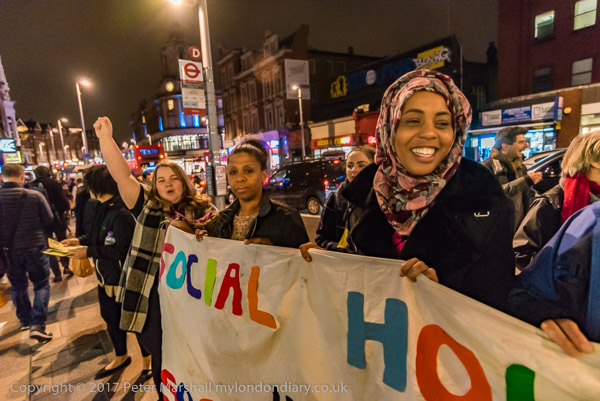
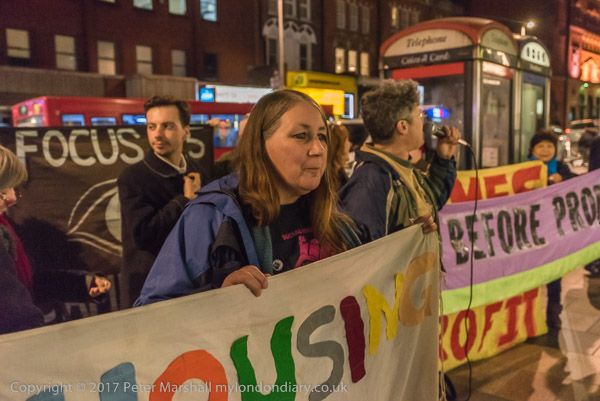
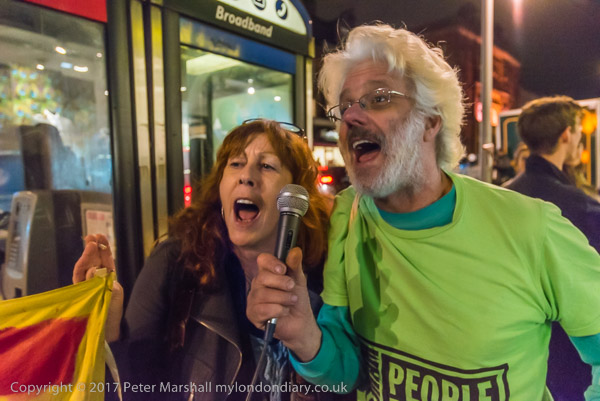
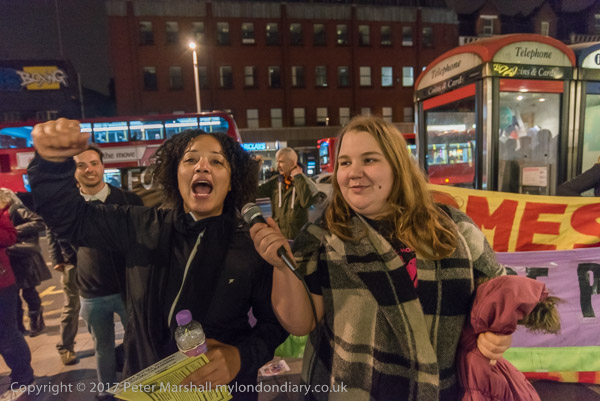
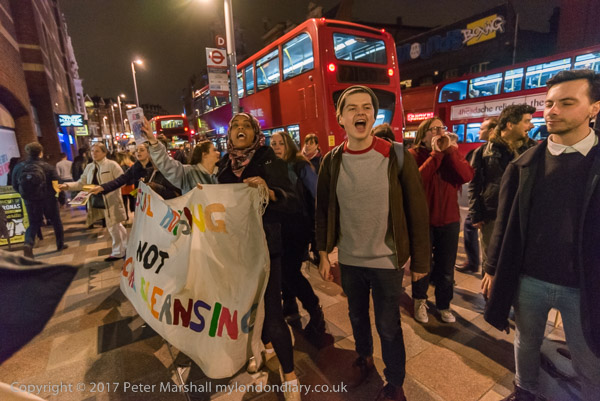
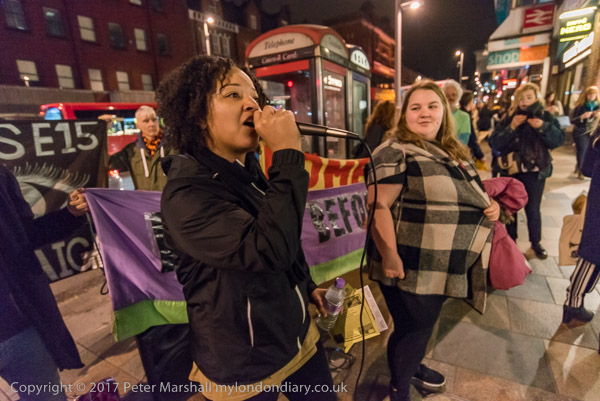
Lung Theatre ‘E15’ Battersea March: Thursday 16th March 2017 was a rather unusual day for me in that rather than photographing a protest I was being part of a theatrical performance, though not in a theatre but on the busy evening rush hour streets of Battersea.

Lung Theatre 'E15' Battersea March

But like many of the others there, I was playing myself as a photographer of protests, and taking pictures as I would if this had been a real protest.

Lung Theatre 'E15' Battersea March

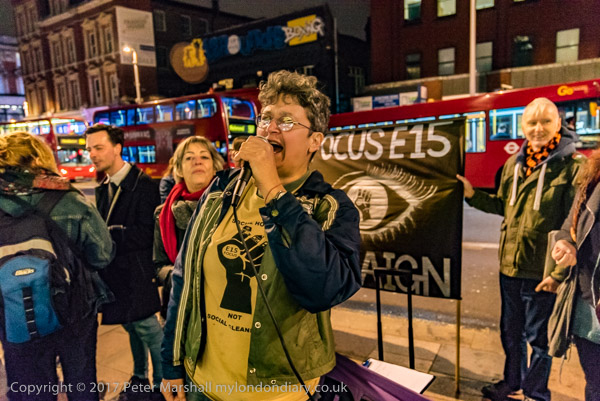
This performance was to announce that Lung Theatre, a small theatrical group, were bringing their Edinburgh festival award-winning performance ‘E15’ to Battersea Arts Centre, and they were doing so with the help of many of the housing protesters, particularly from the Stratford-based Focus E15 campaign, on which their ‘verbatim theatre’ performance was based.

Lung Theatre 'E15' Battersea March

An interesting article, Documentary & Verbatim Theatre by Tom Cantrell of the University of York gives a clear definition, “Verbatim theatre is a form of documentary theatre which is based on the spoken words of real people. Strictly, verbatim theatre-makers use real people’s words exclusively, and take this testimony from recorded interviews.”

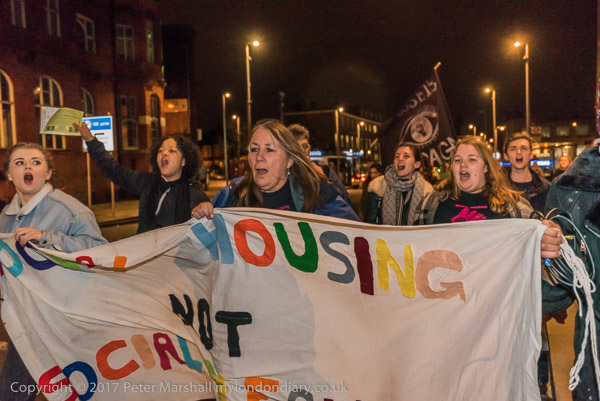
The “protest” began in the rather dim light of the street outside Clapham Junction’s busiest entrance, and it was hard for me to distinguish the actors from the housing protesters by their speech and actions, though rather easier in that they were the only faces I didn’t recognise, having met and photographed the activists so often at previous events. But the group certainly put on a convincing performance as they handed out leaflets and fliers, both about the Focus E15 campaign and their forthcoming performances at the Battersea Arts Centre.

Focus E15 began when a group of young mothers housed in the Focus E15 hostel in Stratford were told that Newham council were going to evict them and they would be dispersed not just in the borough but to rented accommodation across the country in far away places where they had no friends, no family and away from any jobs, schools, familiar services and support.

Newham had adopted a policy which amounted to social cleansing, removing people from its area who, as the then Mayor put it, could not afford to live there. Rather than accept this they came together to fight the council, and inspired others across the country to fight for ‘Social Housing NOT Social Cleansing’.

And Focus E15 won their fight but didn’t stop there, continuing the fight for others in the area faced with homelessness and eviction, demanding the council bring empty council housing back into use in a campaign for ‘Housing For All’. They are still out on Stratford Broadway with a street stall every Saturday, still forcing the council to face up to its responsibilities despite considerable harassment (and more recently a change of Mayor.)

As well as some of the leading activists from Focus E15 at the eevent were also other campaigners including some from Sweets Way in north London and Lewisham People Before Profit and others fighting the demolition of council housing by London’s mainly Labour controlled councils, increasingly in league with estate agents and property developers scrambling for excessive profits from sky-high London market prices. And they had brought some of their banners with them for the event.

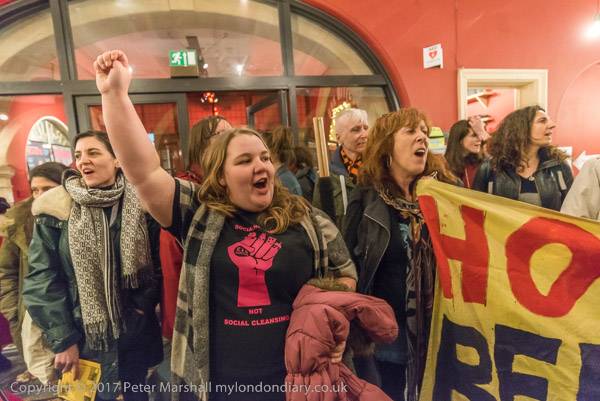
From Clapham Junction the “protesters” marched up Lavender Hill to the Battersea Arts Centre, where they occupied the foyer for a few final minutes of protest in what had been a pretty convincing event. And while actors had to go on stage and give their performance, the activists could sit down in the theatre and watch.

I didn’t join them, as I knew I had to come back to view it a week later and then be a part of a panel discussion Art & Accidental Activism, a week later. It was an impressive performance and gave a real impression of some of the more dramatic aspects of the real protests I had covered and made clear the political aspects of the housing crisis and why activism was necessary. But sometimes it did seem strange to hear words I remembered well coming out of a different person.

I couldn’t really enjoy it as much as I would have liked as I was very nervous, considerably daunted at having to appear afterwards ‘on stage’ to answer questions with fellow panelists Jeremy Hardy, journalist Dawn Foster and theatre legend Max Stafford Clark. But in the event it went well (my sternest critic says) and I rather enjoyed it and the session in the bar that followed.

More at Lung Theatre ‘E15’ march to BAC.


LSE Cleaners Protest, Police Arrest Lisa

LSE Cleaners Protest, Police Arrest Lisa

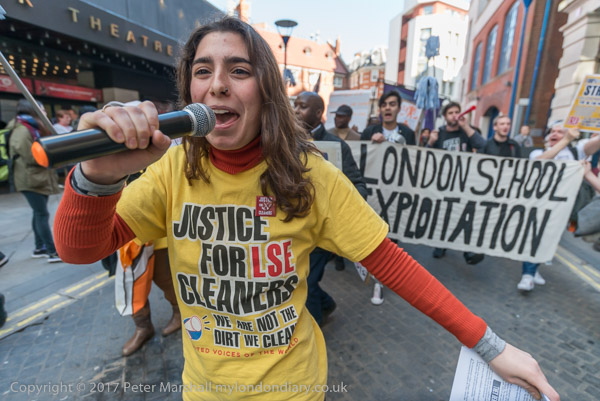
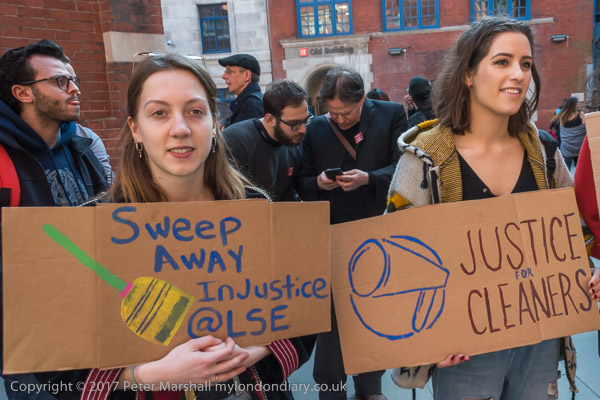
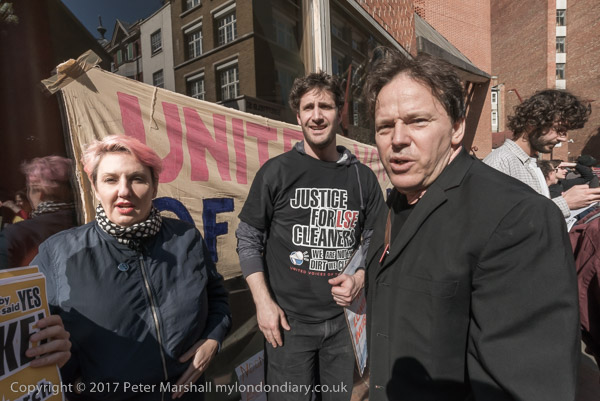
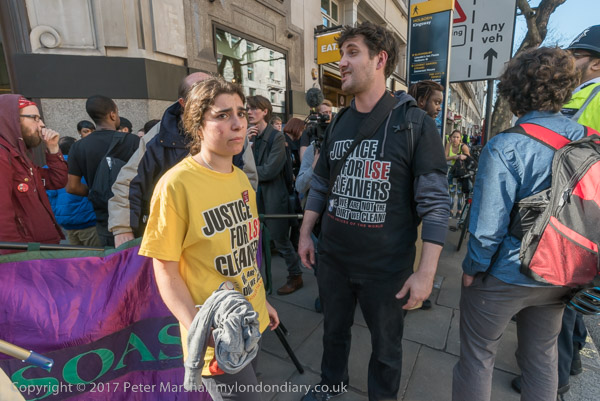
LSE Cleaners Protest, Police Arrest Lisa: On Wednesday 15th March 2017, students and supporters joined cleaners on the picket line at the London School of Economics for a lunchtime rally on the first day of the 2 day strike by members of United Voices of the World union.

LSE Cleaners Protest, Police Arrest Lisa

Cleaners at the LSE have felt let down by management at least since January 2012 when the contractor who the LSE had outsourced them to cut their hours and was bullying them into signing new contracts.

LSE Cleaners Protest, Police Arrest Lisa

As I wrote back then, “Outsourcing – as doubtless research by the LSE will have shown – almost invariably leads to lower wages and poorer working conditions for the staff involved. And although the cuts and alleged bullying is being carried out by Resource Group, the responsibility for it must lie with the LSE who are responsible for the contract with them.”

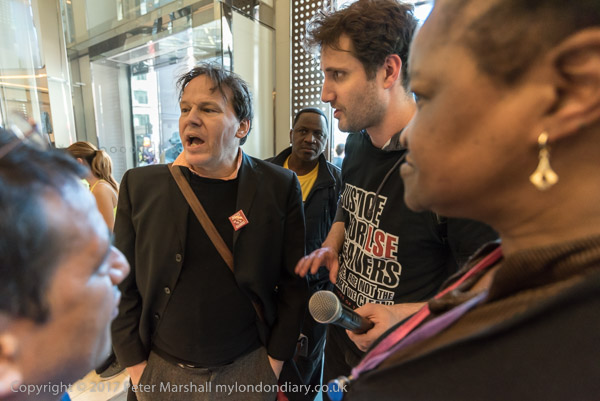
David Graeber (right) at the protest

In September 2016 the cleaners with the United Voices of the World trade union launched a new campaign for parity of treatment with other workers at the university with a meeting which was a part of the LSE’s 3-day ‘Resist’ Festival organised by LSE research fellow Lisa McKenzie which had featured talks and debates often critical of the LSE, with contributions by LSE Professor of Anthropology David Graeber and Martin Wright of Class War and in particular a damning indictment by Simon Elmer of Architects for Social Housing (ASH) of a report by a group of LSE academics on the redevelopment of the Ferrier Estate, deliberately run-down, demonised and emptied by Greenwich Council from 1999 onwards, as Kidbrooke Village.

LSE Cleaners Protest, Police Arrest Lisa
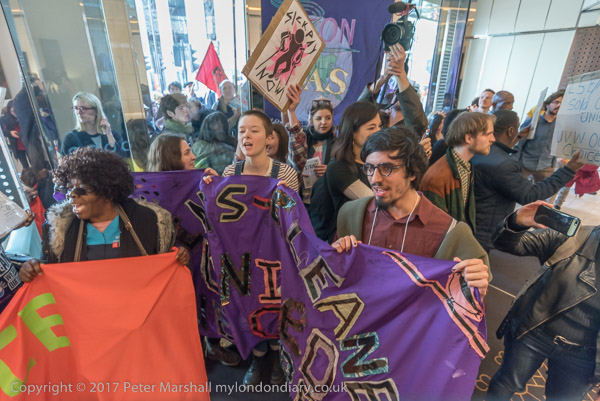
Protesters walk into the estates office foyer

The protest on 15th March 2017 began with a rally on the LSE campus demanding equal sick pay, holidays and pensions etc to similar workers directly employed by the LSE and an end to bullying and discrimination by their employer Noonan.

LSE Cleaners Protest, Police Arrest Lisa

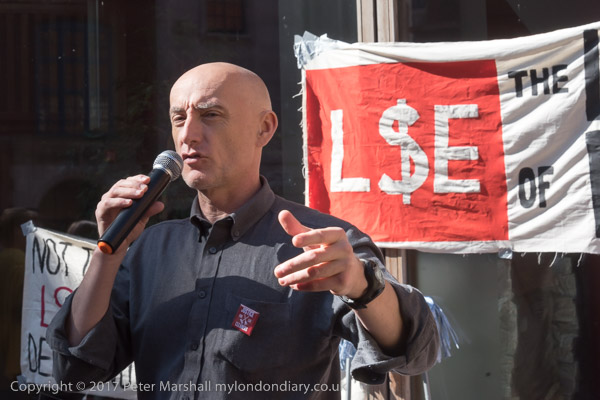
Grim Chip of Poetry on the Picket Line performed and there were several speeches by UVW members including LSE cleaner Mildred Simpson.

Dvid Graeber and Petros Eila

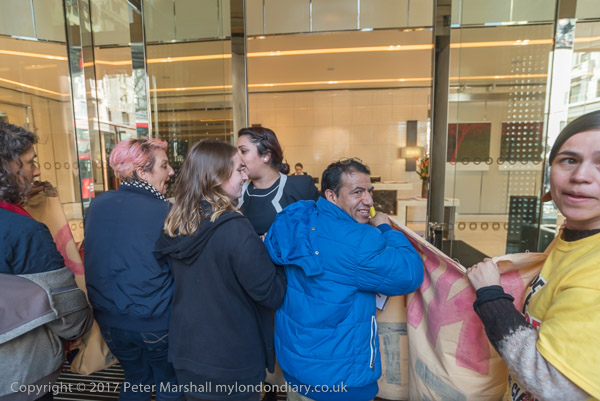
The protesters then marched the short distance across Kingsway to the LSE Estates Division where cleaning contractors Noonan have their LSE office. They walked in and occupied the foyer there for over and hour, only leaving after being promised that Allan Blair LSE Director of Facilities Management would talk with the cleaners union the United Voices of the World.

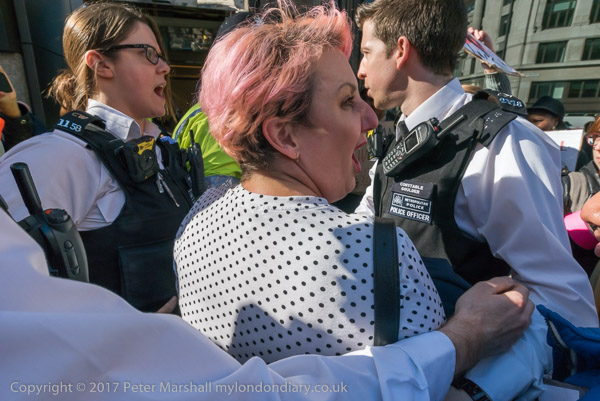
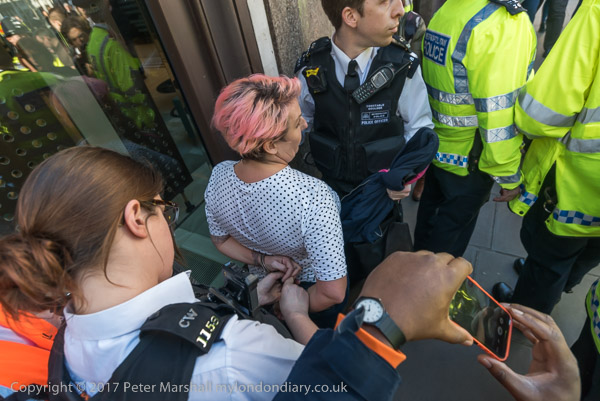
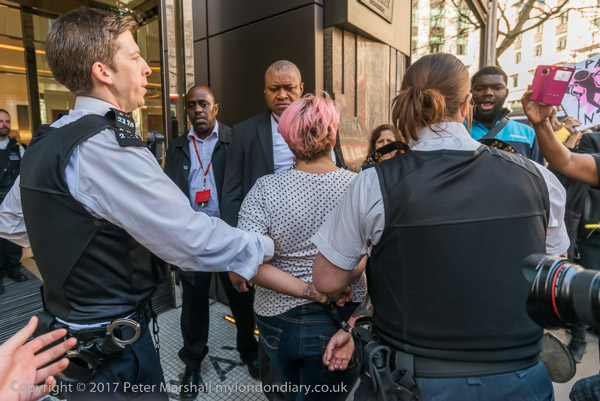
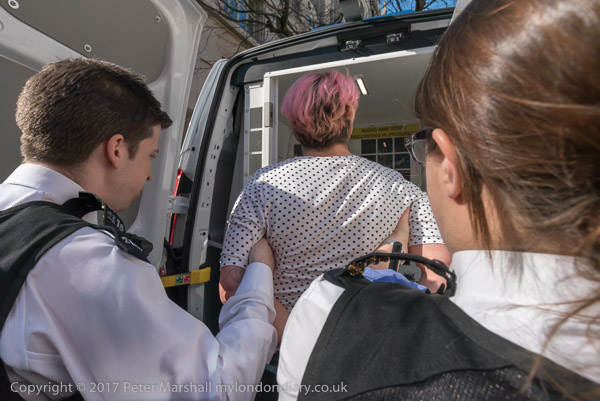
As they left the foyer, police jostled some of them before assaulting and arresting LSE academic Lisa McKenzie, charging her with assault and then bundling her into a waiting police van.

Apparently the receptionist at the estates office had complained that she had been assaulted by McKenzie as the four people holding the UVW banner pushed past her on their way into the office. I had been following close behind them and neither I nor the other protesters had seen any evidence of assault.

None of the other three holding the banner were arrested and it seemed fairly clear that the arrest was not for any offence. Perhaps the police were still aggrieved after a case against her when she was wrongly charged for three offences at a protest in Febnuary 2015 was thrown out of court. That had taken place at the time she was standing in the General Election against Iain Duncan Smith and was an arrest that appeared clearly politically motivated.

But on this occasion it could well have been that the LSE management had pointed her out as a trouble-maker. McKenzie, a working class academic and author of a highly acclaimed study of class and culture on the Nottingham estate where she lived for more than 20 years has been the a subject of constant criticism from others both inside the LSE and in the wider academic community, and when her contract there came to an end it was not renewed.

The protesters were left angry and confused. Why was Lisa being picked on? The protesters felt it must be politically motivated and it was difficult to see any other reason. I think she was later released without charge, possibly because there was CCTV evidence that showed there was no case to answer.

More on My London Diary:
Police arrest Lisa again
LSE cleaners strike and protest