Roma Nation Day – 2005

March Against Racism, London, 9 April 2005
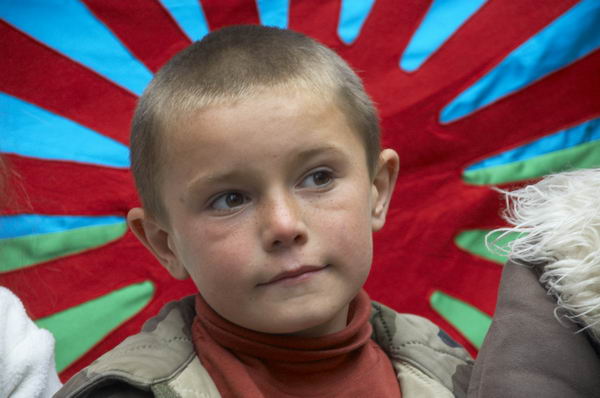
Roma Nation Day - 2005
March Against Racism

Roma Nation Day – 2005: March Against Racism

On 8th April 1971 the first World Roma Congress met at Chelsfield in southeast London. It called for Roma self-determination and international unity and the delegates unanimously rejected all of the names given to them by outsiders, including Gypsy (or Gipsy), still often used in English, which the community viewed as insulting. Both Rom and Romany have also been in use in English since the 19th Century, but throughout Europe the term Roma is now officially used, though in German-speaking countries the name Sinti is common.

Roma Nation Day
Waiting for the march outside St James Piccadilly

https://en.wikipedia.org/wiki/Romani_people Linguistic and more recent DNA studies show that Roma originated in northwestern India around 1500 years ago and later migrated to Europe, reaching the Balkans around 900 years ago. They have long been subject to persecution and in some central and east European countries were slaves until the 1840s and 50s.
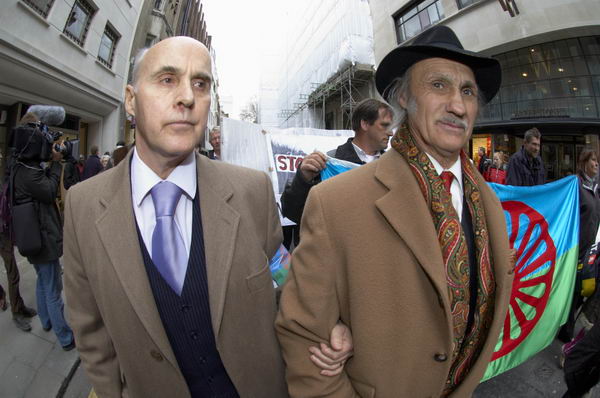
Roma Nation Day

In 1930s Germany Roma in Germany were stripped of their citizenship and many were interned and there was a programme of compulsory sterilisation. In 1942 the Porajmos or Romani Holocaust began, with Roma being sent to extermination camps. Estimates vary wildly of the number killed in Germany and German occupied territories, between 200,000 and 1,500,000.

Roma Nation Day
Roma as well as Jews were victims in the Holocaust

Roma still suffer considerable persecution in some countries including Romania, and the end of communist control has led to an increase in prejudice and persecution there and elsewhere. And across all countries including our own there is still widespread denial about the persecution they still face.
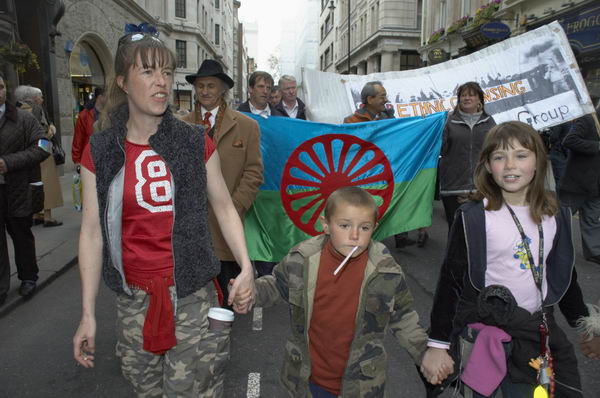
Roma Nation Day

8th April, the day of the first congress, was adopted in 1990 as the International Roma Day of Action. Perhaps because of that denial it has not received much attention.
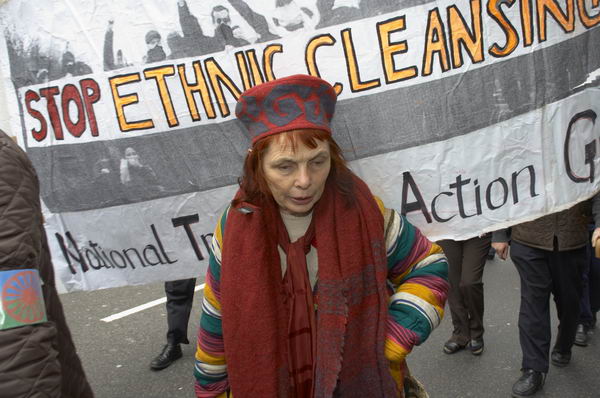
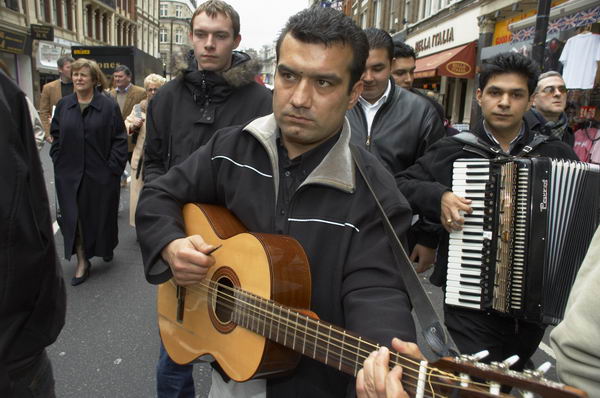
Roma have generally taken on the predominant religions of the countries they have settled in and the London action began with a church service at St Jame’s Piccadilly before marching through central London. I photographed them outside the church and on the march, ending my pictures as they went up Charing Cross Road.
In my account on My London Diary in 2005 I used the term gypsy as this was still almost always used in the media and Roma was not widely understood. Commonly too, Roma are called ‘travellers’ although many Roma are settled and most ‘travellers‘ are not Roma. Here’s what I wrote in 2005:
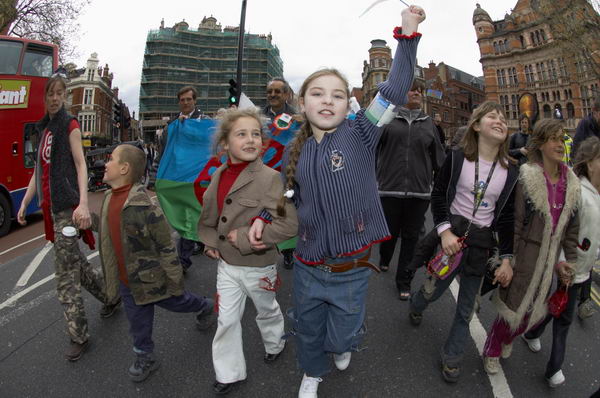
After a church service commemorating the 500,000 Roma murdered in the Nazi holocaust, Roma from several countries marched across London against the ethnic-cleansing of 30,000 gypsies from their own land and in protest over threatened evictions at Dale Farm, Essex, Smithy Fen, Cambridgeshire, and elsewhere.

After the march, gypsy Richard Sheridan was to announce that he was standing against sitting Tory MP John Baron at Billericay in the general election on 5th May 2005 in order to make the travellers’ voice heard. [He did not actually stand, but did attract some media attention to the cause.]

More pictures start here on My London Diary.


FlickrFacebookMy London DiaryHull PhotosLea ValleyParis
London’s Industrial HeritageLondon Photos

All photographs on this page are copyright © Peter Marshall.
Contact me to buy prints or licence to reproduce.
UN Anti-Racism Day 2017 & 2023

UN Anti-Racism Day 2017 & 2023

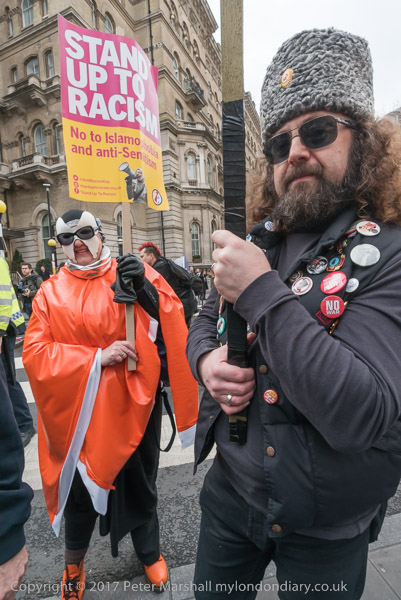
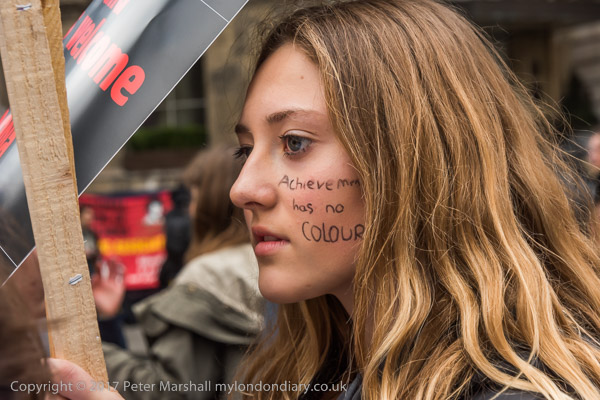
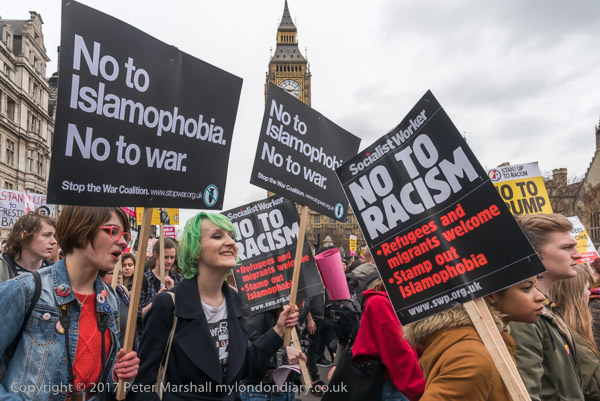
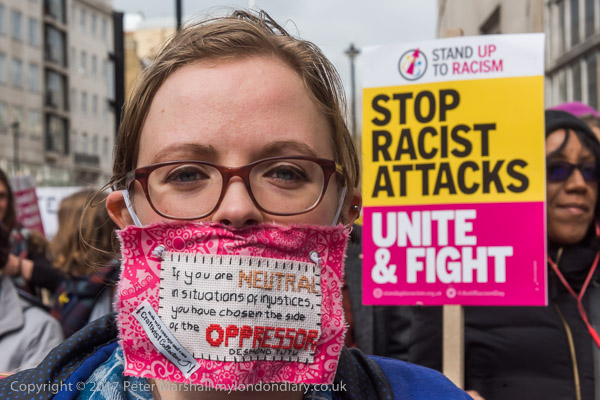
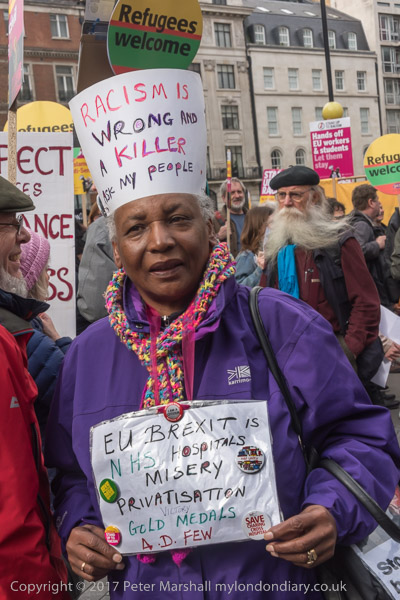
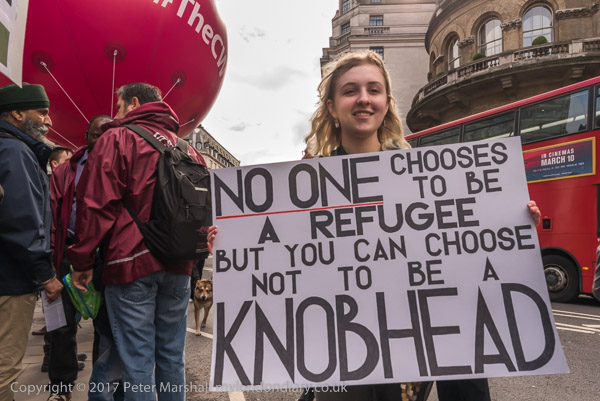
Today, 18th march is the UN Anti-Racism Day, and in 2017 it was also a Saturday, and tens of thousands marched through London, starting as they will today outside the BBC and ending with a large rally in Westminster.

UN Anti-Racism Day 2017 & 2023

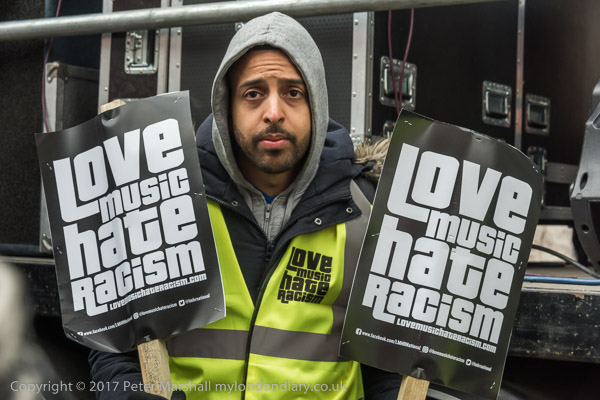
Today’s march, as in 2017, is organised by Stand Up to Racism, Unite Against Fascism and Love Music, Hate Racism and the TUC and supported by many other groups, including football fans from around the country who will be wearing team colours.

UN Anti-Racism Day 2017 & 2023

This years march is perhaps even more important, with the UK Government pursuing clearly racist policies against immigrants in last year’s Nationality and Borders Act, its attempt to deport refugees to Rwanda and Suella Braverman’s recently announced Illegal Migration Bill.

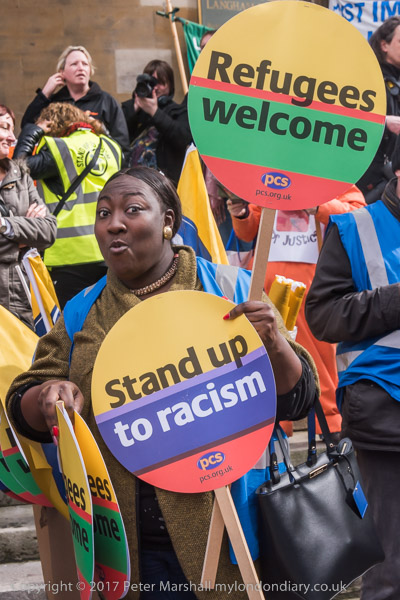
Phyll Opoku of PCS ‘Stand Up to Racism’

Football fans have been energised by the BBC’s reaction to Gary Lineker’s tweet. He was clearly correct in observing the hostile anti-refugees language used by the government to language used in Germany in the 1930s. They say the government are trying to stir up division and racism to deflect attention from their multiple crises and turn refugees into scapegoats.

Unfortunately it isn’t just the government, but also the official opposition who continue to up the ante over immigration, refusing to stand up to the government with any real attempt to improve our treatment of refugees and asylum seekers. Real opposition to racism has been left to a few increasingly isolated figures on the left of the party – including many of those who have been ejected for supposed anti-semitism, increasingly being used to expel Jewish members who support the Palestinian people. And of course left to footballers or former footballers.

Even Theresa May, who the 2017 march was strongly opposed to for promoting racist measures against immigrants and in particular Muslims in concert with Donald Trump has found Braverman’s latest proposals which will break international law on the human rights of migrants a step too far.

The 2023 march organisers say:

In Britain we face a crisis-ridden government attempting to use racism to make ordinary people pay for the cost of living crisis. The ‘Rwanda plan’, the Nationality and Borders Act, racist deportations and the hostile environment for refugees and migrants are all about divide and rule.

The government deny the reality of institutional racism – despite massively disproportionate deaths in black communities during the pandemic – and the reality of deaths in police custody, racist stop and search and discrimination across society.

Internationally we are seeing the growth of the racist and fascist right and an alarming rise in Islamophobia, antisemitism, Sinophobia, anti East/South East Asian racism and attacks on Gypsy, Roma and Traveller communities.

Despite a rail strike this Saturday I hope to be there later today, again taking photographs and marching with many thousands of others.

Much more from the 2017 march and rally on My London Diary: Thousands March Against Racism.