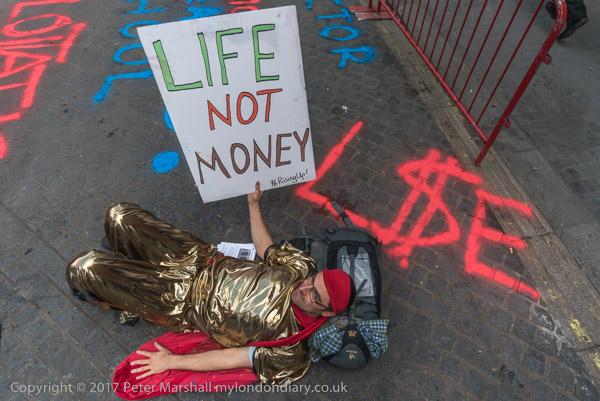
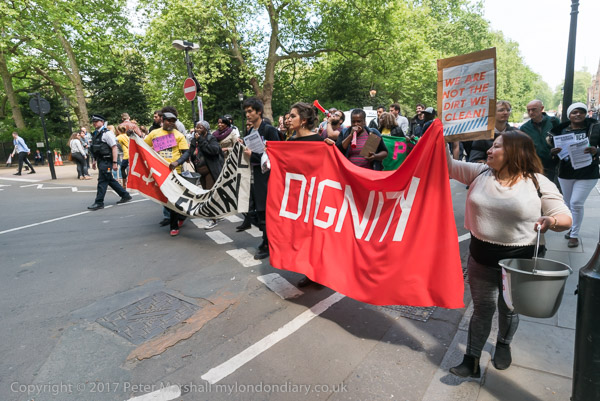
‘Life NOT Money at the LSE’ protesters chalked on the roadway and lay down, blocking the street
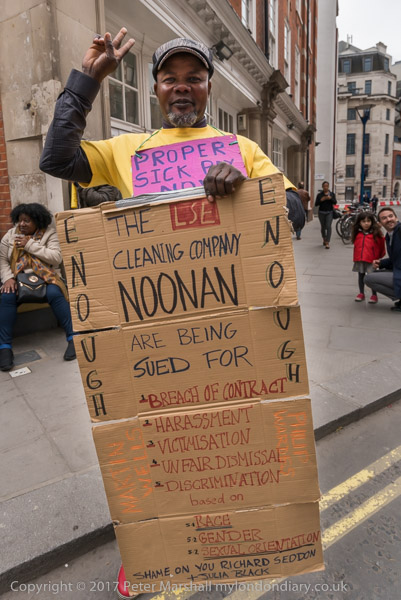
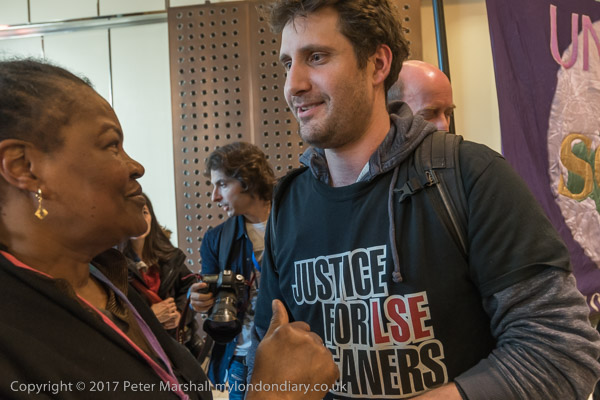
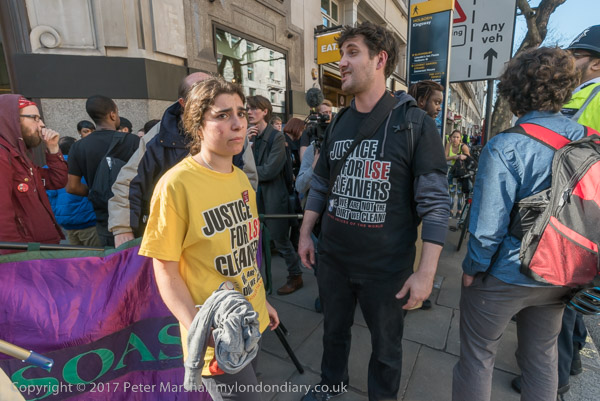
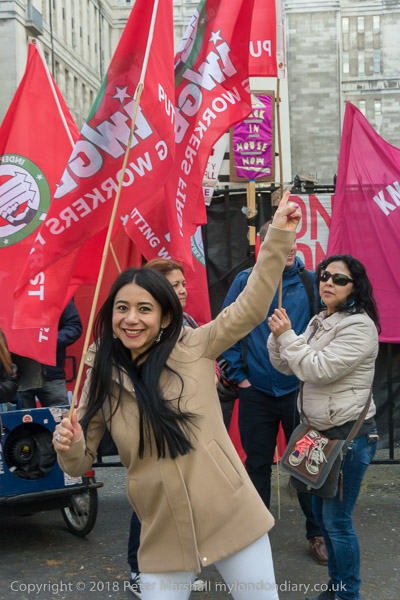
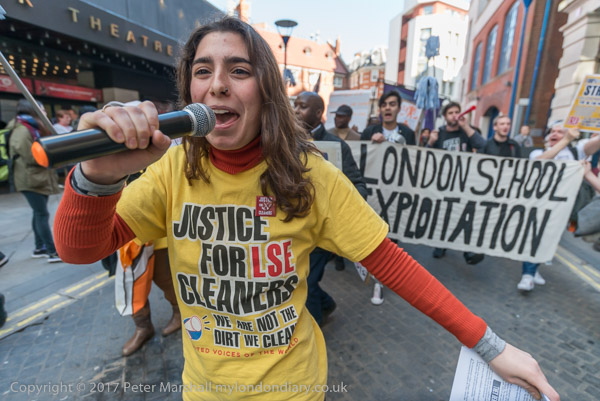
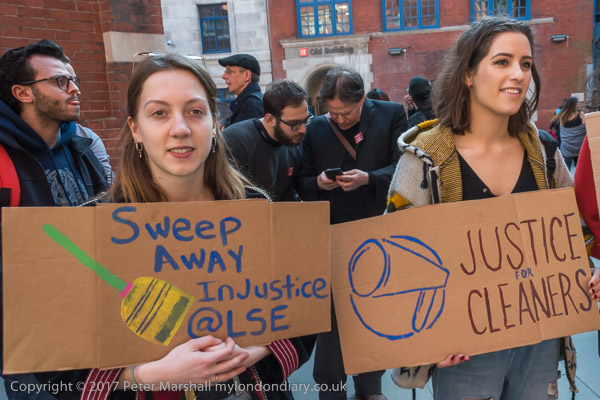
LSE Cleaners Strike For Equality And Dignity: The protest by cleaners at the LSE on Thursday 11th May 2017 was just one more in a long series of weekly one-day strikes demanding parity of terms and conditions with other staff there who were directly employed by the LSE.
The cleaning was outsourced to cleaning contractor Noonan, who employed cleaners under considerably inferior terms – pay, holidays, pensions etc – compared to those workers employed on the site by the LSE. I had been at the meeting in September 2016 when with their union, the United Voices of the World, they began their campaign for parity of treatment and had also photographed their protests.
The UVW were eventually successful after a series of strikes featuring “flashmobs, salsa, zumba, poetry, art sessions, teach-outs” and “after 10 months of struggle, and the then largest cleaners strike in UK history and the highest number of strike days of any group of outsourced workers in UK higher education – outsourcing was ended and all cleaners were brought in-house as LSE employees! Their fight against institutional racism was the first “to force a British university to end the practice of outsourcing cleaners!“
My post told the story of the event in picture and captions which describe the harassment by police and others of some of the supporters, particularly those from Class War. Here is a brief edited version.
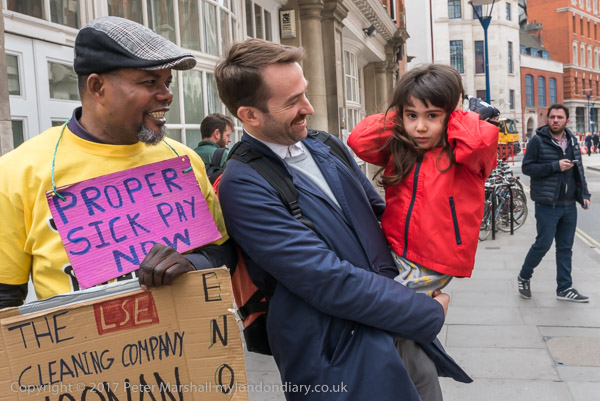
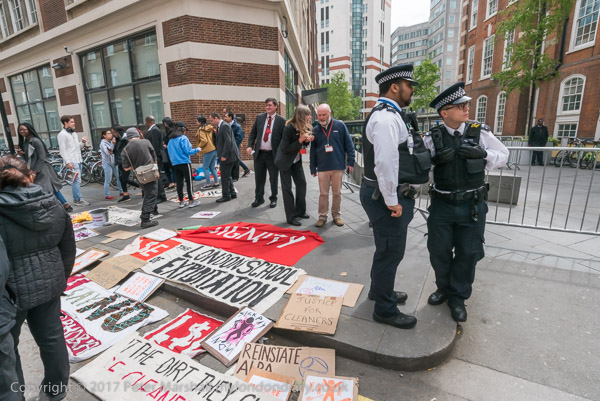
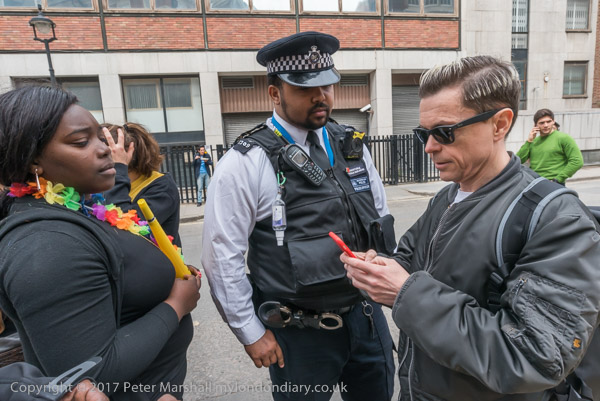
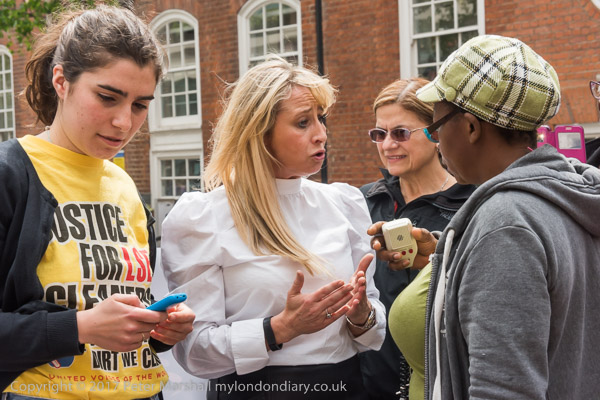
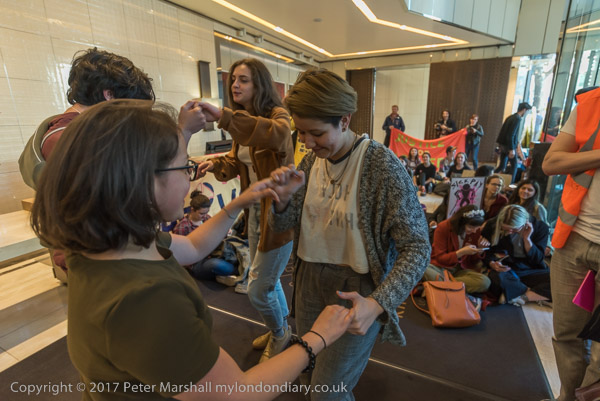
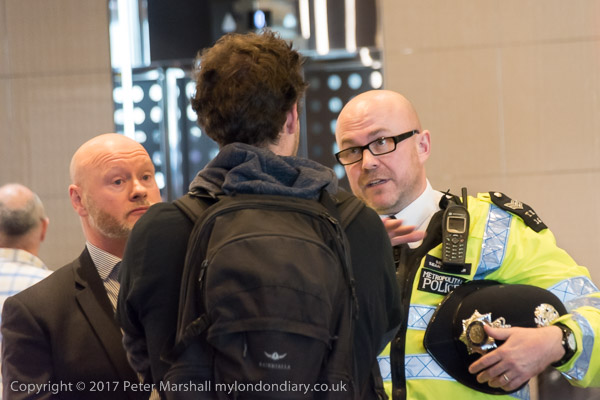
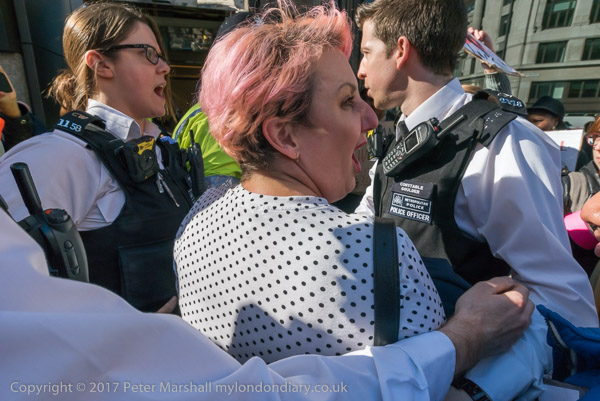
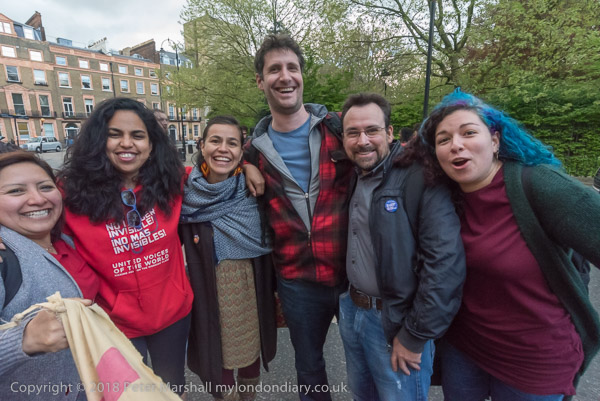
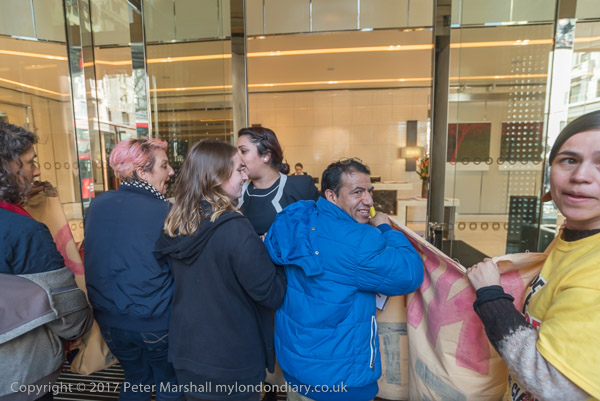
Noonan employs the cleaners at the LSE and the cleaners get low pay, low status and terrible managementThey work in the same place and deserve equal treatment. Their claims are supported by students and LSE staff. Trenton Oldfield brought his daughter with him to show solidarity with the cleaners.LSE Security have closed the area in front of the library normally open to the public. The road is a public highwayOne police officer starts harassing Sid Skill of Class War who has come to show solidarity. Sid refuses to talk to him and moves away – and eventually fled fearing arrest followed by two police officers, escaping them by jumping on a bus as the doors closedA woman who works in the LSE comes to tell the cleaners they are making a lot of noise and disturbing her day and then hugs the police officer and smiles when she sees I am photographing her. The cleaners say they have to make a lot of noise as the LSE management refuse to talk with them and their union.Cleaners make a noise – they want management to talk to them and to recognise their union. They also want to be treated with dignity and respect at work, a living wage and equal pensions, sick pay and other benefits.A man comes to complain to Class War about their support for the cleaners. He says that they don’t have any right to be there. Jane Nicholl puts him right. He seems to have no idea what class war is and no understanding of class solidarity. And as I suspect Jane put it is a stupid prick. Though she may have been less kind.The protesters march around the campus to visit a couple of other sites from brief protests in Lincolns Inn Fields and then Sardinia St before going to the Student Union, where there were speeches an poetry from Grim Chip of Poetry on the Picket Line.Meanwhile Life Not Money at the LSE had been at work, painting their message in chalk on the road and then sitting down on the Portugal St in front of Old Building, stopping lorries entering or leaving the LSE building site.
You can read the full version with more pictures and text at LSE Cleaners strike.
LSE Cleaners Protest, Lisa Arrested: Wednesday 15th March 2017 was the first day of a two-day strike by cleaners at the LSE in support of their campaign demanding equal sick pay, holidays and pensions etc to similar workers directly employed by the LSE and an end to bullying and discrimination by their employer Noonan.
LSE Cleaner Mildred Simpson
I had photographed the start of their campaign at a meeting led by their union, the United Voices of the World, as a part of the LSE’s 3-day ‘Resist’ Festival on 29th September 2016 and a number of protests at the LSE since then.
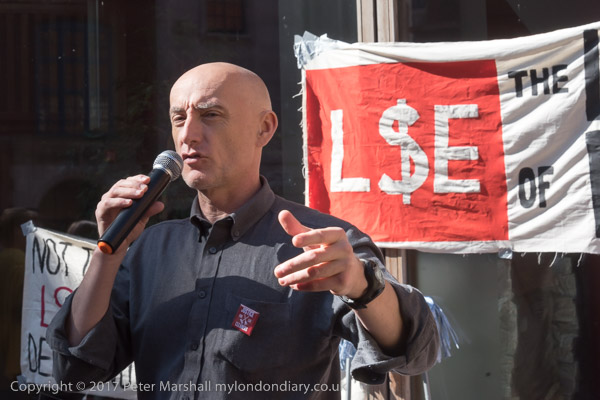
On 15th March the cleaners had a picket line since the early morning – cleaners start work while most of us are still in bed – and I joined them for a lunchtime rally. Their campaign had a great deal of support from students at the LSE and had a large banner ‘L$E: The London School of Exploitation‘.
Grim Chip recited several of his short poems
Others who had come to support the cleaners included Grim Chip of Poets on the Picket Line and LSE academics Lisa McKenzie and David Graeber and a few from Class War. But there were passionate and effective speeches from a number of the cleaners, including Mildred Simpson, one of the LSE cleaners and others in the UVW.
Alba, right, a LSE cleaner unfairly dismissed in September 2016
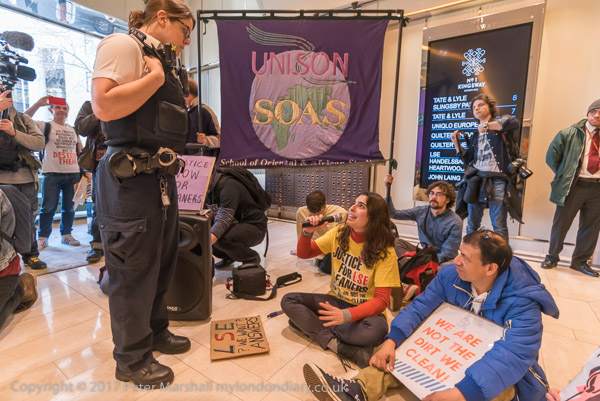
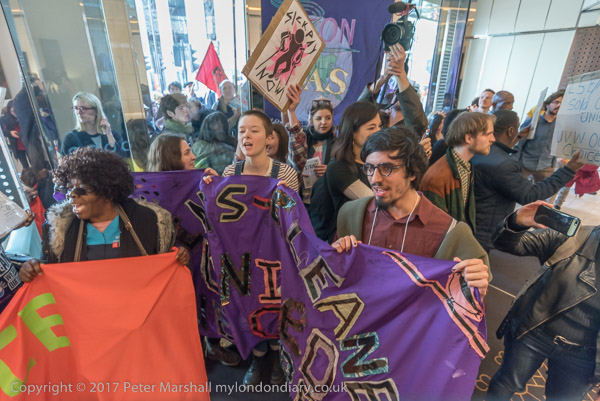
At the end of the rally, the protesters marched through the campus and across Kingsway to the building which houses the LSE Estates Office where a large group walked into the foyer demanding to see the Estates Manager. Some were carrying mops and buckets to show their support for the cleaners.
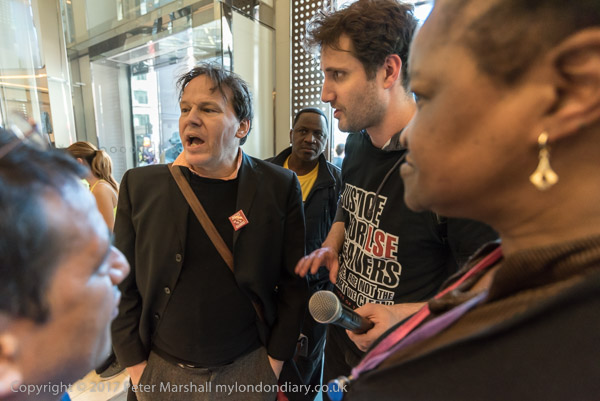
Security came to talk with the protesters, though the protesters were making too much noise to hear them and the protest continued with a short speech from UVW General Secretary Petros Elia to explain when the foyer was being occupied.
Eventually the protesters sat down and waited, still making a lot of noise . People working in the building were still able to leave or enter the building unhindered walking past the protest – but would hear and read why the noisy protest was taking place.
Eventually police arrived and talked with the building security and some of the protesters who soon began dancing in the foyer to music on the public address system the UVW had brought.
More police arrived and decided to stop people entering or leaving the offices. They talked with UVW General Secretary Petros Elia who told them it was a peaceful protest and they would leave after they had made their point to the LSE facilities manager – if the police could persuade him to talk to them.
Eventually this talk did take place, though some way back from the foyer where we could only see them from a distance. The talk went on for around five minutes, and Petros then returned smiling to tell the protesters that the LSE who had until now been refusing to talk to the cleaners had agreed to a meeting.
The protesters then walked out to join those who had been continuing to protest on the pavement outside, and they prepared to end the protest.
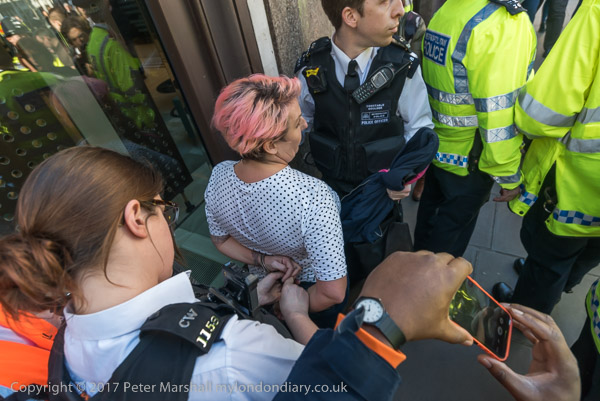
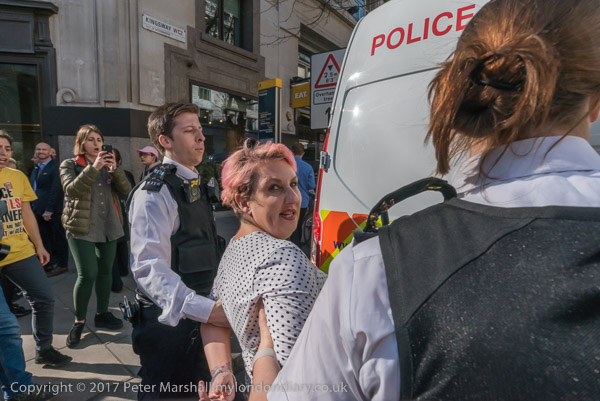
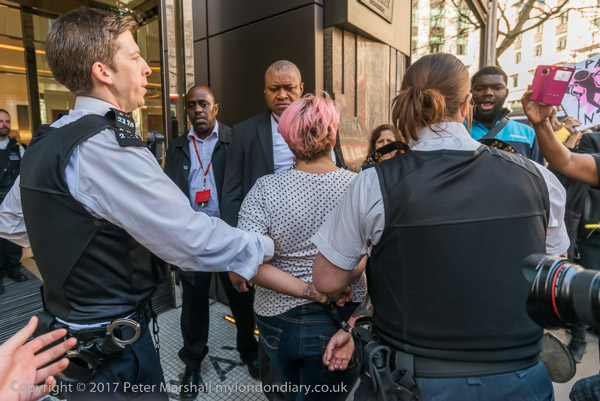
But unexpectedly police moved in and surrounded Lisa McKenzie telling her she was under arrest.
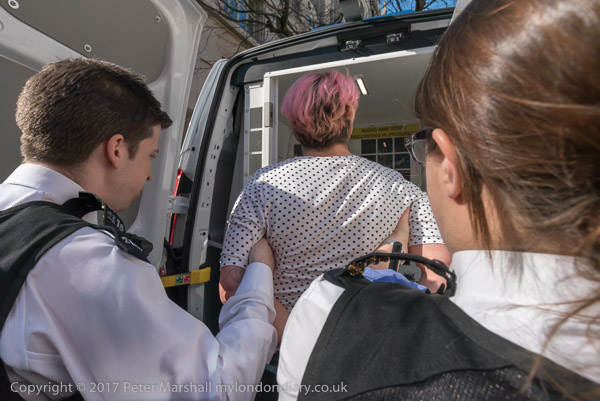
They pushed her roughly to the wall of the building and handcuffed her pushing away excessively roughly those who tried to stop the arrest and taking her to a waiting police van.
Apparently Lisa was being charged with assault on the receptionist when the protesters entered the building. I was close behind and neither I nor the other protesters saw any evidence of assault by her as she entered the offices holding one end of the banner with others.
Everyone was shocked, both by the arrest and by the police violence. The fact that none of the others holding the banner were arrested strongly suggested that her arrest was politically motivated, probably due to pressure from the LSE for her support for the cleaners – she had organised the ‘Resist’ Festival where the cleaners campaign had been launched.
Lisa had previously been the subject of a clearly political arrest when she was wrongly charged with three offences at a protest in February 2015 while she was standing in the General Election against Iain Duncan Smith. Perhaps the police were still feeling aggrieved after failing signally to achieve a conviction. This time they were not stupid enough to take her to court.
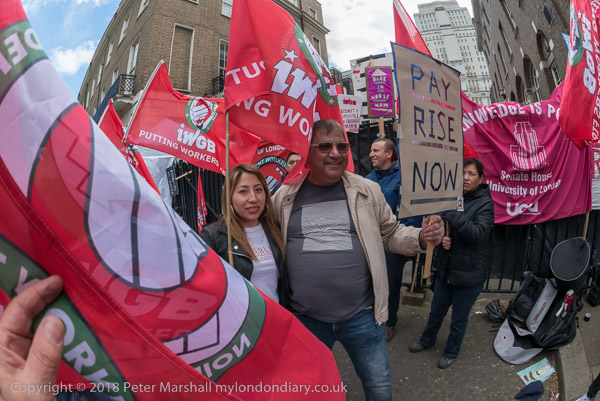
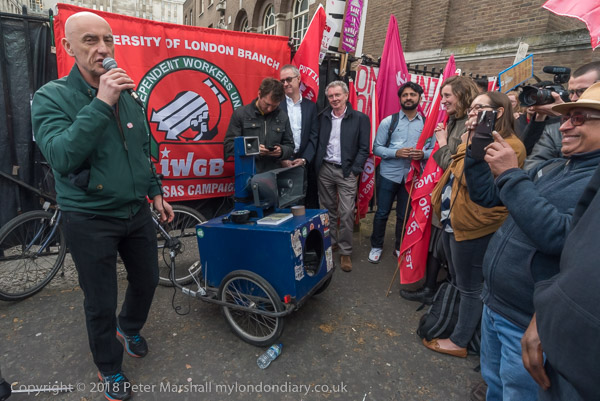
End outsourcing at University of London: Five years ago, on Wednesday 25th April 2018 I was with workers from the Independent Workers Union of Great Britain – IWGB on the first day of a two day strike at the University of London central administration by over 100 cleaners, porters, security officers, receptionists, gardeners, post room staff and audiovisual staff.
They were calling for an end to the outsourcing of their jobs in the university to various contracting companies and demanding to be directly employed by the University, and receive the same conditions and benefits as directly employed colleagues. As well as the workers, academics, students and other trade unionists came to support them in a lively rally outside the gates to Stewart House in Russell Square..
The rally was part of a successful campaign led by the IWGB which began in 2010 and ten years later the university central administration changed to directly employ porters, receptionists, post room and audio visual technicians, with cleaners following shortly after in November 2020.
The IWGB are still campaigning to bring workers in-house in other universities in London, including UCL, and they and other unions have been successful elsewhere. United Voices of the World are one of these and some of their members had come to the rally to show their support.
Cleaners and security staff at universities across London are organising for equality with directly-employed staff!
Outsourced workers suffer from far worse terms and conditions than directly-employed colleagues, facing no sick pay, bare minimum holiday entitlement and meagre pensions. Bullying, mismanagement and discrimination by unaccountable outsourced managers are common.
Workers in the IWGB union are leading the fightback. Through public campaigning and strike action we can end outsourcing at London universities!
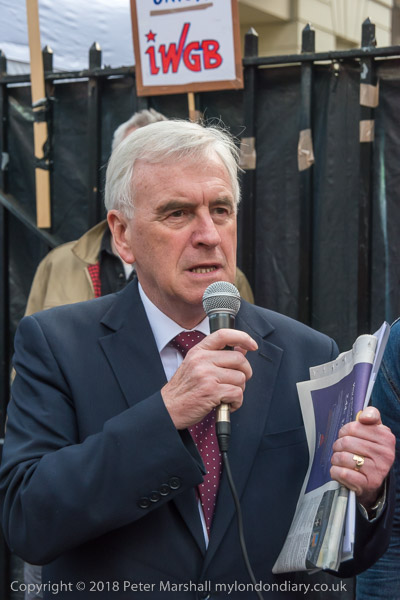
Among the speakers at the gates of Senate House was Shadow Chancellor John McDonnell who also brought support from Jeremy Corbyn and promised a Labour government would bring in new trade union laws and end the unfairness of outsourcing. Unfortunately should we now get a Labour government at the next election its policies will be more about protecting company profits than protecting workers.
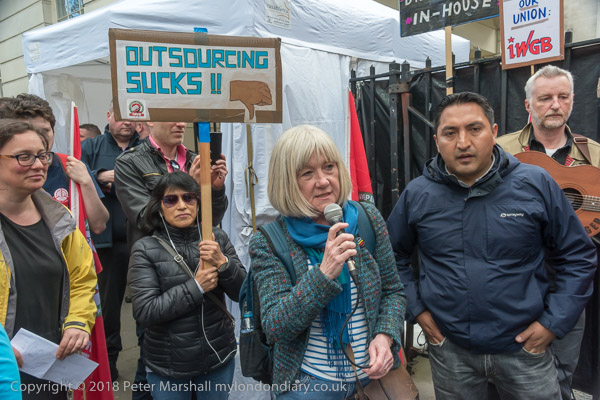
There were plenty of others as well as IWGB members who spoke, and one was a woman from UCU at Goldsmiths University who had come with a large donation from them to the strike fund.
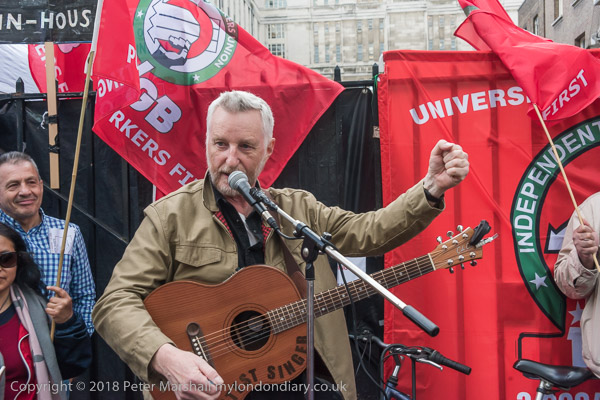
Billy Bragg came to give his support, singing three songs, and got us joining in on some of them, and Archie Shuttlebrace sang with Rebecca Wade Morris. Chip Hamer (Grim Chip) and another of the poets from Poetry on the Picket Line performed some of their work.
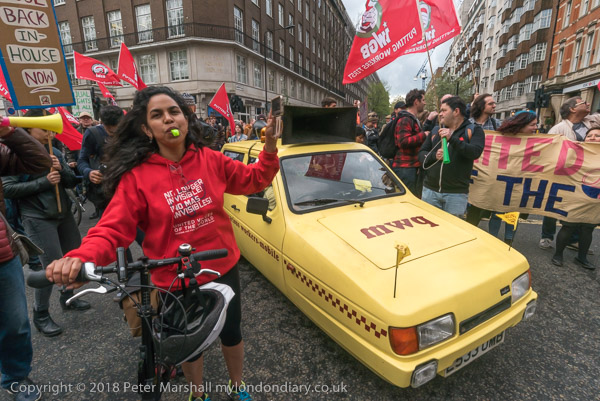
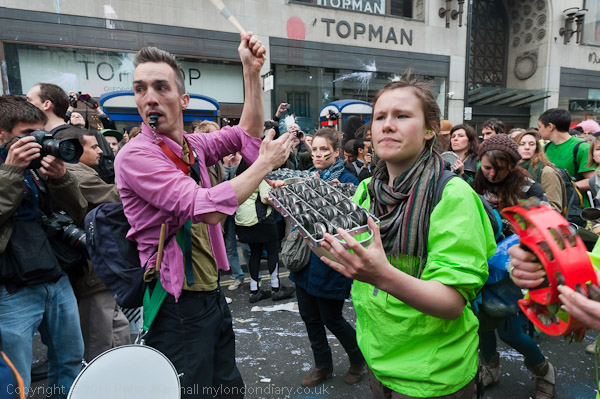
Then it was time for a march around Russell Square, with over 200 people briefly holding up traffic. The march was lead by the yellow Precarious Workers Mobile three-wheeler and a samba band.
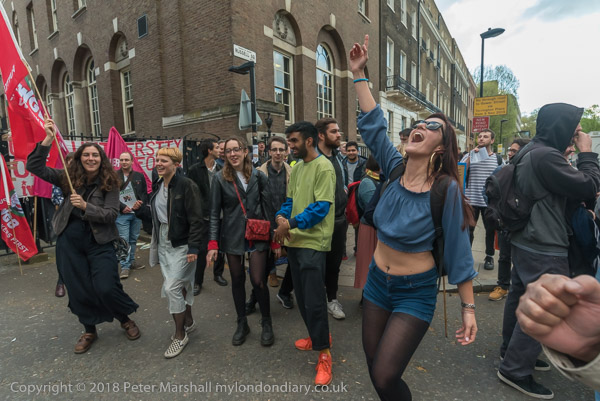
They returned to the gates of Stewart House and the rally continued with more music, poetry and dancing.
LSE Cleaners Protest, Police Arrest Lisa: On Wednesday 15th March 2017, students and supporters joined cleaners on the picket line at the London School of Economics for a lunchtime rally on the first day of the 2 day strike by members of United Voices of the World union.
Cleaners at the LSE have felt let down by management at least since January 2012 when the contractor who the LSE had outsourced them to cut their hours and was bullying them into signing new contracts.
As I wrote back then, “Outsourcing – as doubtless research by the LSE will have shown – almost invariably leads to lower wages and poorer working conditions for the staff involved. And although the cuts and alleged bullying is being carried out by Resource Group, the responsibility for it must lie with the LSE who are responsible for the contract with them.”
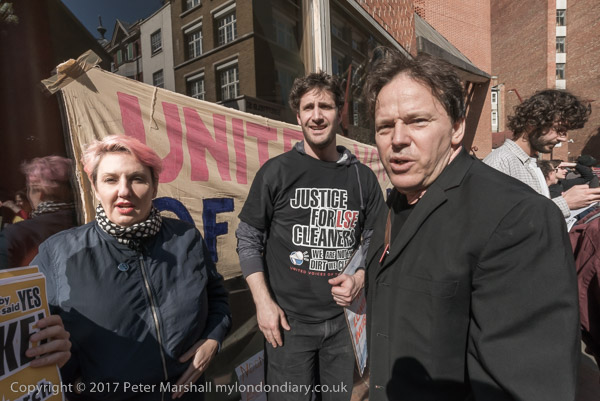
David Graeber (right) at the protest
In September 2016 the cleaners with the United Voices of the World trade union launched a new campaign for parity of treatment with other workers at the university with a meeting which was a part of the LSE’s 3-day ‘Resist’ Festival organised by LSE research fellow Lisa McKenzie which had featured talks and debates often critical of the LSE, with contributions by LSE Professor of Anthropology David Graeber and Martin Wright of Class War and in particular a damning indictment by Simon Elmer of Architects for Social Housing (ASH) of a report by a group of LSE academics on the redevelopment of the Ferrier Estate, deliberately run-down, demonised and emptied by Greenwich Council from 1999 onwards, as Kidbrooke Village.
Protesters walk into the estates office foyer
The protest on 15th March 2017 began with a rally on the LSE campus demanding equal sick pay, holidays and pensions etc to similar workers directly employed by the LSE and an end to bullying and discrimination by their employer Noonan.
Grim Chip of Poetry on the Picket Line performed and there were several speeches by UVW members including LSE cleaner Mildred Simpson.
Dvid Graeber and Petros Eila
The protesters then marched the short distance across Kingsway to the LSE Estates Division where cleaning contractors Noonan have their LSE office. They walked in and occupied the foyer there for over and hour, only leaving after being promised that Allan Blair LSE Director of Facilities Management would talk with the cleaners union the United Voices of the World.
As they left the foyer, police jostled some of them before assaulting and arresting LSE academic Lisa McKenzie, charging her with assault and then bundling her into a waiting police van.
Apparently the receptionist at the estates office had complained that she had been assaulted by McKenzie as the four people holding the UVW banner pushed past her on their way into the office. I had been following close behind them and neither I nor the other protesters had seen any evidence of assault.
None of the other three holding the banner were arrested and it seemed fairly clear that the arrest was not for any offence. Perhaps the police were still aggrieved after a case against her when she was wrongly charged for three offences at a protest in Febnuary 2015 was thrown out of court. That had taken place at the time she was standing in the General Election against Iain Duncan Smith and was an arrest that appeared clearly politically motivated.
But on this occasion it could well have been that the LSE management had pointed her out as a trouble-maker. McKenzie, a working class academic and author of a highly acclaimed study of class and culture on the Nottingham estate where she lived for more than 20 years has been the a subject of constant criticism from others both inside the LSE and in the wider academic community, and when her contract there came to an end it was not renewed.
The protesters were left angry and confused. Why was Lisa being picked on? The protesters felt it must be politically motivated and it was difficult to see any other reason. I think she was later released without charge, possibly because there was CCTV evidence that showed there was no case to answer.
Music, Spoken Word and Protest. A week or two ago I received a Facebook invitation suggesting I listen to a monthly radio show on Riverside Radio, the Colin Crilly Takeover, a monthly show with hosts Andy Bungay and Colin Crilly. In this edition they were to “be playing SONGS with a political/social angle, and discussing the issues raised.”
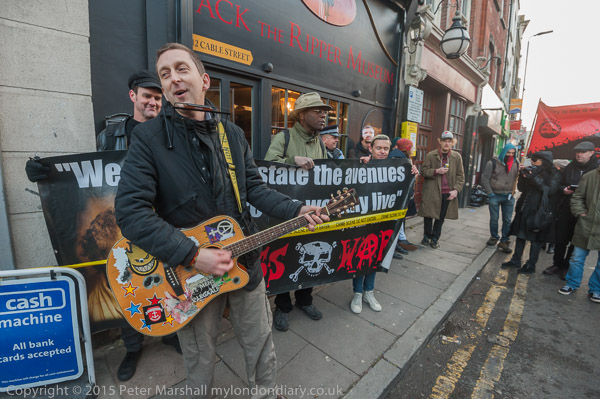
Adam Clifford performs at Class War newspaper launch, White Cub, Bermondsey, 2017
Colin Crilly is someone I’ve often met and photographed on protests in London and who has on occasion asked me to be interviewed for the show, but I’ve never done so. Radio isn’t really an ideal medium for photography.
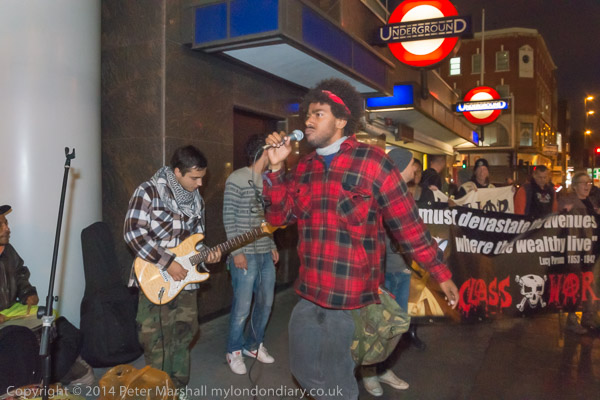
Different Moods play at Poor Doors protest, 2014
Riverside Radio is a local station covering a wide area of southwast London, mainly the boroughs of Wandsworth, Richmond and Merton but available to everyone on the web. I didn’t log on to the live show live as it airs for two hours from 11pm on a Saturday night, a time when I’m usually exhausted and only ready to fall asleep. Or if I’ve had a particularly busy day covering events I might still be editing the work.
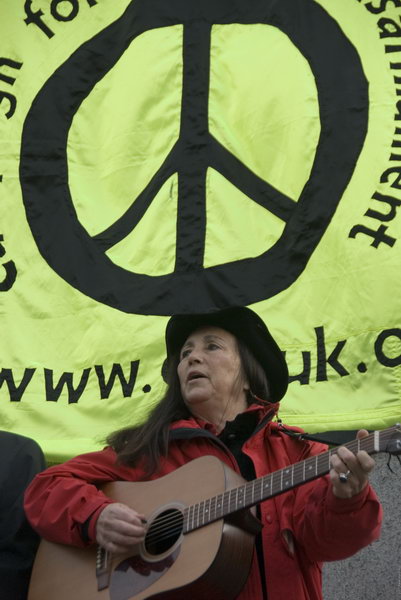
Julie Felix at CND protest, 2007
But a few days later, Colin sent me a link to a recording of the show on MixCloud and I began to listen to it. I’ve not managed to hear the whole two hours and I found MixCloud a frustrating experience as, perhaps because I haven’t subscribed, I couldn’t skip forward and when I took a rest it reverted to the start of the track. Since radio doesn’t come with pictures (except in the mind) I’ve added some of my own to this post.
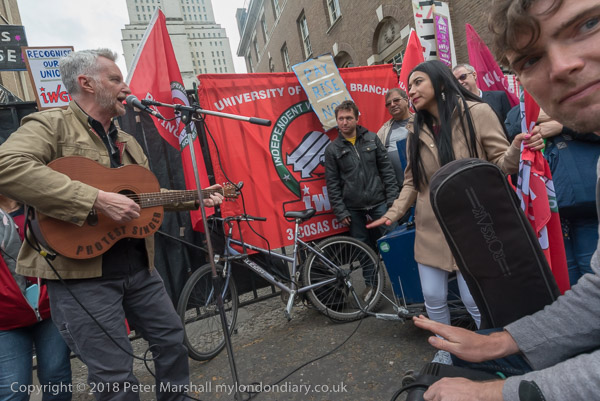
Billy Bragg supports IWGB strikers 2018
It was good to hear a track by Anne Feeney, the late great US folk musician, singer-activist and lawyer who died in 2021. Her ‘Have You Been To Jail For Justice?’ and her lines “A rotten law stays on the books til folks like us defy it, The law’s supposed to serve us, and so are the police, And when the system fails, it’s up to us to speak our piece …” are very relevant now. It led to some interesting discussion by Colin and Andy, but perhaps it could have been related rather more to the approaches of groups such as Extinction Rebellion and Insulate Britain in the UK.
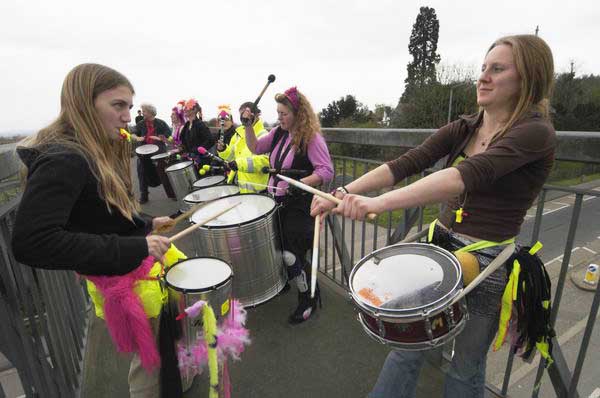
Sheffield Samba Band on march to Aldermaston, 2004
Next up was Paul Hardcastle’s ’19’, about the Vietnam War, but released in 1985, which apparently made a huge impression on a then-young Colin. It really was a ground-breaking release in several ways, but like the interview with John Lennon which followed – and preceded his ‘The Fool On the Hill’, did give the show seem rather an academic and historical approach to the subject.
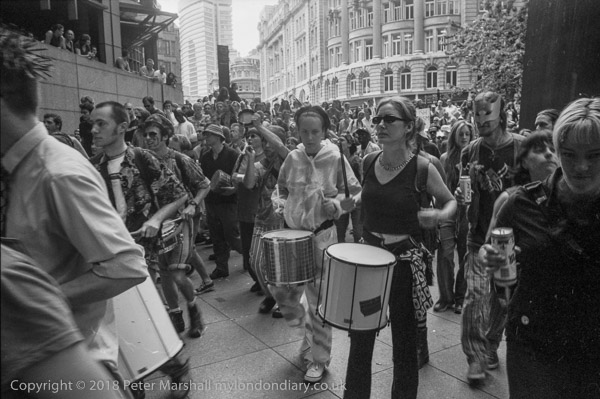
Samba band, Carnival Against Capitalism, 1999
I didn’t get much further in listening – and I think these were the only songs in the first hour of the show, though I might have fallen asleep a bit – there was a lot of long discussion. George Michael on BBC Hard Talk in 2002 came into it. It’s perhaps a shame that there wasn’t a playlist on the MixCloud page.
Samba – UK Uncut, 2011
Among the hashtags there was #london and I didn’t think I’d heard much about London or protests there in the part of the show I heard. Nor did I get to hear the promised Wood Guthrie, whose songs I used to play and sing badly from a much dog-eared paperbook in my youth, though fortunately seldom in public.
But many of the protests I’ve attended over the years have included performances by singers as well as spoken word performers, and of course the sound of almost all marches in recent years has been the samba band. How or if the recent act designed to prevent effective protest alters this remains to be seen.
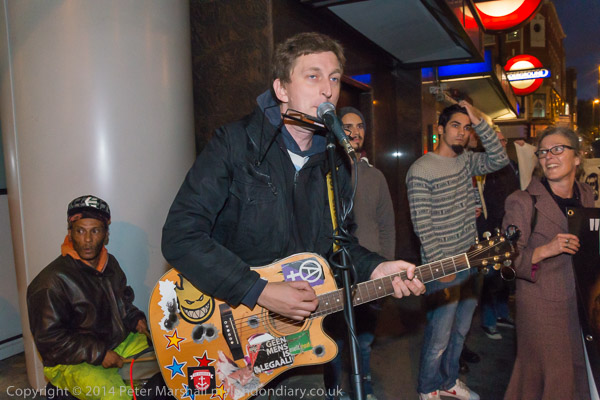
Cosmo at Poor Doors protest, 2014
I’ll just mention a few of those I’ve been impressed by – and have photographed in London. On his web site is this description of Cosmo, based in Wales as well as a number of music videos featuring him and his friends.
Cosmo is “a one-man folk-punk phenomenon.” (Miniature Music Press). Over the course of 14 albums and 30 years of touring, he has established himself as a formidable voice on the UK and international underground.
He has appeared at Glastonbury, the Edinburgh Fringe and other major UK festivals, as well as touring across the UK, Europe, North and South America and the Middle East. In that time, he has shared stages with Billy Bragg, Frank Turner, Grace Petrie, John Cooper Clarke, Mark Thomas and more. Cosmo has won awards at the Edinburgh fringe and Hay fringe festivals.
An activist as well as a musician, Cosmo has also performed at countless picket lines, protest camps, rallies and demos, as well as being involved with community organising.
I’ve photographed Cosmo several times, particularly at protests with Class War and always been impressed by the lift he gives to protesters.
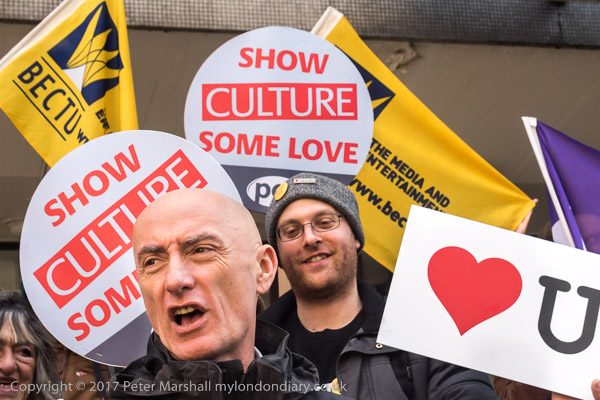
Grim Chip (left) outside the TUC, 2017
Quite a few rappers and poets have also performed at events I’ve photographed. Poetry on the Picket Line does exactly what the name suggest. Poets in the group, including hip Hamer, Janine Booth, Nadia Drews, Joe Solo, Tim Watts, Tim Kiely, Owen Collins, Repeat Beat Poet, Mark Coverdale, Lantern Carrier and Michael Breen, reading their work in the spirit of solidarity on picket lines and at rallies.
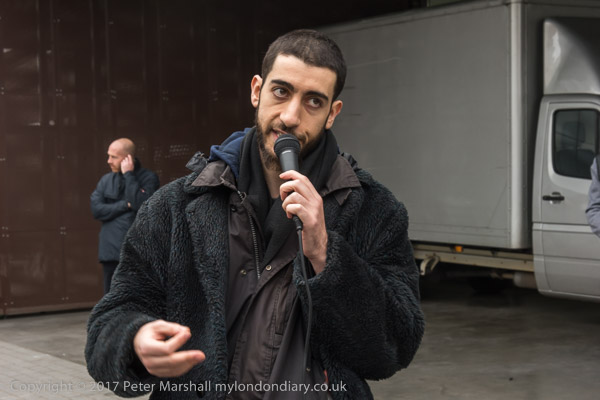
Potent Whisper performs ‘Estate Of War’ at Class War’s Newspaper Launch at the White Cube 2017
Georgie, a London based rapper and spoken word artist performs as Potent Whisper. Dog Section Press published his ‘The Rhyming Guide to Grenfell Britain‘ including the text of nine full-length pieces, I think all of which I’d heard him deliver at various demonstrations as well as in videos, including The Rhyming Guide to NHS Privatisation, Estate of War and Grenfell Britain. The book is worth getting if you can find a copy. An article by him in the New Internationalist includes a link to his ‘You’ll Never Edit Grenfell‘ and you can view more on his YouTube channel.