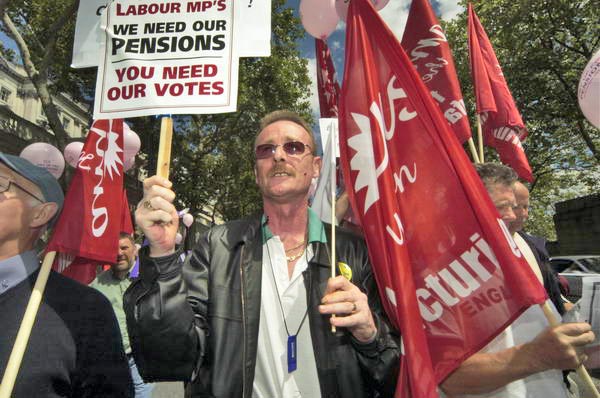
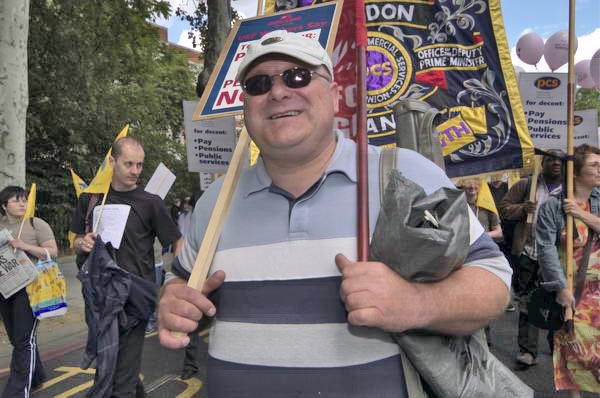
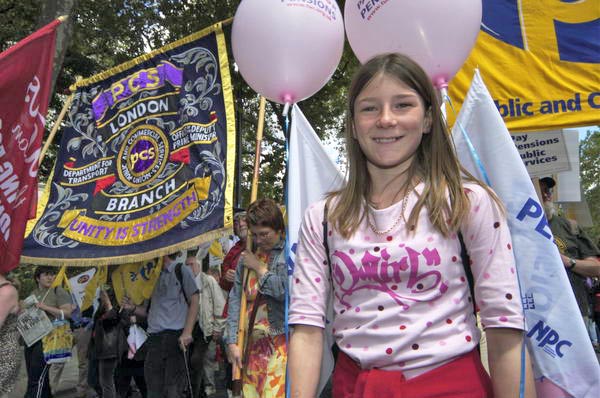
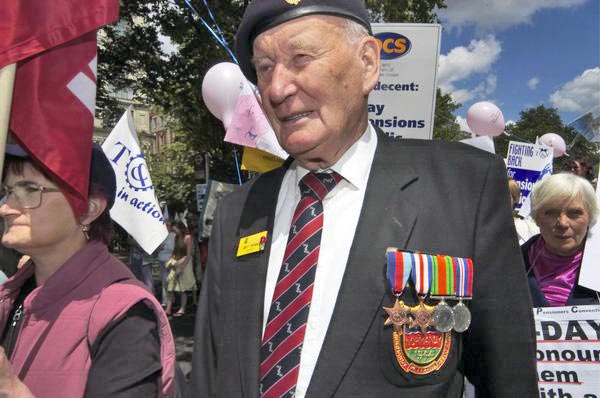
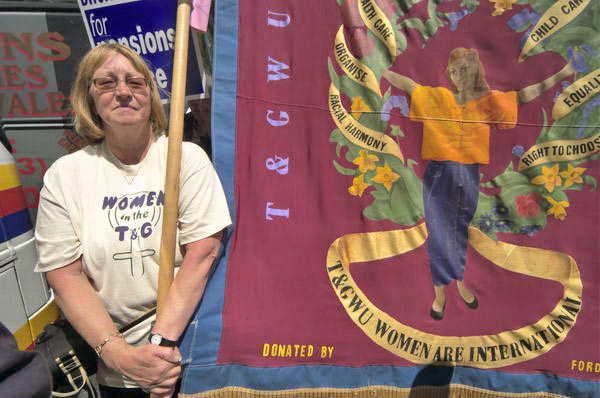
Wimbledon, Pensions & Hammersmith: On Saturday 19th June 2004 I paid a short visit to Wimbledon Village Fair before photographing a TUC protest calling for changes in pension law and better pensions in Westminster and then going for a short riverside walk in Hammersmith. There are more pictures from the protest on My London Diary, I’ll include the short text I wrote at the time about the day as well as some from the captions I wrote in 2004.
Wimbledon Village Fair
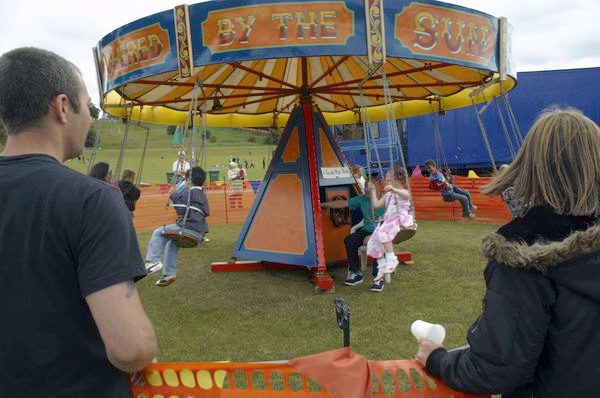
Home of tennis and the Wombles, Wimbledon always strikes me as an alien implant in London by some civilisation with a time machine, a sense of humour and a very fat wallet. I dropped in to the Village Fair just to see it still existed.
Pay Up For Pensions – Trade Union Congress March and Rally
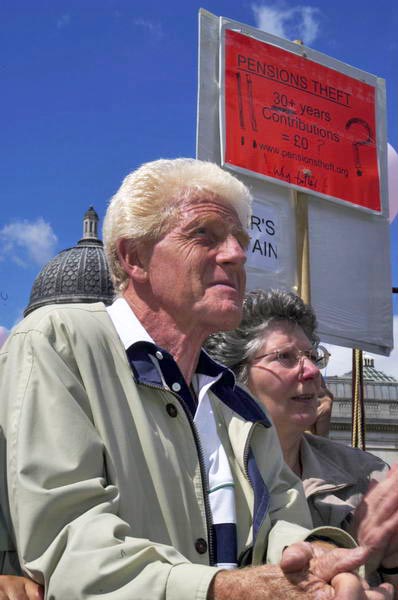
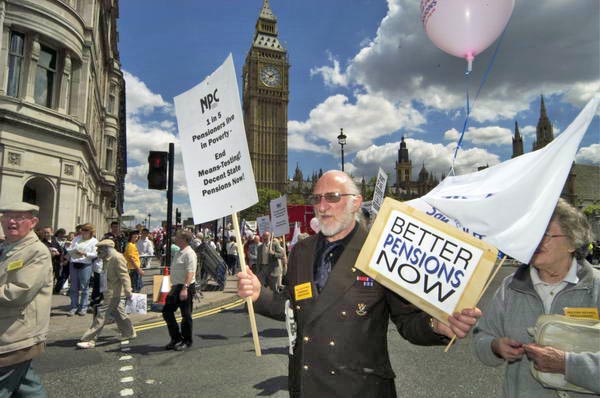
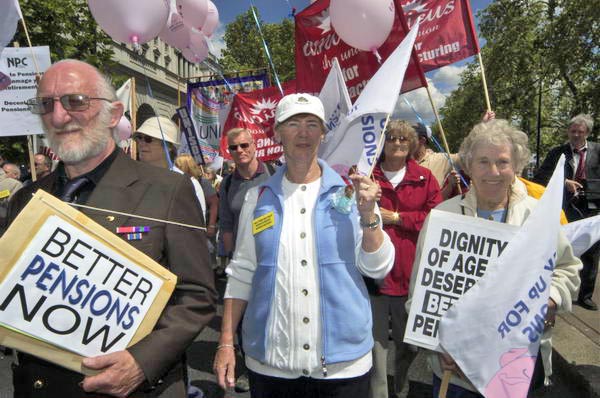
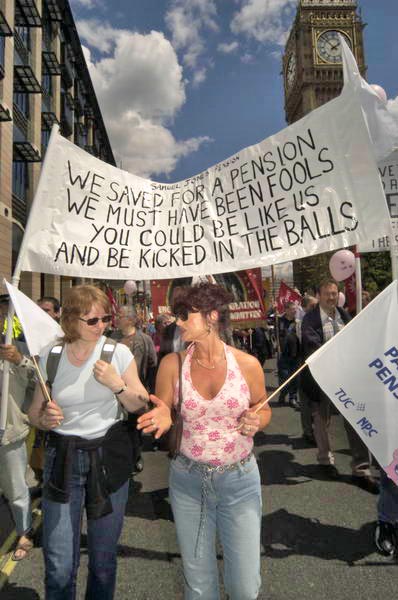
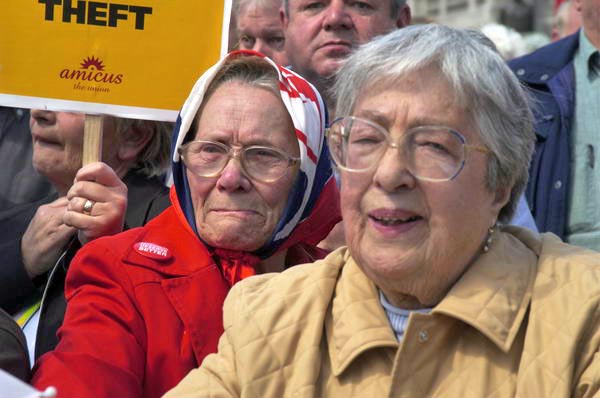
Half an hour later I was back in the real world. Where companies make off with the pension funds leaving people who have paid in to schemes for years with no pensions. where other creditors come before pension holders when companies go bust.
Where millions of lower paid workers now have no employment pension rights at all. Where women have always been treated unfairly in many respects. Where government has worsened conditions for civil servants, teachers and others. As TUC General Secretary Brendan Barber says “Those who used to have good pensions now have poor pensions. Those who used to have poor pensions, now have no pension.”
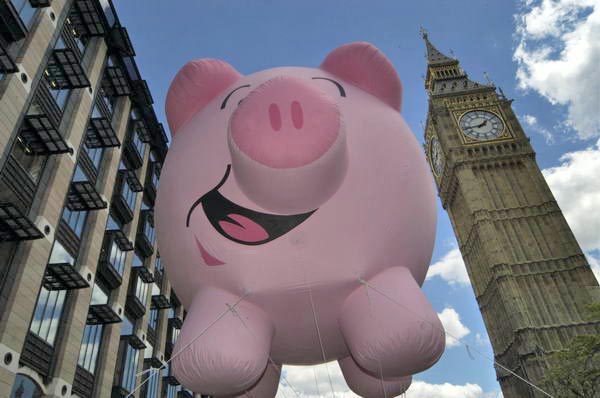
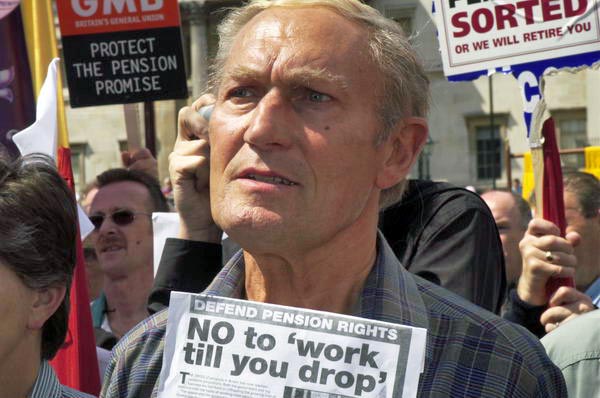
Around 5-10,000 people marched down from Temple towards the Houses of ParliamentMarchers included many workers who have already lost their pensions when their companies foldedBanners on the march included many union branches including those for civil servantsPeople of all ages took part; not only the old are affected by pensions.Marchers included pensioners who had served in WW2Women have never been treated fairly over pensions by employers or stateThe pink pensions pig caught between Big Ben and Parliamentary OfficesWorkers from Samuel Jones lost their pensions when the company was taken over‘Protect the Pension Promise’, ‘NO to work ’till you drop”. The labour movement looks to the government to act on pensionsPensioners want a better deal, and the unfairness of pension theft is widely recognised
Unfortunately the New Labour Government wasn’t listening and the “the great British pension theft” begun by Margaret Thatcher and taken over by Gordon Brown continued, while ineffectual legislation introduced after the scandal when Robert Maxwell stole £460 million from the Mirror pensioners continued to allow companies to steal pensions from their workers. Despite pension protection schemes, workers can still lose when companies are taken over or fail.
River Thames at Hammersmith – Furnival Sculling Club
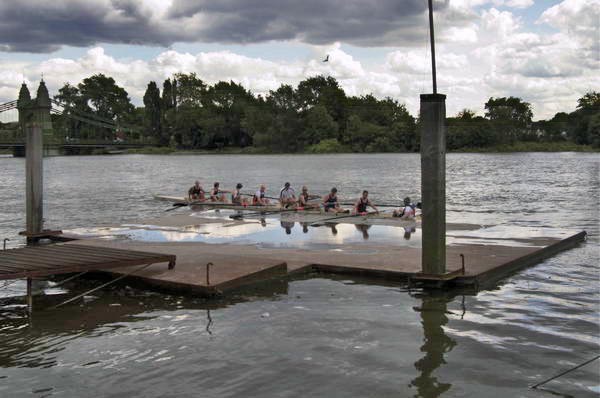
On the way home I went for a walk by the river in Hammersmith, another area of London strongly associated with William Morris. The Funivall Sculling Club here was established in 1896 as the Hammersmith Sculling Club For Girls – the world’s first women’s rowing club – by Dr Frederick Furnivall; it went unisex in 1901. Furnival had earlier championed rowing for working men. He served as the model for Ratty, the water rat in ‘Wind In The Willows’, as well as being involved with the preparation of the Oxford English Dictionary.
Hammersmith Mall – The second building is the Furnival Sculling ClubWeeds and pollution in the ThamesPlastic bottles and other rubbish collected up by this landing stage near Hammersmith Bridge
The former BBC Riverside Studios – part converted to offices which were advertised by the banner at roof level. It was imaginatively redeveloped in 2014-6 to provide better public facilities, a riverside walkway and 165 flats.
Poplar, Bow, Leyton, North Woolwich & Silvertown: These pictures come from a number of visits to areas of London working on several different projects and are my final selection of colour panoramas made in 1995. There are a few more colour images, including some panoramas I made in 1995 in the images in the Flickr album as well as many I have not digitised; some very similar to those online, others that I now find of less interest. Some of these were taken as a part of my project on the Greenwich Meridian in London – you can see a set of 16 images from this on the urban landscape web site.
Bow Locks, River Lea, Bow Creek, Bow, Tower Hamlets, 1995, 95p4-752
Bow Locks separate the tidal River Lea from the Lea Navigation and the Limehouse Cut which offers an alternative route to the Thames to avoid the winding and dangerous Bow Creek. First built in 1850 they were remodelled in 1930. At the highest Spring tides water from Bow Creek would overtop the locks and raise the level of the canals here – the locks were modified in 2000 to stop this and avoid the silting it caused.
London Galvanizers, Leven Rd, Poplar, Tower Hamlets, 95p4-743
The Poplar Gas Coompany built a local gas works here in the 1820s at the request of the Poplar Vestry after ratepayers lobbied them to provide gas street lighting. The site was cleared in 2011 and I was commissioned to photograph the removal of toxic earth from the site using barges on Bow Creek. Something around an eigth of the material was removed in this way, tides making the removal of more difficult. The original gasholders had to be built to special safety standards because of their proximity to the West India Dock wall. The last of the gasholders was removed in 2017.
London Galvanizers had modernised their galvanizing plant here in 1983-5 and were one of the most important jobbing galvanizers in London and the Home Counties.
This street corner is close to the Meridian and I had stood here for some time outside the Chinese restaurant which was having some joinery work done. I liked the contrast between its orange paint and the blue on the opposite corner and the warm brown of the Birkbeck Tavern at right. I think I had made at least one exposure when a young girl in a red coat on roller skates came to see what I was doing – and I made this exposure as a red car come around, filling an otherwise rather empty grey space.
The Meridian also passes through this cemetery and I chose a viewpoint which included the cemetery chapel with a fine group of monuments in the foreground, I think all for people of Italian origin.
Stratford Station, Great Eastern Rd, Stratford, Newham,1995, 95p4-963
I’m unsure what this railway building to the east of the station was, perhaps a 1930s signal box. Parts of this area have now been redeveloped, and this has been behind fences for more than ten years and could stil be there, as least in part.
King George V Dock, Woolwich Manor Way, North Woolwich, Newham, 1995, 95p9-171
Finally four pictures from a walk along Woolwich Manor Way, this taken looking westwards along the south side of the King George V Dock. You can see the bridge over the dock entrance at right and the City Airport terminal and Canary Wharf at the end of the dock.
Royal Albert Dock Basin, Woolwich Manor Way, North Woolwich, Newham, 1995, 95p9-161
At left is the old swing bridge that took the road over the dock entrance from the basin. To its right is the elevated DLR and the pumping station at the centre of the Gallions roundabout. Further on only two buildings were standing along the side of the Basin, the Gallions Hotel and the Royal Docks Pumping Station.
Containers, Woolwich Manor Way, North Woolwich, Newham, 1995, 95p9-162
Land to the south of the Royal Albert Dock Basin just east of Woolwich Manor Way.
King George V Lock, Woolwich Manor Way, North Woolwich, Newham, 1995, 95p9-153
This swing bridge across the dock entrance is still there.
Royal Victoria Dock, Silvertown, Newham, 1995, 95p11-262
This was taken from Silvertown Way, looking across the Royal Victoria Dock. There are still cranes along the dockside here but the foreground now has flats. The Millenium Mills are still there, but there is nothing in the picture where the Excel Centre now stands and none of the other new developments on the north side of the dock. The council flats at the right have been demolished.
You can see these and some other colour pictures I took in 1995 at 1995 London Colour.
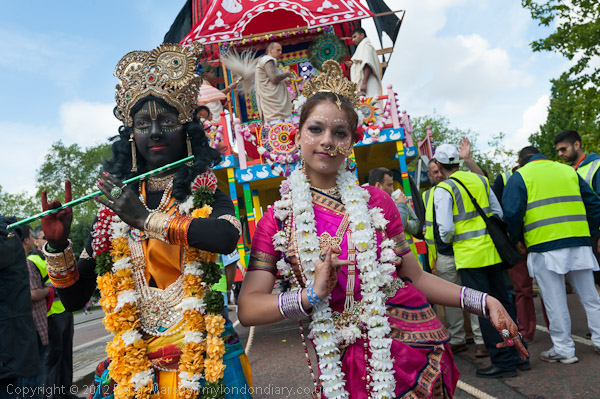
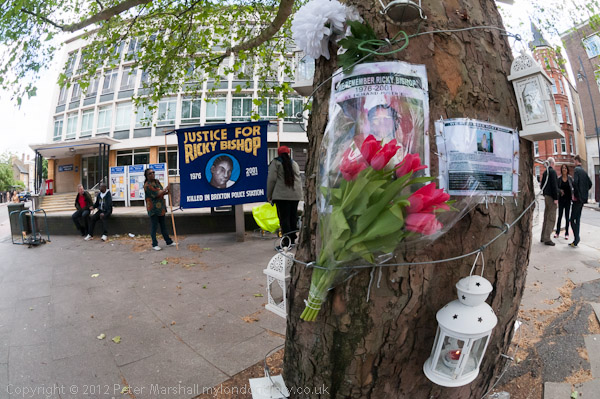
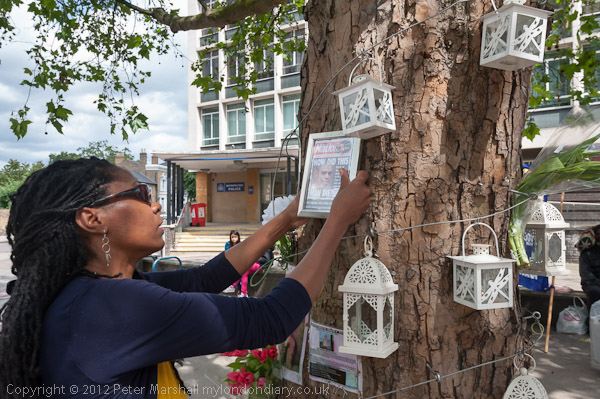
Chariot Festival & Vigil for Custody Deaths: On Sunday 17th June 2012 I photographed the Rathayatra Chariots Festival in Hyde Park, leaving as it set off to go to Brixton. Families of men killed in police custody were holding Fathers Day vigils outside police stations and at Brixton, the family of Ricky Bishop was joined by the sisters of Sean Rigg, whose inquest 4 years after his death there had just started and was in the news.
Hare Krishna Chariot Festival – Hyde Park
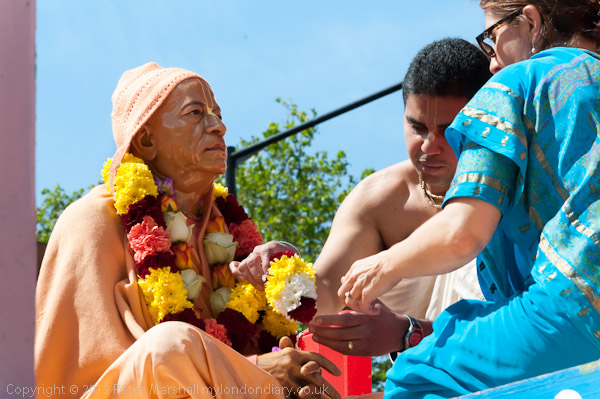
Effigy of A.C. Bhaktivedanta Swami Prabhupada (1896-1977) the founder of ISKCON (Hare Krishna)
The annual Rathayatra Chariots Festival is now one of the largest and most colourful religious processions in London with more than a thousand devotees pulling the three giant chariots through the streets from Hyde Park to Trafalgar Square, chanting ‘Hare Krishna’ and dancing.
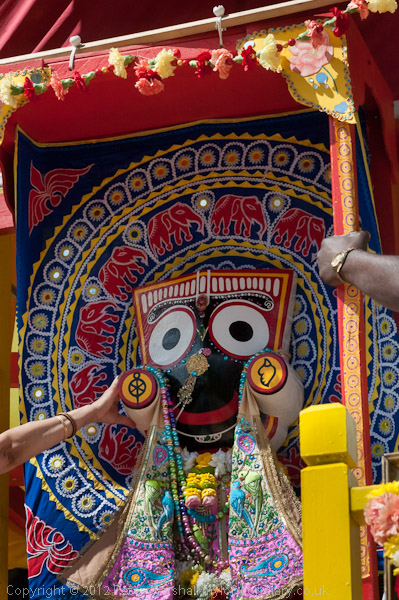
The ceremony which began at the Jagannatha temple in Puri, Orissa on the Indian east coast at least a thousand years ago celebrates the time when Krishna grew up on earth; when he became a great lord he moved away from his childhood friends who were cowherds and they came with a cart and tried to kidnap him and take him back to their village.
Jagannath means ‘Master of the Universe’ and his name and the chariots in the festival give us the word “juggernaut”.
The first Rathayatra festival in the west was in San Francisco in 1967 and two years later it was begun in London by disciples from the International Society for Krishna Consciousness (better known as the Hare Krishna.)
Krishna, his sister Subhadra and elder brother Balarama each have a chariot and an effigy of the founder of ISKCON, C Bhaktivedanta Swami Prabhupada (1896-1977) is also carried on one of the chariots in the festival.
Fathers Day Vigil for Custody Deaths – Brixton Police Station
At the vigil outside Brixton Police Station the family of Ricky Bishop was joined by the sisters of Sean Rigg; both were young men in their twenties died after being taken into the police station, Bishop in 2001 and Rigg in 2008.
On My London Diary you can read more about the two deaths and the steps police have taken to stop the truth about their deaths emerging with lies and failures to investigate. The inquiry by the IPCC wailed to question the officers concerned until 8 month after Sean Rigg’s death and the inquest was delayed for four years, beginning a few days before this protest. It was only because of the huge battles by his family that many of the facts emerged. A report into the IPCC investigation in 2013 had concluded they had committed a series of major blunders.
Two months after this vigil, Wikipedia states ‘the inquest jury returned a narrative verdict which concluded that the police had used “unsuitable and unnecessary force” on Rigg, that officers failed to uphold his basic rights and that the failings of the police “more than minimally” contributed to his death.’
Other vigils were taking place on the same day at Birmingham West Midlands Police HQ and in High Wycombe for Habib ‘Paps’ Ullah, in Manchester for Anthony Grainger, Slough for Philmore Mills and at New Scotland Yard for Azelle Rodney.
North Woolwich Photos: My account of my day on Friday 16 June 2006 is rather short – and manages to include a mis-spelling: “I took a trip to North Woolich and made some pictures there.” And the 45 pictures I posted had only the additional heading “North Woolwich, Thames, Royal Docks & Silvertown” but no captions. I think they deserve more, so I’ll correct that for a few of them in this post.
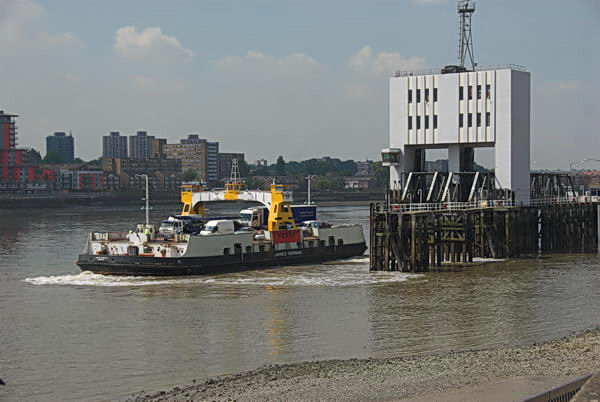
Woolwich Ferry, North Woolwich, 2006
The ferry is the James Newman, built in 1963 and named after a prominent local figure who was Mayor of Woolwich in 1923–25 and was taken out of service in 2018. But I hadn’t arrived on the ferry but had put my folding bike onto a Silverlink service on the North London Line which then ran from Richmond to North Woolwich Station (the section from Stratford to North Woolwich close at the end of 2006.)
The building in the background of the second image is North Woolwich Station, though it had by that date been abandoned by trains which stopped being used as a station in 1979, replaced by a considerably less grand and basic structure on its south side. For some years it was a museum and this fine 1854 building is now home to the New Covenant Church. My picture is taken from the riverside path.
Old Bargehouse Draw Dock and Causeway
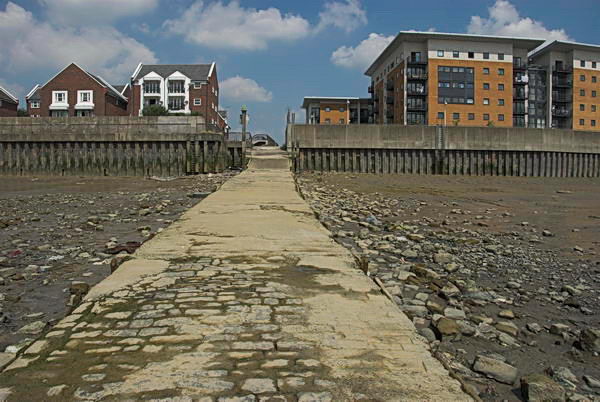
Next came three pictures showing the reverside flats just past the Old Bargehouse Draw Dock and Causeway at the end of Bargehouse Road. Until the Woolwich Free Ferry was introduced in 1889 this was where ferries ran across the river to Woolwich. On this occasion I’d cycled past the remains of the Free Ferry without taking any pictures, probably because I had photographed them on several occasions before. You can see the other two pictures of the flats on My London Diary.
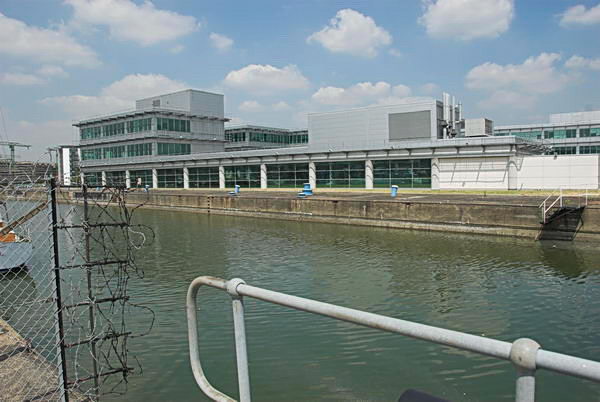
I took a few pictures looking across the River Thames most of which I didn’t post on My London Diary and then this one after I’d crossed the lock gates of the King George V Dock entrance and had come to the lock entrance to the Royal Albert Dock Basin. The building here has since been replaced by the flats of Lockside Way.
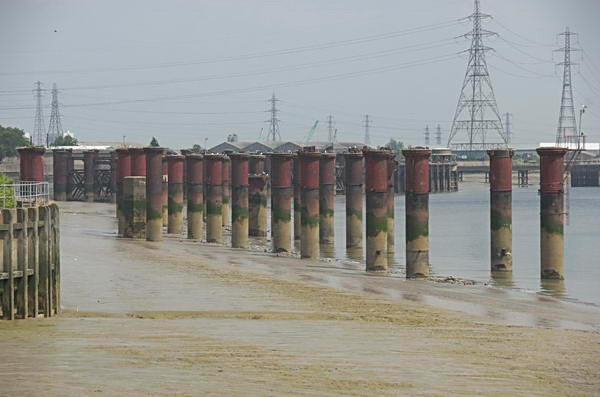
The riverside path – part of the Capital Way – continues north to an abrupt end close to Atlantis Avenue and this view from its end shows the remains of the jetty which brought coal to the Beckton Gas Works. I retraced my path, taking more pictures – some concrete pipe sections, a disused lock gate and a lorry park on My London Diary and then made my way to Woolwich Manor Way.
Royal Albert Dock
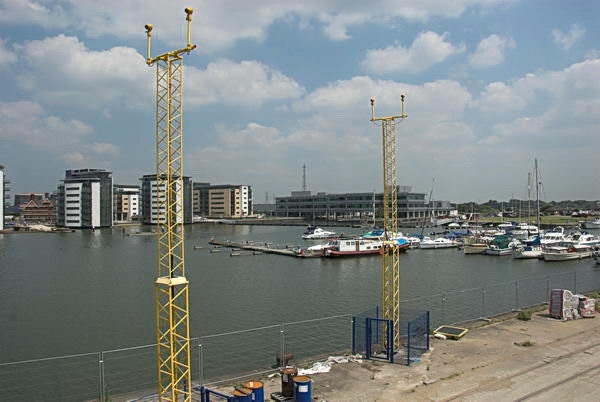
Here I could photograph across the dock. At the left are new flats built between the dock and University Way and in the foreground are two yellow towers carrying approach lights for the runway of London City Airport.
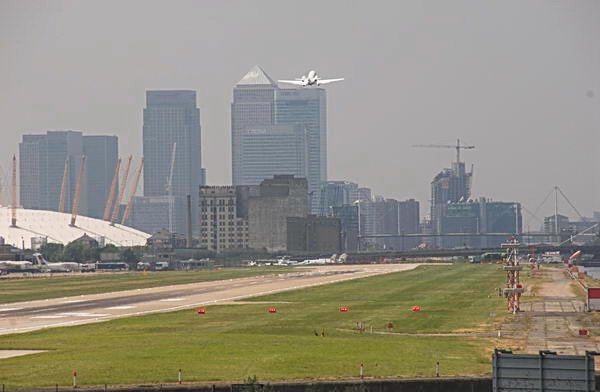
A plane takes off from London City Airport
The haze that you see in this picture, taken with a 300mm (equivalent) lens is a little more obvious than in the other pictures thanks to air pollution, which the airport contributes to.
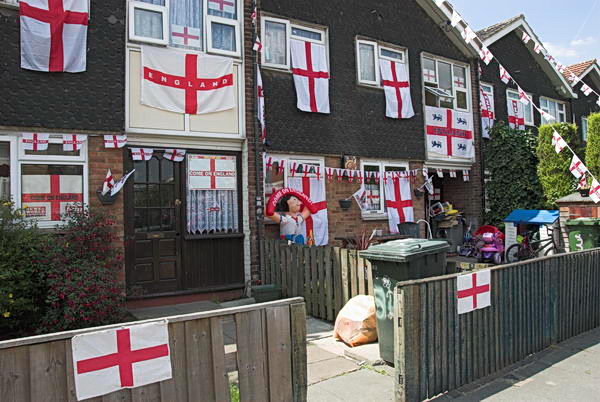
I made some more photographs in North Woolwich – tthere was a Football World Cup taking place in Germany – England were eventually knocked out by Portugal in the quarter-finals.
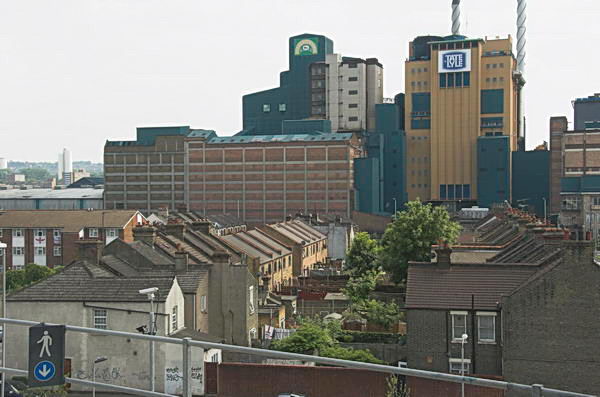
London City Airport DLR station had opened in December 2005 and I was able to take photographs from there both of the Airport Terminal and of Tate & Lyle’s sugar refinery.
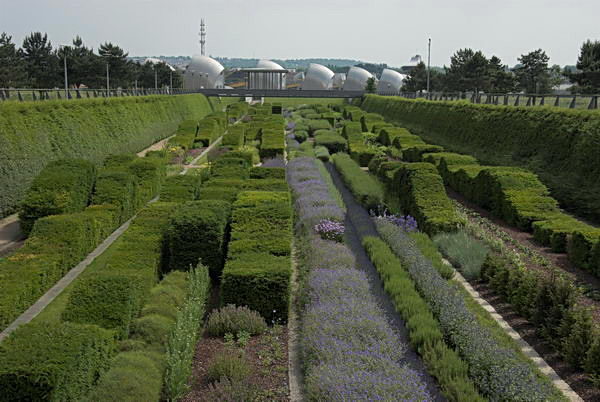
Thame Barrier Park
I took more pictures in Silvertown and Canning Town, some of which you can see on My London Diary, before making my way back to Central London. There I took some more pictures around Brick Lane, some of which I put on My London Diary in a seperate post. It had been a good day for me.
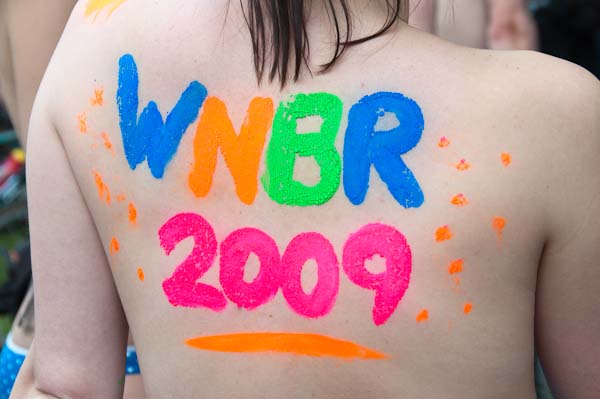
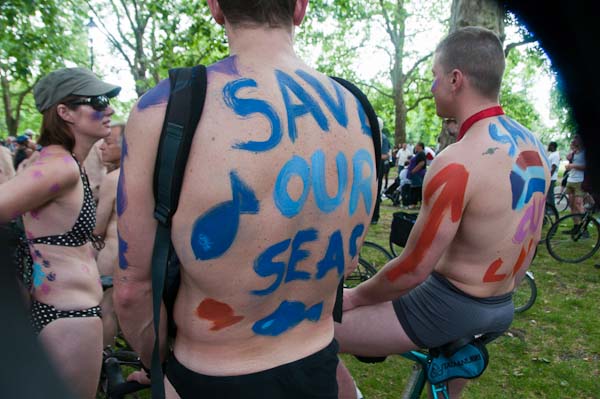
Carnival, Racist Deportations & more Naked Cyclists: I began work on Saturday 13 June 2009 photographing a carnival procession in Carshalton in the south of London, travelled to Islington in north London for a protest against Britain’s racist and inhuman immigration policies and finally covered the uncovered cyclists taking part in the 2009 London World Naked Bike Ride, photographing the preparations in Hyde Park ad the start of the ride there and then on the ride at Waterloo and in the West End.
Carshalton Carnival Procession – St Helier – Carshalton
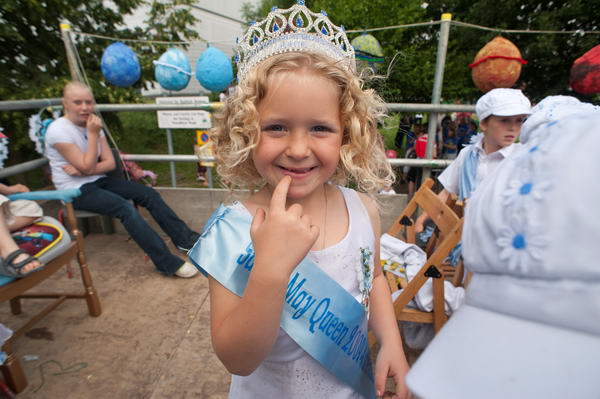
Sutton’s May Queen 2009 came to look at my cameras
My account of this event on My London Diary begins with a slightly unkind description “of the St Helier estate, a huge sprawling area built by the LCC 1930 to a kind of debased Garden City plan almost entirely without the charm of those earlier developments on what had previously mainly been the lavender fields of Mitcham.”
The procession began next to the “St Helier Hospital [built] in the modern style of the 30s, facing the imaginatively named St Helier Open Space” outside the Sutton Arena leisure centre and as usual I found the more interesting pictures were those I took there rather than on long procession to Carshalton where it was to end at a fair in Carshalton Park.
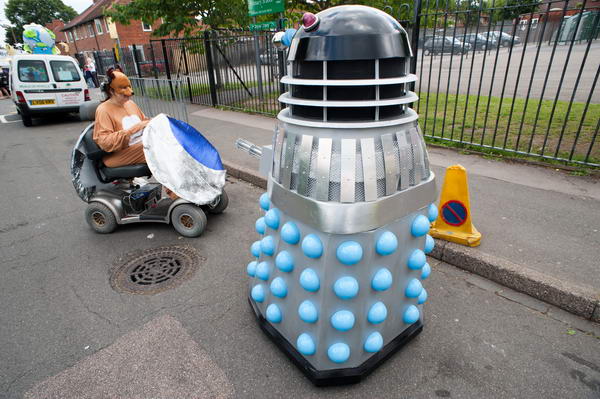
I’d come to the carnival largely because I was then working on a project on London’s May Queens, with several groups of them from across south London taking part in the procession, along with various other local organisations. And a Dalek and others in fancy dress.
The Rotary had brought their Father Christmas coming out unseasonably from the chimney of a small four-wheeled house towed behind a car at the rear of the procession. He’d been there too when I photographed the carnival previously in 2004.
It was a long an hot trek to Carshalton from St Helier, and the procession paused at Carshalton College for a break. I’d walked enough and made my way to the station missing the rest of the event and the funfair in Carshalton Park.
Speak out against Racism and Deportations – Angel, Islington
Britain’s major political parties at the prompting of our mainstream press have long promoted myths about migrants and asylum seekers, the more rabid of our tabloids in particular promoting the views of clearly racist columnists who publish stories about them getting homes and huge benefits, depriving the working class of housing, pushing down wages, taking “our jobs“, making it impossible to see doctors and more.
Nothing could of course be further from the truth. It’s the greed of the wealthy and government policies that have led to these problems – and without the migrants we would be in a considerably worse position. It’s something that is glaringly obvious when we need to make use of the NHS which would have collapsed entirely without them, but also in other areas. Demonising migrants is a deliberate policy divert public attention and anger away from the real problem of our class-based society. Divide and rule by our rulers,
Most of those who settle here from abroad want nothing more than to work and contribute to our society, though we make it hard for many of them to do so. They want a better life, particularly for their children and often work long hours for it. Migrant workers who clean offices are often more qualified than those who work in them – but their qualifications are not recognised here, and asylum seekers are unable to work except in the illegal economy.
Some facts:
Over a quarter of NHS doctors were born abroad (and others are the sons and daughters of migrants);
Immigrants are 60% less likely to claim benefits than people born in Britain;
Studies sho immigration has no significant effect on overall employment, or on unemployment of those born in Britain.
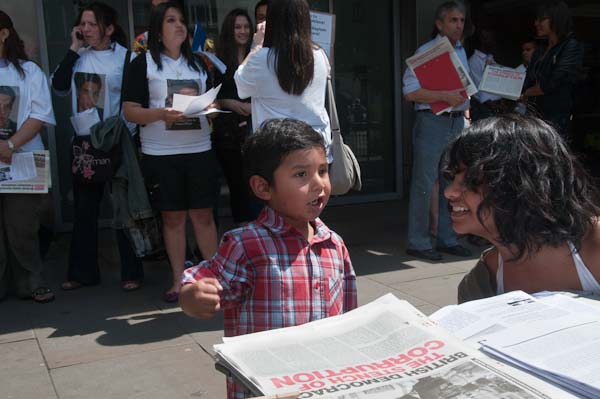
This campaigning protest in a busy shopping area outside one of London’s busier Underground Stations was organised by the Revolutionary Communist Group and was also part of a campaign by the Suarez family to prevent the deportation of John Freddy Suarez Santander, a 21 year-old father with a 3 year-old son. He came here from Colombia when he was six and grew up here. As a teenager he committed an offence and served 7 months in a young offenders institution.
Two years after he had served his sentence, the New Labour government passed a law to deport all immigrants with a criminal record, and an order was made for him to be sent back to Colombia, where he has no remaining relatives. His case in 2009 was still being considered at the European Court of Human Rights. The ECHR generally asserts that juvenile offences should not be seen as a part of a criminal record, but the Home Office decided the month before this protest to deport him anyway, and this was only stopped by his family going to the airport.
I’ve written rather often about this event, intended as a protest against the domination of our lives by ‘car culture’ which has resulted in our towns and cities and transport networks being designed around the priorities of motorists and road transport rather than us as pedestrians and cyclists – and to serve the interests of the companies that make cars and lorries. And it has resulted in illegal levels of pollution causing massive health problems.
Although it’s certainly an eye-catching event, it isn’t always very clear why it is taking place to those standing on the pavements, gazint at it in amazement, laughing and recording it on their phones. It’s probably good for our tourist industry, though I rather think London has too many tourists anyway, particularly as I struggle to walk over Westminster Bridge.
Heres one paragraph of what I wrote in 2009 – you can read the rest on My London Diary.
Some riders did have slogans on their bodies, mainly about oil and traffic, and some bikes carried A4 posters reading REAL RIGHTS FOR BIKE and CELEBRATE BODY FREEDOM or had flags stating ‘CURB CAR CULTURE’ which made clear the purpose of the event to the careful onlooker, but for most people it seemed simply a spectacle of naked or near-naked bodies. Though of course also a rare treat for any bicycle spotters among them.
I didn’t censor the pictures I put on line from the event though I’ve carefully selected those in this post. I think that there is nothing offensive about the naked human body but I included the following statement with the link to more pictures I posted then and which you can still see online.
Warning: these pictures show men and women with no clothes on. Do not click this link to more pictures if pictures of the naked human body may offend you.
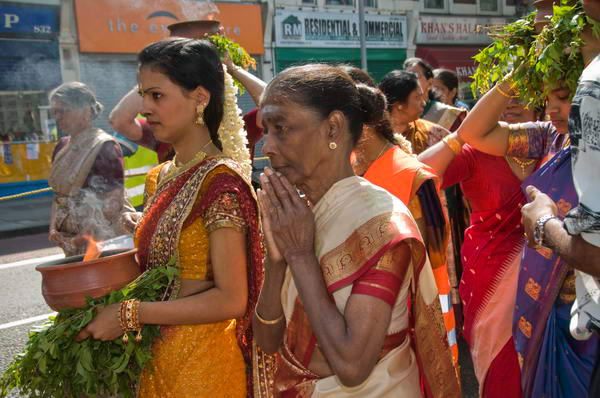
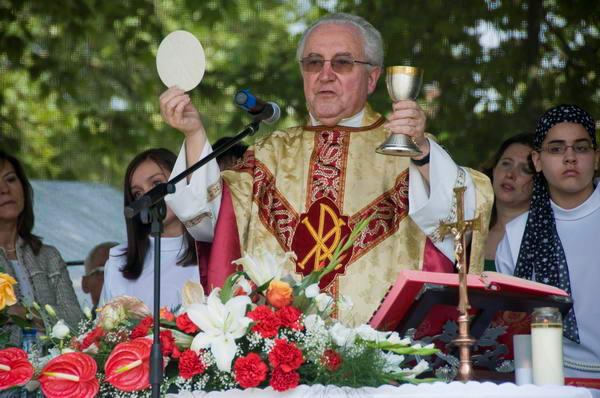
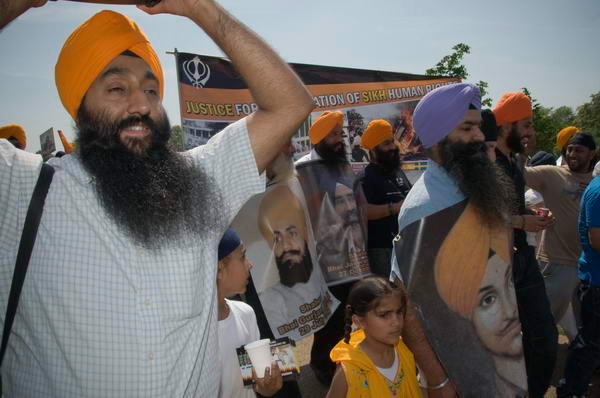
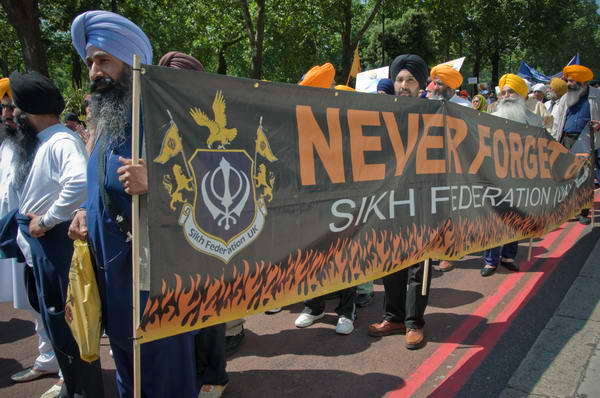
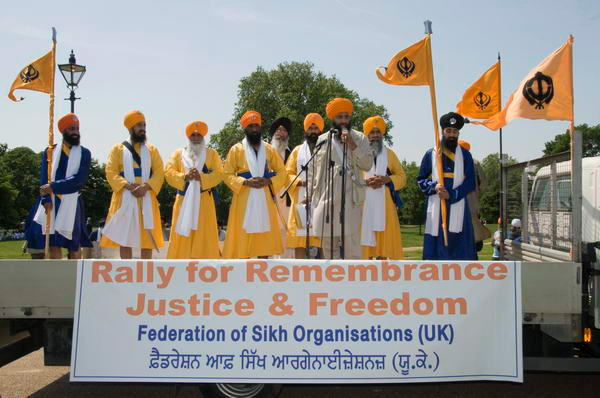
Lord Maruga, Portugal Day & Khalistan: My day on Sunday 8th June 2008 very much reflected the multicultural nature of London, beginning with a Hindu Festival in Thornton Heath, moving on to a Catholic Mass celebrating Portugal Day in Kennington and finally a march by Sikhs remembering the 1984 massacre and calling for an independent Sikh state, Khalistan.
Lord Muruga in Thornton Heath
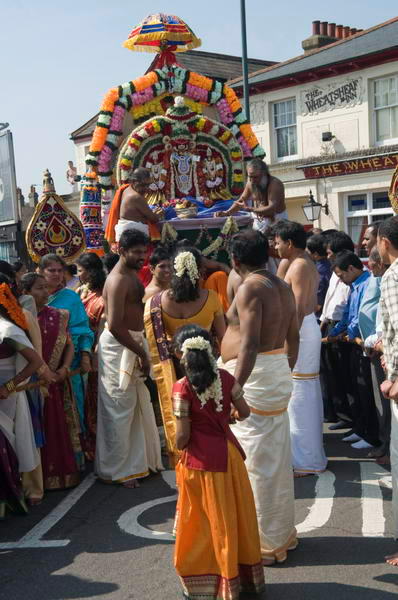
Hindu God Lord Muruga is particularly popular with the Tamils of southeast India (Tamil Nadu), Sri Lanka and Malaysia, and several hundred from the Sivaskanthagiri Murugan Temple in Thornton Heath celebrated him by pulling a chariot carrying his representation through the local streets.
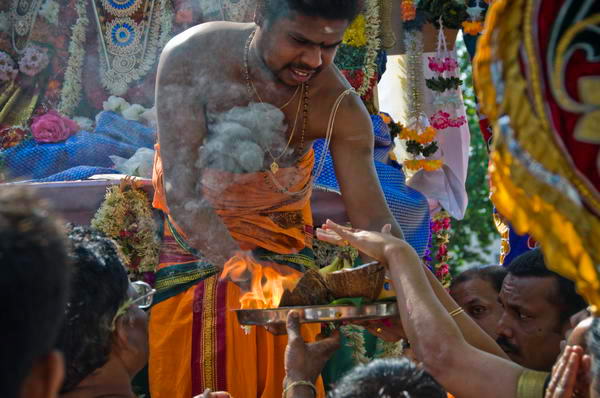
The procession was led by musicians, and by women carrying pots of burning embers on their heads and in their arms. As the chariot made its way along the street, people brought offerings of good to be blessed, and these were returned to them flaming.
Lord Muruga is the son of Agni, the fire god. He also carries a spear and a staff with a picture of a cockerel, and rides on a peacock. He is noted for the help that he gives for devotees who are in distress and the procession in particular visits those who cannot come to the temple because of their poor health or other disabilities
The flames are from camphor, widely used in Indian rituals and thought to eliminate negative energies. This waxy white solid burns with a relatively cool flame and emit little smoke.
Also known as Camões Day, Portugal’s National Day marks the anniversary of the death of its greatest poet and writer, Luís de Camões, on 10 June, 1580. He died in the year that Portugal became part of Spain, and the date of his death (the day of his birth around 1624 is not recorded) was celebrated as a national day after Portugal regained independence in 1640.
His great epic poem ‘The Lusaids’ centres on Vasco da Gama’s voyage to discover a sea route to India which was the foundation of the colonial explorations that brought the country great wealth and it made him a symbol of the nation.
Fascist dictator Salazar who ruled Portugal from 1932 to 1968 made the day a celebration of a fictional Portuguese ‘race’, but it is now simply a day for celebration by Portuguese communities around the world – and London has the largest Portuguese community outside Portugal, centred in Stockwell close to Kennington Park. The celebrations in the park includes entertainments and considerable eating and drinking after the initial open-air Catholic Mass I photographed.
Sikhs remember the massacres at Amritsar by the Indian Army and the mob killings encouraged by the Indian government following the assassination of Indira Ghandi by her Sikh bodyguards in 1984.
Sikh interests were ignored by an ignorant and incompetent British administration led by the Viceroy and Governor-General of India Lord Mountbatten who were responsible for the partition of India in 1947.
This annual rally and march in London calls for the establishment of an independent Sikh homeland, Khalistan in the Punjab and possibly incorporating some nearby areas of India and Pakistan.
Some Sikhs had been calling for an independent state since the 1930s and the movement continued to grow after partition with various militant Sikh groups including Babbar Khalsa, proscribed in the UK. Violent repression by Indian police led to a decline in the 1990s, but repression continues against Sikhs and in particular against those campaigning for separation and has increased in recent years. This makes it very difficult to determine how much popular support there is for the Khalistan movement in the area.
Data in the UK suggests that only a small fraction of British Sikhs support the establishment of Khalistan. In 2018, India asked UK to ban Sikh Federation (UK) who organise these events for its anti-India, pro-Khalistan activities, including proscribing the organisation but this has not happened.
The final post on walk in Limehouse on Sunday 6th January 1990 continued. The previous post from this walk is West India Dock Road & Limehouse Cut – 1990. As usual you can click on the images here to view larger versions on my Flickr pages.
Looking south towards the blockage across the canal through the bridge which carries the DLR over Limehouse Cut. At the right are the temporary buildings for the construction work on the Limehouse Link tunnel. The Limehouse Cut turns around to the right past the blockage to join Limehouse Dock and I think the industrial buildings you can see are in Brightlingsea Street.
I walked along the towpath to Commercial Road carried over the canal by Britannia Bridge, named for the Britannia Tavern which stood here until 1911, when it was probably removed to allow the bridge to be widened for traffic and also to allow for a towpath under the bridge.
At spring tides when the water rose to its highest it would overtop the old Bow Locks, with water flowing into both the Cut and the lower stretch of the Lea Navigation. This created a problem, particularly when the Cut was connected to the Limehouse Dock. In this picture you see the vertical guillotine gate which was fitted here after the Cut was taken over by British Waterways in 1948 enabling the canal to be isolated from the dock. It was removed soon after I made this picture.
You can also see the 1923 Empire Memorial Sailors’ Hostel on the corner of Commercial Road and Salmon Lane, built as a memorial to all the seamen who had lost their lives in the First World War. Later used as a hostel for the homeless and to house immigrants it had by 1990 been converted into luxury flats.
H W Bush, Mill Place, Limehouse, Tower Hamlets, 1990, 90-1c-16
Island Row, Mill Place, Limehouse, Tower Hamlets, 1990, 90-1f-66
Taken from near to the end of Island Row. But my walk was coming to an end. I made only one more black and white picture, not yet digitised, of the Regents Canal Lock from Commercial Road on my way to Limehouse station.
But I had also carried a second camera body loaded with colour negative film and I made the occasional colour picture during the walk. Here are four of them:
London Walking Weekend: Most weekends since the 1980s I’ve spent at least one day walking around London, often on my own but more recently mainly with others carrying banners and placards. But Saturday 6th June 2009 was a little different as it was designated as the Walking Weekend of the Story of London Festival, and I went to a couple of free events put on by the Heritage of London Trust and Pevsner Architectural Guides in east London, as well as doing a little on my own.
London 2012 site
On Saturday morning I took a guided tour of St Mary Magdalene’s Church in East Ham led by Tara Draper-Stumm for the Heritage of London Trust, a charity which does a great deal of work in restoring buildings and sites in danger across the capital.
It was a great guided tour of one of London’s most interesting churches, Grade 1 listed and “claimed to be the oldest parish church still in weekly use in Greater London“, large parts dating from the first half of the 12th century but of course greatly added to, altered and restored over the centuries, most recently in 1965-6.
But I didn’t take any pictures, so nothing to post here from this tour. Back in the 1990s when I was a regular contributor to our National Building Record I often found myself waiting in the library there for my appointment and would pull a box file for an area of London from their shelves – to find it almost entirely full of photographs of old churches, many taken by their vicars back in the day when many were gentlemen of leisure with the money to take up photography. It rather put me off photographing them and on this morning I decided to simply experience the event, listen and look. But there is a fine illustrated tour of the church online.
London 2012 site
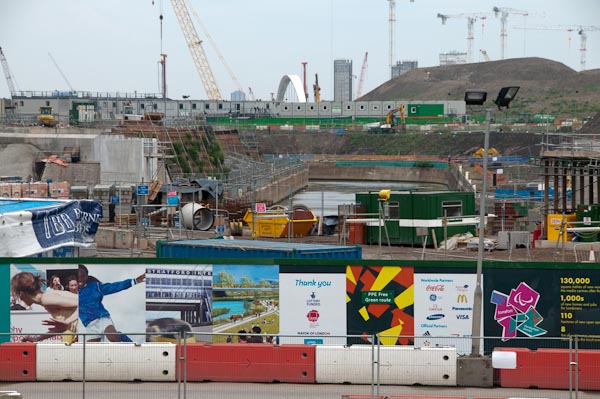
From there I had some time to spare before the afternoon walk and went to visit the huge building site on Stratford Marsh for the London Olympics, by then sealed off by miles of blue fence. It was something of a rush to take pictures to later make into panoramas as well as some other pictures before getting back on the DLR from Pudding Mill Station to Poplar.
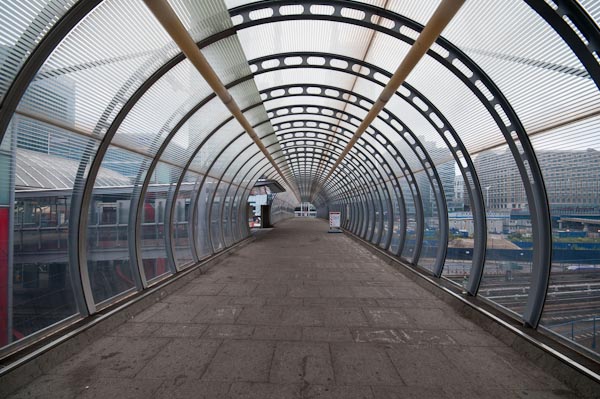
Footbridge at Poplar Station – a similar panoramic image I took on this footbridge a years earlier was used wrapped around two sides of a 12 inch record, ‘Limehouse Link’and less impressively on the CD.
There I met someone whose name had been familiar for many years but I’d not met, Bridget Cherry, a leading architectural hisotrian whose name appears on the essential works for anyone with an interest in the subject, The Buildings of England, begun by Nikolaus Pevsner in 1951. She worked on many volumes, some with him, as well as becoming General Editor.
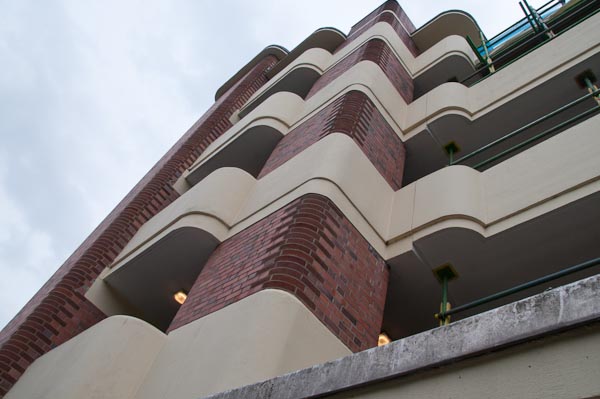
1930s streamlined moderne concrete at Constant House, refurbished and fitted with entrance doors
These books remain essential guides to anyone with an interest in architecture in England, and I walked most of the ‘perambulations’ in London from them, although my interests were rather wider than the buildings contained in them and my walks also took me to many other places. You can read more about this walk on My London Diary. Here I’ll include just a few of the pictures I took with captions and some brief comments.
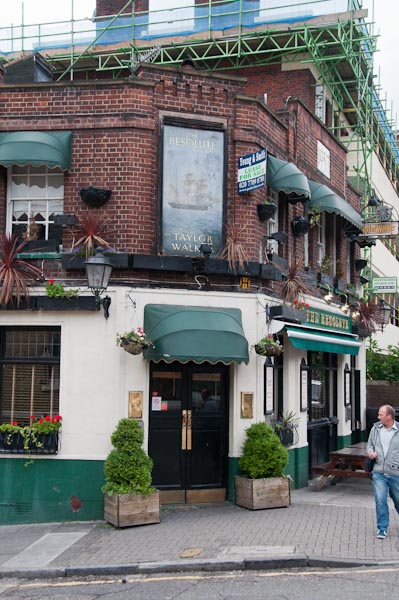
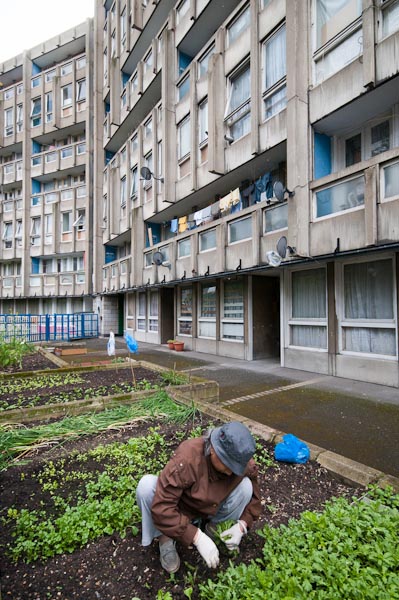
The 1930s pub ‘The Resolute’ , named for HMS Resolute, one of the ships sent in 1850 and 1852 to search for Sir John Franklin, lost in the N W PassageRobin Hood GardensSome gardening going on with residents growing salad crops
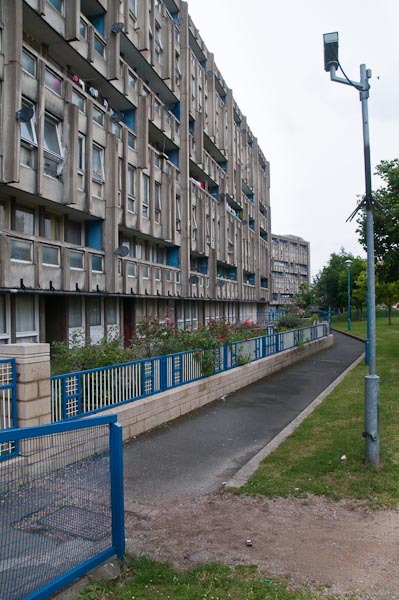
Robin Hood Gardens, designed in the late 1960s by Alison and Peter Smithson and completed in 1972, gained international recognition for its Brutalist architecture and was the highpoint of the walk. Its two long blocks enclosed a large garden area which was suprisingly quiet despite the site being alongside of one of London’s busiest roads. Neglected for years by Tower Hamlets council it was used to house many ‘problem’ tenants but by 2009 had largely recovered and become well regarded by those who lived there.
But the local authority had already decided to demolish it as a part of a ‘regeneration’ scheme. Attempts to list it scandalously failed – despite its international architectural significance – probably to protect the profits of the developers and demolition began in 2017 but was only finally completed in March 2015. Listing of large council estates became largely impossible under New Labour and expensive, highly profitable and environmentally disastrous schemes regeration schemes providing expensive but largely poorer quality buildings with little social housing have since obliterated estates – including some fine architecture – which could have been refurbished to modern standards at a fraction of the cost.
St Matthias Old Church built 1652-4 but exterior reworked in 19th centry and monument to Captain Samuel Jones
London Gardens, Green Lifestyle & Carnival de Cuba: I had an interesting time twenty years ago on the weekend of 4-5th June 2005 in London. After a visit to some fantastic private gardens on the Saturday, on Sunday I went to a Green Lifestyle festival in Greenwich then photographed a Cuban carnival procession at Coin Street.
Here I’ll edit slightly the text I wrote back in 2005 and integrate it with some of the pictures I made, with links to the rest of those I put at the time on My London Diary. And end with a brief comment.
London Gardens – North London, Notting Hill and Chelsea
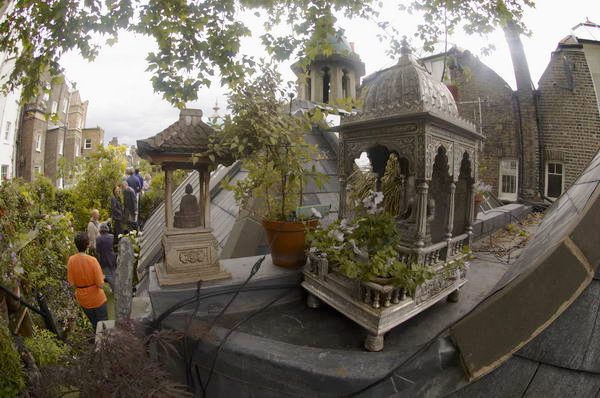
A Chelsea rooftop garden
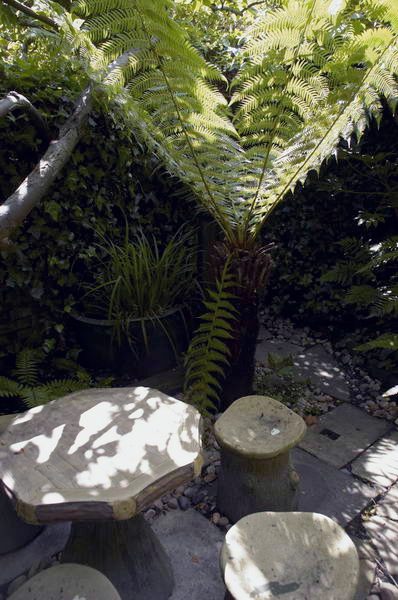
London Arts Café, now sadly long defunct, was an organisation which promoted urban art and examined its contribution to urban life. Its annual programme often included some interesting visits, sometimes taking us to places we never knew existed. On Saturday June 4th 2005 we were privileged to be able to visit three very different private gardens, each it it’s own way extraordinary. They are all among those featured in the 2000 book by George Carter, The New London Garden, (ISBN 1-840000-347-2) where you can find more details about them and view some splendid photographs by Marianne Majerus.
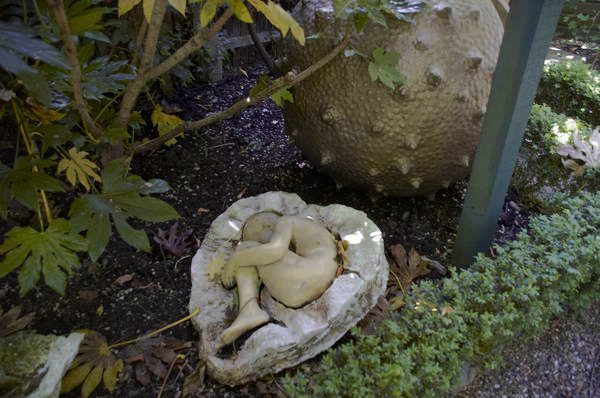
Judy Wiseman’s sculpture garden in Gospel Oak
We met George in the Notting Hill garden and he talked to us about his work and the importance of the garden in urban space, and we were also fortunate to meet the garden owners who also told us about their own gardens.
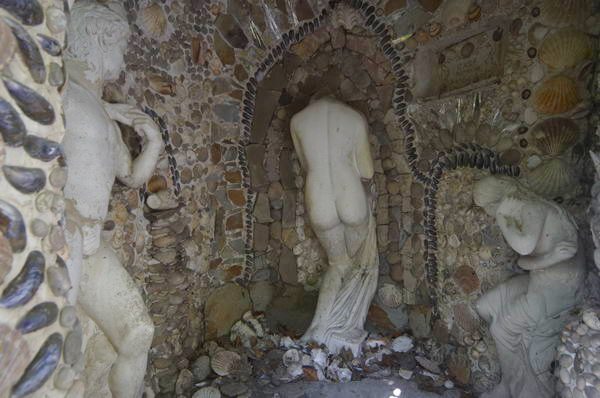
A grotto in Notting Hill
In North London, we visited a garden filled with sculptures of various types by designer and sculptor Judy Wiseman, making the most of the various locations. Most were casts of bodies or parts of bodies. This garden, I think alone among the three we visited, is open to the public to visit on one day most years as a part of the charity Open Gardens scheme.
In Notting Hill, the garden was more practical in some ways, with a large expanse of lawn, but in one corner was a dark area of trees and bushes with a fantastic grotto.
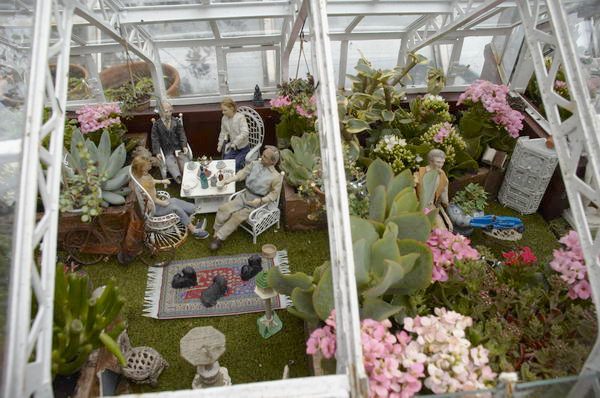
Most fabulous of all was the rooftop garden in Chelsea, stretched along the rooftops at the back of four houses, all former studios of well-known artists. One of the highlights for me was a scale model of a glasshouse built by Decimus Burton, used to create a miniature world with plants and figures.
After spending some time admiring this garden, we were also shown the art gallery in one of the houses, with an incredible collection of pictures, including works by Picasso, Braque, Courbet, Moholy-Nagy and many other famous names, including some fine work from the 1950s. There were also some fine rooms in the house, including a modern kitchen and some fine period pieces.
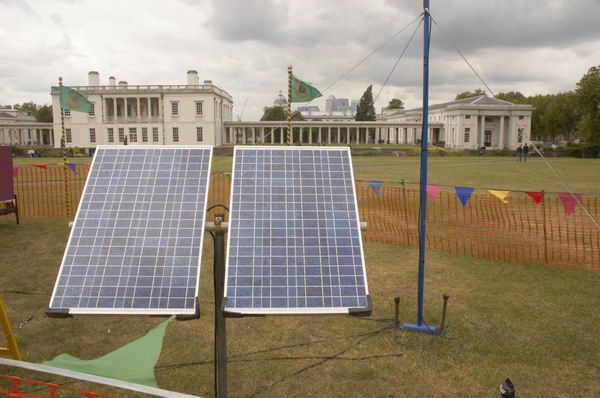
Solar Panels and The Queen’s House, Greenwich, London, June 5, 2005
The group that had organised Kingston Green Fair had been asked to organise the London Green Lifestyle show in Greenwich Park, held on World Environment Day, June 5, 2005 as a part of London’s contribution to a more sustainable lifestyle. Unfortunately the events were spread over far too wide an area of the park to really be successful.
As always, there was rather a lot of missing the obvious in the approach to a better environment. So there was little about the need to drastically cut down air travel, and relatively little about cutting down car use. Casual visitors could certainly have gone away with the idea that if we all recycled our rubbish and perhaps switched to a green power supplier, everything was set for a rosy future.
Solar powered roundabout
I first spoke in public about the need for effective action to save the world in 1970. I had sold the last car I owned in 1966, using a bicycle wherever practicable since then, very occasionally using taxis and hiring a car for a few holidays. We’ve lived a relatively low-impact lifestyle, perhaps except for my addiction to cameras and computers! I changed jobs so I could cycle to work (and now work mainly online to avoid travel.) Others I’ve known have done more, moving to become largely self-sufficient.
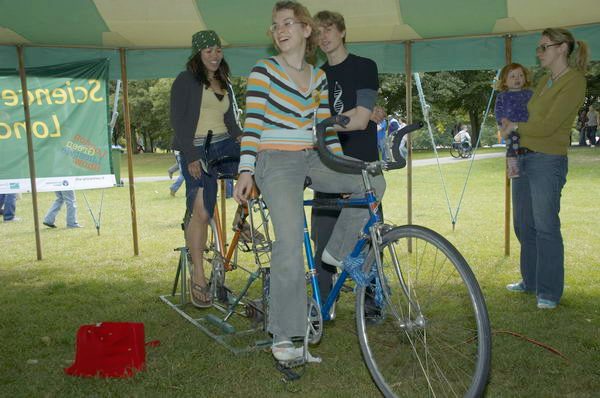
Bike power to run a sound system
At the moment the government is playing lip-service to the need for urgent action on the environment, but falling short of taking or even discussing any effective actions, to do things like actually cutting the use of fossil fuels, or reducing the number of car and air miles we travel. [Little has really changed in challenging the centrality of the car in our culture since – and electric cars are little better for the climate.] I’m increasingly gloomy about the future, though the world will probably stay in reasonable shape for the rest of my lifetime.
We need to think far more seriously about quality of life, rather than concentrating on things that are easy to measure like gross national product. much of it is truly gross, and there are better ways to organise our lives around the things that really matter.
Carnival de Cuba – Coin St Festival, Bernie Spain Gardens
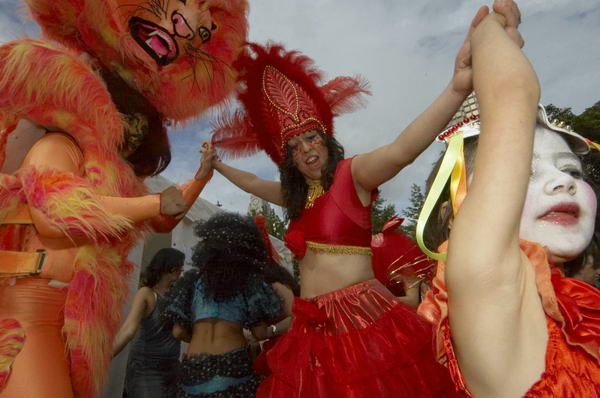
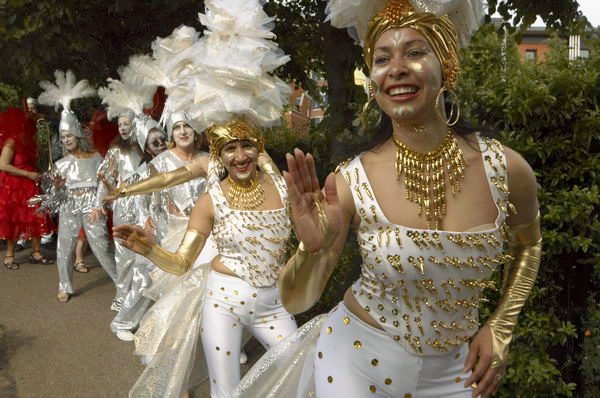
Carnival de Cuba was taking place the same day at Coin Street (perhaps the one successful development in london since the war.) I got there in time for the procession, and clearly everyone was having a great deal of fun.
The visits to the gardens in these pictures was for me a rather unsettling window on the private realms of the over-privileged in our society who inhabit a very different world to the rest of us. Though there are far worse ways many of them chose to spend their phenomenal and largely unearned wealth it would be good to see the tremendous creative talent shown here put into work that could be appreciated by a much greater public in public spaces.
But perhaps like the private collections of Sir John Soane we can now see in Lincoln’s Inn Fields or those stolen from the Tradescant family by Elias Ashmole at least some of these may eventually become publicly accessble assets.
Later I photographed more private gardens of the wealthy in a collaborative project with the short-lived Queen’s Terrace Café, shown there in 2011 as ‘The Secret Gardens of St John’s Wood’ and with the book with Mireille Galinou of the same name still available from Blurb, where you can view the preview which contains many of the pictures.
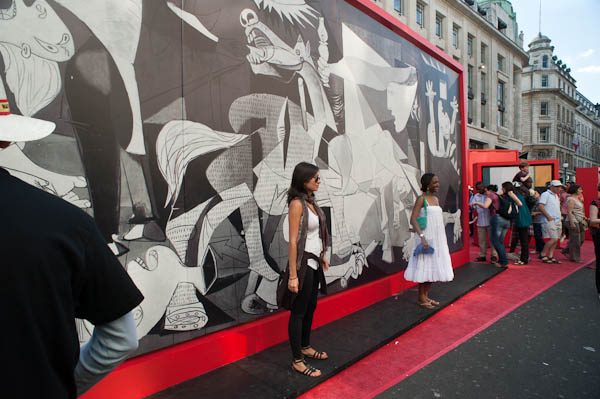
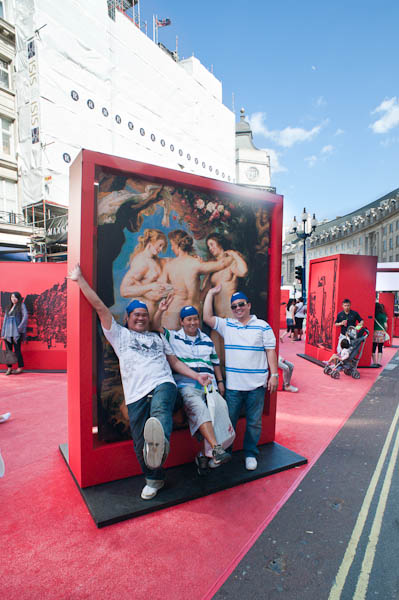
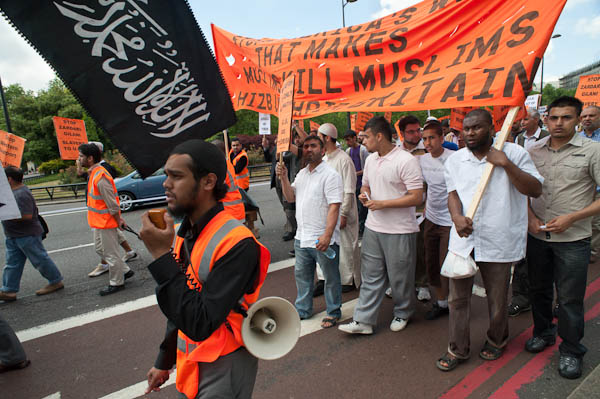
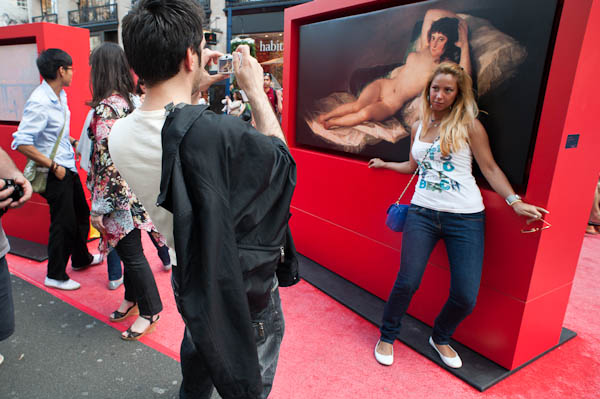
Hizb ut-Tahrir, Spain and Copyright: on Sunday 31 May 2009 I photographed a march by Hizb ut-Tahrir against attacks by Pakistan army on Taliban militants in Swat and then went to the ‘Taste of Spain’ festival in Regent Street, which led me to think and write about the copyright position over reproductions of works of art.
As I pointed out then, if works of art are out of copyright because of their age – now because the artist died over 70 years ago – then any reproduction of them “intended to be a faithful 2D representation” lack “the the artistic intent necessary for copyright to exist and so is also in the public domain.“
Picasso died in 1973 so his work will remain copyright until 2043
I wrote in 2009:
However copyright lawyers in the employ of many museums and photographic agencies who make money selling or licencing art reproductions take a rather different view of intellectual property law.
A judgement in the UK Court of Appeal in 2023 clarified the situation as far as the UK is concerned, confirming that photographs of two dimensional artworks which are out of copyright are indeed also in the public domain, and that museums and collections etc can no longer use copyright to restrict the circulation of images or make any charge for doing so.
Hizb ut-Tahrir protest US War in Pakistan – US Embassy – Pakistan High Commission
Hizb ut-Tahrir Britain was proscribed as a terrorist organisation in the UK in January 2024 after it organised protests which supported Hamas following their October 7th attack on Israel. I had been concerned about their activities since I first photographed them over 20 years earlier.
They marched from the US Embassy to the Pakistan High Commission in protest against the attacks by the Pakistan army on Tehrik-i-Taliban Pakistan militants who had taken control of parts of the Swat Valley. They called this an “American War”, blaming them on American pressure on the Pakistan government and called for an immediate end to attacks by Muslims on Muslims.
I ended my report on the protest with a long criticism of Hizb ut-Tahrir Britain calling on them to “have a proper respect for human rights, including the rights of women, although an Islamic interpretation of this may well differ in some respects from a Western one. It’s very hard not to agree with Hizb ut-Tahrir when it talks about the corrupt regimes currently leading Muslim countries, but it would also be welcome to see them standing against repression – and in particular the repression of women – that is currently practised in places including Swat and states such as Iran.”
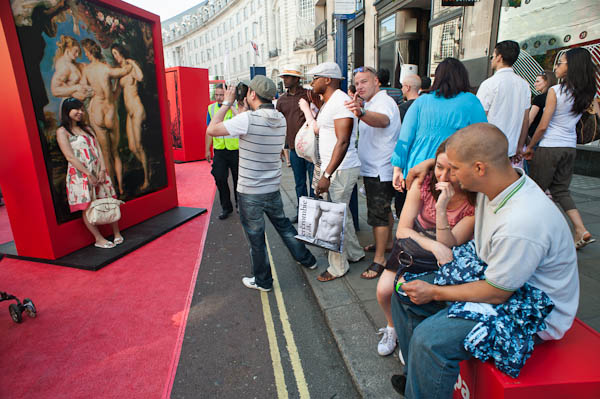
The most impressive part of the ‘Taste of Spain’ festival in Regent Street was the display of large photographs of pictures from the Prado in Madrid which largely attracted attention because of the female nudity in some of the works (and it’s a shame that Ruskin had apparently not studied this work in detail before his wedding night, which might then have been less of a shock to his system.)
Quite a few people posed in front of it to have their picture taken – but by their friends rather than by me, but I and other photographers took advantage of this.