More City Panoramas – 1994

More City Panoramas: I spent several days wandering around the City of London – the “Square Mile” in July and August 1994, I think in prepaation for a group show in which I had decided this would be my contribution.

More City Panoramas - 1994
Bubbs, Restaurant Francais, Farringdon Rd, West Smithfield, City, 1994, 94-702-43

Bubb’s Le Restaurant Francais with the address Central Market, Farringdon Street is long closed, but a listing states that they served “a variety of traditional French dishes at their restaurant and can cater for private parties of up to 30 guests upon request.” There are still several French restaurants in the area.

A little further down West Smithfield was the London Central Market with on the corner a wholesale Cash and Carry and Harry’s Drinks and in the distance a covered way across the road between market buildings.

I photographed this corner on several occasions, making a similar panorama here in 1992, perhaps why I have not put this on Flickr.

More City Panoramas - 1994
River Thames, Thames Path, Vintners Hall, Paul’s Walk, City, 1994, 94-703-52

Looking west along the river to Bull Wharf, Queenhithe and beyond. Bull Wharf proudly states it was REBUILT 1980 and it looks to me exceedingly ugly, probably why I didn’t upload this picture to Flickr. My picture perhaps makes the red brickwork event more virulent – the building looks much better to me in a black and white non-panoramic image I made at the same time from more or less the same spot.

Car Park, Smithfield St, City, 1994, 94-704-51

Slightly out of focus in the distance I can just make out Lady Justice on the roof of the Old Bailey and to her right more clearly the tower of Holy Sepulchre Church at the east end of Holborn Viaduct.

I think this car park probably extended to Hosier Lane and is now filled with the shops and offices of 12 Smithfield Street, built in 2004 and now described on Buildington as “an outdated office block that has suffered from poor environmental performance, limited architectural merit, and inefficient servicing. Its ground floor lacks engagement with the surrounding public realm, and its dated façade no longer reflects the character of the conservation area” and being refurbished and extended.

St Mary Somerset Church, Upper Thames St, City , 1994, 94-704-13

A rather dark rendering of this high contrast scene with deep shadow the block of St Paul’s Vista (or 1 High Timber St, now One Millennium Bridge) straddles Upper Thames Street with the bright sky above. My picture was made from the footbridge of Fye Foot Lane carrying a section of the CIty’s Highwalk across Upper Thames Street and Castle Baynard Street and on to Queen Victoria Street.

St Mary Somerset Church was one of those destroyed in the Great Fire of London in 1666 and like 50 others rebuilt by the office of Sir Christopher Wren. The tower remains between Lambeth Hill and Castle Baynard Street but the rest of the church was demolished in 1871 when like other redundant churches the land was sold to build churches in the rapidly expanding suburbs of London. The tower was a Ladies toilet before the Second World War, Damaged by bombing, it was restored by the city in 1956 and has now been converted into a private residence.

More City Panoramas - 1994
Highwalk, Footbridge, Huggin Hill, Upper Thames St, City, 1994, 94-705-41

A fruit and vegetable stall on the pavement in Front of St Mary Aldermary (another rebuilt by Wren after the Great Fire) on busy Queen Victoria Street which you can see at extreme left. I think the extremely low stone wall on the pavement and the railings mark the former edge of its churchyard.

I liked the range of architectural age and style across the upper half of this image, and particularly admired the ornate Victorian block in the centre of the picture. As well as a bus and a coach there are 5 London taxis in the picture, an aspect of London’s traffic congestion long overdue for reform.

Highwalk, Footbridge, Queen Victoria St, City, 1994, 94-705-31
Highwalk, Footbridge, Huggin Hill, Upper Thames St, City, 1994, 94-705-31

This was taken from a now-closed section of Highwalk across Upper Thames Street and the church at left is St Mary Somerset. The alley at right is Huggin Hill with a view of the distinctive building on the block between Queen Victoria St, Bread Lane and Cannon Street, 30 Cannon St built for Crédit Lyonnais between 1974 and 1977.

Highwalk, London Wall, City, 1994, 94-706-51

So many buildings have changed around here since 1994. The building right of centre is Standard Chartered on the corner of Aldermanbury and Aldermanbury Square and was remodelled around 2010 and the building left of centre is Brewer’s Hall, now with a roof extension. I think this section of the highwalk led up at Brewers Hall Gardens

More from July 1994 in the City later.


FlickrFacebookMy London DiaryHull PhotosLea ValleyParis
London’s Industrial HeritageLondon Photos

All photographs on this page are copyright © Peter Marshall.
Contact me to buy prints or licence to reproduce.
Kings Cross and Pentonville 1990

Kings Cross and Pentonville: Although I took a few pictures in the next few weeks, mainly on my way to or from meetings, it was well into February before I was able to go on another long photographic walk. Of course the weather at that time of year often isn’t too kind and days are short, but winter is the best season for photographing much of London’s buildings, as so much is hidden once trees come into leaf.

Grays Inn Rd, Kings Cross, Camden, 1990, 90-2b-54

I can’t now recall why I decided to return to the Kings Cross area on Sunday February 11th 1990, though I liked to revisit areas periodically, and the journey to the Victoria line station was an easy one, suitable for short days to give me more hours of usable light.

I left the station by the Pentonville Road entrance and walked back towards the main station, taking a couple of pictures on my way before heading down Grays Inn Road. This picture looking back towards Kings Cross Station includes both the station clock tower – I seem to have arrived shortly before 10am – and the well-known “lighthouse” built simply as advertising for Netten’s Oyster Bar. What seems an incredibly long horizontal pole holds one of the many traffic lights in the area .

Posters, Grays Inn Rd, Kings Cross, Camden, 1990, 90-2b-55

In the centre of these fly-posted posters is an advert for ‘THE BEST SHOP IN TOWN’, SHE-AN-ME at 123 Hammersmith Road, West Kensington, London W14. It offers ‘UNUSUAL – BONED DRESSES – 6″ HEEL BOOTS – LATEX RUBBER …’ and much more, a fetish shop specialising in PVC, rubberwear and bondage equipment. Although Yelp still has a listing for the business it is long gone; after some years as ‘Simply Pleasure’ it is now ‘Quick Local Store’ selling snacks, cold drinks, tobacco, souvenirs, toiletries and household items.

Scales, Weights, 319-321, Grays Inn Rd, Kings Cross, Camden, 1990, 90-2b-56

One of London’s more photographed signs, though now a little faded and above a Nail Bar and Computer Centre on this nicely curved building. The Greek Restuarant at 325 is now a fast-food place – and is flanked by two others.

Tattoo Studio, Pentonville Rd, Pentonville, Islington, 1990, 90-2b-43
Tattoo Studio, Pentonville Rd, Pentonville, Camden, 1990, 90-2b-43

I walked back onto Pentonville Road, here the boundary between the London boroughs of Camden and Islington. Modern Jock’s Tattoo Studio on the south side was on the ground floor and Chestnuts Hair Studio for Men and Women through the same door on the first floor, illustrated by arrows for the non-literate. Born around 1920 British tattooing legend Jock Liddel started as a tattoo artist at the age of 16 in Scotland and his famous shop was at 287 Pentonville Road for many years. He died in 1995 but had moved down to Kent a few years earlier. His shop and several adjoining are now an American multinational fast food burger and fries chain.

Signs, Caledonian Rd, Pentonville, Islington, 1990, 90-2b-34

‘Kings X People Say NO’ to the Chunnel Terminal for Kings X – Chaos for London’ read the array of posters on the back of a road sign, one of four signs in this picture, along with those for the Autodrome, Peacemeal Whole Foods and Loseley Dairy Ice Cream.

I was briefly and peripherally involved with the Kings Cross Railway Lands Group and their ‘Planning for Real’ exercise with local residents which formed a basis for the comprehensive alternative plan published in their Kings Cross Railwaylands Towards a People’s Plan Full Report published in October 1991.

Of course their plans were not adopted but the opposition certainly played a part in the decision to drop the plans for a new Kings Cross and instead to develop St Pancras as the international terminal. As an article on Londonist points out, “The plans would have seen 83 homes and 58 shops demolished. The scale of destruction would have witnessed landmark listed buildings like the Scala pulled down … The entire block between Caledonian Road, York Way and Caledonia Street would have also been lost.”

Northdown St, Caledonian Rd, Pentonville, Islington, 1990, 90-2b-23

The Kings X Sauna on the corner of Northdown Street and more useful shops and offices on Caldedonian Road. The sauna at No.70 later became an estate agents.

Mercantile House, All Saints St, Pentonville, Islington, 1990, 90-2b-25

Further north on Caledonian Road I turned west into All Saints St where I photographed Mercantile House which appropriately later became home to global brand consultancy agency Wolff Olins – who have now moved to Southwark.

Work began in 2022 to transform this and other buildings on the site into Regent’s Wharf, “a ground-breaking new campus … created with the next generation of innovators in mind.”

Mercantile House was built in 1891 as the Head Office for Thorley’s Food for Cattle with their mill behind it on the bank of the Regent’s Canal. They had moved onto the site in 1857.

A family owned business for over 100 years, Joseph Thorley’s Ltd was an iconic player of the industrial age, inventing and distributing ‘spicy aromatic condiments’ that would beef up your cattle, pep up your pigs and ensure your chicken laid the best clutch in the roost.

This MiracleGro for animals was made to a secret recipe and sold around the world even in far flung outposts such as the Falkland Islands, all from the headquarters at Regent’s Wharf in King’s Cross.”

Thorley’s progressive ideas extended to their charming and playful marketing, with eye-catching advertising and branding that has become collectable today. Animal feeds went by many wonderful names such as Grula for Horses, the famous Thorley’s Cake that reared ‘Champions’, Ovum for chickens and Rabbitum.”

More from this walk later.


FlickrFacebookMy London DiaryHull PhotosLea ValleyParis
London’s Industrial HeritageLondon Photos

All photographs on this page are copyright © Peter Marshall.
Contact me to buy prints or licence to reproduce.

Sri Guru Singh Sabha Gurdwara – Southall 2005

Sri Guru Singh Sabha Gurdwara: On Saturday 1st October 2005 I enjoyed a tour of the largest Sikh Gurdwara in Europe. Building had begun in 2000 and the temple opened at the end of March 2003. The tour had been arranged by art and urban historian Mireille Galinou for the now long-defunct and much missed group ‘London Arts Café‘ – and you can still read more about on the web site I wrote for it, although the group came to an end in 2008.

Sri Guru Singh Sabha Gurdwara - Southall  2005
The use of stained galls is unusual in a Gurdwara

Here is what I wrote about the visit in 2005 and a few of the pictures I took at the Gurdwara – there are more on My London Diary.


October started with a fine day, and I went to visit the largest Sikh Temple or Gurdwara in europe (and the fourth largest in the world) which opened a couple of years ago in Southall, along with a group of friends from the London Arts Café. We were shown around the building by one of the Sikh volunteer guides and also the architect, Richard Adams of Architect Co-Partnership, which had won the open competition to design the building. He had worked fully with the Sikh community to produce a building suited to their needs, and it does so impressively: clean simple surfaces, powerful colour in the windows and light streaming into the central stairway and lobby from the large window and glass roof areas.

Sri Guru Singh Sabha Gurdwara - Southall  2005
Gold leaf covers the main dome of the Gurdwara
Sri Guru Singh Sabha Gurdwara - Southall  2005
The Wedding Room
Sri Guru Singh Sabha Gurdwara - Southall  2005

The Sri Guru Singh Sabha Gurdwara serves the community, both for workship and for other needs. As well as a vast prayer hall officially capable of seating up to 3,000 people (and actually holding rather more at major festivals) there is a fine marriage room, and various other facilities including a Langar (Dining Hall); this free community kitchen can serve over 20,000 vegetarian meals over a festival weekend.

Sri Guru Singh Sabha Gurdwara - Southall  2005
Preparing the vegetables
A team of women prepare pancakes

The Gurdwara had a powerfully religious atmosphere. On entering we followed the customary practice of removing our shoes, covering our heads with the scarves provided and washing our hands before commencing our visit.

The Prayer Hall

At various points both our guide and the architect explained how the building served the basic Sikh tenets of service, humility and equality, and also the spiritual guidance from the Sri Guru Granth Sahib, the religious writings which are were appointed as spiritual head of the Sikh religion, the Eternal Guru, by Guru Gobind Singh around three hundred years ago.

Musicians in the Prayer Hall

Although the architecture and the prayer hall in particular were impressive, what made the strongest impression on me was the kitchen, especially the team of women working together. The food was excellent, a real pleasure to eat, although my still rather painful knee made it easier for me to stand and eat at one of the tables rather than in the traditional manner seated on the floor. Although food is free, those eating may perform some service to the temple in thanks for their food, or give an donation of some kind, which we gladly did.

Southall is now Britain’s holy city, apparently with places of worship for over 50 religions or denominations. Brother Daniel Faivre’s ‘Glimpses Of A Holy City‘ published in 2001 after more than 20 years of living in Southall gives a good insight into some of this diversity.


Unfortunately Brother Daniel Faivre’s 104 page spiral bound book published in 2001 is no longer available. The Sri Guru Singh Sabha Gurdwara is, according to Wikipedia one of ten Sikh Gurdwaras in Southall, which also has two large Hindu ‘Mandir’ temples, six Mosques and “more than ten Christian churches including 5 Anglican, one Roman Catholic (St Anselm’s Church), Baptist, Methodist and several Pentecostal or Independent.” In the 2021 Census, 28.5% of the population were Sikh, 24.1% Muslim, 22.6% Christian 22.6% and 14.2% Hindu.

More pictures on My London Diary include some taken in Southall after leaving the Gurdwara.


FlickrFacebookMy London DiaryHull PhotosLea ValleyParis
London’s Industrial HeritageLondon Photos

All photographs on this page are copyright © Peter Marshall.
Contact me to buy prints or licence to reproduce.

Surbiton Festival 2006

Surbiton Festival: On Saturday 30th September 2006 I went to Surbiton to photograph the annual Surbiton Festival for the second time.

Surbiton Festival 2006
Balloons and morris dancers in Surbiton station car park

As a part of my photography of London I attended quite a few local events across London in the first decade of this century – in September 2004 I had photographed the Surbiton Festival and also the Angel Canal Festival, Walthamstow Festival, the City of London Flower Show, Lady Somerset Road Street Party, Brick Lane Festival, Thames Day, the Shoreditch Car Free Festival and Leytonstone Car-Free Festival, as well as several political protests and other events. I found it interesting how some of these reflected the different population of these areas.

Surbiton Festival 2006

But in 2006 I had another reason to go back to Surbiton, in that I was to appear with two other photographers, Mike Seaborne and Paul Baldesare in the exhibition Another London, at Kingston Museum in January 2007 and I wanted to include some pictures from the local area in my section of the show.

Surbiton Festival 2006
The band played sheltering from the heavy showers

You can still see all 26 of my pictures from that show (and those by the other two. My set included pictures from both the Surbiton Festivals I attended, as well as one from the July 2006 Kingston Regatta, two from the September 2006 Kingston Festival and one of Koreans watching the World Cup in nearby New Malden.

Surbiton Festival 2006

Surbiton is centred around Surbiton Station, a classic 1930s Southern Railway modernist structure and an important commuter station with an incredibly frequent service – around ten trains an hour to Waterloo, the faster taking around 20 minutes.

When it was first developed in the 1840s it was called ‘Kingston-upon-Railway‘, only getting its current name in 1869 – although this is a name with medieval roots, with Suth Bere-tun being Old English for an outlying farm – then part of the Royal Manor of Kingston (Norbiton was closer to the centre.)

Only one military vehicle joined this year’s parade – unless you count the model held out in the driver’s hand.

Kingston is an ancient town – it was the town where Anglo-Saxon kings were crowned – but the Surbiton Festival is a modern tradition, begun by the Rotary Club a little over 25 years ago. It seems to have grown considerably since I went in 2006. The 2025 festival was last Saturday and though I considered briefly whether to go, I decided I had other things to do. Perhaps next year…

Beavers, Cubs, scouts and guides were all present

You can see a few more of the pictures I took in 2006 on My London Diary. The short text I wrote is a little hidden, so here it is in full – though there is more information in the picture captions.


The Annual Surbiton Festival seems still to be very much a local community based affair, and takes over one of the main shopping streets, still mainly lined by small shops. This year it’s centre was the station car park, with room for a brass band, morris dancing and other activities.

The day started with driving rain, but fortunately it stopped in time for the festival to start, opened by the Mayor of Kingston. I followed her for a while as she visited the stalls along the street, taking a real interest in what was going on.

The 10 am start meant that at first the streets were rather empty, but things began to fill up later. The parade was a little thinner than in previous years, and we [Paul Baldesare and myself] were disappointed not to see more.

After the parade I went back to watch the morris dancers perform a second set, but as it came on to rain, I decided it was time to take a train elsewhere


The Greensleeves Morris men

FlickrFacebookMy London DiaryHull PhotosLea ValleyParis
London’s Industrial HeritageLondon Photos

All photographs on this page are copyright © Peter Marshall.
Contact me to buy prints or licence to reproduce.

Limehouse and the City – Panoramas 1994

Limehouse and the City – Panoramas 1994: I made one panorama at the end of my trip to Limehouse in June which is on a film processed in July which I overlooked when posting pictures to Flickr.

DLR Viaduct, Limehouse, Tower Hamlets, 1994, 94-701-51

This was taken from the top floor of John Scurr House on Ratcliffe Lane where there are open balconies leading to the flats it shows both the National Rail and DLR Limehouse stations with the DLR viaduct leading east, with the white tower of St Anne’s Limehouse just visible at extreme right before the top of the brickwork of the stairs.

You can also just see the north side of Limehouse Basin on the other side of Branch Road, and lower right of centre is a small but packed garden centre. A bus goes along Commercial Road and you can see the houses and flats of Limehouse and Bow beyond. Like all the other pictures in this post it was taken with a swing-lens panoramic camera with a horizontal angle of view of over 120 degrees.

Blackfriars Rail Bridge, Blackfriars Bridge, River Thames, Southwark, 1994, 94-701-42

Early in July I took a train to Waterloo and walked into the City from there, pausing before I crossed Blackfriars Bridge to make this panorama. This is the only place where the City comes ‘South of the River’ and where I was standing in Rennie Garden I was already in the City of London, though the wall at right and half the rail bridge past it is in Southwark.

While the City boundary for the other bridges is in the centre of the river, for some reason the Blackfriars and Southwark Bridges Act 1867 put the full length and its southern end within the city’s borders, in the parish of St Anne Blackfriars.

The garden here Rennie Garden is named after John Rennie (1761 – 1821) the engineer who built several of London’s bridges but not this one, which was by by Joseph Cubitt, also responsible for the dismantled railway bridge whose red piers remain.

This was the site of the Albion Flour Mills designed by Samuel Wyatt on this site in 1786 to house the machinery of Matthew Boulton and steam engine of James Watt – and it was this steam-powered corn mill, the first major factory in London, which is thought to be the inspiration for William Blake’s ‘dark satanic mills’.

The Albion Mill died by its own hand, burnt down in 1791 by a fire probably caused by poor maintenance when a bearing overheated, but four years earlier Robert Barker had sent his son Henry Aston Barker to sit on the roof of the building to make the sketches for his ‘London from the roof of the Albion Mills‘ which he then added detail, “greatly enlarged and painted in distemper on canvas.” He coined the name ‘panorama’ and in 1787 patented the idea. His panorama, first shown at the Albion Mill shortly before it was burnt down and then shown in various galleries in London.

Sets of aquatints were made by Frederick Birnie which toured Europe and went to the United States and while these survive in various collections the original panorama is lost.

Puddle Dock, Queen Victoria St, City, 1994, 94-701-33

Puddle Dock was a dock and also a sewer outfall and was filled in during the comprehensive reclamation and redevelopment of the area between 1962 and 1972 which created Upper Thames Street as a major road and Puddle Dock linking this to Queen Victoria Street underneath part of Baynard House, a Brutalist office block built for BT and completed in 1979.

As a part of plans to separate vehicle and pedestrian movement in the City it included a walkway leading to Blackfriars Station from which I made this panorama. The dome of St Paul’s can be seen just to the left of the tower of St Andrew by the Wardrobe.

Sculpture, Farringdon Rd, Holborn Viaduct, City, 1994, 94-702-51

Holborn Viaduct was London’s first flyover, connecting the City with Holborn over the deep valley of the River Fleet, which had be culverted here in the 18th century, in part for the building of New Bridge Street. Built in 1863-69 it links Holborn Circus with Newgate Street and was a major redevelopment ‘”the most ambitious and costly improvement scheme of the [nineteenth] century” (White 47), and it involved some outstanding feats of Victorian engineering.

Over the years I’ve made quite a few panoramas on and of the viaduct and written about it at some length – here are a few from 1994. You can read a detailed account on the Victorian Web site.

Sculpture, Farringdon Rd, Holborn Viaduct, City, 1994, 94-702-52
Sculpture, Farringdon Rd, Holborn Viaduct, City, 1994, 94-703-11

More from July 1994 in the City later.


FlickrFacebookMy London DiaryHull PhotosLea ValleyParis
London’s Industrial HeritageLondon Photos

All photographs on this page are copyright © Peter Marshall.
Contact me to buy prints or licence to reproduce.


Charlton and Maryon Park – 1990

Charlton and Maryon Park is the final part of my walk on Saturday 20th January 1990 which began with Westcombe Park and Blackheath 1990

Springfield Grove estate, Charlton Rd, Charlton, Greenwich, 1990, 90-1j-62

This estate was built on what had earlier been the site of the late 17th Century Springfield House, which was demolished just before the Second World War – the LCC had bought Stonefield Farm in 1927 for the Thornhill Estate. During the war there was a pig farm on the site. Springfield House took its name from a spring here which ran down in a valley here when the house was built. and though it is sometimes described as a wooded combe (dry valley) construction of the estate was held up in 1949 by the spring having to be stemmed and the ten blocks date from 1951-2.

The blocks were named with associations to previous Lords of the Manor of Charlton “Bayeaux – Bishop Odo of Bayeaux ; Downe & Ducie – Sir Wm.Ducie created Vise.Downe ; Erskine – Sir John Erskine Games – Wm.Langhorn Games ; Langhorne – Sir Wm.Langhorn, Mar – Earl of Mar (Sir J.Erskine) ; Priory – Priory of Bermondsey and Wilson – Sir Thos. Wilson 6th Bt. who married into the Maryon family, owners of the Manor & Estates.

These ten brick LCC point blocks in the Sparingfield Grove Estate (also known as Thornill Estate which it adjoined) were built around 1950, and the view between the towers here is described in the conservation area document as the most dramatic of the “number of good panoramic vistas” from the escarpment here, with a view towards the Thames and central London. The estate was built by the LCC but was transferred to the London Borough of Greenwich when that was set up and then in 1999 to a housing association. In 2012 the blocks were clad hiding the brickwork, which although I think is aesthetically poorer will have been much appreciated by residents for increasing their comfort.

I walked along here, but perhaps the best way to appreciate the views is from the upper deck of a bus going along Charlton Road or Charlton Church Lane.

War Memorial, Drinking Fountain, Public Toilets, Charlton House, Charlton Church Lane, The Village, Charlton, Greenwich, 1990, 90-1j-54

The triangle in the middle of the junction between Charlton Church Lane and The Village would, apart from the traffic be a pleasant place to sit and there is now a seat between the war memorial and the drinking fountain, though I think you need to bring your own drink. Most of our old drinking fountains have been disconnected for hygienic reasons, though London does now have some new ones. At least in winter you can see a wide variety of architecture, though trees tend to block some views for the rest of the year.

The cattle trough which replaced the old village stocks must I think have been just out of my picture on the left and like the drinking fountain was erected to commemorate the coronation of King Edward VII in 1902, together costing £247 donated by local residents and Sir Spencer Maryon Wilson, 11th Bart – who gets his name on the side of the trough. The fountain was damaged in 1980 when a driver without tax or licence drove into it; Greenwich Council decided they could not afford the £3,000 needed to repair it, but local residents again reached into their pockets.

Charlton House, The Village, Charlton, Greenwich, 1990, 90-1j-66

Charlton House is said to be the “finest Jacobean mansion in all London”, designed by architect John Thorpe, said to have been the inventor of “humble and now-ubiquitous corridor” which allowed independent entrance to the various rooms of a grand house – previously each room had led through doors to the next in what was know an an enfilade.

The house was first opened to the public in 1909 with the one shilling (5p) entry fee going to provide free lunches for the children of Deptford. Now in public ownership for 100 years it is one of the few things that cost less than then, with house and grounds free to the public.

The large classical arch was once the entrance to the grounds but is now isolate, all on its own in a large area of grass.

Charlton House, Charlton, Greenwich, 1990, 90-1j-55

Part of the house was badly damaged by wartime bombing in 1944 but has been carefully restored, and perhaps the only visible sign is a slightly lighter colour to the bricks used – and apparently the sundial between the first and second floor windows was fitted upside down.

Charlton House, Charlton, Greenwich, 1990, 1990, 90-1j-56
Charlton House, Charlton, Greenwich, 1990, 1990, 90-1j-42

The house was built by the crown for Prince Henry, the son of James I, and older brother of the future Charles I and his then tutor, Sir Adam Newton who was Dean of Durham, though hardly convenient for him as the 260 mile commute would then have taken several days. But I imagine he could claim his salary while working from home despite there being no internet connection.

The house has a grandly decorated doorway.

Roman Stone, Acorn, Charlton House, Charlton, Greenwich, 1990, 1990, 90-1j-45

Charlton was of course long famous for its Horn Fair, held not at Charlton House on the top of the hill but at Cuckold’s Point on the River Thames. It was described by Daniel Defoe as a “yearly collected rabble of mad-people” which “ought to be suppressed, and indeed in a civiliz’d well govern’d nation, it may well be said to be unsufferable” and at which “the women are especially impudent for that day; as if it was a day that justify’d the giving themselves a loose to all manner of indecency and immodesty, without any reproach“.

And in 1872 it was suppressed but a considerably “tamer version of the fair was re-established in 1973 in the grounds of Charlton House“. I went at least once and was disappointed, particularly by the lack of female impudence.

The ‘Roman Stone’ is not of course Roman, but an artificial stone probably bound together with Portland Cement (invented by Joseph Aspdin in 1824) much used for garden ornaments in the Victorian era and beyond. These materials can be moulded using sand moulds.

Woodland Terrace, from Maryon Park, Charlton, Greenwich, 1990, 90-1j-25

Woodland Terrace is in what was a large wooded area known as Hanging Woods which hung on the side of the slopes rising from the River Thames here. The main Dover Road runs through these woods and Shooters Hill was a popular haunt for highwaymen, though less popular for travellers. Hanging Woods was a wild wooded area good for the gentlemen of the highway to hang out and evade pursuit.

Maryon Park, Charlton, Greenwich, 1990, 90-1j-11

Maryon Park is a former quarry, part of Charlton sandpits on the edge of Hanging Wood, which the Maryon-Wilson family gave to the LCC in 1891. The sandpits were dug in the 18th and 19th centuries for sand in the local foundries and for making glass, and there were also chalk pits nearer to the river. One of the four pits, Charlton Station Pit is now The Valley, home to Charlton Athletic Football Club, and another, Gilbert’s Pit, is part of a nature reserve. The East Pit is Maryon Park, along with an un-quarried ridge on its west side.

Maryon Park, Charlton, Greenwich, 1990, 90-1j-15

On the Charlton Parks Reminiscence Project you can read a great deal about the history of the park which was opened in 1890. Serpentine fenced paths lead down from Woodland Terrace to the floor of the park below. The park’s moment of fame came in 1966 with the filming there in Michelangelo Antonioni’s ‘Blow Up‘ featuring David Hemmings, and Vanessa Redgrave. A YouTube video ‘Blow Up Revisited‘ intercuts scenes from the film with those taken in the same areas of the park in 2010.

I’d photographed the park in 1985 and in 1990 only too a few pictures of some of the fences before rushing to the station to catch a train towards home.


FlickrFacebookMy London DiaryHull PhotosLea ValleyParis
London’s Industrial HeritageLondon Photos

All photographs on this page are copyright © Peter Marshall.
Contact me to buy prints or licence to reproduce.

Muslim Veils, Illegal Goods, Murders, Union Busting and London – 2010

Muslim Veils, Illegal Goods, Murders, Union Busting and London: Saturday 25th September 2010 was a day for several fairly small protests around London, involving me in quite a lot of travelling around. As well as photographing Muslim women protesting against a French ban on Islamic face veils, a protest and counter-protest at a shop selling products from an illegal Israeli settlement, families of murder victimes calling for tougher sentences and a protest against a company employing cleaners for their union-busting activities I also took quite a few pictures as I rode buses and walked around between these events.


Hizb ut-Tahrir Women Protest French Veil Ban

French Embassy, Knightsbridge

Muslim Veils, Illegal Goods, Murders, Union Busting and London - 2010

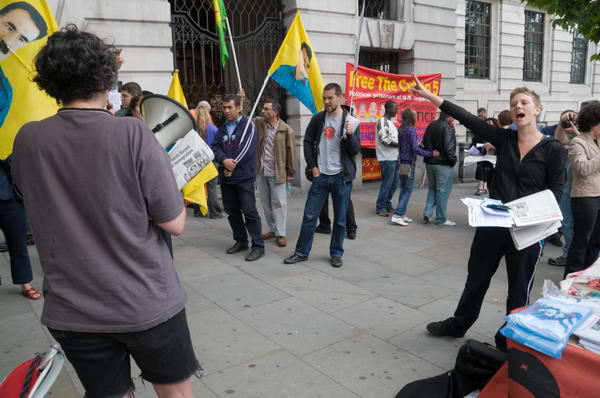
I’ve often commented on how women were normally sidelined – literally – at protests by the now banned Hizb ut-Tahrir Britain but at this protest outside the French Embassy they were very much at the front, with around 80 women, many with children, and only a handful of men – who did seem to be organising the event.

Muslim Veils, Illegal Goods, Murders, Union Busting and London - 2010

They were to protest against a law passed by the French Senate on September 14th to prohibit all full-face coverings in public places, clearly aimed at Muslim women who wear the niqab or burkha.

Muslim Veils, Illegal Goods, Murders, Union Busting and London - 2010

Such garments were then rarely worn in France, certainly outside of Paris and some Mediterranean coastal cities, and of France’s 2-3 million Muslim women the ban is thought likely to only effect around two thousand of them.

Muslim Veils, Illegal Goods, Murders, Union Busting and London - 2010

Very few of the women at the protest wore veil, most simply covering their hair. The protest in a wealthy area of London close to Harrods was passed by quite a few women who were veiled, but who all seemed to ignore the protest.

I wrote:’ Speakers at the event castigated the French government for taking a measure which they felt limited the freedom of women to make decisions on what they wear while at the same time ignoring issues that degrade and oppress women – such as domestic violence, and “the objectification and sexualisation of women’s bodies in pornography, lap-dancing clubs, advertising, and the entertainment industry, all permitted under the premise of freedom of expression and driven by the pursuit of profit in Western societies.”‘

More at Hizb ut-Tahrir Protest French Veil Ban.


Protest Against Illegal Israeli Goods

Ahava, Monmouth St, Covent Garden

This was one of a series of fortnightly demonstrations outside the Covent Garden Ahava shop which sells products manufactured in an illegal Israel settlement on occupied Palestinian land. These protests were a part of an international ‘Stolen Beauty’ campaign organised by ‘Code Pink’, a women-initiated grass-roots peace and social justice movement which began when American women came together to oppose the invasion of Iraq.

As usual there was a smaller counter-demonstration by a few EDL supporters and a handful of Zionists, handing out leaflets which described the call for a boycott as “bigoted, complicitly and politically antisemitic“.

The protesters say Israel in in breach of international law and Ahava “has openly flouted tax requirements by exploiting the EU-Israel trade agreement and violates UK DEFRA guidelines in respect of proper labelling.” I read the leaflets they handed out and the web sites calling for the boycott and could find no evidence of anti-Semitism. Many calling for a boycott of Israeli goods are Jewish and I reflected that when I began taking photographs in London no Jewish shop would have opened on a Saturday.

More at Protest Against Illegal Israeli Goods.


Families of Murder Victims Call For Justice

Embankment

‘Families Fighting For Justice’, including many families of murder victims, marched through London on Saturday calling for tougher sentences for murder – with life sentences meaning life imprisonment.

The group was formed in Liverpool by Jean Taylor whose sister, son and daughter were all murder victims. She set up a petition which said “Life should mean life, for first degree murder, also tougher sentences for manslaughter” and in 2008 recruited families of other murder victims to join her and march with it to Downing Street.

You can read some of the horrendous stories on the groups web site, and some I was told at the protest were truly heartbreaking and showed why many ordinary people have lost faith in our justice system – and I highlight one of them on My London Diary.

But as I also commented “I don’t feel that the ‘Life 4 A Life’ campaign would actually do much if anything to solve the problem“. Murder is never a rational act where murderers weigh up how long a sentence they might get if caught and draconian sentences would have little or no deterrent effect. Things more likely to help include better social services and policing, but we really need “changes that bring back some of our community spirit and give people a greater engagement.” There really is such a thing as society despite Thatcher’s dismissal and we uirgently need more of it.

Much more at Families of Murder Victims Call For Justice.


Protest Over Initial Rentokil Union Busting

Old St

A short protest by around 20 trade unionists outside the Initial Rentokil offices in Brunswick Place near Old Street on Saturday afternoon marked the start of the campaign against the company for its intimidation and bullying of union members who choose to speak out about pay and employment practices and play an active role in the union.

The cleaners employed by the company at the Eurostar terminals at St. Pancras International were RMT members and the dispute between the union and Initial has continued.

The unions alleged that Initial was deliberately employing workers with doubtful immigration status so they can pay minimum wages and provide sub-standard working conditions, often requiring them to work without proper safety equipment or precautions. They allege that workers who question their rights or attempt to organise have been reported to the immigration authorities who have then raided the workplace.

More at Protest over Initial Rentokil Union Busting.


Around London

One bus I didn’t travel on but photographed outside the former Aldwych Piccadilly Line Station.

‘I am Here’, one of London’s largest art installations overlooking the Regent’s Canal at Haggerston with photographs of former residents on empty flats where people are moved out to redevelop the Haggerston estate – with the promise they will be moved back to new social housing on the estate

Missing letters on an advert beside the canal for Ron’s Shellfish on sale every Saturday at Hoxton Market create a puzzle for those walking by, though this and another picture on My London Diary concentrate on the images and miss out the centre of the sign.

Decoration on the Suleymaniye Mosque on Kingsland Road which mainly serves the British Turkish community.

More at Around London.


FlickrFacebookMy London DiaryHull PhotosLea ValleyParis
London’s Industrial HeritageLondon Photos

All photographs on this page are copyright © Peter Marshall.
Contact me to buy prints or licence to reproduce.


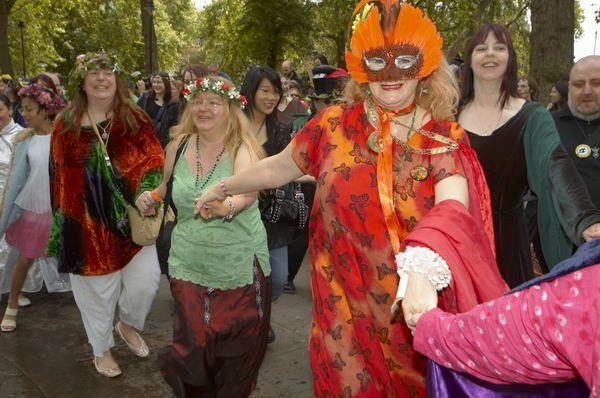
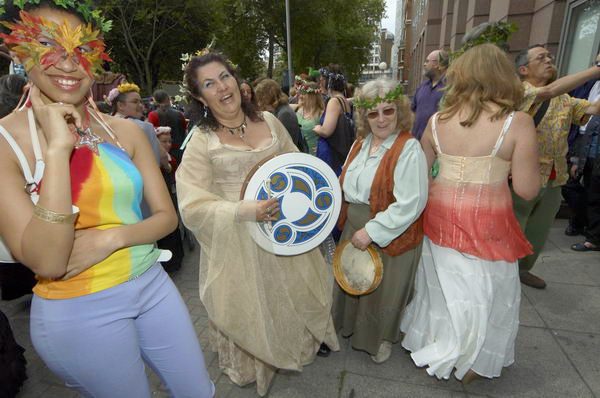
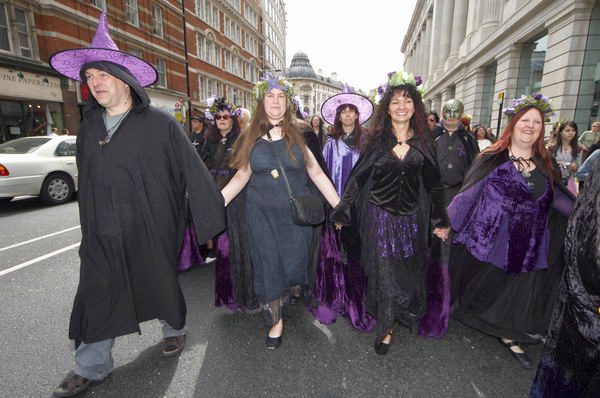
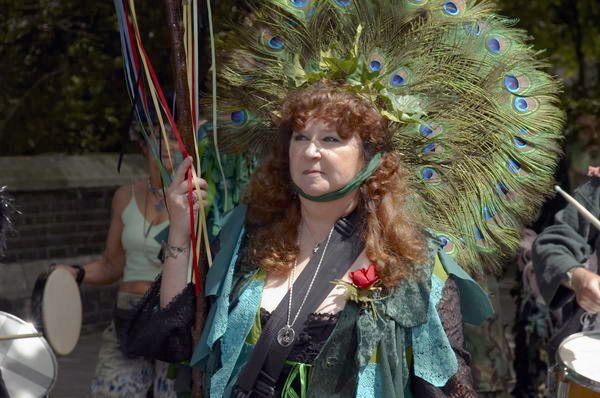
Autumn Equinox: The Druid Order, Primrose Hill – 2007

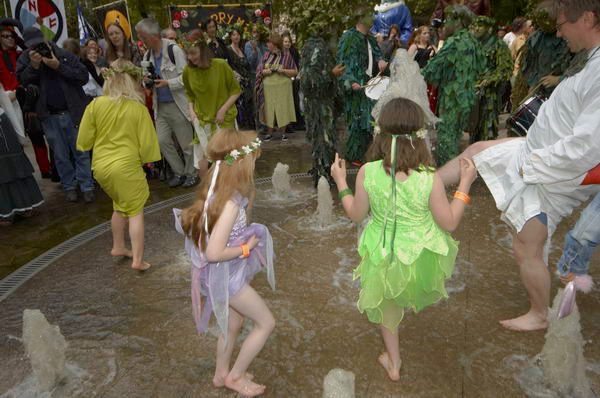
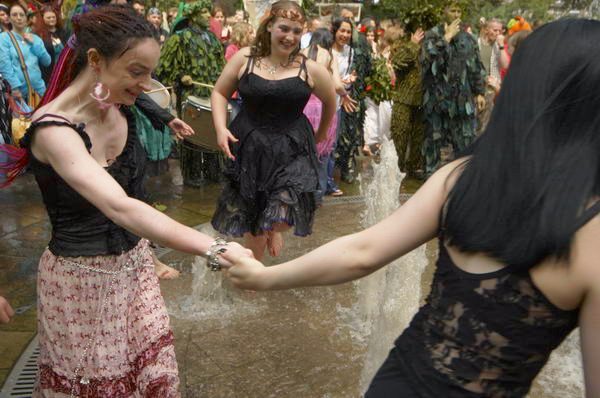
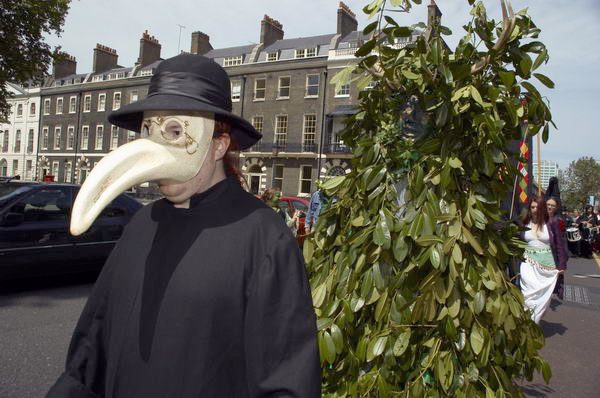
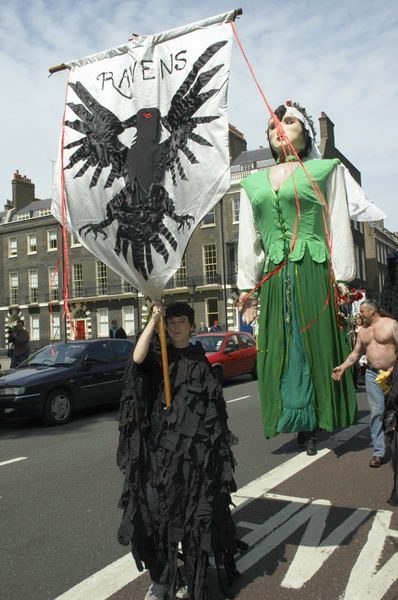
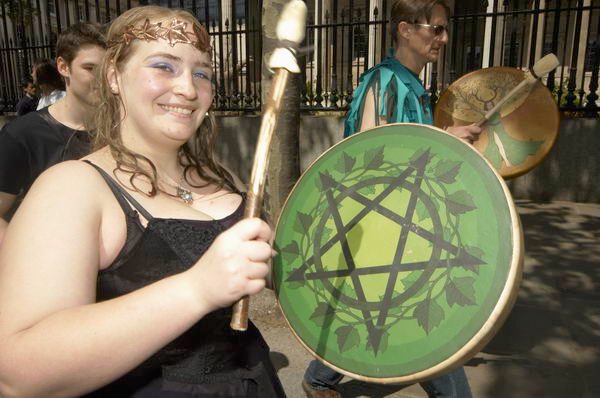
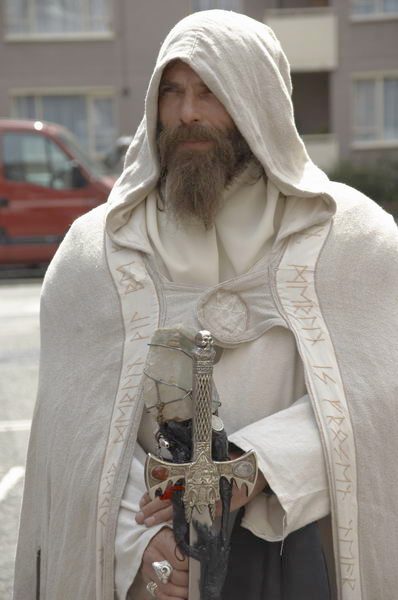
Autumn Equinox: The Druid Order: The Autumn Equinox was on September 23 in 2007, and as usual The Druid Order celebrated in with their ritual on Primrose Hill and I went to photograph it.

Autumn Equinox: The Druid Order, Primrose Hill - 2007

My photographs show the event from the preparations including a brief practice for a few on the hill top in normal clothing, and then their robing and preparation for the march up the hill and the various stages of the ceremony.

Autumn Equinox: The Druid Order, Primrose Hill - 2007

I had another event to attend elsewhere and had to rush off before they ended the event with a procession back down the hill, which I did photograph in other years. But I was on my way to a guided walk around ‘London Street Women’, statues on the streets of the City – you can also see pictures of them on My London Diary.

Autumn Equinox: The Druid Order, Primrose Hill - 2007

In this post I’ll stick with the Druids. I photographed The Druid Order both in the autumn at Primrose Hill and at Tower Hill for the Spring Equinox on quite a few occasions and in some I give a fairly detailed account of their history (they began early last century) and the more ancient traditions as well as of the various stages in the ceremonies.

Autumn Equinox: The Druid Order, Primrose Hill - 2007

Back in September 2007 my account was rather brief but earlier in the year I had written captions to the pictures of the similar Spring celebration which explained what I thought was happening at each stage.

Here is the piece I posted on the September 2007 page with the usual minor corrections:


The Druid Order has three public ceremonies each year, celebrating the Spring Equinox at Tower Hill, Summer Solstice at Stonehenge and Autumn Equinox (Alban Elued) at Primrose Hill.

I got there rather early, and found quite a few people enjoying the hill in their own way – including those who were running up it as well as others merely enjoying the panoramic view over london, as well as a group of half a dozen people in normal clothes practising a simple ritual of Peace To The Four Corners.

At least this told me I was in the right place, and I soon spotted a larger group gathering in under the trees a short distance away.

The ceremony followed the same pattern as in the spring, with a few minor differences.

I did have a small surprise, when i came across a rival druid, Jay The Taylor, the Druid of Wormwood Scrubs, part of the Loose Association Of Druids, who had come to celebrate the event in the Hawthorn Grove (not a feature marked on my map) and seemed surprised to see the other druids.


There are around 80 pictures from Primrose Hill on My London Diary, presented there in the order in which I took them, at Autumn Equinox – The Druid Order.


FlickrFacebookMy London DiaryHull PhotosLea ValleyParis
London’s Industrial HeritageLondon Photos

All photographs on this page are copyright © Peter Marshall.
Contact me to buy prints or licence to reproduce.


Limehouse and East India – 1994

Limehouse and East India: I spent most of Saturday 11th June 1994 wandering in the area between Limehouse, Blackwall and the former East India Docks, concentrating on making panoramas, some of which were the post Limehouse, Poplar, Blackwall and East India Panoramas – 1994 but I also took a number of black and white and colour images. You can find more of both in two Flickr albums – links at the bottom of this post – but here is some of the colour work. These pictures will have been made using an Olympus OM$ camera on Fuji film. I carried a range of lenses from 21mm to 200mm, though probably most all were taken with 28mm or 50mm lenses.

Limehouse Link Tunnel, Aspen Way, Poplar, Tower Hamlets, 1994, 94-61-55

The eastern entrance to the Limehouse Link Tunnel which was officially opened in 1993. Both portals have decorative sculptures, this one an untitled abstract by Nigel Hall which I find it hard to find any point in. The 1.1 mile tunnel took 4 years to build and cost £293,000,000 making it the most expensive road scheme in Britain per mile.

Limehouse Link Tunnel, Three Colts St, Limehouse, Tower Hamlets, 1994, 94-61-44

This is the Limehouse Link Eastern Service Building. With a huge volume of traffic passing through the tunnel presumably the main service needed is ventilation and those chimneys presumably are on top of huge fans for the purpose, sharing the pollution with the community.

St Dunstan's Wharf, Dunbar Wharf, Narrow St, Limehouse, Tower Hamlets, 1994, 94-61-33
St Dunstan’s Wharf, Dunbar Wharf, Narrow St, Limehouse, Tower Hamlets, 1994, 94-61-33

The story of Dunbar Wharf is told on the Isle of Dogs Life web site in the article Dunbar Wharf and the Remarkable Story of Duncan Dunbar, and I’ve written more about it in previous posts. Duncan Dunbar made a fortune as a brewer and wine merchant and on his death in 1825 his son, also Duncan Dunbar used this to set up a large shipping fleet, becoming one of the richest men in Britain.

As well as goods to and from the world Dunbar’s shipping line made 37 trips carrying convicts to Australia and were troopships for the Crimean War. He never married and had no children and on his death in 1862 the ships were all sold and the business closed.

The buildings here date from the mid 19th century and are Grade II listed.

London Art Fashions, Limehouse, Tower Hamlets, 1994, 94-61-34

I think this was the window of a tailor’s shop in Limehouse, but cannot recall its exact location. The caption I gave it came from the black and white poster at the back which I suspect is from the 1920s or 30s, though I’m certainly no fashion expert, while the blue framed image at lower left looks to me a little older and has an interesting lady golfer.

Chinese Restaurant, Limehouse, Tower Hamlets, 1994, 94-61-23

Limehouse and Poplar used to be London’s Chinatown before that moved to Soho, and some traces remain, rather more back in 1994 than now. On the wall is a calendar for the ‘Year of the Dog’ and a notice informing us that:

‘*WE NOW SELL
‘CHICKEN’ BALLS’ IN BATTER
PLEASE ASK STAFF
£2 A PORTION THANK YOU’

The two green hexagons floating in the centre close to the top of the picture (with some more very faint and above them to their right) are photographic artifacts, lens flare, images of the lens iris reflected from some interior lens surface from a light source just outside the frame. But I rather like the effect here.

Hairdresser, Limehouse, Tower Hamlets, 1994, 94-61-24

Looking through a window into a hairdressers with a red-edged counter and mirrors, red chairs and red towels hanging on hooks seen in the mirror. It wasn’t possible for me to get enough depth of field to make everything in the picture pin sharp, but this perhaps makes the mirrored image stand out a little more.

East India Dock Tunnel, Aspen Way, Poplar, Tower Hamlets, 1994, 94-61-51

The lane closer to the centre of the image dives here into the East India Dock Tunnel with the red brickwork of the tunnel mouth at the right of the picture. The tunnel was opened in 1993. At the left is Canary Wharf Tower, then in isolation, in front of it the bridge and red tower of East India DLR station. The rather depressing 1990 ten-storey granite clad post-modern office blocks on the site of the main East India Dock have now been comprehensively redeveloped mainly for residential use and rebranded as ‘Republic’.

Canary Wharf, DLR, Power Station, South Bromley, Tower Hamlets, 1994, 94-61-53

Further east also looking back to Canary Wharf from underneath the DLR viaduct with the former switchgear house of Brunswick Wharf Power Station at right. Planned in 1939 but not built until after the war this was a coal fired power station on the site of the East India Export Dock. In 1948 the dock was filled in but post-war financial constraints meant the power station was only became operational in 1952, and finally completed in 1956.

In 1970 it was converted to burn oil, probably to reduce air pollution in London. Increases in oil prices later made this one of the more expensive generating stations and it was closed in 1984 and sold for redevelopment in 1987.

Most of the power station was demolished in 1989 but this building remained, I think until around 2005 when it was demolished for a large residential development, Virginia Quays, which has on the riverbank the 1951 Grade II listed Virginia Quay Settlers Monument.

My 1984 albums on Flickr:

1994 London Colour
1994 London Photos (Black and White)


FlickrFacebookMy London DiaryHull PhotosLea ValleyParis
London’s Industrial HeritageLondon Photos

All photographs on this page are copyright © Peter Marshall.
Contact me to buy prints or licence to reproduce.

Darfur and the Mayor’s Thames Festival – 2007

Darfur and the Mayor’s Thames Festival: On Sunday 16th September 2007 I went to London to photograph a march on an International Day of Action over the genocide which had been taking place on a large scale in Darfur since 2003, with around 300,000 civilians killed. My comments at the time are in italics below. After the end of the march I went to walk along the riverside wher the Mayor’s Thames Festival was taking place, though I found little actually happening.


Protect Darfur – International Day of Action

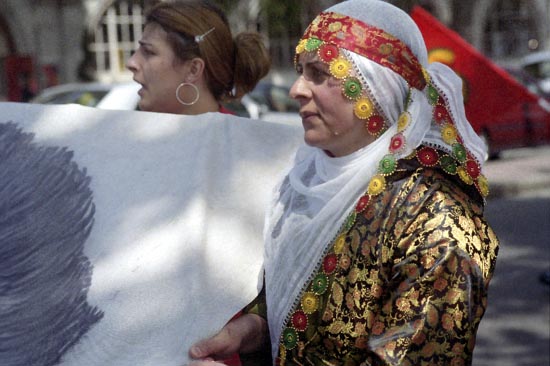
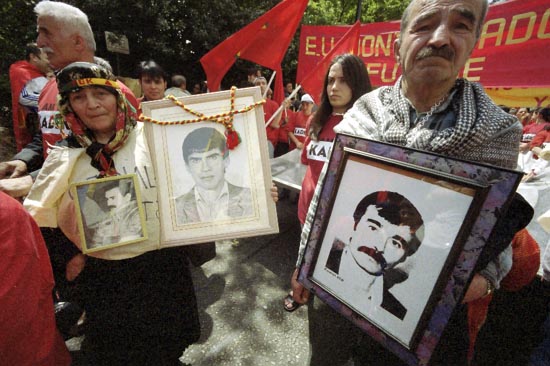
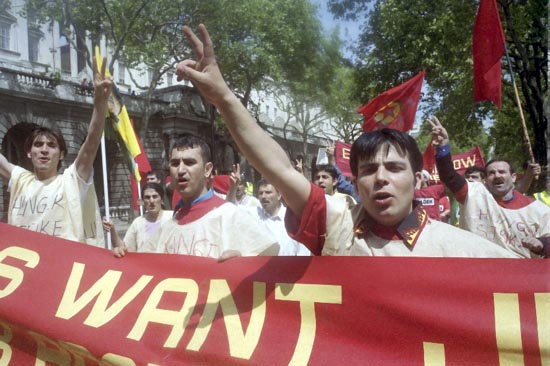
Several hundred marched from the Sudanese Embassy in St James
to Westminster where a protest rally was held opposite Downing Street over the continuing failure of the international community to take effective action over Darfur
.”

Among the mainly African demonstrators were groups of Jews, concerned that, as in the 1930s, too many are happy to turn a blind eye to what is going on.”

The Sudanese government had earlier co-opted and armed the Arab Janjaweed militias against those opposed to it in Darfur and they created what the UN described as one of the worst humanitarian disasters in the world.

In July 2007 the UN and the African Union approved a the largest joint peacekeeping mission in the world UNAMID to the area, and over the years there were various peace agreements, but despite this conflicts continued and in 2023 a civil war broke out in Sudan between the Rapid Support Forces (RSF) (which developed from the Janjaweed) and the government’s Sudanese Armed Forces (SAF) – and genocide returned to Sudan.

The BBC has an article, ‘Sudan war: A simple guide to what is happening’ about the renewed genocide and famine in Darfur and across the country which again the United Nations has called the world’s largest humanitarian crisis.

At the rally opposite Downing Street, demonstrators were asked to put on their blindfolds as a reminder that leaders around the world are refusing to see the problem in Darfur.

I didn’t stay to hear all the speakers. The position of the rostrum made it hard to photograph, working directly into the sun behind the speakers’ heads from any available close positions, and photographs were not going to be of great interest.

The message on Darfur is clear, and the international community needs to take action.”

Many more pictures (too many) on My London Diary at protect darfur.


River Thames and the Mayor’s Thames Festival

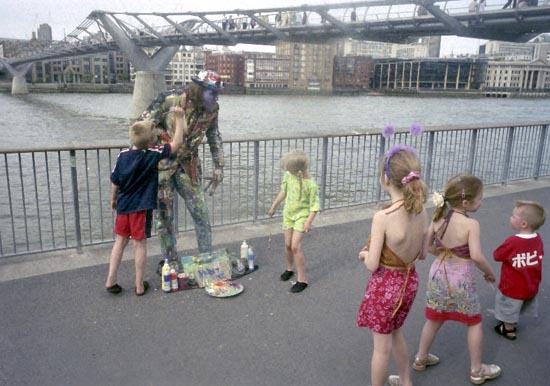
We were promised that Sunday was the end of our short, late summer, and I took a walk along the south bank of the River Thames from Westminster to Tower Bridge, among the crowds who had turned up for the Mayor’s Thames Festival.

Nothing much exciting seemed to be happening while I was there (it seemed mainly a commercial opportunity for the very large number of stalls along the riverbank), but I then didn’t hang around for the procession and fireworks promised later.

I did take quite a few pictures which you can see at river thames and the mayor’s festival – and it looks as if I found it a little more interesting than my account suggested.


FlickrFacebookMy London DiaryHull PhotosLea ValleyParis
London’s Industrial HeritageLondon Photos

All photographs on this page are copyright © Peter Marshall.
Contact me to buy prints or licence to reproduce.