Kings Army, Clowns & Chinese New Year – 2006

Kings Army, Clowns & Chinese New Year: Three things I photographed on Sunday 29th January 2006 – and what I wrote back then – with the usual corrections and a few comments.


The King’s Army Whitehall Parade

Whitehall
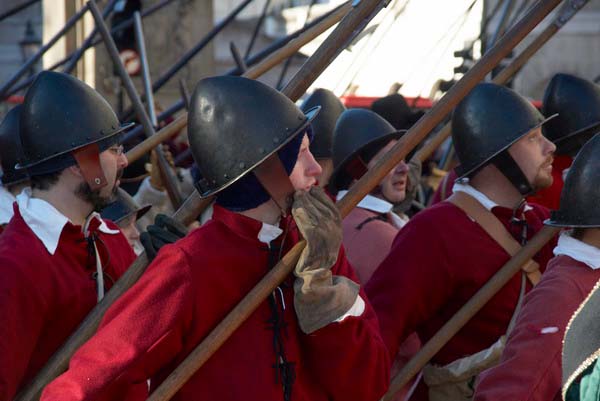
Pikemen at the Banqueting House

The King’s Army Annual Commemorative Parade is a colourful but little-known London event [though since 2006 mobile phones and social media have raised its profile] marking the execution of our reigning monarch during the English Revolution, arguably the last time we behaved sensibly towards royalty.
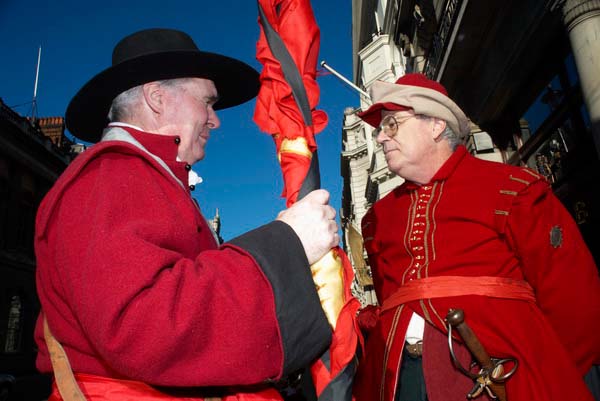
Before the parade in St James’s

My forebears, being strongly non-comformist, would doubtless have been on the opposite side to the regiments that gather here (and yes, there is a Roundhead Association also a part of the English Civil War Society). But for most of those taking part, the event isn’t about the issues of the day but simply a matter of re-enactment, of trying to look and act the part of those soldiers and ancillaries from the seventeenth century.
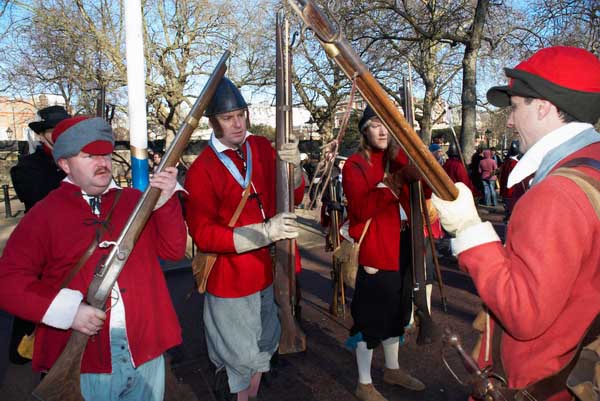
A little weapons training at the start of the parade

The march starts around St James’s Palace, forming up in the Mall for the march to the Banqueting House where Charles 1 was beheaded on 30 January 1649.
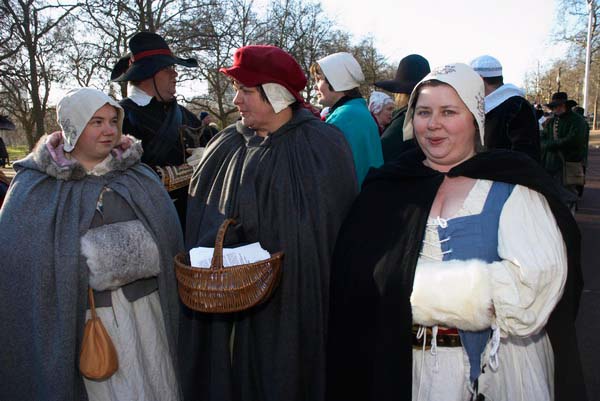
It is an event that seems to receive little official recognition or support, but which has now taken place every year for the last 30 or so years. It is an unusual event in that the regiments are allowed to bear arms in one of the most sensitive parts of the city and when they march through Horse Guards Arch they are apparently saluted by the guards on duty as if they were still a part of the army.

In the pub

At the Banqueting House there was a short service with a real vicar, as well as the presentation of various commissions and awards. [But diappointingly no beheading.] Then the army marched away to be dismissed and we took the opportunity to beat them to the pub, which was shortly after filled with people in seventeenth century dress, and, because this is London after all, some of our pearly kings and queens who were up west for the Chinese New Year.

Many more pictures start here on My London Diary.


Rebel Clowns not demonstrating?

Trafalgar Square
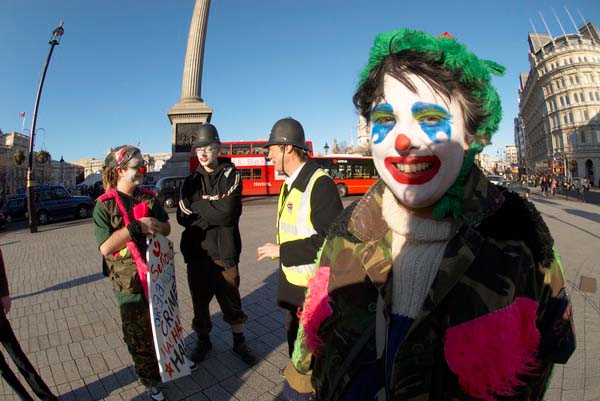
As we came into Trafalgar Square we met some ‘rebel clowns’ protesting against the Serious Organised Crime And Police Act 2005, which was designed to get rid of Brian Haw from Parliament Square. Unfortunately those actually drafting the bill decided it should not be made retrospective, and the government to their amazement found that Brian’s protest wasn’t covered by it. (and yes, he’s still there – and I went along to have a short word with him.) [Later the courts decided that despite what the law said, the government had meant it to apply to Brian, so it did, and he could only protest on the pavement.]
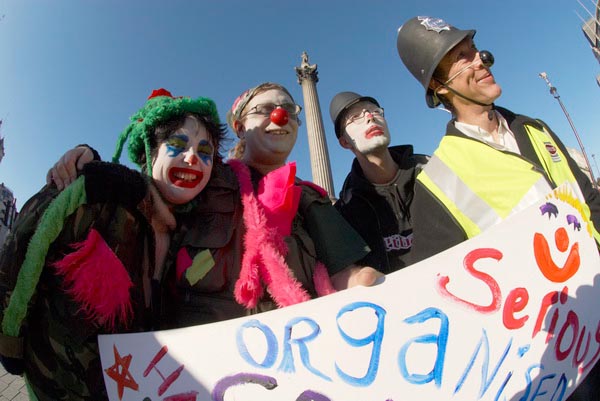
However the rest of us have lost our democratic right to “demonstrate without authorisation” within 1km of parliament. Three days earlier they had demonstrated with this same banner in Parliament Square. The police had come up to talk to the clowns, and had then gone away confused without making an arrest.
[No more pictures.]


Chinese New Year of the Dog

Soho
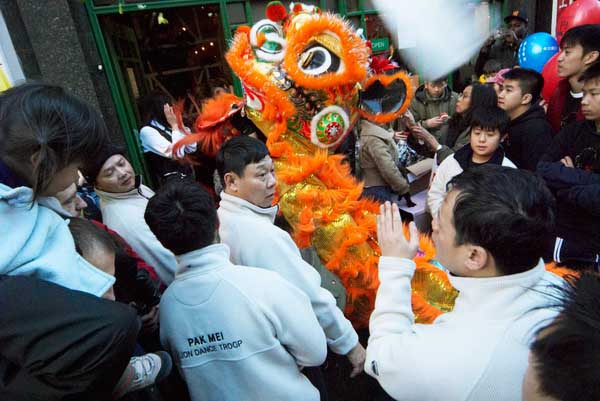
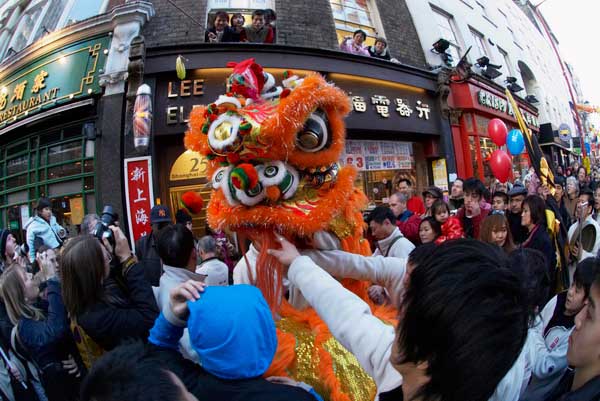
Lion outside shop in Soho

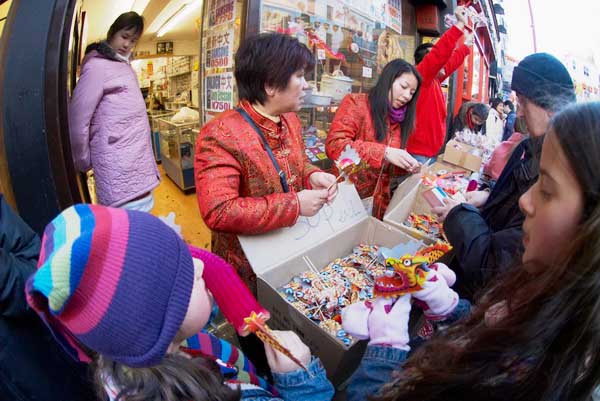
Across the road in Trafalgar Square and beyond through most of Soho, the Chinese New Year of the Dog was being celebrated. I took a few pictures of the lions performing, but the crowds were pretty dense and I soon gave up and went home.
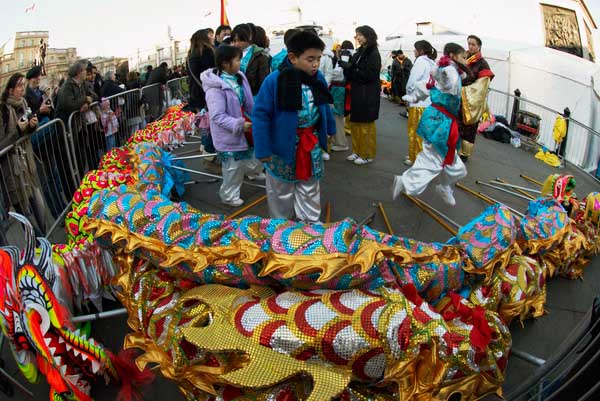
Dragons and performers in Trafalgar Square
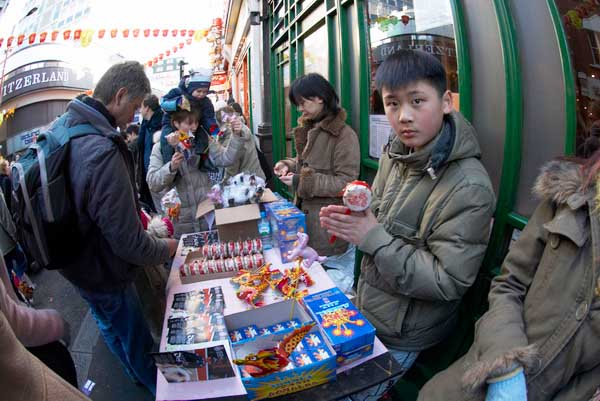
Stalls in Wardour St, Soho, sell paper dragons

More pictures start here on My London Diary.

[As you can see I actually made quite a few pictures despite my comment in 2006, and when working in the crowded streets used a fisheye lens. This meant I could get really close to the people (and lions) I was photographing so there wasn’t room for people to easily walk between me and the subject. If I stood at all back, others simply got in front of me.]


FlickrFacebookMy London DiaryHull PhotosLea ValleyParis
London’s Industrial HeritageLondon Photos

All photographs on this page are copyright © Peter Marshall.
Contact me to buy prints or licence to reproduce.
Justice and Bloody Sunday

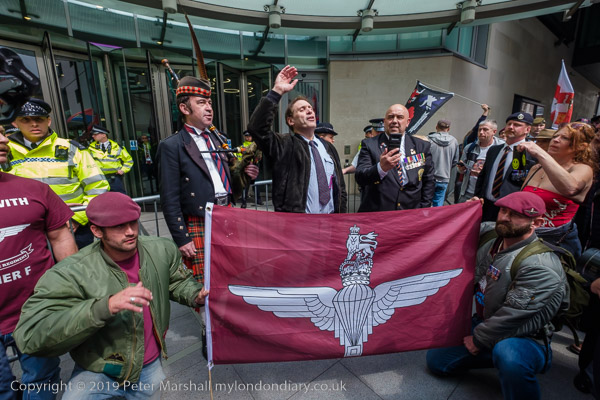
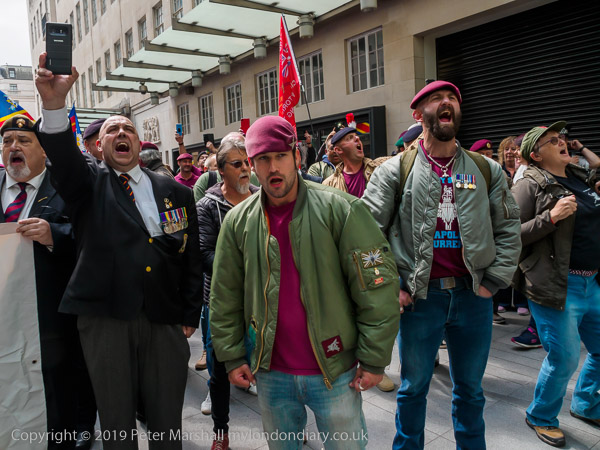
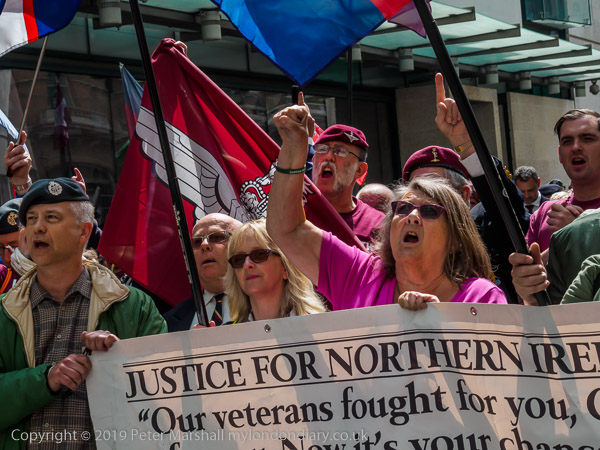
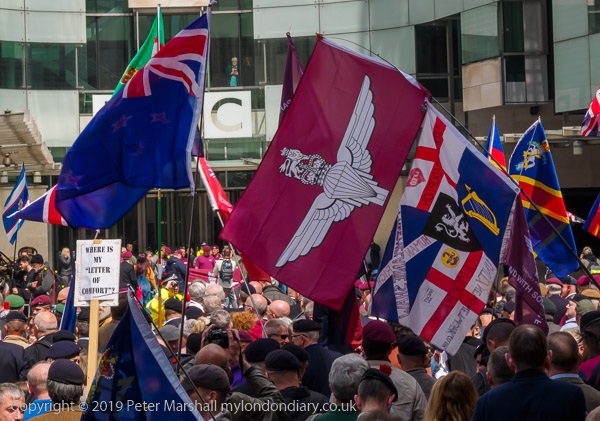
I felt uneasy covering this protest against the prosecution of soldiers involved in the Bloody Sunday massacre, the murder of civil rights protesters in Derry/Londonderry in 1972, and other incidents in the Northern Ireland ‘Troubles.’

It wasn’t because of my views about their protest, though I’m clear that there is a need to see justice done for those who lost family and friends in that terrible event. I do wonder whether 47 years later there is much point in bringing ageing ex-soldiers to trial, and those who bear the real responsibility for the events – from Prime Minister Edward Heath down – are long dead. But is there any other way to reach some satisfactory conclusion?

It is of course shameful that these clearly illegal killings were not properly investigated at the time – and those soldiers who were found to have acted illegally brought to justice at the time. We shouldn’t have the culture of cover-up which is so deeply embedded in both our military, government and judicial establishment – and continues to cover up crimes such as the killings by police officers of mentally disturbed black young men, newspaper sellers and Brazilian electricians and those responsible for creating the death-trap of Grenfell tower (and almost certainly the mysterious death of weapons expert David Kelly.) The list goes on and on…

If I had been a few years older I would have either faced National Service either in the armed forces or to have taken the decision as one of my brothers did to enter one of the non-military essential services as an alternative. Fortunately for him, the call-ups ended in November 1960 when he was still a student, and I was still at school.

After the last National Servicemen left the forces in 1963, they became solely reliant on recruits and their nature has changed, developing a more conservative and right-wing nature. Extreme right organisations such as the EDL included many ex-soldiers among their members, and the Veterans Against Terrorism joined with the Football Lads Alliance for what was clearly a racist and Islamophobic protest despite the protestations of the organisers in October 2017.

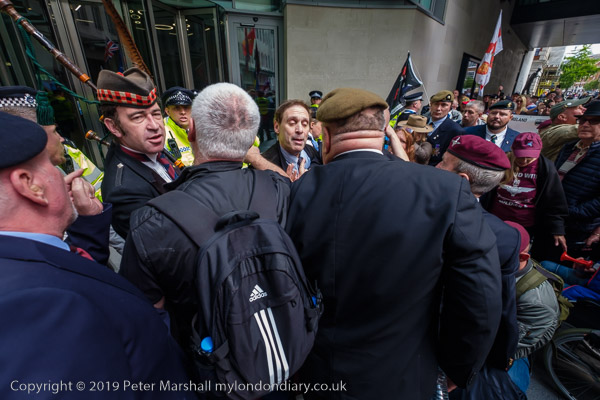
So while the veterans protesting here were a much wider group – and certainly I would not label them as racists, I knew that among them would be some of those who had threatened and attacked me when I was photographing right-wing protests, and I was uneasy when mingling with the crowd. And as I made my way to the front of the protest I did see and hear several people pointing and making aggressive comments about me and moved very smartly away.

Once at the front of course I had no problems as those leading the protest were keen to get press coverage and not involved with the extreme right; when a UKIP EU Election candidate tried to make a political speech he was given very short shrift and hustled away, by people shouting “No Politics“.

The protesters feel strongly that the soldiers who served in the Troubles should be protected from what they see as unfair prosecutions – as the government have made clear that those who served in operations in other countries such as Iraq will be. It does seem hard to argue that those who served in Northern Ireland should be treated differently from those who served in overseas conflicts.

What really would I think be even more important than bringing the few guilty individuals to trials which may or may not find them guilty – and after so many years it must be difficult to find really convincing evidence despite their guilt – is for there to be a proper recognition of the institutional culture, prejudices and shortcomings that lay behind their actions and which allowed them to be covered up for 47 years – and I suspect may still operate to prevent a true verdict being obtained in any prosecution – and for effective action to be taken to correct these.

The Stephen Lawrence case made clear and public the institutional racism of the Metropolitan Police, and led to some actions to oppose this, though clearly much more still needs to be done. The deaths at Deepcut Barracks revealed the the toxic culture in the Army and much more needs to be done to combat this.

More about the protest and more pictures: Veterans demand end of NI prosecutions.


All photographs on this and my other sites, unless otherwise stated, are taken by and copyright of Peter Marshall, and are available for reproduction or can be bought as prints.

There are no adverts on this site and it receives no sponsorship, and I like to keep it that way. But it does take a considerable amount of my time and thought, and if you enjoy reading it, please share on social media.
And small donations via Paypal – perhaps the cost of a beer – would be appreciated.