Broadwater Farm & Mark Duggan

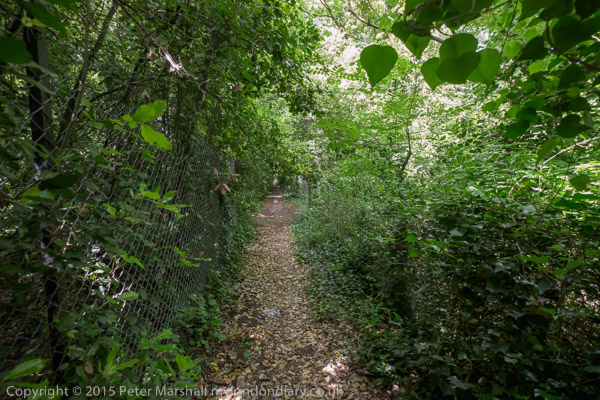
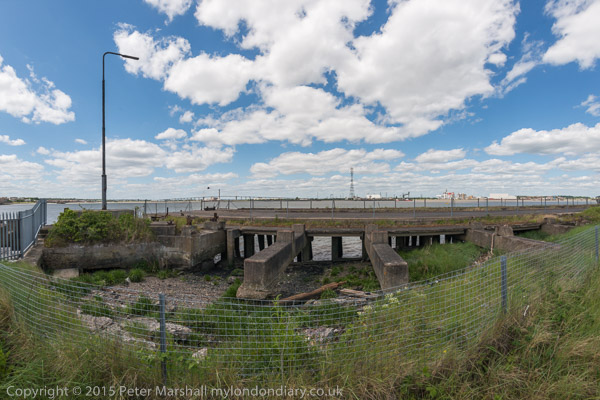
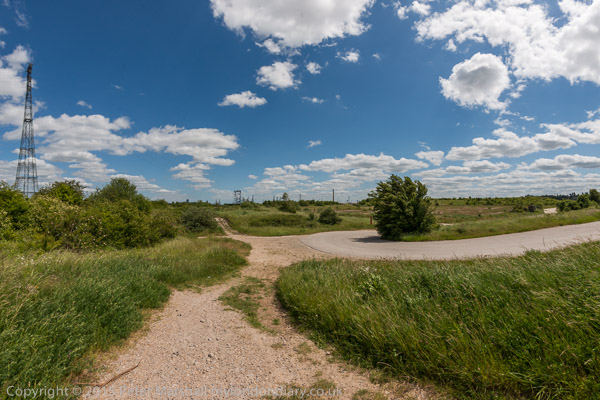
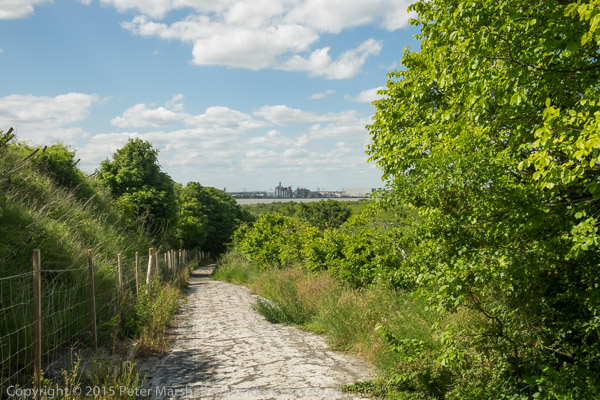
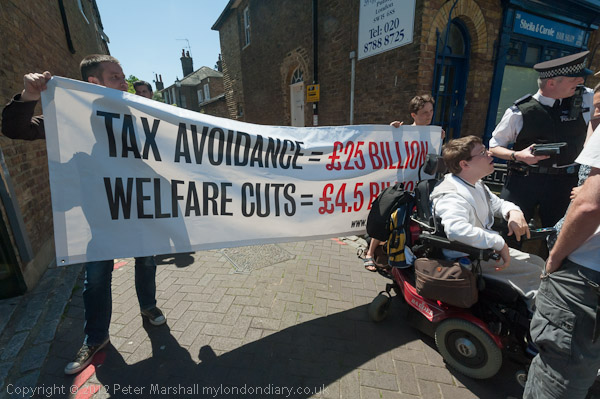
Broadwater Farm & Mark Duggan: Sunday 4th August 2017 was the sixth anniversary of the killing by Metropolitan police officers of Mark Duggan which had led to widespread unrest in Tottenham and other areas. I went to photograph a march from Broadwater Farm to a rally outside Tottenham police station on the anniversary, arriving very early and taking a walk around the estate and the adjoining large park before the march.


Broadwater Farm Estate – Tottenham

Broadwater Farm & Mark Duggan
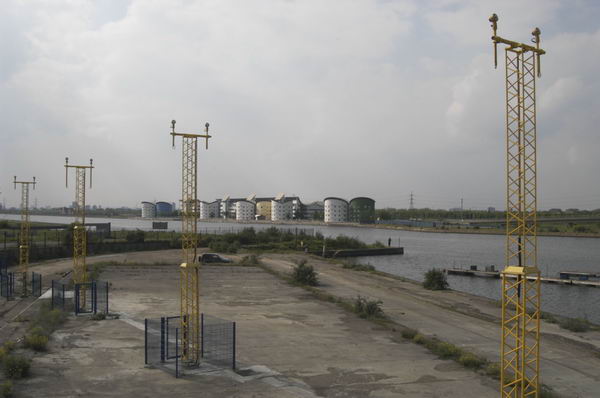
The Moselle goes underground as it approaches Broadwater Farm

Broadwater Farm Estate became notorious in the 1970s and 80s when poor maintenance and crime in poorly lit ‘deck level’ walkways made it into a sink estate after problems with damp, infestation and electrical faults led to half of its original residents moving out.

Broadwater Farm & Mark Duggan

The estate was built over the River Moselle which flows above ground through the adjoining 20 acres of public park, the Lordship Recreation Ground, and the area had remained as open land because of the flood risk until the estate was built in the 1960s. And though building the housing in blocks above ground floor open car parks solved the flooding problem it created large areas of largely empty and rather intimidating covered space.
Broadwater Farm & Mark Duggan

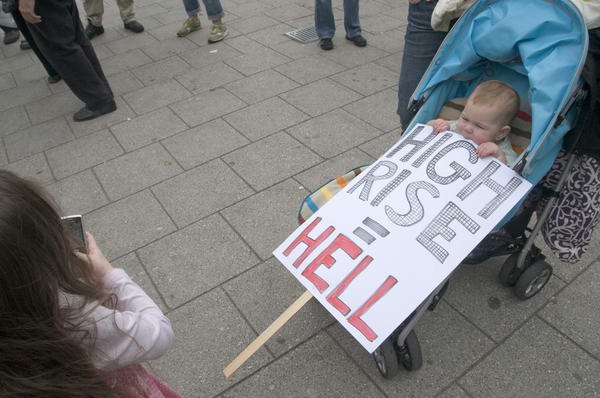
Things came to a head on the estate in October 1985 after police came to search the home of Cynthia Jarett whose son had been falsely arrested and charged with theft and assault. She died of a heart attack during the search, according to her daughter after being pushed by a police officer. Feelings in the Black community in London were already running high following the shooting in Brixton of Cherry Groce the week earlier during a police search in Brixton which left her in a wheelchair for the rest of her life.
Broadwater Farm & Mark Duggan

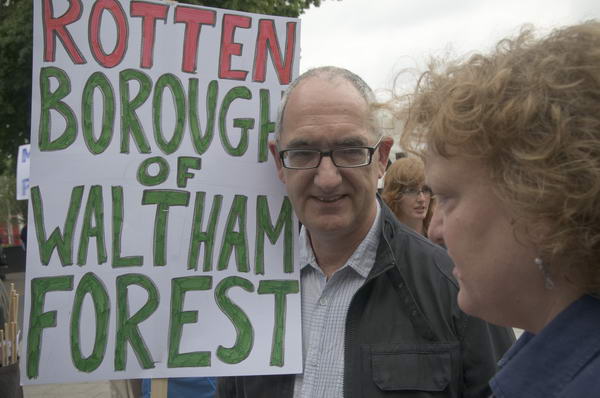
The death on the estate provoked a protest at Tottenham Police Station and various incidents on the estate which blew up into a riot as more and more police came into the estate with firefighters who put out a small fire. Faced by increasing attacks from residents the police withdrew, but two officers failed to escape. PC Richard Coombes was seriously injured and PC Keith Blakelock was beaten and hacked to death.
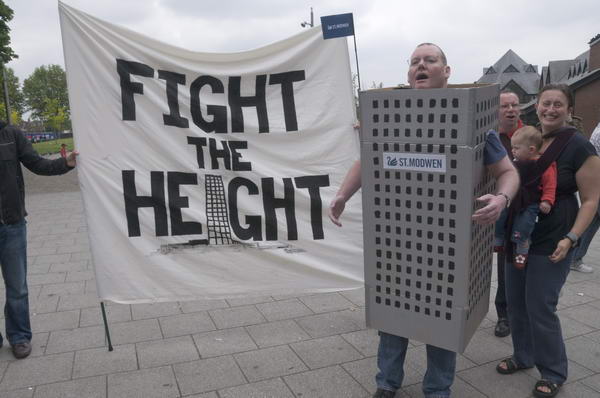
In the following years there was an intensive regeneration programme which greatly altered the estate, removing the deck level almost completely and making both structural and environmental changes. Some shops were converted into light industrial units to provide local employment and a local team was set up to manage the estate. As I wrote in 2017, “By the 2000s the estate had a long waiting list and had one of the lowest crime rates in London, though it still retains a powerful and blinkering presence in the Met’s demonology.”

More pictures Broadwater Farm Estate.


Tottenham remembers Mark Duggan

People met on Broadwater Farm where Mark Duggan had grown up on the sixth anniversary of his killing to march to a rally at Tottenham Police Station.

As well as the killing of Duggan, the march also protested the police killings of other members of the Tottenham community – Cynthia Jarrett, Joy Gardner, Roger Sylvester and Jermaine Baker as well as the recent deaths in London of Rashan Charles, Darren Cumberbatch and Edson Da Costa.

After Duggan’s death there were various misleading stories put out by the media including the BBC who reported police lies about the event, in particular that Duggan had shot at police first. He hadn’t fired a gun at all, and had almost certainly left it in the cab. The police involved refused to be interviewed in the IPCC investigation and gave conflicting testimonies. Almost certainly the most reliable account of the shooting came from the driver of the cab Duggan was in who said that Duggan got out of the taxi to run away and was immediately shot by police, he “only got 2-3ft from my car when he was shot.” It remains hard to understand the eventual inquest verdict of lawful killing.

At the front of the march was Tottenham community activist Stafford Scott who was also one of the speakers at the rally. At the police station we listen to a local poet and there was a minute of silence to remember those who had been killed.

As well as speeches from members of bereaved families and local activists, there were also speeched from Becky Shah from the Hillsborough campaign and a speaker from the Justice for Grenfell campaign.

Among those present was Myrna Simpson, the mother of Joy Gardner who died after being restrained by police who raided her home. Three officers were tried for her manslaughter but acquitted.

The crowd spread out into the street with a large group of mainly young men on the opposite side of the street.

More pictures and captions on My London Diary at Tottenham remembers Mark Duggan.


Reparations, North Woolwich & LouLou’s

Reparations, North Woolwich & LouLou’s: Thursday 1st August 2019 was a long and busy day for me with an Afrikan Emancipation Day protest, finishing a walk in North Woolwich I’d begun six months earlier and photographing an evening protest outside the exclusive Mayfair club LouLou’s.


Afrikans demand reparations – Brixton, London.

Afrikans demand Reparations, North Woolwich & LouLou's

People of African origin met in Windrush Square in the morning to demand an end of the Maangamizi, the continuing genocide and ecocide of African peoples and Africa on Afrikan Emancipation Day.

Afrikans demand Reparations, North Woolwich & LouLou's

After speeches & libations they marched from Brixton to Westminster with a petition calling for an end to acts of violence by Britain, the misuse of taxes and the stolen legacy plundered from Afrika under the British Empire and European Imperialism and demanding reparations.

Afrikans demand Reparations, North Woolwich & LouLou's

The protest was supported by Extinction Rebellion XR Connecting Communities who marched in an Ubuntu Non-Afrikan Allies bloc.

Afrikans demand Reparations, North Woolwich & LouLou's

I left the march as it went past Brixton Police Station on its way to protest outside the Houses of Parliament so I could have some lunch before going to take pictures elsewhere.

Many more pictures on My London Diary at Afrikans demand reparations.


DLR – Bank to North Woolwich

DLR HQ at Poplar

I’d taken the tube back into central London to have a quick lunch before taking the DLR from Bank to London City to King George V Dock station for the final section of the walk I had begun in February but had run out of time to finish because I’d had to take a roundabout route to get there as the direct DLR services were suspended following an accident.

Bow Creek

This time the trains were running properly. They start from Bank and so come into the station empty and I was able to chose my seat and for once I found myself sitting next to a clean window on my way to North Woolwich and took a number of pictures.

Tate & Lyle

Later on my way back to Canary Wharf from King George V I was less lucky and the windows were rather grimy, but I still made a few images.

More at DLR – Bank to London City Airport.


North Woolwich, Royal Docks & the Thames

The footpath goes across these gates of the entrance lock to Albert Dock Basin

I took a few pictures as I walked from the elevated King George V station at North Woolwich to the King George V Dock entrance and joined the path by the river.

The lock here is huge, 243.8m long and 30.48m wide. I’d first photographed the area back in the 1980s as a part of a wider project on the Docklands following their closure, both in colour but mainly in black and white – in the album 1984 London Photographs. Although the docks themselves remain, much around them has changed, although there are still some derelict areas.

The riverside path here is part of the Capital Ring, and continues north and over lock at the Albert Dock entrance to the curiously desolate Armada Green Recreation Area.

Here the path ends, with beyond it the former site of the Beckton Gas Works, used as a location for at least 17 films and TV series since its closure, though best known as a stand-in for Vietnam in the 1987 Full Metal Jacket. Past that is the Beckton Sewage Treatment Works, set up in 1864 as part of Joseph Bazalgette’s scheme to treat London’s sewage and still receiving it from all of London north of the Thames.

I had to turn inland, through more recent development and the refurbished Gallions Hotel around Alber Dock Basin. I went briefly under the new bridge to see again the East London University student residences, then went back and across it, taking more pictures from the bridge and the road on my way back to King George V station.

Many more pictures at North Woolwich Royal Docks & Thames.


LouLou’s stop exploiting your workers – Mayfair

Finally I joined the IWGB Cleaners and Facilities Branch outside the exclusive Mayfair private club LouLou’s where they were picketing and protesting for kitchen porters to be paid a living wage, be treated with dignity, respect and given decent terms and conditions including proper sick pay, holidays and pension contributions. Recently outsourced to ACT, porters want to be returned to direct employment.

Among those supporting them were Class War, and in the picture above Ian Bone confronts a police office asking why they protect and support the rich. Needless to say the officer had no answer to the question. In general the protesters were reasonably behaved and acting within the law, but police and security hired by the club worked together to try and prevent their protest being effective.

There were angry scenes as staff escorted wealthy clients of the £1800 a year club past the picket, particularly when some roughly pushed the protesters. Police repeatedly warned the protesters but not the security men or customers who had assaulted them. The security also tried to prevent the picket from handing their flier to the customers.

As at previous protests outside of the club, none of the security staff were wearing the visible SIA door supervisor licences required under the Private Security Industry Act 2001, but the police refused to take any action over this.

More pictures at LouLou’s stop exploiting your workers.


Citroen & More Clapham

Citroen & More Clapham continues my walk on Sunday 28th May 1989. The previous post was North St, Rectory Gardens & Rectory Grove and the walk began with Lavender Hill & Wandsworth Rd – 1989.

Car, Rectory Grove, Clapham, Lambeth, 1989 89-5j-52

Although cars in my pictures now often attract attention when I post the on Flickr, I seldom deliberately photographed them, but this is one exception. I think even I might have identified this as a Citroen, but it was only after I posted it that one of my regular commenters identified it as dating from 1938. So it was 51 years old when I took its picture, and apparently is still around and still taxed for road use.

The house it is parked in front of is 12 Rectory Grove, at the end of a short Grade II listed terrace at 12-18, which dates it only as “Early-mid C19”.

Rectory Grove, Rectory Gardens, Clapham, Lambeth, 1989 89-5j-56

I walked back south down Rectory Grove, again passing the entrance to Rectory Gardens which I wrote about in my previous post on this walk. As you can see there are shops on Rectory Grove, one still open in 1989 and I think selling pottery. These buildings were rather grander than those in Rectory Gardens, with three storeys. Between the two shops was I think the entrance to flats above. There was another shop beyond this corner building and may once have been a couple more, although these were I think residential in 1989.

Shops, Rose & Crown, Old Town, The Polygon, Clapham, Lambeth, 1989 89-5j-46

Continuing south I came to Old Town and The Polygon with this Grade II listed corner shop with its row of seven large oilmen’s jars above its mid-19th century shop fronts. The building itself is perhaps a little over a hundred years earlier.

Oilmen sold oil to the public, mainly for use in lighting before the introduction of gas and electric lighting, and often used ancient pots and their pictures in advertising. Large jars of this shape were used for the transport of oil by ship, often containing around 20 gallons, and when full these thick earthenware vessels must have weighed 70 kilograms or more. They were protected in transit with rope cases, but moving them must have been heavy work.

But I think these may well have been ‘single-use’ rather than being returned to source for refilling. Jars were often sawn in half as in Clapham as shop signs in the 19th century and were always then painted red, and often fixed like these above the shop windows. Many came from the Mediterranean filled with olive oil, though whale oil was more commonly used for lighting until the supply fell off and it was replaced by mineral oils.

The People's Church, Grafton Square, Clapham, Lambeth, 1989 89-5j-35
The People’s Church, Grafton Square, Clapham, Lambeth, 1989 89-5j-35

Designed by William Nevin as a Baptist Church in 1889, the building was renovated and opened as the People’s Church in 1959. Sold after the roof collapsed, it is now the Grafton Square Surgery and The Grafton apartment building, where a loft flat sold recently for around £2m.

Pyramid, Old Town, Clapham, Lambeth, 1989 89-5j-36

I’d photographed this decoration above the shop Pyramid only a few weeks earlier, but the lighting was right and I couldn’t resist making another picture – and I was also keen to get a better image of the crest. Here’s what I wrote about it earlier:

Walking down the street took me the Old Town, where the light was showing the device on the house at No 12 here with its proverb ‘CONTENTEMENT PASSE RICHESSE‘, the motto of the Atkins-Bowyer family. Richard Bowyer (d1820) had taken on the name when he inherited the Manor of Clapham from Sir Richard Atkins of Clapham. I’ve never quite worked out what the relief which is thought to have come from the old Manor House is meant to depict.

Pyramid, Old Town, Clapham, Lambeth, 1989 89-5j-21

Back in 1989 I didn’t own a decent long telephoto lens – the longest I owned were a 90mm for the Leica and a 105mm for the Olympus. I think this was probably taken with the 105mm and the device on the wall is certainly clearer, but no easier for me to interpret. At the top there appear to be three animals with a bird, perhaps an ostrich standing on top of what could be a crocodile or dragon or hound with perhaps a snake on the bird’s back, its head going down to the croc.

Below that with the motto spread over it is what could be cloth hanging from spars or perhaps flames or who knows what, and at the bottom a shield with stripes and what looks like two chickens with their wings up above and one below a row of stars. Perhaps others will know more and comment.

The old manor house was only finally demolished in 1837, though its octagonal tower had been taken down around 1810, perhaps because it was unsafe. It was probably this tower that led to the street laid out on the site, near St Paul’s Clapham being named Turret Grove.

Trinity Close, Flats, The Pavement, Clapham, Lambeth, 1989 89-5j-22

Continuing south along The Pavement took me to this large 1936 development of flats on five storeys with some little interesting At Deco features of which this gate post and porch are perhaps the best. I think that the post (and its partner on the other side of the entrance) may have been built to support an entrance light, but there was no sign of it. The building, which extends back some distance in a roughly H-shape replaced three existing buildings on The Pavement.

It was designed by J J de Segrais and three of its top floor flats on this side have balconies with views over Clapham Common. At the centre just below roof level is a small sculptural decoration which I didn’t try to photograph. Trinity Close is is joined at its north side to another large 1930s block of flats, Windsor Court (which for some reason I didn’t photograph.) It has the date A. D, 1935 on its ‘moderne’ frontage and shops along its ground floor. A tunnel through a wide entrance at the right of this block leads to the rear of both blocks.

More on this walk to follow.


North St, Rectory Gardens & Rectory Grove

North St, Rectory Gardens & Rectory Grove: Continuing with my walk on Sunday 28th May 1989. The first and previous post about this was Lavender Hill & Wandsworth Rd – 1989 which ended with a picture of the Hibbert Almshouses still on Wandsworth Road in Clapham.

M S Automobiles, 97-9 North St, Clapham, Lambeth, 1989 89-5i-24

From Wandsworth Road I turned down North Street and took this picture just a few yards down the street. This rather elegant group of three of houses at 97-1010 have been altered somewhat since my picture and the entrance to the rear yard of M S Automobiles Ltd now leads to North Street Mews workshops and studios, the the two properties on the street now residential.

The doorway for West One Carriers is now a bay window (and was probably originally built as one) and the flower pots and ventilators have disappeared. 99 now has a small plain painted brick wall joining to the post at the right of my picture.

Unfortunately I can’t make out the sign at the left of the door to 99, though it looks rather like a pigeon. Scooter geeks would doubtless be able to tell me more about that parked underneath.

Doorway, 28 North St, Rozel Rd, Clapham, Lambeth, 1989 89-5i-11

A small terrace two storey houses with shopfronts on North Street has its north end on Rozel Road, and just behind the shop front – here with a metal shutter at right – is this doorway which is now to 28a North Street which has been considerably extended to the rear.

There were some similar decorations above the doors of most of the houses on Rozel Road, and some with similar brickwork which I imagine were all built around the same time in the late nineteenth century, probably in the 1880s. I’m not sure what the mirrored objects in the relief are meant to represent, possibly a coornucopia or horn of plenty. But for many the bubblegum machine at right of the door will have been of more interest.

NECO, Electric Motors, North St, Clapham, Lambeth, 1989 89-5i-13

Normand Electrical Company were manufacturers and suppliers of ‘NECO’ electric motors and gearboxes here in Clapham from around 1938. The company was bought by P C Henderson in 1982, and later they sold it to FKI Electricals. The NECO brand is still used. The factory was demolished and replaced by gated housing, Floris Place, its entrance in Fitzwilliam Road.

Rectory Gardens, Rectory Grove, Clapham, Lambeth, 1989 89-5i-14

Rectory Gardens was built around 1870-80 as philanthropic housing for low paid workers. Many of the 28 houses were in very poor repair after war damage and had been squatted in the late 60s and 70s to form a unique community. In 1969 Lambeth Council planned to redevelop this area and acquired Rectory Gardens in 1970.

Rectory Gardens, Rectory Grove, Clapham, Lambeth, 1989 89-5i-16

The redevelopment was opposed by the Rectory Gardens Squatters’ Association (RAGS) and Clapham Action Rectory Grove (CARG) and at a public inquiry the council lost an appeal over the compulsory purchase of adjoining properties needed for the redevelopment. The council refused to formalise the occupation by residents who had formed a housing cooperative, but continued to try to evict the squatters who had turned the area into a flourishing artistic community.

Rectory Gardens, Rectory Grove, Clapham, Lambeth, 1989 89-5j-63

Eventually Lambeth Labour Council under Cabinet Member for Housing Matthew Bennett began evictions and put in ‘security guardians’ and in 2016-7 sold off the properties. The very active Clapham Society lobbied for the retention of these houses as a group run by a housing association but developer Lexadon is rebuilding them and marketing them as luxury properties, “a triangular mews-style development” as a private close in an expensive area.

You can read more about Rectory Gardens in posts on The Spectacle Blog.

49, Rectory Grove, Clapham, Lambeth, 1989 89-5j-65

49 Rectory Grove is Grade II listed as an early 19th century two storey house with attic and basement. When I made this picture there were new houses being built on both sides of it behind the tall corrugated iron fences topped with barbed wire.

The area behind the house had been the printing works of Clark & Fenn Ltd and was redevelped as the Charles Barry Estate, taking its name from Sir Charles Barry, the designer of the Houses of Parliament and Trafalgar Square who lived not far away at 29-32 Clapham Common North Side.

20-28,Rectory Grove, Clapham, Lambeth, 1989 89-5j-66
20-28, Rectory Grove, Clapham, Lambeth, 1989 89-5j-66

This fine terrace on Rectory Grove, ending at Turret Grove has the name above it Cromwell Cottages is unlisted, unlike many other properties along the street. Rectory Grove leads to the churchyard of St Paul’s Church which was the original parish church of Clapham around which the village from the 12th century, although the current church dates from 1815.

The tiny village began to grow when people fled London during the plague and the Great Fire and it became a fashionable place to live in the l8th century. By then the area further south and around the common was becoming the centre of the village which expanded greatly in the early nineteenth century.

More from Rectory Grove and Clapham in the next instalment of pictures from this walk shortly.


Lavender Hill & Wandsworth Rd – 1989

Lavender Hill & Wandsworth Rd: On Sunday 28th May 1989 I again took the train to Clapham Junction, with time for a rather longer walk than I had made the previous day.

Battersea Reference Library, Altenburg Gardens, Battersea, 1989 89-5i-54

A short walk up Lavender Hill from the station brought me to Altenburg Gardens and this remarkable Grade II listed ‘Arts and Crafts’ Reference Library. Initial designs by Borough Surveyor 1924 T W A Hayward were treated to considerable improvements by his architectural assistant Henry Hyams who was appointed in January 1924 and was responsible for the unusual building we see today.

Hyams was – as the Survey of London at UCL Bartlett suggests “an obscure but intriguing figure, who had spent time in central Europe in the Edwardian decade before settling in Devon. He had advanced views – Esperanto, theosophy – perhaps atypical of a Hackney publican’s son, and had spent time in Wandsworth jail during the First World War for his trenchant pacifism”. His rather eclectic “Arts and Crafts” design came well after the style had gone out of fashion and included some unusual decoration as well as the Council’s motto ‘ NON MIHI, NON TIBI, SED NOBIS’ (Not for Me, Not for You, But for Us) over the main doorway.

Altenberg Gardens had been developed in the late 1880s, and has some substantial late Victorian housing but I didn’t continue along it to photograph these but returned to Lavender Hill.

Battersea Arts Centre, Lavender Hill, Battersea, Wandsworth, 1989 89-5i-56

The reference library was an extension linked to the main Battersea Central Library on Lavender Hill which had been built in 1889-90, shortly after Battersea had managed to gain its status as a separate vestry from Wandsworth.

Battersea Vestry held a competition for the building of the central Library and the winner was local architect Edward Mountford who had submitted the only design of ten submissions that was within the Vestry’s budget of £6,000.

Edward Mountford went on to win a further competition against designs by another 11 architects to design a new town hall for the Vestry of St Mary Battersea which was erected in 1891-3 and continued to serve the local authority until 1965. Here the budget was considerably larger and it shows in this Grade II* building, which according to the listing text has “Relief sculpture by Paul R Montford. Decorative plasterwork by Gilbert Seale of Camberwell. Mosaic floors by the Vitreous Mosaic Co, Battersea.

Battersea Arts Centre, Lavender Hill, Battersea, Wandsworth, 1989 89-5i-44

This is the Grand Hall Entrance on Town Hall Road, of which I made several pictures. The design was described by Mountford as ‘essentially English Renaissance, though perhaps treated somewhat freely’. And it had included this separate entrance on the east side to the large public hall at the rear of the building. There are detailed descriptions of the building in the Survey of London on the UCL Bartlett School of Architecture site.

Battersea Arts Centre, Lavender Hill, Battersea, Wandsworth, 1989 89-5i-46

When Battersea became again united with Wandsworth in the London Borough of Wandsworth in 1965, this building was made redundant. Wandworth’s plans to demolish much of it were defeated by a public campaign by the Victorian Society and Battersea Society and it was Grade II* listed in 1970. It became a community arts centre in 1974 and despite a major fire in 2015 which required extensive rebuilding continues in use as Battersea Arts Centre. I appeared briefly on stage there in 2017 in a after-performance panel discussion ‘Art & Accidental Activism’ after a Lung Theatre performance of ‘E15’.

Scrap Metal Merchants, Lavender Hill, Battersea, Wandsworth, 1989 89-5i-34

This whole section of Lavender Hill including the scrap metal merchants Chase Metals at 92 has been demolished. There is a building dating from 2015 at 100 Lavender Hill but nothing on the street between this an No 66 except a hedge in front of the five storey housing blocks on Wandsworth’s Gideon Road Estate.

Houses, Lambourn Rd, Clapham, Lambeth, 1989 89-5i-35

I walked to the end of Lavender Hill and continued along Wandsworth Road, walking a short distance down Lambourn Road to photograph these houses before returning to Wandsworth Road. This road was laid out at the start of large scale development of the area in the 1860s by Eken and Williams and the houses this terrace are larger than most with three storeys and a basement.

I liked the steps up in the roofline, partly with an extra storey but also as the houses go up the hill, as well as the repeated decoration abouve the windows and doors.

Hibbert Almshouses, 715-729 Wandsworth Rd, Clapham, Lambeth, 1989 89-5i-22
Hibbert Almshouses, 715-729, Wandsworth Rd, Clapham, Lambeth, 1989 89-5i-22

The Hibbert Almshouses were built in 1859 to provide accommodation for older women from the Ancient Parish of Clapham, commissioned by Sarah and Mary Ann Hibbert, in memory of their father William Hibbert, a long-term resident of Clapham.

The Hibbert Almshouse Charity was established in 1864 to take over the running from the sisters and still manages the buildings for their orginal purpose, although married couples and single men of the appropriate age are now also accepted as residents – though preference is given to women if there is more than one applicant when a house falls vacant.

The architect of these Grade II listed almshouses was Edward I’Anson and the building is largely unchanged although bathrooms were added in the 1960s. The charity is currently raising funds for a manor renovation and donations are welcome.

The account of my walk will continue in a later post.


Clapham and The Grand

Clapham and The Grand: It was not until near the end of May 1989 that I found time to return and take pictures in south London. On Saturday 27th May I took the train to Clapham Junction and a bus up Lavender Hill to begin my walk in Clapham.

Shops, Spiritualist Church entrance, North St, Clapham, Lambeth, 1989 89-5h-21

I took a couple of pictures at the east end of Lavender Hill and the start of Wandsworth Road, not on-line, and then walked down North Street to make a couple of pictures of the entrance to the Spiritualist Church and the shops on each side.

Shops, Old Town, Clapham, Lambeth, 1989 89-5h-22

Walking down the street took me the Old Town, where the light was showing the device on the house at No 12 here with its proverb ‘CONTENTEMENT PASSE RICHESSE’, the motto of the Atkins-Bowyer family. Richard Bowyer (d1820) had taken on the name when he inherited the Manor of Clapham from Sir Richard Atkins of Clapham. I’ve never quite worked out what the relief which is thought to have come from the old Manor House is meant to depict.

My walk continued along Clapham Common Northside, but it was some distance before I made my next picture.

60 Clapham Common Northside, Lambeth, 1989 89-5h-23

Maitland House at 60 Clapham Common Northside dates from 1790-1792 and is Grade II listed. According to the Survey of London it was one of a pair and “was built originally for one John Bleaden, but took its name from its next occupant, Ebenezer Maitland, a Coleman Street merchant, who lived here from 1796 until his death in 1834“. Maitland House’s “distinctive entrance porch of Tuscan columns supporting a bowed first-floor window” in my pictures appears not to have been a part of the original design but to have been added a few years after the pair was built. The other half of the once matching pair, Bell House, was demolished in the 1890s for the building of Taybridge Road and replaced by the current house at No 61, built along with No 59 in 1894-5.

Forthbridge Rd, Clapham, Wandsworth, 1989 89-5h-25

I continued along Clapham Common Northside but made no more pictures there. My next stop came after I turned up Forthbridge Road, one of streets built here between 1890 and 1895 by developers John Cathles Hill and Charles J Bentley who bought and demolished some of the earlier large detached houses.

These streets are not without detail of architectural interest but are relatively standard late-Victorian two-storey houses. However this particular house at No 20 stood out for its later added embellishments, perhaps not entirely appropriate or consonant with the Victorian doorways with the leaf motif concrete blocks and rather kitsch sculpture which occupied my next three near-identical frames – only one of which I’ve put on line.

Sisters Avenue, Battersea, Wandsworth, 1989 89-5h-16

I continued walking north, going up Nansen Road and Stormont Road to Lavender Hill and then walking west, looking down the various turnings but not finding much to excite my interest until
I came to Sisters Ave.

I made a picture of this row of three-story houses, but it was the incredibly solid gate posts that held my interest – and which I have put this picture online. I think I saw them as some giant row of pawns on the chessboard of Clapham, or perhaps some Maginot Line of soliders defending against marauders from Battersea, where I was now heading.

The Grand Theatre,  St John's Hill, Battersea, Wandsworth, 1989 89-5i-51
The Grand Theatre, St John’s Hill, Battersea, Wandsworth, 1989 89-5i-51

I continued walking down Lavender Hill and across the junction at The Falcon to St John’s Hill to photograph this building while the light was right. Designed by Ernest Woodrow and built for a group led by well-known music hall stars including Dan Leno it opened in 1900 as The New Grand Theatre of Varieties with a huge stage and room for an audience of 3,000.

It was a highly successful venue for many years and in 1927 began to show films as well as live variety shows as The Grand Theater. From 1950 to 1963 it was only a cinema, and after it was bought by Essoldo became Essoldo Cinema. Essoldo opened it as a Bingo club after closing it as a cinema and it continued under others as a bingo club until 1979. It was Grade II listed in 1983.

In 1989 when I took this picture it was still closed, but that year it was bought to be converted to a live music venue, opening in 1991 and closing in 1997. Wetherspoons then wanted to open it as a pub but were refused a licence. Eventually it was reopened as “an independently run venue which functions as a nightclub, live music venue, theatre and event space.”

Conveniently the entrance to Clapham Junction was now opposite and it was time for me to take the train home. This was a rather shorter walk than most of my wanderings and I had made relatively few pictures, but I was to return the following day to continue my photography of the area on my next walk.


King’s Cross, St Pancras & Derbyshire

Regents Canal, Granary, Kings Cross Goods Yard, Goods Way, Kings Cross, Camden, 1989 89-5g-61

I left London for a weekend in the middle of May 1989, going up to a conference in Derbyshire, taking the train from St Pancras to Chesterfield and then a bus journey with my family. We had come up to London by train and taken the Underground from Vauxhall to Kings Cross/St Pancras, arriving far too early for the train we had tickets reserved on.

I’m not sure if this was accidental or part of a plan by me to take a short walk and made some pictures before catching the train, but that is what I did, walking up York Road and then down to the Regent’s Canal on Goods Way to make this view across the canal.

Bridge, Granary, Kings Cross Goods Yard, Goods Way, Kings Cross, Camden, 1989 89-5g-63

A little further west on Goods Way I stopped at the bridge over the canal leading to the Granary. As you can see the view of the Granary then was restricted by a number of rather utilitarian buildings on the yard in front of it.

Gasholders, Goods Way, Kings Cross, Camden, 1989 89-5g-64

Further still along Goods Way, the road itself was between tall brick walls but gave a splendid view of the magnificent gas holders, including the fine triplet. I think some of the brick wall at right may remain, covered now in creeper, but on the left side are now new office buildings and no gasholders are in sight, with St Pancras International in their place. It’s a change I still find depressing, though at least the gas holders have been preserved in a new site.

Shops, Pancras Rd, Kings Cross, Camden,  1989 89-5g-65
Shops, Pancras Rd, Kings Cross, Camden, 1989 89-5g-65

I turned left into Pancras Road to take another picture of the block of shops containing the entrance to the Turnhalle (the German Gymnasium) with on one side the St Pancras Cafe and on the corner G Franchi & Sons, Locksmiths and Tools, with two ladders for sale leaning on its frontage.

I think photographers since W H Fox Talbot had always had a bit of a thing about ladders which perhaps made me take another picture of this scene, and I chose also to include the London taxi at left. I will have waited too for the man walking along the street to clear the shop, but as always there were also some elements outside my control.

Intercity train, gasholders, St Pancras Station, Somers Town, Camden, 1989 89-5g-66

Finally it was time to board my train and we were allowed onto the platform where it was waiting. I just had time to walk almost to the end of the platform and made this picture before we left the station.

King's Cross, St Pancras & Derbyshire
Baslow Edge, Derbyshire,1989

We did eventually get to Derbyshire and there was time while we were they for some short walks and I took just a few pictures. The first is I think on Baslow Edge.

King's Cross, St Pancras & Derbyshire
Well, Curbar, Derbyshire, 1989

And this well is in Curbar.


Ghost Sign, Cooltan and a Cinema

The final episode in in the series of posts on my walk in south London on Sunday 6th May 1989. The walk began with Hanover, Belgrave, Chapel, Shops, Taxis. The previous post was Railton Road, Herne Hill.

Ghost Sign, S.Errington, Dulwich Road, Brixton, Lambeth, 1989 89-5f-41
Ghost Sign, S.Errington, Dulwich Road, Herne Hill, Lambeth, 1989 89-5f-41

I turned into Dulwich Road and walked up it towards Brixton, stopping to make very few pictures, perhaps keen to get to the end of the walk. Just before reaching Water Lane on the side of what was then Ellis Newsagents at 1a Dulwich Road I couldn’t resist the finely painted sign ‘
S Cooltan
ERRINGTON
DEALER IN
ANTIQUE
&
MODERN

FURNITURE

FURNITURE
BOUGHT
SOLD OR

in drop capitals, decorated with some fine curly bits. Clearly something at the bottom following the ‘OR’ had been painted over, but I couldn’t decide what it might have been. Perhaps ‘EXCHANGED’ or ‘HIRED’?

The property now looks to be residential, but on Google Maps it still appears as:
S Errington Dealer In Antique & Modern Furniture
Home Furniture Shop
Temporarily closed

and that sign is still there, rather more faded and with the lettering now looking very much plainer. Unfortunately although I will have had a camera body with colour film in my bag I did’t photograph this in colour. Some days I only thought in black and white.

CoolTan Suntan Lotion factory, Effra Rd, Brixton, Lambeth, 1989  89-5f-44
CoolTan, Suntan Lotion factory, Effra Rd, Brixton, Lambeth, 1989 89-5f-44

I walked along Brixton Water Lane, taking a couple of pictures (not digitised) on my way to Effra Road. The the names suggest I was following the route of the River Effra, underground since the early nineteenth century, but in fact I had been doing so all the way down from Herne Hill and was now walking away from it. Effra Road got its name from Effra Farm which was on the bank of the river.

CoolTan Suntan Lotion factory, Effra Rd, Brixton, Lambeth, 1989  89-5f-33
CoolTan Suntan Lotion factory, Effra Rd, Brixton, Lambeth, 1989 89-5f-33

The former Suntan lotion factory was squatted and in June 1991 became the CoolTan Arts Centre. They were evicted in February 1992, and the centre moved first to offices above Brixton Cycles before squatting the former Unemployment Benefit Offices in Coldharbour Lane. There it became a thriving art space, with a cafe, live music and offices for various campaign groups including Reclaim the Streets, Earth First! and the Green Party until 1995, when the building was taken over by The Voice newspaper – who boarded it up and left it empty and rotting. The Effra Road factory was demolished shortly after their eviction and remained as empty unused ground for over ten years.

CoolTan Suntan Lotion factory, Effra Rd, Brixton, Lambeth, 1989  89-5f-34
CoolTan Suntan Lotion factory, Effra Rd, Brixton, Lambeth, 1989 89-5f-34

But Cooltan Arts continued. From 1993-2016 Michelle Baharier was, as she writes in her statement on the South London Women Artists site, “Founder, Artistic Director and CEO of CoolTan Arts, London. In twenty-five years, I grew CoolTan Arts from an old suntan lotion factory squatted social centre in Brixton to a user-led disabled people’s arts and mental health charity. CoolTan Arts worked with over three thousand people face-to-face per year with its participatory art programme. The charity improved the lives of individuals with mental distress through creativity, self-advocacy, and volunteer opportunities within the arts. During my tenure at CoolTan I developed psycho-geography walks and other collaborative events with different communities.”

CoolTan Suntan Lotion factory, Effra Rd, Brixton, Lambeth, 1989  89-5f-35
CoolTan Suntan Lotion factory, Effra Rd, Brixton, Lambeth, 1989 89-5f-35

Clearly I was intrigued by this empty 1930s moderne factory and by its gates and their shadows. Unfortunately the gates were locked and although the fence was fairly low the location seemed a little public for me to climb over and explore the site further though it was more decorative than a real barrier. Eventually I managed to tear myself away and continue my walk, taking a few pictures not online as I walked past St Matthews Church and on to Brixton Hill.

Former Cinema, 101-3 Brixton Hill, Brixton, Lambeth, 1989 89-5f-24

The Tarpaulin & Ten Mfg Co, T&T was for many years in the former cinema, which was converted from shops and opened on 10th March 1911 as Brixton Hill Cinematograph Theatre, and was 13th of Montagu A. Pyke’s chain of Cinematograph Theatres. Pyke went out of business when he was jailed after his projectionist in his cinema died in a fire in 1914, and the cinema was taken over by others. It changed its name then and several other times over the years, operating under names including ‘New Royalty’, ‘New Royalty Kinema’ and finally the Clifton.

It showed its last film in 1957 and deteriorated badly before becoming the T&T shop. I think this kept going into this century and the building was up for sale in 2004 and became the Dalxiis Somalian restaurant. By 2008 the auditorium had been demolished and the front of the cinema had become the South Beach Bar, which lost its licence in 2012. In 2015-6 it was ‘Believers Home Chapel’ , in 2018 the S.G.H Events Hall and in 2019 the TAMI Gospel Centre of The Anointed Ministry International, though still with the South Beach Bar sign on that metal structure, empty in my picture at roof level that had once carried the The New Royalty Kinema and Camping Centre signs.

Post Office Building, Blenheim  Gardens, Brixton, Lambeth, 1989 89-5f-11
Post Office Building, Blenheim Gardens, Brixton, Lambeth, 1989 89-5f-11

I went down Blenheim Gardens, photographing this building, dating from 1891 and still in use by the Royal Mail as Brixton Delivery Office, and the windmill, before walking through the back streets between Brixton Hill and Tulse Hill on a roundabout way to Brixton Water Lane to catch a bus on my way home at the end of my long walk.


Railton Road, Herne Hill

The next episode in in the series of posts on my walk in south London on Sunday 7th May 1989. The walk began with Hanover, Belgrave, Chapel, Shops, Taxis. The previous post was Herne Hill, Dorchester and Carnegie.

Shops, Railton Rd, Herne Hill, Lambeth, 1989 89-5f-62

I wandered up Railton Road from the junction with Dulwich Road towards Herne Hill station. Herne Hill only appears to have got its name relatively recently, with the Herne Hill Society stating that the first documented reference dates from 1801. Earlier maps show it as King’s Hill or Dulwich Hill.

Neither of the two derivations they give seems particularly likely, with an Old English root hyrne (corner, angle) hyll seeming unlikely from the late appearance of the name and a roost of large numbers of heron on the nearby River Effra seems fanciful. Other possibilities put forward have been that it was named after a family called Herne who apparently lived here in the 17th century.

Perhaps the name really does come from Herne the Hunter, the mythical resident of Herne’s Oak in the Windsor Forest some twenty five miles or more to the west, transferred here by an early developer of the area who perhaps saw oak trees which reminded him of that place, perhaps also hearing the rattling of chains and ghostly moans in this area. Who knows?

Railton Road was apparently one of the roads developed in 1868, a few years after the coming of the railway, the station on this road opening in 1862. Until then the area had been one of large villas with leafy gardens for the wealthy, but soon became full of “smaller houses for clerks, artisans, craftsmen and their families, the workers taking advantage of cheap fares for commuting into London.

Shops, Railton Rd, Herne Hill, Lambeth, 1989 89-5f-63

The building at 222 Railton Road, here the Herne Hill Bingo and Social Club, was the Herne Hill Cinema, said to have opened in 1914, although there appears according to a postcard on Brixton Buzz to have been a cinema around here earlier than that. It’s narrow facade opened to a much wider auditorium behind which could seat 750.

Brixton Buzz quotes Cinema Treasures giving more information about its 1932 design by George Coles and closure as a cinema in 1959, but says it continued in use as a bingo club until 1986, then becoming shuttered and empty. Clearly it was locked and barred when I photographed it in 1989, and has a notice too small to read on its door, but doesn’t look in too poor condition. It is now a private bar, but apparently the auditorium area behind was demolished and housing built on the site.

Herne Hill Station, Railton Rd, Herne Hill, Lambeth, 1989 89-5f-66

Herne Hill Station was opened at the bottom of Herne Hill on Railton Road by the London, Chatham and Dover Railway in 1862. At first it was a terminus, with services only towards Victoria, but a year later the line was extended to Beckenham and by the end of the decade there were also services to “the City of London, King’s Cross, Kingston via Wimbledon, and Kent, including express trains to Dover Harbour for continental Europe.

The building with its polychrome brick Gothic tower seems excessive for what was a small suburban station, and was certainly intended to impress. The tower held the water tank needed by steam locomotives. The Wikipedia article quotes The Building News description of the station from 1863 as “spacious and convenient … and of the very best quality” and states “an unusual amount of decorative taste has been displayed“. It became an exempler of Victorian railway architecture.

Shops, Railton Rd, Herne Hill, Lambeth, 1989 89-5f-65

This view looks toward the corner with Rymer St, which now takes traffic from Railton Road to Dulwich Road as Railton Road a little further north is now a no-entry street for motorised traffic other than buses.

At left is 200 Railton Road and at right, next to an alley is an accomodation bureau and letting service at 289, now the home of Herne Hill Books. Apparently this stretch of road was until 1888 known as Lett Street. The alley was once a public footpath, and looks as if it was still in 1989.

This view still looks much the same now, with the two 19-storey blocks of Park View House and Herne Hill House in Hurst Street, each built in 1966 with 72 flats, towering over the neighbourhood. Park View House many be blessed with a view of Brockwell Park, but unfortunately you can see it and its neighbouring tower from the park.

Railton Rd, Rymer St, Herne Hill, Lambeth, 1989 89-5f-51

A closer view of 200 Railton Road. I have been unable to find out more about this building. Two of the three ground-floor shops appear to have been converted to to residential use by the time I made this picture.

Shops, Railton Rd, Herne Hill, Lambeth, 1989 89-5f-55

I walked back down south down Railton Road to the junction with Dulwich Rd, stopping to photograph this terrace of shops at 315-323 Railton Road. This is now a pedestrian area and the shops are rather different in nature.

I liked the sign at left on 315, ‘Only the best is good enough for me‘ though with the metal shutters up on a Sunday I could not be sure what it sold, though I think it was probably a greengrocers.

To be concluded in another post.


Herne Hill, Dorchester and Carnegie

Herne Hill, Dorchester and Carnegie: Another episode in in the series of posts on my walk in south London on Sunday 7th May 1989 (on earlier posts I put the date wrongly as 6th May). The walk began with Hanover, Belgrave, Chapel, Shops, Taxis. The previous post was Ruskin & Half Moon, Herne Hill.

Houses, Herne Hill, Herne Hill, Lambeth, 1989 89-5e-34

There are some fine late Victorian houses on Herne Hill and most seemed in a good state of repair, though this one was getting some major work done. The chimneys are impressive. If you click on the image you will go to my Flickr album where you will find a couple more pictures of houses on this section of the street – and there are also a few I haven’t put online.

Flats, Dorchester Court, Herne Hill, Herne Hill, Lambeth, 1989 89-5e-23

A little further up I came to this splendid group of 1930’s ‘moderne’ style flats. There are 96 flats in 8 blocks around a courtyard. Built in 1933-4 Dorchester Court is Grade II listed, the architects were Leslie H Kemp and Frederick E Tasker and the estate was developed by a local builder and developer, Mr Morrell. The name probably came from that of the Dorchester Hotel which had been opened in 1931 on Park Lane intended to be the perfect luxury hotel.

According to Historic EnglandThere are structural problems with the balconies and general external deterioration. A Listed Building Consent application for the extension and refurbishment of the blocks is pending determination” and the Evening Standard in 2022 ran an article with the impresively long headline “Inside neglected Art Deco block where residents face carbon monoxide leaks, mice, cockroaches and lead pipes” stating “Residents at the Herne Hill estate are stuck in a nightmare.”

Until recently Dorchester Court was owned and neglected by the property company Manaquel, a family company whose wealth is estimated at £200 million. The Standard says they have appealed against a 2021 improvement notice from Lambeth Council and that their “endgame appears to be a full-scale redevelopment.”

The Dorchester Court Tenants Union sate that “Dorchester Court is operated by Property Partners, who are owned by Beaumaris Ventures Limited (British Virgin Islands), a financial intermediary of the IFM Group Limited (Jersey), who are both listed in the Panama Papers. Dorchester Court generates around £1.5 million in rent per year with additional income from leaseholder service charges.

House, 10-12 Herne Hill, Herne Hill, Lambeth, 1989 89-5e-24

A grand pair of Italianate mid-19th century semi-detached houses, now flats, with a most unusual design. The house has now lost its white fence and rather hides behind a brick wall and a tall hedge.

Carnegie Library, Haredale Rd, Herne Hill Rd, Herne Hill, Lambeth, 1989 89-5e-11

I turned left into Herne Hill Road from Herne Hill, and walked along it to photograph the Haredale Road frontage of the Carnegie Library before going on to photograph the main entrance on Herne Hill Road. This Grade II listed library is one of those built with a grant from Scottish-American steel baron, Andrew Carnegie, using his vast profits from his ruthless exploitation of workers to establish over 2,800 libraries. He provided a grant of £12,500 to enable the Herne Hill Library, designed by architects Wakeford and Sons, to be built and opened in 1906.

Carnegie Library, Herne Hill Rd, Herne Hill, Lambeth, 1989 89-5e-12

I was back at the library in 2016 at the end of a ten days of occupation by local residents against Lambeth council’s plans to turn it into a fee-charging gym run by Greenwich Leisure Ltd with an just un-staffed lounge with books. Their occupation had hit national headlines with huge support from around the country.

The gym plans went ahead, but with a little more library provision than originally planned and there is also now the Carnegie Library Hub based in the building, “a thriving sustainable centre of local activity attractive to the whole community for developing employment opportunities, learning, fitness and wellbeing, cultural and social activity” which protects and celebrates its history and legacy.

I didn’t take many more pictures as I walked back to Herne Hill and walked back down it. After a short walk along Half Moon Lane I turned around and went towards the station, where the next part of this walk will begin.