1995 Colour Part 6 – Waltham Forest: Continuing my series of colour pictures I made in 1995. The previous post, Part 5 – Waltham Forest looked at panoramic images I made in that London Borough, but I also made images in colour using one of my Olympus OM4 cameras with a normal aspect ratio.
Most of these images were made with wide-angle lenses , 21mm, 28mm and 35mm shift, but I also had a 50mm standard lens and a short telephoto. They were taken on various Fuji colour negative films but in the days before digital there was no EXIF data to record focal lengths or exposure details. Occasionally the 21mm revealed itself by recording one of my fingers in the right hand lower corner of the frame, a mistake rather too easy to make!
You can see larger versions of all these pictures and others from the same year in my Flickr album 1995 London Colour – from which the images in this post are embedded.
Some years later I covered a protest at Walthamstow Stadium against its demolition. The final race had been held in 2008 and planning permission was given in 2012 for its replacement by almost 300 homes, but the Grade II listed facade in my pictures here was retained.
Lea Valley Motor Company, Waltham Forest, 1995, 95c03-352
Keith Little, Turf Accountants, 81, Station Road, Chingford, Waltham Forest, 1995, 95c03-362
I imagine this shop window in Chingford may have been inspired by the races at Walthamstow Stadium.
Cuddles Creche, The Drive, Walthamstow, Waltham Forest, 1995, 95c03-231
The illustration very much reflects the multicultural nature of London and I liked the name ‘Cuddles’. It was probably at times rather noisy inside and perhaps needed as the notice by the door stated you knock on the door rather than ring the bells between 12.30 and 2 pm.
There was quite a lot of fine work in shop windows in London, particularly in areas in the north east with large Greek, Turkish, Kurdish or Cypriot heritage communities.
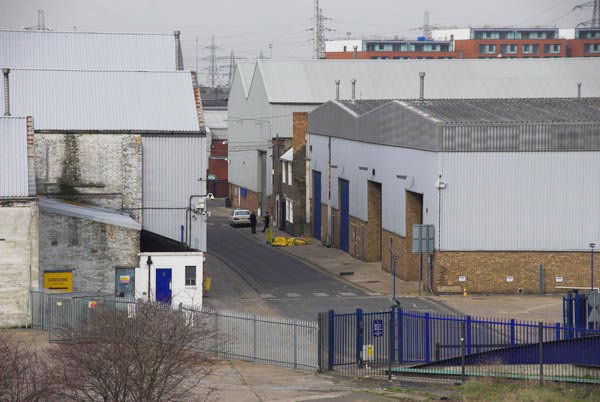
Southend Rd, North Circular Rd, Walthamstow Ave, South Chingford, Waltham Forest, 1995, 95c02-335
The North Circular Road runs across the borough and is a significant barrier to movement with relatively few bridges crossing it. Getting to places just over the road can mean a significant detour for people on foot. This fine 1930s building was a dairy company which delivered milk over a wide area. It has now lost its green tiles and is a Holiday Inn.
More in a later post. You can also find black and white pictures I took in the same area in 1995, starting on page 5 of my album 1995 London Photos.
Chiswick Waste, Stamford Brook, British Grove & St Peter’s Square: The fourth post on my walk which began at Kew Bridge Station on 10th of December 1989. The previous post was Bedford Park – 1989.
Bedford Park had played an important role in the development of suburban housing for the affluent with the Garden City movement, but after wandering around surrounded by red brick for more than an hour I was glad to get away from it and back to something rather different.
We sometimes think of recycling as being new and green, but it has long been important in our economy. Back in my young days there were ‘pig bins’ for waste food on our street, my father spent half an hour or so neatly smoothing out and rolling our waste newspapers into a neatly tied package to put out on the bin for salvage, and as kids we would eagerly search the neighbourhood for bottles to return to shops and scrap copper, brass, aluminium, lead and zinc to take to our local scrap dealer for pennies. When you only got 6d a week from your parents for pocket money every little helped.
Of course dealers like this one largely worked on an industrial scale – the prices here are in pounds per hundredweight – and a hundredweight was 8 stone – 112 lbs or 50.8 kilograms.
Stamford Brook is now be called one of London’s “Lost Rivers”. Wikipedia has a lengthy description of its complex courses with at least three sources, its six strands and four mouths into the Thames. When the county of London was carved from Middlesex in 1889 its most western course formed the boundary between the London Borough of Hammersmith and the Middlesex urban districts of Brentford and Chiswick – and since 1965 between the London Boroughs of Hounslow and Hammersmith & Fulham.
One northern part of the river is the Bollo Brook, and some of its water was diverted to the lakes at Chiswick House which still have and outflow to the Thames. But most of the rest of the river had been culverted by 1900, largely becoming a part of London’s sewage system. Hopefully the opening a few days ago of London’s supersewer will end the use of two of the mouths at Chiswick and Hammersmith being storm overlows and discharging untreated sewage into the Thames.
Grove House, 66, British Grove, Chiswick, Hounslow, Hammersmith & Fulham, 1989, 89-12b-14
British Grove also has a culvert running under it through some of Stamford Brook was diverted. There was a track here from at least the 18th century. The houses on Chiswick High Road immediately west of British Grove, some listed and dating from 1830-40, are named as British Terrace on the 1873 OS Map and British Grove appears as a narrow track along the boundary between Hounslow and Hammersmith & Fulham with houses only on its west side and the name British Grove across the long back gardens of the houses on the west side of St Peter’s Square. It had previously been a southern part of Chiswick Field Lane and
Later parts of those back gardens were built on and Grove House at No 66 appears to date from around 1930. It is now four flats.
Island Records, Royal Chiswick Laundry, British Grove, Hammersmith, Hounslow, Hammersmith & Fulham, 1989, 89-12b-16
British Grove has a several small claims to fame. It was here around 1863 that Frederick Walton first made linoleum having taken over the British Grove Works in 1860 from rubber manufacture Richard Beard. Unfortunately Walton’s works burnt down in 1862. They were insured and were rebuilt but were too small and Walton moved to Staines which became the centre for the development and manufacture of lino – though later much was made at Kirkaldy. The Staines works closed in 1974.
The Royal Chiswick Laundry was built in the rear garden of 22 St Peter’s Square in the 1890s, facing onto British Grove. The laundry closed in 1968 and the works were used briefly by “a company that added soundtrack to film before the property in 1973 became the offices, recording studios and premises of Island Records, who moved in with a staff of 65.” Their recording studio included “the base of the chimney, which was occasionally used in recordings to add reverberation” to vocals.
Many locals were relived when Island Records moved out and were in 2005 replaced by architects who retained and restored much of the buildings which were renamed Island Studios.
House, St Peter’s Square, Hammersmith, Hammersmith & Fulham, 1989, 89-12c-65
This is No 22, the house in whose back garden the Royal Chiswick Laundry was built, at the south-west corner of St Peter’ Square. The houses in the square were built in 1825-30 and 32 are Grade II listed.
Houses, St Peter’s Square, Hammersmith, Hammersmith & Fulham, 1989, 89-12c-52
The square was developed piecemeal by builders working to a master plan by the landowner George Scott on part of his Ravenscourt Park Esate, “mostly built in groups of three, with stucco fronts, pediments and Ionic porches.” Between these houses you can see the square chimney of the Royal Chiswick Laundry. And you can admire the architectural detail.
House, St Peter’s Square, Hammersmith, Hammersmith & Fulham, 1989, 89-12c-41
Two lions look rather angry at each other beside the stairs to the door of Number 30, with an eagle above the doorway.
Houses, St Peter’s Square, Hammersmith, Hammersmith & Fulham, 1989, 89-12c-43
Some of the houses have gateposts with large pineapples – and perhaps others once did. And here again that impressive work above the side gates, as well as an eagle above the front door.
I took a few more pictures around the square, which really is worth a visit, before dragging myself away from one of London’s finest squares towards St Peter’s Church where the next account will begin.
Lewisham Hospital, Greenwich Peninsula, Syria & Mali: As often when I had a long break between two events I took the opportunity to take an extensive walk in one of my favourite areas of London and on Friday 15th February I went to the Thames Path at Greenwich after a lunchtime protest at Lewisham Hospital. Then I went to Whitehall for a small protest against Western military intervention in Mali and Syria and a possible attack on Iran.
Fight to Save Lewisham Hospital Continues
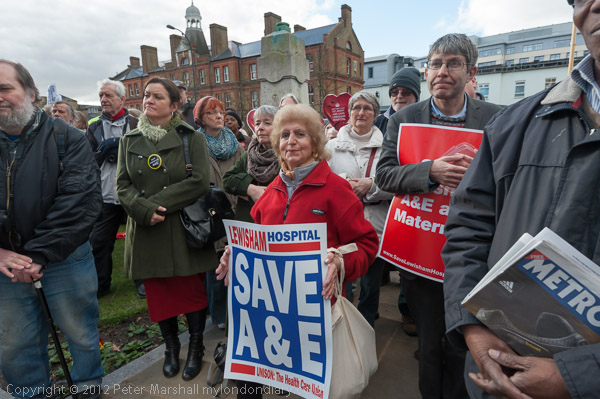
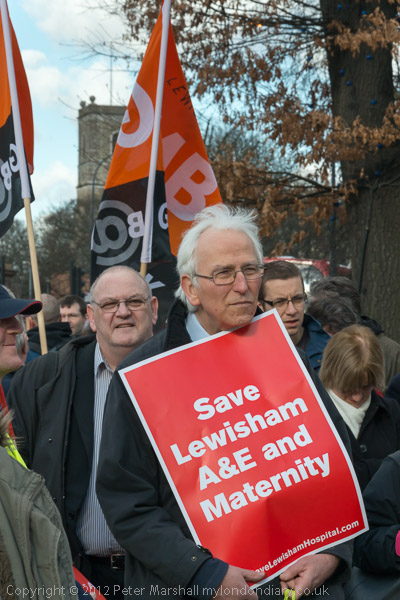
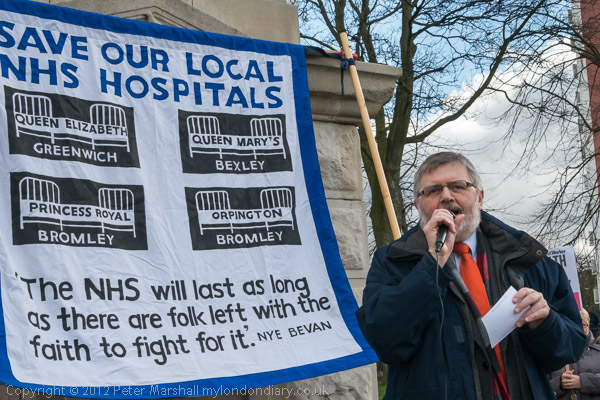
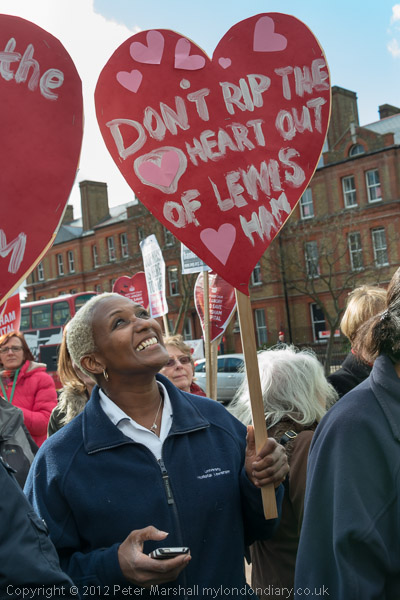
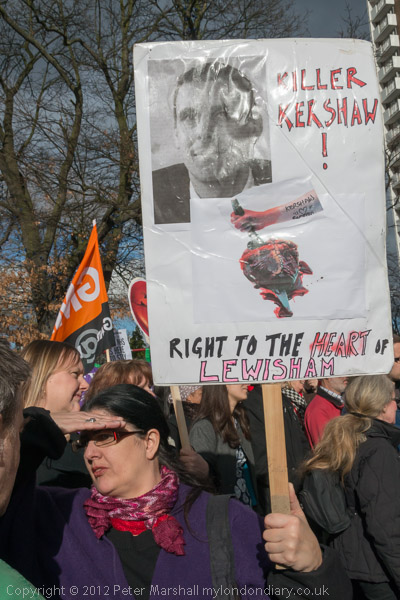
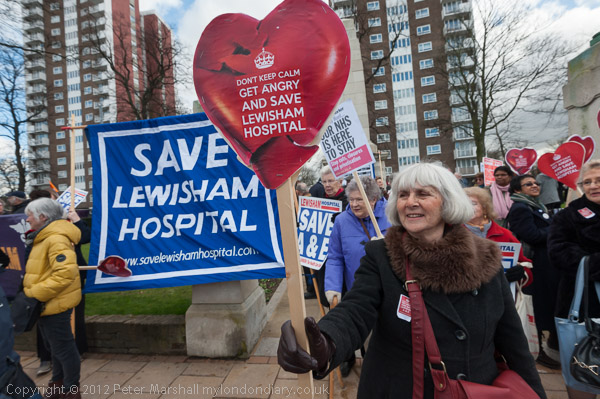
A lunchtime rally at the war memorial opposite the Hospital made clear that the fight by the entire local community to save services at their hospital was continuing.
As well as a legal challenge there were to be further mass demonstrations including a ‘Born in Lewisham Hospital’ protest the following month.
Lewisham Mayor Sir Steve Bullock
People in the area and all concerned with the future of the NHS were appalled by Jeremy Hunt’s decision to accept to the proposals for closure, which are medically unsound and would lead to more patients dying, but they would result in a huge waste of public funds.
The financial problem that led to the proposal was caused not by Lewisham but by a disastrous PFI (private finance initiative) agreement to build a hospital a few miles away.
As I wroteL “Lewisham is a successful and financially sound hospital which has received sensible public investment to provide up to date services, and the services that will be cut there will have to be set up again and provided elsewhere by other hospitals. Closing Lewisham will not only incur high costs, but will result in the waste of the previous investment in its facilities.”
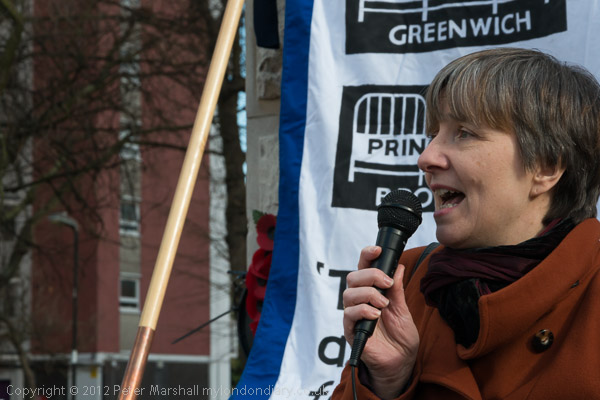
Louise Irvine, the Chair of Save Lewisham Hospital Campaign
In making his decision Hunt deliberately set out to mislead the public by describing the replacement of A&E as only a small reduction in A&E services. The proposed urgent care centre could only deal with around 30% of the cases currently being covered. Similar the replacement of the current maternity service by a midwife only unit could only deal with around 10% of current births – and life-threatening transfers would be necessary if complications rose in these.
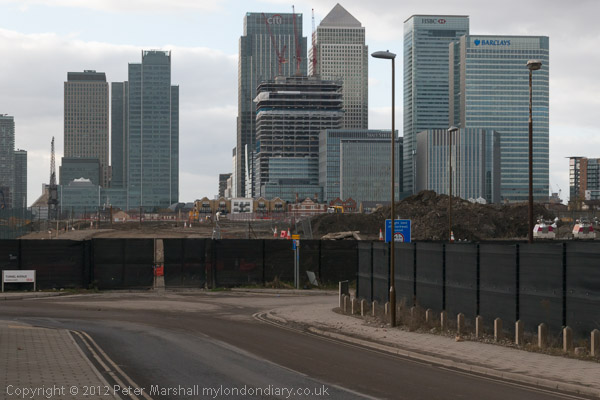
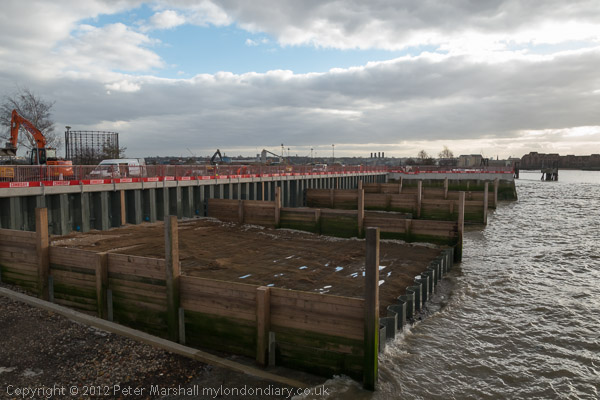
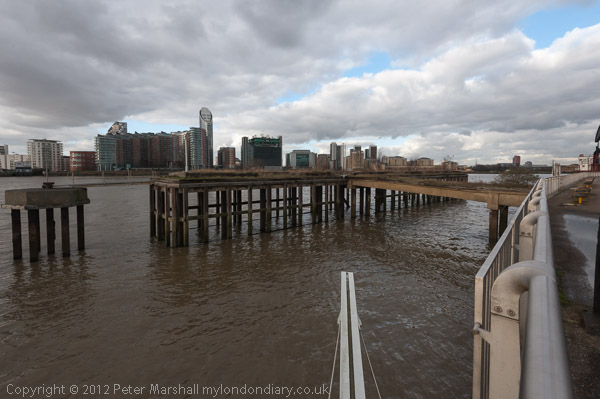
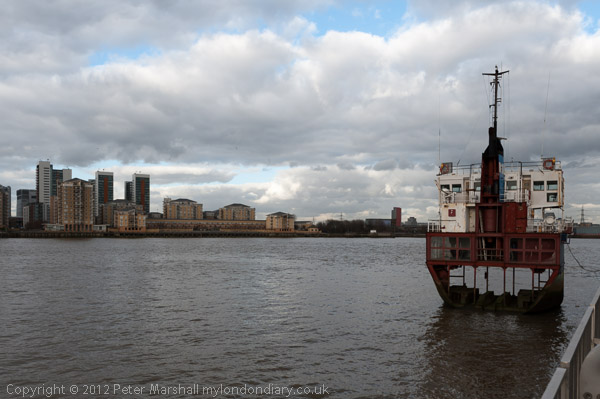
I took a bus to North Greenwich and tried to walk along the Thames Path, parts of which had reopened after a long closure. It was a warm day for February and started off sunny, though later the weather changed giving some dramatic skies.
The path from Delta Wharf and north to Drawdock Road was still vlosed but beyond that in both directions the path was open. I’m not sure what all the work taking place was about, but in part it was to provide a new section of the path, and to put in new breakwaters. Some time later of course there will be new riverside flats here, but for the moment these were being built closer to Greenwich.
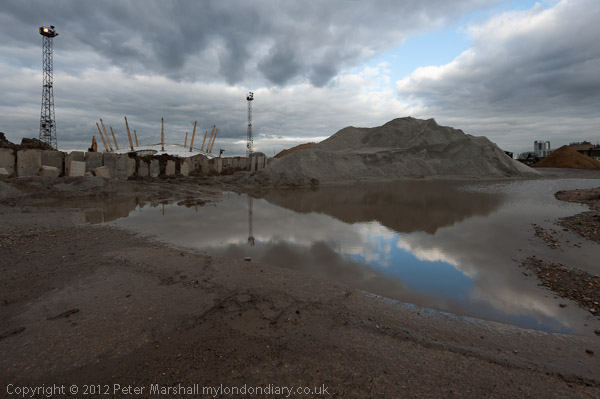
One fairly recent addition to the path was the Greenwich meridian marker at the bottom centre of this picture, the line going along in the gap between two metal beams and pointing north across the river.
And a little further to the east is the sculpture A Slice of Reality by Richard Wilson. In the following year this was to become part of London’s first public art walk, The Line. It is a 30ft slice of the former sand dredger Arco Trent – Google’s AI gets it badly wrong by describing it as “an eighth-scale replica“. As the name suggests it is a slice of the actual ship.
As I turned back and walked towards Greenwich there were some dramatic skies and lighting, but also some slightly boring road walking where the path was diverted away from the river.
Soon I was able to return to the riverside path and walk through the surreal landscape of an aggregate wharf.
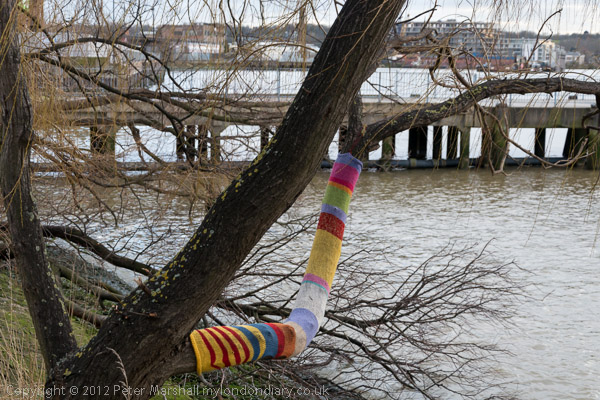
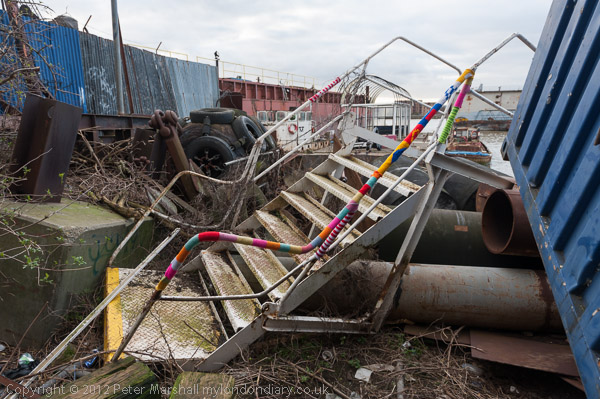
The final section of the walk on my way into Greenwich had been targeted by guerilla knitters.
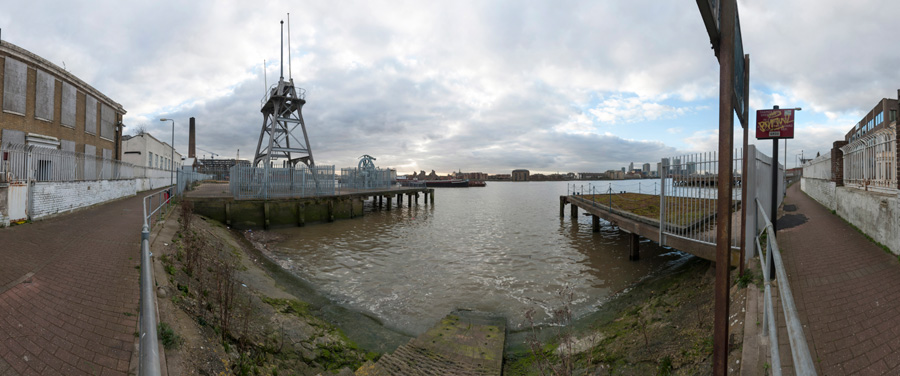
I was getting short of time, and could only stop to make one panorama although the weather was perfect for it.
This view shows the riverside path at left going south at the left and north at the right – a view of over 180 degrees. The shoreline here highly curved was in reality straight. I think the image digitally combines half a dozen overlapping frames.
By then I was having to hurry to catch the train back into central London – and the light was falling.
Stop Western Intervention in Syria & Mali – Downing St
This protest had been called by Stop the War on the 10th anniversary of the march by 2 million against the Iraq war in 2003, the largest protest march ever seen in the UK (and with many others around the world also marching.)
On this occasion they were calling for a stop to Western intervention in Mali and Syria and against the possible attack on Iran but the numbers taking part were very much smaller, with only around a hundred turning up.
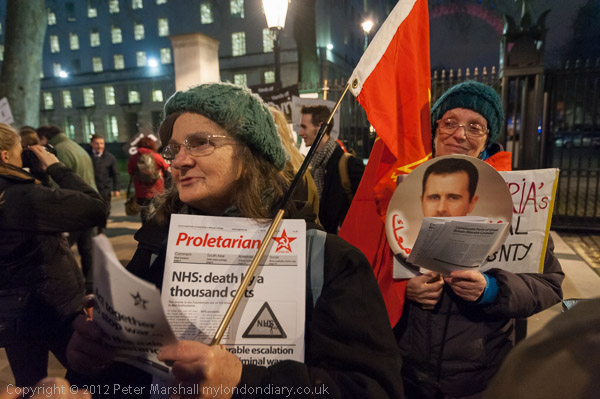
Among them were supporters of Syria’s President Assad and Stop the War had lost a great deal of support by opposing the help being given to groups against his regime, with many on the left calling for an end to his regime.
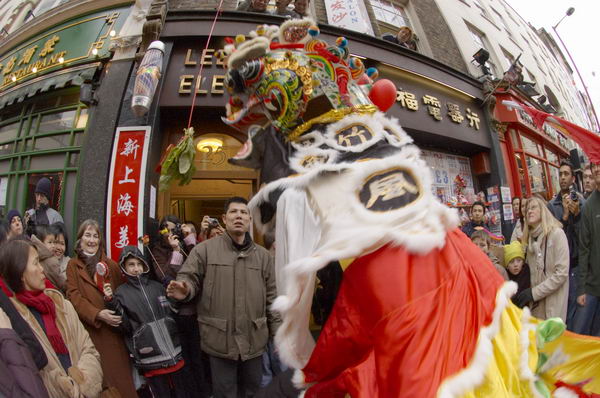
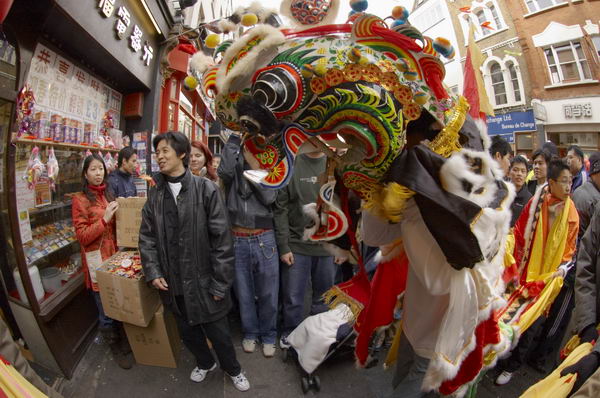
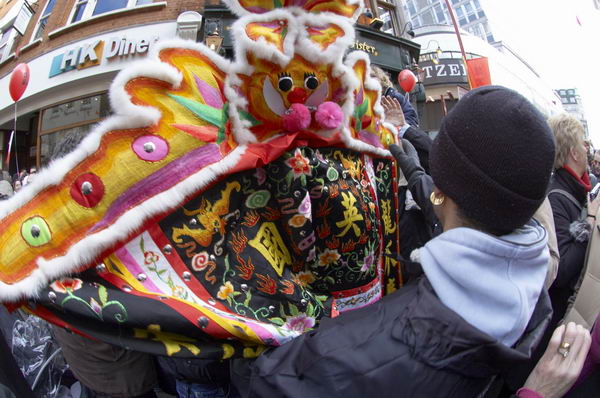
Chinese New Year – Soho: On Sunday 13th February 2005 I went to Soho to photograph the Chinese New Year Parade and festivities in Soho’s Chinatown. It wasn’t quite the last time I photographed the event, but was the last time I tried to cover it seriously – the following couple of years I did go and take a few pictures in Soho, but 20 years ago this was my last major coverage, and the piece I wrote for My London Diary explains why.
Like all of my posts at the time it was published without capitals and separated from the pictures which accompanied it, making it rather less accessible. It had made some kind of sense when I started the site around 2000, but as I began to put longer articles and more pictures on line the site was in need of a redesign, which I finally got around to in 2007-8.
Ken Livingstone, the leader of the Greater London Council from 1981 until its spiteful abolition by Margaret Thatcher in 1986 leaving London without effective overall government for 14 lost years had beaten the Labour Party and the Tories to become Greater London’s first Mayor, running as an Independent in 2000, and London began to come together again.
The Year of the Rooster – Chinese man on bicycle with rooster
The success of his first term in office led to him being adopted as Labour candidate for the 2004 Mayoral election. Despite his opposition in many areas – notably the Iraq war – to New Labour, the party knew they could not beat him, and he had had another successful term for London.
But by the end of the term some of his policies had become unpopular among many and a highly successful campaign for Boris Johnson – complete with false allegations and misinformation – led to his defeat in 2008. Standing again for Labour against Johnson in 2012 he lost again, defeated largely by media bias and false claims by the Johnson campaign that he was guilty of tax evasion and by some Jewish Labour supporters of antisemitism following some careless remarks.
Livingstone put much effort into bringing London’s varied ethnic groups together, giving official support – as he had in the GLC – to anti-racism policies and various cultural events. By pedestrianising the North Terrace of Trafalgar Square in 2003 he revived the space for Londoners to celebrate diverse cultural events including St Patrick’s Day and the Chinese New Year. But this also changed the nature of these celebrations.
Here is the piece I wrote in 2005 – with the usual corrections.
Chinese New Year – Soho,
Sunday 13th February 2005 London was celebrating the Chinese New Year Of The Rooster which started the previous Wednesday. Happy 4702 to all. As a rooster myself I was pleased to read my horoscope for the coming year. Not that I believe such superstitions for a moment.
I used to enjoy the rather anarchic celebrations in Chinatown, but it’s now more of an ordeal, with far too many people coming in to watch and too much organisation.
Ken may be proud of having got something done about Trafalgar Square and be keen to have as many official events with various communities as possible, but it was better when various groups just did what they wanted to.
This year we had a procession down the Charing Cross Road with crowds penned behind barriers.
Spectacle rather than event. I did the official bit in Trafalgar Square last year – dotting the eyes on the dragons and all, decided to give it and those horribly ingratiating speeches from local dignitaries and politicians, all keen to say “Kung Hei Fat Choy!“, a miss.
However, if developers Rosewheel get their way, Chinatown may not survive for much longer. Today in Chinatown things were much as before, swirling crowds and lots of excitement.
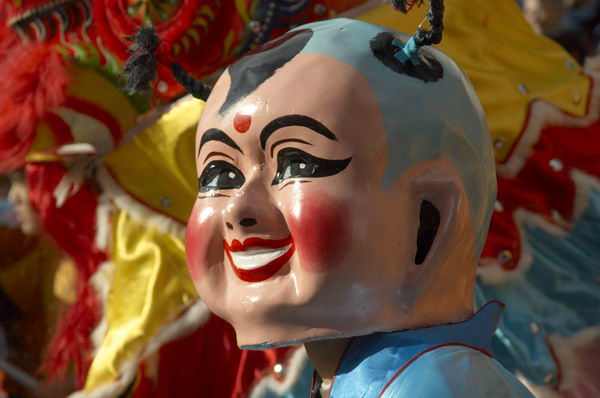
I joined them to photograph a couple of lions in action, then felt I’d had enough and went home.
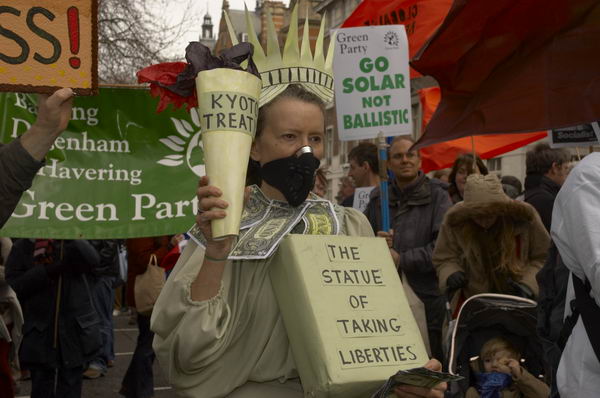
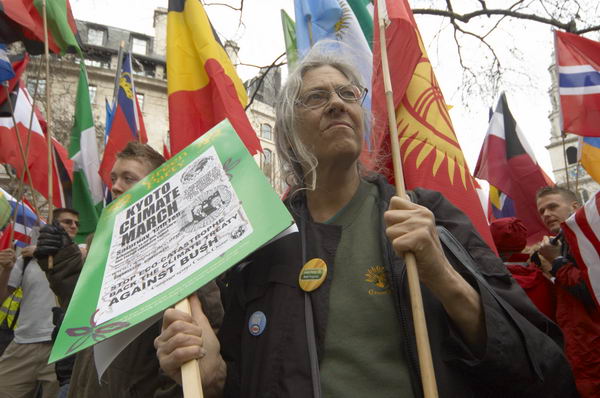
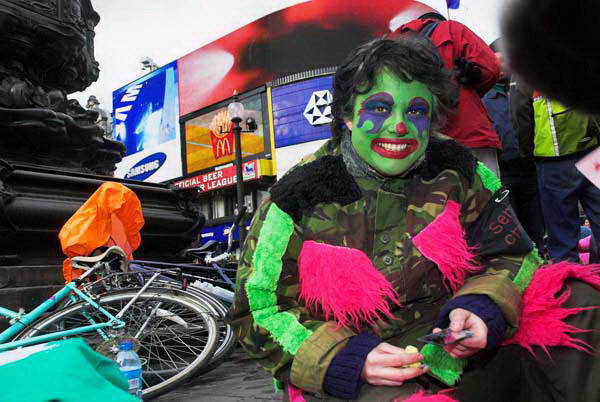
Campaign against Climate Change Kyoto Climate March: Another post from the past – 20 years ago on Saturday 12th February 2005- which has perhaps added resonance now that Trump and President Musk have condemned humanity to death with their climate roasting rejection of our last chances of survival. Though like some of his multi-billionaire friends he perhaps trusts inhumanity will survive in their climate bunkers with their heavily armed guards to keep out the rest of us. And as a small bonus I’ll add the anti-consumerist Valentines Day Reclaim Love which I photographed later the same day around Eros.
So here again is the text from 2005, suitably recapitalised and slightly corrected, along with a few of the pictures and linked to the rest. And the odd link to add context which people may have now forgotten.
Campaign against Climate Change Kyoto Climate March
The Statue of Taking Liberties
When I talked about the dangers of increasing CO2 emission and the need to cut down use of fossil fuels 35 years ago, I was a crank. Now everyone except the USA oil lobby and their political poodles recognises that climate change is for real.
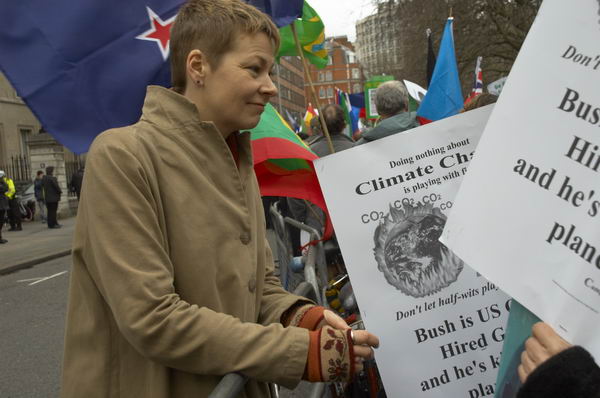
Caroline Lucas, MEP, talking to other marchers
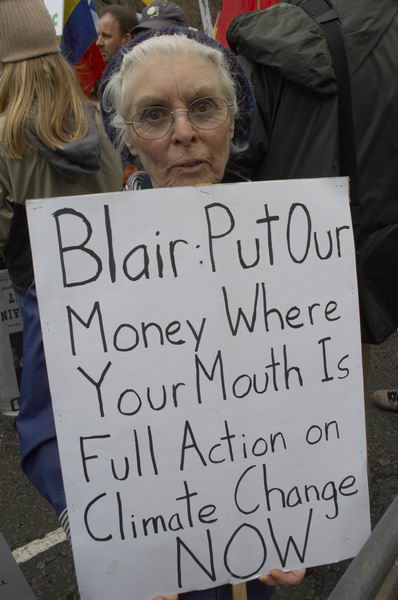
Even Blair has recognised it as the most vital issue facing us, threatening the future of the planet, although actually taking effective action still is a step too far for him. However he did call for a conference to examine the problem, which told him and us that we had perhaps ten years to take action before it would be to late.
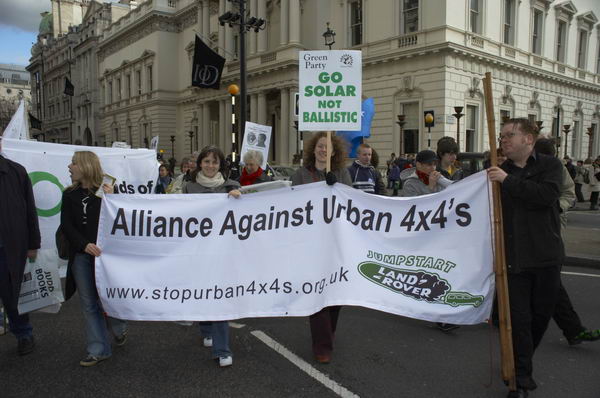
4x4s waste fuel and endanger pedestrians and cyclists
Kyoto is history now thanks to the US boycott, (although it comes into effect this week), but it should have been the first inadequate step on the road to action.
Displaying flags of the 141 countries who have adopted Kyoto
Every journey has to start somehow, and even a half-hearted step is better than none, and would have led the way to others. What got in its way was Texan oil interests, whose political face is George W Bush.
I’ve photographed most of the Campaign Against Climate Change’s Kyoto marches over the past few years. This one was probably the largest, and certainly excited more media interest, truly a sign that the issue has become news.
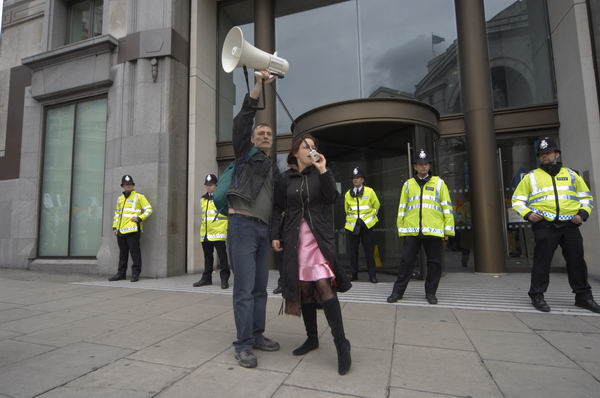
Police stand guard as Lucy Wills berates ExxonMobil for their lies on climate change which drives US policy
Starting in Lincoln’s Inn Fields, the march stopped first outside the UK offices of Exxonmobil, on the corner of Kingsway for a brief declaration,
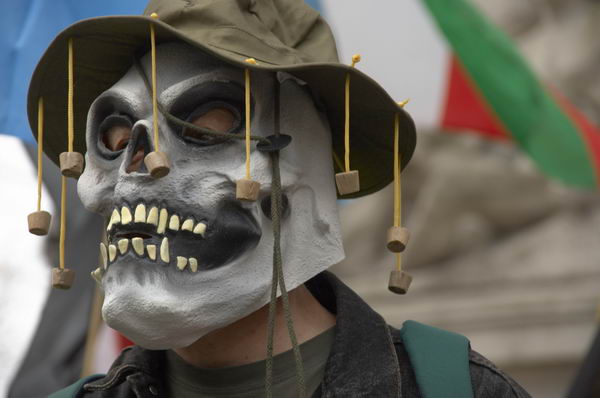
then for a longer demonstration outside the Australian High Commission in Aldwych (with guest appearances by its PM ‘John Howard‘ and an Australian ‘Grim Reaper’ with cork decorated hat),
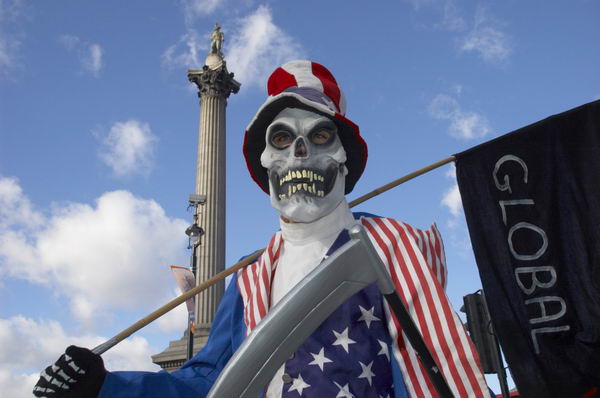
Uncle Sam as the Grim Reaper in Trafalgar Square
before making its way past Trafalgar Square and Piccadilly Circus to the Us Embassy. more pictures
O-I-L One in Love – Reclaim Love, Eros, Piccadilly Circus
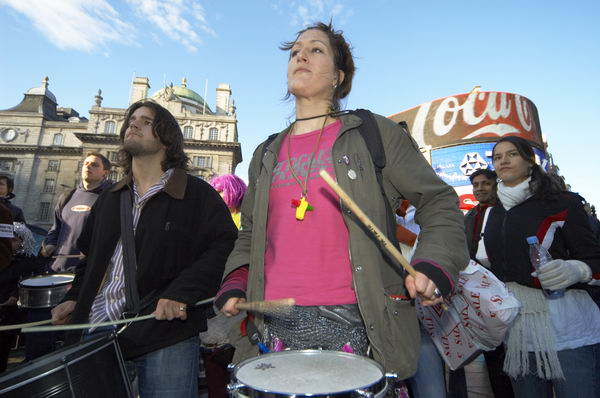
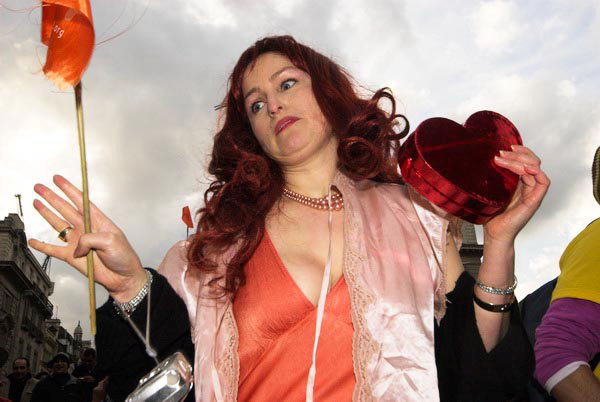
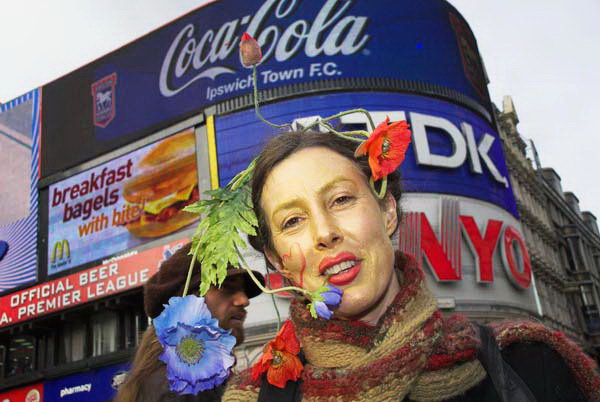
I left the climate march in Picadilly and returned to Eros, where O-I-L, One In Love, were organising a small gathering to “reclaim love” and “send love and healing to all the beings in the world” on the eve of Valentine’s day. It’s something we could all do with, and it was good to see people enjoying themselves around the statue of Eros (Anteros for pedants) in what is usually one of the most depressing spots on London’s tourist circuit.
Irish poet Venus CuMara who founded and organised these free street party
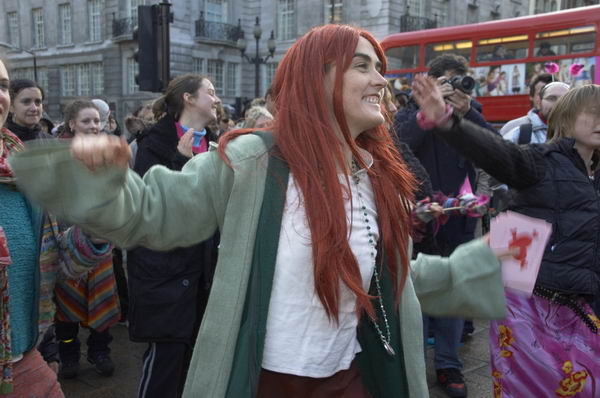
There was the samba band again, Rhythms Of Resistance, (hi guys) and dancing and people generally being happy and friendly and free Reclaim Love t shirts and apart from the occasional showers it was harmless fun.
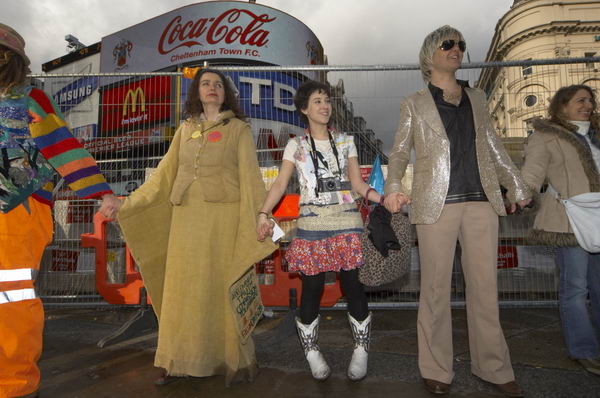
The circle to send love and healing to all the beings in this world
Rather to my surprise, the police either didn’t notice it or decided to ignore it, an unusually sensible strategy
Three Mills, Xenophobia & Infinite Love: On Saturday 11th February 2006 I went to an industrial archaeology meeting in the morning at Three Mills, one of the country’s most important surviving early industrial sites on the River Lea in Newham on its border with Tower Hamlets, then went back into central London for a rally against Xenophobia followed by a free Valentine street party at Piccadilly Circus. I wrote about all three on My London Diary, with of course photographs but like all posts on that site at the time this is a little difficult both to find and read – so I’ll repeat it here with proper capitalisation, minor corrections, a few extra links to add context and links to all the pictures.
Three Mills, Bromley-by-Bow
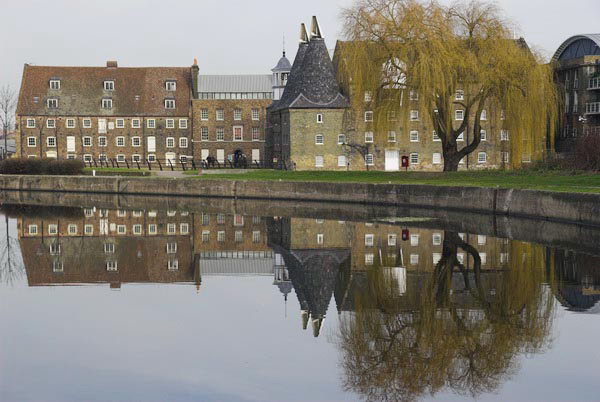
Saturday I was up early on my way to a meeting at Three Mills, Bromley-by-Bow. These mills are almost all that will be left standing in this area of the Lea valley by the development for the 2012 London Olympics and a huge growth in housing. If you want to see the Lower Lea Valley, you’d better get down there soon before it all disappears. The plans are not so much regeneration but more a total replacement.
Sugar House Lane, Stratford from the Miller’s House
I arrived early so I could take a short walk and a few pictures, and after lunch was able to take some pictures from the upper floors of the Mill Owners House. The whole area is one that played an important part in the development of many industries, and is littered with sites of interest to industrial archaeologists, while buried beneath these are doubtless important remains from medieval and earlier times. An important part of our heritage, and all likely to be bulldozed with at most a token report being made.
I first visited the Lea Valley in the 1980s. You can see a few of my pictures from it on my unfinished site River Lee – Lee Valley, although this covers a rather wider area than the Olympic site. There are also some pictures from the area elsewhere on this site – use the search box. more pictures
United Against Xenophobia – Trafalgar Square
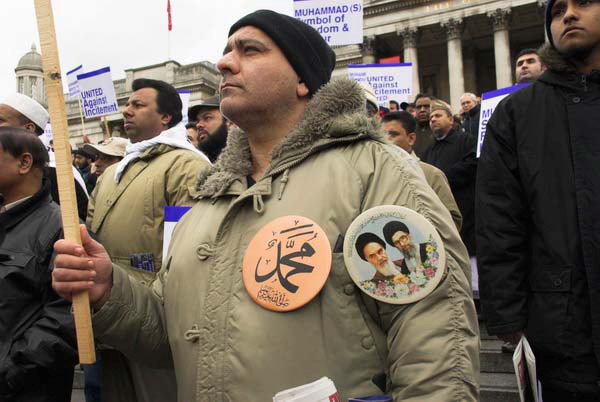
Meanwhile, back in Trafalgar Square, around ten thousand people, mainly British Muslims, had gathered in a rally organised by the Muslim Council of Britain to demonstrate they were united against xenophobia. As well as showing their disapproval of those cartoons depicting Muhammad, they were also determined to disassociate themselves from more extreme Muslim groups.
It was a gathering of decent people, behaving decently, listening to decent speakers speaking decently, carrying only the approved decent placards, overwhelmingly decent. Somehow it hardly seemed a real demonstration. more pictures
Reclaim Love 3 – Operation Infinite Love, Eros, Picadilly Circus
But I had a date with Eros, and wandered along to Piccadilly Circus where St Valentine was being honoured with a gathering by O-I-L, Operation Infinite Love.
“In response to the growth of confusion and fear in the world… we have decided to send love and healing to all the beings in this world, many of whom are suffering today.”
Venus CuMara the organiser of the events calls everyone to form a circle and hold hands
This is the third such annual event, and also carried the point that you didn’t need to buy expensive gifts, giving love was what mattered.
After some highly spirited samba from the Spirits Of Resistance everyone present made a large circle to “send love out from the bottom of our hearts to the whole world and all the beings upon her“.
Then the sound system started up and everyone was dancing.
I stayed at the event taking pictures until the light began to fade and then went home, taking with me one of the hundreds of free t-shirts that were given out by Venus and her friends.
I photographed most of these free annual Valentines street parties over the years until 2019. Although a few people have tried to get them going again since Covid I think few people have turned up to party.
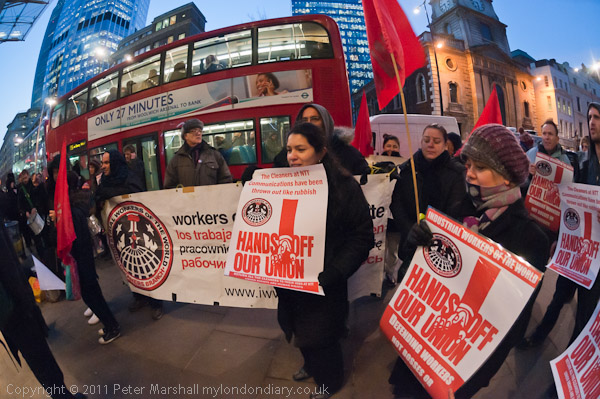
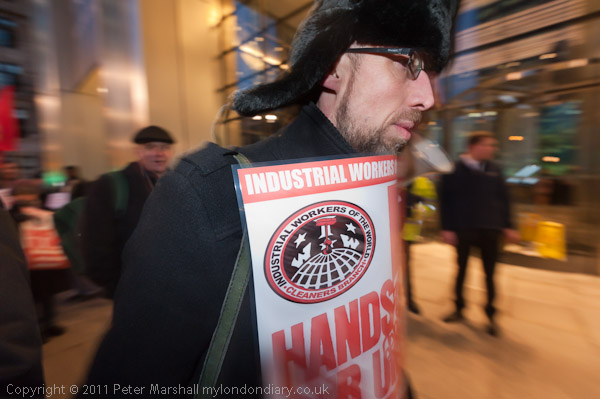
IWW Demand ‘Reinstate Alberto’, Occupy & London: On Friday 10th February 2012 I came to London to photograph a rush hour protest calling for the reinstatement of an office cleaner sacked for his union activities. I came early to wander a little from Waterloo and pay a visit to Occupy London on the way there, and also took a few pictures on my way home after the protest.
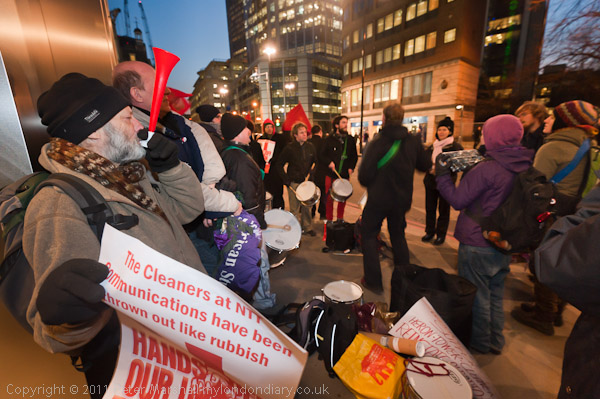
Cleaners were protesting outside the 230 metre tall Heron Tower (now Salesforce Tower) at 110 Bishopsgate, completed in 2007 when it then was the tallest building in the City of London.
Alberto Durango speaks outside Heron Tower
The protest called for the reinstatement of IWW Branch Secretary Alberto Durango who had been sacked, victimised for his trade union activities, after the cleaning contract for the building had been taken over by a new contractor, Incentive FM Group Ltd.
NTT Communications threw out their cleaners “like rubbish” because they organised and joined the union
Alberto who worked as a cleaner in the Heron Tower had become well known for his campaigning activities in and around the City of London, which have helped to secure better working conditions and the London Living Wage for many of the cleaners who work in London’s prestigious offices. He was then the Industrial Workers of the World Cleaners and Allied Trades Branch Secretary and in 2011 had won the fight for workers at Heron Tower to be paid the London Living Wage and an agreement with the then employer that there would be no redundancies there with any staff reductions needed being made by transfers to alternative posts.
Under the Transfer of Undertakings (Protection of Employment) Regulations (TUPE) the new employer should have continued to recognise this agreement. Instead they refused to do so and picked on Alberto, making him redundant.
The same management also controlled Exchange Tower where the IWW were carrying out a campaign to get cleaners the London Living Wage and where they have taken a very aggressive stance against the union, threatening the union members. The protesters connected Alberto’s sacking with his role there as union Branch Secretary.
This was a very loud protest with speakers using a powerful megaphone and drummers from Rhythms of Resistance adding their loud beats as office workers from Heron Tower and the many other offices in the area were making their way home in the evening rush hour.
The pavement outside the area owned by Heron Tower on Bishopsgate is relatively narrow and police rightly insisted that there needed to be a clear route along it for workers to get past without having to step into the busy road. So my 15mm fisheye lens was extremely useful, though it does make the area look much more spacious than it was.
In February the protest began a quarter of an hour after sunset, and light was fading fast. Although the City streets are generally well light both from street lighting and by the light from the huge areas of glass on the front of modern buildings I used added lighting for many of the pictures, either with a hand held LED light or flash on camera. But neither light source can cover the 180 degree diagonal view of the fisheye and those pictures rely on available light only. Its f2.8 maximum aperture helped – and it was a stop faster than the wide-angle zoom used for almost all the other images. In some at least of the pictures I think the fish-eye effect works well too.
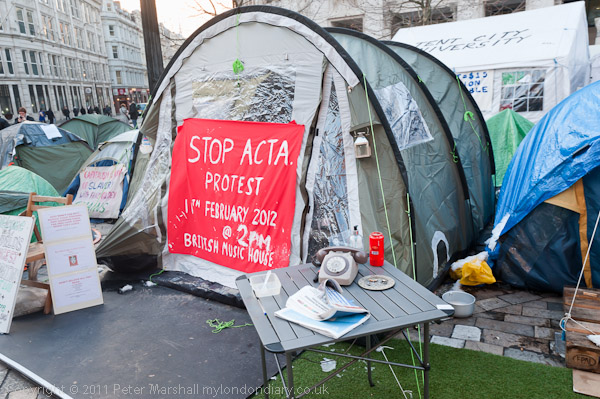
Occupy London & Other Pictures – St Paul’s Cathedral
Although there were still plenty of tents in St Paul’s Churchyard as I walked through they were all tightly closed and the occupiers were still out protesting the music anti-piracy proposals at the British Music House in Soho.
I was a disappointed at not meeting any of them, although I hadn’t arranged to do so and it did allow me to take a few pictures of the site without any distractions, though by the time I’d wandered there taking a few pictures on the way including from the Millenium footbridge I was in a hurry to get to the Heron Tower.
After the protest at the Heron Tower I took a bus back to Westminster and made a few pictures in the subway leading from the station to the Houses of Parliament and under the Emabankment towards the Thames before walking across the bridge and to Waterloo Station.
1995 Colour Part 5 – Waltham Forest: My Greenwich Meridian project had taken me into North London as far as Pole Hill in Chingford, but I also wandered more widely in the London Borough of Waltham Forest and even strayed into its neighbouring borough of Redbridge, photographing both with a panoramic camera and my ”normal’ pair of Olympus OM4s on black and white and colour.
Most of the pictures taken with these OM4s were made with the Olympus 35mm shift lens which could slide vertically and horizontally in its mount, particularly useful for photographing tall buildings when it by shifting it up I could keep holding the camera level and place the horizon close to the bottom of the image, so avoiding converging verticals or including large foreground areas.
Leisure Centre, New Road, Chingford, Waltham Forest, 1995, 95p03-441
Leisure Centre, New Road, Chingford, Waltham Forest, 1995, 95-3o-23, 1995, 95c03-335
But often I had the shift on a camera loaded with black and white film, with the 28mm on the OM4 with colour in it. I also carried an ultra-wide 21mm, a 50mm and a short telephoto lens for use when needed.
And just occasionally I photographed the same subject both with the swing lens panoramic and with one or other of the Olympus cameras – and I’ll include a couple of examples in this post. All of these pictures were made in February or March 1995.
Lee Valley Viaduct, North Circular Rd, South Chingford, Waltham Forest, 1995, 95p02-251
Southend Rd, North Circular Rd, South Chingford, Waltham Forest, 1995, 95p01-233
Recreation Ground, Higham Hill, Waltham Forest, 1995, 95p01-263
Sandpiper Close, Higham Hill, Waltham Forest, 1995, 95p02-122
Sandpiper Close, Higham Hill, Waltham Forest, 1995, 95c02-352
For these Sandpiper Close pictures I think the added angle of view of the panoramic greatly improves the image and gives for me a much more powerful impression of what I saw and felt standing there and looking down into the Lea Valley.
Riverhead Close, Higham Hill, Waltham Forest, 1995, 95p02-113
Although the two pictures of the Leisure Centre where only taken a few feet apart, they are very different images. Standing further back for the panoramic gives a better overall view of the site, but moving closer concentrates on the foreground. The slight colour difference between the two images – neither of them quite right – also complicates the issue. Colour balancing many of these old negatives is often very tricky.
Clicking on any of the images above will take you to a larger version on Flickr. You can also find some of the black and white pictures I took on the same walks in my album 1995 London Photosbeginning at this picture. My next post in this series will look at more of the non-panoramic images from Waltham Forest.
Conveniently a large plaque on the house tells me this is Prioy Gardens and gives the date of its construction, 1880. The London Borough of Hounslow street sign confirms the street name and tells me it is in Chiswick, true, but more specifically it is in Bedford Park. Yet a third street name can be seen on the wall of the house in case anyone was still in doubt.
This Grade II listed house at 1 Priory Gardens is a part of the Bedford Park Estate, “a pioneering commercial development of some 350 houses and a few public buildings built between 1875 and 1886 by inexperienced developer Jonathan Carr.”
The estate was planned “to create a community of like-minded middle class aesthetes who were defined by modest financial resources and significant artistic aspirations” and was generally regarded soon after as ‘The First Garden Suburb’ and had a great influence on later suburban housing.
The whole estate reflects the Queen Anne Revival style of the period which the listing calls ‘Picturesque‘ and is also known as Domestic Revival. Most of the houses and public buildings on the estate built before 1880 were designed by Richard Norman Shaw, the leading architect of this style, but this was one of the earliest by his protégé E J May who had taken over as Estate Architect. A planning application to demolish the house and develop the site was turned down in 1973 and it is now the headquarters of the Victorian Society.
The Tabard Inn at the right of this row also dates from 1880 and is Grade II* listed, one of the public buildings in the area designed by Richard Norman Shaw. This building was was “a pioneering ‘improved’ pub and represented a rejection of the Gin Palace in favour of a more traditionally inspired and respectable inn” and retains much of its original interior features. The exterior of this group of properties was inspired by the well-known Staples Inn on High Holborn – which some may remember featured on tins of Old Holborn hand rolling tobacco.
To the left of the pub is the managers house, and closer to my camera at left are the Bedford Park Stores. Wikipedia has a long and interesting entry on this group of buildings. The stores later became a showroom for coachbuilder H. J. Mulliner & Co.
The buildings of Bedford Park which had become run-down and many in multi-occupation by the middle of last century were saved from ruin by an influential campaign by the Bedford Park Society and all of Carr’s buildings were listed in 1967. Ealing and Hounslow Councils created conservation areas covering the estate in 1970.
This is I think 15 Priory Avenue, one of 4 houses at the crossroads with Rupert Road, where I could have faced in any direction and photographed a listed house, or walked down either of the roads lined with them. I think this was the most distinctive corner, but it was a rather overwhelming ensemble.
Back on the Bath Road the Wendy Wisbey theatrical agency, address 2 Rupert Road, occupied what had previously been The Phildene Stage School. In 2010 it became part of Orchard House School, now part of Dukes Education.
This was another building designed by Richard Norman Shaw. Unfortunately because of the mass nature of the listing of buildings in this area the listing text is almost devoid of any information.
Another picture of this agency which was also a dance school which shows the fine window at the east of the Bath Road frontage.
Houses, Bedford Park, Turnham Green, 1989, 89-12b-51
Another picture from Bedford Park showing some rather less grand houses. I can no longer recall the exact location – perhaps someone wlll be able to recognise it.
St Michael & All Angels’ Parish Hall, Woodstock Rd, Bedford Park, Turnham Green, ,1989, 89-12b-44
The Parish Hall adjoins the church and is listed together with it. The church by Richard Norman Shaw was built in 1880 as a central element in the new Bedford Park Estate, but the parish hall was a later addition in 1887. The front of the church and the hall face The Avenue but there is a small grassed area in front and the street sign in the photograph is for Woodstock Rd.
The central pillar seems remarkably stout and the decorative ironwork includes two angels above each door.
I left the church and walked down past Turnham Green Station to Chiswick High Road to continue my walk. More later.
Guantanamo, National Gallery, Elephant, Aylesbury & Lisa; Ten years ago Thursday 5th February 2015 was a long and interesting day for me, with a couple of protests, a short walk around London, an estate occupation and a memorable book launch.
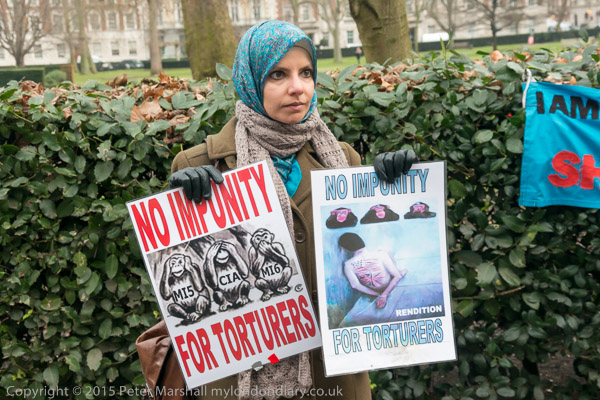
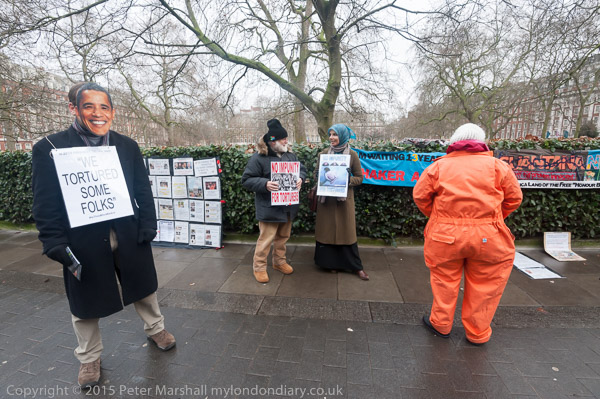
Close Guantanamo – 8 Years of protest – US Embassy
A small group from the London Guantánamo Campaign was celebrating 8 years of holding monthly protests at the US Embassy in Grosvenor Square.
Among those protesting were four people who had been taking part in the protests there for 8 years.
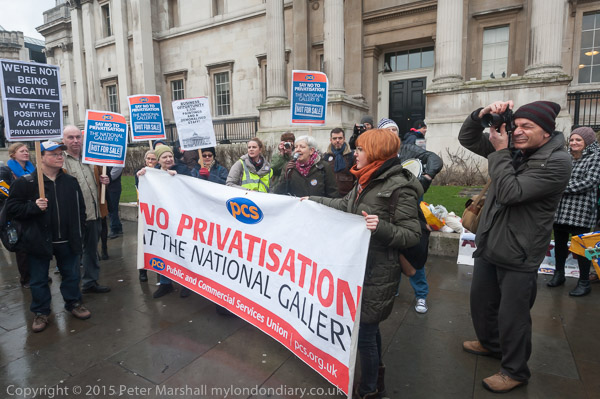
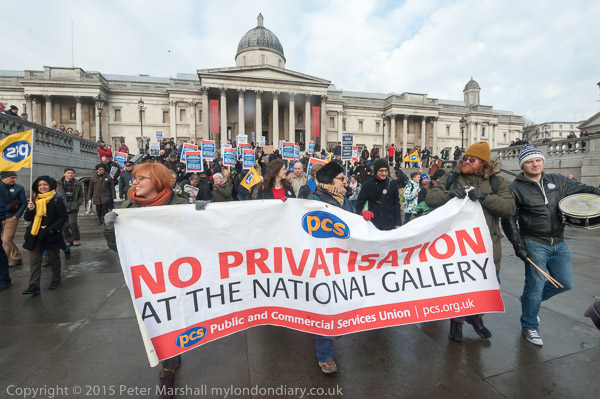
No Privatisation At National Gallery – Trafalgar Square and DCMS, Whitehall
The National Gallery had told 400 of its 600 staff who are responsible for the security of the paintings and the public, provide information about the collection, organise school bookings and look after the millions of visitors each year that they are no longer to be employed by the gallery and will instead become employes of a private company.
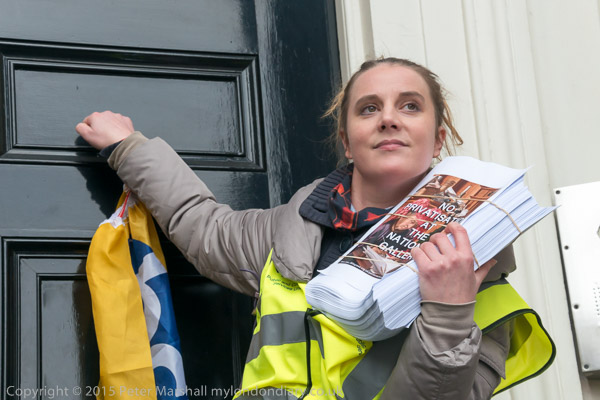
They knocked at the door but management did not answer
A private company had already taken over “temporarily” to run services in a third of the gallery.
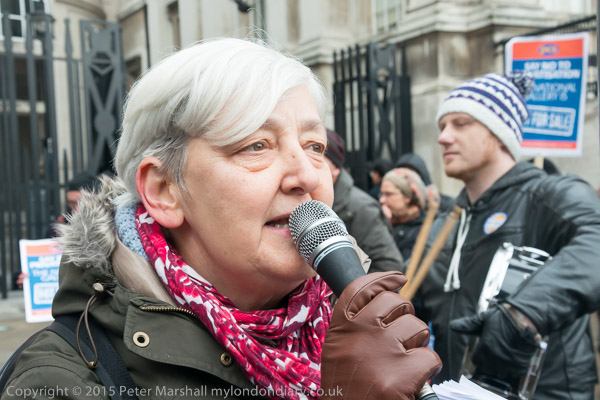
Workers at the gallery had staged a 5 day strike against the privatisation and were incensed when Candy Udwin, one of the senior PCS union reps and a member of the team taking part in negotiations with management at ACAS, was suspended, accused of breaching commercial confidentiality, and they demanded her re-instatement.
Candy Udwin
The National Gallery was then the only major museum or gallery in London still not paying the London Living Wage. Staff were already living on poverty pay and the privatisation would threaten pay and worsen the conditions – sick pay, holiday pay, pensions, hours of work etc – of these loyal and knowledgeable staff.
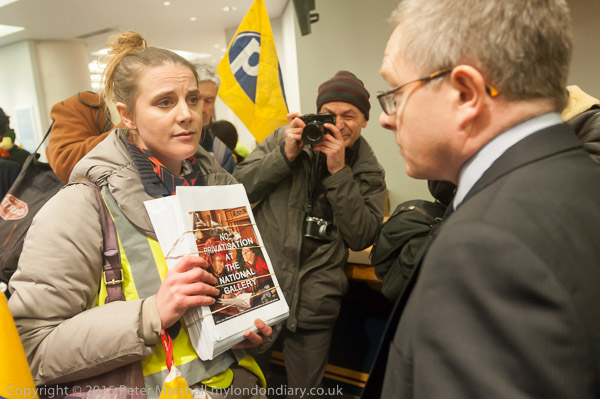
When nobody came to the door as they tried to deliver their 40,000 signature petition against privatisation a group went into the Sainsbury Wing to tray and deliver it. Security tried to get them to leave. Nobody from the gallery would come down to recieve the petition and eventually the strikers handed it over to the Head of Security who promised to deliver it to management personally.
Jeremy Corbyn joins the marchers
The strikers and their supporters then marched through Trafalgar Square and Whitehall to the Dept of Culture, Media and Sport, then in Parliament Street, where the minister concerned had agreed to receive a copy of the petition and three of them were allowed to take it in. Here there was a short rally with speakers including Jeremy Corbyn MP.
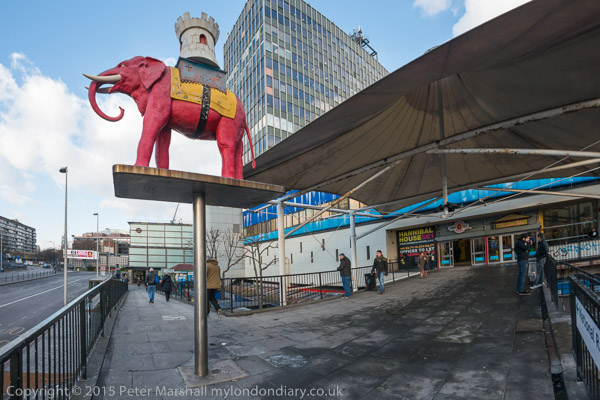
I made a few pictures as I walked from the Bakerloo Line station at Elephant & Castle to the Aylesbury Estate and afterwards on my way back to the station. The shopping centre has now been demolished and new buildings have sprung up on its site,
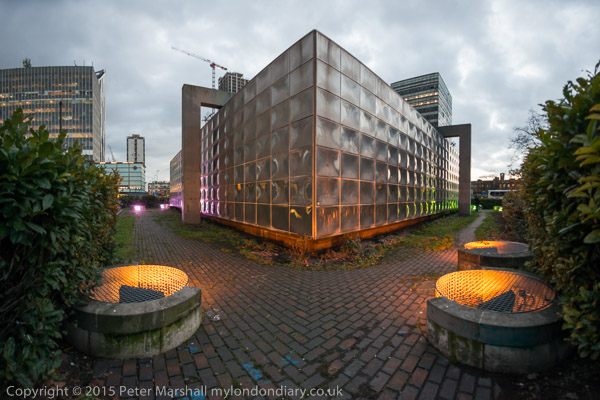
This strange building is an electricity substation which is still there, although there is no longer a roundabout around it. It was built as a memorial to Michael Faraday, ‘The Father of Electricity’ who was born a few hundred yards away in 1791.
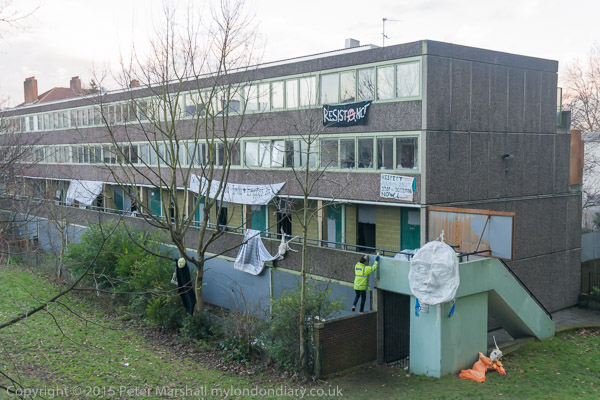
Chartridge occupied since the previous Saturday in a protest for housing in London
Southwark Council’s Aylesbury Estate was one of the UK’s largest council estates, built between 1963 and 1977 with over 2,700 homes. Lack of proper maintenance by the council and its use by them as a sink estate had led to it getting a reputation for crime, exaggerated by its use in filming TV crime series and films there not least because of its convenient location.
Access to the occupied block – I didn’t attempt it
It was on the Aylesbury Estate that Tony Blair got in on the act making his first speech as Prime Minister promising to fix estates like this and improve conditions for the urban poor through regeneration of council estates.
‘Respect Aylesbury Ballot – Stop the Demolition Now!’ Residents voted overwhelming for refurbishment not redevelopment
The buildings were actually well-designed and structurally sound on a well-planned estate with plenty of green space, but having been built in the sixties and 70s needed bringing up to date particularly in terms of insulation and double glazing. Southwark Council had also repeatedly failed to carry out necessary maintenance, particularly on the district heating system which they had allowed to become unreliable. But many residents liked living on the estate and when given the choice voted by a large majority for refurbishment rather than redevelopment. I visited several homes on other occasions and was quite envious, and the residents clearly loved living there.
Southwark Council responded by claiming the refurbishment would cost several times more than independent estimates suggested and went ahead with plans to eventually demolish the lot. Given the large number of homes involved the process was expected to last 20 years (later increased to 25 and likely to take even longer.) The first fairly small phase was completed in 2013, and the homes that were occupied in 2015 were in Phase 2.
I wasn’t able to access the flats that were occupied as it would have meant a rather dangerous climb to the first floor which I decided was beyond me, but I did meet some of the occupiers and went with them and some local residents to distribute leaflets about a public meeting to other flats in the estate.
Many residents support the occupiers and knew that they would lose their comfortable homes in a good location when they are finally forced to move. Some will be rehoused by Southwark, though mainly in less convienient locations and smaller properties, but many are on short term tenancies which do not qualify them for rehousing and will have to find private rented accommodation elsewhere. Those who have acquired their flats will only be offered compensation at far less than the cost of any similar accommodation in the area and will have to move much further from the centre of London.
While the volunteers were posting leaflets on one of the upper floors of the largest block on the estate, Wendover, I took some pictures to show the extensive views residents enjoyed. This was hindered by the fact that the windows on the walkways were thick with dust, possibly not cleaned since the block was built and not opening enough to put a camera through. Then fortunately I found a broken window that give me a clear view.
Getting By – Lisa’s Book Launch – Young Foundation, Bethnal Green
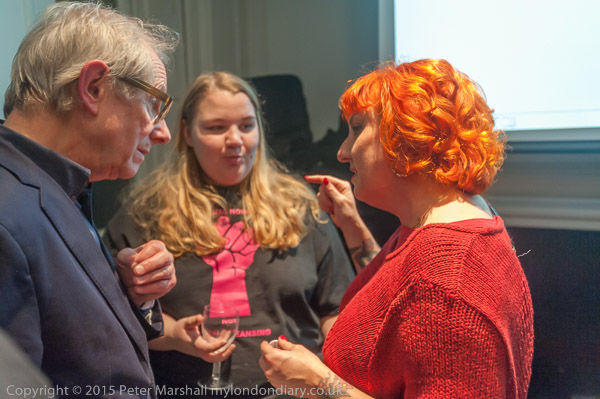
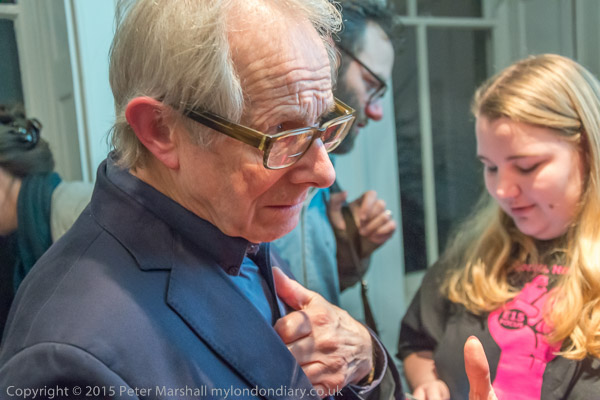
Ken Loach, Jasmine Stone and Lisa McKenzie, author of ‘Getting By’ talk at the book launch
Lisa McKenzie’s book ‘Getting By‘ is the result of her years of study from the inside of the working class district of Nottingham where she lived and worked for 22 years, enabling her to view the area from the inside and to gather, appreciate and understand the feelings and motivations of those who live there in a way impossible for others who have researched this and similar areas.
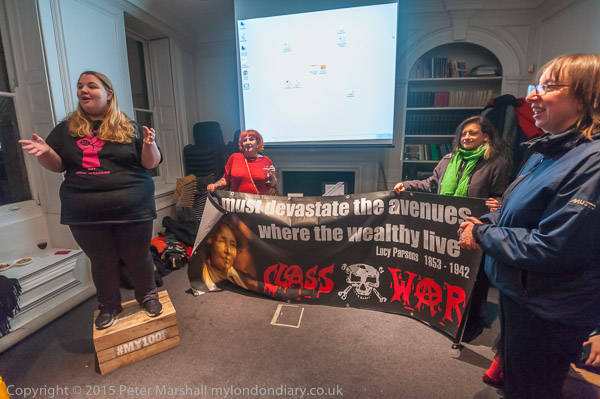
Jasmine Stone speaks about Focus E15 and Lisa and others hold a Class War banner
On the post in My London Diary I write much more about the opening – and of course there are many more pictures as well as a little of my personal history.