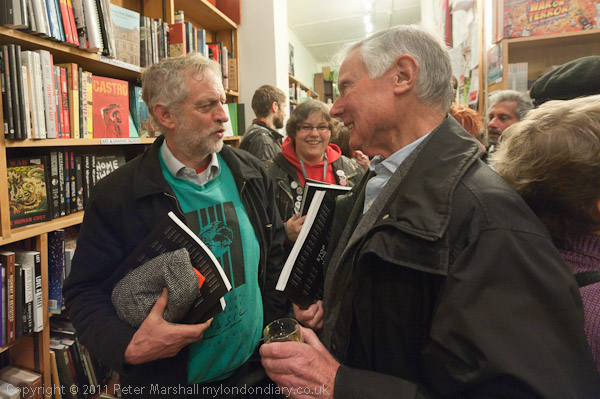
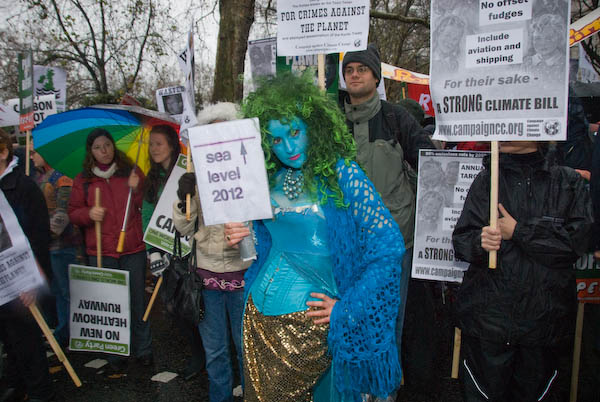
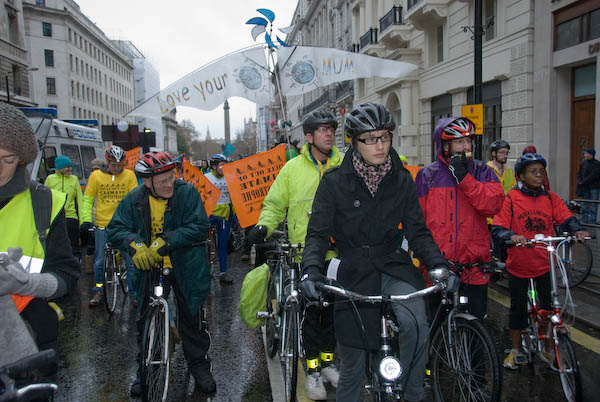
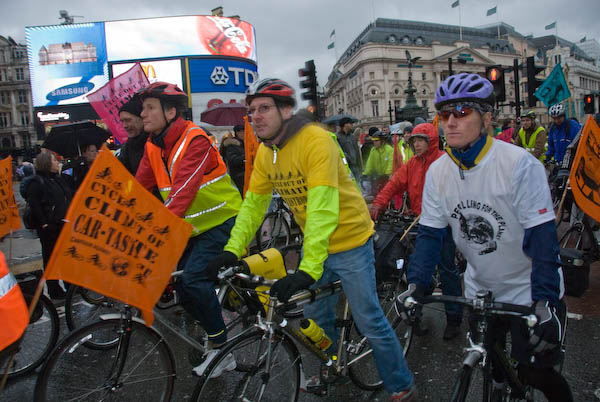
Notting Hill Carnival – Children’s Day – 2012

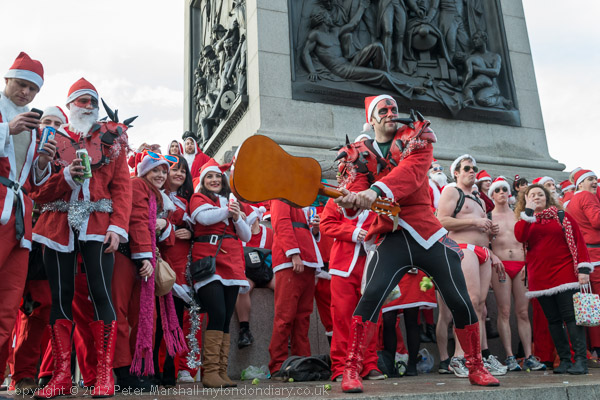
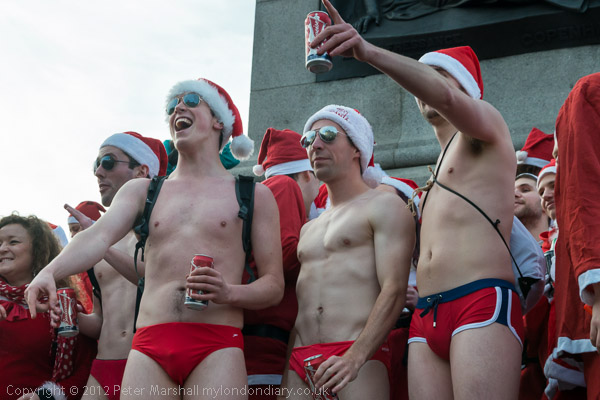
Notting Hill Carnival – Children’s Day: Lurid and largely untrue media reports had put me off from attending carnival until 1990, but after I had gone and seen for myself the two days at August Bank Holiday each year became one of my unmissable events of the year.

Notting Hill Carnival - Children's Day - 2012

Each year from then on I went to photograph the revels, trying to capture the spirit of the event in my pictures, and I had some success, with publications and some small exhibitions of the work.

Notting Hill Carnival - Children's Day - 2012

I saw and experience little of the criminality reports of which still often dominate press coverage, with many still trying to get carnival banned or to emasculate it as a static event in Hyde Park or something similar. Opposition to carnival, a great community event, seems at least in part driven by the same kind of racist and classist attitudes that led to Grenfell. I only once in over 20 years came close to it when I caught a pickpocket with his hand in one of my trouser pockets in a densely packed crowd. I grabbed it and pulled it out, to find it clutching an empty wallet – not mine.

Notting Hill Carnival - Children's Day - 2012

Of course I took some sensible precautions, taking only the equipment I needed and keeping a close eye and hold on it. I used a small bag which in crowded areas at least was always around my neck and in front of me rather than on my shoulder, and left my wallet and credit cards at home, carrying enough cash for travel, food and drink in a zipped pocket.

Notting Hill Carnival - Children's Day - 2012

Most of what mayhem there was – and given the huge number of people in the area there was relatively little of it – took place later in the day, after a day of dancing and drinking and after I had gone home, always before the light began to fade.

Notting Hill Carnival - Children's Day - 2012

While I was there the streets were full of people having a good time and happy to be photographed while they were doing so. Mostly they were Londoners, and particularly black Londoners, though some people came from far away for the event. When we were in St Denis at the north of Paris one year I photographed posters advertising trips for the event.

Notting Hill Carnival - Children's Day - 2012

The only real problem I had over the years was with my ears. At carnival you don’t just hear the music, you feel it as the tarmac on the streets vibrates and your internal organs jump around to the beat. For several days afterwards my ears would hurt , my hearing would be dull and my head would still be ringing. Some years when carnival came late in the month I was back teaching within a couple of days and it was hard.

Professional media crews covering the event mainly wear ear protectors, and I did try using earplugs, but found it unsatisfactory. They stopped me experiencing carnival fully and made communication with those I was photographing difficult. It was like eating wearing boxing gloves. So I just put up with being deafened and taking a day or to for recovery.

But by 2012 things were different for me. As I wrote then: “But either I’m getting too old for it, or perhaps carnival is changing, and this year I found it a little difficult. So I went on the Sunday, stayed around three hours and didn’t really want to return for the big day. So I didn’t.

And this was the last time I went to Carnival. The next year I was away from London and in years since then I’ve thought about it, but not gone. I feel I’ve taken enough pictures of it.

You can see more of the pictures from the 1990s in two albums – Notting Hill Carnivals and Panoramas on Flickr though I’ve still to add some from later years. Many of those from this century are on My London Diary, including many more from 2012 at Notting Hill – Children’s Day.


FlickrFacebookMy London DiaryHull PhotosLea ValleyParis
London’s Industrial HeritageLondon Photos

All photographs on this page are copyright © Peter Marshall.
Contact me to buy prints or licence to reproduce.


Divided Families, Gaza, Ghouta & Sri Lanka – 2014

Divided Families, Gaza, Ghouta & Sri Lanka: Saturday 23rd August 2014 was a busy day for protests around Whitehall. I began at Downing Street with a protest by family members kept apart from their loved ones by Teresa May’s cruel and unfair immigration rules in a deliberate breach of the Universal Declaration on Human Rights, then photographed a protest against arms sales to Israel and an end to Israeli war crimes. Then in Trafalgar Square Syrians marked the first anniversary of The chemical massacre at Ghouta before marching to Downing Street, where Tamils were protesting the rapes and killing in Sri Lanka.


Divided Families protest over cruelty – Downing St

Divided Families, Gaza, Ghouta & Sri Lanka - 2014

The Universal Declaration on Human Rights states:

'No one shall be subjected to arbitrary interference with his privacy, family, home or correspondence, nor to attacks upon his honour and reputation. Everyone has the right to the protection of the law against such interference or attacks.'
Divided Families, Gaza, Ghouta & Sri Lanka - 2014

But British citizens who are married to foreign nationals from outside the EU and may have children with them can only bring their partners to the UK if they are in well-paid jobs. And even then the visas needed are expensive and there are tough English Language tests, a need to prove greater attachment to the UK than of any other country and a five year probationary period.

Divided Families, Gaza, Ghouta & Sri Lanka - 2014

The rules are complex and hard to understand and have changed since 2014, particularly by Brexit. Then those earning less than £18,600 a year were unable to bring on-EU spouses to join them – and couples with two children needed an annual income of £24,800. Visa application was also (and still is) very expensive.

More at Divided Families protest over cruelty


Gaza Protest – Stop Arming Israel – Downing St

Divided Families, Gaza, Ghouta & Sri Lanka - 2014

Back in 2014 as now people were calling for an end to UK arms sales to Israel and for an end to Israeli war crimes.

Divided Families, Gaza, Ghouta & Sri Lanka - 2014

The 2014 conflict in Gaza resulted in over 2000 Palestinians being killed including almost 1500 civilians and many more injured, leaving around a thousand children with life-changing disabilities.

Fighting lasted 50 days with many schools and health centres being damaged and over 12,600 homes being destroyed and around a further 6,500 seriously damaged. At the time of this protest UNRWA was housing around 300,000 internally displaced people in the roughly half of its school buildings which had not been destroyed or seriously damaged.

Among the protesters were several groups of Jews, including ‘Jews for Justice for Palestinians’. Also there were Neturei Karta Orthodox Jews with banners opposing Zionism and the idea of a Jewish political state; they call for all to live peacefully together in Palestine – as Jews and Arabs did before the partition and formation of Israel.

A small group of pro-Israel protesters, one dressed as Superman, tried to disrupt the protest but after a short while were led away by police.

More pictures at Gaza Protest – Stop Arming Israel.


Syria Chemical Massacre Anniversary – Trafalgar Square

The chemical attack using the nerve gas Sarin by the Assad regime on Ghouta on 21st August killed 1,477 residents including over 400 children in this Damascus suburb.

Leaders in countries around the world expressed outrage at the attack, called for action to be taken. Pressure did lead to Syria agreeing to sign the Chemical Weapons Convention and the US and Russia agreed on a framework to eliminate Syria’s chemical weapons, and much of Syria’s stock was destroyed in the year following the massacre.

‘I am Chemical Bashar Al Assad and one year on I am still gassing Syrian children.
Thank you for UN veto’

But Assad continued to use chemical weapons, including many attacks with chlorine gas which was not covered by the framework because of its widespread chemical uses, as well as some attacks involving Sarin or a similar nerve gas. In 2023 the UN Security council declared that Syria’s chemical weapons declaration was incomplete and demanded full disclosure and cooperation with the Organisation for the Prohibition of Chemical Weapons.

Syria Chemical Massacre Anniversary


Tamils protest Sri Lankan rapes & killing – Downing St

Following the Sri Lankan military defeat of the Tamil Tigers in 2009, Tamils allege that the Tamils who make up around 11% of the population of Sri Lankan have been the subject of a continuing genocide by the government and the Sinhalese majority.

The protest called for the UN to conduct a referendum over setting up a Tamil state and investigate Sri Lankan genocide of Tamils. The Sri Lankan government had not kept the promises it made to the international community at the time of the Tamil defeat and has subjected the Tamil region to military occupation, rapes and killing.

Tamils protest Sri Lankan rapes & killing


FlickrFacebookMy London DiaryHull PhotosLea ValleyParis
London’s Industrial HeritageLondon Photos

All photographs on this page are copyright © Peter Marshall.
Contact me to buy prints or licence to reproduce.


Curry’s, Firestone, A Fountain & Kluwer – Brentford – 1990

Curry’s, Firestone, A Fountain & Kluwer continues from where my previous post about my walk on Sunday 7th January 1990 In Memory of Macleans & Trico – 1990 ended.

Warehouse, 991, Great West Road, Brentford, Hounslow, 1990, 90-1g-42
Former Curry’s, 991, Great West Road, Brentford, Hounslow, 1990, 90-1g-42

Warehouse and offices built in 1935-6 by F E Simpkins as a distribution centre for Curry’s Ltd. Grade II listed in 1994. Curry’s lost their headquarters building when it was taken over during the war to make aircraft parts. But in 1996 they opened a new superstore a few yards down the road at 971, a site where from 1929 Packard Cars were built; it had beenbadly damaged by a V2 in March 1945, but was rebuilt and became an annexe to Sperry Gyroscope until they moved to Bracknell in 1966.

In 1990, 991 Great West Road was Cooper West London Service. After some years of disuse in 2000 it became the offices of JC Decaux.

Gate, Firestone Tyre Factory, Great West Road, Brentford, Hounslow, 1990, 90-1g-43

Closed in 1979, the factory was bought by Trafalgar House and demolished during the 1980 August bank holiday to preempt its listing, due to be announced two days later. It was one of the finest buildings designed by Wallis, Gilbert and Partners and only the second to be opened on the Great West Rd in 1928.

Gate, Firestone Tyre Factory, Great West Road, Brentford, Hounslow, 1990, 90-1g-31

Its demolition was widely condemned as an act of architectural vandalism by architectural critics, many of whom would gladly have lain down in front of the bulldozers had they known about it in time. It’s demolition led directly to the listing of at least 150 twentieth century buildings previously ignored, though too many remained unprotected and have been lost.

Many of us felt that Lord Victor Matthews who ordered the instant demolition to avoid listing should have been in some way brought to justice – or at least have his life peerage removed. But nothing was done.

Fountain, Great West Road, Brentford, Hounslow, 1990, 90-1g-35

The building at the left of this image is the former Coty Cosmetics Factory at 941 Great West Road from 1932 by Wallis, Gilbert and Partners, now Syon Clinic, and to the right an odd structure outside Homebase. This fountain must have been close to the corner of Shield Drive, perhaps to distract attention from the bland and mediocre more recent buildings in the area.

Kluwer Publishing, Harlequin Avenue, Brentford, Hounslow, 1990, 90-1g-22

Harlequin Avenue runs north from the Great West Road and is still lined by factories and commercial buildings, few of much architectural interest. Kluwer Publishing was perhaps the exception but this building has since been demolished.

Gilette, Syon Lane, Isleworth, Hounslow, 1990, 90-1g-26

The Gillette building at the corner of the Great West Road and Syon Lane marks the western end of Brentford’s ‘Golden Mile’. To the west of here the land was owned by the Church Commissioners who only permitted residential development in Osterly.

Designed by Sir Banister Flight Fletcher in 1936-7, Gillette continued to make razor blades here until production was moved to Poland in 2006. The tall tower can be seen from miles away in this flat corner of Middlesex.

Gilette, Syon Lane, Isleworth, Hounslow, 1990, 90-1g-11

Plans to convert the building into a hotel and small business park fell through and in 2013 the site was purchased by The Vinyl Factory and made available for filming, at first with four large stages. Plans were approved in 2025 to make more of the site available for filming while preserving the Grade II listed building – and are expected to provide more than 3,400 permanent jobs.

More from my walk in the next instalment.


FlickrFacebookMy London DiaryHull PhotosLea ValleyParis
London’s Industrial HeritageLondon Photos

All photographs on this page are copyright © Peter Marshall.
Contact me to buy prints or licence to reproduce.


More Colour from 1994 in Enfield

More Colour from 1994 in Enfield: In More Ponders End, Enfield Wash, Palmers Green & Brimsdown 1994 I posted a set of pictures made in the first three months of the year. This post includes some more taken in March 1994 mainly along by the Lea Navigation in the London Borough of Enfield and ends with a couple taken in April or May.

My archives from back then are a little disorganised but I’ll try hard not to post any that I’ve previously posted, although a one here is from a site where I’ve previously posted a panoramic images.

Factory, Lea Navigation, Brimsdown, Enfield, 1994, 94-03-2-45

The Lea Valley was an important industrial area of London well into the 20th century and had been the source of some key inventions, including the start of the electronics industry. Some of the factories were along the river, perhaps originally on sites that had made use of its wharves, but now all reliant on road transport, with all of Brimsdown between the railway and the canal being huge industrial estates off Mollinson Avenue.

Factory, Lea Navigation, Brimsdown, Enfield, 1994, 94-03-2-21

Here the separation of industry from the canal was emphasized with a concrete fence, now rather decaying at the edge of the bank and tell fence topped with barbed wire at an angle to keep intruders from the canal out of the site.

I don’t remember exactly where at Brimsdown this factory was, but like the rest of the industry here it will since have been demolished, replaced by large distribution sheds, some set well back from the water and almost hidden by trees and bushes growing unfettered along the water’s edge.

Hairdressers, Brimsdown, Enfield, 1994, 94-03-2-42

There are houses and a few shops at Brimsdown on the other side of the railway line in what is perhaps part of Enfield Wash, which then included this hairdressers. The Sun’s March 1994 topless ‘Page 3 girl‘ in the calendar (also part reflected in the mirror at right) confirms the date of the picture.

Columbia Wharf, Ponders End, Enfield, 1994, 94-03-2-24

In a previous article I posted a panoramic view of Columbia Wharf looking down from the Lee Valley Road. Here from a little further East on that road with the navigation in the foreground you see the wharf and background the Ponders End Flour Mills, the gas holder and four tower blocks in Ponders End.

Much redevelopment has gone on in Ponders End and only one to those towers remains and there is no gas holder. But the shed at the wharf is still there and in use although Abbey Stainless Components Ltd are no longer there, nor is that large crane and the van boasting ‘NORTH LONDON’S CARRIER PIGEONS IN TRANSIT has long flown the coop.

Ponders End, Enfield, 1994, 94-05-1-53

A more pastoral panorama of Ponders End with Wright’s Flour Mills and the four towers in the background.

Hair Fashion, Ponders End, Enfield, 1994, 94-05-1-21

Lady Jayne remains a well known brand in the Ladies hair trade. I think this shop was probably in the High Street, much of which has now been redeveloped.

Tyre & Exhaust Centre, Ponders End, Enfield, 1994, 94-05-1-24
Tyre & Exhaust Centre, Ponders End, Enfield

Tyre Services Tyre & Exhaust Centre at 151 High Street on the corner with Stonehorse Road, a short ‘No Through Road’ off the High Street. This building was still there in 2022 but had became HiQ and then National Tyres and Autocare – a Halfords company and was by then permanently closed. I expect its days were numbered. Much of the area of the High Street around it was redeveloped around ten years ago.

More colour pictures from 1994 to follow in later posts.


FlickrFacebookMy London DiaryHull PhotosLea ValleyParis
London’s Industrial HeritageLondon Photos

All photographs on this page are copyright © Peter Marshall.
Contact me to buy prints or licence to reproduce.


London Sri Murugan Chariot Festival – 2009

London Sri Murugan Chariot Festival: On Sunday 16th August 2009 I travelled to Manor Park in East Ham to photograph this annual festival. A small temple was consecrated here in 1984 but it was rebuilt in 2005 with a 50ft tall marble temple tower in Dravidian style and claimed to be the largest South Indian Hindu temple in Europe. Murugan is the patron deity of the Tamil language and the Hindu god of war. He is generally described as the son of the deities Shiva and Parvati and the brother of Ganesha.

London Sri Murugan Chariot Festival - 2009

Much of the description below is based on the account I wrote on My London Diary in 2009.

London Sri Murugan Chariot Festival - 2009

The chariot festival here in which Hindu deities are carried around the streets of East Ham was certainly on a grand scale, with the chariot pulled by people followed by a crowd of perhaps 5000 people, members of London’s Tamil community.

London Sri Murugan Chariot Festival - 2009

Along the route men and women stood in front of their homes and businesses with plates or baskets of fruit to hand to the temple priests riding on the chariot or walking in front for blessings by the Goddess; metal trays bearing fruits were returned bearing a flame and the families held out their hands to feel the warmth.

London Sri Murugan Chariot Festival - 2009

The chariot had two finely painted prancing horses at its front but was pulled by two ropes, on the right by women and on the left by men, with a large mixed crowd of followers behind. Those on the ropes and between them and many others walked barefoot through the streets, but many others kept their shoes on – and so did I, at least for most of the event.

The Goddess Gayatri, mother of the Vedas

The chariot was too tall to pass unaided under some of the telephone wires on the streets and was accompnied by attendants with a long pole with a beam across its top to lift up the wires while the chariot passed beneath.

A group of musicians walked in front of the chariot stopping occasionally to play.

Men walking with the chariot carried short heavy knives which were used to halve the coconuts offered for blessing, and at several places along the route groups of men stood and threw large numbers of coconuts onto the road to smash.

Things began to get a little frenzied as the chariot came back in sight of the temple after around four hours going around the street, with people crowding around anxious to have their plates and bowls of fruit blessed.

Eventually the chariot turned into the large temple yard. I followed it in there and took a few more pictures. There was a very long queue for food and I left for home.

I put many of the pictures I took onto My London Diary and it was very hard to choose which to put in this post. You can see the others at London Sri Murugan Chariot Festival.


FlickrFacebookMy London DiaryHull PhotosLea ValleyParis
London’s Industrial HeritageLondon Photos

All photographs on this page are copyright © Peter Marshall.
Contact me to buy prints or licence to reproduce.


Gallery Protests, Sikhs, Kashmiris, Kurds, Sewol, Sotheby’s & Black Lives Matter – 2015

Gallery Protests, Sikhs, Kashmiris, Kurds, Sewol, Sotheby’s & Black Lives Matter: Saturday 15th August 2015 was probably the day I photographed more events than any other day, covering a total of 8 protests as well as taking a few pictures of London as I travelled around.

Gallery Protests, Sikhs, Kashmiris, Kurds, Sewol, Sotheby's & Black Lives Matter
Handing out fliers at Tate Modern wearing a sunflower T-shirt supporting the National Gallery strikers

It was the 61st day of the PCS strike against privatisation at the National Gallery, and at Tate Modern staff were handing out leaflets calling for staff who had already been outsourced to get the same pay and conditions as directly employed workers.

Gallery Protests, Sikhs, Kashmiris, Kurds, Sewol, Sotheby's & Black Lives Matter

It was Indian Independence Day, and outside India House I photographed Sikhs calling for the release of political prisoners and Kashmiris calling for freedom.

In Trafalgar Square Iranian Kurds remembered those killed in the fight for self-determination and a monthly silent protest remembered the Korean children killed when the Sewol ferry sank.

Gallery Protests, Sikhs, Kashmiris, Kurds, Sewol, Sotheby's & Black Lives Matter

In Mayfair, United Voices of the World were protesting in the streets around Sotheby’s, calling for proper sick pay, paid holidays and pensions and demainding the reinstatement of two union members sacked for protesting.

Gallery Protests, Sikhs, Kashmiris, Kurds, Sewol, Sotheby's & Black Lives Matter

Finally I went to Grosvenor Square for a protest close to the US embassy against the collective and systemic unlawful arrests and killings/attacks of black people in America.

You can read and see more pictures from all of these events – and a few pictures of London on My London Diary. Here I’ll post very short introductions to the events with a picture and a link.


National Gallery 61st day of Strike – Trafalgar Square

Cindy Udwin, PCS rep at the gallery, sacked for her union activities. The strikers were determined to get her re-instated – and eventually did

A short rally ended the daily picket on the 61st day of the PCS strike against privatisation at the National Gallery, with speeches and messages of support.

National Gallery 61st day of Strike.


Equalitate at Tate Modern

Vicky of Equalitate holds up their flyer calling for equal pay and conditions

Privatised visitor assistants at Tate Modern & Tate Britain get £3 an hour less than directly employed colleagues, are on zero hours contracts and do not get the same employment rights.

Equalitate at Tate Modern


Sikhs call for release of political prisoners – Indian High Commission

On Indian Independence Day, Sikh protesters from Dal Khalsa supported the call by hunger striker Bapu Surat Singh for the release of Sikh political prisoners and for the ‘2020’ campaign for a referendum for an independent Sikh state, Khalistan.

Sikhs call for release of political prisoners


Kashimiris Indian Independence Day call for freedom – Indian High Commission

Kashmiris protested at the Indian High Commission on Independence Day, observed as ‘black day’ in Indian military occupied Kashmir. They want freedom for their country, now a disputed territory with areas occupied by India, Pakistan and China.

Kashimiris Independence Day call for freedom


Kurdish PJAK remembers its martyrs – Trafalgar Square

Iranian Kurds from the Party of Free Life of Kurdistan (PJAK) remembered its fighters killed in the fight against Iran and ISIS for self-determination.

Kurdish PJAK remembers its martyrs


16th ‘Stay Put’ Sewol silent protest – Trafalgar Square

The monthly silent protest remembered the victims of the ferry tragedy, mainly school children who obeyed the order to ‘Stay Put’ on the lower decks as the ship went down.

16th ‘Stay Put’ Sewol silent protest


United Voices – Reinstate the Sotheby’s 2 – Mayfair

A police office tells Sandy Nicoll to get up and off the road with no success

The United Voices of the World marched noisily around the block at Sotheby’s demanding reinstatement of Barbara and Percy, cleaners sacked for protesting for proper sick pay, paid holidays and pensions. Several police attempts to clear the road and stop them failed.

United Voices – Reinstate the Sotheby’s 2


BlackoutLDN solidarity with Black US victims – Grosvenor Square

Bro Jeffrey Muhammad of the Nation of Islam speaking about police targeting attacks on the Black community in the UK

Two young women, Kayza Rose & Denise Fox, had organised a peaceful protest under the statue of Franklin Delano Roosevelt, close to the US embassy, in solidarity with events across the US against the collective and systemic unlawful arrests and killings/attacks of black people in America.

BlackoutLDN solidarity with Black US victims


London Views

The City from the Millennium Bridge

A few pictures I made as I travelled between the day’s protests.

London Views


FlickrFacebookMy London DiaryHull PhotosLea ValleyParis
London’s Industrial HeritageLondon Photos

All photographs on this page are copyright © Peter Marshall.
Contact me to buy prints or licence to reproduce.

Battersea Riverside 2012

Battersea Riverside. The short walk from Battersea Bridge to Wandsworth is one I’ve done quite a few times over the years. For most of the walk you can now keep to the riverside, with views across the Thames, though a few short detours are needed. It’s on of my favourite walks in London and only a couple of miles, though if you want a longer walk it is now part of the Thames Path so you can continue for many miles either upstream or down.

Battersea Riverside 2012
Lots Rd

When I first made this walk in the 1970s the riverside was lined with industry and I could only access the river at a few locations. By 2012 the industry had almost all gone and there were blocks of private flats along most of this length. But ‘planning gain’ meant a riverside path even if it was lined behind by planning loss.

Battersea Riverside 2012
Thames at Battersea
Battersea Riverside 2012
St Mary’s Battersea
Battersea Riverside 2012
Old Swan Wharf

People have to live somewhere and London needed extra housing, though almost all of these new developments were the wrong kind of housing and not the social housing desperately needed by Londoners. Back in the early post-war years we saw social housing being built to provide mixed communities and promote social cohesion, but Thatcher changed all that, and social housing became something only for the poor and that stigmatised residents as failures.

Overground train on its way to Clapham Junction
Demolition at Fulham Wharf
New Flats and Wandsworth Bridge

The loss of industry also meant the loss of jobs in the area, and took place at a time of increasing gentrification in Battersea, with people moving in who worked in wealthier parts of the city.

Looking upstream from Wandsworth Bridge

As I wrote in 2012, “Every time I walk it a little more has gone with a new block of flats or hotel or other luxury development. But a few things remain.”

Waste transfer station, Wandsworth

You can see the panoramic images larger by right clicking on them and choosing Open Image in New Tab’ More pictures on My London Diary at Battersea Riverside.


FlickrFacebookMy London DiaryHull PhotosLea ValleyParis
London’s Industrial HeritageLondon Photos

All photographs on this page are copyright © Peter Marshall.
Contact me to buy prints or licence to reproduce.

Give Our Kids A Future – 2011

Give Our Kids A Future – Dalston to Tottenham. A week after the police killing of Mark Duggan and the disturbances which followed in Tottenham, across London and in other towns and cities, community groups in North London came together on Saturday 13th August 2011 with around 1500 people marching from Dalston to Tottenham Town Hall pleading “Give Our Kids a Future.”

Give Our Kids A Future - 2011
The march starts from Gillet Square

These disturbances were seen by many without surprise as tensions were rising in the more deprived areas of London and across the country as a result of the cuts to youth services and other support begun under New Labour and continued more savagely by the Coalition government.

Give Our Kids A Future - 2011

Local Authorites were being starved of resources and had little choice but to make cuts where they could, cuts which disproportionately affected young people, the elderly and the disabled who rely more on their services. In particular many youth clbbs and other facilities had been closed.

Give Our Kids A Future - 2011

Young people had also been hit by the announcement that the Educational Maintenance Allowance (EMA) which enabled many in lower icnome homes to continue their eduction was to end this summer. Many school students had been radicalised and had taken part in sometimes disorderly student protests, joining in the protests over university fee rises and other changes in education.

Give Our Kids A Future - 2011


On these protests they had seen and suffered from heavy-handed policing with kettling, excessive use of batons and charges into crowds by police horses. And on the streets where they lived many had experienced police harassment, with racially discriminatory stop and searches and being moved away from areas where they met with friends.

Give Our Kids A Future - 2011

People in these areas were becoming more aware of unexplained deaths in police custody, with anger and resentment “multiplied by the lies told by police to the press, and the various cover-ups and white-washing by the IPCC, CPS and other authorities that have been used to prevent bringing those responsible to justice.

Some saw the shooting of Mark Duggan as an execution by police, and the undisguised glee of some of our right-wing media at his death, having taken the police lies and convicted him, clearly raised tempers. It was the total failure of Tottenham police to engage with the family members and others who held a peaceful vigil last Saturday and the police attack and beating of 15 year old girl that sparked the outbreak of rage that spread rapidly.

The march was not organised to condone any illegal behaviour but was an attempt by a long list of local organisations with the support of some wider political groups (a long list on My London Diary) “to bring all sections of local communities together to promote unity and to urge for positive action working together to find solutions to some of the long-standing problems of the area which made it fertile ground for the disturbances.

Some of the many Kurds on the march

“They want an end to the cuts in public services and for investment to be made into regeneration of the communities, with housing, jobs, education and leisure facilities and a restoration of all the youth services that have been cut”.

“More specifically about the riots they want a community led regeneration of the damaged areas and support for those affected, including the immediate rehousing of those made homeless and grants for small businesses.”

“But perhaps the most important of their demands was one for a cultural change, moving away from the demonisation of youth and the unemployed towards a culture of valuing all people.”

Their leaflet ended with the statement:

Let’s work together for a decent society, based not on greed, inequality and poor conditions, but on justice, freedom, sharing and cooperation.

More, including many more pictures, on My London Diary at Give Our Kids A Future.


FlickrFacebookMy London DiaryHull PhotosLea ValleyParis
London’s Industrial HeritageLondon Photos

All photographs on this page are copyright © Peter Marshall.
Contact me to buy prints or licence to reproduce.

In Memory of Macleans & Trico – 1990

In Memory of Macleans & Trico: More from my walk on Sunday 7th January 1990 – the previous post was Chapel, Gothic House, the Globe and Great West Road – 1990

Trico, 980,Great West Rd, Brentford, Hounslow, 1990, 90-1g-02
Macleans Toothpaste, Great West Rd, Brentford, Hounslow, 1990, 90-1g-03

Toothpaste in my youth came as dentifrice, a usually pink powder or block in small tins, around 7 or 8 cm diameter and 2 cm tall, and Macleans had a patent aluminium tin. In my home we only changed to toothpaste in tubes at some time in the 1950s, but we could have been behind the times. And we used Gibbs Dentifrice, not Macleans.

Macleans was begun by a New Zealand born businessman, Alex C. Maclean in 1919, and moved into this splendid new factory on the Great West Road in 1932. The company was bought by Beechams in 1938 and later was swallowed up as a part of GlaxoSmithKline or GSK. You can still apparently get Macleans toothpaste though it bears little relationship to the orginal product and is now produced by Haleon

Trico, 980,Great West Rd, Brentford, Hounslow, 1990, 90-1g-04
Macleans, Great West Rd, Brentford, Hounslow, 1990, 90-1g-04

The centenary of the Great West Road is celebrated in the book The Great West Road: A Centenary History by James Marshall, so far as I know not a relative of mine. “For two miles, from its junction with the North Circular Road and Chiswick High Road to Gillette Corner, a corridor of inter-war factory buildings emerged, a stylish celebration of art deco architecture.”

Trico, 980,Great West Rd, Brentford, Hounslow, 1990, 90-1g-61
Macleans, Great West Rd, Brentford, Hounslow, 1990, 90-1g-61

Unfortunately many of the buildings have now gone, Trico and Macleans among them, although a few of the grander survive. I think I knew when I took these pictures two years before the business moved that these would shortly be demolished.

Trico, 980,Great West Rd, Brentford, Hounslow, 1990, 90-1g-51
Trico, 980, Great West Rd, Brentford, Hounslow, 1990, 90-1g-51

The Trico Products Windscreen Wiper factory, No. 980, Great West Road, Brentford opened in 1928, three years after the new road was opened by George V in 2025 as the Brentford by-pass. Trico relocated to Pontypool, South Wales in 1992 and the building was demolished.

Certainly I took more pictures of these buildings than the others along this stretch of road, about three times as many as are in this post, though most of the rest are fairly similar to these.

Trico, 980,Great West Rd, Brentford, Hounslow, 1990, 90-1g-52
Trico, 980, Great West Rd, Brentford, Hounslow, 1990, 90-1g-52

In the 1980s there was still little general appreciation of Art Deco or moderne buildings from the 1920s and 1930s and few had been give the protection afforded by listing. The most celebrated case of demolition was the Firestone Tyre Factory which had closed and been sold to Trafalgar House, a company run by Lord Victor Matthews and Nigel Broakes on 22nd August 1980.

A Department of the Environment inspector had the same week decided the building should be listed, but as it was the Bank Holiday weekend no civil servant was available to sign the emergency listing document. “On Saturday 23 August Lord Matthews ordered demolition men to destroy the main features of the facade – the ceramic tiles around the entrance, the white pillars, the pediment above and the bronze lamp standards.” And so one of the finest buildings on the stretch was destroyed.

Trico, 980,Great West Rd, Brentford, Hounslow, 1990, 90-1g-54
Trico, 980, Great West Rd, Brentford, Hounslow, 1990, 90-1g-54

Victor Matthews, who as well as being Chairman of Trafalgar House was the proprietor of the Daily Express, had been made a Life Peer as Baron Matthews of Southgate a month before this despicable act of cultural vandalism.

Grand Union Canal, Trico, Great West Rd, Brentford, Hounslow, 1990, 90-1g-56

The canal which had been so important in earlier Brentford history was irrelevant to the companies which now set up along the new road. They were entirely based around road transport and very much used their impressive frontages as advertisements for their businesses to those driving along the new highway.

Grand Union Canal, Trico, Great West Rd, Brentford, Hounslow, 1990, 90-1g-41

More from other buildings along the Great West Road in the next instalment.


FlickrFacebookMy London DiaryHull PhotosLea ValleyParis
London’s Industrial HeritageLondon Photos

All photographs on this page are copyright © Peter Marshall.
Contact me to buy prints or licence to reproduce.

More Ponders End, Enfield Wash, Palmers Green & Brimsdown 1994

More Ponders End, Enfield Wash, Palmers Green & Brimsdown: Back in 1994 my main focus was on black and white images, some of which I was selling or putting into libraries. I was taking colour on colour negative film and my work was all ‘personal’, with a few being printed for exhibitions.

Hairdressers, Enfield Wash, Enfield, 1994, 94-03-1-52

So while I kept fairly careful records of the black and white images, keeping a diary and annotating the contact prints I made far less documentation for the colour work. Images were filed in sheets which were numbered often for the month I developed them rather than when they were taken and there was no urgency to develop colour film, doing so in batches sometimes covering film from several months.

Shop Window, Palmers Green, Enfield, 1994, 94-03-1-36

Here I’ve tried to present the images in the order they were taken. They come from a whole set of walks around parts of Enfield in the early months of 1994, though I think the first may haven been taken in December 1993.

Mural, Palmers Green, Enfield, 1994, 94-03-1-21

The previous post, Ponders End, Brimsdown, Enfield Wash & Waltham Cross – 1994, included some pictures from the same months, including a panorama made at the same place as one of the images here. I think these pictures speak for themselves so I’ll write nothing more about them.

Back to the Future, Bus, Brimsdown, Enfield, 1994, 94-03-1-23
Cable Drums, Factory, Brimsdown, Enfield, 1994, 94-03-2-64
Fuel Pumps, Brimsdown, Enfield, 1994, 94-03-1-26
Builders Mate, Builders Merchants, The Arena, Mollison Avenue, Brimsdown, Enfield, 1994, 94-03-2-55

Another post of pictures from the London Borough of Enfield later.


FlickrFacebookMy London DiaryHull PhotosLea ValleyParis
London’s Industrial HeritageLondon Photos

All photographs on this page are copyright © Peter Marshall.
Contact me to buy prints or licence to reproduce.