Lammas Lands, Leyton, Columbia Market & Bethnal Green – 2006

Lammas Lands, Leyton, Columbia Market & Bethnal Green: On Sunday 17th December 2006 I went to an event by local residents seeking to protect the Leyton Lammas Lands from the sprawling London 2012 Olympics before going to a meeting with a friend at Columbia Market. Unfortunately on my way there I got a phone call telling me he was unable to make it, so I took a few pictures there before walking on in a roundabout way to visit another friend in Bethnal Green. Below I’ll post what I wrote back in 2006 (with minor corrections) and some of the pictures from that day.


Loss of Common Land

Leyton Lammas Lands, Marsh Lane, Leyton
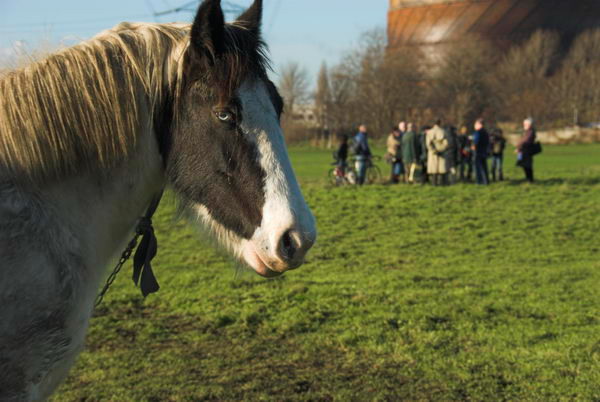
Lammas Lands, Leyton, Columbia Market & Bethnal Green
Allotments displaced by the Olympics may be relocated here on Leyton Lammas Lands

History seems about to repeat itself in Leyton, although the outcome may be different this time. It was in 894 that King Alfred drained Leyton Marsh and gave the local people the right to graze their animals on the Lammas Land created. (Details in this post come from a leaflet written by Lorraine Metherall and Neil Bedford, published by the New Lammas Lands Defence Committee (NLLDC) and from Martin Slavin’s Games Monitor web site – now archived here.)
Lammas Lands, Leyton, Columbia Market & Bethnal Green
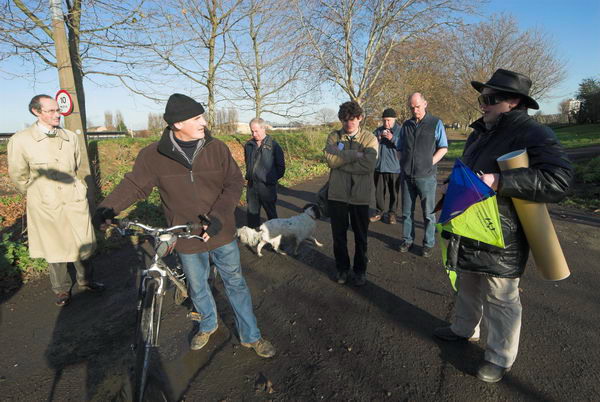
Marsh Lane, now mainly a cycle route, may become a busy road in the Olympic Development Authority has its way. The ‘New Lammas Lands Defence Committee’ hope to protect ancient rights.

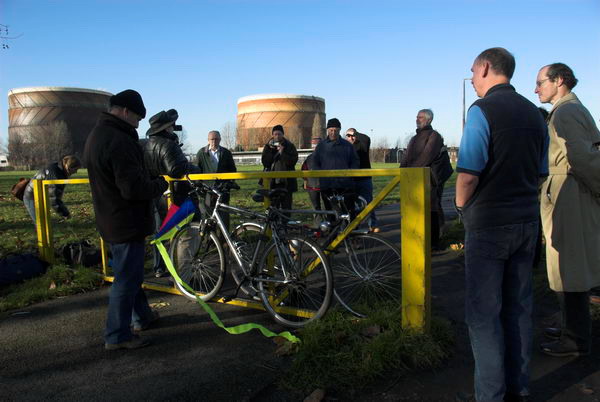
In the 1890s, the East London Waterworks Company tried to take over the Lammas Lands, and on Lammas Day, 1st August 1892, a large demonstration met on the marshes and ripped up their fences. The company tried to sue one of the people involved, and locals set up the ‘Leyton Lammas Lands Defence Committee‘ (LLLDC) and fought the case in court. The water company ended up admitting defeat, paying all costs and giving money for a local essay prize.
Lammas Lands, Leyton, Columbia Market & Bethnal Green

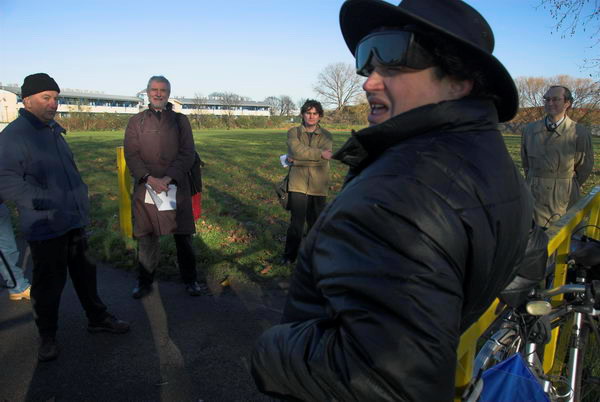
The efforts of the LLLDC led to the ‘1904 Leyton Urban District Council Act‘, in which parliament vested the lands in the council, making them responsible for maintaining them as “an open space for the perpetual use therof for exercise and recreation…”. The act made them a permanent public open space in return for the giving up of the lammas rights, and was confirmed by parliament in 1965.
Lammas Lands, Leyton, Columbia Market & Bethnal Green

Over the years parts of the land have been taken for other uses, including railway sidings, Gas Board land and, more recently, the Lea Valley Riding School and Ice Rink. When the Lea Valley Regional Park acquired most of the Lammas Lands by compulsory purchase in 1971, they for some reason felt able to ignore the 1904 act, and have blocked public access to some areas.
Lammas Lands, Leyton, Columbia Market & Bethnal Green

The latest threat to Leyton Lammas Lands come from the London Olympic Delivery Authority (ODA). Although outside the Olympic area, the Lammas Lands are a handy place to dump the unwanted, in this case the allotment holders of Manor Gardens. In the late 1880s the Blessed Virgin Mary appeared at Eton College and prompted them to set up a charitable settlement in Hackney. The Eton Manor Settlement bought up land, including lammas land in Hackney and Leyton and set up various sports clubs and related activities including the Manor Garden Allotments.
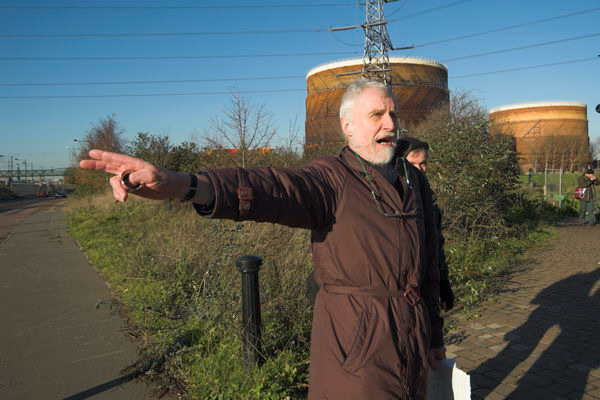
A new short section of road would link Marsh Lane to Orient Way here.

Although the ODA is apparently set on jettisoning inconvenient requirements that were a part of its original agreement – such as the need to replace common land – it apparently still has to re-site the allotments, and its preferred site is on Marsh Lane, part of the Leyton Lammas Lands. Unfortunately the current land is unsuitable, being heavily polluted with a relatively thin layer of topsoil on top of wartime rubble.
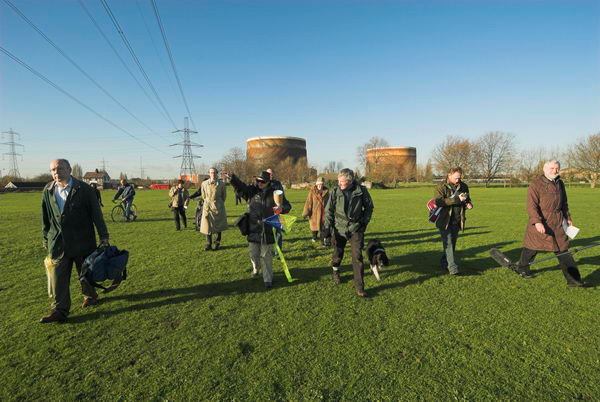
This is the area of the Lammas Lands that would be taken for the allotments

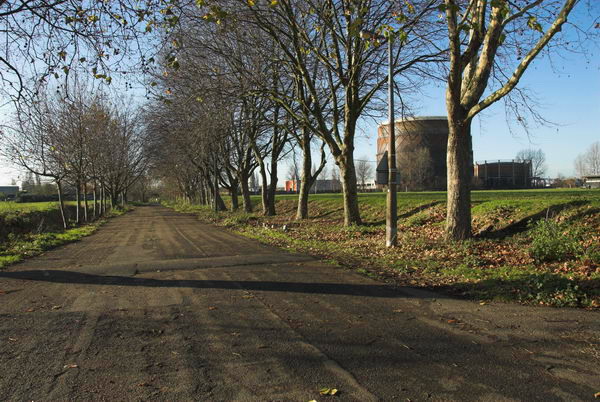
Making them usable means removal of some existing soil and bringing in many lorry loads of new topsoil, probably half a metre over the whole site. This would mean an new vehicle access to Marsh Lane, bringing traffic the few yards from Orient Way, along with widening Marsh Lane with the loss of some of the fine avenue of trees currently on both sides. This would also need to stay open for the use of the allotment holders, and would almost certainly result in the newly widened Marsh Lane becoming a heavily trafficked short cut to Church Road.
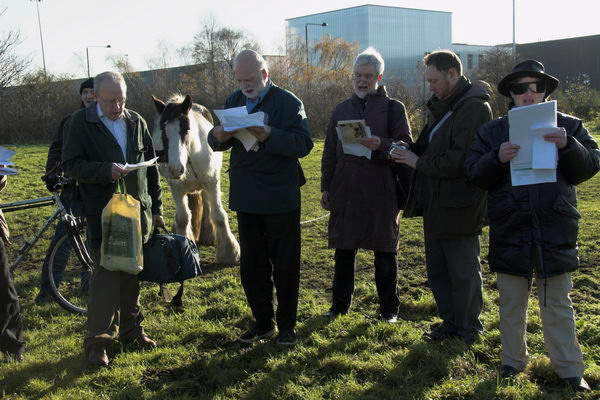
Singing ‘The Lammas Land Song’ “We will not be robbed when there’s a ballot in this land…”

The ODA needs the support of the local council for their application, and the NLLDC hope to raise enough local support to make them think again. It is of course possible that the courts could be asked to ensure that the provisions of the 1904 act are enforced.

More pictures

[The Manor Gardens allotments were moved here in 2007 but the site allocated was in very poor condition. The ODA reneged on its promise to return them to their original site – but eventually in 2016 they were given a new site – only one fifth the area of their original site – on Pudding Mill Lane. This is now under threat from more and more tall buildings around it blocking out the sun.]


Leyton
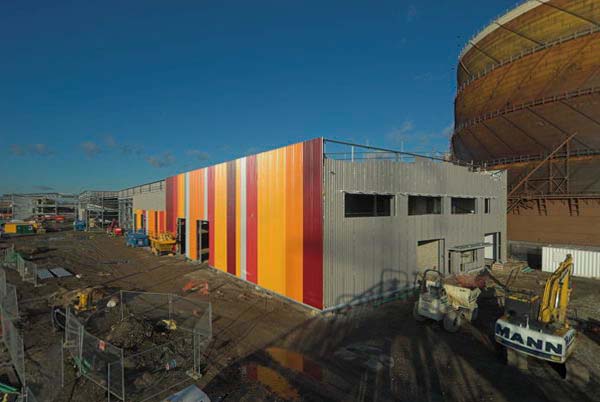
Brightly painted sheds were being erected on the gas holder site
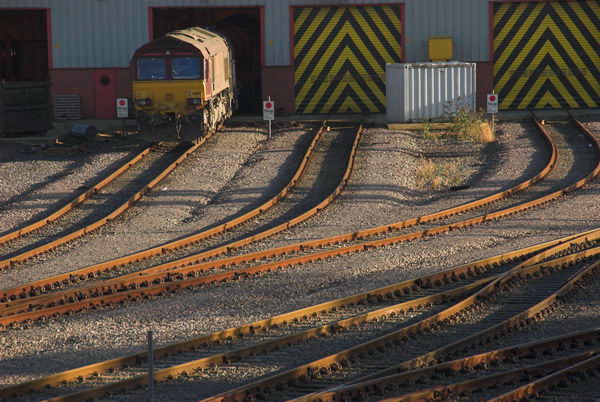
Rail sidings & sheds
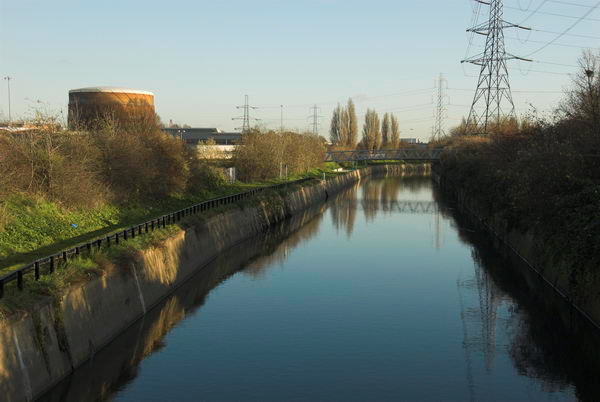
Flood relief channel

A few more pictures from Leyton.


Columbia Market

I was in the East End partly to meet a mate at Columbia Market, but in the end he couldn’t make it. With Christmas just over a week to go, prices were high. I calculated we’d just sent several hundred pounds worth of eucalyptus twigs to the incinerator after I did a bit of pruning recently, and those three holly trees in the back garden would be a goldmine. Strangely, even at these prices, some people seemed to be buying the stuff, though by the end of they day there did seem to be quite a lot of plants being loaded back into the lorries, and there were certainly plenty of Christmas Untrees left.

Rootless trees

Real trees of course have roots, and we always get one that has them, and grow it on for a few years between January and December. A few die off, and others eventually get too big to get through the door, and there are three that would suit Trafalgar Square down the garden. [Two huge and still growing but I had to fell one of them a few years ago.]

A few more images – including the Christmas Tree machine


Bethnal Green
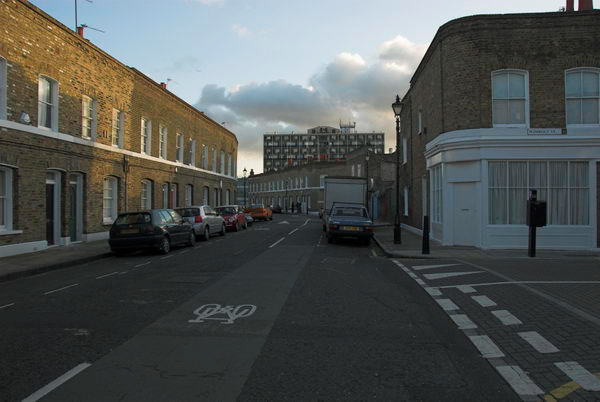
I took a few snaps, and then wandered through Hackney and Bethnal Green on my way to visit another friend who had written a book, The Romance of Bethnal Green, on the area and is using some of my pictures, to take a look at the design.
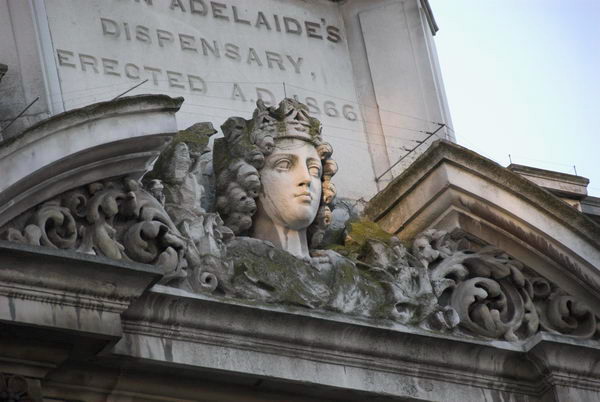
Queen Adelaide’s Dispensary

There was some nice light on some of the streets and buildings, and Queen Adelaide’s head curiously lit up as I passed.
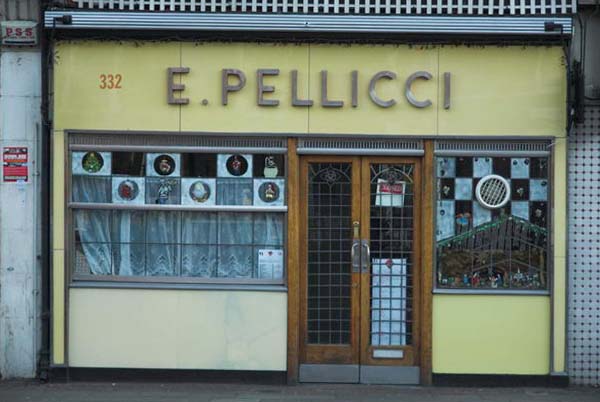
Pellici’s Café on Bethnal Green Road

More pictures from Hackney and Bethnal Green


FlickrFacebookMy London DiaryHull PhotosLea ValleyParis
London’s Industrial HeritageLondon Photos

All photographs on this page are copyright © Peter Marshall.
Contact me to buy prints or licence to reproduce.


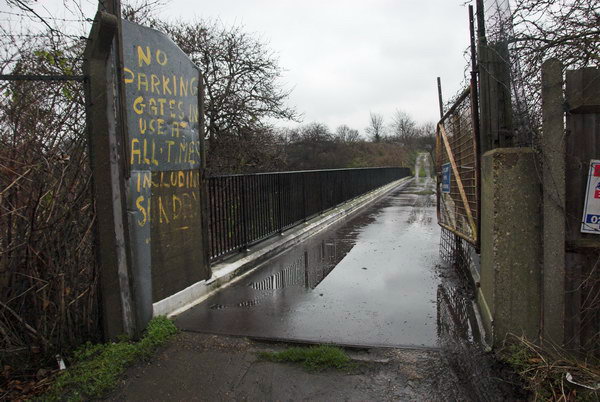
Hackney Wick Allotments

Allotments, Waterden Rd, Hackney Wick, Hackney, 1983 36o-15_2400

One story is that some time in the late 1870s boys in the King’s College of Our Lady of Eton beside Windsor, the chapel of Eton School were visited by an apparition of the Blessed Virgin Mary which led them to set up a charitable settlement in Hackney Wick, then one of the most deprived areas of London. It was a time when other similar settlements were being set up elsewhere in the capital and the history of St Mary of Eton states that “In 1880, William How, Bishop of Bedford, persuaded the masters and boys of Eton College to establish a mission and support a priest in … Hackney Wick.”

The Grade II* listed church of St Mary of Eton with St Augustine, according to the listing text “was built 1890-2 to the designs of George Frederick Bodley, under the title Bodley and Garner. Enlarged 1910-12 at the west end, with vestries and tower added by Cecil Hare, Bodley’s successor.” This also calls William How “first Bishop of Wakefield”. The St Augustine was added to its title when parishes were combined in 1953.

Allotments, Waterden Rd, Hackney Wick, Hackney, 1982 32z-53_2400

As well as providing a church there were other buildings used for various clubs and actitivites, including a Boys Club was established by the mission in 1880 and various sporting activities including the Eton Mission Rowing Club founded in 1885. Many Old Etonians came to support the mission, including Gerald Wellesley, a grandson of the Duke of Wellington, who together with Alfred Ralph Wagg, Sir Edward Cadogan and Arthur George Child-Villiers, in 1909 set up an Old Boys’ Club independent of the Mission. Various other clubs were formed as subsidiaries to this, including a short-lived ‘Junior Bachelors’ Club’ which rewarded members with four trips a year for promising they would not ‘walk out with young ladies’. As most who joined failed to keep their promise the club was soon abandoned.

The Bridge over the River Lea to Manor Gardens allotments. 2007

During the First World War there were shortages of food due to the torpedoing of British merchant ships bringing provisions from the colonies, and the club made parts of 30 acres of land across the River Lea from Hackney Wick, in Leyton available to club members as allotments. By the 1920s the main figure in the Eton Manor clubs was Major Villiers, a director of Barings bank, and one of the allotment gates I photographed in 1982 has the notice ‘Major A Villiers Gardening Club Private’ on it. The second pleads ‘Please Leave The Old Age Pension Plots Along You May Get Old One Of Thes Days’ – the Old Boys had grown very old over the years. Major Villiers lived in a house on the Eton Manor Boys Club sports grounds, known as the Wilderness on Ruckholt Rd and Temple Mill Lane from 1913 until his death in 1969 but decided in 1967 to close the club.

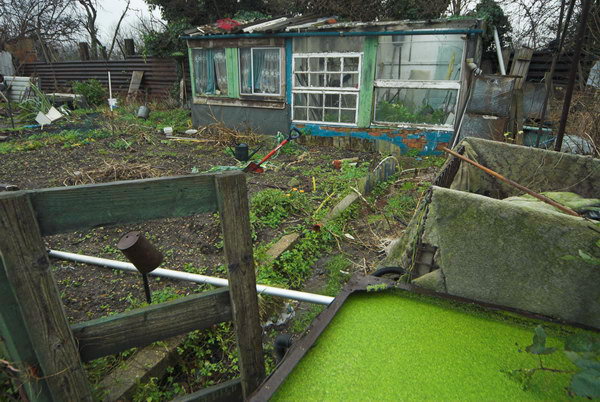
One of the 80 plots at Manor Gaardens. 2007

One of these allotment areas, reached by a bridge on a road leading over the River Lea was the Manor Gardens Allotments, and this continued to be a thriving community there until it was evicted in 2008 when its land was taken for a path in the London 2012 Olympic site. The allotment holders put up a strong fight to be allowed to remain in situ, but although the land they were on was not a vital part of the site, they very much represented an activity which the promoters of elite sports felt was undesirable. They had to go, along with the pylons and Hackney Wicks vibrant graffiti in a tidying up of the area which left it sterile – and from which it is only now beginning to recover some atmosphere.

2007

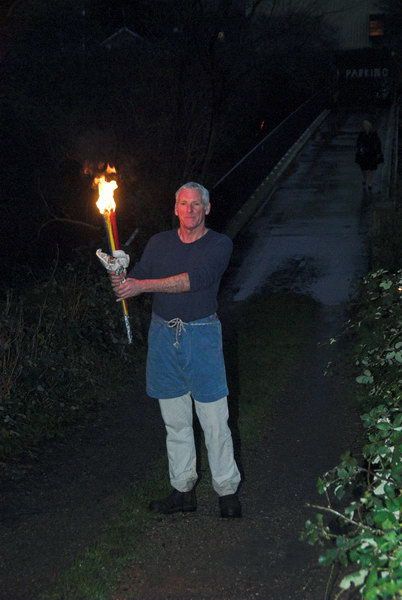
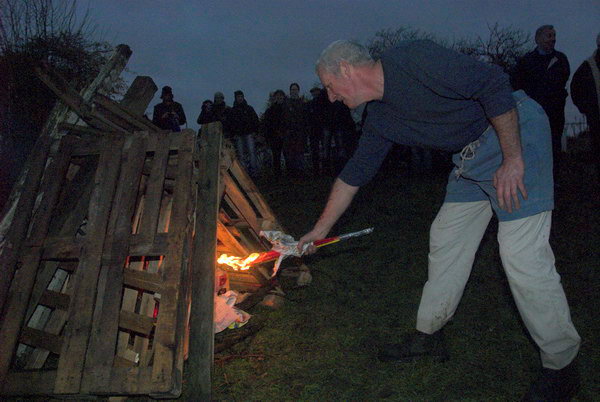
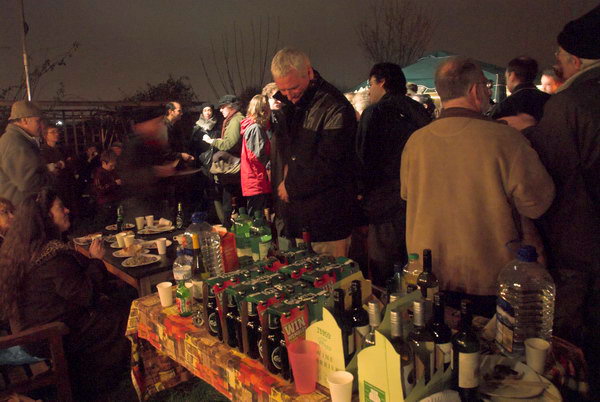
Manor Gardens put up a strong fight to remain, enlisting the support of many celebrities (though unfortunately the links with Eton had long disappeared or they might have been more successful.) I paid a number of visits to the allotments and various events they organised. The colour pictures heres are from their New Year Feast in January 2007, which included a runner with a mock Olympic flame who lit the bonfire, several celebrity speeches, an exhibition and a party.

A runner stands ready with the ‘Olympic Flame’. 2007
and uses it to light the bonfire. 2007
And the party continues. 2007

For those of us concerned about the environment (and there are now rather more than when the 2012 Olympics were being planned) the failure to preserve the Manor Gardens allotments was a real missed opportunity. It could have been seen as a golden opportunity to give the games some green credibility behind the lip-service the bid gave to biodiversity and sustainability, and certainly as a commitment to the post-2012 legacy of the games – to leave sites such as Manor Gardens and the adjoining nature reserve as a green centrepiece to the site. Unfortunately the architects and developers seem hell-bent to create a brown Olympics, creating an irredeemably distressed site that will only be economically recoverable when all the concrete has crumbled.

It would be a great shame to lose this splendid facility for four weeks of use in 2012, when it could easily be built around. It isn’t in a critical area but will simply be under concrete as a footpath, and probably also the site of a huge advertising ‘scoreboard’ for the games sponsor.

What will it say about the 2012 Olympics for a site that is currently a beacon for healthy green eating to be used for selling big macs?

New Year Feast – Manor Garden Allotments

All photographs on this and my other sites, unless otherwise stated, are taken by and copyright of Peter Marshall, and are available for reproduction or can be bought as prints.